Crew Kicks Off Week Prepping for Cygnus Cargo Mission

Crew Kicks Off Week Prepping for Cygnus Cargo Mission
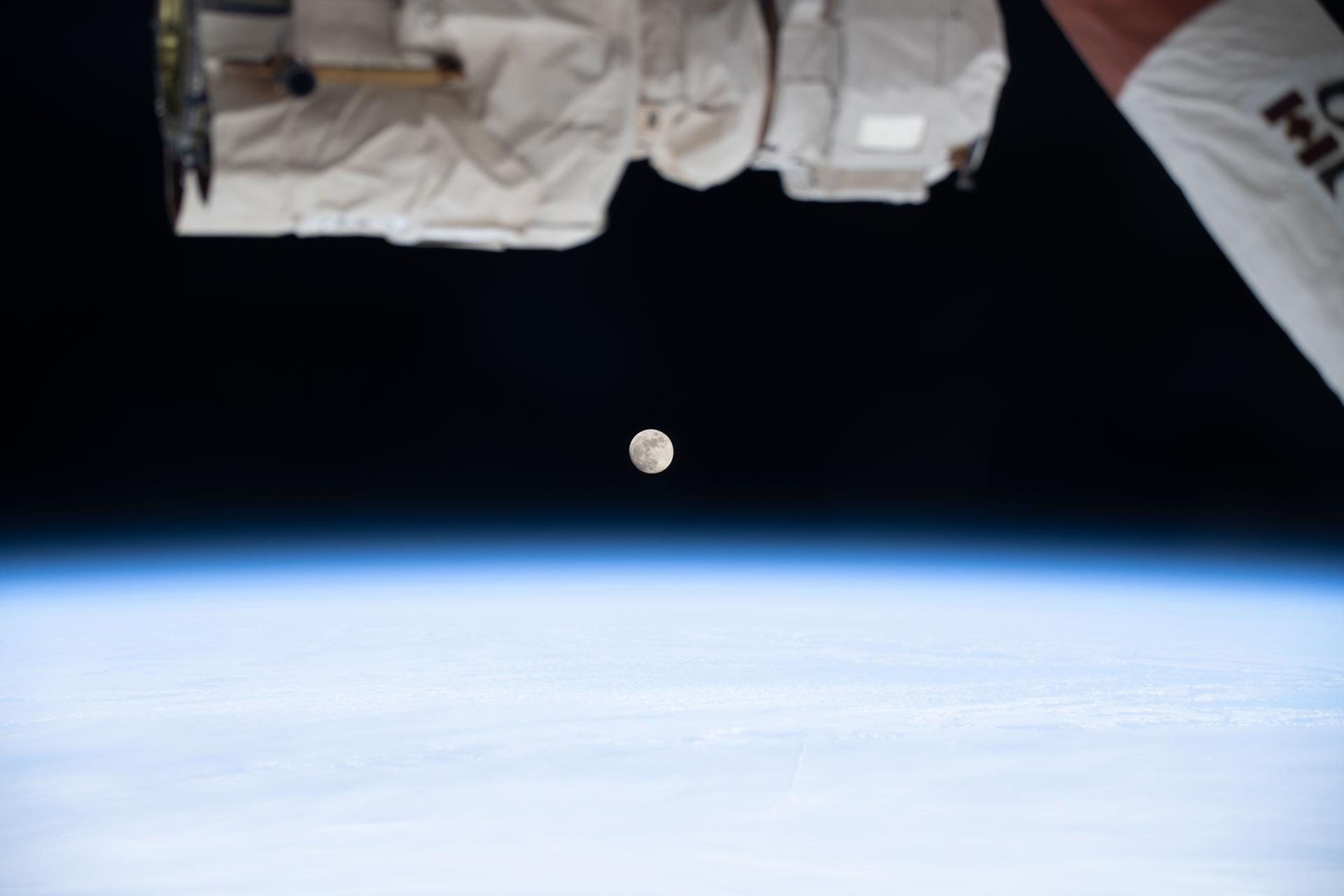
A waxing gibbous Moon is pictured above Earth's atmosphere from the International Space Station as it soared 268 miles above far eastern Canada. A portion of the Canadarm2 robotic arm's latching end effector is captured in the top foreground of the image.
A waxing gibbous Moon is pictured above Earth’s atmosphere from the International Space Station as it soared 268 miles above far eastern Canada.
NASA/Chris Williams

The Expedition 74 crew continues preparing for the next U.S. cargo mission due to visit the International Space Station. The orbital residents also serviced spacesuits, configured scientific hardware, and studied how microgravity affects blood pressure at the beginning of the week.

NASA Flight Engineers Chris Williams and Jack Hathaway joined each other in the cupola on Monday and practiced maneuvering the Canadarm2 robotic arm to capture the Cygnus XL when it arrives to the space station. After the cargo spacecraft’s capture, ground controllers will remotely command Canadarm2 to install Cygnus XL on the Unity module’s Earth-facing port. Cygnus will be delivering advanced microgravity research gear to study quantum computing technology, test stem cell therapies, promote astronaut health, and more.

Earlier in the day, Williams and Hathway, along with NASA flight engineer Jessica Meir, worked on spacesuit maintenance. Hathway and Meir took turns cleaning and flushing the suit’s water-cooling loops that regulate an astronaut’s body temperature in the extreme environment of space. Williams swapped a pair of lithium-ion batteries that power spacesuits inside the Quest airlock’s battery stowage compartment to maintain optimum battery performance.

Meir began her shift powering up and replacing filters on the KERMIT fluorescence microscope, that supports biological, physical, and material science research in microgravity, inside the Destiny laboratory module. Next, she set up a physics experiment that studies how particles attach to droplets and rearrange in microgravity that used KERMIT to image the phenomena. Results may lead to improved engineering designs for additive manufacturing and optical materials.

Flight engineer Sophie Adenot of ESA (European Space Agency) kicked off her shift inside the Kibo laboratory module powering down the TUSK technology demonstration, a small experimental robotic arm being tested for precise, sub-millimeter manipulation in weightlessness. Afterward, Adenot cleaned portions of Kibo’s ventilation system then tested emergency communications with mission controllers from around the world.

Roscosmos cosmonauts Sergey Kud-Sverchkov and Sergei Mikaev, station commander and flight engineer respectively, took turns wearing a series of arm, wrist, and finger cuffs measuring their blood pressure for an ongoing cardiovascular study. Afterward, Kud-Sverchkov inspected spacecraft docking hardware while Mikaev worked on communications and electronics maintenance.

Roscosmos flight engineer Andrey Fedyaev practiced European robotic arm maneuvers using computer simulation software at the start of his shift on Monday. Fedyaev then moved on to a study using artificial intelligence tools to improve crew operations and communications. Finally, he adjusted the lens setting on Earth observation hardware for a visibility test.

Learn more about station activities by following the space station blog, @space_station on X, as well as the ISS Facebook and ISS Instagram accounts.

Get the latest from NASA delivered every week. Subscribe here.

Powered by WPeMatico

Get The Details…

Mark A. Garcia

Week Wraps Aboard Station with Spacesuits, Eye Checks, Robotics, and More

Week Wraps Aboard Station with Spacesuits, Eye Checks, Robotics, and More

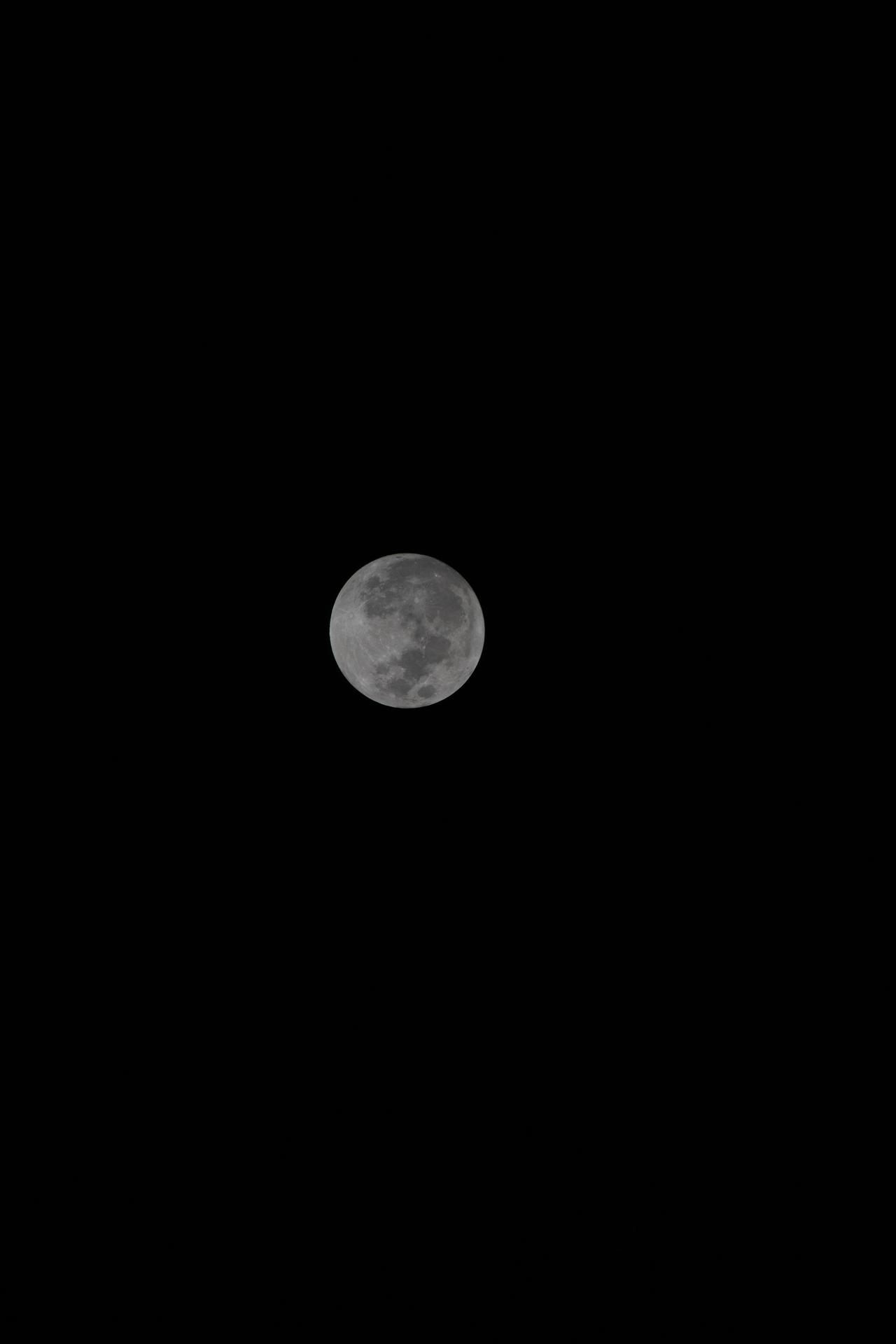
The full Moon is pictured from the International Space Station a few hours before the launch of Artemis II, NASA’s first crewed mission to the Moon since December 1972, launched from Kennedy Space Center in Florida.
The full Moon is pictured from the International Space Station a few hours before the launch of Artemis II, NASA’s first crewed mission to the Moon since December 1972, from Kennedy Space Center in Florida on April 1, 2026.
NASA/Chris Williams

Spacesuit work and eye checks wrapped up the week for the Expedition 74 crew aboard the International Space Station. The orbital residents also focused on robotics, cargo transfers, and science hardware maintenance at the end of the week.

ESA (European Space Agency) flight engineer Sophie Adenot tried on a spacesuit in Friday with assistance from NASA flight engineer Jessica Meir inside the Quest airlock. Adenot wore the suit in a powered and pressurized configuration and tested it for mobility, comfort, and optimal fit. Meir also helped Adenot conduct suit leak and pressure checks while verifying the suit’s communications hardware and life support systems.

NASA flight engineers Jack Hathaway and Chris Williams also worked on spacewalking gear inspecting tethers and their associated components before stowing them inside Quest. Earlier, Hathaway installed new orbital plumbing gear inside the Tranquility module’s bathroom. At the end of his shift, he reconfigured the Columbus laboratory module to make room for a new experimental exercise machine due to be delivered on the next Cygnus XL resupply mission. Williams rearranged cargo packed inside the Pressurized Mating Adapter-2 where the SpaceX Dragon spacecraft dock to on the forward port of the Harmony module.

At the end of his shift, Williams led eye exams inside Harmony with Meir and Adenot as his subjects. Williams operated medical imaging gear that Meir and Adenot peered into while doctors on the ground viewed their retina, lens, and cornea in real-time. Doctors regularly check the astronauts’ eyes to counteract the potential effects of living in space. Station commander Sergey Kud-Sverchkov and flight engineer Sergei Mikaev, both Roscosmos cosmonauts, joined each other on Friday and installed power and data cables to support upcoming operations of a new solar radiation experiment.

Roscosmos flight engineer Andrey Fedyaev kicked off his shift cleaning the Nauka science module’s ventilation system before spending the rest of his day updating the software that controls and displays information for the European robotic arm.

Learn more about station activities by following the space station blog, @space_station on X, as well as the ISS Facebook and ISS Instagram accounts.

Get the latest from NASA delivered every week. Subscribe here.

Powered by WPeMatico

Get The Details…

Mark A. Garcia

Brain and Eye Studies, Advanced Life Support Tech Top Station Crew’s Day

Brain and Eye Studies, Advanced Life Support Tech Top Station Crew’s Day

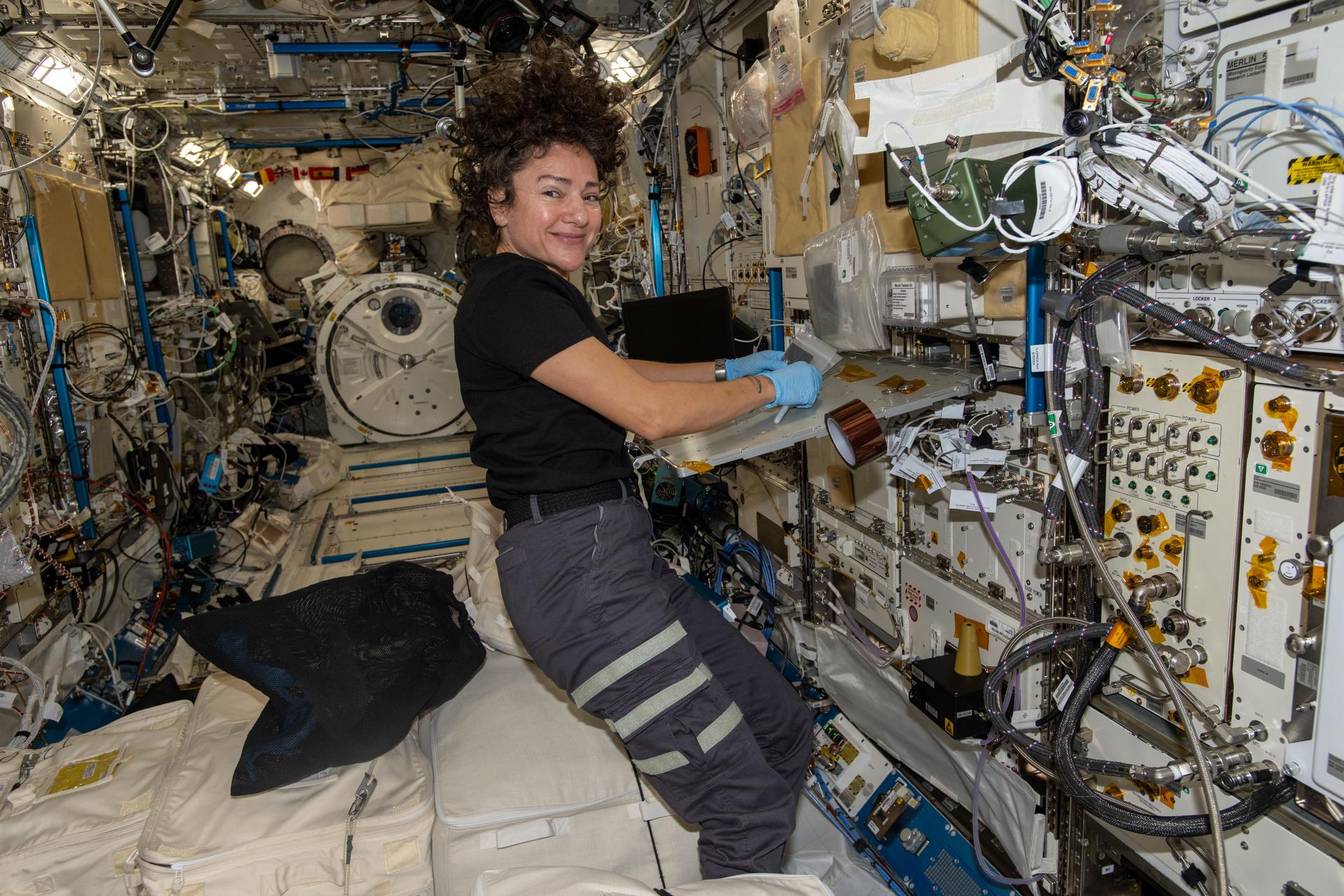
NASA astronaut and Expedition 74 flight engineer Jessica Meir works inside the International Space Station’s Kibo laboratory, processing samples for the StarSteel materials research experiment. Meir investigated stainless‑steel spheres produced in Kibo’s Electrostatic Levitation Furnace to observe and understand metallic solidification behavior in microgravity, potentially benefiting Earth‑based and space‑based metallurgy and manufacturing techniques.
NASA astronaut Jessica Meir processing samples to observe and understand metallic solidification behavior in microgravity, potentially benefiting Earth‑based and space‑based metallurgy and manufacturing techniques.
NASA/Jessica Meir

The Expedition 74 crew studied how the brain receives signals in space and demonstrated advanced technology to remove humidity from spacecraft on Thursday. Other activities aboard the International Space Station included servicing a metal 3D printer and continuing to unpack a cargo resupply ship.

NASA flight engineers Jack Hathaway and Chris Williams joined each other in the Columbus laboratory module and explored how the brain processes balance and orientation in the microgravity environment. Hathaway led the study operating gear that sent visual signals to specialized goggles that Williams wore tracking his eye alignment and motion using high-speed video recordings. Researchers will use the data to understand any structural changes an astronaut’s sense of motion and balance may experience during a long-term spaceflight.

Afterward, the duo switched crew medical officer roles as Williams guided Hathaway during an eye exam inside the Harmony module. Williams operated medical imaging gear that Hathaway peered into while doctors on the ground viewed his retina, lens, and cornea in real-time. Vision is critical to a mission’s success and doctors regularly check the astronauts’ eyes to counteract the potential effects of living in space.

NASA flight engineer Jessica Meir kicked off her shift setting up advanced hardware in Harmony’s maintenance work area to demonstrate the removal of humidity aboard spacecraft. Capturing water from a spacecraft’s atmosphere will be a necessary part of regenerative life-support systems as human missions travel farther away from Earth and are unable to rely on resupply missions. Afterward, Meir ran a physics experiment in the Destiny laboratory module‘s Microgravity Science Glovebox exploring ways to control a spacecraft’s fuel tank pressure due to cryogenic fuel propellants evaporating from the surrounding heat. Results could lead to improved spacecraft designs and advanced storage systems on Earth.

Flight engineer Sophie Adenot of ESA (European Space Agency) connected water, gas, and electrical lines to complete the installation of the Metal 3D Printer inside Columbus. The Metal 3D Printer is being tested for its ability to print parts in space reducing the need to ship spare parts on missions to the Moon, Mars, and beyond. Afterward, she worked inside the Quest airlock inspecting and stowing tethers astronauts use to stabilize themselves when working outside the space station.

Roscosmos cosmonauts Sergey Kud-Sverchkov and Sergei Mikaev were back on cargo duty Thursday continuing to unpack the nearly three tons of food, fuel, and supplies the Progress 94 resupply ship delivered on March 24. Kud-Sverchkov also worked on communications hardware maintenance. Mikaev photographed microbe samples swabbed from inside the Nauka, Zvezda, and Zarya modules to document the station’s microbial environment.

Roscosmos flight engineer Andrey Fedyaev began his shift inside the Nauka science module swapping out a robotics power-switching unit and inspecting its cables. Fedyaev completed his shift checking out orbital plumbing components and cleaning vents and fans in the Zarya module.

Learn more about station activities by following the space station blog, @space_station on X, as well as the ISS Facebook and ISS Instagram accounts.

Get the latest from NASA delivered every week. Subscribe here.

Powered by WPeMatico

Get The Details…

Mark A. Garcia

Medical Tests, Microbiology Top Research Schedule Aboard Station

Medical Tests, Microbiology Top Research Schedule Aboard Station

ESA (European Space Agency) astronaut and Expedition 74 flight engineer Sophie Adenot inserts biological research samples into a science freezer inside the International Space Station’s Destiny laboratory module. The freezer, formally known as the Minus Eighty-degree Laboratory Freezer for ISS (MELFI), maintains experiment samples at ultra‑cold temperatures, significantly enhancing microgravity research capabilities and preserving biological specimens for analysis back on Earth.
ESA (European Space Agency) astronaut Sophie Adenot inserts biological research samples into a science freezer inside the International Space Station’s Destiny laboratory module.
ESA/Sophie Adenot

Medical tests and microbiology topped the research schedule for the Expedition 74 crew aboard the International Space Station on Tuesday. The seven crewmates also worked on spacesuits, cargo operations, and life support maintenance.

NASA flight engineer Chris Williams kicked off his shift drawing a blood sample from NASA flight engineer Jessica Meir for processing in a centrifuge and preservation in a science freezer for later analysis. Williams later collected, processed, and stowed his urine samples for the CIPHER study that measures and compares astronaut health before, during, and after a spaceflight. Doctors regularly analyze a crew member’s biomedical samples collected throughout a mission constantly gaining insight into microgravity’s effect on the human body.

Williams later joined Meir and NASA flight engineer Jack Hathaway as they reorganized cargo packed inside the Leonardo Permanent Multipurpose Module. The trio cleared air vents in Leonardo for proper airflow, trashed obsolete hardware, inventoried items, and photographed problem areas for inspection.

Hathway and Meir later partnered together and filled a liquid cooling and ventilation garment, a spacesuit’s inner layer that regulates a spacewalker’s temperature, with water. The duo also attached shoulder pads to the cooling garment and installed a spacesuit on a support stand inside the Quest airlock for future maintenance.

Flight engineer Sophie Adenot of ESA (European Space Agency) began her shift working on cargo consolidation to optimize space inside the Columbus laboratory module. After lunch, Adenot inspected and cleaned the Tranquility module’s ventilation system then checked the operation of the Exploration Potable Water Dispenser, a technology demonstration to advance water sanitization methods, reduce microbial growth, and dispense hot water into crew food and drink bags.

Station commander Sergey Kud-Sverchkov and flight engineer Sergei Mikaev, both Roscosmos cosmonauts, joined each other and collected microbe samples in the Nauka, Zvezda, and Zarya modules. The samples will be analyzed to understand the orbital outpost’s microbial environment and learn how to protect crew health and space station hardware.

Roscosmos flight engineer Andrey Fedyaev spent his shift primarily on orbital plumbing duties. Fedyaev first checked the functionality of water stowage tanks and inspected their hoses and connectors. Next, he purged residual fluids and gases inside water recycling hardware to ensure its continuing safe operation.

Learn more about station activities by following the space station blog, @space_station on X, as well as the ISS Facebook and ISS Instagram accounts.

Get the latest from NASA delivered every week. Subscribe here.

Powered by WPeMatico

Get The Details…

Mark A. Garcia

Crew Kicks Off Week with Cargo Mission Training and Spacewalk Cleanup

Crew Kicks Off Week with Cargo Mission Training and Spacewalk Cleanup

NASA astronaut Jessica Meir waves at the camera during a seven-hour, two-minute spacewalk outside the International Space Station on March 18, 2026.
NASA/Jack Hathaway

Expedition 74 started the week training for the arrival of the next U.S. cargo mission and continuing to clean up after last week’s spacewalk. The orbital residents also practiced medical emergency procedures, unloaded supplies from a new Roscosmos resupply ship, and ensured the International Space Station remains in tip-top shape.

Northrop Grumman’s Cygnus XL cargo spacecraft is the next mission targeted to launch to the orbital outpost no earlier than Wednesday, April 8 at 8:49 a.m. EDT. NASA flight engineers Chris Williams and Jack Hathaway joined each other on Monday and reviewed the upcoming Cygnus XL mission, trained for its rendezvous procedures, and familiarized themselves with the equipment they will use to monitor Cygnus’ arrival. Cygnus will be delivering advanced microgravity research gear to study quantum physics, test stem cell therapies, promote astronaut health, and more.

NASA flight engineer Jessica Meir spent Monday servicing a pair of spacesuits that she and Williams wore during a seven-hour and two-minute spacewalk on  March 18. She first cleaned and flushed the suit’s water-cooling loops that regulate an astronaut’s body temperature in the extreme environment of space. Next, she emptied and refilled the suit’s water system to remove gas bubbles and contaminants keeping its life‑support system healthy and reliable.

Flight engineer Sophie Adenot of ESA (European Space Agency) focused on a variety scientific experiments throughout Monday that explore different microgravity phenomena. Adenot first collected data and powered down hardware from an investigation that is studying ways to quickly download large amounts of data from space. Next, she swapped research samples inside a science freezer then inventoried and trashed used biomedical gear that examined the crew’s cardiovascular health. Adenot finally recorded a video message for students on Earth describing why conducting science in space is important.

All four astronauts also joined Roscosmos cosmonaut Andrey Fedyaev for a mid-afternoon emergency drill reviewing how to use and where to locate medical hardware. The five crewmates also practiced CPR, or cardiopulmonary resuscitation, and discussed individual roles and responsibilities in the event of a medical situation in low Earth orbit.

Fedyaev began his shift replacing smoke detectors and gas masks inside the Nauka science module. The two-time station visitor wrapped up his duties in the orbital outpost’s Roscosmos segment and checked the quality of drinking water.

Station commander Sergey Kud-Sverchkov serviced electrical components and checked the operation of the Elektron oxygen generator inside the Zvezda service module. Afterward, Kud-Sverchkov studied using artificial intelligence tools to improve crew operations and communications with mission controllers. Roscosmos flight engineer Sergei Mikaev spent his day offloading some of the three tons of food, fuel, and supplies packed inside the Progress 94 resupply ship that docked to the Poisk module on March 24.

Learn more about station activities by following the space station blog, @space_station on X, as well as the ISS Facebook and ISS Instagram accounts.

Get the latest from NASA delivered every week. Subscribe here.

Powered by WPeMatico

Get The Details…

Mark A. Garcia