Space Biomedical Research Wraps Week as Station Gears Up for Two Cargo Missions

Space Biomedical Research Wraps Week as Station Gears Up for Two Cargo Missions

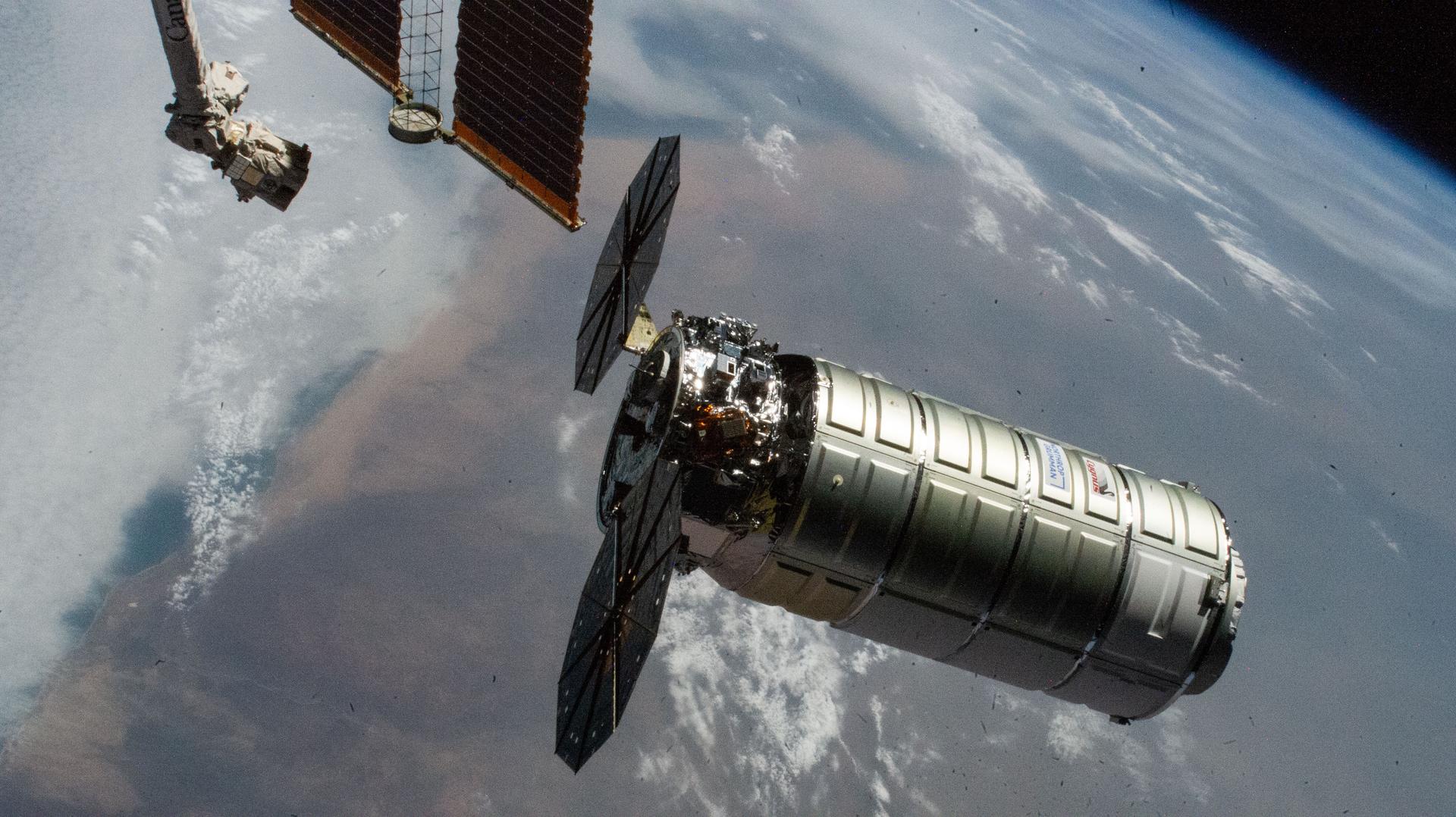
The International Space Station's 57.7-foot-long robotic arm, Canadarm2, with its fine-tuned robotic hand, Dextre, attached is pictured extending from the International Space Station's Harmony module. The orbital outpost was soaring 260 miles above the Saharan Desert in Libya at the time of this photograph.
The International Space Station’s 57.7-foot-long robotic arm, Canadarm2, with its fine-tuned robotic hand, Dextre, attached is pictured extending from the Harmony module. The orbital outpost was soaring 260 miles above the Saharan Desert in Libya at the time of this photograph.
NASA

Space-based production of human tissues and preventing space-caused head and eye pressure were the main research topics at the end of the week for the Expedition 73 crew. The International Space Station is also gearing up for a pair cargo missions this month supplying the orbital residents with food, fuel, science experiments, and more.

The SpaceX Dragon cargo craft delivered bioprinted liver tissues to the orbital outpost on Aug. 25 to help researchers understand how microgravity affects the formation of blood vessels in engineered tissue. Flight Engineers Zena Cardman of NASA and Kimiya Yui of JAXA (Japan Aerospace Exploration Agency took turns on Friday processing the bioprinted tissue samples for placement inside an artificial gravity-generating research device. Researchers are monitoring how the tissues progress and develop over several weeks in weightlessness to gain new health insights. Result may lead to advanced treatments protecting astronauts on long-duration spaceflights and improve bioprinting techniques for patient therapies on Earth.

A common symptom of living in space is called “puffy face” where an astronaut’s face appears swollen and redder. This results from blood pooling toward an astronaut’s head potentially leading to eye structure and vision changes. NASA Flight Engineers Mike Fincke and Jonny Kim joined each other in the Columbus laboratory module and tested a specialized thigh cuff that may counteract the fluid shifts in weightlessness and reduce pressure on a crew member’s head and eyes. Fincke wore the thigh cuff as Kim measured his blood pressure and scanned his veins with the Ultrasound 2 device while chest electrodes collected cardiac data. A variety of other space station medical tools and techniques are used throughout the investigation to understand how an astronaut’s eyes, heart, and blood vessels respond to the thigh cuff.

Roscosmos Flight Engineer Oleg Platonov wrapped up a 24-hour session wearing sensors measuring his blood pressure and heart rate. Doctors were monitoring his cardiac activity as he worked, exercised, then slept for their ongoing biomedical research in microgravity.

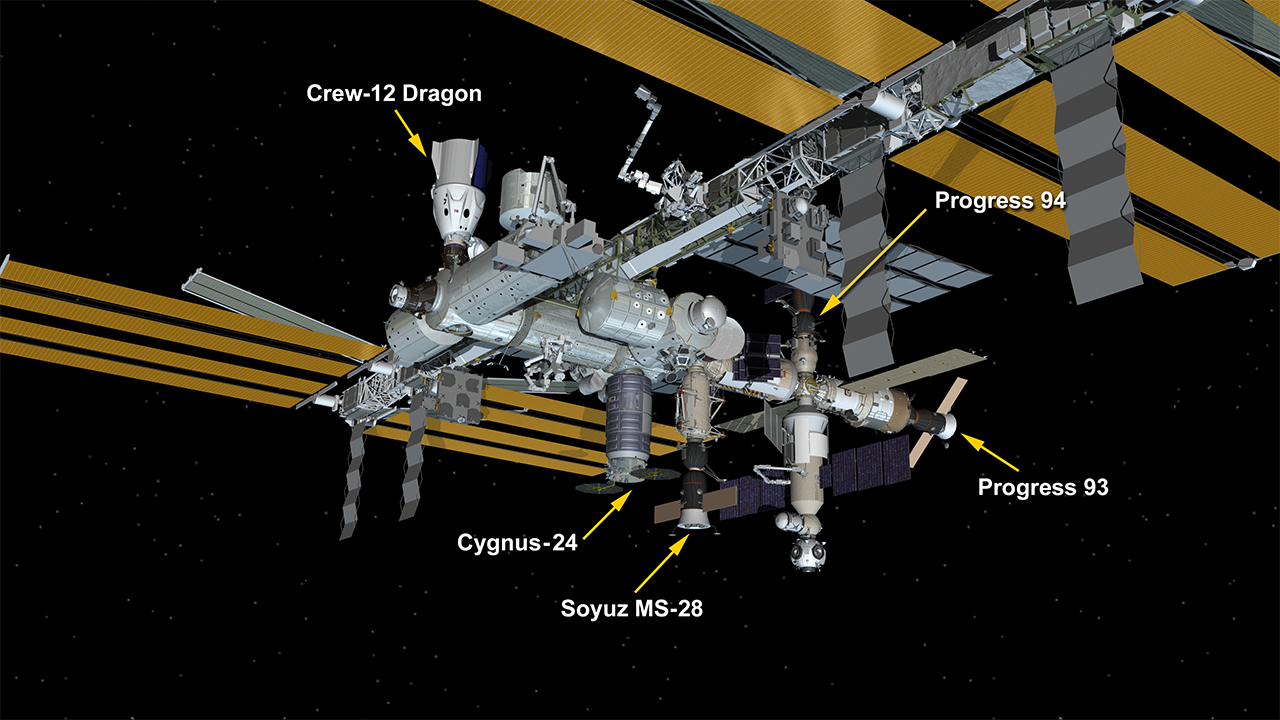
Station Commander Sergey Ryzhikov and Alexey Zubritsky set up the TORU, or tele-robotically operated rendezvous unit, simulator they will train on soon inside the Zvezda service module. The duo will practice remote-controlled spacecraft rendezvous techniques on the TORU simulator in the unlikely event an approaching Roscosmos spacecraft is unable to dock to the orbital outpost on its own. The training comes ahead of the launch of the Progress 93 cargo craft scheduled for 11:54 a.m. EDT on Thursday, Sept. 11 to deliver about three tons of cargo to the Expedition 73 crew two days later.

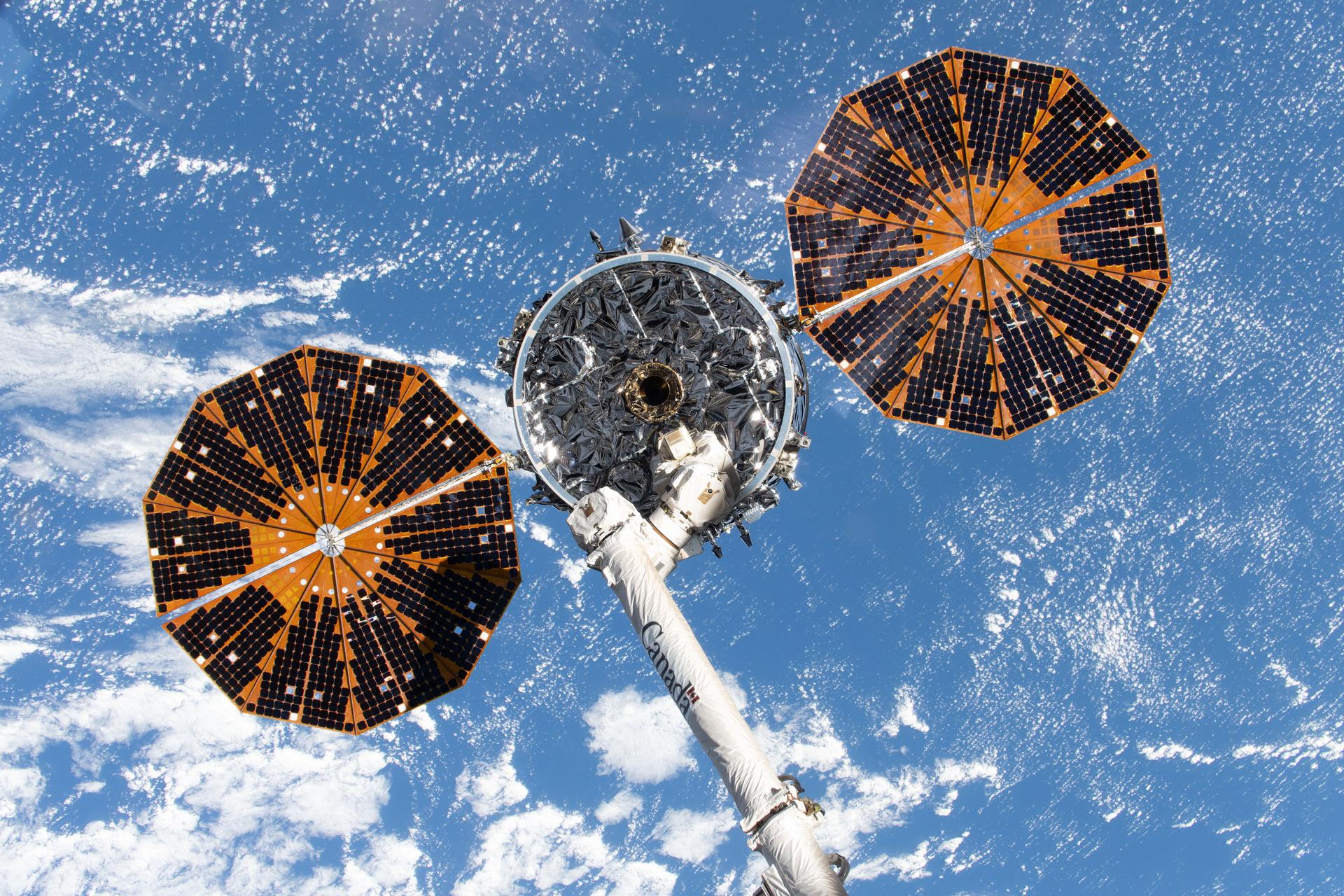
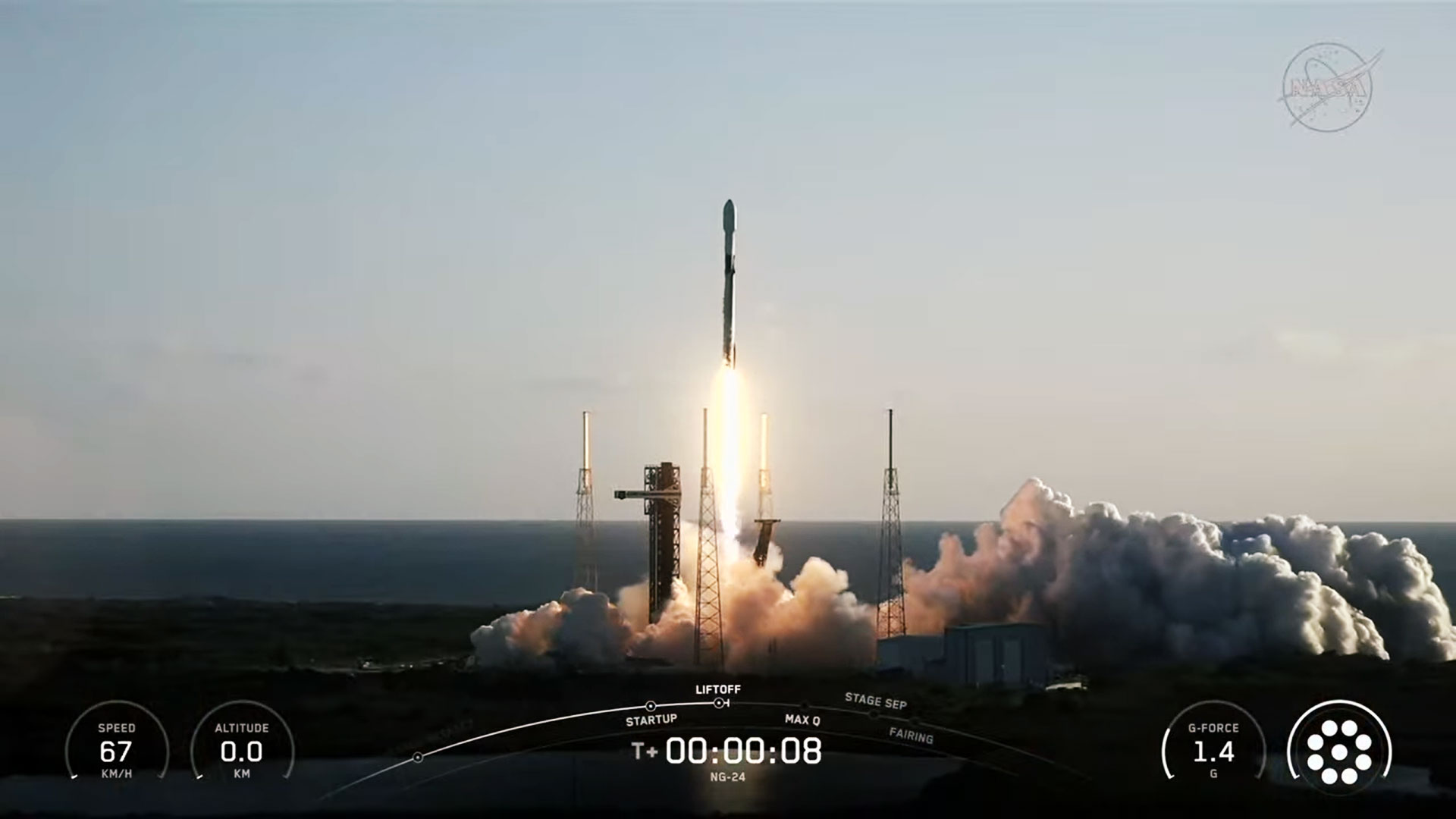
One day after the Progress 93 docks to Zvezda’s aft port, Northrop Grumman’s Cygnus XL cargo craft will launch atop a SpaceX Falcon 9 rocket at 6:11 p.m. on Sept. 14 from Cape Canaveral Space Force Station in Florida. Cygnus XL, carrying over 11,000 pounds of new science and supplies, will orbit Earth for two-and-a-half days before it catches up to the space station where the Canadarm2 robotic arm will capture it then install it on the Unity module’s Earth-facing port.

Learn more about station activities by following the space station blog, @space_station on X, as well as the ISS Facebook and ISS Instagram accounts.

Get the latest from NASA delivered every week. Subscribe here.

Powered by WPeMatico

Get The Details…

Mark A. Garcia

NASA, Partners Adjust Next Cygnus Resupply Launch

NASA, Partners Adjust Next Cygnus Resupply Launch

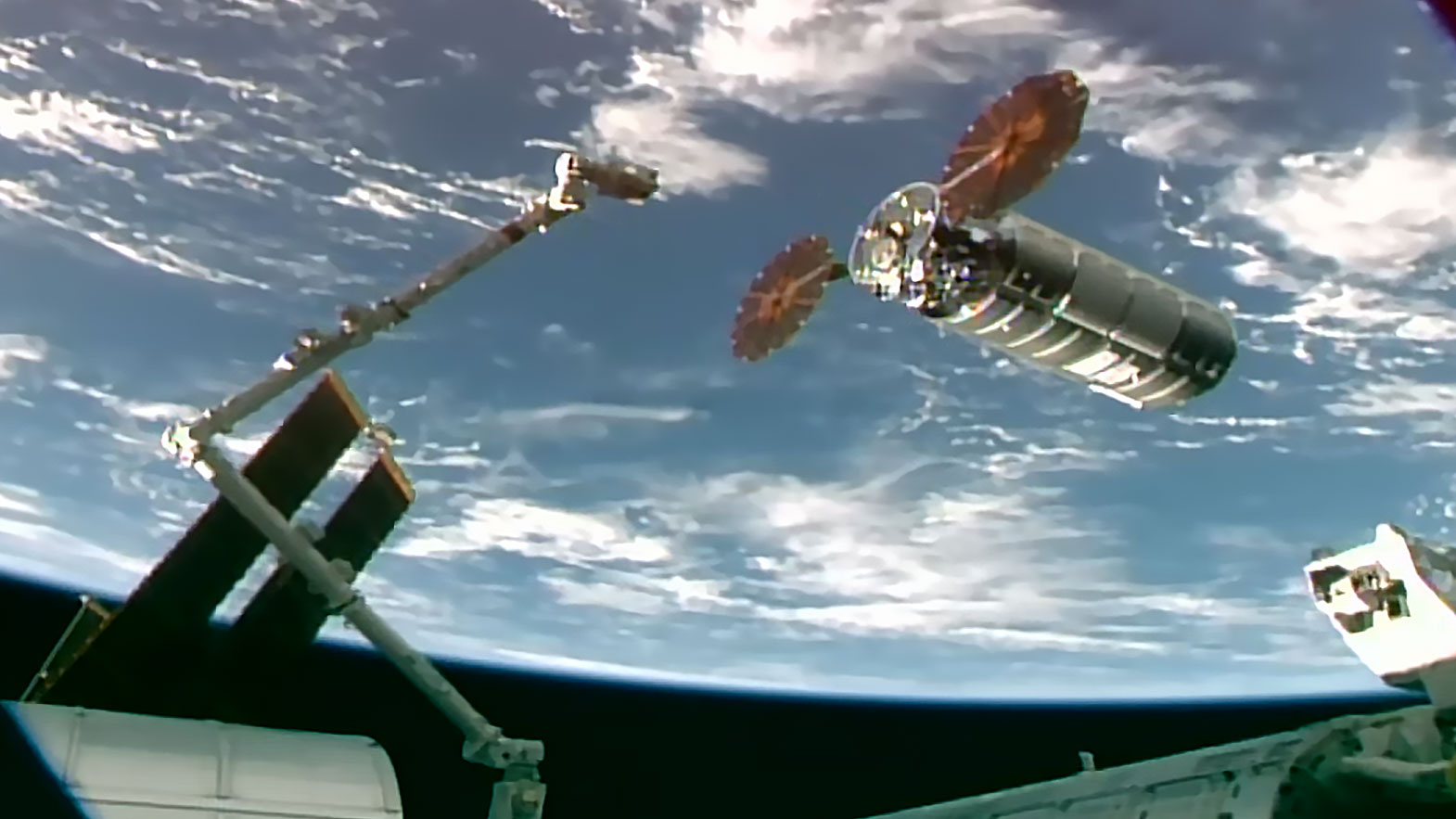
Northrop Grumman's Cygnus space freighter begins its departure from the International Space Station after being released from the Canadarm2 robotic arm completing a seven-and-a-half-month cargo mission attached to the Unity module.
Northrop Grumman’s Cygnus space freighter departs the International Space Station on March 28, 2025, after being released from the Canadarm2 robotic arm completing a seven-and-a-half-month cargo mission attached to the Unity module.
NASA

NASA, Northrop Grumman, and SpaceX are accelerating the next commercial resupply flight to the International Space Station to maximize launch opportunities following an assessment of mission readiness. NASA now is targeting no earlier than 6:11 p.m. EDT, Sunday, Sept. 14, for the launch of a Northrop Grumman Cygnus XL on a SpaceX Falcon 9 rocket from Space Launch Complex 40 at Cape Canaveral Space Force Station in Florida.

The Cygnus XL spacecraft will deliver more than 11,000 pounds of science, research, and supplies* to the orbital complex, including materials to produce semiconductor crystals in space and equipment to develop improvements for cryogenic fuel tanks. The spacecraft also will deliver a specialized UV light system to prevent biofilm growth and supplies to produce pharmaceutical crystals that could treat cancer and other diseases.NASA is targeting arrival of the Cygnus XL spacecraft and its installation aboard the space station on Wednesday, Sept. 17.

The International Space Station is a convergence of science, technology, and human innovation that enables research not possible on Earth. For almost 25 years, people have continuously lived and worked aboard the International Space Station, advancing scientific knowledge and demonstrating new technologies that enable us to prepare for human exploration of the Moon and Mars.

Learn more about station activities by following the space station blog, @space_station on X, as well as the ISS Facebook and ISS Instagram accounts.

Get the latest from NASA delivered every week. Subscribe here.

Powered by WPeMatico

Get The Details…

Mark A. Garcia

Station Exercise and Physics Research Advancing Earth and Space Health

Station Exercise and Physics Research Advancing Earth and Space Health

NASA astronaut Mike Fincke works out on the International Space Station's advanced resistive exercise device that mimics free wights in Earth’s gravity and has the capability to work out all major muscle groups.
NASA astronaut Mike Fincke works out on the International Space Station’s advanced resistive exercise device that mimics free wights in Earth’s gravity and has the capability to work out all major muscle groups.
NASA

Exercise research and space physics took precedence aboard the International Space Station while a pair of Expedition 73 crew members enjoyed an off-duty day. Meanwhile, the rest of the crew also focused on maintaining science hardware and inventorying lab gear.

The main purpose of research on the orbital outpost is discovering new phenomena impossible to achieve in Earth’s gravity environment. The new unique insights help provide advanced treatments for both Earthbound and space-caused ailments and may lead to commercial and industrial innovations benefitting households and promoting business and space communities.

The lack of gravity aboard a spacecraft affects an astronaut’s body leading to accelerated muscle and bone loss among other symptoms. One way to counteract the microgravity-influenced effects is through daily two-hour workouts on specialized equipment which also benefit a crew member’s cardiovascular and respiratory systems.

Beginning his day with the Cardiobreath exercise study, NASA Flight Engineer Mike Fincke wore a sensor-packed headband and vest measuring his health data while he pedaled on the Destiny laboratory module’s exercise cycle. The data will be downlinked to Earth helping doctors plan fitness programs to protect astronaut health on long-term missions to the Moon, Mars, and beyond. After his lunch period, Fincke turned his attention to a physics study investigating pharmaceutical manufacturing and 3D printing techniques in space. He set up the Colloidal Solids research hardware inside Destiny’s Microgravity Science Glovebox that may advance human health on and off the Earth.

Flight Engineer Kimiya Yui of JAXA (Japan Aerospace Exploration Agency) focused on servicing an array of experimental hardware throughout the orbital lab on Thursday. He first replaced moisture-absorbing cassettes inside an artificial gravity-generating biology research device. Next, he analyzed station water samples for hazardous chemicals then tested a new device that measures the quality of the station’s atmosphere to protect crew health. Yui also inspected the European Enhanced Exploration Exercise Device that is testing smaller, more advanced workout gear for future spaceflights beyond low Earth orbit.

NASA Flight Engineers Jonny Kim and Zena Cardman took a well-deserved break on Thursday following several days of unpacking the SpaceX Dragon cargo spacecraft and installing new science experiments aboard the station. One new experiment they activated and began working on is looking at how microgravity affects bone stem cell samples to learn how to protect an astronaut’s skeletal system in space and treat aging conditions and bone diseases on Earth.

Roscosmos Flight Engineer Oleg Platonov kicked off a 24-hour session wearing sensors for an experiment measuring how microgravity affects his heart rate and blood pressure during his daily activities and through his sleep shift. Station Commander Sergey Ryzhikov and Flight Engineer Alexey Zubritsky partnered together throughout the day inventorying a variety of Roscosmos lab gear including safety equipment, spacesuit components, and interior lighting systems.

Learn more about station activities by following the space station blog, @space_station on X, as well as the ISS Facebook and ISS Instagram accounts.

Get the latest from NASA delivered every week. Subscribe here.

Powered by WPeMatico

Get The Details…

Mark A. Garcia

Bone Cell Research Advances as Dragon Adjusts Station’s Orbit

Bone Cell Research Advances as Dragon Adjusts Station’s Orbit

Expedition 73 Flight Engineers Kimiya Yui of JAXA (Japan Aerospace Exploration Agency) and Zena Cardman of NASA unpack some of the science, supplies, and hardware delivered aboard the SpaceX Dragon cargo spacecraft and begin installing the new gear inside the International Space Station.
Astronauts Kimiya Yui of JAXA (Japan Aerospace Exploration Agency) and Zena Cardman of NASA unpack some of the science, supplies, and hardware delivered aboard the SpaceX Dragon cargo spacecraft and begin installing the new gear inside the International Space Station.

Expedition 73 continued observing bone stem cells on Wednesday to learn how to protect the skeletal system in microgravity and ensure crew health on long duration space missions. The International Space Station residents also installed advanced computer hardware and practiced an emergency drill as a SpaceX Dragon cargo spacecraft boosted the orbital outpost’s altitude.

NASA Flight Engineer Jonny Kim was back inside the Kibo laboratory module processing bone stem cell samples to help doctors understand the molecular changes crew member’s bones experience during a spaceflight. The human-provided samples were delivered recently aboard a SpaceX Dragon cargo craft and are being treated with a therapeutic agent for a closer look and a better understanding of space-caused bone loss. After a period of incubation during the research activities, the specimens are stowed in a science freezer to be returned back to Earth aboard Dragon for retrieval and analysis.

Before the start of the bone study, Flight Engineer Kimiya Yui of JAXA (Japan Aerospace Exploration Agency) activated the Life Science Glovebox for Kim to begin his experimental work. Yui then moved on and set up an artificial gravity-generating incubator to study the fermentation and brewing process of sake yeast. At the end of his shift, the two-time station visitor installed the Axiom Data Center Unit-1 in the Destiny laboratory module to test processing and data storage and advanced manufacturing applications on orbit.

Flight Engineers Zena Cardman and Mike Fincke continued unpacking some of the science, supplies, and hardware packed inside Dragon on Wednesday. As the crew worked during the second half of its shift, the external reboost kit installed inside Dragon’s trunk, an independent propellant system, powered the spacecraft’s two Draco engines for several minutes in a demonstration of its ability to maintain the station’s altitude.

Cardman and Fincke also partnered together clearing up space and organizing cargo inside the Permanent Multipurpose Module. Cardman later replaced and repaired hardware on the cupola’s robotics workstation. Fincke reviewed procedures and gathered hardware for an upcoming physics study to develop and design new materials, such as pharmaceuticals, in space.

Station Commander Sergey Ryzhikov and Flight Engineer Alexey Zubritsky, both from Roscosmos, started their shift practicing an emergency evacuation drill with Kim. The three crewmates, who launched to the orbital outpost aboard the Soyuz MS-27 spacecraft, trained on a computer the procedures they would use to quickly board their Soyuz and undock from the station in the unlikely event of an emergency.

Afterward, Ryzhikov and Zubritsky joined fellow Roscosmos cosmonaut Oleg Platonov and photographed crew activities documenting research work, exercise, maintenance duties, and more. Platonov spent the majority of his shift inside the Nauka science module cleaning components on its ventilation system.

Learn more about station activities by following the space station blog, @space_station on X, as well as the ISS Facebook and ISS Instagram accounts.

Get the latest from NASA delivered every week. Subscribe here.

Powered by WPeMatico

Get The Details…

Mark A. Garcia

NASA, SpaceX Complete Dragon Space Station Reboost

NASA, SpaceX Complete Dragon Space Station Reboost

A SpaceX Dragon cargo spacecraft with its nosecone open and carrying over 5,000 pounds of science, supplies, and hardware for NASA's SpaceX CRS-33 mission approaches the International Space Station for an automated docking to the Harmony module's forward port. Both spacecraft were flying 262 miles above the Atlantic Ocean east of the Canadian province of Newfoundland at the time of this photograph.
A SpaceX Dragon cargo spacecraft carrying over 5,000 pounds of science, supplies, and hardware for NASA’s SpaceX CRS-33 mission approaches the International Space Station for an automated docking on Aug. 25, 2025.
NASA

On Wednesday, Sept. 3, SpaceX’s Dragon completed an initial burn to test the spacecraft’s new capability to help maintain the altitude of the International Space Station. Two Draco engines located in the trunk of Dragon, which contains an independent propellant system, were used to adjust the space station’s orbit through a maneuver lasting five minutes, three seconds. The initial test burn increased the station’s altitude by around one mile at perigee, or low point of station’s orbit, leaving the station in an orbit of 260.9 x 256.3 miles. The new boost kit in Dragon will help sustain the orbiting lab’s altitude through a series of longer burns planned periodically throughout the fall of 2025.

This Dragon spacecraft, which is supporting NASA’s SpaceX 33rd commercial resupply mission, arrived at the orbital complex on Aug. 25. Dragon is scheduled to remain at the space station until late December or early January before returning to Earth with research and cargo, splashing down off the coast of California.

Learn more about station activities by following the space station blog, @space_station on X, as well as the ISS Facebook and ISS Instagram accounts.

Get the latest from NASA delivered every week. Subscribe here.

Powered by WPeMatico

Get The Details…

Mark A. Garcia