Nervous System, Robotics Research as Station Preps for Crew Ship Move

Nervous System, Robotics Research as Station Preps for Crew Ship Move

Resilience, the commercial crew ship from SpaceX, is pictured approaching the space station for a docking on Nov. 17, 2020.

Nervous system and robotics research were the dominant research theme aboard the International Space Station on Thursday. The seven Expedition 64 crew members also focused on next week’s crew ship move and a variety of orbital maintenance tasks.

This week, an ESA (European Space Agency) investigation has been under way exploring how the human nervous system adapts to different gravity environments. NASA Flight Engineers Michael Hopkins and Victor Glover have been strapping themselves into a specialized seat in the Columbus laboratory module and performing a series of dexterous manipulation tasks. Results from ESA’s Grip study may lead to improved spacecraft interfaces and deeper insights into human cognition in space.

NASA Flight Engineer Kate Rubins powered up the Astrobee robotic assistant Thursday afternoon inside Japan’s Kibo laboratory module. She guided the small, cube-shaped device in various orientations as it photographed and mapped the inside of Kibo while calibrating itself. Astrobee could soon perform routine station tasks freeing up time for astronauts to conduct more space science.

Rubins later scanned the eyes of Glover in the U.S. Destiny laboratory module using non-invasive imaging technology. The eye checks are part of ongoing studies to understand how weightlessness impacts an astronaut’s retina.

NASA astronaut Shannon Walker started her day servicing U.S. spacesuit battery components alongside Glover. Soichi Noguchi of the Japan Aerospace Exploration Agency worked on Kibo’s KOBAIRO rack, installing a water refill device in the facility that explores crystal growth in semiconductors.

All five astronauts gathered together for a short afternoon session and reviewed Monday’s upcoming relocation of the SpaceX Crew Dragon Resilience. Rubins will stay in the station as Hopkins, Glover, Walker and Noguchi take a short ride inside Resilience from the Harmony module’s forward-facing port to its zenith, or space-facing port, on Monday at 6:30 a.m. EDT. The autonomous relocation maneuver will take about 45 minutes with NASA TV beginning its live coverage at 6 a.m.

Commander Sergey Ryzhikov of Roscosmos collected air and water samples in the station’s Russian segment today for later analysis. Flight Engineer Sergey Kud-Sverchkov began gathering items for stowage aboard the Soyuz MS-17 crew ship that will take him, Rubins and Ryzhikov home on April 17.

Get The Details…

Mark Garcia

Powered by WPeMatico

Crew Dragon Relocation Preps during Botany, Nervous System Research

Crew Dragon Relocation Preps during Botany, Nervous System Research

The seven-member Expedition 64 crew gathers together for a New Year's Day portrait inside the International Space Station's
The seven-member Expedition 64 crew is pictured inside the space station’s “window to the world,” the cupola.

Four Expedition 64 astronauts are getting ready to move their SpaceX Crew Dragon vehicle to another docking port on the International Space Station next week. The orbital residents also continued advanced research into space agriculture and the human nervous system.

Resilience, the docked commercial crew craft from SpaceX, will taxi four astronauts from the Harmony module’s forward-facing port to its zenith, or space-facing port, on Monday at 6:30 a.m. EDT. The autonomous relocation maneuver will take about 45 minutes with NASA TV beginning its live coverage at 6 a.m.

Crew-1 Commander Michael Hopkins is riding along with Pilot Victor Glover and Mission Specialists Shannon Walker and Soichi Noguchi. The quartet checked their Crew Dragon flight suits and communications gear during the afternoon. All four astronauts need to be on the vehicle in the unlikely event Resilience is unable to redock. This assures there aren’t more crewmembers on the station than seats available on docked crew ships.

Meanwhile, the station crew kept up its space botany work today testing hydroponics as a way to maintain and grow crops in microgravity. NASA Flight Engineer Kate Rubins kicked off her day with the Plant Water Management study as Hopkins took over the activities after lunch time.

Hopkins and Glover were also back in the Columbus laboratory module exploring how weightlessness affects their grip force and up/down movements. The experiment requires the astronauts to strap themselves in a specialized seat and perform a series of dexterous manipulation exercises. Observations could improve the design of spacecraft interfaces and offer deeper insights into the human nervous system in different gravity environments.

Walker was on Crew Medical Officer duties during the morning scanning Glover’s neck, shoulder and leg veins with the Ultrasound-2 device. She then spent the afternoon setting up alternate sleep accommodations ahead of the Expedition 65 crew arrival on April 9 when 10 people will be on the station for just over a week.

Station Commander Sergey Ryzhikov spent the day collecting water samples from Russian life support systems and checking smoke detectors. Roscosmos Flight Engineer Sergey Kud-Sverchkov cleaned ventilation systems and transferred water from the docked Progress 77 resupply ship.

Get The Details…

Mark Garcia

Powered by WPeMatico

Human Research, Botany, Tech Demo on Station Science Schedule

Human Research, Botany, Tech Demo on Station Science Schedule

Russia's ISS Progress 77 cargo craft is pictured attached to the space station while orbiting 260 miles above the Gulf of Mexico.
Russia’s ISS Progress 77 cargo craft is pictured attached to the space station while orbiting 260 miles above the Gulf of Mexico.

Human research, botany and a technology demonstration were on the science schedule aboard the International Space Station today.

NASA Flight Engineer Shannon Walker was the Crew Medical Officer on Tuesday imaging the eyes of astronauts Michael Hopkins and Soichi Noguchi. Walker operated non-invasive imaging technology hardware to detect how microgravity impacts a crew member’s eyes and especially the retina.

Hopkins also joined Flight Engineer Victor Glover for an experiment investigating how astronauts manipulate objects and move around in weightlessness. The duo strapped themselves in a specialized seat inside the Columbus laboratory module for a series of tests exploring their grip force and up/down movements. Results could inform future spacecraft interfaces and provide new insights into the human nervous system.

NASA Flight Engineer Kate Rubins explored hydroponics today as way to support space agriculture for the Plant Water Management botany study. Noguchi tested a new optical device that beams down large amounts of data to Earth from outside the space station.

Expedition 64 Commander Sergey Ryzhikov of Roscosmos worked on computer and life support maintenance throughout the day. Flight Engineer Sergey Kud-Sverchkov serviced video gear then photographed hardware on the outside of the Poisk mini-research module.

Get The Details…

Mark Garcia

Powered by WPeMatico

Station Gears Up for April Crew Swaps, Keeps Up Space Research

Station Gears Up for April Crew Swaps, Keeps Up Space Research

The SpaceX Crew Dragon spaceship, with its two lit crew windows, is pictured docked to the Harmony module's international docking adapter.
The SpaceX Crew Dragon spaceship, with its two lit crew windows, is pictured docked to the Harmony module’s international docking adapter.

Four Expedition 64 astronauts will take a quick ride inside their SpaceX Crew Dragon vehicle to a new docking port next week as the International Space Station ramps up for a series of crew swaps.

Resilience, the first operational crew ship from SpaceX, will back out from its forward-facing port on the Harmony module on April 5 at 6:30 a.m. EDT. Dragon Commander Michael Hopkins, Pilot Victor Glover and Crew-1 astronauts Shannon Walker and Soichi Noguchi will be inside the Crew Dragon as it autonomously maneuvers to a docking on Harmony’s space-facing port about 45 minutes later.

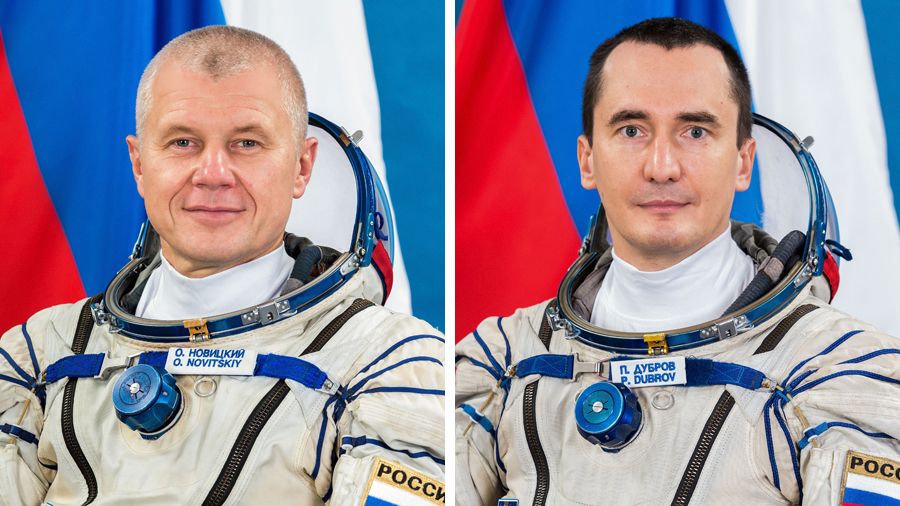
April will be a busy month on the orbital lab as three new Expedition 65 crew members, NASA astronaut Mark Vande Hei and Roscosmos cosmonauts Oleg Novitskiy and Pyotr Dubrov, get ready their April 9 launch to the station aboard the Soyuz MS-18 spacecraft. Expedition 64 will end on April 16 when NASA astronaut Kate Rubins and Roscosmos cosmonauts Sergey Ryzhikov and Flight Engineer Sergey Kud-Sverchkov undock from the Poisk module inside the Soyuz MS-17 crew ship and return to Earth.

The four Crew-1 astronauts are also due to return to Earth at the end of April. They will be replaced about a week before by four SpaceX Crew-2 crewmembers including Shane Kimbrough and Megan McArthur from NASA, Thomas Pesquet from ESA (European Space Agency), Akihiko Hoshide from Japan Aerospace Exploration Agency.

Meanwhile, the station’s seven orbital residents are still keeping up an array of research into microgravity’s impact on biology and physics.

Rubins was the Crew Medical Officer on Monday scanning neck, shoulder and leg veins in Hopkins and Noguchi using the Ultrasound-2 device. Hopkins then joined Glover and Walker for cognition tests for the Standard Measures investigation observing how astronauts adapt to weightlessness.

On the Russian side of the station, station Commander Sergey Ryzhikov packed hard drives containing plasma physics research data for return to Earth with the Expedition 64 trio. Roscosmos Flight Engineer Sergey Kud-Sverchkov swabbed surfaces inside the Zvezda service module to collect microbe samples for later analysis.

Get The Details…

Mark Garcia

Powered by WPeMatico

Station Ends Week with Biology; New Crew Arrives at Launch Site

Station Ends Week with Biology; New Crew Arrives at Launch Site

(From left) Expedition 65 crew members Mark Vande Hei, Oleg Novitskiy and Pyotr Dubrov, arrive for final launch preparations at the Baikonur Cosmodrome in Kazakhstan.

The seven residents aboard the International Space Station are wrapping up an intense week of biology investigations in low-Earth orbit. Three new crew members are also two weeks away from launching to the orbiting lab and joining the Expedition 64 crew.

The station astronauts have been focusing their research efforts this week on microgravity’s long-term impacts on the human body and other biological processes. NASA Flight Engineer Kate Rubins examined space-grown protein crystals in a microscope on Friday morning for insights into pharmaceutical production beyond Earth’s gravity. She later peered at microscopic worms wriggling in unique sample slides, set up by NASA Flight Engineer Shannon Walker, to understand how weightlessness affects genetic expression in muscles.

Flight Engineers Victor Glover and Soichi Noguchi partnered together in the ongoing Time Perception study inside Europe’s Columbus laboratory module. The astronauts wear virtual reality googles and click a trackball while performing a series of exercises to understand how their spatial orientation and cognitive performance changes in microgravity.

Lab maintenance is also critical to ensure station systems such as life support and computing remain in tip-top shape. Flight Engineer Michael Hopkins worked preventative maintenance in the Tranquility module’s Water Recycling System. He also replaced electrical components inside the Human Research Facility-2 rack.

The two cosmonauts, Commander Sergey Ryzhikov and Flight Engineer Sergey Kud-Sverchkov, kept up with their contingent of space research in the station’s Russian segment. Ryzhikov finalized this week’s plasma physics study closing out the experiment and stowing the advanced science gear. Kud-Sverchkov explored how the human circulatory system adapts to long-term spaceflight.

Three new Expedition 65 crew members have arrived at their launch site at the Baikonur Cosmodrome in Kazakhstan today. Flight Engineers Mark Vande Hei of NASA and Pyotr Dubrov of Roscosmos with Soyuz MS-18 Commander Oleg Novitskiy are in final training for their April 9 launch to the space station.

Get The Details…

Mark Garcia

Powered by WPeMatico