Cosmonauts Ready for Spacewalk, Astronauts Run Space Research

Cosmonauts Ready for Spacewalk, Astronauts Run Space Research

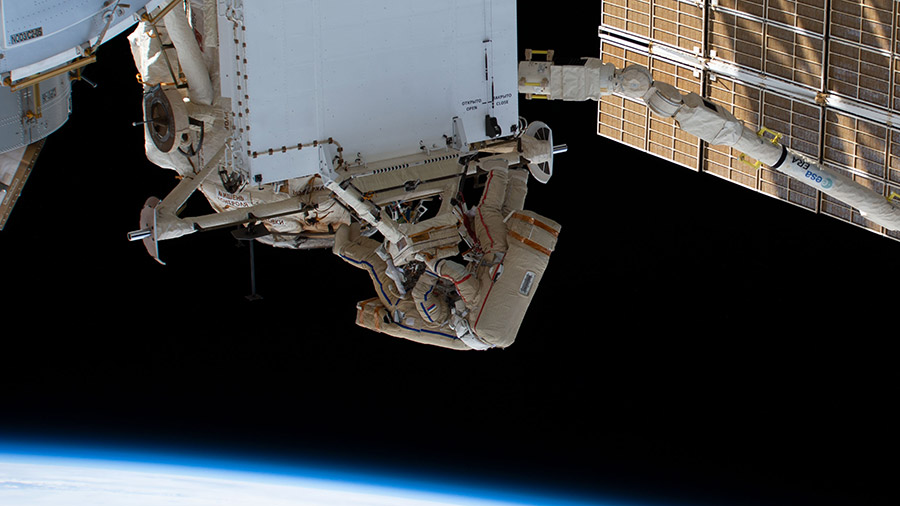
Roscosmos cosmonaut Sergey Prokopyev lays cable on the Zvezda service module during a spacewalk on Aug. 15, 2018.

Two Expedition 68 crew members are making final preparations before exiting the International Space Station on Wednesday for the 12th spacewalk of the year. Meanwhile, the rest of the orbital residents kept up with advanced microgravity research operations.

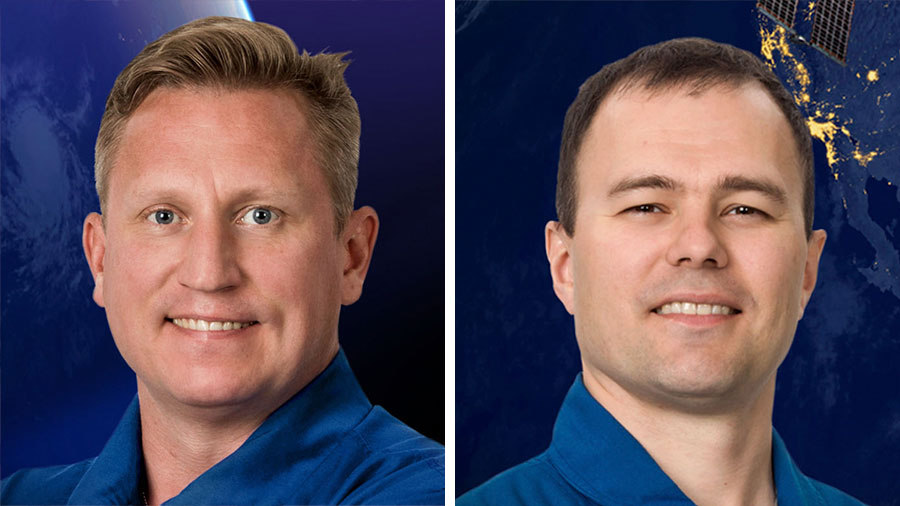
Commander Sergey Prokopyev will join Flight Engineer Dmitri Petelin to begin a spacewalk at 9:20 p.m. EST on Wednesday. The duo will exit the Poisk module’s airlock and transfer a radiator from the Rassvet module then connect it to the Nauka multipurpose laboratory module.

The Roscosmos cosmonauts configured their Orlan spacesuits and reviewed their timeline today to prepare for the seven-hour spacewalk. Flight Engineer Anna Kikina joined the pair for the spacewalk review. She will assist the spacewalkers on Wednesday as she operates the European robotic arm maneuvering the radiator from Rassvet to Nauka.

As the spacewalk preparations were ongoing, a variety of life science was under way aboard the orbital lab throughout Tuesday. NASA Flight Engineers Nicole Mann and Josh Cassada kicked off Tuesday collecting their blood samples for processing and analysis. Mann then moved on and took turns with NASA Flight Engineer Frank Rubio nourishing biological samples for a study that explores how bones heal in space.

Cassada also unloaded life support gear from inside the Cygnus space freighter and activated the hardware inside the Quest airlock. Rubio began his day connecting components inside the Combustion Integrated Rack, a flames and fuels research device, before aiding Cassada with the Cygnus cargo transfers.

Astronaut Koichi Wakata of the Japan Aerospace Exploration Agency (JAXA) spent Tuesday morning inside the Kibo laboratory module servicing the NanoRacks External Platform that places and exposes experiments to the vacuum of space outside the station. The veteran station resident wrapped up his day setting up the Liquid Behavior investigation to study fluids in microgravity possibly advancing the design of space systems such as life support, vehicles, and fuel tanks.


Learn more about station activities by following the space station blog@space_station and @ISS_Research on Twitter, as well as the ISS Facebook and ISS Instagram accounts.

Get weekly video highlights at: http://jscfeatures.jsc.nasa.gov/videoupdate/

Get the latest from NASA delivered every week. Subscribe here: www.nasa.gov/subscribe

Get The Details…

Mark Garcia

Powered by WPeMatico

Cosmonauts and Astronauts Ramping Up for a Pair of Spacewalks

Cosmonauts and Astronauts Ramping Up for a Pair of Spacewalks

Cosmonauts (from top) Sergey Prokopyev and Dmitri Petelin work on an Orlan spacesuit inside the space station's Poisk module.
Cosmonauts (from top) Sergey Prokopyev and Dmitri Petelin work on an Orlan spacesuit inside the space station’s Poisk module.

Two spacewalks are planned in the next several days outside the International Space Station for the Expedition 68 crew. Meanwhile, science was still ongoing at the beginning of the week with space botany and physics work aboard the orbiting lab.

On Wednesday at 9:20 p.m. EST, Commander Sergey Prokopyev and Flight Engineer Dmitri Petelin will exit the Poisk module’s airlock in their Orlan spacesuits. They will spend about seven hours transferring a radiator from the Rassvet module to the Nauka multipurpose laboratory module. Flight Engineer Anna Kikina will be inside Nauka supporting the spacewalking duo by operating the European robotic arm.

Prokopyev and Petelin spent Monday getting their suits and the Poisk airlock ready for Wednesday’s excursion. The duo configured their spacesuits’ life support and communications components then collected and organized the tools they will use during the spacewalk. They also closed the hatch and performed leak checks on the ISS Progress 82 resupply ship which is docked to Poisk just outside its airlock. Kikina primarily spent the day on life support and ventilation maintenance.

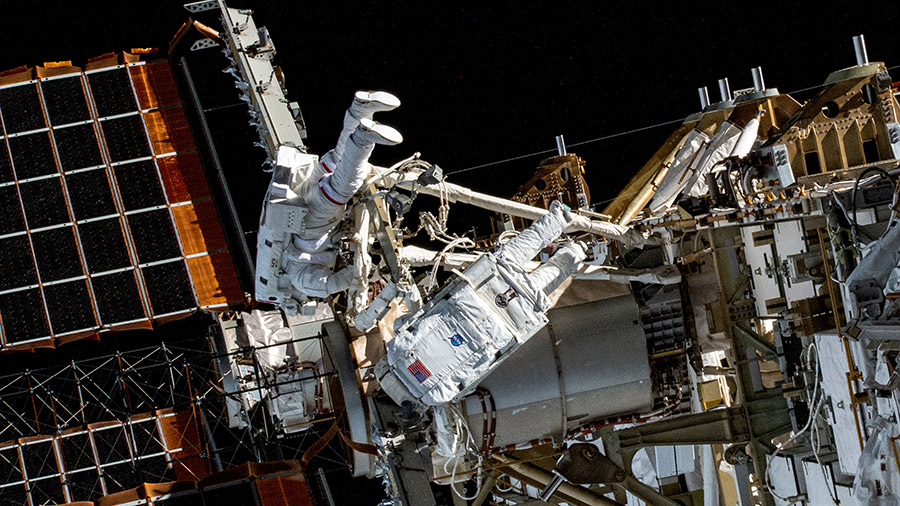
NASA Flight Engineers Josh Cassada and Frank Rubio will have their spacewalk together on Monday, Dec. 19. They will install their second roll-out solar array, or International Space Station Roll-Out Solar Array (iROSA), on the Port-4 (P4) truss segment. They installed their first iROSA on Dec. 3 on the station’s Starboard-4 truss segment opposite of the P4.

The two NASA astronauts spent some time on Monday reviewing the iROSA installation procedures and discussing the spacewalk with mission controllers on the ground. Flight Engineers Nicole Mann of NASA and Koichi Wakata of the Japan Aerospace Exploration Agency (JAXA) also participated in the review and the ground conference and will assist the two spacewalkers next week.

Cassada kicked off the workweek watering dwarf tomatoes growing inside the Veggie space botany facility for the Veg-05 experiment. Wakata transported physics research hardware from the Cygnus resupply ship to a research rack inside the Kibo laboratory module. Rubio collected carbon dioxide samples from life support hardware. Mann also assisted the cosmonauts helping them get their tools ready for Wednesday’s spacewalk.


Learn more about station activities by following the space station blog@space_station and @ISS_Research on Twitter, as well as the ISS Facebook and ISS Instagram accounts.

Get weekly video highlights at: http://jscfeatures.jsc.nasa.gov/videoupdate/

Get the latest from NASA delivered every week. Subscribe here: www.nasa.gov/subscribe

Get The Details…

Mark Garcia

Powered by WPeMatico

Botany, Physics, and Spacesuits Wrap Up Station Workweek

Botany, Physics, and Spacesuits Wrap Up Station Workweek

The Full Moon sets below Earth's horizon in this photograph from the space station. The Artemis I mission was about 207,200 miles from Earth and 180,400 miles from the Moon, cruising at 1,415 mph.
The Full Moon sets below Earth’s horizon in this photograph from the space station. The Artemis I mission was about 207,200 miles from Earth and 180,400 miles from the Moon.

The workweek wrapped up with the Expedition 68 crew working on botany and physics hardware aboard the International Space Station. Spacesuit maintenance is still proceeding as the astronauts and cosmonauts continue preparing for more spacewalks before the end of the year.

Growing fresh food off the Earth is a key mission objective as NASA and its international partners plan longer human missions to the Moon, Mars, and beyond. NASA Flight Engineer Josh Cassada spent all day on Friday configuring hardware and installing components on the Veggie space botany facility located in the Columbus laboratory module. Soon the plant growth unit will host a small crop of dwarf tomatoes growing for the Veg-05 study investigating ways to maintain a continuous fresh-food production system in space.

NASA Flight Engineer Frank Rubio was working in the Microgravity Science Glovebox at the end of the day exchanging samples for a fluid physics study. The investigation explores the coarsening and coalescence of foams in weightlessness with potential applications for the firefighting, petroleum, and medicine industries among others.

Flight Engineer Koichi Wakata of the Japan Aerospace Exploration Agency (JAXA) took turns with Rubio on Friday collecting blood and urine samples, processing them, then stowing them in science freezers for later examination. Wakata also cleaned and serviced components inside the Electrostatic Levitation Furnace, an experimental facility that enables safe research of high temperature physics above 2,000 degrees Celsius.

Several more spacewalks are scheduled before the end of the year. The first is scheduled for Wednesday, Dec. 14, and a second for Dec. 19. Both spacewalks will be broadcast live on NASA TV, on the agency’s app and website.

NASA Flight Engineer Nicole Mann was back on spacesuit duty on Friday removing and replacing life support components inside the Extravehicular Mobility Units, or EMUs. She later removed a small satellite deployer from inside the Kibo laboratory module’s airlock.

Commander Sergey Prokopyev and Flight Engineer Dmitri Petelin partnered once again checking their Orlan spacesuits for leaks and reviewing procedures for the Dec. 14 spacewalk. The duo also took turns working out on the station’s exercise bike while attached to sensors for a fitness evaluation. Flight Engineer Anna Kikina wrapped up her week transferring water and repressurizing nitrogen from the docked ISS Progress 82 resupply ship to tanks aboard the space station.


Learn more about station activities by following the space station blog@space_station and @ISS_Research on Twitter, as well as the ISS Facebook and ISS Instagram accounts.

Get weekly video highlights at: http://jscfeatures.jsc.nasa.gov/videoupdate/

Get the latest from NASA delivered every week. Subscribe here: www.nasa.gov/subscribe

Get The Details…

Mark Garcia

Powered by WPeMatico

Station Crew Works Spacesuits, Science Hardware, and Human Research

Station Crew Works Spacesuits, Science Hardware, and Human Research

The Moon is pictured the day before its Full Moon phase from the space station. At the time of this photograph the Orion vehicle on the Artemis I mission was 234,100 miles from Earth and 127,700 miles from the Moon, cruising at 820 miles per hour.

Spacesuit maintenance and research hardware topped the task list for the Expedition 68 crew on Thursday. The orbital residents aboard the International Space Station also worked on biomedical activities and ensured life support systems continue operating in tip-top shape.

NASA astronauts Josh Cassada and Nicole Mann worked together throughout Thursday servicing an Extravehicular Mobility Unit (EMU), or spacesuit, inside the Quest airlock. The duo spent the entire day swapping electronics and life support components inside the spacesuit ahead of a spacewalk planned for Monday, Dec. 19. Two astronauts will exit Quest in their EMUs on that day and spend about seven hours installing another roll-out solar array on the station’s Port-4 truss segment.

NASA Flight Engineer Frank Rubio had his hands full during the day working on a variety of science gear supporting everything from satellite deployments, fluid physics, and ultra-high resolution video technology. Beginning his day in the Harmony module, Rubio disassembled a small satellite deployer that had ejected four CubeSats from outside the Kibo laboratory module last week. Next, he opened up the Fluids Science Laboratory and installed samples to investigate the coarsening and coalescence of foams with potential applications for the firefighting, petroleum, and medicine industries among others. Finally, the first time space-flyer assembled the SphereCam-1 to demonstrate capturing the highest resolution, groundbreaking 12K views from a spacecraft supporting future space exploration missions.

Flight Engineer Koichi Wakata of the Japan Aerospace Exploration Agency (JAXA) drew a blood sample during the morning and processed it in a centrifuge before the stowing the sample in a science freezer for future examination. Wakata then worked on the Kibo lab’s water recovery system troubleshooting hardware inside the life support device. At the end of the day, the experienced space station veteran collected a urine sample and stowed it in a science freezer for later analysis.

Commander Sergey Prokopyev performed a leak check on the docking interface between the Poisk module and the ISS Progress 82 cargo craft. Flight Engineer Dmitri Petelin set up a video camera inside the Nauka multipurpose laboratory module. Finally, Flight Engineer Anna Kikina, with assistance from Petelin, attached sensors to herself and pedaled strenuously on the station’s exercise bike for a fitness evaluation.


Learn more about station activities by following the space station blog@space_station and @ISS_Research on Twitter, as well as the ISS Facebook and ISS Instagram accounts.

Get weekly video highlights at: http://jscfeatures.jsc.nasa.gov/videoupdate/

Get the latest from NASA delivered every week. Subscribe here: www.nasa.gov/subscribe

Get The Details…

Mark Garcia

Powered by WPeMatico

Spacesuit Work and Emergency Training Aboard Station Today

Spacesuit Work and Emergency Training Aboard Station Today

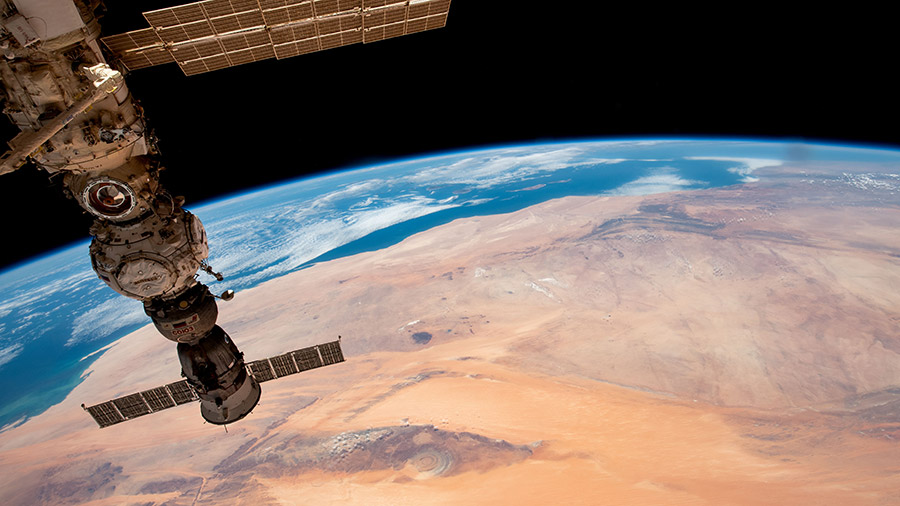
The Moon is pictured above Earth's horizon from the space station. The Orion vehicle on the Artemis I mission was almost 24,000 miles away from the Moon and approximately 222,200 miles from Earth at the time of this photograph.
The Moon is pictured above Earth’s horizon from the space station. The Orion vehicle on the Artemis I mission was almost 24,000 miles away from the Moon and approximately 222,200 miles from Earth at the time of this photograph.

The Expedition 68 crew took a break from its intense space research activities and focused on spacesuits, biomedical tests, and lab maintenance on Wednesday. Four International Space Station flight engineers also reviewed the procedures necessary to depart the orbiting lab in the unlikely event of an emergency.

Flight Engineers Josh Cassada and Nicole Mann spent some time during the afternoon studying instructions to replace life support components inside Extravehicular Mobility Units, or the spacesuits that astronauts wear during spacewalks. Cassada gathered tools at the beginning of the day to support the spacesuit maintenance work. Mann then took a few minutes shaking research bags containing particle-filled fluids for a study to understand the formation of asteroids and planets and possibly inform advanced manufacturing techniques on Earth.

Cassada also had time after lunch to join Flight Engineer Koichi Wakata of the Japan Aerospace Exploration Agency (JAXA) for vein scans using the Ultrasound 2 device. Cassada performed the medical duties scanning Wakata’s leg, neck, and shoulder veins with remote guidance from a flight surgeon on the ground. Earlier, Wakata took a robotics test for a behavioral study that measures crew performance. At the end of the day, he photographed sutured biological samples to investigate wound healing in space.

NASA astronaut Frank Rubio spent the day working in the Combustion Integrated Rack relieving pressure, replacing components, and checking cable connections inside the device that enables safe research into flames, fuel, and soot in microgravity.

Mann, Cassada, Wakata, and Roscosmos Flight Engineer Anna Kikina, who rode aboard the SpaceX Dragon Endurance crew ship to the station on Oct. 6, gathered together for an emergency procedures review on Wednesday afternoon. The quartet studied together on a computer the steps necessary to board Endurance and quickly evacuate the station during an unlikely emergency event such as a depressurization or a fire.

Cosmonauts Sergey Prokopyev and Dmitri Petelin spent all day Wednesday continuing work on Orlan spacesuit maintenance. The duo serviced and replaced life support components inside the suits they will wear on an upcoming spacewalk to relocate a radiator from the Rassvet module to the Nauka multipurpose laboratory module. Kikina started her day working on electronics and computer hardware before wrapping up her shift studying how to pilot robots or spacecraft on future planetary missions.


Learn more about station activities by following the space station blog@space_station and @ISS_Research on Twitter, as well as the ISS Facebook and ISS Instagram accounts.

Get weekly video highlights at: http://jscfeatures.jsc.nasa.gov/videoupdate/

Get the latest from NASA delivered every week. Subscribe here: www.nasa.gov/subscribe

Get The Details…

Mark Garcia

Powered by WPeMatico