SpaceX Dragon Cargo Spacecraft Departs from Station
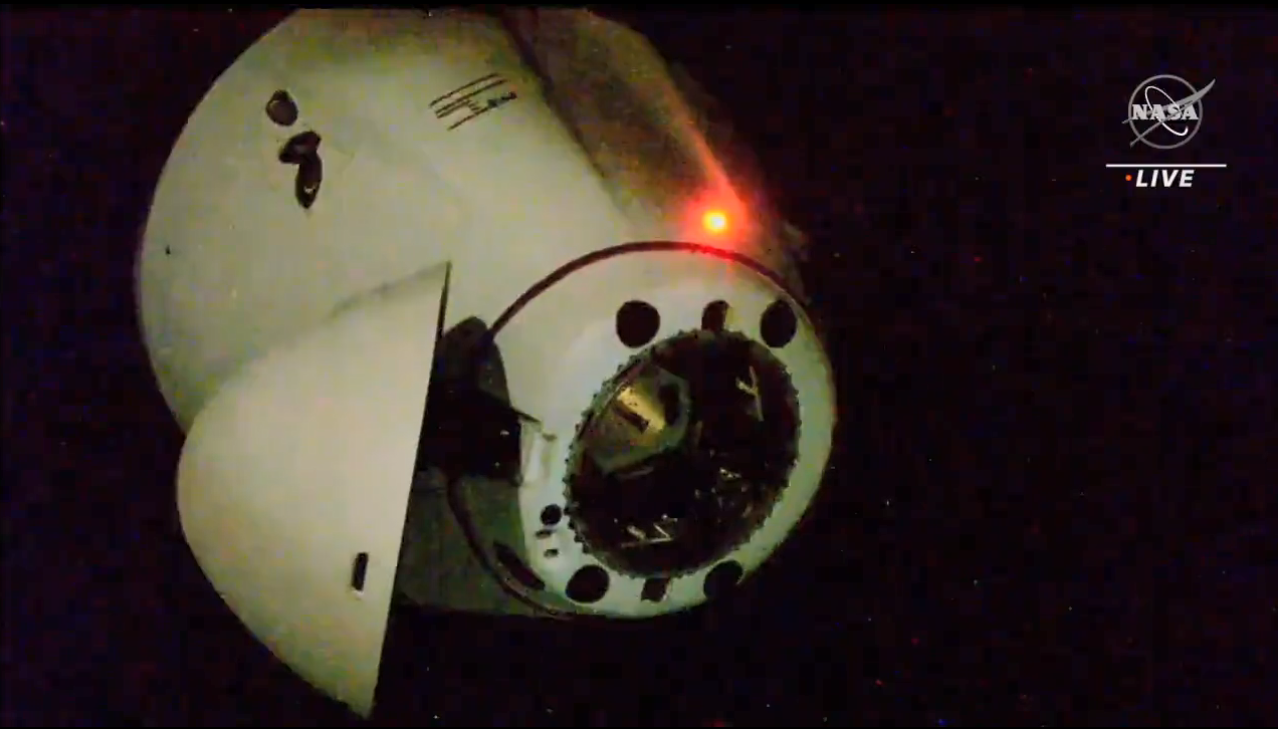
A SpaceX Dragon cargo spacecraft undocks from the station on June 29, 2023, to bring 3,600 pounds of science back to Earth. Credit: NASA TV
Following commands from ground controllers at SpaceX in Hawthorne, California, the company’s Dragon cargo spacecraft undocked at 12:30 p.m. EDT from the space-facing port of the station’s Harmony module. At the time of undocking the station was flying at an altitude about 260 miles northeast of the Indian Ocean west of Indonesia.
After re-entering Earth’s atmosphere, the spacecraft will make a parachute-assisted splashdown off the coast of Florida on Friday, June 30. NASA will not broadcast the splashdown, but updates will be posted on the agency’s space station blog.
Dragon arrived at the station June 6 as SpaceX’s 28th Commercial Resupply Services mission for NASA, delivering more than 7,000 pounds of research investigations, crew supplies, and station hardware, including two IROSAs, or International Space Station Roll-Out Solar Arrays. The spacecraft was launched June 5 on a SpaceX Falcon 9 rocket from Launch Complex 39A at NASA’s Kennedy Space Center in Florida.
SpaceX Dragon Cargo Spacecraft Departing Station Live on NASA TV
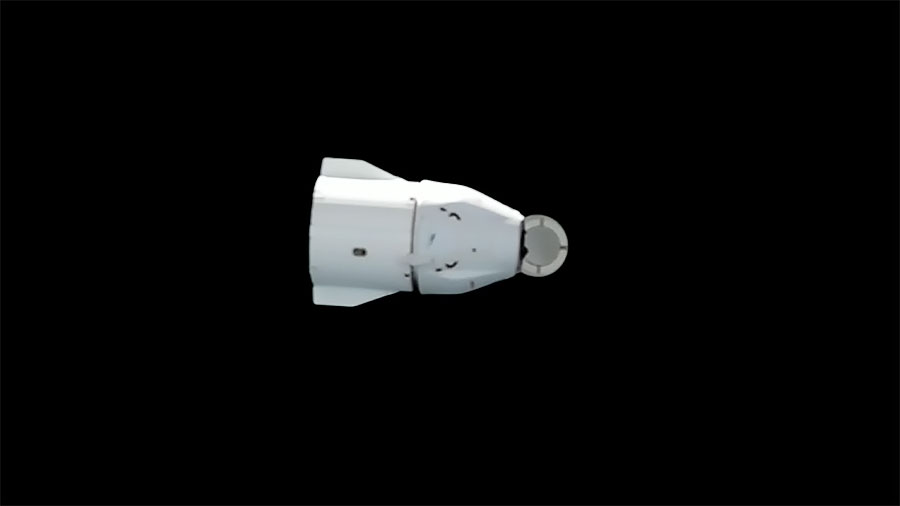
The SpaceX Dragon cargo spacecraft is pictured departing the vicinity of the space station following its undocking from the Harmony module’s space-facing port on January 9, 2023.
Live coverage of the departure of a SpaceX Dragon cargo spacecraft from the International Space Station is underway on NASA Television, the agency’s website, and the NASA app.
Following commands from ground controllers at SpaceX in Hawthorne, California, Dragon will undock at 12:30 p.m. EDT from the space-facing port of the station’s Harmony module and fire its thrusters to move a safe distance away from the station.
After re-entering Earth’s atmosphere, the spacecraft will make a parachute-assisted splashdown off the coast of Florida about 10:30 a.m. Friday, June 30. NASA will not broadcast the splashdown, but updates will be posted on the agency’s space station blog.
Dragon Go For Undocking as Crew Finalizes Cargo Loading
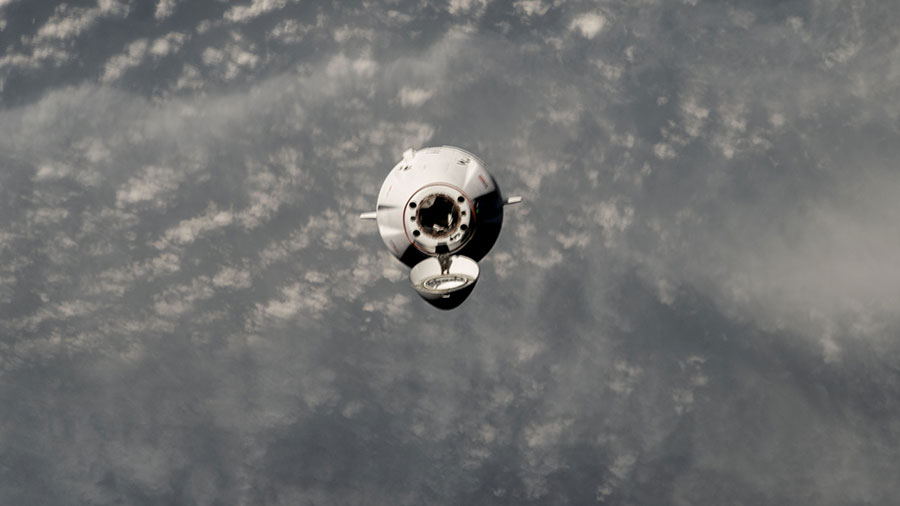
The SpaceX Dragon cargo spacecraft is pictured approaching the International Space Station on June 6 above a cloudy Sea of Japan in this photograph from the orbital outpost.
Mission managers have given the go for the undocking of the SpaceX Dragon cargo spacecraft from the International Space Station on Thursday. As Dragon nears its departure, the Expedition 69 crew also worked on advanced science hardware while conducting cardiac research and immunity studies.
Flight Engineers Woody Hoburg, Stephen Bowen, and Sultan Alneyadi took turns on Wednesday loading some of the 3,600 pounds of cargo that will return to Earth inside Dragon. The trio will get back together on Thursday for final cargo activities as they pack critical research samples inside Dragon’s return science freezers before closing its hatch.
Dragon is scheduled to undock from the Harmony module’s space-facing port at 12:05 p.m. EDT on Thursday. It will parachute to a splashdown off the coast of Florida early Friday morning for retrieval by SpaceX and NASA personnel. NASA TV will cover Dragon’s undocking and departure beginning at 11:45 a.m. on the agency’s app and website. NASA will not broadcast the splashdown, but updates will be posted on the agency’s space station blog.
Bowen began his day in the Kibo laboratory module setting up the NanoRacks CubeSat deployer that will soon be placed into the vacuum of space outside Kibo’s airlock. The deployer will release six different nanosatellites into Earth orbit for Earth observations, communication studies, materials research, and a technology demonstration. NASA Flight Engineer Frank Rubio activated the Astrobee robotic free-flyers during the afternoon and performed software test runs on the devices with assistance from ground controllers.
Hoburg from NASA and Alneyadi from UAE (United Arab Emirates) partnered together in the afternoon for maintenance duties inside the Quest airlock. The duo secured airlock closeout panels and stowage platforms inside Quest.
Human research was a top priority on Wednesday for the cosmonauts working in the orbital outpost’s Roscosmos segment. Flight Engineer Dmitri Petelin assisted Commander Sergey Prokopyev as he attached sensors to himself monitoring how living in microgravity affects his blood pressure and his cardiovascular health. Petelin stowed research hardware then downloaded data collected for a study that observes how the human immune system adapts to long-term weightlessness.
Flight Engineer Andrey Fedyaev set up a camera inside the Poisk module and pointed it out a window to photograph the external condition of the Roscosmos segment of the space station. He also spent some time working on ventilation systems inside the Nauka science module.
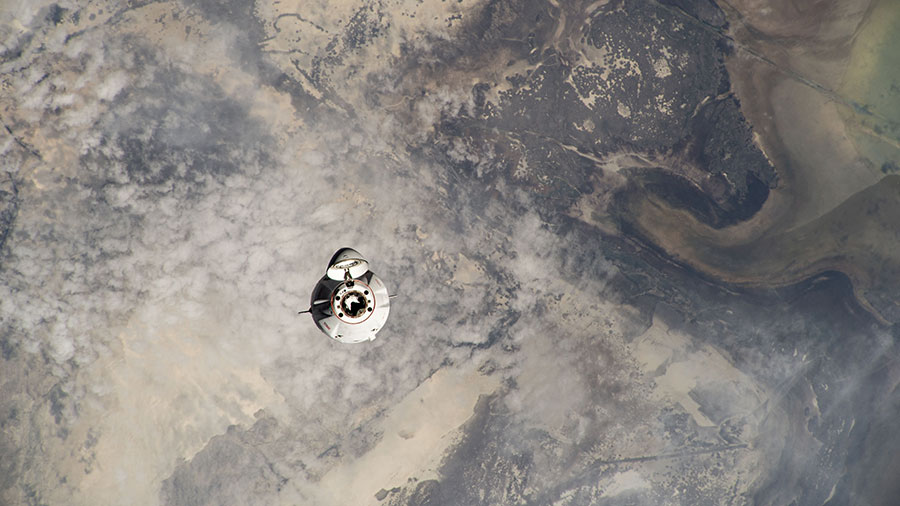
The SpaceX Dragon cargo spacecraft approaches the space station for an automated docking loaded with over 7,000 pounds of experiments, hardware, and crew supplies on June 9, 2023.
A U.S. cargo craft is being packed and readied for its undocking from the International Space Station and its retrieval on Earth at the end of the week. The Expedition 69 crew members also focused their Tuesday research activities on space botany, robotics, and human research.
The SpaceX Dragon cargo spacecraft is nearing the end of its stay at the orbital lab and is scheduled to undock at 12:05 p.m. EDT on Thursday. NASA TV will begin its live undocking and departure coverage at 11:45 a.m. on the agency’s app and website.
NASA Flight Engineers Frank Rubio, Woody Hoburg, and Stephen Bowen along with UAE (United Arab Emirates) Flight Engineer Sultan Alneyadi worked throughout Tuesday continuing to load Dragon with some of the 3,600 pounds of cargo that will return to Earth. Dragon is due to splash down off the coast of Florida about 2:30 a.m. on Friday for retrieval by NASA and SpaceX personnel. Dragon arrived at the station on June 6 packed with over 7,000 pounds of new science experiments, crew supplies, and lab hardware.
While Rubio spent most of Tuesday on Dragon cargo transfers, he also had time for hardware inspections inside the Microgravity Science Glovebox in the afternoon. Bowen swapped out life support components and charged wearable medical monitoring gear. Bowen and Hoburg also spent an hour before lunchtime reviewing Dragon Endeavour crew spacecraft departure procedures.
Flight Engineer Dmitri Petelin collected his saliva and hair samples for a study that will analyze them to understand how the human immune system adapts to microgravity. Commander Sergey Prokopyev and Flight Engineer Andrey Fedyaev primarily focused their activities on maintenance on Tuesday. The two cosmonauts worked in the Zvezda service module as Prokopyev worked on ventilation systems while Fedyaev checked its power supply and oxygen generator.
Week Starts With Multitude of Space Science Activities
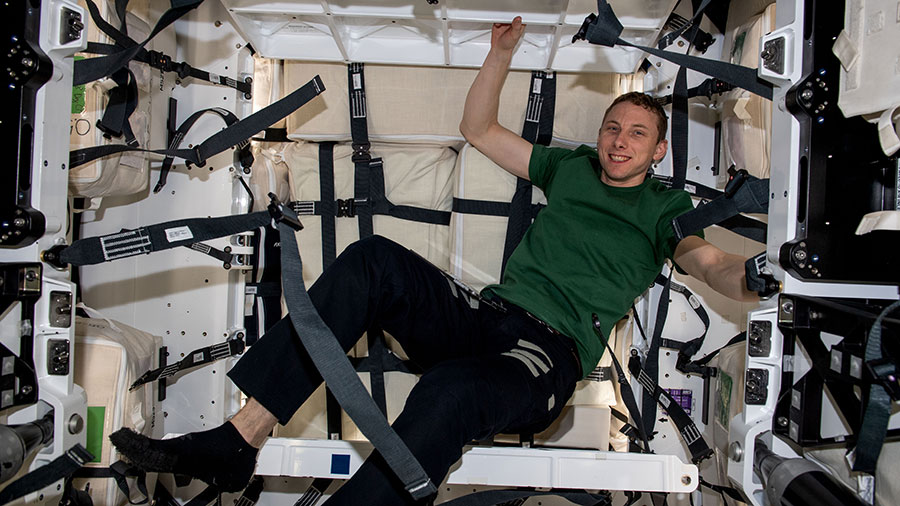
Astronaut Woody Hoburg is pictured loading cargo inside the SpaceX Dragon cargo vehicle.
Space botany, microbiology, and future piloting techniques were the main experiments aboard the International Space Station on Monday. The Expedition 69 crew members are also readying a cargo vehicle for its departure and continuing to clean up after last week’s spacewalk.
Following a busy period of spacewalks at the orbital outpost, the station’s residents returned their attention to microgravity research on Monday benefitting humans living on and off the Earth.
NASA Flight Engineer Woody Hoburg worked in the Kibo laboratory module preparing the Advanced Plant Habitat for upcoming research operations. Hoburg installed and replaced components inside the botany science facility for the Plant Habitat-03 experiment that will observe space-caused genetic adaptations in plants.
NASA Flight Engineer Stephen Bowen started his day installing research hardware on an experiment platform and placing it inside Kibo’s airlock for exposure to the vacuum of space. Afterward, Bowen analyzed slides containing incubated microbe samples collected from the station’s air and surfaces.
UAE (United Arab Emirates) astronaut Sultan Alneyadi swapped out hardware inside the Materials Science Laboratory, a physics research facility, and prepared it for calibration inside the Destiny laboratory module. Alneyadi also loaded sample-packed science freezers inside the SpaceX Dragon cargo vehicle for retrieval back on Earth at the end of the week.
NASA astronaut Frank Rubio took the day off Monday relaxing and taking time out for exercising.
Commander Sergey Prokopyev and Flight Engineer Dmitri Petelin took turns on Monday wearing a sensor-packed cap and practicing futuristic piloting techniques. The Pilot-T study takes place on a computer and monitors how a crew member might react and control spacecraft or robots on a planetary mission.
Flight Engineer Andrey Fedyaev spent Monday morning collecting air samples from the Zvezda, Nauka, and Poisk modules. In the afternoon, Fedyaev checked laptop computer hardware and serviced ventilation systems inside Nauka.