Rubio Spends One Full Year in Space; Cleaning and Maintenance Tasks Top Thursday’s Schedule

Rubio Spends One Full Year in Space; Cleaning and Maintenance Tasks Top Thursday’s Schedule

NASA astronaut and Expedition 68 Flight Engineer Frank Rubio is pictured conducting maintenance tasks inside the International Space Station's Harmony module.
NASA astronaut and Expedition 68 Flight Engineer Frank Rubio is pictured conducting maintenance tasks inside the International Space Station’s Harmony module.

As the Expedition 69 crew members near the end of their work week, the ten orbital residents completed a variety of cleaning and maintenance tasks on Thursday aboard the International Space Station.

After arriving to the orbital outpost on Sept. 21, 2022, NASA astronaut Frank Rubio has reached one full year in space today. His record-breaking mission has included dozens of scientific investigations that have helped researchers better understand how humans thrive while living and working in space. Rubio spent most of his 365th day on station upkeep, performing maintenance on the Human Research Facility, removing and replacing its pressure sensor block. In the evening, he collected biological samples for the ongoing Standard Measures investigation.

Flight Engineers Jasmin Moghbeli and Loral O’Hara of NASA began their day in the Japanese Experiment Module (JEM) cleaning smoke detectors. The duo then split up after lunch, Moghbeli removing and replacing cables on the network router in the Destiny Laboratory Module, while O’Hara studied training materials on the station’s new Potable Water Dispenser. O’Hara then joined ESA (European Space Agency) astronaut Andreas Mogensen to review spacesuit operations.

Meanwhile, JAXA (Japan Aerospace Exploration Agency) Flight Engineer Satoshi Furukawa kick-started his day with the required two hours of exercise for astronauts, using the station’s bike, CEVIS, and the Advanced Resistive Exercise Device, or ARED. The rest of his day was spent working in JEM, collecting samples from the Water Recovery System for future analysis.

The five Roscosmos cosmonauts living in low-Earth orbit worked on separate tasks today as two prepare to head home to Earth next week. Flight Engineer Konstantin Borisov worked in the Nauka module, removing and replacing vacuum pumps, while Flight Engineer Nikolai Chub ran the 3D printer in the Zvezda service module. Their fellow cosmonaut Oleg Kononenko, who arrived to the orbiting laboratory just last week with O’Hara and Chub, ran an experiment that assesses cardiovascular and respiratory function.

The other two long-serving station residents, Commander Sergey Prokopyev and Flight Engineer Dmitri Petelin, reached one year in space today along with Rubio. The duo spent their 365th day continuing to prepare for their journey back home to Earth next week on Sept. 27.


Learn more about station activities by following the space station blog, @space_station and @ISS_Research on X, as well as the ISS Facebook and ISS Instagram accounts.

Get weekly video highlights at: https://roundupreads.jsc.nasa.gov/videoupdate/

Get the latest from NASA delivered every week. Subscribe here: www.nasa.gov/subscribe

Powered by WPeMatico

Get The Details…

Abby Graf

NASA Seeks Proposals from US Industry for Station Deorbit Spacecraft

NASA Seeks Proposals from US Industry for Station Deorbit Spacecraft

This mosaic depicts the International Space Station pictured from the SpaceX Crew Dragon Endeavour during a fly around of the orbiting lab that took place following its undocking from the Harmony module’s space-facing port on Nov. 8, 2021.

NASA has released a request for proposal from U.S. industry for the U.S. Deorbit Vehicle (USDV), a spacecraft meant to safely deorbit the International Space Station as part of its planned retirement.

To maximize value to the government and enhance competition, the acquisition will allow offerors flexibility in proposing Firm Fixed Price or Cost Plus Incentive Fee for the Design, Development, Test and Evaluation phase. The remainder of the contract will be Firm Fixed Price.

Since 1998, five space agencies (the Canadian Space Agency, the European Space Agency, the Japan Aerospace Exploration Agency, the National Aeronautics and Space Administration, and the State Space Corporation “Roscosmos”) have operated the International Space Station, with each responsible for managing and controlling the hardware it provides. The station was designed to be interdependent and relies on contributions from across the partnership to function. The United States, Japan, Canada, and the participating countries of ESA (European Space Agency) have committed to operating the station through 2030, and Russia through at least 2028.

At the conclusion of the International Space Station program, the station will be deorbited in a controlled manner to avoid populated areas. The safe deorbit of the International Space Station is a shared responsibility of all five space agencies through partner contributions based on mass percent ownership by agency. In the future, the United States plans to transition its operations in low Earth orbit to commercially-owned and -operated platforms to ensure continued access and presence in space for research, technology development, and international collaboration.

In a years-long effort, NASA and its partners studied deorbit requirements and previously developed a preliminary strategy and action plan that evaluated the use of multiple Roscosmos Progress spacecraft to support deorbit operations. These efforts now indicate a new spacecraft solution would provide more robust capabilities for responsible deorbit. To initiate development of this new spacecraft, NASA released the request for proposal.

The USDV is focused on the final deorbit activity. It will be a new spacecraft design or modification to an existing spacecraft that must function on its first flight and have sufficient redundancy and anomaly recovery capability to continue the critical deorbit burn. As with any development effort of this size, the USDV will take years to develop, test, and certify.

For additional information about deorbit plans, visit: International Space Station Transition FAQs.


Learn more about station activities by following the space station blog, @space_station and @ISS_Research on X, as well as the ISS Facebook and ISS Instagram accounts.

Get weekly video highlights at: https://roundupreads.jsc.nasa.gov/videoupdate/

Get the latest from NASA delivered every week. Subscribe here: www.nasa.gov/subscribe

Powered by WPeMatico

Get The Details…

Mark Garcia

Health Activities, Microbial Research for Orbital Residents Today; Crew Handovers Continue

Health Activities, Microbial Research for Orbital Residents Today; Crew Handovers Continue

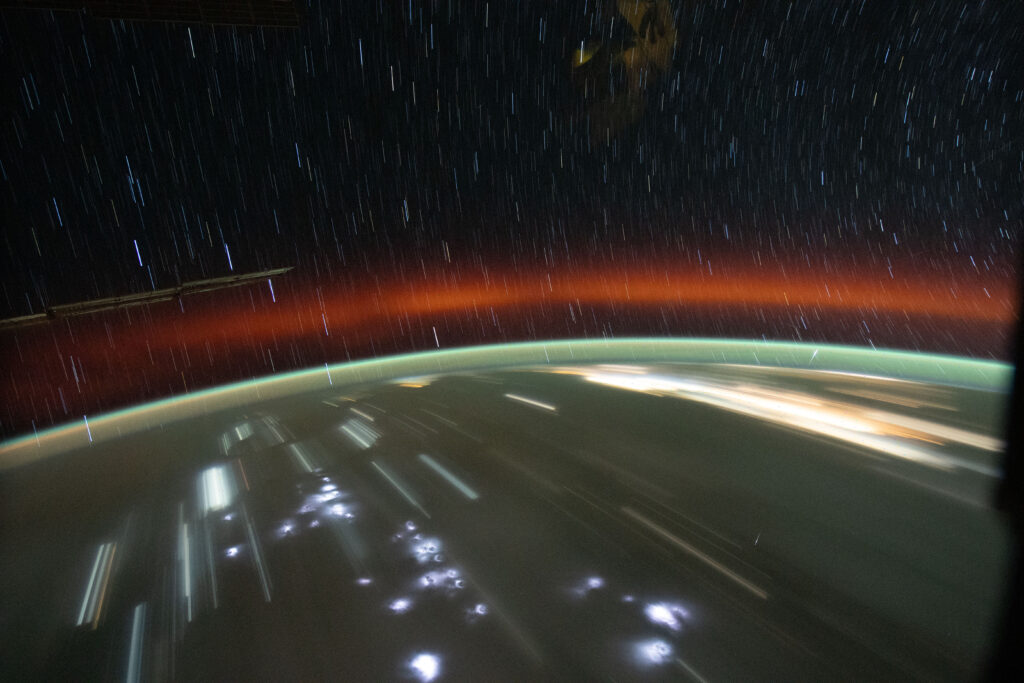
Earth's atmosphere glows as the International Space Station soared roughly 260 miles above Egypt.
Earth’s atmosphere glows as the International Space Station soared roughly 260 miles above Egypt.

Ten orbital residents are keeping busy Wednesday with a variety of tasks including eye exams, station maintenance, and training. While new members of the Expedition 69 crew familiarize themselves with hardware and equipment, others are completing more prep work ahead of their departure from the International Space Station next week.

After donning the Sleep in Orbit hardware overnight, ESA (European Space Agency) astronaut Andreas Mogensen started his day filling out a questionnaire that helps researchers gain insight into astronauts’ sleep in space and compare that data to sleep on Earth. Midmorning, he was joined by NASA astronauts and first-time station residents, Loral O’Hara and Jasmin Moghbeli, to make adjustments to their spacesuits that will be used on future spacewalks.

After lunch, Mogensensen and Moghbeli were joined by JAXA (Japan Aerospace Exploration Agency) astronaut Satoshi Furukawa to conduct ultrasound eye exams. Furukawa spent most of his morning collecting surface samples for microbial analysis ahead of the exam. Afterward, he moved on to collecting air samples to continue the microbial research.

NASA astronaut Frank Rubio spent Wednesday gearing up for his trek home to Earth next week following a record-breaking mission. He spent part of his day working in the Japanese Experiment Module conducting maintenance before moving onto departure prep, including crew handover activities and prepping items that will return home with the crew on the Soyuz MS-23 spacecraft.

Rubio, as well as Roscosmos Commander Sergey Prokopyev and Flight Engineer Dmitri Petelin, launched to the space station on Sept. 21, 2022, and will undock on Sept. 27 after spending over one year in space. The two cosmonauts joined Rubio in crew handover and departure prep activities today as they prepare for a change in command and continue to train the newly arrived crew.

Roscosmos Flight Engineers Oleg Kononenko and Nikolai Chub, who arrived to the orbital outpost last Friday along with O’Hara, completed crew orientation early on in the day. In the evening, the two were joined by Mogensen, O’Hara and Prokopyev to familiarize themselves with hardware and equipment throughout various station modules.

Meanwhile, Flight Engineer Konstantin Borisov of Roscosmos spent most of the day conducting an experiment that studies the glow of Earth’s atmosphere at night in near ultraviolet.


Learn more about station activities by following the space station blog, @space_station and @ISS_Research on X, as well as the ISS Facebook and ISS Instagram accounts.

Get weekly video highlights at: https://roundupreads.jsc.nasa.gov/videoupdate/

Get the latest from NASA delivered every week. Subscribe here: www.nasa.gov/subscribe

Powered by WPeMatico

Get The Details…

Abby Graf

Orbital Tasks Split Amongst Crew; Handovers Continue as Trio Prepares for Next Week’s Departure

Orbital Tasks Split Amongst Crew; Handovers Continue as Trio Prepares for Next Week’s Departure

iss069e085932_alt (Sept. 4, 2023) --- NASA astronaut and Expedition 69 Flight Engineer Jasmin Moghbeli collects water samples for microbial analysis inside the International Space Station's Destiny laboratory module.
iss069e085932_alt (Sept. 4, 2023) — NASA astronaut and Expedition 69 Flight Engineer Jasmin Moghbeli collects water samples for microbial analysis inside the International Space Station’s Destiny laboratory module.

It’s a full house aboard the International Space Station as 10 residents are living on orbit following Friday’s arrival of a new crew. Tuesday saw a variety of tasks split amongst the residents as three members continue to adjust to life in weightlessness, and another prepares for their journey back home to Earth next week.

First-time orbital residents, Loral O’Hara of NASA and Nikoali Chub of Roscosmos are taking on some of the firsts of many maintenance tasks they’ll complete throughout their stay. O’Hara processed water samples to help determine water quality aboard the station, while Chub partook in an experiment that assesses cardiovascular and respiratory function.

Last Friday brought the arrival of the two to the station, along with Flight Engineer Oleg Kononenko of Roscosmos, who is at the start of his fifth mission aboard the orbiting laboratory. The trio launched aboard the Soyuz MS-24 spacecraft, now docked to the station for the next year. Kononenko spent some of his day transferring cargo from Soyuz and adjusting to another mission in low-Earth orbit.

Astronaut Frank Rubio of NASA, Commander Sergey Prokopyev and Flight Engineer Dmitiri Petelin of Roscosmos spent part of the day prepping for their departure next week on Sept. 27. While Rubio helped his new crew members familiarize themselves with life on orbit, Prokopyev and Petelin completed training on manual controlled descent of the Soyuz MS-23 spacecraft they’ll take home. Ahead of departure prep, Rubio spent his morning in the Tranquility Module, inspecting and cleaning overhead vent diffusers.

Another set of Expedition 69 crew members have quickly adapted to their new routines and are taking on orbital tasks in full force after their arrival in August. Flight Engineer Jasmin Moghbeli of NASA spent the morning collecting blood pressure data, while Flight Engineer Andreas Mogensen of ESA (European Space Agency) tested a new lighting system that aims to help astronauts maintain circadian rhythm. Additionally, Mogensen installed a food processing system to make chocolate mousse, which he later taste-tested before bed.  In the evening, Moghbeli completed an exam to assess intraocular pressure of the eyes.

Flight Engineer Satoshi Furukawa of JAXA (Japan Aerospace Exploration Agency) spent the morning performing maintenance tasks on the Internal Ball Camera in the Japanese Experiment Module. After lunch, he repaired and replaced cables on the Life Support Rack. Meanwhile, Konstantin Borisov of Roscosmos spent the day on orbital plumbing tasks.


Learn more about station activities by following the space station blog, @space_station and @ISS_Research on X, as well as the ISS Facebook and ISS Instagram accounts.

Get weekly video highlights at: https://roundupreads.jsc.nasa.gov/videoupdate/

Get the latest from NASA delivered every week. Subscribe here: www.nasa.gov/subscribe

Powered by WPeMatico

Get The Details…

Abby Graf

Expanded Station Crew Works Together Before Next Trio Departs

Expanded Station Crew Works Together Before Next Trio Departs

The Moon's image is refracted due to Earth's atmosphere in this photograph from the space station as it orbited above the Pacific Ocean.
The Moon’s image is refracted due to Earth’s atmosphere in this photograph from the space station as it orbited above the Pacific Ocean.

Ten people are living aboard the International Space Station following Friday’s arrival of three crewmates aboard the Soyuz MS-24 spacecraft. However, at the end of the month another trio of orbital lab residents will return to Earth after a year in space.

NASA astronaut Loral O’Hara is in her first week aboard the space station along with Roscosmos cosmonauts Nikolai Chub and Oleg Kononenko. O’Hara and Chub are getting used to life in space for the first time as they familiarize themselves with station operations and systems. O’Hara also worked throughout the day on life support tasks while Chub installed Earth imaging hardware in the Harmony module.

Kononenko is beginning his record fifth mission as a space station crew member. The experienced cosmonaut spent Monday on a variety of activities including charging video camera batteries and unpacking cargo delivered aboard the new Soyuz crew ship. Kononenko will stay in space for a year with Chub, while O’Hara will live aboard the station until spring for a six-month mission.

Meanwhile, NASA Flight Engineer Frank Rubio is nearing a year in space with his crewmates Commander Sergey Prokopyev and Flight Engineer Dmitri Petelin, both from Roscosmos. The trio is now turning its attention to parachuting back to Earth inside the Soyuz MS-23 crew ship on Sept. 27. The threesome joined each other midday on Monday and checked out the Sokol launch and entry suits they will wear inside the Soyuz during the ride home. Prokopyev and Petelin also tested the lower body negative pressure suit that may help their bodies adjust quicker to Earth’s gravity.

The station’s other four Expedition 69 flight engineers are in their fourth week aboard the orbital lab having arrived on Aug. 27 aboard the SpaceX Dragon Endurance spacecraft. The quartet has completed its familiarization and orientation activities and are working full-time on space research and lab maintenance.

Astronauts Jasmin Moghbeli of NASA and Andreas Mogensen of ESA (European Space Agency) kicked off Monday with life science in the Columbus laboratory module. Moghbeli set up a pair of Kubik incubators that Mogensen used to stow blood samples. The duo later conducted a vision test in the Destiny laboratory module using similar tools found in a doctor’s office.

JAXA (Japan Aerospace Exploration Agency) astronaut Satoshi Furukawa spent Monday on housekeeping tasks cleaning up the Harmony module, reorganizing food packs, and transferring cargo in and out of the Cygnus space freighter. Cosmonaut Konstantin Borisov primarily spent his day on electronics maintenance and wiping down surfaces for microbes in the Roscosmos segment of the orbiting lab.


Learn more about station activities by following the space station blog, @space_station and @ISS_Research on X, as well as the ISS Facebook and ISS Instagram accounts.

Get weekly video highlights at: https://roundupreads.jsc.nasa.gov/videoupdate/

Get the latest from NASA delivered every week. Subscribe here: www.nasa.gov/subscribe

Powered by WPeMatico

Get The Details…

Mark Garcia