NASA Selects Companies to Advance Moon Mobility for Artemis Missions

NASA Selects Companies to Advance Moon Mobility for Artemis Missions

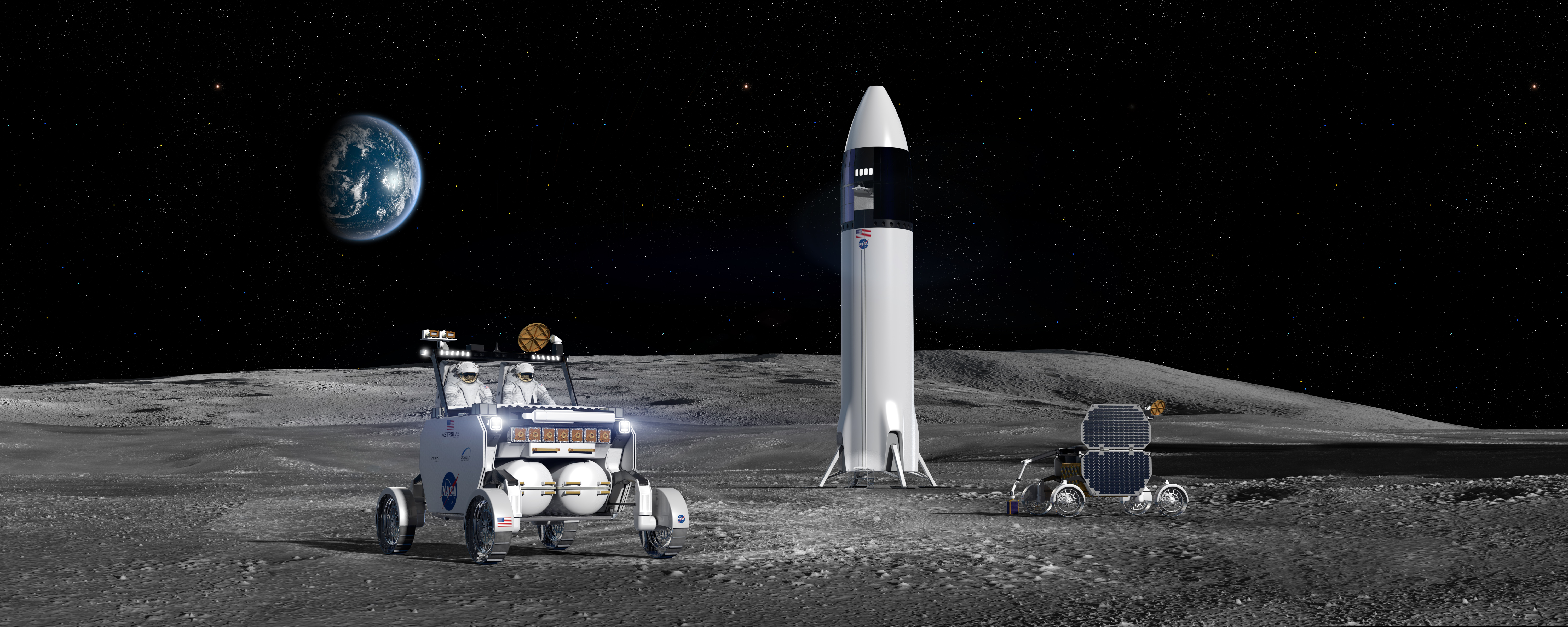
An artist's concept design of NASA's Lunar Terrain Vehicle.
An artist’s concept design of NASA’s Lunar Terrain Vehicle.
NASA

NASA has selected Intuitive Machines, Lunar Outpost, and Venturi Astrolab to advance capabilities for a lunar terrain vehicle (LTV) that Artemis astronauts will use to travel around the lunar surface, conducting scientific research during the agency’s Artemis campaign at the Moon and preparing for human missions to Mars.

The awards leverage NASA’s expertise in developing and operating rovers to build commercial capabilities that support scientific discovery and long-term human exploration on the Moon. NASA intends to begin using the LTV for crewed operations during Artemis V.

“We look forward to the development of the Artemis generation lunar exploration vehicle to help us advance what we learn at the Moon,” said Vanessa Wyche, director of NASA’s Johnson Space Center in Houston. “This vehicle will greatly increase our astronauts’ ability to explore and conduct science on the lunar surface while also serving as a science platform between crewed missions.”

NASA will acquire the LTV as a service from industry. The indefinite-delivery/indefinite-quantity, milestone-based Lunar Terrain Vehicle Services contract with firm-fixed-price task orders has a combined maximum potential value of $4.6 billion for all awards. 

Each provider will begin with a feasibility task order, which will be a year-long special study to develop a system that meets NASA’s requirements through the preliminary design maturity project phase. The agency will issue a subsequent request for task order proposal to eligible provider(s) for a demonstration mission to continue developing the LTV, deliver it to the surface of the Moon, and validate its performance and safety ahead of Artemis V. NASA anticipates making an award to only one provider for the demonstration. NASA will issue additional task orders to provide unpressurized rover capabilities for the agency’s moonwalking and scientific exploration needs through 2039.

The LTV will be able to handle the extreme conditions at the Moon’s South Pole and will feature advanced technologies for power management, autonomous driving, and state of the art communications and navigation systems. Crews will use the LTV to explore, transport scientific equipment, and collect samples of the lunar surface, much farther than they could on foot, enabling increased science returns.

Between Artemis missions, when crews are not on the Moon, the LTV will operate remotely to support NASA’s scientific objectives as needed. Outside those times, the provider will have the ability to use their LTV for commercial lunar surface activities unrelated to NASA missions.

“We will use the LTV to travel to locations we might not otherwise be able to reach on foot, increasing our ability to explore and make new scientific discoveries,” said Jacob Bleacher, chief exploration scientist in the Exploration Systems Development Mission Directorate at NASA Headquarters in Washington. “With the Artemis crewed missions, and during remote operations when there is not a crew on the surface, we are enabling science and discovery on the Moon year around.”

NASA provided technical requirements, capabilities, and safety standards needed for LTV development and operations, and the selected companies have agreed to meet the key agency requirements. The contract request for proposal required each provider to propose a solution to provide end-to-end services, including LTV development, delivery to the Moon, and execution of operations on the lunar surface.

Through Artemis, NASA will send astronauts – including the first woman, first person of color, and its first international partner astronaut – to explore the Moon for scientific discovery, technology evolution, economic benefits, and to build the foundation for crewed missions to Mars. Advanced rovers, along with the agency’s SLS (Space Launch System) rocket and Orion spacecraft, commercial human landing systems and next-generation spacesuits, and Gateway are NASA’s foundation for deep space exploration.

Learn more about NASA’s Artemis campaign at:

https://www.nasa.gov/artemis

-end-

Kathryn Hambleton
Headquarters, Washington
202-358-1100
kathryn.a.hambleton@nasa.gov

Victoria Ugalde / Nilufar Ramji
Johnson Space Center, Houston
281-483-5111
victoria.d.ugalde@nasa.gov / nilufar.ramji@nasa.gov

Share

Details

Last Updated

Apr 03, 2024

Related Terms

Powered by WPeMatico

Get The Details…
Abbey A. Donaldson
Scientists Pursue the Total Solar Eclipse with NASA Jet Planes

Scientists Pursue the Total Solar Eclipse with NASA Jet Planes

5 min read

Scientists Pursue the Total Solar Eclipse with NASA Jet Planes

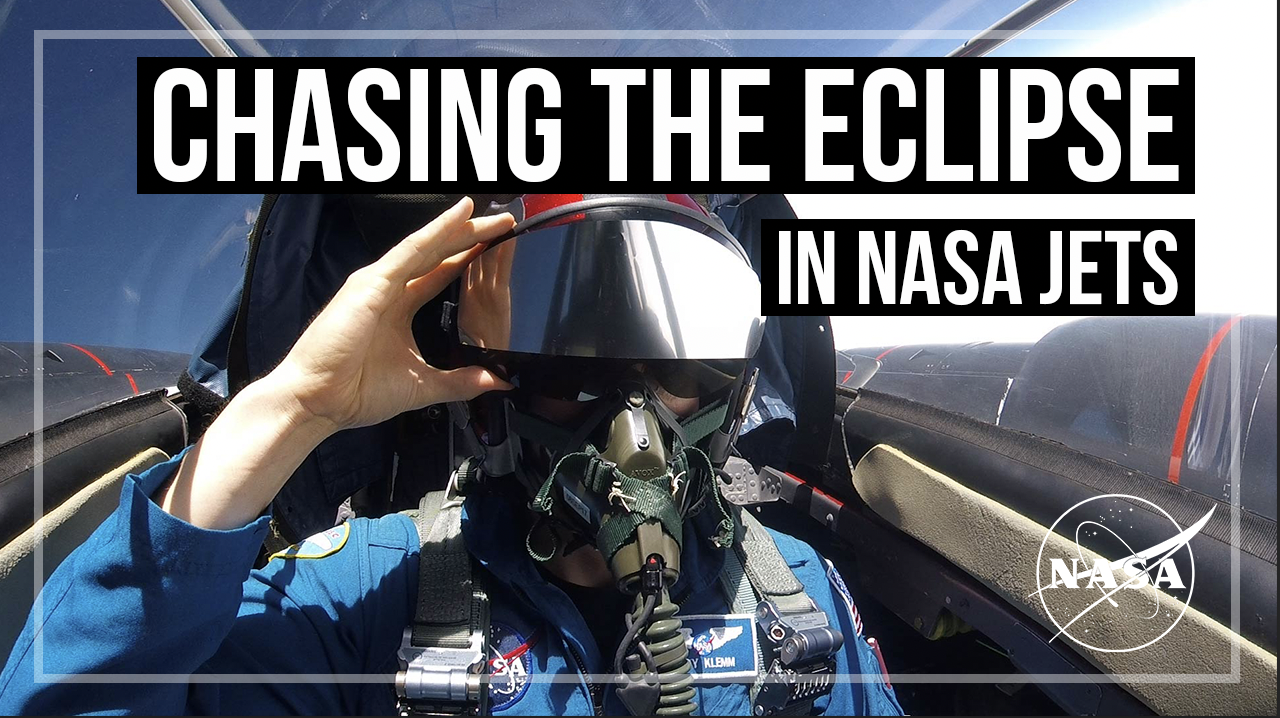
The April 8, 2024, total solar eclipse will produce stunning views across North America. While anyone along the eclipse path with a clear sky will see the spectacular event, the best view might be 50,000 feet in the air, aboard NASA’s WB-57 jet planes. That’s where a trio of NASA-funded teams are sending their scientific instruments to take measurements of the eclipse.

Two teams will image the Sun’s outer atmosphere – the corona – and a third will measure the ionosphere, the upper electrically charged layer of Earth’s atmosphere. This information will help scientists better understand the structure and temperature of the corona, the effects of the Sun on Earth’s atmosphere, and even aid in the search of asteroids that may orbit near the Sun.

The April 8, 2024 total solar eclipse will produce stunning views across North America. While anyone along the eclipse path with a clear sky will see the spectacular event, the best view might be 50,000 feet in the air, aboard NASA’s WB-57 jet planes. That’s where a trio of NASA-funded teams are sending their scientific instruments to take measurements of the eclipse. Credit: NASA

During a total solar eclipse, the Moon perfectly blocks the bright face of the Sun, casting a small swath of Earth in darkness. With the Sun’s main light masked, the much dimmer solar corona becomes visible to the naked eye. This provides scientists a unique opportunity to study this mysterious region of the Sun. The brief blocking of sunlight also allows scientists to study how the Sun’s light affects Earth’s atmosphere.

In the past, solar eclipses have driven numerous scientific discoveries. For this solar eclipse, NASA is funding several scientific experiments – including the three using the WB-57s – to make measurements during the eclipse. NASA’s WB-57s fly much higher than commercial aircraft. This altitude allows the jets to fly above clouds – meaning no chance of missing the eclipse due to bad weather. Additionally, the height puts the jets above most of Earth’s atmosphere, which allows for the cameras to take crisper images and capture wavelengths, such as infrared light, that don’t make it to the ground. Since the planes can travel at 460 miles per hour, they’re also able to extend the time they spend in the Moon’s shadow. While the eclipse will last no more than four and a half minutes at any point on the ground, the planes will see an eclipse that lasts about 25 percent longer, over 6 minutes and 22 seconds.

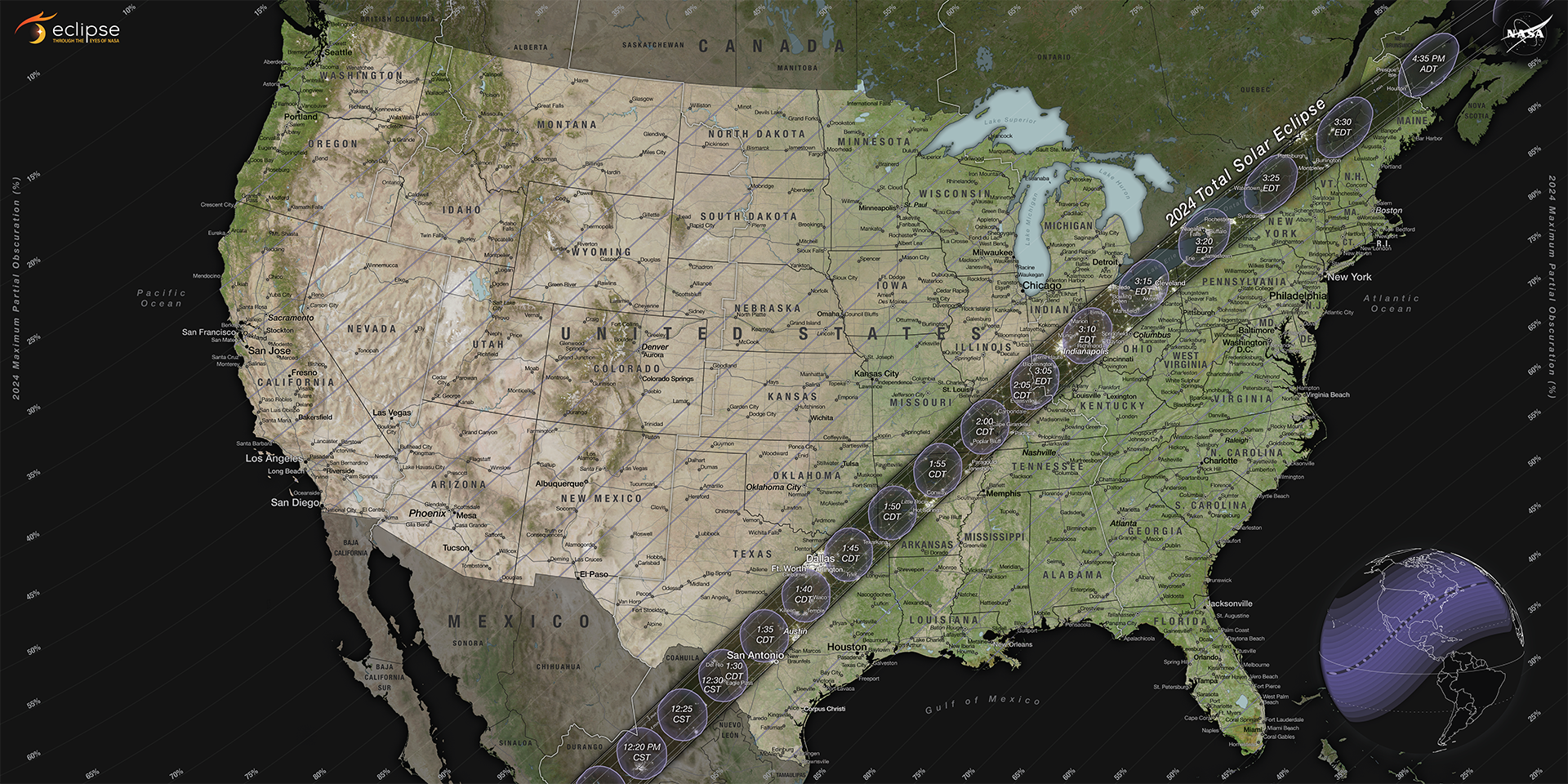
A map of the contiguous U.S. shows the path of the 2024 total solar eclipse stretching on a narrow band from Texas to Maine.
This map shows the path of the 2024 total solar eclipse. The dark path across the continent is the path of totality. By flying along this path, the WB-57s will extend the amount of time they spend in totality.
NASA/Scientific Visualization Studio/Michala Garrison; Eclipse Calculations By Ernie Wright, NASA Goddard Space Flight Center

“By extending the duration of totality, we’re increasing the duration of how much data we can acquire,” said Shadia Habbal, a researcher at the University of Hawaii who leads of one of the WB-57 eclipse experiments.

Habbal’s experiment will fly spectrometers – which record specific wavelengths of light and cameras. The instruments will measure the temperature and chemical composition of the corona and coronal mass ejections, which are large bursts of solar material. With this data, scientists aim to better understand the structure of the corona and identify the source of the solar wind, the constant stream of particles emitted by the Sun.

Habbal hopes the results of their study will help differentiate between different competing models of how the corona is heated. “This light is our best probe short of sticking a thermometer in the corona,” Habbal said.

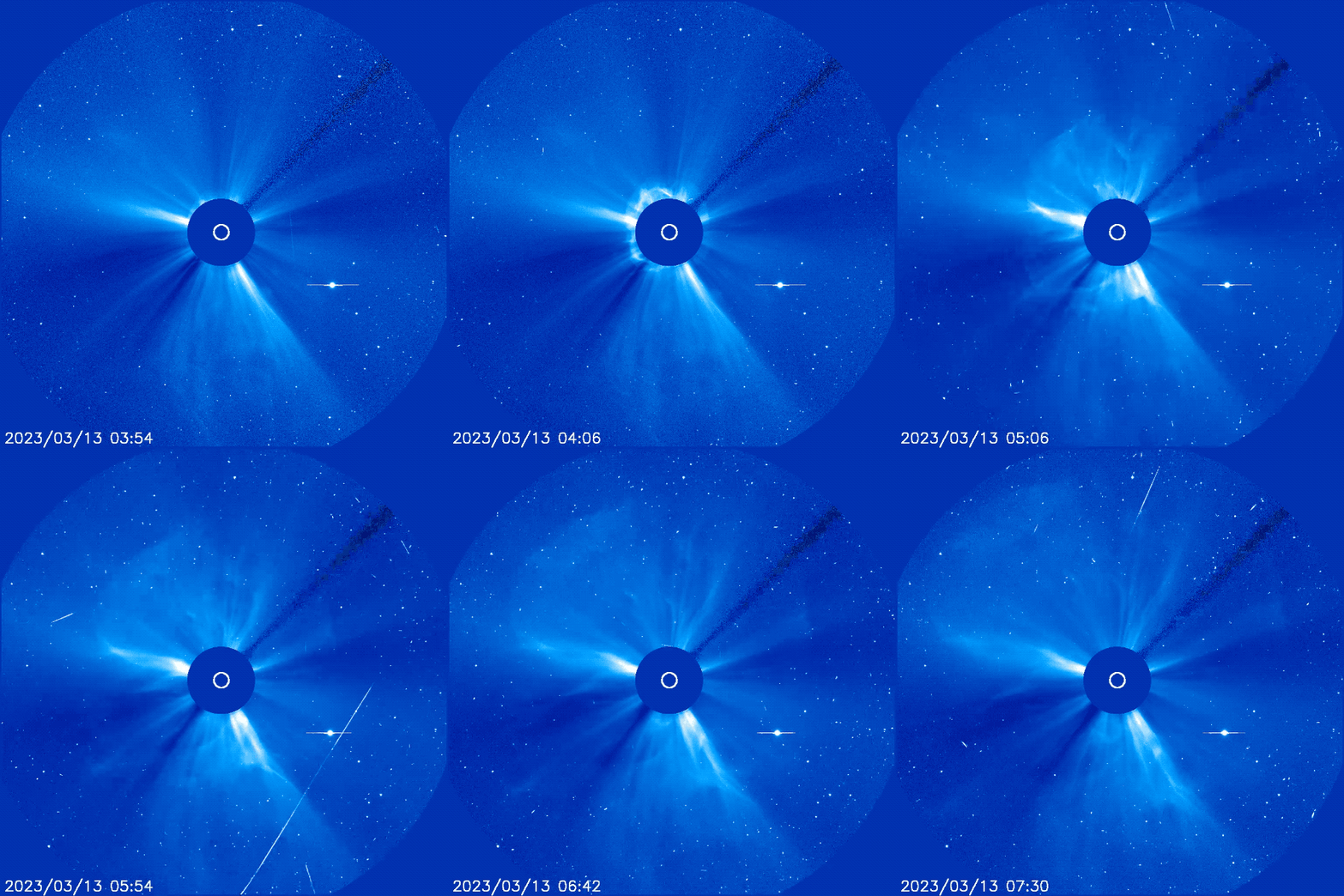
A blue image of the the Sun's atmosphere. In the middle is a dark blue circle, surrounding it are faint white streams of light. A large burst of light shoots out from the center in a circle into all directions.
NASA/ESA’s Solar and Heliospheric Observatory (SOHO) captured this video of a coronal mass ejection on March 13, 2023.
NASA/ESA/SOHO

For another team, led by Amir Caspi at the Southwest Research Institute in Boulder, Colorado, it’s not their first time chasing eclipses by plane. Caspi led a previous trailblazing experiment with the WB-57s during the 2017 total solar eclipse that crossed America from sea to sea. Images taken from the jet were used to study the structure of the corona.

That time was the first the jets had ever been used to study an eclipse. This time, an improved camera setup will allow measurements in more wavelengths from infrared to visible light that will hopefully reveal new information about structures in the middle and lower corona. The observations, taken with a high-resolution, high-speed camera, could also help study a dust ring that circles the Sun and help search for asteroids that may orbit near the Sun.

“There isn’t a lot of data of the Sun at some of the wavelengths we’ll be studying,” Caspi said.  “We don’t know what we’ll find, so it’s extra exciting to be making these measurements.”

A third experiment will study the effects of the Moon’s shadow on the ionosphere using an instrument called an ionosonde, which was designed at JHU APL. An ionosonde functions like a simple radar. The device sends out high-frequency radio signals and listens for their echoes rebounding off the ionosphere, which allows the researchers to measure how charged the ionosphere is.

“The eclipse basically serves as a controlled experiment,” said Bharat Kunduri, leader of the ionosphere project and a research assistant professor at Virginia Tech in Blacksburg, Virginia. “It gives us an opportunity to understand how changes in solar radiation can impact the ionosphere, which can in turn impact some of these technologies like radar and GPS that we rely on in our daily lives.”

By Mara Johnson-Groh
NASA’s Goddard Space Flight Center, Greenbelt, Md.

Powered by WPeMatico

Get The Details…

Carving a Path

Carving a Path

A view of mountains from the International Space Station. There are lines in various shades of gray that look like highways - these are paths carved by glaciers moving through the mountain range. Several peaks around the lines are untouched. A few clouds dot the sky at middle left and bottom left.
NASA/Woody Hoburg

These aren’t highways in this picture taken on Aug. 15, 2023; they’re paths carved by glaciers as they move through the Karakoram mountain range north of the Himalayas.

Crew aboard the International Space Station take photos of Earth, recording how the planet changes over time due to human activity and natural events. This allows scientists to monitor disasters and direct response on the ground and study a number of phenomena, from the movement of glaciers to urban wildlife.

Image Credit: NASA/Woody Hoburg

Powered by WPeMatico

Get The Details…
Monika Luabeya

NASA Receives 13 Nominations for the 28th Annual Webby Awards

NASA Receives 13 Nominations for the 28th Annual Webby Awards

6 min read

Preparations for Next Moonwalk Simulations Underway (and Underwater)

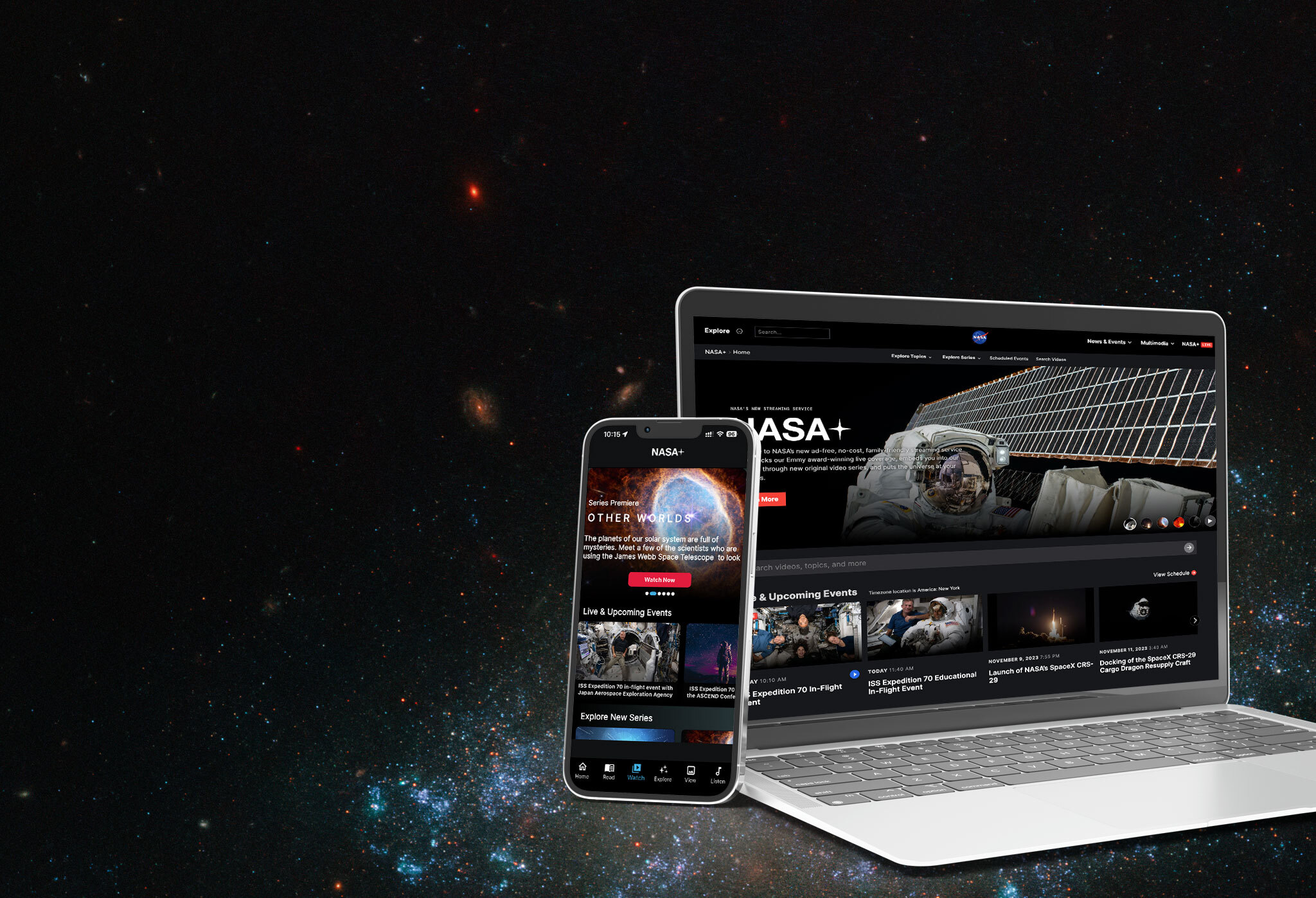
Screenshots of NASA+ are shown on a mobile phone and computer against a space-themed background

Since it began in 1958, NASA has been charged by law with spreading the word about its work “to the widest extent practicable.” From typewritten press releases to analog photos and film, NASA has effectively moved into social media and other online communications. NASA’s broad reach across digital platforms has been recognized by the International Academy of Digital Arts and Sciences (IADAS), which gave NASA 13 nominations for the academy’s Webby Awards this year. 

At NASA, we share the secrets of the universe through every platform and media there is. These nominations—for websites, podcasts, social media, apps and virtual experiences—showcase the breadth and depth of the NASA digital team, as they inspire the next generation to reach for the stars.

Marc Etkind

Marc Etkind

NASA Associate Administrator for Communications

Public Voting Opportunities

Voting for the Webby People’s Voice Awards—chosen by the public—is open now through Thursday, April 18. Voting links for each category are listed below.

28th Annual Webby Nominees

Apps

Space Images
NASA, NASA Jet Propulsion Laboratory, Caltech
Apps & Software-General Apps | Education, Science & Reference

The Space Images app provides stunning new images of space, planets, Mars, asteroids, stars, galaxies, and cutting-edge space technology as they are released each week from NASA’s Jet Propulsion Laboratory.

Campaigns

NASA: Message in a Bottle
NASA Jet Propulsion Laboratory
Advertising, Media & PR-PR Campaigns | Best Community Engagement

NASA’s Message in a Bottle campaign invited people around the world to sign their names to a poem written by the U.S. Poet Laureate Ada Limón. The poem connects the two water worlds — Earth, yearning to reach out and understand what makes a world habitable, and Europa, waiting with secrets yet to be explored. The campaign was a special collaboration, uniting art and science, by NASA, the U.S. Poet Laureate, and the Library of Congress.

Podcasts

NASA’s Curious Universe
Podcasts-Shows | Science & Education

As an official NASA podcast, Curious Universe brings you mind-blowing science and space adventures you won’t find anywhere else. Explore the cosmos alongside astronauts, scientists, engineers, and other top NASA experts who are achieving remarkable feats in science, space exploration, and aeronautics. Learn something new about the wild and wonderful universe we share. All you need to get started is a little curiosity. NASA’s Curious Universe is an official NASA podcast hosted by Padi Boyd and Jacob Pinter.

NASA’s Curious Universe: Suiting Up for Space
Podcasts-Individual Episodes | Science & Education

Spacesuits are more than just garments – in the airless vacuum of space or on the freezing surface of the moon, they keep astronauts alive. In this episode of NASA’s Curious Universe podcast, we explore how NASA engineers like Amy Ross and Paromita Mitra contributed to the development of the next generation of spacesuits.

Social

Hubble’s Servicing Mission 1
Social-Social Content Series | Education & Science

Shortly after its 1990 deployment, NASA discovered a flaw in the observatory’s primary mirror that affected the clarity of the telescope’s early images. Fortunately, Hubble’s design allowed astronauts to perform repairs, replace parts, and update its technology with new instruments while in orbit. Servicing Mission 1 was the first opportunity to install corrective optics that counteracted the primary mirror’s flaw, add new instruments, and conduct planned maintenance on the telescope.

NASA Social Media
Social-Features | Best Overall Social Presence, Brand

NASA’s flagship social media accounts host dynamic conversations about what’s new with America’s space agency, and why it matters. Spanning 15 social media platforms, these accounts reach more than 200 million people around the world.

NASA’s First Asteroid Sample Return Mission
Social-Social Campaigns | Education & Science

Science fiction became reality on Sept. 24, 2023 when NASA’s OSIRIS-REx spacecraft delivered rocks older than our own planet to the Utah desert, rocks that contain clues to the early solar system and the origins of life. The accompanying social media campaign and in-person, behind-the-scenes NASA Social event gave the public an inside look into NASA’s first mission to deliver an asteroid sample to Earth.

Annular Solar Eclipse
NASA, ADNET Systems Inc.
Social-Social Campaigns | Events & Live Streams

On Oct. 14, 2023, audiences across the web joined us live as a “ring of fire” eclipse. Visible in parts of the United States, Mexico, and many countries in South and Central America, millions of people in the Western Hemisphere experienced this eclipse.

Video

OSIRIS-REx Asteroid Sample Return (Official 4K NASA Live Stream)
Video-General Video | Events & Live Streams

Live coverage of OSIRIS-REx, the first U.S. mission to collect a sample from an asteroid, as it returned to Earth on Sept. 24, 2023, to drop off material from asteroid Bennu. The spacecraft didn’t land, but continued on to a new mission, OSIRIS-APEX, to explore asteroid Apophis. Meanwhile, scientists hope the Bennu sample OSIRIS-REx dropped into the Utah desert will offer clues to whether asteroids colliding with Earth billions of years ago brought water and other key ingredients for life here.

Virtual Experiences

NASA’s Immersive Earth
Artificial Intelligence (AI), Metaverse & Virtual-General Virtual Experiences | Science & Education

NASA created the Earth Information Center with founding partners FEMA, EPA, NOAA, USAID, USDA and USGS. The Earth Information Center draws data from research conducted by NASA’s centers and government and industry partners. The interactive physical exhibit is located inside NASA Headquarters in Washington, where visitors are invited to see how our planet is changing in six key areas: sea level rise and coastal impacts, health and air quality, wildfires, greenhouse gases, sustainable energy, and agriculture.

Websites

NASA.gov
Websites and Mobile Sites-General Desktop & Mobile Sites | Government & Associations

The new NASA web experience serves as an ever-expanding yet consolidated homebase for information about the agency’s missions and research, climate data, Artemis updates, and more. The updated nasa.gov and science.nasa.gov websites provide a connected, topic-driven experience, with a common search engine, integrated navigation, and optimized publishing capabilities in a modernized and secure set of web tools.

NASA+ Streaming Service
Websites and Mobile Sites-General Desktop & Mobile Sites | Television, Film & Streaming

Through the ad-free, no cost, and family-friendly streaming service, users gain access to the agency’s Emmy Award-winning live coverage and views into NASA’s missions through collections of original video series, including new series debuting on the streaming service. NASA+ also streams live event coverage, where people everywhere can watch in real-time as the agency launches science experiments and astronauts to space, and ultimately, the first woman and person of color to the Moon.

Hubble’s Inside the Image
NASA, Origin Films
Video-Video Series & Channels | Science & Education

In this ongoing series, astronomers explain the history and high-level science behind some of Hubble’s most beautiful, groundbreaking, and iconic images.

About the Webby Awards

Established in 1996, The Webbys is presented by the International Academy of Digital Arts and Sciences (IADAS)—a 3000+ member judging body comprised of leading Internet experts, business figures, luminaries, visionaries and creative celebrities. The Webbys honors excellence in nine major media types: websites and mobile sites, video, advertising, media and public relations, apps and software, social, podcasts, games and Metaverse, virtual and artificial Intelligence (AI).

The Webby Awards presents two honors in every category—The Webby Award and The Webby People’s Voice Award. Members of the International Academy of Digital Arts and Sciences (IADAS) select the nominees for both awards in each category, as well as the Winners of The Webby Awards. The Webby People’s Voice is awarded by the voting public.

Powered by WPeMatico

Get The Details…
Dacia Massengill

Rock Sampled by NASA’s Perseverance Embodies Why Rover Came to Mars

Rock Sampled by NASA’s Perseverance Embodies Why Rover Came to Mars

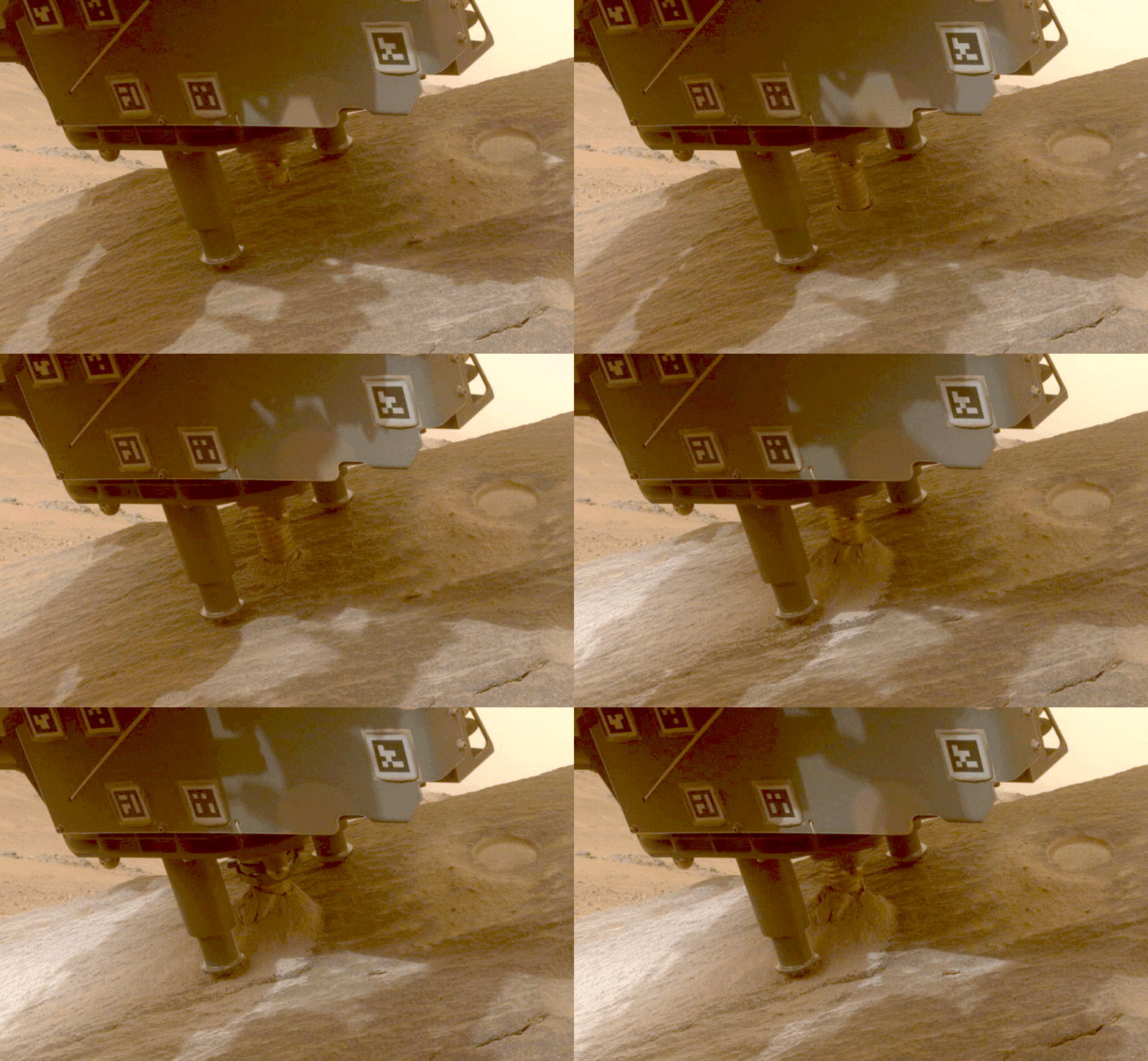
This animation shows NASA’s Perseverance Mars rover collecting a sample from a rock the science team calls “Bunsen Peak” using a coring bit on the end of its robotic arm.
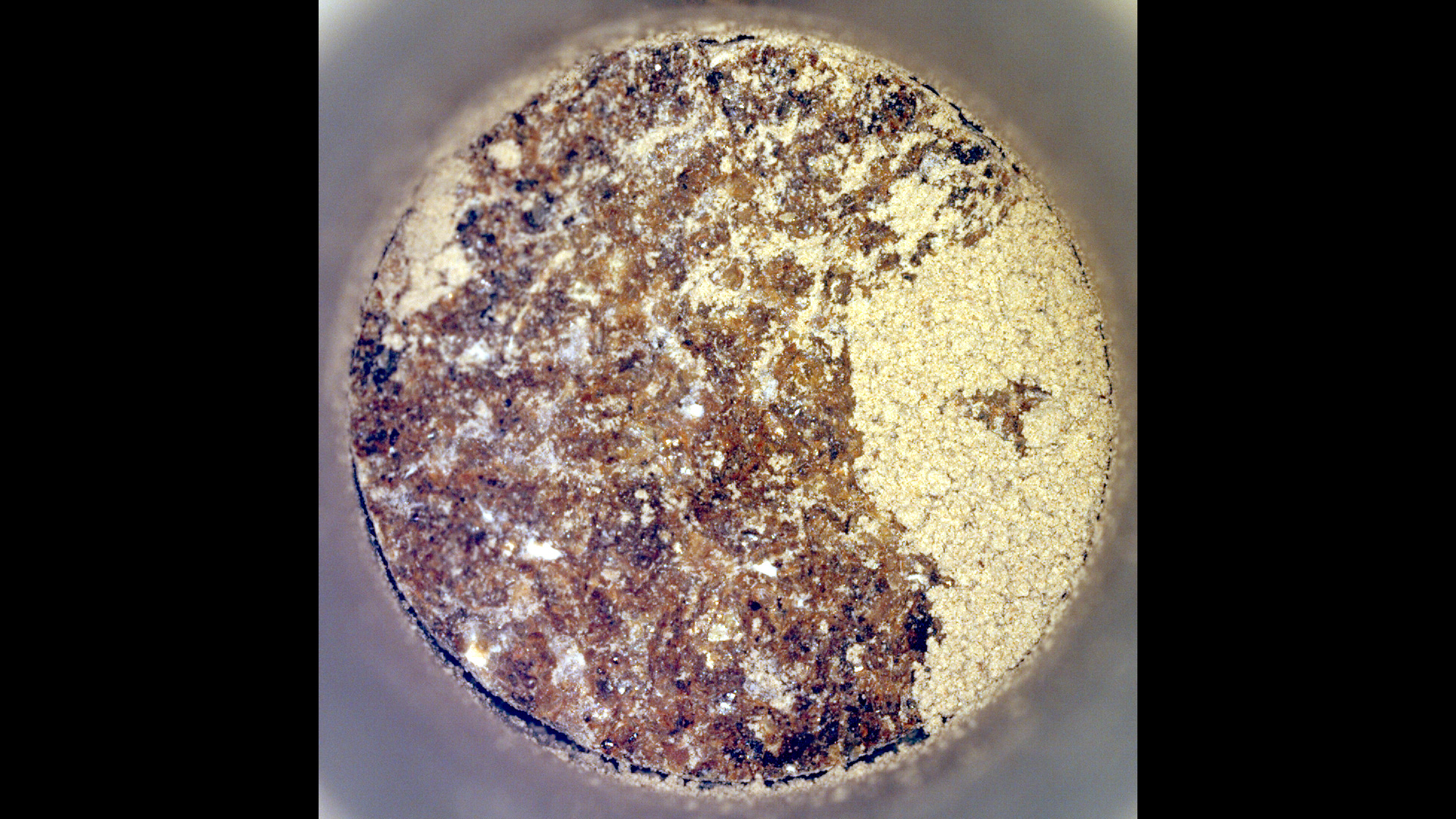
The 21st rock core captured by NASA’s Perseverance has a composition that would make it good at trapping and preserving signs of microbial life, if any was once present. The sample – shown being taken here – was cored from “Bunsen Peak” on March 11, the 1,088th Martian day, or sol, of the mission.
NASA/JPL-Caltech

The 24th sample taken by the six-wheeled scientist offers new clues about Jezero Crater and the lake it may have once held.

Analysis by instruments aboard NASA’s Perseverance Mars rover indicate that the latest rock core taken by the rover was awash in water for an extended period of time in the distant past, perhaps as part of an ancient Martian beach. Collected on March 11, the sample is the rover’s 24th – a tally that includes 21 sample tubes filled with rock cores, two filled with regolith (broken rock and dust), and one with Martian atmosphere.

“To put it simply, this is the kind of rock we had hoped to find when we decided to investigate Jezero Crater,” said Ken Farley, project scientist for Perseverance at Caltech in Pasadena, California. “Nearly all the minerals in the rock we just sampled were made in water; on Earth, water-deposited minerals are often good at trapping and preserving ancient organic material and biosignatures. The rock can even tell us about Mars climate conditions that were present when it was formed.”

The presence of these specific minerals is considered promising for preserving a rich record of an ancient habitable environment on Mars. Such collections of minerals are important for guiding scientists to the most valuable samples for eventual return to Earth with the Mars Sample Return campaign.

Edge of the Crater’s Rim

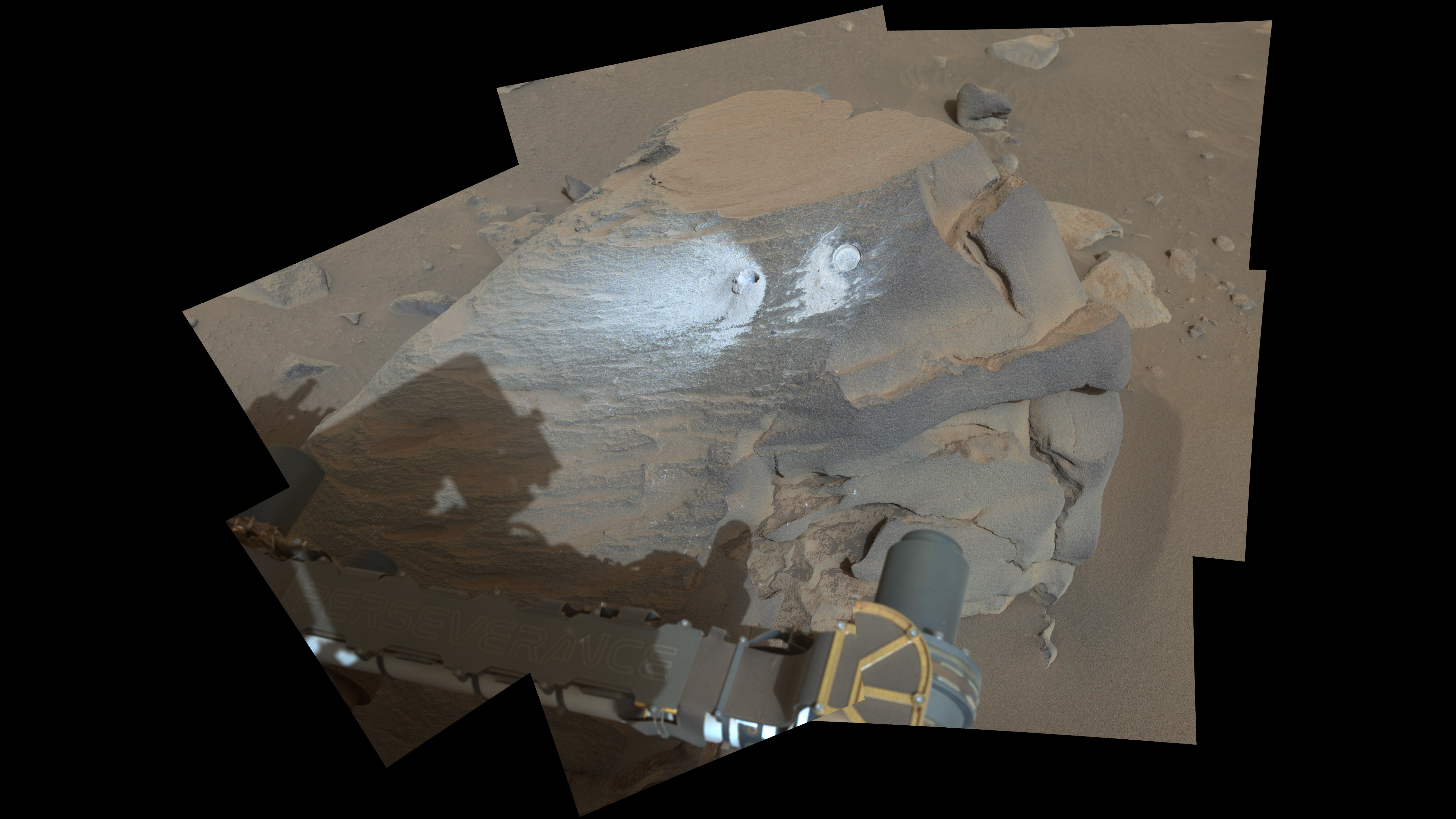
Nicknamed “Bunsen Peak” for the Yellowstone National Park landmark, the rock – about 5.6 feet wide and 3.3 feet high (1.7 meters by 1 meter) – intrigued Perseverance scientists because the outcrop stands tall amid the surrounding terrain and has an interesting texture on one of its faces. They were also interested in Bunsen Peak’s vertical rockface, which offers a nice cross-section of the rock and, because it’s not flat-lying, is less dusty and therefore easier for science instruments to investigate.

Meet the 24th Martian sample collected by NASA’s Mars Perseverance rover – “Comet Geyser,” a sample taken from a region of Jezero Crater that is especially rich in carbonate, a mineral linked to habitability.

Before taking the sample, Perseverance scanned the rock using the rover’s SuperCam spectrometers and the X-ray spectrometer PIXL, short for Planetary Instrument for X-ray Lithochemistry. Then the rover used the rotor on the end of its robotic arm to grind (or abrade) a portion of the surface and scanned the rock again. The results: Bunsen Peak looks to be composed of about 75% carbonate grains cemented together by almost pure silica.

“The silica and parts of the carbonate appear microcrystalline, which makes them extremely good at trapping and preserving signs of microbial life that might have once lived in this environment,” said Sandra Siljeström, a Perseverance scientist from the Research Institutes of Sweden (RISE) in Stockholm. “That makes this sample great for biosignature studies if returned to Earth. Additionally, the sample might be one of the older cores collected so far by Perseverance, and that is important because Mars was at its most habitable early in its history.” A potential biosignature is a substance or structure that could be evidence of past life but may also have been produced without the presence of life.

The Bunsen Peak sample is the third that Perseverance has collected while exploring the “Margin Unit,” a geologic area that hugs the inner edge of Jezero Crater’s rim.

“We’re still exploring the margin and gathering data, but results so far may support our hypothesis that the rocks here formed along the shores of an ancient lake,” said Briony Horgan, a Perseverance scientist from Purdue University, in West Lafayette, Indiana. “The science team is also considering other ideas for the origin of the Margin Unit, as there are other ways to form carbonate and silica. But no matter how this rock formed, it is really exciting to get a sample.”

The rover is working its way toward the westernmost portion of the Margin Unit. At the base of Jezero Crater’s rim, a location nicknamed “Bright Angel” is of interest to the science team because it may offer the first encounter with the much older rocks that make up the crater rim. Once it’s done exploring Bright Angel, Perseverance will begin an ascent of several months to the rim’s top.

More About the Mission

A key objective for Perseverance’s mission on Mars is astrobiology, including caching samples that may contain signs of ancient microbial life. The rover will characterize the planet’s geology and past climate, pave the way for human exploration of the Red Planet, and be the first mission to collect and cache Martian rock and regolith.

Subsequent NASA missions, in cooperation with ESA (European Space Agency), would send spacecraft to Mars to collect these sealed samples from the surface and return them to Earth for in-depth analysis.

The Mars 2020 Perseverance mission is part of NASA’s Moon to Mars exploration approach, which includes Artemis missions to the Moon that will help prepare for human exploration of the Red Planet.

NASA’s Jet Propulsion Laboratory, which is managed for the agency by Caltech, built and manages operations of the Perseverance rover.

For more about Perseverance:

https://mars.nasa.gov/mars2020/

News Media Contacts

DC Agle
Jet Propulsion Laboratory, Pasadena, Calif.
818-393-9011
agle@jpl.nasa.gov

Karen Fox / Charles Blue
NASA Headquarters, Washington
301-286-6284 / 202-802-5345
karen.c.fox@nasa.gov / charles.e.blue@nasa.gov

2024-036

Powered by WPeMatico

Get The Details…
Naomi Hartono