How NASA Spotted El Niño Changing the Saltiness of Coastal Waters

How NASA Spotted El Niño Changing the Saltiness of Coastal Waters
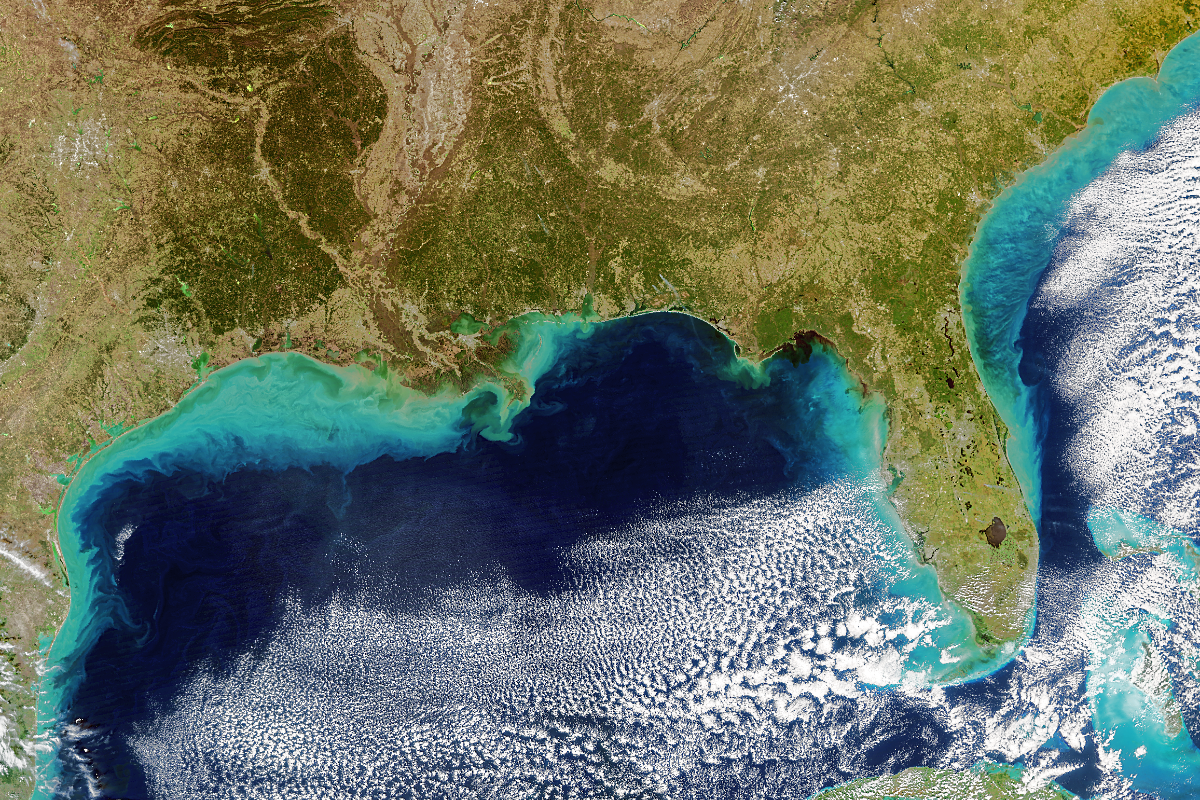
A satellite image from December 2023 showing a large, sediment-rich plume from the Mississippi River spreading down the Gulf Coast of Louisiana and Texas following winter rains.
Rivers can flush rainwater over hundreds of miles to the sea, changing the makeup of coastal waters in ways that scientists are still discovering. In this satellite image from December 2023, a large, sediment-rich plume from the Mississippi River spreads down the Gulf Coast of Louisiana and Texas following winter rains.
NASA/OB.DAAC

New findings have revealed a coastal realm highly sensitive to changes in runoff and rainfall on land.

After helping stoke record heat in 2023 and drenching major swaths of the United States this winter, the current El Niño is losing steam this spring. Scientists have observed another way that the climate phenomenon can leave its mark on the planet: altering the chemistry of coastal waters.

A team at NASA’s Jet Propulsion Laboratory in Southern California used satellite observations to track the dissolved salt content, or salinity, of the global ocean surface for a decade, from 2011 to 2022. At the sea surface, salinity patterns can tell us a lot about how freshwater falls, flows, and evaporates between the land, ocean, and atmosphere – a process known as the water cycle.

The JPL team showed that year-to-year-variations in salinity near coastlines strongly correlate with El Niño Southern Oscillation (ENSO), the collective term for El Niño and its counterpart, La Niña. ENSO affects weather around the world in contrasting ways. El Niño, linked to warmer-than-average ocean temperatures in the equatorial Pacific, can lead to more rain and snowfall than normal in the southwestern U.S., as well as drought in Indonesia. These patterns are somewhat reversed during La Niña.

During the exceptional El Niño event of 2015, for example, the scientists traced a particularly distinct global water cycle effect: Less precipitation over land led to a decrease in river discharge on average, which in turn led to notably higher salinity levels in areas as far as 125 miles (200 kilometers) from shore.
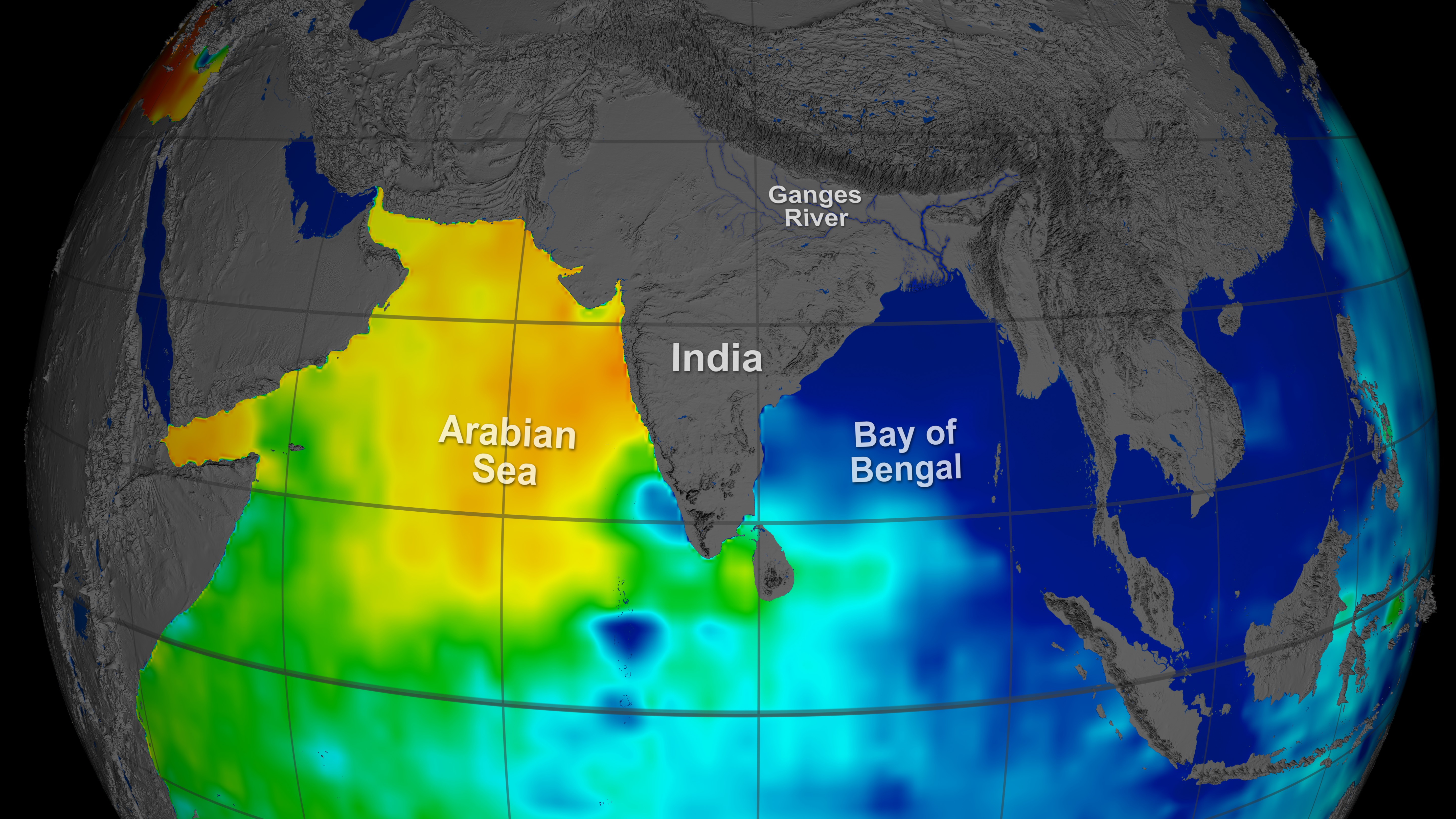
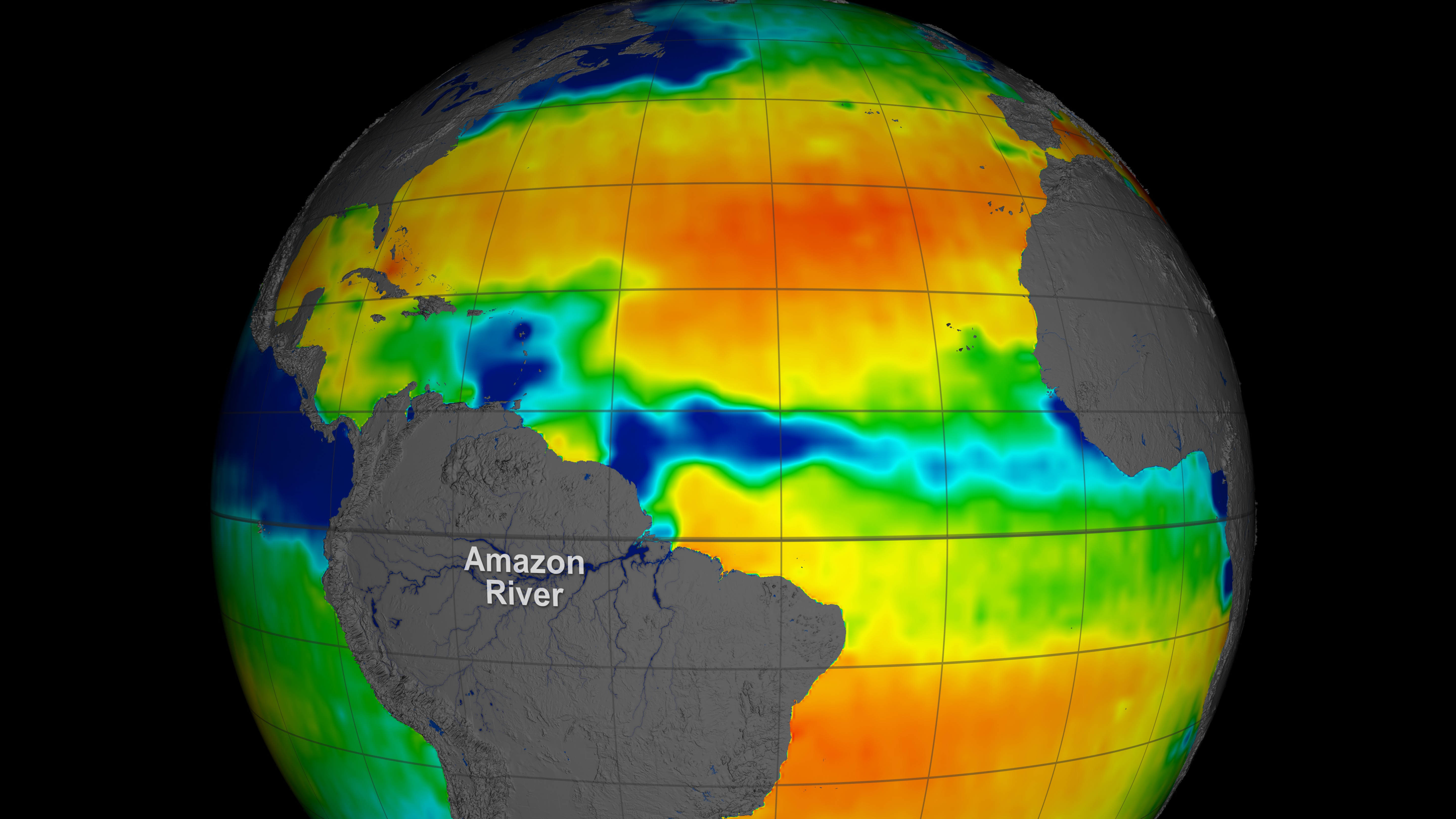
At other times, the opposite was found: Areas with higher-than-normal rainfall over land saw increased river discharge, reducing salinity near those coasts.

“We’re able to show coastal salinity responding to ENSO on a global scale,” said lead author Severine Fournier, an ocean physicist at JPL.

The team found that salinity is at least 30 times more variable in these dynamic zones near coasts than in the open ocean. The link between rain, rivers, and salt is especially pronounced at the mouths of large river systems such as the Mississippi and Amazon, where freshwater plumes can be mapped from space as they gush into the ocean.

Salt as Signal

With global warming, researchers have been observing changes in the water cycle, including increases in extreme precipitation events and runoff. At the intersection of land and sea, coastal waters may be where the impacts are most detectable.

“Given the sensitivity to rainfall and runoff, coastal salinity could serve as a kind of bellwether, indicating other changes unfolding in the water cycle,” Fournier said.

She noted that some of the world’s coastal waters are not well studied, despite the fact that about 40% of the human population lives within about 60 miles (100 kilometers) of a coastline. One reason is that river gauges and other on-sitemonitors can be costly to maintain and cannot provide coverage of the whole planet, especially in more remote regions.

That’s where satellite instruments come in. Launched in 2011, the Aquarius mission made some of the first space-based global observations of sea surface salinity using extremely sensitive radiometers to detect subtle changes in the ocean’s microwave radiation emissions. Aquarius was a collaboration between NASA and Argentina’s space agency, CONAE (Comisión Nacional de Actividades Espaciales).

Today, two higher-resolution tools – the ESA (European Space Agency) Soil Moisture and Ocean Salinity (SMOS) mission and NASA’s Soil Moisture Active Passive (SMAP) mission – allow scientists to zoom to within 25 miles (40 kilometers) of coastlines.

Using data from all three missions, the researchers found that surface salinity in coastal waters reached a maximum global average (34.50 practical salinity units, or PSU) each March and fell to a minimum global average (34.34 PSU) around September. (PSU is roughly equal to parts per thousand grams of water.) River discharge, especially from the Amazon, drives this timing.

In the open ocean, the cycle is different, with surface salinity reaching a global average minimum (34.95 PSU) from February to April and a global average maximum (34.97 PSU) from July to October. The open ocean does not show as much variability between seasons or years because it contains a significantly larger volume of water and is less sensitive to river discharge and ENSO. Instead, changes are governed by planet-scale precipitation minus total global evaporation, plus other factors like large-scale ocean circulation.

The study was published in the journal Geophysical Research Letters.

News Media Contacts

Jane J. Lee / Andrew Wang
Jet Propulsion Laboratory, Pasadena, Calif.
818-354-0307 / 626-379-6874
jane.j.lee@jpl.nasa.gov / andrew.wang@jpl.nasa.gov

Written by Sally Younger

2024-035

Share

Details

Last Updated

Apr 03, 2024

Powered by WPeMatico

Get The Details…
Naomi Hartono
NASA Invites Media to Annual FIRST Robotics Competition in Rocket City

NASA Invites Media to Annual FIRST Robotics Competition in Rocket City

2 min read

Preparations for Next Moonwalk Simulations Underway (and Underwater)

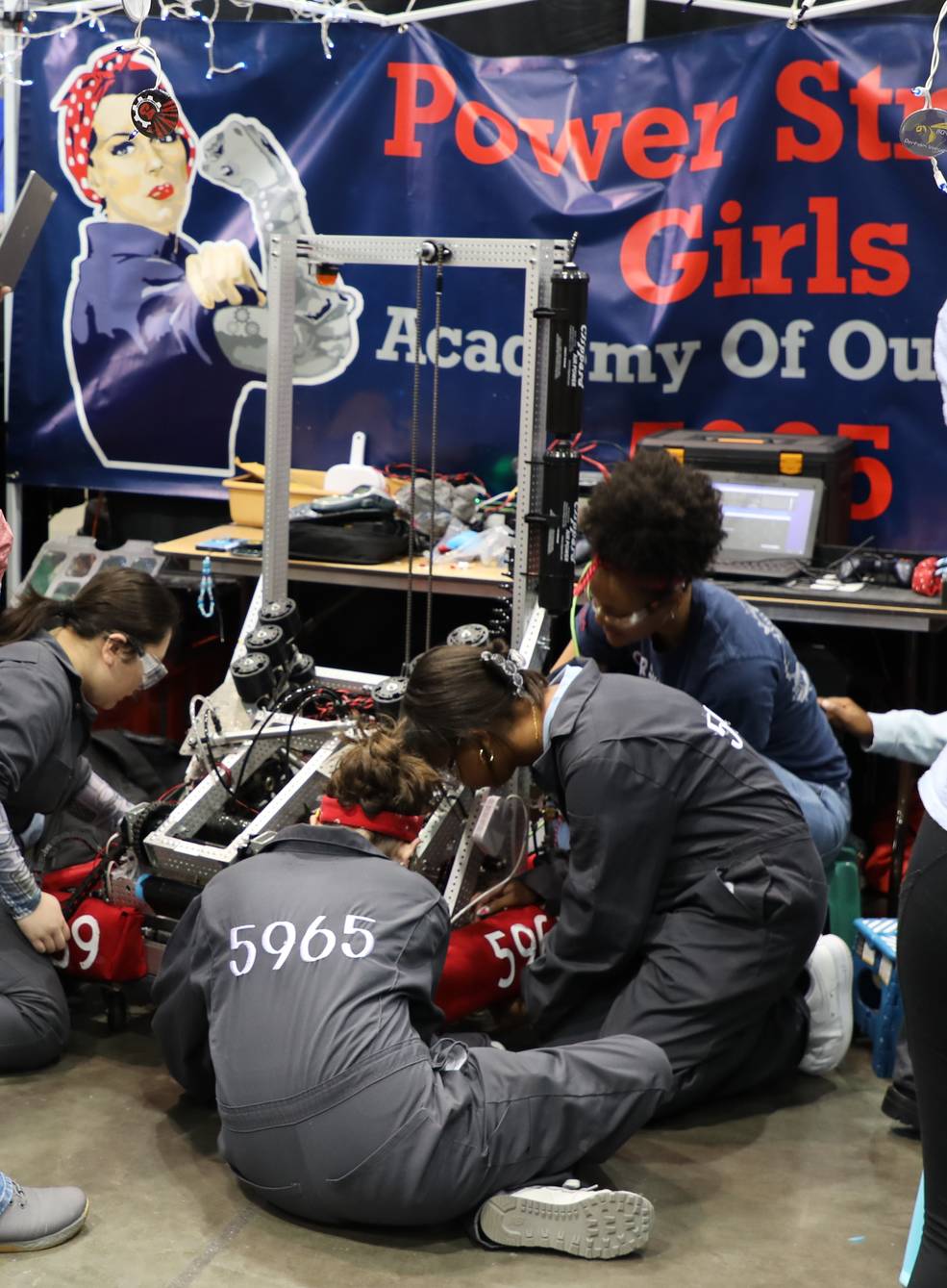
Students from the Power Struck Girls Team 5965.
Students from the Power Struck Girls Team 5965 – an all-girls FIRST Robotics team from the Academy of Our Lady high school in Marrero, Louisiana, and sponsored by NASA’s Stennis Space Center – make final engineering adjustments to their robot during the 2023 Rocket City Regional FIRST Robotics tournaments in Huntsville.
NASA/Joel Wallace

The Rocket City Regional – Alabama’s annual For Inspiration and Recognition of Science and Technology (FIRST) Robotics Competition – is scheduled for Friday, April 5, through Saturday, April 6, at the Von Braun Center South Hall in Huntsville, Alabama, known as the Rocket City. This event is free for the public.

FIRST Robotics is a global robotics competition for students in grades 9-12. Teams are challenged to raise funds, design a team brand, hone teamwork skills, and build and program industrial-sized robots to play a difficult field game against competitors.

More than 1,000 high school students on 47 teams from 10 states and 4 countries will compete in a new robotics game called, “CRESCENDO.”

Opening ceremonies begin at 8:30 a.m. CDT followed by qualification matches on April 5 and April 6. The Friday awards ceremony will begin at 6 p.m., while the Saturday awards ceremony will begin at 2:30 p.m.

District and regional competitions – such as the Rocket City Regional – are held across the country during March and April, providing teams a chance to qualify for the 2024 FIRST Robotics Competition Championship events held in late April in Houston.

NASA and its Robotics Alliance Project provide grants for high school teams and support for FIRST Robotics competitions to address the critical national shortage of students pursuing STEM (Science, Technology, Engineering, and Mathematics) careers. This FIRST Robotics Competition, The Rocket City Regional, is supported by NASA’s Marshall Space Flight Center in Huntsville, Alabama, and NASA’s Office of STEM Engagement.

News media interested in covering this event should respond no later than 4 p.m. on Thursday, April 4 by contacting Taylor Goodwin at 256-544-0034 or taylor.goodwin@nasa.gov.

Learn more about the Rocket City Regional event.

Find more information about Marshall’s support for education programs:

https://www.nasa.gov/marshall/marshall-stem-engagement/

Taylor Goodwin
256-544-0034
Marshall Space Flight Center, Huntsville, Alabama
taylor.goodwin@nasa.gov

Share

Details

Last Updated

Apr 03, 2024

Editor
Beth Ridgeway

Powered by WPeMatico

Get The Details…
Beth Ridgeway

NASA’s Webb Probes an Extreme Starburst Galaxy

NASA’s Webb Probes an Extreme Starburst Galaxy

6 Min Read

NASA’s Webb Probes an Extreme Starburst Galaxy

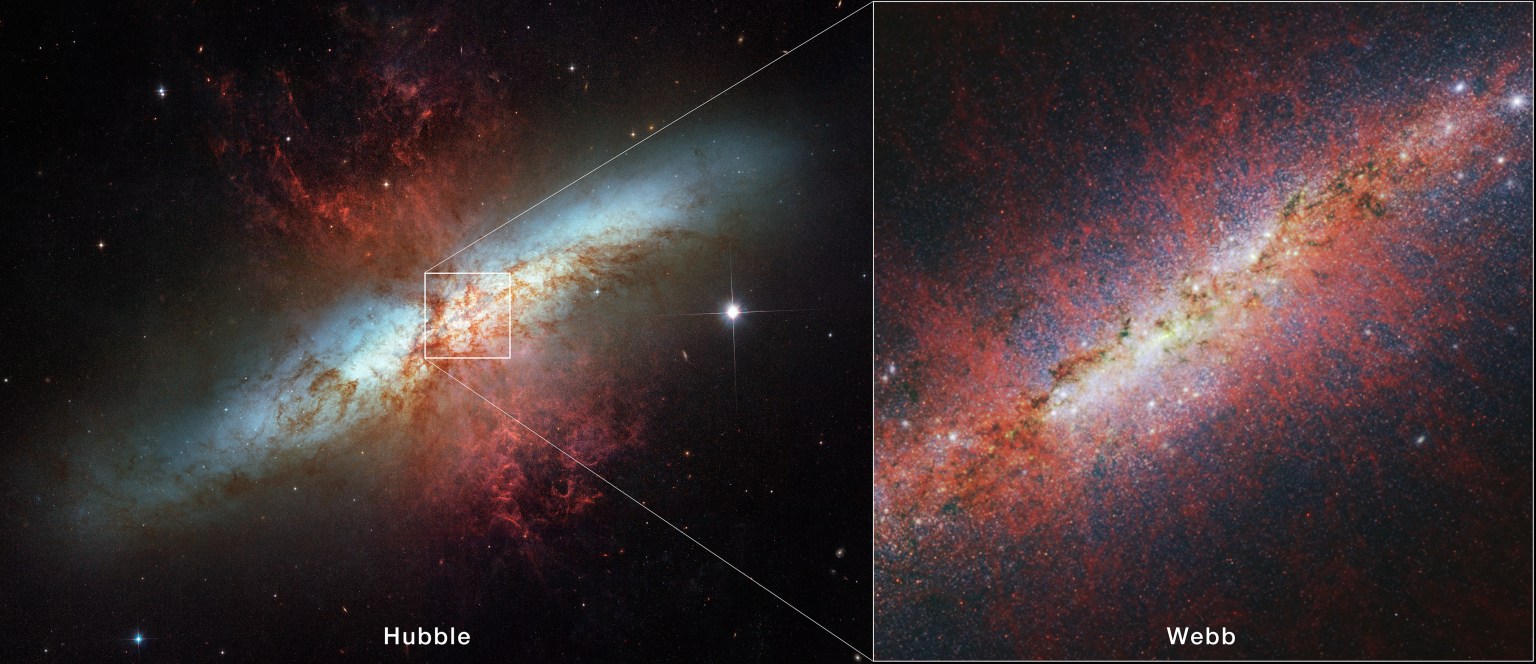
Left: Messier 82 as imaged by NASA's Hubble Space Telescope. Hour-glass-shaped red plumes of gas are shooting outward from above and below a bright blue, disk-shaped center of a galaxy. This galaxy is surrounded by many white stars and set against the black background of space. A small square highlights the section that the image on the right shows in greater detail. White text at bottom reads

The starburst galaxy M82 as observed by NASA’s Hubble Space Telescope and NASA’s James Webb Space Telescope.

Credits:
NASA, ESA, CSA, STScI, A. Bolatto (University of Maryland)

Amid a site teeming with new and young stars lies an intricate substructure.

A team of astronomers has used NASA’s James Webb Space Telescope to survey the starburst galaxy Messier 82 (M82). Located 12 million light-years away in the constellation Ursa Major, this galaxy is relatively compact in size but hosts a frenzy of star formation activity. For comparison, M82 is sprouting new stars 10 times faster than the Milky Way galaxy.

Led by Alberto Bolatto at the University of Maryland, College Park, the team directed Webb’s NIRCam (Near-Infrared Camera) instrument toward the starburst galaxy’s center, attaining a closer look at the physical conditions that foster the formation of new stars.

“M82 has garnered a variety of observations over the years because it can be considered as the prototypical starburst galaxy,” said Bolatto, lead author of the study. “Both NASA’s Spitzer and Hubble space telescopes have observed this target. With Webb’s size and resolution, we can look at this star-forming galaxy and see all of this beautiful, new detail.”

Image: M82 observed by the Hubble and Webb Telescopes

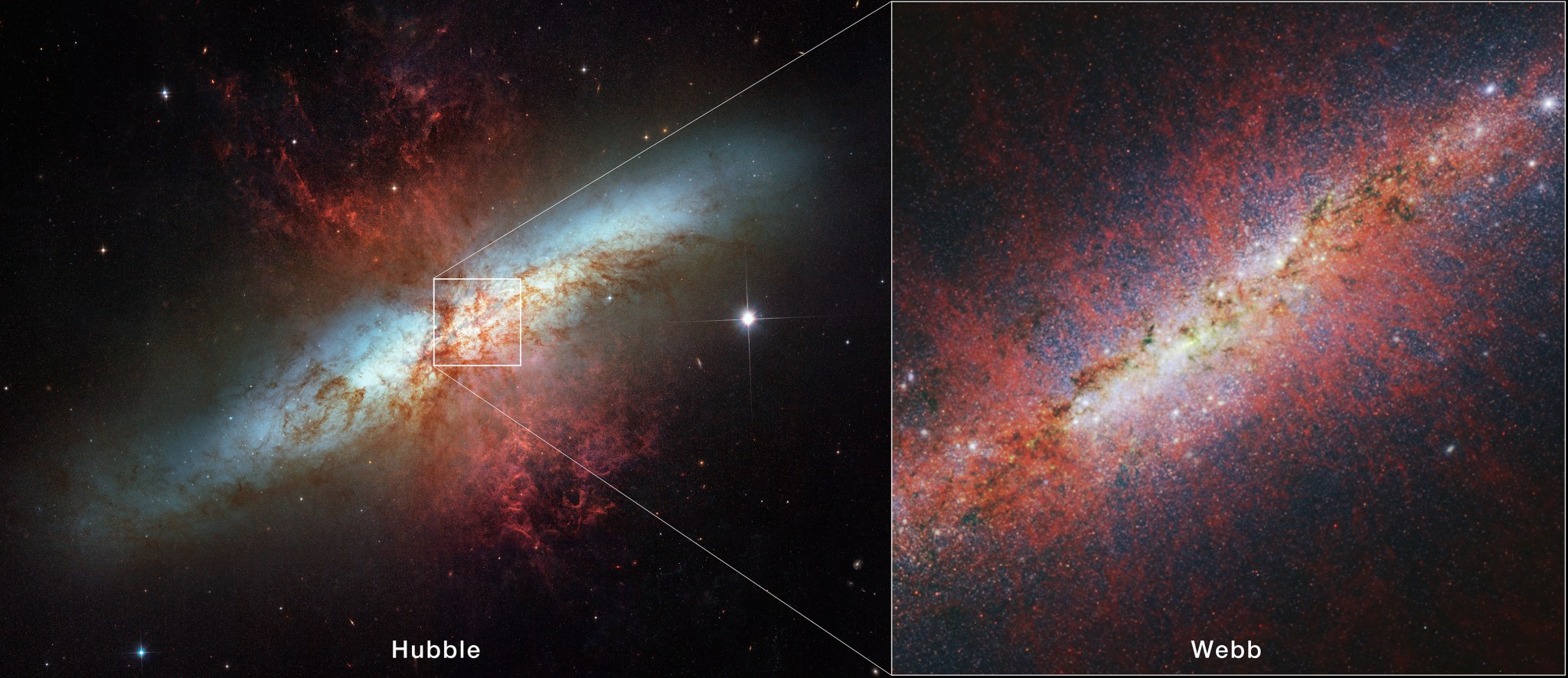
Left: Messier 82 as imaged by NASA's Hubble Space Telescope. Hour-glass-shaped red plumes of gas are shooting outward from above and below a bright blue, disk-shaped center of a galaxy. This galaxy is surrounded by many white stars and set against the black background of space. A small square highlights the section that the image on the right shows in greater detail. White text at bottom reads
On the left is the starburst galaxy M82 as observed by NASA’s Hubble Space Telescope in 2006. The small box at the galaxy’s core corresponds to the area captured so far by the NIRCam (Near-Infrared Camera) instrument on NASA’s James Webb Space Telescope. The red filaments as seen by Webb are the polycyclic aromatic hydrocarbon emission, which traces the shape of the galactic wind. In the Hubble image, light at .814 microns is colored red, .658 microns is red-orange, .555 microns is green, and .435 microns is blue (filters F814W, F658N, F555W, and F435W, respectively). In the Webb image, light at 3.35 microns is colored red, 2.50 microns is green, and 1.64 microns is blue (filters F335M, F250M, and F164N, respectively).
NASA, ESA, CSA, STScI, A. Bolatto (University of Maryland)

A Vibrant Community of Stars

Star formation continues to maintain a sense of mystery because it is shrouded by curtains of dust and gas, creating an obstacle in observing this process. Fortunately, Webb’s ability to peer in the infrared is an asset in navigating these murky conditions. Additionally, these NIRCam images of the very center of the starburst were obtained using an instrument mode that prevented the very bright source from overwhelming the detector.

While dark brown tendrils of heavy dust are threaded throughout M82’s glowing white core even in this infrared view, Webb’s NIRCam has revealed a level of detail that has historically been obscured. Looking closer toward the center, small specks depicted in green denote concentrated areas of iron, most of which are supernova remnants. Small patches that appear red signify regions where molecular hydrogen is being lit up by a nearby young star’s radiation.

“This image shows the power of Webb,” said Rebecca Levy, second author of the study at the University of Arizona, Tucson. “Every single white dot in this image is either a star or a star cluster. We can start to distinguish all of these tiny point sources, which enables us to acquire an accurate count of all the star clusters in this galaxy.”

Finding Structure in Lively Conditions

Looking at M82 in slightly longer infrared wavelengths, clumpy tendrils represented in red can be seen extending above and below the galaxy’s plane. These gaseous streamers are a galactic wind rushing out from the core of the starburst.

One area of focus for this research team was understanding how this galactic wind, which is caused by the rapid rate of star formation and subsequent supernovae, is being launched and influencing its surrounding environment. By resolving a central section of M82, scientists could examine where the wind originates, and gain insight on how hot and cold components interact within the wind.

Webb’s NIRCam instrument was well-suited to trace the structure of the galactic wind via emission from sooty chemical molecules known as polycyclic aromatic hydrocarbons (PAHs). PAHs can be considered as very small dust grains that survive in cooler temperatures but are destroyed in hot conditions.

Much to the team’s surprise, Webb’s view of the PAH emission highlights the galactic wind’s fine structure – an aspect previously unknown. Depicted as red filaments, the emission extends away from the central region where the heart of star formation is located. Another unanticipated find was the similar structure between the PAH emission and that of hot, ionized gas.

“It was unexpected to see the PAH emission resemble ionized gas,” said Bolatto. “PAHs are not supposed to live very long when exposed to such a strong radiation field, so perhaps they are being replenished all the time. It challenges our theories and shows us that further investigation is required.”

Video: Tour of the M82 Image

Credit: NASA’s Goddard Space Flight Center 

Lighting a Path Forward

Webb’s observations of M82 in near-infrared light spur further questions about star formation, some of which the team hopes to answer with additional data gathered with Webb, including that of another starburst galaxy. Two other papers from this team characterizing the stellar clusters and correlations among wind components of M82 are almost finalized.

In the near future, the team will have spectroscopic observations of M82 from Webb ready for their analysis, as well as complementary large-scale images of the galaxy and wind. Spectral data will help astronomers determine accurate ages for the star clusters and provide a sense of timing for how long each phase of star formation lasts in a starburst galaxy environment. On a broader scale, inspecting the activity in galaxies like M82 can deepen astronomers’ understanding of the early universe.

“Webb’s observation of M82, a target closer to us, is a reminder that the telescope excels at studying galaxies at all distances,” said Bolatto. “In addition to looking at young, high-redshift galaxies, we can look at targets closer to home to gather insight into the processes that are happening here – events that also occurred in the early universe.”

These findings have been accepted for publication in The Astrophysical Journal.The James Webb Space Telescope is the world’s premier space science observatory. Webb is solving mysteries in our solar system, looking beyond to distant worlds around other stars, and probing the mysterious structures and origins of our universe and our place in it. Webb is an international program led by NASA with its partners, ESA (European Space Agency) and the Canadian Space Agency.

Downloads

Right click the images in this article to open a larger version in a new tab/window.
Download full resolution images for this article from the Space Telescope Science Institute.
These findings have been accepted for publication in The Astrophysical Journal.

Media Contacts

Laura Betzlaura.e.betz@nasa.gov, Rob Gutrorob.gutro@nasa.gov
NASA’s Goddard Space Flight Center, Greenbelt, Md.

Christine Pulliamcpulliam@stsci.edu
Space Telescope Science Institute, Baltimore, Md.

Related Information

More about starburst galaxy M82

Galaxies Overview

Star Formation

More Webb News – https://science.nasa.gov/mission/webb/latestnews/

More Webb Images – https://science.nasa.gov/mission/webb/multimedia/images/

Webb Mission Page – https://science.nasa.gov/mission/webb/

Related For Kids

What Is a Galaxy?

What is the Webb Telescope?

SpacePlace for Kids

En Español

Ciencia de la NASA

NASA en español 

Space Place para niños

Powered by WPeMatico

Get The Details…

65 Years Ago: NASA Selects America’s First Astronauts

65 Years Ago: NASA Selects America’s First Astronauts

On Nov. 5, 1958, NASA, newly established to lead America’s civilian space program, formally established the Space Task Group (STG) at NASA’s Langley Research Center in Hampton, Virginia, to implement one of the nation’s top priorities – to develop a spacecraft capable of sending humans into space and returning them safely to Earth. In January 1959, the STG selected a contractor to build the spacecraft for Project Mercury and began the process of choosing who would fly the spacecraft. President Dwight D. Eisenhower directed NASA to choose its first astronauts from among the ranks of military pilots. The three-month rigorous process led to the selection on April 2, 1959, of seven men from among America’s military branches. The agency presented them to the world on April 9 as America’s Mercury 7 astronauts.

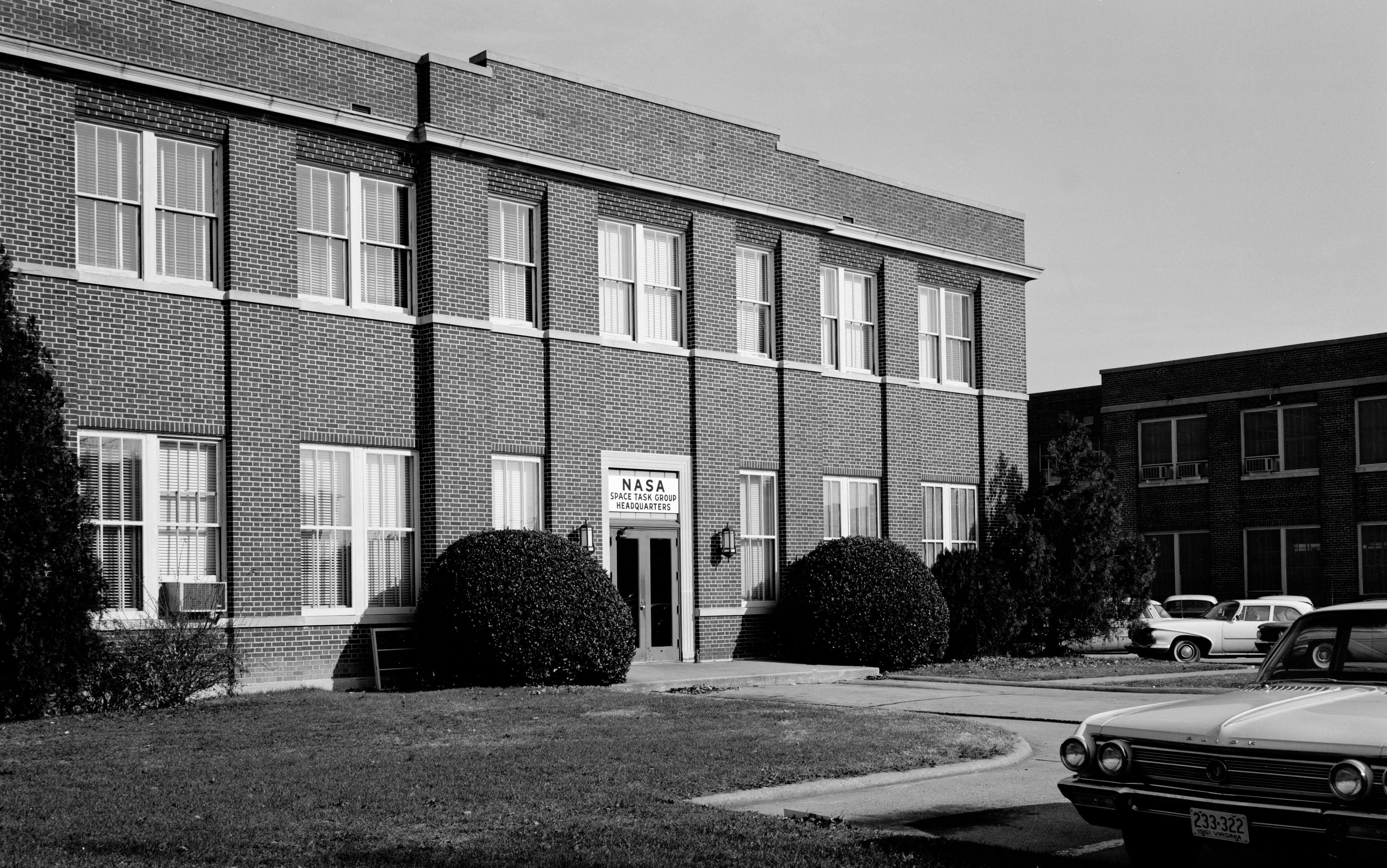
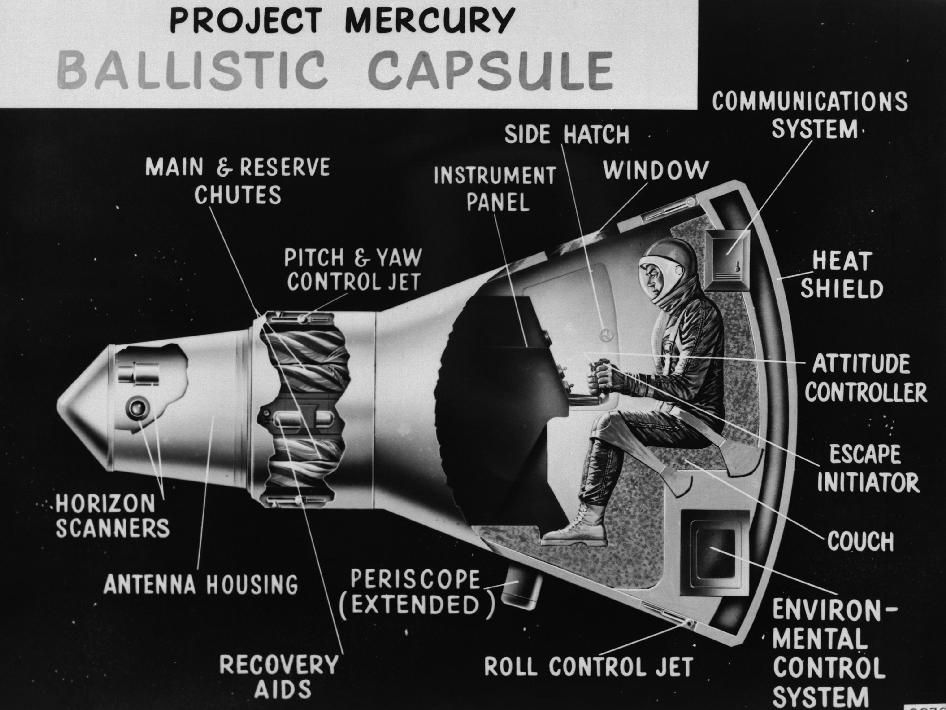
The headquarters building for the Space Task Group at NASA’s Langley Research Center in Hampton, Virginia An early cutaway representation of the Mercury capsule
Left: The headquarters building for the Space Task Group at NASA’s Langley Research Center in Hampton, Virginia. Right: An early cutaway representation of the Mercury capsule.

President Eisenhower decided that military test pilots would make the most suitable astronauts. Choosing from among armed forces personnel would expedite the selection process since the government had access to their records and all had received prior security clearances and medical screening. On Jan. 5, 1959, NASA established the qualifications for the astronauts: less than 40 years of age; less than 5 feet 11 inches tall; excellent physical condition; bachelor’s degree or equivalent; graduate of test pilot school; and 1,500 hours of jet flight time. A screening in late January of the files of 508 graduates of the Navy and Air Force test pilot schools who met the basic age and flying requirements resulted in 110 qualified candidates. The selection committee ranked these candidates and divided them into three groups of about 35 each. The first two groups, comprising 69 candidates, received classified briefings at the Pentagon about the Mercury spacecraft and their potential participation. From this group, 53 volunteered for further evaluation and NASA decided not to call in the third group of candidates. Following an initial medical screening, 32 from this group advanced to undergo thorough medical evaluations at the Lovelace Foundation for Medical Education and Research, commonly known as the Lovelace Clinic, in Albuquerque, New Mexico. Beginning on Feb. 7, the candidates in six groups of five or six spent one week at Lovelace undergoing comprehensive medical examinations. From there, 31 of the 32 (one candidate failed a blood test at Lovelace) advanced to the Aero Medical Laboratory (AML) at Wright-Patterson Air Force Base in Dayton, Ohio, where weeklong testing of the six groups took place between Feb. 15 and March 28. Rather than simply examining them physically, testing at AML consisted of stressing the candidates in centrifuges, altitude chambers, and other devices to evaluate their reactions. The selection committee met at Langley in late March and based on all the available data selected seven candidates for Project Mercury. The 24 unsuccessful candidates received notification by telephone on April 1 with a follow up letter from Assistant STG Manager Charles J. Donlan on April 3, also advising them to apply for any possible future astronaut selections. Four of them did apply to the second selection in 1962, and NASA selected two of them. The seven chosen as Mercury astronauts received telephone calls from Donlan on April 2.

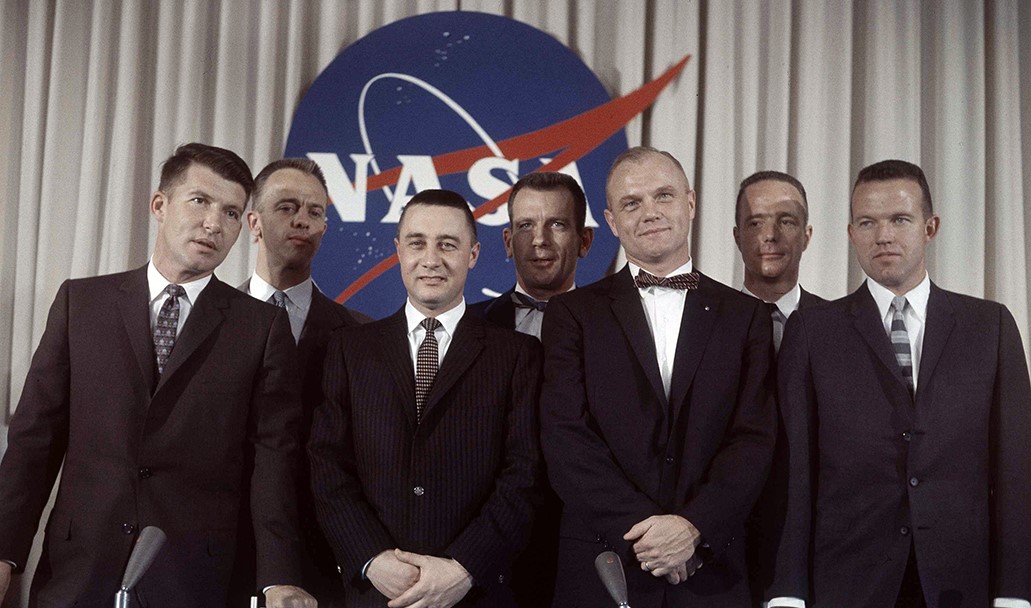
Group photo of the Mercury 7 astronauts at their first public appearance in April 1959: Walter M. Schirra, left, Alan B. Shepard, Virgil I. “Gus” Grissom, Donald K. “Deke” Slayton, John H. Glenn, M. Scott Carpenter, and L. Gordon Cooper
Group photo of the Mercury 7 astronauts at their first public appearance in April 1959: Walter M. Schirra, left, Alan B. Shepard, Virgil I. “Gus” Grissom, Donald K. “Deke” Slayton, John H. Glenn, M. Scott Carpenter, and L. Gordon Cooper.

On April 9, 1959, NASA formally introduced the men to the nation and the world. The event took place in the ballroom of the Dolley Madison House on Lafayette Square in Washington, D.C., the new space agency’s first headquarters. The astronauts took their seats at a long table on a makeshift stage, and NASA Administrator T. Keith Glennan introduced them in alphabetical order: “Malcolm S. Carpenter, Leroy G. Cooper, John H. Glenn, Virgil I. Grissom, Walter M. Schirra, Alan B. Shepard, and Donald K. Slayton … the nation’s Mercury astronauts!” After a brief photo session, for the next 90 minutes the new astronauts responded to numerous questions from the reporters gathered in the ballroom. For most of the men, meeting the press represented a new experience as they had little prior exposure to the media in their previous jobs as test pilots. By the time the event concluded, they clearly sensed that their lives had changed forever, with public attention as much a part of their jobs as training for and flying in space. They reported for work at Langley on April 27.

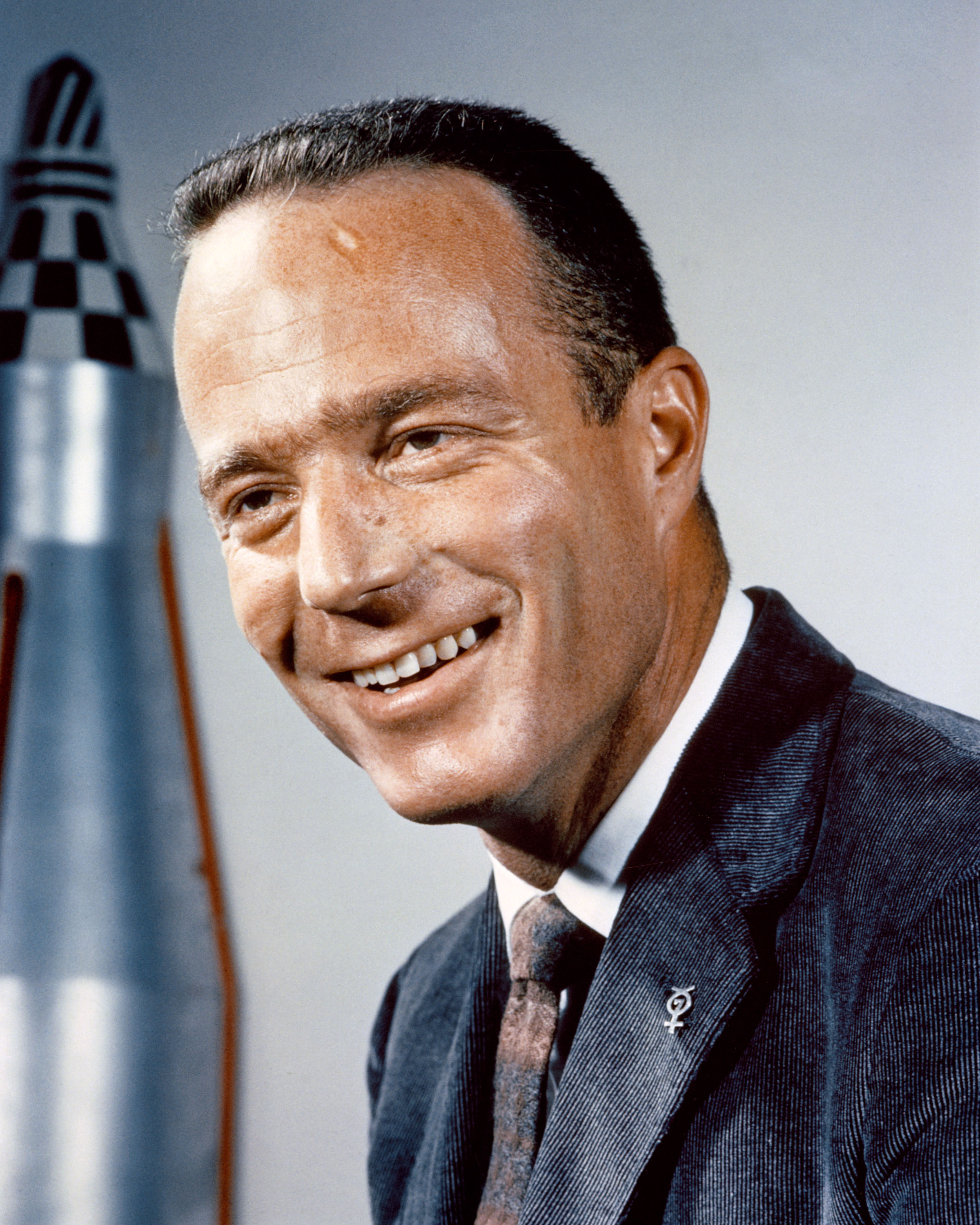
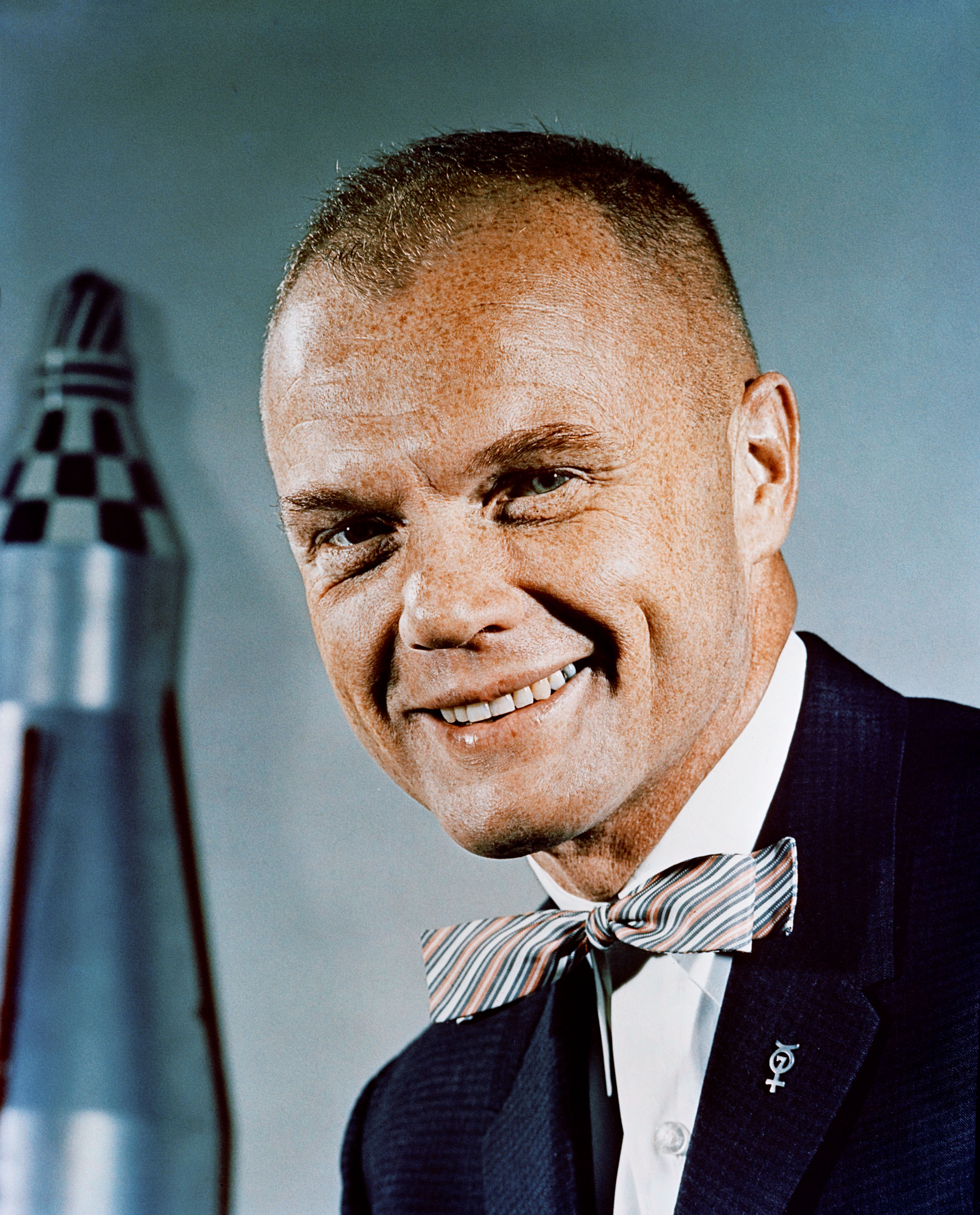
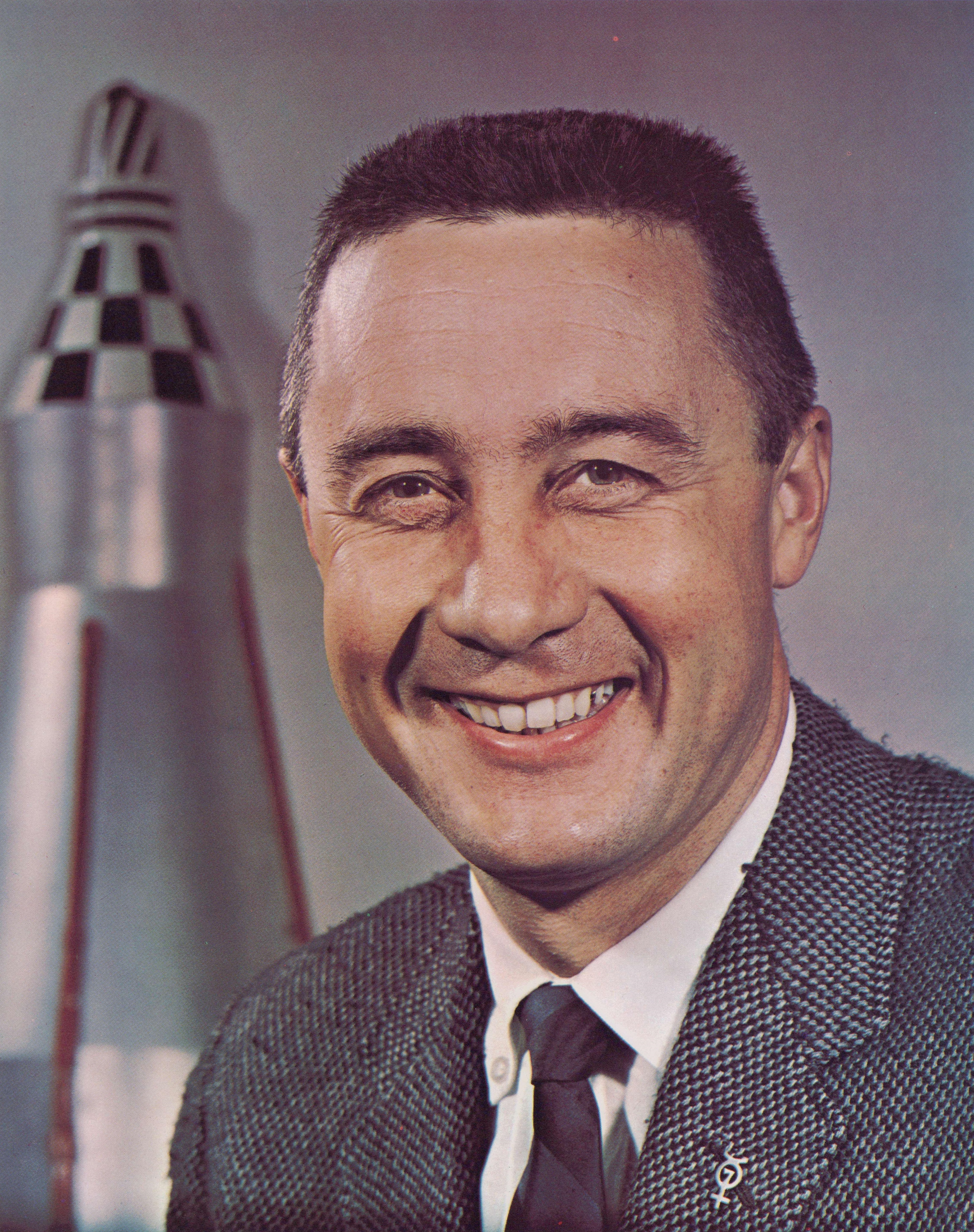
M. Scott Carpenter L. Gordon Cooper John H. Glenn Virgil I. “Gus” Grissom
Mercury 7 astronauts M. Scott Carpenter, left, L. Gordon Cooper, John H. Glenn, and Virgil I. “Gus” Grissom.

Carpenter flew America’s second orbital flight, Mercury 7, in May 1962, after serving as backup to Glenn for his historic first orbital flight. He named his capsule Aurora 7. Due to late firing of his retrorockets for the deorbit burn, Carpenter landed 250 miles from the target, and he waited hours for rescue forces to recover him. Cooper served as Schirra’s backup before getting his flight assignment on Mercury 9. He spent 34 hours aboard his Faith 7 capsule, at the time the longest American spaceflight. He served as command pilot of the eight-day Gemini V mission in August 1965, setting another American record. As his last assignment, he served as backup commander for Apollo 10 in 1969. Glenn made history in February 1962 as the first American to orbit the Earth aboard Friendship 7. Although he retired from NASA in 1964 to pursue a career in politics, he flew again as a U.S. Senator in 1998 aboard STS-95 at age 77, still the record as the oldest person to orbit the Earth. Grissom flew the second suborbital mission, Mercury 4, aboard his Liberty Bell 7 capsule, in August 1961. Following splashdown, his spacecraft’s hatch accidentally blew off and seawater rapidly filled it, a recovery helicopter pulling him to safety at the last moment. As the first American to travel to space a second time, he commanded the first two-man spacecraft, Gemini 3, in March 1965. He received a third spaceflight assignment as the commander of Apollo 1, the first flight of the three-person spacecraft. He died tragically during a ground test fire of the spacecraft on Jan. 27, 1967.

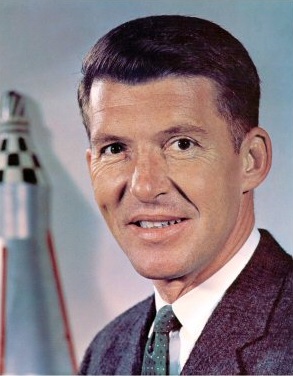
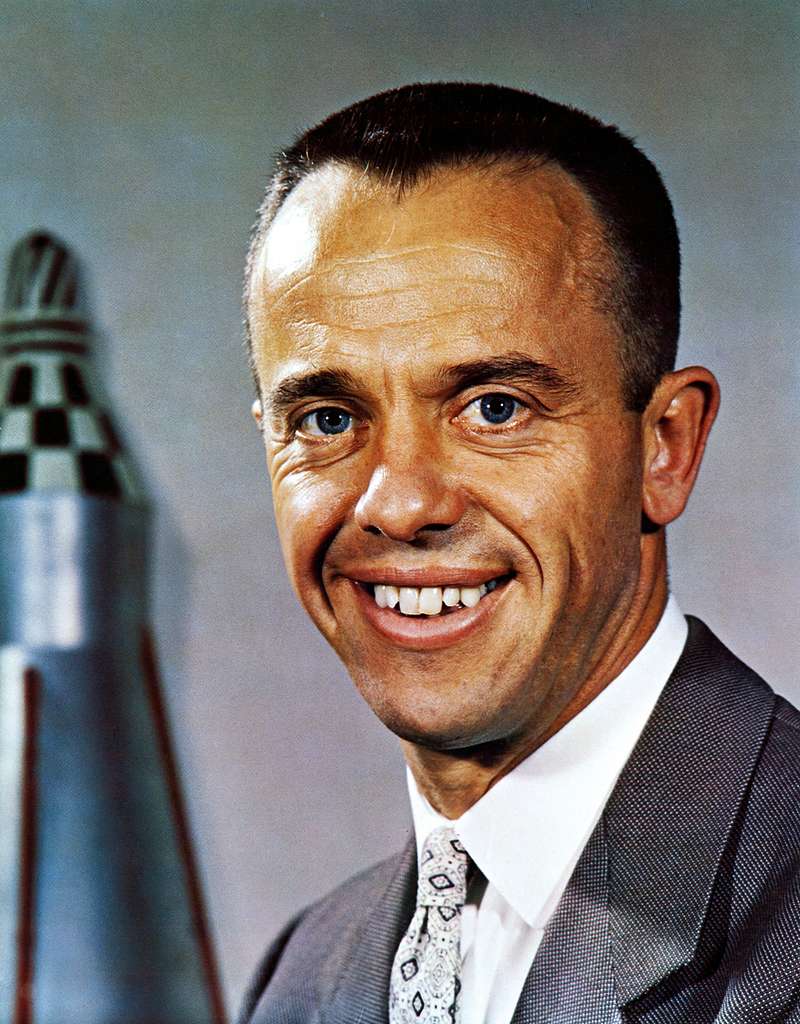
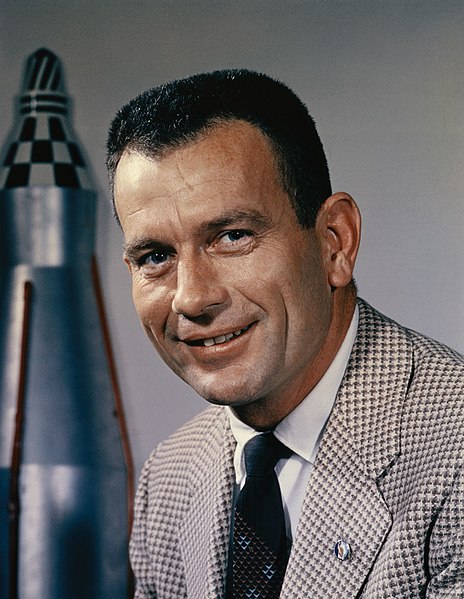
Walter M. Schirra Alan B. Shepard Donald K. “Deke” Slayton
Mercury 7 astronauts Walter M. Schirra, left, Alan B. Shepard, and Donald K. “Deke” Slayton.

Schirra served as Carpenter’s backup before flying six orbits aboard his Sigma 7 spacecraft during the Mercury 8 mission in October 1962. He served as Grissom’s backup for Gemini 3 and flew as the command pilot for Gemini VI in December 1965, the first space rendezvous mission. Two months earlier, he showed his cool when on the first attempt to launch Gemini VI, the rocket’s engines shutdown just before liftoff. Before the Apollo 1 fire, he served as the commander of the Apollo 2 mission, then once again as Grissom’s backup for Apollo 1. After the fire, he flew as the commander of Apollo 7, the first crewed test of Command and Service Module in October 1968, the only astronaut to fly aboard all three of America’s first spacecraft. Shepard holds the honor as the first American in space for his suborbital flight aboard Freedom 7 during the Mercury 4 mission in May 1961. Grounded by an inner ear malady, Shepard went on to lead the astronauts as their chief until reinstated to flight duty in May 1969. He served as the commander of Apollo 14 in January-February 1971, the only Mercury 7 astronaut to walk on the Moon. Originally assigned to fly the Mercury 7 mission, in March 1962, flight surgeons grounded Slayton due to a heart irregularity just two months before his scheduled mission aboard Delta 7. While grounded, he served as chief of flight crew operations. Flight surgeons reinstated him to flying status in March 1972, and soon after NASA assigned him as the docking module pilot for the July 1975 Apollo-Soyuz Test Project joint mission with the Soviet Union.

Summary of spaceflights by the Mercury 7 astronauts. The highlighted boxes with flight names in italics represent astronauts who died before they could undertake the mission. Italics represent astronaut assigned to but did not fly the mission.

Astronaut biographies can be found at https://www.nasa.gov/astronauts

Read the JSC History Office oral histories with Carpenter, Cooper, Glenn, Schirra, and Shepard.

Powered by WPeMatico

Get The Details…
Kelli Mars

NASA Aeronautics Monthly STEM Newsletter

NASA Aeronautics Monthly STEM Newsletter

1 min read

Preparations for Next Moonwalk Simulations Underway (and Underwater)

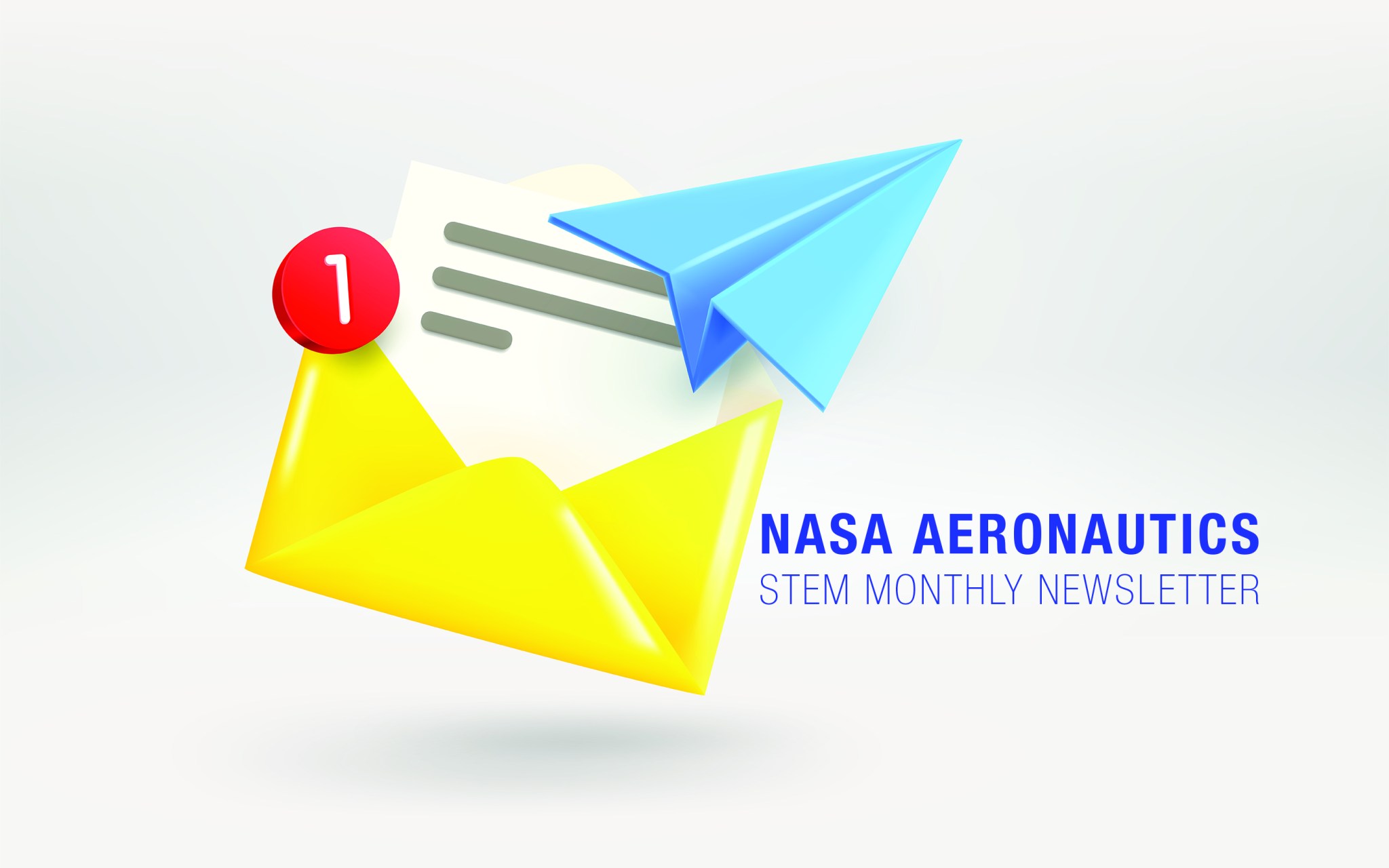
NASA Aeronautics STEM Monthly Newsletter graphic showing an email icon with a paper airplane.

2024

NASA Aeronautics Monthly STEM Newsletter: Issue 35

NASA Aeronautics Monthly STEM Newsletter: Issue 34

Aeronautics STEM

Share

Details

Last Updated

Apr 02, 2024

Editor
Lillian Gipson
Contact
Jim Banke

Related Terms

Powered by WPeMatico

Get The Details…
Lillian Gipson