60 Years Ago: Gemini 1 Flies a Successful Uncrewed Test Flight

60 Years Ago: Gemini 1 Flies a Successful Uncrewed Test Flight

On April 8, 1964, Gemini 1 successfully completed the first uncrewed test flight of the Gemini spacecraft and its Titan II booster. The three-orbit mission proved the structural integrity of the spacecraft and the launch vehicle, paving the way for a second uncrewed test flight and ultimately missions with astronauts. The primary goals of Project Gemini included proving the techniques required for the Apollo Program to fulfill President John F. Kennedy’s goal of landing a man on the Moon and returning him safely to Earth before the end of the decade. Of primary importance, Gemini demonstrated the rendezvous and docking techniques necessary to implement the Lunar Orbit Rendezvous method NASA chose for the Moon landing mission. Additionally, Gemini proved that astronauts could work outside their spacecraft during spacewalks and that spacecraft and astronauts could function for at least eight days, considered the minimum time for a roundtrip lunar mission.
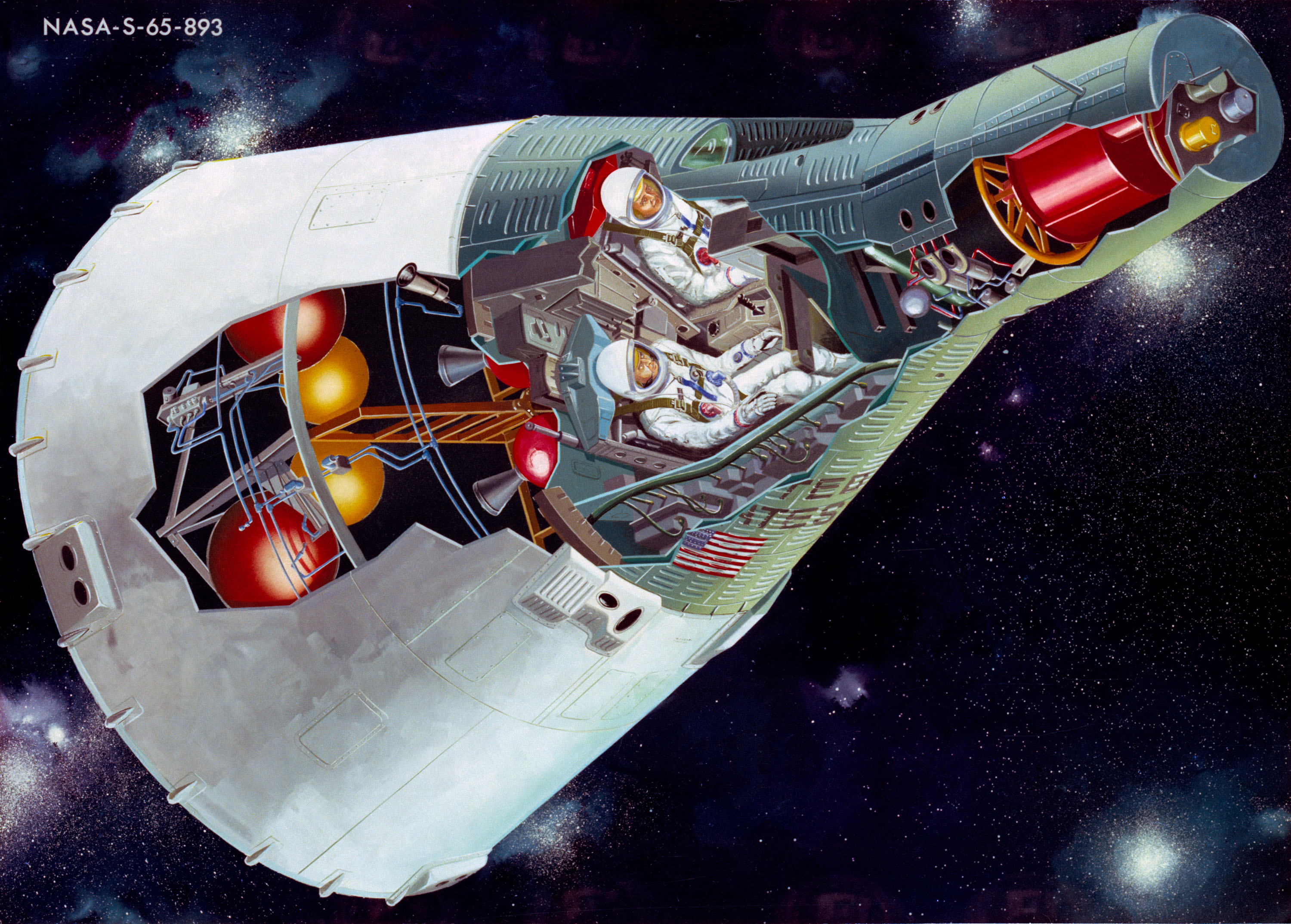
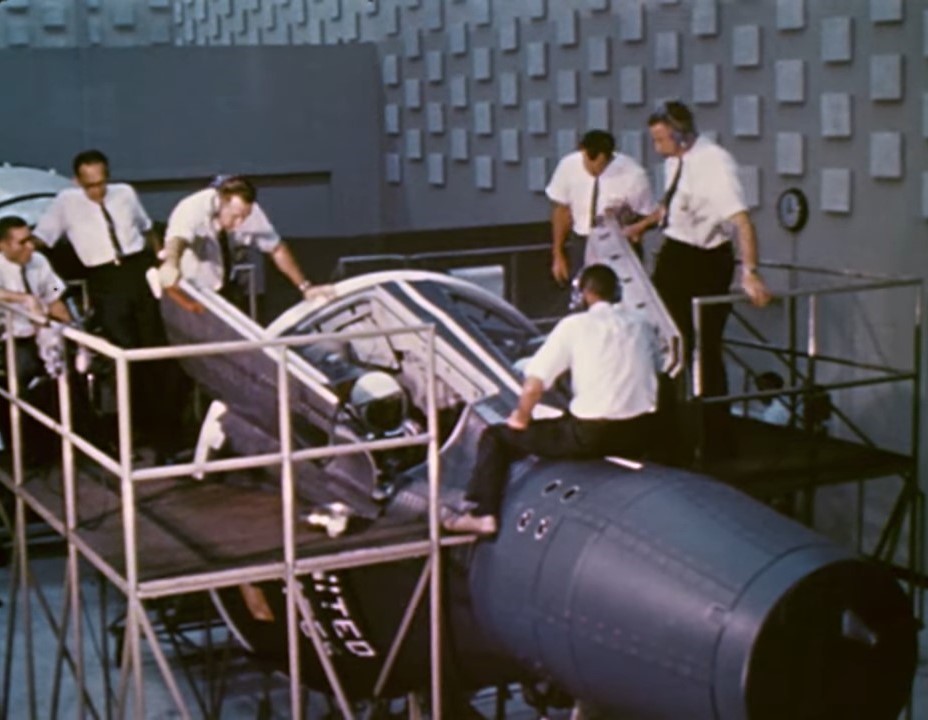
Cutaway diagram of the Gemini spacecraft Workers at the McDonnell plant in St. Louis examine a Gemini spacecraft mockup Workers at Martin Marietta’s Baltimore facility test Gemini 1’s Titan II rocket
Left: Cutaway diagram of the Gemini spacecraft. Middle: Workers at the McDonnell plant in St. Louis examine a Gemini spacecraft mockup. Right: Workers at Martin Marietta’s Baltimore facility test Gemini 1’s Titan II rocket.

Wedged between the pioneering Project Mercury and the historic Apollo missions to the Moon lies the less-heralded Project Gemini. The project’s 12 missions, two uncrewed test flights and 10 crewed missions, bridged the gap between Mercury that proved human spaceflight possible, and that Apollo could achieve President Kennedy’s goal. The Gemini missions flown between April 1964 and November 1966 demonstrated all the techniques required to make Apollo possible and gave astronauts the necessary training and flight experience while maturing the ground support infrastructure. The Gemini spacecraft grew out of studies for an upgraded Mercury capsule with an extended orbital life that could carry two astronauts and maneuver in space. On Dec. 7, 1961, NASA approved the development of the two-seat spacecraft, giving the contract to the McDonnell Corporation of St. Louis, the same company that built Mercury. To launch the spacecraft, NASA ordered the modification of the U.S. Air Force’s Titan II missile, built by the Martin Marietta Corporation in Baltimore. On Jan. 13, 1962, NASA officially named the project Gemini and established a formal Gemini Project Office later that month. But before any astronauts took flight aboard a Gemini spacecraft, it required thorough testing with a crew.
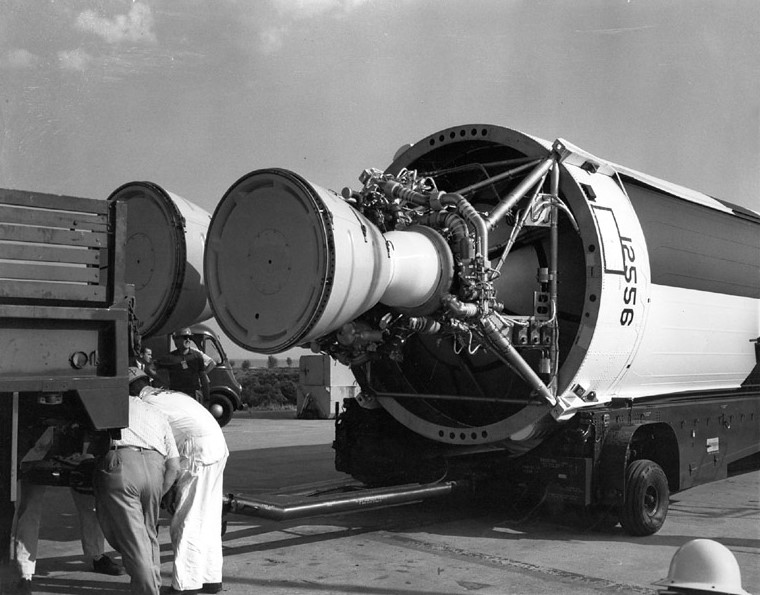
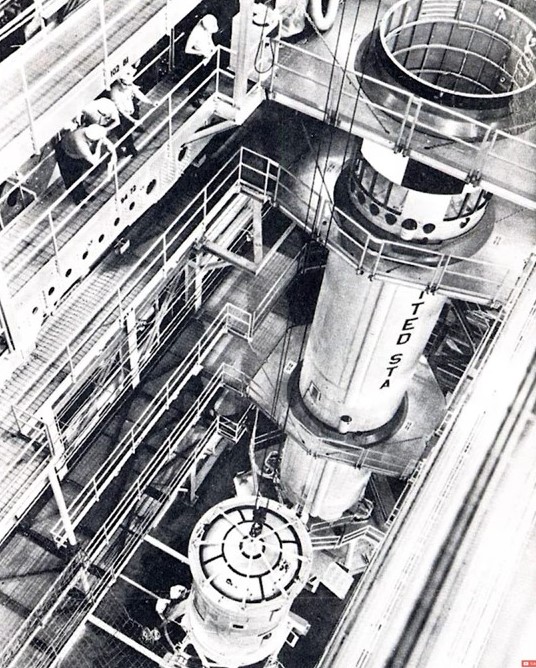
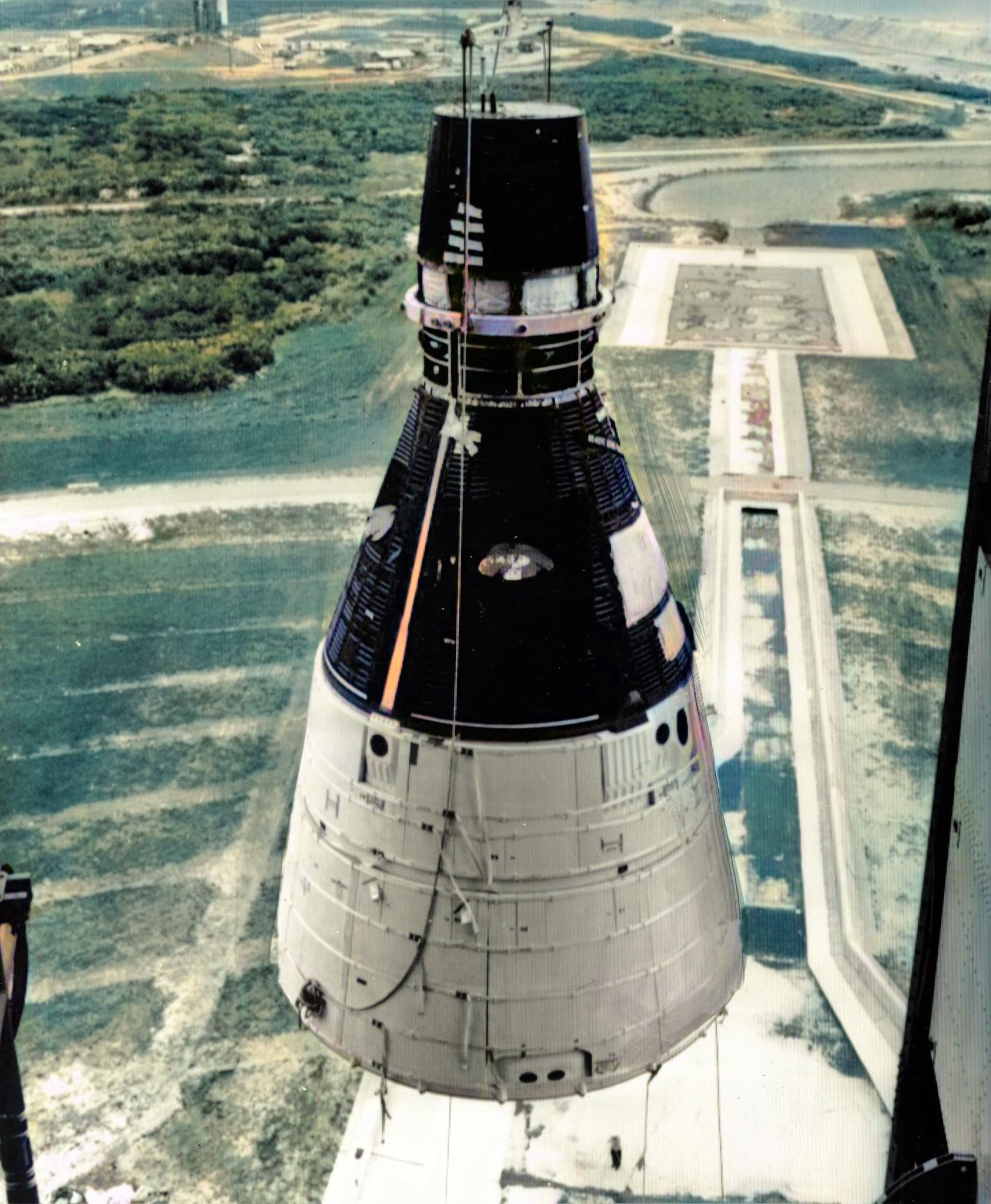
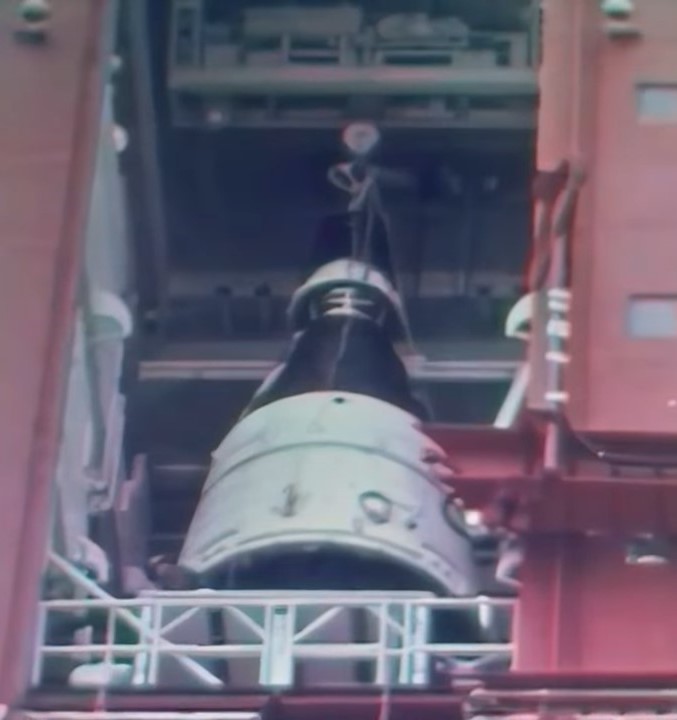
The first stage of Gemini 1’s Titan II rocket arrives at Cape Canaveral’s Launch Pad 19 Static test of the Titan II’s two stages Workers lift Gemini 1 to mate it with its Titan II rocket Workers lower Gemini 1 onto its Titan II rocket
Left: The first stage of Gemini 1’s Titan II rocket arrives at Cape Canaveral’s Launch Pad 19. Middle left: Static test of the Titan II’s two stages. Middle right: Workers lift Gemini 1 to mate it with its Titan II rocket. Right: Workers lower Gemini 1 onto its Titan II rocket.

The agency approved the Gemini spacecraft design on March 31, 1962. The first spacecraft for the uncrewed Gemini 1 test mission arrived at Cape Canaveral on Oct. 4, 1963. In lieu of the two crew ejection seats, the spacecraft contained instrument pallets to monitor and record conditions during the mission. The Titan II rocket for Gemini 1 arrived at Cape Canaveral on Oct. 26 and three days later workers first stacked its two stages in a side-by-side configuration on Launch Pad 19 to prepare for the sequence compatibility test. That test, successfully carried out on Jan. 21, 1964, consisted of 30-second sequential static firings of the two stages. Following the test, workers vertically stacked the two stages and on March 5 mounted and mechanically mated the Gemini spacecraft to the second stage. Engineers completed a simulated countdown on April 2 and a simulated flight test on April 5, leading to the start of the countdown to launch on April 7.
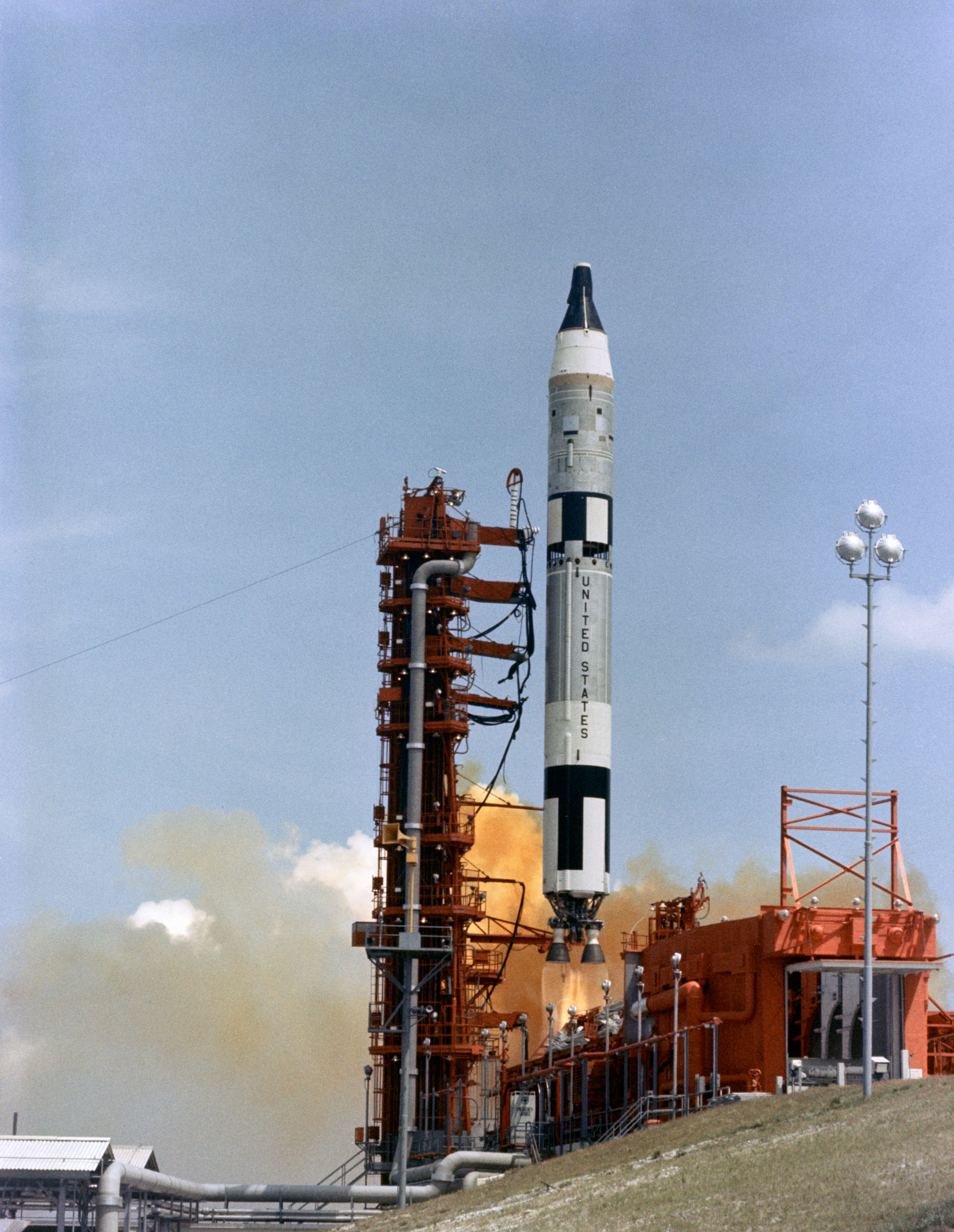
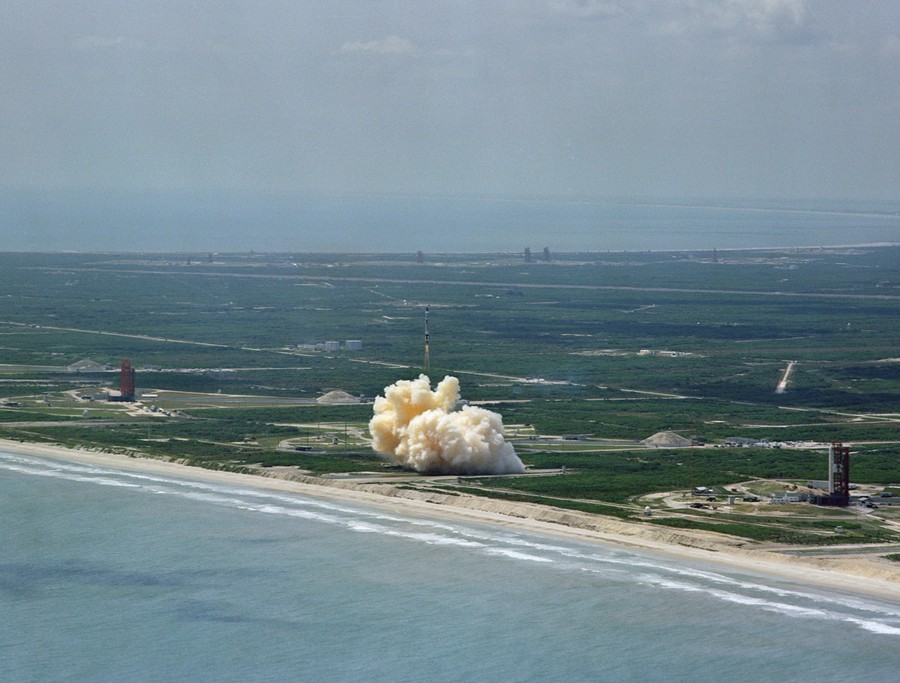
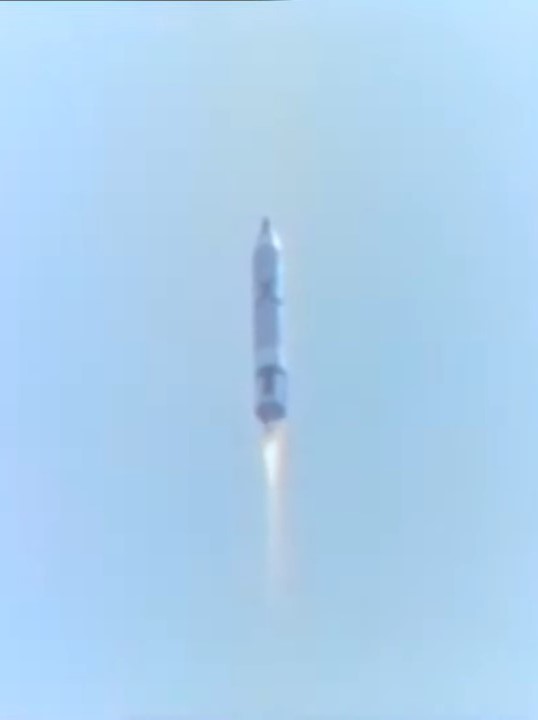
Liftoff of Gemini 1 from Launch Pad 19 Aerial view of Gemini 1 rising from Launch Pad 19 Gemini 1 continues its ascent to space
Left: Liftoff of Gemini 1 from Launch Pad 19. Middle: Aerial view of Gemini 1 rising from Launch Pad 19. Right: Gemini 1 continues its ascent to space.

On April 8, 1964, at 11:00 a.m. EST, Gemini 1 lifted off from Launch Pad 19. The primary objectives of the mission included verifying the structural integrity of the Titan II launch vehicle and the Gemini spacecraft, and the ability of the rocket to place the spacecraft into the proper orbit. After five minutes and 37 seconds of powered flight, during which the expended first stage dropped away and the second stage completed the ascent, Gemini 1, still attached to the second stage, achieved orbit. The slightly higher than expected velocity imparted to the spacecraft resulted in placing it in an orbit 21 miles higher than expected, an anomaly not considered serious.
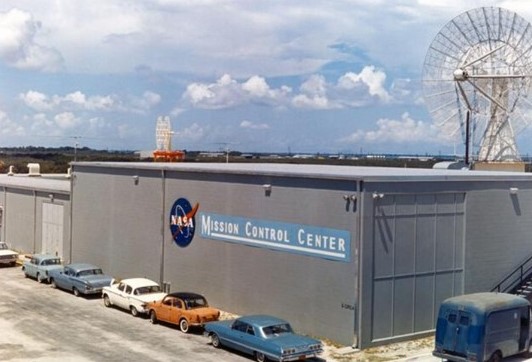
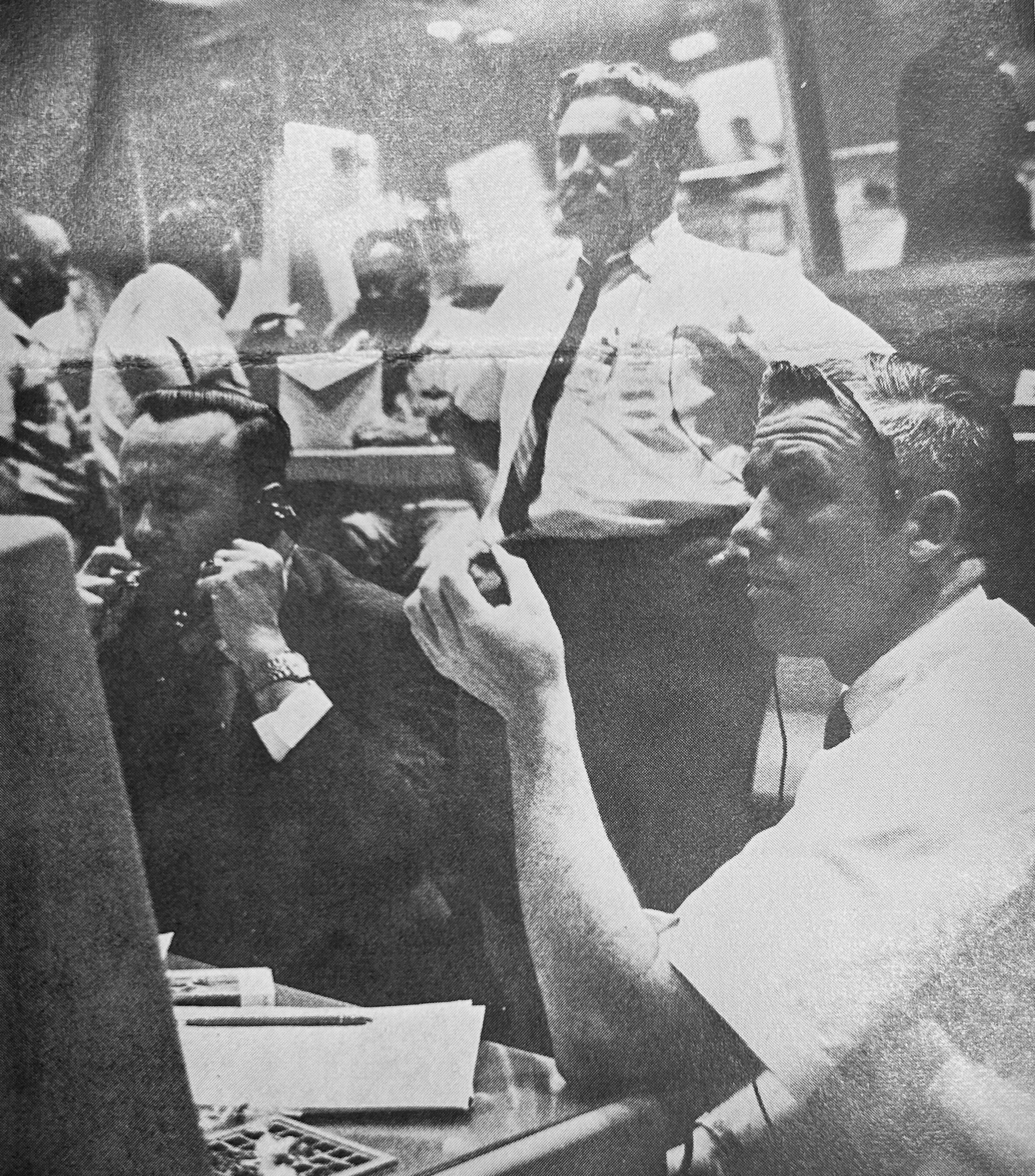
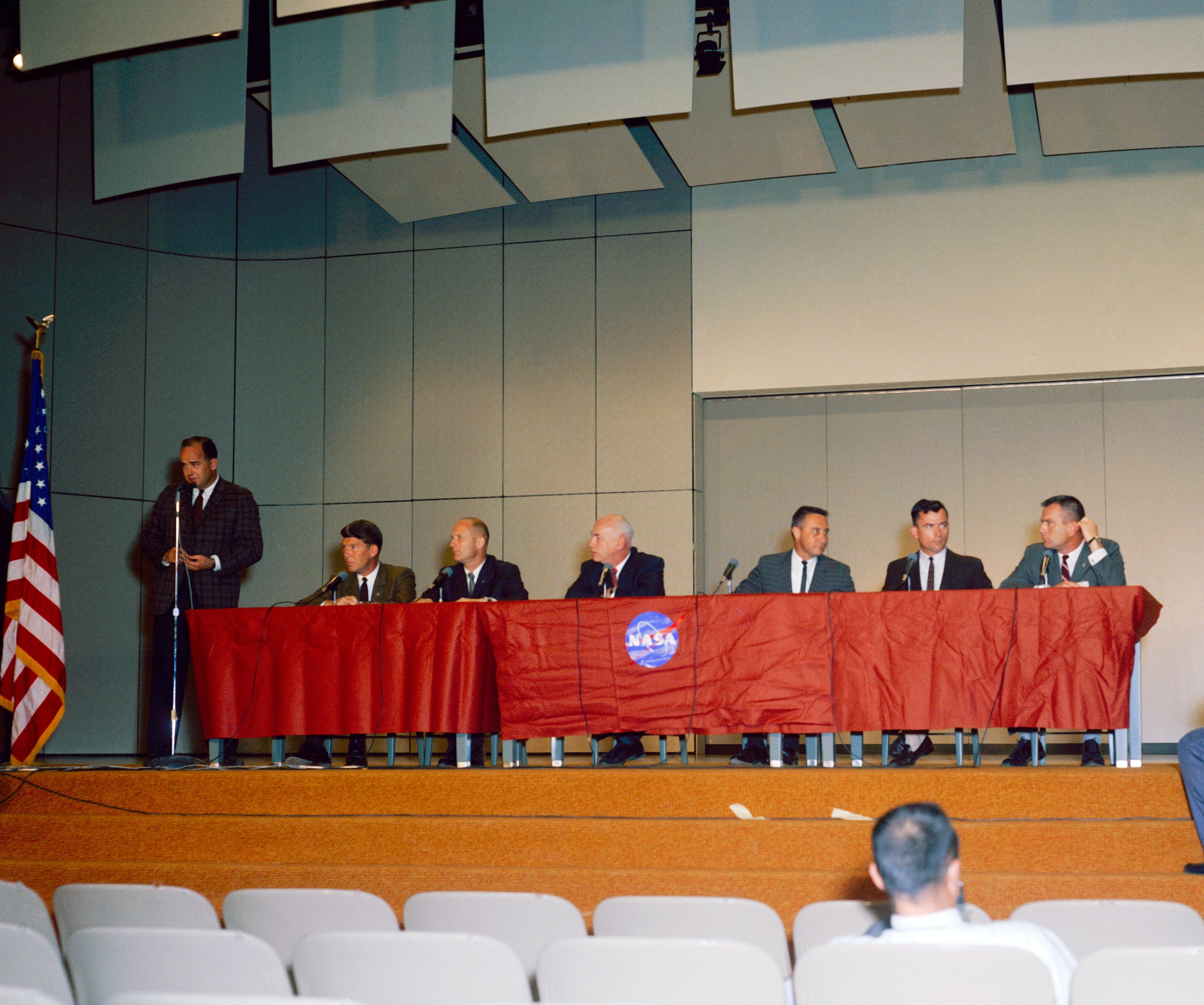
The Mission Control Center (MCC) at NASA’s Kennedy Space Center in Florida In the MCC, Flight Directors Christopher C. Kraft, left, and John D. Hodge, monitor the Gemini 1 mission In the auditorium of the Manned Spacecraft Center (MSC), now NASA’s Johnson Space Center in Houston, MSC Director Robert R. Gilruth introduces the Gemini 3 crew to the press
Left: The Mission Control Center (MCC) at NASA’s Kennedy Space Center in Florida. Middle: In the MCC, Flight Directors Christopher C. Kraft, left, and John D. Hodge, monitor the Gemini 1 mission. Right: In the auditorium of the Manned Spacecraft Center (MSC), now NASA’s Johnson Space Center in Houston, MSC Director Robert R. Gilruth introduces the Gemini 3 crew to the press.

In the Gemini Mission Control Center at NASA’s Kennedy Space Center in Florida, Flight Director Christopher C. Kraft led a team of flight controllers that monitored all aspects of the flight. The flight plan called for Gemini 1 to remain attached to its second stage for the duration of its mission that included only the first three orbits and ended about 4 hours 50 minutes after launch, with no plans to recover the spacecraft. The worldwide network continued to track Gemini 1 until it reentered the atmosphere on April 12, on its 64th orbit, over the southern Atlantic Ocean. Program managers declared the mission an unqualified success. The success of Gemini 1 led to optimism that NASA could carry out Gemini 2, a suborbital uncrewed test flight, in August 1964, followed by Gemini 3, the first crewed mission in November – the missions actually took place in January and March 1965, respectively. Riding on the optimism, on April 13, just five days after Gemini 1, in the newly open auditorium at the Manned Spacecraft Center (MSC), now NASA’s Johnson Space Center in Houston, MSC Director Robert R. Gilruth introduced the Gemini 3 crew to the press. NASA assigned Mercury 4 veteran Virgil I. “Gus” Grissom and Group 2 astronaut John W. Young as the prime crew, with Mercury 8 veteran Walter M. Schirra and Group 2 astronaut Thomas P. Stafford serving as their backups.

Powered by WPeMatico

Get The Details…
Kelli Mars
From NASA’s First Astronaut Class to Artemis II: The Importance of Military Jet Pilot Experience

From NASA’s First Astronaut Class to Artemis II: The Importance of Military Jet Pilot Experience

6 min read

Preparations for Next Moonwalk Simulations Underway (and Underwater)

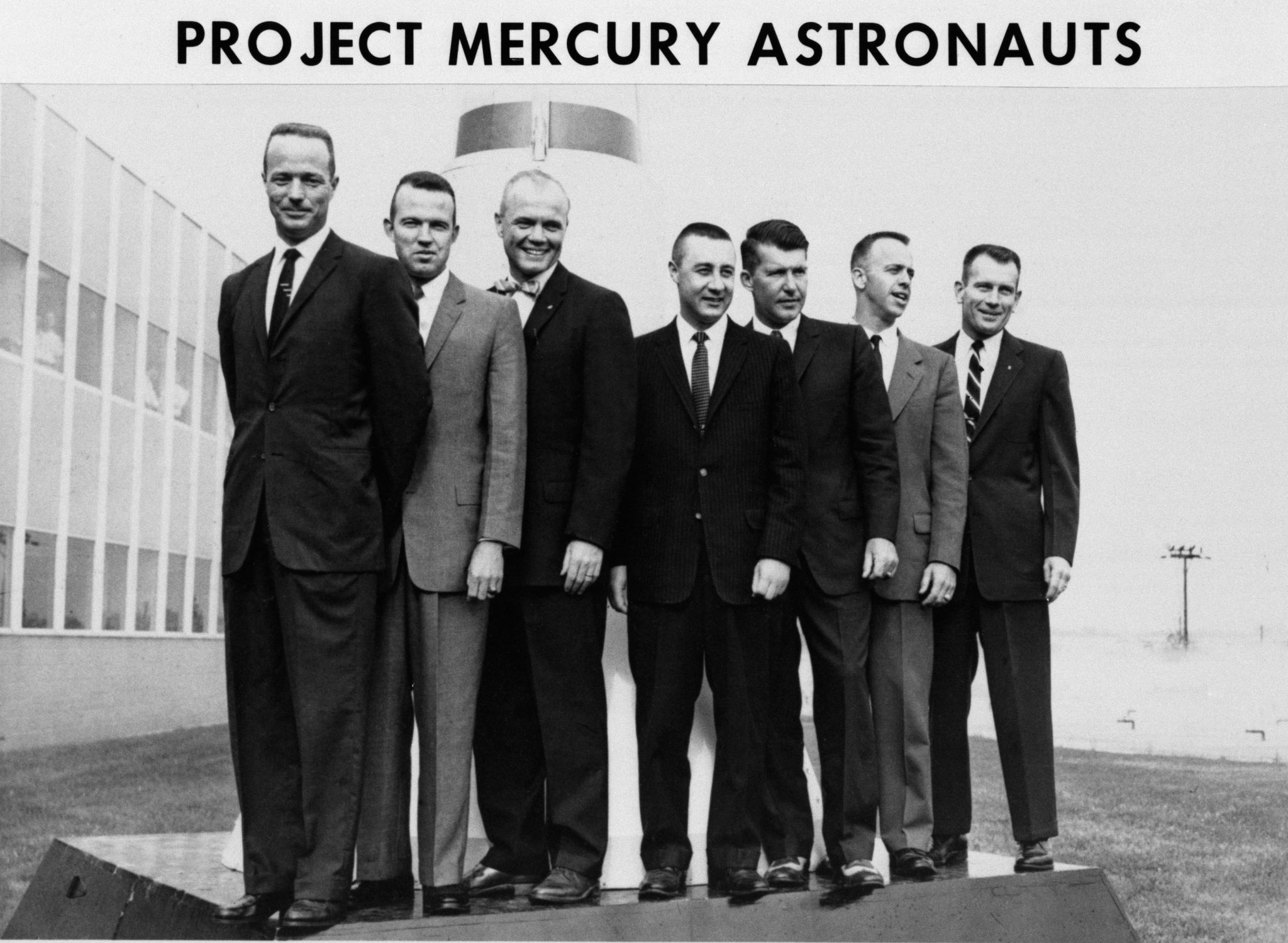
The 7 Project Mercury astronauts
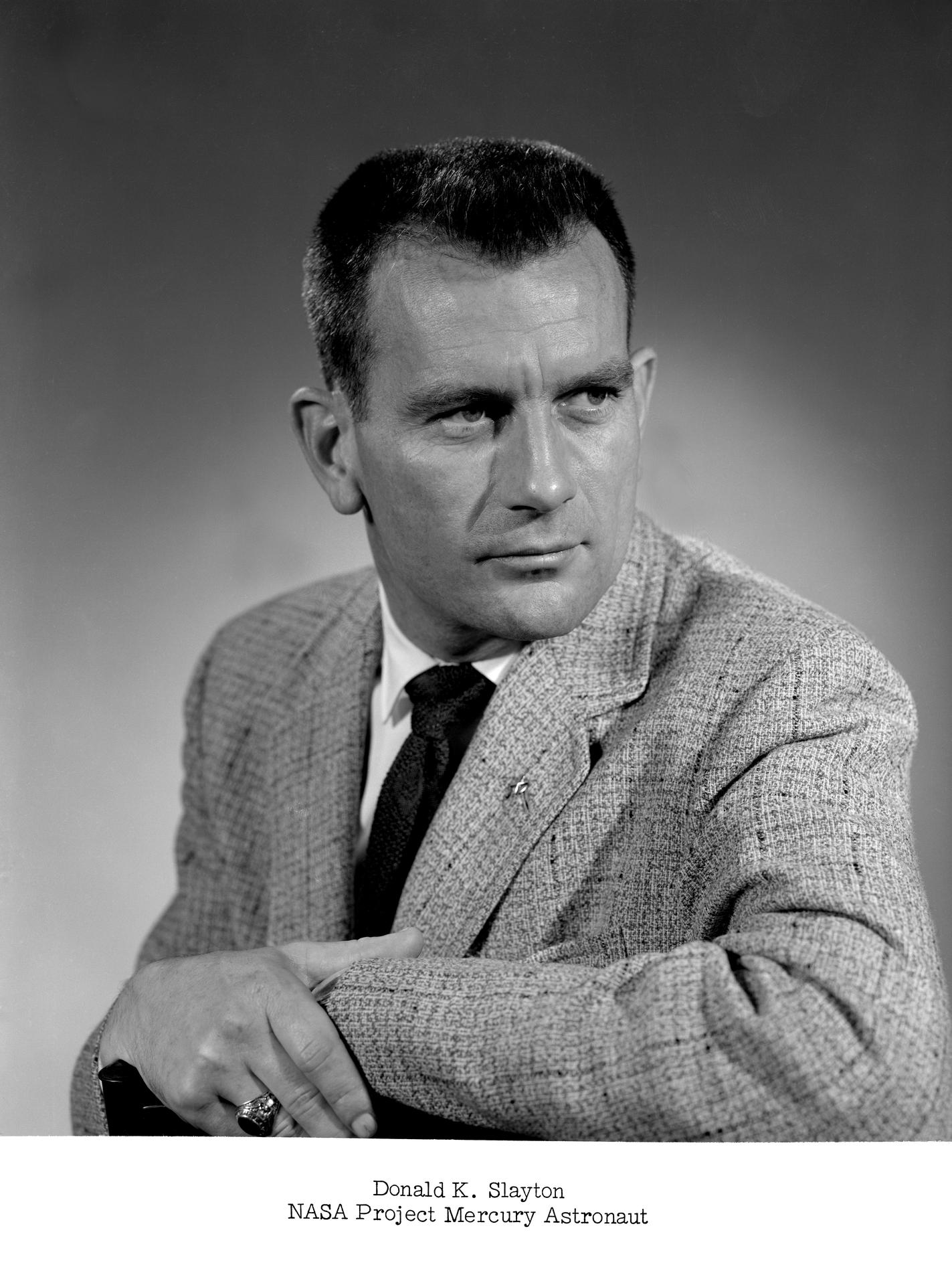
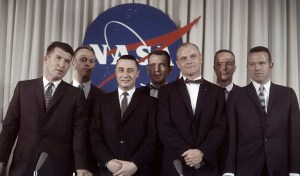
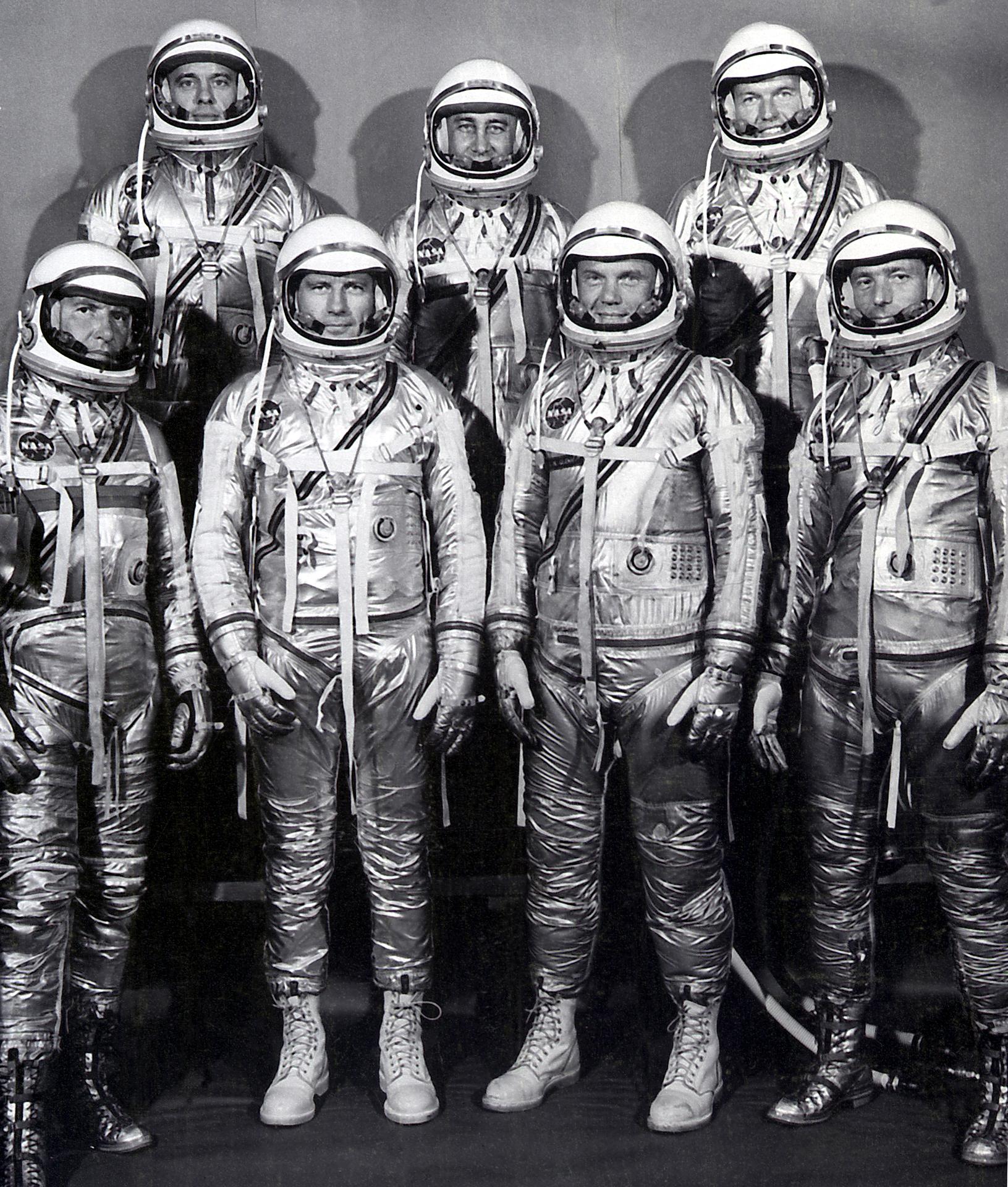
The original Mercury astronauts at the McDonnell Aircraft Corp. in May 1959. The astronauts are left to right: M. Scott Carpenter, L. Gordon Cooper Jr., John H. Glenn Jr., Virgil I. “Gus” Grissom, Walter M. “Wally” Schirra, Alan B. Shepard Jr., and Donald K. “Deke” Slayton.
NASA

The Mercury 7

On April 9, 1959, reporters and news media crammed into the ballroom of the Dolley Madison House in Washington—the location of NASA Headquarters at that time—to learn the names of the first American astronauts who came to be known as the Mercury 7. Public Information Director Walter Bonney kicked off the announcement by pointing to the seven men sitting on stage. “These are our astronaut volunteers,” he announced. “Take your pictures as you will, gentlemen.” One of those men on the dais, Deke Slayton, a test pilot from Edwards Air Force Base, recalled the pandemonium he witnessed. “I’ve never seen anything like it, before or since.” He described the event as, “a frenzy of light bulbs and questions…it was some kind of roar.” His colleague, Wally Schirra, a test pilot from Naval Air Station Patuxent River, called the media’s interest scary because he soon came to realize that their, “private lives were in jeopardy.”

I’ve never seen anything like it, before or since.

Deke Slayton

Deke Slayton

Former NASA Astronaut

The first class of astronauts were all test pilots: Scott Carpenter, Gordon Cooper, John Glenn, Gus Grissom, Wally Schirra, Alan Shepard, and Deke Slayton. The men, as the media reported, had similar backgrounds, education, and skills. Obvious connections also included their age and race: all were white men in their thirties. Every one of them was married, had children, and were Protestants. They even donned similar outfits that day: suits with white shirts and ties.

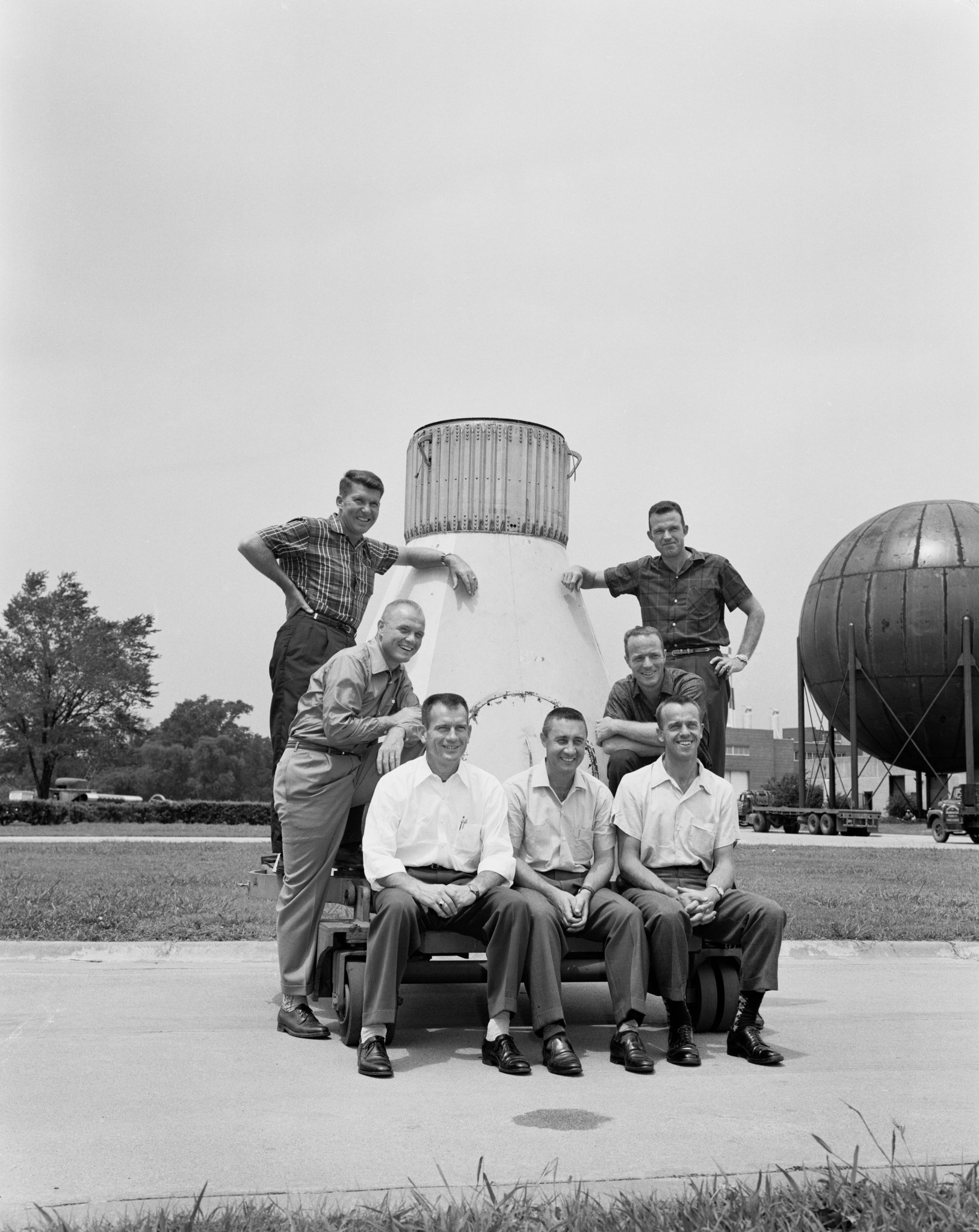
The Mercury 7 astronauts pose around a boilerplate capsule
The seven Mercury astronauts pose around a boiler plate capsule. Counterclockwise from the top left they are Walter M. Schirra, John H. Glenn Jr., Donald K. Slayton, Virgil I. Grissom, Alan B. Shepard Jr., M. Scott Carpenter, and Gordon Cooper Jr.
NASA

Throughout the sixties, NASA considered jet pilot experience an important skill for anyone in the astronaut corps. Even when NASA selected two groups of scientist-astronauts, one in 1965 and another in 1967, they too learned to fly high-speed aircraft. Those without military jet pilot experience attended a year-long course that the Air Force called Undergraduate Pilot Training, and once they completed the program, they became military-qualified jet pilots.

Adding Diversity to the Astronaut Corps

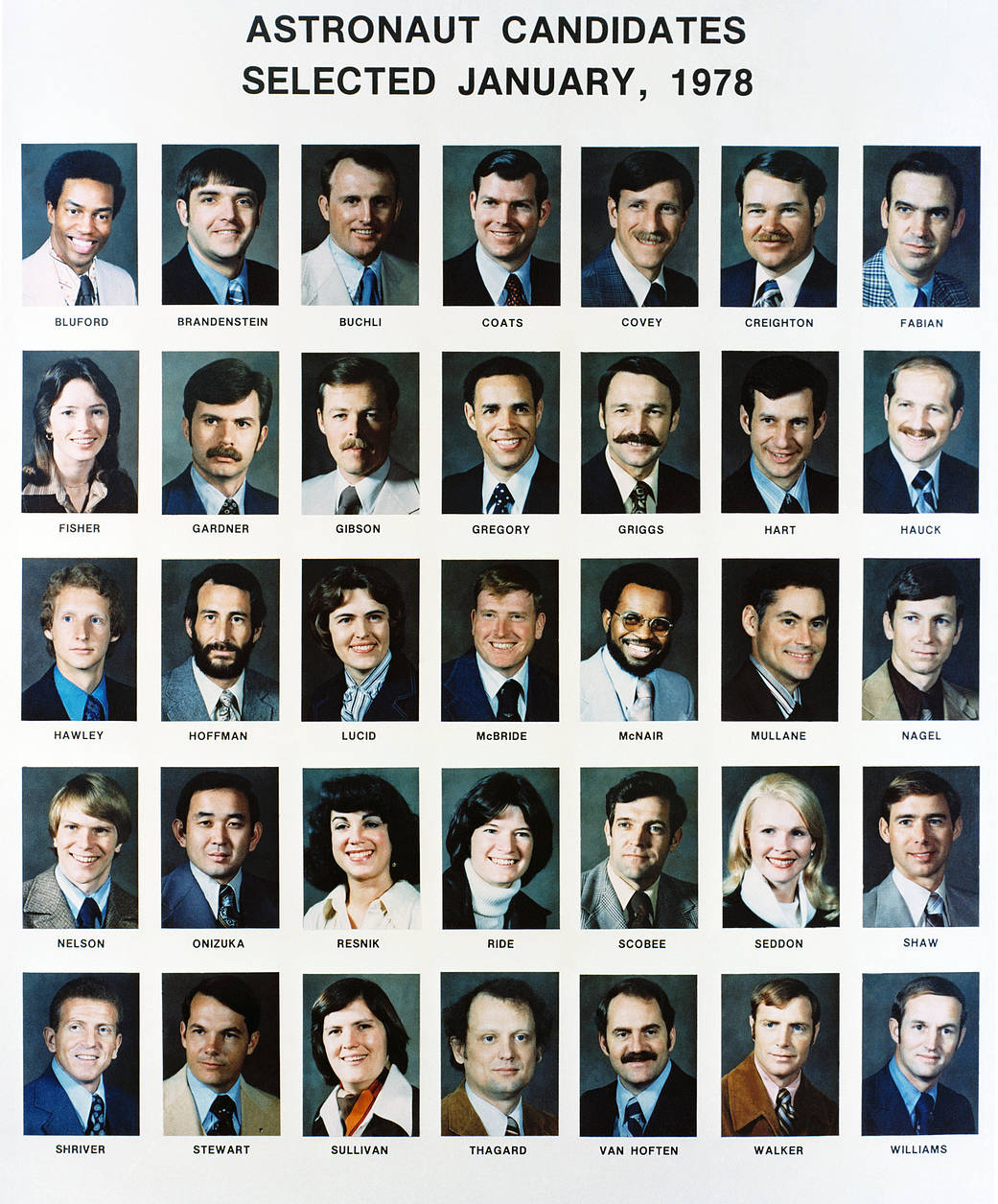
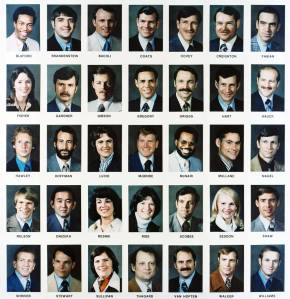
In the summer of 1976, NASA announced the space agency would be accepting applications for the first class of Space Shuttle astronauts, and encouraged women and minorities to apply. Almost 20 years after that first astronaut announcement, NASA included six women and four minority astronaut candidates in the 1978 class. Of the 35 selected, 15 were named pilots and 20 were mission specialists (scientists who would perform experiments in space and spacewalks). All the pilot astronauts named had similar backgrounds to the Mercury 7. Like their predecessors, they were white male test pilots with backgrounds in aviation, engineering, and science with one unique distinction: Frederick D. Gregory, an African American research test pilot from the NASA Langley Research Center in Virginia. It was not until 1990 that Eileen Collins, a graduate of U.S. Air Force Test Pilot School, became NASA’s first female pilot astronaut. Unlike the earlier scientist-astronauts, the mission specialists selected in 1978 and later classes did not have the opportunity to become military qualified jet pilots. They were required, however, to fly a certain number of hours per month in the back seat of a T-38, a jet trainer the pilot astronauts use to maintain their flight proficiency.

Montage of thirty-five portrait photos of 1978 astronaut class members
The astronaut class of 1978 was NASA’s first new group of astronauts since 1969. This class was notable for many reasons, including having the first African-American and Asian-American astronauts, and the first women.
NASA

Even as NASA encouraged women and minorities to apply to be astronauts over the years, and more met the basic qualifications as they earned advanced degrees in engineering, medicine, and science, neither group was ever a majority of those selected as candidates. It was more than fifty years before women made up half of those selected in 2013; people of color have never been a majority of any class. Recent astronaut classes are more likely to reflect America’s diverse population, including the last group to be selected in 2021. This group, called the “Flies,” included several minority candidates and four women. (The class, which graduated in March 2024, also included two international astronauts from the United Arab Emirates, and all are now eligible for a flight assignment.) Flight experience continues to remain important, however. Of the ten Americans selected, four were test pilots. Another, Major Nichole Ayers, was a combat aviator from the United States Air Force.

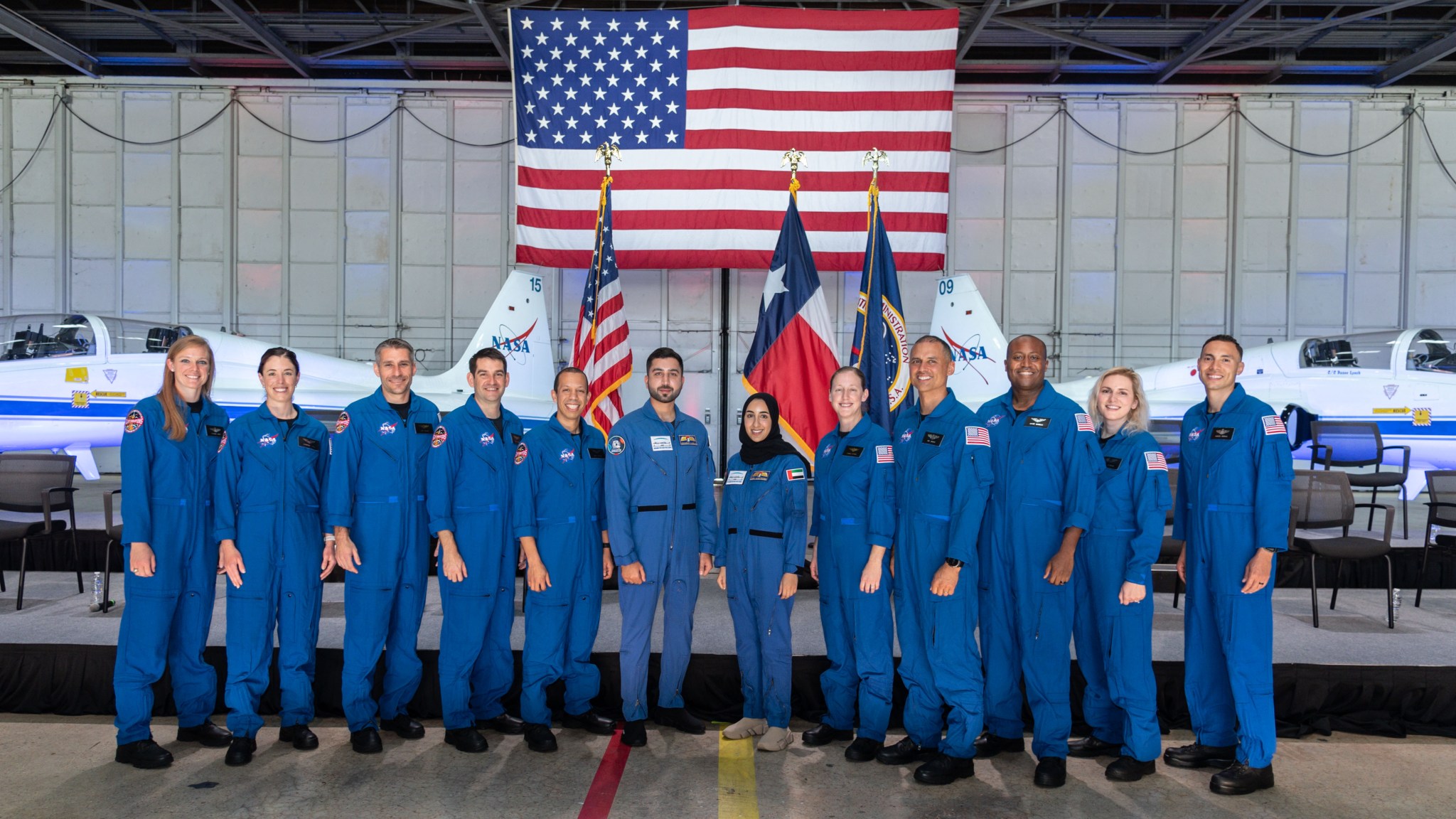
NASA announced its 2021 astronaut candidate class on Dec. 6, 2021. The 10 candidates, pictured here in an event at Ellington Field near NASA’s Johnson Space Center in Houston are Nichole Ayers, Christopher Williams, Luke Delaney, Jessica Wittner, Anil Menon, Marcos Berríos, Jack Hathaway, Christina Birch, Deniz Burnham, and Andre Douglas. UAE Astronaut Candidates Nora AlMatrooshi and Mohammad AlMulla stand alongside them. Credit: NASA/Robert Markowitz
NASA’s 2021 astronaut class graduated on Mar. 5, 2024. The 10 candidates, pictured here in an event at Ellington Field near NASA’s Johnson Space Center in Houston are Nichole Ayers, Christopher Williams, Luke Delaney, Jessica Wittner, Anil Menon, Marcos Berríos, Jack Hathaway, Christina Birch, Deniz Burnham, and Andre Douglas. UAE Astronaut Candidates Nora AlMatrooshi and Mohammad AlMulla stand alongside them.
NASA/Robert Markowitz

The Artemis II Crew

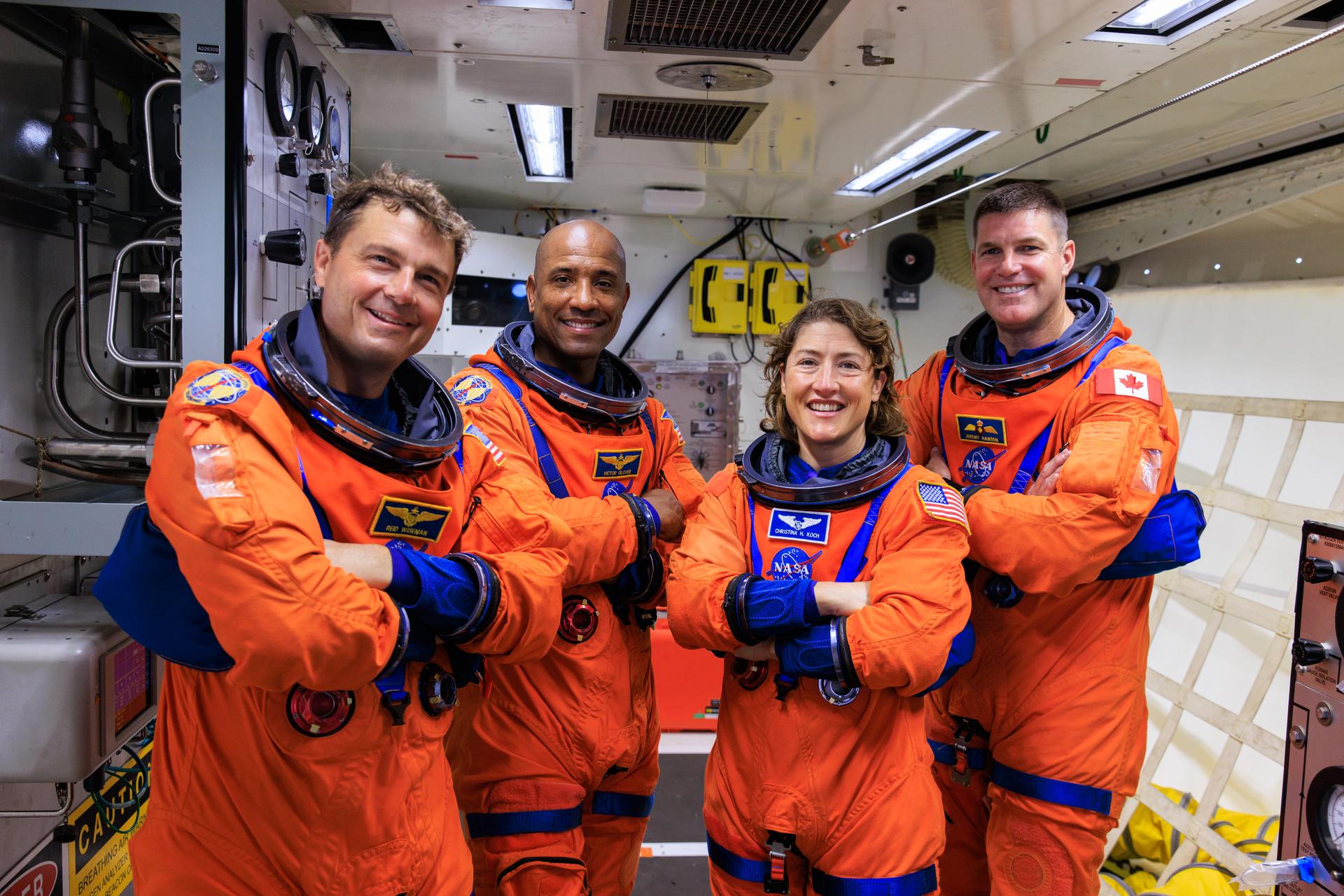
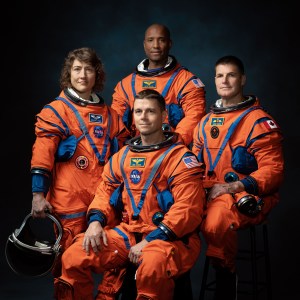
Almost 64 years to the day after the Mercury 7 announcement, NASA and CSA (Canadian Space Agency) revealed the names of the four astronauts assigned to the Artemis II mission. The flight will test and prove that the Orion spacecraft’s systems—including its life support, communication, and navigation systems—function as they were designed while a crew is aboard, ahead of future crewed missions to the Moon.

As NASA Administrator Bill Nelson introduced the crew, which included a woman, a person of color, and a Canadian national, he identified them as representatives of America’s creed: “E pluribus unum—out of many, one.” The four-member team included Commander Reid Wiseman, Pilot Victor Glover, and Mission Specialists Christina Koch and Jeremy Hansen. (Half of this crew came from the 2013 astronaut class, which was equally weighted between men and women.) Artemis II will be the first crewed mission to circle the Moon since Apollo. NASA’s Artemis Generation represents a distinct shift from the sixties—when white men from the United States of America landed on the Moon—and hopes to inspire and engage the next generation by demonstrating that space is for everyone, no matter their race or gender. This crew exemplifies the global coalition NASA has built and its commitment to include international partners as well as commercial partners in this grand adventure.

The Artemis II crew during a September 2023 test
NASA astronauts (left to right) Reid Wiseman, Victor Glover, and Christina Koch, and CSA (Canadian Space Agency) astronaut Jeremy Hansen were assigned to fly on the Artemis II mission to the Moon.
NASA

Like many who came before them, three of the four astronauts assigned to this historic mission are military-qualified jet pilots. Wiseman and Glover were both test pilots; Hansen flew as a fighter pilot for the Canadian Air Force. Test pilots regularly assess how new vehicles perform and have experience evaluating experimental aircraft. Astronauts with backgrounds as test pilots have traditionally been among those selected to fly new spacecraft for the first time. They have a strong understanding of the systems that they are monitoring, which helps them to identify and gather the type of data the space agency is seeking from this flight. The safety of future Artemis crews depends on this information.

While the Astronaut Office might look different from how it did in 1959, the decision to select test pilots for the first class of astronauts continues to influence and shape ideas about who is best suited to be an astronaut and fly in space. They are accustomed to working in a fast-paced environment and thrive under pressure. Bob Gilruth, the father of human spaceflight, called the decision to select test pilots to fly on Project Mercury in 1959, “one of the best decisions in the program. It made it quite simple and logical to delegate flight control and command functions to the pilot,” of the spacecraft. The importance of that decision continues to endure today.

Share

Details

Last Updated

Apr 05, 2024

Powered by WPeMatico

Get The Details…
Jennifer Ross-Nazzal

NASA Names Finalists of the Power to Explore Challenge

NASA Names Finalists of the Power to Explore Challenge

3 Min Read

NASA Names Finalists of the Power to Explore Challenge

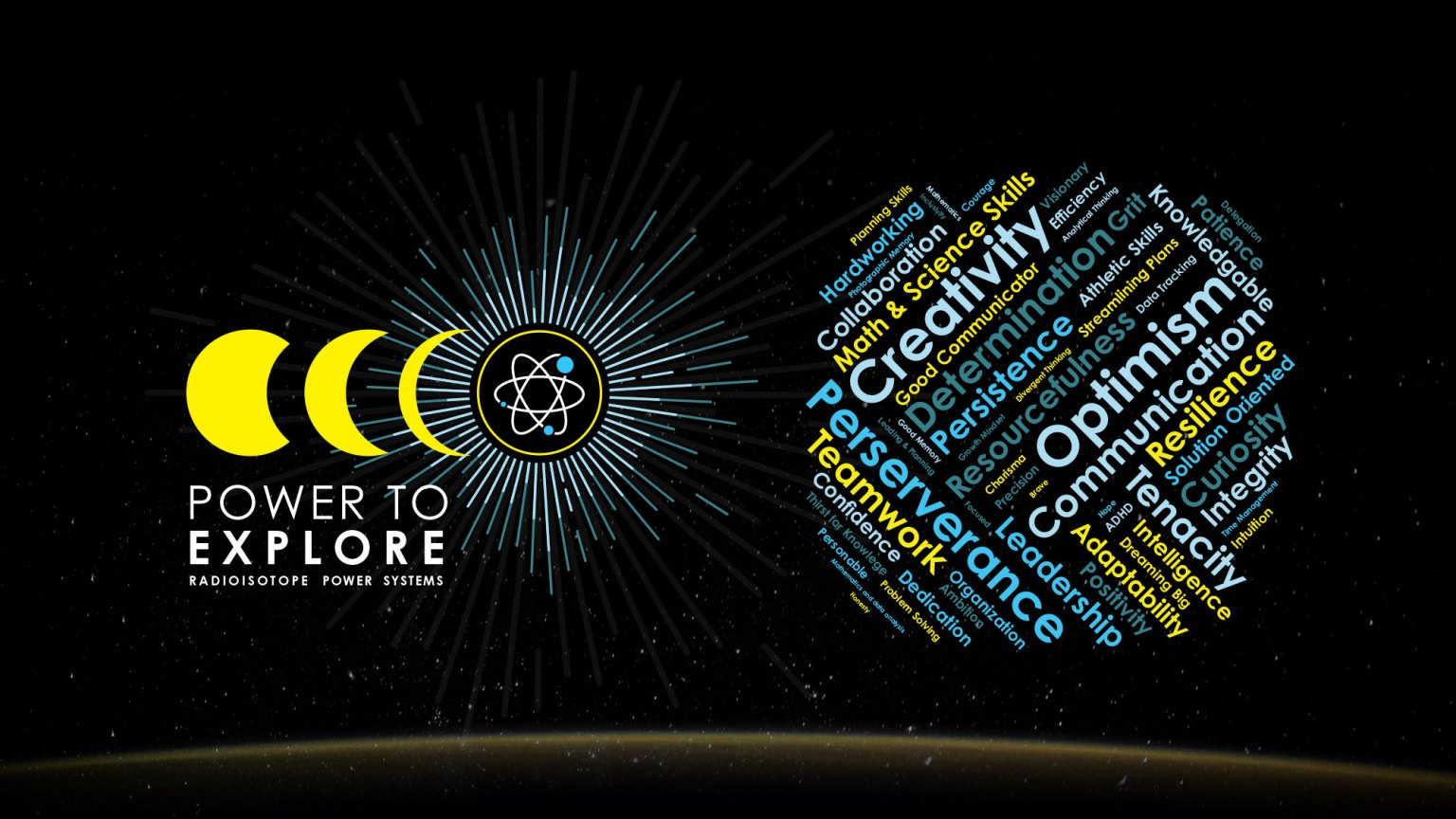
The 2024 Power to Explore logo celebrates the total eclipse with an illustration of the Sun disappearing behind an atomic symbol.

A word cloud generated from student essay entries.

Credits:
NASA/Dave Lam

NASA has selected the nine finalists of the Power to Explore Challenge, a national competition for K-12 students featuring the enabling power of radioisotopes.

NASA selected nine finalists out of the 45 semifinalist student essays in the Power to Explore Challenge, a national competition for K-12 students featuring the enabling power of radioisotopes. Contestants were challenged to explore how NASA has powered some of its most famous science missions and to dream up how their personal “super power” would energize their success on their own radioisotope-powered science mission.

The competition asked students to learn about NASA’s Radioisotope Power Systems (RPS), a type of “nuclear battery” that the agency uses to explore some of the most extreme destinations in our solar system and beyond. As cities across the United States experience a total solar eclipse, we experience first hand a momentary glimpse into what life would be like without sunlight. This draws attention to how NASA can power missions at destinations that cannot rely on the energy of the Sun, such as deep craters on the Moon and deep space exploration. In 250 words or less, students wrote about a mission of their own enabled by these space power systems and described their own power to achieve their mission goals.

The Power to Explore Challenge offered students the opportunity to learn more about these reliable power systems, celebrate their own strengths, and interact with NASA’s diverse workforce. This year’s contest received 1,787 submitted entries from 48 states and Puerto Rico.

«The RPS Program is so impressed by the ideas and quality of writing that come forth from essays submitted to NASA’s Power to Explore Challenge

Carl Sandifer

Carl Sandifer

Manager, Radioisotope Power Systems Program

“The RPS Program is so impressed by the ideas and quality of writing that come forth from essays submitted to NASA’s Power to Explore Challenge,” said Carl Sandifer, NASA’s manager for the Radioisotope Power Systems Program in Cleveland. “We would like to congratulate the finalists, and we look forward to welcoming the winners to NASA’s Glenn Research Center this summer.”

Entries were split into three categories: grades K-4, 5-8, and 9-12. Every student who submitted an entry received a digital certificate and an invitation to the Power Up virtual event that announced the semifinalists. Students learned about what powers the NASA workforce to dream big and work together to explore.

Three national finalists in each grade category (nine finalists total) have been selected. In addition to receiving a NASA RPS prize pack, these participants will be invited to an exclusive virtual meeting with a NASA engineer or scientist to talk about their missions and have their space exploration questions answered. Winners will be announced on April 17.

Grades K-4

  • Katerine Leon, Long Beach, CA
  • Rainie Lin, Lexington, KY
  • Zachary Tolchin, Guilford, CT

Grades 5-8

  • Aadya Karthik, Redmond, WA
  • Andrew Tavares, Bridgewater, MA
  • Sara Wang, Henderson, NV

Grades 9-12

  • Thomas Liu, Ridgewood, NJ
  • Madeline Male, Fairway, KS
  • Kailey Thomas, Las Vegas, NV

About the Challenge

The challenge is funded by the Radioisotope Power Systems Program Office in NASA’s Science Mission Directorate and administered by Future Engineers under the NASA Open Innovation Services 2 contract. This contract is managed by the NASA Tournament Lab, a part of the Prizes, Challenges, and Crowdsourcing Program in NASA’s Space Technology Mission Directorate.

Kristin Jansen
NASA’s Glenn Research Center

Powered by WPeMatico

Get The Details…
Phil Davis

NASA Astronaut Loral O’Hara, Crewmates Return from Space Station

NASA Astronaut Loral O’Hara, Crewmates Return from Space Station

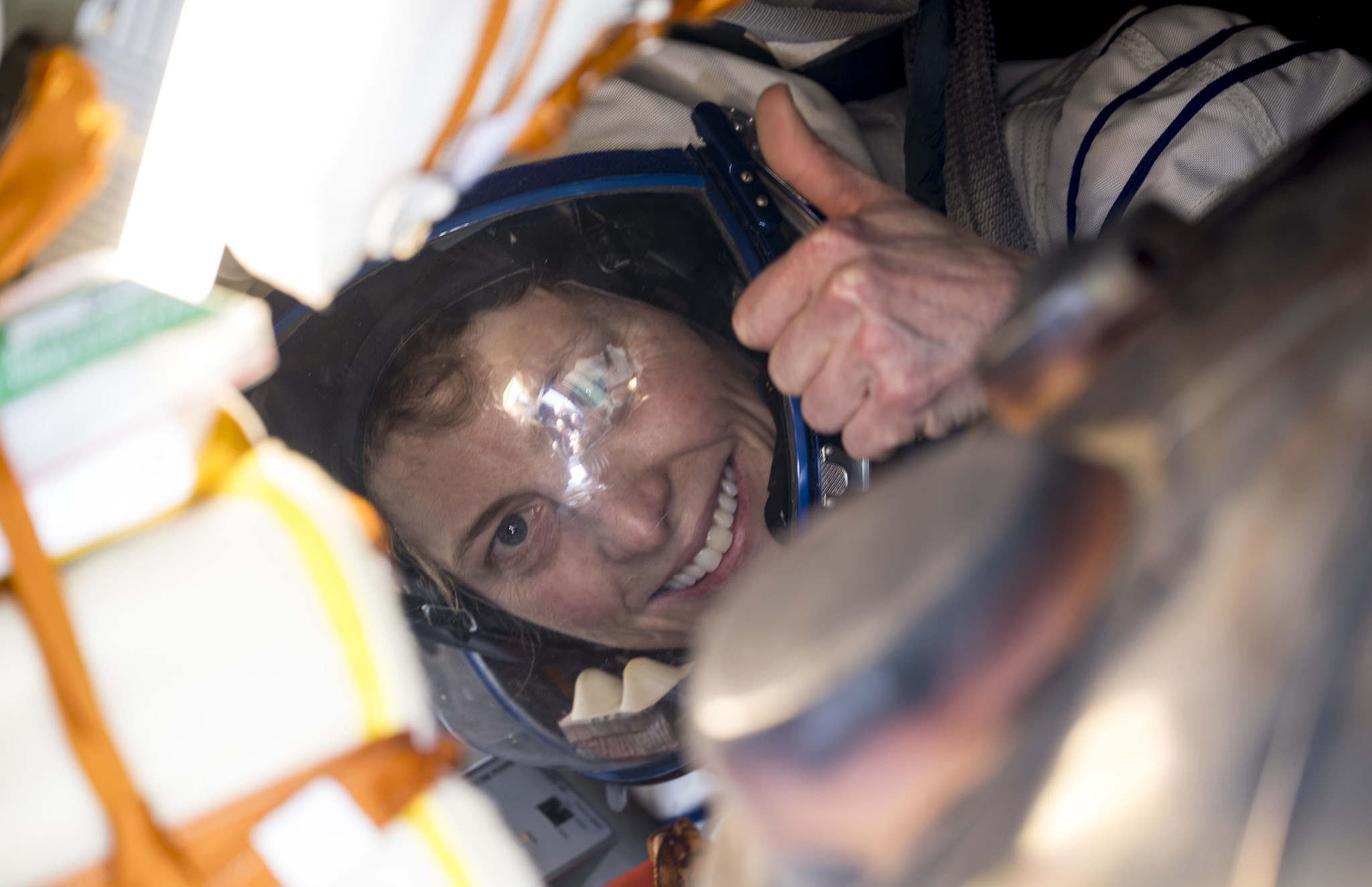
Expedition 70 NASA astronaut Loral O’Hara gives a thumbs up inside the Soyuz MS-24 spacecraft after she, Roscosmos cosmonaut Oleg Novitskiy, and Belarus spaceflight participant Marina Vasilevskaya, landed in a remote area near the town of Zhezkazgan, Kazakhstan, Saturday, April 6, 2024. O’Hara is returning to Earth after logging 204 days in space as a member of Expeditions 69-70 aboard the International Space Station and Novitskiy and Vasilevskaya return after having spent the last 14 days in space.
NASA/Bill Ingalls

NASA astronaut Loral O’Hara returned to Earth after a six-month research mission aboard the International Space Station on Saturday, along with Roscosmos cosmonaut Oleg Novitskiy, and Belarus spaceflight participant Marina Vasilevskaya.

The trio departed the space station aboard the Soyuz MS-24 spacecraft at 11:54 p.m. EDT on April 5, and made a safe, parachute-assisted landing at 3:17 a.m., April 6 (12:17 p.m. Kazakhstan time), southeast of the remote town of Dzhezkazgan, Kazakhstan.

O’Hara launched Sept. 15, 2023, alongside Roscosmos cosmonauts Oleg Kononenko and Nikolai Chub, who both will remain aboard the space station to complete a one-year mission. Novitskiy and Vasilevskaya launched aboard Soyuz MS-25 on March 23 along with NASA astronaut Tracy C. Dyson, who will remain aboard the orbiting laboratory until this fall.

O’Hara spent a total of 204 days in space as part of her first spaceflight. Novitskiy has logged a total of 545 days in space across four spaceflights and Vasilevskaya has spent 14 days in space as part of her first spaceflight.

Supporting NASA’s Artemis campaign, O’Hara’s mission helped prepare for exploration of the Moon and build foundations for crewed missions to Mars. She completed approximately 3,264 orbits of the Earth and a journey of more than 86.5 million miles. O’Hara worked on scientific activities aboard the space station, including investigating heart health, cancer treatments, and space manufacturing techniques during her stay aboard the orbiting laboratory.

Following post-landing medical checks, the crew will return to the recovery staging city in Karaganda, Kazakhstan. O’Hara will then board a NASA plane bound for her return to the agency’s Johnson Space Center in Houston.

With the undocking of the Soyuz MS-24 spacecraft with O’Hara, Novitskiy and Vasilevskaya, Expedition 71 officially began aboard the station. NASA astronauts Michael Barratt, Matthew Dominick, Tracy C. Dyson, and Jeannette Epps, as well as Roscosmos cosmonauts Nikolai Chub, Alexander Grebenkin, and Oleg Kononenko make up Expedition 71 and will remain on the orbiting laboratory until this fall.

Learn more about space station activities by following @space_station and @ISS_Research on X, as well as the ISS Facebook, ISS Instagram, and the space station blog.

-end-

Joshua Finch / Julian Coltre / Claire O’Shea
Headquarters, Washington
202-358-1100
joshua.a.finch@nasa.gov / julian.n.coltre@nasa.gov / claire.a.o’shea@nasa.gov

Sandra Jones
Johnson Space Center, Houston
281-483-5111
sandra.p.jones@nasa.gov

Powered by WPeMatico

Get The Details…
Abbey A. Donaldson

NASA Leadership Spotlights Space Sustainability at Space Symposium

NASA Leadership Spotlights Space Sustainability at Space Symposium

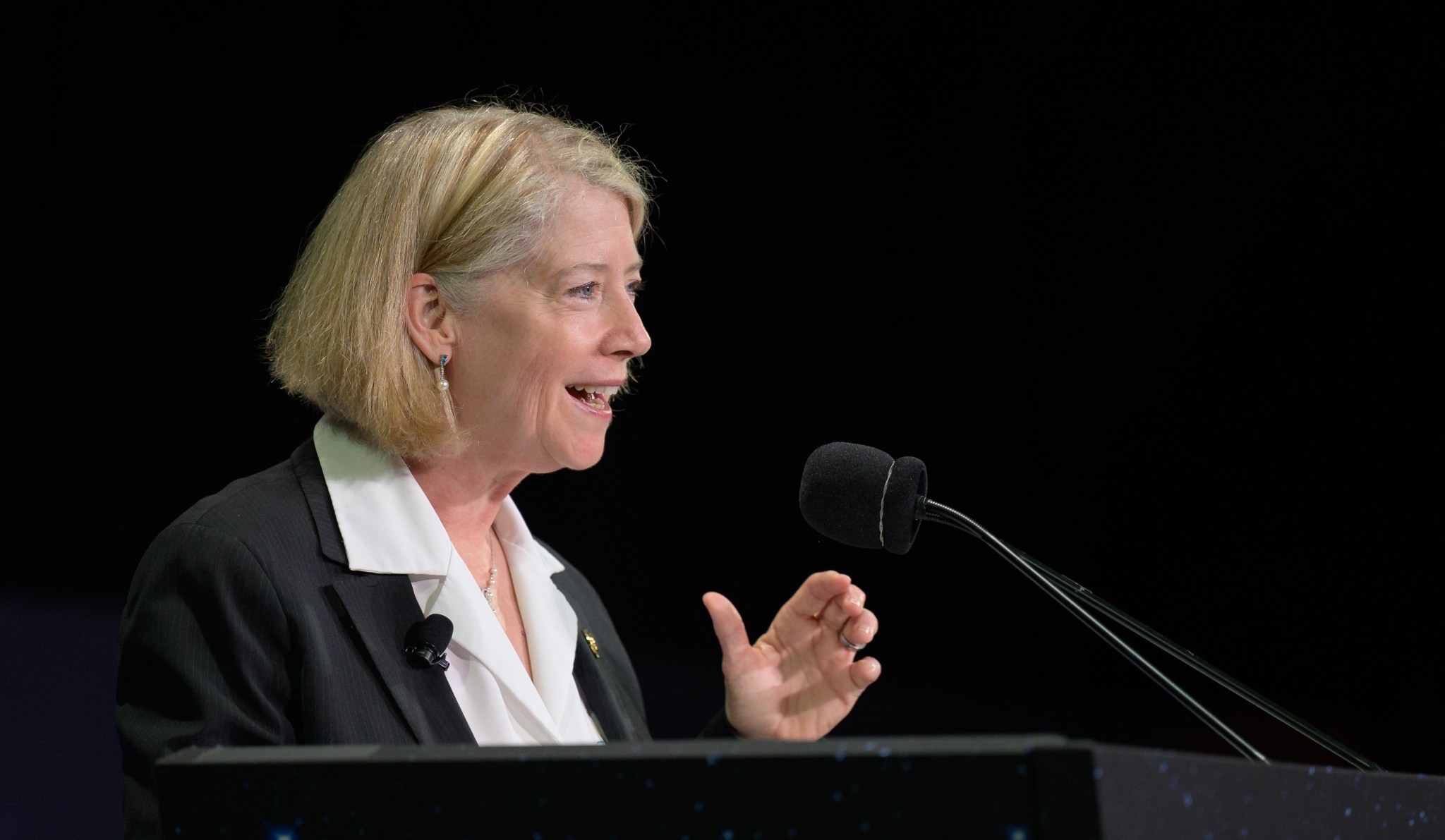
NASA Deputy Administrator Pam Melroy gives keynote remarks during the 37th Space Symposium, Tuesday, April 5, 2022, in Colorado Springs, Colorado.
Credits: NASA/Bill Ingalls

NASA Deputy Administrator Pam Melroy and Associate Administrator Jim Free are scheduled to speak at the Space Foundation’s 39th Space Symposium from Tuesday, April 9 through Thursday, April 11 in Colorado Springs, Colorado.

During her keynote, “Responsible Exploration: Preserving the Cosmos for Tomorrow,” Melroy will discuss NASA’s integrated approach to foster the long-term sustainability of the space environment at 12:30 p.m. EDT on Tuesday, April 9.

Additionally, Free will moderate a panel titled “Mission Success is a Team Sport at NASA,” at 5:45 p.m. on Wednesday, April 10. Panelists include:

  • Kenneth Bowersox, associate administrator, Space Operations at NASA Headquarters in Washington
  • Dr. Nicola Fox, associate administrator, Science Mission Directorate, NASA Headquarters
  • Robert Gibbs, associate administrator, Mission Support Directorate, NASA Headquarters
  • Catherine Koerner, associate administrator, Exploration Systems Development, NASA Headquarters
  • Dr. Kurt Vogel, associate administrator, Space Technology Mission Directorate, NASA Headquarters

The agency will stream both panels on NASA+, NASA Television, and the agency’s website. Learn how to stream NASA TV through a variety of platforms, including social media.

NASA astronauts Raja Chari and Jessica Watkins also will be participating in activities during the week. NASA currently is accepting applications for new astronauts until Tuesday, April 16. Media interested in an interview opportunity with the astronauts should email Amber Jacobson and Stephanie Schierholz.

To register for the symposium, media must email the Space Foundation at media@spacefoundation.org. Members of the media who have registered for the symposium will have two opportunities to meet onsite with different NASA leaders:

  • April 9 at 11:40 a.m. MDT: Pam Melroy and Charity Weeden, associate administrator, Office of Technology, Policy, and Strategy
  • April 11 at 9 a.m. MDT: Jim Free and Chris Hansen, deputy manager, Extravehicular Activity and Human Surface Mobility

A full agenda for this year’s Space Symposium is available online.

Conference attendees will have the opportunity to learn more about NASA’s missions and projects on a variety of topics during brief talks with subject matter experts in the agency’s exhibit space.

NASA will provide photos and updates about its participation in the Space Symposium from its @NASAExhibit on X.

For more information about NASA, visit:

https://www.nasa.gov/

-end-

Amber Jacobson / Stephanie Schierholz
Headquarters, Washington
240-298-1832 / 202-358-4997
amber.c.jacobson@nasa.gov / stephanie.schierholz@nasa.gov

Share

Details

Last Updated

Apr 05, 2024

Powered by WPeMatico

Get The Details…
Tiernan P. Doyle