NASA Technology Helps Guard Against Lunar Dust

NASA Technology Helps Guard Against Lunar Dust
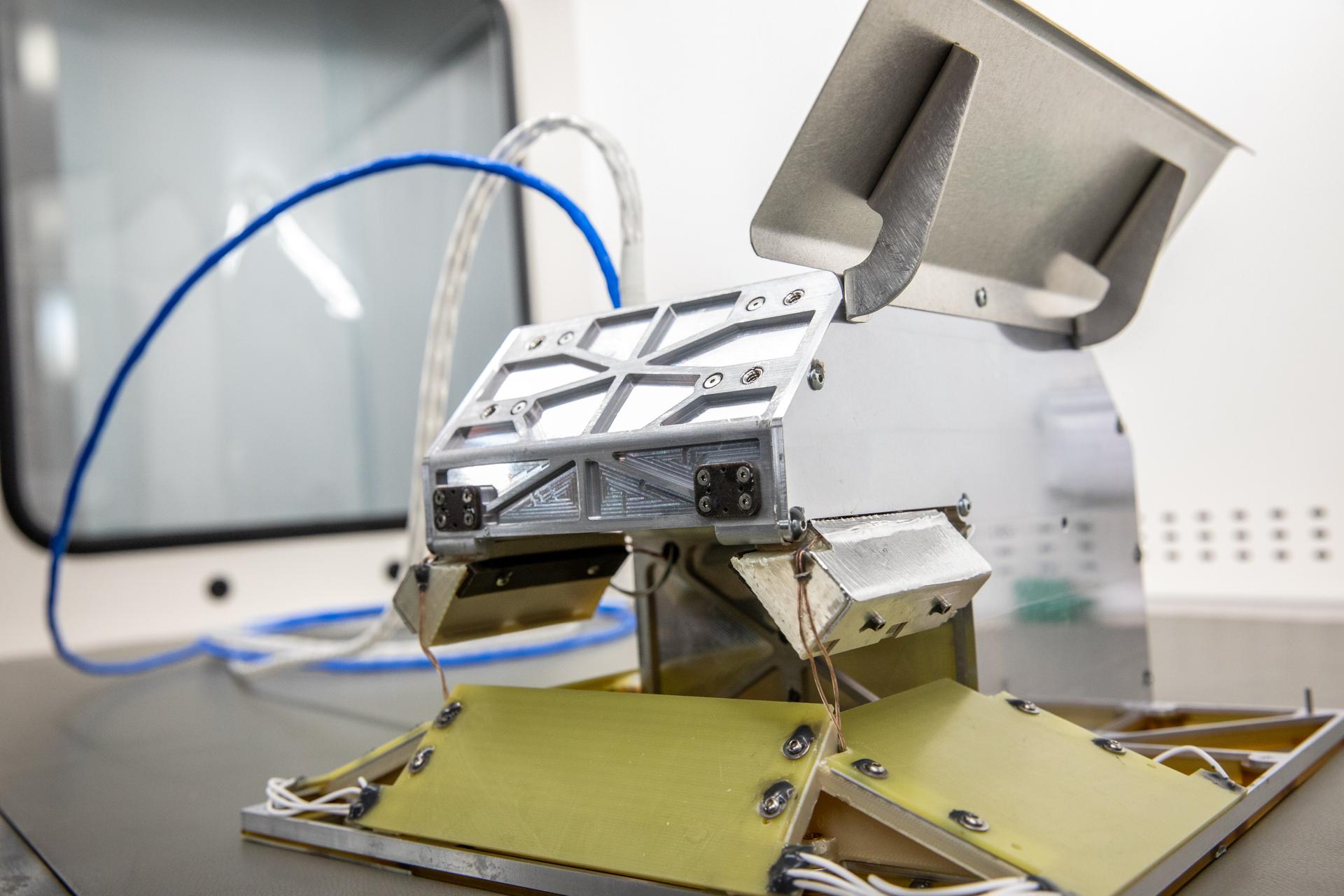
A electrodynamic dust shield device is centered in this photo with a blue wire in the background.
Inside of the Electrostatics and Surface Physics Laboratory at NASA’s Kennedy Space Center in Florida, an electrodynamic dust shield (EDS) is in view on Jan. 18, 2023. The dust shield is one of the payloads to fly aboard Firefly Aerospace’s Blue Ghost lunar lander as part of NASA’s Commercial Lunar Payload Services (CLPS) initiative.
Photo credit: NASA/Cory Huston

Defeating dust may be a small concern for most people on Earth, but for astronauts and spacecraft destined for the Moon or Mars, it is a significant hazard that must be mitigated. That’s why researchers at NASA’s Kennedy Space Center in Florida are seeking innovative ways to use Electrodynamic Dust Shield (EDS) technology.  

Using transparent electrodes and electric fields, EDS technology can electrically lift and remove dust from a variety of surfaces for space applications ranging from thermal radiators, solar panels, and camera lenses to spacesuits, boots, and helmet visors. Controlling and removing the statically-charged dust will be critical to the success of Moon missions under the agency’s’ CLPS (Commercial Lunar Payload Services) initiative and Artemis campaign.  

“For these CLPS and Artemis missions, dust exposure is a concern because the lunar surface is far different than what we’re used to here,” said Dr. Charles Buhler, lead research scientist at the Electrostatics and Surface Physics Laboratory at Kennedy. “Lunar regolith dust can get into gaskets and seals, into hatches, and even into habitats, which can pose a lot of issues for spacecraft and astronauts.”  

Unlike dust particles on Earth, dust on the Moon’s surface is sharp and abrasive – like tiny shards of glass – because it hasn’t been exposed to weathering and elements like water and oxygen.  

“Simply brushing lunar regolith across surfaces can make the problem worse because it’s also very electrostatically charged and highly insulating,” Buhler said.  

Based on the Electric Curtain concept developed by NASA in 1967, EDS technology has been in development at Kennedy since 2004.  

It first made its way to low Earth orbit aboard the NASA Materials International Space Station Experiment 11 mission in 2019. EDS technology was embedded in 12 different panels made of glass, polyimide, and prototype spacesuit fabric and sent to the International Space Station for testing in the vacuum of space. 

Before making it to space, EDS had been predominantly tested in vacuum chambers that produced promising results of removing simulants and samples of lunar regolith, collected during NASA’s Apollo missions, from surfaces within a second. 

Most recently, as part of Intuitive Machines’ first lunar lander mission, EDS technology was embedded in two lenses of EagleCam, a CubeSat camera system developed by students at Embry Riddle Aeronautical University in Daytona Beach, Florida. Following landing, the EagleCam instrument successfully deployed from Intuitive Machines’ Odysseus lander. The teams at Embry Riddle were unable to acquire images of the lander as they had hoped, but they were able to collect other data sets, including from the EDS technology. 

Later this year, another EDS technology demonstration is slated to land on the Moon as part of NASA’s CLPS initiative mission with commercial partner Firefly Aerospace. 

“The team has put in a tremendous amount of work and dedication. EDS is considered the leading technology and the best we have for the removal of dust for space applications,” Buhler said. “To fly as a dedicated payload on a mission to the Moon is very exciting.” 

According to Buhler, EDS technology could be a first line of defense for establishing an extended human presence on the Moon with future Artemis missions. 

From its applications with protecting tools, machinery, and spacesuits, the technology could potentially even help improve day-to-day tasks by being applied to small components like gaskets, seals, and hatches. This could save astronauts the hassle of traveling to the Moon with extra cleaning supplies. 

“EDS technology can be used outside of a habitat to help clean surfaces like railings and floors, but it can be used inside as well,” Buhler said. “All of those applications are being evaluated and tested.” 

Powered by WPeMatico

Get The Details…
Jamie Groh
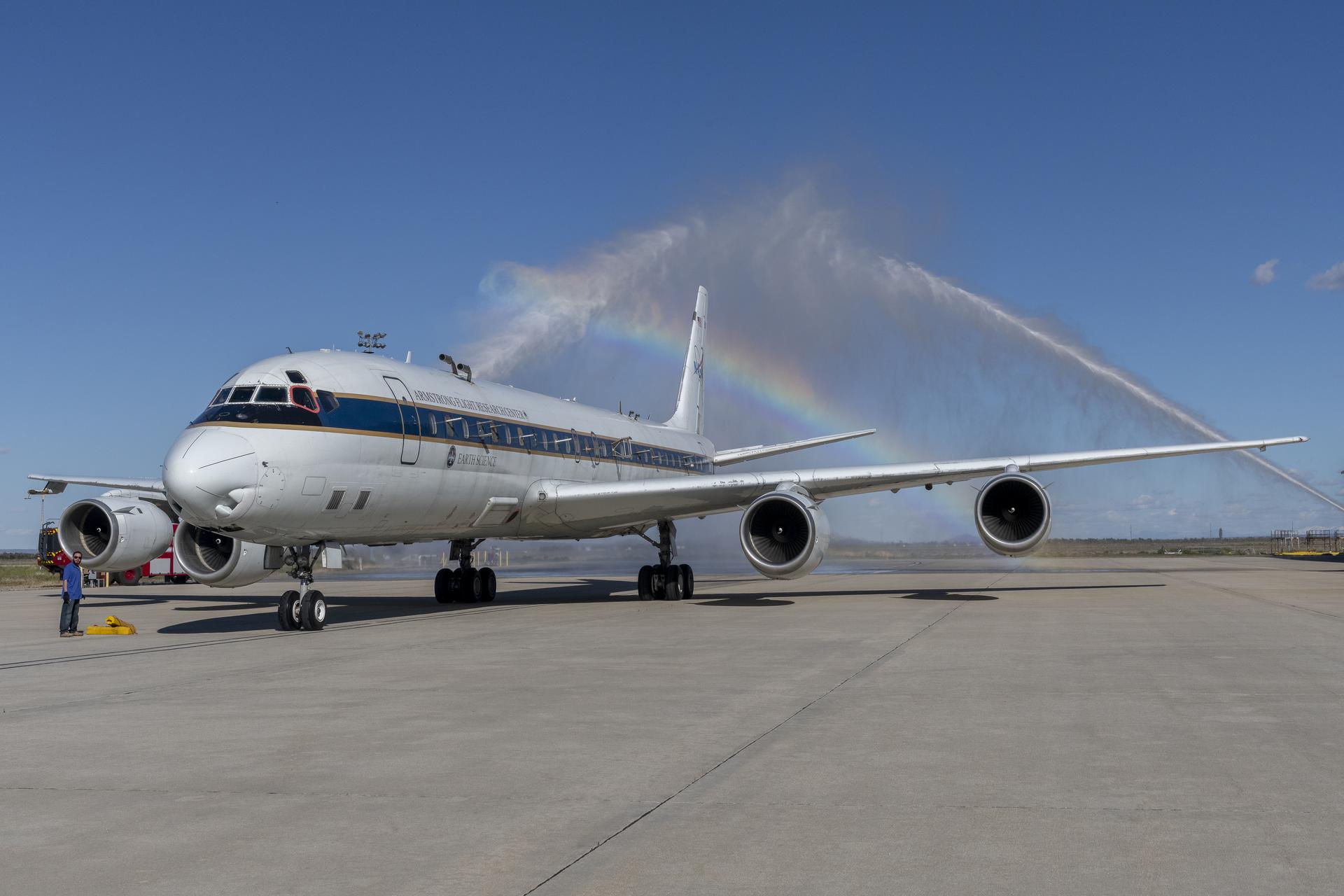
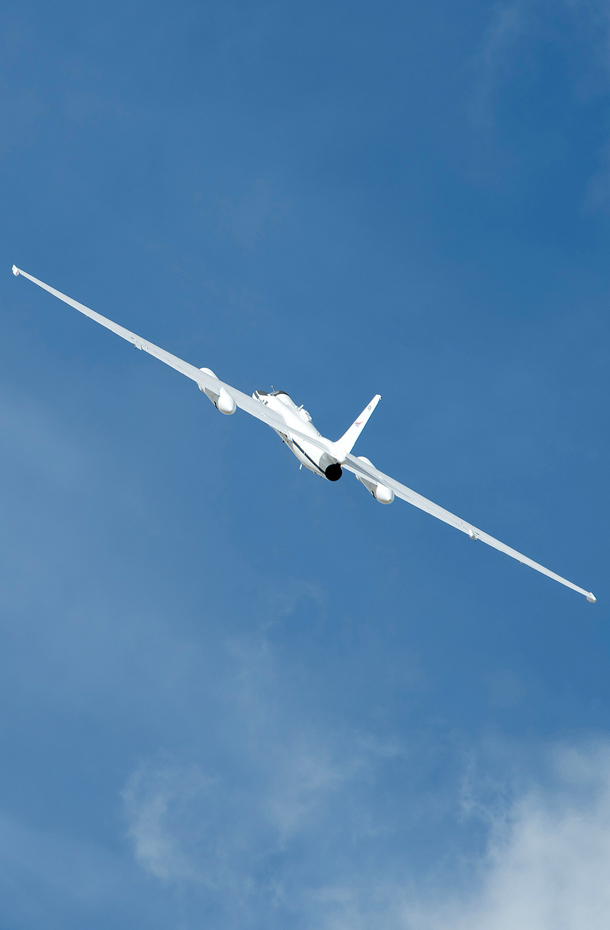
NASA’s DC-8 Completes Final Mission, Set to Retire

NASA’s DC-8 Completes Final Mission, Set to Retire

2 min read

Preparations for Next Moonwalk Simulations Underway (and Underwater)

An aircraft taxis through a water salute streaming from water hoses from two firetrucks positioned on either side of the aircraft. The converging water streams create a rainbow above the aircraft as it passes under the arc of spraying water.
The DC-8 aircraft returned to NASA’s Armstrong Flight Research Center Building 703 in Palmdale, California, on April 1, 2024, after completing its final mission supporting Airborne and Satellite Investigation of Asian Air Quality (ASIA-AQ). The aircraft and crew were welcomed back with a celebratory water salute by the U.S. Air Force Plant 42 Fire Department.
NASA/Steve Freeman 

After 37 years of successful airborne science missions, NASA’s DC-8 aircraft completed its final mission and returned to the agency’s Armstrong Flight Research Center Building 703 in Palmdale, California, on April 1.

The DC-8 and crew were welcomed back with a celebratory water salute by the U.S Air Force Plant 42 Fire Department after completing an air quality study, the Airborne and Satellite Investigation of Asian Air Quality, or ASIA-AQ mission. The aircraft is set to retire after concluding operations in May.

As the largest flying science laboratory in the world, the DC-8 has been used to support the agency’s Airborne Science mission since 1987. This unique aircraft was first acquired by NASA in 1985 and collected data for experiments in support of scientific projects serving the world’s scientific community – including scientists, researchers, and students from NASA and other federal, state, academic, and foreign institutions.

The DC-8 will continue its educational legacy as it retires to its new home at Idaho State University in Pocatello, Idaho, where it will be used to train future aircraft technicians by providing real-world experience in the college’s Aircraft Maintenance Technology Program.

For more information about the DC-8 aircraft, visit:

https://www.nasa.gov/centers-and-facilities/armstrong/dc-8-aircraft/

Powered by WPeMatico

Get The Details…
Dede Dinius

NASA Astronaut Loral O’Hara to Discuss Space Station Mission

NASA Astronaut Loral O’Hara to Discuss Space Station Mission

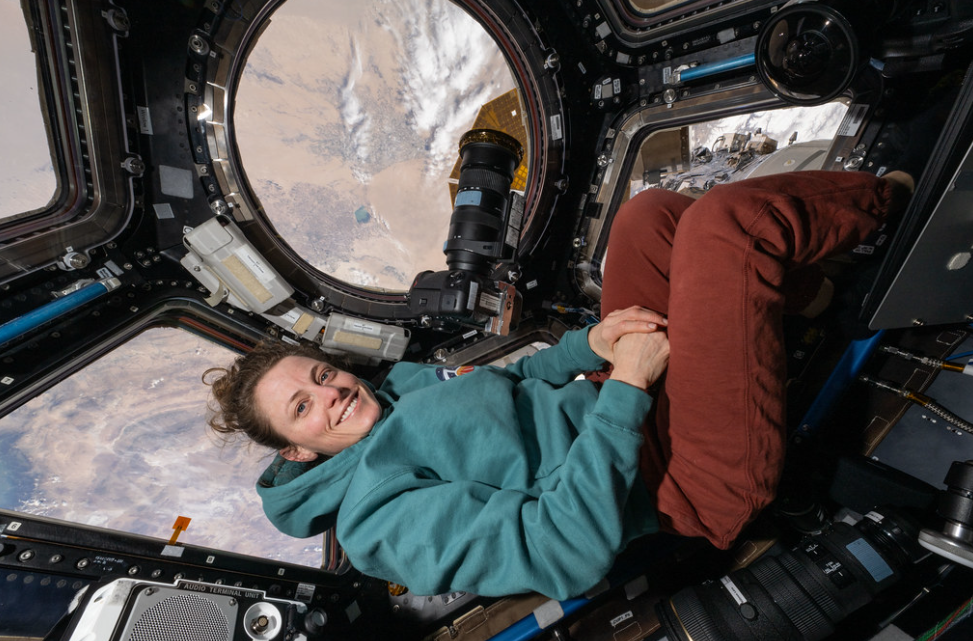
NASA astronaut Loral O’Hara is pictured inside the cupola aboard the International Space Station.
Credit: NASA

After spending six-and-a-half-months aboard the International Space Station, NASA astronaut Loral O’Hara will participate in a news conference at 10:45 a.m. EDT Monday, April 15, at the agency’s Johnson Space Center in Houston.

The news conference will air live on NASA+, NASA Television, the NASA app, YouTube, and the agency’s website. Learn how to stream NASA TV through a variety of platforms including social media.

Media interested in participating in person must contact the NASA Johnson newsroom no later than 5 p.m. Friday, April 12, by calling 281-483-5111 or emailing: jsccommu@mail.nasa.gov.

Media wishing to participate virtually must contact the newsroom no later than two hours before the start of the event. NASA’s media accreditation policy is available online. Questions may also be submitted on social media by using #AskNASA.

O’Hara launched Sept. 15, 2023, alongside Roscosmos cosmonauts Oleg Kononenko and Nikolai Chub, and returned to Earth April 6 with Roscosmos cosmonaut Oleg Novitskiy and spaceflight participant Marina Vasilevskaya of Belarus. Novitskiy and Vasilevskaya launched with NASA astronaut Tracy C. Dyson to the station aboard the Soyuz MS-25 spacecraft on March 23.

O’Hara completed 204 days in space, 3,264 orbits of the Earth, and 86.5 million miles during her first spaceflight. She witnessed the arrival of eight visiting spacecraft and the departure of seven visiting spacecraft, including both crewed and cargo missions. O’Hara also completed one spacewalk totaling six hours, 42 minutes.

While aboard the orbiting lab, O’Hara conducted dozens of science and technology activities to benefit future exploration in space and life back on Earth. O’Hara is among the first astronauts to participate in CIPHER, or the Complement of Integrated Protocols for Human Exploration Research program, an investigation that studies the psychological and physiological changes humans experience during spaceflight. Collecting data from astronauts on missions of different durations supports the development of ways to protect crew health on long-duration missions to the Moon and Mars.

O’Hara conducted experiments bioprinting cardiac tissues in microgravity which could advance technology for creating replacement organs and tissues for transplant on Earth. She also studied the effects of microgravity on bone marrow mesenchymal stem cells to improve our understanding of the mechanisms behind bone loss and support the development of ways to better protect crew members and people on Earth from its effects.

Get the latest NASA space station news, images, and features on Instagram, Facebook, and X.

-end-

Joshua Finch / Julian Coltre / Claire O’Shea
Headquarters, Washington
202-358-1100
joshua.a.finch@nasa.gov / julian.n.coltre@nasa.gov / claire.a.o’shea@nasa.gov

Courtney Beasley
Johnson Space Center, Houston
281-483-5111
courtney.m.beasley@nasa.gov

Powered by WPeMatico

Get The Details…
Lauren E. Low

New NASA Strategy Envisions Sustainable Future for Space Operations

New NASA Strategy Envisions Sustainable Future for Space Operations

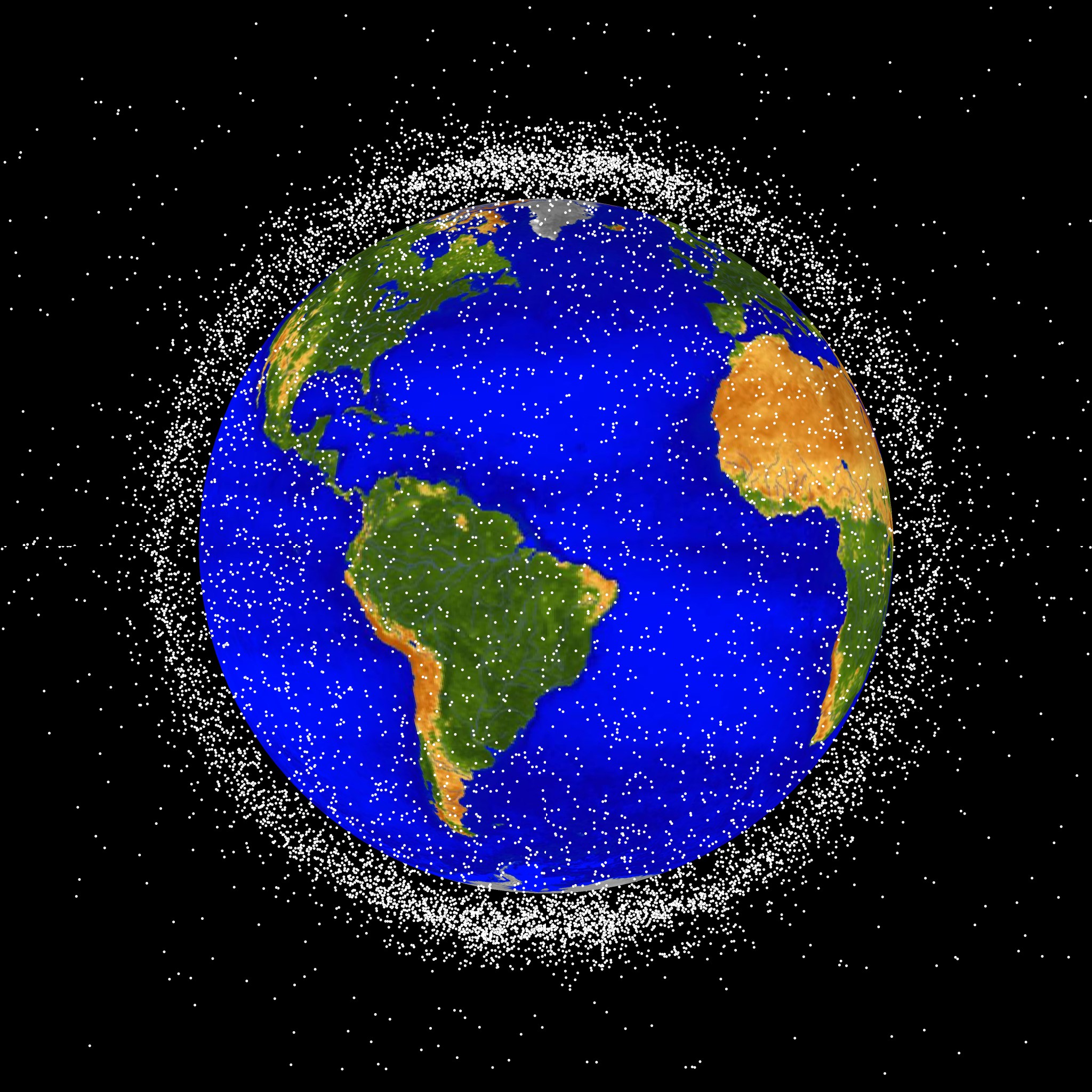
Low Earth orbit, the focus of volume one of NASA’s Space Sustainability Strategy, is the most concentrated area for orbital debris. This computer-generated image showcases objects that are currently being tracked. 
Credits: NASA ODPO

To address a rapidly changing space operating environment and ensure its preservation for generations to come, NASA released the first part of its integrated Space Sustainability Strategy, on Tuesday advancing the agency’s role as a global leader on this crucial issue.

“The release of this strategy marks true progress for NASA on space sustainability,” said NASA Deputy Administrator Pam Melroy. “Space is busy – and only getting busier. If we want to make sure that critical parts of space are preserved so that our children and grandchildren can continue to use them for the benefit of humanity, the time to act is now. NASA is making sure that we’re aligning our resources to support sustainable activity for us and for all.”

For decades, NASA has served as a proactive leader for responsible and sustainable space operations. Entities across the agency develop best practices, analytic tools, and technologies widely adopted by operators around the world. The new strategy seeks to integrate those efforts through a whole-of-agency approach – allowing NASA to focus its resources on the most pressing issues. To facilitate that integration, NASA will appoint a new director of space sustainability to coordinate activities across the agency.

Key aspects of our approach include providing global leadership in space sustainability, supporting equitable access to space, and ensuring NASA’s missions and operations enhance space sustainability. 

Space environments currently are seeing the rapid emergence of commercial capabilities, many of them championed by NASA. These capabilities include increased low Earth orbit satellite activity and plans for the use of satellite constellations, autonomous spacecraft, and commercial space destinations. However, this increased activity also has generated challenges, such as an operating environment more crowded with spacecraft and increased debris. Understanding the risks and benefits associated with this growth is crucial for space sustainability. 

Developed under the leadership of a crossagency advisory board, the space sustainability strategy focuses on advancements NASA can make toward measuring and assessing space sustainability in Earth orbit, identifying cost-effective ways to meet sustainability targets, incentivizing the adoption of sustainable practices through technology and policy development, and increasing efforts to share and receive information with the rest of the global space community.

NASA’s approach to space sustainability recognizes four operational domains: Earth, Earth orbit, the orbital area near and around the Moon known as cislunar space, and deep space, including other celestial bodies. The first volume of the strategy focuses on sustainability in Earth orbit. NASA plans to produce additional volumes focusing on the other domains.

Learn more about the Space Sustainability Strategy at:

https://www.nasa.gov/spacesustainability

-end-

Amber Jacobson / Rob Margetta
Headquarters, Washington
202-358-1600
amber.c.jacobson@nasa.gov / robert.j.margetta@nasa.gov

Share

Details

Last Updated

Apr 09, 2024

Powered by WPeMatico

Get The Details…
Tiernan P. Doyle

Seeing Totality

Seeing Totality

The Moon totally obscures the Sun in this image. The Moon is a black circle and light from the Sun surrounds the Moon's border.
NASA/Keegan Barber

On April 8, 2024, a NASA photographer captured the total solar eclipse in Dallas. A small part of North America, from Mexico’s Pacific coast to the Atlantic coast of Newfoundland, Canada, saw the total solar eclipse, while all North America and parts of Central America and Europe saw a partial solar eclipse. The next total solar eclipse that will travel across the lower 48 states from coast to coast is in 2045.

See more photos of the eclipse on Flickr.

Image Credit: NASA/Keegan Barber

Powered by WPeMatico

Get The Details…
Monika Luabeya