NASA’s Optical Comms Demo Transmits Data Over 140 Million Miles

NASA’s Optical Comms Demo Transmits Data Over 140 Million Miles

6 min read

Preparations for Next Moonwalk Simulations Underway (and Underwater)
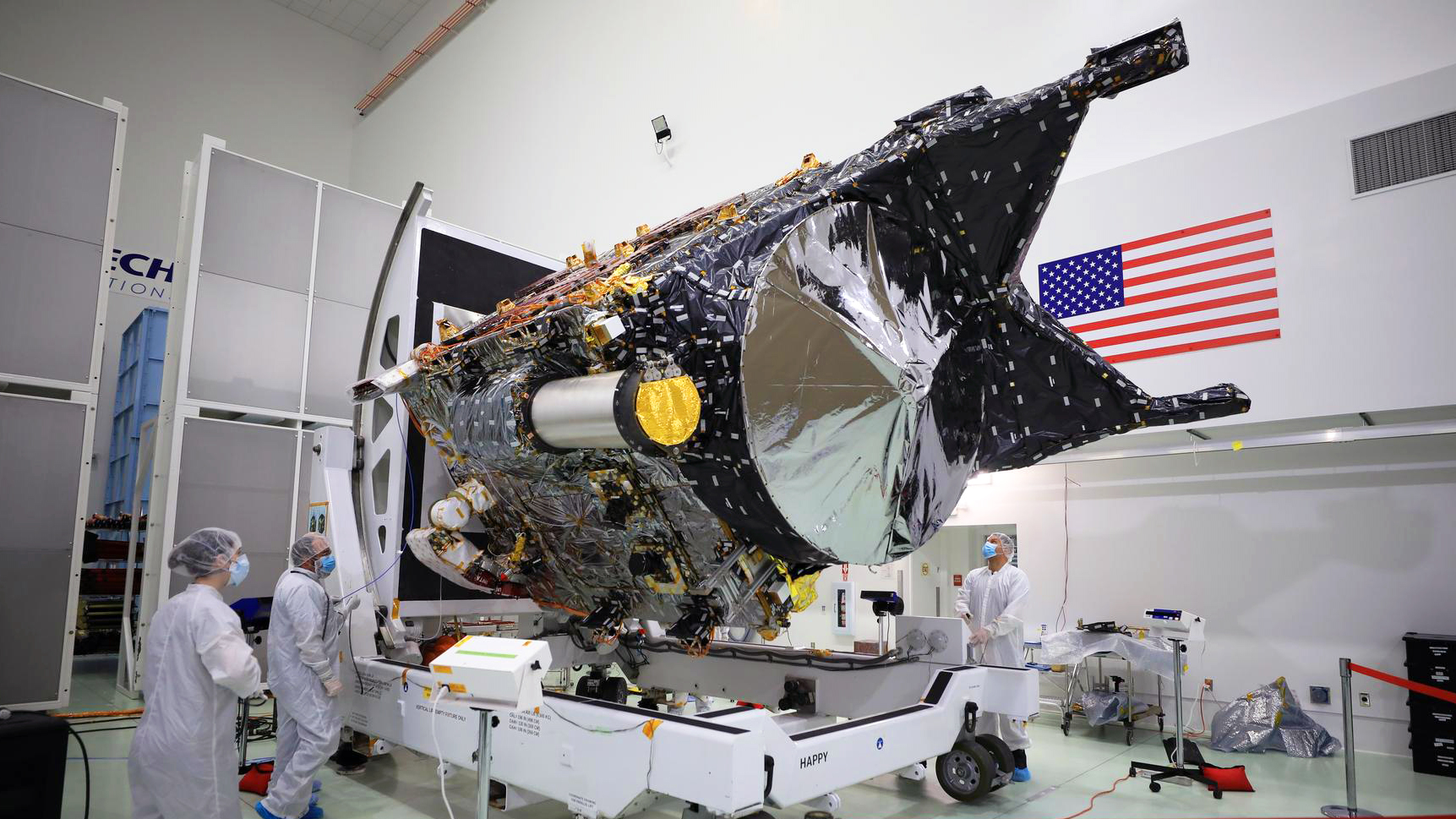
NASA’s Psyche spacecraft is shown in a clean room
NASA’s Psyche spacecraft is shown in a clean room at the Astrotech Space Operations facility near the agency’s Kennedy Space Center in Florida on Dec. 8, 2022. DSOC’s gold-capped flight laser transceiver can be seen, near center, attached to the spacecraft.
NASA/Ben Smegelsky

NASA’s Deep Space Optical Communications experiment also interfaced with the Psyche spacecraft’s communication system for the first time, transmitting engineering data to Earth.

Riding aboard NASA’s Psyche spacecraft, the agency’s Deep Space Optical Communications technology demonstration continues to break records. While the asteroid-bound spacecraft doesn’t rely on optical communications to send data, the new technology has proven that it’s up to the task. After interfacing with the Psyche’s radio frequency transmitter, the laser communications demo sent a copy of engineering data from over 140 million miles (226 million kilometers) away, 1½ times the distance between Earth and the Sun.

This achievement provides a glimpse into how spacecraft could use optical communications in the future, enabling higher-data-rate communications of complex scientific information as well as high-definition imagery and video in support of humanity’s next giant leap: sending humans to Mars.

“We downlinked about 10 minutes of duplicated spacecraft data during a pass on April 8,” said Meera Srinivasan, the project’s operations lead at NASA’s Jet Propulsion Laboratory in Southern California. “Until then, we’d been sending test and diagnostic data in our downlinks from Psyche. This represents a significant milestone for the project by showing how optical communications can interface with a spacecraft’s radio frequency comms system.”
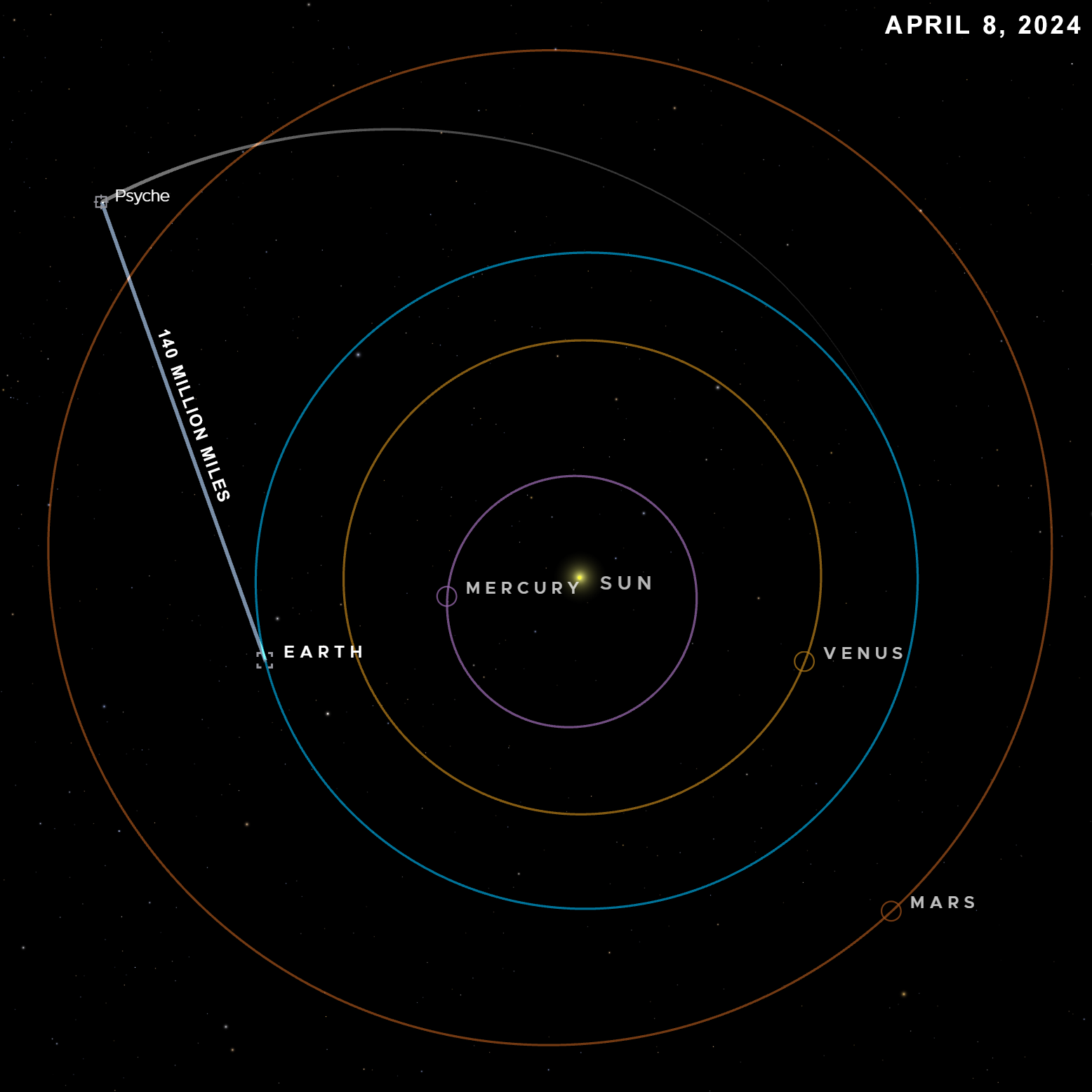
This visualization shows the Psyche spacecraft’s position on April 8
This visualization shows the Psyche spacecraft’s position on April 8 when the DSOC flight laser transceiver transmitted data at a rate of 25 Mbps over 140 million miles to a downlink station on Earth.
NASA/JPL-Caltech

The laser communications technology in this demo is designed to transmit data from deep space at rates 10 to 100 times faster than the state-of-the-art radio frequency systems used by deep space missions today.

After launching on Oct. 13, 2023, the spacecraft remains healthy and stable as it journeys to the main asteroid belt between Mars and Jupiter to visit the asteroid Psyche.

Surpassing Expectations

NASA’s optical communications demonstration has shown that it can transmit test data at a maximum rate of 267 megabits per second (Mbps) from the flight laser transceiver’s near-infrared downlink laser — a bit rate comparable to broadband internet download speeds.

That was achieved on Dec. 11, 2023, when the experiment beamed a 15-second ultra-high-definition video to Earth from 19 million miles away (31 million kilometers, or about 80 times the Earth-Moon distance). The video, along with other test data, including digital versions of Arizona State University’s Psyche Inspired artwork, had been loaded onto the flight laser transceiver before Psyche launched last year.

Now that the spacecraft is more than seven times farther away, the rate at which it can send and receive data is reduced, as expected. During the April 8 test, the spacecraft transmitted test data at a maximum rate of 25 Mbps, which far surpasses the project’s goal of proving at least 1 Mbps was possible at that distance.

The project team also commanded the transceiver to transmit Psyche-generated data optically. While Psyche was transmitting data over its radio frequency channel to NASA’s Deep Space Network (DSN), the optical communications system simultaneously transmitted a portion of the same data to the Hale Telescope at Caltech’s Palomar Observatory in San Diego County, California — the tech demo’s primary downlink ground station.

“After receiving the data from the DSN and Palomar, we verified the optically downlinked data at JPL,” said Ken Andrews, project flight operations lead at JPL. “It was a small amount of data downlinked over a short time frame, but the fact we’re doing this now has surpassed all of our expectations.”

Fun With Lasers

After Psyche launched, the optical communications demo was initially used to downlink pre-loaded data, including the Taters the cat video. Since then, the project has proven that the transceiver can receive data from the high-power uplink laser at JPL’s Table Mountain facility, near Wrightwood, California. Data can even be sent to the transceiver and then downlinked back to Earth on the same night, as the project proved in a recent “turnaround experiment.”

This experiment relayed test data — as well as digital pet photographs — to Psyche and back again, a round trip of up to 280 million miles (450 million kilometers). It also downlinked large amounts of the tech demo’s own engineering data to study the characteristics of the optical communications link.

“We’ve learned a great deal about how far we can push the system when we do have clear skies, although storms have interrupted operations at both Table Mountain and Palomar on occasion,” said Ryan Rogalin, the project’s receiver electronics lead at JPL. (Whereas radio frequency communications can operate in most weather conditions, optical communications require relatively clear skies to transmit high-bandwidth data.)

JPL recently led an experiment to combine Palomar, the experimental radio frequency-optical antenna at the DSN’s Goldstone Deep Space Communications Complex in Barstow, California, and a detector at Table Mountain to receive the same signal in concert. “Arraying” multiple ground stations to mimic one large receiver can help boost the deep space signal. This strategy can also be useful if one ground station is forced offline due to weather conditions; other stations can still receive the signal.

More About the Mission

Managed by JPL, this demonstration is the latest in a series of optical communication experiments funded by the Technology Demonstration Missions (TDM) program under NASA’s Space Technology Mission Directorate and the agency’s SCaN (Space Communications and Navigation) program within the Space Operations Mission Directorate. Development of the flight laser transceiver is supported by MIT Lincoln Laboratory, L3 Harris, CACI, First Mode, and Controlled Dynamics Inc., and Fibertek, Coherent, and Dotfast support the ground systems. Some of the technology was developed through NASA’s Small Business Innovation Research program.

Arizona State University leads the Psyche mission. JPL is responsible for the mission’s overall management, system engineering, integration and test, and mission operations. Psyche is the 14th mission selected as part of NASA’s Discovery Program under the Science Mission Directorate, managed by the agency’s Marshall Space Flight Center in Huntsville, Alabama. NASA’s Launch Services Program, based at the agency’s Kennedy Space Center in Florida, managed the launch service. Maxar Technologies provided the high-power solar electric propulsion spacecraft chassis from Palo Alto, California.

For more information about the laser communications demo, visit:

https://www.jpl.nasa.gov/missions/dsoc

News Media Contacts

Ian J. O’Neill
Jet Propulsion Laboratory, Pasadena, Calif.
818-354-2649
ian.j.oneill@jpl.nasa.gov

2024-049      

Powered by WPeMatico

Get The Details…
Anthony Greicius
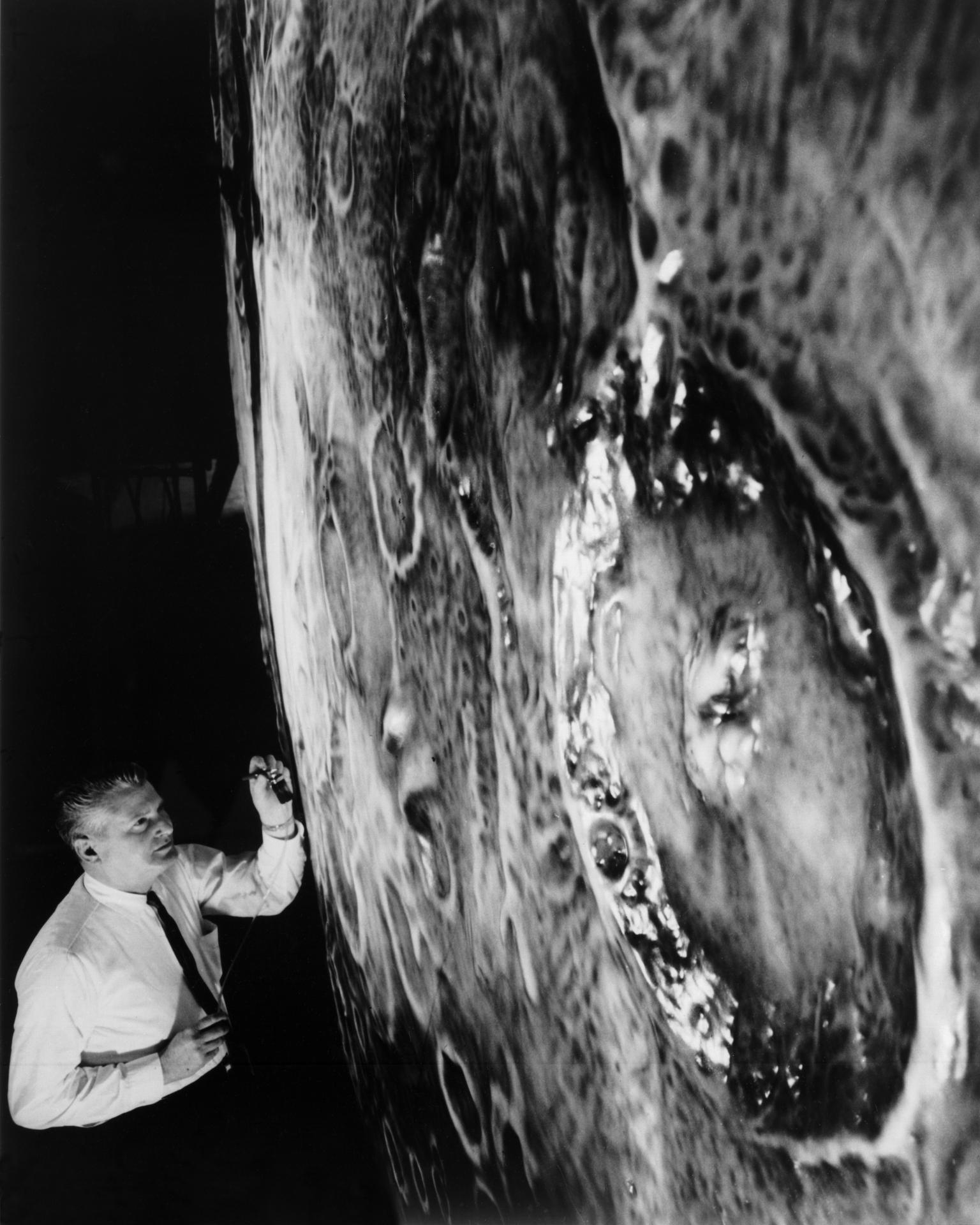
Navigating the Moon with Art

Navigating the Moon with Art

In this black-and-white photo, a man in a white shirt and dark tie uses an airbrush to paint on a large model that looks like the surface of the Moon. A crater is in the foreground, emphasizing the large size of the Moon model.
NASA

An artist uses an airbrush to recreate the lunar surface on one of the four models comprising the LOLA, or Lunar Orbit and Landing Approach, simulator in this November 12, 1964, photo. Project LOLA was a simulator built at Langley to study problems related to landing on the lunar surface.

In “Spaceflight Revolution: NASA Langley Research Center From Sputnik to Apollo,” James Hansen wrote: “This simulator was designed to provide a pilot with a detailed visual encounter with the lunar surface; the machine consisted primarily of a cockpit, a closed-circuit TV system, and four large murals or scale models representing portions of the lunar surface as seen from various altitudes. The pilot in the cockpit moved along a track past these murals which would accustom him to the visual cues for controlling a spacecraft in the vicinity of the moon. Unfortunately, such a simulation–although great fun and quite aesthetic–was not helpful because flight in lunar orbit posed no special problems other than the rendezvous with the LEM, which the device did not simulate. Not long after the end of Apollo, the expensive machine was dismantled.”

Image Credit: NASA

Powered by WPeMatico

Get The Details…
Monika Luabeya

Johnson Unveils Modern Four Nine Team Conference Center

Johnson Unveils Modern Four Nine Team Conference Center

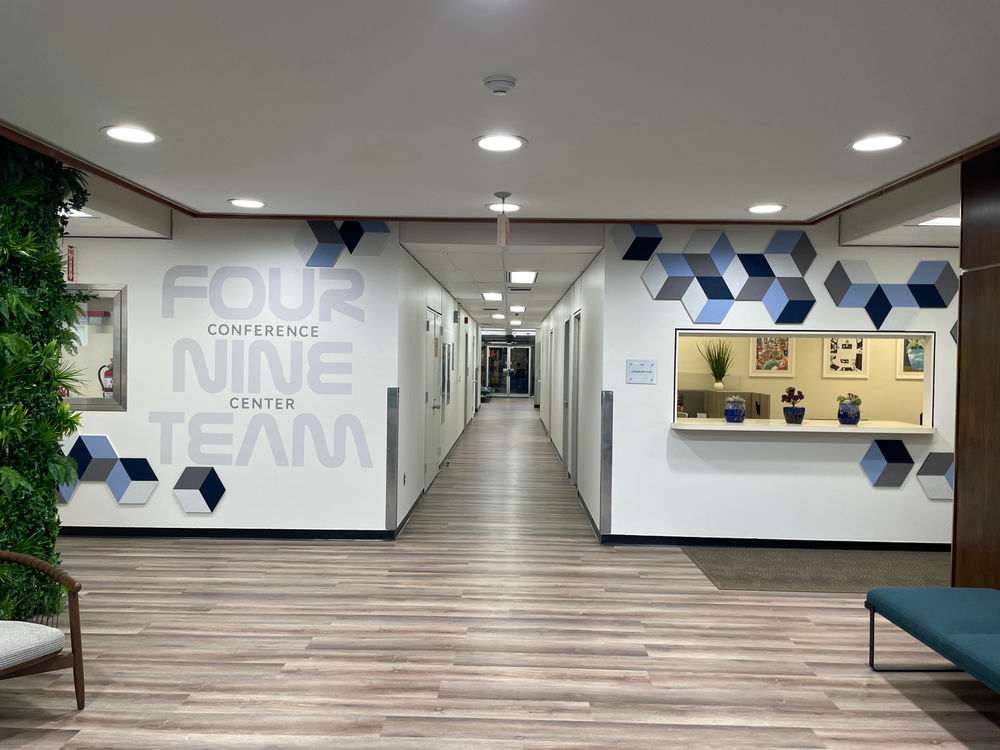
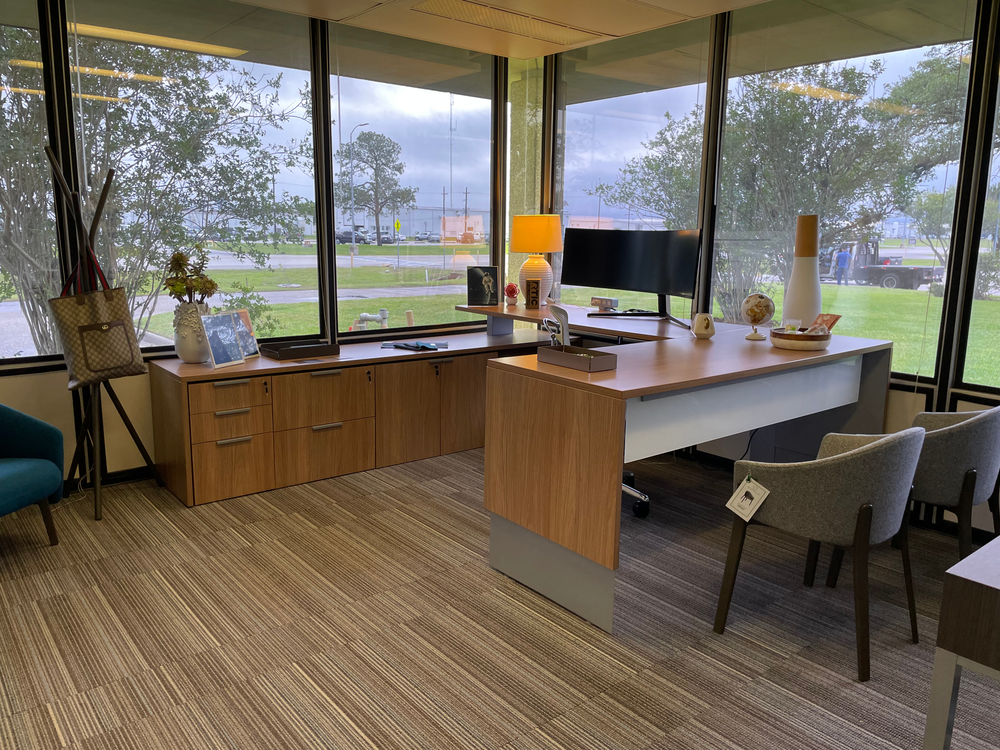
On April 10, 2024, Johnson Space Center celebrated the opening of the Four Nine Team conference center housed in building 419. The event marked the unveiling of a dynamic hub for Johnson employees, whether for team brainstorms, meetings with offsite companies, or remote work for those not typically onsite.  

During the open house, selected vendors showcased furniture that blended modern aesthetics with the building’s historical significance, highlighting NASA’s vision for the future of work. 

“The vendors really went above and beyond to bring our workplace to life,” said Leah Galindo, lead project manager of collaborative worksites at Johnson. “We are extremely grateful for their contributions and for creating a space that inspires people to come to work every day.” 

The design center features acoustic panels in rooms and hallways to minimize distractions and maintain privacy. The amenities include TVs, projectors, and 360-degree video conferencing devices, with most rooms equipped to support various meeting needs. Employees can also choose to store their personal belongings in a locker during lunch breaks or when visiting other buildings. 

David Brownhill, Johnson’s furniture group lead and NASA’s first official interior decorator, commented, “The redesigned space is a testament to the innovative spirit of NASA. The collaborative concept shows that the center has changed, and so has the way we work.” 

Powered by WPeMatico

Get The Details…
Andrea Dunn

Washington State High Schooler Wins 2024 NASA Student Art Contest

Washington State High Schooler Wins 2024 NASA Student Art Contest

2 min read

Preparations for Next Moonwalk Simulations Underway (and Underwater)

A 12th grade artist with a passion for NASA and space took home the top prize for the 2024 NASA Student Art Contest, a nationwide competition hosted by NASA’s Langley Research Center in Hampton, Virginia.

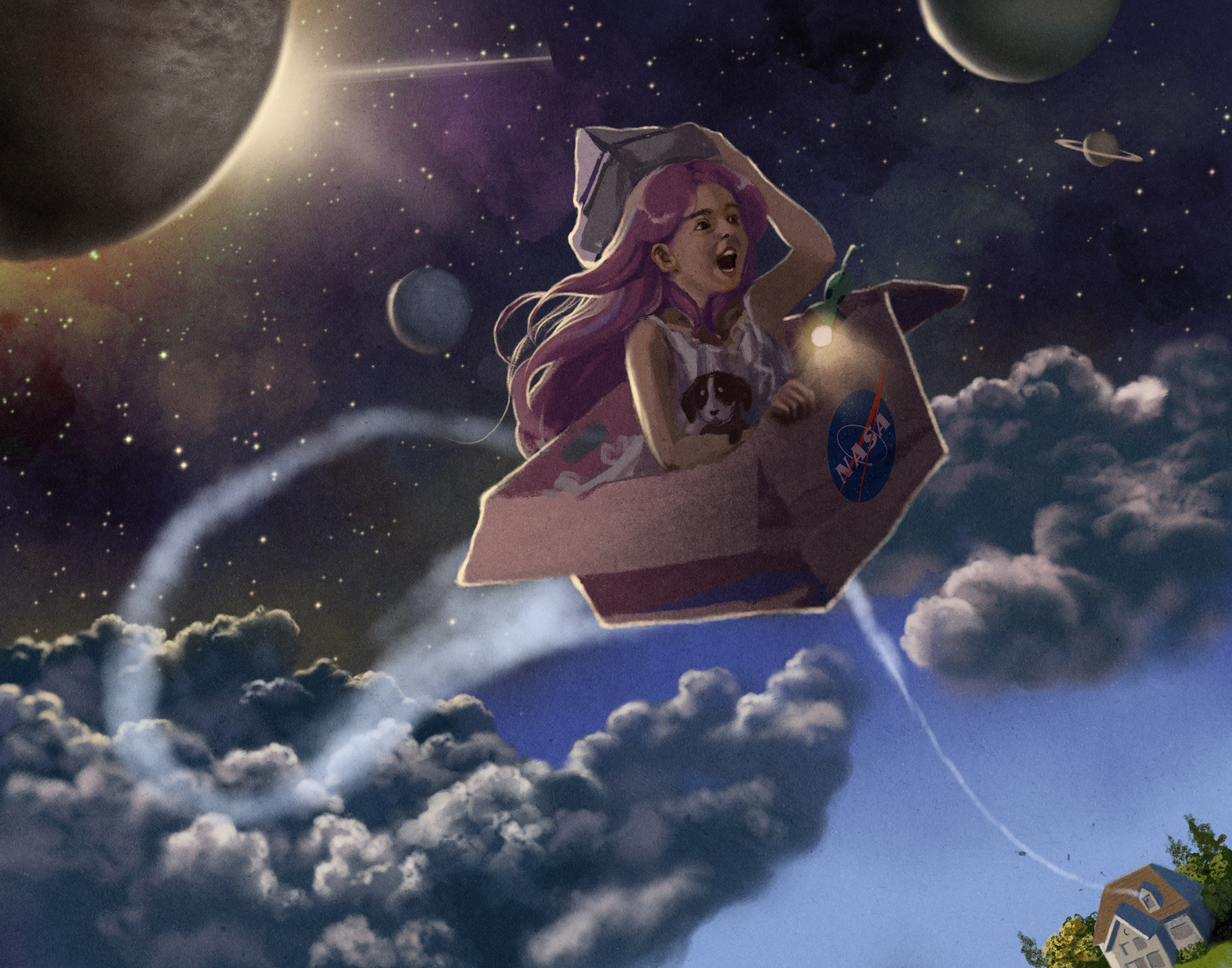
Esther Lee, of Washington State, was selected as the grand prize winner for her submission “Beyond Imagination,” which depicts a young girl and her dog in a cardboard box exploring the universe. Lee said she was inspired by memories of her adventurous childhood.

“Beyond Imagination,” 2024 NASA Student Art Contest grand prize winner
NASA / Esther Lee

“The underlying inspiration from this piece actually originates from childhood memories. As a kid, I used to sit down in cardboard moving boxes and shuffle along the carpet or wood floors, pretending that I was a pirate or adventurer on a ship exploring the vast unknowns,” Lee said. “Ultimately, I wanted my piece to capture that same childlike innocence and joy from all those years ago.”

Lee’s piece stood out among a crowded and creative field. This year’s theme, “Connecting the Dots”, encouraged K-12 students to explore innovative ideas about the intersection of science, technology, and art.

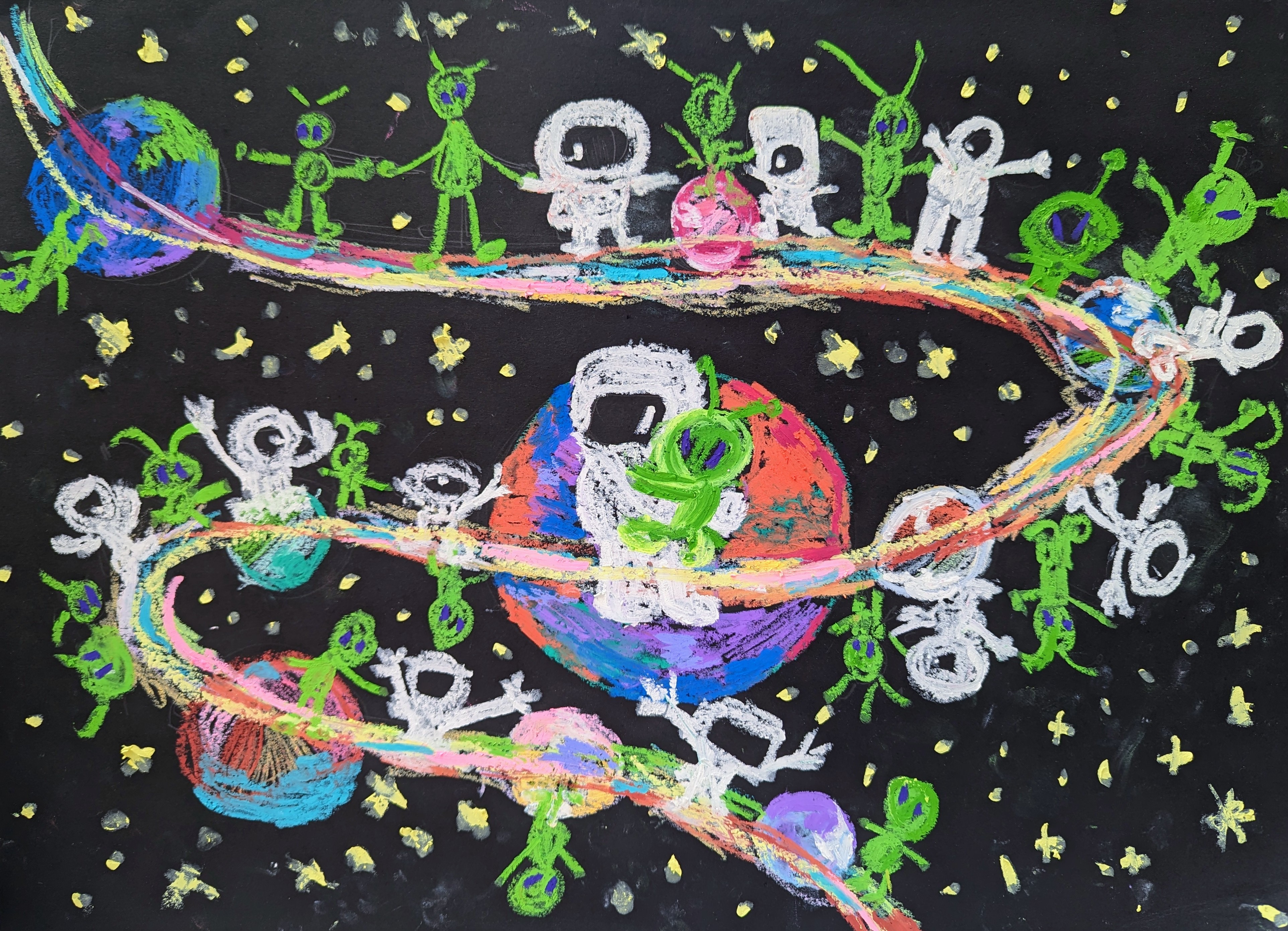
“The milky ways party” by Ziyo Cui, 1st Place Kindergarten Division
NASA / Ziyo Cui

Art contest coordinator, Kristina Cors, said this year’s contest, which brought in more than 2000 entries, was one of the best. “The art contest received a record number of entries this year and the quality of the art was absolutely incredible. From the impressive skills of our winners to the joyful imagination of our youngest entries, each piece represented an excitement for exploration and creativity,” remarked Cors.

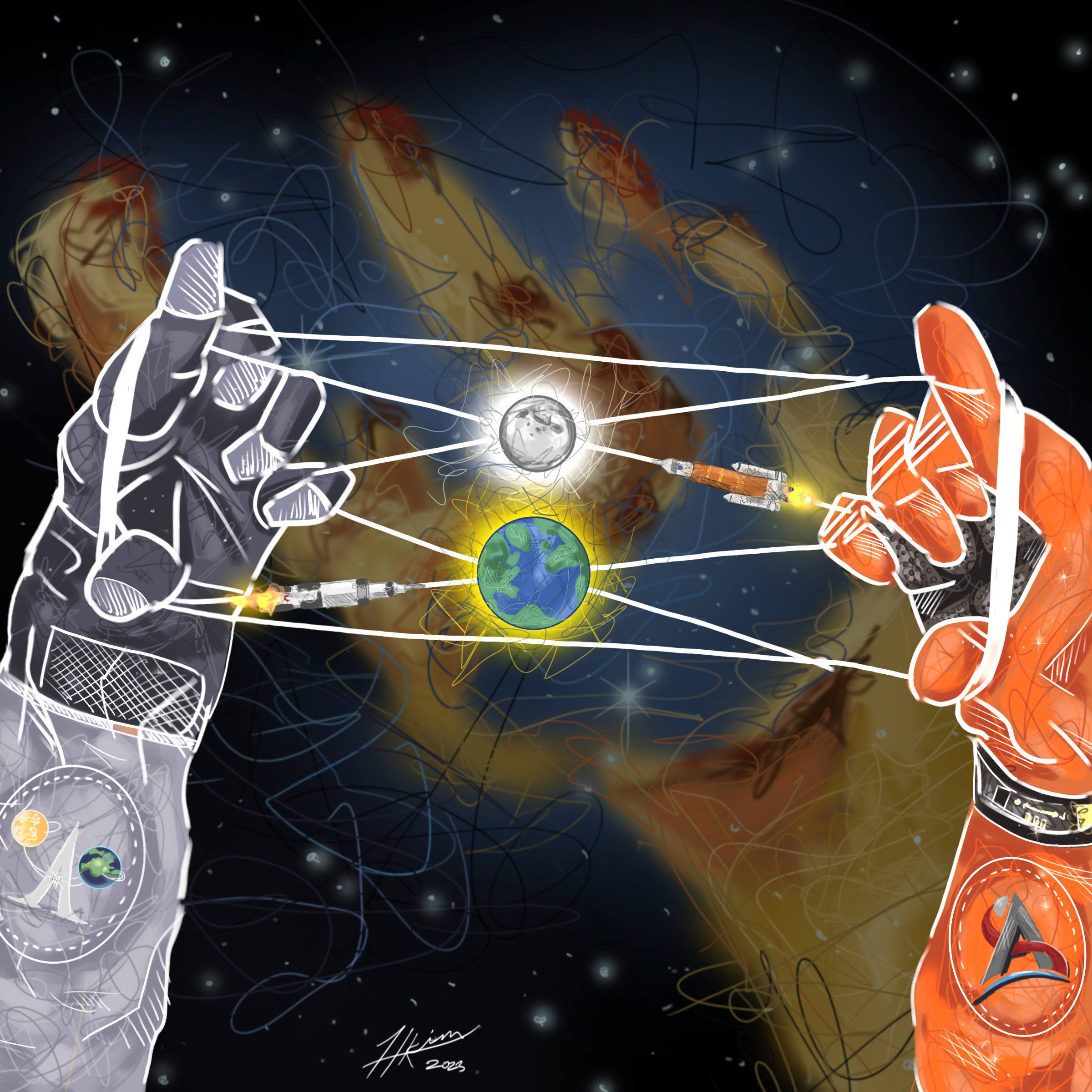
“We’re going back” by Hannah Kim, 1st Place 8th Grade Division
NASA/ Hannah Kim

Lee’s victory is a product of years of continued efforts and inspirations, as well as a personal interest in NASA’s missions and space science. “I’ve been drawing on and off since elementary school. As I had more time during the pandemic, I had the opportunity to explore digital art more seriously. NASA and space have always been a huge inspiration for me,” she said.

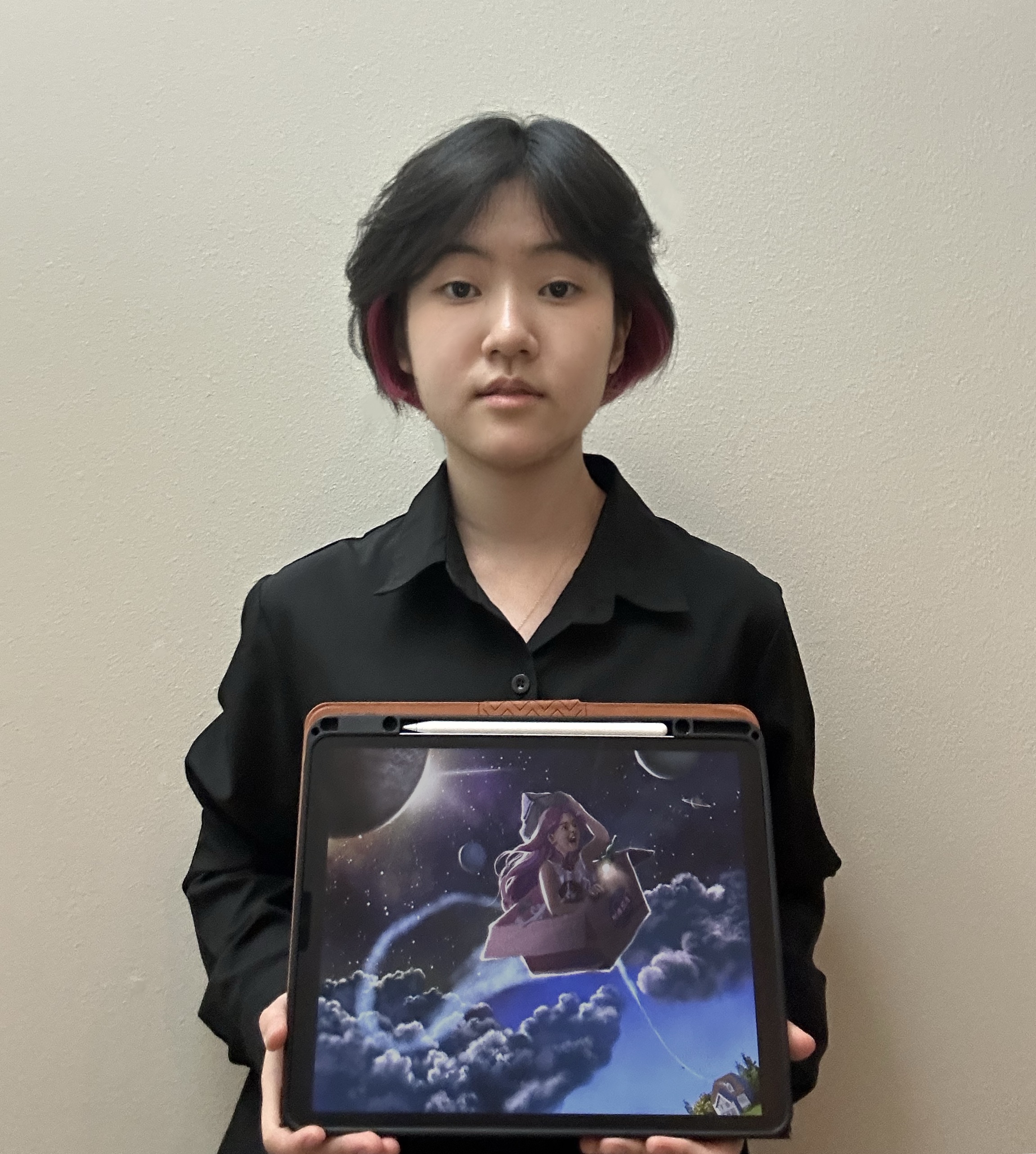
Esther Lee holding her grand prize-winning artwork, “Beyond Imagination”.
NASA / Esther Lee

Using the software Procreate on her iPad, Esther took her interpretation of the prompt “Connect the Dots” skyward by imagining a connection between dreams and reality. She said “Beyond Imagination” emerged from a personal philosophy. “As a child, your dreams could take you far beyond your ordinary world. Equipped with just a cardboard box, paper hat, and plushies, you could travel all the way up to space and beyond. Your future is only restricted by your imagination.”

To view this year’s contest submissions, click here.

Share

Details

Last Updated

Apr 25, 2024

Powered by WPeMatico

Get The Details…
Julia L. Bradshaw

Sols 4166-4167: A Garden Full of Rocks

Sols 4166-4167: A Garden Full of Rocks

3 min read

Sols 4166-4167: A Garden Full of Rocks

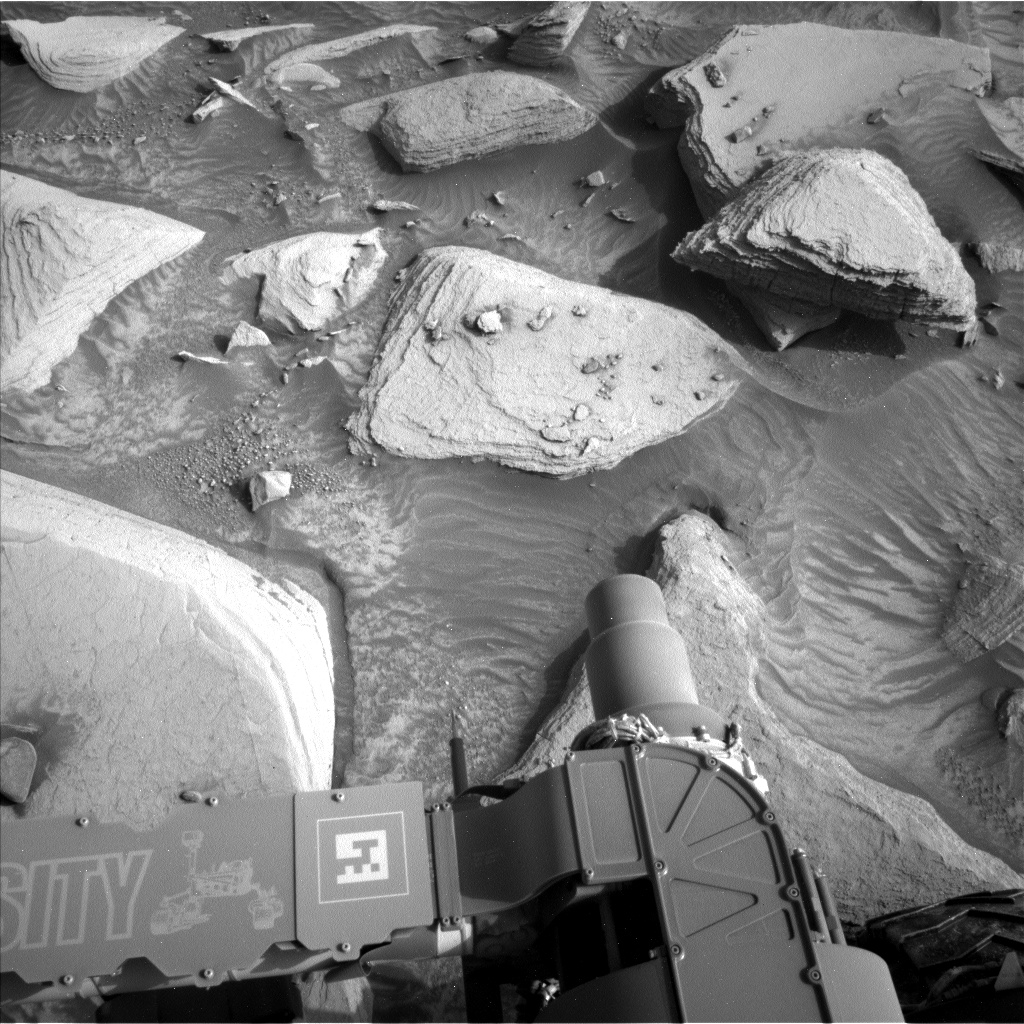
This image was taken by Left Navigation Camera onboard NASA’s Mars rover Curiosity on Sol 4164 (2024-04-23 16:43:09 UTC).
NASA/JPL-Caltech

Earth planning date: Wednesday April 24, 2024

Here on Earth (in Toronto, specifically), it’s a very typical April which can’t quite make up its mind about whether or not it wants to be spring. On Mars (in Gale Crater), we’re well into spring, and Curiosity is enjoying the (relatively) warmer weather. As the days get longer and the weather gets warmer, I find myself with lots of energy, itching to get outside and play in my garden. Curiosity seems to feel similar – we’ve been flush with power recently, and today’s touch-and-go plan is no exception. This means lots of opportunity for Curiosity to play in its own kind of garden – albeit one a bit less green than my own.

The first sol of the plan starts with contact science on ‘Twin Peaks,’ which is a small, darker block on top of a lighter block (which you can see the edge of in the image above). This is followed by a two hour long science block packed full of ChemCam and Mastcam observations. ChemCam is starting up close with LIBS on ‘Gilber Lake’ (in the centre of the image above) followed by two long distance mosaics of our long-time companions, the upper Gediz Vallis Ridge and Kukenan. Mastcam has its own mosaic of Pinnacle Ridge and then turns its sights to two closer blocks – ‘Hawk’s Head Notch’ and ‘Cleaver Notch.’ We’re then back for more contact science – this time with MAHLI – before driving on towards Pinnacle Ridge. It’s a geology-heavy sol, but the atmosphere and environment science theme group (ENV) will sneak in to take a tau measurement at the end of the sol to keep an eye on the changing atmospheric dust.

As is often the case in these kinds of plans, the second sol is a bit more sedate, but Curiosity will still manage to squeeze in nearly an hour and a half of science. Most of this is given over to environmental monitoring. Because we don’t need to be in a certain location to check out dust and clouds, we can let the geology and minerology science theme group (GEO) have their fun before the drive and save our observations for the ‘untargeted’ portion of the plan. On the dusty side of things, we have another tau as well as a line of sight scan towards the crater rim. A long dust devil movie will look out for dust lifting in the middle distance, and a deck monitoring observation will check out how dust grains on the rover’s deck might have moved. We’re also looking north above the horizon for clouds. GEO isn’t entirely left out of this sol though – they’ll wrap up the plan with a ChemCam AEGIS observation.

Written by Alex Innanen, Atmospheric Scientist at York University

Share

Details

Last Updated
Apr 24, 2024

Powered by WPeMatico

Get The Details…