Tech Today: Flipping NASA Tech and Sticking the Landing 

Tech Today: Flipping NASA Tech and Sticking the Landing 

2 min read

Preparations for Next Moonwalk Simulations Underway (and Underwater)

Akeem Shannon sitting on a sofa, holding a cellphone with Flipstik attached to it.
Akeem Shannon showcasing Flipstik attached to a smartphone. The product’s design was improved by looking at NASA research to inform its gecko-inspired method of adhering to surfaces
Credit: Flipstik Inc.

When it comes to innovative technologies, inventors often find inspiration in the most unexpected places. A former salesman, Akeem Shannon, was inspired by his uncle, who worked as an engineer at NASA’s Marshall Space Flight Center in Huntsville, Alabama, to research the agency’s published technologies. He came across a sticky NASA invention that would help him launch his breakout product.  

In the early 2010s, a team of roboticists at NASA’s Jet Propulsion Laboratory in Southern California were exploring methods to enhance robots’ gripping capabilities. They came across the Van Der Waals force – a weak electrostatic bond that forms at the molecular level when points on two surfaces make contact. This is the same force that geckos use to climb along walls.  

A hand holds a dangling circular apparatus attached to a flat surface via gecko-like adhesion.
Much like a gecko’s foot, this apparatus developed at the Jet Propulsion Laboratory uses tiny fibers to grip objects and hold them tight. This work later inspired and informed the development of Flipstik.
Credit: NASA

The microscopic hairs on gecko toe pads are called setae, which gives the technology the nickname of “synthetic setae.” While Shannon couldn’t use this NASA technology to hang a TV on a wall, he saw a way to mount a much smaller screen – a cellphone. 

A synthetic setae attachment on a cellphone case could stick to most surfaces, such as mirrors or the back of airplane seats. With a product design in hand, Shannon founded St. Louis-based Flipstik Inc. in 2018. Shannon wanted to make a reliable product that could be used multiple times in various situations. He said the published NASA research, which describes methods of molding and casting the tiny hairs to be more durable, was indispensable to making his product portable and reusable. 

Flipstik has made an impact on the mobile device industry. In addition to people using it to mount their phones to watch videos, it has become popular among content creators to capture camera angles. Flipstik also allows deaf users to keep their hands free, enabling them to make video calls in sign language. From geckos to NASA research, Shannon’s innovation is a reminder that inspiration can come from anywhere. 

Powered by WPeMatico

Get The Details…
Andrew Wagner

Quantum Scale Sensors used to Measure Planetary Scale Magnetic Fields

Quantum Scale Sensors used to Measure Planetary Scale Magnetic Fields

6 min read

Quantum Scale Sensors used to Measure Planetary Scale Magnetic Fields

Magnetic fields are everywhere in our solar system. They originate from the Sun, planets, and moons, and are carried throughout interplanetary space by solar wind. This is precisely why magnetometers—devices used to measure magnetic fields—are flown on almost all missions in space to benefit the Earth, Planetary, and Heliophysics science communities, and ultimately enrich knowledge for all humankind. These instruments can remotely probe the interior of a planetary body to provide insight into its internal composition, structure, dynamics, and even evolution based on the magnetic history frozen into the body’s crustal rock layers. Magnetometers can even discover hidden oceans within our solar system and help determine their salinity, thereby providing insight into the potential habitability of these icy worlds.

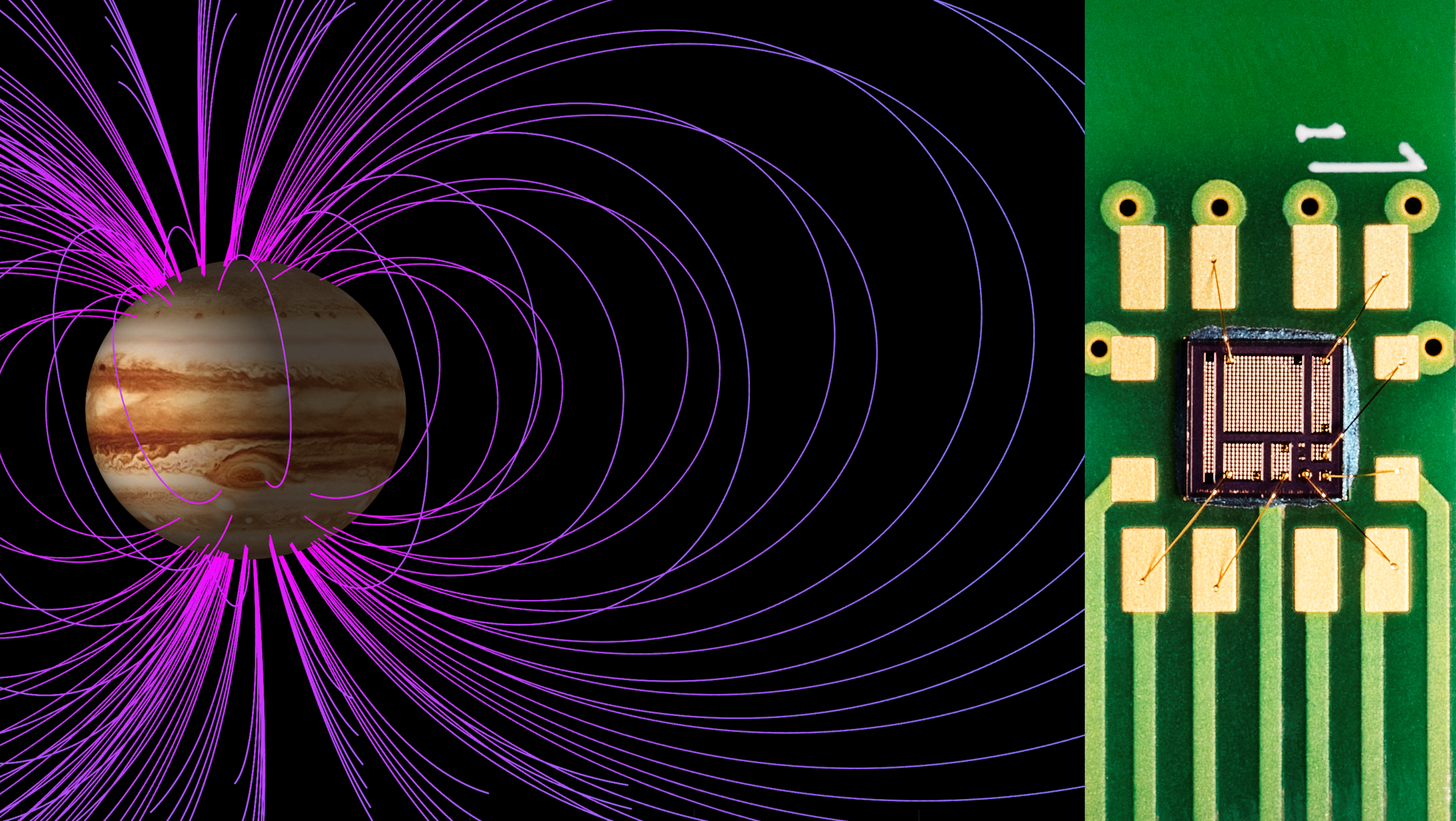
An image of Jupiter is on the left, with purple magnetic field lines emanating from one pole of the planet, curving out into space, and ending at the other pole. The right image is a square magnetic field sensor mounted on top of a green printed circuit board (PCB) with gold leads, which allows for electrical connectivity with the sensor.
Left: The magnetic field of Jupiter provides insight into its interior composition, structure, dynamics, and even its evolutionary history. Right: Image of the first prototype 4H-SiC solid-state magnetometer sensor die (2mm by 2mm) developed by NASA-GRC. Each gold rectangle or square on the surface represents an individual sensor, the smallest being 10 microns by 10 microns.

Fluxgates are the most widely used magnetometers for missions in space due to their proven performance and simplicity. However, the conventional size, weight, and power (SWaP) of fluxgate instruments can restrict them from being used on small platforms like CubeSats and sometimes limit the number of sensors that can be used on a spacecraft for inter-sensor calibration, redundancy, and spacecraft magnetic field removal. Traditionally, a long boom is used to distance the fluxgate magnetometers from the contaminate magnetic field generated by the spacecraft, itself, and at least two sensors are used to characterize the falloff of this field contribution so it can be removed from the measurements. Fluxgates also do not provide an absolute measurement, meaning that they need to be routinely calibrated in space through spacecraft rolls, which can be time and resource intensive.

An SMD-funded team at NASA’s Jet Propulsion Laboratory in Southern California has partnered with NASA’s Glenn Research Center in Cleveland, Ohio to prototype a new magnetometer called the silicon carbide (SiC) magnetometer, or SiCMag, that could change the way magnetic fields are measured in space. SiCMag uses a solid-state sensor made of a silicon carbide (SiC) semiconductor. Inside the SiC sensor are quantum centers—intentionally introduced defects or irregularities at an atomic scale—that give rise to a magnetoresistance signal that can be detected by monitoring changes in the sensor’s electrical current, which indicate changes in the strength and direction of the external magnetic field. This new technology has the potential to be incredibly sensitive, and due to its large bandgap (i.e., the energy required to free an electron from its bound state so it can participate in electrical conduction), is capable of operating in the wide range of temperature extremes and harsh radiation environments commonly encountered in space.

Team member David Spry of NASA Glenn indicates, “Not only is the SiC material great for magnetic field sensing, but here at NASA Glenn we’re further developing robust SiC electronics that operate in hot environments far beyond the upper temperature limitations of silicon electronics. These SiC-based technologies will someday enable long-duration robotic scientific exploration of the 460 °C Venus surface.”

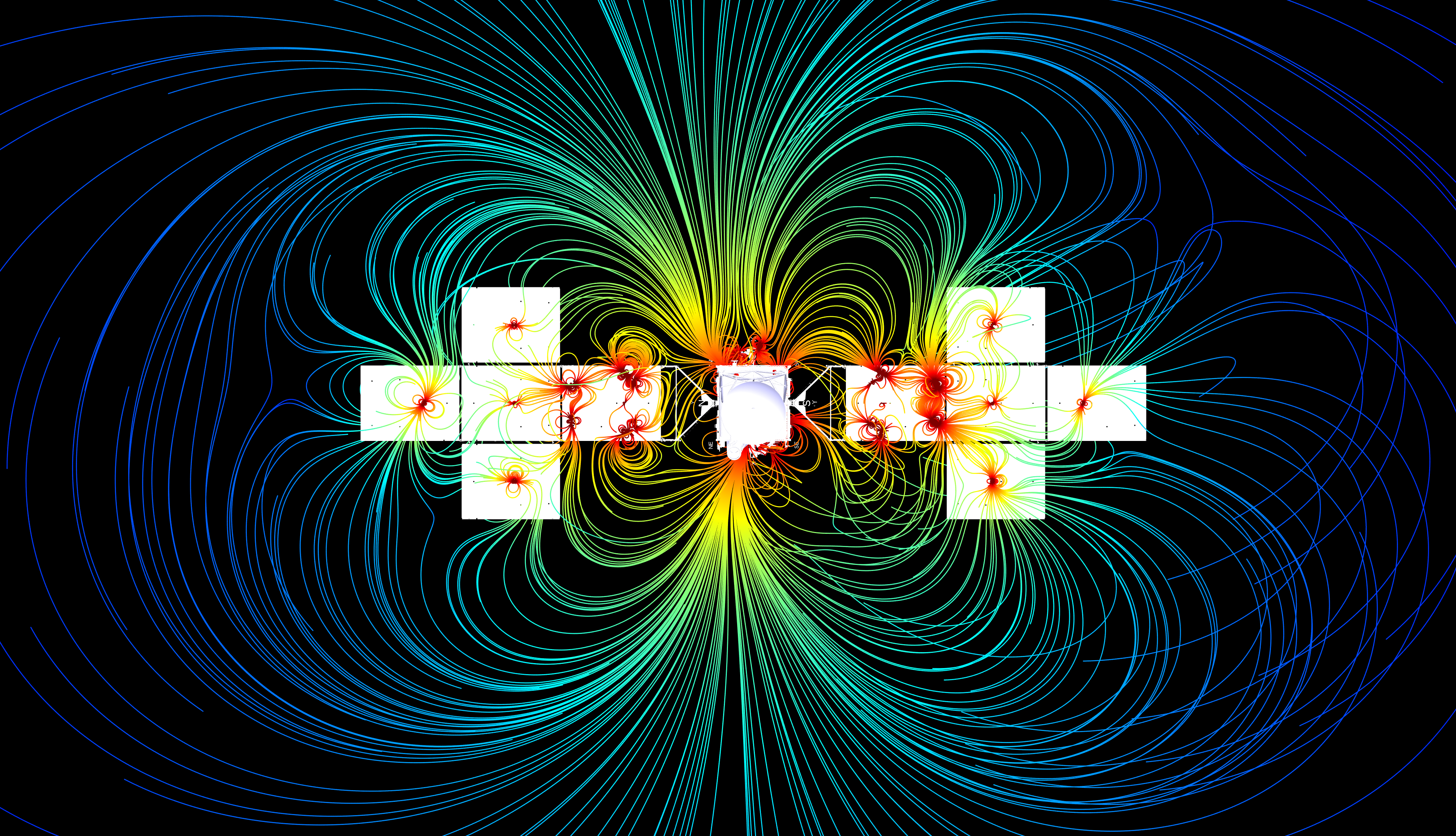
SiCMag is also very small— the sensor area is only 0.1 x 0.1 mm and the compensation coils are smaller than a penny. Consequently, dozens of SiCMag sensors can easily be incorporated on a spacecraft to better remove the complex contaminate magnetic field generated by the spacecraft, reducing the need for a long boom to distance the sensors from the spacecraft, like implemented on most spacecraft, including Psyche (see figure below).

Swirling magnetic field lines extend from a CAD model of the Psyche spacecraft.
The magnetic field lines associated with the Psyche spacecraft, modeled from over 200 individual magnetic sources. Removing this magnetic field contribution from the measurements conventionally requires the use of two fluxgate sensors on a long boom. Incorporating 4 or more SiCMag sensors in such a scenario would significantly reduce the size of the boom required, or even remove the need for a boom completely.
Image Credit: This image was adopted from https://science.nasa.gov/resource/magnetic-field-of-the-psyche-spacecraft/

SiCMag has several advantages when compared to fluxgates and other types of heritage magnetometers including those based on optically pumped atomic vapor. SiCMag is a simple instrument that doesn’t rely on optics or high-frequency components, which are sensitive to temperature variations. SiCMag’s low SWaP also allows for accommodation on small platforms such as CubeSats, enabling simultaneous spatial and temporal magnetic field measurements not possible with single large-scale spacecraft. This capability will enable planetary magnetic field mapping and space weather monitoring by constellations of CubeSats. Multiplatform measurements would also be very valuable on the surface of the Moon and Mars for crustal magnetic field mapping, composition identification, and magnetic history investigation of these bodies.

SiCMag has a true zero-field magnetic sensing ability (i.e., SiCMag can measure extremely weak magnetic fields), which is unattainable with most conventional atomic vapor magnetometers due to the requisite minimum magnetic field needed for the sensor to operate. And because the spin-carrying electrons in SiCMag are tied up in the quantum centers, they won’t escape the sensor, meaning they are well-suited for decades-long journeys to the ice-giants or to the edges of the heliosphere. This capability is also an advantage of SiCMag’s optical equivalent sibling, OPuS-MAGNM, an optically pumped solid state quantum magnetometer developed by Hannes Kraus and matured by Andreas Gottscholl of the JPL solid-state magnetometry group. SiCMag has the advantage of being extremely simple, while OPuS-MAGNM promises to have lower noise characteristics, but uses complex optical components.

According to Dr. Andreas Gottscholl, “SiCMag and OPuS-MAGNM are very similar, actually. Progress in one sensor system translates directly into benefits for the other. Therefore, enhancements in design and electronics advance both projects, effectively doubling the impact of our efforts while we are still flexible for different applications.”

SiCMag has the ability to self-calibrate due to its absolute sensing capability, which is a significant advantage in the remote space environment. SiCMag uses a spectroscopic calibration technique that atomic vapor magnetometers also leverage called magnetic resonance (in the case of SiCMag, the magnetic resonance is electrically detected) to measure the precession frequency of electrons associated with the quantum centers, which is directly related to the magnetic field in which the sensor is immersed. This relationship is a fundamental physical constant in nature that doesn’t change as a function of time or temperature, making the response ideal for calibration of the sensor’s measurements. “If we are successful in achieving the sought-out sensitivity improvement we anticipate using isotopically purer materials, SiC could change the way magnetometry is typically performed in space due to the instrument’s attractive SWaP, robustness, and self-calibration ability,” says JPL’s Dr. Corey Cochrane, principal investigator of the SiCMag technology.

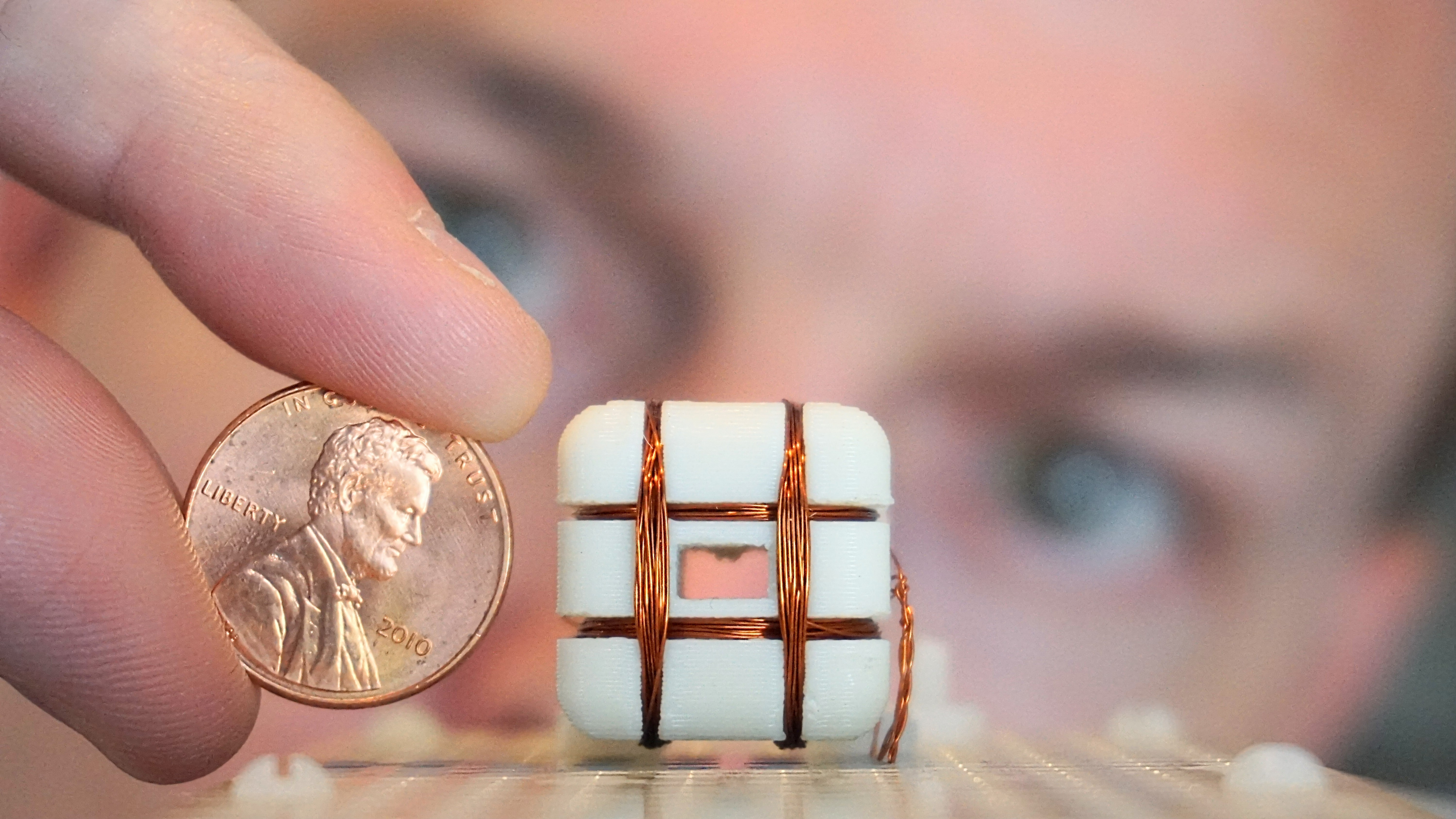
Close up image of a 3D printed plastic fixture wrapped with copper wire next to a penny.
The 3-axis 3D printed electromagnet – no larger than the size of a US penny – is used to modulate and maintain a region of zero magnetic field around our 0.1 mm x 0.1 mm 4H-SiC solid-state sensor.

NASA has been funding this team’s solid-state quantum magnetometer sensor research through its PICASSO (Planetary Instrument Concepts for the Advancement of Solar System Observations) program since 2016. A variety of domestic partners from industry and academia also support this research, including NASA’s Glenn Research Center in Cleveland, Penn State University, University of Iowa, QuantCAD LLC, as well as international partners such as Japan’s Quantum Materials and Applications Research Center (QUARC) and Infineon Technologies.

Three smiling team members
The SiC magnetometer team leads from JPL and GRC (left: Dr. Hannes Kraus, middle: Dr. Phillip Neudeck, right: Dr. Corey Cochrane) at the last International Conference on Silicon Carbide and Related Materials (ICSCRM) where their research is presented annually.

Acknowledgment: The research was carried out at the Jet Propulsion Laboratory, California Institute of Technology, under a contract with the National Aeronautics and Space Administration (80NM0018D0004) and the NASA Glenn Research Center.

Project Lead(s):

Dr. Corey Cochrane, Dr. Hannes Kraus, Jet Propulsion Laboratory/California Institute of Technology

Dr. Phil Neudeck, David Spry, NASA Glenn Research Center

Sponsoring Organization(s):

Science Mission Directorate PICASSO, JPL R&D fund

Powered by WPeMatico

Get The Details…

NASA Seeks Student Missions to Send to Space in 2026, Beyond

NASA Seeks Student Missions to Send to Space in 2026, Beyond

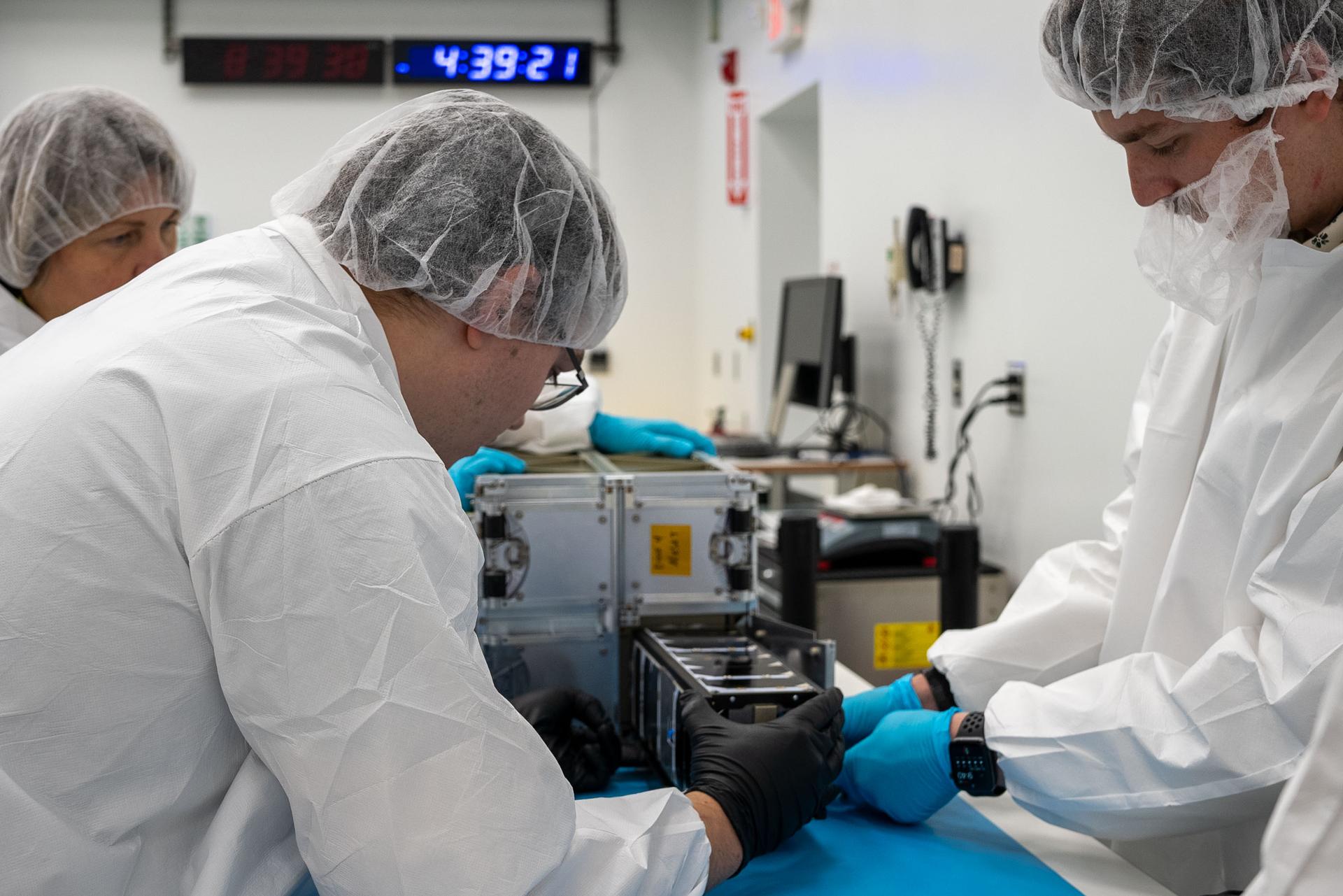
Technicians with the University of Kansas prepare their KUbeSat-1 for integration at Firefly’s Payload Processing Facility at Vandenberg Space Force Base, California on Thursday, April 25, 2024.
Credit: NASA

NASA announced a new round of opportunities for CubeSat, developers to build spacecrafts on that will fly on upcoming launches through the agency’s CSLI (CubeSat Launch Initiative). CubeSats are a class of small spacecraft called nanosatellites.

The initiative provides space access to U.S. educational institutions, certain non-profit organizations, and informal educational institutions such as museums and science centers, as well as NASA centers focused on workforce development, including the agency’s Jet Propulsion Laboratory in southern California. It also encourages participation by minority serving institutions.

“Working with CubeSats is a way to get students interested in launching a career in the space industry,” said Jeanie Hall, CSLI program executive at NASA Headquarters in Washington. “NASA reviews applications for CubeSat missions every year and selects projects with an educational component that also can benefit the agency in better understanding education, science, exploration, and technology.”

Applicants must submit proposals by 5 p.m. EST, Nov. 15. NASA expects to make selections by March 14, 2025, for flight opportunities in 2026-2029, although selection does not guarantee a launch opportunity. Applicants are responsible for funding the development of the small satellites.

Selected CubeSats get assigned a launch and deployment directly from a rocket or to low Earth orbit from the International Space Station. Once accepted, NASA mission managers act as advisors to the CubeSat team, ensuring technical, safety, and regulatory requirements are satisfied before launch. Those selected will strengthen their skills in hardware design and development and build knowledge in operating the CubeSats.

Eight CubeSat missions recently shared a ride to space on Firefly Aerospace’s Alpha rocket that launched on July 3 from Vandenberg Space Force Base in California. One mission is CatSat, built by students at the University of Arizona, which is testing a deployable antenna attached to a Mylar balloon. Another is KUbeSat-1, built by the University of Kansas, is testing a new method of measuring the cosmic rays that hit the Earth. This launch also was notable for two CSLI ‘first’ milestones. The KUbeSat-1 and another called MESAT-1 were the first CSLI missions from the states of Kansas and Maine respectively.

Four CubeSats also went to the space station as cargo in a SpaceX Dragon capsule on March 21 aboard a Falcon 9 rocket from Space Launch Complex 40 at Cape Canaveral Space Force Station in Florida as part of the agency’s SpaceX 30th commercial resupply mission. Once aboard the space station, astronauts deployed the small missions into various orbits to demonstrate and mature technologies meant to improve solar power generation, detect gamma ray bursts, determine crop water usage, and measure root-zone soil and snowpack moisture levels.

CubeSats are a class of spacecraft sized in multiples of a standardized unit called a “U.” A 1-Unit (1U) CubeSat is about 10 x 10 x 11 cm in size (3.9 x 3.9 x 4.5 inches). They are small enough to fit in the palm of your hand and can be stacked together to form a slightly larger, more capable spacecraft. A 3U CubeSat is three times the size of a 1U, a 6U is six times the size.

NASA has selected CubeSat missions from 45 states, Washington, and Puerto Rico, and launched about 160 CubeSats since inception.

The CubeSat Launch Initiative is managed by NASA’s Launch Services Program based at NASA’s Kennedy Space Center in Florida. 

To learn more information about CSLI, visit:

https://go.nasa.gov/CubeSat_initiative

-end-

Julian Coltre
Headquarters, Washington
202-358-1100
julian.n.coltre@nasa.gov

Laura Aguiar / Leejay Lockhart
Kennedy Space Center, Florida
321-593-6245 / 321-747-8310
laura.aguiar@nasa.gov / leejay.lockhart@nasa.gov

Powered by WPeMatico

Get The Details…
Tiernan P. Doyle

Disaster Response Coordination System (DRCS) Formally Launches

Disaster Response Coordination System (DRCS) Formally Launches

The NASA Disasters Response Coordination System (DRCS) formally launched on 6/13/24 during a ceremony at NASA Headquarters with Administrator Nelson as the keynote speaker. The DRCS is a revamped one NASA approach in how the agency responds to natural hazards and disasters domestically and internationally to support partners and stakeholders The DRCS will be organized by the Program Office located at LaRC. MSFC and Earth Science Branch Disasters team will continue to support the DRCS and events that agency respond too by tapping into expertise and subject matter expertise here at MSFC. MSFC was represented at the DRCS launch by Center Response Coordinators Jordan Bell (ST11), Ronan Lucey (ST11/UAH) and Earth Action Associate Disasters Program Manager Lori Schultz (ST11). Additional information about the DRCS launch can be found here: https://science.nasa.gov/earth/natural-disasters/nasa-announces-new-system-to-aid-disaster-response/.

Powered by WPeMatico

Get The Details…
Elizabeth Blackwell

Sols 4263-4265: A Royal Birthday Celebration at Kings Canyon

Sols 4263-4265: A Royal Birthday Celebration at Kings Canyon

3 min read

Sols 4263-4265: A Royal Birthday Celebration at Kings Canyon

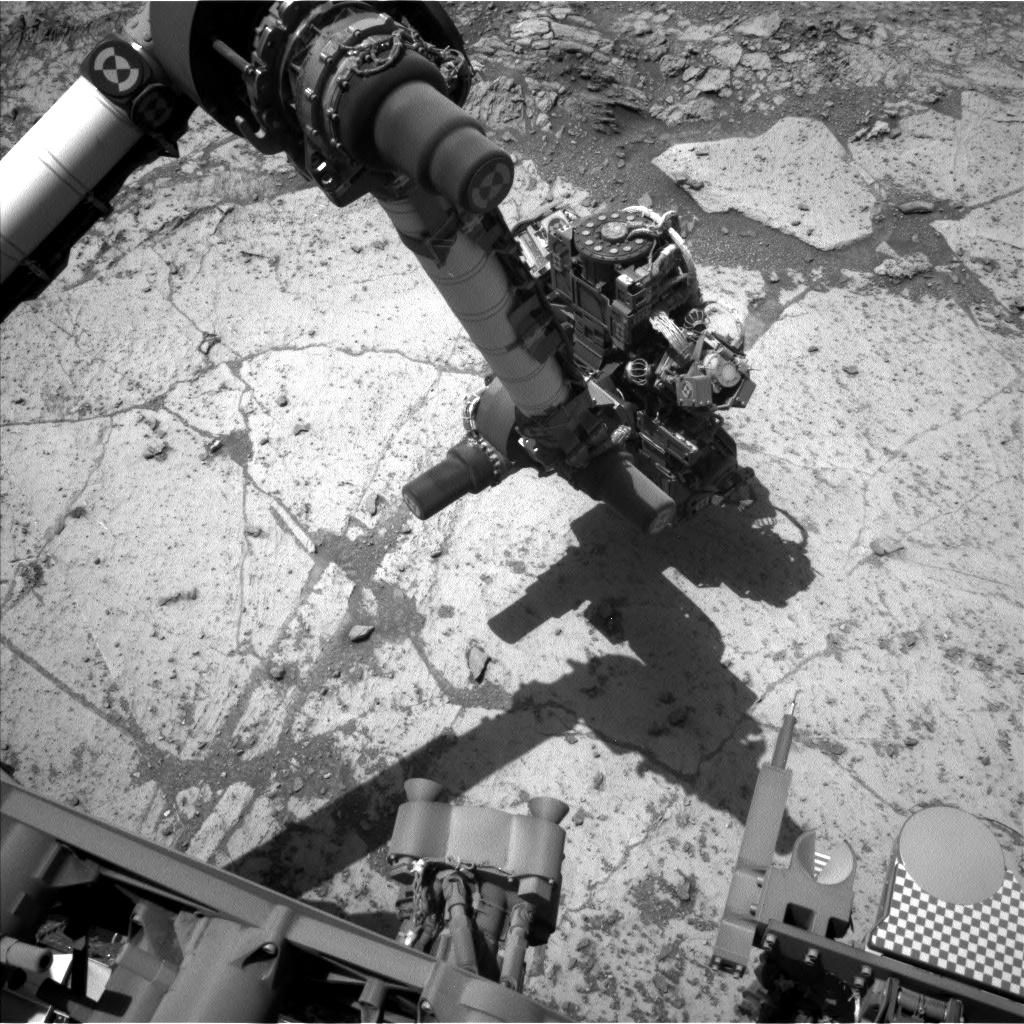
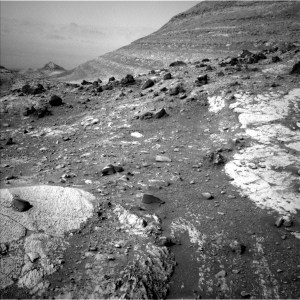
This image captures the rover arm conducting the preload test on “Kings Canyon” from Drill Sol 1 to determine whether the target is safe to drill.

Earth planning date: Friday, Aug. 2, 2024

Prepare your party poppers, horns, and confetti! On Aug. 6 (EDT), after 4,265 Martian sols since Curiosity first landed in Gale Crater, the rover will be turning 12 years old. I still remember the excitement of watching Curiosity’s landing back when I started high school. Now, as a “Keeper of the Plan” for the Geology and Mineralogy theme group, I have the incredible opportunity to be part of this mission. To mark the end of the 12th year, Curiosity is currently parked within a large valley called Gediz Vallis, all primed and ready to drill “Kings Canyon” (pictured). 

The previous plan involved conducting a preload test in Drill Sol 1, to ensure we could drill safely. The test was successful, confirming that Kings Canyon is safe to drill! The team was also happy with the chemical composition data from the APXS (Alpha Particle X-ray Spectrometer) results, so we are all set to drill a new king!

On the first sol, we’ll conduct Drill Sols 2 and 3, where the actual drilling will take place and the drilled material will be subsequently characterized. Alongside drilling, we also plan to capture a MAHLI (Mars Hand Lens Imager) image of a relatively peaceful target called “RAGE.” (This target is the site where the rover will later perform the RAGE activity to clean up after drilling.) On the second sol, we’ll perform a LIBS (Laser Induced Breakdown Spectrometer) analysis on “Lake Eleanor,” a rock crushed by Curiosity’s wheel, revealing light-toned material. Additionally, we will conduct a ChemCam passive observation on a section of the Gediz Vallis channel floor.

The third sol is packed with scientific activities. We’ll conduct a LIBS on “Lyell Glacier,” a rock with different colored coatings to compare with dark-toned coatings seen by the Perseverance rover. ChemCam will take the opportunity to capture a long-distance Remote Micro-Imager (RMI) shot of an arm of “Milestone Peak,” which is full of gray rocks aligned in a slightly different direction from the rest of the ridge within the center of Gediz Vallis. We also plan to capture four Mastcam mosaics: one of the southern section of a large hill called “Kukenan” and three mosaics documenting the different textures, structures, and lithologies of the deposits within the valley floor. Furthermore, a ChemCam Passive Sky observation and atmospheric monitoring activities in the morning are also on the agenda.

As we prepare for these exciting activities, the anticipation builds for Curiosity’s 12th birthday. Here’s to many more years of exploration and discovery on the Red Planet!

Written by Amelie Roberts, Ph.D. candidate at Imperial College London

Share

Details

Last Updated
Aug 05, 2024

Related Terms

Powered by WPeMatico

Get The Details…