Managing Heat

Managing Heat

4 min read

Preparations for Next Moonwalk Simulations Underway (and Underwater)

Science in Space: July 2024

This time of year, managing heat is on everyone’s mind. Especially now, as May 2024 marked a full year of record-high monthly temperatures – an unprecedented streak, according to scientists from NASA’s Goddard Institute for Space Studies in New York.

NASA experts analyze data from thousands of land-, sea-, and sky-based instruments to calculate Earth’s global temperature. Knowing how hot it is helps scientists, health care workers, and public officials plan for and respond to the heat’s effects on people and infrastructure.

Crew members on the International Space Station deal with a different type of heat – that generated by electronics, life support systems, and other equipment. Managing this heat is essential to the operation of the spacecraft and the health and safety of its occupants.

Taking out the heat

A suitcase-sized piece of equipment sitting on a blue tabletop has a copper-colored frame and a metal box on the closest end with multiple nozzles and cords. A clear tube the length of the hardware is filled with small white beads. A person wearing a white lab coat and blue gloves is visible from the shoulders down behind the equipment.
Hardware for the packed bed water recovery reactor experiment. The packing media is visible in the long clear tube.
NASA

Packed bed reactors (PBRs) are structures packed with beads of different materials to increase contact between a liquid and a gas flowing through them. They are widely used for many applications, including thermal control or heat management, life support systems, and water filtration and offer low power consumption, compact size, and reliability. Packed Bed Reactor Experiment: Water Recovery Series (PBRE-WRS) continues evaluation of how microgravity affects the performance of different packing media. The material used and the shape and size of the beads all contribute to the effectiveness of heat exchange in a PBR. This investigation could inform the design and operation of these systems in microgravity and on the Moon and Mars and lead to improvements in this technology for applications on Earth such as water purification and cooling systems.

Previous investigations, PBRE and PBRE-2, provided fundamental understanding of simultaneous gas and liquid flow through PBRs in microgravity. This improved understanding helps to support development of more efficient and lightweight thermal management and life support systems for future missions.

Boiling heat away

In this video from the FBCE, as liquid begins to boil, small bubbles form at the heated surface (top of the image) and grow larger over time.
NASA

As electronic devices add more features, they generate more heat, which becomes increasingly challenging to remove. Flow boiling is a method of thermal management that uses this heat to boil a moving liquid and generate vapor bubbles that lift the heat from the surface, then change back to a liquid via condensation. But using boiling for heat management is less efficient in microgravity because, in the absence of buoyancy, bubbles grow larger and remain near the surface.

The Flow Boiling and Condensation Experiment (FBCE) tested a model for a flow boiling and condensation facility for the space station. Researchers identified important factors affecting this process in microgravity and how they differ from those on Earth. The findings could help researchers identify ways to improve the operation of these systems in microgravity.

This research also led to development of an artificial neural network (ANN) trained on data from the FBCE experiment to predict heat flow and transfer for use in the design and analysis of thermal systems. ANNs are a type of artificial intelligence made of computational units similar to neurons in the nervous systems of living things.
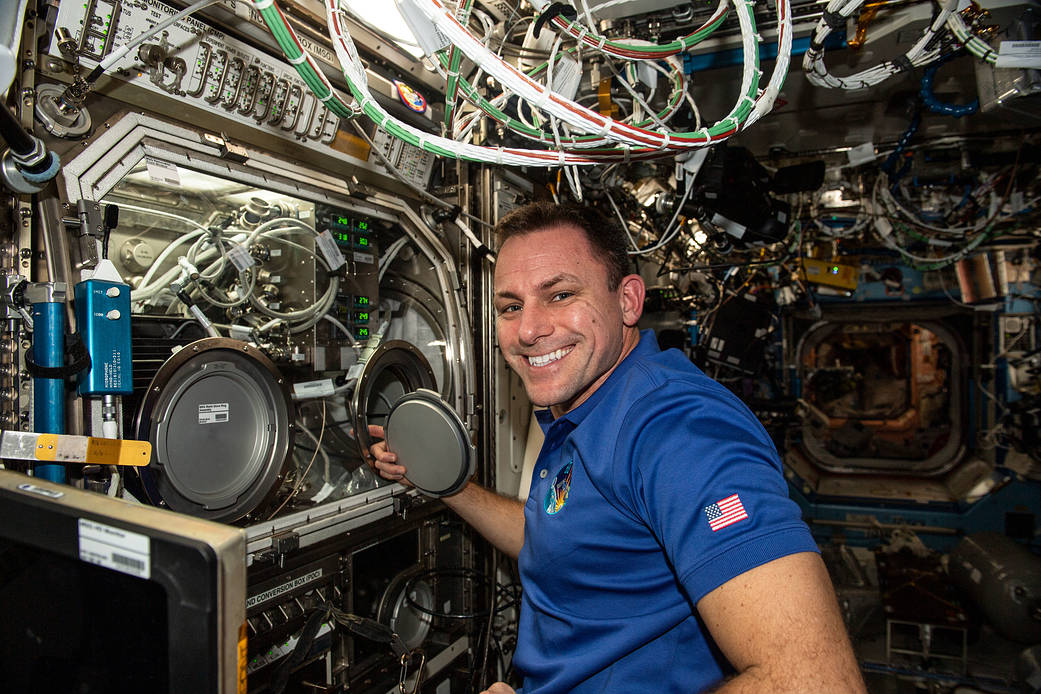
Cassada is wearing a blue polo shirt with a US flag on the sleeve and an Expedition patch on the chest. He is smiling at the camera and holding the round metal cap from a sleeve of the equipment in front of him, which has a large clear box with wires and digital readouts visible inside it and a panel of switches above it. There are coils of white, green, and red wires above Cassada’s head.
NASA astronaut Josh Cassada works on the PFMI-ASCENT investigation.
NASA

The PFMI-ASCENT investigation found that adding microscopic teeth or rachets to a surface caused more bubbles to form and increased the transfer of heat. This finding helps further improve flow boiling systems used to remove heat from electronics in space.

Going with the flow

A clear tube fills the image. The tube is filled with a red liquid with large bubbles in it that resemble a bunch of grapes. The background is blurred.
Close-up view of the Capillary Flow Experiment-2 test chamber.
NASA

Liquids behave differently in space than they do on Earth. Capillary Flow Experiment-2 studied wetting, or a liquid’s ability to spread across a surface, in different container shapes in microgravity. Results showed that models adequately predict liquid flow for various container shapes. These predictions support improved design of systems that process liquids aboard spacecraft, including systems for thermal control.

Melissa Gaskill

International Space Station Research Communications Team

NASA’s Johnson Space Center

Search this database of scientific experiments to learn more about those mentioned in this article.

Powered by WPeMatico

Get The Details…
cgetteau
NASA, JAXA Bounce Laser Beam Between Moon’s Surface and Lunar Orbit

NASA, JAXA Bounce Laser Beam Between Moon’s Surface and Lunar Orbit

NASA’s LRO (Lunar Reconnaissance Orbiter) has twice transmitted a laser pulse to a cookie-sized retroreflector aboard JAXA’s (Japan Aerospace Exploration Agency) SLIM lander on the Moon and received a return signal.

As LRO passed 44 miles above SLIM (Smart Lander for Investigating Moon) during two successive orbits on May 24, 2024, it pinged the lander with its laser altimeter instrument as it had done eight times before. But, on these two attempts, the signal bounced back to LRO’s detector.

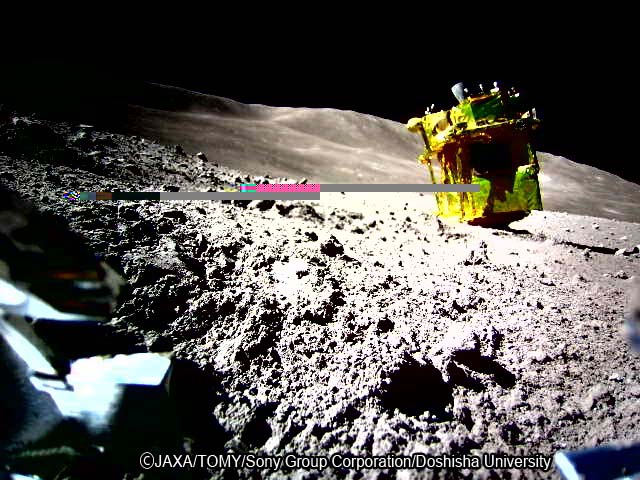
This was an important accomplishment for NASA because the device is not in an optimal position. Retroreflectors are typically secured to the top of landers, giving LRO a 120-degree range of angles to aim toward when sending laser pulses to the approximate location of a retroreflector. However, the SLIM lander had settled on the surface with its top facing sideways, limiting LRO’s range.

To boost the chances of reaching their target, the LRO team worked with JAXA to determine the exact location and orientation of SLIM. Then, NASA engineers predicted when LRO’s orbit trajectory would bring it to coordinates that would give it the best chance of reaching SLIM’s retroreflector with the laser beams.

SLIM on the lunar surface captured by the LEV-2 (SORA-Q) rover.

“LRO’s altimeter wasn’t built for this type of application, so the chances of pinpointing a tiny retroreflector on the Moon’s surface are already low,” said Xiaoli Sun, who led the team that built SLIM’s retroreflector at NASA’s Goddard Space Flight Center in Greenbelt, Maryland, as part of a partnership between NASA and JAXA.

“For the LRO team to have reached a retroreflector that faces sideways, instead of the sky, shows that these little devices are incredibly resilient,” Sun said.

SLIM touched down on the Moon’s surface on Jan. 20. The retroreflector that hitched a ride with the lander, called a Laser Retroreflector Array, is one of the six NASA has sent to the Moon aboard private and public landers, and the second to bounce signal back to LRO’s altimeter.

The first time a laser beam was transmitted from LRO to a NASA retroreflector and back was on Dec. 12, 2023, when LRO pinged ISRO’s (Indian Space Research Organisation) Vikram lander. LRO has since exchanged laser pings with Vikram three more times.

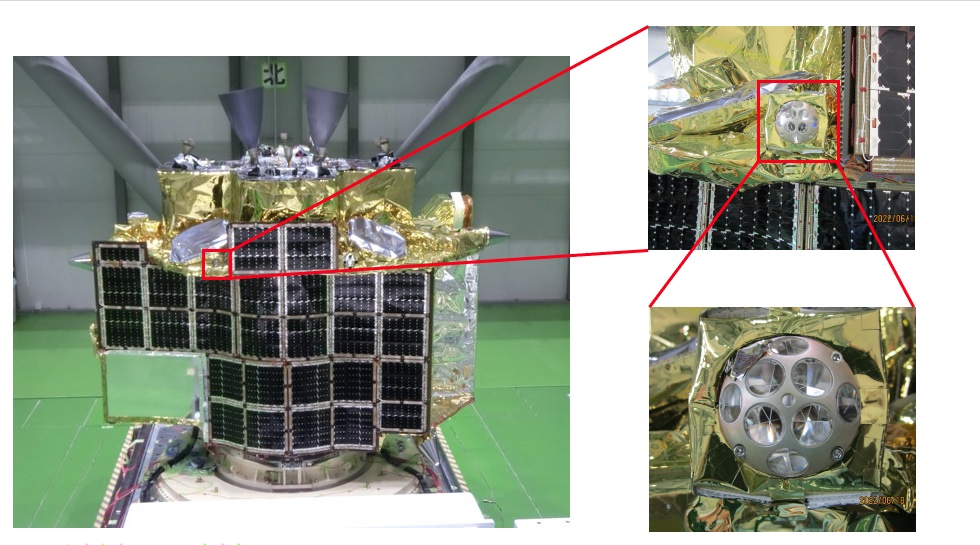
NASA’s retroreflector has eight quartz corner-cube prisms set into a dome-shaped aluminum frame that is 2 inches wide. With no power or maintenance required, retroreflectors can last on the Moon’s surface for decades and thus provide reliable beacons for future missions.

Three views are shown in one image in varying levels of detail. On the left is a metallic structure shaped like a box with wings. It stands on top of a base, with a green floor and metallic wall visible in the background. A small red box encloses a feature that is zoomed into in another image to the right of the main one. Below that, a final image is shown, with the object visible up close, with gold metallic material behind it. The object is round, metallic, covered in eight holes that take up the entire surface.
NASA’s Laser Retroreflector Array installed on JAXA’s SLIM lander before launch.

The retroreflectors could guide Artemis astronauts to the surface in the dark, for example, or mark the locations of spacecraft already on the surface to help astronauts and uncrewed spacecraft land near them.

LRO’s laser altimeter, the only laser instrument orbiting the Moon for now, was designed to map the Moon’s topography to prepare for missions to the surface — not to point to within 1/100th of a degree of a retroreflector, which is what LRO engineers are trying to do with every ping.

LRO is managed by NASA’s Goddard Space Flight Center in Greenbelt, Maryland, for the Science Mission Directorate at NASA Headquarters in Washington. Launched on June 18, 2009, LRO has collected a treasure trove of data with its seven powerful instruments, making an invaluable contribution to our knowledge about the Moon. NASA is returning to the Moon with commercial and international partners to expand human presence in space and bring back new knowledge and opportunities.


By Lonnie Shekhtman
NASA’s Goddard Space Flight Center, Greenbelt, Md.      
            
 
Media Contact:
Nancy Neal Jones
NASA’s Goddard Space Flight Center, Greenbelt, Md.

Powered by WPeMatico

Get The Details…

Earth to Gateway: Electric Field Tests Enhance Lunar Communication

Earth to Gateway: Electric Field Tests Enhance Lunar Communication

2 min read

Preparations for Next Moonwalk Simulations Underway (and Underwater)

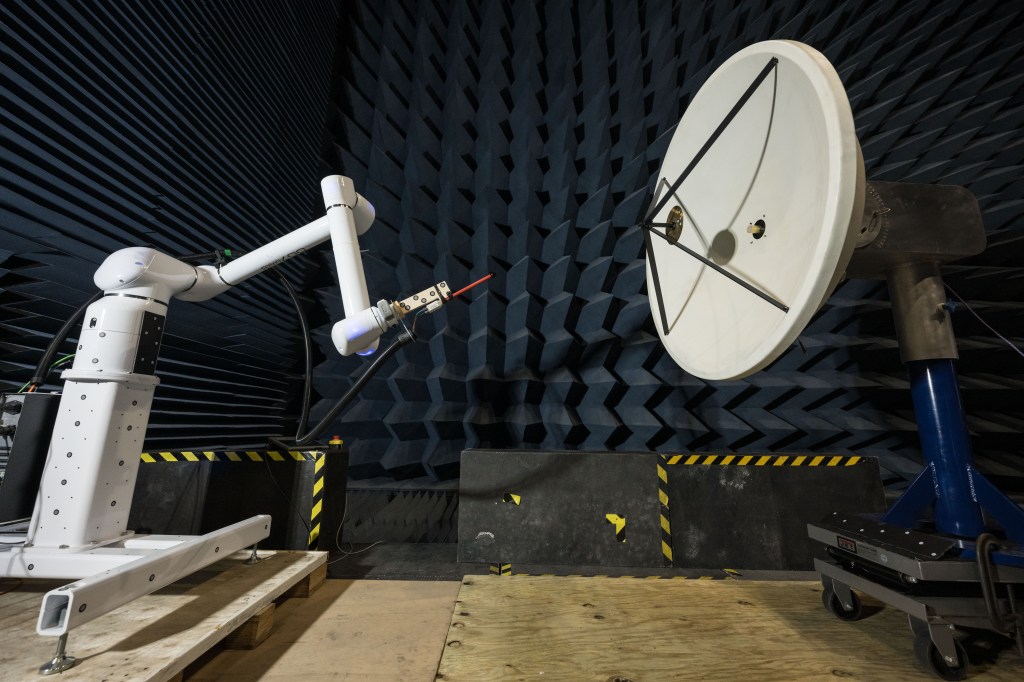
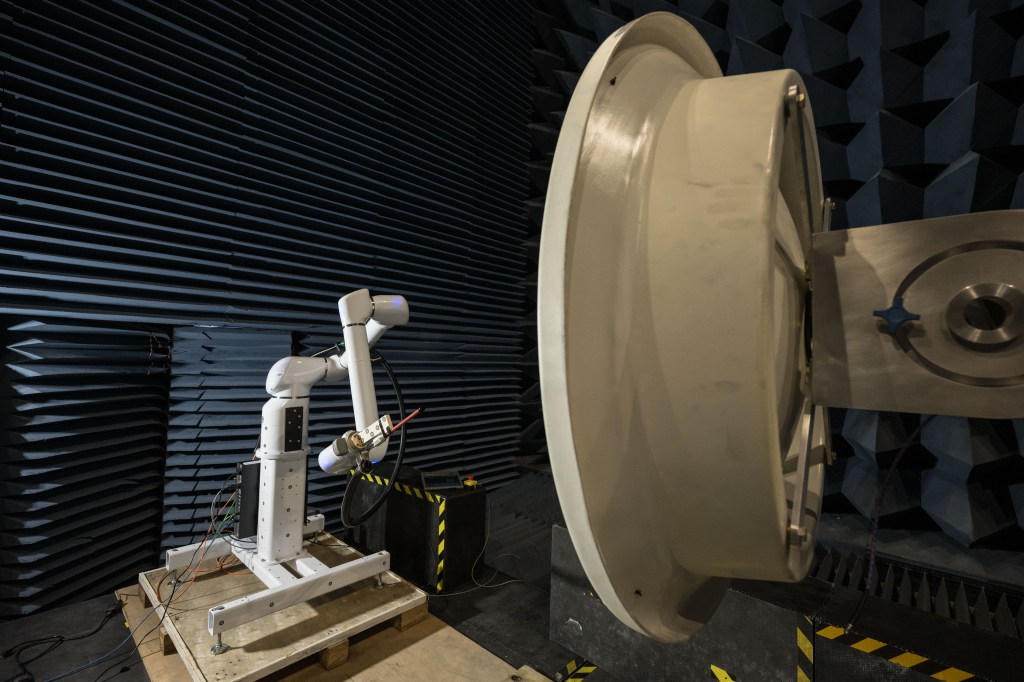
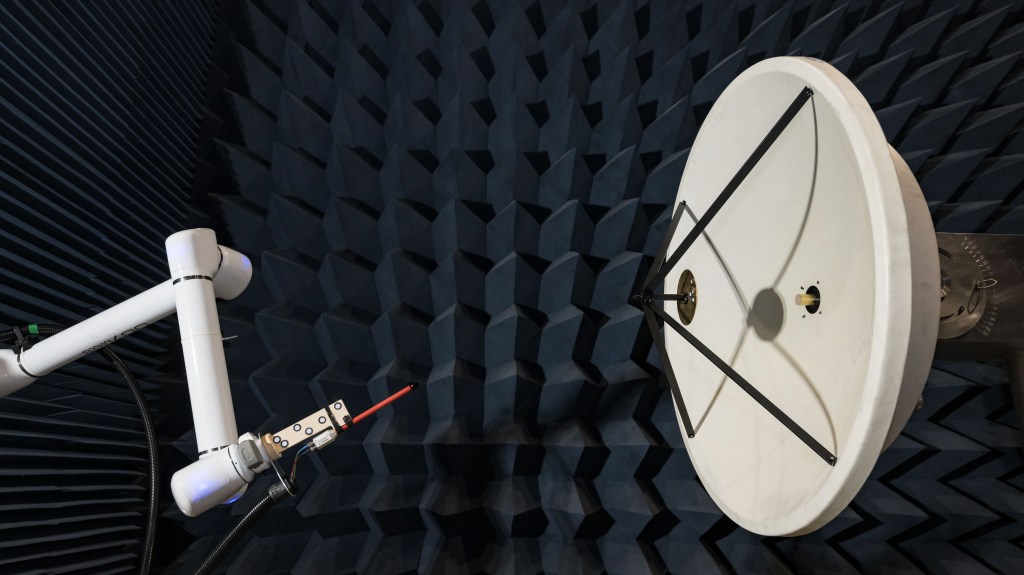
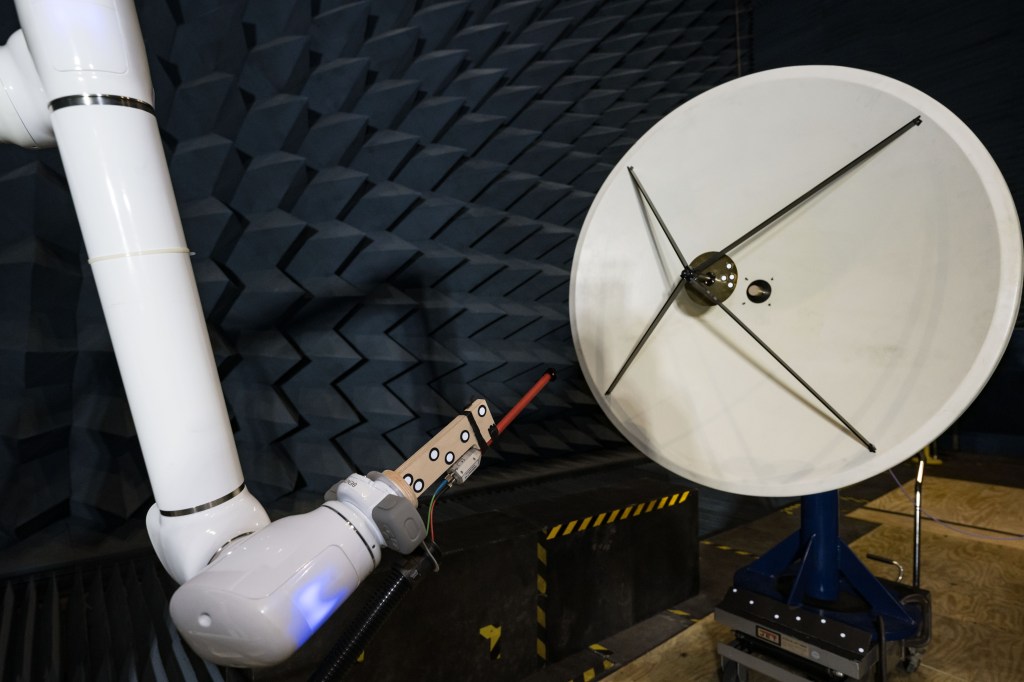
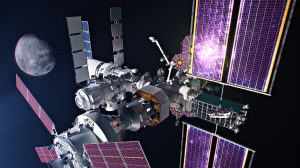
Left: An artist's rendering of Gateway space station's Power and Propulsion Element (PPE) and Habitation and Logistics Outpost (HALO) in lunar orbit. The image showcases the space station's intricate design, including solar panels, antennas, and docking ports against a starry backdrop. Right: A photograph of an antenna being tested in an anechoic chamber at NASA’s Johnson Space Center. The antenna, mounted on a stand, is positioned in a room lined with blue, sound-absorbing foam.
An artist’s rendering of NASA’s Gateway space station in lunar orbit, featuring the Power and Propulsion Element (PPE) and Habitation and Logistics Outpost (HALO), left, and a photograph of an antenna undergoing testing in an anechoic chamber at NASA’s Johnson Space Center, right.
NASA/Robert Markowitz

Engineers at NASA’s Johnson Space Center recently began electric field testing on representative communications hardware for Gateway, humanity’s first space station to orbit the Moon.

An orbiting laboratory for deep space science and a staging ground for lunar exploration, Gateway will help NASA and its international partners establish a sustained human presence on and around the Moon in preparation for the next giant leap – human exploration of Mars.

High-gain antennas are an important component of Gateway’s communication and tracking system that connects operations across the vast distances of the lunar South Pole region, to Gateway in orbit around the Moon, to Earth, and back again.  

NASA is conducting rigorous testing on the electric field levels radiated by the antennas to ensure safe and efficient communication and to avoid any interference with Gateway’s crew and equipment. By validating simulation models to accurately predict electric field levels, NASA can establish precise safety zones around the K/Ka-band parabolic reflector antennas to protect astronauts and hardware without sacrificing high-rate communications.

During the meticulous testing process, engineers use electric field and waveguide probes, which measure the strength and quality of electromagnetic signals, to scan the near fields of a representative high-gain antenna. Robotic arms and optical tracking systems provide the precise measurements needed for model validation. The testing is being conducted in an anechoic chamber, a specialized room that provides a controlled environment for measurements of electromagnetic waves.

“We are sharpening our pencil in conducting model validation measurements – ensuring high accuracy in the analysis of electric fields radiated by the high-gain antennas on Gateway,” said Timothy Kennedy, one of the NASA engineers overseeing the tests. “This enables reduced margins on antenna masking needed to protect equipment and crew, while maximizing communication coverage.”

Findings are expected to enhance NASA’s understanding of the electric field levels emitted by Gateway’s antennas and inform critical decisions for operating them safely during Artemis missions, ensuring that Gateway is a safe home for astronauts around the Moon.

Share

Details

Last Updated

Jul 29, 2024

Editor
Briana R. Zamora
Contact
Briana R. Zamora

Powered by WPeMatico

Get The Details…
Dylan Connell

Three NASA Interns Expand Classroom Access to NASA Data

Three NASA Interns Expand Classroom Access to NASA Data

3 min read

Preparations for Next Moonwalk Simulations Underway (and Underwater)

This summer, NASA welcomed interns with professional teaching experience to help make the agency’s data more interactive and accessible in the classroom. Their efforts are an important step in fostering the education and curiosity of the Artemis Generation of students who will shape the future workforce.

Diane Ripollone: Making Activities Accessible for Low-Vision Students

Diane Ripollone wearing a blue flight jacket standing in front of an SOFIA airplane
In the center, Diane Ripollone smiles in a blue jacket with the blue, white, and red NASA logo on the left and a SOFIA patch on the right. Behind Diane is the SOFIA aircraft and her arm rests on a railing beside her.
Credit: Diane Ripollone

A 35-year-veteran educator, Diane Ripollone teaches Earth science, astronomy, and physics to high school students in North Carolina. In her decades of experience, she’s seen firsthand how students with physical challenges can face difficulties in connecting with lessons. She decided to tackle the issue head-on with her internship.

Ripollone supports the My NASA Data Program, which provides educational materials to interact with live data collected by NASA satellites, observatories, and sensors worldwide. As a NASA intern, she has worked to create physical materials with braille for students with- vision limitations.

“It’s a start for teachers,” Ripollone said. “Although every classroom is different, this helps to provide teachers a jumpstart to make engaging lesson plans centered around real NASA data.” Her NASA internship has excited and inspired her students, according to Ripollone. “My students have been amazed! I see their eyes open wide,” she said. “They say, ‘My teacher is working for NASA!’”

Felicia Haseleu: Improving Reading and Writing Skills

North Dakota teacher  Felicia Haseleu never imagined she’d be a NASA intern until a colleague forwarded the opportunity to her inbox. A teacher on her 11th year, she has seen how COVID-19 has affected students: “It’s caused a regression in reading and writing ability,” a shared impact that was seen in students nationwide.

A science teacher passionate about reading and writing, Felicia set out to utilize these in the science curriculum. As an intern with My NASA Data, she’s prepared lesson plans that combine using the scientific method with creative writing, allowing students to strengthen their reading and writing skills while immersing themselves in science.

Haseleu anticipates her NASA internship will provide benefits inside and outside the classroom.

“It’s going to be awesome to return to the classroom with all of these materials,” she said. “Being a NASA intern has been a great experience! I’ve felt really supported and you can tell that NASA is all encompassing and supports one another. From the camaraderie to NASA investing in interns, it’s nice to feel valued by NASA.”

Teri Minami: Hands-on Lesson for Neurodivergent and Artistic Students

Two female teachers standing in front of student lockers. One person is wearing a white jacket and the other a wonder women shirt flexing her muscle
Teri Minami poses in a white lab coat, lilac gloves, glasses, and “Dexter” name tag. She is on the right of the image with a coworker on the left. Red school lockers line the wall behind them.
Credit: Teri Minami

“I’ve never been a data-whiz; I’ve always connected with science hands-on or through art,” said NASA intern Teri Minami, a teacher of 10 years in coastal Virginia. She cites her personal experience in science to guide her to develop lessons using NASA data for neurodivergent students or those with a more artistic background.

Through her NASA internship, she aims to create lesson plans which allow students to engage first-hand with science while outdoors, such as looking at water quality data, sea level ice, and CO2 emissions, taking their own measurements, and doing their own research on top of that.

Although many people associate being an intern with being an undergraduate in college, NASA interns come from all ages and backgrounds. In 2024, the agency’s interns ranged in age from 16 to 61 and included high school students, undergraduates, graduate students, doctoral students, and teachers.

Interested in joining NASA as an intern? Apply at intern.nasa.gov.

Powered by WPeMatico

Get The Details…
Sandra May

NASA’s Orion Spacecraft Gets Lift on Earth

NASA’s Orion Spacecraft Gets Lift on Earth

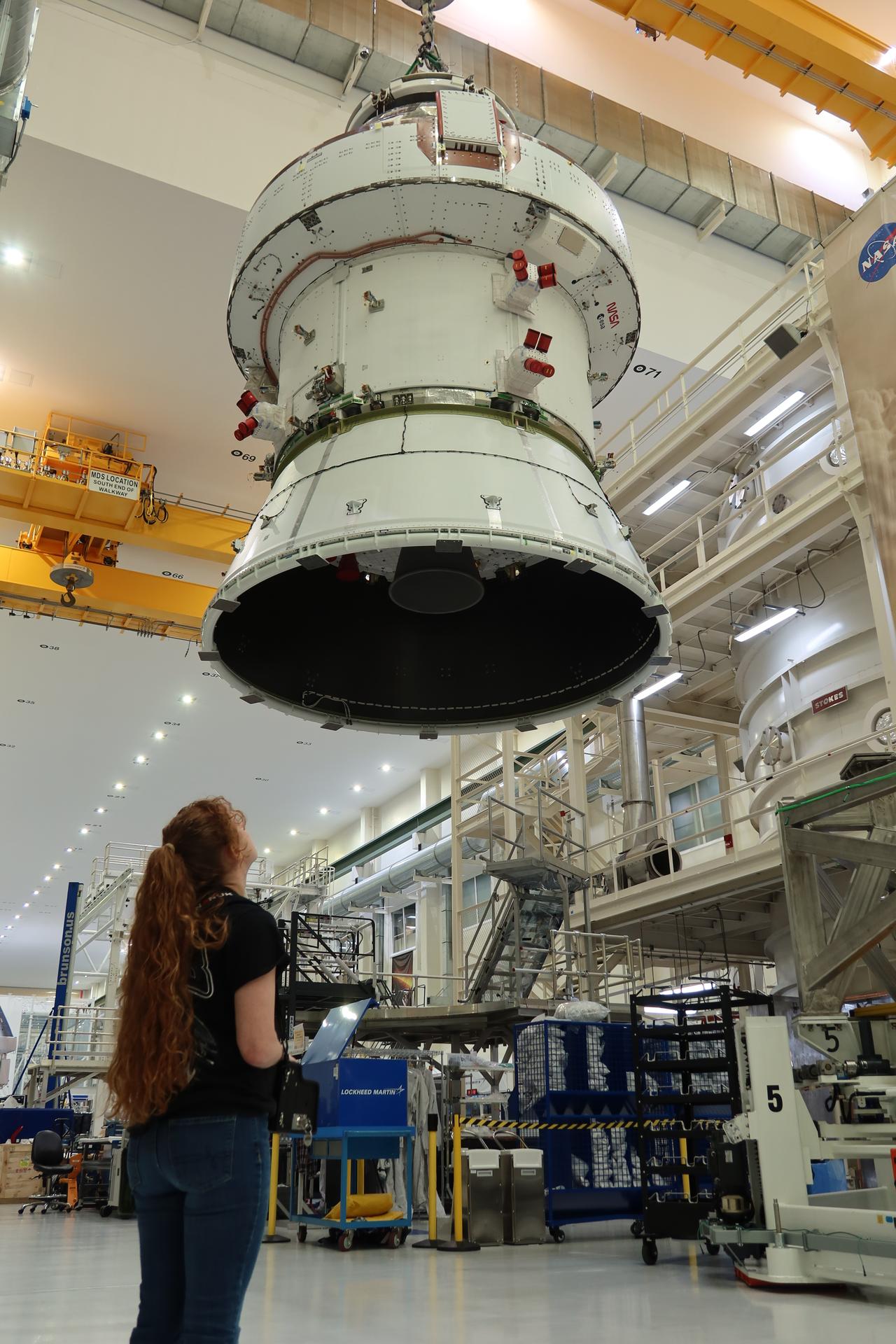
Crane operator Rebekah Tolatovicz, a shift mechanical technician lead for Artic Slope Regional Corporation at NASA’s Kennedy Space Center in Florida, operates a 30-ton crane to lift the agency’s Artemis II Orion spacecraft out of the recently renovated altitude chamber to the Final Assembly and Systems Testing, or FAST, cell inside NASA Kennedy’s Neil A. Armstrong Operations and Checkout Building on April 27.

During her most recent lift July 10, Tolatovicz helped transfer Orion back to the FAST cell following vacuum chamber qualification testing in the altitude chamber earlier this month. This lift is one of around 250 annual lifts performed at NASA Kennedy by seven operator/directors and 14 crane operators on the ASRC Orion team.

“At the time of the spacecraft lift, I focus solely on what’s going on in the moment of the operation,” explains Tolatovicz. “Listening for the commands from the lift director, making sure everyone is safe, verifying the vehicle is clear, and ensuring the crane is moving correctly.”

All Orion crane operators are certified after classroom and on-the-job training focusing on areas such as rigging, weight and center of gravity, mastering crane controls, crane securing, assessing safety issues, and emergency procedures. Once certified, they progress through a series of the different lifts required for Orion spacecraft operations, from simple moves to the complex full spacecraft lift.

“It’s not until after the move is complete and the vehicle is secured that I have a moment to think about how awesome it is to be a part of history on the Orion Program and do what I get to do every day with a team of the most amazing people,” Tolatovicz said.

Photo credit: NASA/Amanda Stevenson

Powered by WPeMatico

Get The Details…
Jason Costa