Sols 4250-4252: So Many Rocks, So Little Time

Sols 4250-4252: So Many Rocks, So Little Time

3 min read

Sols 4250-4252: So Many Rocks, So Little Time

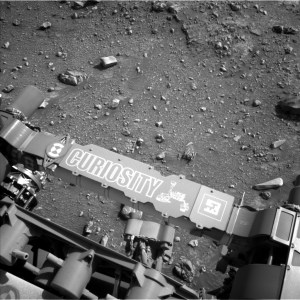
A grayscale image from the Martian surface shows a wide, flat area with multiple small rocks scattered around the surface, with a couple of dusted-over slabs, lighter in color than the surrounding ground, making up part of this flat area. Other parts of the terrain are covered in smooth streaks, resembling very fine-grained mud that has dried. A large dark area, looking like a shadow or fissure, cuts through the scene from the lower left of the frame to the upper right. At center is the mechanical arm of the Curiosity rover, extending into the middle of the frame, then at a joint, bending down to the surface. At the end of the arm, touching the ground, is a large instrument, with a central shaft going into a body that has cube- and cylinder-shaped pieces sticking out in five or more directions.
This image was taken by Right Navigation Camera onboard NASA’s Mars rover Curiosity on Sol 4248 – Martian day 4,248 of the Mars Science Laboratory mission – on July 19, 2024, at 02:34:33 UTC.

Earth planning date: Friday, July 19, 2024

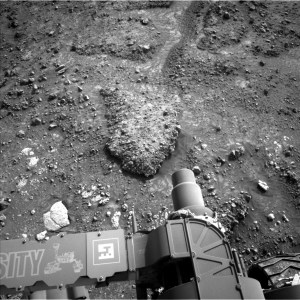
As usual with our weekend plans, we are packing a lot of science into today’s three-sol plan. I had the fun of planning a complex and large set of arm activities as the Arm Rover Planner today. Since we did not drive in Wednesday’s plan, we still are looking at targets in the same workspace – shown in the image with the arm down on a contact science target. We are finishing up the observations at our current location on “Fairview Dome.” 

In our first set of imaging, we begin with a Navcam dust devil movie. Then, ChemCam is taking a LIBS observation on “Koip Peak” (a nodular bedrock) and an RMI mosaic on Texoli butte. We also have Mastcam imaging on Koip Peak, “Amphitheater Dome” (Wednesday’s contact science target), the channel wall, and the AEGIS target from sol 4247. After a nap, we’re ready for the arm. The arm work was challenging today, as we had a lot to do. We start by taking MAHLI images of a target named “Saddlebag Lake,” a bumpy, rough part of the bedrock. We then brush and take MAHLI images of “Eagle Scout Peak,” which is a dusty portion of the same bedrock. We are also running an experiment today to see if we can run the DRT brush in parallel with using our UHF antenna, to downlink data without impacting the data. After integrating with APXS on Eagle Scout Peak, we take nighttime MALHI imaging (using the LEDs) of the CheMin inlet to look for any signs of stuck sample and stow the arm. We are also cleaning out the sample from the CheMin instrument, by “dumping” it out and then running an analysis on the empty cell. 

The second sol begins with more atmospheric observations. We have another ChemCam LIBS observation of the “Smith Peak” target, which is a dark and dusty spot on the bedrock, and Mastcam mosaics of “Virginia Peak” (the gray edge of the rock), the summit of “Milestone Peak”, and “McDonald Pass” (a nearby piece of bedrock that looks similar to our recent drill target, “Whitebark Pass”). We’re then ready to drive. Today’s drive is taking us about 30 meters south (about 98 feet). We’re driving cross-slope, which is always a challenge because we have to account for sliding sideways, away from the planned path. Fortunately there are no major hazards in the area, so we can tolerate some deviation from our path. This drive should take us close to our next potential drill location! We’re also testing, for the first time on Mars, a new capability that helps the rover make more precise arc turns, which can reduce the amount of steering we need to do, and help preserve our wheels. After taking our normal post-drive imaging, our final activity on this sol is an APXS atmospheric observation. 

On our third sol, around noon, we are taking a ChemCam AEGIS observation and a lot of atmospheric observations, including another dust devil survey and Mastcam solar tau. Finally, just before handing things over to Monday’s plan, we take additional atmospheric observations in the early morning.

Written by Ashley Stroupe, Mission Operations Engineer at NASA’s Jet Propulsion Laboratory

Share

Details

Last Updated
Jul 23, 2024

Related Terms

Powered by WPeMatico

Get The Details…

Designing Space Exploration With the Human in Mind

Designing Space Exploration With the Human in Mind

When designing a new spacecraft or exploration vehicle, there is intense focus on its technical performance. Do its systems perform as expected? What kind of power does it need? Will it safely reach its destination?

Equally important, however, is whether that vehicle also works for the humans inside. Can astronauts easily reach critical controls? Do the seats conform to a crew member regardless of their height and body size? Does the layout of crew workstations, translation paths, stowage, and other items support effective working and living conditions?

Those are just a few of the questions NASA’s Center for Design and Space Architecture (CDSA) seeks to answer. Based within the Human Health and Performance Directorate at Johnson Space Center in Houston, the CDSA is NASA’s conceptual, human-centered design studio. It creates advanced concepts for spacecraft, exploration vehicles, and habitats that put crew needs first. The team provides a full spectrum of design services, from concept sketches to CAD models, to scaled mockups and virtual reality (VR), to full-size prototype fabrication.

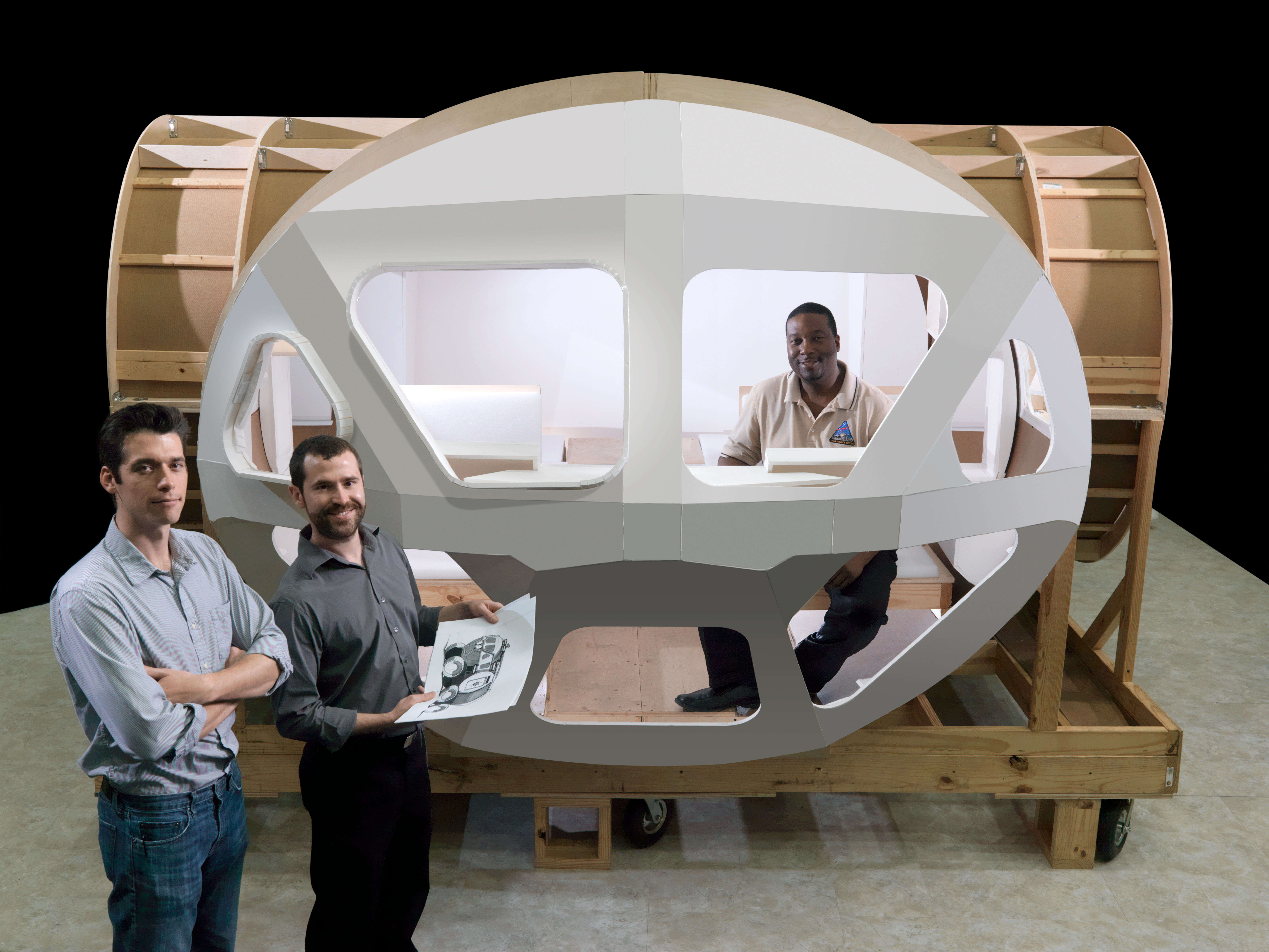
Three male NASA engineers perform a window node visibility study on the mockup of the Space Exploration Vehicle.
Carl Conlee, Evan Twyford, and Dr. Robert Howard perform a window node visibility study on the mockup of the Space Exploration Vehicle.
NASA

The CDSA has been an integral partner in the design of everything from dining tables for the International Space Station to ergonomic seats for the Orion spacecraft, and private sleeping bunks for the Space Exploration Vehicle (also known as the Small Pressurized Rover). The multidisciplinary team also played key roles in the design and construction of analog habitats onsite at Johnson, including the Human Exploration Research Analog (HERA) and the Crew Health And Performance Exploration Analog (CHAPEA) habitats where volunteer crews recently completed simulated Mars missions.

Dr. Robert Howard, CDSA co-lead and habitability domain lead, explained that the current HERA habitat was initially developed as the ground-test version of a lunar habitat envisioned by the Constellation Program. The CDSA team built medical operations and suit maintenance workstations, stowage systems, cameras, and outfitting supplies for the habitat, known then as the Habitat Demonstration Unit. Later, the team added a galley, exercise and stowage space, and crew quarters to university-built inflatable upper decks. They also outfitted the interior of a hygiene module provided by the Jet Propulsion Laboratory, helped Kennedy Space Center’s plant growth team locate their experiments in the habitat, and worked with the Human Factors Engineering Laboratory to develop crew procedures for testing the habitats at Johnson and in Arizona.

“The plan was to excess the habitat when the program ended, but CDSA realized the asset was too valuable and we campaigned to find a new owner for the mockup,” Howard said. “That led to the birth of HERA. The Human Research Program now performs the day-to-day maintenance and conducts the HERA missions.”

A NASA engineer presents an all-white model of a lunar lander to a group of former NASA astronauts.
Dr. Robert Howard (left) briefs Apollo astronauts Gene Cernan, Neil Armstrong, and Harrison Schmitt on the Altair lunar lander mockup.
NASA

For CHAPEA, the CDSA worked with NASA teams and commercial partners to determine the habitat’s necessary functions and layout, assisted with furniture installation, provided design consultation and fabrication assistance for an external airlock, and designed and built a docking node.

Another part of the CDSA’s work is the development of NASA test units for partner-produced vehicles and spacecraft. “In the early phases of a project, these test units can help NASA understand what requirements we want to levy on the partner,” Howard explained. “Later, they can be used to emulate partner concepts and NASA can perform independent studies with them, either to assess partner capabilities or to predict the impacts of possible changes.”

The CDSA team can also build replicas of contractor mockups for crew training or additional testing. They are currently supporting development of lunar surface logistics, a pressurized rover, and Gateway components, too. 

Three NASA engineers conduct habitability testing inside a mockup of a Gateway space station module.
Center for Design and Space Architecture team members test a Gateway habitat mockup. From left are Brett Montoya, Taylor Phillips-Hungerford, and Zachary Taylor.
NASA/Robert Markowitz

In addition to Howard, the CDSA team includes Maijinn Chen, the technical discipline lead for space architecture, and Nathan Moore, the technical discipline lead for fabrication, as well as nearly a dozen contractors who serve as space architects, industrial designers, mechanical engineers, and VR developers. “It is a very multidisciplinary team, so we are able to leverage different skillsets to complete our work,” Howard said. “All of the team members are well-versed in design ideation, so we can collaborate when developing concepts, whether for high-level architectures, individual vehicle assets, subsystem components, or even crew-worn items.”

Howard explained that the CDSA almost always works as a sub-team within a larger effort. “We can support a team at any point in a spacecraft lifecycle, but it is best when we are brought in at the very beginning,” he said. “That is where human-centered design processes can have the greatest impact in improving a space system for the lowest cost. It is also very helpful in ensuring that the requirements levied on our contractors and international partners reflect the needs of the future astronaut crews.”

Howard can trace his passion for space exploration back to his early childhood. “I feel like I was born interested! My mom said when I was three, I might not watch ‘The Electric Company,’ but I would not miss ‘Star Trek’ or ‘Space 1999,” he said. “As I got older, I would gravitate toward the space section of the library and read anything I could about NASA. I was always more interested in human spaceflight than in unmanned vehicles and I suppose that was the beginning of my path towards habitability and human-centered design.”

For Howard, the most rewarding part of the CDSA team’s work is creating things that have never existed. “I love it when we find a way to do something that was previously considered impossible, or beyond the scope of what was considered likely,” he said. “I consider it a personal calling to find ways to make space more habitable for humanity.”

Powered by WPeMatico

Get The Details…
Linda E. Grimm

NASA Releases First Integrated Ranking of Civil Space Challenges

NASA Releases First Integrated Ranking of Civil Space Challenges

3 min read

Preparations for Next Moonwalk Simulations Underway (and Underwater)

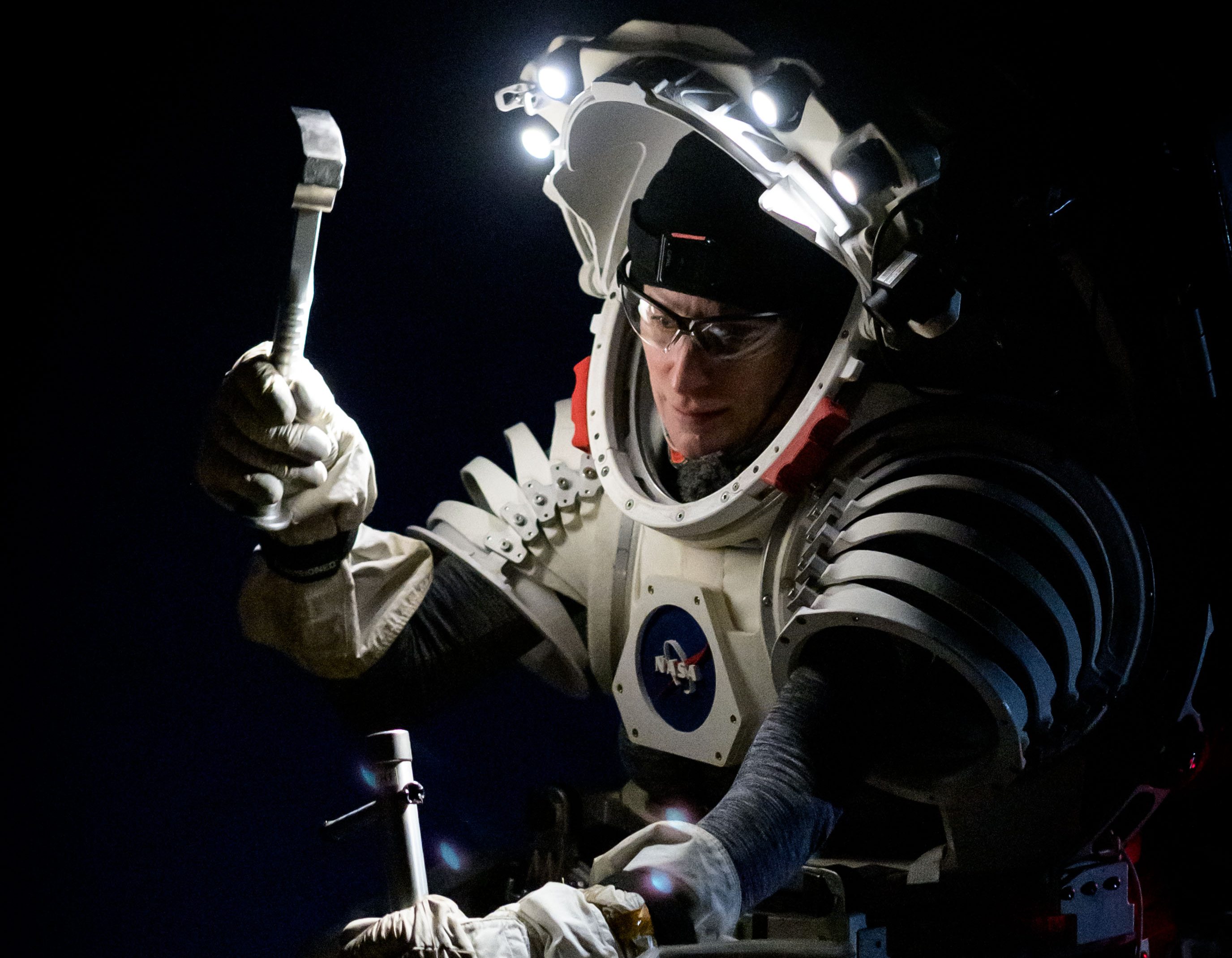
NASA astronaut wearing a mockup spacesuit system, illuminated by the lights on her helmet as she hammers a drive tube into the ground.
NASA astronaut Kate Rubins uses a hammer to get a drive tube into the ground to collect a pristine soil sample during a nighttime simulated moonwalk in the San Francisco Volcanic Field in Northern Arizona on May 16, 2024. Surviving and operating through the lunar night was identified as a top-ranked 2024 Civil Space Challenge, and tests such as these help NASA astronauts and engineers practice end-to-end lunar operations.
NASA/Josh Valcarcel

This spring, NASA published a document overviewing almost 200 technology areas requiring further development to meet future exploration, science, and other mission needs – and asked the aerospace community to rate their importance. The goal was to better integrate the community’s most pervasive technical challenges, or shortfalls, to help guide NASA’s space technology development and investments.

Today, NASA’s Space Technology Mission Directorate (STMD) released the 2024 Civil Space Shortfall Ranking document, integrating inputs from NASA mission directorates and centers, small and large industry organizations, government agencies, academia, and other interested individuals. STMD will use the inaugural list and annual updates as one of many factors to guide its technology development projects and investments.

“Identifying consensus among challenges across the aerospace industry will help us find solutions, together,” said NASA Associate Administrator Jim Free. “This is the groundwork for strengthening the nation’s technological capabilities to pave the way for new discoveries, economic opportunities, and scientific breakthroughs that benefit humanity.”

The integrated results show strong stakeholder agreement among the 30 most important shortfalls. At the top of the list is surviving and operating through the lunar night, when significant and sustained temperature drops make it difficult to run science experiments, rovers, habitats, and more. Solution technologies could include new power, thermal management, and motor systems. Second and third on the integrated list are the need for high-power energy generation on the Moon and Mars and high-performance spaceflight computing.

The inputs received are already igniting meaningful conversations to help us and our stakeholders make smarter decisions. We will refine the process and results annually to ensure we maintain a useful approach and tool that fosters resilience in our space technology endeavors.”

Michelle Munk

Michelle Munk

Acting Chief Architect for STMD

Highly rated capability areas in the top 20 included advanced habitation systems, autonomous systems and robotics, communications and navigation, power, avionics, and nuclear propulsion. Beyond the top quartile, stakeholder shortfall scores varied, likely aligning with their interests and expertise. With many shortfalls being interdependent, it emphasizes the need to make strategic investments across many areas to maintain U.S. leadership in space technology and drive economic growth.

STMD is evaluating its current technology development efforts against the integrated list to identify potential adjustments within its portfolio.

“This effort is an excellent example of our directorates working together to assess future architecture needs that will enable exploration and science for decades to come,” said Nujoud Merancy, deputy associate administrator for the Strategy and Architecture Office within NASA’s Exploration Systems Development Mission Directorate.

The 2024 results are based on 1,231 total responses, including 769 internal and 462 external responses. Twenty were consolidated responses, representing multiple individuals from the same organization. Once average shortfall scores were calculated for each organization, STMD grouped, totaled, and averaged scores for nine stakeholder groups and then applied pre-determined weights to each to create the overall ranking. In the document, NASA also published the ranked results for each stakeholder group based on the 2024 feedback.

The rankings are based on the numerical scores received and not responses to the open-ended questions. NASA anticipates the qualitative feedback will uncover additional insights and more.

NASA will host a webinar to overview the ranking process and results on July 26, 2024, at 2 p.m. EDT.

“Communicating our most pressing technology challenges is a great way to tap into the abilities across all communities to provide solutions to critical problems,” said Dr. Carolyn Mercer, chief technologist for NASA’s Science Mission Directorate.

To learn more about the inaugural civil space shortfall feedback opportunity and results as well as monitor future feedback opportunities, visit:

www.nasa.gov/civilspaceshortfalls

Powered by WPeMatico

Get The Details…
Anyah Dembling

NASA Awards Launch Services Contract for NOAA’s JPSS-4 Mission

NASA Awards Launch Services Contract for NOAA’s JPSS-4 Mission

A NASA camera on the Deep Space Climate Observatory satellite has returned its first view of the entire sunlit side of Earth from one million miles away.
A NASA camera on the Deep Space Climate Observatory satellite captures a view of the entire sunlit side of Earth from one million miles away.
Credit: NASA

NASA, on behalf of the National Oceanic and Atmospheric Administration (NOAA), has selected SpaceX (Space Exploration Technologies Corporation) to provide launch services for NOAA’s JPSS-4 mission. The spacecraft is part of the multi-satellite cooperative Joint Polar Satellite System (JPSS) program, a partnership between NASA and NOAA. This mission is the next satellite in the program, which began with the Suomi National Polar-orbiting Partnership.

This is a firm fixed price contract with a value of approximately $112.7 million, which includes launch services and other mission related costs. The JPSS-4 mission currently is targeted to launch in 2027, on a SpaceX Falcon 9 rocket from Space Launch Complex 4 East at Vandenberg Space Force Base in California.

The JPSS constellation of satellites collects global multi-spectral radiometry and other specialized meteorologic, oceanographic, and solar-geophysical data via remote sensing of land, sea, and atmospheric properties. These data support NOAA’s mission for continuous observation of Earth’s environment to understand and predict changes in weather, climate, oceans, and coasts to support the nation’s economy and protect lives and property. NASA uses the instruments aboard the JPSS satellites to continue decades of Earth science research for the betterment of humanity. When launched, JPSS-4, will carry the NASA Earth Venture mission Libera, an instrument that will improve our understanding of trends in Earth’s energy imbalance and our changing climate.

NASA’s Launch Services Program at the agency’s Kennedy Space Center in Florida is responsible for managing the launch services. NASA’s Goddard Space Flight Center in Greenbelt, Maryland, manages the JPSS Flight Projects Office, which oversees the acquisition of the JPSS series instruments and spacecraft. A collaborative NOAA and NASA team manages the JPSS Program.

For more information about NASA programs and missions, visit:

https://www.nasa.gov

-end-

Tiernan Doyle
Headquarters, Washington
202-358-1600
Tiernan.doyle@nasa.gov

Patti Bielling
Kennedy Space Center, Florida
321-501-7575
patricia.a.bielling@nasa.gov

Powered by WPeMatico

Get The Details…
Tiernan P. Doyle

NASA Research Volunteers to Begin Next Simulated Mission to Mars

NASA Research Volunteers to Begin Next Simulated Mission to Mars

C7M3 crew
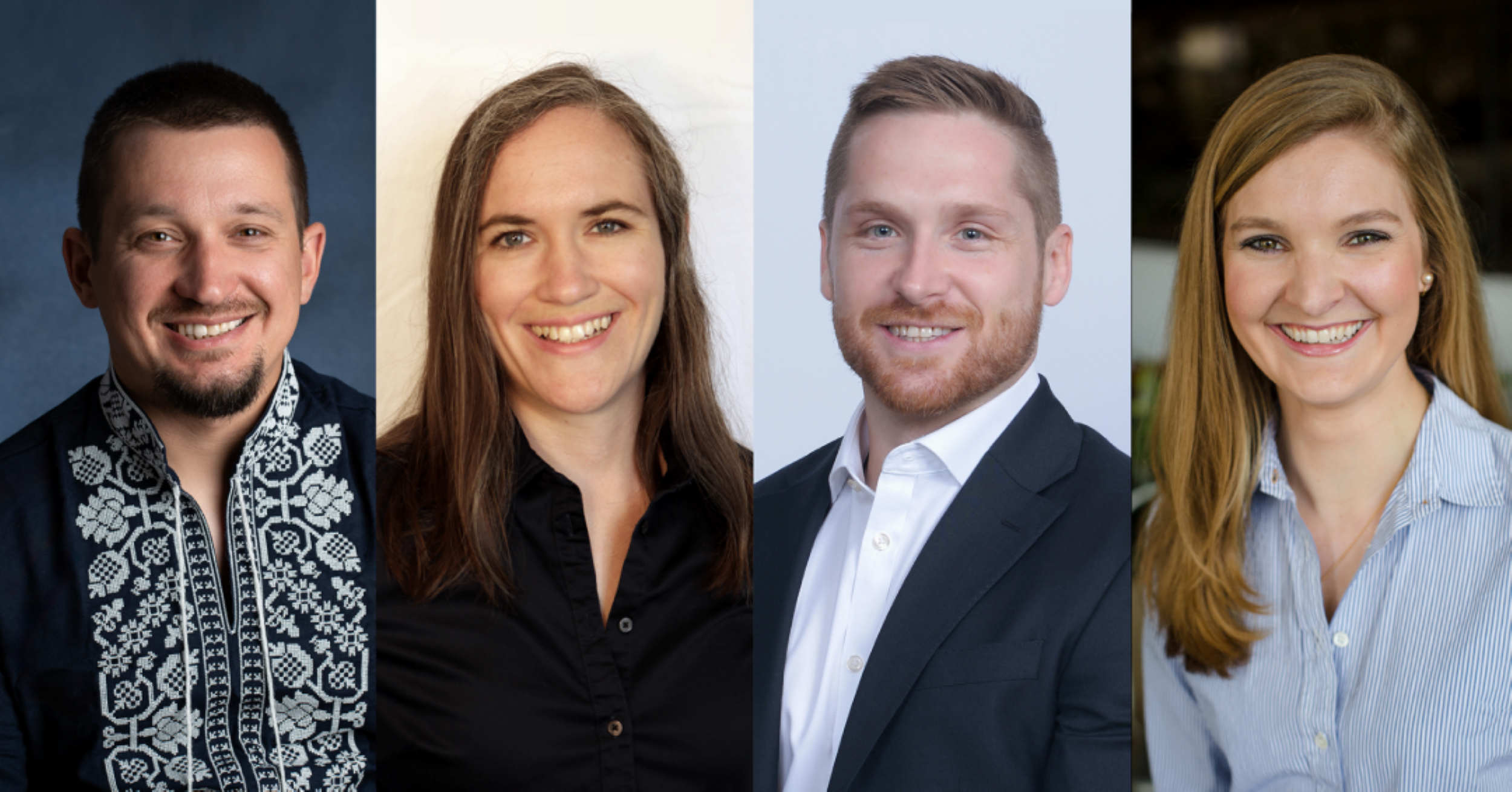
The latest crew chosen by NASA to venture on a simulated trip to Mars inside the agency’s Human Exploration Research Analog. From left are Sergii Iakymov, Erin Anderson, Brandon Kent, and Sarah Elizabeth McCandless.
Credit: C7M3 Crew

NASA selected a new team of four research volunteers to participate in a simulated mission to Mars within HERA (Human Exploration Research Analog) at the agency’s Johnson Space Center in Houston.

Erin Anderson, Sergii Iakymov, Brandon Kent, and Sarah Elizabeth McCandless will begin their simulated trek to Mars on Friday, Aug. 9. The volunteer crew members will stay inside the 650-square-foot habitat for 45 days, exiting Monday, Sept. 23 after a simulated “return” to Earth. Jason Staggs and Anderson Wilder will serve as alternate crew members.

The HERA missions offer scientific insights into how people react to the type of isolation, confinement, work and life demands, and remote conditions astronauts might experience during deep space missions.

The facility supports more frequent, shorter-duration simulations in the same building as CHAPEA (Crew Health and Performance Analog). This crew is the third group of volunteers to participate in a simulated Mars mission in HERA this year. The most recent crew completed its HERA mission on June 24. In total, there will be four analog missions in this series.

During this summer’s simulation, participants will perform a mix of science and operational tasks, including harvesting plants from a hydroponic garden, growing shrimp, deploying a small, cube-shaped satellite (CubeSat) to simulate gathering virtual data for analysis, “walking” on the surface of Mars using virtual reality goggles, and flying simulated drones on the simulated Mars surface. The team members also will encounter increasingly longer communication delays with Mission Control throughout their mission, culminating in five-minute lags as they “near” Mars. Astronauts traveling to Mars may experience communications delays of up to 20 minutes.

NASA’s Human Research Program will conduct 18 human health experiments during each of the 2024 HERA missions. Collectively, the studies explore how a Mars-like journey may affect the crew members’ mental and physical health. The work also will allow scientists to test certain procedures and equipment designed to keep astronauts safe and healthy on deep space missions.

Primary Crew

Erin Anderson

Erin Anderson Erin Anderson is a structural engineer at NASA’s Langley Research Center in Virginia. Her work focuses on manufacturing and building composite structures — using materials engineered to optimize strength, stiffness, and density — that fly in air and space.

Anderson earned a bachelor’s degree in Aerospace Engineering from the University of Illinois at Urbana-Champaign in 2013. After graduating, she worked as a structural engineer for Boeing on NASA’s SLS (Space Launch System) in Huntsville, Alabama. She moved to New Orleans to support the assembly of the first core stage of the SLS at NASA’s Michoud Assembly Facility. Anderson received a master’s degree in Aeronautical Engineering from Purdue University in West Lafayette, Indiana, in 2020. She started her current job in 2021, continuing her research on carbon fiber composites.

In her free time, Anderson enjoys playing rugby, doting on her dog, Sesame, and learning how to ride paddleboard at local beaches.

Sergii Iakymov
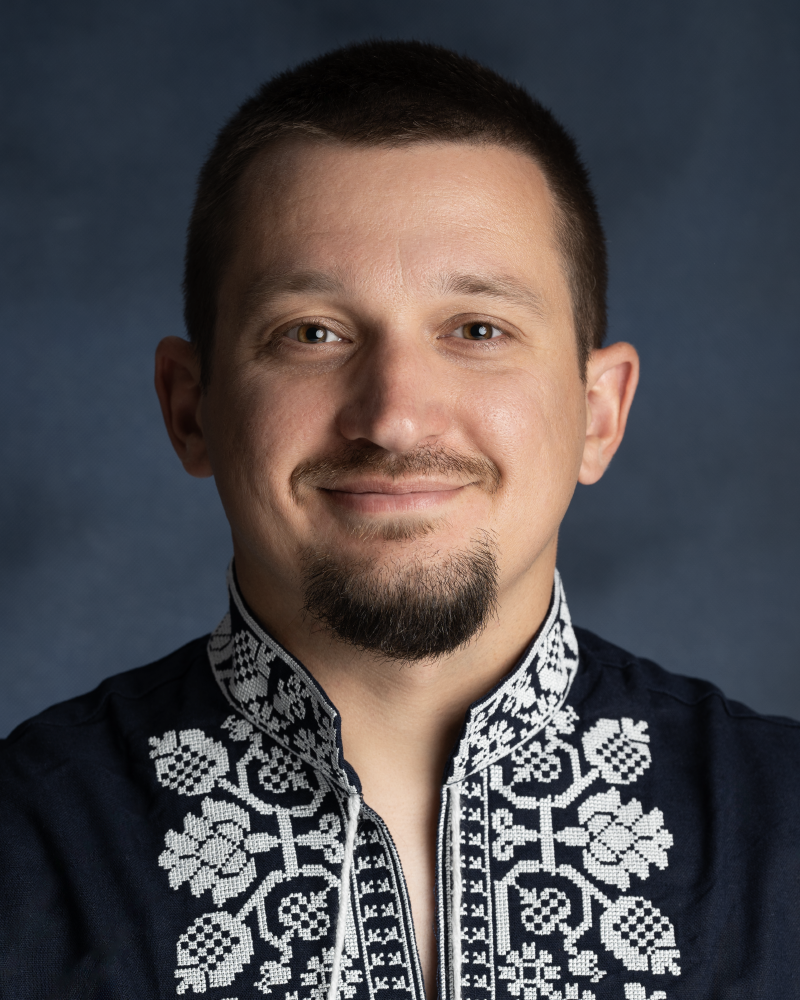
Sergii IakymovSergii Iakymov is an aerospace engineer with more than 15 years of experience in research and design, manufacturing, quality control, and project management. Iakymov currently serves as the director of the Mars Desert Research Station, a private, Utah-based research facility that serves as an operational and geological Mars analog.

Iakymov received a bachelor’s degree in Aviation and Cosmonautics and a master’s in Aircraft Control Systems from Kyiv Polytechnic Institute in Ukraine. His graduate research focused on the motion of satellites equipped with pitch flywheels and magnetic coils.

Iakymov was born in Germany, raised in Ukraine, and currently splits his time between southern Utah and Chino Hills, California. His hobbies include traveling, running, hiking, scuba diving, photography, and reading.

Brandon Kent

Brandon Kent Brandon Kent is a medical director in the pharmaceutical industry, supporting ongoing global efforts to develop new therapies across cancer types.

Kent received a bachelor’s degrees in Biochemistry and Biology from North Carolina State University in Raleigh. He earned his doctorate in Biomedicine from Mount Sinai School of Medicine in New York City, where his work primarily focused on how genetic factors regulate early embryonic development and cancer development.

Following graduate school, Kent moved into scientific and medical communications consulting in oncology, primarily focusing on clinical trial data disclosures, scientific exchange, and medical education initiatives.

Kent and his wife have two daughters. In his spare time, he enjoys spending time with his daughters, flying private aircraft, hiking, staying physically fit, and reading. He lives in Kinnelon, New Jersey.

Sarah Elizabeth McCandless

Sarah Elizabeth McCandless Sarah Elizabeth McCandless is a navigation engineer for NASA’s Jet Propulsion Laboratory in Southern California. McCandless’ job involves tracking the location and predicting the future trajectory of spacecraft, including the Mars Perseverance rover, Artemis I, Psyche, and Europa Clipper.

McCandless received a bachelor’s in Aerospace Engineering from the University of Kansas in Lawrence, and a master’s in Aerospace Engineering from the University of Texas at Austin, focused on orbital mechanics.

McCandless is originally from Fairway, Kansas, and remains an avid fan of sports teams from her alma mater and hometown. She is active in STEM (science, technology, engineering, and mathematics) outreach and education and enjoys camping, running, traveling with friends and family, and piloting Cessna 172s. She lives in Pasadena, California.

Alternate Crew

Jason Staggs

Jason Staggs Jason Staggs is a cybersecurity researcher and adjunct professor of computer science at the University of Tulsa. His research focuses on systems security engineering, infrastructure protection, and resilient autonomous systems. Staggs is an editor for the International Journal of Critical Infrastructure Protection and the Critical Infrastructure Protection book series.

Staggs supported scientific research expeditions with the National Science Foundation at McMurdo Station in Antarctica. He also previously served as a space engineer and medical officer while working as an analog astronaut in the Hawaii Space Exploration Analog and Simulation (HI-SEAS) atop the Mauna Loa volcano.

Staggs received his bachelor’s degree in Information Assurance and Forensics at Oklahoma State University and master’s and doctorate degrees in Computer Science from the University of Tulsa. During his postdoctoral studies at Idaho National Laboratory, Idaho Falls, he investigated electric vehicle charging station vulnerabilities.

In his spare time, Staggs enjoys hiking, building radio systems, communicating with ham radio operators in remote locations, and volunteering as a solar system ambassador for NASA’s Jet Propulsion Laboratory — sharing his passion for astronomy, oceanography, and space exploration with his community.

Anderson Wilder
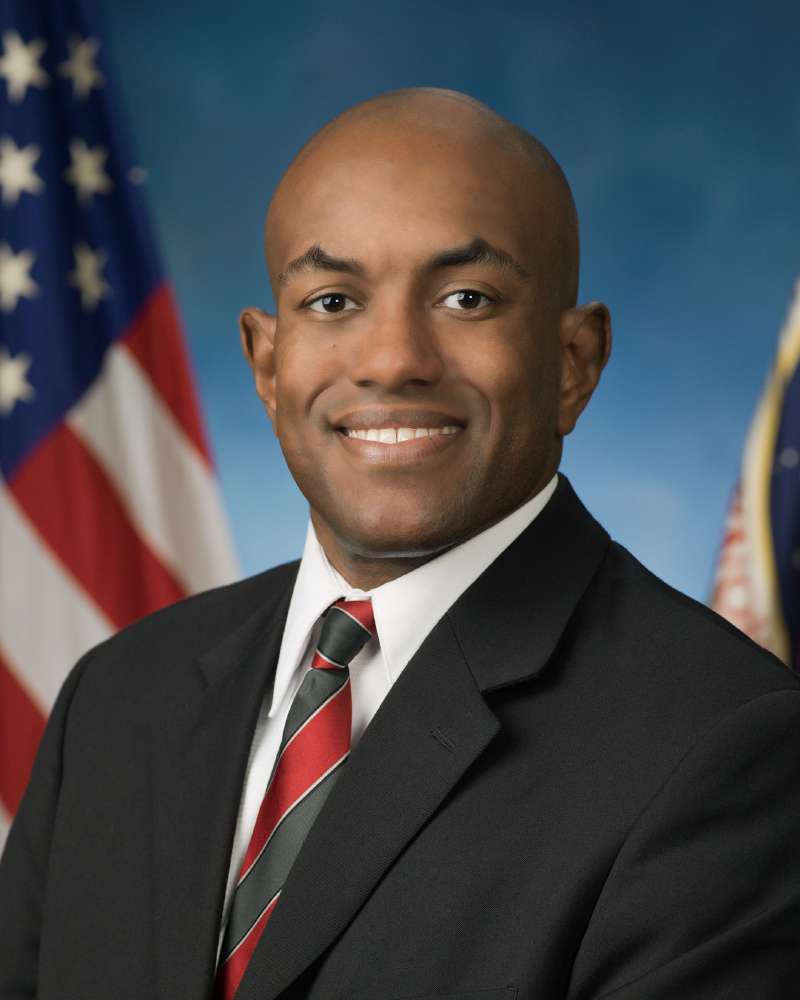
Anderson Wilder Anderson Wilder is a Florida Institute of Technology in Melbourne graduate student working on his doctorate in psychology. His research focuses on team resiliency and human-machine interactions. Wilder also works in the campus neuroscience lab, investigating how spaceflight contributes to astronaut neurobehavioral changes.

Wilder previously served as an executive officer and engineer for an analog mission at the Mars Desert Research Station in Utah. There, he performed studies related to crew social dynamics, plant growth, and geology.

Wilder received bachelor’s degrees in Linguistics and Psychology from Ohio State University in Columbus. He also received a master’s degree in Space Studies from International Space University in Strasbourg, France, and is completing a second master’s in Cognitive Experimental Psychology from Cleveland State University in Ohio.

Outside of school, Wilder works as a parabolic flight coach, teaching people how to experience reduced-gravity environments. He also enjoys chess, reading, video games, skydiving, and scuba diving. On a recent dive, he explored a submerged section of the Great Wall of China.

____

NASA’s Human Research Program

NASA’s Human Research Program (HRP) pursues the best methods and technologies to support safe, productive human space travel. Through science conducted in laboratories, ground-based analogs, and the International Space Station, HRP scrutinizes how spaceflight affects human bodies and behaviors. Such research drives HRP’s quest to innovate ways to keep astronauts healthy and mission-ready as space travel expands to the Moon, Mars, and beyond.

Powered by WPeMatico

Get The Details…
Nathan Cranford