NASA, ESA Missions Help Scientists Uncover How Solar Wind Gets Energy

NASA, ESA Missions Help Scientists Uncover How Solar Wind Gets Energy

5 min read

NASA, ESA Missions Help Scientists Uncover How Solar Wind Gets Energy

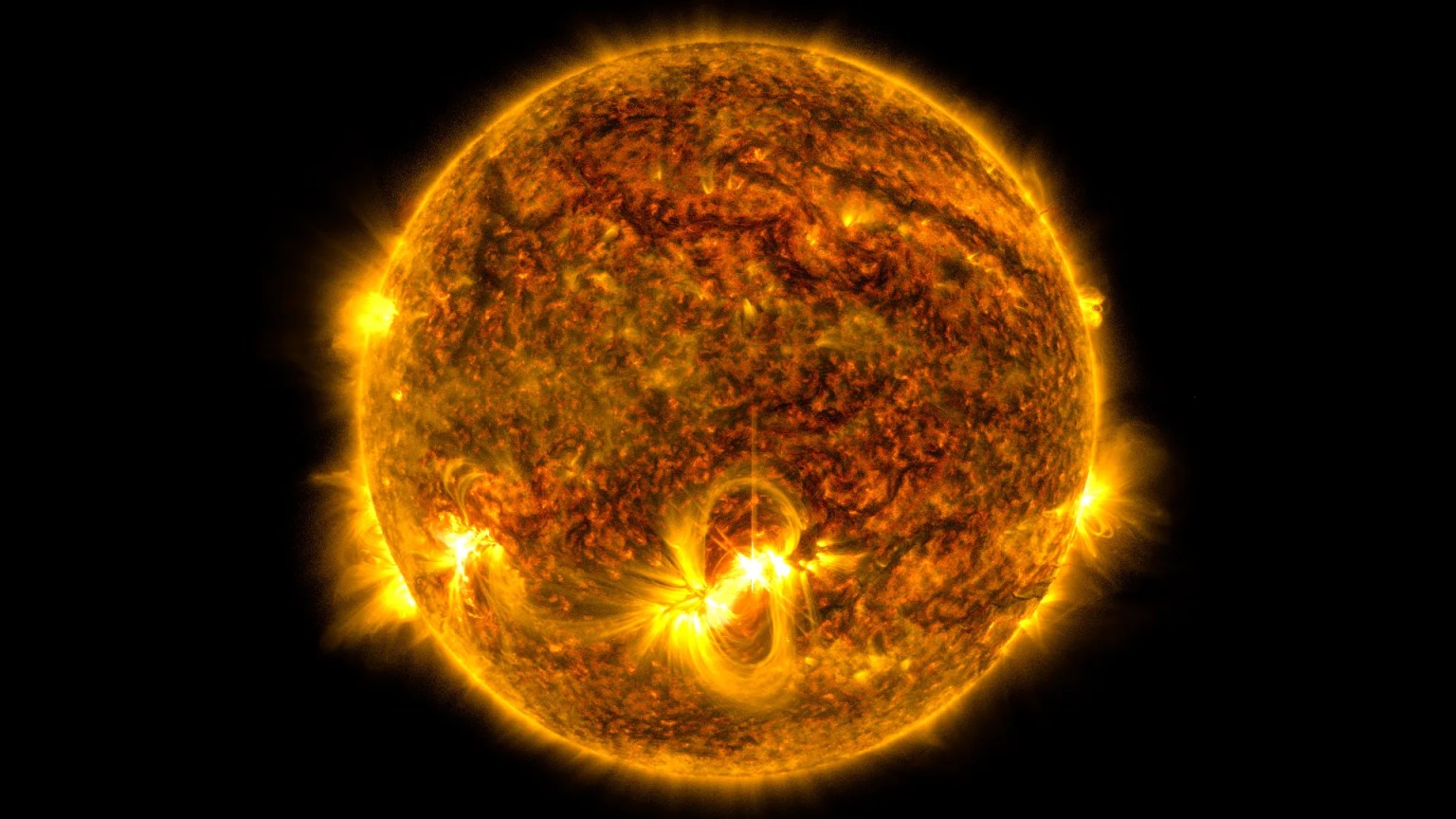
Since the 1960s, astronomers have wondered how the Sun’s supersonic “solar wind,” a stream of energetic particles that flows out into the solar system, continues to receive energy once it leaves the Sun. Now, thanks to a lucky lineup of a NASA and an ESA (European Space Agency)/NASA spacecraft both currently studying the Sun, they may have discovered the answer — knowledge that is a crucial piece of the puzzle to help scientists better forecast solar activity between the Sun and Earth.

A paper published in the Aug. 30, 2024, issue of the journal Science provides persuasive evidence that the fastest solar winds are powered by magnetic “switchbacks,” or large kinks in the magnetic field, near the Sun.

“Our study addresses a huge open question about how the solar wind is energized and helps us understand how the Sun affects its environment and, ultimately, the Earth,” said Yeimy Rivera, co-leader of the study and a postdoctoral fellow at the Smithsonian Astrophysical Observatory, part of Center for Astrophysics | Harvard & Smithsonian. “If this process happens in our local star, it’s highly likely that this powers winds from other stars across the Milky Way galaxy and beyond and could have implications for the habitability of exoplanets.”
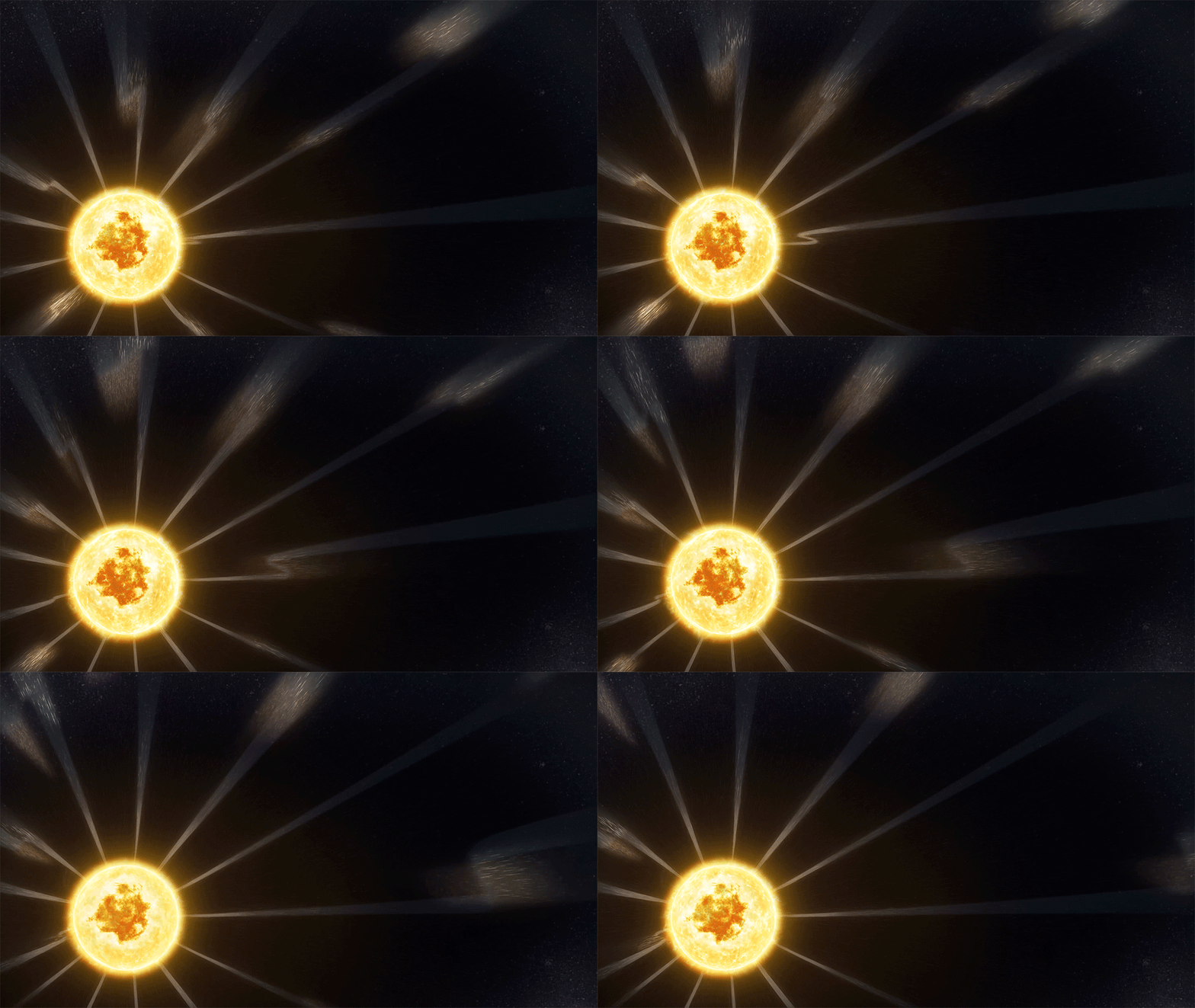
An animation showing the Sun in the bottom left corner. Cascacding off the Sun are lines in every direction. As they move away, a curve forms in the line, and grows wider.
This artist’s concept shows switchbacks, or large kinks in the Sun’s magnetic field.
NASA’s Goddard Space Flight Center/Conceptual Image Lab/Adriana Manrique Gutierrez

Previously, NASA’s Parker Solar Probe found that these switchbacks were common throughout the solar wind. Parker, which became the first craft to enter the Sun’s magnetic atmosphere in 2021, allowed scientists to determine that switchbacks become more distinct and more powerful close to the Sun. Up to now, however, scientists lacked experimental evidence that this interesting phenomenon actually deposits enough energy to be important in the solar wind.

“About three years ago, I was giving a talk about how fascinating these waves are,” said co-author Mike Stevens, astrophysicist at the Center for Astrophysics. “At the end, an astronomy professor stood up and said, ‘that’s neat, but do they actually matter?’”

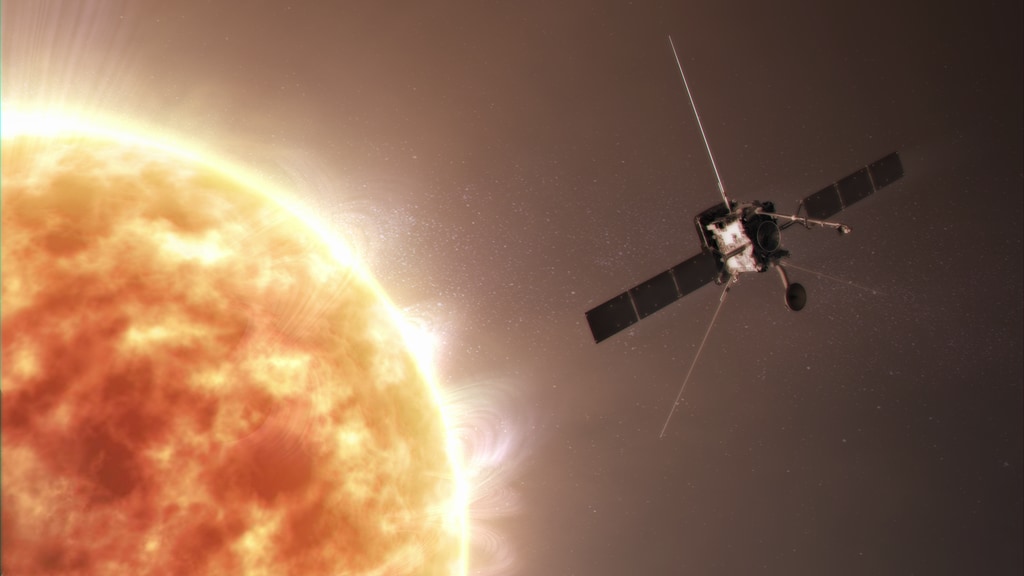
To answer this, the team of scientists had to use two different spacecraft. Parker is built to fly through the Sun’s atmosphere, or “corona.” ESA’s and NASA’s Solar Orbiter mission is also on an orbit that takes it relatively close to the Sun, and it measures solar wind at larger distances. 

The discovery was made possible because of a coincidental alignment in February 2022 that allowed both Parker Solar Probe and Solar Orbiter to measure the same solar wind stream within two days of each other. Solar Orbiter was almost halfway to the Sun while Parker was skirting the edge of the Sun’s magnetic atmosphere.
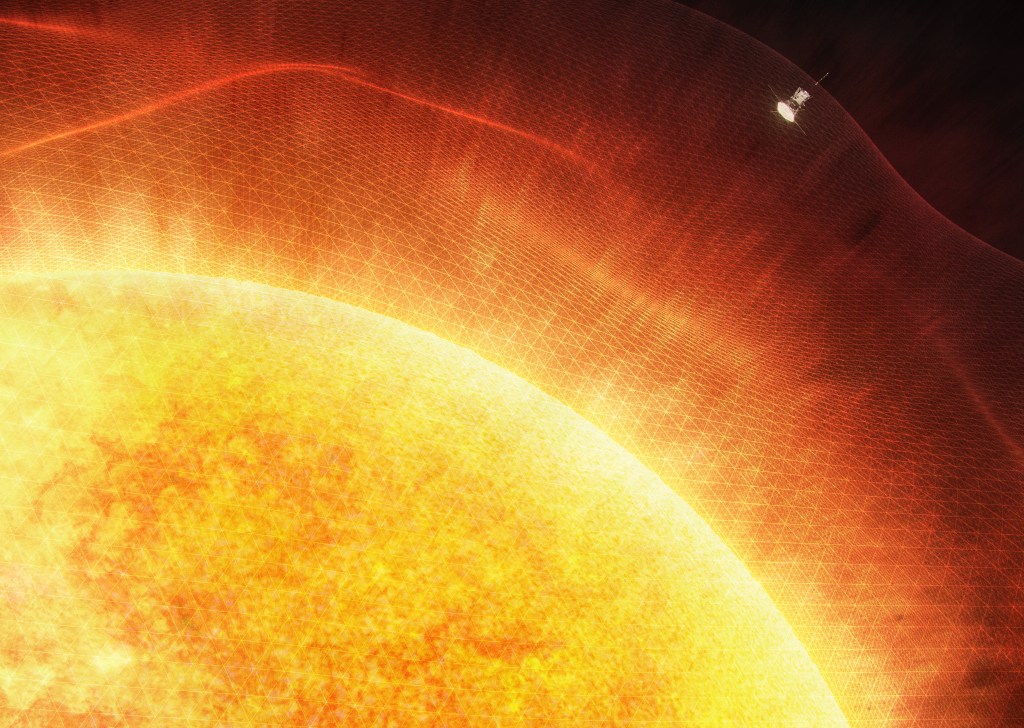
“We didn’t initially realize that Parker and Solar Orbiter were measuring the same thing at all. Parker saw this slower plasma near the Sun that was full of switchback waves, and then Solar Orbiter recorded a fast stream which had received heat and with very little wave activity,” said Samuel Badman, astrophysicist at the Center for Astrophysics and the other co-lead of the study. “When we connected the two, that was a real eureka moment.”

Scientists have long known that energy is moved throughout the Sun‘s corona and the solar wind, at least in part, through what are known as “Alfvén waves.” These waves transport energy through a plasma, the superheated state of matter that makes up the solar wind.

However, how much the Alfvén waves evolve and interact with the solar wind between the Sun and Earth couldn’t be measured — until these two missions were sent closer to the Sun than ever before, at the same time. Now, scientists can directly determine how much energy is stored in the magnetic and velocity fluctuations of these waves near the corona, and how much less energy is carried by the waves farther from the Sun.

The new research shows that the Alfvén waves in the form of switchbacks provide enough energy to account for the heating and acceleration documented in the faster stream of the solar wind as it flows away from the Sun. 

“It took over half a century to confirm that Alfvenic wave acceleration and heating are important processes, and they happen in approximately the way we think they do,” said John Belcher, emeritus professor from the Massachusetts Institute of Technology who co-discovered Alfvén waves in the solar wind but was not involved in this study.

In addition to helping scientists better forecast solar activity and space weather, such information helps us understand mysteries of the universe elsewhere and how Sun-like stars and stellar winds operate everywhere.

“This discovery is one of the key puzzle pieces to answer the 50-year-old question of how the solar wind is accelerated and heated in the innermost portions of the heliosphere, bringing us closer to closure to one of the main science objectives of the Parker Solar Probe mission,” said Adam Szabo, Parker Solar Probe mission science lead at NASA.

By Megan Watzke
Center for Astrophysics | Harvard & Smithsonian

Keep Exploring

Discover More Topics From NASA

Powered by WPeMatico

Get The Details…

T-38 Flyover of Artemis I on Launch Pad

T-38 Flyover of Artemis I on Launch Pad

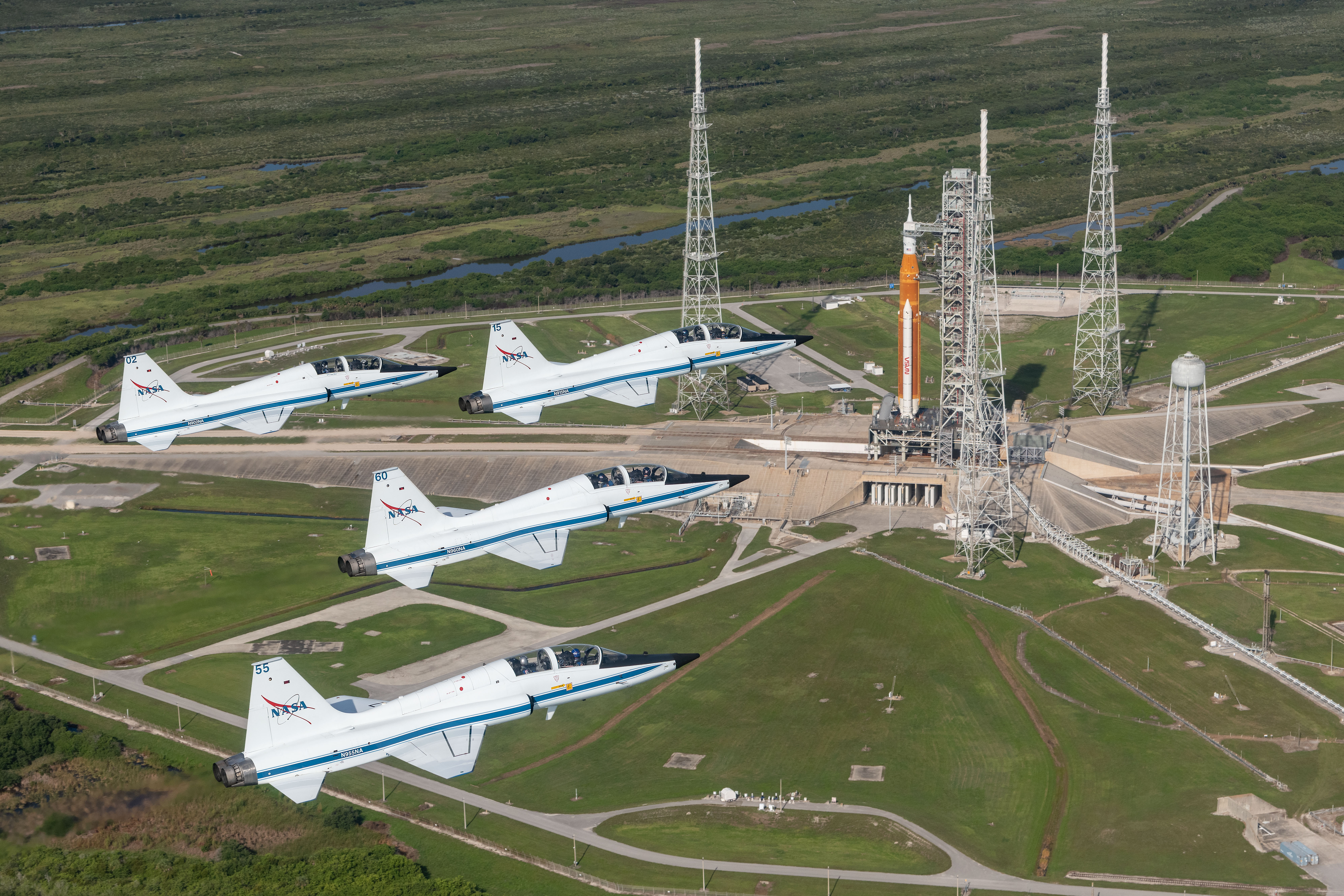
NASA T-38s fly in formation above the Space Launch System rocket on Launch Pad 39B.

NASA’s T-38 jets fly in formation above the Space Launch System rocket on Launch Pad 39B at NASA’s Kennedy Space Center.

Aircraft designations and passengers:
901: Chris Condon / Astronaut Zena Cardman.
902: Astronaut Candidate Nicole Ayers / Astronaut Christina Koch.
903: Canadian Space Agency Astronaut Jeremy Hansen / Astronaut Drew Morgan.
904: Chief Astronaut Reid Wiseman / Astronaut Joe Acaba.
905 (Photo Chase): Astronaut Candidate Jack Hathaway / Josh Valcarcel

Image Credit: NASA/Josh Valcarcel

Powered by WPeMatico

Get The Details…
Gary Daines

NASA’s SpaceX Crew-9 Changes Ahead of September Launch

NASA’s SpaceX Crew-9 Changes Ahead of September Launch

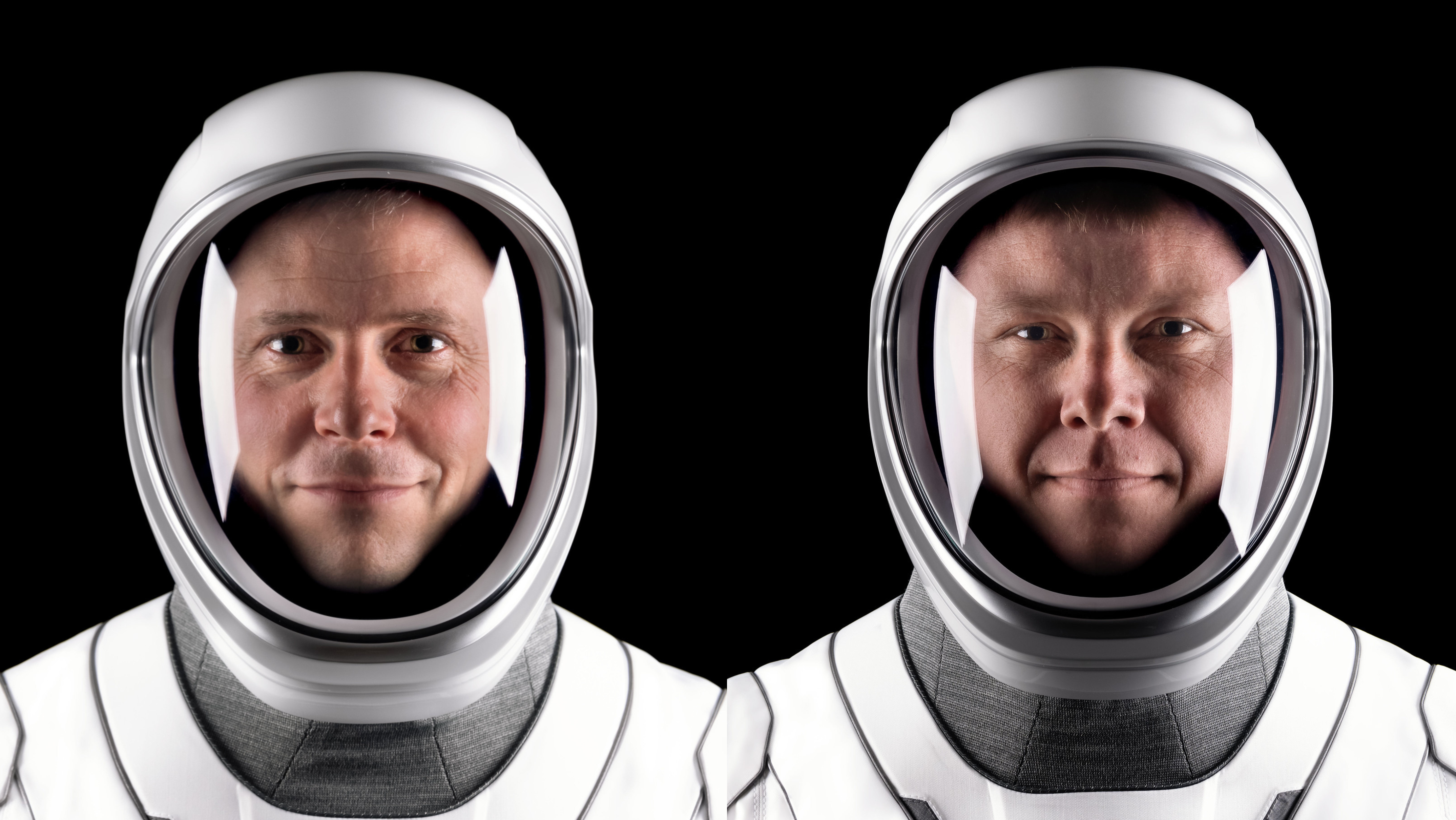
Portraits of NASA astronaut Nick Hague and Roscosmos cosmonaut Aleksandr Gorbunov. (Credit: NASA)

Editor’s note: This release was updated on Aug. 30, 2024, to correct Roscosmos cosmonaut Aleksandr Gorbunov’s role as mission specialist.

NASA astronaut Nick Hague and Roscosmos cosmonaut Aleksandr Gorbunov will launch no earlier than Tuesday, Sept. 24, on the agency’s SpaceX Crew-9 mission to the International Space Station. NASA astronauts Zena Cardman and Stephanie Wilson, previously announced as crewmates, are eligible for reassignment on a future mission. 

Hague and Gorbunov will fly to the space station as commander and mission specialist, respectively, as part of a two-crew member flight aboard a SpaceX Dragon.

The updated crew complement follows NASA’s decision to return the agency’s Boeing Crew Flight Test uncrewed and launch Crew-9 with two unoccupied seats. NASA astronauts Butch Wilmore and Suni Williams, who launched aboard the Starliner spacecraft in June, will fly home with Hague and Gorbunov in February 2025.

The decision to fly Hague was made by NASA chief astronaut Joe Acaba at the agency’s Johnson Space Center in Houston. Acaba had to balance flying a NASA crew member with previous spaceflight experience to command the flight, while ensuring NASA maintains an integrated crew with a Roscosmos cosmonaut who can operate their critical systems for continued, safe station operations.

“While we’ve changed crew before for a variety of reasons, downsizing crew for this flight was another tough decision to adjust to given that the crew has trained as a crew of four,” said Acaba. “I have the utmost confidence in all our crew, who have been excellent throughout training for the mission. Zena and Stephanie will continue to assist their crewmates ahead of launch, and they exemplify what it means to be a professional astronaut.”

The agency will share reassignment details for Cardman and Wilson when available.

“I am deeply proud of our entire crew,” said Cardman, “and I am confident Nick and Alex will step into their roles with excellence. All four of us remain dedicated to the success of this mission, and Stephanie and I look forward to flying when the time is right.” 

Wilson added, “I know Nick and Alex will do a great job with their work aboard the International Space Station as part of Expedition 72.”

With 203 days logged in space, this will be Hague’s third launch and second mission to the orbiting laboratory. During his first launch in March 2018, Hague and his crewmate, Roscosmos’ Alexey Ovchinin, experienced a rocket booster failure, resulting in an in-flight, post-launch abort, ballistic re-entry, and safe landing in their Soyuz MS-10 spacecraft. Five months later, Hague launched aboard Soyuz MS-12 and served as a flight engineer aboard the space station during Expeditions 59 and 60. Hague conducted three spacewalks to upgrade space station power systems and install a docking adapter for commercial spacecraft. An active-duty colonel in the U.S. Space Force, Hague completed a developmental rotation at the Defense Department, and served as the Space Force’s director of test and evaluation from 2020 to 2022. In August 2022, Hague resumed duties at NASA, working on the Boeing Starliner Program until this flight assignment. Follow @astrohague on X and Instagram.

This will be Gorbunov’s first trip to space and the station. Born in Zheleznogorsk, Kursk region, Russia, he studied engineering with qualifications in spacecraft and upper stages from the Moscow Aviation Institute. Gorbunov graduated from the military department with a specialty in operating and repairing aircraft, helicopters, and aircraft engines. Before his selection as a cosmonaut in 2018, he worked as an engineer for Rocket Space Corp. Energia and supported cargo spacecraft launches from the Baikonur Cosmodrome.

Hague and Gorbonov will become members of the Expedition 72 crew aboard the station. They will join Wilmore, Williams, fellow NASA astronaut Don Pettit, and Roscosmos cosmonauts Alexey Ovchinin and Ivan Vagner conducting scientific research and maintenance activities into the station’s 24th year of continuous human presence.

Learn more about International Space Station research and operations at:

https://www.nasa.gov/station

-end-

Josh Finch / Jimi Russell
Headquarters, Washington
202-358-1100
joshua.a.finch@nasa.gov / james.j.russell@nasa.gov

 Courtney Beasley
Johnson Space Center, Houston
281-483-5111
courtney.m.beasley@nasa.gov

Powered by WPeMatico

Get The Details…
Abbey A. Donaldson

Hubble Zooms into the Rosy Tendrils of Andromeda

Hubble Zooms into the Rosy Tendrils of Andromeda

2 min read

Hubble Zooms into the Rosy Tendrils of Andromeda

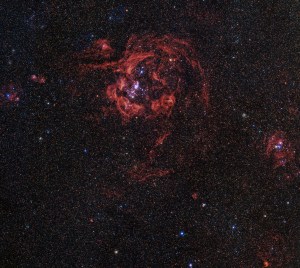
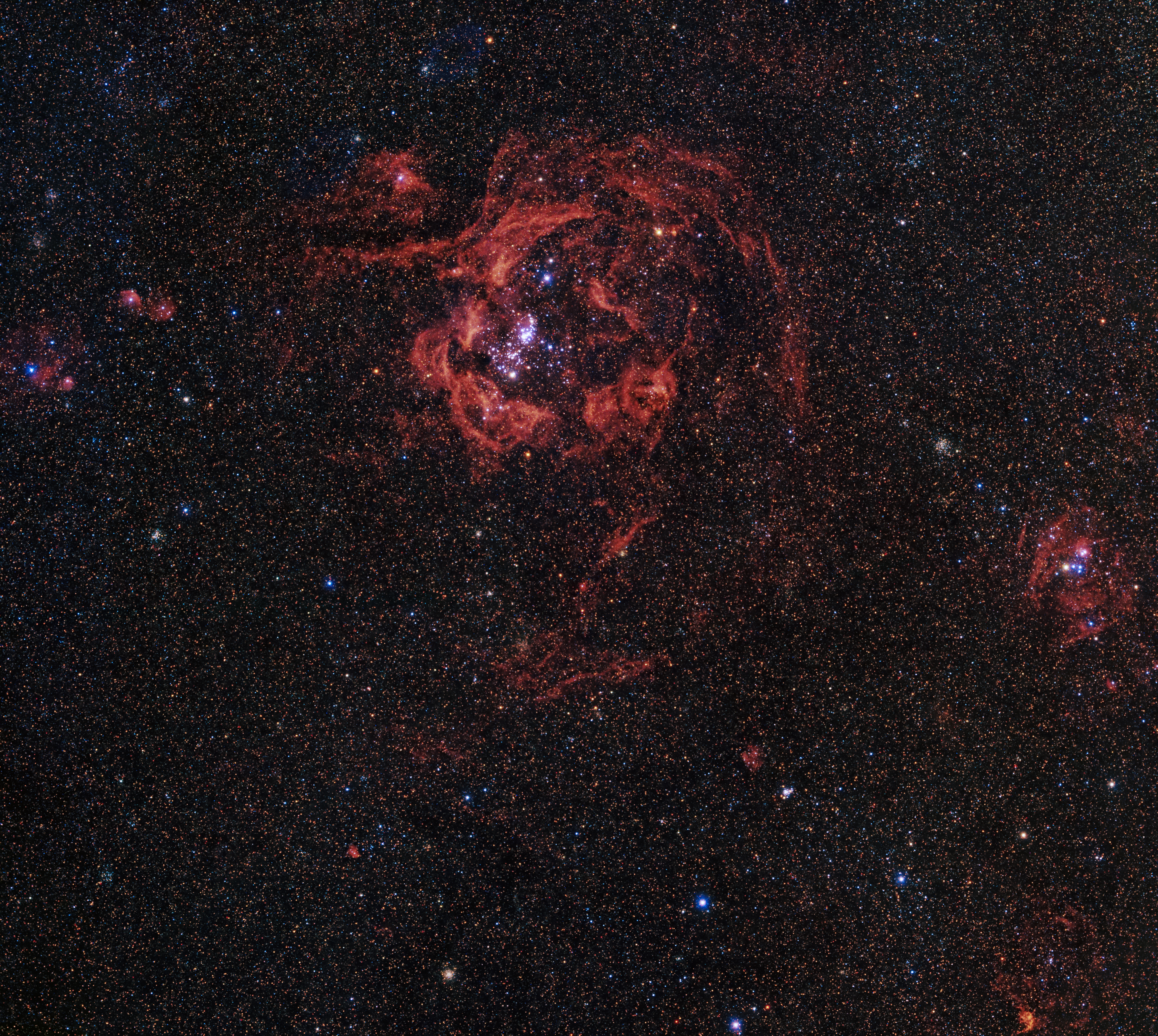
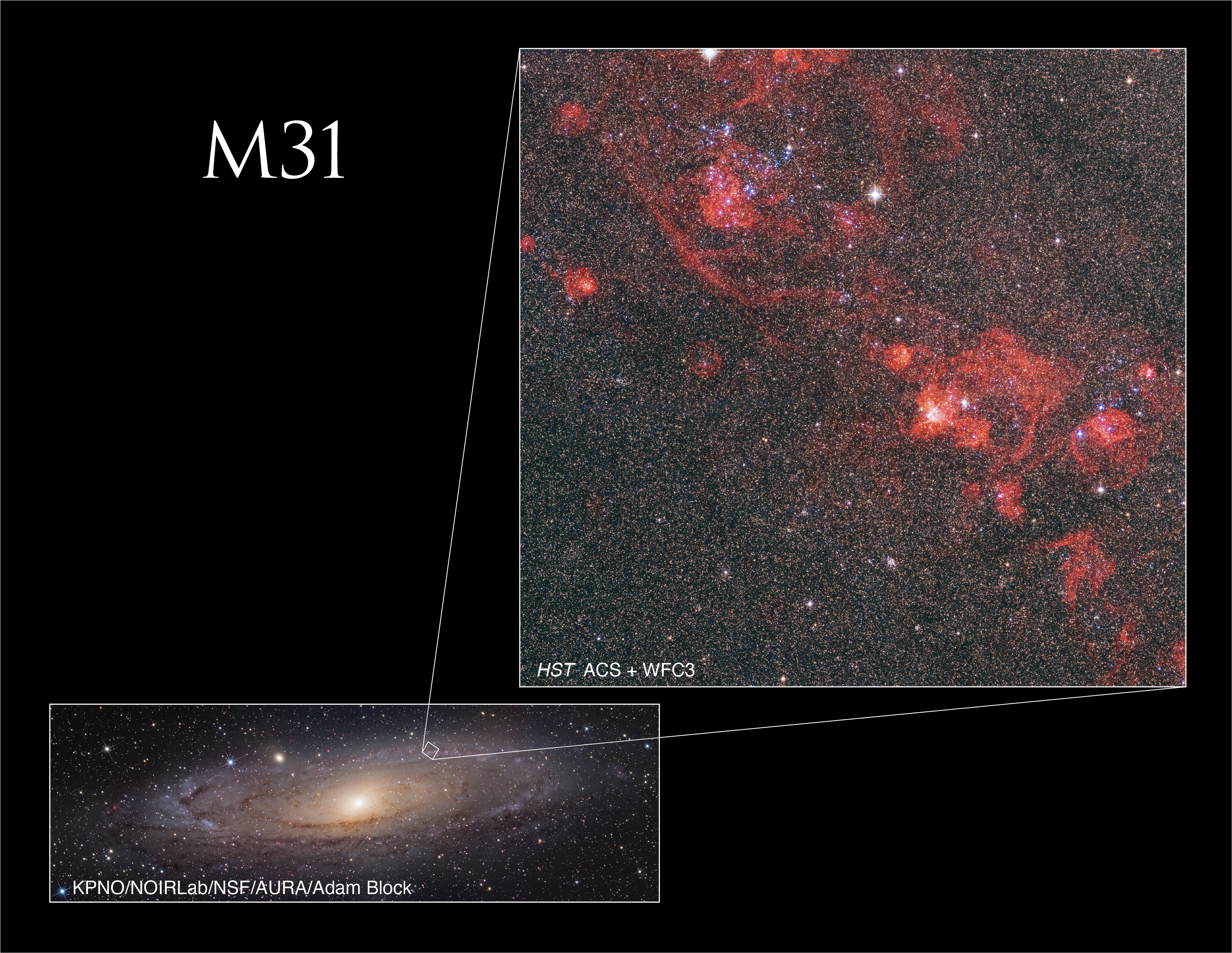
Thousands of distant stars crowd the view against black space. A rosy, bloomlike tendril of red nebulosity shines near the center-top.
NASA, ESA, M. Boyer (Space Telescope Science Institute), and J. Dalcanton (University of Washington); Image Processing: Gladys Kober (NASA/Catholic University of America)

Clusters of stars set the interstellar medium ablaze in the Andromeda Galaxy about 2.5 million light-years away. Also known as M31, Andromeda is the Milky Way’s closest major galaxy. It measures approximately 152,000 light-years across and, with almost the same mass as our home galaxy, is headed for a collision with the Milky Way in 2-4 billion years. In the meantime, Andromeda remains an object of study for many astronomers.

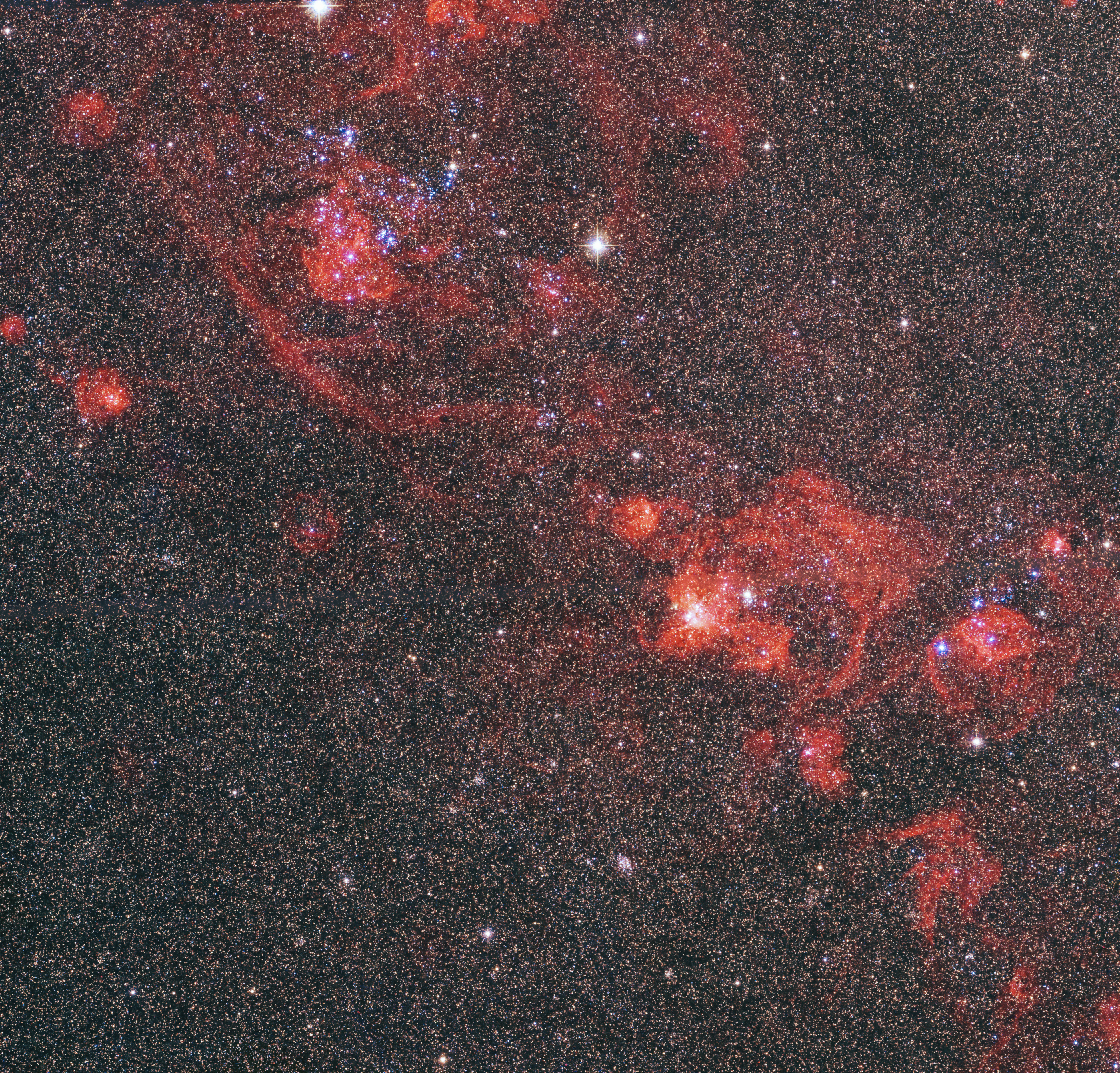
As a spiral galaxy, Andromeda’s winding arms are one of its most remarkable features. NASA’s Hubble Space Telescope zoomed in to get a close look at one of its tendrils in the northeast, revealing swathes of ionized gas. These regions — which are common in spiral and irregular galaxies — often indicate the presence of recent star formation. The combination of stellar nurseries and supernovae create a dynamic environment that excites the surrounding hydrogen gas, flourishing it into a garden of star-studded roses.

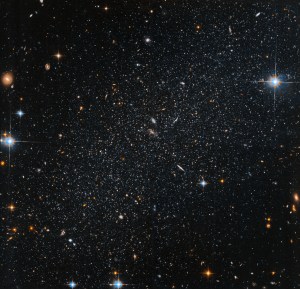
Thousands of distant stars crowd the view against black space. Tendrils of red nebulosity bloom across the image.
NASA, ESA, M. Boyer (Space Telescope Science Institute), and J. Dalcanton (University of Washington); Image Processing: Gladys Kober (NASA/Catholic University of America)

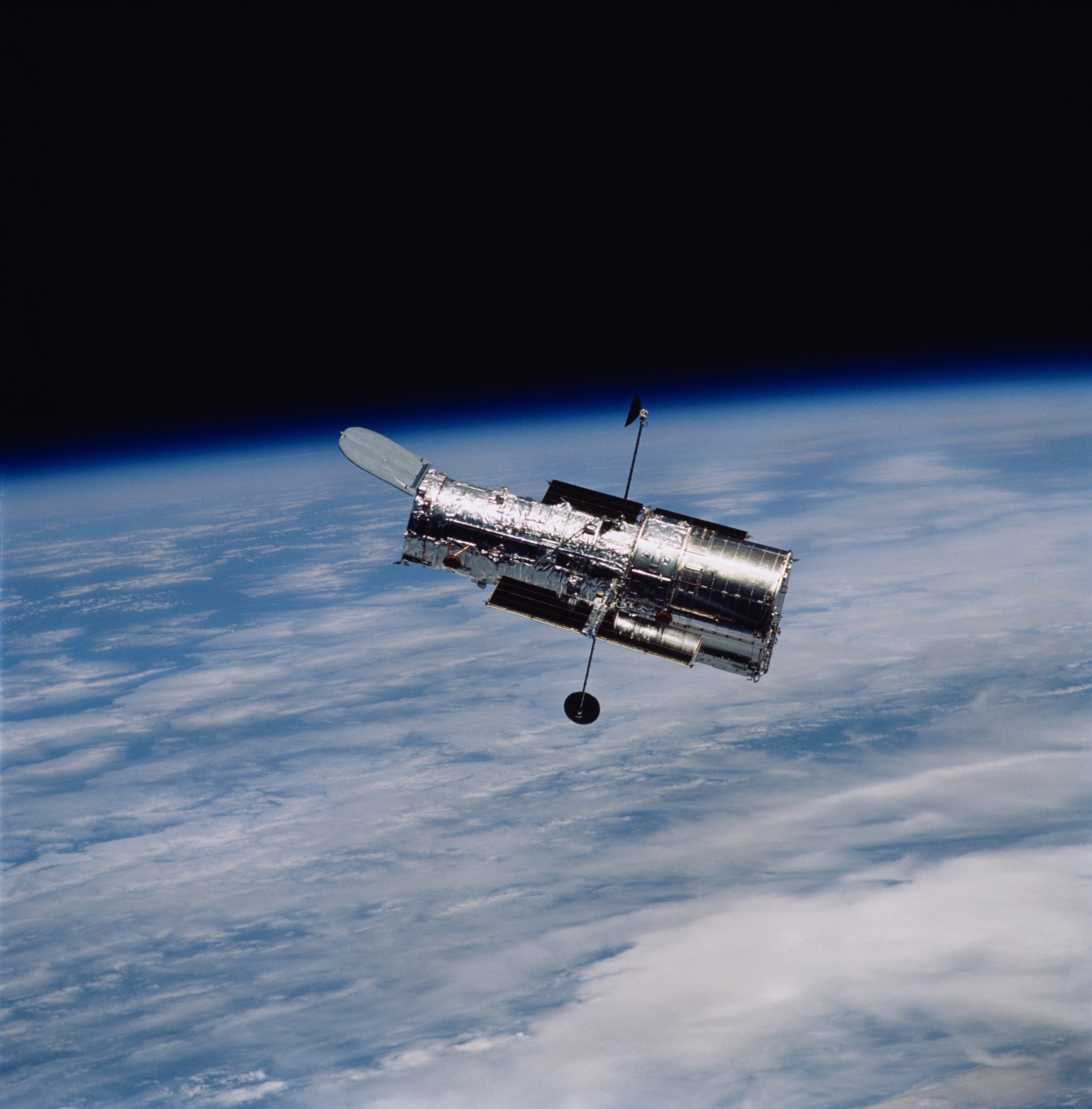
Scientists probed Andromeda’s spiral arms using Hubble’s Advanced Camera for Surveys (ACS) and Wide Field Camera 3 (WFC3) to analyze the collection of stars buried in its cosmic bouquets. With ACS and WFC3’s wide spectral coverage, Hubble could peer through the hedges of gas and observe a valuable sample of these stars. The extent of the study spanned a vast range of stars, providing not just a clear view of Andromeda’s stellar history and diversity, but also more insight on stellar formation and evolution overall. By examining these stars in our local cosmic neighborhood, scientists can better understand those within galaxies in the distant universe.

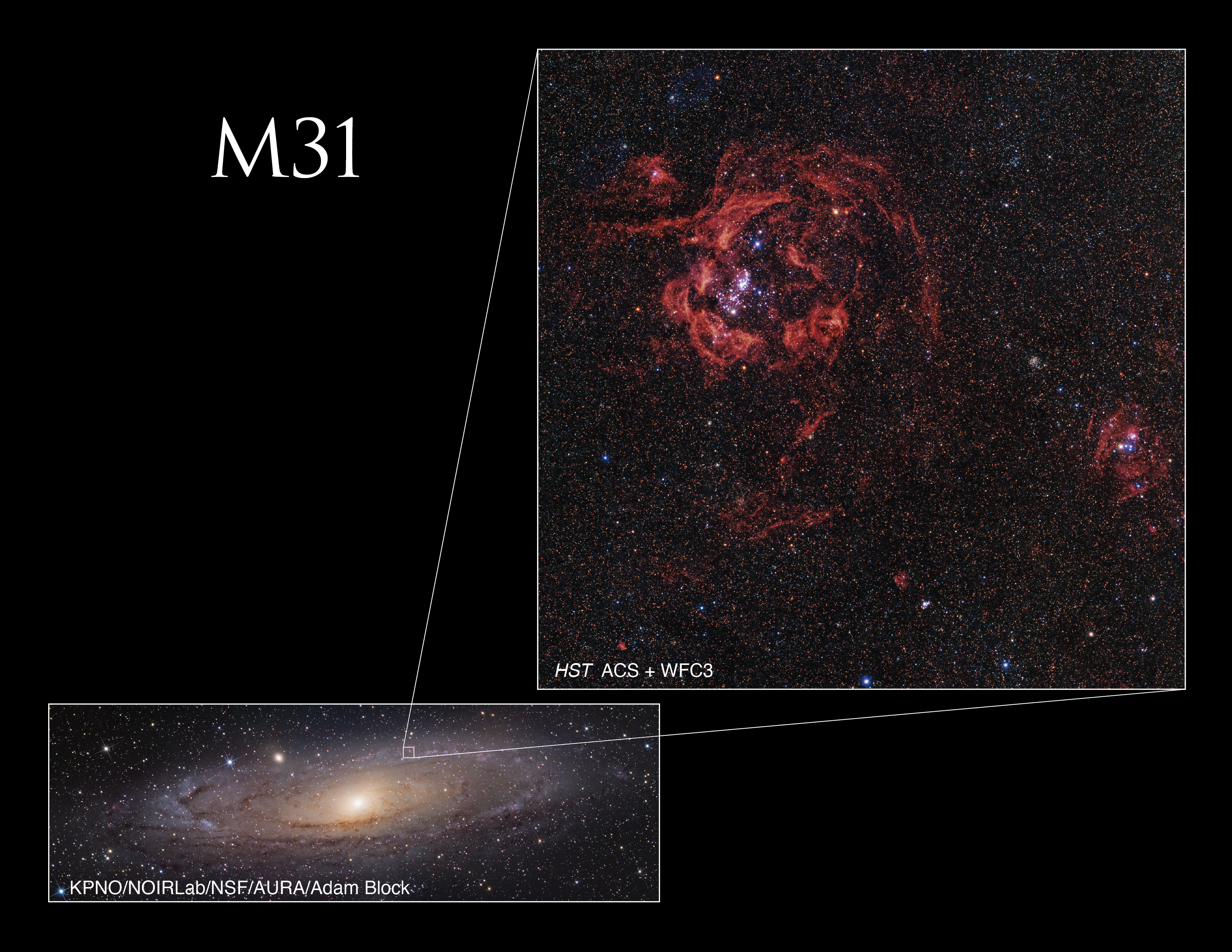
At the upper right, an image shows thousands of distant stars that crowd the view against black space. A rosy, bloomlike tendril of red nebulosity shines near the center-top. This image is connected with white lines to a lower-left view of the Andromeda galaxy, where it reaches to one of its upper spiral arms. Andromeda has a glowing, yellow core with spiral arms interlaced with dark dust and purplish star formation. White text at the top reads “M31”.
This inset image shows the location of Hubble’s view within the Andromeda galaxy.
NASA, ESA, M. Boyer (Space Telescope Science Institute), J. Dalcanton (University of Washington), and KPNO/NOIRLab/NSF/AURA/Adam Block; Image Processing: Gladys Kober (NASA/Catholic University of America)
At the upper right, an image shows thousands of distant stars crowding the view against black space. Tendrils of red nebulosity bloom across the image. This image is connected with white lines to a lower-left view of the Andromeda galaxy, where it reaches to one of its upper spiral arms. Andromeda has a glowing, yellow core with spiral arms interlaced with dark dust and purplish star formation. White text at the top reads “M31”.
This inset image shows the location of Hubble’s view within the Andromeda galaxy.
NASA, ESA, M. Boyer (Space Telescope Science Institute), J. Dalcanton (University of Washington), and KPNO/NOIRLab/NSF/AURA/Adam Block; Image Processing: Gladys Kober (NASA/Catholic University of America)

Explore More

Media Contact:

Claire Andreoli
NASA’s Goddard Space Flight CenterGreenbelt, MD
claire.andreoli@nasa.gov

Share

Details

Last Updated
Aug 30, 2024
Editor
Michelle Belleville

Powered by WPeMatico

Get The Details…

25 Years Strong: NASA’s Student Launch Competition Accepting 2025 Proposals

25 Years Strong: NASA’s Student Launch Competition Accepting 2025 Proposals

4 min read

Preparations for Next Moonwalk Simulations Underway (and Underwater)

NASA’s Student Launch, a STEM competition, officially kicks off its 25th anniversary with the 2025 handbook.

By Wayne Smith

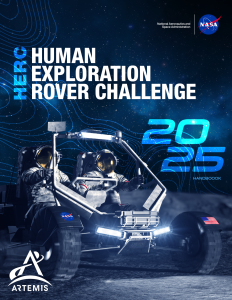
NASA’s Student Launch competition kicks off its 25th year with the release of the 2025 handbook, detailing how teams can submit proposals by Wednesday, Sept. 11, for the event scheduled next spring near NASA’s Marshall Space Flight Center in Huntsville, Alabama.

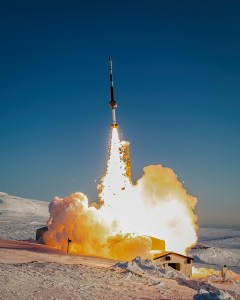
Student Launch is an annual competition challenging middle school, high school, and college students to design, build, test, and launch a high-powered amateur rocket with a scientific or engineering payload. After a team is selected, they must meet documentation milestones and undergo detailed reviews throughout the school year.

Each year, NASA updates the university payload challenge to reflect current scientific and exploration missions. For the 2025 season, the payload challenge will again take inspiration from the Artemis missions, which seek to land the first woman and first person of color on the Moon.

As Student Launch celebrates its 25th anniversary, the payload challenge will include “reports” from STEMnauts, non-living objects representing astronauts. The 2024 challenge tasked teams with safely deploying a lander mid-air for a group of four STEMnauts using metrics to support a survivable landing. The lander had to be deployed without a parachute and had a minimum weight limit of five pounds.

“This year, we’re shifting the focus to communications for the payload challenge,” said John Eckhart, technical coordinator for Student Launch at Marshall. “The STEMnaut ‘crew’ must relay real-time data to the student team’s mission control. This helps connect Student Launch with the Artemis missions when NASA lands astronauts on the Moon.”

Thousands of students participated in the 2024 Student Launch competition – making up 70 teams representing 24 states and Puerto Rico. Teams launched their rockets to an altitude between 4,000 and 6,000 feet, while attempting to make a successful landing and executing the payload mission. The University of Notre Dame was the overall winner of the 2024 event, which culminated with a launch day open to the public.

Student Launch began in 2000 when former Marshall Director Art Stephenson started a student rocket competition at the center. It started with just two universities in Huntsville competing – Alabama A&M University and the University of Alabama in Huntsville – but has continued to soar. Since its inception, thousands of students have participated in the agency’s STEM competition, with many going on to a career with NASA.

“This remarkable journey, spanning a quarter of a century, has been a testament to the dedication, ingenuity, and passion of countless students, educators, and mentors who have contributed to the program’s success,” Eckhart said. “NASA Student Launch has been at the forefront of experiential education, providing students from middle school through university with unparalleled opportunities to engage in real-world engineering and scientific research. The program’s core mission – to inspire and cultivate the next generation of aerospace professionals and space explorers – has not only been met but exceeded in ways we could have only dreamed of.”

To encourage students to pursue degrees and careers in STEM (science, technology, engineering, and math), Marshall’s Office of STEM Engagement hosts Student Launch, providing them with real-world experiences. Student Launch is one of NASA’s nine Artemis Student Challenges – a variety of activities that expose students to the knowledge and technology required to achieve the goals of Artemis. 

In addition to the NASA Office of STEM Engagement’s Next Generation STEM project, NASA Space Operations Mission Directorate, Northrup Grumman, National Space Club Huntsville, American Institute of Aeronautics and Astronautics, National Association of Rocketry, Relativity Space and Bastion Technologies provide funding and leadership for the competition. 
“These bright students rise to a nine-month challenge for Student Launch that tests their skills in engineering, design, and teamwork,” said Kevin McGhaw, director of NASA’s Office of STEM Engagement Southeast Region. “They are the Artemis Generation, the future scientists, engineers, and innovators who will lead us into the future of space exploration.”

For more information about Student Launch, please visit: 

https://www.nasa.gov/studentlaunch

Taylor Goodwin
Marshall Space Flight Center, Huntsville, Ala.
256.544.0034
taylor.goodwin@nasa.gov

Share

Details

Last Updated

Aug 29, 2024

Powered by WPeMatico
Get The Details…
Beth Ridgeway