Key Moments Lead to Fulfilling NASA Stennis Career

Key Moments Lead to Fulfilling NASA Stennis Career

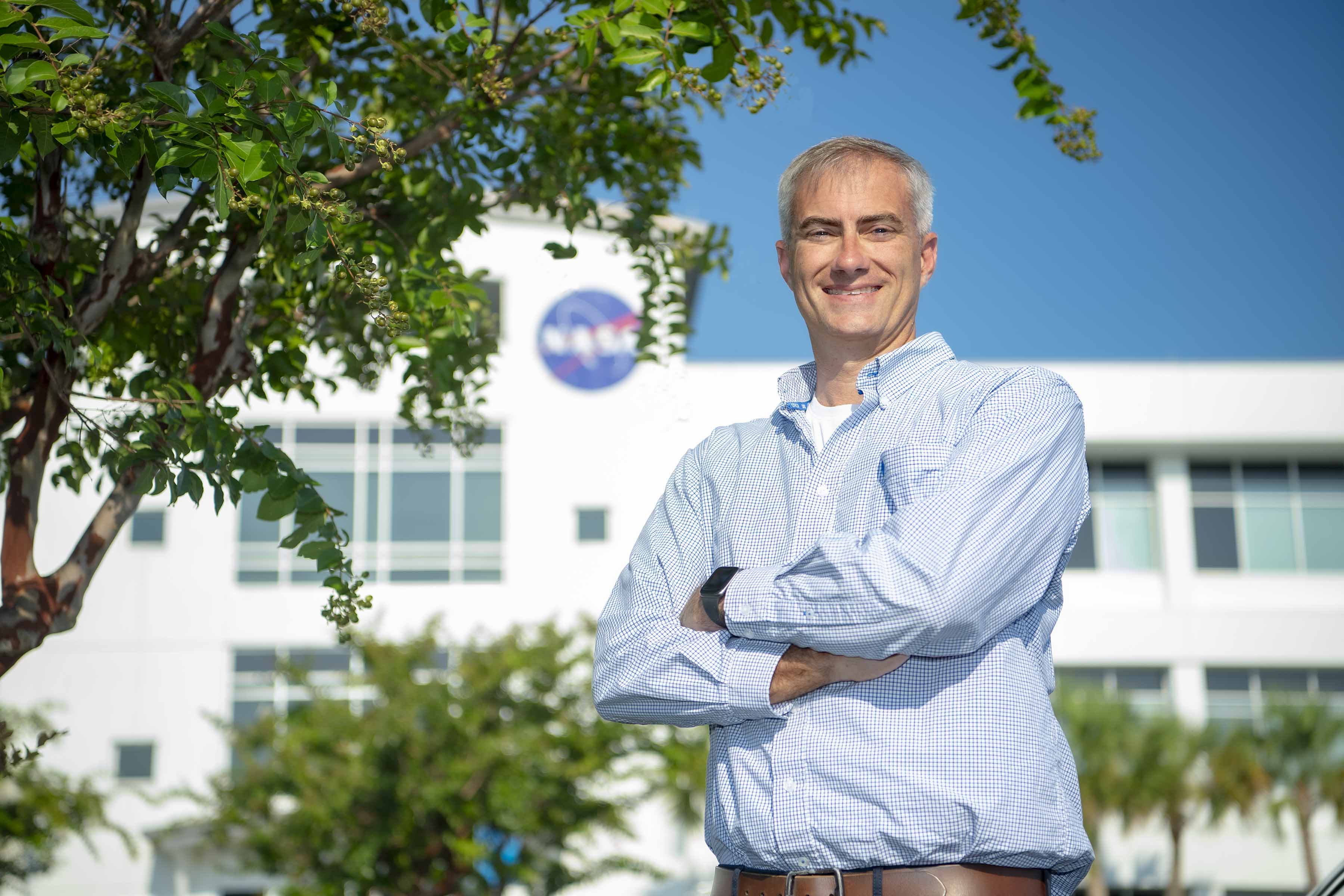
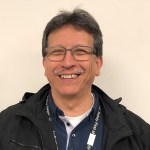
Joseph Ladner stands with his arms crossed under a tree in front of building at Stennis Space Center
Joseph Ladner stands at NASA’s Stennis Space Center near Bay St. Louis, Mississippi, where he leads a team managing the budgets to fund the nation’s premier propulsion test site.
NASA/Danny Nowlin

Joseph Ladner’s experiences working at NASA’s Stennis Space Center near Bay St. Louis, Mississippi, motivate him to “pay it forward” so more people can be a part of something great.

“It is exciting to be at a place like NASA Stennis that continues to reinvent itself to stay relevant,” Ladner said. “You can do just about anything you can imagine with a workforce committed to its success.”

The Gulfport, Mississippi, resident is the lead budget analyst in the NASA Stennis Office of the Chief Financial Officer. His team manages budgets that fund the nation’s premier propulsion test site.

Ladner can point to three pivotal moments propelling him to a career with NASA. The first came by attending ASTRO CAMP at NASA Stennis every summer as a child. The thrilling experiences of launching paper rockets and conducting science experiments left him with the question, “How do I get to work there?”

The answer came into focus years later. Much like launching paper rockets, Ladner’s career started at ground level before reaching higher heights.

He started on the lowest end of the General Schedule pay scale as a GS-1 clerk for the Naval Oceanographic Office, located at NASA Stennis, while attending Mississippi Gulf Coast Community College.

A second pivotal moment also came during this time. The Saucier, Mississippi, native credits mentor Pamela Stenum for putting him on a career path in procurement so he could use the math and analytical skills that came natural to him.

The clerk role, expected to be only for one semester, continued through Ladner’s studies at The University of Southern Mississippi, where he earned a bachelor’s degree in Business Administration.

“I literally came in from the bottom, and someone saw potential in me,” Ladner said. “She realized I was a hard worker and that I cared about the product I was putting out.”

The third, and most profound, moment leading Ladner to a NASA career happened when the space shuttle Columbia orbiter suffered a catastrophic failure during return to Earth.

“I will never forget standing in the crowd that morning waiting for the launch of Columbia (in 2003) and hearing the commander over the loudspeakers thank everyone for the efforts to get them to this point and saying farewell to his family,” Ladner said. “No one knew it would ultimately be the crew’s last farewell. That tragic incident left me with a greater sense that there are many opportunities, but life is short. That thought and NASA’s return to flight mission left me with a desire to be part of NASA.”

Ladner started his career with the agency two years later and has worked inspired ever since. His role as lead budget analyst contributes to the Artemis campaign that will establish the foundation for long-term scientific exploration of the Moon, land the first woman, first person of color, and its first international partner astronaut on the lunar surface, and prepare for human expeditions to Mars for the benefit of all.

His job currently involves navigating challenges of increased costs and reduced budgets. From Ladner’s perspective, the challenges present opportunities for innovation and new ideas. 

“Knowing my work is part of a greater cause impacting the Artemis Generation that could make a difference to society is the best thing about working at NASA Stennis,” Ladner said. “There is some awe and wonder about working at NASA, so it is neat to say you are a part of that.”

Powered by WPeMatico

Get The Details…
LaToya Dean

Research Plane Dons New Colors for NASA Hybrid Electric Flight Tests 

Research Plane Dons New Colors for NASA Hybrid Electric Flight Tests 

4 min read

Preparations for Next Moonwalk Simulations Underway (and Underwater)

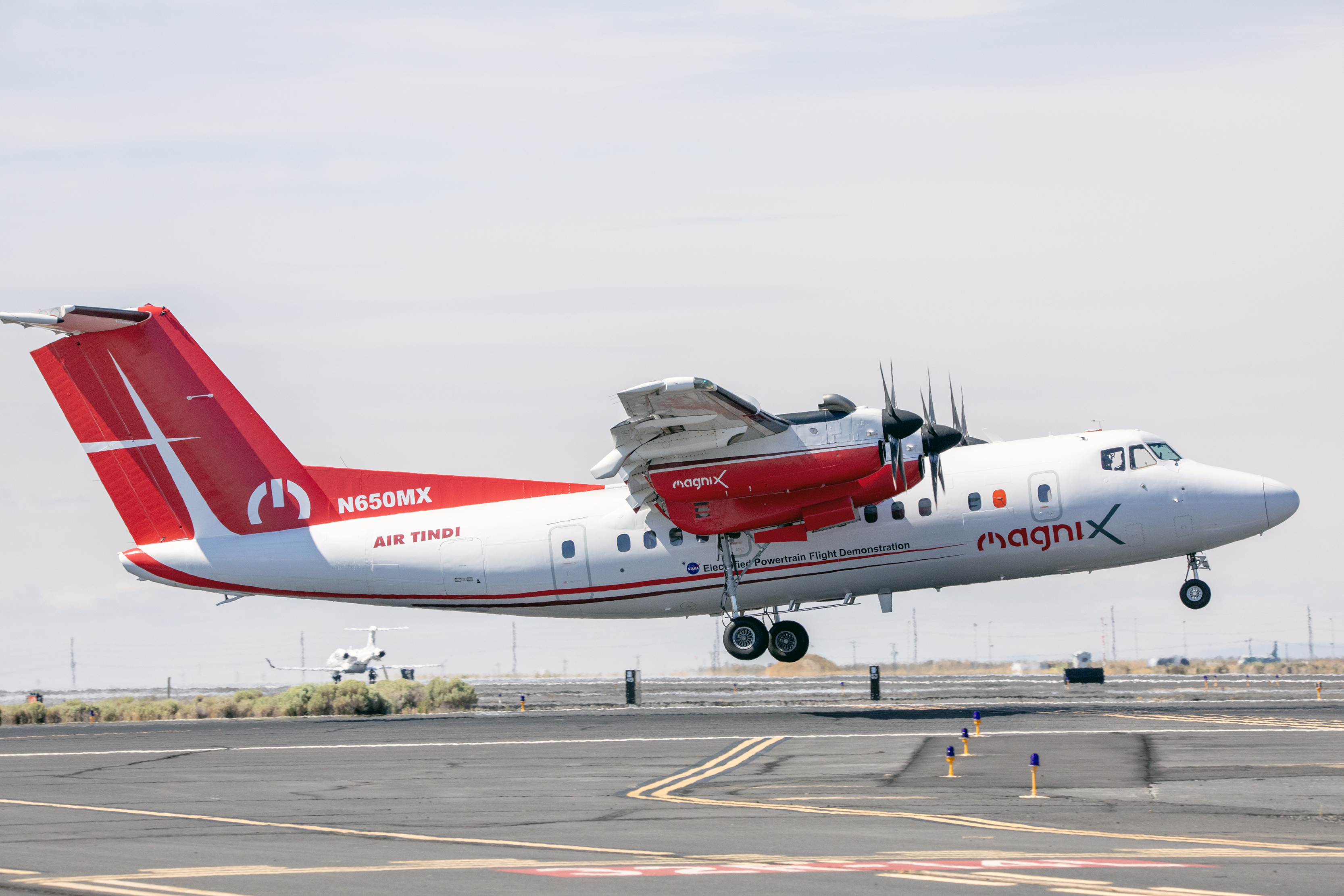
A four-engine turboprop aircraft in a red and white livery takes off from a runway on its way to be modified into a hybrid electric aircraft. Other airplanes can be seen in the distance.
The Dash 7 aircraft that will be modified into a hybrid electric research vehicle under NASA’s Electrified Powertrain Flight Demonstration project is seen taking off from Moses Lake, Washington en route to Seattle for a ceremony unveiling its new livery. The aircraft is currently operating with a traditional fuel-based propulsion system but will eventually be modified with a hybrid electric system.
NASA / David C. Bowman

Parked under the lights inside a hangar in Seattle, a hybrid electric research aircraft from electric motor manufacturer magniX showed off a new look symbolizing its journey toward helping NASA make sustainable aviation a reality.  

During a special unveiling ceremony hosted by magniX on Aug. 22, leaders from the company and NASA revealed the aircraft, with its new livery, to the public for the first time at King County International Airport, commonly known as Boeing Field.  

The aircraft is a De Havilland Dash 7 that was formerly used for carrying cargo. Working under NASA’s Electrified Powertrain Flight Demonstration (EPFD) project, magniX will modify it to serve as a testbed for hybrid electric aircraft propulsion research.    

The company’s goal under EPFD is to demonstrate potential fuel savings and performance boosts with a hybrid electric system for regional aircraft carrying up to 50 passengers. These efforts will help reduce environmental impacts from aviation by lowering greenhouse gas emissions. 

This livery recognizes the collaborative effort focused on proving that hybrid electric flight for commercial aircraft is feasible. 

“We are a research organization that continues to advance aviation, solve the problems of flight, and lead the community into the future,” said Robert A. Pearce, associate administrator for NASA’s Aeronautics Research Mission Directorate. “Through our EPFD project, we’re taking big steps in partnership to make sure electric aviation is part of the future of commercial flight.” 

Three men engage in a conversation inside a hollow cabin surrounded by various hardware, insulation, lights, and red boxes along the floor used for storing the aircraft’s battery packs.
Lee Noble, director for NASA’s Integrated Aviation Systems Program (right) and Robert Pearce, associate administrator for NASA’s Aeronautics Research Mission Directorate (middle) chat with an AeroTEC test pilot for the Dash 7. Battery packs are stored along the floor of the cabin for magniX’s hybrid electric flight demonstrations
NASA / David C. Bowman

Collaborative Effort   

NASA is collaborating with industry to modify existing planes with new electrified aircraft propulsion systems. These aircraft testbeds will help demonstrate the benefits of hybrid electric propulsion systems in reducing fuel burn and emissions for future commercial aircraft, part of NASA’s broader mission to make air travel more sustainable.  

“EPFD is about showing how regional-scale aircraft, through ground and flight tests, can be made more sustainable through electric technology that is available right now,” said Ben Loxton, vice president for magniX’s work on the EPFD project.  

Thus far, magniX has focused on developing a battery-powered engine and testing it on the ground to make sure it will be safe for work in the air. The company will now begin transitioning over to a new phase of the project — transforming the Dash 7 into a hybrid electric research vehicle.  

“With the recent completion of our preliminary design review and baseline flight tests, this marks a transition to the next phase, and the most exciting phase of the project: the modification of this Dash 7 with our magniX electric powertrain,” Loxton said.  

To make this possible, magniX is working with their airframe integrator AeroTEC to help modify and prepare the aircraft for flight tests that will take place out of Moses Lake, Washington. Air Tindi, which supplied the aircraft to magniX for this project, will help with maintenance and support of the aircraft during the testing phases.  

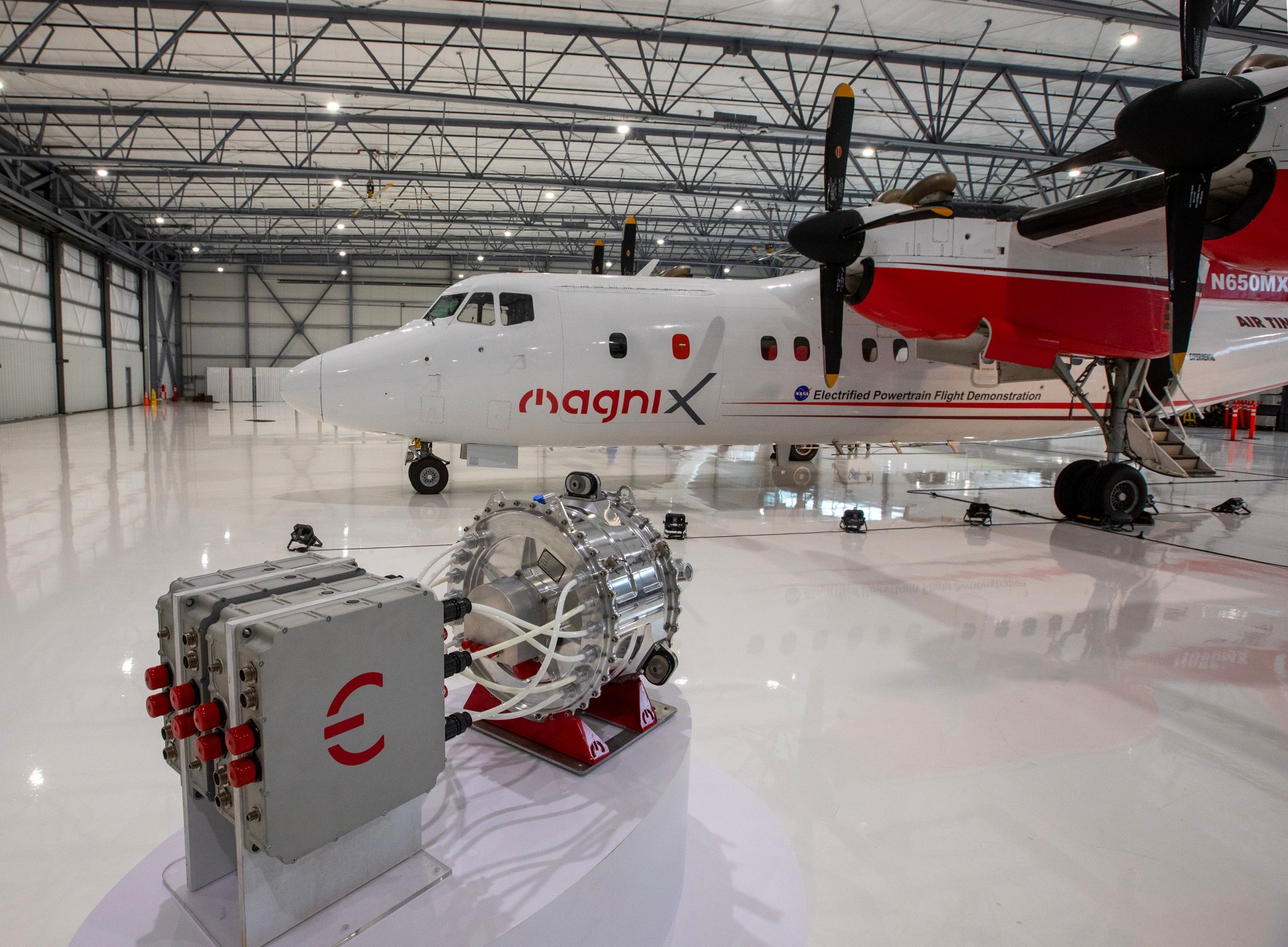
A four engine turboprop aircraft wrapped in a red and white livery with logos and names of each partner on the project sits under the lights inside an aircraft hangar. On the ground in front of the plane is an electric powertrain with an electric motor and battery pack that will soon be swapped out with one of the aircraft’s traditional engines to form a hybrid electric system.
The Dash 7 that will be modified into a hybrid electric research vehicle under NASA’s Electrified Powertrain Flight Demonstration project on display with its new livery for the first time. In front of the plane is an electric powertrain that magniX will integrate into the current aircraft to build a hybrid electric propulsion system.
NASA/David C. Bowman

Creating a Hybrid Electric Aircraft   

A typical hybrid electric propulsion system combines different sources of energy, such as fuel and electricity, to power an aircraft. For magniX’s demonstration, the modified Dash 7 will feature two electric engines fed by battery packs stored in the cabin, and two gas-powered turboprops.  

The work will begin with replacing one of the aircraft’s outer turboprop engines with a new, magni650-kilowatt electric engine – the base of its hybrid electric system. After testing those modifications, magniX will swap out the remaining outer turboprop engine for an additional electric one. 

Earlier this year, magniX and NASA marked the milestone completion of successfully testing the battery-powered engine at simulated altitude. Engineers at magniX are continuing ground tests of the aircraft’s electrified systems and components at NASA’s Electric Aircraft Testbed (NEAT) facility in Sandusky, Ohio.  

By rigorously testing these new technologies under simulated flight conditions, such as high altitudes and extreme temperatures, researchers can ensure each component operates safely before taking to the skies. 

The collaboration between EPFD, NASA, GE Aerospace, and magniX works to advance hybrid electric aircraft propulsion technologies for next-generation commercial aircraft in the mid-2030 timeframe. NASA is working with these companies to conduct two flight demonstrations showcasing different approaches to hybrid electric system design. 

Researchers will use data gathered from ground and flight tests to identify and reduce certification gaps, as well as inform the development of new standards and regulations for future electrified aircraft. 

“We at NASA are excited about EPFD’s potential to make aviation more sustainable,” Pearce said. “Hybrid electric propulsion on a megawatt scale accelerates U.S. progress toward its goal of net-zero greenhouse gas emissions by 2050, benefitting all who rely on air transportation every day.”

Powered by WPeMatico

Get The Details…
Anisha Engineer

La NASA invita a los medios al lanzamiento de Europa Clipper

La NASA invita a los medios al lanzamiento de Europa Clipper

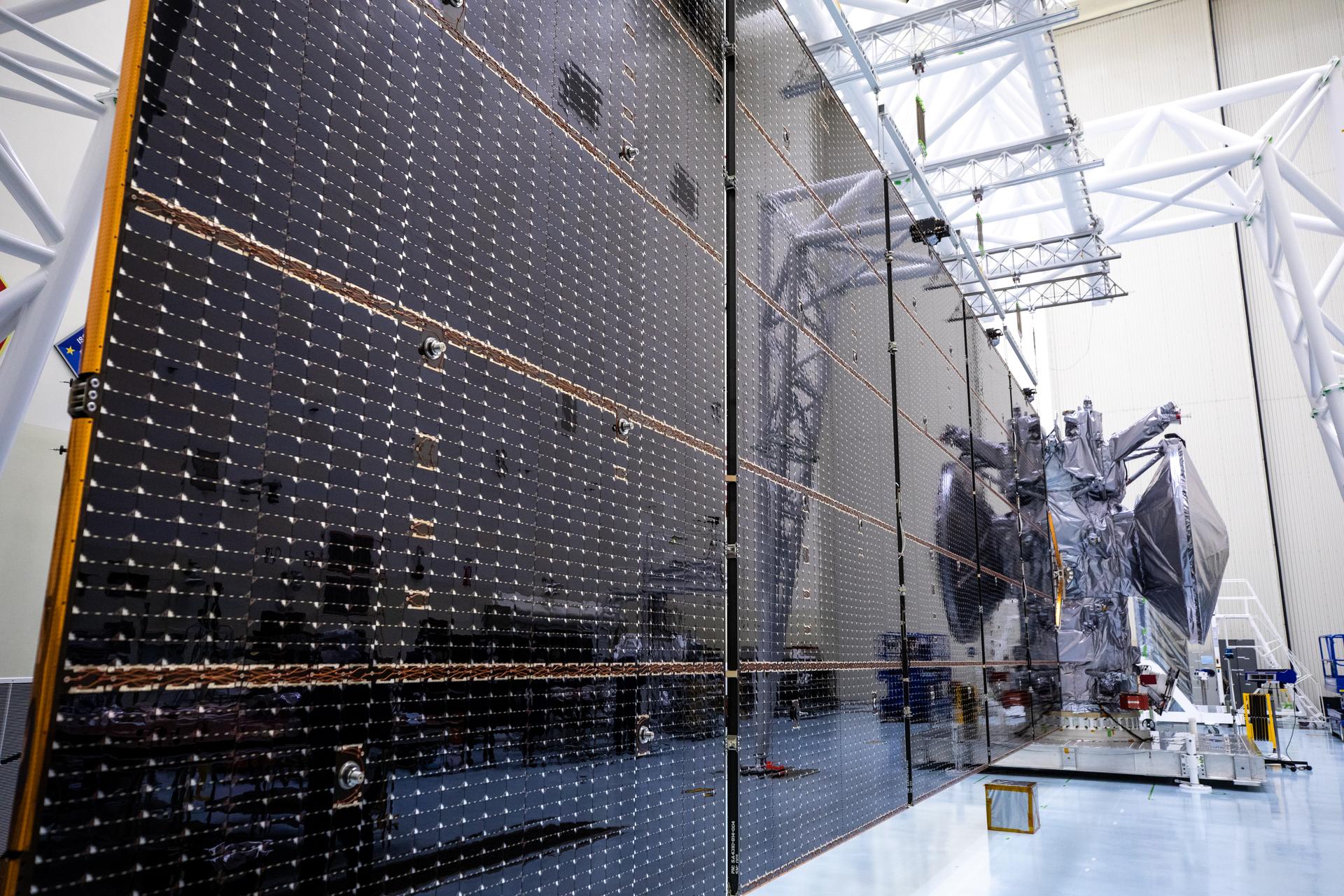
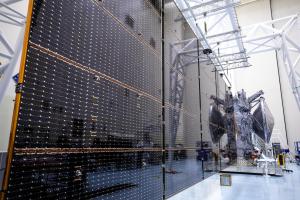
A close up image of a set of massive solar arrays measuring about 46.5 feet (14.2 meters) long and about 13.5 feet (4.1 meters) high on NASA’s Europa Clipper spacecraft inside the agency’s Payload Hazardous Servicing Facility at Kennedy Space Center in Florida.
Técnicos ponen a prueba un conjunto de enormes paneles solares que miden aproximadamente 14,2 metros de largo y 4,1 metros de alto para la nave espacial Europa Clipper de la NASA, dentro de la Instalación de servicio de carga peligrosa de la agencia en el Centro Espacial Kennedy en Florida el 7 de agosto.
Crédito: NASA/Kim Shiflett

Read this release in English here.

La NASA y SpaceX tienen planificado que la ventana para el lanzamiento de la misión Europa Clipper se abra el jueves 10 de octubre. Esta misión ayudará a los científicos a determinar si una de las lunas heladas de Júpiter podría albergar vida. Esta misión de la NASA despegará a bordo de un cohete Falcon Heavy de SpaceX, desde el Complejo de Lanzamientos 39A en el Centro Espacial Kennedy de la NASA en Florida.

Europa Clipper llevará a bordo nueve instrumentos y un experimento científico sobre gravedad para recopilar mediciones detalladas mientras se encuentra en órbita alrededor de Júpiter y realiza varios sobrevuelos cercanos de su luna Europa. Las investigaciones sugieren que, debajo de la corteza de hielo de Europa, existe un océano que tiene dos veces el volumen de todos los océanos de la Tierra.

Los medios de comunicación interesados en cubrir el lanzamiento de Europa Clipper deben solicitar una acreditación de prensa. Los plazos para la acreditación de los medios son los siguientes:

  • Los ciudadanos estadounidenses que representen a medios de comunicación nacionales o internacionales deben solicitar su acreditación antes de las 11:59 p.m. hora del este del viernes 27 de septiembre.
  • Los representantes de medios internacionales con ciudadanía de otros países deben presentar su solicitud antes de las 11:59 p.m. hora del este del viernes 20 de septiembre.

Los medios de comunicación que requieran arreglos logísticos especiales, tales como espacio para camiones de transmisión satelital, tiendas de campaña o conexiones eléctricas, deben escribir por correo electrónico a ksc-media-accreditat@mail.nasa.gov antes del 1 de octubre.

Una copia del reglamento de la NASA para la acreditación de medios está disponible en línea (en inglés). Si tienes preguntas sobre tu acreditación, por favor envía un correo electrónico a ksc-media-accreditat@mail.nasa.gov. Para otras preguntas sobre la misión, por favor comunícate con la sala de prensa del Centro Espacial Kennedy al teléfono 321-867-2468.

Para obtener información sobre cobertura en español en el Centro Espacial Kennedy o si deseas solicitar entrevistas en español, comunícate con Antonia Jaramillo: 321-501-8425, o Messod Bendayan: 256-930-1371.

Los medios de comunicación acreditados tendrán la oportunidad de participar en una serie de sesiones informativas previas al lanzamiento y entrevistas con el personal clave de la misión, incluyendo una sesión informativa la semana del 9 de septiembre. La NASA comunicará detalles adicionales sobre el programa de eventos para los medios a medida que se acerque la fecha de lanzamiento.

La NASA también publicará actualizaciones sobre los preparativos para el lanzamiento de la nave espacial en el blog (en inglés) de Europa Clipper de la NASA.

El principal objetivo científico de Europa Clipper es determinar si existen lugares debajo de la superficie de Europa que pudieran sustentar la vida. Los tres objetivos científicos principales de la misión son comprender la naturaleza de la capa de hielo y el océano que está debajo de ella, junto con la composición y la geología de esta luna. La detallada exploración de Europa que lleve a cabo esta misión ayudará a los científicos a comprender mejor el potencial astrobiológico de los mundos habitables más allá de nuestro planeta.

Administrado por Caltech en Pasadena, California, el Laboratorio de Propulsión a Chorro (JPL, por sus siglas en inglés) de la NASA en el sur de California lidera el desarrollo de la misión Europa Clipper, en asociación con el Laboratorio de Física Aplicada Johns Hopkins (APL, por sus siglas en inglés) en Laurel, Maryland, para la Dirección de Misiones Científicas de la NASA en Washington. APL diseñó el cuerpo principal de la nave espacial en colaboración con JPL y el Centro de Vuelo Espacial Goddard de la NASA en Greenbelt, Maryland. La Oficina del Programa de Misiones Planetarias en el Centro de Vuelo Espacial Marshall de la NASA en Huntsville, Alabama, gestiona la ejecución del programa de la misión Europa Clipper.

El Programa de Servicios de Lanzamiento de la NASA, con sede en el centro Kennedy, gestiona el servicio de lanzamiento de la nave espacial Europa Clipper.

Para obtener más detalles sobre la misión y actualizaciones sobre los preparativos del lanzamiento, visita el sitio web (en inglés):

https://science.nasa.gov/mission/europa-clipper

Leejay Lockhart
Centro Espacial Kennedy, Florida
321-747-8310
leejay.lockhart@nasa.gov

Karen Fox / Alana Johnson
Sede de la NASA, Washington
202-358-1600 / 202-358-1501
karen.c.fox@nasa.gov / alana.r.johnson@nasa.gov

María José Viñas
Sede de la NASA, Washington
240-458-0248
maria-jose.vinasgarcia@nasa.gov

Julian Coltre
Sede de la NASA, Washington
202-358-1100
Julian.n.coltre@nasa.gov

Powered by WPeMatico

Get The Details…
Sarah A. Loff

El X-59 de la NASA avanza en las pruebas de preparación para volar

El X-59 de la NASA avanza en las pruebas de preparación para volar

3 min read

Preparations for Next Moonwalk Simulations Underway (and Underwater)

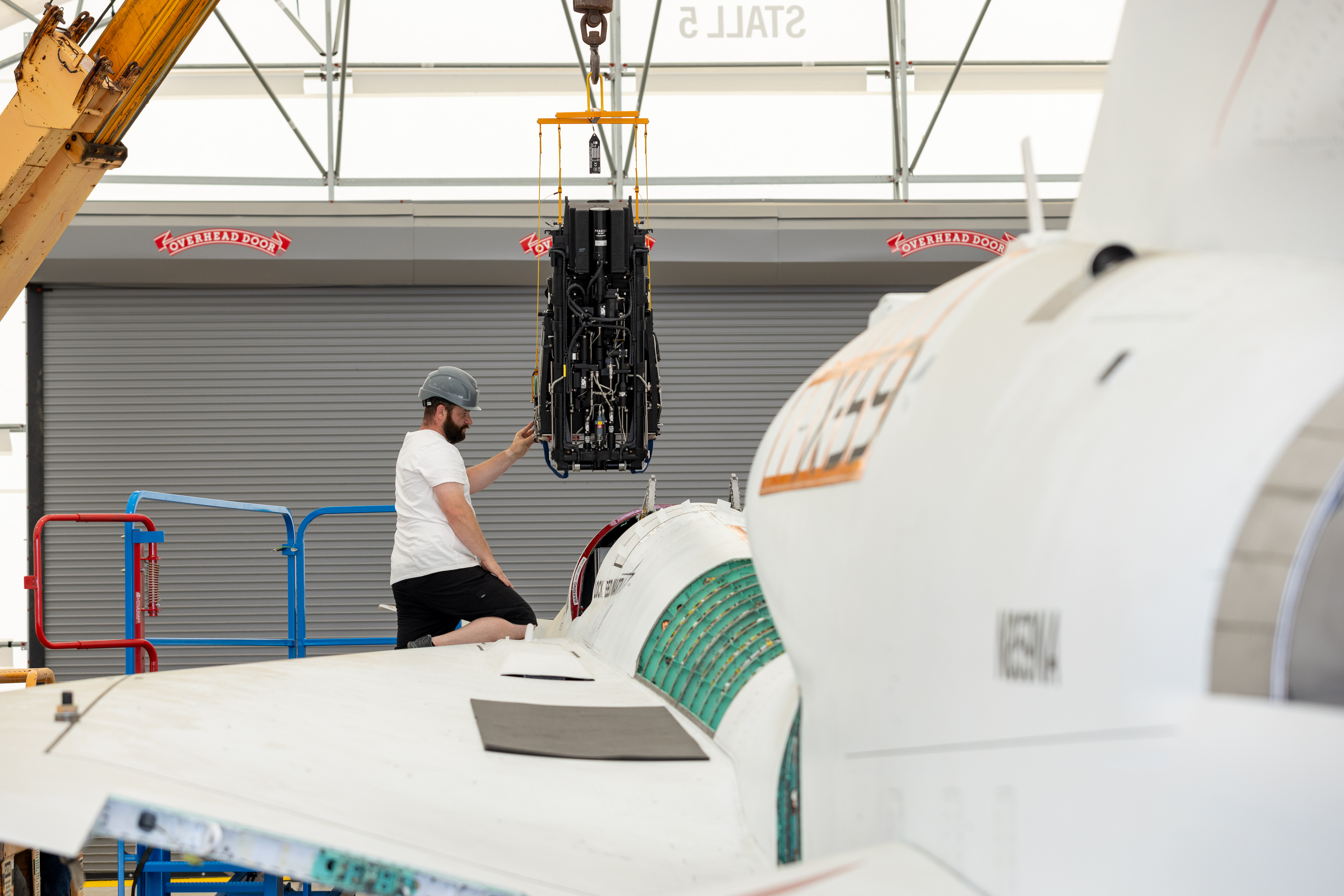
A man supporting the installation of the X-59 ejection seat.
El técnico de soporte vital de la NASA Matthew Sechler ayuda a instalar un asiento eyectable en el avión X-59, en las instalaciones de Lockheed Martin Skunk Works, en Palmdale, California. La culminación de instalación del asiento marca un hito en la integración de la aeronave mientras se prepara para las pruebas en tierra firme.
Crédito: Lockheed Martin

Read this story in English here.

El equipo que prepara el X-59 de la NASA continúa realizando pruebas en preparación para que el avión supersónico y silencioso realice su primer vuelo. Esto incluye un trío de importantes pruebas estructurales e inspecciones críticas en el camino hacia el vuelo.

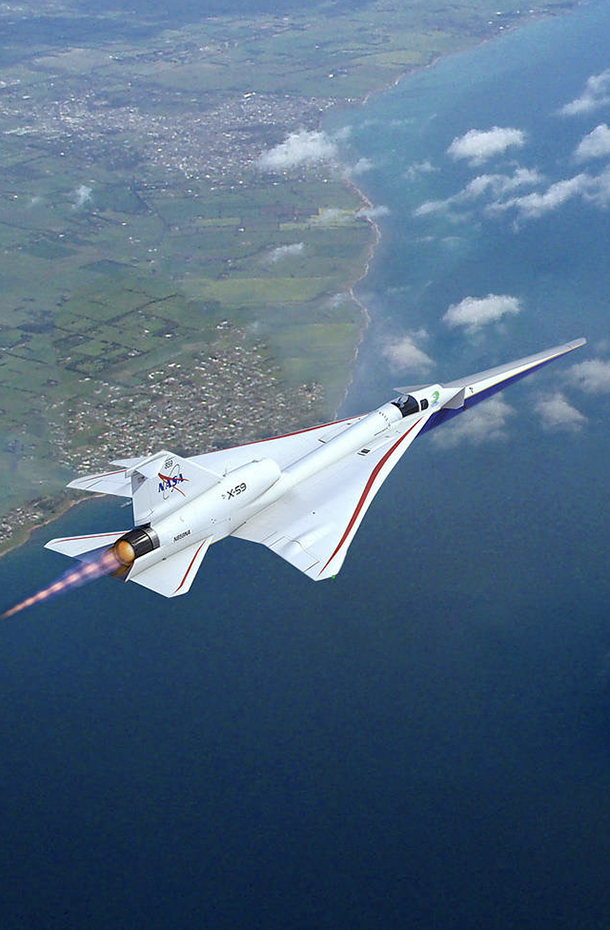
El X-59 es un avión experimental que volará más rápido que la velocidad del sonido sin un fuerte estampido sónico. Será el primero de su clase en volar, con el objetivo de recopilar datos de sonido para la misión Quesst de la NASA, que podría abrir la puerta a vuelos supersónicos comerciales sobre tierra en el futuro.

Debido a su diseño único, el equipo de ingenieria del X-59 debe hacer todo lo posible para predecir cada aspecto del avión antes de que despegue, incluyendo cómo se comportarán juntos su fuselaje, las alas y las superficies de control en vuelo. Eso significa que las pruebas en la tierra darán al equipo los datos necesarios para validar los modelos que han desarrollado.

Las pruebas no sólo nos dicen que tan estructuralmente sólido es el avión, sino también qué tipo de fuerzas puede soportar una vez que esté en el aire.

WALT SILVA

WALT SILVA

Investigador científico superior del Centro de Investigación Langley de la NASA en Hampton, Virginia, que dirige las estructuras de la NASA para el X-59.

Las pruebas estructurales del X-59 proporcionan información valiosa para el equipo. Entre 2022 y 2024, los ingenieros recopilaron datos sobre las fuerzas que el avión experimentará en vuelo y los efectos potenciales de las vibraciones en el avión.

“Haces estas pruebas, obtienes los datos, y las cosas se comparan bien en algunas áreas y en otras quieres mejorarlas,” Silva dijo. “Así que lo averiguas todo y luego trabajas para mejorarlo.”

Three men removing the X-59 canopy.
Los técnicos de Lockheed Martin retiran temporalmente la cubierta del X-59 en preparación para la instalación final del asiento eyectable en el avión.
Crédito: Lockheed Martin

A principios de este año, el X-59 se sometió a pruebas de acoplamiento estructural que vieron sus superficies de control, incluyendo sus alerones, aletas y timón, movidos por computadora. Fue la última de tres pruebas estructurales vitales. En 2023, los ingenieros aplicaron “agitadores” a partes del avión para evaluar su reacción a las vibraciones, y a principios de 2022 realizaron un examen de prueba para asegurar que el avión absorberá las fuerzas que experimentará durante el vuelo. Este año se instaló el asiento eyectable del X-59 y pasó su inspección. El asiento eyectable es una medida de seguridad adicional que es crítica para la seguridad del piloto durante todo aspecto del vuelo.

Con las pruebas estructurales y la instalación del asiento eyectable finalizadas, el avion avanzará hacia un nuevo hito: encenderá sus motores para una serie de pruebas en tierra.

El X-59 también tiene por delante la prueba del sistema de aviónica y cableado extensivo para detectar posibles interferencias electromagnéticas, imitando las condiciones de vuelo en un entorno de pruebas en tierra y finalmente, completar las pruebas de rodaje para validar la movilidad en tierra antes de su primer vuelo.

“Los primeros vuelos siempre son muy intensos,” dijo Natalie Spivey, ingeniera aeroespacial del Centro de Investigación de Vuelo Armstrong de la NASA en Edwards, California. “Hay mucha anticipación, pero estamos listos para llegar allí y ver cómo responde el avion en el aire. Será muy emocionante.”

Artículo Traducido por: Nicolas Cholula y Elena Aguirre

Share

Details

Last Updated

Sep 03, 2024

Editor
Lillian Gipson
Contact
Kristen Hatfield

Powered by WPeMatico

Get The Details…
Anya Shah

40 Years Ago: STS-41D – First Flight of Space Shuttle Discovery

40 Years Ago: STS-41D – First Flight of Space Shuttle Discovery

On Aug. 30, 1984, space shuttle Discovery lifted off on the STS-41D mission, joining NASA’s fleet as the third space qualified orbiter. The newest shuttle incorporated newer technologies making it significantly lighter than its two predecessors. Discovery lofted the heaviest payload up to that time in shuttle history. The six-person crew included five NASA astronauts and the first commercial payload specialist. During the six-day mission, the crew deployed a then-record three commercial satellites, tested an experimental solar array, and ran a commercial biotechnology experiment. The astronauts recorded many of the activities using a large format film camera, the scenes later incorporated into a motion picture for public engagement. The mission marked the first of Discovery’s 39 trips to space, the most of any orbiter.

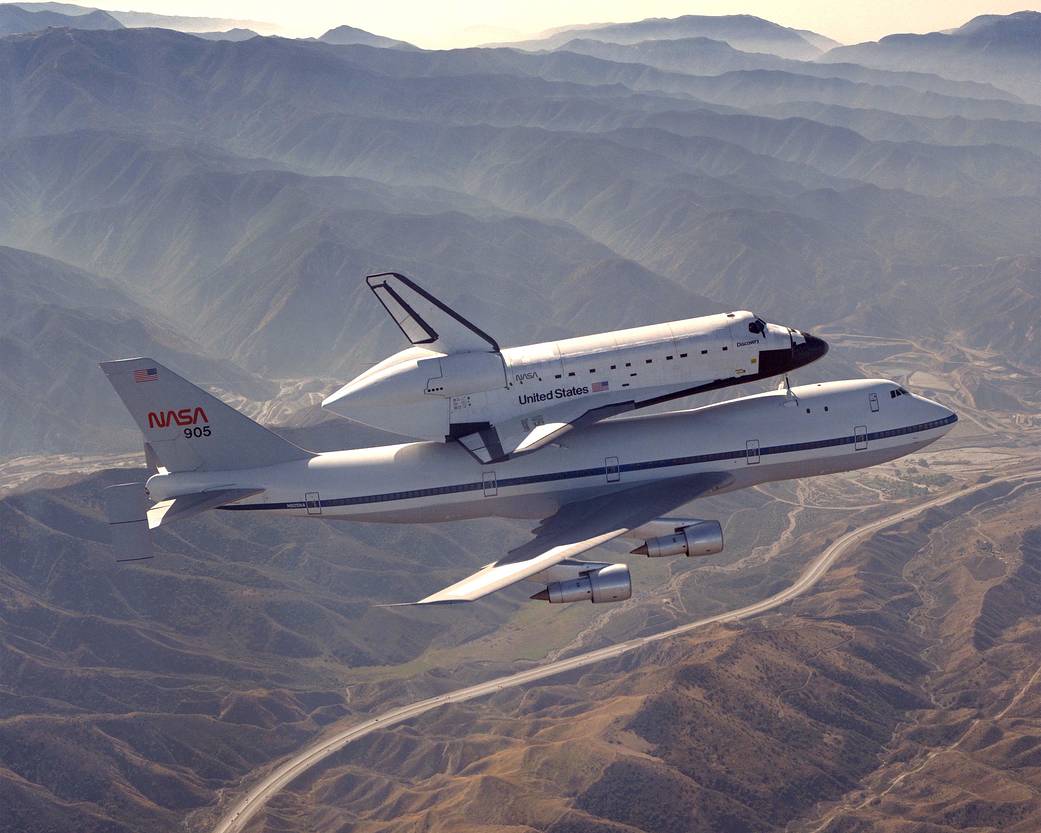
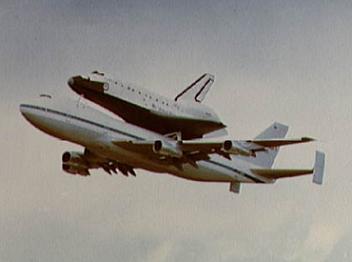
Space shuttle Discovery rolls out of Rockwell’s Palmdale, California, facility Discovery atop the Shuttle Carrier Aircraft during the cross-country ferry flight Discovery arrives at NASA’s Kennedy Space Center in Florida
Left: Space shuttle Discovery rolls out of Rockwell’s Palmdale, California, facility. Middle: Discovery atop the Shuttle Carrier Aircraft during the cross-country ferry flight. Right: Discovery arrives at NASA’s Kennedy Space Center in Florida.

Space shuttle Discovery, the third space-qualified orbiter in NASA’s fleet and named after several historical ships of exploration, incorporated manufacturing lessons learned from the first orbiters. In addition, through the use of more advanced materials, the new vehicle weighed nearly 8,000 pounds less than its sister ship Columbia and 700 pounds less than Challenger. Discovery rolled out of Rockwell International’s plant in Palmdale, California, on Oct. 16, 1983. Five of the six crew members assigned to its first flight attended the ceremony. Workers trucked Discovery overland from Palmdale to NASA’s Dryden, now Armstrong, Flight Research Center at Edwards Air Force Base (AFB), where they mounted it atop a Shuttle Carrier Aircraft (SCA), a modified Boeing 747, for the transcontinental ferry flight to NASA’s Kennedy Space Center (KSC) in Florida. Discovery arrived at KSC on Nov. 9 following a two-day stopover at Vandenberg Air Force, now Space Force Base, in California.

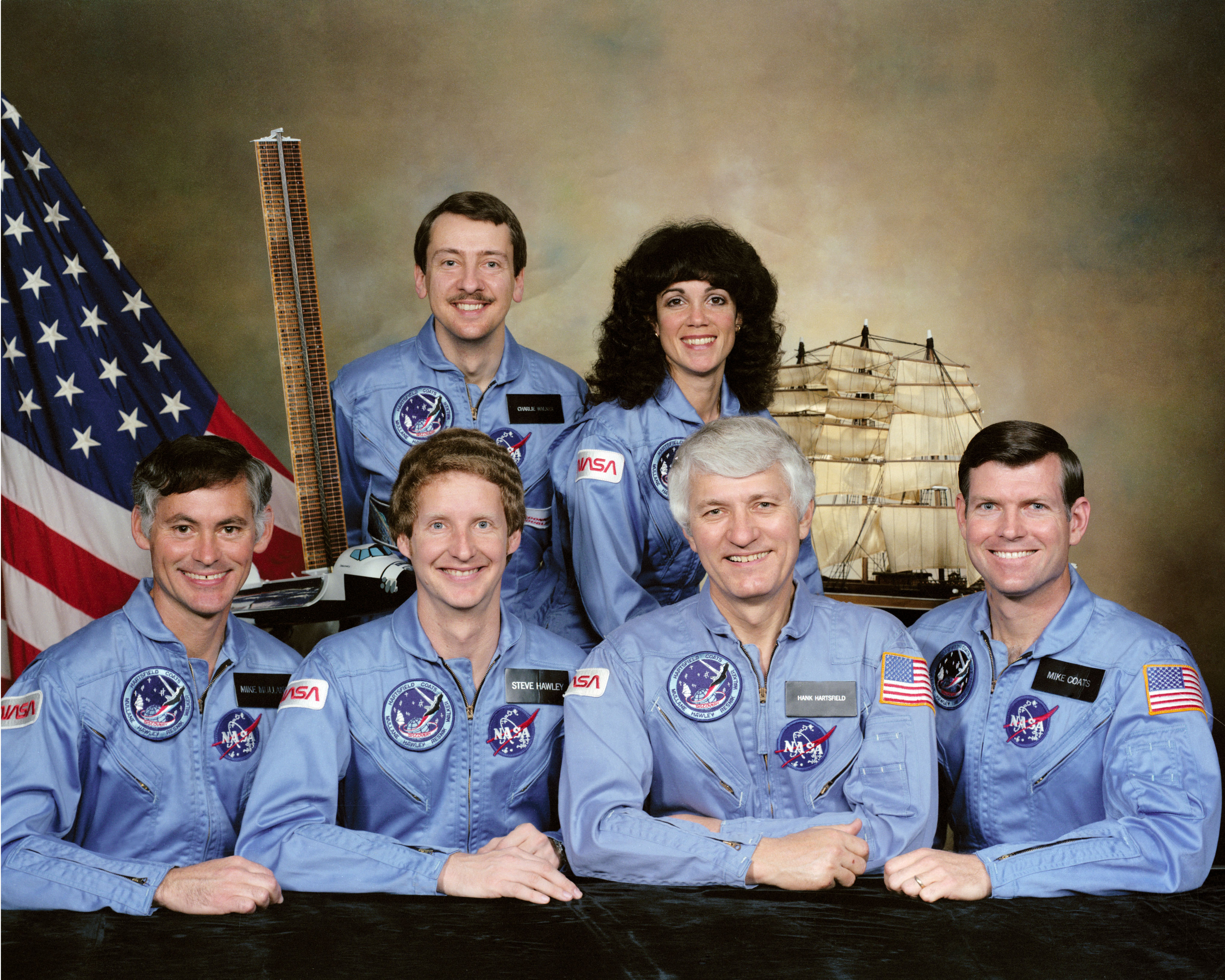
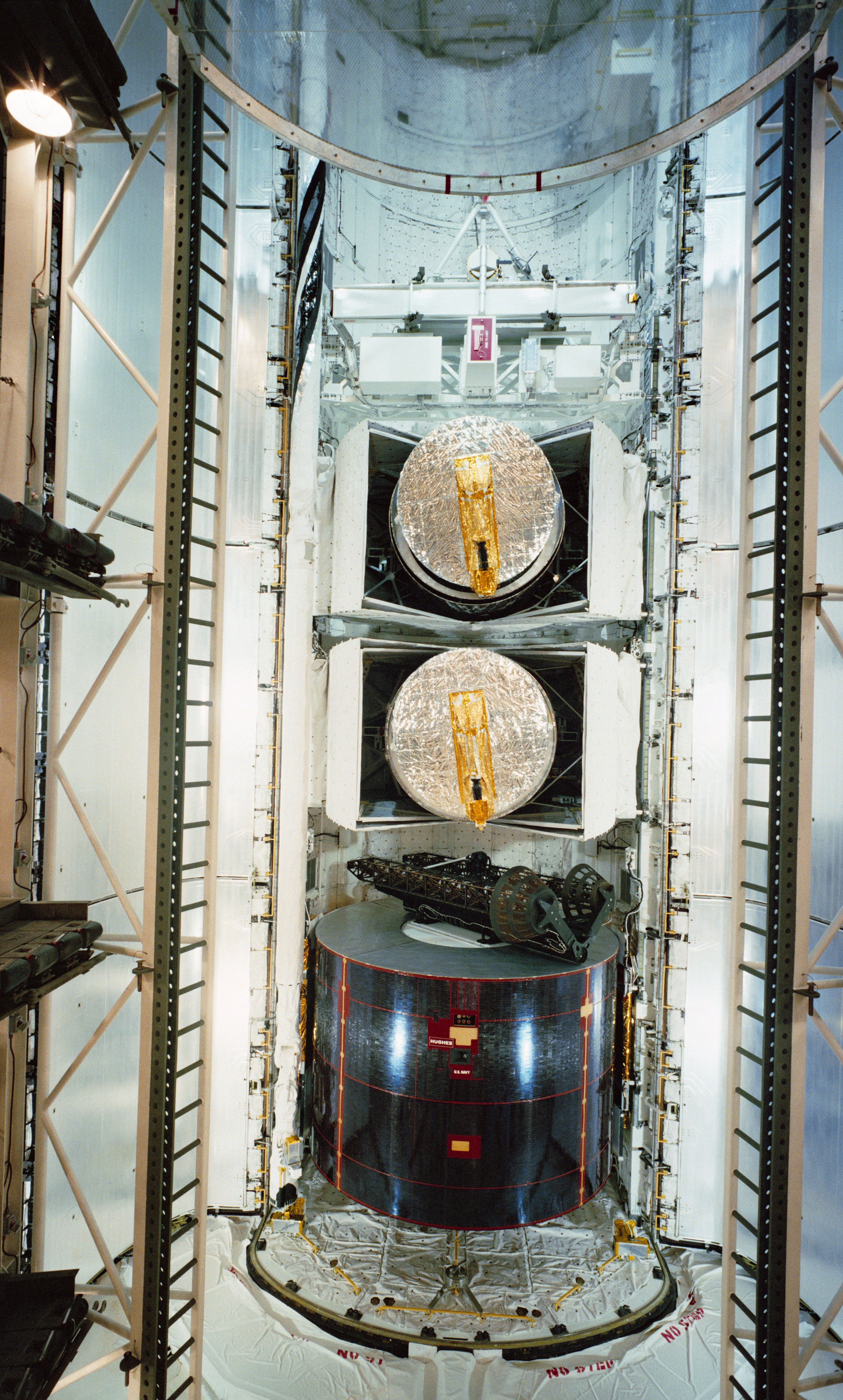
STS-41D crew patch Official photograph of the STS-41D crew of R. Michael “Mike” Mullane, front row left, Steven A. Hawley, Henry “Hank” W. Hartsfield, and Michael L. Coats; Charles D. Walker, back row left, and Judith A. Resnik Payloads installed in Discovery’s payload bay for the STS-41D mission
Left: STS-41D crew patch. Middle: Official photograph of the STS-41D crew of R. Michael “Mike” Mullane, front row left, Steven A. Hawley, Henry “Hank” W. Hartsfield, and Michael L. Coats; Charles D. Walker, back row left, and Judith A. Resnik. Right: Payloads installed in Discovery’s payload bay for the STS-41D mission include OAST-1, top, SBS-4, Telstar 3C, and Leasat-2.

To fly Discovery’s first flight, originally designated STS-12 and later renamed STS-41D, in February 1983 NASA assigned Commander Henry W. Hartsfield, a veteran of STS-4, and first-time flyers Pilot Michael L. Coats, and Mission Specialists R. Michael Mullane, Steven A. Hawley, and Judith A. Resnik, all from the 1978 class of astronauts and making their first spaceflights. In May 1983, NASA announced the addition of Charles D. Walker, an employee of the McDonnell Douglas Corporation, to the crew, flying as the first commercial payload specialist. He would operate the company’s Continuous Flow Electrophoresis System (CFES) experiment. The mission’s primary payloads included the Leasat-1 (formerly known as Syncom IV-1) commercial communications satellite and OAST-1, three experiments from NASA’s Office of Aeronautics and Space Technology, including the Solar Array Experiment, a 105-foot long lightweight deployable and retractable solar array. Following the June 1984 launch abort, NASA canceled the STS-41F mission, combining its payloads with STS-41D’s, resulting in three communications satellites – SBS-4 for Small Business Systems, Telstar 3C for AT&T, and Leasat 2 (Syncom IV-2) for the U.S. Navy – launching on the flight. The combined cargo weighed 41,184 pounds, the heaviest of the shuttle program up to that time. A large format IMAX® camera, making its second trip into space aboard the shuttle, flew in the middeck to film scenes inside the orbiter and out the windows.
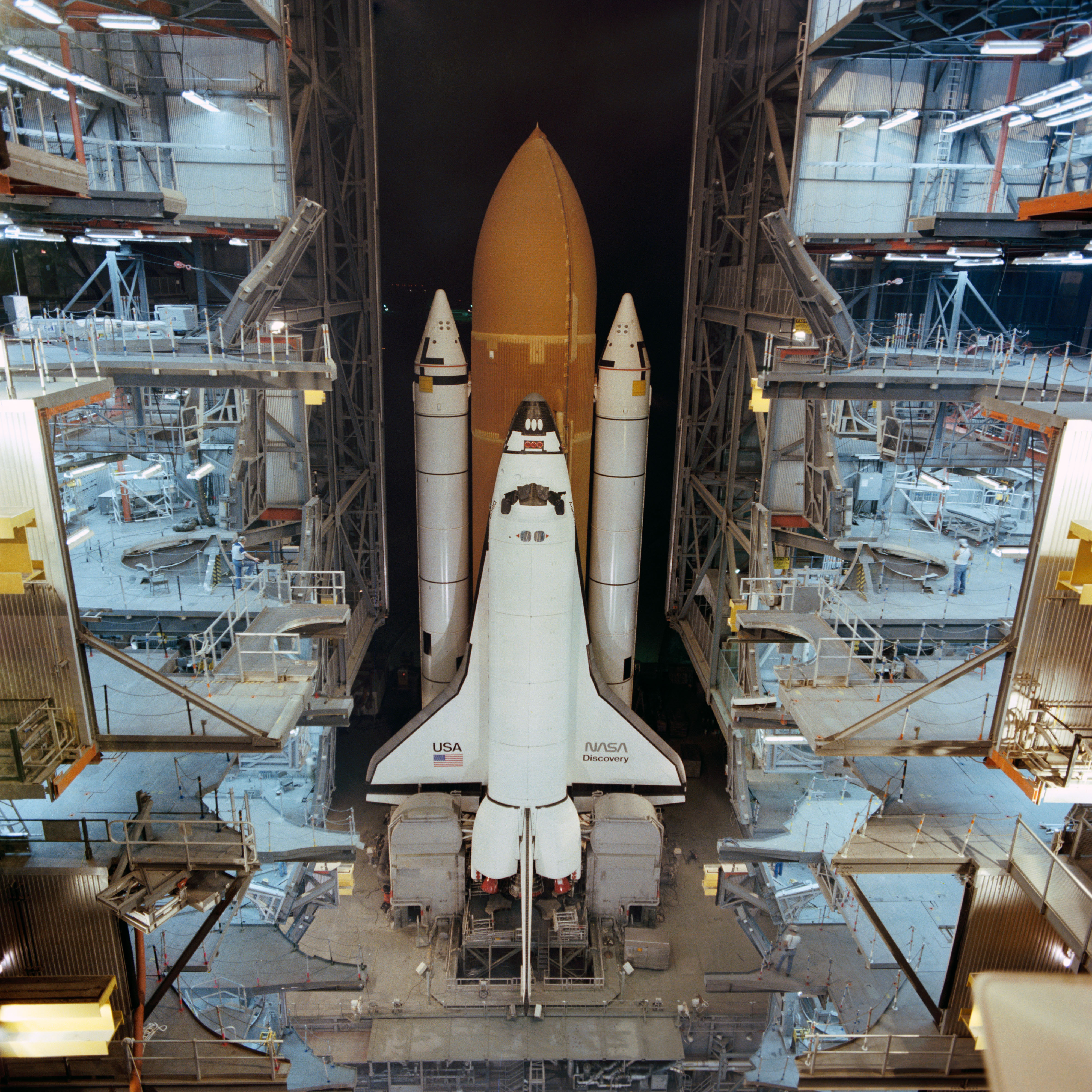
First rollout of Discovery from the Vehicle Assembly Building at NASA’s Kennedy Space Center in Florida The June 26 launch abort
Left: First rollout of Discovery from the Vehicle Assembly Building at NASA’s Kennedy Space Center in Florida. Right: The June 26 launch abort.

The day after its arrival at KSC, workers towed Discovery to the Orbiter Processing Facility (OPF) to begin preparing it for its first space flight. They towed it to the Vehicle Assembly Building (VAB) on May 12, 1984, for mating with its External Tank (ET) and Solid Rocket Boosters (SRBs). The completed stack rolled out to Launch Pad 39A a week later. On June 2, engineers successfully completed an 18-second Flight Readiness Firing of Discovery’s main engines. Post test inspections revealed a debonding of a thermal shield in main engine number 1’s combustion chamber, requiring its replacement at the pad. The work pushed the planned launch date back three days to June 25. The failure of the shuttle’s backup General Purpose Computer (GPC) delayed the launch by one day. The June 26 launch attempt ended just four seconds before liftoff, after two of the main engines had already ignited. The GPC detected that the third engine had not started and shut all three down. It marked the first time a human spaceflight launch experienced an abort after the start of its engines since Gemini VI in October 1965. The abort necessitated a rollback to the VAB on July 14 where workers demated Discovery from the ET and SRBs. Engineers replaced the faulty engine, and Discovery rolled back out to the launch pad on Aug. 9 for another launch attempt. The six-person crew participated in the Terminal Countdown Demonstration Test, essentially a dress rehearsal for the actual countdown to launch, on Aug. 15. A software issue delayed the first launch attempt on Aug. 29 by one day.
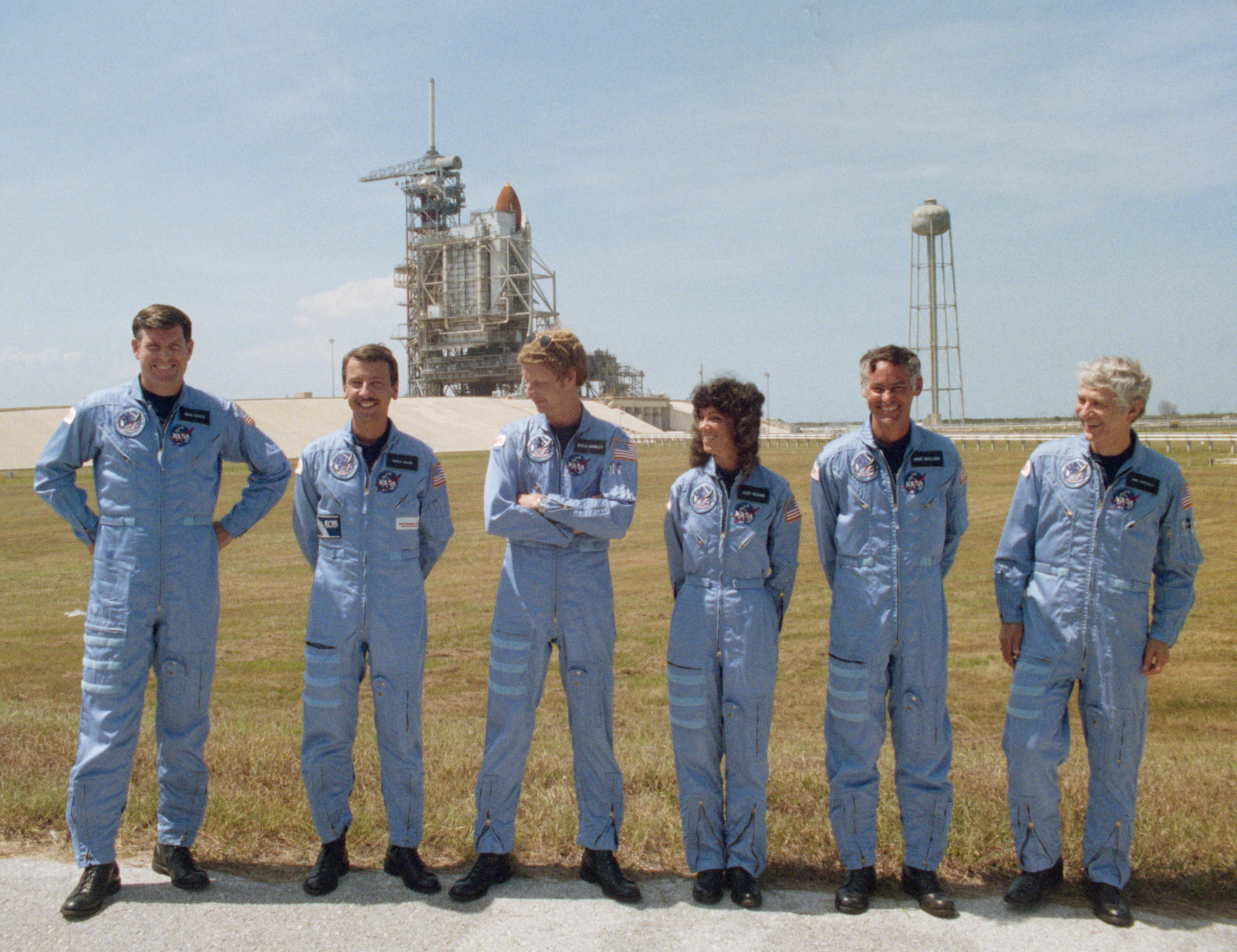
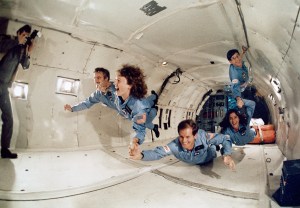
The STS-41D crew pose at Launch Pad 39A at NASA’s Kennedy Space Center in Florida following the Terminal Countdown Demonstration Test Liftoff of Discovery on the STS-41D mission
Left: The STS-41D crew pose at Launch Pad 39A at NASA’s Kennedy Space Center in Florida following the Terminal Countdown Demonstration Test. Right: Liftoff of Discovery on the STS-41D mission.

Finally, on Aug. 30, 1984, Discovery roared off its launch pad on a pillar of flame and within 8 and a half minutes entered orbit around the Earth. The crew got down to work and on the first day Mullane and Hawley deployed the SBS-4 satellite. On the second day in space, they deployed Leasat, the first satellite designed specifically to be launched from the shuttle. On the third day, they deployed the Telstar satellite, completing the satellite delivery objectives of the mission. Resnik deployed the OAST-1 solar array to 70% of its length to conduct dynamic tests on the structure. On the fourth day, she deployed the solar array to its full length and successfully retracted it, completing all objectives for that experiment.

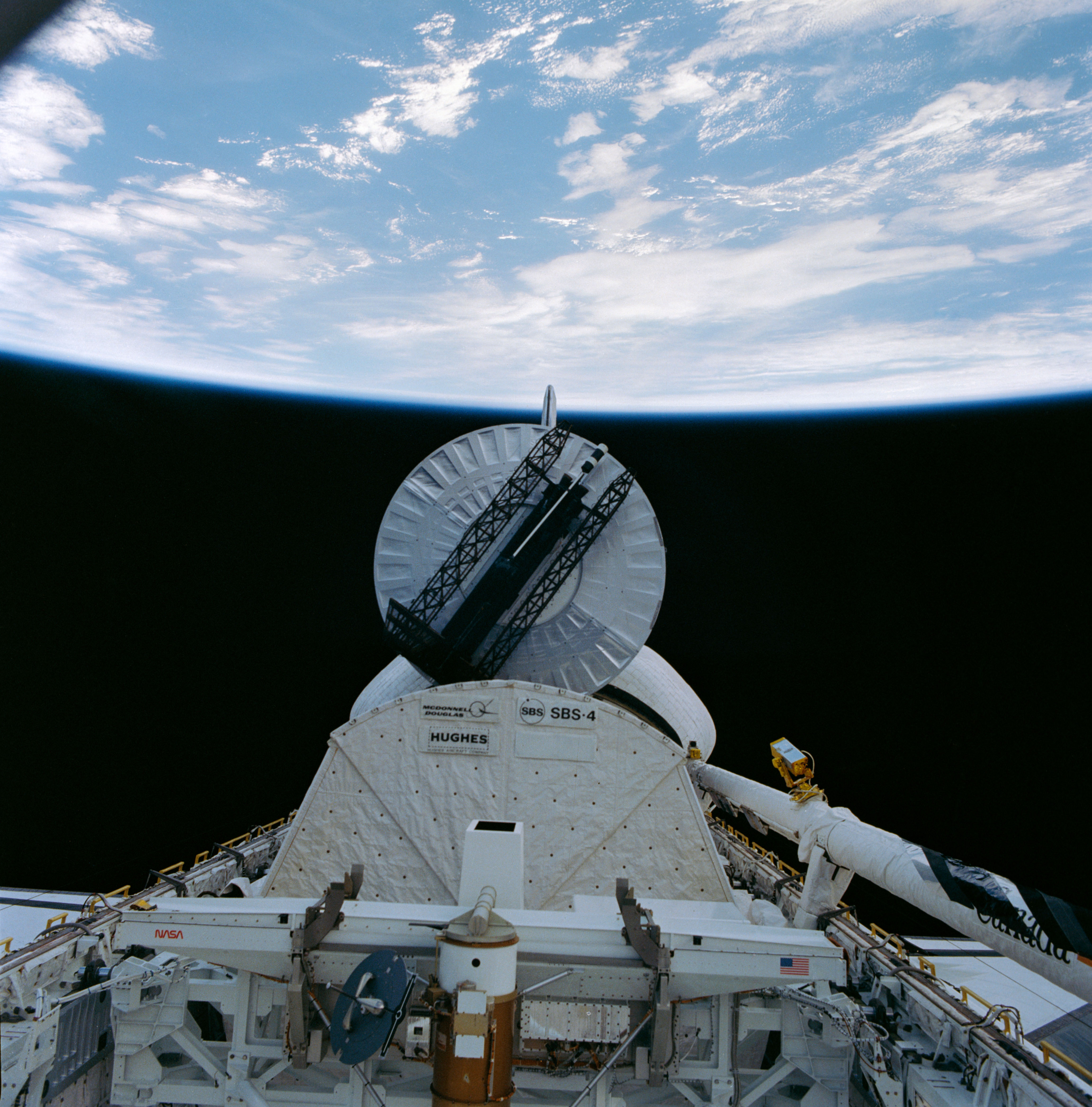
The deployment of the SBS-4 satellite during STS-41D The deployment of the Leasat-2 satellite during STS-41D The deployment of the Telstar 3C satellite during STS-41D
The deployment of the SBS-4, left, Leasat-2, and Telstar 3C satellites during STS-41D.

Walker remained busy with the CFES, operating the unit for about 100 hours, and although the experiment experienced two unexpected shutdowns, he processed about 85% of the planned samples. Hartsfield and Coats exposed two magazines and six rolls of IMAX® film, recording OAST-1 and satellite deployments as well as in-cabin crew activities. Clips from the mission appear in the 1985 IMAX® film “The Dream is Alive.” On the mission’s fifth day, concern arose over the formation of ice on the orbiter’s waste dump nozzle. The next day, Hartsfield used the shuttle’s robotic arm to dislodge the large chunk of ice.

Payload Specialist Charles D. Walker in front of the Continuous Flow Experiment System Henry “Hank” W. Hartsfield loading film into the IMAX® camera The OAST-1 Solar Array Experiment extended from Discovery’s payload bay
Left: Payload Specialist Charles D. Walker in front of the Continuous Flow Experiment System. Middle: Henry “Hank” W. Hartsfield loading film into the IMAX® camera. Right: The OAST-1 Solar Array Experiment extended from Discovery’s payload bay.

On Sep. 5, the astronauts closed Discovery’s payload bay doors in preparation for reentry. They fired the shuttle’s Orbital Maneuvering System engines to slow their velocity and begin their descent back to Earth. Hartsfield guided Discovery to a smooth landing at Edwards AFB in California, completing a flight of 6 days and 56 minutes. The crew had traveled 2.5 million miles and orbited the Earth 97 times.

The STS-41D crew pose in Discovery’s middeck Space shuttle Discovery makes a perfect landing at Edwards Air Force Base in California to end the STS-41D mission
Left: The STS-41D crew pose in Discovery’s middeck. Right: Space shuttle Discovery makes a perfect landing at Edwards Air Force Base in California to end the STS-41D mission. 

By Sept. 10, workers had returned Discovery to KSC to prepare it for its next mission, STS-51A, in November 1984. During its lifetime, Discovery flew a fleet leading 39 missions, making its final trip to space in February 2011. It flew both return to flight missions, STS-26 in 1988 and STS-114 in 2005. It launched the Hubble Space Telescope in 1990 and flew two of the missions to service the facility. Discovery flew two mission to Mir, docking once. It completed the first docking to the International Space Station in 1999 and flew a total of 13 assembly and resupply missions to the orbiting lab. By its last mission, Discovery had traveled 149 million miles, completed 5,830 orbits of the Earth, and spent a cumulative 365 days in space in the span of 27 years. The public can view Discovery on display at the National Air and Space Museum’s Stephen F. Udvar-Hazy Center in Chantilly, Virginia.

Read recollections of the STS-41D mission by Hartsfield, Coats, Mullane, Hawley, and Walker in their oral histories with the JSC History Office. Enjoy the crew’s narration of a video about the STS-41D mission.

Powered by WPeMatico

Get The Details…
Kelli Mars