NASA Ames Selects Aeronautics and Exploration Support Contractor

NASA Ames Selects Aeronautics and Exploration Support Contractor

The letters NASA on a blue circle with red and white detail, all surrounded by a black background
Credit: NASA

NASA has awarded the NASA Academic Mission Services 2 (NAMS-2) contract to Crown Consulting Inc., of Arlington, Virginia, to provide the agency’s Ames Research Center in California’s Silicon Valley, aeronautics and exploration technology research and development support.

NAMS-2 is a single award hybrid cost-plus-fixed-fee indefinite-delivery indefinite-quantity contract with a maximum potential value of $121 million. The contract begins Tuesday, Oct. 1, 2024, with a 60-day phase-in period, followed by a two-year base period, and options to extend performance through November 2029.

Under this contract, the company will support a broad scope of scientific research and development of new and emerging capabilities and technologies associated with air traffic management, advanced technology, nanoelectronics, and prototype software in support of the Aeronautics Directorate and the Exploration Technology Directorate at NASA Ames. The work also will focus on the improvement of aircraft and airspace safety, as well as the transition of advanced aeronautics technologies into future air vehicles.

For information about NASA and agency programs, visit:

https://www.nasa.gov

-end-

Roxana Bardan
Headquarters, Washington
202-358-1600
roxana.bardan@nasa.gov

Rachel Hoover
Ames Research Center, Silicon Valley, Calif.
rachel.hoover@nasa.gov
650-604-4789

Share

Details

Last Updated

Sep 13, 2024

Powered by WPeMatico

Get The Details…
Roxana Bardan

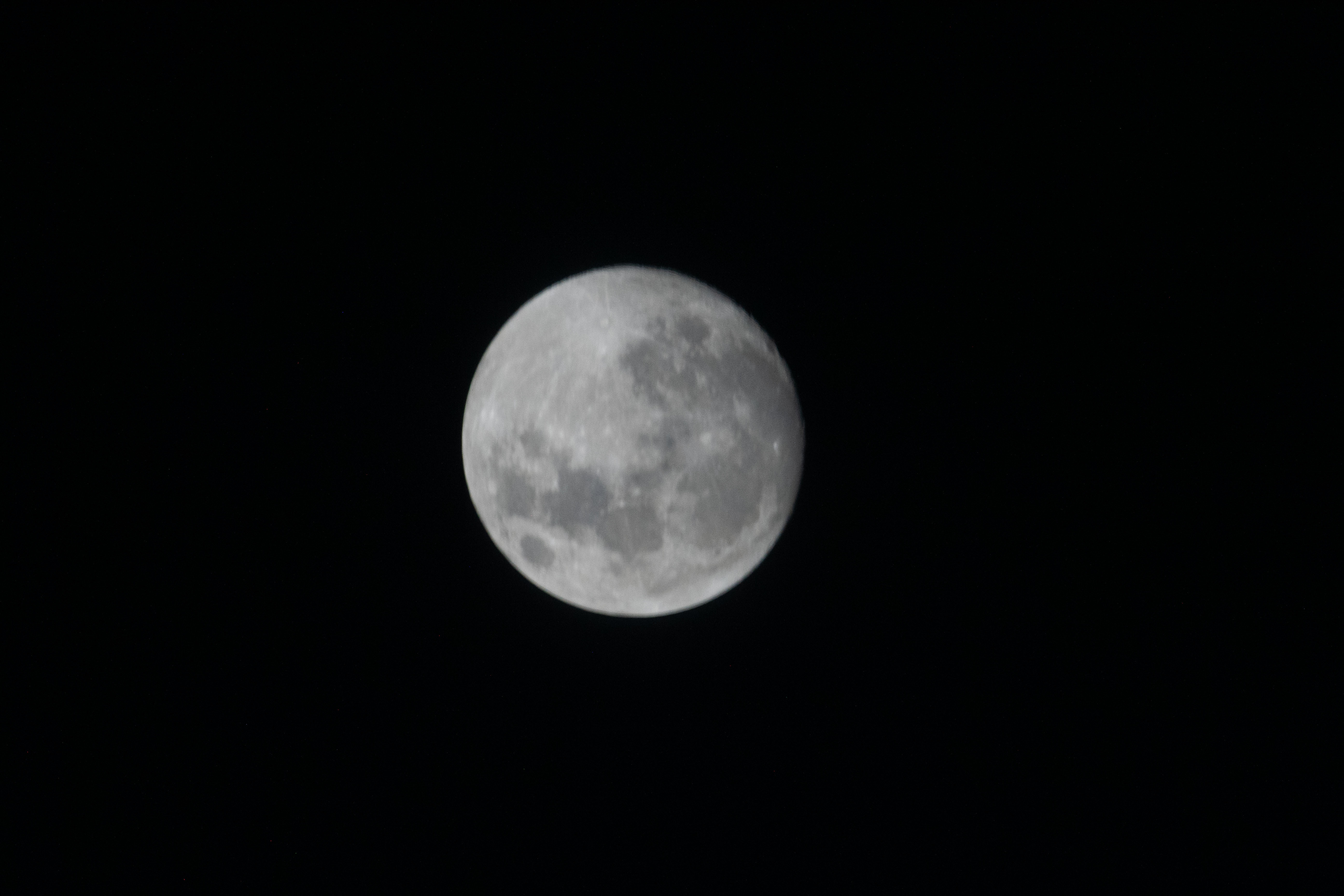
Waxing Gibbous Moon over Minnesota

Waxing Gibbous Moon over Minnesota

The waxing gibbous Moon looks nearly full in the darkness of space.
NASA, ESA/Matthias Maurer

An astronaut aboard the International Space Station snapped this picture of the Moon as the station orbited 265 miles above the U.S. state of Minnesota on Dec. 17, 2021.

Astronauts aboard the orbital lab take images using handheld digital cameras, usually through windows in the station’s cupola, for Crew Earth Observations. Crew members have produced hundreds of thousands of images of the Moon and Earth’s land, oceans, and atmosphere.

On Saturday, Sept. 14, 2024, International Observe the Moon Night, everyone on Earth is invited to learn about lunar science, participate in celestial observations, and honor cultural and personal connection to the Moon. Find an event to join in the celebration.

Image credit: NASA, ESA/Matthias Maurer

Powered by WPeMatico

Get The Details…
Monika Luabeya

NASA’s Lunar Challenge Participants to Showcase Innovations During Awards

NASA’s Lunar Challenge Participants to Showcase Innovations During Awards

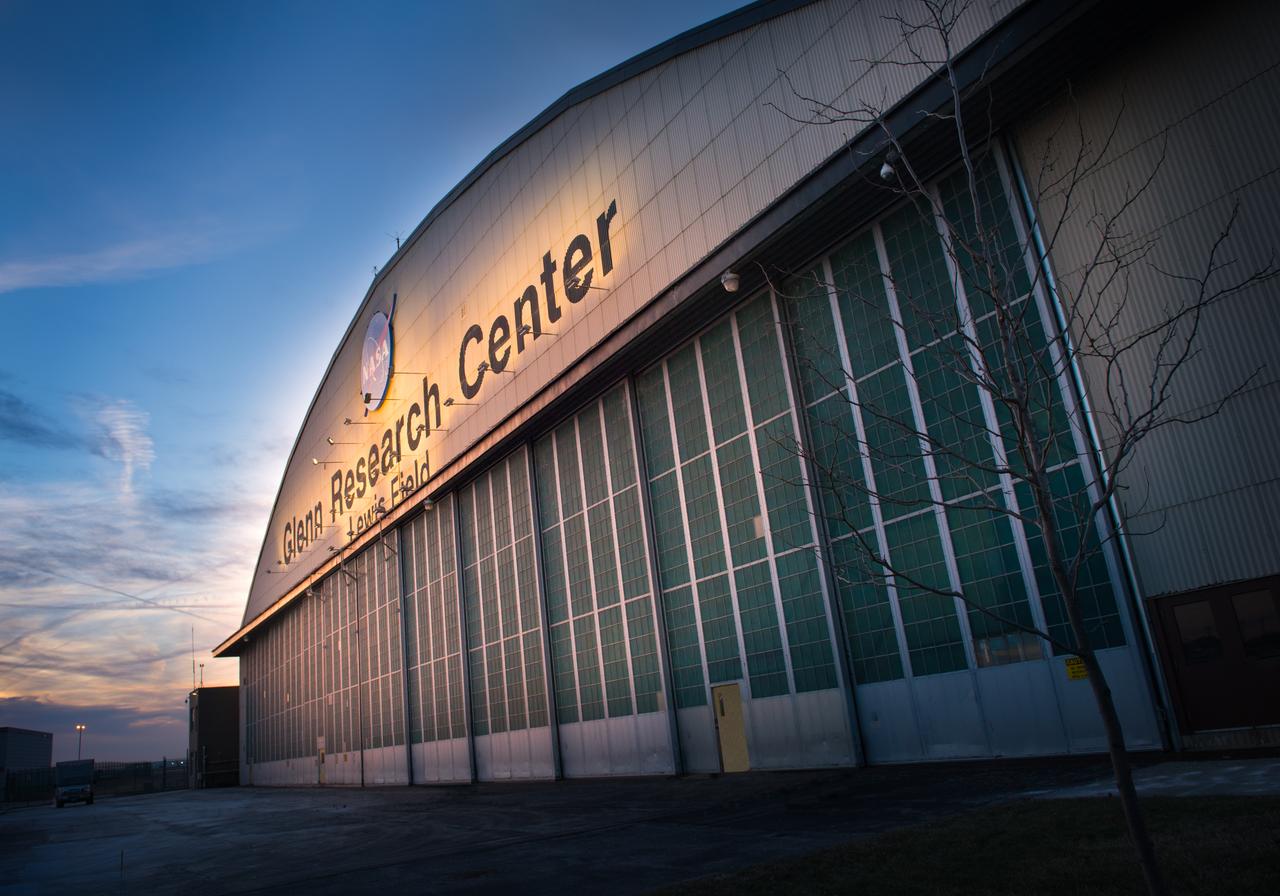
A sunrise view of the hangar at NASA's Glenn Research Center
The Sun rises above the Flight Research Building at NASA’s Glenn Research Center in Cleveland.
Credit: NASA

Editor’s note: This media advisory was updated Friday, Sept. 13, 2024, with a correct phone number for the media contact at NASA’s Glenn Research Center.

NASA‘s Watts on the Moon Challenge, designed to advance the nation’s lunar exploration goals under the Artemis campaign by challenging United States innovators to develop breakthrough power transmission and energy storage technologies that could enable long-duration Moon missions, concludes on Friday, Sept. 20, at the Great Lakes Science Center in Cleveland.

“For astronauts to maintain a sustained presence on the Moon during Artemis missions, they will need continuous, reliable power,” said Kim Krome-Sieja, acting program manager, Centennial Challenges at NASA’s Marshall Space Flight Center in Huntsville, Alabama. “NASA has done extensive work on power generation technologies. Now, we’re looking to advance these technologies for long-distance power transmission and energy storage solutions that can withstand the extreme cold of the lunar environment.”

The technologies developed through the Watts on the Moon Challenge were the first power transmission and energy storage prototypes to be tested by NASA in an environment that simulates the extreme cold and weak atmospheric pressure of the lunar surface, representing a first step to readying the technologies for future deployment on the Moon. Successful technologies from this challenge aim to inspire, for example, new approaches for helping batteries withstand cold temperatures and improving grid resiliency in remote locations on Earth that face harsh weather conditions.

Media and the public are invited to attend the grand finale technology showcase and awards ceremony for the $5 million, two-phase competition. U.S. and international media interested in covering the event should confirm their attendance with Lane Figueroa by 3 p.m. CDT Tuesday, Sept. 17, at: lane.e.figueroa@nasa.gov. NASA’s media accreditation policy is available online. Members of the public may register as an attendee by completing this form, also by Friday, Sept. 17.

During the final round of competition, finalist teams refined their hardware and delivered a full system prototype for testing in simulated lunar conditions at NASA’s Glenn Research Center in Cleveland. The test simulated a challenging power system scenario where there are six hours of solar daylight, 18 hours of darkness, and the user is three kilometers from the power source.

“Watts on the Moon was a fantastic competition to judge because of its unique mission scenario,” said Amy Kaminski, program executive, Prizes, Challenges, and Crowdsourcing, Space Technology Mission Directorate at NASA Headquarters in Washington. “Each team’s hardware was put to the test against difficult criteria and had to perform well within a lunar environment in our state-of-the-art thermal vacuum chambers at NASA Glenn.”

Each finalist team was scored based on Total Effective System Mass (TESM), which determines how the system works in relation to its mass. At the awards ceremony, NASA will award $1 million to the top team who achieves the lowest TESM score, meaning that during testing, that team’s system produced the most efficient output-to-mass ratio. The team with the second lowest mass will receive $500,000. The awards ceremony stream live on NASA Glenn’s YouTube channel and NASA Prize’s Facebook page.

The Watts on the Moon Challenge is a NASA Centennial Challenge led by NASA Glenn. NASA Marshall manages Centennial Challenges, which are part of the agency’s Prizes, Challenges, and Crowdsourcing program in the Space Technology Mission Directorate. NASA has contracted HeroX to support the administration of this challenge.

For more information on NASA’s Watts on the Moon Challenge, visit:

https://www.nasa.gov/wattson

-end- 

Jasmine Hopkins
Headquarters, Washington
321-432-4624
jasmine.s.hopkins@nasa.gov

Lane Figueroa
Marshall Space Flight Center, Huntsville, Ala.
256-932-1940
lane.e.figueroa@nasa.gov

Brian Newbacher
Glenn Research Center, Cleveland
216-469-9726
brian.t.newbacher@nasa.gov

Powered by WPeMatico

Get The Details…
Jessica Taveau

Sols 4302-4303: West Side of Upper Gediz Vallis, From Tungsten Hills to the Next Rocky Waypoint

Sols 4302-4303: West Side of Upper Gediz Vallis, From Tungsten Hills to the Next Rocky Waypoint

3 min read

Sols 4302-4303: West Side of Upper Gediz Vallis, From Tungsten Hills to the Next Rocky Waypoint

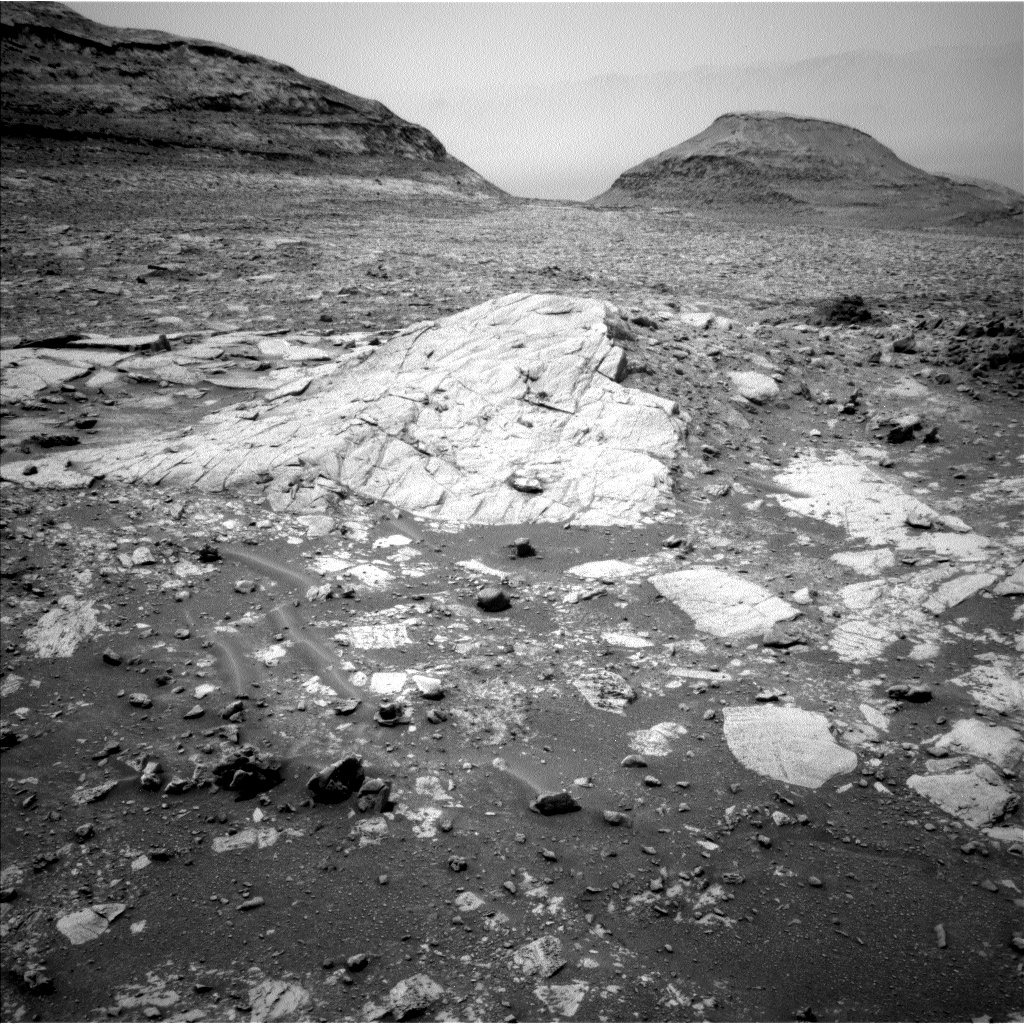
Image taken by Curiosity of Mars at the
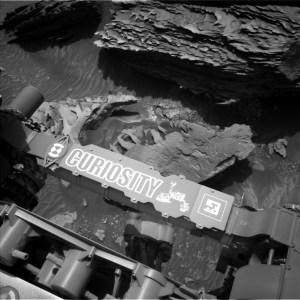
This photo taken by NASA’s Mars rover Curiosity of ‘Balloon Dome’ covers a low dome-like structure formed by the light-toned slab-like rocks. This image was taken by Left Navigation Camera aboard Curiosity on Sol 4301 — Martian day 4,301 of the Mars Science Laboratory mission — on Sept. 11, 2024, at 09:14:42 UTC.
NASA/JPL-Caltech

Earth planning date: Wednesday, Sept. 11, 2024

The rover is on its way from the Tungsten Hills site to the next priority site for Gediz Vallis channel exploration, in which we plan to get in close enough for arm science to one of the numerous large dark-toned “float” blocks in the channel and also to one of the light-toned slabs.  We have seen some dark blocks in the channel that seem to be related to the Stimson formation material that the rover encountered earlier in the mission, but some seem like they could be something different. We don’t think any of them originated in the channel so they have to come from somewhere higher up that the rover hasn’t been, and we’re interested in how they were transported down into the channel.

We aren’t there yet, but the 4302-4303 plan’s activities include some important longer-range characterization of the dark-toned and light-toned materials via imaging. Context for the future close-up science on the dark-toned blocks will be provided by the Mastcam mosaics named “Bakeoven Meadow” and “Balloon Dome.”  The broad Balloon Dome mosaic also covers a low dome-like structure formed by the light-toned slab-like rocks (pictured).  Smaller mosaics will cover a pair of targets that include contacts where other types of light-toned and dark-toned material occur next to each other in the same block: “Rattlesnake Creek” which appears to be in place, and “Casa Diablo Hot Springs,” which is a float.

The rover’s arm workspace provided an opportunity for present-day aeolian science on the sandy-looking ripple, Sandy Meadow. Mastcam stereo imaging will document the shape of the ripple, while a suite of high-resolution MAHLI images will tell us something about the particle size of the grains in it.  The modern environment will also be monitored via a suprahorizon observation, a dust devil survey, and imaging of the rover deck to look for dust movement.

The workspace included small examples of the dark float blocks, so the composition of one of them will be measured by both APXS and ChemCam LIBS as targets “Lucy’s Foot Pass” and “Colt Lake” respectively.

In the meantime, the Mastcam Boneyard Meadow mosaic will provide a look back at the Tungsten Hills dark rippled block along its bedding plane to try to narrow down the origin of the ripples and the potential roles of water vs. wind in their formation.

Communication remains a challenge for the rover in this location. During planning, the rover’s drive was shifted from the second sol to the first sol in order to increase the downlink data volume available for the post-drive imaging, thereby enabling better planning at the science waypoint we expect to reach in the weekend plan. However, maintaining communications will require the rover to end its drive in a narrow range of orientations, which could make approaching our next science target a bit tricky.  We’ll find out on Friday!

Written by: Lucy Lim, Planetary Scientist at NASA Goddard Space Flight Center
Edited by: Abigail Fraeman, Planetary Geologist at NASA’s Jet Propulsion Laboratory

Share

Details

Last Updated
Sep 13, 2024

Related Terms

Powered by WPeMatico

Get The Details…

NASA Airport Throughput Prediction Challenge

NASA Airport Throughput Prediction Challenge

Boeing aircraft flying above a field.
Image Credit: BitGrit

The Digital Information Platform (DIP) Sub-Project of Air Traffic Management – eXploration (ATM-X) is seeking to make available in the National Airspace System a variety of live data feeds and services built on that data. The goal is to allow external partners to build advanced, data-driven services using this data and to make these services available to flight operators, who will use these capabilities to save fuel and avoid delays. Different wind directions, weather conditions at or near the airport, inoperative runway, etc., affects the runway configurations to be used and impacts the overall arrival throughputs. Knowing the arrival runway and its congestion level ahead of time will enable aviation operators to perform better flight planning and improve the flight efficiency. This competition seeks to make better predictions of runway throughputs using machine learning or other techniques. This competition engages students, faculty members, and other individuals employed by United States universities to develop a machine learning model that provides a short-term forecast of estimated airport runway throughput using simulated real-time information from historical NAS and weather forecast data, as well as other factors such as meteorological conditions, airport runway configuration, and airspace congestion.

Award: $120,000 in total prizes

Open Date: September 13, 2024

Close Date: December 8, 2024

For more information, visit: https://bitgrit.net/competition/23

Powered by WPeMatico

Get The Details…
Sarah Douglas