NASA’s Artemis II Crew Uses Iceland Terrain for Lunar Training

NASA’s Artemis II Crew Uses Iceland Terrain for Lunar Training

4 Min Read

NASA’s Artemis II Crew Uses Iceland Terrain for Lunar Training

Credits:
NASA/Trevor Graff/Robert Markowitz

Black and gray sediment stretches as far as the eye can see. Boulders sit on top of ground devoid of vegetation. Humans appear almost miniature in scale against a swath of shadowy mountains. At first glance, it seems a perfect scene from an excursion on the Moon’s surface … except the people are in hiking gear, not spacesuits.

Iceland has served as a lunar stand-in for training NASA astronauts since the days of the Apollo missions, and this summer the Artemis II crew took its place in that long history. NASA astronauts Reid Wiseman, Victor Glover, Christina Koch, and CSA (Canadian Space Agency) astronaut Jeremy Hansen, along with their backups, NASA astronaut Andre Douglas and CSA astronaut Jenni Gibbons, joined geology experts for field training on the Nordic island.

NASA astronaut and Artemis II mission specialist Christina Koch stands in the desolate landscape of Iceland during a geology field training course. NASA/Robert Markowitz
NASA/Robert Markowitz

“Apollo astronauts said Iceland was one of the most lunar-like training locations that they went to in their training,” said Cindy Evans, Artemis geology training lead at NASA’s Johnson Space Center in Houston. “It has lunar-like planetary processes – in this case, volcanism. It has the landscape; it looks like the Moon. And it has the scale of features astronauts will both be observing and exploring on the Moon.”

Iceland’s geology, like the Moon’s, includes rocks called basalts and breccias. Basalts are dark, fine-grained, iron-rich rocks that form when volcanic magma cools and crystalizes quickly. In Iceland, basalt lavas form from volcanoes and deep fissures. On the Moon, basalts can form from both volcanoes and lava pooling in impact basins. Breccias are angular fragments of rock that are fused together to create new rocks. In Iceland, volcanic breccias are formed from explosive volcanic eruptions and on the Moon, impact breccias are formed from meteoroids impacting the lunar surface.

Apollo astronauts said Iceland was one of the most lunar-like training locations that they went to in their training.

Cindy Evans

Cindy Evans

Artemis Geology Training Lead

Along with exploring the geology of Iceland, the astronauts practiced navigation and expeditionary skills to prepare them for living and working together, and gave feedback to instructors, who used this as an opportunity to hone their instruction and identify sites for future Artemis crew training. They also put tools to the test, learning to use hammers, scoops, and chisels to collect rock samples.

Caption: The Artemis II crew, NASA astronauts Reid Wiseman, Victor Glover, Christina Koch, and Canadian Space Agency (CSA) astronaut Jeremy Hansen, and backup crew members NASA astronaut Andre Douglas and CSA astronaut Jenni Gibbons trek across the Icelandic landscape during their field geology training.
NASA/Robert Markowitz

“The tools we used during the Apollo missions haven’t changed that much for what we’re planning for the Artemis missions,” said Trevor Graff, exploration geologist and the hardware and testing lead on the Artemis science team at NASA Johnson. “Traditionally, a geologist goes out with just standard tool sets of things like rock hammers and scoops or shovels to sample the world around them, both on the surface and subsurface.”

The Artemis tools have a bit of a twist from traditional terrestrial geology tools, though. Engineers must take into consideration limited mass availability during launch, how easy it is to use a tool while wearing pressurized gloves, and how to ensure the pristine nature of the lunar samples is preserved for study back on Earth.

There’s really transformational science that we can learn by getting boots back on the Moon, getting samples back, and being able to do field geology with trained astronauts on the surface.

Angela Garcia

Angela Garcia

Exploration Geologist and Artemis II Science Officer

Researcher using hand-held tools to take a sample from a rugged basalt face. She wears outdoor work clothes and rain gear. In the background, dark grey dust and rocks stretch to the horizon. The landscape is unvegetated and entirely greyscale.
Caption: Angela Garcia, Artemis II science officer and exploration geologist, demonstrates how to use a rock hammer and chisel to dislodge a rock sample from a large boulder during the Artemis II field geology training in Iceland.
NASA/Robert Markowitz

“There’s really transformational science that we can learn by getting boots back on the Moon, getting samples back, and being able to do field geology with trained astronauts on the surface,” said Angela Garcia, exploration geologist and an Artemis II science officer at NASA Johnson.

The Artemis II test flight will be NASA’s first mission with crew under Artemis and will pave the way to land the first woman, first person of color, and first international partner astronaut on the Moon on future missions. The crew will travel approximately 4,600 miles beyond the far side of the Moon. While the Artemis II astronauts will not land on the surface of the Moon, the geology fundamentals they develop during field training will be critical to meeting the science objectives of their mission.

These objectives include visually studying a list of surface features, such as craters, from orbit. Astronauts will snap photos of the features, and describe their color, reflectivity, and texture — details that can reveal their geologic history.

The Artemis II crew astronauts, their backups, and the geology training field team pose in a valley in Iceland’s Vatnajökull national park. From front left: Angela Garcia, Jacob Richardson, Cindy Evans, Jenni Gibbons, Jacki Mahaffey, back row from left: Jeremy Hansen, John Ramsey, Reid Wiseman, Ron Spencer, Scott Wray, Kelsey Young, Patrick Whelley, Christina Koch, Andre Douglas, Jacki Kagey, Victor Glover, Rick Rochelle (NOLS), Trevor Graff.

“Having humans hold the camera during a lunar pass and describe what they’re seeing in language that scientists can understand is a boon for science,” said Kelsey Young, lunar science lead for Artemis II and Artemis II science officer at NASA’s Goddard Space Flight Center in Greenbelt, Maryland. “In large part, that’s what we’re training astronauts to do when we take them to these Moon-like environments on Earth.”

Download additional high-resolution images here.

Powered by WPeMatico
Get The Details…

Hubble Examines a Spiral Star Factory

Hubble Examines a Spiral Star Factory

2 min read

Hubble Examines a Spiral Star Factory

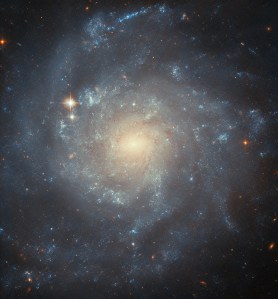
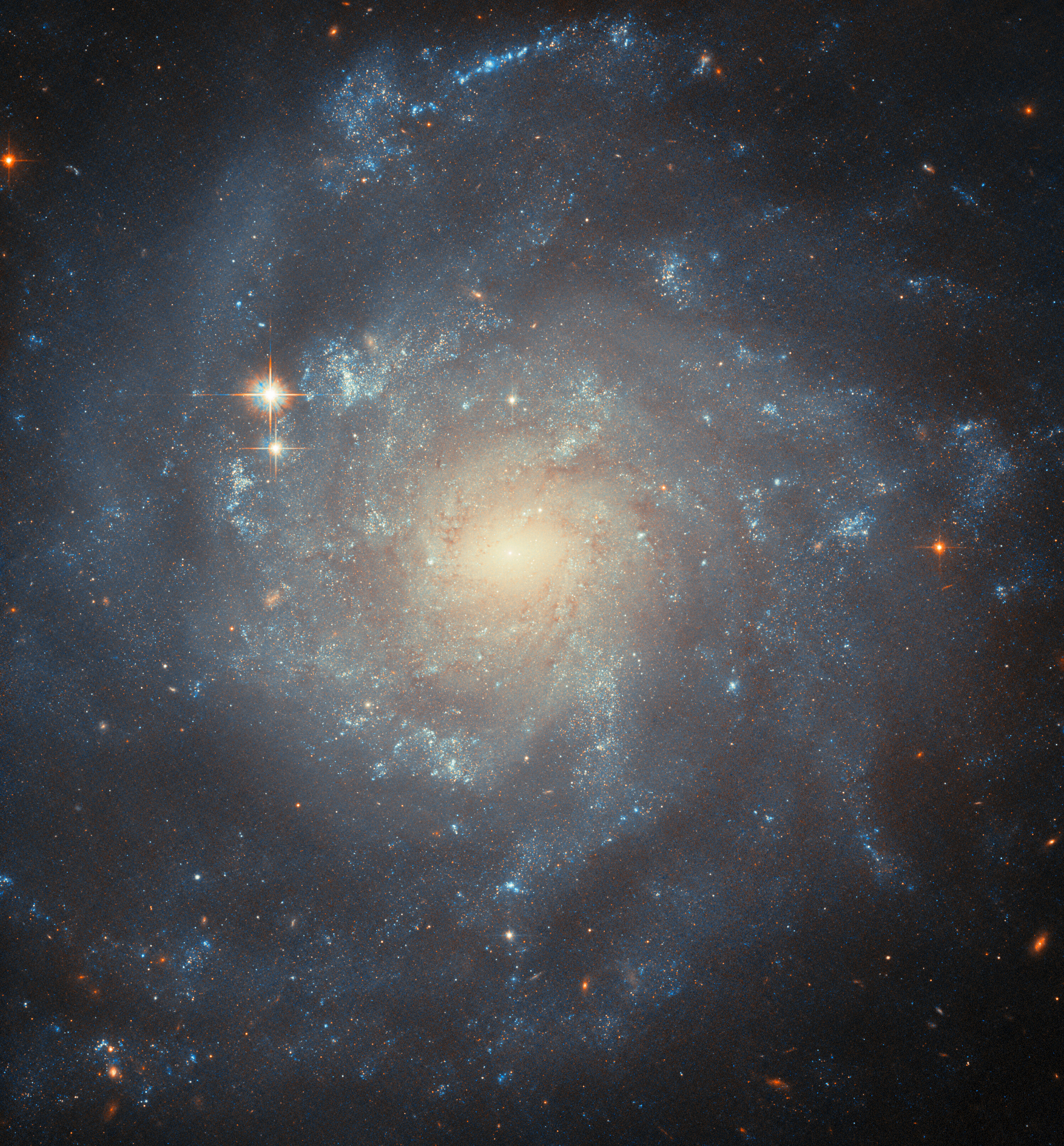
A spiral galaxy, seen up close and face-on. It is colored yellow and glowing brightly at the oval-shaped center, showing older and cooler stars, and it becomes bluer out to the edge of the disc where the stars are younger and hotter. It has a number of somewhat patchy spiral arms curling around, with sparkling areas where stars form. The black background is visible in the corners.
This NASA/ESA Hubble Space Telescope image features the spiral galaxy NGC 5668.
ESA/Hubble & NASA, C. Kilpatrick

This NASA/ESA Hubble Space Telescope image features a spiral galaxy in the constellation Virgo named NGC 5668. It is relatively near to us at 90 million light-years from Earth and quite accessible for astronomers to study with both space- and ground-based telescopes. At first glance, it doesn’t seem like a remarkable galaxy. It is around 90,000 light-years across, similar in size and mass to our own Milky Way galaxy, and its nearly face-on orientation shows open spiral arms made of cloudy, irregular patches.

One noticeable difference between the Milky Way galaxy and NGC 5668 is that this galaxy is forming new stars 60% more quickly. Astronomers have identified two main drivers of star formation in NGC 5668. Firstly, this high-quality Hubble view reveals a bar at the galaxy’s center, though it might look more like a slight oval shape than a real bar. The bar appears to have affected the galaxy’s star formation rate, as central bars do in many spiral galaxies. Secondly, astronomers tracked high-velocity clouds of hydrogen gas moving vertically between the disk of the galaxy and the spherical, faint halo which surrounds it. These movements may be the result of strong stellar winds from hot, massive stars, that would contribute gas to new star-forming regions.

The enhanced star formation rate in NGC 5668 comes with a corresponding abundance of supernova explosions. Astronomers have spotted three in the galaxy, in 1952, 1954, and 2004. In this image, Hubble examined the surroundings of the Type II SN 2004G, seeking to study the kinds of stars that end their lives as this kind of supernova.

Media Contact:

Claire Andreoli
NASA’s Goddard Space Flight CenterGreenbelt, MD
claire.andreoli@nasa.gov

Powered by WPeMatico
Get The Details…

Testing Europa Clipper’s Solar Arrays

Testing Europa Clipper’s Solar Arrays

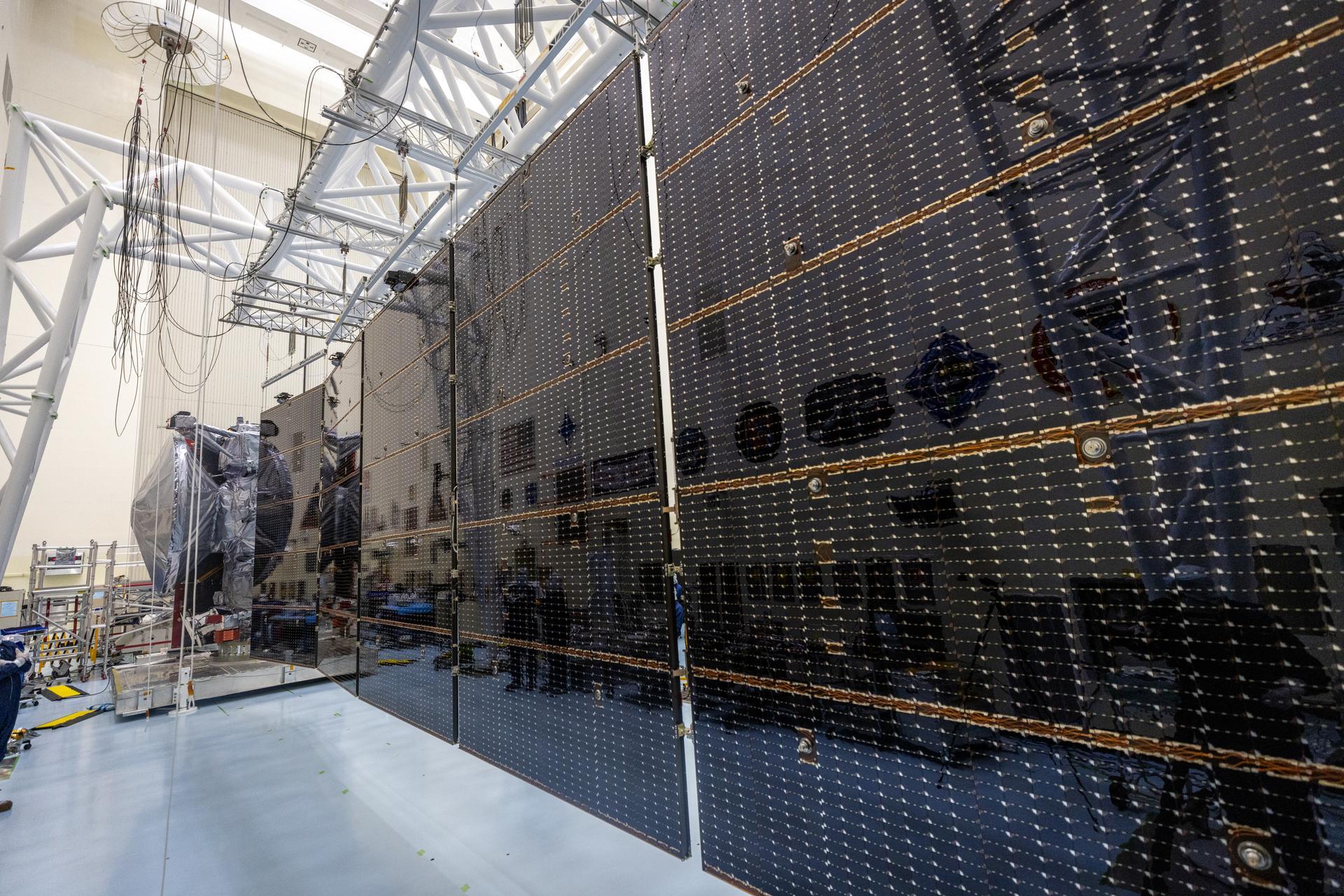
Large black rectangular solar arrays stretch out from the foreground to the back.
NASA/Frank Michaux

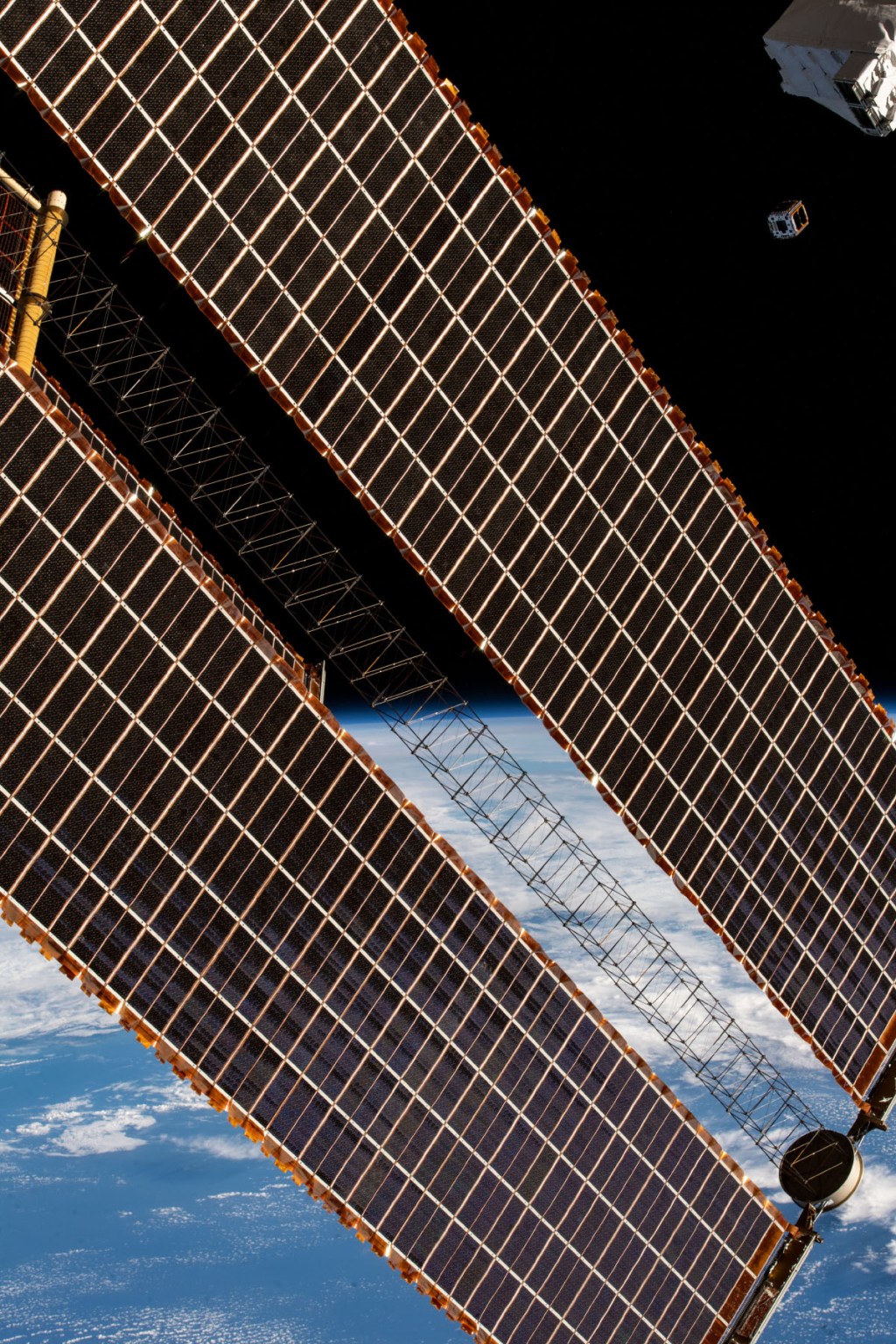
On Aug. 21, 2024, engineers and technicians deployed and tested NASA’s Europa Clipper giant solar arrays. Each array measures about 46.5 feet (14.2 meters) long and about 13.5 feet (4.1 meters) high.

Europa Clipper is scheduled to launch Oct. 10, 2024, on the first mission to conduct a detailed science investigation of Jupiter’s moon Europa. Scientists predict Europa has a salty ocean beneath its icy crust that could hold the building blocks necessary to sustain life.

Learn how this spacecraft’s solar arrays will power flybys.

Image credit: NASA/Frank Michaux

Powered by WPeMatico
Get The Details…
Monika Luabeya

NASA’s SpaceX Crew-9 to Conduct Space Station Research

NASA’s SpaceX Crew-9 to Conduct Space Station Research

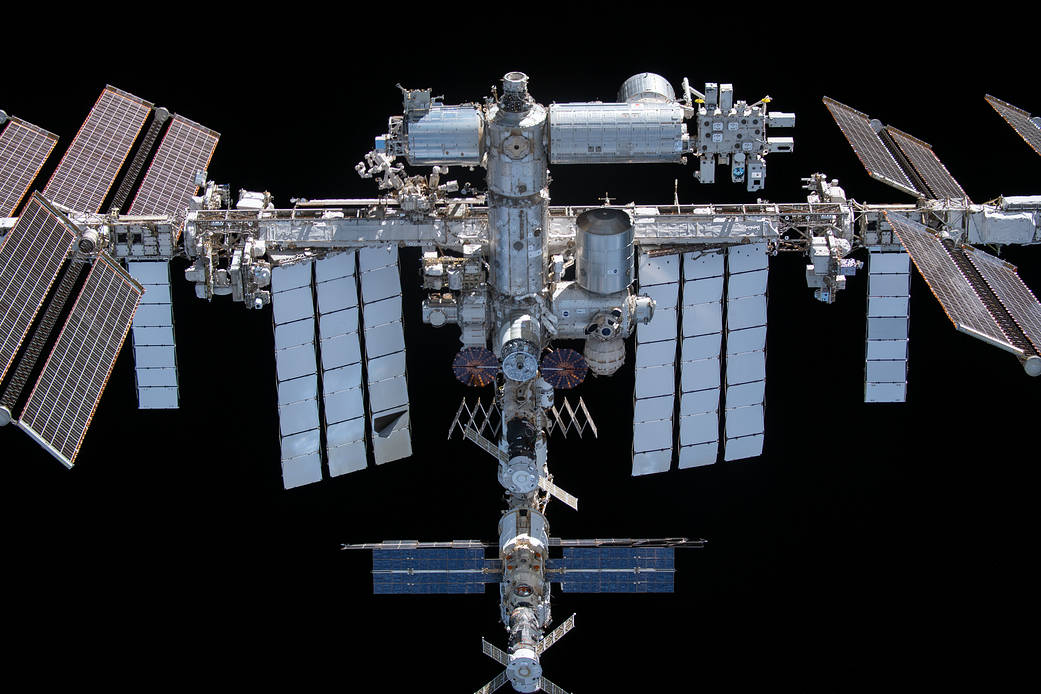
The station pictured from the SpaceX Crew Dragon
The International Space Station is pictured from the SpaceX Crew Dragon Endeavour during a fly around.
NASA

NASA astronaut Nick Hague and Roscosmos cosmonaut Aleksandr Gorbunov are headed to the International Space Station for the agency’s SpaceX Crew-9 mission in September. Once on station, these crew members will support scientific investigations that include studies of blood clotting, effects of moisture on plants grown in space, and vision changes in astronauts.

Here are details on some of the work scheduled during the Crew-9 expedition:

Blood cell development in space

Megakaryocytes Orbiting in Outer Space and Near Earth (MeF1) investigates how environmental conditions affect the development and function of megakaryocytes and platelets. Megakaryocytes, large cells found in bone marrow, and platelets, pieces of these cells, play important roles in blood clotting and immune response.

“Understanding the development and function of megakaryocytes and platelets during long-duration spaceflight is crucial to safeguarding the health of astronauts,” said Hansjorg Schwertz, principal investigator, at the University of Utah. “Sending megakaryocyte cell cultures into space offers a unique opportunity to explore their intricate differentiation process. Microgravity also may impact other blood cells, so the insights we gain are likely to enhance our overall comprehension of how spaceflight influences blood cell production.”

Results could provide critical knowledge about the risks of changes in inflammation, immune responses, and clot formation in spaceflight and on the ground.

Two side-by-side black and white images show highly magnified individual platelets, which are roundish, pockmarked spheres with several small, arm-like protrusions.
Scanning electron-microscopy image of human platelets prior to launch to the International Space Station.
University of Utah/Megakaryocytes PI Team

Patches for NICER

The Neutron Star Interior Composition Explorer (NICER) telescope on the exterior of the space station measures X-rays emitted by neutron stars and other cosmic objects to help answer questions about matter and gravity.

In May 2023, NICER developed a “light leak” that allows sunlight to interfere with daytime measurements. Special patches designed to cover some of the damage will be installed during a future spacewalk, returning the instrument to around-the-clock operation.

“This will be the fourth science observatory and first X-ray telescope in orbit to be repaired by astronauts,” said principal investigator Keith Gendreau at NASA’s Goddard Space Flight Center in Greenbelt, Maryland. “In just a year, we diagnosed the problem, designed and tested a solution, and delivered it for launch. The space station team — from managers and safety experts to engineers and astronauts — helped us make it happen. We’re looking forward to getting back to normal science operations.”

: NICER’s X-ray concentrators are dark circles in eight staggered rows covering this image. Each one is divided into six segments, like a sliced pie, by its sunshade. The concentrators rest in a white frame of the telescope.
This view shows NICER’s 56 X-ray concentrators. Astronauts plan to cover some of them with special patches on a future spacewalk.
NASA

Vitamins for vision

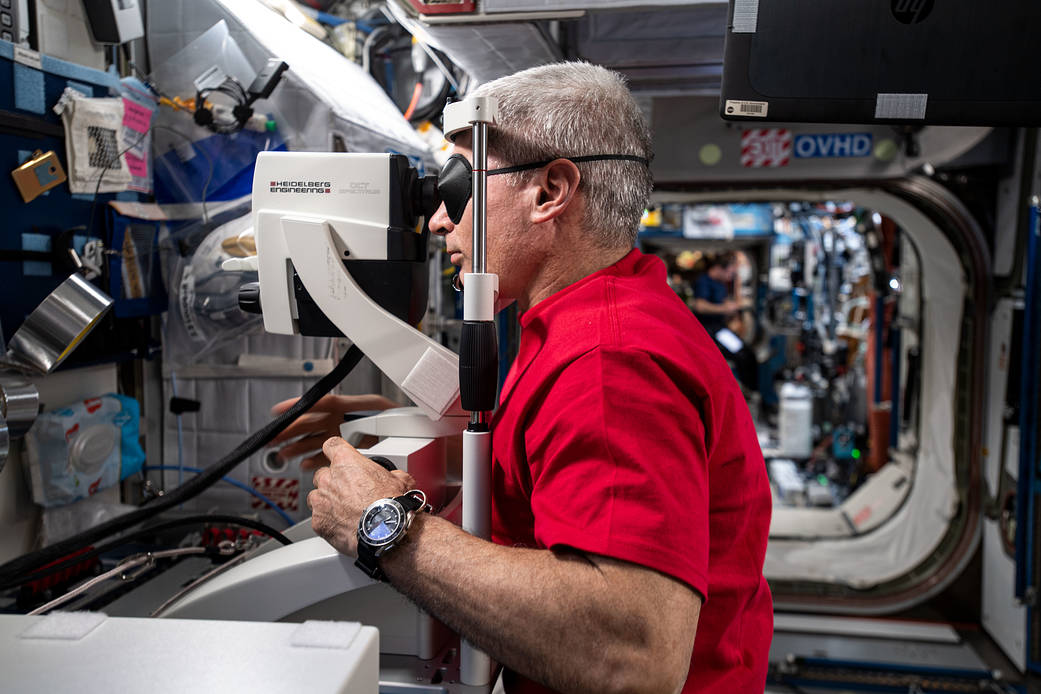
Some astronauts experience vision changes, a condition called Spaceflight-Associated Neuro-ocular Syndrome. The B Complex investigation tests whether a daily B vitamin supplement can prevent or mitigate this problem and assesses how genetics may influence individual response.

“We still do not know exactly what causes this syndrome, and not everyone gets it,” said Sara Zwart, principal investigator, at the University of Texas Medical Branch, Houston. “It is likely many factors, and biological variations that make some astronauts more susceptible than others.”

One such variation could be related to a metabolic pathway that requires B vitamins to function properly. Inefficiencies in this pathway can affect the inner lining of blood vessels, resulting in leaks that may contribute to vision changes. Providing B vitamins known to affect blood vessel function positively could minimize issues in genetically at-risk astronauts.

“The concept of this study is based on 13 years of flight and ground research,” Zwart said. “We are excited to finally flight test a low-risk countermeasure that could mitigate the risk on future missions, including those to Mars.”

NASA astronaut Mark Vande Hei gets his eyes checked
NASA astronaut Mark Vande Hei conducts a vision exam on the International Space Station
NASA

Watering the space garden

As people travel farther from Earth for longer, growing food becomes increasingly important. Scientists conducted many plant growth experiments on the space station using its Veggie hardware, including Veg-01B, which demonstrated that ‘Outredgeous’ red romaine lettuce is suitable for crop production in space.

Plant Habitat-07 uses this lettuce to examine how moisture conditions affect the nutritional quality and microbial safety of plants. The Advanced Plant Habitat controls humidity, temperature, air, light, and soil moisture, creating the precise conditions needed for the experiment.

Using a plant known to grow well in space removes a challenging variable from the equation, explained Chad Vanden Bosch, principal investigator at Redwire, and this lettuce also has been proven to be safe to consume when grown in space.

“For crews building a base on the Moon or Mars, tending to plants may be low on their list of responsibilities, so plant growth systems need to be automated,” Bosch said. “Such systems may not always provide the perfect growing conditions, though, so we need to know if plants grown in suboptimal conditions are safe to consume.”

Large crinkly leaves fill two sides of the plant habitat, with a screen dividing them. There are hoses and cords to the left of the plants, which are bathed in a reddish light.
This preflight image shows lettuce grown under control (left) and flood (right) moisture treatments.
Plant Habitat-07 team

Melissa Gaskill

International Space Station Research Communications Team

NASA’s Johnson Space Center

Search this database of scientific experiments to learn more about those mentioned in this article.

Powered by WPeMatico
Get The Details…
Christian M. Getteau

Printed Engines Propel the Next Industrial Revolution

Printed Engines Propel the Next Industrial Revolution

2 min read

Preparations for Next Moonwalk Simulations Underway (and Underwater)

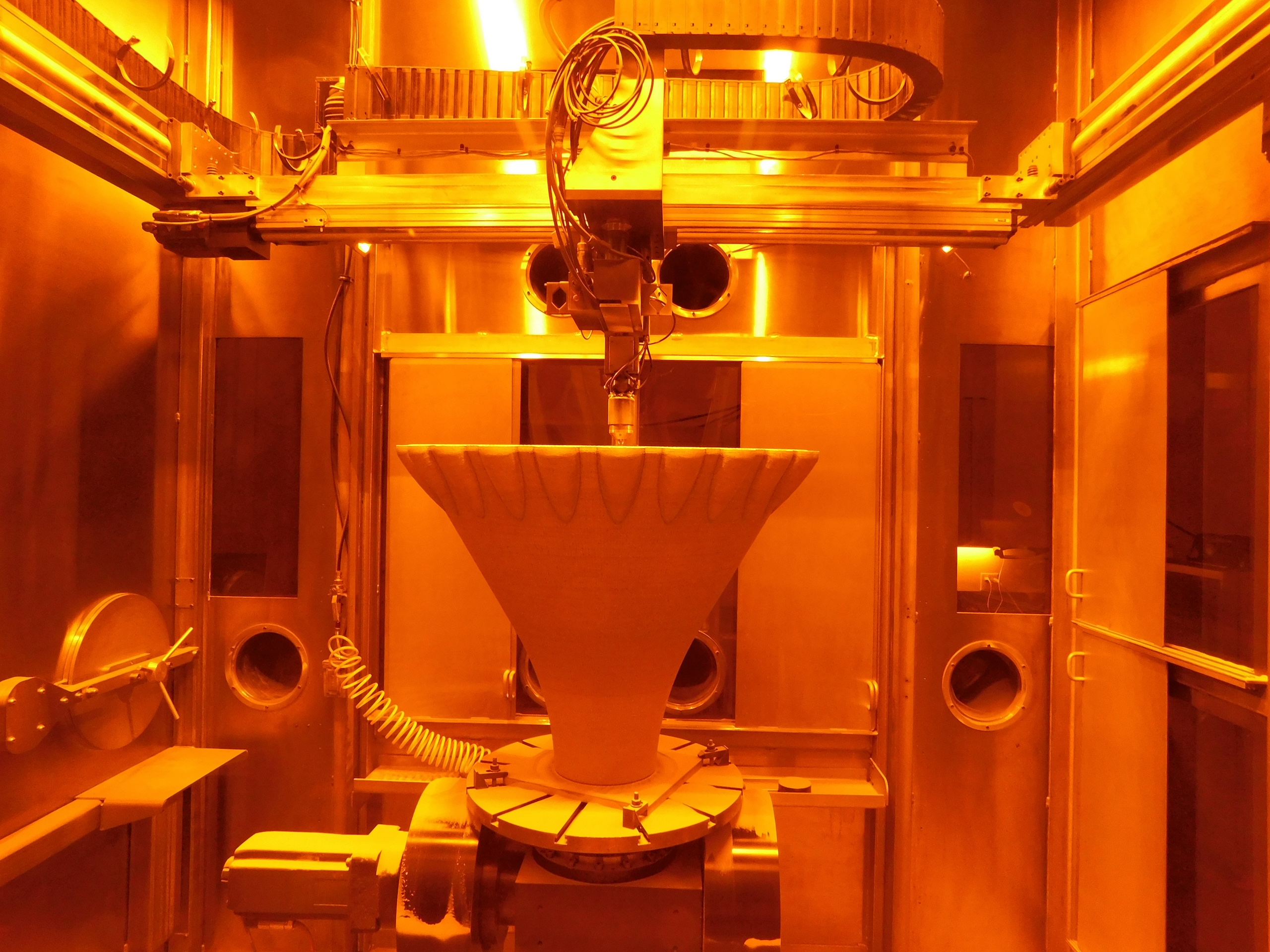
A 3D printer at RPM Innovations’ facility additively manufactures a funnel-shaped aerospike rocket engine nozzle
A laser powder directed energy deposition (LP-DED) 3D printer at RPM Innovations’ facility additively manufactures a large-scale aerospike rocket engine nozzle from one of Elementum 3D’s specialized, 3D-printable aluminum alloys.
RPM Innovations Inc.

In the fall of 2023, NASA hot fire tested an aluminum 3D printed rocket engine nozzle. Aluminum is not typically used for 3D printing because the process causes it to crack, and its low melting point makes it a challenging material for rocket engines. Yet the test was a success.

Printing aluminum engine parts could save significant time, money, and weight for future spacecraft. Elementum 3D Inc., a partner on the project, is now making those benefits available to the commercial space industry and beyond.

The hot fire test was the culmination of a relationship between NASA and Elementum that began shortly after the company was founded in 2014 to make more materials available for 3D printing. Based in Erie, Colorado, the company infuses metal alloys with particles of other materials to alter their properties and make them amenable to additive manufacturing. This became the basis of Elementum’s Reactive Additive Manufacturing (RAM) process.

An animated gif of a rocket firing on a test stand
A rocket engine nozzle 3D printed from Elementum 3D’s A6061 RAM2 aluminum alloy undergoes hot fire testing at Marshall Space Flight Center.
Credit: NASA

NASA adopted the technology, qualifying the RAM version of a common aluminum alloy for 3D printing. The agency then awarded funding to Elementum 3D and another company to print the experimental Broadsword rocket engine, demonstrating the concept’s viability.

Meanwhile, a team at NASA’s Marshall Space Flight Center in Huntsville, Alabama, was working to adapt an emerging technology to print larger engines. In 2021, Marshall awarded an Announcement of Collaborative Opportunity to Elementum 3D to modify an aluminum alloy for printing in what became the Reactive Additive Manufacturing for the Fourth Industrial Revolution project.

The project also made a commonly used aluminum alloy available for large-scale 3D printing. It is already used in large satellite components and could be implemented into microchip manufacturing equipment, Formula 1 race car parts, and more. The alloy modified for the Broadsword engine is already turning up in brake rotors and lighting fixtures. These various applications exemplify the possibilities that come from NASA’s collaboration and investment in industry. 

Powered by WPeMatico
Get The Details…
Andrew Wagner