NASA Helps Find Thawing Permafrost Adds to Near-Term Global Warming

NASA Helps Find Thawing Permafrost Adds to Near-Term Global Warming

4 min read

Preparations for Next Moonwalk Simulations Underway (and Underwater)

Permafrost Tunnel north of Fairbanks, Alaska
The Permafrost Tunnel north of Fairbanks, Alaska, was dug in the 1960s and is run by the U.S. Army’s Cold Regions Research and Engineering Laboratory. It is the site of much research into permafrost — ground that stays frozen throughout the year, for multiple years.
NASA/Kate Ramsayer

Earth’s far northern reaches have locked carbon underground for millennia. New research paints a picture of a landscape in change.

A new study, co-authored by NASA scientists, details where and how greenhouse gases are escaping from the Earth’s vast northern permafrost region as the Arctic warms. The frozen soils encircling the Arctic from Alaska to Canada to Siberia store twice as much carbon as currently resides in the atmosphere — hundreds of billions of tons — and most of it has been buried for centuries.

An international team, led by researchers at Stockholm University, found that from 2000 to 2020, carbon dioxide uptake by the land was largely offset by emissions from it. Overall, they concluded that the region has been a net contributor to global warming in recent decades in large part because of another greenhouse gas, methane, that is shorter-lived but traps significantly more heat per molecule than carbon dioxide.

Greenhouse gases shroud the globe in this animation showing data from 2021. Carbon dioxide is shown in orange; methane is shown in purple. Methane traps heat 28 times more effectively than carbon dioxide over a 100-year timescale. Wetlands are a significant source of such emissions.
NASA’s Scientific Visualization Studio

The findings reveal a landscape in flux, said Abhishek Chatterjee, a co-author and scientist at NASA’s Jet Propulsion Laboratory in Southern California. “We know that the permafrost region has captured and stored carbon for tens of thousands of years,” he said. “But what we are finding now is that climate-driven changes are tipping the balance toward permafrost being a net source of greenhouse gas emissions.”

Carbon Stockpile

Permafrost is ground that has been permanently frozen for anywhere from two years to hundreds of thousands of years. A core of it reveals thick layers of icy soils enriched with dead plant and animal matter that can be dated using radiocarbon and other techniques. When permafrost thaws and decomposes, microbes feed on this organic carbon, releasing some of it as greenhouse gases.

Unlocking a fraction of the carbon stored in permafrost could further fuel climate change. Temperatures in the Arctic are already warming two to four times faster than the global average, and scientists are learning how thawing permafrost is shifting the region from being a net sink for greenhouse gases to becoming a net source of warming.

They’ve tracked emissions using ground-based instruments, aircraft, and satellites. One such campaign, NASA’s Arctic-Boreal Vulnerability Experiment (ABoVE), is focused on Alaska and western Canada. Yet locating and measuring emissions across the far northern fringes of Earth remains challenging. One obstacle is the vast scale and diversity of the environment, composed of evergreen forests, sprawling tundra, and waterways.

This map shows the extent of Arctic permafrost
This map, based on data provided by the National Snow and Ice Data Center, shows the extent of Arctic permafrost. The amount of permafrost underlying the surface ranges from continuous — in the coldest areas — to more isolated and sporadic patches.
NASA Earth Observatory

Cracks in the Sink

The new study was undertaken as part of the Global Carbon Project’s RECCAP-2 effort, which brings together different science teams, tools, and datasets to assess regional carbon balances every few years. The authors followed the trail of three greenhouse gases — carbon dioxide, methane, and nitrous oxide — across 7 million square miles (18 million square kilometers) of permafrost terrain from 2000 to 2020.

Researchers found the region, especially the forests, took up a fraction more carbon dioxide than it released. This uptake was largely offset by carbon dioxide emitted from lakes and rivers, as well as from fires that burned both forest and tundra.

They also found that the region’s lakes and wetlands were strong sources of methane during those two decades. Their waterlogged soils are low in oxygen while containing large volumes of dead vegetation and animal matter — ripe conditions for hungry microbes. Compared to carbon dioxide, methane can drive significant climate warming in short timescales before breaking down relatively quickly. Methane’s lifespan in the atmosphere is about 10 years, whereas carbon dioxide can last hundreds of years.

The findings suggest the net change in greenhouse gases helped warm the planet over the 20-year period. But over a 100-year period, emissions and absorptions would mostly cancel each other out. In other words, the region teeters from carbon source to weak sink. The authors noted that events such as extreme wildfires and heat waves are major sources of uncertainty when projecting into the future.

Bottom Up, Top Down

The scientists used two main strategies to tally greenhouse gas emissions from the region. “Bottom-up” methods estimate emissions from ground- and air-based measurements and ecosystem models. Top-down methods use atmospheric measurements taken directly from satellite sensors, including those on NASA’s Orbiting Carbon Observatory-2 (OCO-2) and JAXA’s (Japan Aerospace Exploration Agency)Greenhouse Gases Observing Satellite.

Regarding near-term, 20-year, global warming potential, both scientific approaches aligned on the big picture but differed in magnitude: The bottom-up calculations indicated significantly more warming.

“This study is one of the first where we are able to integrate different methods and datasets to put together this very comprehensive greenhouse gas budget into one report,” Chatterjee said. “It reveals a very complex picture.”

News Media Contacts

Jane J. Lee / Andrew Wang
Jet Propulsion Laboratory, Pasadena, Calif.
818-354-0307 / 626-379-6874
jane.j.lee@jpl.nasa.gov / andrew.wang@jpl.nasa.gov

Written by Sally Younger

2024-147

Share

Details

Last Updated

Oct 29, 2024

Powered by WPeMatico

Get The Details…
Anthony Greicius
NASA Group Amplifies Voices of Employees with Disabilities

NASA Group Amplifies Voices of Employees with Disabilities

4 min read

Preparations for Next Moonwalk Simulations Underway (and Underwater)

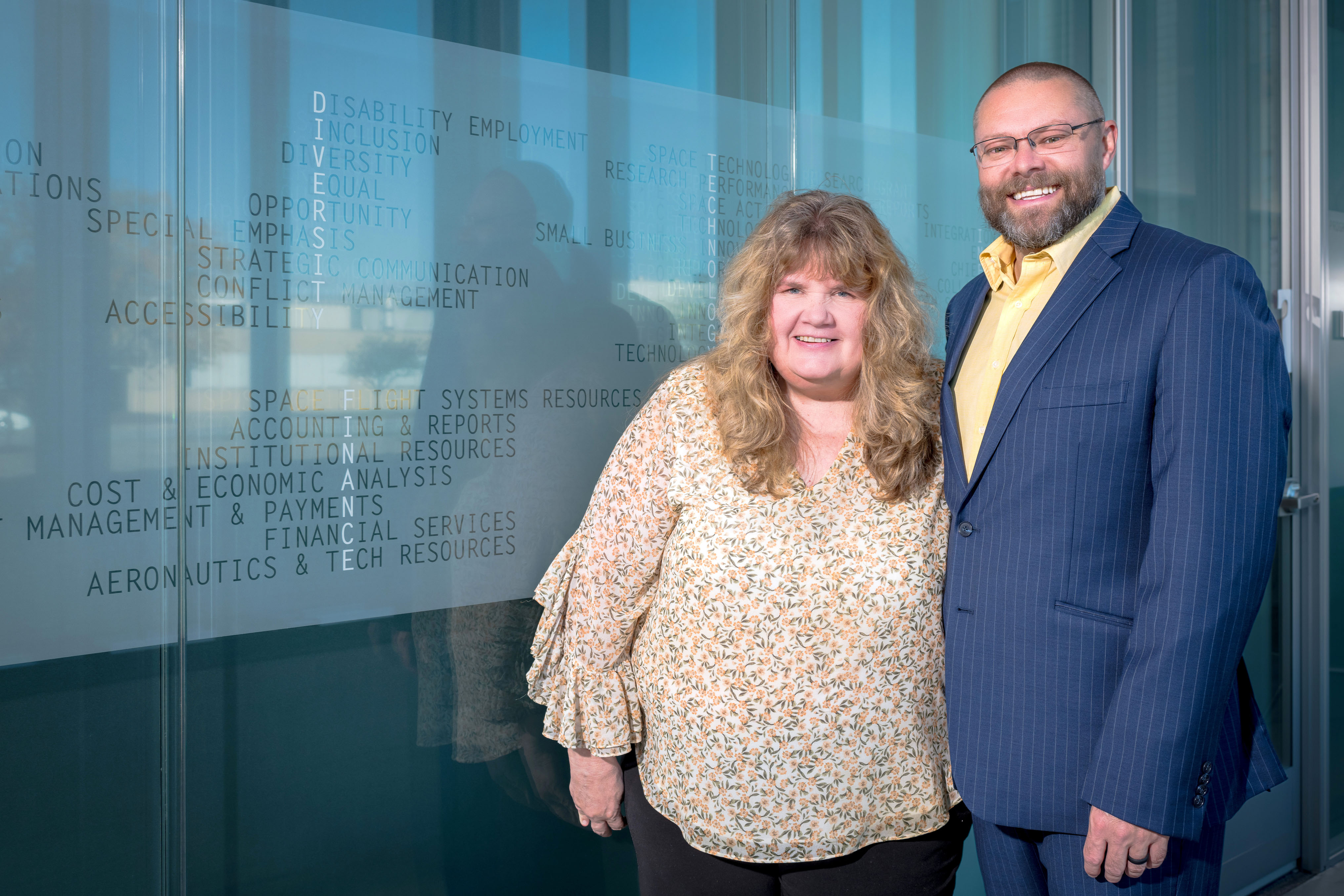
A man wearing a blue suit, a yellow shirt, and glasses and a woman wearing a yellow blouse smile at the camera as they pose standing side by side in front of a glazed glass wall. Small words are etched on the wall, including “Disability Employment, Inclusion, Diversity, Equal Opportunity, Accessibility,” and more.
Kathy Clark (left) and Ryan D. Brown have both served as chairs of NASA Glenn Research Center’s Disability Awareness Advisory Group, which works to help provide individuals with disabilities equal opportunities in all aspects of employment.
Credit: NASA/Jef Janis

Kathy Clark started her career at NASA’s Glenn Research Center in Cleveland straight out of high school, and when offered either a job as an accountant or a job in training, the choice was crystal clear.

“I started in training, I’ve stayed in training, and I’ll probably retire in training,” said Clark, now a human resources specialist and program manager of NASA Glenn’s mentoring program, Shaping Professionals and Relating Knowledge (SPARK). “I just love people.”

Celebrating 41 years at NASA this October, Clark has long been an advocate for employees. For over 12 years, she served as chair of the center’s Disability Awareness Advisory Group (DAAG), which works to help provide individuals with disabilities equal opportunities in all aspects of employment. The group also strives to identify and eliminate workplace barriers, raise awareness, and ensure accessible facilities.

After recently stepping down, Clark reflects on her legacy of creating change with the group and looks to the next generation of leadership, including longtime member and new chair Ryan D. Brown, to continue its important mission.

“Don’t Let a Disability Stop You”

Clark joined DAAG around 12 years into her career, after she was diagnosed with multiple sclerosis. She was later asked to serve as chair after she helped bring a traveling mural to the center that showcased Ohio artists with disabilities.

During Clark’s time as chair, the group helped secure reserved parking spaces for employees with disabilities, instead of just relying on a first-come first-serve system for accessible spots. She recalls DAAG championing other facility issues, such as fixing a broken elevator and faulty door that presented challenges for folks with disabilities. The group has also worked with human resources to compile best practices for interviews, hosted various speakers, and offered a space for members to share about their disabilities.

“I was honored to be the chair and just be there for the people and to try to make a difference, to let them know, if you need something, reach out,” Clark said. “Don’t let a disability stop you.”

“I was honored to be the chair and just be there for the people and to try to make a difference, to let them know, if you need something, reach out.»

Kathy clark

Kathy clark

“Let’s Go Above and Beyond”

When it was time to choose Clark’s successor, she said, another supportive and vocal member stood out: Brown.

Thanks to an Ohio program for individuals with disabilities, Brown was placed at NASA as an intern in 2006, later completing a co-op that led to a full-time accounting position at the center, where he now works as a lead in the financial systems branch.

More than one in four adults in the United States have some type of disability, according to the U.S. Centers for Disease Control and Prevention, and some are not always easy to see, Brown says. For instance, Brown has an invisible disability: a learning disability related to reading and writing. After connecting with a coworker early in his career who was a member of DAAG, Brown reached out to Clark to join.

“Everyone has their challenges, regardless of if you have a disability or not, so making people comfortable talking about it and bringing it up is always good,” he said. “I think I’ve always liked speaking up for individuals and trying to spread that awareness, which has been great with DAAG.”

Now the chair, Brown has supported the group in developing a job aid to help employees understand how to self-identify as having a disability. They’ve also recently organized awareness events to help other employees understand the experiences and challenges of individuals with disabilities.

DAAG also continues to champion facility updates. For example, the group is currently working to get automatic door openers installed for bathrooms in buildings at the center where many employees gather.

“Let’s try to go above and beyond and really make it easier on individuals,” Brown said.

 “Let’s try to go above and beyond and really make it easier on individuals.»

ryan D. brown

ryan D. brown

“Make a Difference”

Membership in the group is growing, and Clark looks forward to its future.

“I could not have turned over the chair role to a better person than Ryan,” she said.

Brown’s vision is to continue spreading the word that the group is available as a resource for employees, and for others throughout the center to be more aware of the experiences of individuals with disabilities. The work he does to help others inspires him every day, he says.

“We’re here for individuals that don’t want to speak up, we’re here for individuals if they run into issues – they can always contact us,” Brown said. “It’s all about getting up there and trying to make a difference.”

Powered by WPeMatico

Get The Details…
Ellen Bausback

NASA Relaunches Mentor-Protégé Program to Fill Supply Chain Gaps

NASA Relaunches Mentor-Protégé Program to Fill Supply Chain Gaps

A yellow and blue star logo stands next to text that reads "Office of Small Business Mentor-Protégé Program."
Credit: NASA

In an effort to grow new commercial markets that support the future of space exploration, scientific discovery, and aeronautics research, NASA is preparing to relaunch its Mentor-Protégé Program for contractors on Friday, Nov. 1.

The program originally was launched to encourage NASA prime contractors, or mentors, to enter into agreements with eligible small businesses, or protégés. These agreements were created to enhance the protégés’ performance on NASA contracts and subcontracts, foster the establishment of long-term business relationships between small businesses and NASA prime contractors, and increase the overall number of small businesses that receive NASA contracts and subcontract awards.

“The NASA Mentor-Protégé Program is a critical enabling tool that allows experienced companies to provide business developmental assistance to emerging firms,” said Dwight Deneal, assistant administrator for NASA’s Office of Small Business Programs (OSBP). “The program enables NASA to expand its industrial base of suppliers, as prime and subcontractors, to assist in executing the mission and programs throughout the agency.”

The program’s relaunch follows an assessment of its policies and procedures by OSBP to ensure it continues to support NASA’s missions and addresses any supply chain gaps at an optimal level.

To provide more information about the program and its relaunch, OSBP will host an online lunch and learn event on Thursday, Nov. 7, at 1:00 p.m. EST. The event is open to all current and potential mentors and protégés who want to learn more about changes in the program, qualifications to participate, and how to apply.

“We are excited about rolling out the enhanced NASA Mentor-Protégé Program,” said David Brock, lead small business specialist for OSBP. “The program’s new focus will allow large businesses to mentor smaller firms in key areas that align with NASA’s mission and opportunities within the agency’s supply chain.”

One key change expands eligibility to all small businesses, in addition to minority-serving institutions, including Historically Black Colleges and Universities, and Ability One entities. This expansion enables the program to support an inclusive environment for more small businesses and underserved communities to interact with NASA and its contractors.

The program also will focus on engaging businesses within a select number of North American Industry Classifications System (NAICS) codes and specific industry sectors, such as research and development and aerospace manufacturing. These adjustments will allow the program to better support NASA’s long-term strategic goals and mission success.

The program is designed to benefit both the mentor and the protégé by fostering productive networking and contract opportunities. In a mentor-protégé agreement, mentors build relationships with small businesses, developing a subcontracting base and accruing credit toward their small business subcontracting goals. In addition, protégés receive technical and developmental assistance while also gaining sole-source contracts from mentors and additional contracting opportunities.

NASA is responsible for the administration and management of each agreement. The OSBP oversees the program and conducts semi-annual performance reviews to monitor progress and accomplishments made as a result of the mentor-protégé agreement.

To apply to be a mentor, companies must be a current NASA prime contractor with an approved small business contracting plan. Companies also must be eligible for the receipt of government contracts and be categorized under certain NAICS codes. Potential protégés must certify as a small business within NAICS size standards.

Find more information about participating in NASA’s Mentor-Protégé Program at:

https://www.nasa.gov/osbp/mentor-protege-program

Share

Details

Last Updated

Oct 29, 2024

Powered by WPeMatico

Get The Details…
Tiernan P. Doyle

New NASA Instrument for Studying Snowpack Completes Airborne Testing

New NASA Instrument for Studying Snowpack Completes Airborne Testing

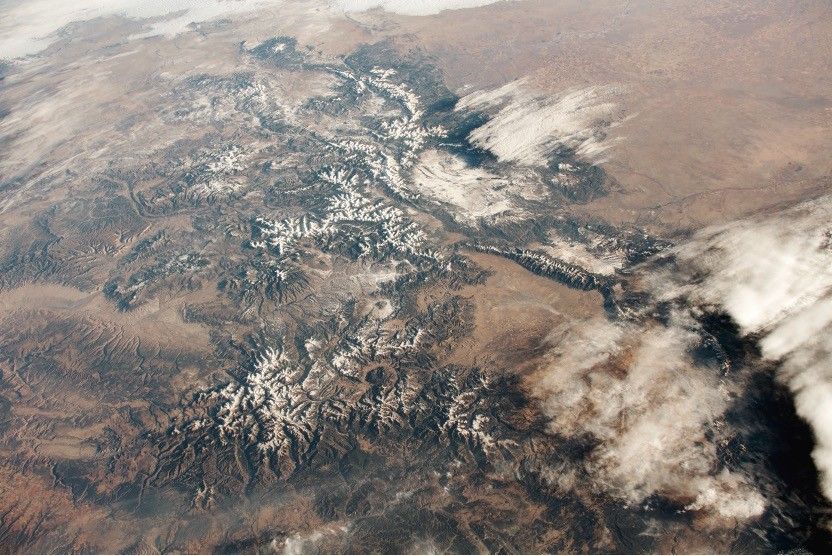
Aerial view of brown mountains with white snow-covered tops
The Rocky Mountains in Colorado, as seen from the International Space Station. Snowmelt from the mountainous western United States is an essential natural resource, making up as much as 75% of some states’ annual freshwater supply.

Summer heat has significant effects in the mountainous regions of the western United States. Melted snow washes from snowy peaks into the rivers, reservoirs, and streams that supply millions of Americans with freshwater—as much as 75% of the annual freshwater supply for some states.

But as climate change brings winter temperatures to new highs, these summer rushes of freshwater can sometimes slow to a trickle.

“The runoff supports cities most people wouldn’t expect,” explained Chris Derksen, a glaciologist and Research Scientist with Environment and Climate Change Canada. “Big cities like San Francisco and Los Angeles get water from snowmelt.”

To forecast snowmelt with greater accuracy, NASA’s Earth Science Technology Office (ESTO) and a team of researchers from the University of Massachusetts, Amherst, are developing SNOWWI, a dual-frequency synthetic aperture radar that could one day be the cornerstone of future missions dedicated to measuring snow mass on a global scale – something the science community lacks.

SNOWWI aims to fill this technology gap. In January and March 2024, the SNOWWI research team passed a key milestone, flying their prototype for the first time aboard a small, twin-engine aircraft in Grand Mesa, Colorado, and gathering useful data on the area’s winter snowfields.

“I’d say the big development is that we’ve gone from pieces of hardware in a lab to something that makes meaningful data,” explained Paul Siqueira, professor of engineering at the University of Massachusetts, Amherst, and principal investigator for SNOWWI.

SNOWWI stands for Snow Water-equivalent Wide Swath Interferometer and Scatterometer. The instrument probes snowpack with two Ku-band radar signals: a high-frequency signal that interacts with individual snow grains, and a low-frequency signal that passes through the snowpack to the ground. 

The high-frequency signal gives researchers a clear look at the consistency of the snowpack, while the low-frequency signal helps researchers determine its total depth.

“Having two frequencies allows us to better separate the influence of the snow microstructure from the influence of the snow depth,” said Derksen, who participated in the Grand Mesa field campaign. “One frequency is good, two frequencies are better.”

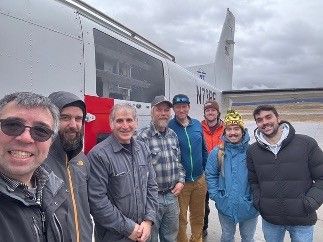
A group of people in winter clothes standing beside a mid-sized airplane.

The SNOWWI team in Grand Mesa, preparing to flight test their instrument. From an altitude of 4 kilometers (2.5 miles), SNOWWI can map 100 square kilometers (about 38 square miles) in just 30 minutes.

As both of those scattered signals interact with the snowpack and bounce back towards the instrument, they lose energy. SNOWWI measures that lost energy, and researchers later correlate those losses to features within the snowpack, especially its depth, density, and mass.

From an airborne platform with an altitude of 2.5 miles (4 kilometers), SNOWWI could map 40 square miles (100 square kilometers) of snowy terrain in just 30 minutes. From space, SNOWWI’s coverage would be even greater. Siqueira is working with Capella Space to develop a space-ready SNOWWI for satellite missions.

But there’s still much work to be done before SNOWWI visits space. Siqueira plans to lead another field campaign, this time in the mountains of Idaho. Grand Mesa is relatively flat, and Siqueira wants to see how well SNOWWI can measure snowpack tucked in the folds of complex, asymmetrical terrain.

For Derksen, who spends much of his time quantifying the freshwater content of snowpack in Canada, having a reliable database of global snowpack measurements would be game-changing.

“Snowmelt is money. It has intrinsic economic value,” he said. “If you want your salmon to run in mountain streams in the spring, you must have snowmelt. But unlike other natural resources, at this time, we really can’t monitor it very well.”

For information about opportunities to collaborate with NASA on novel, Earth-observing instruments, see ESTO’s catalog of open solicitations with its Instrument Incubator Program here.

Project Leads: Dr. Paul Siqueira, University of Massachusetts (Principal Investigator); Hans-Peter Marshall, University of Idaho (Co-Investigator)

Sponsoring Organizations: NASA’s Earth Science Technology Office (ESTO), Instrument Incubator Program (IIP)

Powered by WPeMatico

Get The Details…

Gateway: Centering Science

Gateway: Centering Science

3 min read

Preparations for Next Moonwalk Simulations Underway (and Underwater)

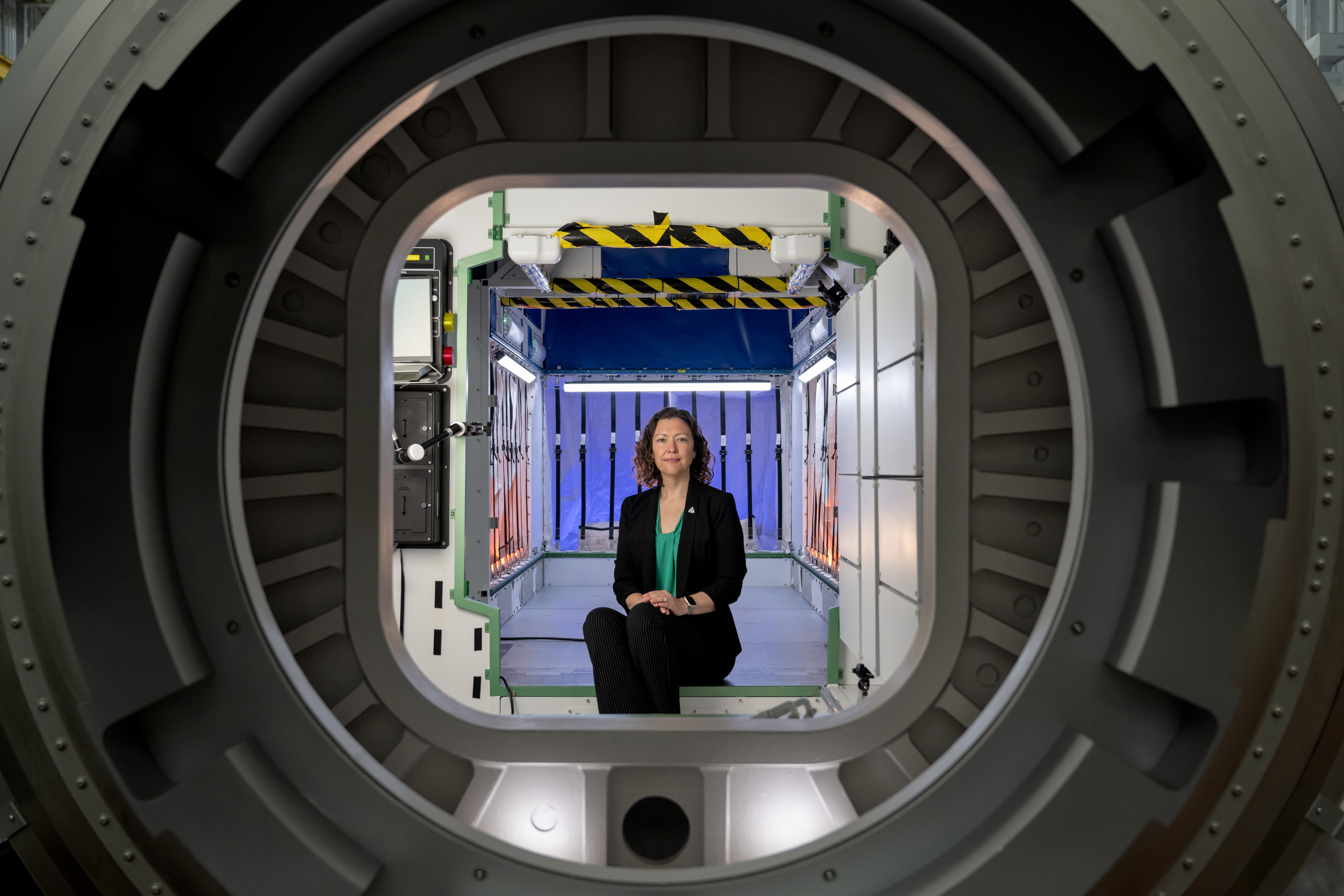
Stephanie Dudley, Gateway's mission integration and utilization manager, sits inside a high-fidelity mockup of HALO (Habitation and Logistics Outpost) at NASA’s Johnson Space Center. She is framed by a docking port, with interior components visible behind her.The mockup’s design showcases the compact and functional environment Artemis astronauts will use for living, conducting experiments, and preparing for lunar surface missions. Photo credit: NASA/Josh Valcarcel
Stephanie Dudley, Gateway’s mission integration and utilization manager, sits inside a high-fidelity HALO (Habitation and Logistics Outpost) mockup at NASA’s Johnson Space Center.
NASA/Josh Valcarcel

Stephanie Dudley sits at the intersection of human spaceflight and science for Gateway, humanity’s first lunar space station that will host astronauts and unique scientific investigations.

Gateway’s mission integration and utilization manager, Dudley recently posed for this photo in a high-fidelity mockup of the space station’s HALO (Habitation and Logistics Outpost), where astronauts will live, conduct science, and prepare for missions to investigate the lunar South Pole region. Dudley works with NASA’s partner space agencies and academia to identify science opportunities on Gateway.

HALO will host various science experiments, including the Heliophysics Environmental and Radiation Measurement Experiment Suite, led by NASA, and the Internal Dosimeter Array, led by ESA (European Space Agency) and JAXA (Japan Aerospace Exploration Agency). The heliophysics experiment will fly on HALO’s exterior, and the dosimeter will be housed inside Gateway in a series of racks, mockups of which are shown to the right of Dudley in the image above. Both experiments will study solar and cosmic radiation to help the science community better understand how to protect astronauts and hardware during deep space travels to places like Mars.

“We are building [Gateway] for a 15-year lifespan, but definitely hope that we go longer than that,” Dudley recently said on Houston We Have a Podcast. “And so that many years of scientific study in a place where humans have never worked and lived long-term, Gateway is going to allow us to do that.”

Dudley pulls double duty as a deputy director for the Exploration Operations Office within NASA’s Moon to Mars Program, a role that connects her to Artemis science beyond Gateway, including science investigations on the Orion and Human Landing System spacecraft and lunar terrain vehicle.

“My work…is helping to make sure that across all of the six [Artemis] programs, including Gateway, we’re all focusing on utilization in the same way,” Dudley said.

Dudley’s team coordinates science payloads for Artemis II, the first mission to send humans to the Moon since 1972, and Artemis III, the first landing in the lunar South Pole region that is of keen interest to the global science community.

Gateway’s HALO will launch with the space station’s Power and Propulsion Element ahead of the Artemis IV mission in 2028, the first lunar mission to include an orbiting space station.

“Gateway sounds so science fiction, but it’s real,” Dudley recently said. “And we’re building it. And in a few years, it’s going to be around the Moon and that’s when the real work, the fun work in my opinion, is going to begin and science will never be the same.”

Gateway is humanity’s first lunar space station as a central component of the Artemis campaign that will return humans to the Moon for scientific discovery and chart a path for the first human missions to Mars.

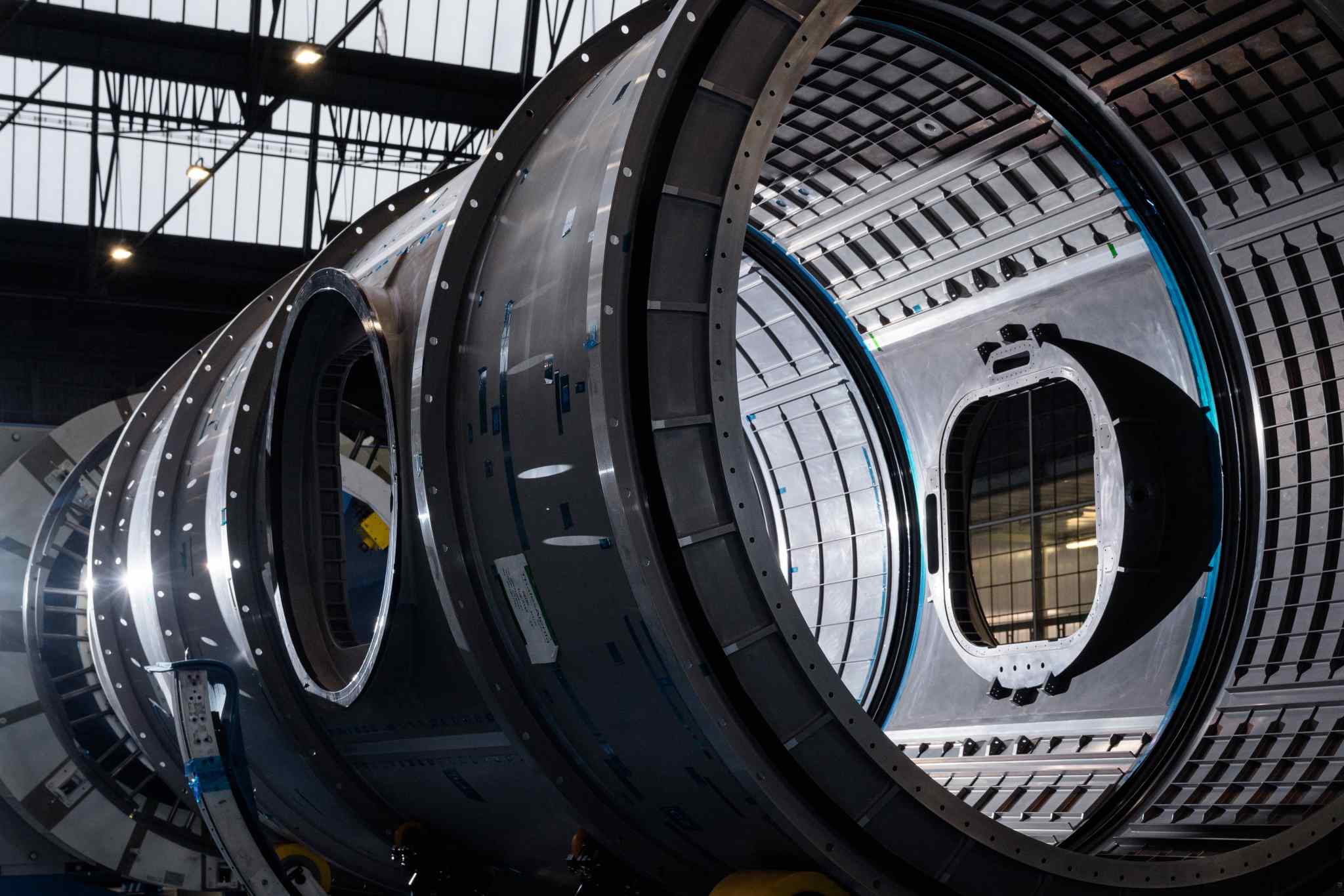
A close-up view of Gateway’s Habitation and Logistics Outpost (HALO) module at the Thales Alenia Space facility in Turin, Italy. The image captures the intricate internal structure of the cylindrical module, highlighting its framework and the interior. The module is positioned horizontally, with light casting dramatic shadows.
Gateway’s HALO (Habitation and Logistics Outpost), one of four Gateway modules where astronauts will live, conduct science and prepare for lunar surface missions.
Thales Alenia Space
An artist’s rendering of the Heliophysics Environmental and Radiation Measurement Experiment Suite, or HERMES, one of the three Gateway science experiments that will study solar and cosmic radiation.
NASA
An artist’s rendering of HALO in lunar orbit. The HERMES science experiment is shown on the top right corner of the space station element.
NASA/Alberto Bertolin, Bradley Reynolds

Powered by WPeMatico

Get The Details…
Dylan Connell