International SWOT Satellite Spots Planet-Rumbling Greenland Tsunami

International SWOT Satellite Spots Planet-Rumbling Greenland Tsunami

4 min read

Preparations for Next Moonwalk Simulations Underway (and Underwater)

SWOT data visualization
A SWOT data visualization shows water on the northern side of Greenland’s Dickson Fjord at higher levels than on the southern side on Sept. 17, 2023. A huge rockslide into the fjord the previous day led to a tsunami lasting nine days that caused seismic rumbling around the world.
NASA Earth Observatory

Data from space shows water tilting up toward the north side of the Dickson Fjord as it sloshed from south to north and back every 90 seconds for nine days after a 2023 rockslide.

The international Surface Water and Ocean Topography (SWOT) satellite mission, a collaboration between NASA and France’s CNES (Centre National d’Études Spatiales), detected the unique contours of a tsunami that sloshed within the steep walls of a fjord in Greenland in September 2023. Triggered by a massive rockslide, the tsunami generated a seismic rumble that reverberated around the world for nine days. An international research team that included seismologists, geophysicists, and oceanographers recently reported on the event after a year of analyzing data.

The SWOT satellite collected water elevation measurements in Dickson Fjord on Sept. 17, 2023, the day after the initial rockslide and tsunami. The data was compared with measurements made under normal conditions a few weeks prior, on Aug. 6, 2023.

In the data visualization (above), colors toward the red end of the scale indicate higher water levels, and blue colors indicate lower-than-normal levels. The data suggests that water levels at some points along the north side of the fjord were as much as 4 feet (1.2 meters) higher than on the south.

“SWOT happened to fly over at a time when the water had piled up pretty high against the north wall of the fjord,” said Josh Willis, a sea level researcher at NASA’s Jet Propulsion Laboratory in Southern California. “Seeing the shape of the wave — that’s something we could never do before SWOT.”

In a paper published recently in Science, researchers traced a seismic signal back to a tsunami that began when more than 880 million cubic feet of rock and ice (25 million cubic meters) fell into Dickson Fjord. Part of a network of channels on Greenland’s eastern coast, the fjord is about 1,772 feet (540 meters) deep and 1.7 miles (2.7 kilometers) wide, with walls taller than 6,000 feet (1,830 meters).

Far from the open ocean, in a confined space, the energy of the tsunami’s motion had limited opportunity to dissipate, so the wave moved back and forth about every 90 seconds for nine days. It caused tremors recorded on seismic instruments thousands of miles away.

From about 560 miles (900 kilometers) above, SWOT uses its sophisticated Ka-band Radar Interferometer (KaRIn) instrument to measure the height of nearly all water on Earth’s surface, including the ocean and freshwater lakes, reservoirs, and rivers.

“This observation also shows SWOT’s ability to monitor hazards, potentially helping in disaster preparedness and risk reduction,” said SWOT program scientist Nadya Vinogradova Shiffer at NASA Headquarters in Washington.

It can also see into fjords, as it turns out.

“The KaRIn radar’s resolution was fine enough to make observations between the relatively narrow walls of the fjord,” said Lee-Lueng Fu, the SWOT project scientist. “The footprint of the conventional altimeters used to measure ocean height is too large to resolve such a small body of water.”

More About SWOT

Launched in December 2022 from Vandenberg Space Force Base in California, SWOT is now in its operations phase, collecting data that will be used for research and other purposes.

The SWOT satellite was jointly developed by NASA and CNES, with contributions from the Canadian Space Agency (CSA) and the UK Space Agency. NASA’s Jet Propulsion Laboratory, managed for the agency by Caltech in Pasadena, California, leads the U.S. component of the project. For the flight system payload, NASA provided the KaRIn instrument, a GPS science receiver, a laser retroreflector, a two-beam microwave radiometer, and NASA instrument operations. CNES provided the Doppler Orbitography and Radioposition Integrated by Satellite (DORIS) system, the dual frequency Poseidon altimeter (developed by Thales Alenia Space), the KaRIn radio-frequency subsystem (together with Thales Alenia Space and with support from the UK Space Agency), the satellite platform, and ground operations. CSA provided the KaRIn high-power transmitter assembly. NASA provided the launch vehicle and the agency’s Launch Services Program, based at Kennedy Space Center in Florida, managed the associated launch services.

To learn more about SWOT, visit:

https://swot.jpl.nasa.gov

News Media Contacts

Jane J. Lee / Andrew Wang
Jet Propulsion Laboratory, Pasadena, Calif.
818-354-0307 / 626-379-6874
jane.j.lee@jpl.nasa.gov / andrew.wang@jpl.nasa.gov

2024-153

Powered by WPeMatico

Get The Details…
Anthony Greicius
Widely Attended Gatherings (WAGs) Determinations

Widely Attended Gatherings (WAGs) Determinations

2024

Blue Origin and KBR Dinner.10.30.24

JASWDC Gala.10.30.24

SPI GWU Dinner.10.30.24

36th Annual Dr. Wernher von Braun Memorial Dinner

2024 Keystone Space Conference

2024 IAC Event

WIA Reception and Awards Dinner.10.10.24

2024 JPL Europa Clipper Launch Reception.10.8.24

SPI GWU Dinner.9.18.24

2024 VASBA HR AUVSI Gala

Blue Origin Reception.8.27.24

AIA & Amazon Reception.8.26.24

Exolaunch Reception.8.7.24

Farnborough Air Show.7.20-21.24

Artemis II SLS Roll Out Reception.7.15.24

Astroscale Reception Tokyo.7.12.24

Brooke Owens Fellowship Dinner.7.11.24

SpaceX GOES-U Launch

MSBR lunch.6.18.24

NAA Collier Dinner.6.13.24

Greater Cleveland Partnership.6.13-14.24

VAST Space LLC.6.12.24

Coalition for Deep Space Exploration Return to the Moon.6.5.24

The 2024 Infinite Exhibit Grand Opening

AIA and German Embassy Reception.6.4.24

AIA and British Embassy Reception.5.22.24

Space Foundation Event.5.16.24

Foundation Fratelli Tutti Dinners.5.10-11.24

MSBR STEM Gala.5.10.24

H2M Conference and Event.5.7-8.24

SPI/GW Dinner.5.1.24

Astrolab and Axiom.4.30.24

2024 Monthly NSCFL Luncheon

MEI 77th Annual Gala.4.17.24

Crowell & Moring Reception.4.16.24

2024 ASF Hall of Fame Gala

2024 Space Heroes and Legends Awards Dinner

SpaceX Symposium Reception.4.10.24

39th Space Symposium Supplemental

39th Space Symposium Main Events

SPI GWU Dinner.4.5.24

Goddard Memorial Dinner.3.22.24

SPI GW Dinner.3.20.24

AIA and Amazon Reception.3.19.24

MSBR Lunch.3.19.24

AIAA Awards Gala.3.15.24

NASM Event.3.6.24

Planetary Society.3.5.24

Embassy of Australia and Space Foundation.2.29.24

SPI/GWO Dinner.2.27.24

2024 Artemis Suppliers Conference

BDB Engineering Award Event

2024 Aerospace Days Legislative Reception

2024 NG-20 CRS Launch

IDGA 17th Annual Event.1.23 – 24.24

MSBR Lunch 1.16.24

Latino Biden-Harris Appointees Reception.1.11.24

STA Reception.1.11.24

2024 Axiom Space AX-3 Launch Reception

2023

2023 Astrobotic PM1 PreLaunch Reception

AERO Club Awards Dinner.12.15.23

WIA Dinner.12.13.23

MSBR Lunch.12.12.23

SCL and GBM Foundation Reception.12.11.23

LASP and Ball Aerospace Reception.12.11.23

Bayou Classic Brunch

L Oreal USA for Women Event.11.16.23

AAIA Reception.11.15.23

KBR Welcome Reception.11.14.23

SPI GWU Dinner 11.15.23

Museum of Natural History Board Events 11.2.23

USF Reception.10.24.23

Blue Origin KBR Reception

2023 Von Braun Memorial Dinner

Planet Labs PBC Reception.10.26.23

ELI Reception Dinner.10.24.23

OSIRIS REX RECEPTION.10.17.23

WIA Reception and Award Dinner.10.12.23

National Space Club Banquet 2023

Space Foundation and Airbus.10.3.23

IAC Event

NAHF Dinner Ceremony.9.22.23

2023 VASBA HR AUVSI Gala and Symposium

2023 Psyche Mission Team

SPI GWU Dinner 9.13.23

AIA Congress Space Reception.9.7.23

 MSBR Lunch 8.16.23

 WAG NG CRS 7-24-23

 2023 ASF Innovators Gala

 Space Foundation Reception 7.19.23

 Chamber of Commerce Reception.7.13.23

 ECI Fellows Meeting.7.12 to 7.14.23

 Embassy of Italy and Virgin Galactic.7.12.23

 JWST Reception 7.13.23

 Brook Owens Fellowship Dinner 7.13.23

 Comteck and Airbus Space Defense 07.11.23.

 Calgary Stampede.7.7.23

 CLD Reception.6.20.23

 CFA SAO Reception.6.15.23

 Paris Air Show.6.17-20.23

 UCAR Reception 6.7.23

 Space Forum 2023

 Rocket Lab TROPICS.5.18.23

 2023 Axiom Space AX-2 Launch Event WAG

 SW SPI Dinner 5.9.23

 H2M WAG 2023

 MSBR STEM Gala 5.5.23

 AIAA Awards Gala Event 5.18.23

 38th Space Symposium 4.16 to 4.20.23

 Planet Labs PGC Reception.4.13.23

 AL-23-009 RNASA

 2023 TEMPO Pre-Launch Reception

 MSBR Lunch 4.4.23

 Coalition for Deep Space Exploration SLS Orion EGS Gateway Suppliers 3.26.23

 Orion SLS Conference 3.27 to 3.28.23

 EWDC Event.3.23.23

 2023 Agency WAG Debus Award Banquet

 VHMC And Boeing Reception 3.18.23

 Ball Aerospace Kinship Reception 3.15.23

 Airbus Defence Event 3.14.23

 Terran Orbital Event 3.15.23

 SpaceX Satellite Reception 3.13.23

 SPI GWU Dinner 3.9.23

 Goddard Memorial Dinner 3.10.23

 2023 Agency Wag AHOF Gala

Space Foundation Event 2.16.23

BDB National Engineers Week 2023 Banquet
MSBR Lunch 2.28.23
STA Luncheon 2.7.23
WSBR Reception 2.1.23
SPI GWU SWF Reception 1.31.23
Artemis I Splashdown 01.17.23
MSBR Lunch 1.17.23

2022

GRC An Evening With the Stars 8.30.22
JPL 25 Years on Mars Reception 7.27.22
SPI GWU Dinner 7.6.22
Berlin Air Show 6.22-26.22
MSBR Lunch 6.21.22
KSC Gateway VIP Rception 6.14.22
MSBR Dinner Gala 6.10.22
NAA Robert J. Collier Awards Dinner 6.9.22
Advanced Space and Rocket Lab Capstone Event 6.8.22
AIA Challenger Center Reception 6.2.22
2022 H2M Summit 5.17-19.22
MSBR Lunch 5.17.22
FCW GovExec Awards Dinner 5.12.22
Meta Reception 5.4.22
JSC RNASA Luncheon and Dinner 4.29.22
Coalition for Deep Space Reception 4.28.22
SLS Orion EGS Suppliers Conference 4.28-29.22
SPI GWU Dinner 4.27.22
AIAA Awards Gala Dinner 4.27.22
MSBR Luncheon 4.19.2022
Arianespace Northrop Grumman JWST Reception 4.5.22
37th Space Symposium 4.4 to 7.22
Axiom Space Launch Event 3.30.22
Heinrich Boell Foundation Dinner 3.30.22
Aarianespace Reception 3.23.22
SIA Conference Events 3.21-23.22 Revised
Satellite Industry Association Reception 3.21.22
Goddard Memorial Dinner 3.18.22
GOES-T Post-Launch Reception 3.1.22
Goes-T L3 Harris Reception 3.1.22
Christopher Newport University Dinner 02.23.22
NG-17 CRS Launch Events VA 2.19.22
SPI GWU Dinner 02.04.2022
MSBR Dinner 01.18.2022
KSC CCTS Spaceport Summit 1.11-12.22

2021

JWST Launch 12.25.21
Aero Club Awards Reception 12.17.21
KSC NSC Celebrate Space 12.10.21
AGI Ansys Reception 12.10.21
KSC Ball Aerospace IXPE Launch Celebration Reception 12.7.21
WIA Awards Dinner 12.2.21
National Space Council Recognition Reception 12.1.21
SPI Dinner 11.16.21
AIAA ASCEND Event 11.15.21
AIAA Ascend 2021 Reception Dinner Las Vegs 11.14.21
KSC Astronaut Hall of Fame Event 11.13.21
KSC DNC Taste of Space Event 11.5.21
SPI Dinner 11.2.21
IAC Closing Gala 10.29.21
GRC Evening With The Stars 10.27.21
Goddard Memorial Awards Dinner 10.22.21
IAC 2021
Lucy Post Launch Dinner 10.16.21
KSC Lucy Launch Mission Events 10.12-13.21
United Airlines Reception 10.12.21
Blue Origin Launch 10.12.21
SPI Dinner on or about 9.28.21
Goddard Memorial Dinner 9.17.21 CANCELLED
SPI Dinner 9.7.21
RNASA Awards Dinner and Luncheon 9.3.21
GRC Evening With the Stars 8.31.21
FED100 Gala Awards Dinner 8.27.21
Addendum to 36th Space Symposium 8.22-26.21
36th Space Symposium 8.22-26.21
KSC ASF Innovators Gala 8.14.21
NG16 Launch Events 8.10.21
LaRC Virginia Space Reception 7.30.21
KSC 2021 Debus Award Dinner 7.30.21
Coalition for Deep Space 07.22.21
KSC Lockheed WAS Star Center Reception 7.15.21

2020

United Launch Alliance Satellite 2020 Reception 3.10.20
SpaceX Reception 3.9.20
U.S. Chamber of Commerce 2020 Aviation Summit 3.5.20
Maryland Space Business Roundtable Lunch 2.18.20
SLS Orion Suppliers Conference 2.12.20
Coalition for Deep Space Exploration Reception 2.11.20
Northrop Grumman NG-13 CRS Launch Events 2.9.20
VA UAS AeroSpace Legislative Reception 1.29.20
MSBR Lunch 1.21.20
Guidance Keough School of Global Affairs 1.16.20
Boeing Orbital Flight Test Launch Events 12.20.19
Virgin Space Reception 12.17.19
SEA Summit 12.17.19
Wright Memorial Dinner 12.13.19
Analytical Graphics AGI Reception 12.13.19
Ball Reception 12.10.19
MSBR Lunch 12.3.19
Plant Reception 11.20.19
JSC Spacecom Conference VIP Reception 11.20.19
JSC Spacecom Conference Reception 11.19.19
SAIC BSU STEM Roundtable 11.07.19
Apollo UK Productions Ltd 7.10.19
SpaceX Satellite Reception 5.6.19
SPI GWU Dinner 5.1.19
AIAA Reception 4.30.19
MSBR Lunch 1.21.20
MSBR Lunch 1.21.20

Powered by WPeMatico

Get The Details…
NASA

We Are All Made of Cells: Space and the Immune System

We Are All Made of Cells: Space and the Immune System

Bone cells
NASA

Malcolm O’Malley and his mom sat nervously in the doctor’s office awaiting the results of his bloodwork. This was no ordinary check-up. In fact, this appointment was more urgent and important than the SATs the seventeen-year-old, college hopeful had spent months preparing for and was now missing in order to understand his symptoms. 

But when the doctor shared the results – he had off-the-charts levels of antibodies making him deathly allergic to shellfish – O’Malley realized he had more questions than answers. Like: Why is my immune system doing this? How is it working? Why is it reacting so severely and so suddenly (he’d enjoyed shrimp less than a year ago)? And why does the only treatment – an injection of epinephrine – have nothing to do with the immune system, when allergies appear to be an immune system problem? Years later, O’Malley would look to answer some of these questions while interning in the Space Biosciences Research Branch at NASA’s Ames Research Center in California’s Silicon Valley.

“Anaphylaxis is super deadly and the only treatment for it is epinephrine; and I remember thinking, ‘how is this the best we have?’ because epinephrine does not actually treat the immune system at all – it’s just adrenaline,” said O’Malley, who recently returned to his studies as a Ph.D. student of Biomedical Engineering at the University of Virginia (UVA) in Charlottesville. “And there’s a thousand side effects, like heart attacks and stroke – I remember thinking ‘these are worse than the allergy!’”

O’Malley’s curiosity and desire to better understand the mechanisms and connections between what triggers different immune system reactions combined with his interest in integrating datasets into biological insights inspired him to shift his major from computer science to biomedical engineering as an undergraduate student. With his recent allergy diagnosis and a lifelong connection to his aunt who worked at the UVA Heart and Vascular Center, O’Malley began to build a bridge between the immune system and heart health. By the time he was a senior in college, he had joined the Cardiac Systems Biology Lab, and had chosen to focus his capstone project on better understanding the role of neutrophils, a specific type of immune cell making up 50 to 70% of the immune system, that are involved in cardiac inflammation in high blood pressure and after heart attacks.

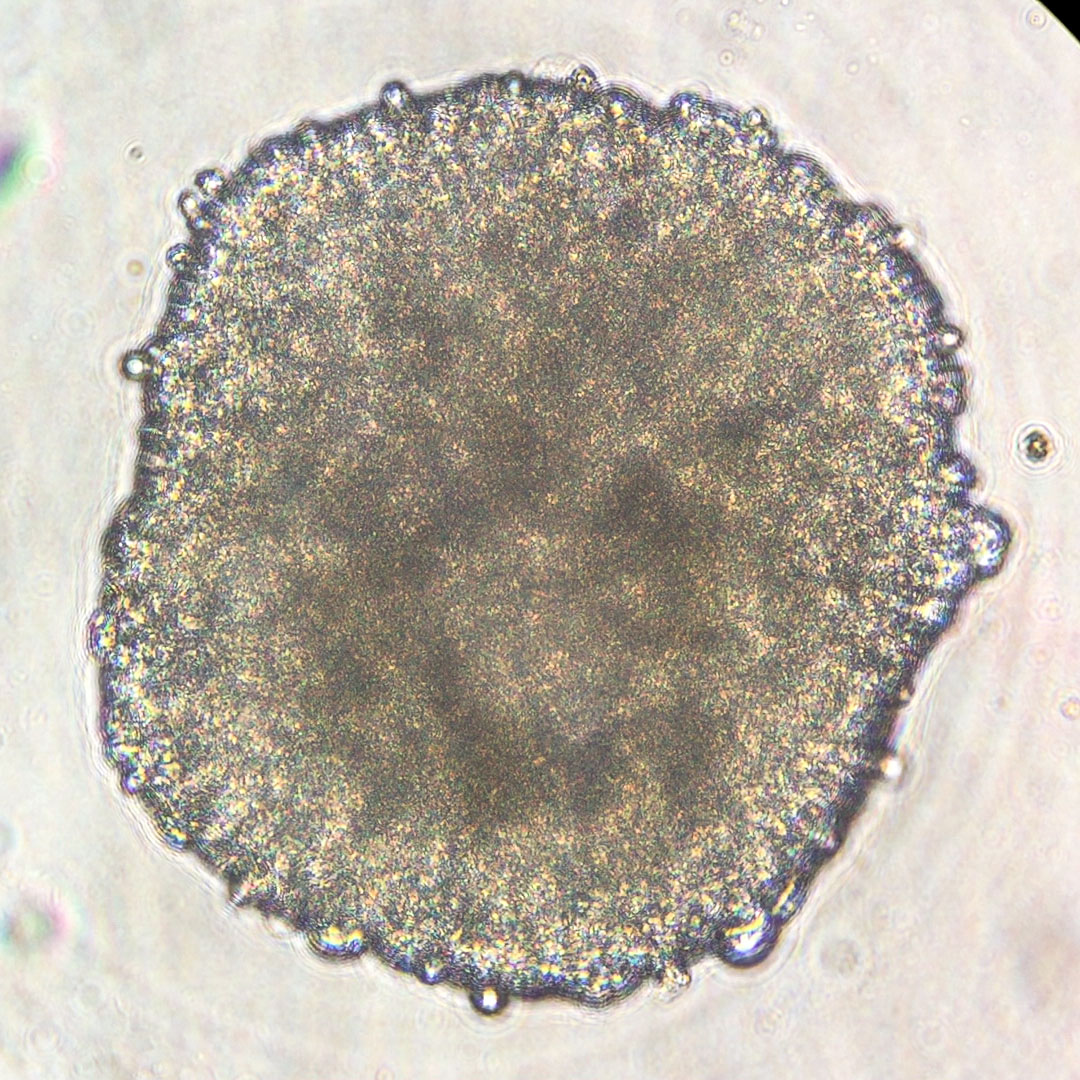
jsc2022e083018 (10/26/2022) — A preflight image of beating cardiac spheroid composed of iPSC-derived cardiomyocytes (CMs), endothelial cells (ECs), and cardiac fibroblasts (CFs). These cells are incubated and put under the microscope in space as part of the Effect of Microgravity on Drug Responses Using Heart Organoids (Cardinal Heart 2.0) investigation.
Image courtesy of Drs. Joseph Wu, Dilip Thomas and Xu Cao, Stanford Cardiovascular Institute

“The immune system is involved in everything,” O’Malley says. “Anytime there’s an injury – a paper cut, a heart attack, you’re sick – the immune system is going to be the first to respond; and neutrophils are the first responders.”

O’Malley’s work to determine what regulates the immune system’s interrelated responses – like how one cell could affect other cells or immune processes downstream – provided a unique opportunity for him to support multiple interdisciplinary NASA biological and physical sciences research projects during his 10-week internship at NASA Ames over the summer of 2024. O’Malley applied machine learning techniques to the large datasets the researchers were using from experiments and specimens collected over many years to help identify possible causes of inflammation seen in the heart, brain, and blood, as well as changes seen in bones, metabolism, the immune system, and more when humans or other model organisms are exposed to decreased gravity, social isolation, and increased radiation. These areas are of keen interest to NASA due to the risks to human health inherent in space exploration and the agency’s plans to send humans on long-duration missions to the Moon, Mars, and beyond.

“It’s exciting that we just never know what’s going to happen, how the immune system is going to react until it’s already been activated or challenged in some way,” said O’Malley. “I’m particularly interested in the adaptive immune system because it’s always evolving to meet new challenges; whether it’s a pandemic-level virus, bacteria or something on a mission to Mars, our bodies are going to have some kind of adaptive immune response.”

During his NASA internship, O’Malley applied a statistical analysis techniques to plot and make more sense of the massive amounts of life sciences data. From there, researchers could find out which proteins, out of hundreds, or attributes – like differences in sex – are related to which behaviors or outcomes. For example, through O’Malley’s analysis, researchers were able to better pinpoint the proteins involved in inflammation of the brain that may play a protective role in spatial memory and motor control during and after exposure to radiation – and how we might be able to prevent or mitigate those impacts during future space missions and even here on Earth.

As someone who’s both black and white, representation is important to me. It’s inspiring to think there will be people like me on the Moon – and that I’m playing a role in making this happen

Malcolm o'malley

Malcolm o’malley

Former NASA Intern

“I had this moment where I realized that since my internship supports NASA’s Human Research Program that means the work I’m doing directly applies to Artemis, which is sending the first woman and person of color to the Moon,” reflected O’Malley. “As someone who’s both black and white, representation is important to me. It’s inspiring to think there will be people like me on the Moon – and that I’m playing a role in making this happen.”

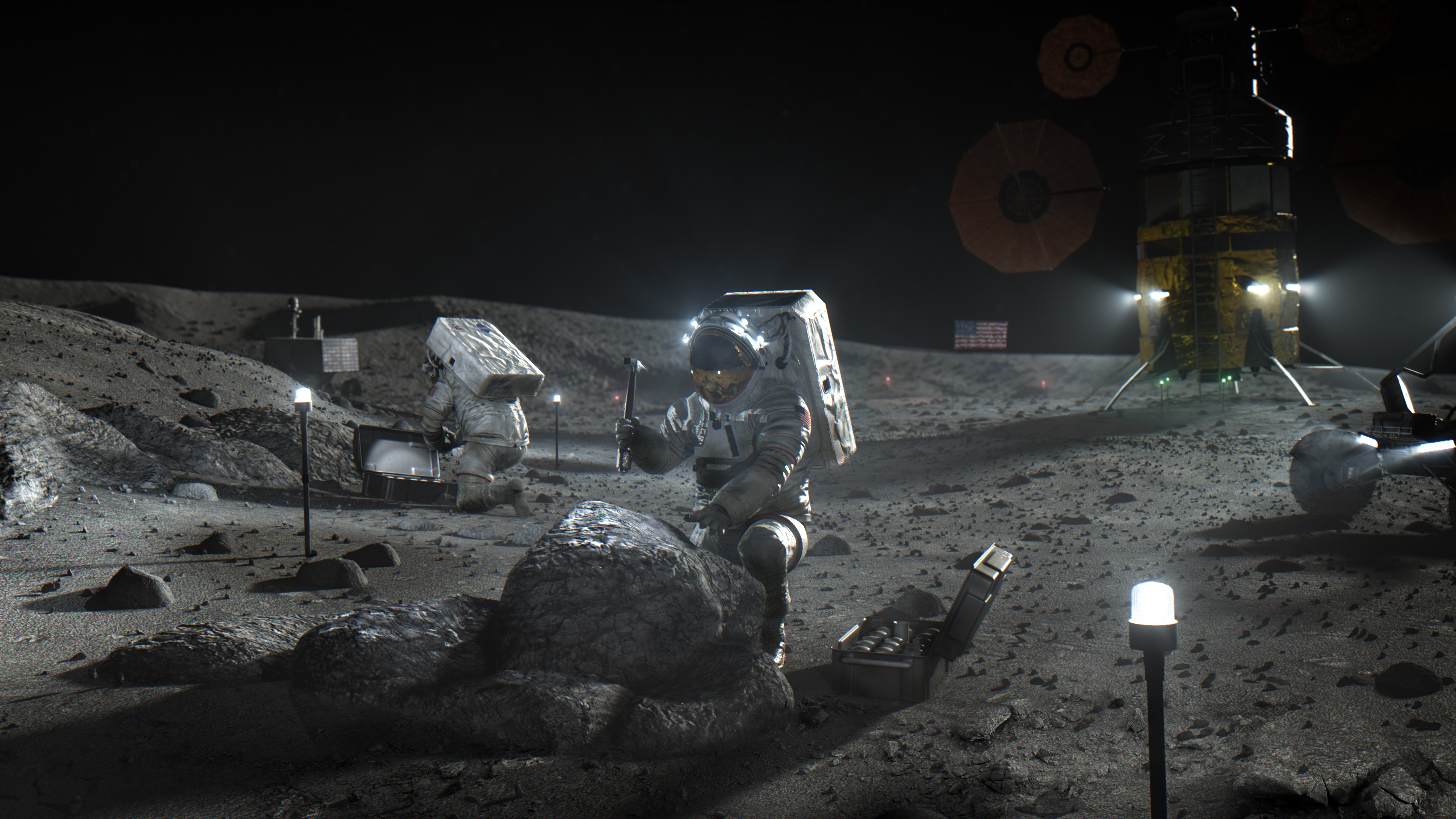
Artist conception of a future Artemis Base Camp on the lunar surface
NASA

When O’Malley wasn’t exploring the mysteries of the immune system for the benefit of all at NASA Ames, he taught himself how to ride a bike and started to surf in the nearby waters of the Pacific Ocean. O’Malley considers Palmyra, Virginia, his hometown and he enjoys playing sports – especially volleyball, water polo, and tennis – reading science fiction and giving guest lectures to local high school students hoping to spark their curiosity. 

O’Malley’s vision for the future of biomedical engineering reflects his passion for innovation. “I believe that by harnessing the unique immune properties of other species, we can achieve groundbreaking advancements in limb regeneration, revolutionize cancer therapy, and develop potent antimicrobials that are considered science fiction today,” he said.

Powered by WPeMatico

Get The Details…
Rachel Hoover

Witch Nebula Casts Starry Spell

Witch Nebula Casts Starry Spell

A green nebula looks like a witch's head looking to the right of the image. There is a pronounced
NASA/JPL-Caltech

This 2013 image taken by NASA’s Wide-Field Infrared Survey Explorer, or WISE, captures a nebula that looks like a witch screaming. Perhaps that imagined scream is a creation spell, for the Witch Hat nebula’s billowy clouds are a star nursery. We can see these clouds thanks to massive stars lighting them up; dust in the cloud is being hit with starlight, causing it to glow with infrared light, which was picked up by WISE’s detectors.

WISE launched to near-Earth orbit on Dec. 14, 2009, and surveyed the full sky in four infrared wavelength bands until the frozen hydrogen cooling the telescope was depleted in September 2010. The spacecraft was placed into hibernation in February 2011, having completed its primary astrophysics mission.

In late 2013, the spacecraft was resurrected – no incantation needed – when NASA’s Planetary Science Division gave it a new mission and a new name: NEOWISE. The spacecraft began helping NASA identify and describe near-Earth objects (NEOs). NEOs are comets and asteroids that have been nudged into orbits that allow them to enter Earth’s neighborhood. NEOWISE was decommissioned Aug. 8, 2024, and placed into hibernation for the last time, ending its career as an active asteroid hunter.

Image credit: NASA/JPL-Caltech

Powered by WPeMatico

Get The Details…
Monika Luabeya

Sols 4348-4349: Smoke on the Water

Sols 4348-4349: Smoke on the Water

2 min read

Sols 4348-4349: Smoke on the Water

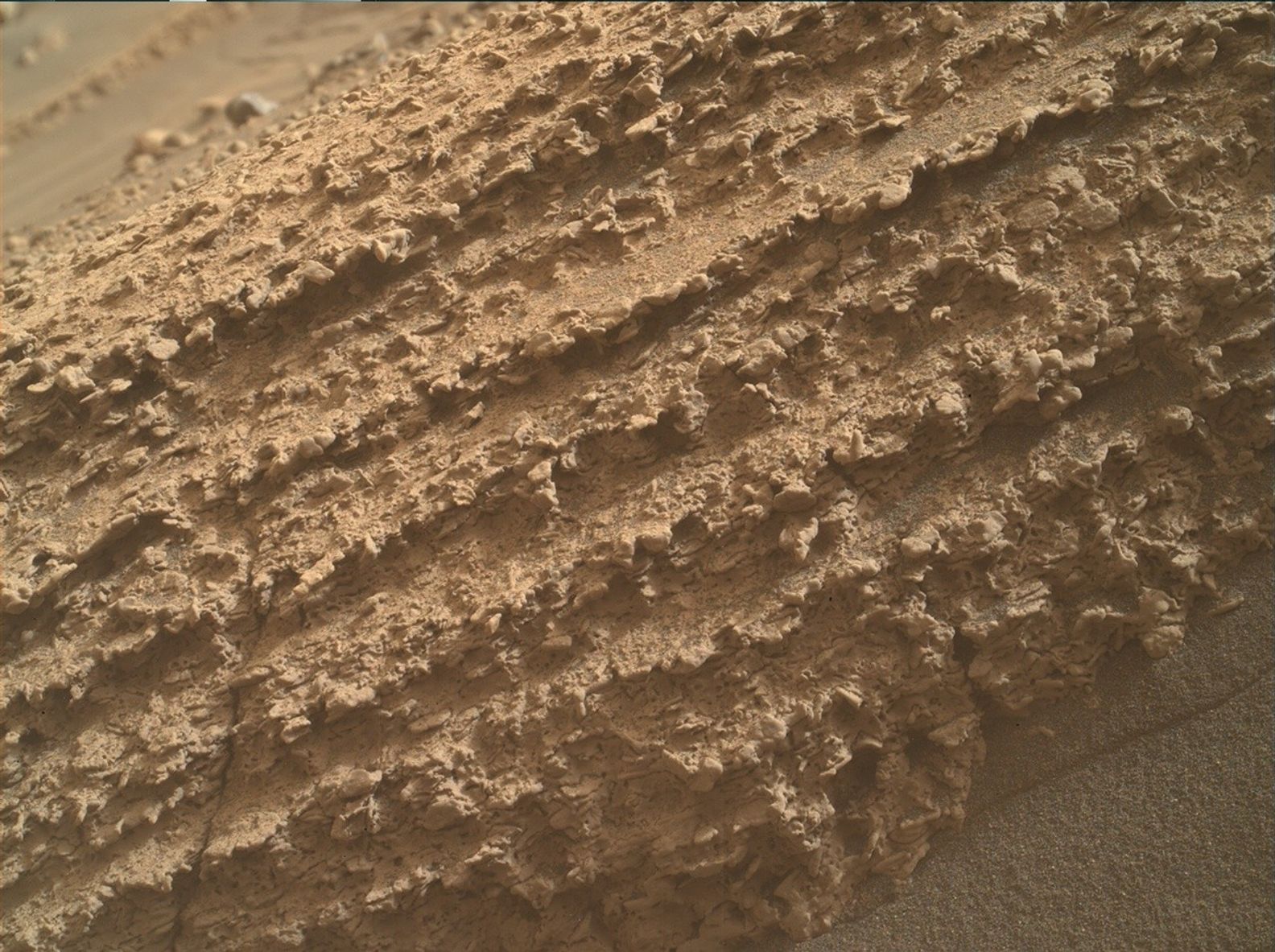
A close-up color photo of terrain on Mars shows a mounded spread of what looks like whipped chunky peanut butter, in color and consistency, covering almost all of the frame from upper right to lower left. Two small triangles in the upper left and lower right corners of the frame show the fine sand that borders either side of the other material.
NASA’s Mars rover Curiosity created this composite image from its Mars Hand Lens Imager (MAHLI), located on the turret at the end of the rover’s robotic arm. An onboard process, focus merging, makes a composite of images of the same target — acquired at different focus positions — to bring all (or, as many as possible) features into focus in a single image. Curiosity performed this merge on Oct. 27, 2024, sol 4346 (Martian day 4,346) of the Mars Science Laboratory Mission, at 15:45:47 UTC.
NASA/JPL-Caltech/MSSS

Earth planning date: Monday, Oct. 28, 2024

Before the science team starts planning, we first look at the latest Navcam image downlinked from Curiosity to see where the rover is located. It can be all too easy to get lost in the scenery of the Navcam and find new places in the distance we want to drive towards, but there’s so much beauty in the smaller things. Today I’ve chosen to show a photo from Curiosity’s hand lens camera, MAHLI, that takes photos so close that we can see the individual grains of the rock.

The planning day usually starts by thinking about these smaller features: What rocks are the closest to the rover? What can we shoot with our laser? What instruments can we use to document these features? Today we planned two sols, and the focus of the close-up contact science became a coating of material that in some image stretches looks like a deep-purple color.

We planned lots of activities to characterize this coating including use of the dust removal tool (DRT) and the APXS instrument on a target called “Reds Meadow.” This target will also be photographed by the MAHLI instrument. The team planned a ChemCam LIBS target on “Midge Lake” as well as a passive ChemCam target on “Primrose Lake” to document this coating with a full suite of instruments. Mastcam will then document the ChemCam LIBS target Midge Lake, and take a mosaic of the vertical faces of a few rocks near to the rover called “Peep Sight Peak” to observe the sedimentary structures here. Mastcam will also take a mosaic of “Pinnacle Ridge,” an area seen previously by the rover, from a different angle. ChemCam is rounding off the first sol with two long-distance RMI mosaics to document the stratigraphy of two structures we are currently driving between: Texoli butte and the Gediz Vallis channel.

In the second sol of the plan, after driving about 20 meters (about 66 feet), Curiosity will be undertaking some environmental monitoring activities before an AEGIS activity that automatically selects a LIBS target in our new workspace prior to our planning on Wednesday morning.

Written by Emma Harris, Graduate Student at Natural History Museum, London

Share

Details

Last Updated
Oct 30, 2024

Related Terms

Powered by WPeMatico

Get The Details…