NASA Invites Media to Agency’s 25th Annual Student Launch Challenge

NASA Invites Media to Agency’s 25th Annual Student Launch Challenge

3 min read

Preparations for Next Moonwalk Simulations Underway (and Underwater)

NASA’s annual Student Launch challenge will bring middle school, high school, and college students from around the country together to launch high-powered rockets and payloads. On Saturday, May 3, from 8:30 a.m.-2:30 p.m. CDT (or until the last rocket launches), student teams will convene for the agency’s 25th annual challenge at Bragg Farms in Toney, Alabama, near NASA’s Marshall Space Flight Center in Huntsville. 
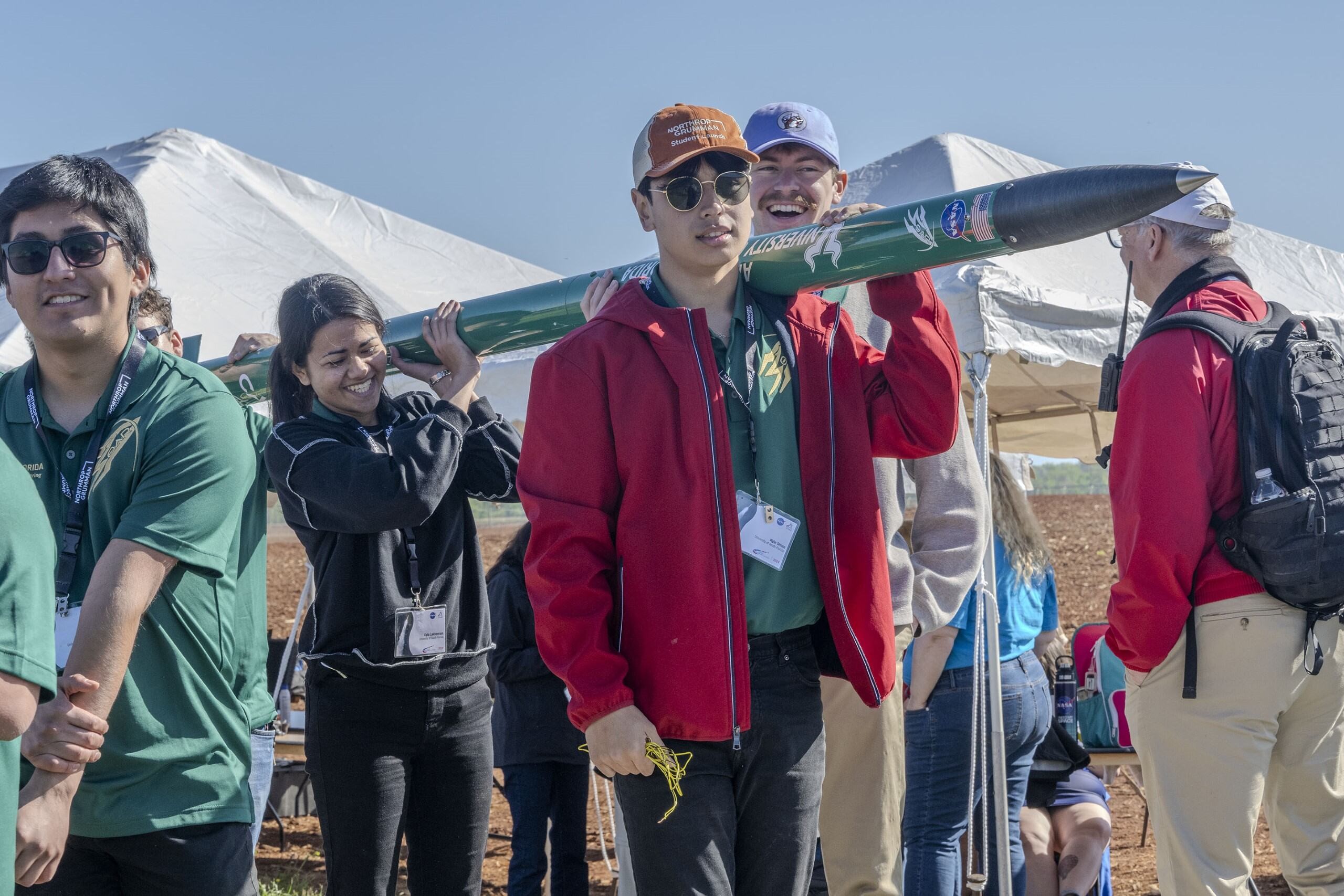
A group of students carry a rocket to the launch pad at the 2024 Student Launch competition.
Hundreds of students from across the U.S. and Puerto Rico launched amateur rockets near NASA’s Marshall Space Flight Center in Huntsville, Alabama, during the Agency’s 2024 Student Launch competition.
NASA

Live streaming will begin at 8:20 a.m. CDT on NASA Marshall YouTube.

Media interested in covering Student Launch events should contact Taylor Goodwin at 938-210-2891.

Winners will be announced June 9 during a virtual awards ceremony once all teams’ flight data has been verified.

Seventy-one teams participated this year; 47 teams are expected to launch in-person. Teams not traveling to Alabama are allowed to conduct final test flights at a qualified launch field near them.

Schedule of Events:

Rocket Fair: Friday, May 2, 2025, 3-6 p.m. at the Von Braun Center East Hall.
A free event for the public to view rockets and meet the student teams.

Launch Day: Saturday, May 3, 2025, gates open at 7 a.m. and the event runs from 8:30 a.m.-2:30 p.m. (or until last rocket launch) at Bragg Farms, in Toney, Alabama. This is a free public event with live rocket launches. Please be weather aware. Lawn chairs are recommended. Pets are not permitted.

Back-up Launch Day: Sunday, May 4, 2025, is reserved as a back-up launch day in case of inclement weather. If needed, the event will run from 8:30 a.m. to 2:30 p.m. (or until last rocket launches) at Bragg Farms.

About the Competition

Student Launch provides relevant, cost-effective research and development of rocket propulsion systems and reflects the goals of NASA’s Artemis Program, which will establish the first long-term presence on the Moon and pave the way for eventual Mars missions.

Each year, the payload component changes to reflect current NASA missions. As Student Launch celebrates its 25th anniversary, the payload challenge will include “reports” from STEMnauts, non-living objects representing astronauts. The STEMnaut “crew” must relay real-time data to the student team’s mission control, just as the Artemis astronaut crew will do as they explore the lunar surface.  

Eligible teams compete for prizes and awards and are scored in nearly a dozen categories including safety, vehicle design, social media presence, and science, technology, engineering, and math (STEM) engagement.

Marshall’s Office of STEM Engagement hosts Student Launch to encourage students to pursue careers in STEM through real-world experiences. Student Launch is a part of the agency’s Artemis Student Challenges– a variety of activities exposing students to the knowledge and technology required to achieve the goals of the Artemis missions.

In addition to the NASA Office of STEM Engagement’s Next Gen STEM project, NASA Space Operations Mission Directorate, Northrup Grumman, National Space Club Huntsville, American Institute of Aeronautics and Astronautics, National Association of Rocketry, Relativity Space and Bastion Technologies provide funding and leadership for the competition.

For more information about Student Launch, please visit:
https://www.nasa.gov/learning-resources/nasa-student-launch/

Taylor Goodwin 
NASA’s Marshall Space Flight Center, Huntsville, Alabama
256-544-0034
taylor.goodwin@nasa.gov

Share

Details

Last Updated

Apr 29, 2025

Editor
Beth Ridgeway

Powered by WPeMatico

Get The Details…
Beth Ridgeway
Help Classify Galaxies Seen by NASA’s James Webb Space Telescope!

Help Classify Galaxies Seen by NASA’s James Webb Space Telescope!

3 min read

Help Classify Galaxies Seen by NASA’s James Webb Space Telescope!

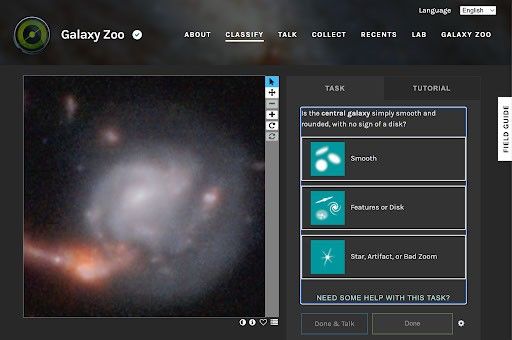
On a black background under the header of “Galaxy Zoo” and the projects navigation tabs About, Classify, Talk, Collect, Recents, Lab, and Galaxy Zoo, we see an image of a fuzzy, silver, spiral-armed galaxy on the left. On the right a question prompts the viewer to classify the image as smooth, with features or disks, or a star, artifact, or bad zoom image.
The Galaxy Zoo classification interface shows you an image from NASA’s Webb telescope and asks you questions about it.
Image credit: Galaxy Zoo, Zooniverse. Inset galaxy: NASA/STScI/CEERS/TACC/S. Finkelstein/M. Bagley/Z. Levay/A. Pagan

NASA needs your help identifying the shapes of thousands of galaxies in images taken by our James Webb Space Telescope with the Galaxy Zoo project. These classifications will help scientists answer questions about how the shapes of galaxies have changed over time, what caused these changes, and why. Thanks to the light collecting power of Webb, there are now over 500,000 images of galaxies on website of the Galaxy Zoo citizen science project—more images than scientists can classify by themselves. 

“This is a great opportunity to see images from the newest space telescope,” said volunteer Christine Macmillan from Aberdeen, Scotland. “Galaxies at the edge of our universe are being seen for the first time, just as they are starting to form. Just sign up and answer simple questions about the shape of the galaxy that you are seeing. Anyone can do it, ages 10 and up!”  

As we look at more distant objects in the universe, we see them as they were billions of years ago because light takes time to travel to us. With Webb, we can spot galaxies at greater distances than ever before. We’re seeing what some of the earliest galaxies ever detected look like, for the first time. The shapes of these galaxies tell us about how they were born, how and when they formed stars, and how they interacted with their neighbors. By looking at how more distant galaxies have different shapes than close galaxies, we can work out which processes were more common at different times in the universe’s history.   

At Galaxy Zoo, you’ll first examine an image from the Webb telescope. Then you will be asked several questions, such as ‘Is the galaxy round?’, or ‘Are there signs of spiral arms?’. If you’re quick, you may even be the first person to see the galaxies you’re asked to classify.  

“I’m amazed and honored to be one of the first people to actually see these images! What a privilege!” said volunteer Elisabeth Baeten from Leuven, Belgium.

Galaxy Zoo is a citizen science project with a long history of scientific impact. Galaxy Zoo volunteers have been exploring deep space since July 2007, starting with a million galaxies from a telescope in New Mexico called the Sloan Digital Sky Survey and then, moving on to images from space telescopes like NASA’s Hubble Space Telescope and ESA (European Space Agency)’s Euclid telescope. The project has revealed spectacular mergers, taught us about how the black holes at the center of galaxies affect their hosts, and provided insight into how features like spiral arms form and grow.  

Now, in addition to adding new data from Webb, the science team has incorporated an AI algorithm called ZooBot, which will sift through the images first and label the ‘easier ones’ where there are many examples that already exist in previous images from the Hubble Space Telescope. When ZooBot is not confident on the classification of a galaxy, perhaps due to complex or faint structures, it will show it to users on Galaxy Zoo to get their human classifications, which will then help ZooBot learn more. Working together, humans and AI can accurately classify limitless numbers of galaxies. The Galaxy Zoo science team acknowledges support from the International Space Sciences Institute (ISSI), who provided funding for the team to get together and work on Galaxy Zoo. Join the project now.  

Powered by WPeMatico

Get The Details…

Where Does Gold Come From? NASA Data Has Clues

Where Does Gold Come From? NASA Data Has Clues

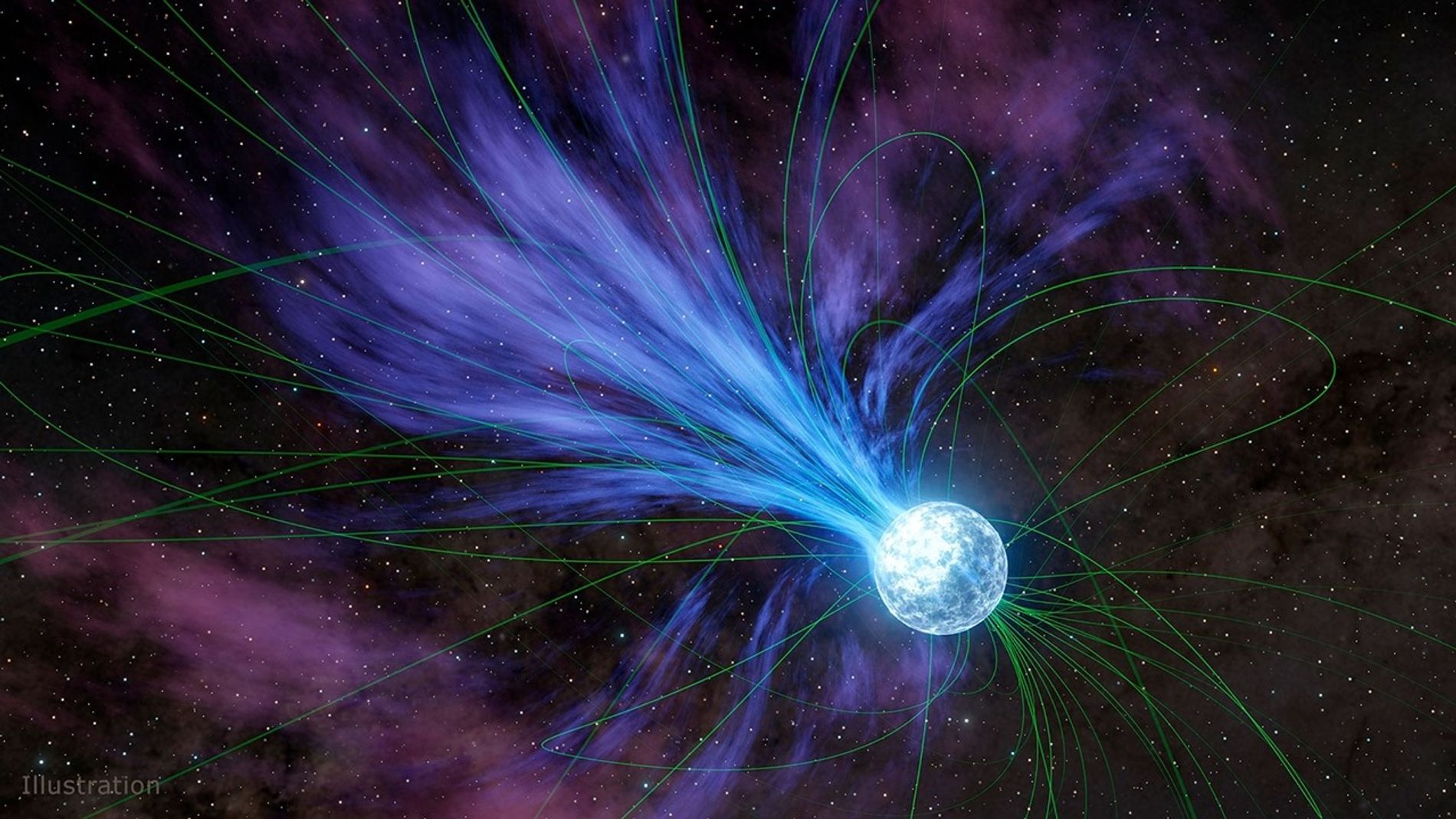
A light blue ball representing a magnetar is shown with green looping lines representing magnetic field and blue feathery lines being ejected, representing material being ejected.
This artist’s concept depicts a magnetar – a type of neutron star with a strong magnetic field – losing material into space. Shown as thin green lines, the magnetic field lines influence the movement of charged material around the magnetar.
NASA/JPL-Caltech

Since the big bang, the early universe had hydrogen, helium, and a scant amount of lithium. Later, some heavier elements, including iron, were forged in stars. But one of the biggest mysteries in astrophysics is: How did the first elements heavier than iron, such as gold, get created and distributed throughout the universe?

“It’s a pretty fundamental question in terms of the origin of complex matter in the universe,” said Anirudh Patel, a doctoral student at Columbia University in New York. “It’s a fun puzzle that hasn’t actually been solved.”

Patel led a study using 20-year-old archival data from NASA and ESA telescopes that finds evidence for a surprising source of a large amount of these heavy elements: flares from highly magnetized neutron stars, called magnetars. The study is published in The Astrophysical Journal Letters.

Study authors estimate that magnetar giant flares could contribute up to 10% of the total abundance of elements heavier than iron in the galaxy. Since magnetars existed relatively early in the history of the universe, the first gold could have been made this way.

“It’s answering one of the questions of the century and solving a mystery using archival data that had been nearly forgotten,” said Eric Burns, study co-author and astrophysicist at Louisiana State University in Baton Rouge.

How could gold be made at a magnetar?

Neutron stars are the collapsed cores of stars that have exploded. They are so dense that one teaspoon of neutron star material, on Earth, would weigh as much as a billion tons. A magnetar is a neutron star with an extremely powerful magnetic field.

On rare occasions, magnetars release an enormous amount of high-energy radiation when they undergo “starquakes,” which, like earthquakes, fracture the neutron star’s crust. Starquakes may also be associated with powerful bursts of radiation called magnetar giant flares, which can even affect Earth’s atmosphere. Only three magnetar giant flares have been observed in the Milky Way and the nearby Large Magellanic Cloud, and seven outside.

Patel and colleagues, including his advisor Brian Metzger, professor at Columbia University and senior research scientist at the Flatiron Institute in New York, have been thinking about how radiation from giant flares could correspond to heavy elements forming there. This would happen through a “rapid process” of neutrons forging lighter atomic nuclei into heavier ones.   

Protons define the element’s identity on the periodic table: hydrogen has one proton, helium has two, lithium has three, and so on. Atoms also have neutrons which do not affect identity, but do add mass. Sometimes when an atom captures an extra neutron the atom becomes unstable and a nuclear decay process happens that converts a neutron into a proton, moving the atom forward on the periodic table. This is how, for example, a gold atom could take on an extra neutron and then transform into mercury. 

In the unique environment of a disrupted neutron star, in which the density of neutrons is extremely high, something even stranger happens: single atoms can rapidly capture so many neutrons that they undergo multiple decays, leading to the creation of a much heavier element like uranium.

When astronomers observed the collision of two neutron stars in 2017 using NASA telescopes and the Laser Interferometer Gravitational wave Observatory (LIGO), and numerous telescopes on the ground and in space that followed up the initial discovery, they confirmed that this event could have created gold, platinum, and other heavy elements. But neutron star mergers happen too late in the universe’s history to explain the earliest gold and other heavy elements. Recent research by co-authors of the new study — Jakub Cehula of Charles University in Prague, Todd Thompson of The Ohio State University, and Metzger — has found that magnetar flares can heat and eject neutron star crustal material at high speeds, making them a potential source.

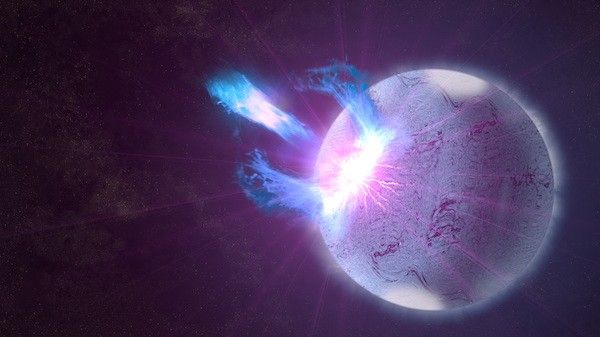
A rupture in the crust of a highly magnetized neutron star, shown here in an artist’s rendering, can trigger high-energy eruptions.
Credit: NASA’s Goddard Space Flight Center/S. Wiessinger

New clues in old data

At first, Metzger and colleagues thought that the signature from the creation and distribution of heavy elements at a magnetar would appear in the visible and ultraviolet light, and published their predictions. But Burns in Louisiana wondered if there could be a gamma-ray signal bright enough to be detected, too. He asked Metzger and Patel to check, and they found that there could be such a signature.

“At some point, we said, ‘OK, we should ask the observers if they had seen any,’” Metzger said.

Burns looked up the gamma ray data from the last giant flare that has been observed, which was in December 2004. He realized that while scientists had explained the beginning of the outburst, they had also identified a smaller signal from the magnetar, in data from ESA (European Space Agency)’s INTErnational Gamma-Ray Astrophysics Laboratory (INTEGRAL), a recently retired mission with NASA contributions. “It was noted at the time, but nobody had any conception of what it could be,” Burns said.

Metzger remembers that Burns thought he and Patel were “pulling his leg” because the prediction from their team’s model so closely matched the mystery signal in the 2004 data. In other words, the gamma ray signal detected over 20 years ago corresponded to what it should look like when heavy elements are created and then distributed in a magnetar giant flare.

Patel was so excited, “I wasn’t thinking about anything else for the next week or two. It was the only thing on my mind,” he said.

Researchers supported their conclusion using data from two NASA heliophysics missions: the retired RHESSI (Reuven Ramaty High Energy Solar Spectroscopic Imager) and the ongoing NASA’s Wind satellite, which had also observed the magnetar giant flare. Other collaborators on the new study included Jared Goldberg at the Flatiron Institute.

Next steps in the magnetar gold rush

NASA’s forthcoming COSI (Compton Spectrometer and Imager) mission can follow up on these results. A wide-field gamma ray telescope, COSI is expected to launch in 2027 and will study energetic phenomena in the cosmos, such as magnetar giant flares. COSI will be able to identify individual elements created in these events, providing a new advancement in understanding the origin of the elements. It is one of many telescopes that can work together to look for “transient” changes across the universe.

Researchers will also follow up on other archival data to see if other secrets are hiding in observations of other magnetar giant flares.

“It very cool to think about how some of the stuff in my phone or my laptop was forged in this extreme explosion of the course of our galaxy’s history,” Patel said.

Media Contact

Elizabeth Landau
Headquarters, Washington
202-358-0845
elandau@nasa.gov

Powered by WPeMatico

Get The Details…

In the Starlight: Jason Phillips’ Unexpected Path to Johnson Procurement

In the Starlight: Jason Phillips’ Unexpected Path to Johnson Procurement

Sometimes an unexpected turn in a carefully planned career path leads to surprising opportunities for growth and exciting new experiences. For Jason Phillips, that turn steered toward NASA’s Johnson Space Center in Houston.

Official portrait of Johnson Space Center employee Jason Phillips, who wears a black suit, fuchsia tie, and stands in front of the NASA and U.S. flags.
Official portrait of Jason Phillips.
NASA/Bill Stafford

Phillips joined the U.S. Air Force in 1994 and planned to serve for at least 20 years, but in 2010—while preparing for a third deployment after 14 years of service—he found himself facing a medical separation from the military. “In a very short amount of time I had to figure out next steps for a career and lifestyle that no longer involved being an active duty servicemember,” he said.

Thanks to a special hiring authority obtained by Peterson Air Force Base’s Office of Procurement, Phillips was able to transition to the civil service and apply his experience as an Air Force contracting officer to a new role. Phillips returned home to Houston and shifted from a Defense Department job to NASA as a contract specialist, spending his first 10 years at Johnson supporting all aspects of the Center Operations Directorate. He was then tasked with the challenge of serving as a lead contracting officer within Johnson’s procurement office for the International Space Station Program.  

Phillips currently leads a team of highly skilled acquisition professionals who support a variety of contracts that sustain the International Space Station’s operations, maximize science conducted aboard the orbiting laboratory, and pave the way for a seamless transition to commercial low Earth orbit destinations. He oversees the team’s daily work, which includes strategic planning and acquisition of contracts valued at more than $21 billion. Specifically, the team handles NASA’s Cargo Resupply Services contracts, a cooperative agreement with the Center for the Advancement of Science in Space, and the Research, Engineering & Mission Integration Services-2 contract.

A group of four Johnson Space Center procurement employees poses for a photo during a procurement conference.
Jason Phillips (left) and Johnson Office of Procurement colleagues attend a National Contract Management Association conference at the Gilruth Center in 2016.
NASA/James Blair

 “I am responsible for providing high-quality procurement products, services, and support to ensure that executive and technical customer needs are met and exceeded while maintaining compliance with applicable statutes, regulations, and guidelines,” he said. That work has included modifying the program’s original acquisition strategy to minimize delays, target cost savings, and emphasize critical infrastructure and services such as the Environmental Control and Life Support Systems aboard the space station.

Phillips enjoys seeing the direct impact of his work. “This career field almost always allows me to see the fruits of my labor, whether I am procuring office supplies and equipment or managing construction projects,” he said, noting that the remodeling of Johnson’s building 20 was his first project at the center. He is also proud to have supported the career progression of fellow procurement professionals and technical staff. “It’s a nod to those who came before me and provided me with their leadership and technical knowledge of procurement.”

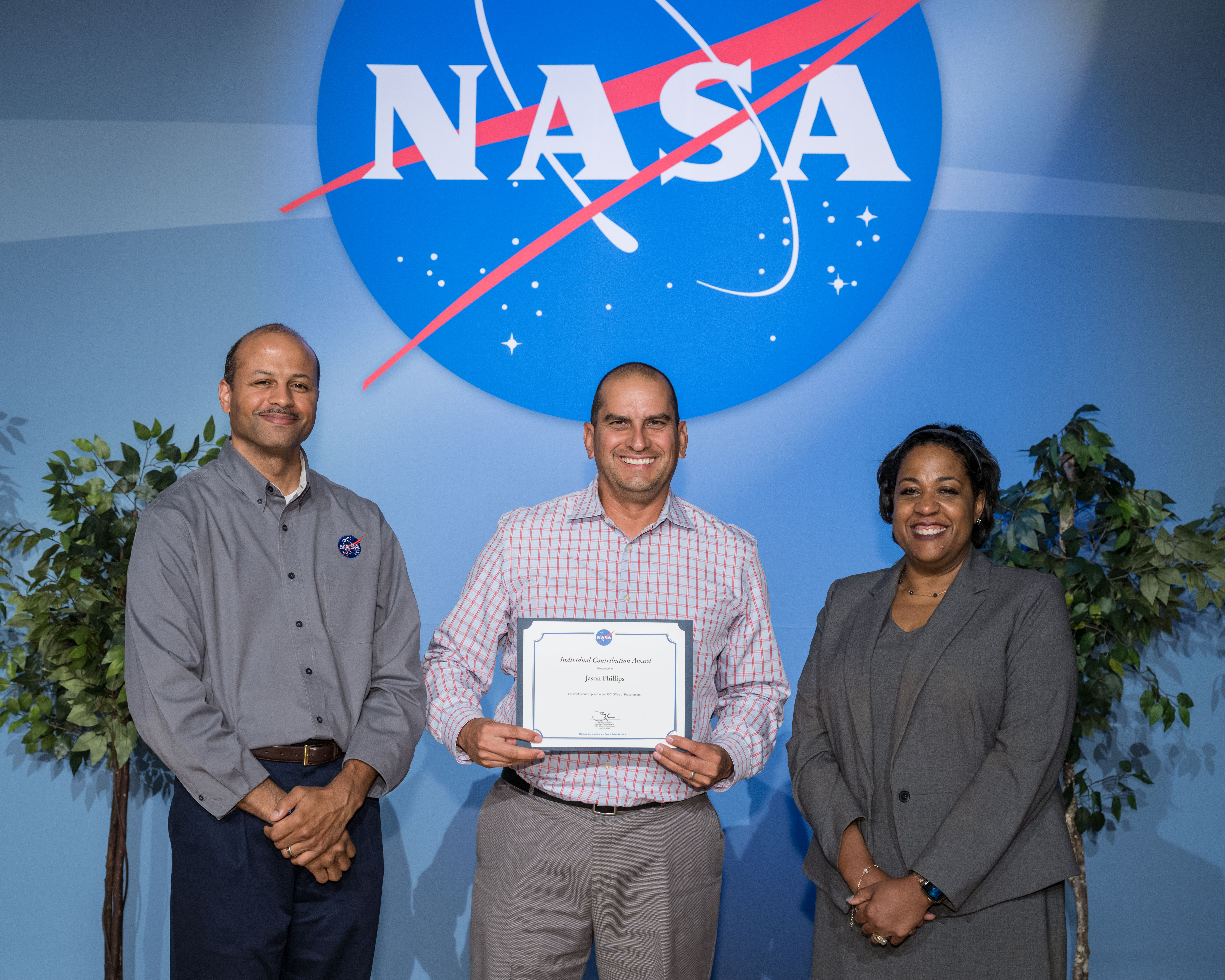
Jason Phillips stands between two managers on a stage with the NASA meatball in the background, holding an award.
Jason Phillips received an Individual Contribution Award for continuous support in Johnson’s Office of Procurement from NASA Assistant Administrator for Procurement Karla Jackson in 2022.
NASA/Robert Markowitz

Phillips said that staying humble and accountable is key to finding mission-focused solutions that benefit everyone. He also cautioned against making assumptions. “The people around you are very willing to offer thoughts and insights into a solution to your problem,” he said. “There is so much knowledge to be gained by listening.”

He encourages the Artemis Generation to seek opportunities to expand their technical knowledge and grow professionally. “Help yourself so that you may help others.”

Powered by WPeMatico

Get The Details…
Linda E. Grimm

NASA Moon Observing Instrument to Get Another Shot at Lunar Ops

NASA Moon Observing Instrument to Get Another Shot at Lunar Ops

Image shows a silver square science instrument on blue table
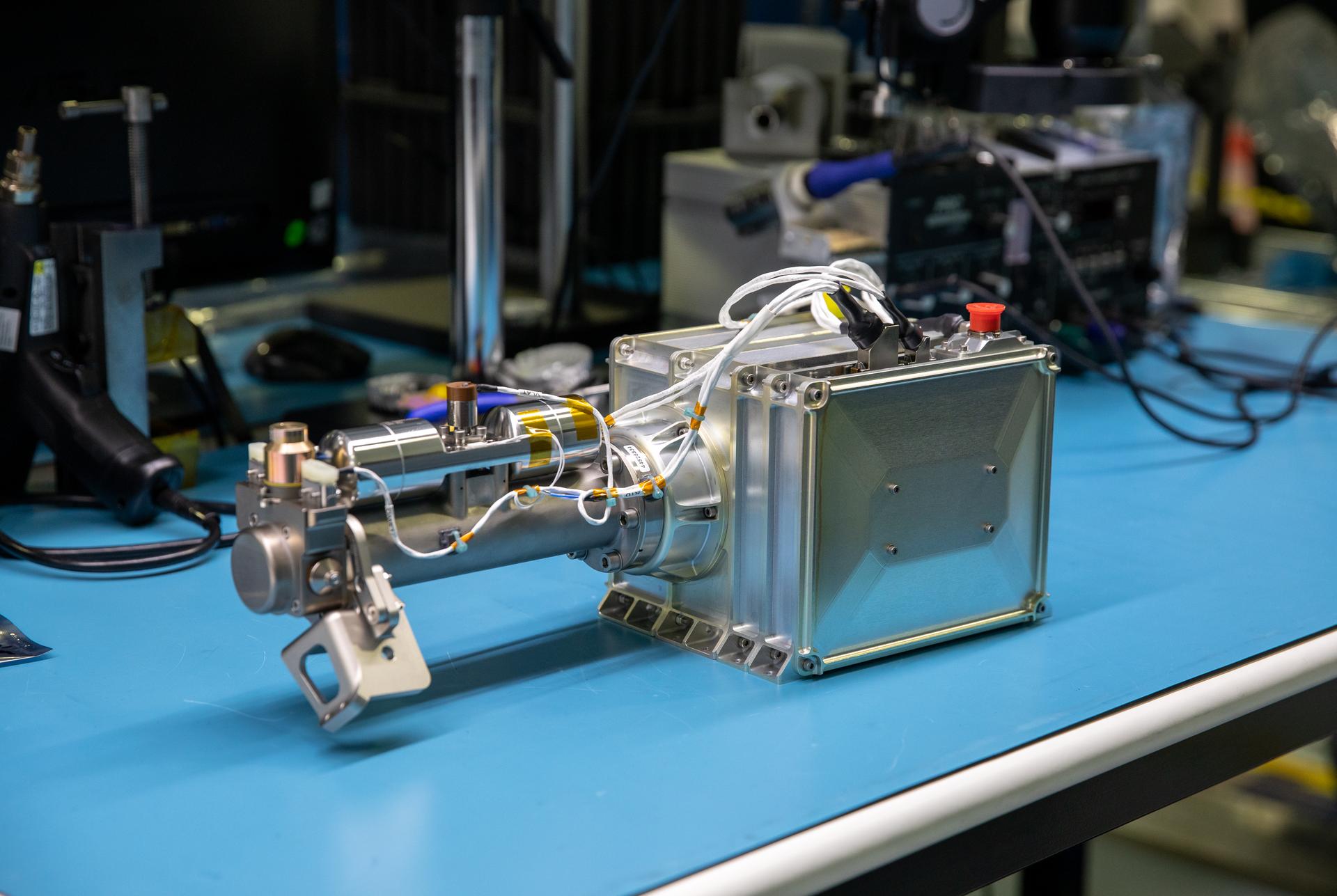
The Mass Spectrometer Observing Lunar Operations (MSolo) for NASA’s Volatile Investigating Polar Exploration Rover (VIPER) mission is prepared for packing inside a laboratory in the Space Station Processing Facility at NASA’s Kennedy Space Center in Florida on Feb. 21, 2023. MSolo is a commercial off-the-shelf mass spectrometer modified to work in space and it will help analyze the chemical makeup of landing sites on the Moon, as well as study water on the lunar surface.
NASA/Kim Shiflett

A NASA-developed technology that recently proved its capabilities in the harsh environment of space will soon head back to the Moon to search for gases trapped under the lunar surface thanks to a new Cooperative Research and Development Agreement between NASA and commercial company Magna Petra Corp.

The Mass Spectrometer Observing Lunar Operations (MSOLO) successfully demonstrated the full range of its hardware in lunar conditions during the Intuitive Machines 2 mission earlier this year. Under the new agreement, a second MSOLO, mounted on a commercial rover, will launch to the Moon no earlier than 2026. Once on the lunar surface, it will measure low molecular weight volatiles in hopes of inferring the presence of rare isotopes, such as Helium-3, which is theorized to exist, trapped in the regolith, or lunar dust, of the Moon.

“This new mission opportunity will help us determine what volatiles are present in the lunar surface, while also providing scientific insight for Magna Petra’s goals,” said Roberto Aguilar Ayala, research physicist at NASA’s Kennedy Space Center in Florida. “Learning more about the lunar volatiles and their isotopes supports NASA’s goal of sustaining long-term human space exploration. We will need to extract resources locally to enhance the capabilities of our astronauts to further exploration opportunities on the lunar surface.”

The MSOLO instrument will be integrated on a commercial rover, selected by Magna Petra. The rover will allow MSOLO to gather the data needed for researchers to understand which low-molecular weight gases reside within the Moon’s surface.

NASA will work with the partner to integrate MSOLO so that it will function properly with the rover, and the partner will analyze and share data in real time with NASA to understand the location of these volatiles on the Moon and their ability to be extracted in the future.

Magna Petra hopes to understand the presence of Helium-3 isotope within the Moon’s surface, with the ultimate goal of collecting it and bringing it back to Earth for use in a variety of industries, including energy production through nuclear fusion, quantum computing, health care, and specialized laboratory equipment.

The MSOLO instrument began as a commercial off-the-shelf mass spectrometer designed to analyze volatiles used in the manufacturing of semi-conductors, which helped keep NASA’s development costs down. NASA modified the device to withstand the rigors of spaceflight and the Moon’s harsh conditions. On its first journey to the Moon, MSOLO was part of the Polar Resources Ice Mining Experiment 1.

Signed on April 2, the reimbursable agreement is the first of its kind established at NASA Kennedy. Under the agreement, Magna Petra will reimburse NASA for costs such as supporting MSOLO integration and testing with the rover, pre-mission preparation and mission operations of the instruments, and expertise in system engineering, avionics, and software.

“This innovative agreement promises to provide valuable data to both partners,” said Jonathan Baker, chief of Spaceport Development at NASA Kennedy. “This approach demonstrates NASA’s commitment to finding unique ways to work with commercial industry to help advance technology in a fiscally responsible way and enabling innovation for the benefit of humankind.”

Throughout the mission, NASA will retain ownership of MSOLO. Once the mission is complete, the instrument will no longer have access to power and communications and will remain on the surface of the Moon. The valuable data gathered during the mission will be submitted to the Planetary Data System for public dissemination.

Powered by WPeMatico

Get The Details…
Messod C. Bendayan