What Does NASA Science Do For Me?

What Does NASA Science Do For Me?

3 min read

What Does NASA Science Do For Me?

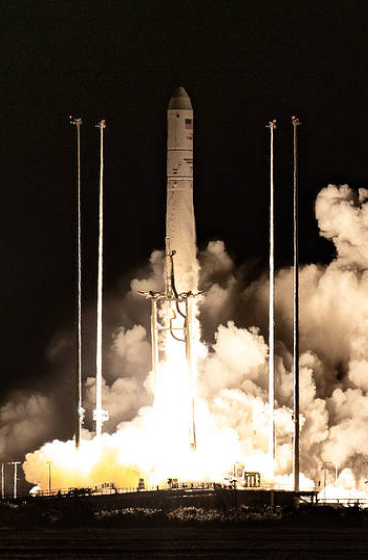
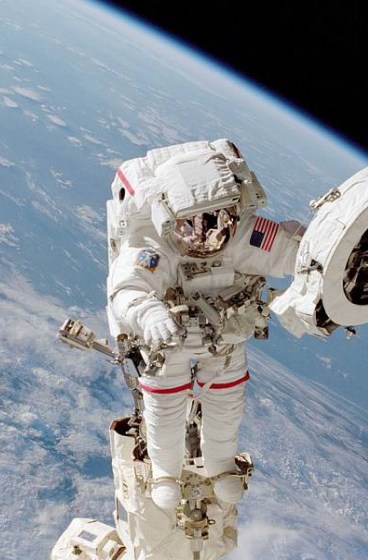
It is easy to forget that all of the hard work, technology, and money that NASA pours into space research actually comes back down to Earth. In fact, many of NASA’s missions and research focus on our planet! NASA also has many other projects with partners that use their research to enrich everyone’s lives here on Earth- and this is not including such notable achievements as satellite weather maps!

The NASA Spinoff program was created over fifty years ago to facilitate the licensing and development of NASA’s technologies for commercial use by other companies and agencies. This program helps “spin off” NASA’s technology for use by others here on Earth and, in some cases, in space. To date, over 2,000 spinoff technologies have been documented by the NASA Spinoff program.

Some notable examples of NASA spinoffs include:

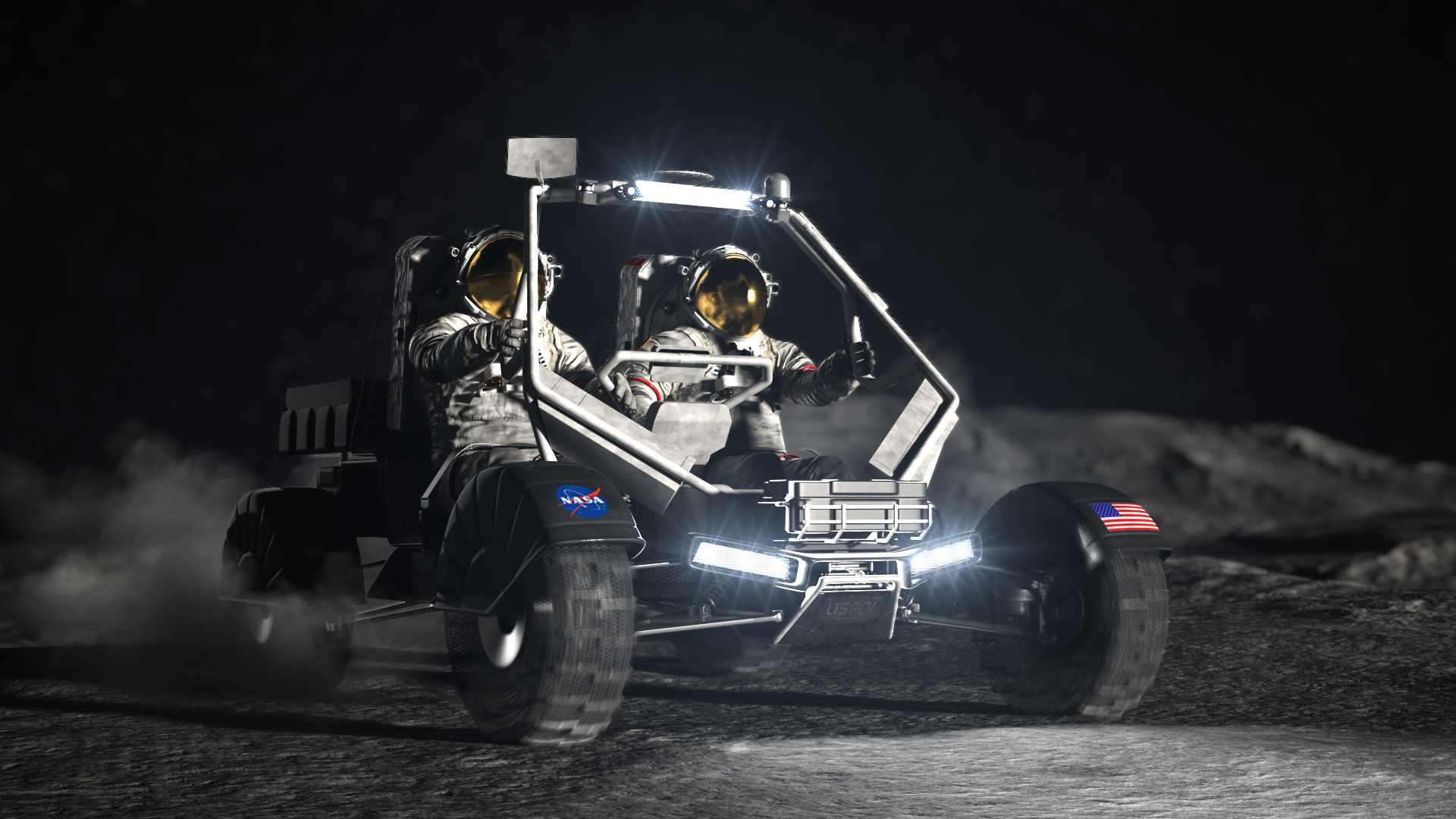
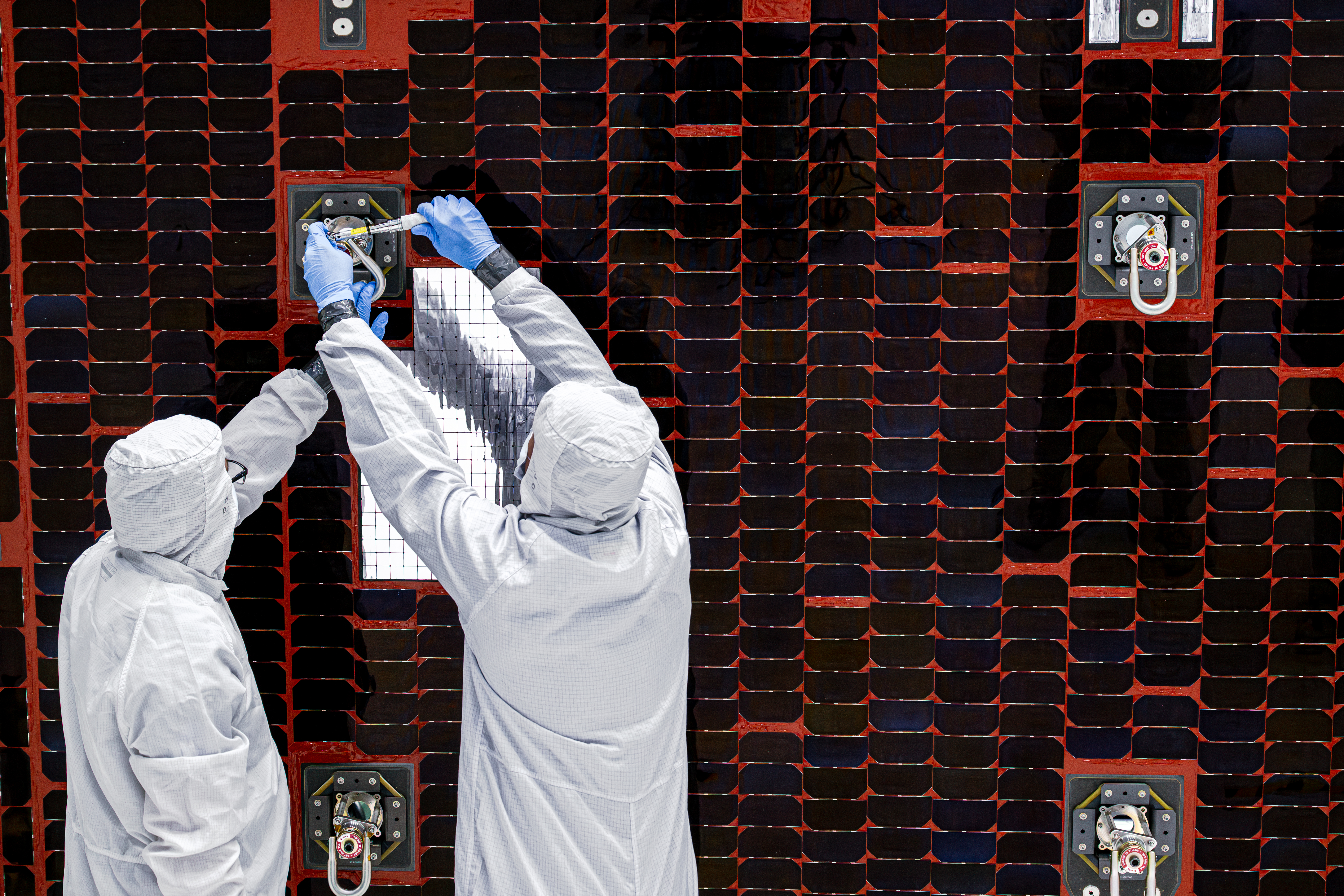
  • Solar Cells
  • Water Purification
  • Memory foam for your cozy bed and chairs
  • Firefighting equipment, especially lightweight fireproof clothing and masks with much-improved air filters
  • Highway safety grooves, which help your car go around curves without slipping off by giving your tire better traction
  • Many safety features in modern aircraft, such as de-icing technologies for wings, chemical detectors and imaging for plane maintenance, improved flight controls, and many more
  • Image stabilization for your binoculars and video cameras
  • The Dustbuster
  • Healthier baby food

…and many more! Check out this Wikipedia page for a more extensive list of the technologies that NASA has had a direct role in developing, many of which we now take for granted.

It is worth noting that there are a few technologies commonly thought to have been created by NASA that were actually independently developed. Tang is a great example; it was developed by General Foods in 1957 and attained fame when used during food testing by NASA in the 60s (even though some astronauts were not fans of the powdery, not-quite-orange juice). The microwave oven is another famous technology often falsely thought of as a NASA development. It was, in fact, created shortly after World War 2, when radar technicians discovered that it wasn’t such a good idea to stand in front of active equipment! Thankfully, they found out via a melted candy bar and not from severe burns!

Every year, NASA releases a report on its program, and the 2025 edition of the NASA Spinoff magazine is now available! You can view the entire NASA Spinoff archive, dating back to 1976, here.

Originally posted by Dave Prosper: May 2013
Last Updated by Kat Troche: March 2025

Powered by WPeMatico

Get The Details…

NASA Announces 31st Human Exploration Rover Challenge Winners

NASA Announces 31st Human Exploration Rover Challenge Winners

NASA has announced the winners of it’s 31st Human Exploration Rover Challenge . The annual engineering competition – one of the agency’s longest standing student challenges – wrapped up on April 11 and April 12, at the U.S. Space & Rocket Center in Huntsville, Alabama, near NASA’s Marshall Space Flight Center.
NASA

NASA has announced the winning student teams in the 2025 Human Exploration Rover Challenge. This year’s competition challenged teams to design, build, and test a lunar rover powered by either human pilots or remote control. In the human-powered division, Parish Episcopal School in Dallas, Texas, earned first place in the high school division, and the Campbell University in Buies Creek, North Carolina, captured the college and university title. In the remote-control division, Bright Foundation in Surrey, British Columbia, Canada, earned first place in the middle and high school division, and the Instituto Tecnologico de Santa Domingo in the Dominican Republic, captured the college and university title.

The annual engineering competition – one of NASA’s longest standing student challenges – wrapped up on April 11 and April 12, at the U.S. Space & Rocket Center in Huntsville, Alabama, near NASA’s Marshall Space Flight Center. The complete list of 2025 award winners is provided below:

Human-Powered High School Division 

  • First Place: Parish Episcopal School, Dallas, Texas
  • Second Place: Ecambia High School, Pensacola, Florida
  • Third Place: Centro Boliviano Americano – Santa Cruz, Bolivia

Human-Powered College/University Division 

  • First Place: Campbell University, Buies Creek, North Carolina
  • Second Place: Instituto Tecnologico de Santo Domingo, Dominican Republic
  • Third Place: University of Alabama in Huntsville

Remote-Control Middle School/High School Division

  • First Place: Bright Foundation, Surrey, British Columbia, Canada
  • Second Place: Assumption College, Brangrak, Bangkok, Thailand
  • Third Place: Erie High School, Erie, Colorado

Remote-Control College/University Division

  • First Place: Instituto Tecnologico de Santo Domingo, Dominican Republic
  • Second Place: Campbell University, Buies Creek, North Carolina
  • Third Place: Tecnologico de Monterey – Campus Cuernvaca, Xochitepec, Morelos, Mexico

Ingenuity Award 

  •  Queen’s University, Kingston, Ontario, Canada

Phoenix Award 

  • Human-Powered
    • High School Division: International Hope School of Bangladesh, Uttara, Dhaka, Bangladesh
    • College/University Division: Auburn University, Auburn, Alabama
  • Remote-Control
    • Middle School/High School Division: Bright Foundation, Surrey, British Columbia, Canada
    • College/University Division: Southwest Oklahoma State University, Weatherford, Oklahoma

Task Challenge Award 

  • Remote-Control
    • Middle School/High School Division: Assumption College, Bangrak, Bangkok, Thailand
    • College/University Division: Instituto Tecnologico de Santo Domingo, Dominican Republic

Project Review Award 

  • Human-Powered
    • High School Division: Parish Episcopal School, Dallas, Texas
    • College/University Division: Campbell University, Buies Creek, North Carolina
  • Remote-Control
    • Middle School/High School Division: Bright Foundation, Surrey, British Columbia, Canada
    • College/University Division: Instituto Tecnologico de Santo Domingo, Dominican Republic

Featherweight Award 

  • Campbell University, Buies Creek, North Carolina

Safety Award 

  • Human-Powered
    • High School Division: Parish Episcopal School, Dallas, Texas
    • College/University Division: University of Alabama in Huntsville

Crash and Burn Award 

  • Universidad de Monterrey, Nuevo Leon, Mexico (Human-Powered Division)

Team Spirit Award 

  • Instituto Tecnologico de Santo Domingo, Dominican Republic (Human-Powered Division)

STEM Engagement Award 

  • Human-Powered
    • High School Division: Albertville Innovation School, Albertville, Alabama
    • College/University Division: Instituto Tecnologico de Santo Domingo, Dominican Republic
  • Remote-Control
    • Middle School/High School Division: Instituto Salesiano Don Bosco, Santo Domingo, Dominican Republic
    • College/University Division: Tecnologico de Monterrey, Nuevo Leon, Mexico

Social Media Award

  • Human-Powered
    • High School Division: International Hope School of Bagladesh, Uttara, Dhaka, Bangladesh
    • College/University Division: Universidad Catolica Boliviana “San Pablo” La Paz, Bolivia
  • Remote-Control
    • Middle School/High School Division: ATLAS SkillTech University, Mumbai, Maharashtra, India
    • College/University Division: Instituto Salesiano Don Bosco, Santo Domingo, Dominican Republic

Most Improved Performance Award

  • Human-Powered
    • High School Division: Space Education Institute, Leipzig, Germany
    • College/University Division: Purdue University Northwest, Hammond, Indiana
  • Remote-Control
    • Middle School/High School Division: Erie High School, Erie, Colorado
    • College/University Division: Campbell University, Buies Creek, North Carolina

Pit Crew Award

  • Human-Powered
    • High School Division: Academy of Arts, Career, and Technology, Reno, Nevada
    • College/University Division: Queen’s University, Kingston, Ontario, Canada

Artemis Educator Award

  • Fabion Diaz Palacious from Universidad Catolica Boliviana “San Pablo” La Paz, Bolivia

Rookie of the Year

  • Deira International School, Dubai, United Arab Emirates

More than 500 students with 75 teams from around the world participated in the  31st year of the competition. Participating teams represented 35 colleges and universities, 38 high schools, and two middle schools from 20 states, Puerto Rico, and 16 other nations. Teams were awarded points based on navigating a half-mile obstacle course, conducting mission-specific task challenges, and completing multiple safety and design reviews with NASA engineers. 

NASA expanded the 2025 challenge to include a remote-control division, Remote-Operated Vehicular Research, and invited middle school students to participate. 

“This student design challenge encourages the next generation of scientists and engineers to engage in the design process by providing innovative concepts and unique perspectives,” said Vemitra Alexander, who leads the challenge for NASA’s Office of STEM Engagement at Marshall. “This challenge also continues NASA’s legacy of providing valuable experiences to students who may be responsible for planning future space missions, including crewed missions to other worlds.”

The rover challenge is one of NASA’s eight Artemis Student Challenges reflecting the goals of the Artemis campaign, which will land Americans on the Moon while establishing a long-term presence for science and exploration, preparing for future human missions to Mars. NASA uses such challenges to encourage students to pursue degrees and careers in the fields of science, technology, engineering, and mathematics. 

The competition is managed by NASA’s Southeast Regional Office of STEM Engagement at Marshall. Since its inception in 1994, more than 15,000 students have participated – with many former students now working at NASA, or within the aerospace industry.    

To learn more about the Human Exploration Rover Challenge, please visit: 

https://www.nasa.gov/roverchallenge/home/index.html

News Media Contact

Taylor Goodwin
Marshall Space Flight Center, Huntsville, Ala.
256.544.0034
taylor.goodwin@nasa.gov

Powered by WPeMatico

Get The Details…
Lee Mohon

NASA Wallops Breaks Ground on New Causeway Bridge

NASA Wallops Breaks Ground on New Causeway Bridge

2 min read

Preparations for Next Moonwalk Simulations Underway (and Underwater)

NASA’s Wallops Flight Facility commemorated the start of construction of its new Wallops Island causeway bridge during a groundbreaking ceremony at 10 a.m., Monday, April 14, 2025, on the island.  

A group of people pose behind ceremonial pile of dirt. Six individuals are holding golden shovels in the dirt before they toss it into the air.
NASA’s Wallops Flight Facility commemorated the start of construction of its new Wallops Island causeway bridge during a groundbreaking ceremony at 10 a.m., Monday, April 14, 2025, on the island. NASA’s Wallops Flight Facility Facility Director David Pierce, NASA’s Goddard Space Flight Center Associate Center Director Ray Rubilotta, and Virgnia Sen. Bill DeSteph attended the ceremony.
NASA/Danielle Johnson

The ceremony was held at the base of the old Wallops Island causeway bridge. Virgina state Sen. Bill DeSteph attended the groundbreaking, along with staffers from the offices of Sen. Mark Warner, Sen. Tim Kaine, Congresswomen Jen Kiggans, Sen. Chris Van Hollen, and Sen. Angela Alsobrooks. NASA Wallops Facility Director David Pierce and NASA’s Goddard Space Flight Center Associate Center Director Ray Rubilotta attended on behalf of the agency. 

“Much has changed over the decades, but one thing that has remained the same is our reliance on the causeway bridge as the only means for vehicular access to and from the island,” said Pierce. “Our bridge supports a growing portfolio of commercial launch and government partners. The work we do advances science, technology, and national security missions. This vital work for our nation is enabled by our bridge.” 

In 2023, NASA Wallops was awarded $103 million in federal funds to fully construct and replace the current 65-year-old causeway bridge that serves as the only vehicular access from NASA Wallops Mainland facilities to its Wallops Island facilities and launch range. After years of exposure to coastal weather and repeated repairs to extend its viability, the existing causeway bridge is reaching the end of its service life.  

The new causeway bridge, slated for completion in early 2028, will feature a flatter structure, capable of accommodating the increase in heavier loads transported to and from the island in support of an increased cadence of launch operations by NASA, its tenants, and commercial partners. This vital investment in NASA’s infrastructure supports the launch range’s continued growth, strengthening its role as a key asset in Virginia and the nation.   

An architectural rendering showing the new Wallops Island causeway bridge next to the old causeway bridge. There are two bridges side-by-side, one flat and the other more arched over the waterway.
An architectural rendering showing the new Wallops Island causeway bridge next to the old causeway bridge.
Courtesy of Kokosing

NASA is partnering with the Federal Highway Administration to lead the delivery of the design-build project. The project has been awarded to Kokosing Construction Company. 

For more information on NASA’s Wallops Flight Facility, visit www.nasa.gov/wallops

Share

Details

Last Updated

Apr 14, 2025

Related Terms

Powered by WPeMatico

Get The Details…
Jamie Adkins

NASA Sets Coverage for SpaceX 32nd Station Resupply Launch, Arrival

NASA Sets Coverage for SpaceX 32nd Station Resupply Launch, Arrival

A tall black and white rocket stands ready to launch, with the night sky behind it.
A SpaceX Falcon 9 rocket, with the company’s Dragon spacecraft atop, stands at Launch Complex 39A at NASA’s Kennedy Space Center in Florida on Nov. 4, 2024, in preparation for the agency’s SpaceX 31st Commercial Resupply Services mission to the International Space Station.
Credit: SpaceX

NASA and SpaceX are targeting 4:15 a.m. EDT, Monday, April 21, for the next launch to deliver science investigations, supplies, and equipment to the International Space Station. This is the 32nd SpaceX commercial resupply services mission to the orbiting laboratory for the agency.

Filled with more than 6,400 pounds of supplies, a SpaceX Dragon spacecraft on a Falcon 9 rocket will lift off from Launch Complex 39A at NASA’s Kennedy Space Center in Florida.

Live launch coverage will begin at 3:55 a.m. on NASA+. Learn how to watch NASA content through a variety of platforms.

NASA’s coverage of Dragon’s arrival to the orbital outpost will begin at 6:45 a.m. Tuesday, April 22, on NASA+. The spacecraft will dock autonomously to the zenith port of the space station’s Harmony module.

Along with food and essential equipment for the crew, Dragon is delivering a variety of science experiments, including a demonstration of refined maneuvers for free-floating robots. Dragon also carries an enhanced air quality monitoring system that could protect crew members on exploration missions to the Moon and Mars, and two atomic clocks to examine fundamental physics concepts such as relativity and test worldwide synchronization of precision timepieces.

The Dragon spacecraft is scheduled to remain at the space station until May, when it will depart and return to Earth with research and cargo, splashing down off the coast of California.

NASA’s mission coverage is as follows (all times Eastern and subject to change based on real-time operations):

Wednesday, April 16

1 p.m. – International Space Station National Lab Science Webinar with the following participants:

  • Jennifer Buchli, chief scientist, NASA’s International Space Station Program
  • Michael Roberts, chief scientific officer, International Space Station National Lab
  • Claire Fortenberry, research aerospace engineer, NASA’s Glenn Research Center in Cleveland
  • Yupeng Chen, co-founder, Eascra Biotech
  • Mari Anne Snow, CEO, Eascra Biotech
  • Maj. Travis Tubbs, U.S. Air Force Academy
  • Heath Mills, co-founder, Rhodium Scientific
  • Sarah Wyatt, researcher, Ohio University

Media who wish to participate must register for Zoom access no later than one hour before the start of the webinar.

Audio of the teleconference will stream live on the International Space Station National Lab website.

Friday, April 18

3 p.m. – Prelaunch media teleconference (no earlier than one hour after completion of the Launch Readiness Review) with the following participants:

  • Zebulon Scoville, deputy manager, Transportation Integration Office, NASA’s International Space Station Program
  • Jennifer Buchli, chief scientist, NASA’s International Space Station Program
  • Sarah Walker, director, Dragon Mission Management, SpaceX
  • Jimmy Taeger, launch weather officer, 45th Weather Squadron, Cape Canaveral Space Force Station

Media who wish to participate by phone must request dial-in information by 5 p.m. Thursday, April 17, by emailing Kennedy’s newsroom at: ksc-media-accreditat@mail.nasa.gov.

Audio of the teleconference will stream live on the agency’s website.

Monday, April 21:

3:55 a.m. – Launch coverage begins on NASA+.

4:15 a.m. – Launch

Tuesday, April 22:

6:45 a.m. – Arrival coverage begins on NASA+.

8:20 a.m. – Docking

NASA website launch coverage
Launch day coverage of the mission will be available on the NASA website. Coverage will include live streaming and blog updates beginning no earlier than 3:55 a.m., April 21, as the countdown milestones occur. On-demand streaming video on NASA+ and photos of the launch will be available shortly after liftoff. For questions about countdown coverage, contact the NASA Kennedy newsroom at 321-867-2468. Follow countdown coverage on our International Space Station blog for updates.

Attend Launch Virtually

Members of the public can register to attend this launch virtually. NASA’s virtual guest program for this mission also includes curated launch resources, notifications about related opportunities or changes, and a stamp for the NASA virtual guest passport following launch.

Watch, Engage on Social Media

Let people know you’re watching the mission on X, Facebook, and Instagram by following and tagging these accounts:

X: @NASA, @NASAKennedy, @NASASocial, @Space_Station@ISS_Research

@ISS National Lab

Facebook: NASANASAKennedyISSISS National Lab

Instagram: @NASA, @NASAKennedy, @ISS, @ISSNationalLab

Coverage en Espanol

Did you know NASA has a Spanish section called NASA en Espanol? Check out NASA en Espanol on X, Instagram, Facebook, and YouTube for additional mission coverage.

Para obtener información sobre cobertura en español en el Centro Espacial Kennedy o si desea solicitar entrevistas en español, comuníquese con Antonia Jaramillo o Messod Bendayan a: antonia.jaramillobotero@nasa.gov o messod.c.bendayan@nasa.gov.

Learn more about the commercial resupply mission at:

https://www.nasa.gov/mission/nasas-spacex-crs-32/

-end-

Julian Coltre / Josh Finch
Headquarters, Washington
202-358-1100
julian.n.coltre@nasa.gov / joshua.a.finch@nasa.gov

Stephanie Plucinsky / Steven Siceloff
Kennedy Space Center, Florida
321-876-2468
stephanie.n.plucinsky@nasa.gov / steven.p.siceloff@nasa.gov

Sandra Jones
Johnson Space Center, Houston
281-483-5111
sandra.p.jones@nasa.gov

Share

Details

Last Updated

Apr 14, 2025

Editor
Jessica Taveau

Powered by WPeMatico

Get The Details…
Jessica Taveau

NASA to Host Webinar with Small Business Administration Leadership

NASA to Host Webinar with Small Business Administration Leadership

The logo of NASA's Office of Small Business Programs. Blue text shows the acronym of the office
Credit: NASA

NASA’s Office of Small Business Programs will host the U.S. Small Business Administration (SBA) for the first time at its monthly webinar for small businesses at 1 p.m. EDT Wednesday, April 16.

The webinar, currently open for registration, will focus on a new SBA manufacturing initiative and provide information about SBA’s flagship 7(a) loan program in addition to small business program updates from NASA.

Participants in the webinar include:

  • Casey Swails, deputy associate administrator, NASA
  • Dwight Deneal, assistant administrator, Office of Small Business Programs (OSBP), NASA Headquarters in Washington
  • Charles Williams, program manager, NASA OSBP
  • SBA Administrator Kelly Loeffler
  • Dianna Seaborn, deputy associate administrator, Office of Capital Access, SBA

The NASA OSBP Learning Series is a collection of webinars that provide small businesses with an opportunity to receive training and ask questions to experts at the agency. Upcoming webinars are listed on OSBP website. Previous webinars the office has hosted can be found on the OSBP Learning Series Archives.

For more information about NASA OSBP’s learning series and other outreach events, visit:

https://www.nasa.gov/osbp

-end-

Share

Details

Last Updated

Apr 14, 2025

Powered by WPeMatico

Get The Details…
Tiernan P. Doyle