NASA Launching Rockets Into Radio-Disrupting Clouds

NASA Launching Rockets Into Radio-Disrupting Clouds

5 min read

NASA Launching Rockets Into Radio-Disrupting Clouds

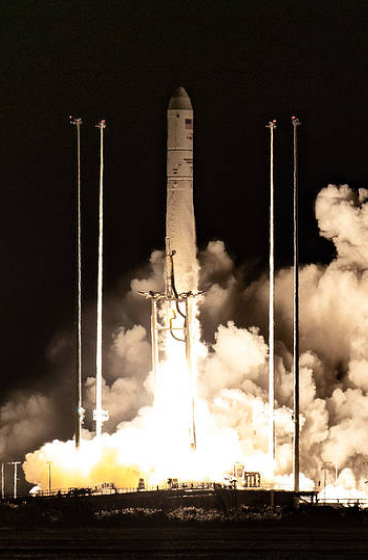
NASA is launching rockets from a remote Pacific island to study mysterious, high-altitude cloud-like structures that can disrupt critical communication systems. The mission, called Sporadic-E ElectroDynamics, or SEED, opens its three-week launch window from Kwajalein Atoll in the Marshall Islands on Friday, June 13.

The atmospheric features SEED is studying are known as Sporadic-E layers, and they create a host of problems for radio communications. When they are present, air traffic controllers and marine radio users may pick up signals from unusually distant regions, mistaking them for nearby sources. Military operators using radar to see beyond the horizon may detect false targets — nicknamed “ghosts” — or receive garbled signals that are tricky to decipher. Sporadic-E layers are constantly forming, moving, and dissipating, so these disruptions can be difficult to anticipate.

Two radio towers on a curved Earth send and receive pink wavy signals under a starry night sky with clouds and aurora-like lights. The animated scene has a stylized, comic book-inspired look.
An animated illustration depicts Sporadic-E layers forming in the lower portions of the ionosphere, causing radio signals to reflect back to Earth before reaching higher layers of the ionosphere.
NASA’s Goddard Space Flight Center/Conceptual Image Lab

Sporadic-E layers form in the ionosphere, a layer of Earth’s atmosphere that stretches from about 40 to 600 miles (60 to 1,000 kilometers) above sea level. Home to the International Space Station and most Earth-orbiting satellites, the ionosphere is also where we see the greatest impacts of space weather. Primarily driven by the Sun, space weather causes myriad problems for our communications with satellites and between ground systems. A better understanding of the ionosphere is key to keeping critical infrastructure running smoothly.

The ionosphere is named for the charged particles, or ions, that reside there. Some of these ions come from meteors, which burn up in the atmosphere and leave traces of ionized iron, magnesium, calcium, sodium, and potassium suspended in the sky. These “heavy metals” are more massive than the ionosphere’s typical residents and tend to sink to lower altitudes, below 90 miles (140 kilometers). Occasionally, they clump together to create dense clusters known as Sporadic-E layers.

A night sky filled with stars and multiple bright meteor streaks above silhouettes of pine trees and large rocks in a forested area.
The Perseids meteor shower peaks in mid-August. Meteors like these can deposit metals into Earth’s ionosphere that can help create cloud-like structures called Sporadic-E layers.
NASA/Preston Dyches

“These Sporadic-E layers are not visible to naked eye, and can only be seen by radars. In the radar plots, some layers appear like patchy and puffy clouds, while others spread out, similar to an overcast sky, which we call blanketing Sporadic-E layer” said Aroh Barjatya, the SEED mission’s principal investigator and a professor of engineering physics at Embry-Riddle Aeronautical University in Daytona Beach, Florida. The SEED team includes scientists from Embry-Riddle, Boston College in Massachusetts, and Clemson University in South Carolina.

“There’s a lot of interest in predicting these layers and understanding their dynamics because of how they interfere with communications,” Barjatya said.

A Mystery at the Equator

Scientists can explain Sporadic-E layers when they form at midlatitudes but not when they appear close to Earth’s equator — such as near Kwajalein Atoll, where the SEED mission will launch.

In the Northern and Southern Hemispheres, Sporadic-E layers can be thought of as particle traffic jams.

Think of ions in the atmosphere as miniature cars traveling single file in lanes defined by Earth’s magnetic field lines. These lanes connect Earth end to end — emerging near the South Pole, bowing around the equator, and plunging back into the North Pole.

A glowing blue Earth is shown with grid lines and magnetic field lines arching around it, illustrating the planet’s magnetic field in space against a dark background. North and South America are visible.
A conceptual animation shows Earth’s magnetic field. The blue lines radiating from Earth represent the magnetic field lines that charged particles travel along.
NASA’s Goddard Space Flight Center/Conceptual Image Lab

At Earth’s midlatitudes, the field lines angle toward the ground, descending through atmospheric layers with varying wind speeds and directions. As the ions pass through these layers, they experience wind shear — turbulent gusts that cause their orderly line to clump together. These particle pileups form Sporadic-E layers.

But near the magnetic equator, this explanation doesn’t work. There, Earth’s magnetic field lines run parallel to the surface and do not intersect atmospheric layers with differing winds, so Sporadic-E layers shouldn’t form. Yet, they do — though less frequently.

“We’re launching from the closest place NASA can to the magnetic equator,” Barjatya said, “to study the physics that existing theory doesn’t fully explain.”

Taking to the Skies

To investigate, Barjatya developed SEED to study low-latitude Sporadic-E layers from the inside. The mission relies on sounding rockets — uncrewed suborbital spacecraft carrying scientific instruments. Their flights last only a few minutes but can be launched precisely at fleeting targets.

Beginning the night of June 13, Barjatya and his team will monitor ALTAIR (ARPA Long-Range Tracking and Instrumentation Radar), a high-powered, ground-based radar system at the launch site, for signs of developing Sporadic-E layers. When conditions are right, Barjatya will give the launch command. A few minutes later, the rocket will be in flight.

Six people stand in front of a large radio telescope dish under a blue sky, with palm trees in the background. The group is casually dressed and smiling, suggesting a scientific or research visit.
The SEED science team and mission management team in front of the ARPA Long-Range Tracking and Instrumentation Radar (ALTAIR). The SEED team will use ALTAIR to monitor the ionosphere for signs of Sporadic-E layers and time the launch.
U.S. Army Space and Missile Defense Command

On ascent, the rocket will release colorful vapor tracers. Ground-based cameras will track the tracers to measure wind patterns in three dimensions. Once inside the Sporadic-E layer, the rocket will deploy four subpayloads — miniature detectors that will measure particle density and magnetic field strength at multiple points. The data will be transmitted back to the ground as the rocket descends.

On another night during the launch window, the team will launch a second, nearly identical rocket to collect additional data under potentially different conditions.

Barjatya and his team will use the data to improve computer models of the ionosphere, aiming to explain how Sporadic-E layers form so close to the equator.

“Sporadic-E layers are part of a much larger, more complicated physical system that is home to space-based assets we rely on every day,” Barjatya said. “This launch gets us closer to understanding another key piece of Earth’s interface to space.”

By Miles Hatfield

NASA’s Goddard Space Flight Center, Greenbelt, Md.

Powered by WPeMatico

Get The Details…

NASA’s Roman to Peer Into Cosmic ‘Lenses’ to Better Define Dark Matter

NASA’s Roman to Peer Into Cosmic ‘Lenses’ to Better Define Dark Matter

A funky effect Einstein predicted, known as gravitational lensing — when a foreground galaxy magnifies more distant galaxies behind it — will soon become common when NASA’s Nancy Grace Roman Space Telescope begins science operations in 2027 and produces vast surveys of the cosmos.

Graphic shows a simulated Roman Space Telescope image with four pullouts to show examples of gravitationally lensed galaxies.
This image shows a simulated observation from NASA’s Nancy Grace Roman Space Telescope with an overlay of its Wide Field Instrument’s field of view. More than 20 gravitational lenses, with examples shown at left and right, are expected to pop out in every one of Roman’s vast observations. A journal paper led by Bryce Wedig, a graduate student at Washington University in St. Louis, Missouri, estimates that of those Roman detects, about 500 from the telescope’s High-Latitude Wide-Area Survey will be suitable for dark matter studies. By examining such a large population of gravitational lenses, the researchers hope to learn a lot more about the mysterious nature of dark matter.
Credit: NASA, Bryce Wedig (Washington University), Tansu Daylan (Washington University), Joseph DePasquale (STScI)

A particular subset of gravitational lenses, known as strong lenses, is the focus of a new paper published in the Astrophysical Journal led by Bryce Wedig, a graduate student at Washington University in St. Louis. The research team has calculated that over 160,000 gravitational lenses, including hundreds suitable for this study, are expected to pop up in Roman’s vast images. Each Roman image will be 200 times larger than infrared snapshots from NASA’s Hubble Space Telescope, and its upcoming “wealth” of lenses will vastly outpace the hundreds studied by Hubble to date.

Roman will conduct three core surveys, providing expansive views of the universe. This science team’s work is based on a previous version of Roman’s now fully defined High-Latitude Wide-Area Survey. The researchers are working on a follow-up paper that will align with the final survey’s specifications to fully support the research community.

“The current sample size of these objects from other telescopes is fairly small because we’re relying on two galaxies to be lined up nearly perfectly along our line of sight,” Wedig said. “Other telescopes are either limited to a smaller field of view or less precise observations, making gravitational lenses harder to detect.”

Gravitational lenses are made up of at least two cosmic objects. In some cases, a single foreground galaxy has enough mass to act like a lens, magnifying a galaxy that is almost perfectly behind it. Light from the background galaxy curves around the foreground galaxy along more than one path, appearing in observations as warped arcs and crescents. Of the 160,000 lensed galaxies Roman may identify, the team expects to narrow that down to about 500 that are suitable for studying the structure of dark matter at scales smaller than those galaxies.

“Roman will not only significantly increase our sample size — its sharp, high-resolution images will also allow us to discover gravitational lenses that appear smaller on the sky,” said Tansu Daylan, the principal investigator of the science team conducting this research program. Daylan is an assistant professor and a faculty fellow at the McDonnell Center for the Space Sciences at Washington University in St. Louis. “Ultimately, both the alignment and the brightness of the background galaxies need to meet a certain threshold so we can characterize the dark matter within the foreground galaxies.”

This video shows how a background galaxy’s light is lensed or magnified by a massive foreground galaxy, seen at center, before reaching NASA’s Roman Space Telescope. Light from the background galaxy is distorted, curving around the foreground galaxy and appearing more than once as warped arcs and crescents. Researchers studying these objects, known as gravitational lenses, can better characterize the mass of the foreground galaxy, which offers clues about the particle nature of dark matter.
Credit: NASA, Joseph Olmsted (STScI)

What Is Dark Matter?

Not all mass in galaxies is made up of objects we can see, like star clusters. A significant fraction of a galaxy’s mass is made up of dark matter, so called because it doesn’t emit, reflect, or absorb light. Dark matter does, however, possess mass, and like anything else with mass, it can cause gravitational lensing.

When the gravity of a foreground galaxy bends the path of a background galaxy’s light, its light is routed onto multiple paths. “This effect produces multiple images of the background galaxy that are magnified and distorted differently,” Daylan said. These “duplicates” are a huge advantage for researchers — they allow multiple measurements of the lensing galaxy’s mass distribution, ensuring that the resulting measurement is far more precise.

Roman’s 300-megapixel camera, known as its Wide Field Instrument, will allow researchers to accurately determine the bending of the background galaxies’ light by as little as 50 milliarcseconds, which is like measuring the diameter of a human hair from the distance of more than two and a half American football fields or soccer pitches.

The amount of gravitational lensing that the background light experiences depends on the intervening mass. Less massive clumps of dark matter cause smaller distortions. As a result, if researchers are able to measure tinier amounts of bending, they can detect and characterize smaller, less massive dark matter structures — the types of structures that gradually merged over time to build up the galaxies we see today.

With Roman, the team will accumulate overwhelming statistics about the size and structures of early galaxies. “Finding gravitational lenses and being able to detect clumps of dark matter in them is a game of tiny odds. With Roman, we can cast a wide net and expect to get lucky often,” Wedig said. “We won’t see dark matter in the images — it’s invisible — but we can measure its effects.”

“Ultimately, the question we’re trying to address is: What particle or particles constitute dark matter?” Daylan added. “While some properties of dark matter are known, we essentially have no idea what makes up dark matter. Roman will help us to distinguish how dark matter is distributed on small scales and, hence, its particle nature.”

Preparations Continue

Before Roman launches, the team will also search for more candidates in observations from ESA’s (the European Space Agency’s) Euclid mission and the upcoming ground-based Vera C. Rubin Observatory in Chile, which will begin its full-scale operations in a few weeks. Once Roman’s infrared images are in hand, the researchers will combine them with complementary visible light images from Euclid, Rubin, and Hubble to maximize what’s known about these galaxies.

“We will push the limits of what we can observe, and use every gravitational lens we detect with Roman to pin down the particle nature of dark matter,” Daylan said.

The Nancy Grace Roman Space Telescope is managed at NASA’s Goddard Space Flight Center in Greenbelt, Maryland, with participation by NASA’s Jet Propulsion Laboratory in Southern California; Caltech/IPAC in Pasadena, California; the Space Telescope Science Institute in Baltimore; and a science team comprising scientists from various research institutions. The primary industrial partners are BAE Systems, Inc. in Boulder, Colorado; L3Harris Technologies in Melbourne, Florida; and Teledyne Scientific & Imaging in Thousand Oaks, California.

By Claire Blome
Space Telescope Science Institute, Baltimore, Md.

Share

Details

Last Updated

Jun 12, 2025

Editor
Ashley Balzer
Contact
Ashley Balzer
Location
NASA Goddard Space Flight Center

Powered by WPeMatico

Get The Details…
Ashley Balzer

Studying Storms from Space Station

Studying Storms from Space Station

3 Min Read

Studying Storms from Space Station

A view of Earth’s atmosphere from space, showing a bright blue lightning-like phenomenon striking upwards from a storm system. The International Space Station is visible in the top left, hovering above the Earth’s curvature.

An artist’s impression of a blue jet as observed from the space station.

Credits:
Mount Visual/University of Bergen/DTU

Science in Space June 2025

Scientists use instruments on the International Space Station to study phenomena in Earth’s ionosphere or upper atmosphere including thunderstorms, lightning, and transient luminous events (TLEs). TLEs take many forms, including blue jets, discharges that grow upward into the stratosphere from cloud tops, and colorful bursts of energy above storms called Stratospheric/Mesospheric Perturbations Resulting from Intense Thunderstorm Electrification or SPRITES.

Lightning creates a large, bright white spot in the center of this image, with several sprites, thin red vertical lines, above it. Several other white spots extend to the left and the city lights line the coast on the far left. Earth’s horizon is a faint green band across the top of the image.
Red SPRITES are visible above a line of thunderstorms off the coast of South Africa.
NASA

TLEs can disrupt communication systems on the ground and pose a threat to aircraft and spacecraft. Understanding these phenomena also could improve atmospheric models and weather predictions. Because these events occur well above the altitudes of normal lightning and storm clouds, they are difficult to observe from the ground. ASIM, an investigation from ESA (European Space Agency), uses a monitor on the exterior of the space station to collect data on TLEs. These data are providing insights into how thunderstorms affect Earth’s atmosphere and helping to improve atmospheric models used for weather and climate predictions.

ELVES and coronas

A study based on ASIM data confirmed that lightning-like discharges at the tops of thunderstorms can create another type of TLE, massive glowing rings in the upper atmosphere known as Emissions of Light and VLF Perturbations from EMP events, or ELVES. This experiment showed that these discharges influence the ionosphere and helped scientists learn more about Earth and space weather.

ASIM-based research also described the physical properties of different types of corona discharges in thunderstorm clouds. Corona discharges are linked to powerful but short-lived electrical bursts near the tops of clouds. The data provide a reference to support further investigation into the mechanisms behind these discharges and their role in the initiation of lightning, an important problem in lightning physics.

Other researchers used ASIM measurements along with ground-based electric field measurements to determine the height of a blue discharge from a thundercloud.

Cloud close-ups

Lightning on Earth as captured from the space station.
NASA

Another ESA investigation, Thor-Davis, evaluated use of a special camera to photograph high-altitude thunderstorms through the windows of the space station’s cupola. The camera can observe thunderstorm electrical activity at up to 100,000 frames per second and could be a useful tool for space-based observation of severe electrical storms and other applications.

Seeing storms from satellites

A module of the space station is visible in the upper right of this image, with an arm extending downward toward the middle of it. At the end of the arm is a white square deployer with two boxes on its right side. The door on one of the boxes is open and just below it is a white and black rectangular CubeSat that has just been ejected from the deployer. Long, gold-colored solar panels fill the left side of the image and Earth covers the lower half of the image, blue ocean with scattered white clouds.
Deployment of the Light-1 CubeSat from the space station.
NASA

The JAXA (Japan Aerospace Exploration Agency) investigation Light-1 CubeSat used detectors integrated into a compact satellite to observe terrestrial gamma-ray flashes in the upper atmosphere. These high intensity, energetic events can expose aircraft, aircraft electronics, and passengers to excessive radiation. Researchers are planning to compare data collected from the mission with ground-based observations to provide more comprehensive maps of lightning and thunderstorms in the atmosphere. Small satellite detectors could cost less and be manufactured in less time than other approaches.

Powered by WPeMatico

Get The Details…
Christian M. Getteau

Curiosity Rover Blog — Sols 4566-4567: Drilling Success

Curiosity Rover Blog — Sols 4566-4567: Drilling Success

The image above shows the drill poised on the surface of Mars
This image was taken by Front Hazard Avoidance Camera (Front Hazcam) onboard NASA’s Mars rover Curiosity on Sol 4564
NASA/JPL-Caltech

Written by Michelle Minitti, Planetary Geologist at Framework

Earth planning date: Monday, June 9, 2025

The image above shows the drill poised on the surface of Mars at the start of our attempt to collect sample at “Altadena” over the weekend. Now we know, from subsequent imaging and telemetry, that the drill activity was successful, allowing planning today to focus on delivering sample powder to CheMin and SAM. CheMin and SAM will give us their distinct and valuable insights into the mineralogy (CheMin) and volatiles and organic compounds (SAM) within Altadena, which are key to our continued unravelling the history of Mt. Sharp. It is always exciting to find out what each of these instruments uncovers from Martian samples.

In addition to those sample deliveries, we had three other Altadena-focused activities. We acquired ChemCam RMI of the drill hole which helps ChemCam refine their laser targeting for future LIBS analyses of the drill hole. We planned a ChemCam passive spectroscopy observation of the cuttings around the drill hole for more insight into the mineralogy of the sample. We also included a single Mastcam M100 image of the drill hole which helps us track the wind activity at the drill site and thus the stability of the cuttings ahead of planned observations with APXS and MAHLI.

The weekend activities ran faster and more efficiently than modeled so that we had power to add additional science observations into the plan. We gathered more ChemCam data from the bedrock near Altadena at the target “Bolsa Chica,” and planned two ChemCam RMI long distance mosaics on sedimentary structures within “Texoli” butte and nearby boxwork structures. We kept track of the environment around us with yet more Mastcam imaging for wind-induced changes in the “Camp Williams” area, regular RAD and REMS measurements, two DAN measurements, and Navcam dust devil imaging and cloud movies.

Powered by WPeMatico

Get The Details…

Welcome Home, Expedition 72 Crew! 

Welcome Home, Expedition 72 Crew! 

On May 22, 2025, NASA hosted an Expedition 72 crew debrief and awards ceremony at Space Center Houston, where more than 1,000 attendees gathered to celebrate. The event recognized the achievements of the crew as well as NASA employees and partners whose dedication and support contributed to the expedition’s success. Crew members from Expedition 72 shared reflections and anecdotes from their time on the International Space Station and expressed gratitude for the opportunity to contribute to scientific research aboard the orbiting laboratory. 

A group photo of participants from the Expedition 72 crew debrief and awards ceremony on May 22, 2025, at Space Center Houston’s IMAX theater.
NASA/James Blair

The event included four NASA astronauts: 

  • Nick Hague, Crew-9 commander and Expedition 72 flight engineer 
  • Butch Wilmore, Boeing Starliner commander and Expedition 72 flight engineer 
  • Suni Williams, Boeing Starliner pilot and Expedition 72 commander 
  • Don Pettit, Soyuz MS-26 and Expedition 72 flight engineer 

The Expedition 72 crew also included Roscosmos cosmonauts Aleksandr Gorbunov, Aleksey Ovchinin, and Ivan Vagner, who were not in attendance. The cosmonauts served as Crew-9 mission specialist, Soyuz-MS commander, and Soyuz-MS flight engineer, respectively. 

NASA astronaut Matt Dominick kicked off the event by striking the ceremonial bell, a tradition symbolizing the end of the mission for the crew and those that support them.  

Johnson Space Center Acting Director Stephen Koerner recognized the crew’s commitment to the mission and their role in the advancement of human spaceflight. “These brave men and women make the tough yet rewarding choice to embark on long-duration missions away from their family and friends,” he said. “They do this to conduct groundbreaking research and inspire generations. Spaceflight is hard, but through togetherness we make giant leaps, going further than ever before.” 

NASA astronauts (from left) Don Pettit and Butch Wilmore, both Expedition 72 flight engineers, pack external research hardware removed from the Kibo laboratory module's airlock. The hardware housed a variety of samples exposed to the vacuum of space such as polymers, photovoltaic devices, and more. The samples will be returned to Earth and examined to understand how space radiation, the extreme thermal environment, micrometeoroids, and more affect materials possibly benefitting the space industry.
NASA astronauts (from left) Don Pettit and Butch Wilmore, Expedition 72 flight engineers, pack external research hardware which housed a variety of samples exposed to the vacuum of space such as polymers, photovoltaic devices, and more. The samples were returned to Earth to be examined to understand how space radiation, the extreme thermal environment, micrometeoroids, and more affect materials possibly benefitting the space industry.
NASA
NASA astronauts Nick Hague and Suni Williams, Expedition 72 Flight Engineer and Commander respectively, discuss orbital lab maintenance procedures aboard the International Space Station.
NASA

The Expedition 72 crew dedicated more than 1,000 combined hours to scientific research and technology demonstrations aboard the International Space Station. Their work included enhancing metal 3D printing capabilities in orbit, exploring the potential of stem cell technology for treating diseases, preparing the first wooden satellite for deployment, and collecting samples from the station’s exterior to examine whether microorganisms can survive in the harsh environment of space. They also conducted studies on plant growth and quality, investigated how fire behaves in microgravity, and advanced life support systems, all aimed at improving the health, safety, and sustainability of future space missions.  

Pettit also used his spare time and surroundings aboard the station to conduct unique experiments and captivate the public with his photography. Expedition 72 captured a record 1 million photos during the mission, showcasing the unique research and views aboard the orbiting laboratory through astronauts’ eyes. 

The expedition was a historic venture, with Williams and Wilmore launching aboard Boeing’s Starliner spacecraft as part of NASA’s Boeing Crew Flight Test before being integrated with the Expedition 71/72 crew and returning on NASA’s SpaceX Crew-9. While working aboard the orbiting laboratory, Williams established a new record for the most cumulative spacewalking time by a woman — 62 hours and 6 minutes — placing her fourth among the most experienced spacewalkers in history. Additionally, Expedition 72 saw the first reboost of the International Space Station by a Dragon spacecraft.  

The crew participated in a panel discussion, sharing further details about the expedition including experiments conducted, favorite foods, and experiencing the Aurora Borealis. The conversation closed with a special patch presentation from Wilmore to Williams to highlight her achievement of exceeding Mach 25 in the Boeing Starliner spacecraft.  

Following the panel, an award ceremony recognized team members for their efforts in supporting the mission, with recipients including the crew, NASA employees, and commercial partners.  

The Expedition 72 crew poses for a portrait inside the International Space Station's Harmony module with a cake commemorating a total of 3,000 cumulative days in space gained between the individual crew members. In the front row (from left), are Roscosmos cosmonaut Ivan vagner, NASA astronaut Nick Hague, and Roscosmos cosmonaut Aleksandr Gorbunov. In the back (from left), are NASA astronauts Butch Wilmore and Don Pettit, Roscosmos cosmonaut Alexey Ovchinin, and NASA astronaut Suni Williams.
The Expedition 72 crew poses for a portrait inside the International Space Station’s Harmony module with a cake commemorating a total of 3,000 cumulative days in space gained between the individual crew members. Front row (from left): Roscosmos cosmonaut Ivan Vagner, NASA astronaut Nick Hague, and Roscosmos cosmonaut Aleksandr Gorbunov. Back row (from left): NASA astronauts Butch Wilmore and Don Pettit, Roscosmos cosmonaut Alexey Ovchinin, and NASA astronaut Suni Williams.
NASA

Flight Operations Directorate Acting Director Kjell Lindgren discussed the impact of collaboration with commercial and international partners. “Your collaboration is vital not just to mission success but to the very identity of this program,” he said. “Together, we can demonstrate what global collaboration can achieve in pursuit of excellence and exploration.” 

Watch below to recap the Expedition 72 crew members’ journey aboard the International Space Station and to celebrate those who helped make the mission a success.    

Powered by WPeMatico

Get The Details…
Mary Pfister