Avatars for Astronaut Health to Fly on NASA’s Artemis II
5 min read
Avatars for Astronaut Health to Fly on NASA’s Artemis II
NASA announced a trailblazing experiment that aims to take personalized medicine to new heights. The experiment is part of a strategic plan to gather valuable scientific data during the Artemis II mission, enabling NASA to “know before we go” back to the lunar surface and on to Mars.
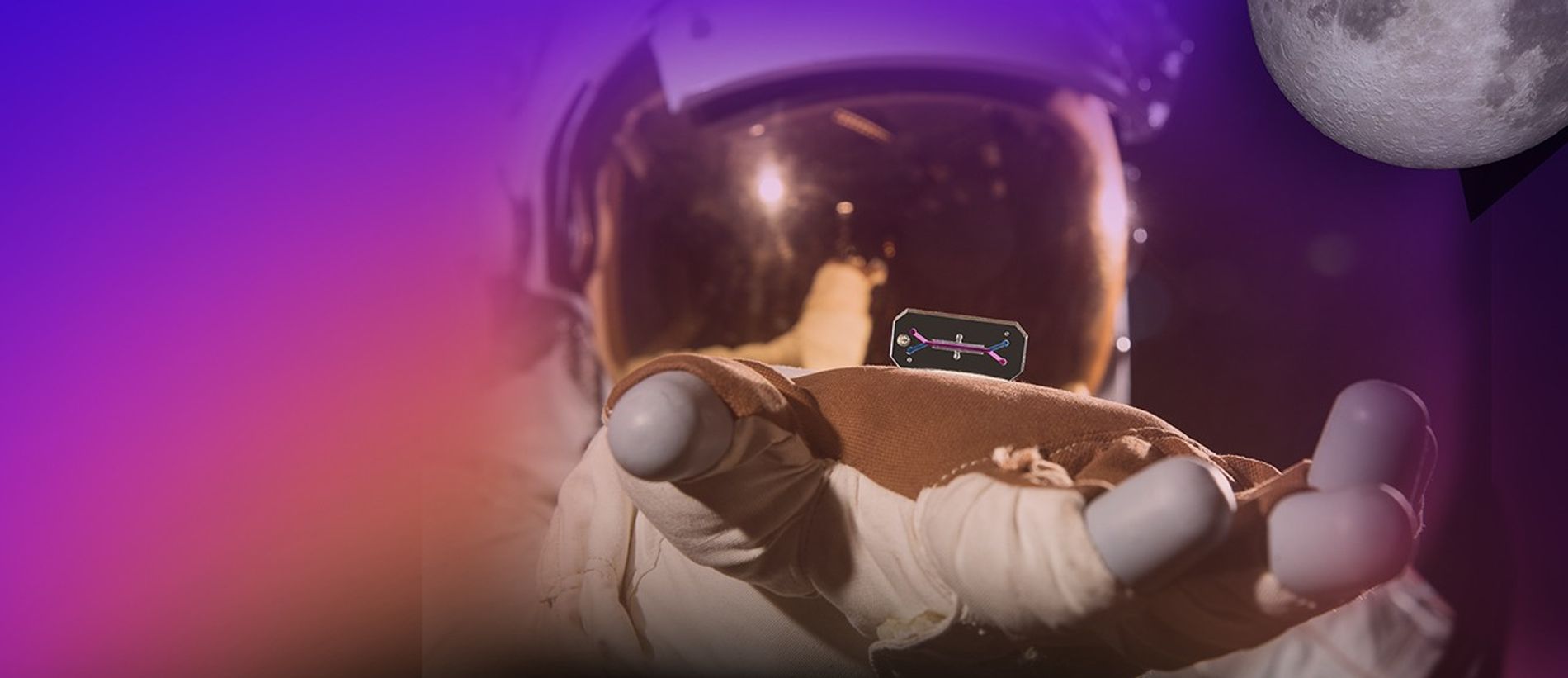
The AVATAR (A Virtual Astronaut Tissue Analog Response) investigation will use organ-on-a-chip devices, or organ chips, to study the effects of deep space radiation and microgravity on human health. The chips will contain cells from Artemis II astronauts and fly side-by-side with crew on their approximately 10-day journey around the Moon. This research, combined with other studies on the health and performance of Artemis II astronauts, will give NASA insight into how to best protect astronauts as exploration expands to the surface of the Moon, Mars, and beyond.
Nicky Fox
Associate Administrator, NASA Science Mission Directorate
“AVATAR is NASA’s visionary tissue chip experiment that will revolutionize the very way we will do science, medicine, and human multi-planetary exploration,” said Nicky Fox, associate administrator, Science Mission Directorate at NASA Headquarters in Washington. “Each tissue chip is a tiny sample uniquely created so that we can examine how the effects of deep space act on each human explorer before we go to ensure we pack the appropriate medical supplies tailored to each individual’s needs as we travel back to the Moon, and onward to Mars.”
The investigation is a collaboration between NASA, government agencies, and industry partners, leveraging commercial expertise to gain a deeper understanding of human biology and disease. This research could accelerate innovations in personalized healthcare, both for astronauts in space and patients on Earth.
Organ-on-a-chip: mimic for human health
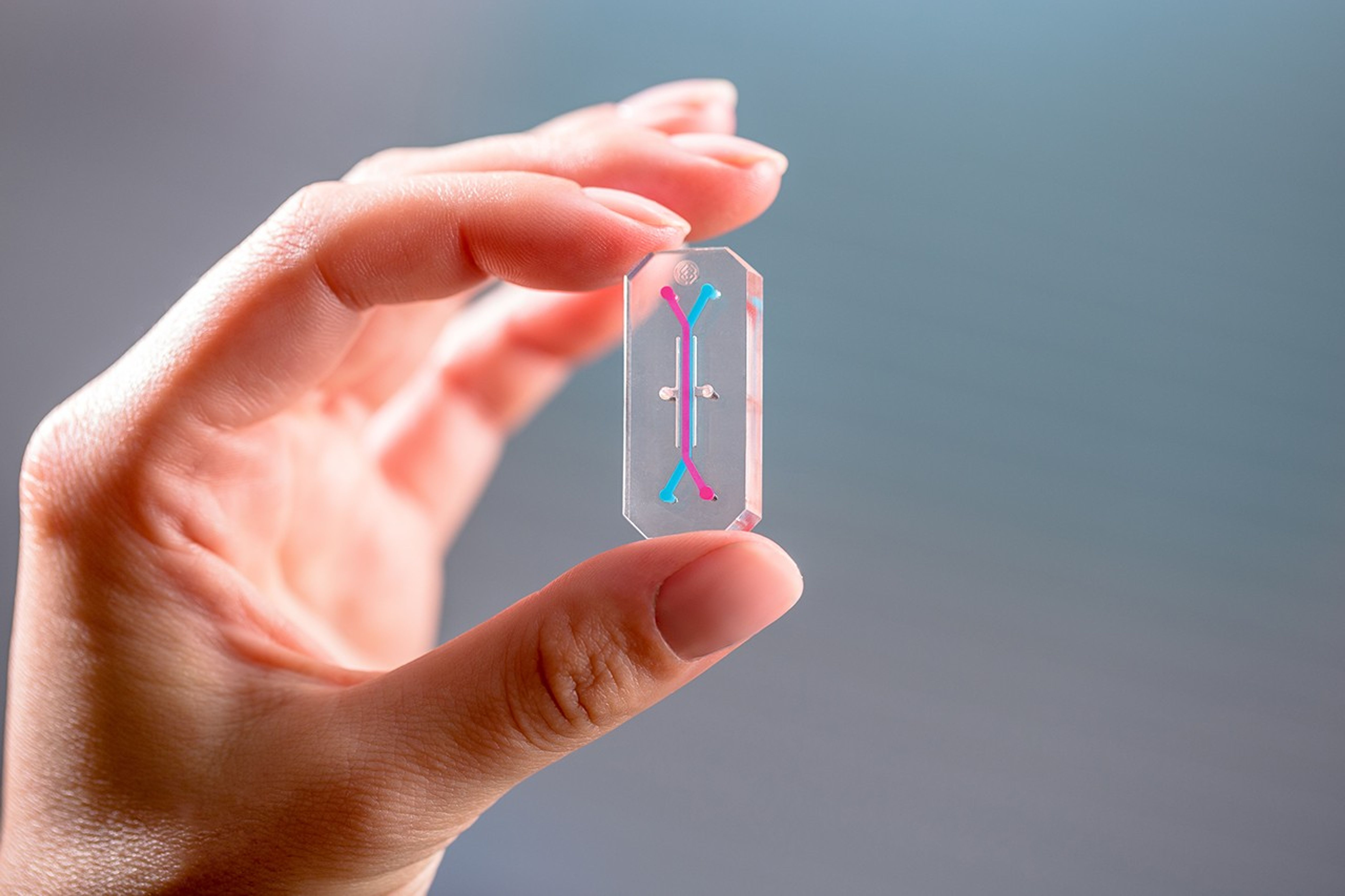
Organ chips, also referred to as tissue chips or microphysiological systems, are roughly the size of a USB thumb drive and used to help understand — and then predict — how an individual might respond to a variety of stressors, such as radiation or medical treatments, including pharmaceuticals. Essentially, these small devices serve as “avatars” for human organs.
Organ chips contain living human cells that are grown to model the structures and functions of specific regions in human organs, such as the brain, lungs, heart, pancreas, and liver — they can beat like a heart, breathe like a lung, or metabolize like a liver. Tissue chips can be linked together to mimic how organs interact with each other, which is important for understanding how the whole human body responds to stressors or treatments.
Researchers and oncologists use human tissue chips today to understand how a specific patient’s cancer might react to different drugs or radiation treatments. To date, a standard milestone for organs-on-chips has been to keep human cells healthy for 30 days. However, NASA and other research institutions are pushing these boundaries by increasing the longevity of organ chips to a minimum of six months so that scientists can observe diseases and drug therapies over a longer period.
Bone marrow as bellwether
The Artemis II mission will use organ chips created using blood-forming stem and progenitor cells, which originate in the bone marrow, from Artemis II crew members.
Bone marrow is among the organs most sensitive to radiation exposure and, therefore, of central importance to human spaceflight. It also plays a vital role in the immune system, as it is the origin of all adult red and white blood cells, which is why researchers aim to understand how deep space radiation affects this organ.
Studies have shown that microgravity affects the development of bone marrow cells. Although the International Space Station operates in low Earth orbit, which is shielded from most cosmic and solar radiation by the Earth’s magnetosphere, astronauts often experience a loss of bone density. Given that Artemis II crew will be flying beyond this protective layer, AVATAR researchers also seek to understand how the combined stressors of deep space radiation and microgravity affect the developing cells.
To make the bone marrow organ chips, Artemis II astronauts will first donate platelets to a local healthcare system. The cells remaining from their samples will contain a small percentage of bone marrow-derived stem and progenitor cells. NASA-funded scientists at Emulate, Inc., which developed the organ chip technology used in AVATAR, will purify these cells with magnetic beads that bind specifically to them. The purified cells will then be placed in the bone marrow chips next to blood vessel cells and other supporting cells to model the structure and function of the bone marrow.
Investigating how radiation affects the bone marrow can provide insights into how radiation therapy and other DNA-damaging agents, such as chemotherapeutic drugs, impair blood cell formation. Its significance for both spaceflight and medicine on Earth makes the bone marrow an ideal organ to study in the Artemis II AVATAR project.
Passenger for research
“For NASA, organ chips could provide vital data for protecting astronaut health on deep space missions,” said Lisa Carnell, director of NASA’s Biological and Physical Sciences division at NASA Headquarters. “As we go farther and stay longer in space, crew will have only limited access to on-site clinical healthcare. Therefore, it’ll be critical to understand if there are unique and specific healthcare needs of each astronaut, so that we can send the right supplies with them on future missions.”
During the Artemis II mission, the organ chips will be secured in a custom payload developed by Space Tango and mounted inside the capsule during the mission. The battery-powered payload will maintain automated environmental control and media delivery to the organ chips throughout the flight.
Lisa Carnell
Director of NASA’s Biological and Physical Sciences Division
Upon return, researchers at Emulate will examine how spaceflight affected the bone marrow chips by performing single-cell RNA sequencing, a powerful technique that measures how thousands of genes change within individual cells. The scientists will compare data from the flight samples to measurements of crew cells used in a ground-based immunology study happening simultaneously. This will provide the most detailed look at the impact of spaceflight and deep space radiation on developing blood cells to date.
Keep Exploring
BPS Scientific Goals
Biological & Physical Sciences Division (BPS)
-
NASA’s Biological and Physical Sciences Division pioneers scientific discovery and enables exploration by using space environments to conduct investigations not possible on Earth. Studying biological and physical phenomenon under extreme conditions allows researchers to advance the fundamental scientific knowledge required to go farther and stay longer in space, while also benefitting life on Earth.
Powered by WPeMatico
Get The Details…