Sagittarius B2 Molecular Cloud

Sagittarius B2 Molecular Cloud

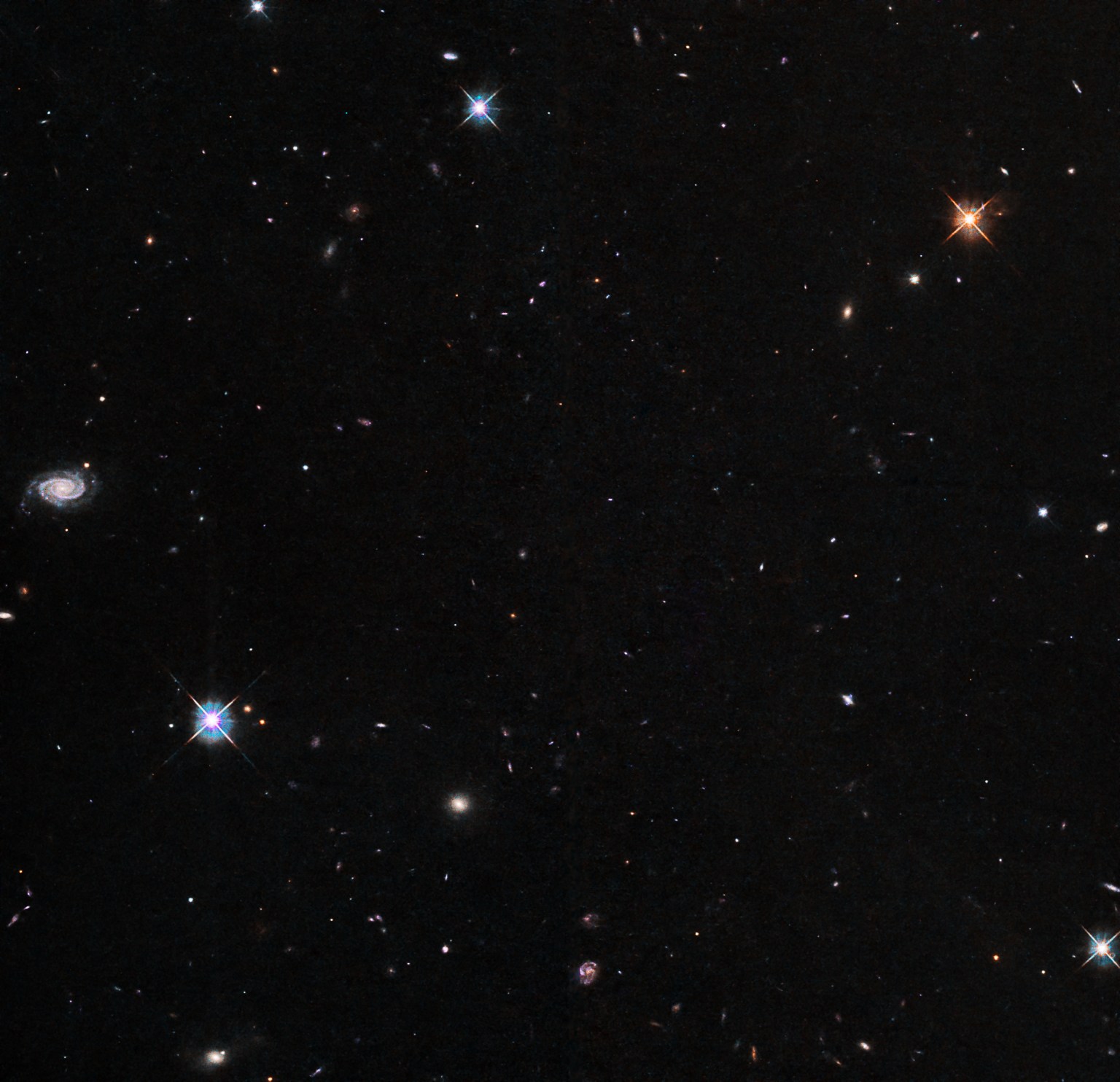
Cosmic clouds of pink and purple, some with bright centers, are surrounded by dark areas that appear like black space dotted with bright blue stars. A group of small clouds to the right is more red than any other area of the image.
NASA, ESA, CSA, STScI, Adam Ginsburg (University of Florida), Nazar Budaiev (University of Florida), Taehwa Yoo (University of Florida); Image Processing: Alyssa Pagan (STScI)

The Mid-Infrared Instrument (MIRI) on NASA’s James Webb Space Telescope captured glowing cosmic dust heated by very young massive stars in unprecedented detail in this image of the Sagittarius B2 (Sgr B2) molecular cloud released on Sept. 24, 2025.

Sgr B2 is the most massive, and active star-forming region in our galaxy, located only a few hundred light years from our central supermassive black hole. While Sgr B2 has only 10% of the galactic center’s gas, it produces 50% of its stars. Astronomers want to figure out why it is so much more active than the rest of the galactic center.

MIRI has both a camera and a spectrograph that sees light in the mid-infrared region of the electromagnetic spectrum. MIRI’s view reveals colorful stars punctuated occasionally by bright clouds of gas and dust. Further research into these stars will reveal details of their masses and ages, which will help astronomers better understand the process of star formation in this dense, active galactic center region.

Image credit: Image: NASA, ESA, CSA, STScI, Adam Ginsburg (University of Florida), Nazar Budaiev (University of Florida), Taehwa Yoo (University of Florida); Image Processing: Alyssa Pagan (STScI)

Powered by WPeMatico
Get The Details…
Monika Luabeya

Mark Elder: Building the Future of Spacewalking for Artemis and Beyond 

Mark Elder: Building the Future of Spacewalking for Artemis and Beyond 

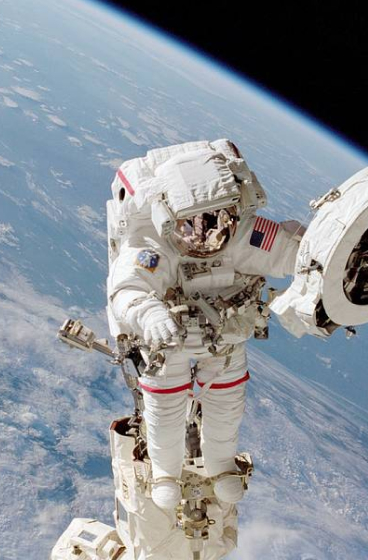
For more than 25 years, Mark Elder has helped make human spaceflight safe and possible. As the International Space Station EVA hardware manager in the Extravehicular Activity (EVA) Office within the EVA and Human Surface Mobility Program, he leads the team responsible for the spacesuits, tools, and logistics that keep astronauts protected during spacewalks—and ensures NASA is ready for the next era of Artemis exploration. 

Mark Elder with NASA’s Exploration Extravehicular Mobility Unit (xEMU) spacesuit at Johnson Space Center in Houston.
NASA/Bill Stafford

His team is programmatically responsible for the Extravehicular Mobility Unit, or EMU, spacesuit. That means every bolt, bearing, and battery astronauts rely on outside the International Space Station ultimately falls under their watch. He also oversees the EVA Space Operations Contract, which provides engineering and technical support to keep spacesuit systems flight ready. 

Elder’s work directly supports every EVA, or spacewalk, conducted at the station. His team coordinates with astronauts, engineers, and the Mission Control Center in Houston to make sure the suits and tools operate reliably in the most unforgiving environment imaginable. Their work helps ensure every EVA is conducted safely and successfully. 

Elder’s passion for NASA began at an early age. 

“When I was little, my parents gave me a book called ‘The Astronauts,’” he said. “It had drawings of a reusable spacecraft—the space shuttle—and I fell in love with it. From then on, I told everyone I was going to work at NASA.” 

That dream took off at age 16, when he attended Space Academy in Huntsville, Alabama. “That cemented my dream of someday working at NASA, and it taught me a little bit more about the different roles within the agency,” he said. 

While attending Case Western Reserve University as a mechanical engineering student, he learned about a new NASA program that allowed college students to design and build an experiment and then come to Johnson Space Center for a week to fly with their experiment on the Boeing KC-135 Stratotanker. “I jumped on the chance to be part of the team,” he said. “The experience further cemented my dream of working at NASA one day—Johnson in particular.” 

After graduation, Elder worked with Pratt & Whitney on jet engines. While the experience was invaluable, he knew his heart belonged in human spaceflight. “I learned that one of Pratt’s fellow companies under the United Technologies umbrella was Hamilton Sundstrand, which was the prime contractor for the spacesuit,” he said. “I jumped at the chance to transfer, and my career at NASA finally began.” 

Elder spent his first three years at Johnson performing tool-to-tool fit checks on spacewalking equipment, giving him hands-on experience with nearly every tool that he would eventually become responsible for as a hardware manager. 

Mark Elder stands in front of the Space Shuttle Atlantis before the STS-117 launch on June 8, 2007.

His early years coincided with the shuttle return-to-flight era, when he worked on reinforced carbon-carbon panel repairs and thermal protection systems. Those experiences built his technical foundation and prepared him for the leadership roles to come. 

Over time, Elder took on increasingly complex assignments, eventually leading the team that developed the EVA Long Life Battery—the first human-rated lithium battery used in space. His team created a rigorous test plan to certify the battery for human spaceflight at a time when lithium batteries were under scrutiny for safety concerns. 

“Finally signing the certification paperwork was satisfying, but watching an EVA powered by the batteries provided a great sense of pride,” he said. 

This innovation set the stage for future generations of even safer, higher-capacity batteries that power today’s spacewalking operations and will eventually support lunar surface activities. 

Looking back, Elder said some of his greatest lessons came from learning how to lead with purpose. “The great thing about NASA is the highly motivated and dedicated workforce,” he said. “When I first became a team lead, I thought success meant making quick decisions and moving fast. I learned that leadership is really about listening. Strong teams are built on trust and open communication.” 

Another defining lesson, he said, has been learning to assume positive intent. “In a place like NASA, everyone is deeply passionate about what they do,” he said. “It’s easy to misinterpret a disagreement as opposition, but when you remember that everyone is working toward the same goal, the conversation changes. You focus on solving problems, not winning arguments.” 

That mindset has guided Elder through some of NASA’s most complex programs and helped him build lasting partnerships across the agency. 

Mark Elder receives an award at the 2024 Rotary National Award for Space Achievement Stellar Awards ceremony at the Hyatt Regency in downtown Houston.
NASA/Josh Valcarcel

Today, Elder’s work extends beyond the orbiting laboratory. As NASA prepares for Artemis missions to the Moon, his team’s experience maintaining and improving the EMU informs the design of next-generation exploration suits. 

“The foundation we’ve built on the space station is critical for the future,” he said. “Every tool we’ve refined, every system we’ve upgraded—it all feeds into how we’ll operate on the lunar surface and eventually on Mars.” 

Elder believes that the key to future success lies in perseverance. He advises the next generation to never stop dreaming. “My path wasn’t direct, and it would have been easy for me to give up,” he said. “But dreams have a way of guiding you if you don’t let go of them.” 

When he’s not supporting those missions, Elder’s creativity takes shape in his workshop. “In my spare time, I love woodworking,” he said. “Building something useful from a pile of rough-sawn boards helps calm me and gives me a great sense of accomplishment. I love being able to build furniture for my family,” he added, after recently finishing a desk for his youngest son. 

The same patience and precision he brings to woodworking defines his approach to exploration—steady progress, careful craftmanship, and attention to detail. “As NASA goes to the Moon and Mars, there will be challenges,” Elder said. “As long as we keep dreaming, we will see the next generation walking on the Moon and heading to Mars.” 

Powered by WPeMatico
Get The Details…
Sumer Loggins

Newly Found Organics in Enceladus’ Plumes

Newly Found Organics in Enceladus’ Plumes

A black and white image of Enceladus' south pole. Several plumes of water ice spray up from the curved surface; they are visible as misty white spikes. Most of the south pole is dark, but a small sliver is lit up at bottom left.
NASA/JPL-Caltech/Space Science Institute

Dramatic plumes, both large and small, spray water ice out from many locations along the famed tiger stripes near the south pole of Saturn’s moon Enceladus in this image released on Feb. 23, 2010. A study published in October 2025 analyzed data from NASA’s Cassini mission and found evidence of previously undetected organic compounds in a plume of ice particles like the ones seen here. The ice particles were ejected from the ocean that lies under Enceladus’ frozen shell. Researchers spotted not only molecules they’ve found before but also new ones that lay a potential path to chemical or biochemical activity.

Learn more about what they discovered.

Image credit: NASA/JPL-Caltech/Space Science Institute

Powered by WPeMatico

Get The Details…
Monika Luabeya

NASA Astronaut Chris Williams, Crewmates Arrive at Space Station

NASA Astronaut Chris Williams, Crewmates Arrive at Space Station

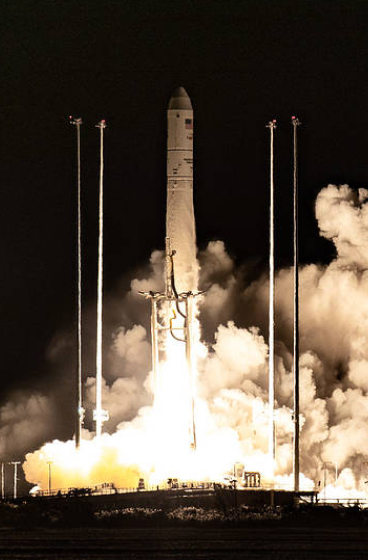
The Soyuz rocket launches to the International Space Station with Expedition 74 crew members: NASA astronaut Chris Williams, and Roscosmos cosmonauts Sergey Kud-Sverchkov and Sergei Mikaev, on Thursday, Nov. 27, 2025, at the Baikonur Cosmodrome in Kazakhstan.
NASA/Bill Ingalls

NASA astronaut Chris Williams, accompanied by Roscosmos cosmonauts Sergey Kud-Sverchkov and Sergei Mikaev, safely arrived at the International Space Station on Thursday, expanding the orbiting laboratory’s crew to 10 for the next two weeks.

The trio launched aboard the Soyuz MS-28 spacecraft at 4:27 a.m. EST (2:27 p.m. Baikonur time) from the Baikonur Cosmodrome in Kazakhstan. After a three-hour, two-orbit journey, the spacecraft docked at 7:34 a.m. to the space station’s Rassvet module.

Following hatch opening, expected about 10:10 a.m., the new arrivals will be welcomed by the Expedition 73 crew, including NASA astronauts Mike Fincke, Zena Cardman, and Jonny Kim; JAXA (Japan Aerospace Exploration Agency) astronaut Kimiya Yui; and Roscosmos cosmonauts Sergey Ryzhikov, Alexey Zubritsky, and Oleg Platonov.

NASA’s live coverage of hatch opening begins at 9:50 a.m. on NASA+, Amazon Prime, and YouTube. Learn how to watch NASA content through a variety of platforms, including social media.

During his stay aboard the space station, Williams will conduct scientific research and technology demonstrations aimed at advancing human space exploration and benefiting life on Earth. He will help install and test a new modular workout system for long-duration missions, support experiments to improve cryogenic fuel efficiency and grow semiconductor crystals in space, as well as assist NASA in designing new re-entry safety protocols to protect crews during future missions.

Expedition 74 is scheduled to begin on Monday, Dec. 8, following the departure of Kim, Ryzhikov, and Zubritsky, as they conclude an eight-month science mission aboard the orbital outpost.

Watch the change of command ceremony at 10:25 a.m. on Sunday, Dec. 7, as station leadership transfers from Ryzhikov to Fincke, live on NASA+.

Learn more about International Space Station, crews, research, and operations at:

https://www.nasa.gov/station

-end-

Jimi Russell
Headquarters, Washington
202-358-1100
james.j.russell@nasa.gov

Sandra Jones / Joseph Zakrzewski
Johnson Space Center, Houston
281-483-5111
sandra.p.jones@nasa.gov / joseph.a.zakrzewski@nasa.gov

Share

Details

Last Updated

Nov 27, 2025

Powered by WPeMatico

Get The Details…
Lauren E. Low

PLANETS Units Have Landed – Free NASA-Funded Out-of-School Time Resources

PLANETS Units Have Landed – Free NASA-Funded Out-of-School Time Resources

4 min read

PLANETS Units Have Landed – Free NASA-Funded Out-of-School Time Resources

An out of school time educator holds a measuring tape as an elementary aged girl drops a weight to test the space craft shield her group created. Her group members, two boys and one girl, watch as she drops the weight.
Constructing a three dimensional topographic map from the Remote Sensing Science Pathway.

The NASA Science Activation program’s PLANETS (Planetary Learning that Advances the Nexus of Engineering, Technology, and Science) project, led by Northern Arizona University (NAU), is pleased to announce the official launch of three free out-of-school (OST) time units that give all learners in grades 3-5 and 6-8 the chance to do real planetary science and engineering. These units are supported by comprehensive educator guides, videos, and resources.

These three units – Space Hazards, Water in Extreme Environments, and Remote Sensing – have complementary engineering and science pathways that can be taught on their own or together. Subject matter experts in planetary science from the USGS Astrogeology Science Center were involved in every part of developing the activities, working with STEM (Science, Technology, Engineering, & Mathematics) education experts from Northern Arizona University Center for STEM Teaching & Learning, the Boston Museum of Science, and WestEd to ensure the activities are educational, engaging, and accurate.

PLANETS intentionally designed the units to benefit all learners. The curriculum reflects research-based pedagogical strategies, including those for multilingual learners, Indigenous learners, and learners with differing physical abilities. The units have been tested extensively in out-of-school time programs across the country and revised based on their feedback to ensure the needs of all learners are met. PLANETS provides a practical guide for out-of-school time educators with useful advice to effectively teach all students. All units also include educator background on the subject matter, as well as videos, and many useful tips and links to relevant NASA projects and resources.

“PLANETS is one of the most thoughtfully designed STEM resources I’ve used in an out-of-school setting. The hands-on activities are engaging, accessible, and grounded in real-world challenges that spark curiosity in every learner. What sets it apart is the intentional support for diverse learners and the clear, practical guidance for facilitators—making it truly turnkey for OST educators at any experience level. If you’re looking to build STEM identity, teamwork, and creative problem-solving in your program, PLANETS is a must.” ~ Kara Branch, CEO & Founder, Black Girls Do Engineer

In the Space Hazards unit, intended for learners in grades 3-5, students play a card game to learn about how to protect against the different hazards that people face on Earth and that astronauts and robotic probes face in space. The engineering pathway for this unit presents students with a challenge: design a space glove that will keep astronauts safe while still allowing them to do their work.

The Water in Extreme Environments unit is designed for grades 6-8. In the science pathway, students use planet “water cards” to learn where there is the most water in our solar system (hint: it’s not Earth!). The engineering pathway introduces learners to the scarcity of fresh water, both in extreme environments on Earth and for astronauts in space. Students design a filtration system to purify water for reuse.

The engineering pathway for the Remote sensing unit, also designed for grades 6-8, puts students into the shoes of NASA spacecraft engineers, designing remote sensing devices to learn about the surface of planets, like Mars. The science pathway then uses real NASA remote sensing data from Mars landing site candidates to choose the best place to land a rover on Mars.

All PLANETS materials are available at no cost on the website: planets-stem.org. Check them out and empower every learner to see themselves as scientists and engineers.

PLANETS is supported by NASA under cooperative agreement award number NNX16AC53 and is part of NASA’s Science Activation Portfolio. Learn more about how Science Activation connects NASA science experts, real content, and experiences with community leaders to do science in ways that activate minds and promote deeper understanding of our world and beyond: https://science.nasa.gov/learn/about-science-activation/.

Share

Details

Last Updated
Nov 26, 2025
Editor
NASA Science Editorial Team

Powered by WPeMatico

Get The Details…