NASA to Cover Progress 94 Spacecraft Launch, Space Station Docking
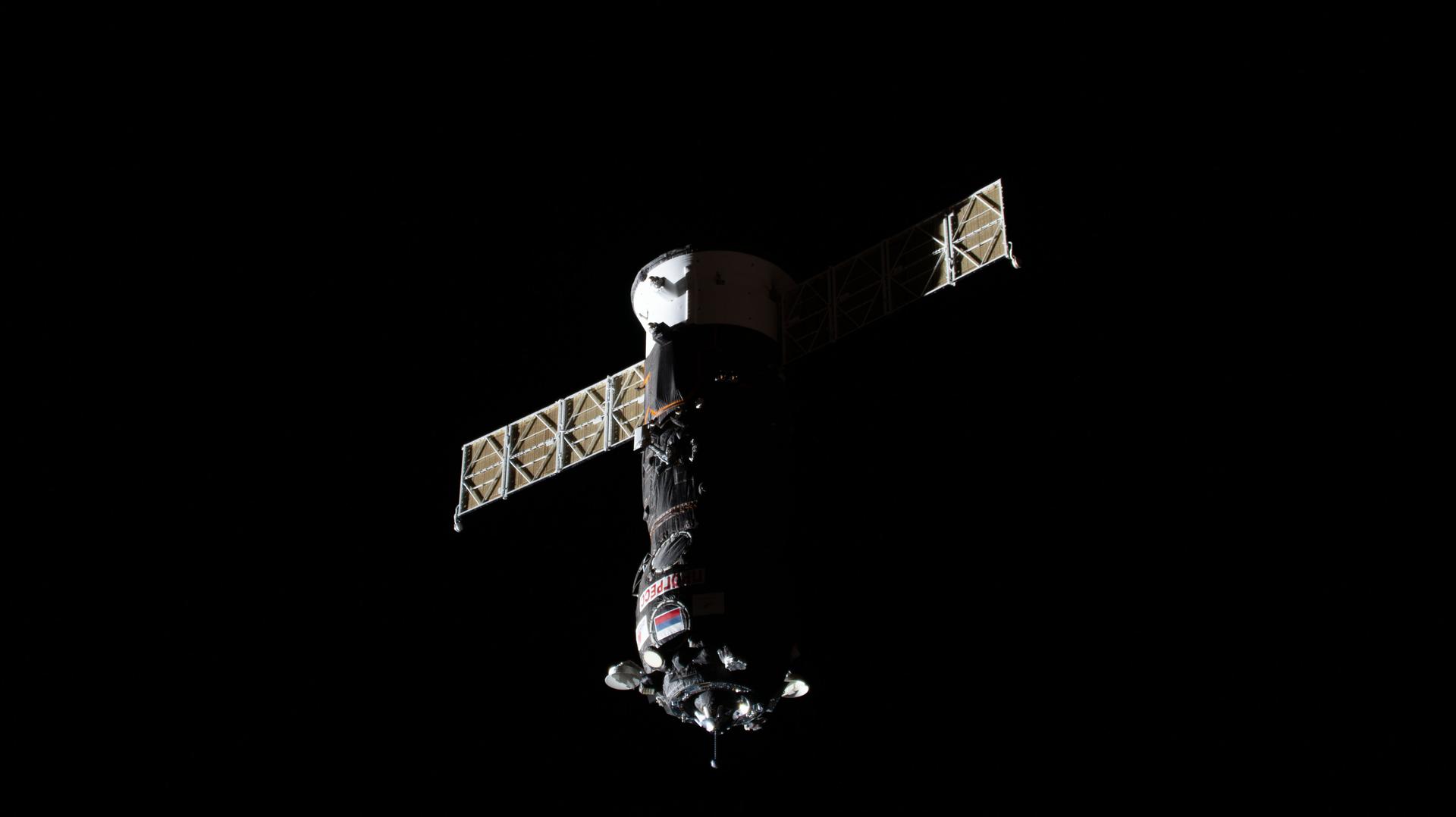
The Progress 92 cargo spacecraft, carrying nearly 3,000 pounds of food, fuel, and supplies for the Expedition 73 crew, approaches the International Space Station in July 2025 before docking to the Poisk module.
Credit: NASA
NASA will provide live coverage of the launch and docking of a Roscosmos cargo spacecraft carrying about three tons of food, fuel, and supplies for the crew aboard the International Space Station.
The unpiloted Roscosmos Progress 94 resupply spacecraft is scheduled to launch at 7:59 a.m. EDT (4:59 p.m. Baikonur time) Sunday, March 22, on a Soyuz rocket from the Baikonur Cosmodrome in Kazakhstan.
Watch NASA’s live coverage beginning at 7:30 a.m. on NASA+, Amazon Prime, and the agency’s YouTube channel. Learn how to watch NASA content through a variety of online platforms, including social media.
After a two-day trip to the space station, the spacecraft will dock autonomously to the Poisk module’s space-facing port at about 9:34 a.m. Tuesday, March 24. NASA’s live rendezvous and docking coverage will begin at 8:45 a.m. on NASA+, Amazon Prime, and the agency’s YouTube channel.
The Progress 94 spacecraft will remain docked to the orbiting laboratory for about six months before departing for a destructive re-entry into Earth’s atmosphere to dispose of trash loaded by the crew. Prior to this spacecraft’s arrival, Progress 92 undocked from the space station on March 16, re-entered Earth’s atmosphere, and burned up harmlessly over the Pacific Ocean.
For more than 25 years, people have lived and worked continuously aboard the International Space Station, advancing scientific knowledge and making research breakthroughs that aren’t possible on Earth. The space station helps NASA understand and overcome the challenges of human spaceflight, expand commercial opportunities in low Earth orbit, and build on the foundation for long-duration missions to the Moon as part of the Artemis program and to Mars.
Learn more about the International Space Station, its research, and crew, at:
How NASA is Collecting Explosion Data for Next Generation Rockets
5 Min Read
How NASA is Collecting Explosion Data for Next Generation Rockets
Commercial launch providers continue to advance propulsion technology with a renewed focus on liquid oxygen and methane propelled rockets and spacecraft.
As systems grow in scale, carrying millions of pounds of propellant, so too does the responsibility to fully understand the safety profile.
NASA has a proven ability to safely execute high-risk testing
Joe Schuyler
Director, NASA Stennis Engineering and Test Directorate
Engineers at NASA, with decades of cryogenic and test operations expertise, are conducting a final series of tests to quantify the explosive yield at Eglin Air Force Base in Florida. The data collected will provide knowledge that helps government and industry prepare with confidence.
“NASA has a proven ability to safely execute high-risk testing,” said Joe Schuyler, director, Engineering and Test Directorate, at the agency’s Stennis Space Center near Bay St. Louis, Mississippi. “This work shows how our expertise with cryogenic systems can go beyond propulsion testing and beyond our center to execute for the mission.”
The team is in the middle of this final test series to collect data to develop safety protocols for a tri-agency team effort consisting of NASA, the Federal Aviation Administration, and the United States Space Force.
The test articles, developed by a team at NASA’s Wallops Flight Facility in Virginia, model a generic fuel storage tank with liquid oxygen and methane separated by a common bulkhead. The tests will evaluate explosion hazards across three scales, based on propellant weights of 100 pounds, 2,000 pounds, and 20,000 pounds.
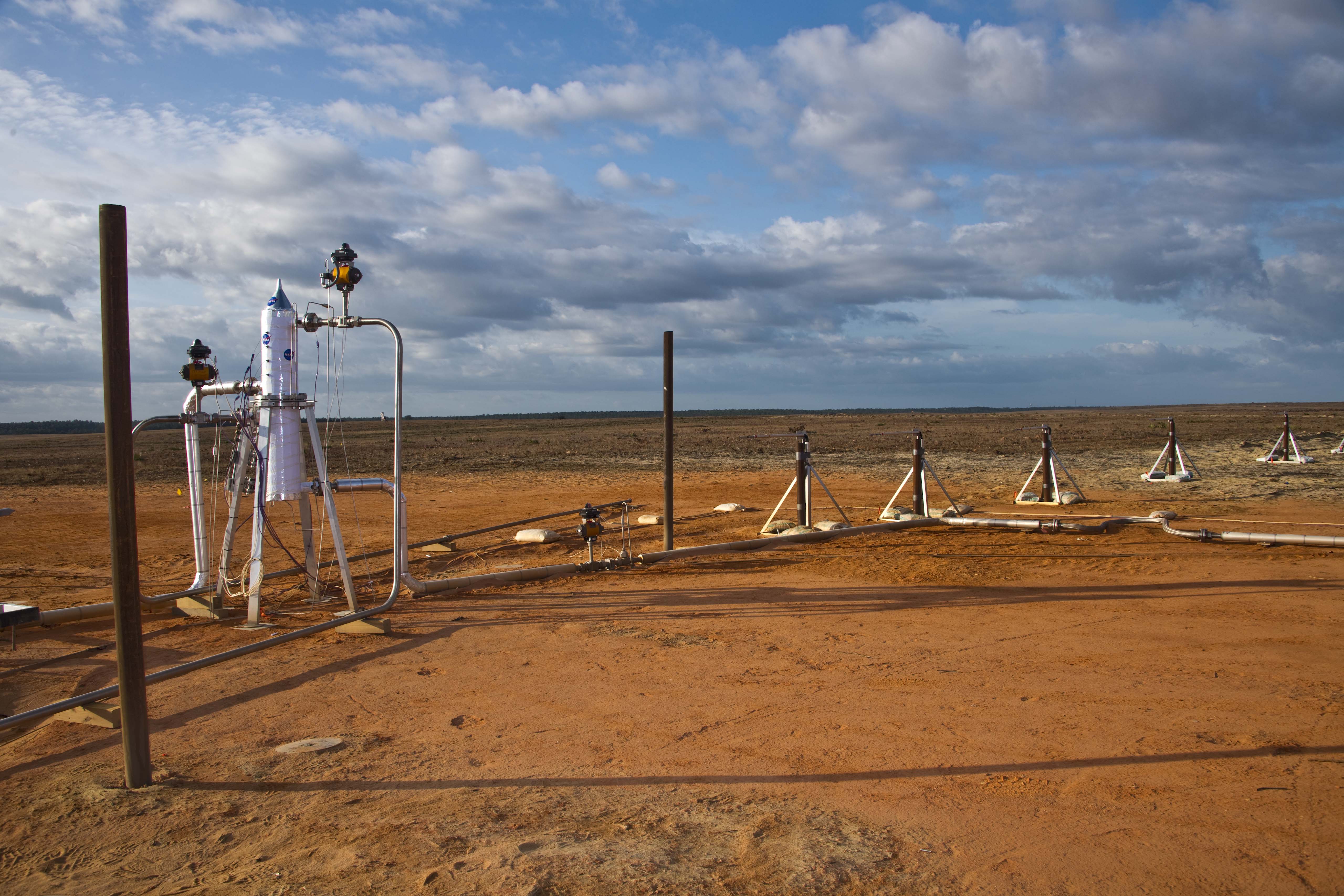
The test article, left, is equipped with cryogenic piping and valving for the Feb. 25 test at Eglin Air Force Base in Florida, where NASA engineers are conducting a final series of tests to quantify the explosive yield of liquid oxygen and methane propelled rockets and spacecraft.
Reliance Test & Technology / Bruce Hoffman
For many of the tests, the barrier separating the two propellants is intentionally ruptured to simulate a catastrophic failure scenario. As the mixing fluids are detonated, instruments located on the test articles, and throughout a test field, measure the intensity of the blast wave at certain prescribed distances. High-speed cameras also are used to measure thermal aspects of the explosion, along with capturing how fast and where the fragments travel.
We put fuel in a rocket, blow it up in a remote location, and measure how big the boom is
Jason Hopper
NASA Stennis Liquid Oxygen Methane Assessment Deputy Project Manager
“We put fuel in a rocket, blow it up in a remote location, and measure how big the boom is,” said Jason Hopper, NASA Stennis liquid oxygen methane assessment deputy project manager.
The video presents three synchronized angles of a controlled detonation on Feb. 5 at a remote test site at Eglin Air Force Base in Florida. First, the close-up angle captures the precise moment of detonation with a sharp flash, followed by a rapidly expanding flame and debris from the test article. Next, the lateral angle shows the vertical and horizontal spread of the blast. The third angle is a wide shot that shows a large fireball erupting from the test article and a visible shockwave radiating outward.
A final composite view brings all three angles together simultaneously, providing a complete picture of the detonation.
The audio delivers a sharp crack followed by a deep, rolling boom that reverberates for several seconds before settling into a crackling sound as the fire dissipates.
Reliance Test & Technology/Craig W. Hewitt
Behind Hopper’s straightforward explanation is complex work, where all NASA Stennis operations at the site are carried out by civil servants. The testing brings together expertise in test operations, execution, logistics, and cryogenics in ways rarely combined outside of actual launch operations.
“This type of testing only comes around once every few decades,” Hopper said. “With so many rockets launching now, this will contribute to public safety, site safety, and all the risk involved with the work.”
From Blank Space to Test Site
An immediate connection formed between the NASA team and the 780th Test Squadron Ground Test Flight personnel from Eglin Air Force Base during an early site visit.
Starting from scratch with a greenfield and a remote concrete pad, the NASA team transformed the area into an operational test site in about four months, some of that time over the government furlough in October 2025.
A timelapse video shows crews installing cryogenic transfer lines and associated support stands at a remote test site at Eglin Air Force Base in Florida, from Nov. 17, 2025, to Jan. 7, 2026.
NASA/Stennis
Crews cleared the area, leveled the concrete pad, and brought in cryogenic storage vessels from NASA’s Kennedy Space Center in Florida to hold the super-cold liquid propellants, ranging from minus 260 degrees to minus 297 degrees Fahrenheit.
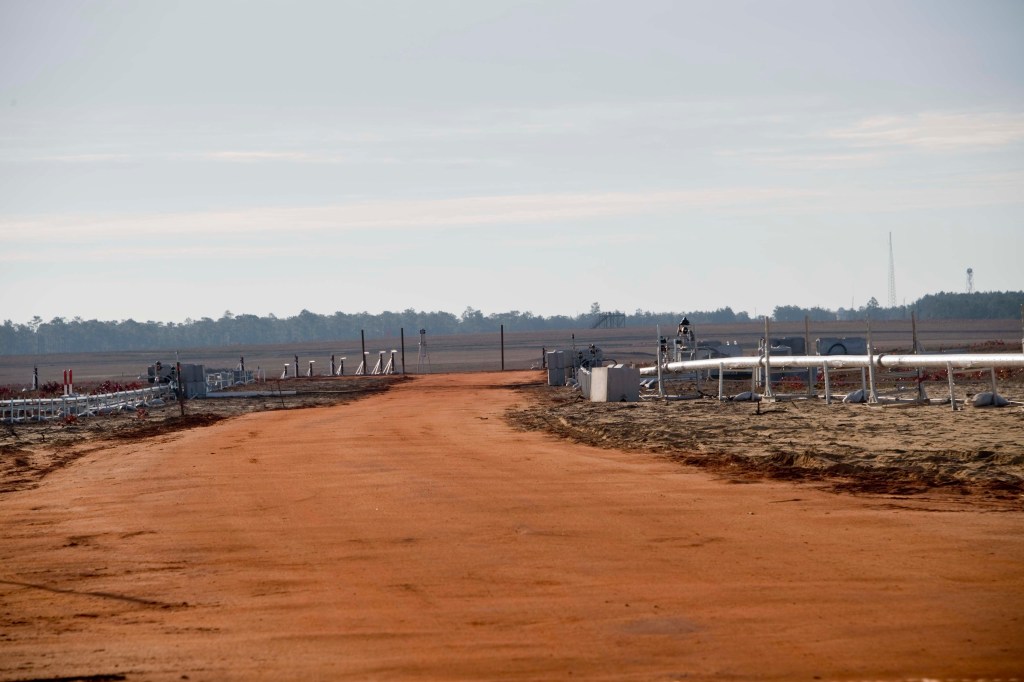
The custom infrastructure included fabricating 700 feet of cryogenic transfer lines and constructing support stands to route the lines to the test article location.
They brought in generators for power and modified a shipping container into a fully equipped fabrication workshop.
The team converted a mobile control center, provided by NASA Wallops, into a control room at NASA Stennis before moving it to the Florida test site. The control room is positioned 1.6 miles from the blast site for initial tests, and it will move to 4 miles away for larger detonations.
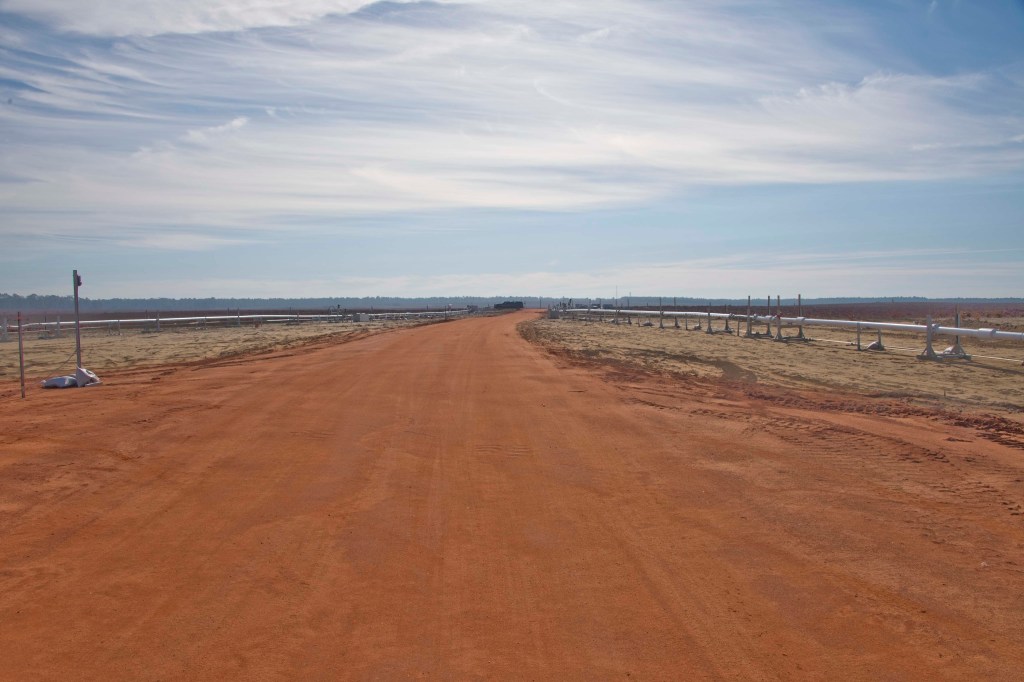
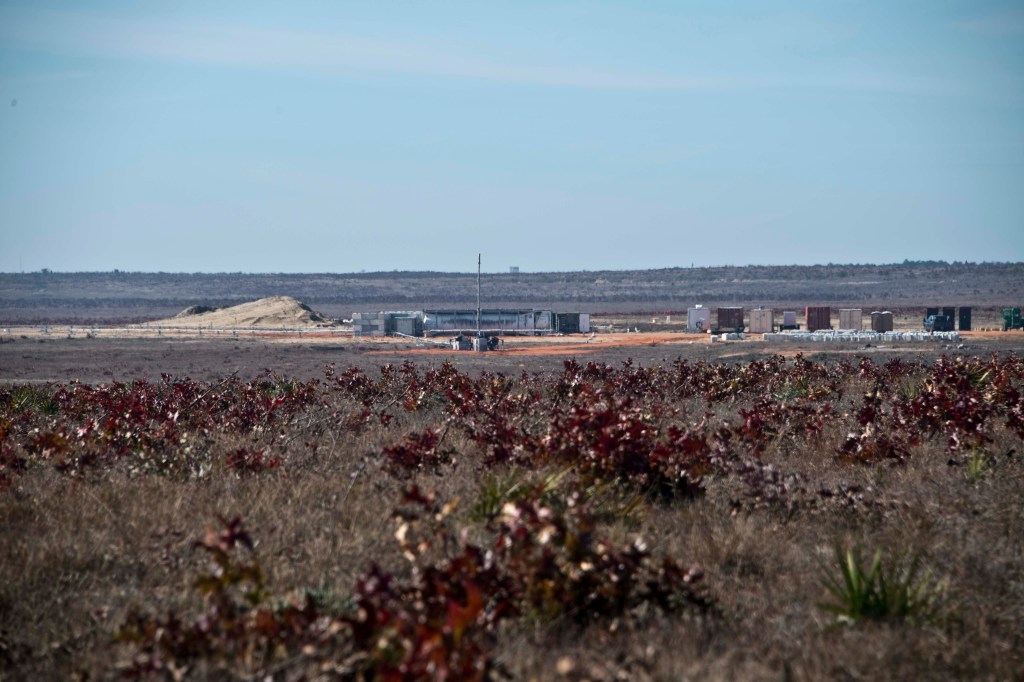
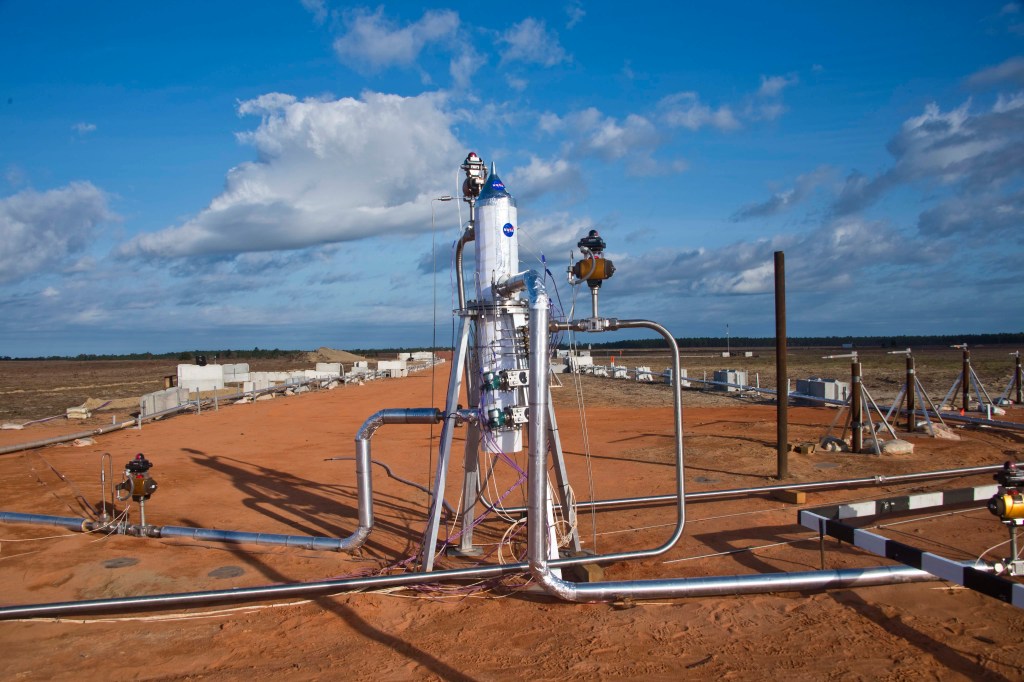
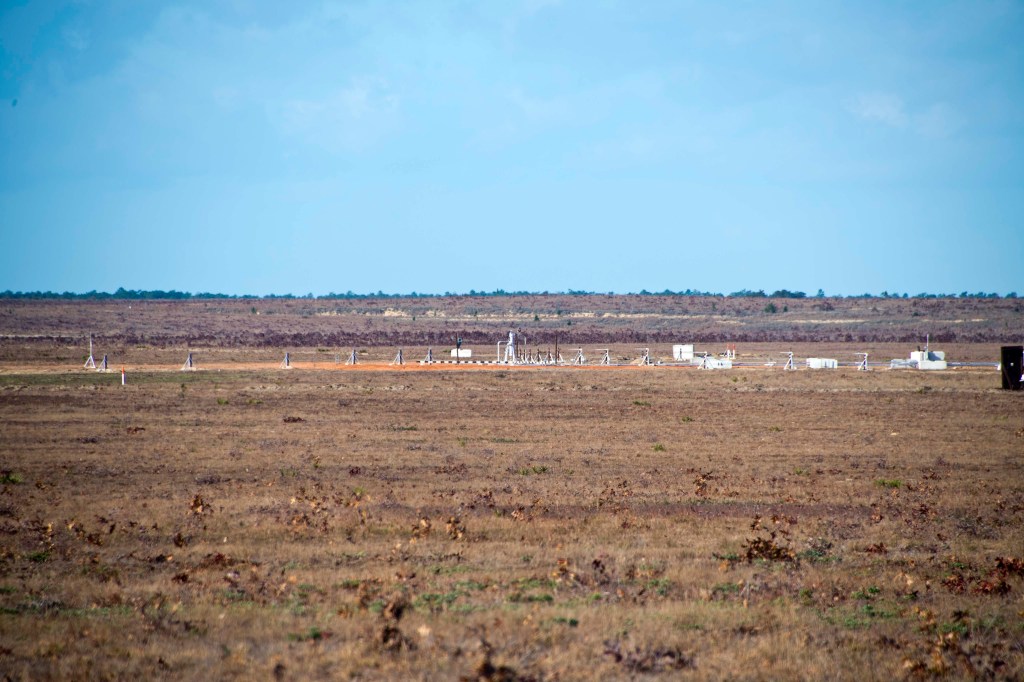
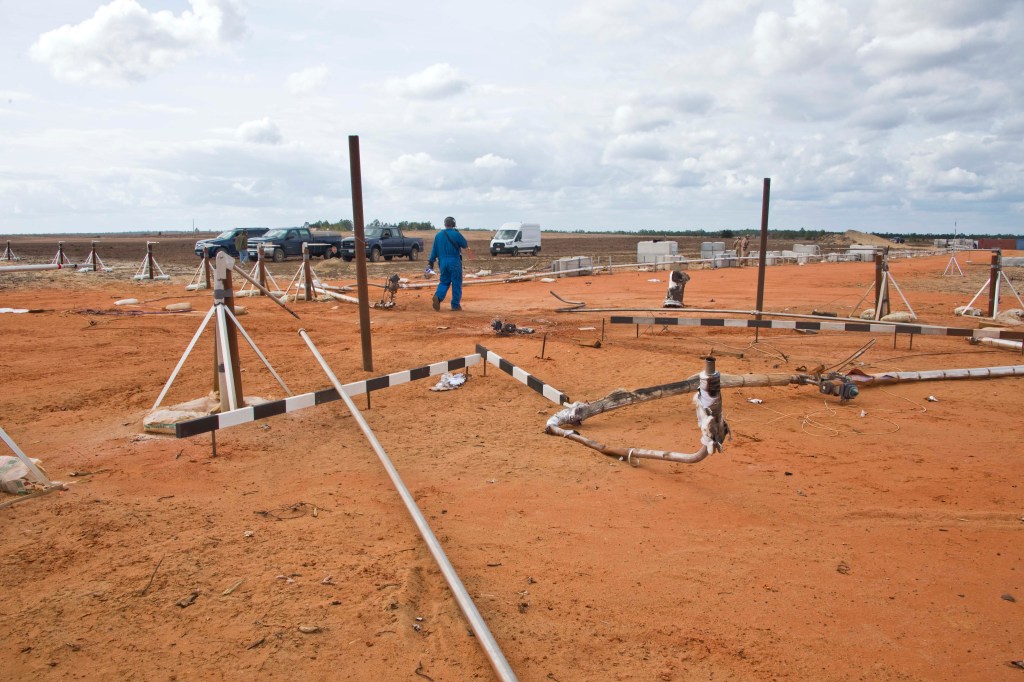
The test site is prepared for the first baseline test on Jan. 20, at Eglin Air Force Base in Florida, where NASA engineers are conducting a final series of tests to quantify the explosive yield of liquid oxygen and methane propelled rockets and spacecraft. The propellant transfer lines lead from the test article location to the cryogenic storage area.
Reliance Test & Technology/Bruce Hoffman
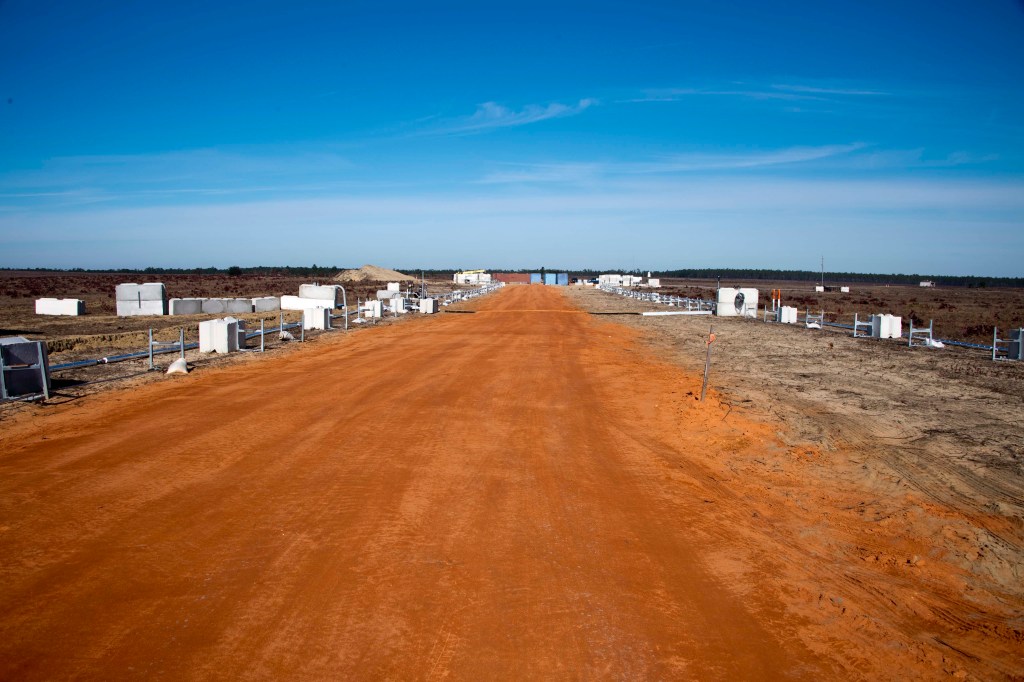
The cryogenic transfer lines, on each side of the road, lead to the test article for the first baseline test on Jan. 20 at Eglin Air Force Base in Florida, where NASA engineers are conducting a final series of tests to quantify the explosive yield of liquid oxygen and methane propelled rockets and spacecraft. The team transformed the remote area into an operational test site in about four months.
Reliance Test & Technology/Bruce Hoffman
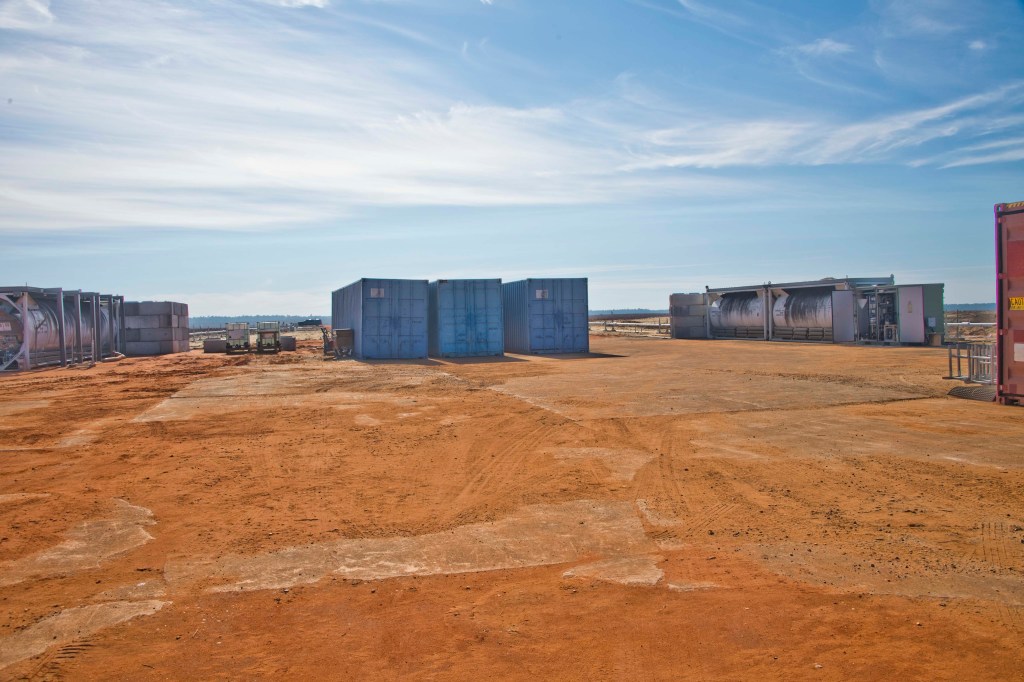
The test site is prepared for the first baseline test on Jan. 20, at Eglin Air Force Base in Florida, where NASA engineers are conducting a final series of tests to quantify the explosive yield of liquid oxygen and methane propelled rockets and spacecraft. Cryogenic storage tanks hold the propellants used for testing, while shipping containers, middle, hold materials and equipment for the test operations.
Reliance Test & Technology/Bruce Hoffman
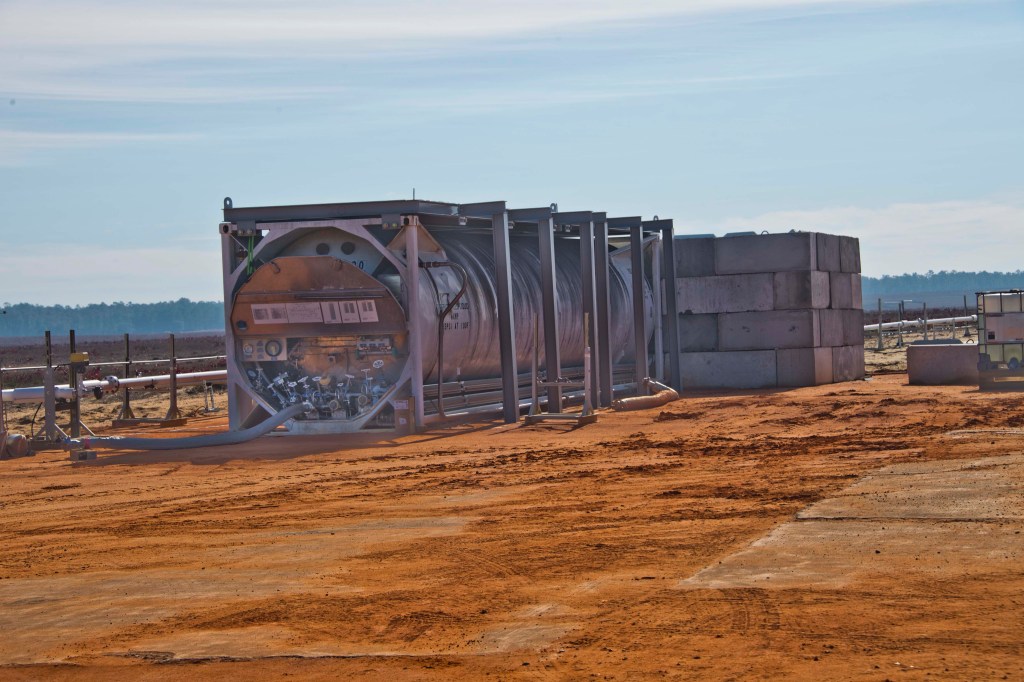
The test site is prepared for the first baseline test on Jan. 20, at Eglin Air Force Base in Florida, where NASA engineers are conducting a final series of tests to quantify the explosive yield of liquid oxygen and methane propelled rockets and spacecraft. A cryogenic storage tank is shown with a blast wall protecting it from debris and the blast wave.
Reliance Test & Technology/Bruce Hoffman
The test site is prepared for the first baseline test on Jan. 20, at Eglin Air Force Base in Florida, where NASA engineers are conducting a final series of tests to quantify the explosive yield of liquid oxygen and methane propelled rockets and spacecraft. The portable flare stack, center, safely burns off excess gas.
Reliance Test & Technology/Bruce Hoffman
The test site is prepared for the second baseline test on Jan. 21, at Eglin Air Force Base in Florida, where NASA engineers are conducting a final series of tests to quantify the explosive yield of liquid oxygen and methane propelled rockets and spacecraft.
Reliance Test & Technology/Bruce Hoffman
The team prepares to install the C-4 explosive underneath the test article for the second baseline test on Jan. 21, at Eglin Air Force Base in Florida, where NASA engineers are conducting a final series of tests to quantify the explosive yield of liquid oxygen and methane propelled rockets and spacecraft.
Reliance Test & Technology/Bruce Hoffman
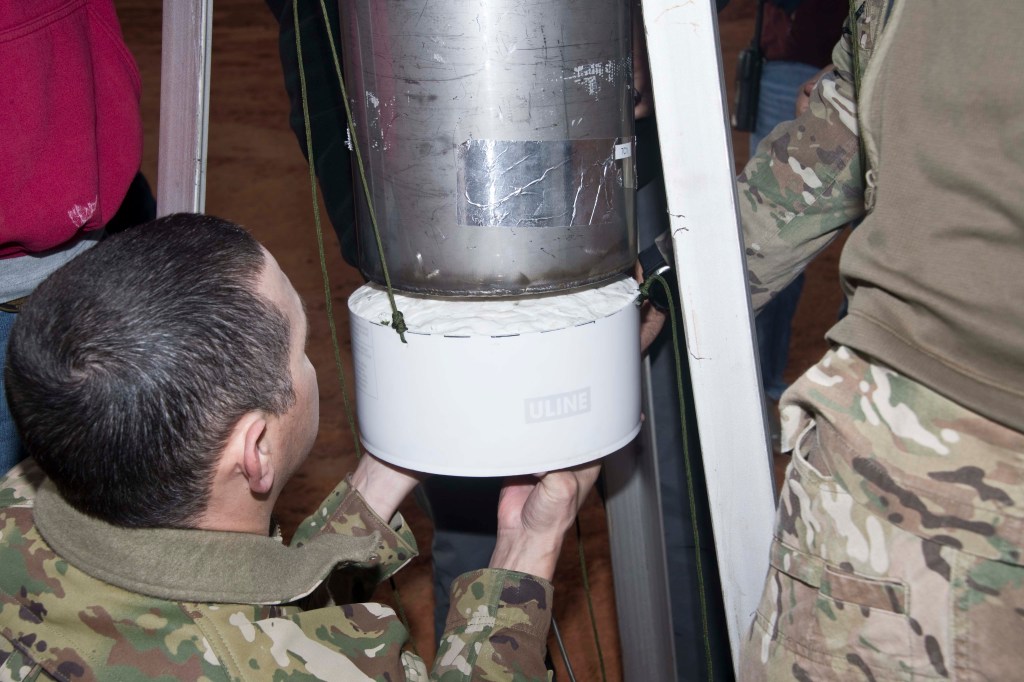
The team installs the C-4 explosive underneath the test article for the second baseline test on Jan. 21, at Eglin Air Force Base in Florida, where NASA engineers are conducting a final series of tests to quantify the explosive yield of liquid oxygen and methane propelled rockets and spacecraft.
Reliance Test & Technology/Bruce Hoffman
The requirements of this testing operation presented an additional challenge. The team needed to control a system that transfers propellants without using standard control equipment. Normally, NASA Stennis uses large industrial controllers to remotely operate equipment, but this project required compact equipment in a remote location. The NASA Data Acquisition System team provided the solution with a compact data acquisition and control system. The hardware is energy efficient and runs on lithium batteries and solar panels. The team modified existing redline software to create a custom control system.
During testing, operators use an on-screen diagram showing all valves and instruments, while the system collects test data and controls the cryogenic propellant transfer system.
Additionally, a crew from Eglin installed fiber optic lines for data transmission and three pressure sensor arrays, positioned 120 degrees apart, for the blast team from NASA’s Marshall Space Flight Center in Huntsville, Alabama, to plug in sensors and cables to capture data.
By December 2025, the team completed construction of the site and installed the test article.
In January, two baseline tests using C-4, a powerful explosive with known blast characteristics, were conducted to establish a reference point for testing in February.
A successful cold shock test followed when crews flowed liquid nitrogen through the entire system to validate the cryogenic infrastructure.
Testing Underway
The team completed the first four tests of the series in February.
A mounted camera captures slow motion video of the controlled detonation of a test article on Feb. 25 at Eglin Air Force Base in Florida.
Reliance Test & Technology/Craig W. Hewitt
For these tests, the test articles were filled with liquid oxygen and liquefied natural gas, but not mixed, and C-4 was used to detonate the entire test article.
In subsequent tests, the cryogenics will be mixed, and instruments will measure the resulting explosion.
The team will scale up to 2,000-pound test articles in March with eight tests planned. These tests will examine two failure configurations. The first configuration is a transfer tube failure, which simulates a failure of the propellant line that runs from the top tank through the bottom tank. The second configuration is a common bulkhead failure, which simulates a failure of the shared wall between the two propellant tanks.
The largest test article, with 20,000 pounds of propellants, is planned for testing in June. This test will simulate a common bulkhead failure scenario.
Once complete, the test series will provide critical new data for methane-based propulsion systems. The findings are expected to help shape launch site planning, safety protocols, and safety requirements for years to come.
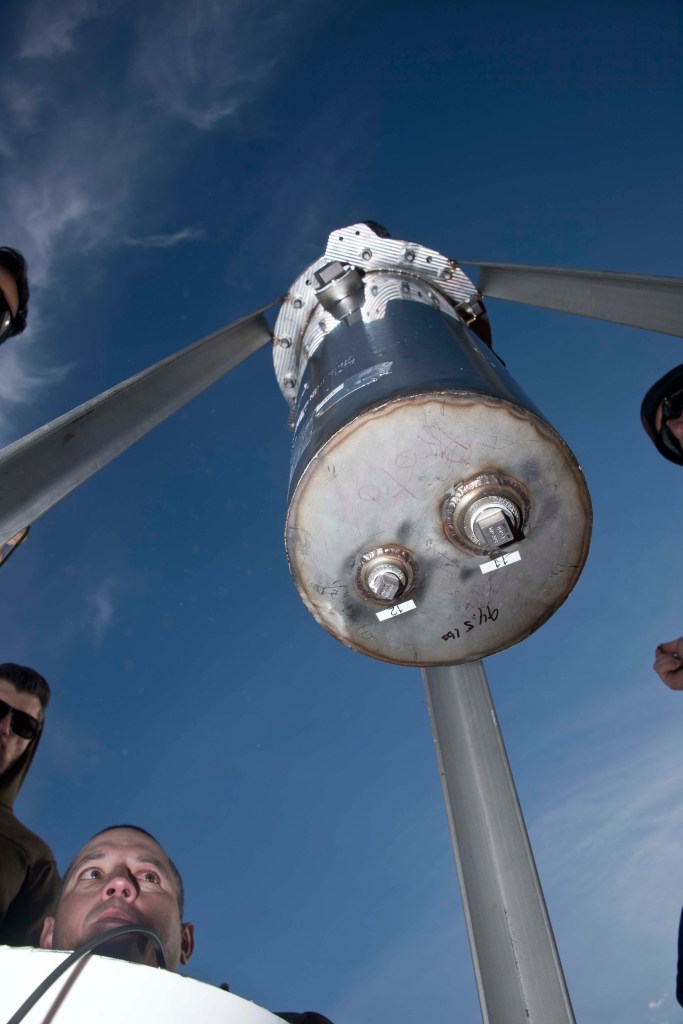
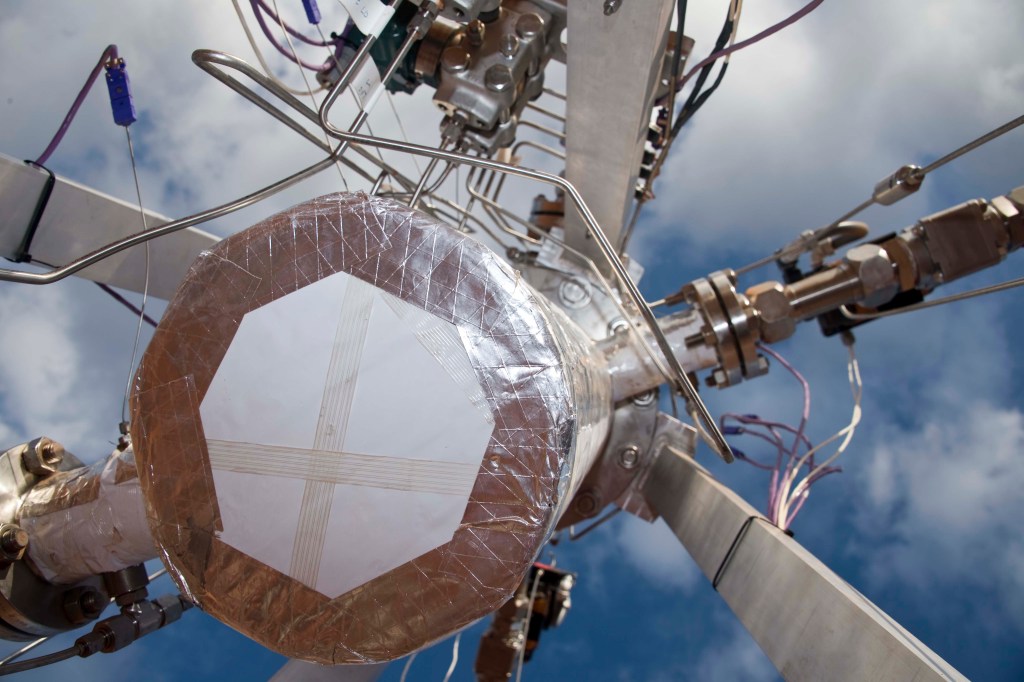
A view from the bottom of the test article is shown prior to C-4 installation on Feb. 25 at Eglin Air Force Base in Florida, where NASA engineers are conducting a final series of tests to quantify the explosive yield of liquid oxygen and methane propelled rockets and spacecraft.
Reliance Test & Technology/Bruce Hoffman
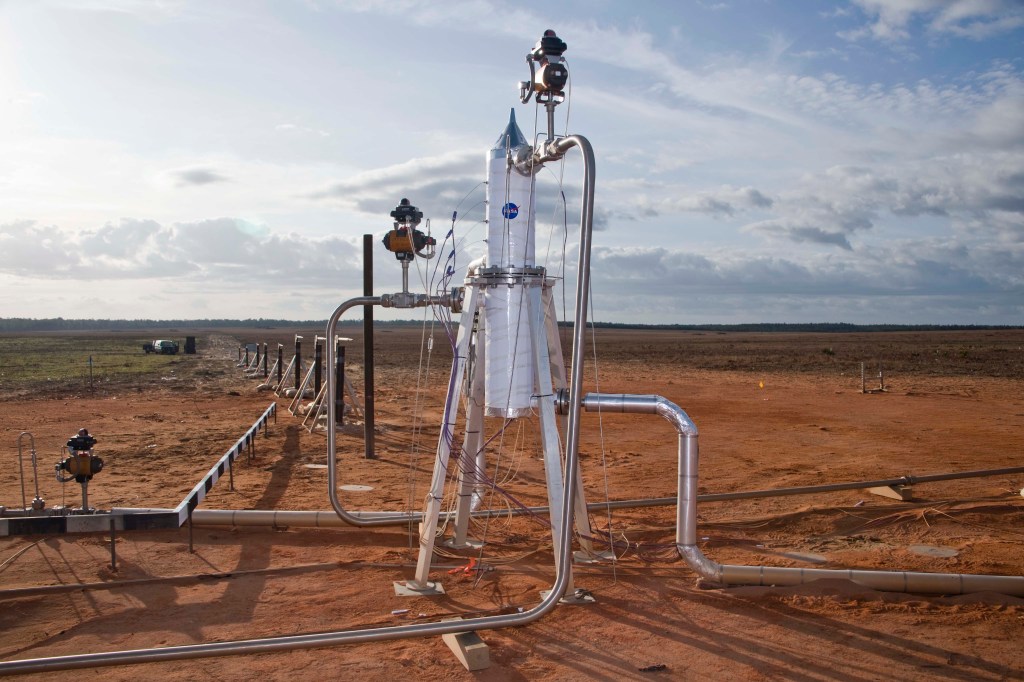
The assembled test article is shown without the C-4 explosive on Feb. 25 at Eglin Air Force Base in Florida, where NASA engineers are conducting a final series of tests to quantify the explosive yield of liquid oxygen and methane propelled rockets and spacecraft.
Reliance Test & Technology/Bruce Hoffman
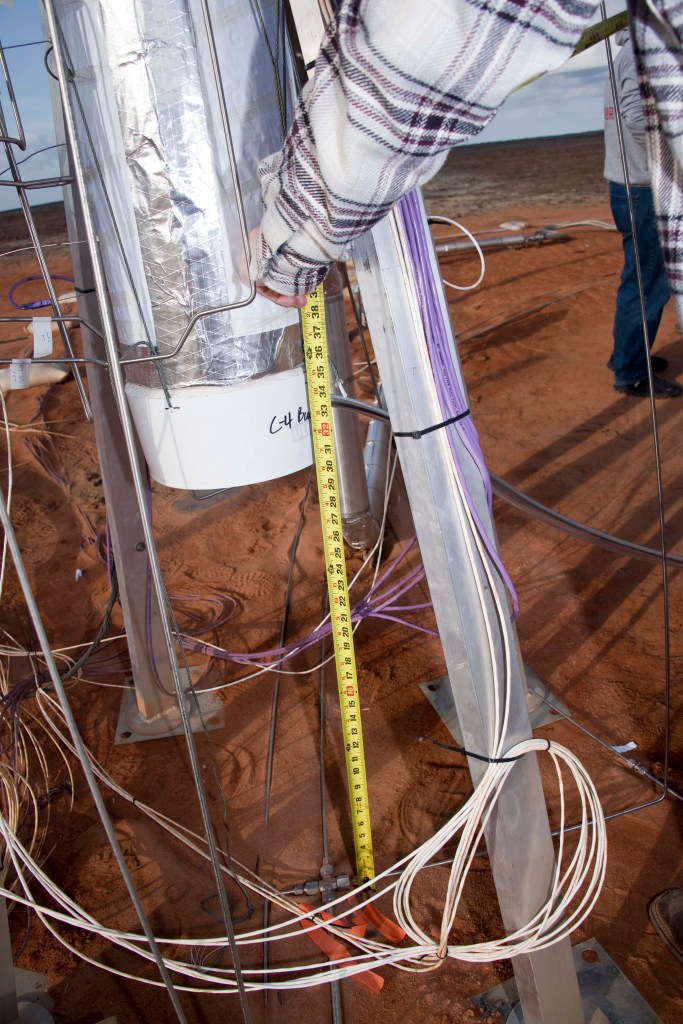
C-4 explosive is installed beneath the test article as personnel measure the height of the explosive off the ground on Feb. 25 at Eglin Air Force Base in Florida, where NASA engineers are conducting a final series of tests to quantify the explosive yield of liquid oxygen and methane propelled rockets and spacecraft.
Reliance Test & Technology/Bruce Hoffman
The test article setup is shown on Feb. 25 at Eglin Air Force Base in Florida, where NASA engineers are conducting a final series of tests to quantify the explosive yield of liquid oxygen and methane propelled rockets and spacecraft. The detonation cord is not yet connected to the firing circuit, while awaiting final connection by personnel before site evacuation.
Reliance Test & Technology/Bruce Hoffman
The test site is cleared of personnel and ready for detonation on Feb. 25 at Eglin Air Force Base in Florida, where NASA engineers are conducting a final series of tests to quantify the explosive yield of liquid oxygen and methane propelled rockets and spacecraft.
Reliance Test & Technology/Bruce Hoffman
A view of the test site is shown following detonation on Feb. 25 at Eglin Air Force Base in Florida, where NASA engineers are conducting a final series of tests to quantify the explosive yield of liquid oxygen and methane propelled rockets and spacecraft.
Reliance Test & Technology/Bruce Hoffman
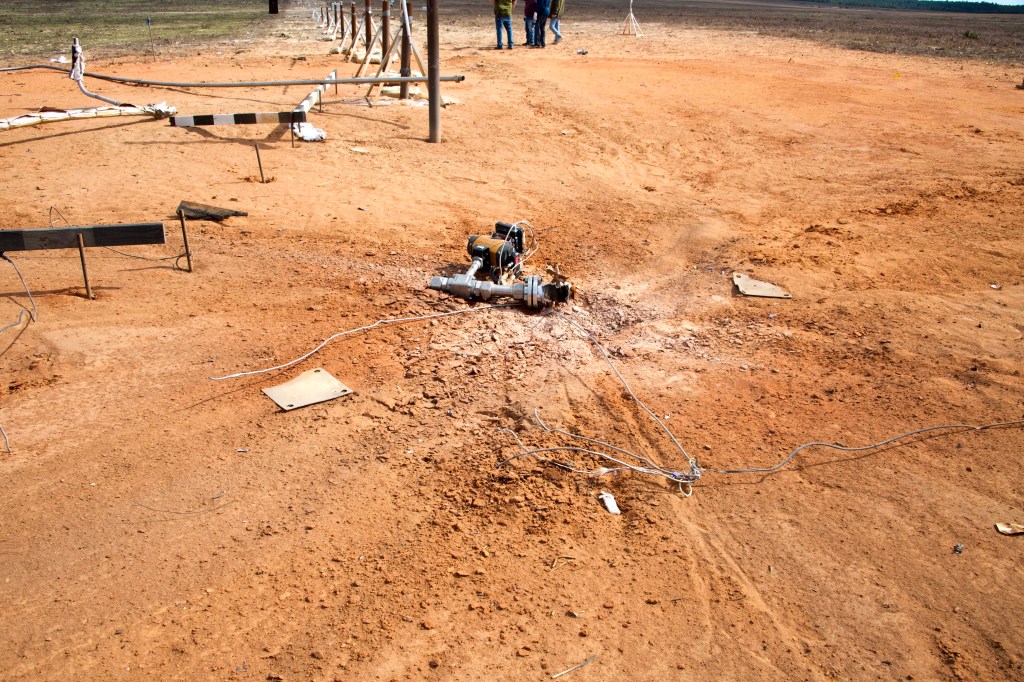
The center of the explosion is shown after the test on Feb. 25 at Eglin Air Force Base in Florida, where NASA engineers are conducting a final series of tests to quantify the explosive yield of liquid oxygen and methane propelled rockets and spacecraft. A test article fill valve lies on the ground after being torn from the test article wall.
Reliance Test & Technology/Bruce Hoffman
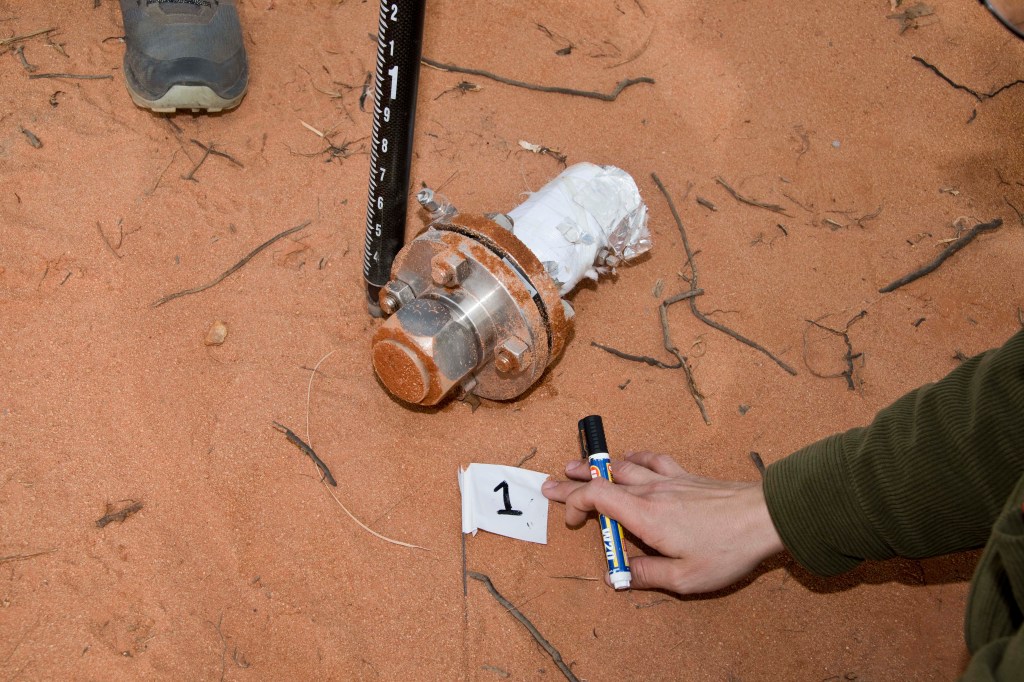
Personnel use global positioning system technology to document the precise location of a fragment from the explosion on Feb. 25 at Eglin Air Force Base in Florida, where NASA engineers are conducting a final series of tests to quantify the explosive yield of liquid oxygen and methane propelled rockets and spacecraft.
Reliance Test & Technology/Bruce Hoffman
Personnel record the upper tank’s impact point following the explosion using global positioning system technology on Feb. 25 at Eglin Air Force Base in Florida, where NASA engineers are conducting a final series of tests to quantify the explosive yield of liquid oxygen and methane propelled rockets and spacecraft.
NASA Laser Reflecting Instrument Makes GPS Satellite More Accurate
3 min read
NASA Laser Reflecting Instrument Makes GPS Satellite More Accurate
A NASA laser reflecting technology that will aid Global Positioning System (GPS) accuracy is now operational as of March 9.
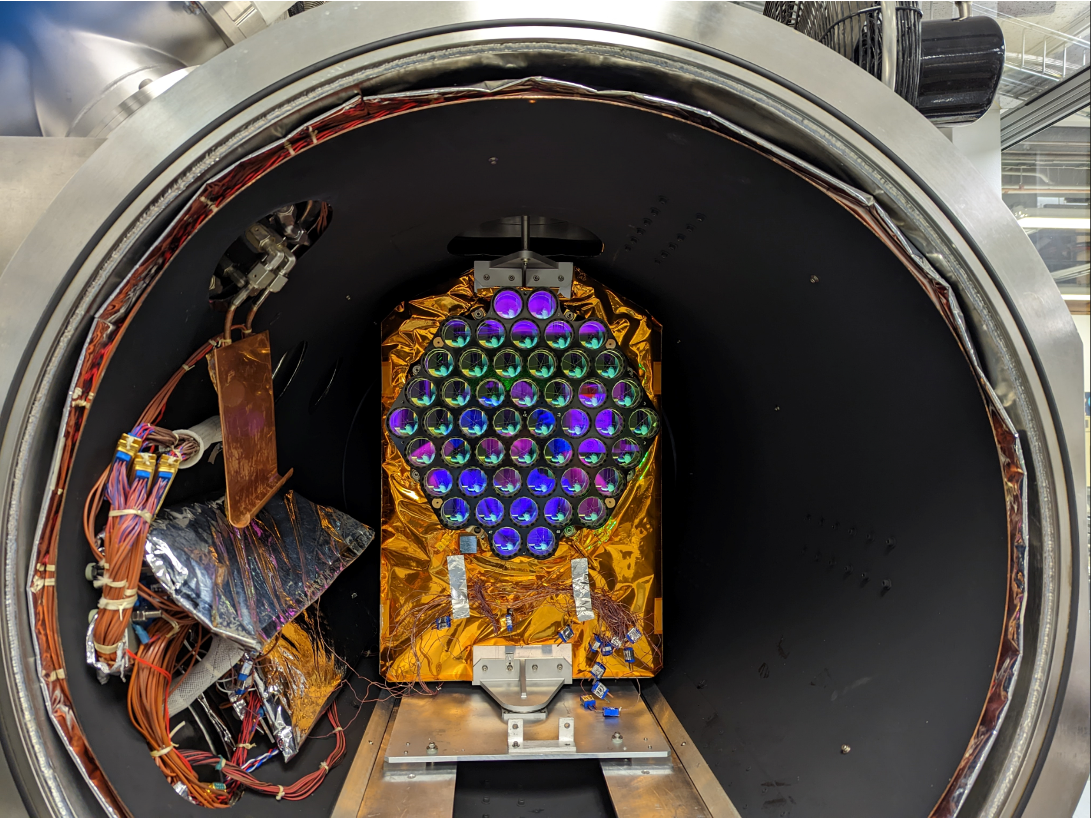
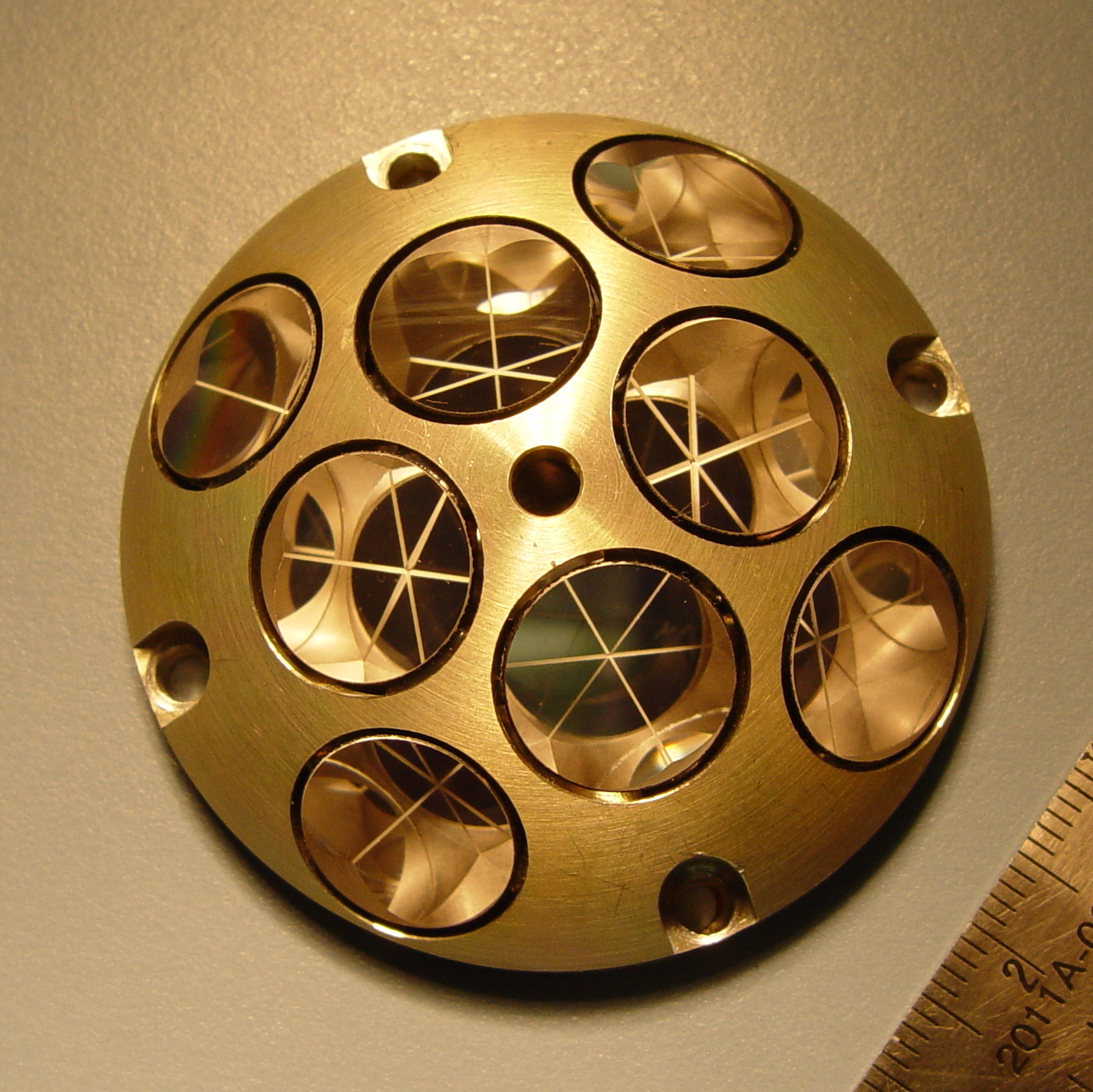
The instrument, known as a laser retroreflector array, or LRA, launched aboard GPS III SV-09, the ninth of U.S. Space Force’s Block III Global Positioning System satellites, on Jan. 27. LRAs are sets of mirrors shaped like the corners of a cube, a configuration that is designed to precisely reflect beams of light back to their source. They are a key component to laser ranging, a technique that enables the measurement of precise distance by observing the time it takes for a pulse of light to travel from a ground station to the mirrors and back.
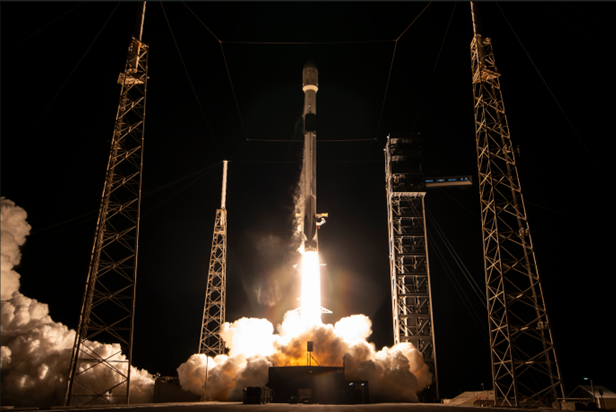
A SpaceX Falcon 9 rocket lifted off from Space Launch Complex 40 (SLC-40), Cape Canaveral Space Force Station, Florida, carrying the GPS III SV-09 satellite into Earth orbit.
Credit: SpaceX
“LRAs are the most efficient and cost-effective way to improve products that come out of GPS,” said Lucia Tsaoussi, program manager for NASA’s Space Geodesy at NASA Headquarters in Washington.
Whether walking, driving, sailing, or flying, GPS technology helps people know their location and navigate to their destination. With the LRA being put to work, this GPS satellite will have an improved tie to the global coordinate system, resulting in more accurate location and navigation information for users.
“We are the hidden infrastructure,” said Stephen Merkowitz, project manager for the Space Geodesy Project at NASA’s Goddard Space Flight Center in Greenbelt, Maryland. “Most people don’t realize that they’re relying on these kinds of measurements every day throughout their lives.”
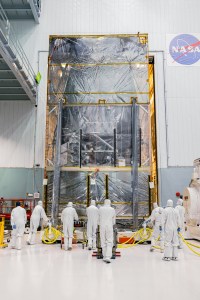
The LRA instrument aboard the GPS III SV-09 satellite at inspection before launch.
Credit: NASA
Using GPS data also supports other Earth-observing satellites and the data they collect. These satellites help us understand our planet and provide early warnings for natural hazards. Satellites orbiting the planet have GPS receivers to help pinpoint their exact location in space. The more precise the GPS orbit information, the more accurate and reliable the rest of the satellite’s data becomes, Tsaoussi said.
Satellites like ICESat-2 (Ice, Cloud, and land Elevation satellite 2), SWOT (Surface Water and Ocean Topography), and GRACE-FO (Gravity Recovery and Climate Experiment Follow On) also rely on laser-ranging technology to pinpoint their location in orbit.
NASA’s Space Geodesy Project operates a global network of Satellite Laser Ranging stations dedicated to continuous satellite tracking. Local stations are currently monitoring the latest GPS III satellite, with international stations set to follow soon.
These LRAs were developed by the Space Geodesy Project in partnership with the Naval Research Laboratory’s Naval Center for Space Technology in Washington.
NASA to Cover Progress 94 Spacecraft Launch, Space Station Docking
The Progress 92 cargo spacecraft, carrying nearly 3,000 pounds of food, fuel, and supplies for the Expedition 73 crew, approaches the International Space Station in July 2025 before docking to the Poisk module.
Credit: NASA
NASA will provide live coverage of the launch and docking of a Roscosmos cargo spacecraft carrying about three tons of food, fuel, and supplies for the crew aboard the International Space Station.
The unpiloted Roscosmos Progress 94 resupply spacecraft is scheduled to launch at 7:59 a.m. EDT (4:59 p.m. Baikonur time) Sunday, March 22, on a Soyuz rocket from the Baikonur Cosmodrome in Kazakhstan.
Watch NASA’s live coverage beginning at 7:30 a.m. on NASA+, Amazon Prime, and the agency’s YouTube channel. Learn how to watch NASA content through a variety of online platforms, including social media.
After a two-day trip to the space station, the spacecraft will dock autonomously to the Poisk module’s space-facing port at about 9:34 a.m. Tuesday, March 24. NASA’s live rendezvous and docking coverage will begin at 8:45 a.m. on NASA+, Amazon Prime, and the agency’s YouTube channel.
The Progress 94 spacecraft will remain docked to the orbiting laboratory for about six months before departing for a destructive re-entry into Earth’s atmosphere to dispose of trash loaded by the crew. Prior to this spacecraft’s arrival, Progress 92 undocked from the space station on March 16, re-entered Earth’s atmosphere, and burned up harmlessly over the Pacific Ocean.
For more than 25 years, people have lived and worked continuously aboard the International Space Station, advancing scientific knowledge and making research breakthroughs that aren’t possible on Earth. The space station helps NASA understand and overcome the challenges of human spaceflight, expand commercial opportunities in low Earth orbit, and build on the foundation for long-duration missions to the Moon as part of the Artemis program and to Mars.
Learn more about the International Space Station, its research, and crew, at:
Meet the Platypi: NASA’s Newest Astronaut Candidate Class
Ten explorers are currently training at NASA’s Johnson Space Center in Houston to become flight-eligible astronauts.
Selected in 2025, the astronaut candidates are building the technical and operational skills needed for future missions to the International Space Station, the Moon, and eventually Mars. Now, NASA’s newest astronaut candidates have a class name: the Platypi.
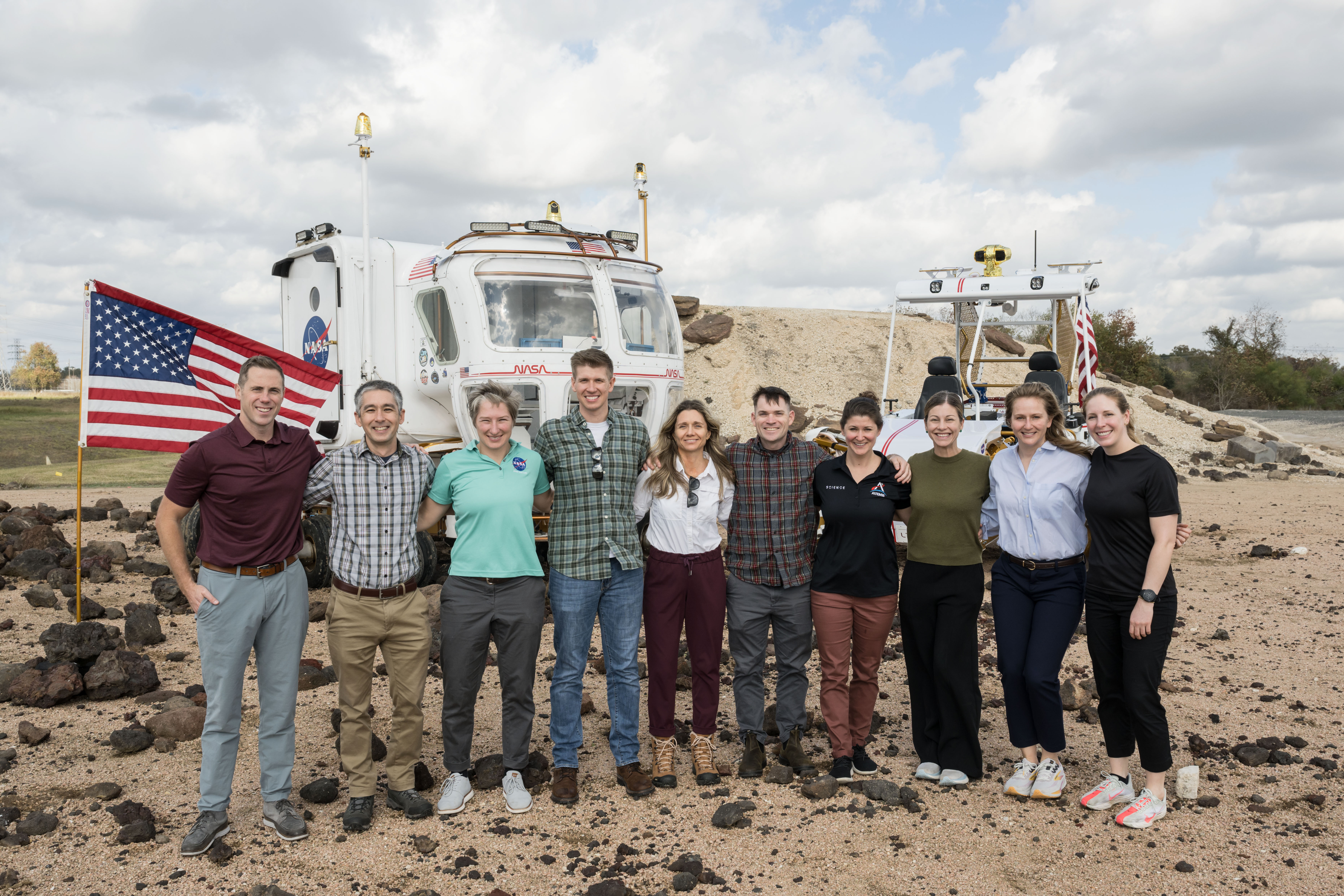
The 2025 Astronaut Candidate class in front of NASA’s Space Exploration Vehicle and Ground Test Unit rover at NASA’s Johnson Space Center Rock Yard in Houston.
NASA/James Blair
The name was selected by the previous astronaut candidate class, known as the Flies. Members of that group came together to choose a name that reflected the range of skills and personalities they saw in the new candidates. NASA astronauts Anil Menon and Chris Birch helped facilitate the discussions.
“They’re like the Swiss Army knife of candidates,” Menon said. “They can use just about any tool to solve any problem or challenge they face. They’re unassuming and incredibly kind, but extremely capable.”
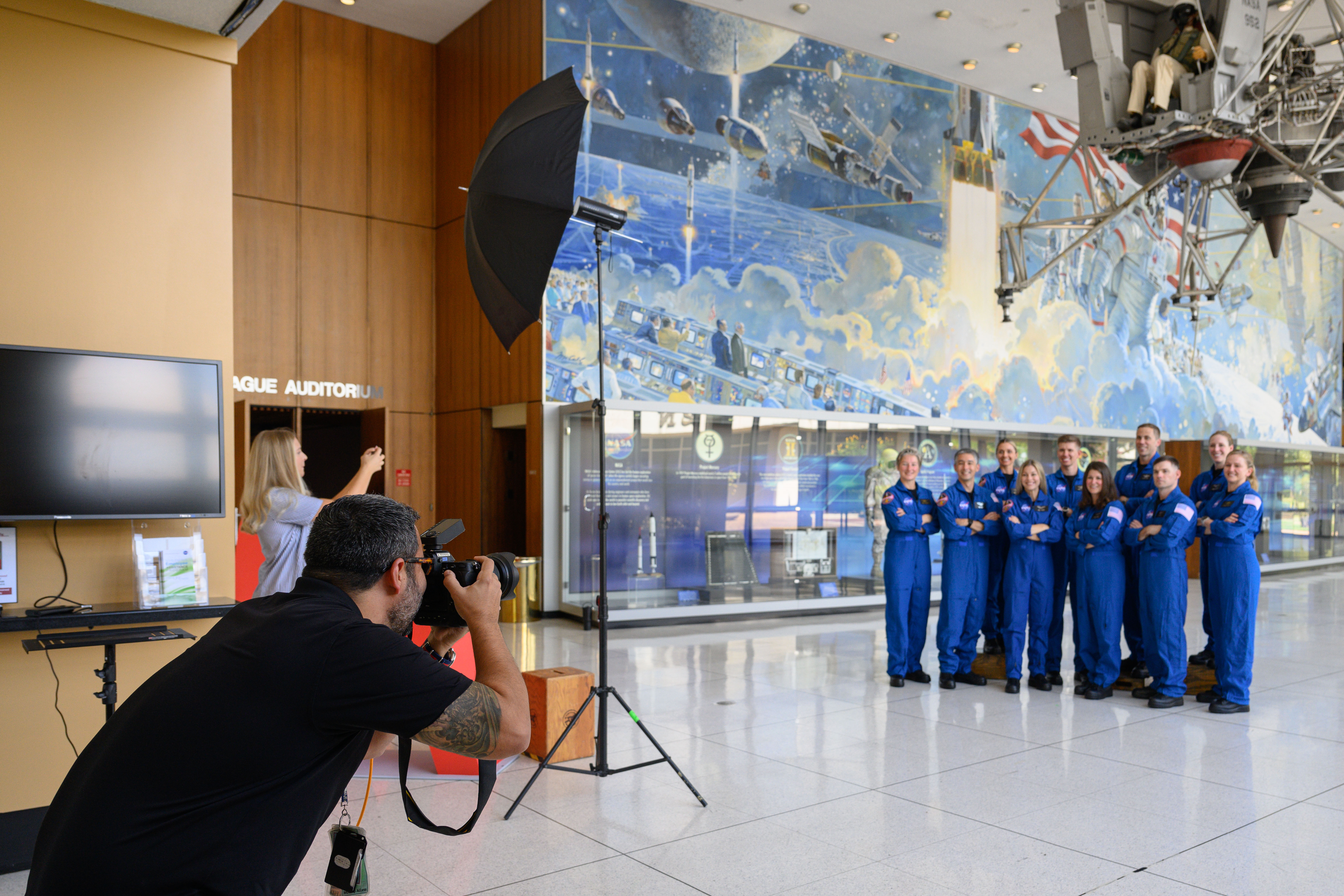
A behind-the-scenes look at the day NASA announced its 2025 Astronaut Candidate class on Sept. 22, 2025.
NASA/Robert Markowitz
Menon said the class reminded the Flies of one of Earth’s most remarkable animals.
“Our main driver was that this class stood out as extremely capable, with a lot of different skills, while also being very friendly and supportive of each other,” he said. “They have many diverse and sometimes hidden talents, like the platypus.”
The platypus is a mammal that lays eggs and has unique traits such as electroreceptors in its bill and a venomous spur. Its features resemble several different animals, including the bill of a duck, the tail of a beaver, and the body of an otter. Despite its unusual appearance, the platypus is highly adapted to its environment.
For NASA’s newest astronaut candidates, the name reflects a similar idea: a team with a wide range of strengths working together toward a common goal.
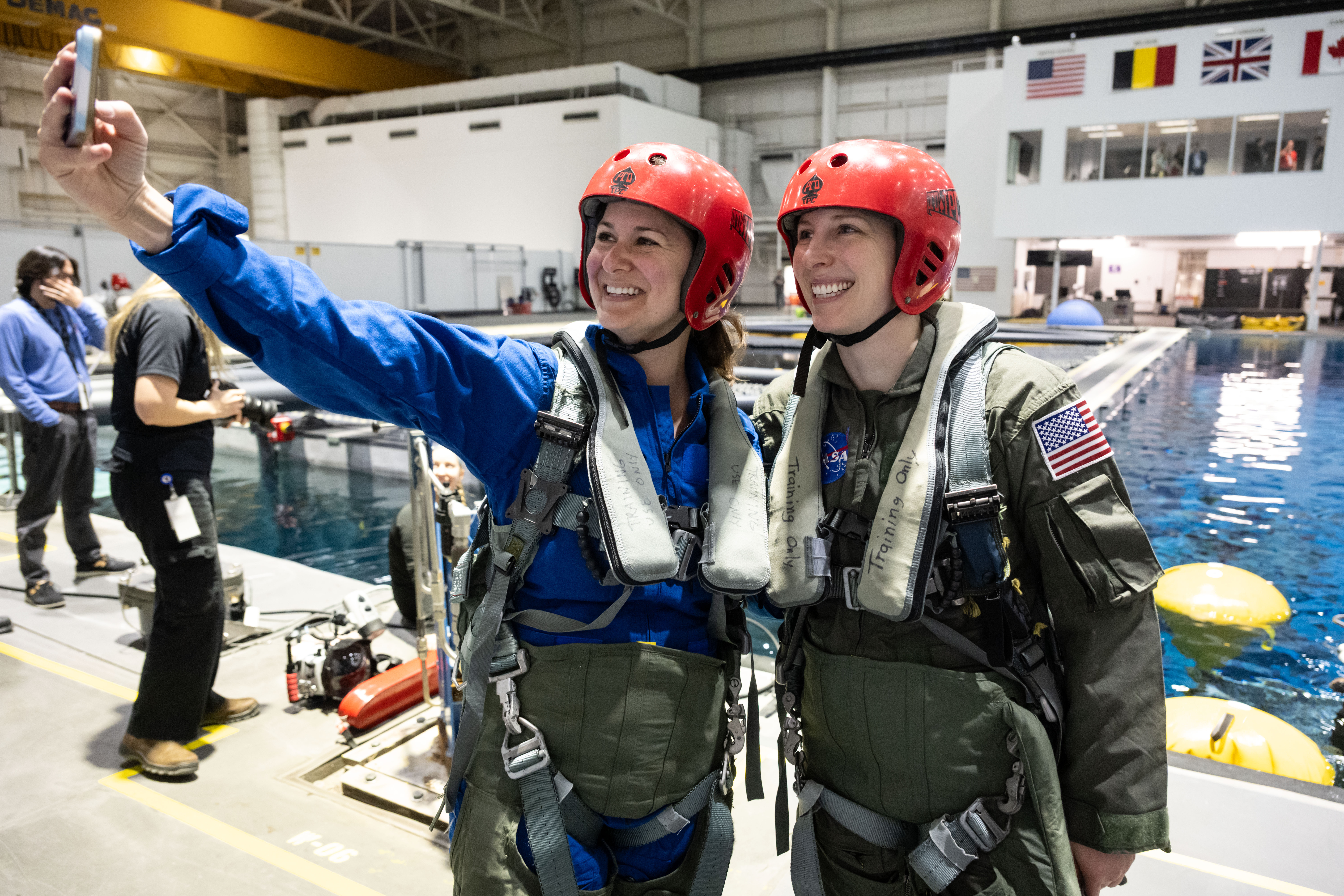
NASA astronaut candidates Lauren Edger and Imelda Muller take a photo before participating in water survival training at NASA’s Neutral Buoyancy Laboratory in Houston.
NASA/Helen Arase Vargas
So far, the astronaut candidates have trained to operate and understand the Canadarm2 robotic arm used aboard the space station. They are learning how to capture visiting spacecraft, move equipment outside the station, and support spacewalk operations. The candidates also train in space station systems, orbital mechanics, and flight operations.
“It is really impressive to me to learn about all of the complexities of the various systems that keep the International Space Station operational, and how they’ve all been functioning with a continuous human presence aboard for the last 25 years,” said astronaut candidate Lauren Edgar. “It’s amazing to see how it all works together and how to fix things when needed.”
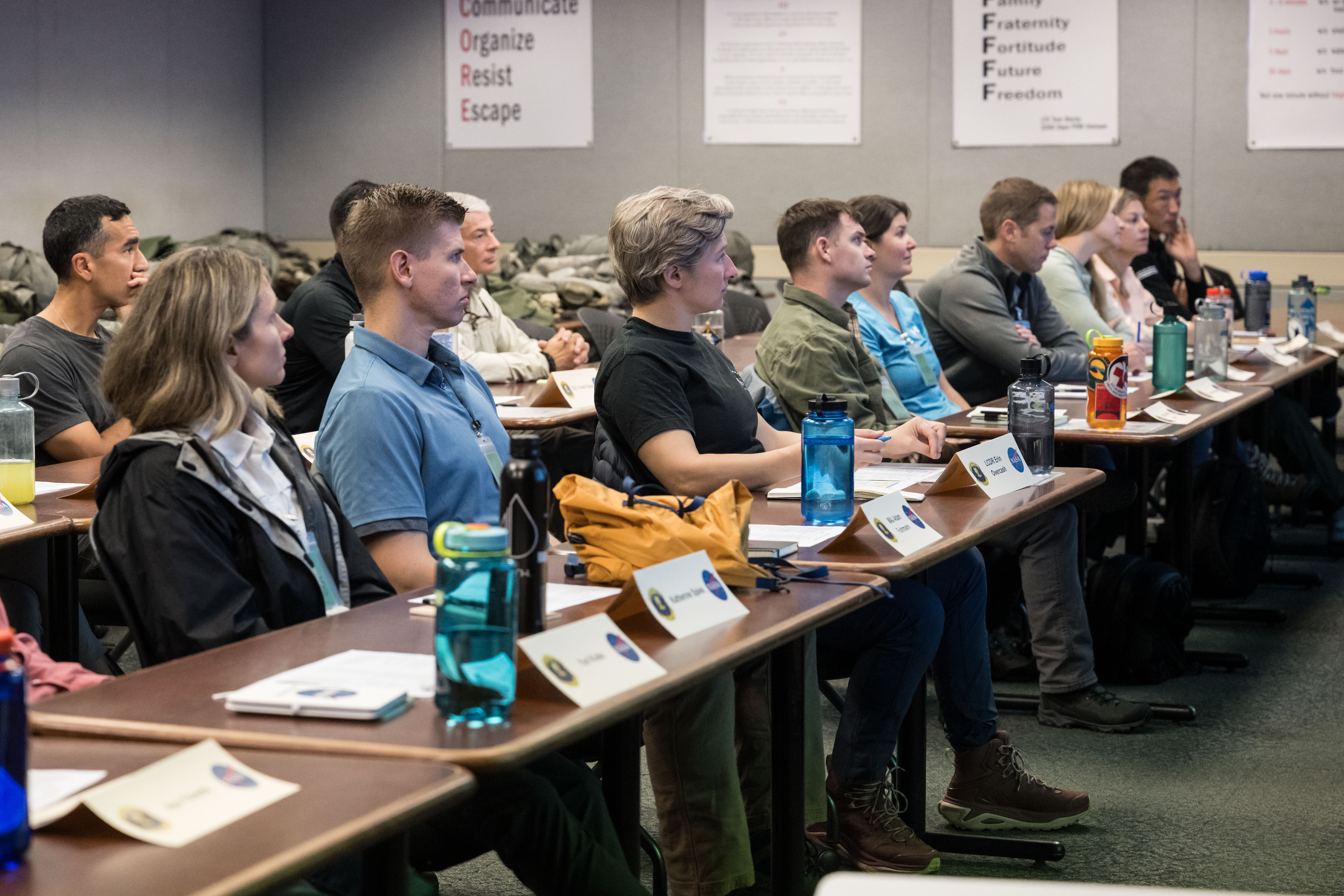
The candidates have completed survival training to prepare for the unlikely event of landing in remote environments after a mission. They also participated in land and water survival exercises designed to build teamwork and decision-making under pressure.
“The diversity of the training as well as the focus on psychological, physical, and expeditionary skills has been the most surprising to me,” said astronaut candidate Yuri Kubo. “I’ve learned a lot about myself, from areas of professional and interpersonal development to my ability to overcome challenges. It is amazing what we can achieve with dedication and hard work and an amazing team of people to support you.”
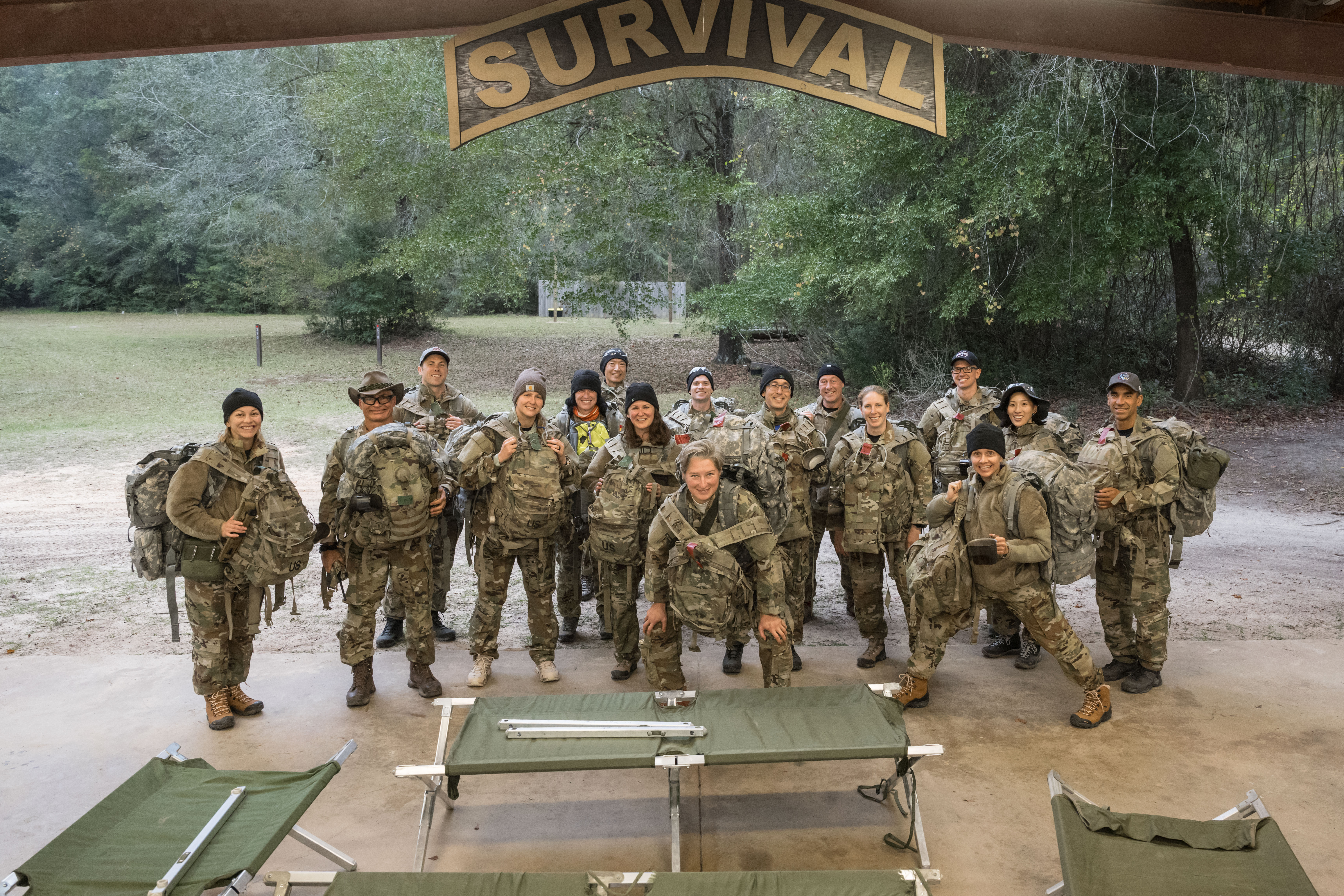
The astronaut candidates participate in wilderness survival training at Fort Rucker in Alabama.
NASA/Helen Arase Vargas
The candidates began conducting spacewalk training inside NASA’s Neutral Buoyancy Laboratory, where astronauts rehearse spacewalks underwater in conditions that simulate microgravity. They also have flown in the agency’s T-38 supersonic jets and other aircraft at Ellington Field.
Future training will include operating spacecraft systems used in human spaceflight missions, and studying geology in classrooms and field settings for future missions to the Moon.
The class will work shifts in the Mission Control Center in Houston to experience a day in the life of the people who keep watch over the astronauts and vehicles.
“Our training has already been diverse and dynamic,” said astronaut candidate Anna Menon. “There is a lot to learn, and I’m excited about every chapter!”
The astronaut candidates join for in-class instruction during wilderness survival training.
NASA/Helen Arase Vargas
The Platypi are focused on learning the fundamentals of human spaceflight, building the skills that will one day help them operate spacecraft, conduct science in orbit, and explore beyond Earth.
Like the animal they are named after, their strength lies in the many capabilities each member brings to the team.