NASA’s Hubble Finds Water Vapor in Small Exoplanet’s Atmosphere

NASA’s Hubble Finds Water Vapor in Small Exoplanet’s Atmosphere

5 min read

NASA’s Hubble Finds Water Vapor in Small Exoplanet’s Atmosphere
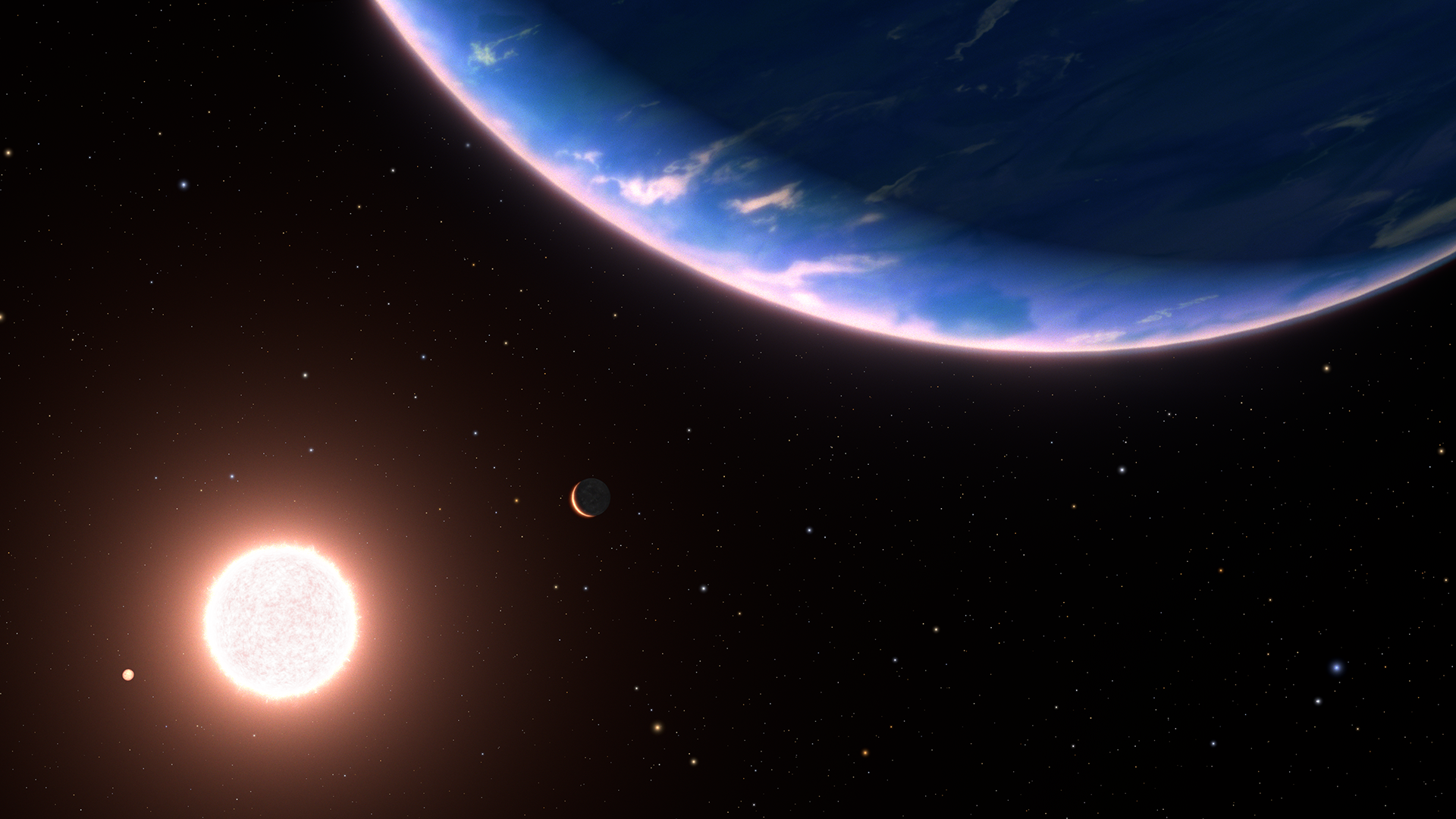
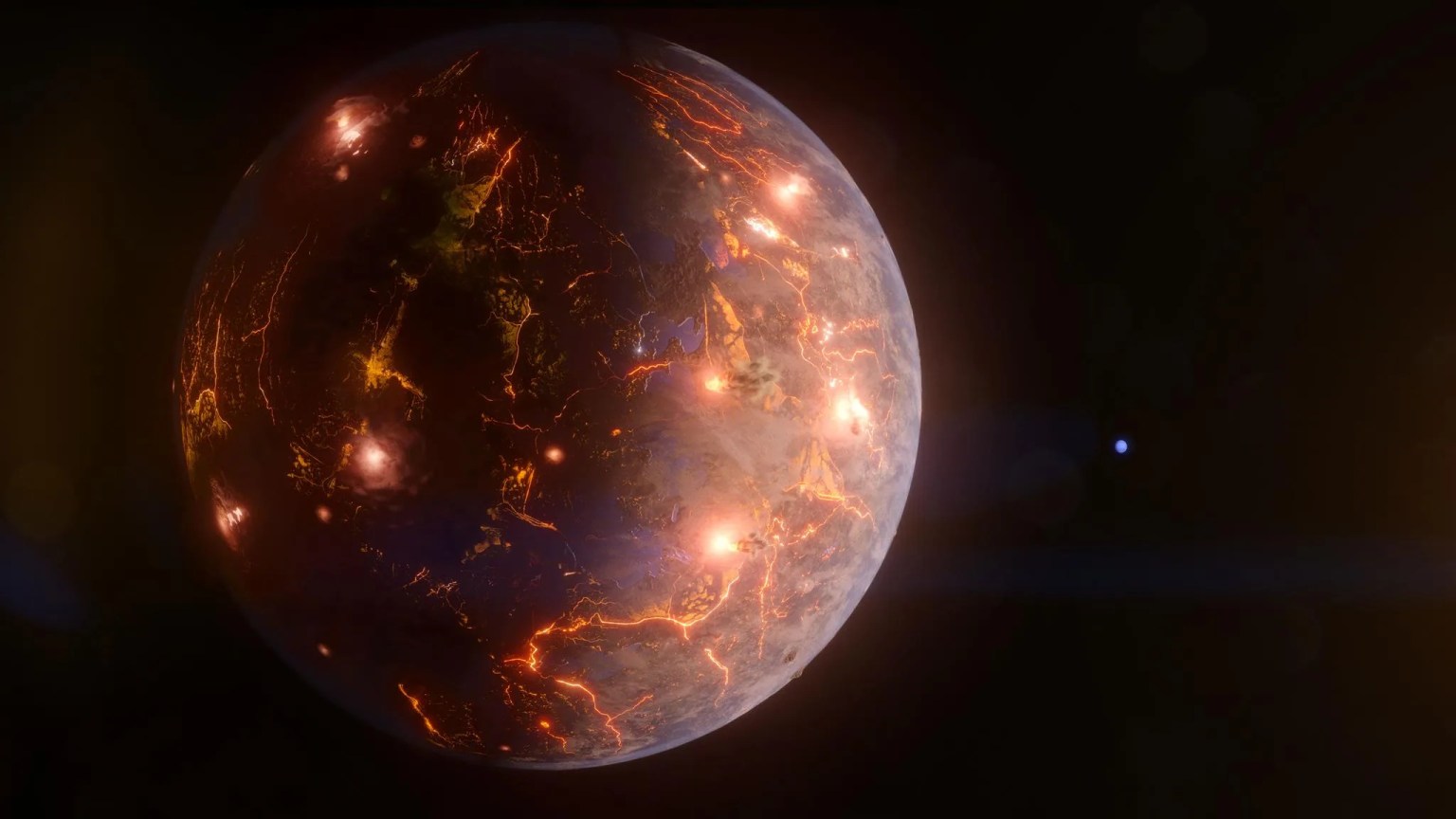
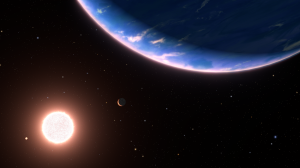
This is an artist’s concept of the exoplanet GJ 9827d, the smallest exoplanet where water vapor has been detected in the atmosphere. The planet could be an example of potential planets with water-rich atmospheres elsewhere in our galaxy. With only about twice Earth’s diameter, the planet orbits the red dwarf star GJ 9827. Two inner planets in the system are on the left. The background stars are plotted as they would be seen to the unaided eye looking back toward our Sun. The Sun is too faint to be seen. The blue star at upper right is Regulus; the yellow star at center bottom is Denebola; and the blue star at bottom right is Spica. The constellation Leo is on the left, and Virgo is on the right. Both constellations are distorted from our Earth-bound view from 97 light-years away.
NASA/ESA/Leah Hustak (STScI)/Ralf Crawford (STScI)

Astronomers using NASA’s Hubble Space Telescope observed the smallest exoplanet where water vapor has been detected in the atmosphere. At only approximately twice Earth’s diameter, the planet GJ 9827d could be an example of potential planets with water-rich atmospheres elsewhere in our galaxy.

“This would be the first time that we can directly show through an atmospheric detection, that these planets with water-rich atmospheres can actually exist around other stars,” said team member Björn Benneke of the Trottier Institute for Research on Exoplanets at Université de Montréal. “This is an important step toward determining the prevalence and diversity of atmospheres on rocky planets.”

“Water on a planet this small is a landmark discovery,” added co-principal investigator Laura Kreidberg of Max Planck Institute for Astronomy in Heidelberg, Germany. “It pushes closer than ever to characterizing truly Earth-like worlds.”

However, it remains too early to tell whether Hubble spectroscopically measured a small amount of water vapor in a puffy hydrogen-rich atmosphere, or if the planet’s atmosphere is mostly made of water, left behind after a primeval hydrogen/helium atmosphere evaporated under stellar radiation.

“Our observing program, led by principal investigator Ian Crossfield of Kansas University in Lawrence, Kansas, was designed specifically with the goal to not only detect the molecules in the planet’s atmosphere, but to actually look specifically for water vapor. Either result would be exciting, whether water vapor is dominant or just a tiny species in a hydrogen-dominant atmosphere,” said the science paper’s lead author, Pierre-Alexis Roy of the Trottier Institute for Research on Exoplanets at Université de Montréal.

“Until now, we had not been able to directly detect the atmosphere of such a small planet. And we’re slowly getting in this regime now,” added Benneke. “At some point, as we study smaller planets, there must be a transition where there’s no more hydrogen on these small worlds, and they have atmospheres more like Venus (which is dominated by carbon dioxide).”

Astronomers using NASA’s Hubble Space Telescope have observed water vapor in the atmosphere of the smallest exoplanet ever detected. Located 97 light-years away, planet GJ 9827d is approximately twice the size of Earth. Credit: NASA’s Goddard Space Flight Center/Lead Producer: Paul Morris

Because the planet is as hot as Venus, at 800 degrees Fahrenheit, it definitely would be an inhospitable, steamy world if the atmosphere were predominantly water vapor.

At present the team is left with two possibilities. One scenario is that the planet is still clinging to a hydrogen-rich atmosphere laced with water, making it a mini-Neptune. Alternatively, it could be a warmer version of Jupiter’s moon Europa, which has twice as much water as Earth beneath its crust.” The planet GJ 9827d could be half water, half rock. And there would be a lot of water vapor on top of some smaller rocky body,” said Benneke.

If the planet has a residual water-rich atmosphere, then it must have formed farther away from its host star, where the temperature is cold and water is available in the form of ice, than its present location. In this scenario, the planet would have then migrated closer to the star and received more radiation. The hydrogen was heated and escaped, or is still in the process of escaping the planet’s weak gravity. The alternative theory is that the planet formed close to the hot star, with a trace of water in its atmosphere.

The Hubble program observed the planet during 11 transits – events in which the planet crossed in front of its star – that were spaced out over three years. During transits, starlight is filtered through the planet’s atmosphere and has the spectral fingerprint of water molecules. If there are clouds on the planet, they are low enough in the atmosphere so that they don’t completely hide Hubble’s view of the atmosphere, and Hubble is able to probe water vapor above the clouds.

“Observing water is a gateway to finding other things,” said Thomas Greene, astrophysicist at NASA’s Ames Research Center in California’s Silicon Valley. “This Hubble discovery opens the door to future study of these types of planets by NASA’s James Webb Space Telescope. JWST can see much more with additional infrared observations, including carbon-bearing molecules like carbon monoxide, carbon dioxide, and methane. Once we get a total inventory of a planet’s elements, we can compare those to the star it orbits and understand how it was formed.”

GJ 9827d was discovered by NASA’s Kepler Space Telescope in 2017. It completes an orbit around a red dwarf star every 6.2 days. The star, GJ 9827, lies 97 light-years from Earth in the constellation Pisces.

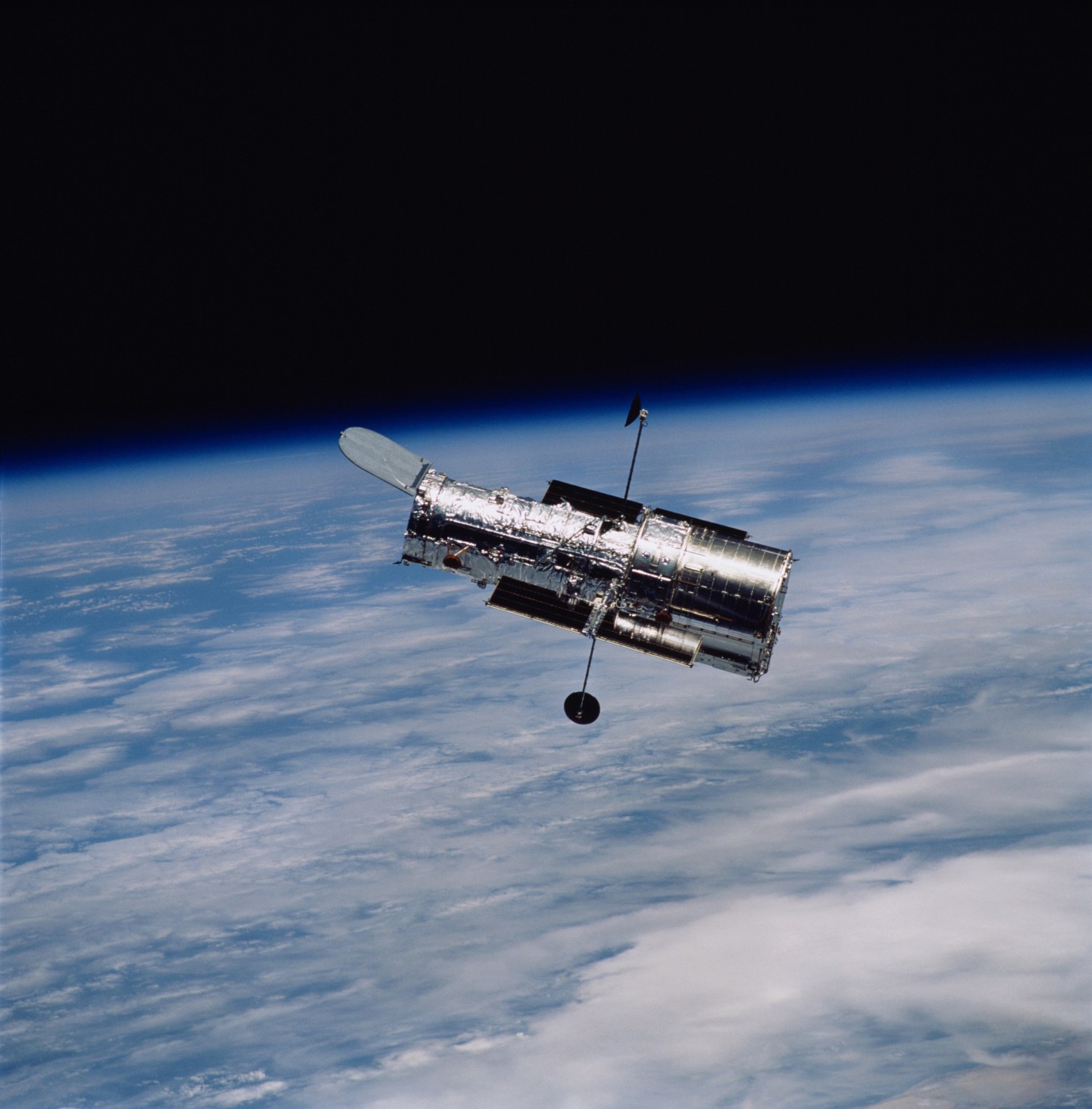
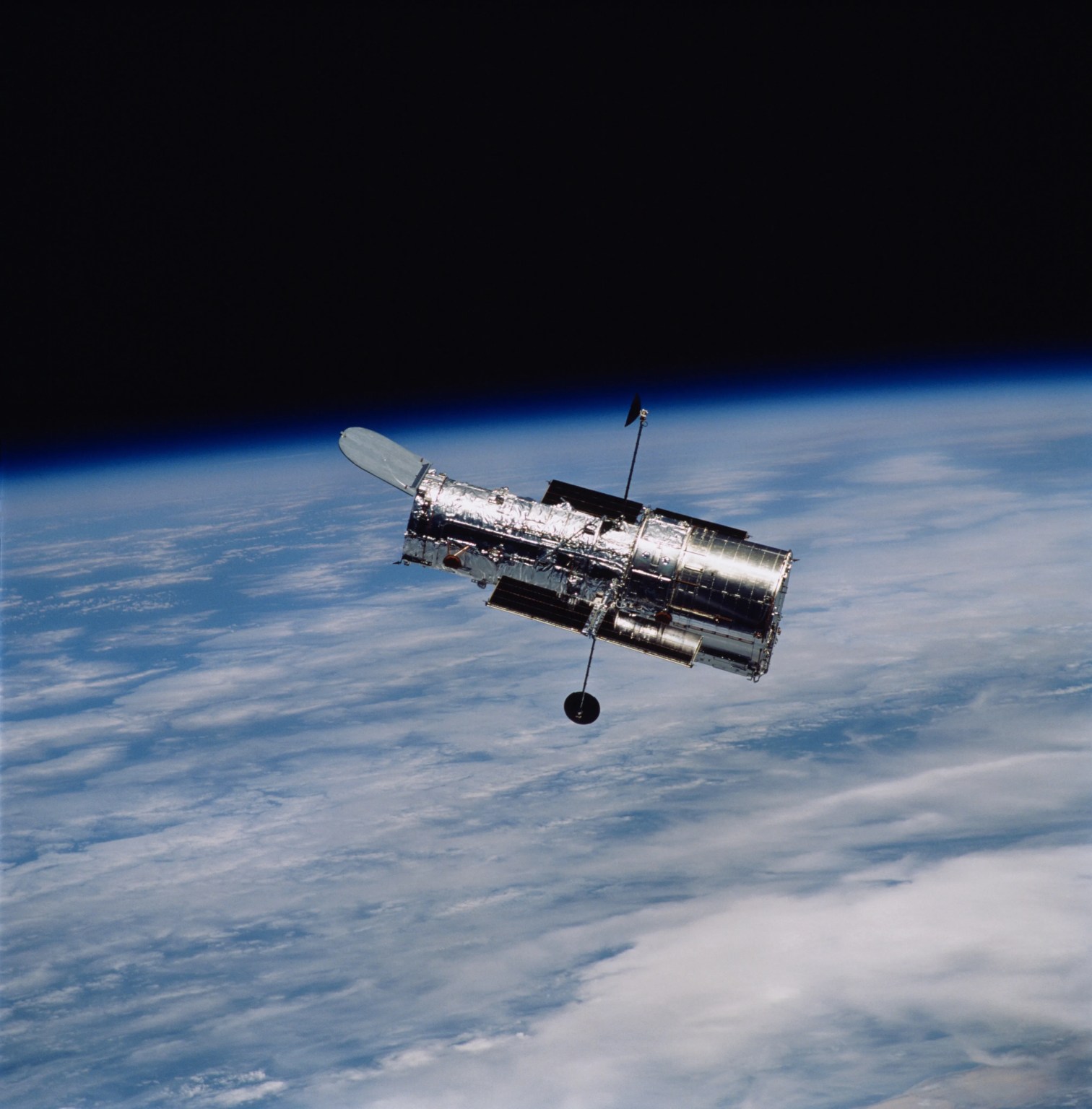
The Hubble Space Telescope is a project of international cooperation between NASA and ESA. NASA’s Goddard Space Flight Center in Greenbelt, Maryland, manages the telescope. The Space Telescope Science Institute (STScI) in Baltimore, Maryland, conducts Hubble and Webb science operations. STScI is operated for NASA by the Association of Universities for Research in Astronomy, in Washington, D.C.

Media Contacts:

Claire Andreoli
NASA’s Goddard Space Flight Center, Greenbelt, MD
claire.andreoli@nasa.gov

Ray Villard
Space Telescope Science Institute, Baltimore, MD

Science Contacts:

Pierre-Alexis Roy
Trottier Institute for Research on Exoplanets at Université de Montréal

Björn Benneke
Trottier Institute for Research on Exoplanets at Université de Montréal

Share

Details

Last Updated
Jan 25, 2024
Editor
Andrea Gianopoulos
Location
Goddard Space Flight Center

Powered by WPeMatico

Get The Details…

NASA Collaborating on European-led Gravitational Wave Observatory in Space

NASA Collaborating on European-led Gravitational Wave Observatory in Space

4 min read

NASA Collaborating on European-led Gravitational Wave Observatory in Space

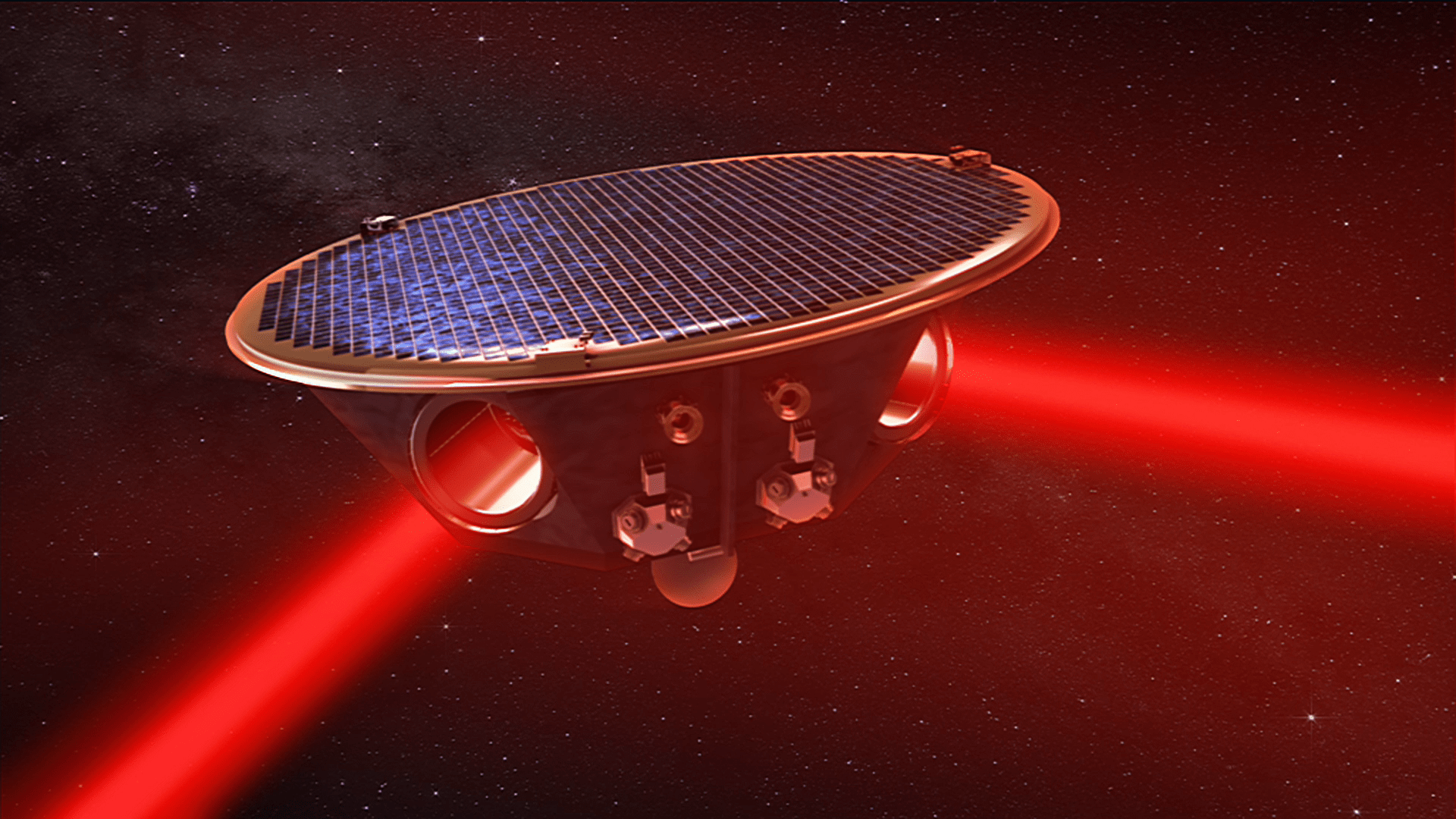
The LISA (Laser Interferometer Space Antenna) mission, led by ESA (European Space Agency) with NASA contributions, will detect gravitational waves in space using three spacecraft, separated by more than a million miles, flying in a triangular formation. Lasers fired between the satellites, shown in this artist’s concept, will measure how gravitational waves alter their relative distances.
AEI/MM/Exozet

The first space-based observatory designed to detect gravitational waves has passed a major review and will proceed to the construction of flight hardware. On Jan. 25, ESA (European Space Agency), announced the formal adoption of LISA, the Laser Interferometer Space Antenna, to its mission lineup, with launch slated for the mid-2030s. ESA leads the mission, with NASA serving as a collaborative partner.

“In 2015, the ground-based LIGO observatory cracked open the window into gravitational waves, disturbances that sweep across space-time, the fabric of our universe,” said Mark Clampin, director of the Astrophysics Division at NASA Headquarters in Washington. “LISA will give us a panoramic view, allowing us to observe a broad range of sources both within our galaxy and far, far beyond it. We’re proud to be part of this international effort to open new avenues to explore the secrets of the universe.”

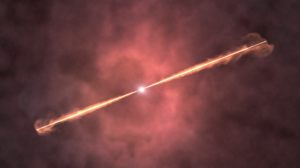
The LISA mission will enable observations of gravitational waves produced by merging supermassive black holes, seen here in a computer simulation. Most big galaxies contain central black holes weighing millions of times the mass of our Sun. When these galaxies collide, eventually their black holes do too. Download high-resolution video from NASA’s Scientific Visualization Studio. Credit: NASA’s Goddard Space Flight Center/Scott Noble; simulation data, d’Ascoli et al. 2018

NASA will provide several key components of LISA’s instrument suite along with science and engineering support. NASA contributions include lasers, telescopes, and devices to reduce disturbances from electromagnetic charges. LISA will use this equipment as it measures precise distance changes, caused by gravitational waves, over millions of miles in space. ESA will provide the spacecraft and oversee the international team during the development and operation of the mission.

Gravitational waves were predicted by Albert Einstein’s general theory of relativity more than a century ago. They are produced by accelerating masses, such as a pair of orbiting black holes. Because these waves remove orbital energy, the distance between the objects gradually shrinks over millions of years, and they ultimately merge.

These ripples in the fabric of space went undetected until 2015, when LIGO, the Laser Interferometer Gravitational-Wave Observatory, funded by the U.S. National Science Foundation, measured gravitational waves from the merger of two black holes. This discovery furthered a new field of science called “multimessenger astronomy” in which gravitational waves could be used in conjunction with the other cosmic “messengers” – light and particles – to observe the universe in new ways.

Along with other ground-based facilities, LIGO has since observed dozens more black hole mergers, as well as mergers of neutron stars and neutron star-black hole systems. So far, the black holes detected through gravitational waves have been relatively small, with masses of tens to perhaps a hundred times that of our Sun. But scientists think that mergers of much more massive black holes were common when the universe was young, and only a space-based observatory could be sensitive to gravitational waves from them.

“LISA is designed to sense low-frequency gravitational waves that instruments on Earth cannot detect,” said Ira Thorpe, the NASA study scientist for the mission at the agency’s Goddard Space Flight Center in Greenbelt, Maryland. “These sources encompass tens of thousands of small binary systems in our own galaxy, as well as massive black holes merging as galaxies collided in the early universe.”

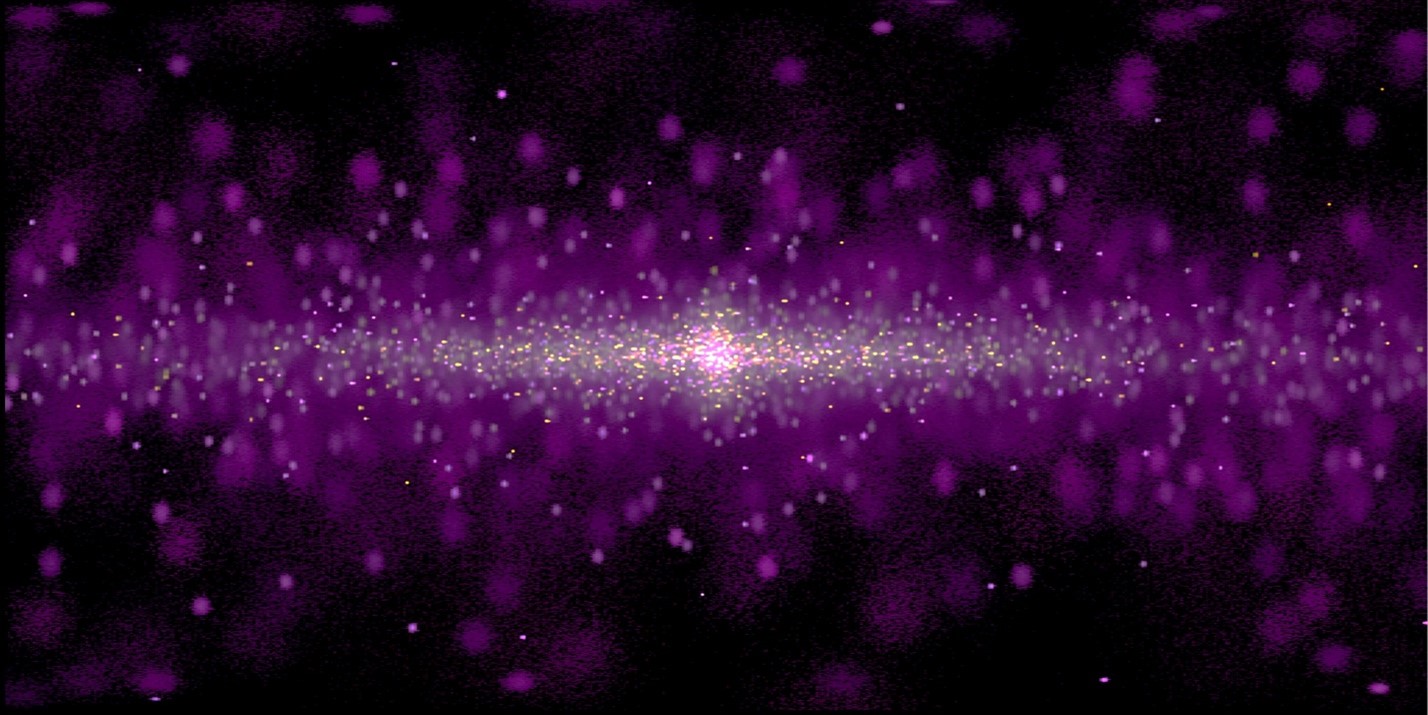
Gravitational waves from a simulated population of compact binary systems in our galaxy were used to construct this synthetic map of the entire sky. Such systems contain white dwarfs, neutron stars, or black holes in tight orbits. Maps like this using real data will be possible once the LISA mission becomes active in the next decade. The center of our Milky Way galaxy lies at the center of this all-sky view, with the galactic plane extending across the middle. Brighter spots indicate sources with stronger gravitational signals and lighter colors indicate those with higher frequencies. Larger colored patches show sources whose positions are less well known.
NASA’s Goddard Space Flight Center

LISA will consist of three spacecraft flying in a vast triangular formation that follows Earth in its orbit around the Sun. Each arm of the triangle stretches 1.6 million miles (2.5 million kilometers). The spacecraft will track internal test masses affected only by gravity. At the same time, they’ll continuously fire lasers to measure their separations to within a span smaller than the size of a helium atom. Gravitational waves from sources throughout the universe will produce oscillations in the lengths of the triangle’s arms, and LISA will capture these changes.

The underlying measurement technology was successfully demonstrated in space with ESA’s LISA Pathfinder mission, which operated between 2015 and 2017 and also included NASA participation. The spacecraft demonstrated the exquisite control and precise laser measurements needed for LISA.

By Francis Reddy
NASA’s Goddard Space Flight Center, Greenbelt, Md.

Media contacts:
Alise Fisher
Headquarters, Washington
(202) 358-2546
alise.m.fisher@nasa.gov

Claire Andreoli
claire.andreoli@nasa.gov

NASA’s Goddard Space Flight Center, Greenbelt, Md.
(301) 286-1940

Powered by WPeMatico

Get The Details…

Shrinking Moon Causing Moonquakes and Faults Near Lunar South Pole

Shrinking Moon Causing Moonquakes and Faults Near Lunar South Pole

4 min read

Preparations for Next Moonwalk Simulations Underway (and Underwater)

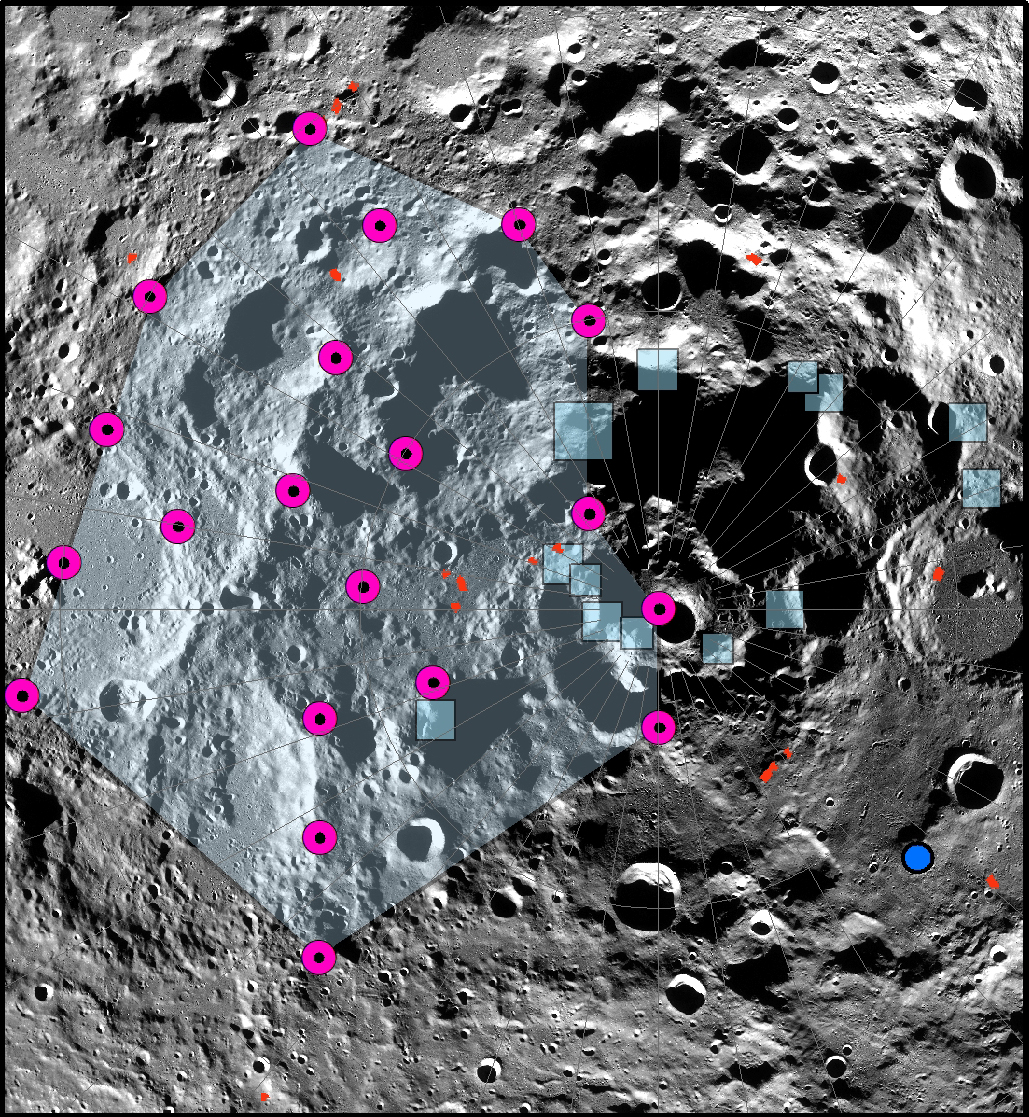
As NASA continues to make progress toward sending astronauts to the lunar South Pole region with its Artemis campaign, data from a NASA-funded study is helping scientists better understand this strategic part of the Moon. The study presents evidence that moonquakes and faults generated as the Moon’s interior gradually cools and shrinks are also found near and within some of the areas the agency identified as candidate landing regions for Artemis III, the first Artemis mission planned to have a crewed lunar landing.

Map of possible moonquakes at lunar south pole.
The epicenter of one of the strongest moonquakes recorded by the Apollo Passive Seismic Experiment was located in the lunar south polar region. However, the exact location of the epicenter could not be accurately determined. A cloud of possible locations (magenta dots and light blue polygon) of the strong shallow moonquake using a relocation algorithm specifically adapted for very sparse seismic networks are distributed near the pole. Blue boxes show locations of proposed Artemis III landing regions. Lobate thrust fault scarps are shown by small red lines. The cloud of epicenter locations encompasses a number of lobate scarps and many of the Artemis III landing regions.
NASA/LROC/ASU/Smithsonian Institution

“Our modeling suggests that shallow moonquakes capable of producing strong ground shaking in the south polar region are possible from slip events on existing faults or the formation of new thrust faults,” said Tom Watters of the Smithsonian Institution, Washington, lead author of a paper on the research published January 25 in the Planetary Science Journal. “The global distribution of young thrust faults, their potential to be active, and the potential to form new thrust faults from ongoing global contraction should be considered when planning the location and stability of permanent outposts on the Moon.”

Image of a lunar fault.
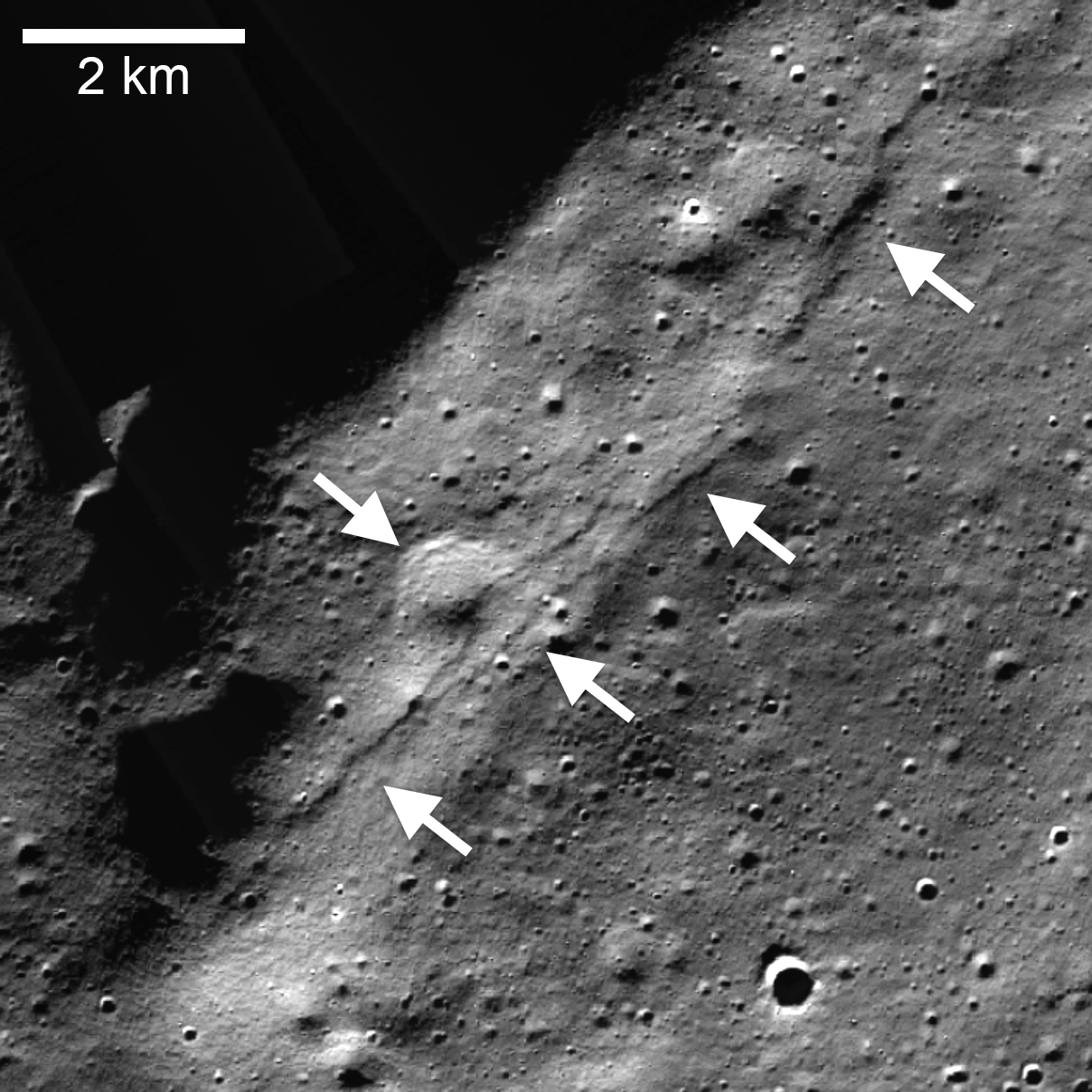
Lunar Reconnaissance Orbiter Camera (LROC), Narrow Angle Camera (NAC) mosaic of the Wiechert cluster of lobate scarps (left pointing arrows) near the lunar south pole. A thrust fault scarp cut across an approximately 1-kilometer (0.6-mile) diameter degraded crater (right pointing arrow).
NASA/LRO/LROC/ASU/Smithsonian Institution

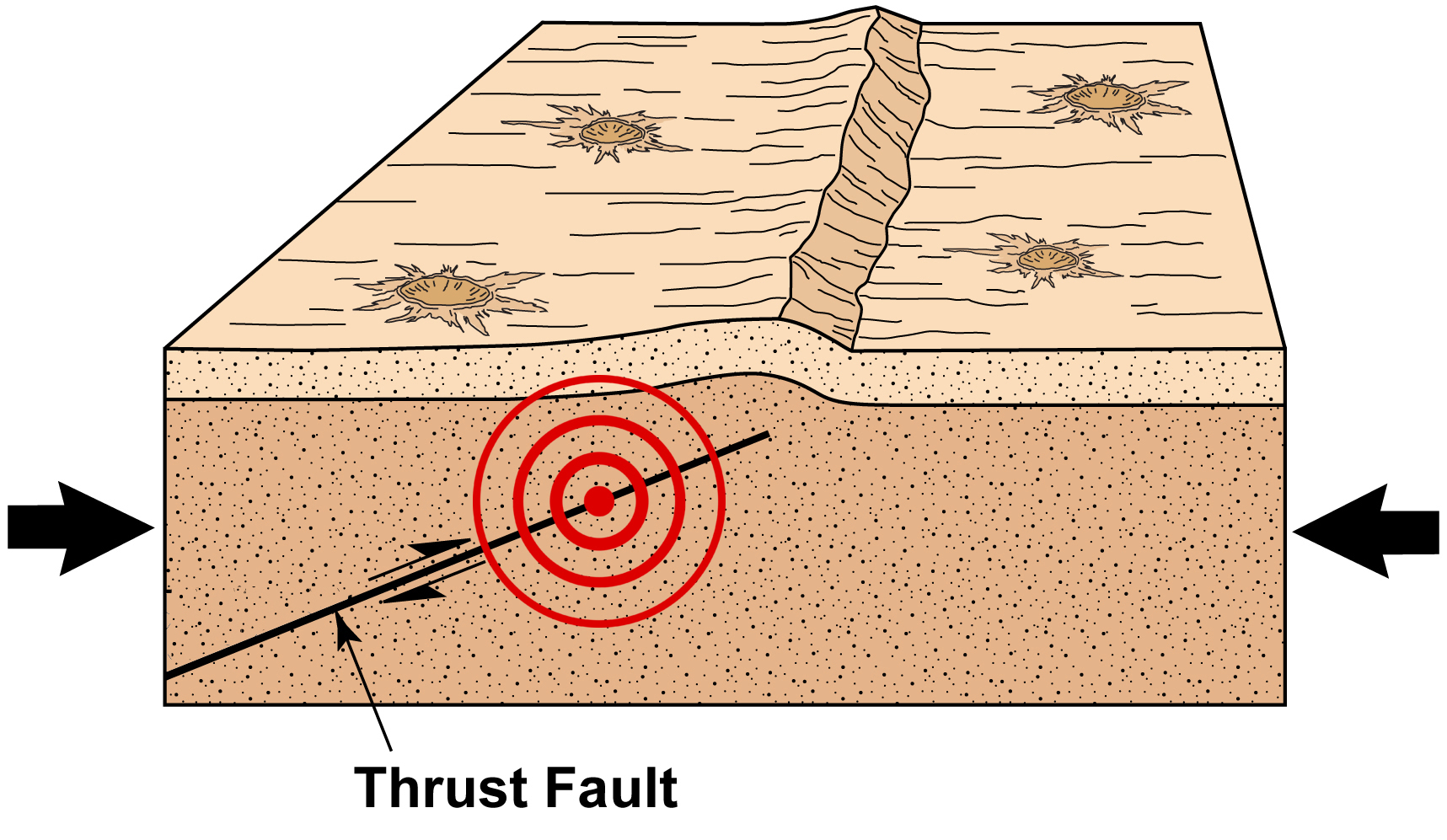
The Lunar Reconnaissance Orbiter Camera onboard NASA’s Lunar Reconnaissance Orbiter (LRO) has detected thousands of relatively small, young thrust faults widely distributed in the lunar crust. The scarps are cliff-like landforms that resemble small stair-steps on the lunar surface. They form where contractional forces break the crust and push or thrust it on one side of the fault up and over the other side. The contraction is caused by cooling of the Moon’s still-hot interior and tidal forces exerted by Earth, resulting in global shrinking.

Diagram of lunar fault formation process.
The lobate scarps are formed when the lunar crust is pushed together as the Moon contracts. This causes the near-surface materials to break forming a thrust fault. The thrust fault carries crustal materials up and sometimes over adjacent crustal materials. Slip events on existing faults or the formation of new thrust faults trigger shallow moonquakes that can cause strong seismic shaking tens of miles (many tens of kilometers) away from the scarp.
Arizona State University/Smithsonian

The formation of the faults is accompanied by seismic activity in the form of shallow-depth moonquakes. Such shallow moonquakes were recorded by the Apollo Passive Seismic Network, a series of seismometers deployed by the Apollo astronauts. The strongest recorded shallow moonquake had an epicenter in the south-polar region. One young thrust-fault scarp, located within the de Gerlache Rim 2, an Artemis III candidate landing region, is modeled in the study and shows that the formation of this fault scarp could have been associated with a moonquake of the recorded magnitude.

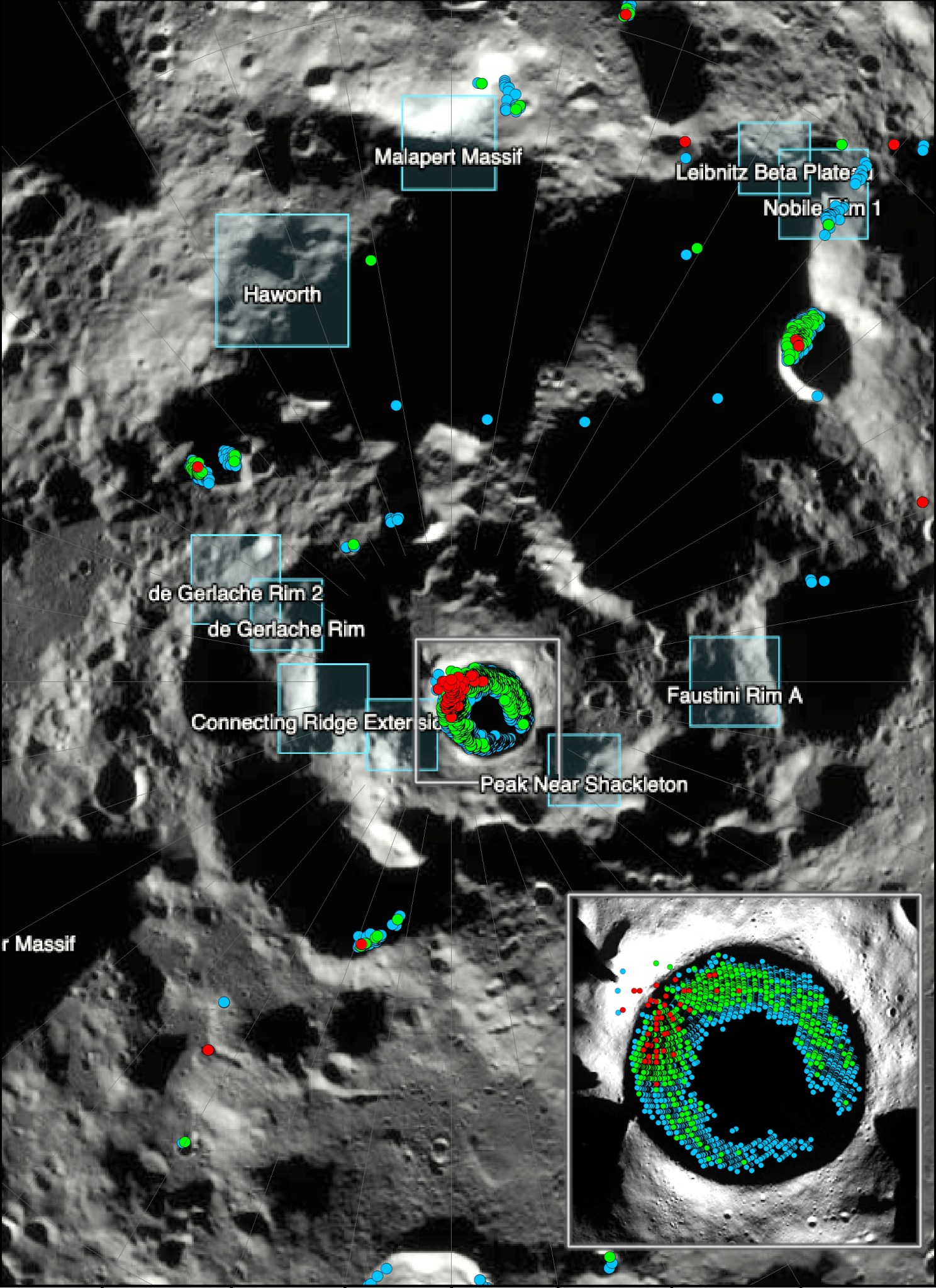
The team also modeled the stability of surface slopes in the lunar south polar region and found that some areas are susceptible to regolith landslides from even light seismic shaking, including areas in some permanently shadowed regions. These areas are of interest due to the resources that might be found there, such as ice.

Map showing areas with landslide potential at lunar south pole.
Image shows predicted areas of surface slope instability in the south polar region. Models are for a one-meter-thick (about 3.3-foot) regolith landslide. Blue dots are areas with the least unstable slopes, green dots are moderately unstable slopes, and red dots are most unstable slopes. Image centered on Shackleton crater and the lunar south pole. Locations of proposed Artemis III landing regions are shown by the blue boxes. The model predicts large portions of the interior walls of Shackleton crater are suspectable to landslides (inset) as well as portions of interior crater walls in the Nobile Rim 1 landing region.
NASA/LROC/ASU/Smithsonian Institution

“To better understand the seismic hazard posed to future human activities on the Moon, we need new seismic data, not just at the South Pole, but globally,” said Renee Weber, a co-author of the paper at NASA’s Marshall Space Flight Center, Huntsville, Alabama. “Missions like the upcoming Farside Seismic Suite will expand upon measurements made during Apollo and add to our knowledge of global seismicity.”

“LRO is committed to acquiring data of the lunar surface to aid scientists in understanding important features such as thrust faults,” said LRO Deputy Project Scientist Maria Banks of NASA’s Goddard Space Flight Center in Greenbelt, Maryland, a co-author of the paper. “This study is a good demonstration of one of the many ways in which LRO data is being used to assist planning for our return to the Moon.”

This research was funded by NASA’s LRO mission, launched on June 18, 2009. LRO is managed by NASA Goddard for the Science Mission Directorate at NASA Headquarters in Washington. With Artemis missions, NASA is exploring the Moon for scientific discovery, technology advancement, and to learn how to live and work on another world as we prepare for human missions to Mars. We will collaborate with commercial and international partners and establish the first long-term presence on the Moon. NASA will land the first woman and first person of color on the Moon, using innovative technologies to explore more of the lunar surface than ever before.

Share

Details

Last Updated

Jan 25, 2024

Editor
William Steigerwald
Contact
William Steigerwald
Location
Goddard Space Flight Center

Related Terms

Powered by WPeMatico
Get The Details…
William Steigerwald

40 Years Ago: President Reagan Directs NASA to Build a Space Station

40 Years Ago: President Reagan Directs NASA to Build a Space Station

On Jan. 25, 1984, President Ronald W. Reagan directed NASA to build a permanently inhabited Earth orbiting space station within a decade. The President’s announcement turned years of NASA studies into a real program. As originally envisioned, the modular space station would use the space shuttle for assembly and serve as a microgravity research laboratory and observation platform, a servicing station for satellites, and a staging ground for exploration missions. The President urged NASA to invite its international partners to participate in the program. The complexity and cost of such an outpost resulted in multiple redesigns, with the initial Space Station Freedom ultimately evolving into the International Space Station. On-orbit assembly began in 1998, with permanent human habitation beginning two years later.

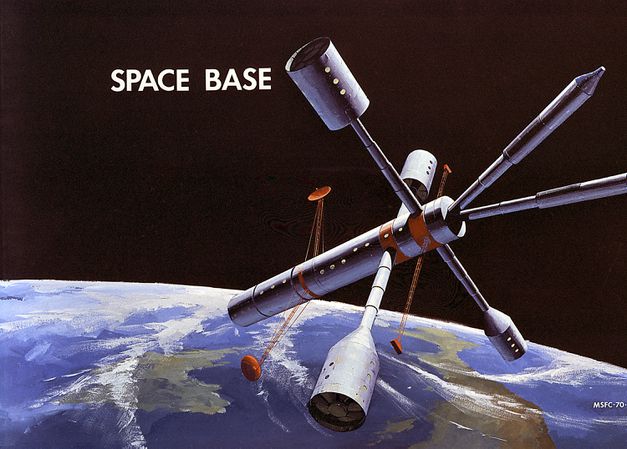
Wernher von Braun demonstrates a model of his wheel-shaped space station in 1956 Illustration of one concept of a space base as proposed by the Space Task Group in 1969 The Skylab space station, photographed by the third and final crew after its departure in 1974
Left: Wernher von Braun demonstrates a model of his wheel-shaped space station in 1956. Middle: Illustration of one concept of a space base as proposed by the Space Task Group in 1969. Right: The Skylab space station, photographed by the third and final crew after its departure in 1974.

As early as the 1950s, American space pioneer Wernher von Braun already had ideas for large orbiting space stations. He envisioned a wheel-shaped facility, slowly rotating to provide artificial gravity to its several thousand occupants. While such an orbital outpost exceeded available technologies for the foreseeable future, shortly after its founding in 1958, NASA began considering more modest space stations. With President John F. Kennedy’s 1961 pronouncement of a Moon landing as a national goal, plans for space stations took a back seat until after NASA achieved that objective. The Space Task Group (STG) that President Richard M. Nixon commissioned in 1969 to assess post-Apollo space objectives proposed an Earth-orbiting space station for the mid-1970s followed later by a much larger space base among several other ambitious projects. Economic realities of the time precluded such lofty goals; President Nixon approved the space shuttle in 1972, the only STG-recommended project to receive funding. Approval of an American space station awaited a later president. In the meantime, the highly successful experimental Skylab space station, based on Apollo hardware, housed three successive crews of three astronauts each, for 28, 59, and 84 days, in 1973 and 1974.

President Ronald W. Reagan during his 1984 State of the Union address to Congress Space Station Power Tower reference configuration (1984)
Left: President Ronald W. Reagan during his 1984 State of the Union address to Congress. Right: Space Station Power Tower reference configuration (1984).

During his Jan. 25, 1984, State of the Union address to a joint session of Congress, President Reagan directed NASA to develop a “permanently manned space station and to do it within a decade.” His comments reflected his view of American pre-eminence in space, but also explicitly stated that the United States would invite other nations to join in the project. President Reagan spelled out the benefits to be derived from such an orbiting platform:

Our progress in space—taking giant steps for all mankind—is a tribute to American teamwork and excellence. Our finest minds in government, industry, and academia have all pulled together. And we can be proud to say: We are first; we are the best; and we are so because we’re free.  America has always been greatest when we dared to be great. We can reach for greatness again. We can follow our dreams to distant stars, living and working in space for peaceful, economic, and scientific gain. … A space station will permit quantum leaps in our research in science, communications, in metals, and in lifesaving medicines which could be manufactured only in space. We want our friends to help us meet these challenges and share in their benefits. NASA will invite other countries to participate so we can strengthen peace, build prosperity, and expand freedom for all who share our goals.

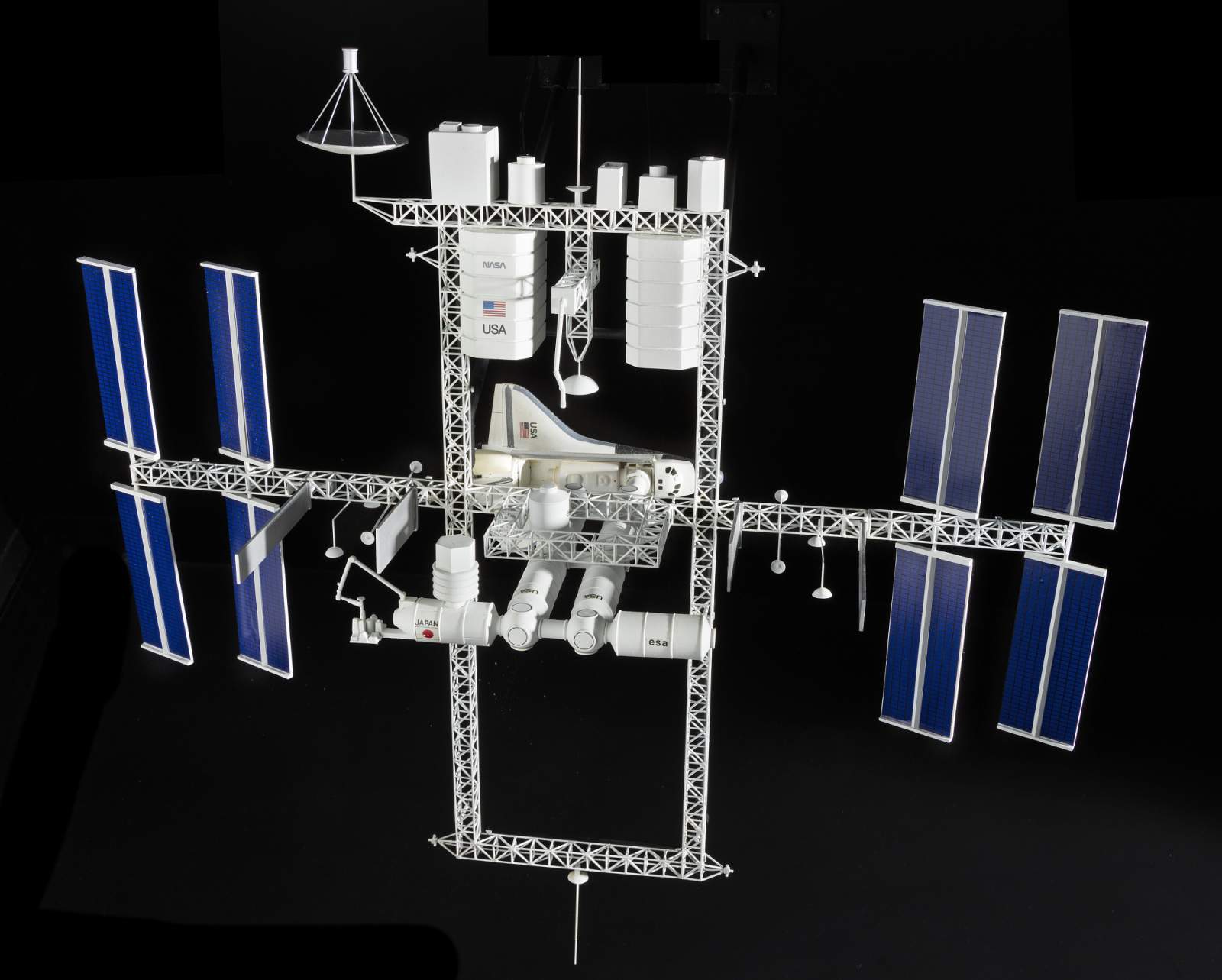
In response to President Reagan’s direction, NASA Administrator James M. Beggs said, “The space program is alive and well, and we have a new initiative. … The space station will give us a permanent presence in low Earth orbit … and will be the cornerstone of our activities in space through the end of the century and beyond.” He added that the President’s initiatives, “are the right ones for the right time in our history.” In the optimism that followed President Reagan’s announcement, NASA laid out an ambitious plan for a space station composed of three separate orbital platforms to conduct microgravity research as well as Earth and celestial observations, to serve as a transportation and servicing node for space vehicles and satellites, and to stage missions for deep-space exploration. NASA signed agreements with the European Space Agency (ESA) and Japan’s National Space Development Agency (NASDA), now the Japan Aerospace Exploration Agency (JAXA), to provide their own research modules. Canada agreed to provide a robotic servicing system. In April 1985, NASA established a Space Station Program Office at the Johnson Space Center in Houston. Assessments of the original “Dual Keel” design determined that it was overly complex to build and cost estimates for the ambitious space station continued to rise. Over the next several years, engineers and managers redesigned the facility and simplified it to a single-truss configuration with the pressurized modules clustered near the core and the solar arrays for power generation at the ends of the truss. In July 1988, President Reagan announced that the orbital facility would be called Space Station Freedom, and two months later the Unites States, Japan, Canada and nine ESA member states signed an Inter-Governmental Agreement (IGA) for its construction and utilization. The redesigned facility would focus on microgravity research.

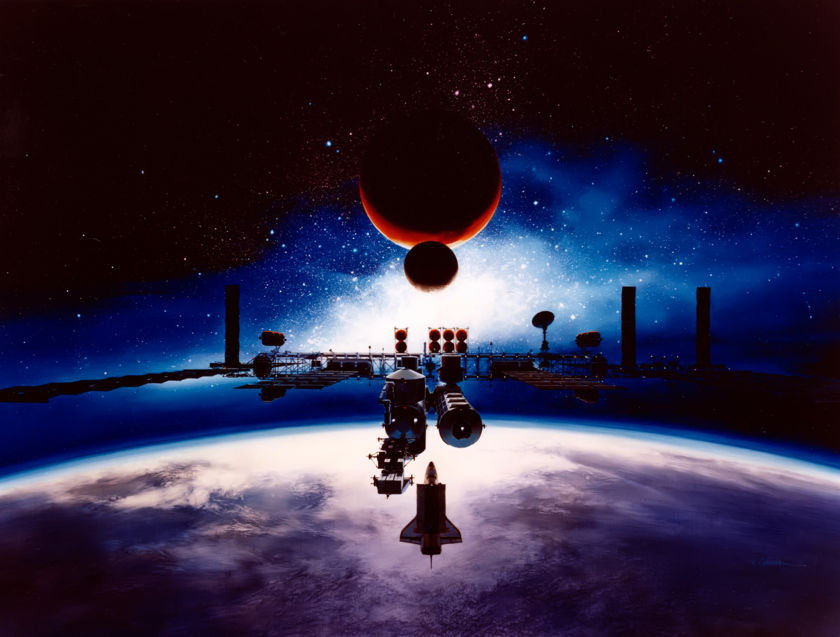
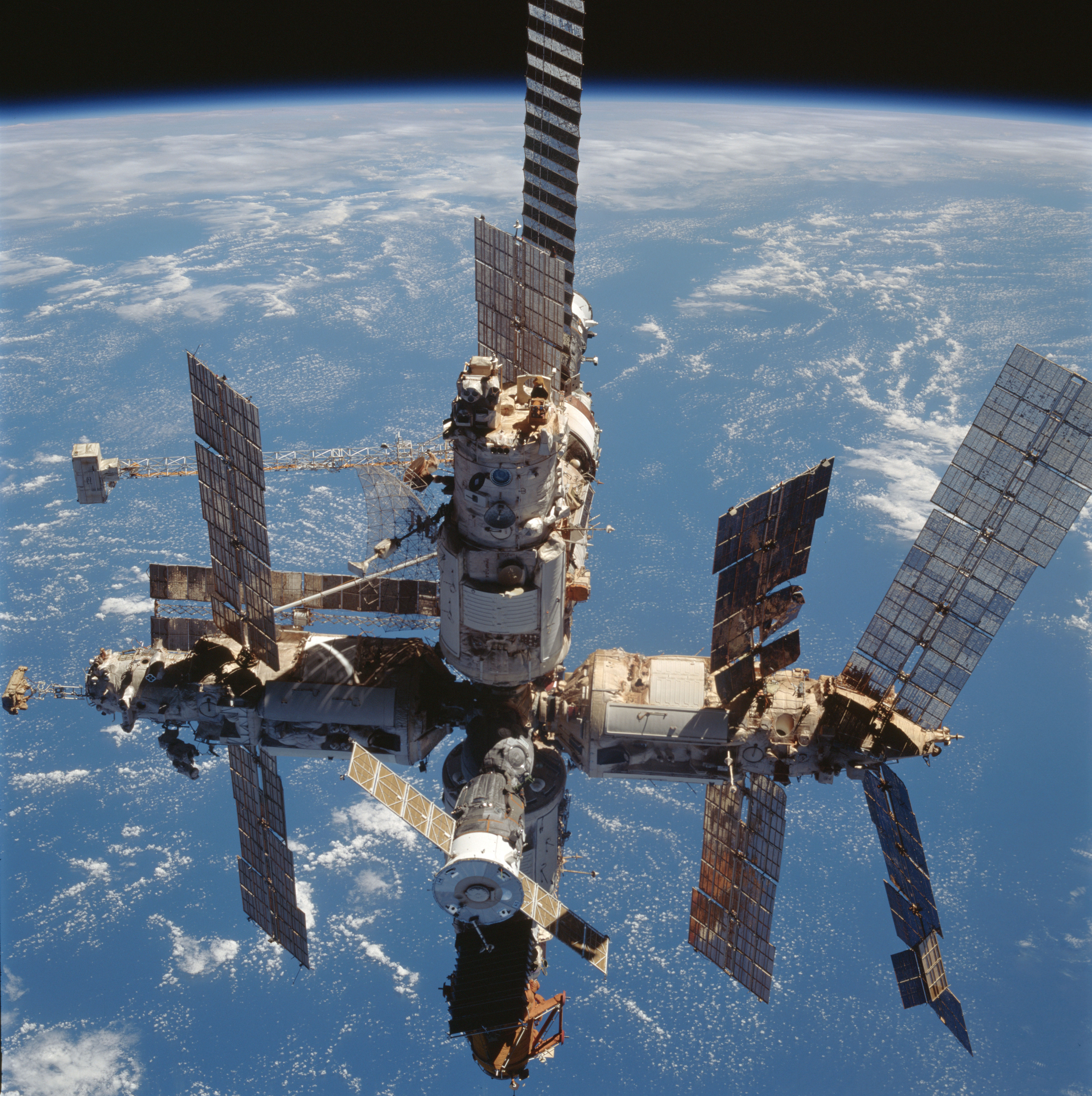
Model of the Space Station showing the proposed dual keel configuration (1985) Illustration of Space Station Freedom by Alan Chinchar (1991) Russian space station Mir photographed from Space Shuttle Discovery during the STS-91 mission (1998)
Left: Model of the Space Station showing the proposed dual keel configuration (1985). Middle: Illustration of Space Station Freedom by Alan Chinchar (1991). Right: Russian space station Mir photographed from Space Shuttle Discovery during the STS-91 mission (1998).

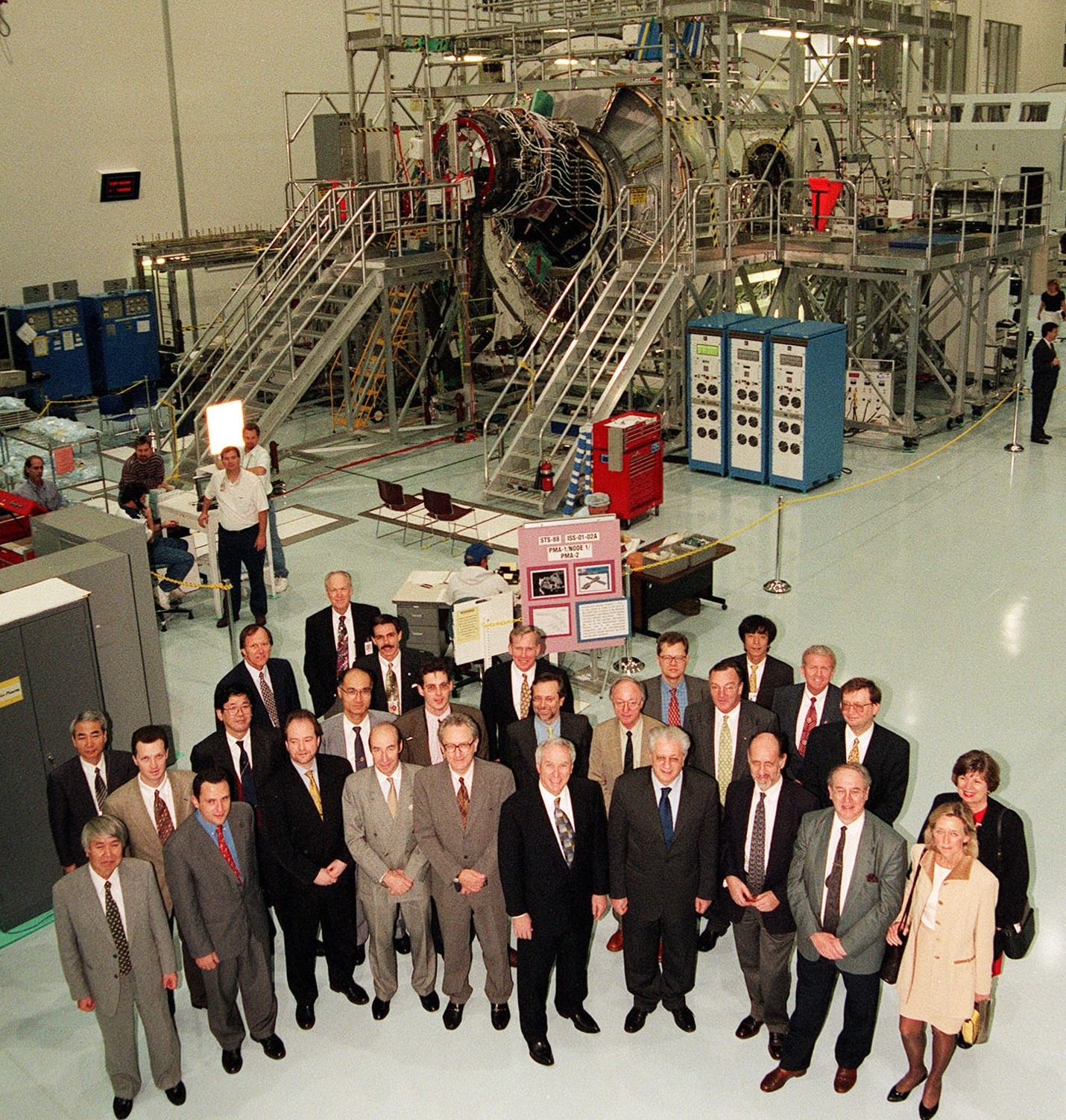
Space Station Freedom underwent several more redesigns to keep it cost-effective. In the meantime, the Soviet Union operated its Mir space station beginning with the launch of its first module in 1986. Over the years, the Soviets added several elements to increase the facility’s research and habitation capabilities. With the collapse of the Soviet Union in 1991, the future of Mir and its planned Mir-2 successor faced uncertainty in the new cash-strapped Russia. To take advantage of its extensive experience with operating space stations and keeping crews on orbit for up to a year, in 1993 President William J. “Bill” Clinton invited Russia to join the space station program as a full partner, essentially adding modules planned for Mir-2 to U.S., European, Japanese, and Canadian elements from Space Station Freedom. The new outpost would be called the International Space Station. In preparation for space station operations, between 1995 and 1998, seven American astronauts joined Russian cosmonauts as long-duration residents aboard Mir, with space shuttles providing transportation and resupply logistics. On Jan. 29, 1998, representatives from the United States, Russia, Japan, Canada and 11 participating ESA countries met at the U.S. State Department in Washington, D.C., and signed an updated IGA on Space Station Cooperation. The new IGA established the overall cooperative framework for the design, development, operation, and utilization of the space station and addressed several legal topics, including civil and criminal jurisdiction, intellectual property, and the operational responsibilities of the partners. 

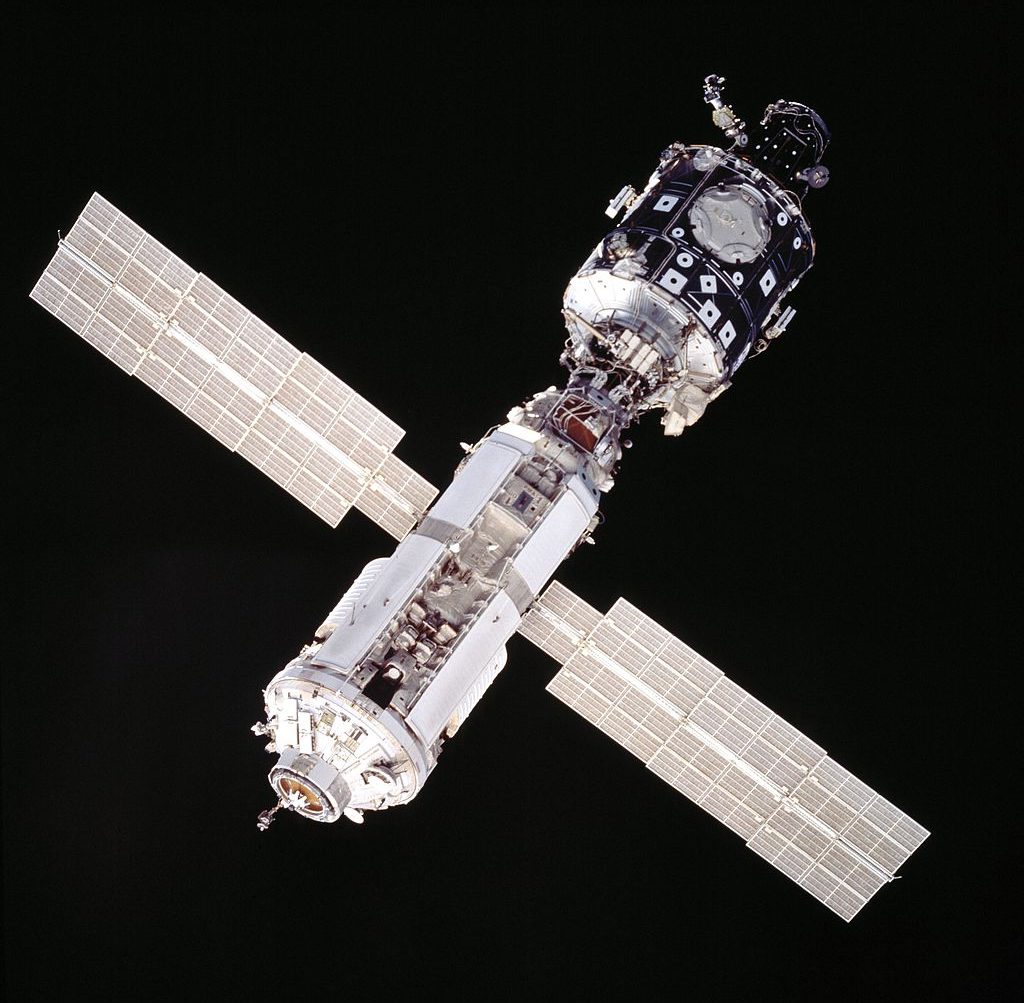
Signatories of the 1998 Intergovernmental Agreement visit the Space Station Processing Facility at NASA’s Kennedy Space Center in Florida, and pose in front of the Unity Node 1 module being prepared for launch Zarya, left, and Unity, the first two modules of the nascent space station The Expedition 1 crew of Yuri P. Gidzenko of the Russian Space Agency (RSA), now Roscosmos, William M. Shepherd of NASA, and Sergei K. Krikalev of RSA
Left: Signatories of the 1998 Intergovernmental Agreement visit the Space Station Processing Facility at NASA’s Kennedy Space Center in Florida, and pose in front of the Unity Node 1 module being prepared for launch. Middle: Zarya, left, and Unity, the first two modules of the nascent space station. Right: The Expedition 1 crew of Yuri P. Gidzenko of the Russian Space Agency (RSA), now Roscosmos, William M. Shepherd of NASA, and Sergei K. Krikalev of RSA.

Ten months after the signing of the 1998 IGA, on-orbit construction of the space station began during the STS-88 mission, with the joining of the first two elements, the Zarya and Unity modules. The first expedition crew of NASA astronaut William M. Shepherd and Russian Space Agency, now Roscosmos, cosmonauts Yuri P. Gidzenko and Sergei K. Krikalev arrived to take up residence aboard the station on Nov. 2, 2000. More than 23 years later, multinational crews continue to live and work aboard a much enlarged and permanently inhabited space station, a unique microgravity laboratory for conducting research in a wide variety of scientific disciplines and a testbed for future human exploration programs.

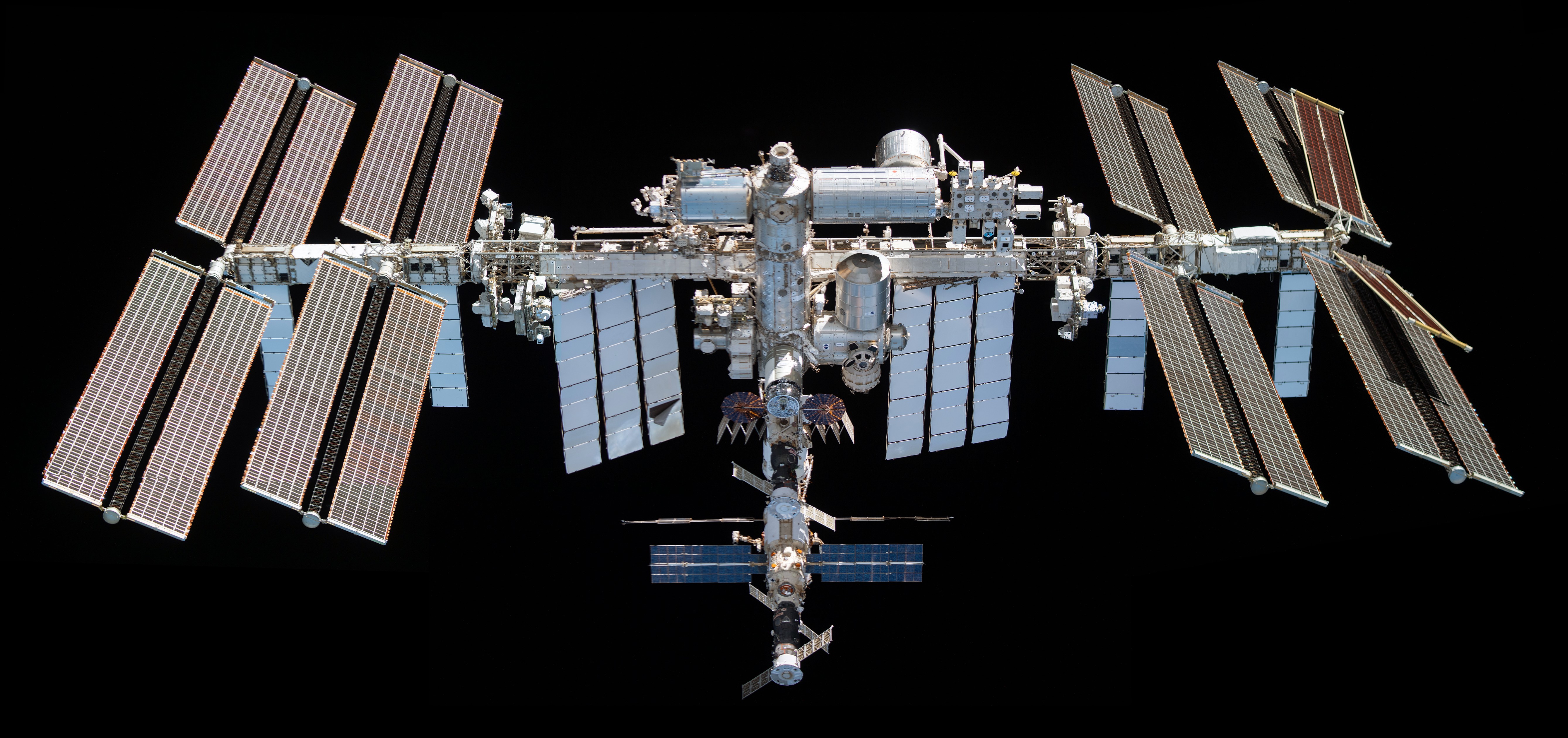
The International Space Station as it appeared in 2021
The International Space Station as it appeared in 2021.

Powered by WPeMatico
Get The Details…
Kelli Mars

NASA Sets Coverage for Northrop Grumman Cargo Space Station Mission

NASA Sets Coverage for Northrop Grumman Cargo Space Station Mission

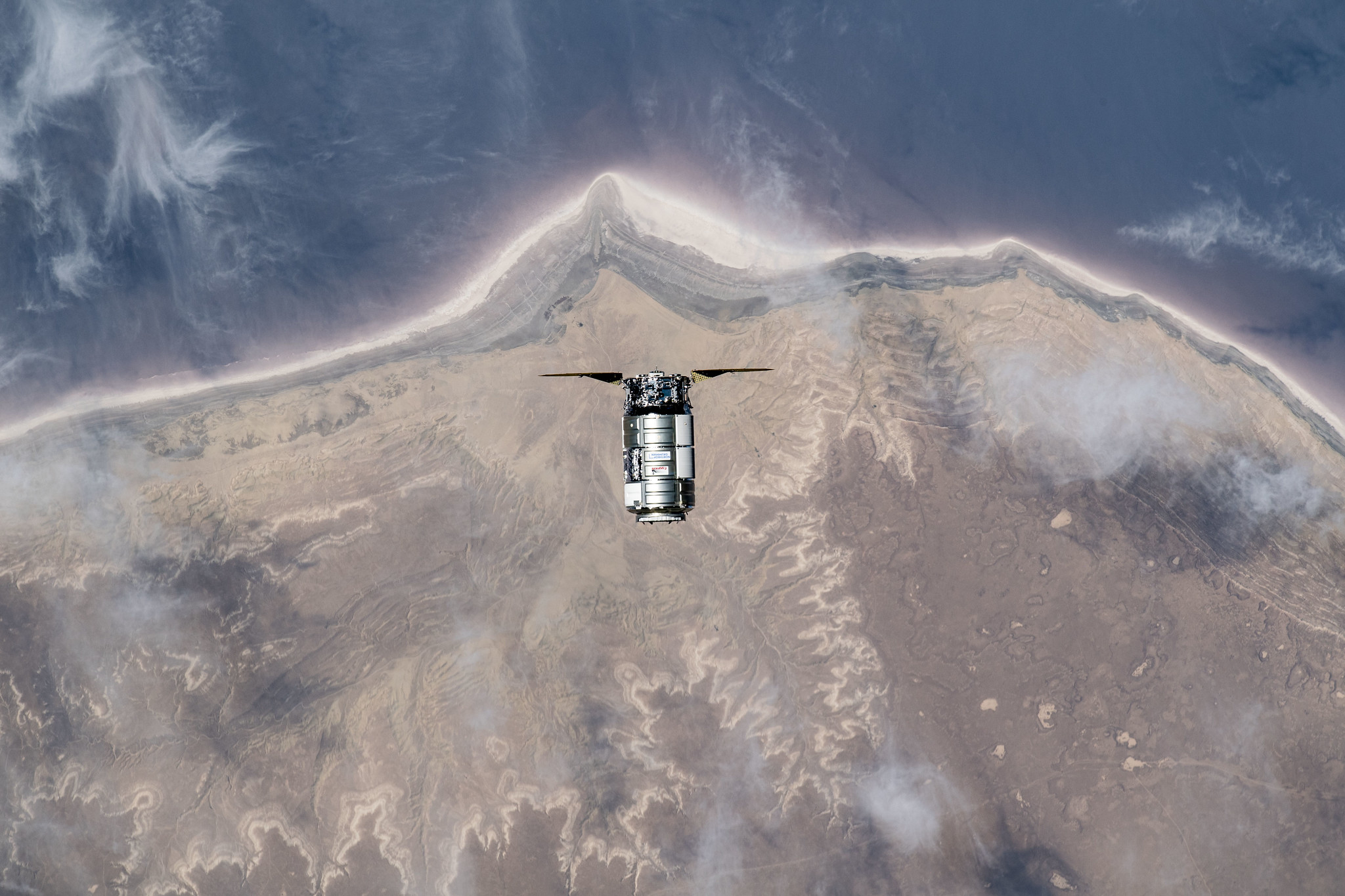
Northrop Grumman’s Cygnus cargo craft is pictured from the International Space Station as it approaches while orbiting 261 miles above the coast of the Garabogazköl Basin in Turkmenistan.
NASA

NASA, Northrop Grumman, and SpaceX are targeting 12:29 p.m. EST on Monday, Jan. 29, for the next launch to deliver science investigations, supplies, and equipment to the International Space Station for the agency and its partners. This launch is the 20th Northrop Grumman commercial resupply services mission to the orbital laboratory for the agency.

Live launch coverage will begin at 12:15 p.m. and air on NASA+, NASA Television, the NASA app, YouTube, and on the agency’s website, with prelaunch events starting Friday, Jan. 26. Learn how to stream NASA TV through a variety of platforms.

Filled with more than 8,200 pounds of supplies, the Cygnus cargo spacecraft, carried on  the SpaceX Falcon 9 rocket, will launch from Space Launch Complex 40 at Cape Canaveral Space Force Station in Florida. It will arrive at the space station Wednesday, Jan. 31.

NASA coverage of rendezvous and capture will begin at 2 a.m., followed by installation coverage at 5 a.m. NASA astronaut Jasmin Moghbeli will capture Cygnus using the station’s robotic arm, and NASA astronaut Loral O’Hara will act as backup. After capture, the spacecraft will be installed on the Unity module’s Earth-facing port.

Highlights of space station research facilitated by delivery aboard this Cygnus are:

Media interested in speaking to a subject matter expert about science aboard, should  contact Sandra Jones at sandra.p.jones@nasa.gov.

The Cygnus spacecraft is scheduled to remain at the space station until May when it will depart the orbiting laboratory at which point it will harmlessly burn up in the Earth’s atmosphere. This spacecraft is named the S.S. Patricia “Patty” Hilliard Robertson after the former NASA astronaut.

NASA coverage of the mission is as follows (all times Eastern and subject to change based on real-time operations):

Friday, Jan. 26:

1 p.m. – The International Space Station National Lab will host a science webinar with the following participants:

  • Lisa Carnell, director, NASA’s Biological and Physical Sciences Division
  • Meg Everett, deputy scientist, NASA’s International Space Station Program
  • Shane Farritor, co-founder and chief scientific officer, Virtual Incision Corporation
  • Mark Fernandez, principal investigator of Spaceborne Computer-2, Hewlett Packard Enterprise
  • Mary Murphy, director of programs, Nanoracks
  • Michael Roberts, chief scientific officer, International Space Station National Lab
  • Nicole Wagner, chief executive officer, LambdaVision
  • Abba Zubair, medical director, Mayo Clinic

Media must register for the science webinar by 12 p.m., Jan. 26, at:

https://bit.ly/48W97IW

6 p.m. – Prelaunch media teleconference (no earlier than one hour after completion of the Launch Readiness Review) with the following participants:

  • Dina Contella, operations integration manager, NASA’s International Space Station Program
  • Meghan Everett, deputy program scientist, NASA’s International Space Station Program
  • William Gerstenmaier, vice president, Build and Flight Reliability, SpaceX
  • Cyrus Dhalla, vice president and general manager, tactical space systems, Northrop Grumman
  • Arlena Moses, launch weather officer, Cape Canaveral Space Force Station’s 45th Weather Squadron

Media who wish to participate by phone must request dial-in information by 4 p.m. Jan. 26, by emailing Kennedy’s newsroom at ksc-media-accreditat@mail.nasa.gov.

Monday, Jan. 29:

  • 12:15 p.m. – Launch coverage begins
  • 12:29 p.m. – Launch

Wednesday, Jan. 31:

  • 2 a.m. – Rendezvous coverage begins
  • 3:35 a.m. – Capture of Cygnus with the space station’s robotic arm
  • 5 a.m. – Cygnus installation operations coverage

NASA Television launch coverage
Live coverage of the launch on NASA Television will begin at 12:15 p.m., Jan. 29. For downlink information, schedules, and links to streaming video, visit: https://nasa.gov/nasatv.

Audio of the news teleconference and launch coverage will not be carried on the NASA “V” circuits. Launch coverage without NASA TV commentary via a tech feed will not be available for this launch.

NASA website launch coverage
Launch day coverage of the mission will be available on the NASA website. Coverage will include live streaming and blog updates beginning no earlier than 12:15 p.m., Monday, Jan. 29, as the countdown milestones occur. On-demand streaming video on NASA+ and photos of the launch will be available shortly after liftoff. For questions about countdown coverage, contact the NASA Kennedy newsroom at 321-867-2468. Follow countdown coverage on our International Space Station blog for updates.

Attend launch virtually

Members of the public can register to attend the launch virtually. Virtual guests will have access to curated resources, schedule changes, and mission-specific information straight to your inbox. Following each activity, virtual guests are sent a mission-specific collectable stamp for their virtual guest passport.

Watch, engage on social media
Let people know you’re watching the mission on X, Facebook, and Instagram by following and tagging these accounts:

X: @NASA, @NASAKennedy, @NASASocial, @Space_Station, @ISS_Research, @ISS_CASIS

Facebook: NASA, NASAKennedy, ISS, ISS National Lab

Instagram: @NASA, @NASAKennedy, @ISS, @ISSNationalLab

Para obtener información sobre cobertura en español en el Centro Espacial Kennedy o si desea solicitar entrevistas en español, comuníquese con Antonia Jaramillo o Messod Bendayan a: antonia.jaramillobotero@nasa.gov o messod.c.bendayan@nasa.gov.

Learn more about the commercial resupply mission at: https://www.nasa.gov/mission/nasas-northrop-grumman-crs-20/.

-end-

Josh Finch / Claire O’Shea
Headquarters, Washington
202-358-1100
joshua.a.finch@nasa.gov / claire.a.o’shea@nasa.gov

Stephanie Plucinsky / Steven Siceloff
Kennedy Space Center, Fla.
321-876-2468
stephanie.n.plucinsky@nasa.gov / steven.p.siceloff@nasa.gov

Sandra Jones
Johnson Space Center, Houston
281-483-5111
sandra.p.jones@nasa.gov

Ellen Klicka
Northrop Grumman, Cygnus
703-402-4404
ellen.klicka@ngc.com 

Share

Details

Last Updated

Jan 24, 2024

Editor
Jennifer M. Dooren

Powered by WPeMatico
Get The Details…
Roxana Bardan