Map the Earth’s Magnetic Shield with the Space Umbrella Project

Map the Earth’s Magnetic Shield with the Space Umbrella Project

2 min read

Map the Earth’s Magnetic Shield with the Space Umbrella Project

A stream of charged particles known as the solar wind flows from the Sun toward Earth. Here, it meets the Earth’s magnetic fields, which shield our planet like a giant umbrella. The Space Umbrella project needs your help investigating this dynamic region, where NASA’s Magnetosphere Multiscale (MMS) mission has been collecting data since 2015. The MMS mission investigates how the Sun and Earth’s magnetic fields connect and disconnect, explosively transferring energy from one to the other in a process that is important to the Sun, other planets, and everywhere in the universe.
With the Space Umbrella project, you will help identify when the MMS spacecraft has observed the strongest interactions between the Earth’s magnetosphere and the solar wind. While these interactions can result in beautiful auroras, they also release energy that could disrupt GPS and communications systems and endanger astronauts. Your work will also help scientists better understand solar storms. Understanding these solar storms can contribute to keeping our astronauts and technology safe.
To get started, visit the Space Umbrella project website and complete the tutorial. The tutorial will teach you everything you need to know, including how to tell when the satellite is inside Earth’s magnetic field and when the magnetosphere is interacting with the Sun’s particles. Everyone is welcome to participate — no prior experience needed!

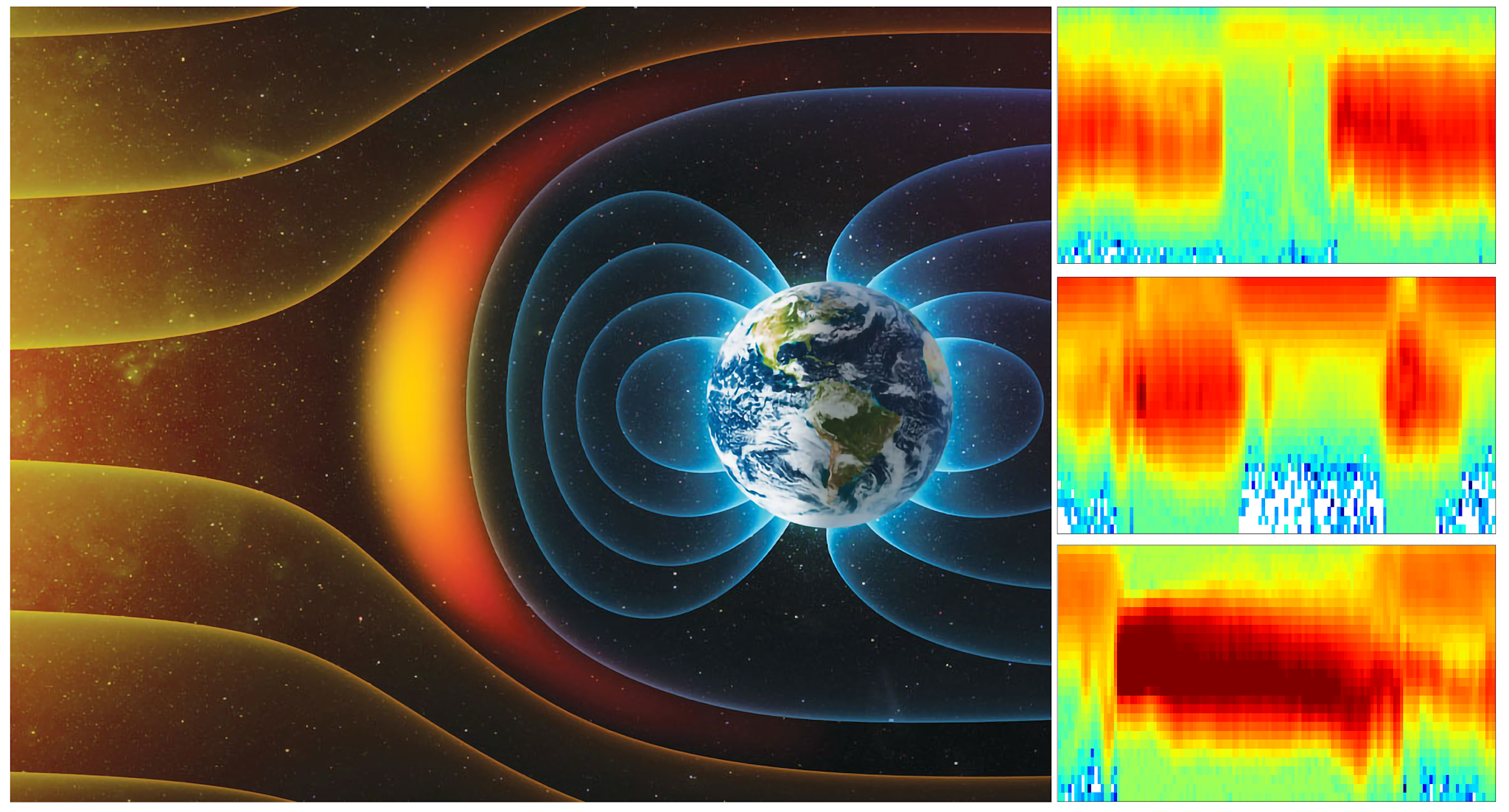
A combined image of Earth’s magnetic field and spacecraft data. On the left, a cartoon shows Earth’s magnetic field as blue lines arcing away from and then returning to the planet. The Sun’s charged particles are depicted as yellow lines running from the Sun towards Earth, then deflecting around the Earth’s magnetosphere, which is shown as an orange arc positioned between the Earth and the Sun. On the right are three example MMS data images such as those volunteers are asked to classify.
Left: An artist’s drawing of Earth’s magnetic field (blue lines) interacting with the Sun’s charged particles (yellow lines). The Earth’s magnetosphere (orange crescent) is created by Earth’s magnetic field. It deflects those particles like an umbrella. Right: NASA MMS mission observations like those volunteers would see while participating in the Space Umbrella project. 
NASA/Johns Hopkins Applied Physics Laboratory

Share

Details

Last Updated
Feb 19, 2026

Powered by WPeMatico

Get The Details…

Small But Mighty Lab Device Could Transform NASA Research

Small But Mighty Lab Device Could Transform NASA Research

739U8327.NEF
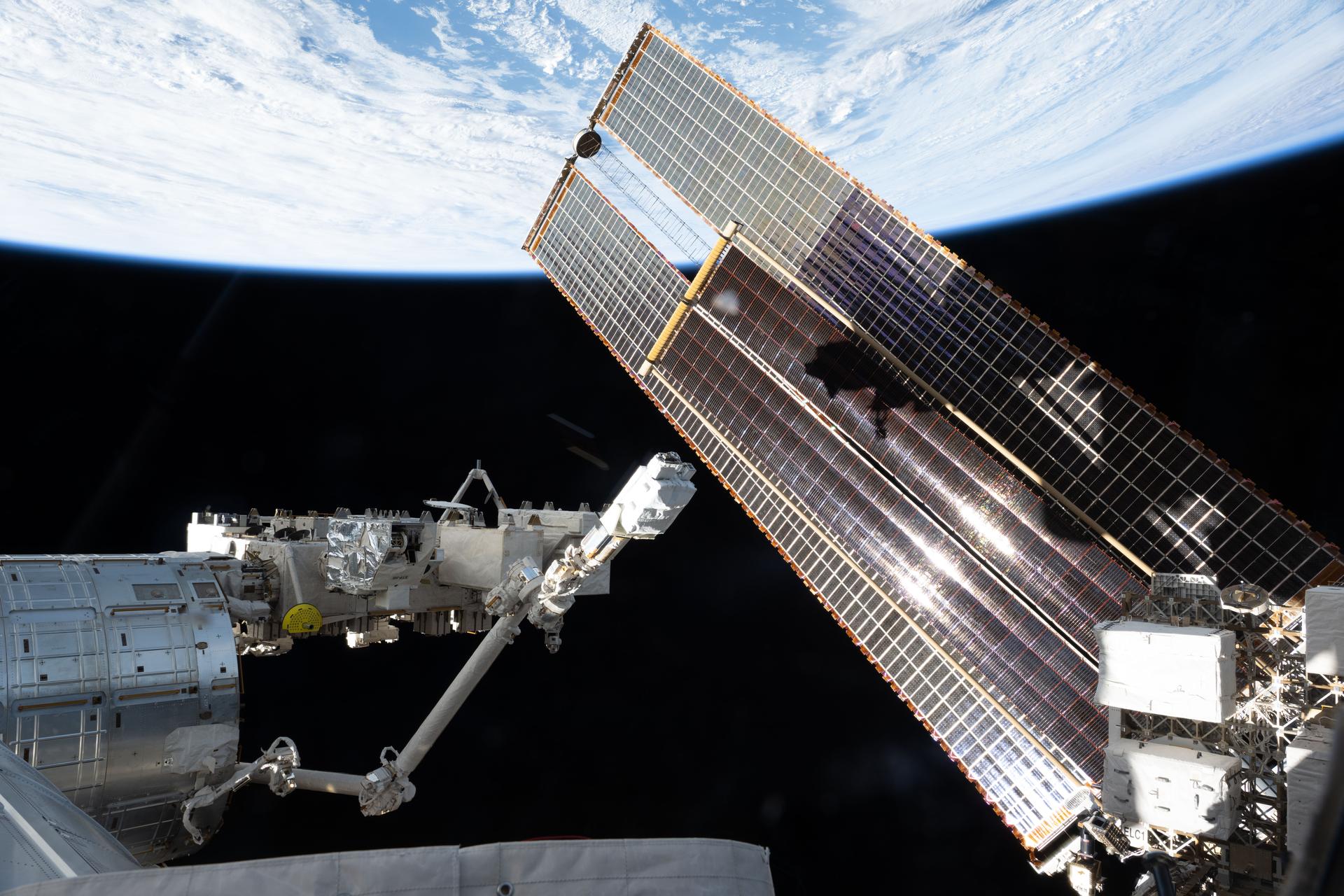
The International Space Station orbits above the Atlantic Ocean off the coast of Portugal.

A small but mighty piece of lab equipment, about the size of a cellphone, has arrived at the International Space Station after launching with NASA’s SpaceX Crew-12 mission. NASA aims to use the off-the-shelf device, called a microplate reader, to conduct vital biological research in space and get real-time access to data.

Demonstrations like this are part of NASA’s Commercially Enabled Rapid Space Science (CERISS) initiative, which partners with industry to develop transformative research capabilities and increase the pace and productivity of space science. NASA’s Biological and Physical Sciences Division is leading the demonstration in collaboration with the agency’s International Space Station Program.

Potential to speed up access to research results

The immediate benefit of using a microplate reader for space science is speed. Scientists can get data as soon as testing is complete, rather than waiting for samples to be stored, returned to Earth, and analyzed in ground labs. In-situ analysis like this — testing done on-site rather than after sample return — could reduce the delays, complications, and costs of bringing materials back to Earth.

Traditional microplate readers on the ground are typically much larger — often bigger than a microwave — but NASA’s tests will use a version that is not much larger than a cellphone.

For now, the microplate reader device requires a trained astronaut to run tests. But proving commercial lab equipment can work in low Earth orbit could open doors for future automation and even more advanced testing capabilities.

In the future, scientists could test astronaut samples for various molecules during long-duration missions to monitor crew health in deep space. The microplate reader is adaptable — different test kits could support a range of measurements wherever humans explore in space.

Shining light on space biology

The microplate reader uses a wavelength of light to detect color in biological tests. When a target molecule is present in a sample, the test produces a color change. The intensity of that change tells researchers how much of a particular molecule is present.

NASA will initially use samples from the Microgravity Associated Bone Loss-B (MABL-B) investigation — which explores potential ways to prevent bone loss in space — to test the microplate reader on the space station. For this demonstration, the microplate reader will measure a protein called interleukin-6 in samples from the MABL-B investigation. Scientists suspect this protein may contribute to astronaut bone loss.

Operating the device is straightforward. It connects to a tablet or laptop via USB and uses standard 96-well plates — the same format many labs use on Earth. An astronaut runs the test using software to operate the device and get results immediately. 

Scientists can monitor the experiment in real-time via video and visually observe the initial readouts. If researchers have instructions for the crew, those are relayed via space station ground personnel communicating with crew. Additionally, a detailed data file can be downlinked quickly from the station and shared with the researchers.

Testing commercial lab equipment using ultimate laboratory

A microplate reader arrived at the orbiting laboratory Feb. 14 with Crew-12. The test kit and samples will launch aboard a future mission to the space station. Once all materials are aboard station, NASA will run the demonstration and compare the results with identical tests conducted on Earth.

“The microplate reader hardware and the kit to measure a protein called Interleukin-6 are both off the shelf — we’re testing these commercially available products in space to accelerate the pace of doing research in orbit,” said Dan Walsh, CERISS program executive for NASA. “Our CERISS effort is building the capabilities and infrastructure needed for a thriving low Earth orbit research economy. Demonstrations like this show how commercial tools can integrate into space station operations and help grow the commercial space industry.”

Powered by WPeMatico

Get The Details…

Northern Glow Spans Iceland and Canada

Northern Glow Spans Iceland and Canada

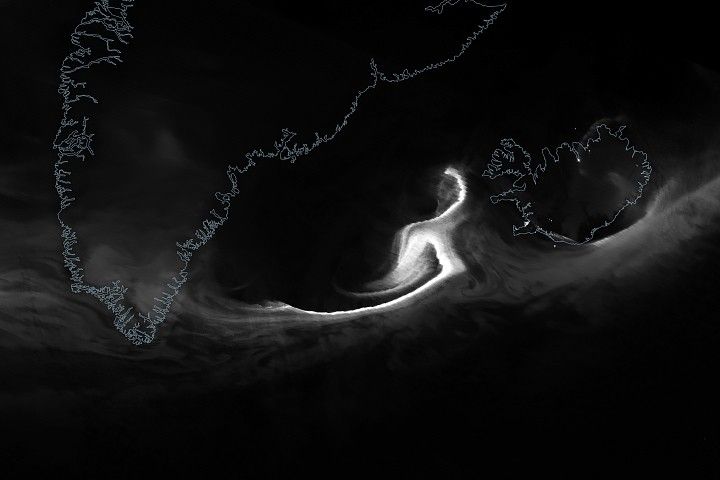
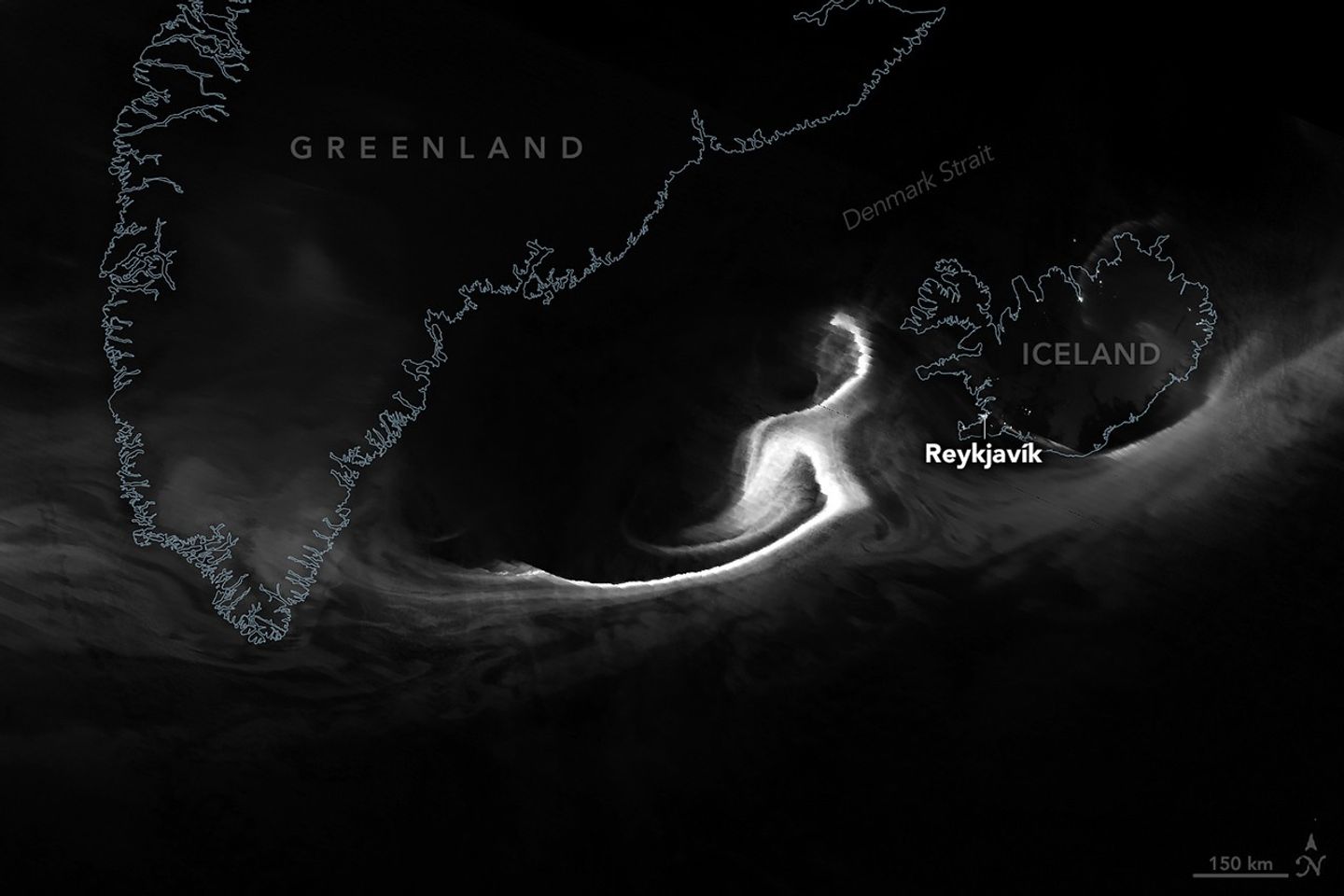
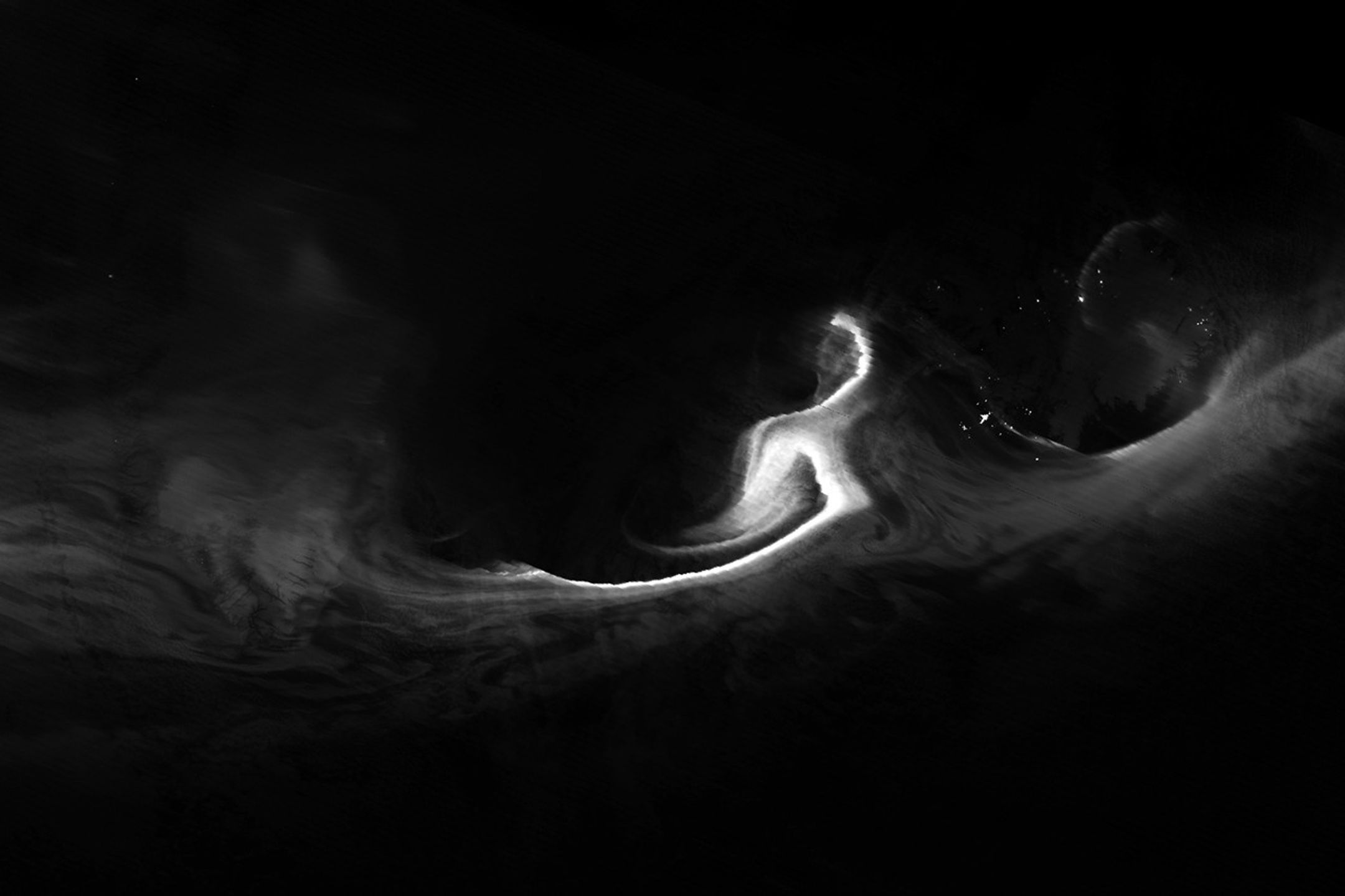
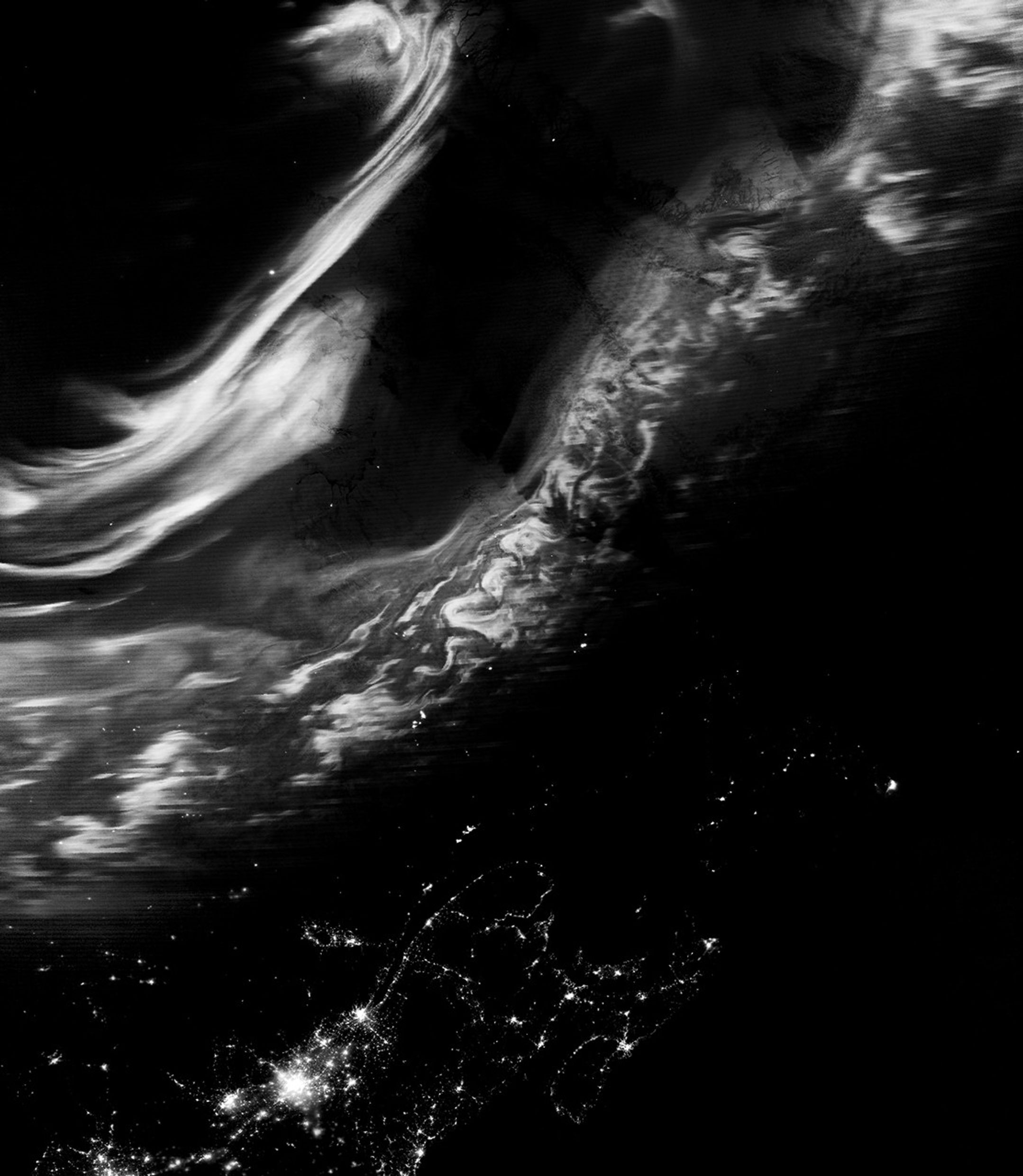
A nighttime satellite image shows a grayscale view of the northern lights over the Denmark Strait. Wisps of light stretch from Greenland to Iceland, with the brightest light just west of Iceland. Reykjavík city lights appear as a small dot.
February 16, 2026

Although the aurora borealis, or northern lights, is most often observed in March and September, it can appear at other times of the year if conditions are right. For instance, in February 2026, a minor geomagnetic storm produced a striking display of light swirling across northern skies.

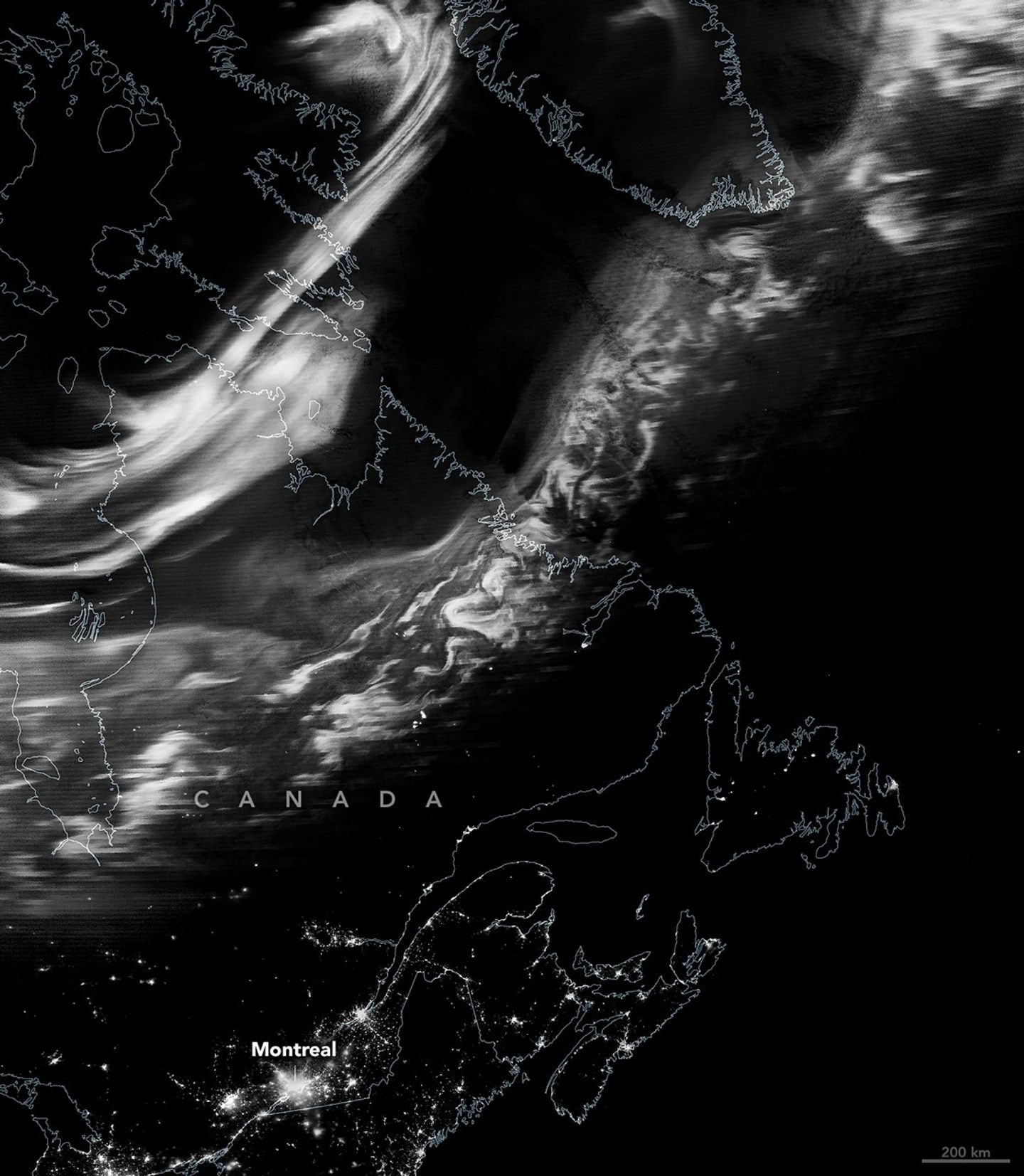
The VIIRS (Visible Infrared Imaging Radiometer Suite) on the Suomi NPP satellite acquired these images in the early morning hours of February 16. The VIIRS day-night band detects nighttime light in a range of wavelengths from green to near-infrared and uses filtering techniques to observe signals such as city lights, reflected moonlight, and auroras. While these satellite data are displayed in grayscale, auroras appear in various colors to observers on the ground, from green (the most common) to purple to red.

The first image (top) shows ribbons of light that shimmered over the Denmark Strait and Iceland at 04:45 Universal Time (4:45 a.m. local time in Reykjavík). The second image shows the view farther west, where the lights danced above the Canadian provinces of Québec and Newfoundland and Labrador at about 06:30 Universal Time (1:30 a.m. local time in Montreal).

A nighttime satellite image shows a grayscale view of the northern lights stretching from eastern Canada to southern Greenland. Urban light from Montreal and nearby cities appear across the bottom of the scene.
February 16, 2026

According to the NOAA Space Weather Prediction Center, a minor geomagnetic storm was in progress during this period. Classified as a G1—the lowest level on a scale that goes up to G5—such storms typically make the aurora visible at high latitudes. G1 storms can also cause slight disruptions, including weak fluctuations in power grids and minor impacts on satellite operations.

Later that day, conditions intensified to a G2 storm, likely associated with a coronal hole and a high-speed stream of solar wind. G2 storms are considered moderate in strength and can occasionally push auroral displays as far south as New York and Idaho.

About a week earlier, on February 10, a NASA rocket mission launched from the Poker Flat Research Range near Fairbanks, Alaska, to study the electrical environment of an aurora. The GNEISS (Geophysical Non-Equilibrium Ionospheric System Science) mission’s two sounding rockets gathered data that will help scientists create a 3D reconstruction of the electrical currents flowing from the northern lights. Combined with observations from the ground and space, this information can help researchers better understand the system that drives space weather near Earth.

NASA Earth Observatory images by Michala Garrison, using VIIRS day-night band data from the Suomi National Polar-Orbiting Partnership. Story by Kathryn Hansen.

References & Resources

You may also be interested in:

Stay up-to-date with the latest content from NASA as we explore the universe and discover more about our home planet.

A Northwest Night Awash in Light

3 min read

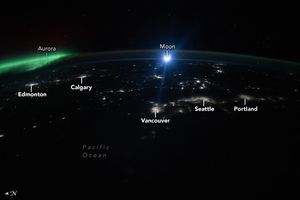
The glow of city lights, the aurora, and a rising Moon illuminate the night along the northwest coast of North…

Article

The Galaxy Next Door

3 min read

The Large Magellanic Cloud—one of our closest neighboring galaxies—is a hotbed of star formation that is visible to both astronauts…

Article

Five Minutes in Orbit

3 min read

An astronaut captured a moonrise—and much more—in a series of photos taken from the International Space Station.

Article

Powered by WPeMatico

Get The Details…

Digital Surface and Terrain Models from Vantor’s Precision3D Product Line Added to Satellite Data Explorer

Digital Surface and Terrain Models from Vantor’s Precision3D Product Line Added to Satellite Data Explorer

4 min read

Digital Surface and Terrain Models from Vantor’s Precision3D Product Line Added to Satellite Data Explorer

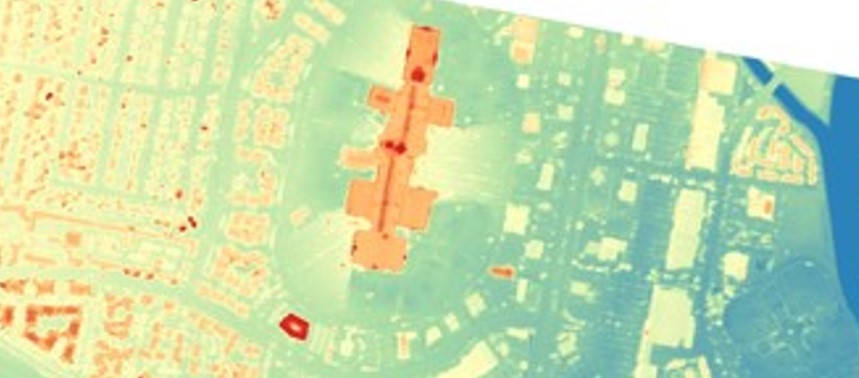
An image from a Vantor Digital Surface Model showing a suburban area outside of Phoenix, Arizona.

NASA’s Commercial Satellite Data Acquisition (CSDA) Program announces the addition of three digital elevation and digital terrain products from Vantor’s Precision3D Product Line to its Satellite Data Explorer (SDX) data access and discovery tool.

The products include:

Digital Surface Model (DSM) at 1-meter spatial resolution The DSM is a 3D elevation model derived from imagery captured by Vantor’s constellation of Worldview satellites. It provides precise measurements across all surfaces and terrains and is available in standard formats to facilitate integration into a range of workflows and analysis. It is suitable for a range of applications requiring detailed elevation data, such as urban planning, environmental monitoring, disaster mitigation and response, and terrain mapping.
Digital Terrain Model (DTM) at 1-meter spatial resolution The DTM is a 3D elevation model derived from the DSM that offers bare-earth elevation data by removing above-ground features like vegetation and buildings and is designed for analyzing terrain and topography. Created with  automated processing techniques, the DTM ensures consistency across all terrain types and is available in a variety of in user-friendly formats.
 
Elevation Bundle (DSM + DTM) at 1-, 2-, and 4-meter spatial resolution The Elevation Bundle, which combines the DSM and DTM products, provides a detailed view of both above-ground features and the underlying bare earth. With global coverage and high-resolution data at 1-, 2-, and 4-meter resolution, this product offers reliable elevation information in all types of terrain, making it a suitable tool for a range of applications from slope analysis to flood modeling.

“Digital Elevation Models are foundational geospatial infrastructure for NASA’s science community, and including them in the CSDA program ensures broad, consistent access to high‑quality commercial terrain data that sharpen geometric accuracy, support Earth system and hazard modeling, and extend NASA’s capabilities in support of Earth action priorities,” said Dana Ostrenga, Project Manager for the CSDA.

About SDX

The SDX allows users to search, discover, and access data acquired through the CSDA program.  The web tool offers streamlined data download, automated quota tracking, and a new coverage map that provides a high-level overview of the regions covered by of the data discoverable through the SDX for any specified month and year. Currently, SDX offers access to the EarthDEM digital elevation model created by the Polar Geospatial Center at the University of Minnesota and now Vantor (formerly Maxar). For a summary of the NASA commercial partner datasets available in SDX, visit the SDX website.

Researchers interested in accessing these data in SDX can use their Earthdata Login for authentication and initiate data download requests. Data will be made available for download upon approval and acceptance of the end user license agreement (EULA). The use of these digital elevation and digital terrain products is governed by a United States government End User License Agreement (USG EULA).

To order data from SDX, users must create an account with and be logged in to NASA Earthdata.  (The initial attempt to use SDX will redirect users to Earthdata Login, where they will be prompted to enter their Earthdata credentials and accept the terms of the EULA.) Users must agree to the terms of the EULA before any data can be requested.  Note: All data requests must be approved by CSDA data managers. 

About the CSDA Program

NASA’s Earth Science Division (ESD) established the CSDA Program to identify, evaluate, and acquire data from commercial providers that to support NASA’s Earth science research and applications. NASA recognizes the potential of commercial satellite constellations to advance Earth System Science and applications for societal benefit and believes commercially acquired data can augment the Earth observations acquired by NASA, other U.S. government agencies, and NASA’s international partners.

All data from CSDA contract-awarded vendors are evaluated by the investigator-led CSDA project teams that assess the value of adding a vendor’s data to CSDA’s data holdings based on their quality and how they might benefit in the context of NASA Earth science research and applications. To learn about the program, its commercial partners, data evaluation process, and more, visit the CSDA website.

Learning Resources

For more information on the CSDA Program’s SDX, see the SDX user guide.

Share

Details

Last Updated
Feb 18, 2026

Related Terms

Powered by WPeMatico

Get The Details…

Vantor Archive Imagery Added to Satellite Data Explorer

Vantor Archive Imagery Added to Satellite Data Explorer

4 min read

Vantor Archive Imagery Added to Satellite Data Explorer

A multispectral satellite image from Vantor of Washington, DC. The
A high-resolution multispectral image of Washington, DC from Vantor. Visible are the Washington Monument (left), Tidal Basin (the body of water in the center-right), and the Jefferson Memorial (right).
Credit: Vantor

NASA’s Commercial Satellite Data Acquisition (CSDA) Program announces the addition of imagery from Vantor to its Satellite Data Explorer (SDX) data access and discovery tool. The imagery, which was obtained by Vantor’s Legion satellites, comes from Vantor’s 125-plus petabyte imagery archive, which dates back to 1999. The imagery from this archive contains a mix of panchromatic (black/white) and color imagery (up to 18 multispectral bands) and offers global coverage of up to 30 cm resolution.

There are three types of imagery available from this archive in SDX:

System-Ready Level 1B Data This data is idea for users who are looking to apply their own tools and models to fully process the data and extract the information that they need. It comes with all bands, full bit-depth, and requires further processing to be ready for deriving downstream analytics. This basic processing of this product offers an imagery product ready for custom orthorectification.
View-Ready Level 2A Data This processing level is intended for users who want to get straight to using the data to extract downstream analytical information. It provides a basis for deriving downstream analytics and has been orthorectified against a coarse digital elevation model (DEM). It comes with all bands and full bit depth.
Map-Ready 3-D This data product offers standardized and orthorectified (i.e., corrected to remove distortion caused by terrain variations, and sensor angle), imagery that has been radiometrically calibrated and geo-rectified to produce a highly accurate imagery product ready for seamless integration into workflows. Map-ready data is ideal for image viewing and locational referencing and offers a high degree of cartographic accuracy.

Vantor’s Legion satellites offer 8-band visible and near-infrared multispectral imagery at a resolution of up to 30-centimeters for use in a wide variety of applications ranging from agriculture and natural resources monitoring to disaster response and environmental surveillance.

Further, the addition of these datasets to the CSDA Program’s SDX enhances the tool’s utility for users within the larger NASA’s Earth observation community to find high-resolution data that meets their needs.

“NASA established the CSDA Program is to identify, evaluate, and acquire data from commercial sources that support NASA’s Earth science research and application goals,” said CSDA Project Manager Dana Ostrenga. “The inclusion of these Vantor data products in SDX is an example of our focus on realizing that mission and marks yet another step to our goal of bringing high-quality data from NASA’s commercial partners to users within the Earth observation science community.”

About SDX

The SDX allows users to search, discover, and access a variety of Global Navigation Satellite System (GNSS), digital elevation model (DEM), synthetic aperture radar (SAR), multispectral, and precipitation radar data acquired through the CSDA program. It also provides streamlined data download, automated quota tracking, and a new coverage map that provides a high-level overview of the spatial coverage of the data discoverable through the SDX for any specified month and year.  For a summary of the NASA commercial partner datasets available in SDX, visit the SDX website.

Researchers interested in accessing these data in SDX can use their Earthdata Login for authentication and initiate data download requests. Data will be made available for download upon approval and acceptance of the end user license agreement (EULA).

To order data from SDX, users must create an account with and be logged in to NASA Earthdata.  (The initial attempt to use SDX will redirect users to Earthdata Login, where they will be prompted to enter their Earthdata credentials and accept the terms of the EULA.) Users must agree to the terms of the EULA before any data can be requested.  Note: All data requests must be approved by CSDA data managers. 

About the CSDA Program

NASA’s Earth Science Division (ESD) established the CSDA Program to identify, evaluate, and acquire data from commercial providers that to support NASA’s Earth science research and applications. NASA recognizes the potential of commercial satellite constellations to advance Earth System Science and applications for societal benefit and believes commercially acquired data may also can augment the Earth observations acquired by NASA, and other U.S. government agencies, and NASA’s international partners.

All data from CSDA contract-awarded vendors are evaluated by the investigator-led CSDA project teams that assess the value of adding a vendor’s data to CSDA’s data holdings based on their quality and how they might benefit in the context of NASA Earth science research and applications. To learn more about the program, its commercial partners, data evaluation process, and more, visit the CSDA website.

Learning Resources

For more information on the CSDA Program’s SDX, see the tool’s user guide.

Share

Details

Last Updated
Feb 18, 2026

Related Terms

Powered by WPeMatico

Get The Details…