NASA’s SpaceX 35th Commercial Resupply Mission Overview

NASA’s SpaceX 35th Commercial Resupply Mission Overview
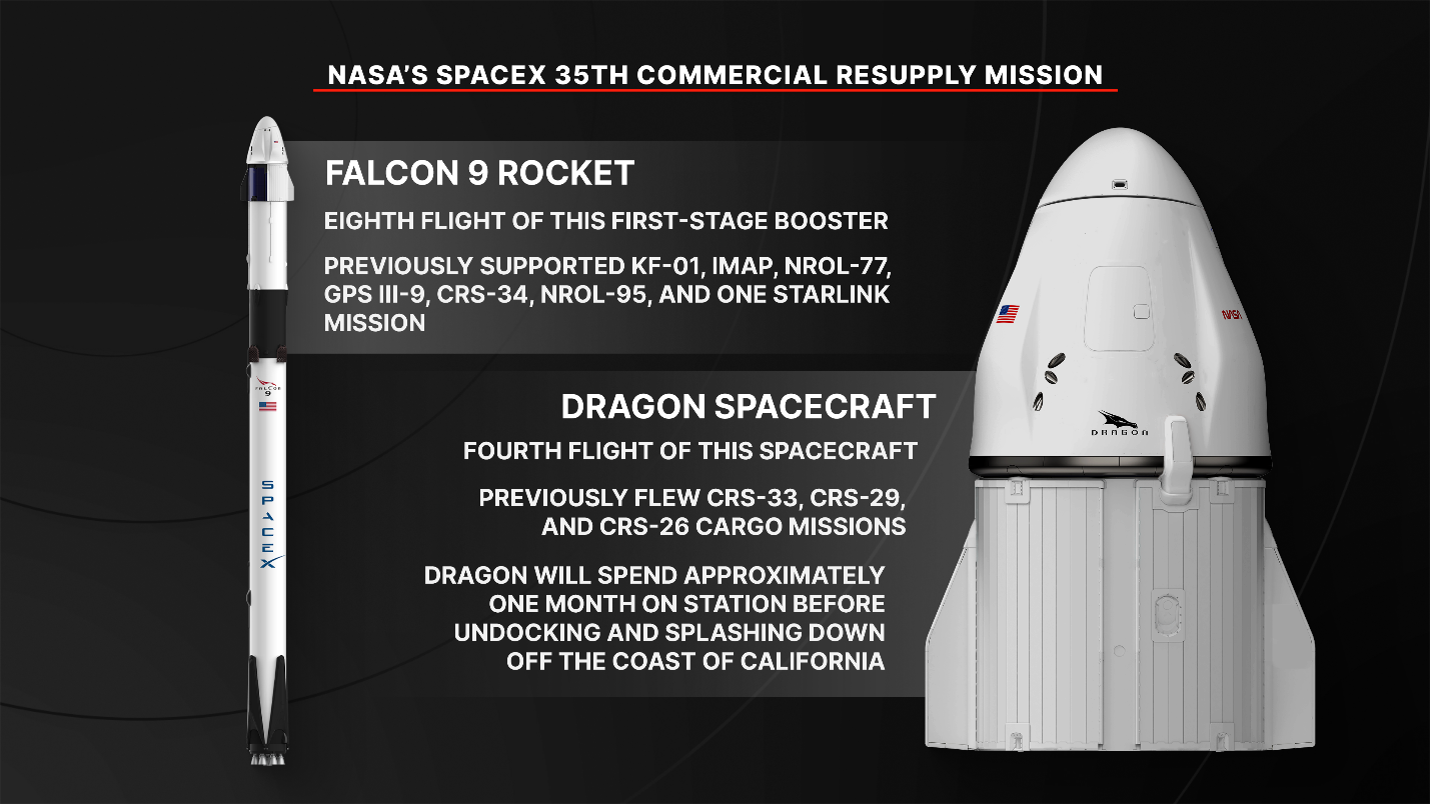
NASA’s SpaceX 35th commercial resupply mission will launch on the company’s Dragon spacecraft on the SpaceX Falcon 9 rocket to deliver research and supplies to the International Space Station.
NASA

NASA and SpaceX are targeting no earlier than Tuesday, Oct. 13 to launch scientific investigations, supplies, and equipment to the International Space Station. 

Loaded with more than 6,300 pounds of supplies, the SpaceX Dragon spacecraft will lift off aboard the company’s Falcon 9 rocket from Space Launch Complex 40 at Cape Canaveral Space Force Station in Florida. Following its arrival to the orbital complex, Dragon will autonomously dock to the space-facing port of the space station’s Harmony module. 

NASA will stream launch and docking coverage through a variety of platforms. Learn where to watch online:

https://www.nasa.gov/live

NASA’s SpaceX 35th commercial resupply mission will launch from Launch Complex 40 at Cape Canaveral Space Force Station in Florida.
NASA

For more than 25 years, the International Space Station has supported research by scientists from more than 110 countries, enabling more than 4,000 experiments in microgravity. Research conducted aboard the station helps advance long-duration missions to the Moon as part of the Artemis program and to Mars, while also providing multiple benefits to humanity.

Science Highlights

In addition to cargo for the crew aboard the space station, Dragon will deliver several new science experiments, including:
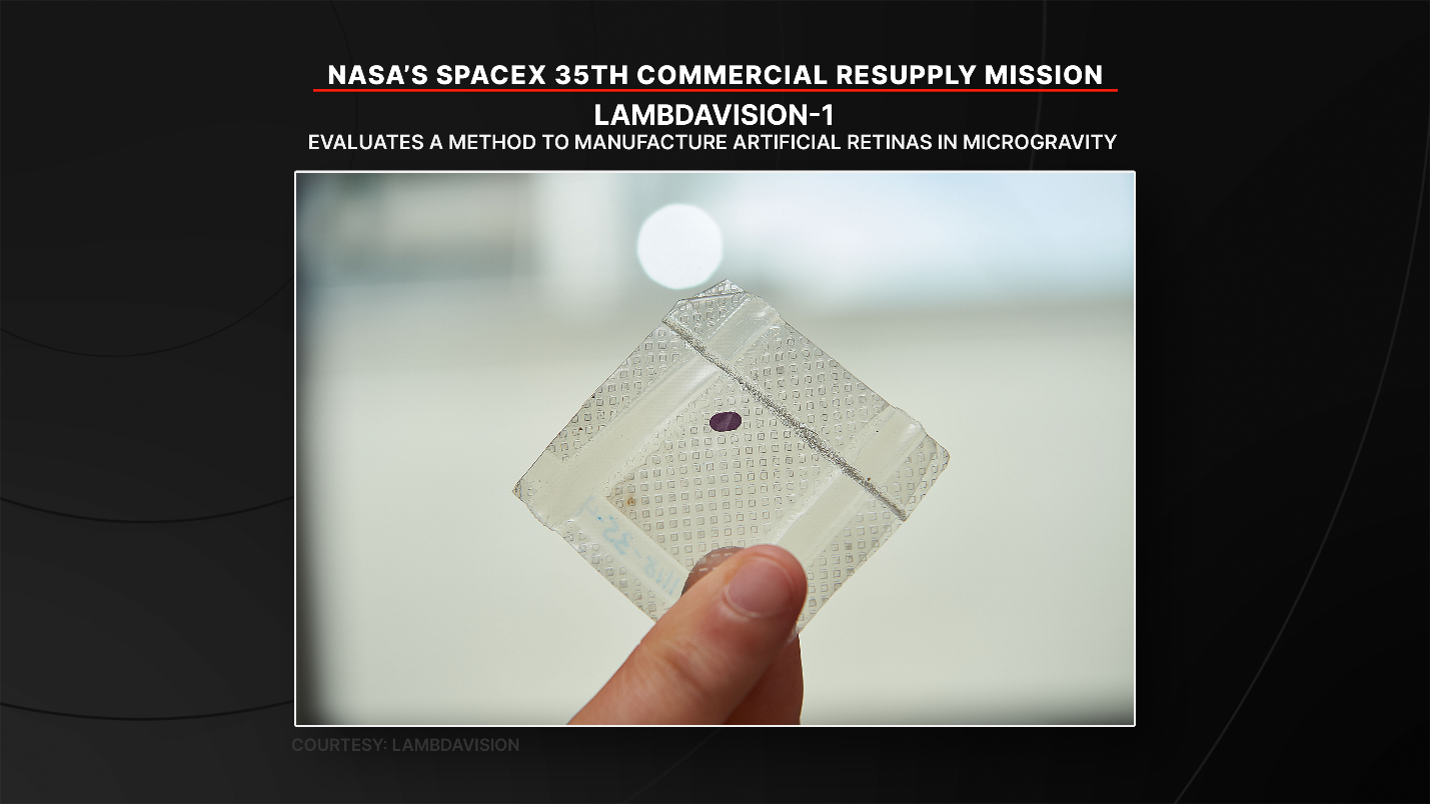
Lambda-Vision-1 studies artificial retinas in microgravity and could help patients with incurable retinal diseases on Earth.
NASA

With LambdaVision-1, NASA is testing how to manufacture artificial eye retinas in microgravity, building them one thin layer at a time. Reduced settling in microgravity may create more uniform, stable layers, potentially improving implants’ performance. These artificial retinas could help restore vision for patients with currently incurable retinal diseases on Earth.
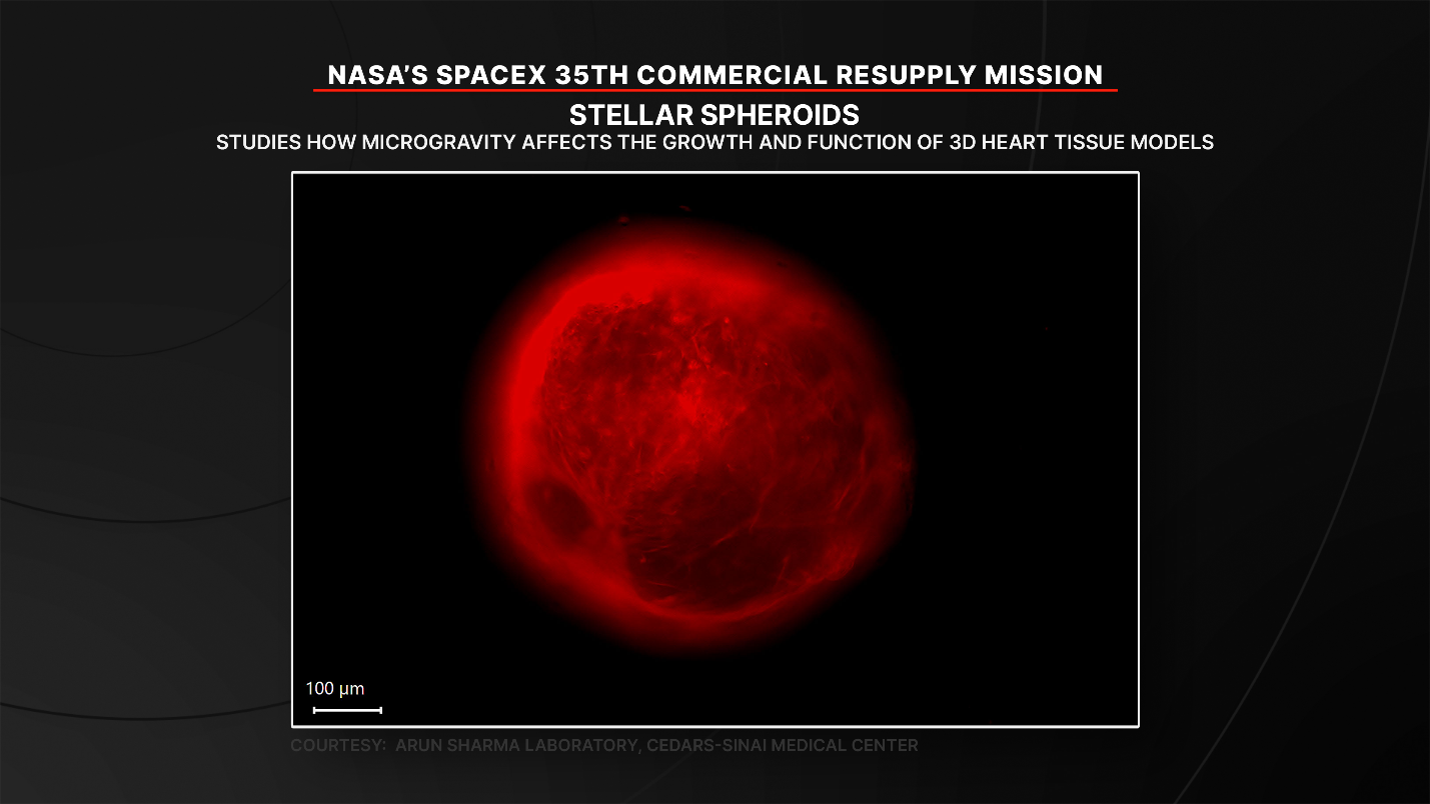
Stellar Spheroids examines growth and function of 3D heart tissues models in microgravity. Credit: NASA
NASA

NASA will use the Stellar Spheroids experiment to study how microgravity affects the growth and function of 3D human heart tissue models. Researchers will assess whether microgravity improves the formation of advanced vascular networks. Results could help researchers develop more realistic heart tissue models for disease research and support larger‑scale drug testing on future space missions.
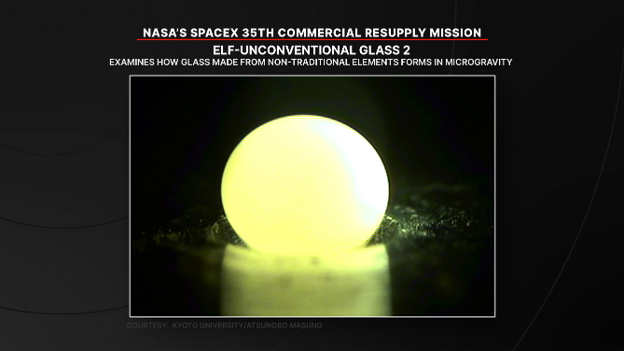
ELF-Unconventional Glass 2 studies how glass forms in microgravity when made from non-traditional elements.
NASA

Using non-traditional elements, ELF-Unconventional Glass 2 studies how glass forms in microgravity. Researchers will observe molten behavior in space, then return solid samples to Earth for detailed analysis. These unconventional glasses could offer higher strength, improved optical capabilities, and greater durability for spacecraft, habitats, and other exploration technologies.

MINDS seeks to reveal new targets to treat diseases like Alzheimer’s, Parkinson’s, and multiple sclerosis.
NASA

The MINDS experiment studies brain organoids to better understand inflammation linked to neurodegenerative diseases. The investigation uses “organoid villages,” which combine cells from multiple people to better represent patient diversity. Results could help identify new treatment targets for diseases like Alzheimer’s, Parkinson’s, and multiple sclerosis.

Arrival and Return
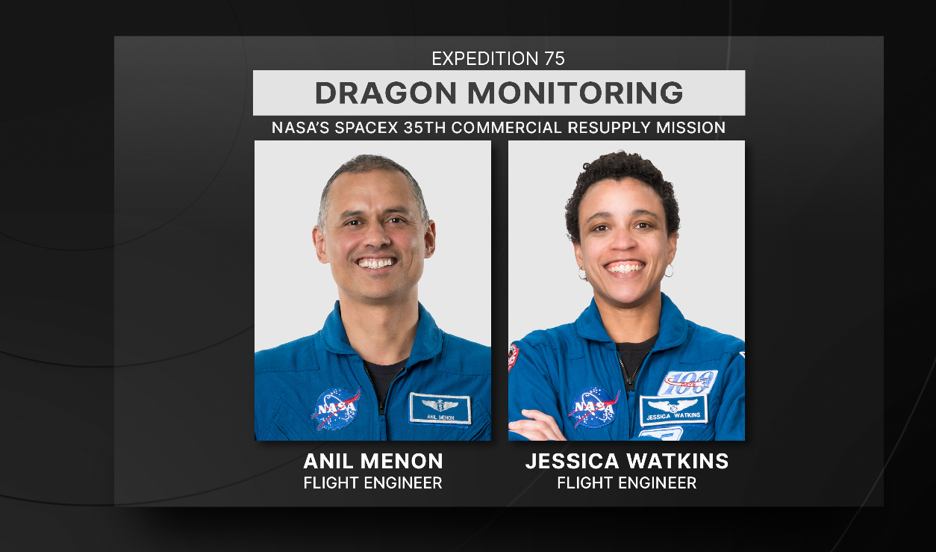
NASA astronauts Anil Menon and Jessica Watkins will monitor the arrival of the SpaceX Dragon cargo spacecraft from the International Space Station.
NASA

NASA astronauts  Anil Menon and Jessica Watkins will monitor the Dragon spacecraft’s arrival. It will remain docked to the orbiting laboratory for about a month before splashing down in the Pacific Ocean, returning critical science and hardware to teams on Earth. 

Cargo Highlights
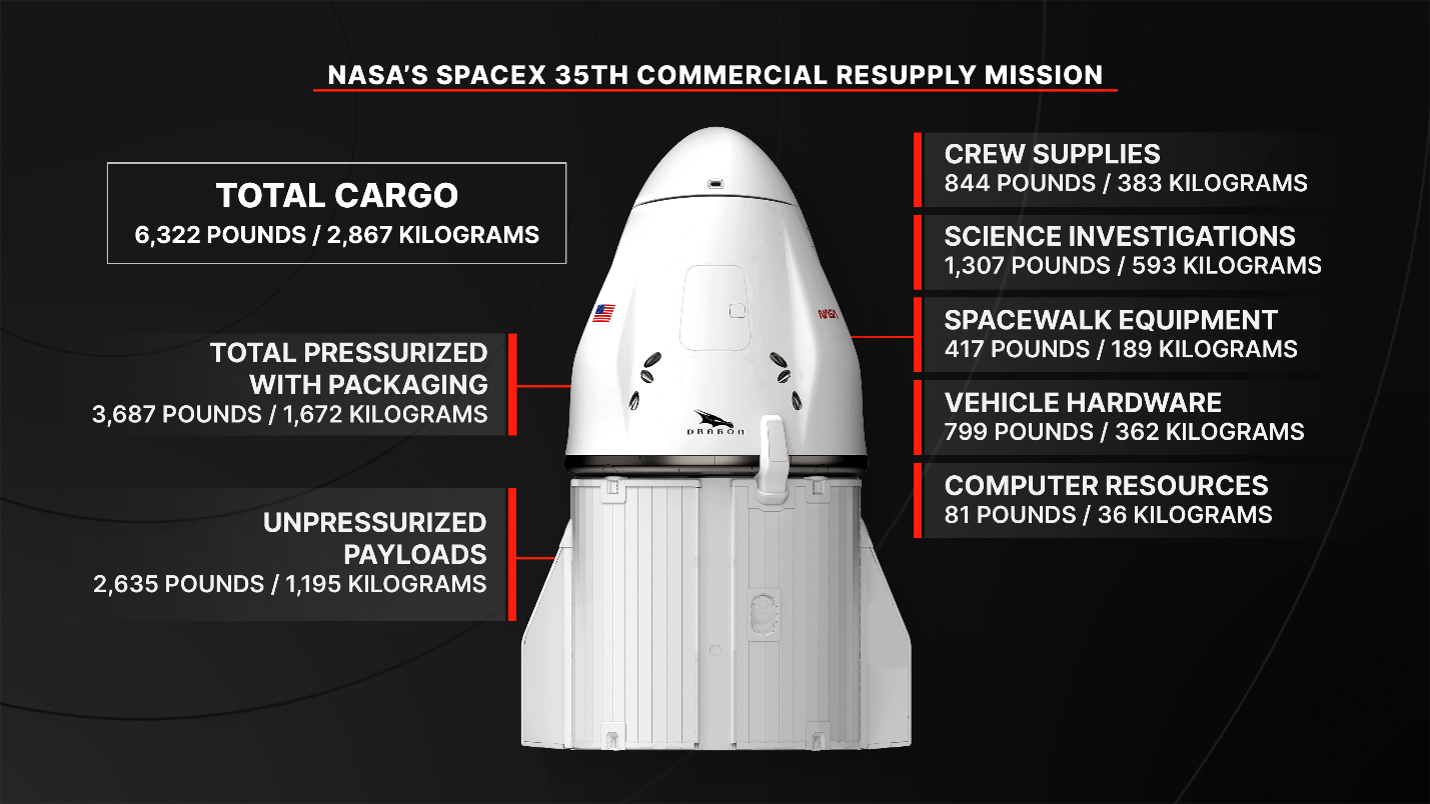
NASA’s SpaceX 35th commercial resupply mission will launch on the company’s Dragon spacecraft on the SpaceX Falcon 9 rocket to deliver research and supplies to the International Space Station
NASA

Launch 

International Space Station Roll-Out Solar Arrays (IROSA) – The final pair of IROSAs that will be installed on the space station, completing the augmentation of its power system to support critical operations, including its safe and controlled deorbit.

Collapsible Continency Urinal and supporting hardware – A demonstration and test unit supporting NASA’s Artemis III mission.  

Canadarm2 joint flight support equipment – A large foam clamshell will fly empty to return the failed robotic arm joint that was replaced during a June 30 spacewalk. After its return to Earth, teams will analyze the joint on the ground.

Additional equipment launching includes a toilet dose pump, a toilet pretreat quality sensor, and a robot micro-conical tool used for space station maintenance and utilization tasks with external replacement units and payloads.

Return

When Dragon returns in mid‑November, it will bring back the failed joint on the Canadarm2 for analysis and refurbishment, a spacesuit for ground refurbishment, a fluid- and pressure-control pump assembly from the urine processor, and a filtration unit for the water processor assembly. 

Powered by WPeMatico

Get The Details…
Mark A. Garcia
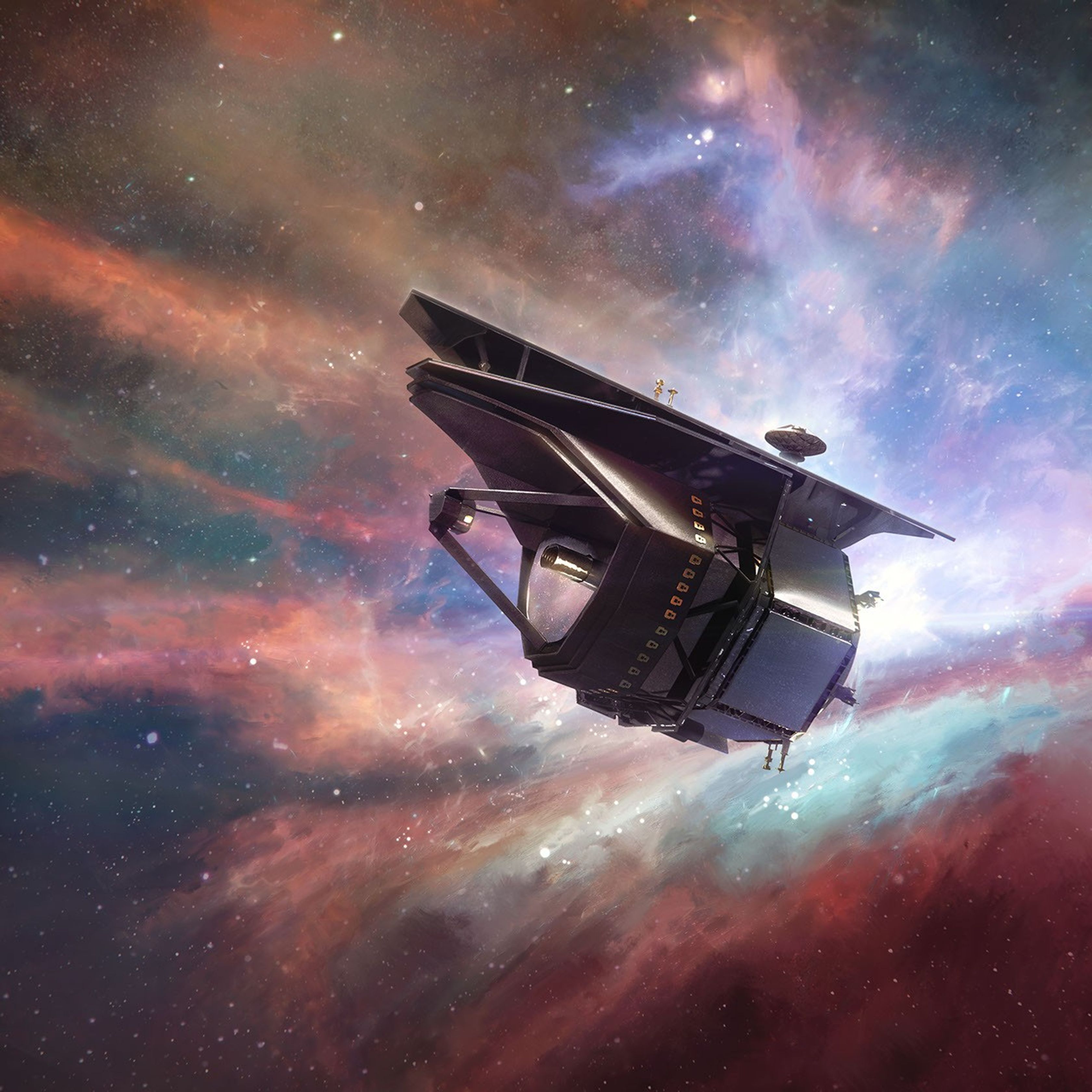
NASA’s PRIMA Spacecraft (Artist’s Concept)

NASA’s PRIMA Spacecraft (Artist’s Concept)

1 Min Read

NASA’s PRIMA Spacecraft (Artist’s Concept)

A space telescope moves through space, illuminated by the vibrant red, blue, and purple hues of a cosmic nebula.
PIA26355
Credits:
NASA/JPL-Caltech

Description

This artist’s concept depicts the proposed design for NASA’s PRobe far-Infrared Mission for Astrophysics (PRIMA), which was selected by the agency in September 2026. The PRIMA observatory is the first in a new class of NASA astrophysics missions, called Probe Explorers, within the agency’s longstanding Explorers Program. By observing far-infrared light, PRIMA will enable scientists to study cosmic objects heavily obscured by dust, providing new insights into the formation of planets, stars, and black holes, and even how water on Earth came to be. If confirmed by the agency, PRIMA will be targeted to launch in 2033, for a planned five-year mission.

Powered by WPeMatico

Get The Details…

NASA’s Curiosity Looks Back After Reaching Elevation Milestone

NASA’s Curiosity Looks Back After Reaching Elevation Milestone

2 Min Read

NASA’s Curiosity Looks Back After Reaching Elevation Milestone

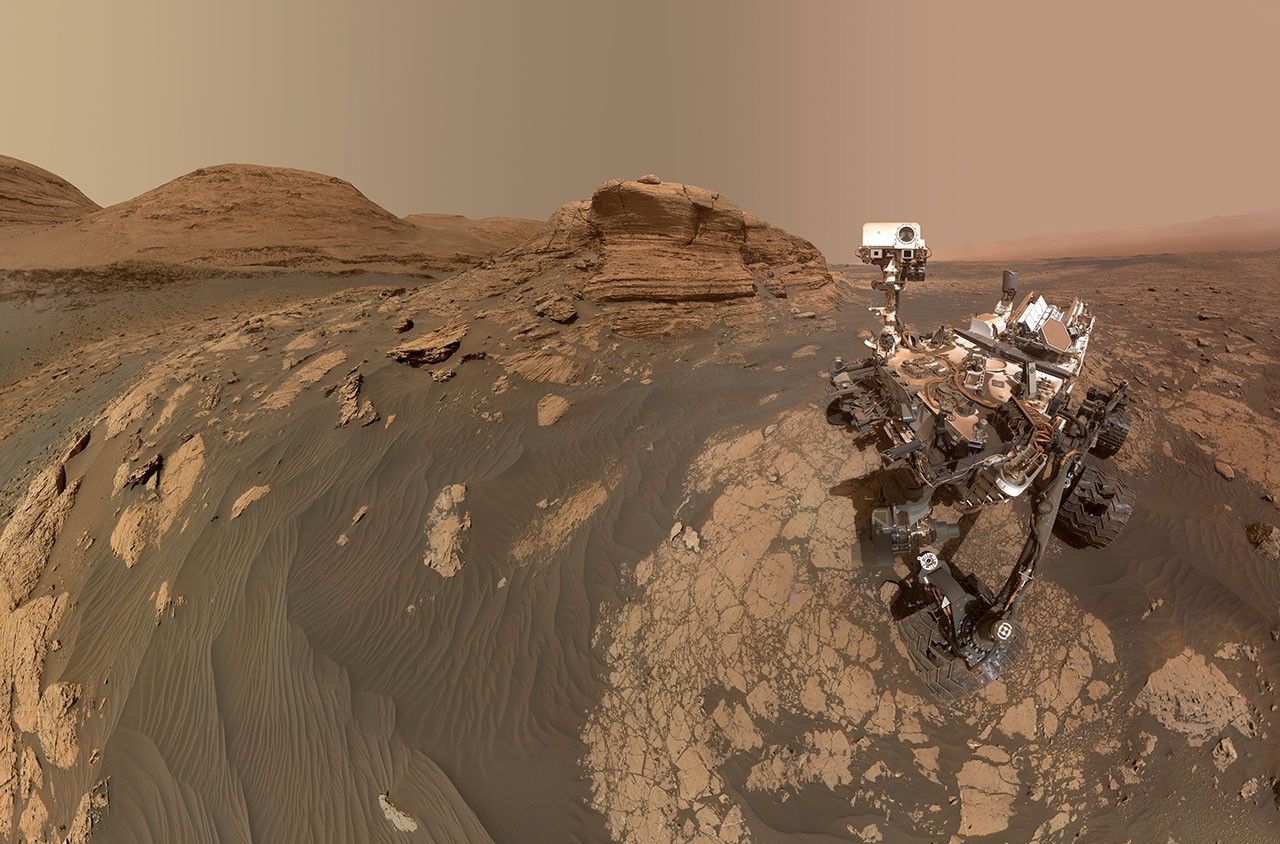
A wide panoramic view of a rocky, reddish-brown Martian valley framed by rugged hills under a hazy sky, with a portion of NASA’s Curiosity Mars visible on the far right.
PIA26781
Credits:
NASA/JPL-Caltech/MSSS

Description

NASA’s Curiosity Mars rover captured this view looking back at the floor of Gale Crater, with the crater’s rim visible in the distance, on Sept. 5, 2026, the 5,006th Martian day, or sol, of the mission. Just nine days prior, on Aug. 26 (Sol 4,996), Curiosity set a mission milestone by reaching 1 kilometer of elevation above the crater floor. Since 2014, Curiosity has been climbing the lower foothills of Mount Sharp, a 3-mile-tall (5-kilometer-tall) mountain located within Gale Crater. 

A sand ridge extends across the foreground of the image, and a trench left by the rover’s right front wheel is visible at right. Geologic layering inside the ridge, as well as the size and composition of its sand grains, will provide clues to how the feature formed.

This panorama is made up of 95 individual images taken by Curiosity’s Mast Camera, or Mastcam. The color in these images has been adjusted to match the lighting conditions as the human eye would see them on Earth.

Curiosity was built by NASA’s Jet Propulsion Laboratory, which is managed by Caltech in Pasadena, California. JPL leads the mission on behalf of NASA’s Science Mission Directorate in Washington as part of NASA’s Mars Exploration Program portfolio. Malin Space Science Systems in San Diego built and operates Mastcam.

To learn more about Curiosity, visit:

https://science.nasa.gov/mission/msl-curiosity/

Powered by WPeMatico

Get The Details…

NASA’s Curiosity Captures Dawn Breaking on Wind-Carved Cliffs

NASA’s Curiosity Captures Dawn Breaking on Wind-Carved Cliffs

2 Min Read

NASA’s Curiosity Captures Dawn Breaking on Wind-Carved Cliffs

A panoramic view of a stark, grayish-tan Martian landscape featuring jagged rock formations and rolling mountain ridges beneath a pale, hazy sky.
PIA25629
Credits:
NASA/JPL-Caltech/MSSS

Description

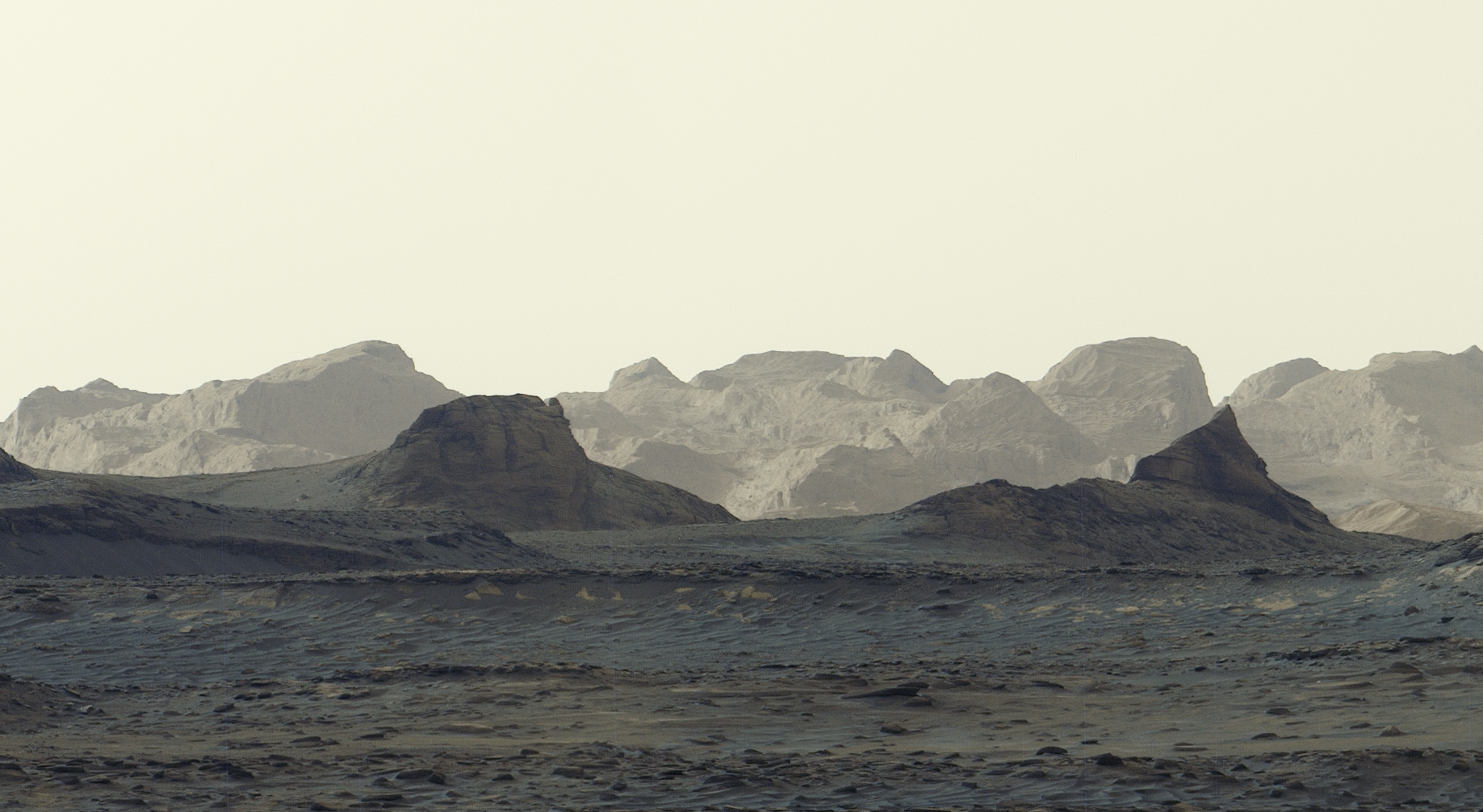
NASA’s Curiosity Mars rover captured this panorama of sunrise illuminating distant, wind-carved features called yardangs on Aug. 11, 2026, the 4,982nd Martian day, or sol, of the mission. Scientists are eager to learn more about how the yardang layer formed.

A panoramic view of a stark, grayish-tan Martian landscape featuring jagged rock formations and rolling mountain ridges beneath a pale, hazy sky.
Figure A

Figure A is a crop zooming in on the distant yardangs.

Since 2014, Curiosity has been ascending 3-mile-tall (5-kilometer-tall) Mount Sharp, which is made up of a series of distinct layers that were deposited one on top of the other. In the area of the vast mountain’s shoulder where the rover is climbing, that stack of layers ends with the yardang layer. Before the yardang layer was laid down, Mount Sharp may have begun eroding, creating a gap in the otherwise continuous record of climate history that Curiosity has been reading from the layers. Scientists aren’t entirely sure how the layer formed; one theory is that it’s a pile of volcanic ash, similar to what’s seen along the Red Planet’s equator.

This panorama was captured by Curiosity’s Mastcam and is made up six individual images that were stitched together after being sent back to Earth. Unlike most of Curiosity’s Mastcam images, this one was processed without the usual white balancing, an artistic choice that preserves the early morning appearance.

Curiosity was built by NASA’s Jet Propulsion Laboratory, which is managed by Caltech in Pasadena, California. JPL leads the mission on behalf of NASA’s Science Mission Directorate in Washington as part of NASA’s Mars Exploration Program portfolio. Malin Space Science Systems in San Diego built and operates Mastcam.

To learn more about Curiosity, visit:

https://science.nasa.gov/mission/msl-curiosity/

Powered by WPeMatico

Get The Details…

Artemis II Crew Moon Photo Annotations

Artemis II Crew Moon Photo Annotations

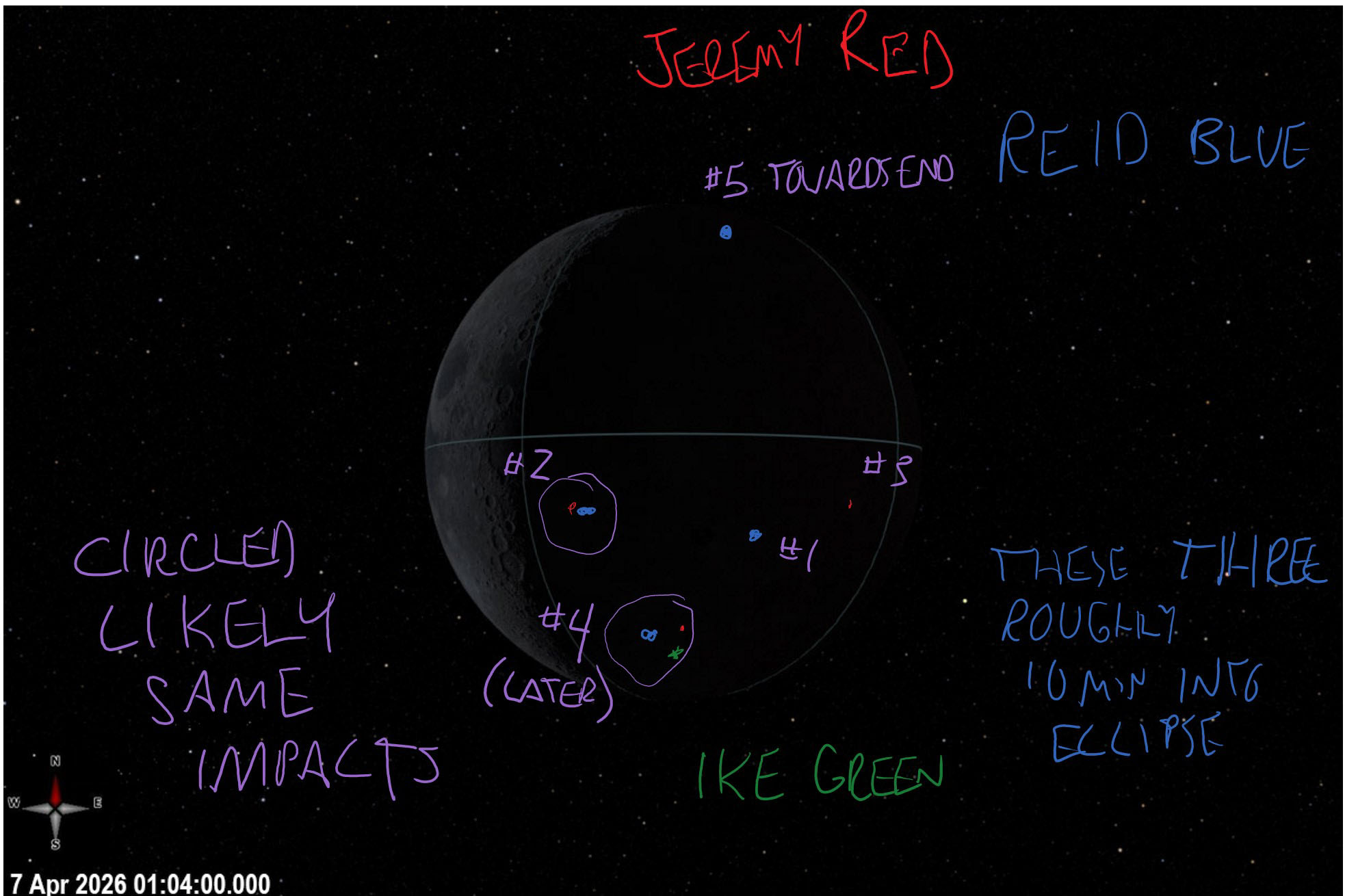
A simulated image of the crew’s view of the dark, eclipsed Moon on April 6, 2026. Three crew members annotated impact flashes on this image in OneNote. Reid Wiseman wrote in blue. Victor “Ike” Glover wrote in green. Jeremy Hansen wrote in red. General annotations are in purple ink. A note on the left side in purple is “circled likely same impacts.” Five impact flashes are numbered across the Moon. #1 with a blue dot (observed by Wiseman) is located at the 4 o’clock position, but more central. #2 is circled with a red dot (observed by Hansen) and a blue dot (observed by Wiseman) is located at the 8’clock position, but near the Moon’s center. #3 with a red dot (observed by Hansen) is located at 3 o’clock. #4 is circled with a red dot (observed by Hansen), a blue dot (observed by Wiseman), and a green dot (observed by Glover). It is at the 6 o’clock position. A note of “(later)” is under #4. #5 with a blue dot (observed by Wiseman) is located at the 12 o’clock position. A note of “towards end” is to the right of #5. Wiseman wrote an additional note in blue: “these three roughly 10 min into eclipse.” The three indicated are the blue dots at #1, #2, and #4.
NASA

A visualization of a dark Moon eclipsing the Sun is marked with handwritten notes in this April 6, 2026, screenshot from an Artemis II crew member’s tablet.

NASA astronauts Reid Wiseman (in blue) and Victor “Ike” Glover (in green) and CSA (Canadian Space Agency) Jeremy Hansen (in red) observed impact flashes and their locations, which are noted on the image. Overall, the astronauts reported seeing five extremely faint “pinprick” bursts of light from their view aboard Orion, which was 46,000 miles away from the Moon at the time. These flashes are sparked by rocky fragments hitting the Moon.

From April 1 through April 10, 2026, NASA’s Artemis II crew traveled to the Moon and back and along the way, captured stunning imagery and scientific observations of our nearest neighbor. Now, the full lunar science dataset from their journey is available to the global science community, and to the public, for further study. Read about the report, listen to crew audio observations, and explore more.

Image credit: NASA

Powered by WPeMatico

Get The Details…
HQ Web Team