


Crew Awaits Thanksgiving Day Delivery as Another Cargo Craft Nears Launch
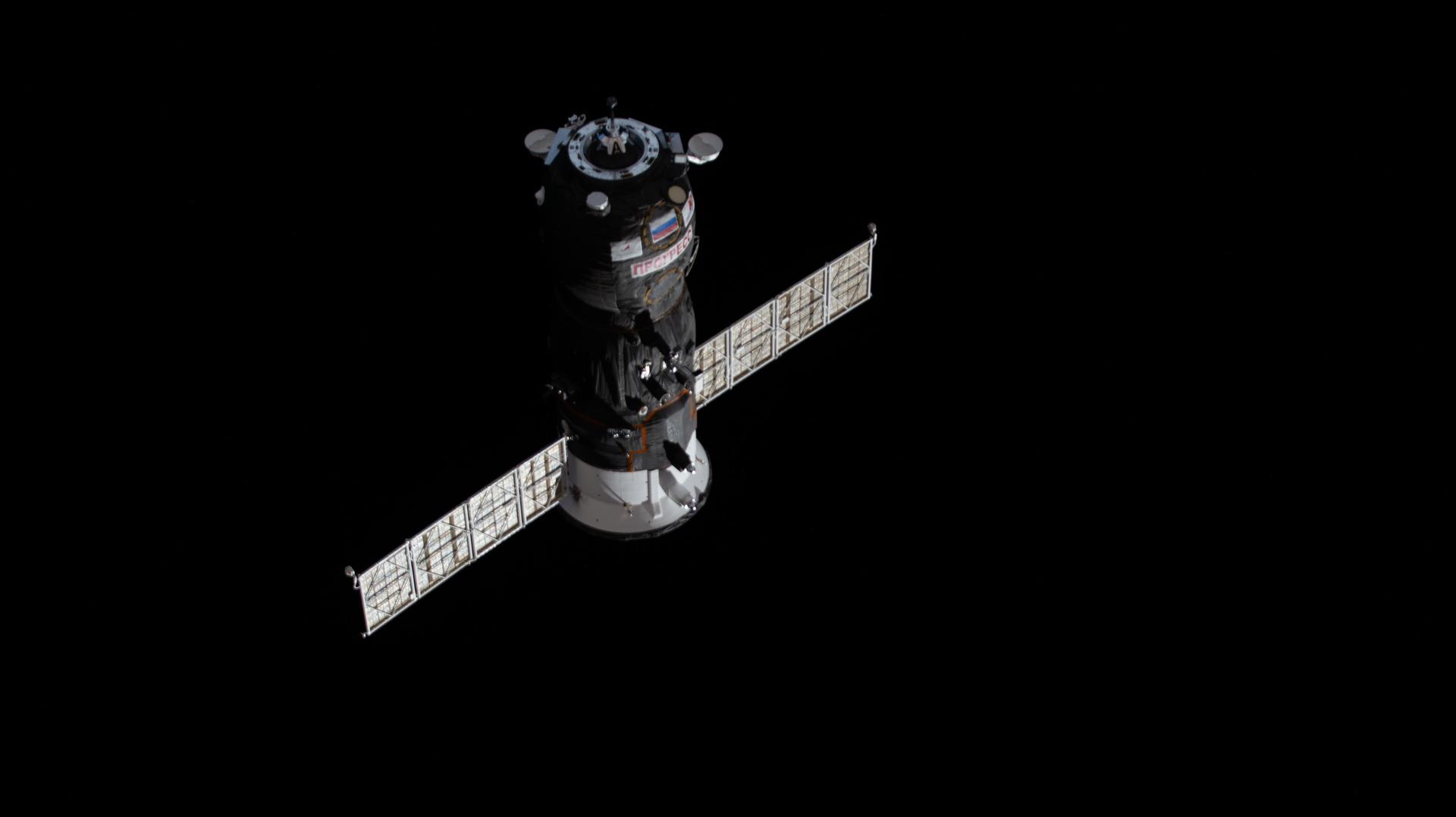
A Progress 97 cargo spacecraft from Roscosmos is orbiting Earth and on its way to resupply the Expedition 75 crew aboard the International Space Station after launching at 5:17 a.m. EST today from Kazakhstan. Filled with about three tons of food, fuel, and supplies, the Progress 97 is scheduled to automatically dock to the orbital outpost’s Rassvet module at 7:11 a.m. on Thanksgiving Day.
One more space delivery is due to launch to the space station for the final cargo mission of the year. Northrop Grumman’s Cygnus XL cargo spacecraft is nearing its launch atop a SpaceX Falcon 9 rocket targeted for no earlier than 10:47 a.m. on Sunday, Nov. 29, from Cape Canaveral Space Force Station in Florida.
NASA flight engineers Jessica Watkins and Luke Delaney will be on duty commanding the Canadarm2 robotic arm to capture Cygnus XL on Tuesday, Dec. 1. Afterward, ground controllers will take over and remotely control Canadarm2 to maneuver Cygnus XL toward the Unity module’s Earth-facing port for installation.
Packed inside Cygnus is approximately 11,000 pounds of science experiments and lab hardware to continue sustaining operations aboard the space station. Some of the new research being delivered will explore cancer cell movement, engineered muscle tissues, DNA-inspired particles, and more to promote human health on Earth and in space.
Meanwhile, the seven Expedition 75 crew members stayed busy on Tuesday with a variety of life science and orbital maintenance tasks.
Watkins and Delaney took turns at the beginning of their shift and scanned each other’s internal organs using the EchoFinder-2 ultrasound device. Doctors on the ground monitored in real time during the space health monitoring study as augmented reality tools and artificial intelligence algorithms assisted with organ detection. The astronauts later familiarized themselves with the upcoming Cygnus XL cargo mission, practiced robotic capture techniques, and held a pre-mission conference with flight controllers.
Flight engineers Anil Menon of NASA and Joshua Kutryk of CSA (Canadian Space Agency) conducted workout gear maintenance inside the Tranquility module. Menon first inspected, cleaned, and lubricated the advanced resistive exercise device that mimics free weights on Earth. Kutryk followed that up and inspected the COLBERT treadmill, photographing its components, then testing its operability.
Working in the Roscosmos segment of the station, cosmonauts Pyotr Dubrov and Sergey Teteryatnikov collected air samples to analyze for airborne bacteria and mold. The samples were then stowed in an incubator to observe for microbial growth.
Flight engineer Anna Kikina split her day on biomedical research and life support upkeep. Kikina began and ended her shift studying how spaceflight how affects the immunity and nervous systems. She collected and stowed her hair and saliva samples for preservation and analysis. She also took a timed memory test and wore a heart activity monitor for the long-running Roscosmos investigation.
Learn more about station activities by following the space station blog, @space_station on X, as well as the ISS Facebook and ISS Instagram accounts.
Get the latest from NASA delivered every week. Subscribe here.
Powered by WPeMatico
Mark A. Garcia
