Crew Works Payloads and Training, Awaits Starliner Arrival

Crew Works Payloads and Training, Awaits Starliner Arrival

Expedition 70 Flight Engineers (from left) Tracy C. Dyson and Jeanette Epps, both NASA astronauts, are pictured aboard the International Space Station's Destiny laboratory module.
Expedition 70 Flight Engineers (from left) Tracy C. Dyson and Jeanette Epps, both NASA astronauts, are pictured aboard the International Space Station’s Destiny laboratory module.

Payload maintenance and training topped Friday’s schedule aboard the International Space Station as the Expedition 71 septet gears up to welcome two new crew members next week.

On Thursday, May 2, four crew members entered the SpaceX Dragon spacecraft and relocated it to a different port to make room for the upcoming arrival of NASA’s Boeing Crew Flight Test. Dragon undocked from the Harmony module’s forward-facing port at 8:57 a.m. EDT and autonomously redocked to the module’s space-facing port at 9:46 a.m.

This move made Harmony’s forward port available for the arrival of Boeing’s Starliner spacecraft next week. Starliner is scheduled to launch from Space Launch Complex-41 at Cape Canaveral Space Force Station in Florida at 10:34 p.m. Monday, May 6, carrying NASA astronauts Butch Wilmore and Suni Williams to the station. The duo will enter Earth’s orbit and monitor the performance of spacecraft before docking to the orbital complex around 12:46 a.m. Wednesday, May 8.

Wilmore and Williams will spend about a week in low Earth orbit with the Expedition 71 crew to test Starliner and its subsystems before NASA certifies the transportation system for rotational missions to the orbiting laboratory as part of the agency’s Commercial Crew Program. NASA will broadcast the historic flight on NASA+, NASA TV, the NASA appYouTube, and the agency’s website beginning at 6:30 p.m. Monday.

Aboard station, the septet split up maintenance duties on Friday. Flight Engineer Tracy C. Dyson of NASA began her day inspecting and photographing spacesuit power and data cables in preparation for upcoming spacewalks in June. Dyson then spent most of the day working with the Microgravity Science Glovebox, rotating the payload to clean its fans and screen, then activating it to support upcoming science investigations.

Flight Engineer Matthew Dominick of NASA removed and replaced the hydrogen sensor in the station’s oxygen generation system. He was later joined by his NASA crewmate, Mike Barratt, to test the health of the ventilation system in the U.S. segment and measured the airflow coming in and out of the vents.

The duo then joined NASA Flight Engineer Jeanette Epps and Roscsosmos Flight Engineer Alexander Grebenkin for a round of medical emergency training. The quartet reviewed procedures and hardware in the event a medical emergency requiring CPR were to occur on station.

After training, Epps removed and replaced the air filter in the wastewater processing system, then charged the Simplified Aid for EVA Rescue, or SAFER, batteries. Attached to the spacesuits astronauts don during spacewalks, SAFER allows a crew member to safely return to the station if they were to become untethered.

In the Zarya module, station Commander Oleg Kononenko removed and replaced ceiling panels. His Roscosmos crewmate, Nikolai Chub, practiced his piloting techniques during a Pilot-T session and later investigated the behavior of various liquid phases exposed to different temperatures and vibrations in the microgravity environment.


Learn more about station activities by following the space station blog, @space_station and @ISS_Research on X, as well as the ISS Facebook and ISS Instagram accounts.

Get weekly updates from NASA Johnson Space Center at: https://roundupreads.jsc.nasa.gov/

Get the latest from NASA delivered every week. Subscribe here: www.nasa.gov/subscribe

Powered by WPeMatico

Get The Details…

Abby Graf

NASA to Hold Prelaunch News Conference Following ULA Launch Readiness Review

NASA to Hold Prelaunch News Conference Following ULA Launch Readiness Review

The Boeing Starliner spacecraft is lifted at the Vertical Integration Facility at Space Launch Complex-41 at Cape Canaveral Space Force Station in Florida on Tuesday, April 16, 2024. Photo credit: NASA/Kim Shiflett

Plans to send two NASA astronauts aboard Boeing’s Starliner spacecraft on a United Launch Alliance (ULA) Atlas V rocket early next week remain on track. 

ULA completed its Launch Readiness Review on May 3 and gave a “go” to proceed toward launch at 10:34 p.m. EDT Monday, May 6, from Space Launch Complex-41 at Cape Canaveral Space Force Station in Florida. 

Teams at ULA assessed the readiness of the rocket, discussed the pre-flight work, reviewed launch day operations, and previewed the early weather forecast. 

NASA’s Boeing Crew Flight Test will launch NASA astronauts Butch Wilmore and Suni Williams on Starliner for about a week-long mission to the International Space Station, culminating with a parachute landing in the southwestern United States. 

At 12:30 p.m., NASA will host its prelaunch news conference with the following participants:  

  • NASA Administrator Bill Nelson 
  • Steve Stich, manager, NASA’s Commercial Crew Program 
  • Dana Weigel, manager, NASA’s International Space Station Program 
  • Jennifer Buchli, chief scientist, NASA’s International Space Station Program 
  • Mark Nappi, vice president and program manager, Commercial Crew Program, Boeing 
  • Gary Wentz, vice president, Government and Commercial Programs, ULA 
  • Brian Cizek, launch weather officer, 45th Weather Squadron, Cape Canaveral Space Force Station

The prelaunch news conference air live on NASA+, NASA Television, the NASA app, YouTube, and the agency’s website. Learn how to stream NASA TV through a variety of platforms including social media.  

Here is a list of other upcoming events leading up to the mission.

Learn more about NASA’s Boeing Crew Flight Test by following the mission blog, the commercial crew blog, @commercial_crew on X, and commercial crew on Facebook. 

Powered by WPeMatico

Get The Details…

Elyna Niles-Carnes

Hubble Hunts Visible Light Sources of X-Rays

Hubble Hunts Visible Light Sources of X-Rays

2 min read

Hubble Hunts Visible Light Sources of X-Rays

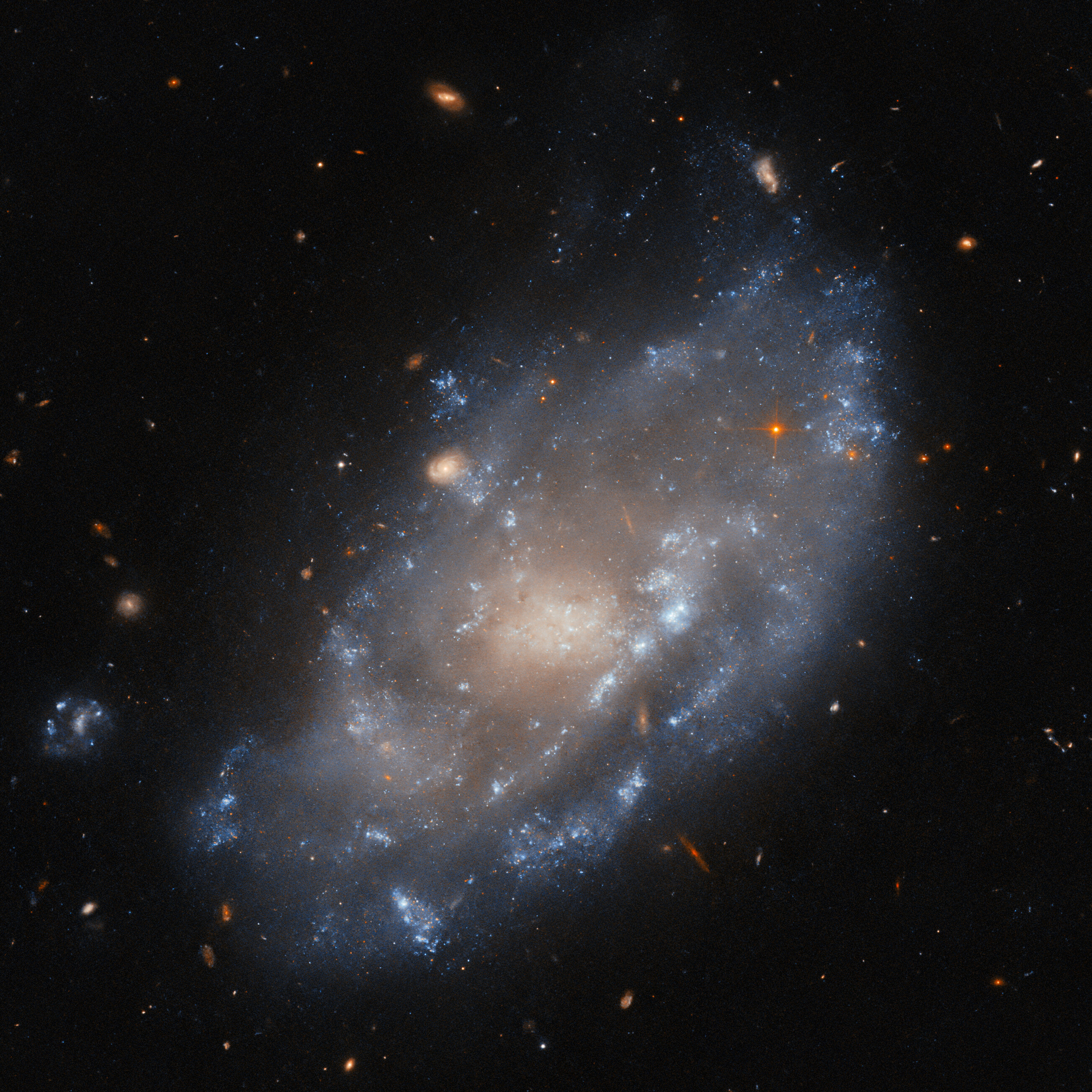
This NASA/ESA Hubble Space Telescope image features the dwarf galaxy IC 776.
ESA/Hubble & NASA, M. Sun

This NASA/ESA Hubble Space Telescope image features the dwarf galaxy IC 776. This swirling collection of new and old stars is located in the constellation Virgo, in the Virgo galaxy cluster, 100 million light-years from Earth. Although IC 776 is a dwarf galaxy, it’s also classified as a SAB-type or ‘weakly barred’ spiral. This highly detailed Hubble view demonstrates that complexity. IC 776 has a ragged, disturbed disc that appears to spiral around the core with arcs of star-forming regions.

The image is from an observation program dedicated to the study of dwarf galaxies in the Virgo cluster that is searching for the visible light emissions from sources of X-rays in these galaxies. X-rays are often emitted by accretion discs, where material that is drawn into a compact object by gravity crashes together and forms a hot, glowing disc. The compact object can be a white dwarf or neutron star in a binary pair that is stealing material from its companion star, or it can be the supermassive black hole at the heart of a galaxy devouring material around it. Dwarf galaxies like IC 776, traveling through the Virgo cluster, experience pressure from intergalactic gas that is similar to the pressure you feel from air hitting your face when you ride a bicycle. This intergalactic gas pressure can both stimulate star formation and feed the central black hole in a galaxy. As more material swirls down toward the black hole, it creates an energetic accretion disc, hot enough to emit X-rays.

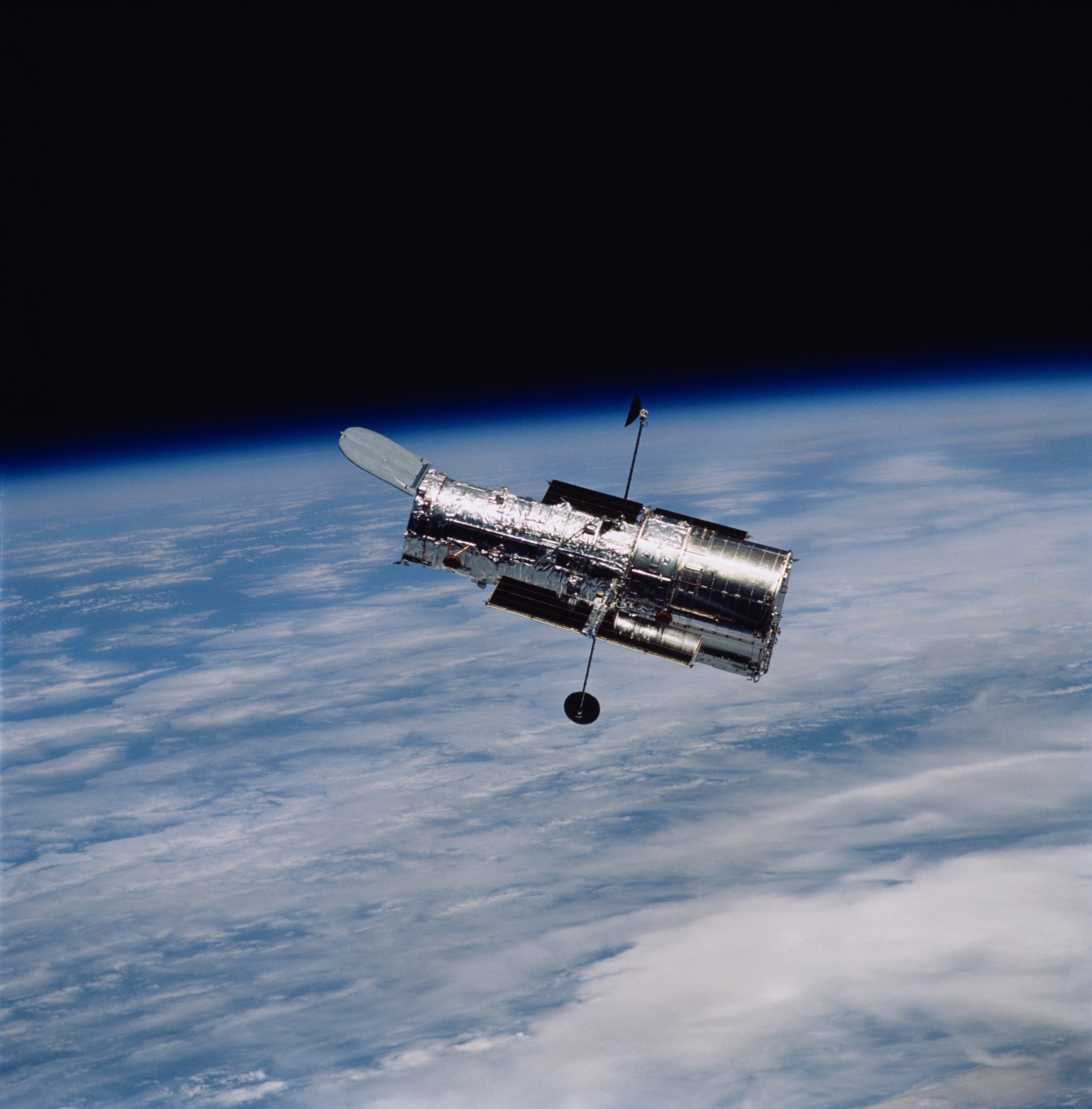
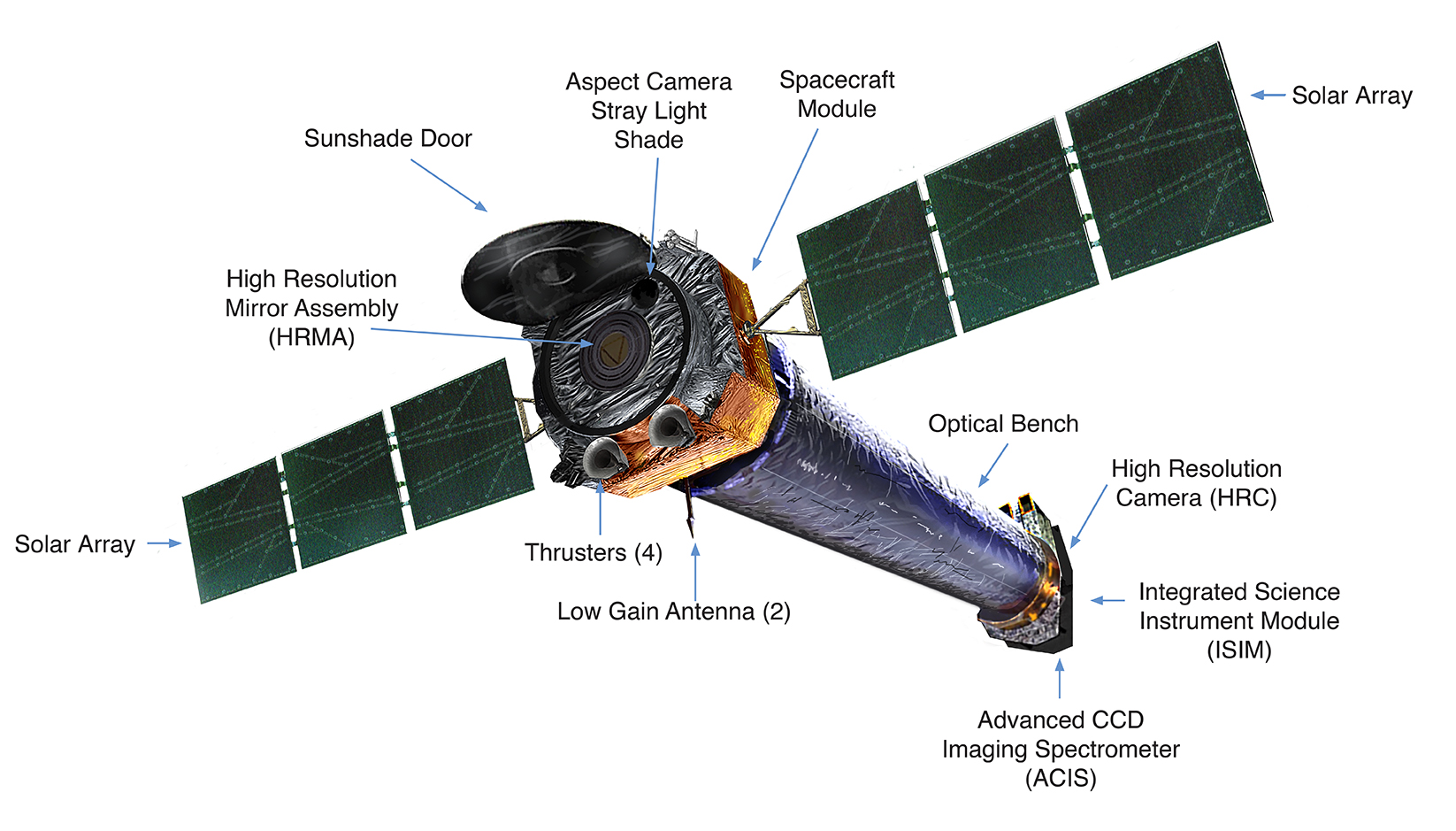
While Hubble is not able to see X-rays, it can coordinate with X-ray telescopes such as NASA’s Chandra X-Ray Observatory, revealing the sources of this radiation in high resolution using visible light. Dwarf galaxies are very important to our understanding of cosmology and the evolution of galaxies. As with many areas of astronomy, the ability to examine these galaxies across the electromagnetic spectrum is critical to their study.

Text Credit: European Space Agency (ESA)

Media Contact:

Claire Andreoli
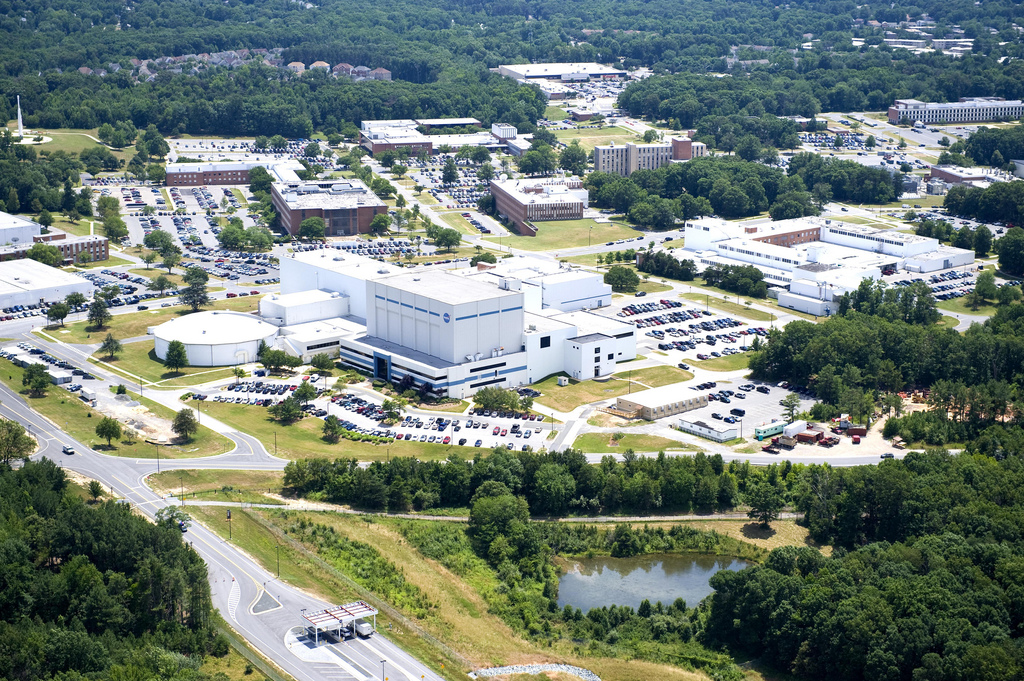
NASA’s Goddard Space Flight CenterGreenbelt, MD
claire.andreoli@nasa.gov

Share

Details

Last Updated
May 03, 2024
Editor
Andrea Gianopoulos
Location
Goddard Space Flight Center

Powered by WPeMatico

Get The Details…

Dragon Moves to New Port, Makes Way for Starliner

Dragon Moves to New Port, Makes Way for Starliner

The SpaceX Dragon Endeavour spacecraft is pictured after backing away from the space station beginning its relocation maneuver. Credit: NASA TV

The SpaceX Dragon spacecraft, with Expedition 71 crew members NASA astronauts Matthew Dominick, Michael Barratt, and Jeanette Epps, as well as Roscosmos cosmonaut Alexander Grebenkin, autonomously redocked with the Harmony module’s space-facing port at 9:46 a.m. EDT over the eastern Indian Ocean, northwest of Australia.

As the 28th spacecraft relocation in station history, the move makes room for the arrival at 12:48 a.m., Wednesday, May 8, of the agency’s Boeing Crew Flight Test and the Starliner spacecraft carrying NASA astronauts Butch Wilmore and Suni Williams.


Learn more about station activities by following the space station blog, @space_station and @ISS_Research on X, as well as the ISS Facebook and ISS Instagram accounts.

Get weekly updates from NASA Johnson Space Center at: https://roundupreads.jsc.nasa.gov/

Get the latest from NASA delivered every week. Subscribe here: www.nasa.gov/subscribe

Powered by WPeMatico

Get The Details…

Mark Garcia

NASA Research Park Public Documents

NASA Research Park Public Documents

3 min read

Preparations for Next Moonwalk Simulations Underway (and Underwater)

Economic Benefits Study:

Development Plans:

NASA Research Park Environmental Reports:

Environmental Management Division Public Documents:

Environmental Impact Statement:

RFP Housing Asbestos & Lead Based Paint Documents:

FP Housing Misc Due Diligence Documents:

Miscellaneous Documents:

Powered by WPeMatico

Get The Details…
Theodore R. Triano