Discovery Alert: Spock’s Home Planet Goes ‘Poof’

Discovery Alert: Spock’s Home Planet Goes ‘Poof’
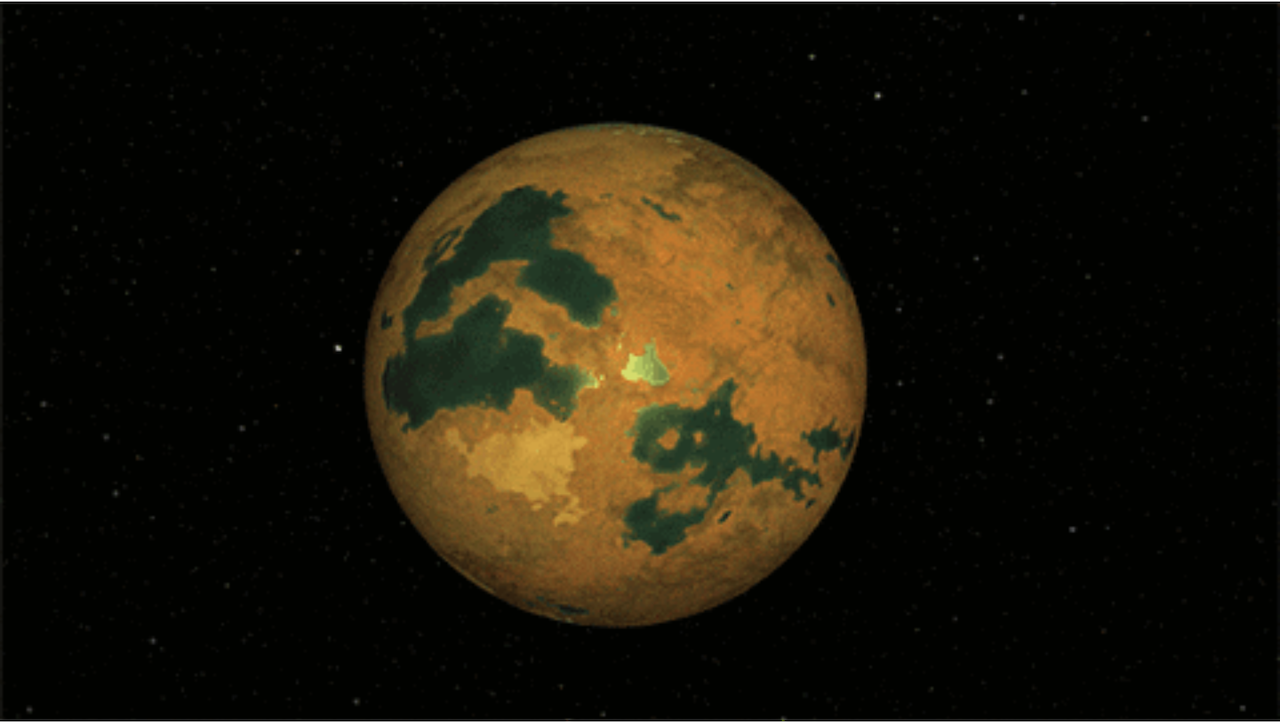
Artist's concept shows a full disk of imagined planet Vulcan, predominantly light brown with patches of gray-green, against the black background of space.
Artist’s concept of a previously proposed possible planet, HD 26965 b – often compared to the fictional “Vulcan” in the Star Trek universe.
Credit: JPL-Caltech

The discovery

A planet thought to orbit the star 40 Eridani A – host to Mr. Spock’s fictional home planet, Vulcan, in the “Star Trek” universe – is really a kind of astronomical illusion caused by the pulses and jitters of the star itself, a new study shows.

Key facts

The possible detection of a planet orbiting a star that Star Trek made famous drew excitement and plenty of attention when it was announced in 2018. Only five years later, the planet appeared to be on shaky ground when other researchers questioned whether it was there at all. Now, precision measurements using a NASA-NSF instrument, installed a few years ago atop Kitt Peak in Arizona, seem to have returned the planet Vulcan even more definitively to the realm of science fiction.

Details

Two methods for detecting exoplanets – planets orbiting other stars – dominate all others in the continuing search for strange new worlds. The transit method, watching for the tiny dip in starlight as a planet crosses the face of its star, is responsible for the vast majority of detections. But the “radial velocity” method also has racked up a healthy share of exoplanet discoveries. This method is especially important for systems with planets that don’t, from Earth’s point of view, cross the faces of their stars. By tracking subtle shifts in starlight, scientists can measure “wobbles” in the star itself, as the gravity of an orbiting planet tugs it one way, then another. For very large planets, the radial velocity signal mostly leads to unambiguous planet detections. But not-so-large planets can be problematic.

Even the scientists who made the original, possible detection of planet HD 26965 b – almost immediately compared to the fictional Vulcan – cautioned that it could turn out to be messy stellar jitters masquerading as a planet. They reported evidence of a “super-Earth” – larger than Earth, smaller than Neptune – in a 42-day orbit around a Sun-like star about 16 light-years away. The new analysis, using high-precision radial velocity measurements not yet available in 2018, confirms that caution about the possible discovery was justified.

The bad news for Star Trek fans comes from an instrument known as NEID, a recent addition to the complex of telescopes at Kitt Peak National Observatory. NEID, like other radial velocity instruments, relies on the “Doppler” effect: shifts in the light spectrum of a star that reveal its wobbling motions. In this case, parsing out the supposed planet signal at various wavelengths of light, emitted from different levels of the star’s outer shell, or photosphere, revealed significant differences between individual wavelength measurements – their Doppler shifts – and the total signal when they were all combined. That means, in all likelihood, the planet signal is really the flickering of something on the star’s surface that coincides with a 42-day rotation – perhaps the roiling of hotter and cooler layers beneath the star’s surface, called convection, combined with stellar surface features such as spots and “plages,” which are bright, active regions. Both can alter a star’s radial velocity signals.

While the new finding, at least for now, robs star 40 Eridani A of its possible planet Vulcan, the news isn’t all bad. The demonstration of such finely tuned radial velocity measurements holds out the promise of making sharper observational distinctions between actual planets and the shakes and rattles on surfaces of distant stars.

Fun facts

Even the destruction of Vulcan has been anticipated in the Star Trek universe. Vulcan was first identified as Spock’s home planet in the original 1960s television series. But in the 2009 film, “Star Trek,” a Romulan villain named Nero employs an artificial black hole to blow Spock’s home world out of existence.

The discoverers

A science team led by astronomer Abigail Burrows of Dartmouth College, and previously of NASA’s Jet Propulsion Laboratory, published a paper describing the new result, “The death of Vulcan: NEID reveals the planet candidate orbiting HD 26965 is stellar activity,” in The Astronomical Journal in May 2024 (Note: HD 26965 is an alternate designation for the star, 40 Eridani A.)

Powered by WPeMatico
Get The Details…

Arizona Students Go on an Exoplanet Watch 

Arizona Students Go on an Exoplanet Watch 

2 min read

Arizona Students Go on an Exoplanet Watch 

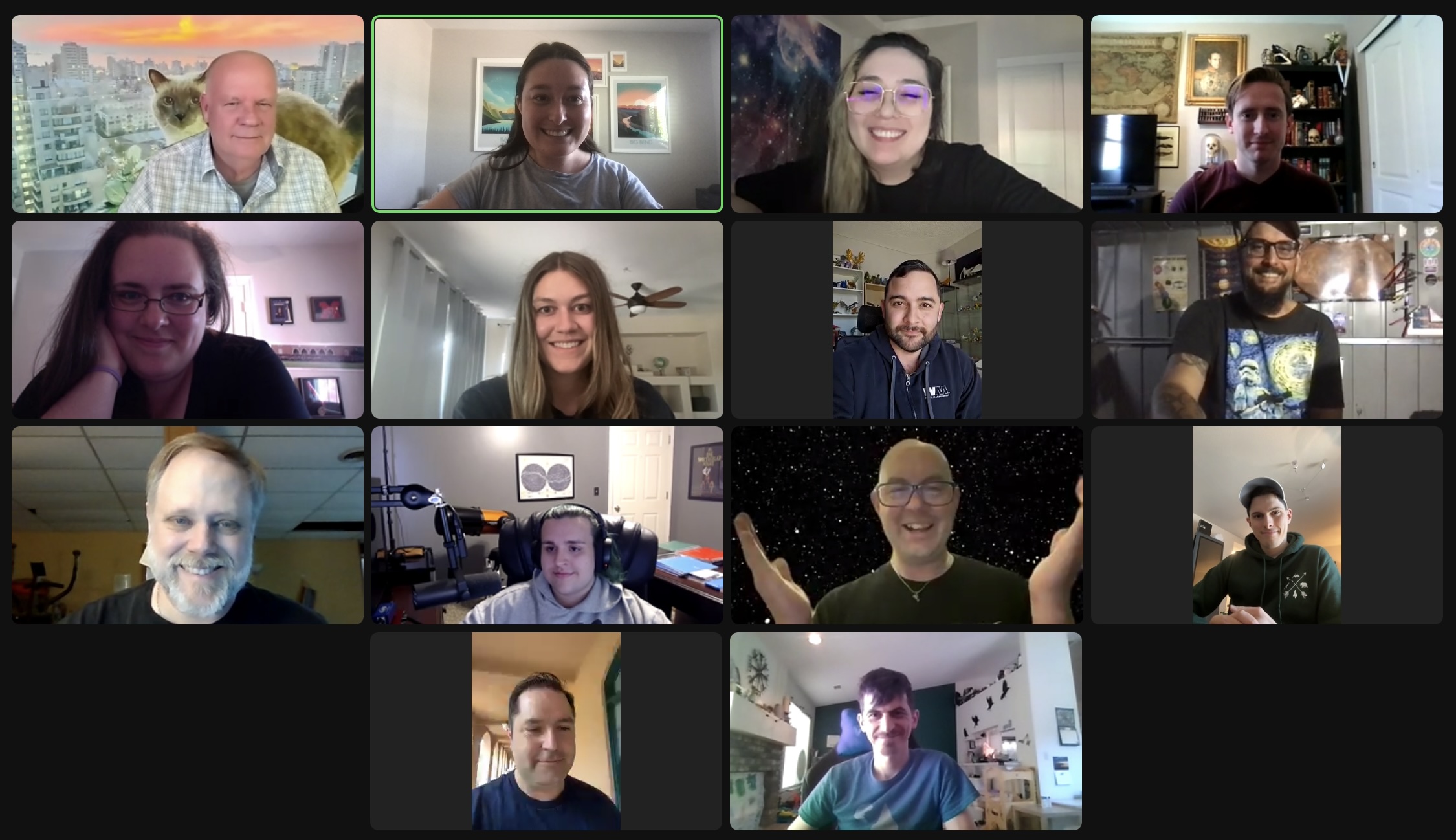
A composite screenshot of 12 participants on a video call.
The instructor, teaching assistant, and students from the online exoplanet research course meeting synchronously via Zoom.
From left to right and top to bottom: Suber Corley, Molly Simon (instructor), Kimberly Merriam, Bradley Hutson, Elizabeth Catogni, Heather Hewitt (teaching assistant), Steve Marquez-Perez, Fred Noguer, Matthew Rice, Ty Perry, Mike Antares, Zachary Ruybal, Chris Kight, Kellan Reagan.
Credit: Image collected by Molly Simon

Exoplanets, planets outside of our own solar system, hold the keys to finding extraterrestrial life and understanding the origin of our own world. Now online students at Arizona State University (ASU) in a new course called Exoplanet Research Experience have become exoplanet scientists by taking part in NASA’s Exoplanet Watch project. 

Fifteen students from ASU’s Astronomical and Planetary Sciences online degree program enroll in this course each year. These students analyze data on transits, events where the exoplanets block some of the light from their host stars. Each week, the class meets via Zoom to discuss progress, answer questions, and go over assignments. Students begin by completing a module from an online astrobiology course called Habitable Worlds, which is supported by NASA’s Infiniscope project. During the last 5 weeks of the course, students work to consolidate their work into a paper draft that is later submitted to a peer-reviewed journal with all of the students listed as co-authors. 

“I think [the class] changed the course of my life…” said one student. “Not just in my confidence, but just knowing that people in the field have my back…I have tremendous support from them.” 

“This course definitely helped kind of show what exactly scientists do and what the expectation is…especially for an online program, to have research opportunities is a great help…” another student said. 

After participating in the course, students have gone on to participate in other research experiences, write their own first-author papers, participate in internships, and present their research at national astronomy conferences.  An assessment of student outcomes was recently published in the Physics Review Physics Education Research Journal.

You don’t need to go to ASU to do real exoplanet research. Anyone can help collect and analyze exoplanet data through Exoplanet Watch, whether you own a telescope or just want to help analyze data. Visit the NASA Exoplanet Watch website to get started!

Share

Details

Last Updated
May 28, 2024

Powered by WPeMatico

Get The Details…

NASA to Provide Coverage of Progress 88 Launch, Space Station Docking

NASA to Provide Coverage of Progress 88 Launch, Space Station Docking

The Progress 85 cargo craft is seen shortly after undocking from International Space Station on Feb. 12 as it was orbiting 260 miles above the Pacific Ocean.

NASA will provide live launch and docking coverage of a Roscosmos cargo spacecraft carrying about three tons of food, fuel, and supplies for the Expedition 71 crew aboard the International Space Station.

The unpiloted Progress 88 spacecraft is scheduled to launch at 5:43 a.m. EDT (2:43 p.m. Baikonur time) Thursday, May 30, on a Soyuz rocket from the Baikonur Cosmodrome in Kazakhstan.

Live launch coverage will begin at 5:15 a.m. on NASA+, NASA Television, the NASA appYouTube, and the agency’s website. Learn how to stream NASA TV through a variety of platforms including social media.

After a two-day in-orbit journey to the station, the spacecraft will automatically dock to the space-facing port of orbiting laboratory’s Poisk module at 7:47 a.m., Saturday, June 1. NASA coverage of rendezvous and docking will begin at 7 a.m. on NASA+, NASA Television, the NASA app, YouTube, and the agency’s website.
The spacecraft will remain docked at the station for almost six months before departing in late November for a re-entry into Earth’s atmosphere to dispose of trash loaded by the crew.

The International Space Station is a convergence of science, technology, and human innovation that enables research not possible on Earth. For more than 23 years, NASA has supported a continuous U.S. human presence aboard the orbiting laboratory, through which astronauts have learned to live and work in space for extended periods of time. The space station is a springboard for the development of a low Earth economy and NASA’s next great leaps in exploration, including missions to the Moon under Artemis and ultimately, human exploration of Mars.

Learn more about the space station, its research, and crew, at:

https://www.nasa.gov/station

-end-

Julian Coltre
Headquarters, Washington
202-358-1100
julian.n.coltre@nasa.gov

Sandra Jones
Johnson Space Center, Houston
281-483-5111
sandra.p.jones@nasa.gov

Powered by WPeMatico

Get The Details…
Abbey A. Donaldson

NASA’s OSIRIS-APEX Unscathed After Searing Pass of Sun

NASA’s OSIRIS-APEX Unscathed After Searing Pass of Sun

4 min read

NASA’s OSIRIS-APEX Unscathed After Searing Pass of Sun

Mission engineers were confident NASA’s OSIRIS-APEX (Origins, Spectral Interpretation, Resource Identification – Apophis Explorer) spacecraft could weather its closest ever pass of the Sun on Jan. 2, 2024. Their models had predicted that, despite traveling 25 million miles closer to the heat of the Sun than it was originally designed to, OSIRIS-APEX and its components would remain safe.

The mission team confirmed that the spacecraft indeed had come out of the experience unscathed after downloading stored telemetry data in mid-March. The team also tested OSIRIS-APEX’s instruments in early April, once the spacecraft was far enough from the Sun to return to normal operations. Between December 2023 and March, OSIRIS-APEX was inactive, with only limited telemetry data available to the team on Earth.

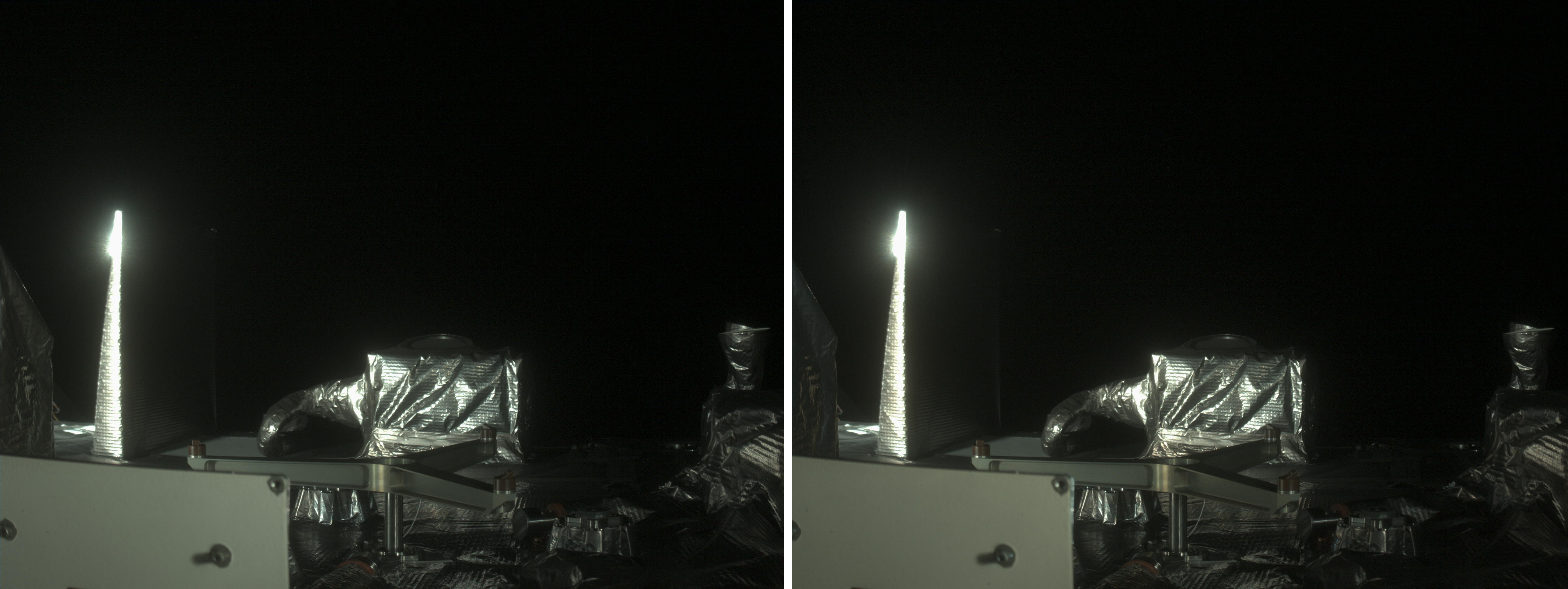
Two identical scenes are seen in a pair of side-by-side images. Against the pitch-black background of space, a boxy metallic satellite dominates the foreground. Glints of light are bouncing off the shiniest parts of the structure.
Both these images from a camera called StowCam aboard OSIRIS-APEX show the same view taken six months apart, before (left) and after (right) the Jan. 2, 2024, perihelion. Notably, there is no observable difference on spacecraft surfaces, a good indication that the higher temperatures faced during perihelion didn’t alter the spacecraft. Another insight gleaned from the identical view in the two images is that the camera’s performance was also not affected by perihelion. StowCam, a color imager, is one of three cameras comprising TAGCAMS (the Touch-and-Go Camera System), which is part of OSIRIS-APEX’s guidance, navigation, and control system. TAGCAMS was designed, built and tested by Malin Space Science Systems; Lockheed Martin integrated TAGCAMS to the OSIRIS-APEX spacecraft and operates TAGCAMS.

The spacecraft’s clean bill of health was due to creative engineering. Engineers placed OSIRIS-APEX in a fixed orientation with respect to the Sun and repositioned one of its two solar arrays to shade the spacecraft’s most sensitive components during the pass.

The spacecraft is in an elliptical orbit around the Sun that brings it to a point closest to the Sun, called a perihelion, about every nine months. To get on a path that will allow it to meet up with its new target Apophis in 2029, the spacecraft’s trajectory includes several perihelions that are closer to the Sun than the spacecraft’s components were originally designed to withstand.

“It’s phenomenal how well our spacecraft configuration protected OSIRIS-APEX, so I’m really encouraged by this first close perihelion pass,” said Ron Mink, mission systems engineer for OSIRIS-APEX, based at NASA’s Goddard Space Flight Center in Greenbelt, Maryland.

Besides confirming that the January perihelion worked out according to predictions, engineers found surprises while testing spacecraft components. A couple of instruments came out better than expected after exposure to higher temperatures.

A camera that helped map asteroid Bennu and will do the same at Apophis, saw a 70% reduction in “hot pixels” since April 13, 2023, the last time it was tested. Hot pixels, which are common in well-used cameras in space, show up as white spots in images when detectors accumulate exposure to high-energy radiation, mostly from our Sun.

“We think the heat from the Sun reset the pixels through annealing,” said Amy Simon, OSIRIS-APEX project scientist, based at NASA Goddard. Annealing is a heat process that can restore function of instruments and is often done intentionally through built-in heaters on some spacecraft.

Captured on Oct. 20, 2020, as NASA’s OSIRIS-REx spacecraft collected a sample from the surface of asteroid Bennu, this series of 82 images shows the SamCam imager’s field of view as the spacecraft approached and touched Bennu’s surface. OSIRIS-REx’s sampling head touched Bennu’s surface for approximately 6 seconds, after which the spacecraft performed a back-away burn. Credit: NASA/Goddard/University of Arizona

Another welcome surprise, said Simon, came from the spacecraft’s visible and near-infrared spectrometer. Before perihelion, the spectrometer, which mapped the surface composition of Bennu, and will do the same at Apophis, seemed to have a rock from Bennu stuck inside its calibration port. Scientist suspected that some sunlight was blocked from filtering through the instrument after the spacecraft, then called OSIRIS-REx, grabbed a sample from asteroid Bennu on Oct. 20, 2020. By picking up the sample and then firing its engines to back away from Bennu, the spacecraft stirred up dust and pebbles that clung to it.

“But, with enough spacecraft maneuvers and engine burns after sample collection,” Simon said, the rock in the calibration port appears to have been dislodged. Scientists will check the spectrometer again when OSIRIS-APEX swings by Earth on Sept. 25, 2025, for a gravitational boost.

OSIRIS-APEX is now operating normally as it continues its journey toward asteroid Apophis for a 2029 rendezvous. Its better-than-expected performance during the first close perihelion is welcome news. But engineers caution that it doesn’t mean it’s time to relax. OSIRIS-APEX needs to execute five more exceptionally close passes of the Sun — along with three Earth gravity assists — to get to its destination. It’s unclear how the cumulative effect of six perihelions at a closer distance than designed will impact the spacecraft and its components.

The second OSIRIS-APEX perihelion is scheduled for Sept. 1, 2024. The spacecraft will be 46.5 million miles away from the Sun, which is roughly half the distance between Earth and the Sun, and well inside the orbit of Venus.

By Lonnie Shekhtman

NASA’s Goddard Space Flight Center, Greenbelt, Md.

Powered by WPeMatico

Get The Details…

Sols 4195-4198: Feels Like Summer

Sols 4195-4198: Feels Like Summer

2 min read

Sols 4195-4198: Feels Like Summer

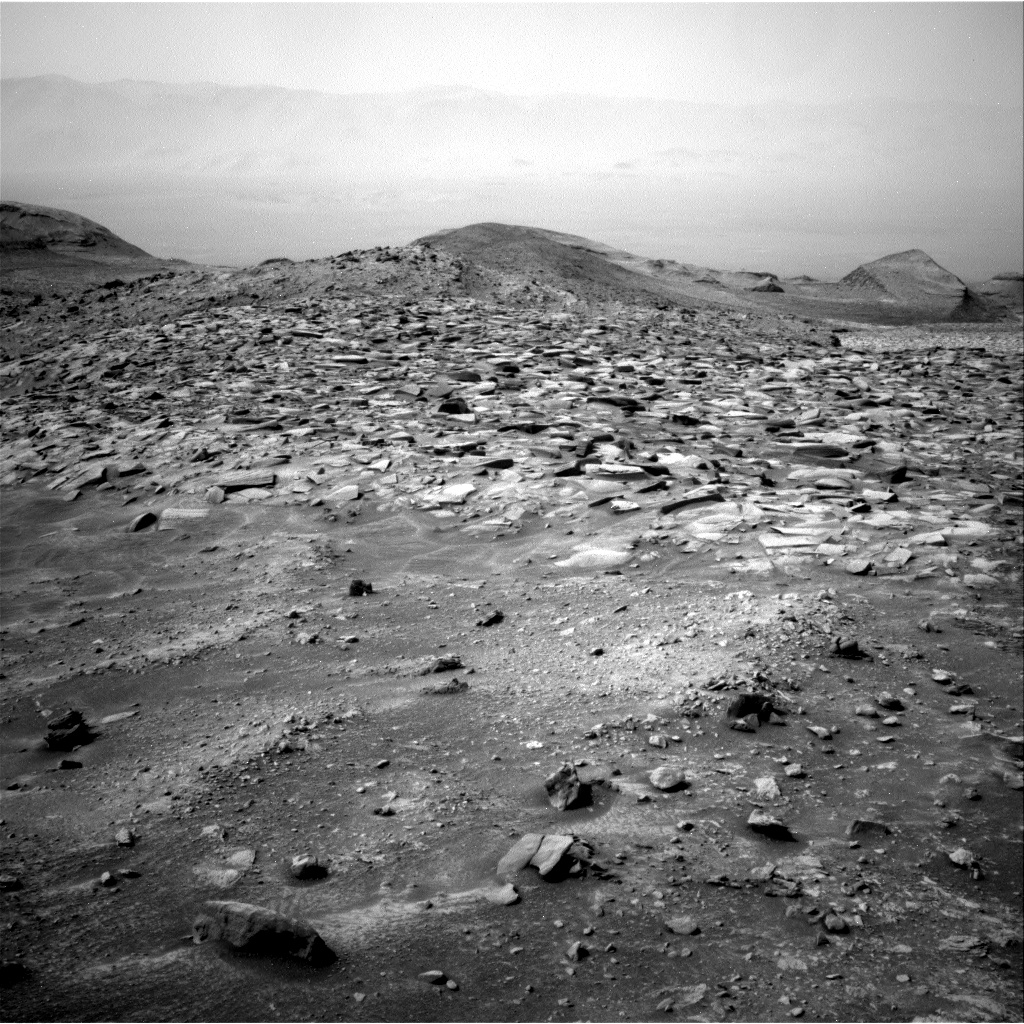
Navcam Right image of Fascination Turret to the north from sol 4193
NASA/JPL-Caltech

Earth planning date: Friday, May 24, 2024

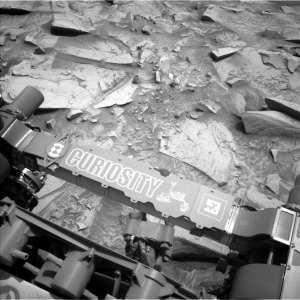
The first sol of this weekend includes an extremely long, 6-hour DAN activity to measure the amount of hydrogen near the surface, in parallel with a standard midday remote science block including: ChemCam LIBS on a smooth, dark rock named “Shadow Lake,” an RMI 7-frame mosaic of the Gediz Vallis ridge base, and two small Mastcam mosaics to document the rock diversity in this area. Since we have so much power to play with, we’re actually staying awake until beginning a custom afternoon Mastcam imaging block to capture the low-sun-angle lighting on Kukenan butte and Milestone Peak ridge in front of us. Should be a butte-iful view. 

On the second sol, it’s time to stretch the old arm! After another standard midday block with more ChemCam and Mastcam remote sensing, the arm will get ready for a full evening of contact science on the workspace blocks we have reachable. There’s no DRT-able rocks here, so MAHLI has two dusty targets named “Second Lake” and “Josephine Lake,” the latter of which will include a 5-frame MAHLI mosaic on the dusty layers. APXS finishes off the evening with two integrations on both Josephine Lake and Second Lake. 

The third sol includes one last midday remote sensing block and an hour-long drive, which is proving tricky to plan. There’s sand, spikey rocks, float rocks, you name it we’re driving over it. If we make it all 38.41 meters, we’ll have crossed a major transition in the bedrock and gotten closer to the white stones to the west. I don’t camp much these days, but if I could go anywhere this holiday weekend it’d be where Curiosity is! Except, you know, the radioactive power source…A fourth sol is included this weekend since Curiosity is on a California holiday schedule, but we make it easy on ourselves by using it as a “REMS-only” sol where the only measurements come from REMS (our local Gale weather station). Enjoy the holiday, US-based earthlings!

Written by Natalie Moore, Mission Operations Specialist at Malin Space Science Systems

Share

Details

Last Updated
May 28, 2024

Related Terms

Powered by WPeMatico

Get The Details…