25 Years Ago: STS-96 Resupplies the Space Station

25 Years Ago: STS-96 Resupplies the Space Station

On May 27, 1999, the second space station assembly and logistics mission began. The main goals of STS-96, designated as the 2A.1 mission in the overall assembly sequence, included resupplying and repairing the fledgling orbital facility, consisting of the Zarya and Node 1 modules assembled during STS-88 in December 1998. The multinational seven-member crew transferred nearly two tons of supplies from the shuttle’s Spacehab double module and water to the crew-tended space station. Two of the astronauts conducted a spacewalk to install equipment on the outside of the facility. The astronauts also conducted repairs inside the station. After six days of docked operations in low Earth orbit, the crew departed the repaired and resupplied space station, making a rare night landing.
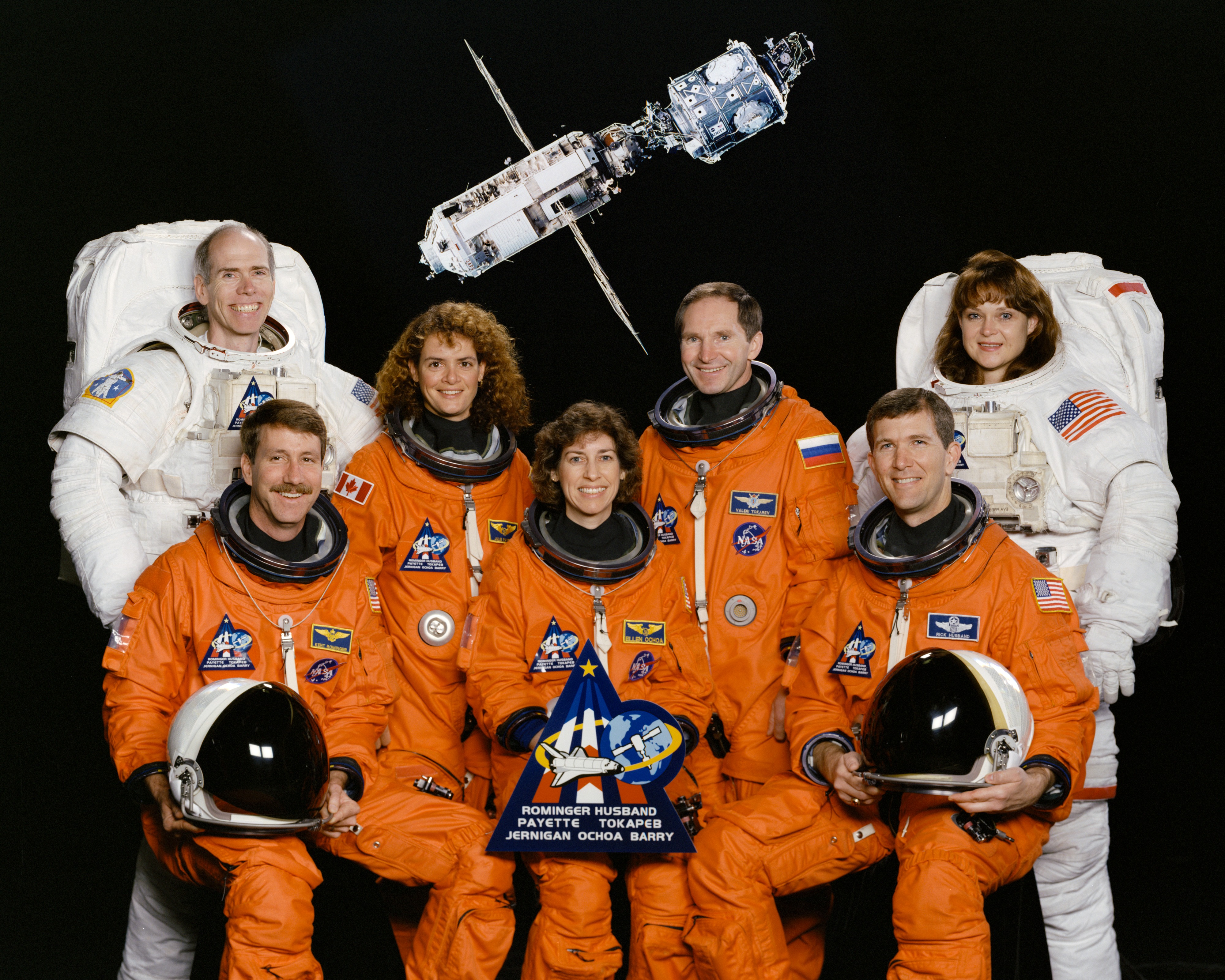
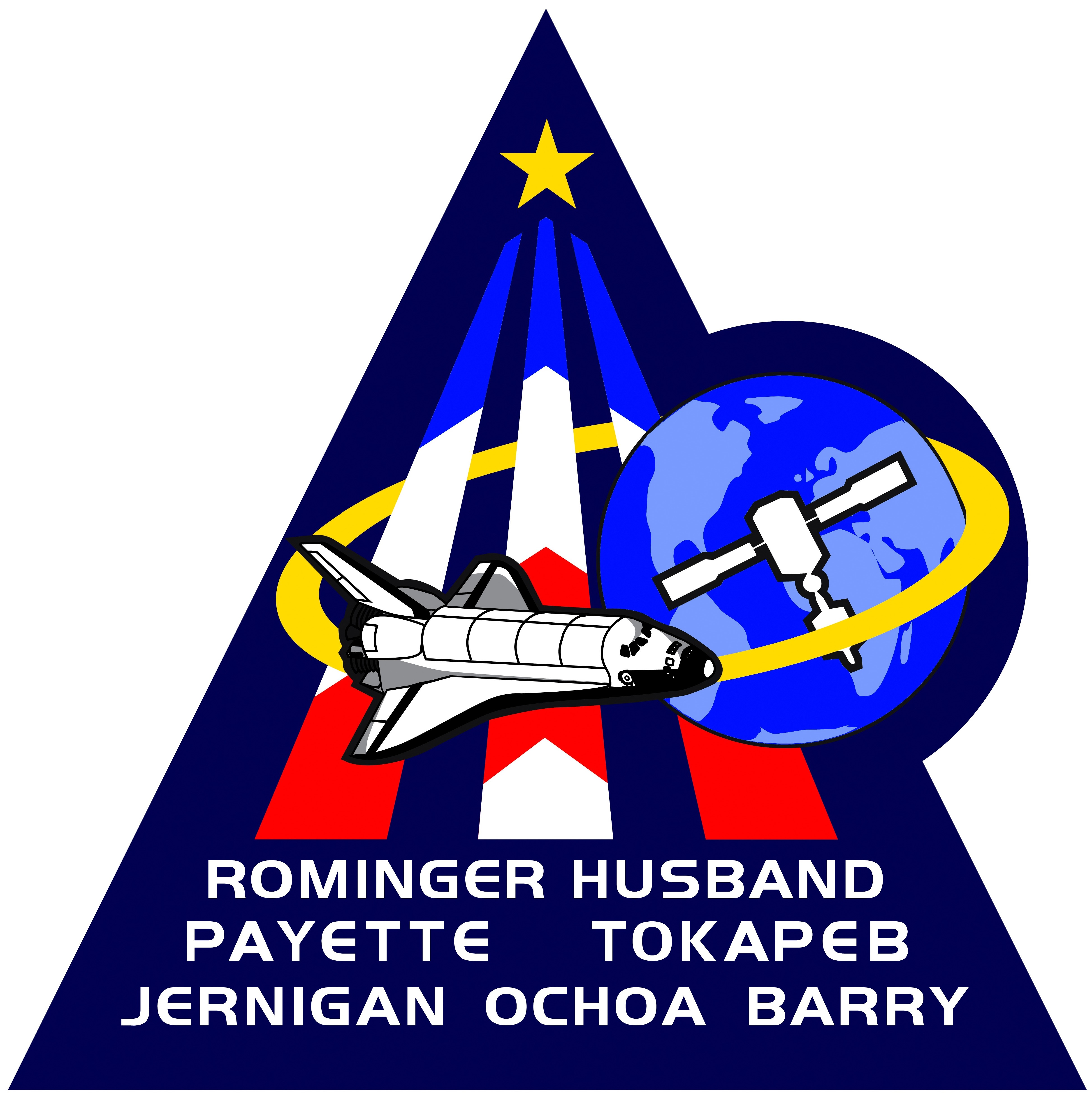
Left: The STS-96 crew of Daniel T. Barry, left, Kent V. Rominger, Julie Payette of the Canadian Space Agency, Ellen Ochoa, Valeri I. Tokarev of Roscosmos, Rick D. Husband, and Tammy E. Jernigan. Right: The STS-96 crew patch.
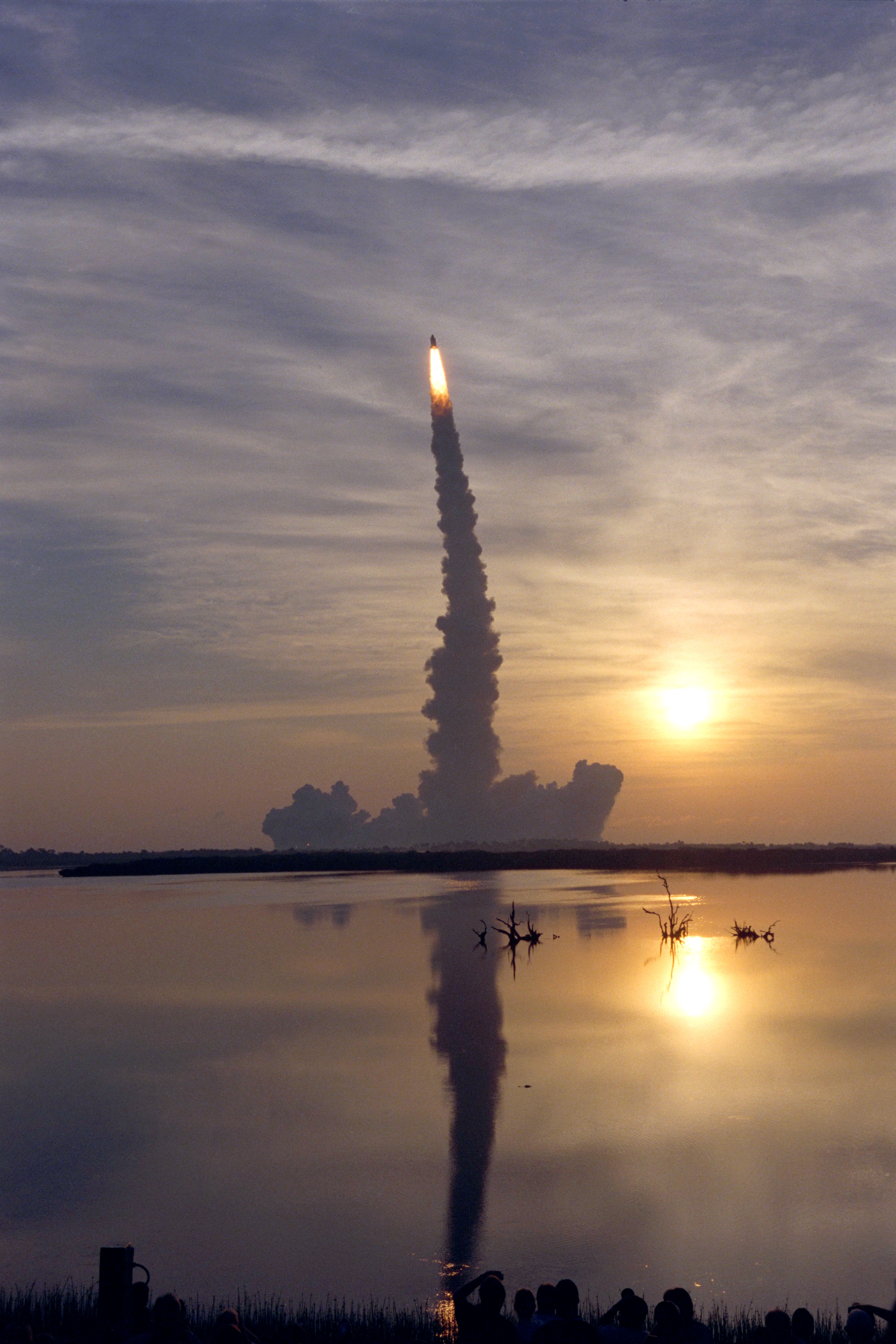
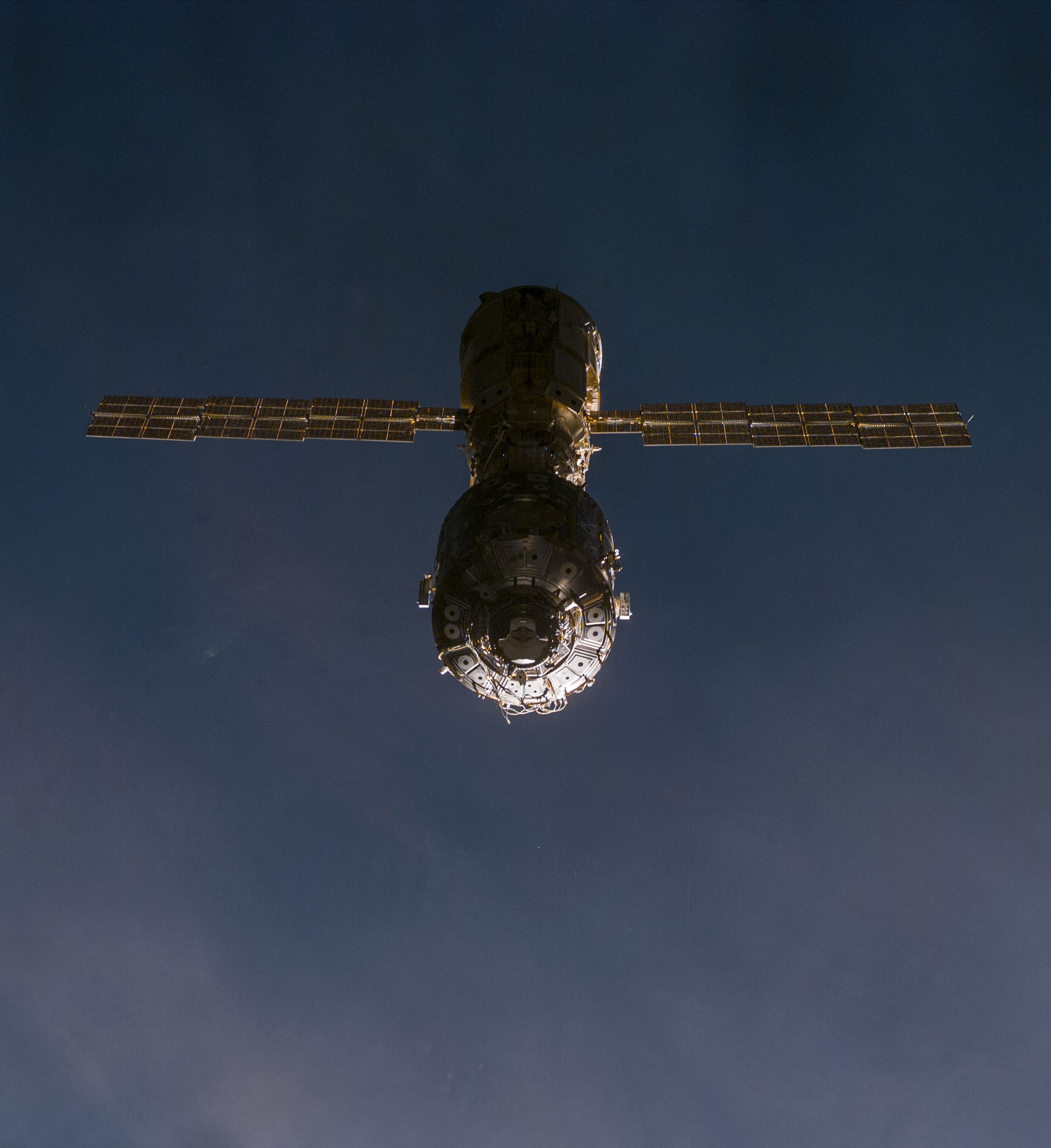
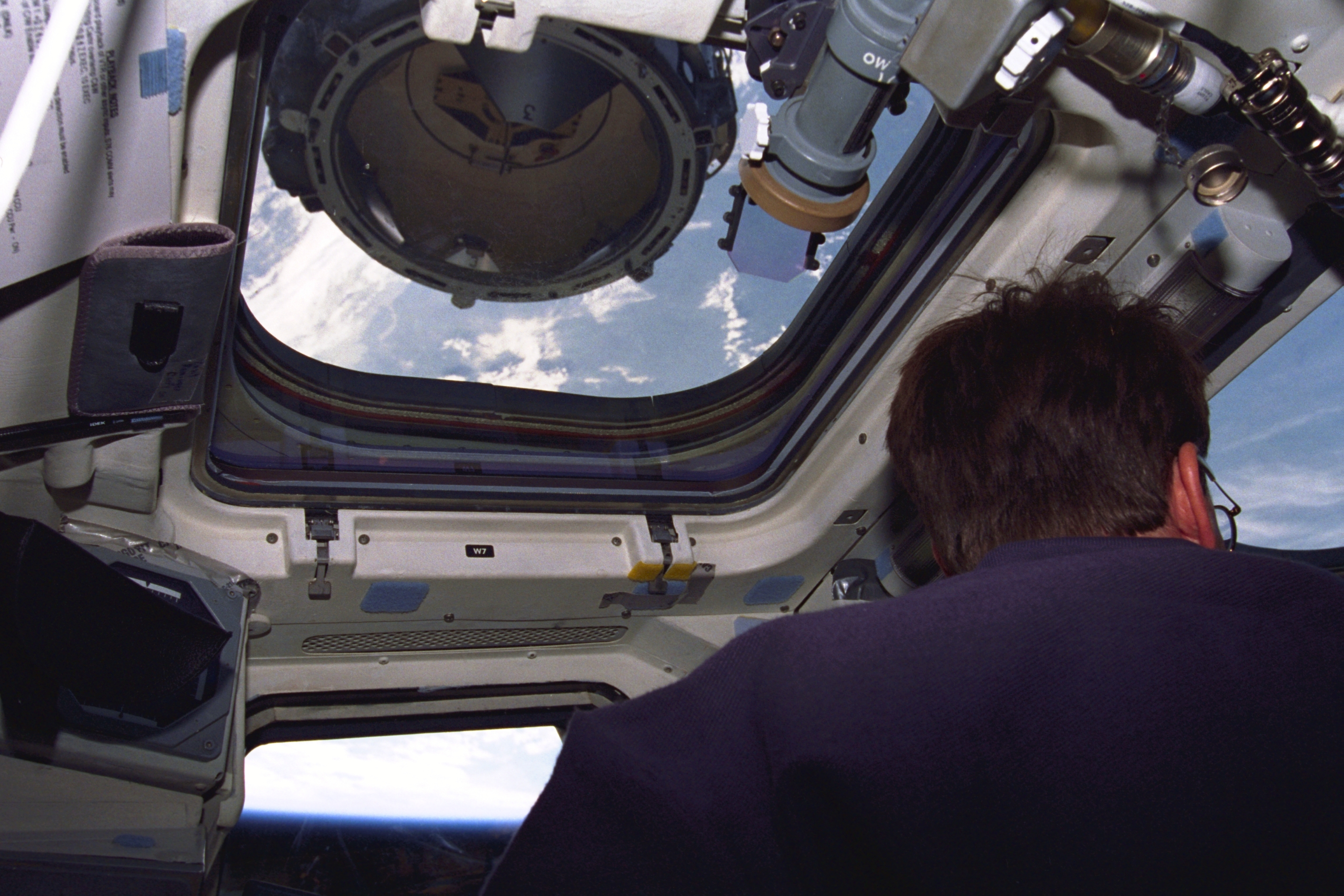
Launch of Discovery on Shuttle mission STS-96. View of the International Space Station from Discovery during the rendezvous maneuver. The Node 1’s Pressurized Mating Adapter appears in on Discover’s overhead windows just before docking.

Left: Launch of Discovery on Shuttle mission STS-96. Middle: View of the International Space Station from Discovery during the rendezvous maneuver. Right: The Node 1’s Pressurized Mating Adapter appears in on Discover’s overhead windows just before docking. 

The second space shuttle assembly and resupply mission to the space station lifted off just after sunrise on May 27, 1999, from Launch Pad 39B at NASA’s Kennedy Space Center (KSC) in Florida. Its multinational seven-person crew included Commander Kent V. Rominger, Pilot Rick D. Husband, and Mission Specialists Tamara “Tammy” E. Jernigan, Ellen Ochoa, Daniel T. Barry, Julie Payette of the Canadian Space Agency, and Valeri I. Tokarev representing Roscosmos. The flight marked the first time a space crew included three women since STS-40 in 1991. Less than two days after launch, Rominger guided Discovery to the first docking with the two-module space station at the Pressurized Mating Adapter-2 (PMA-2), attached to Node 1. In preparation for the next day’s spacewalk, the astronauts reduced the pressure in the shuttle’s cabin from the usual 14.7 pounds per square inch (psi) to 10.2 psi to reduce the time needed for spacewalkers Jernigan and Barry to breathe pure oxygen to purge their bodies of nitrogen to prevent decompression sickness, also called the bends.
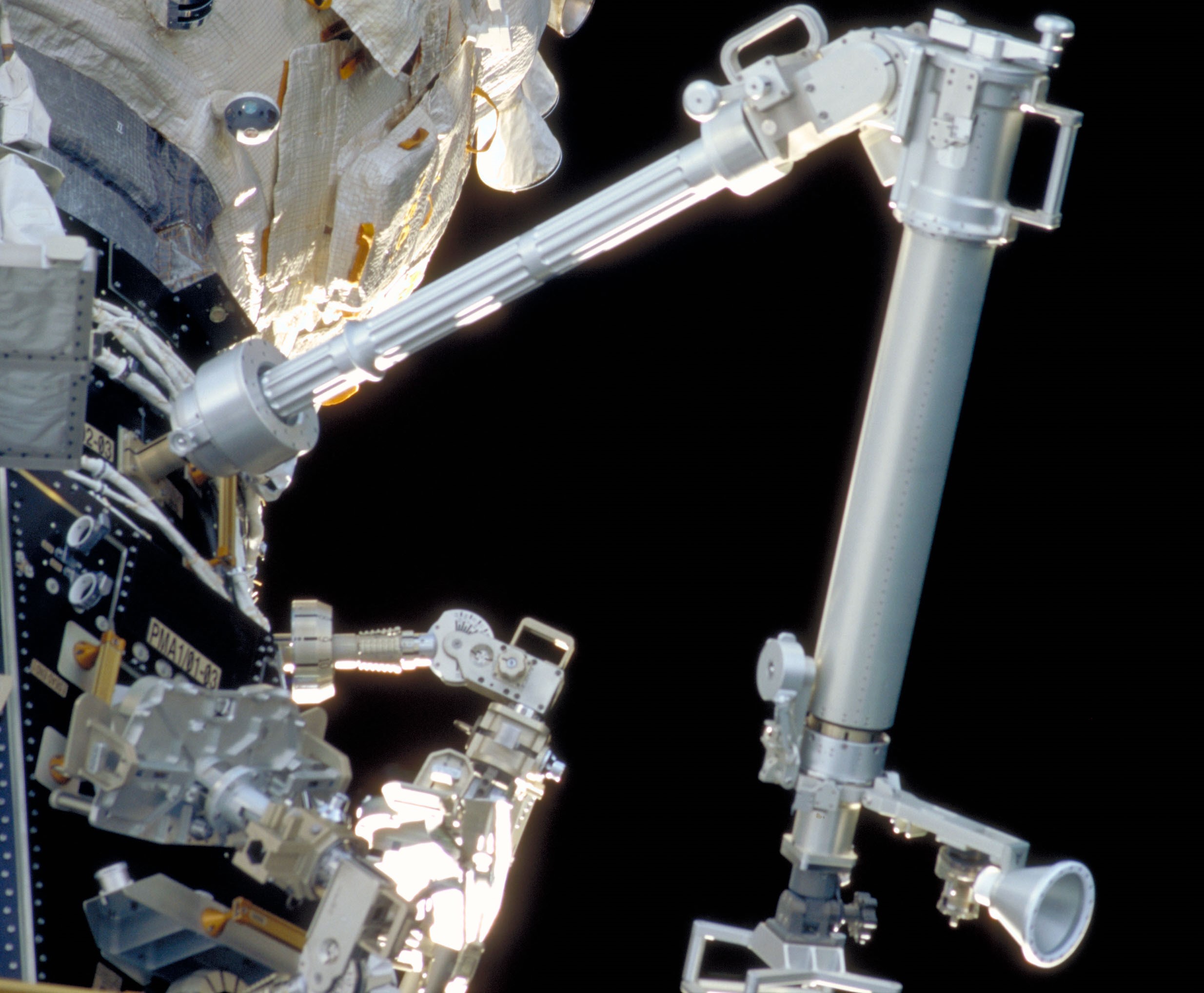
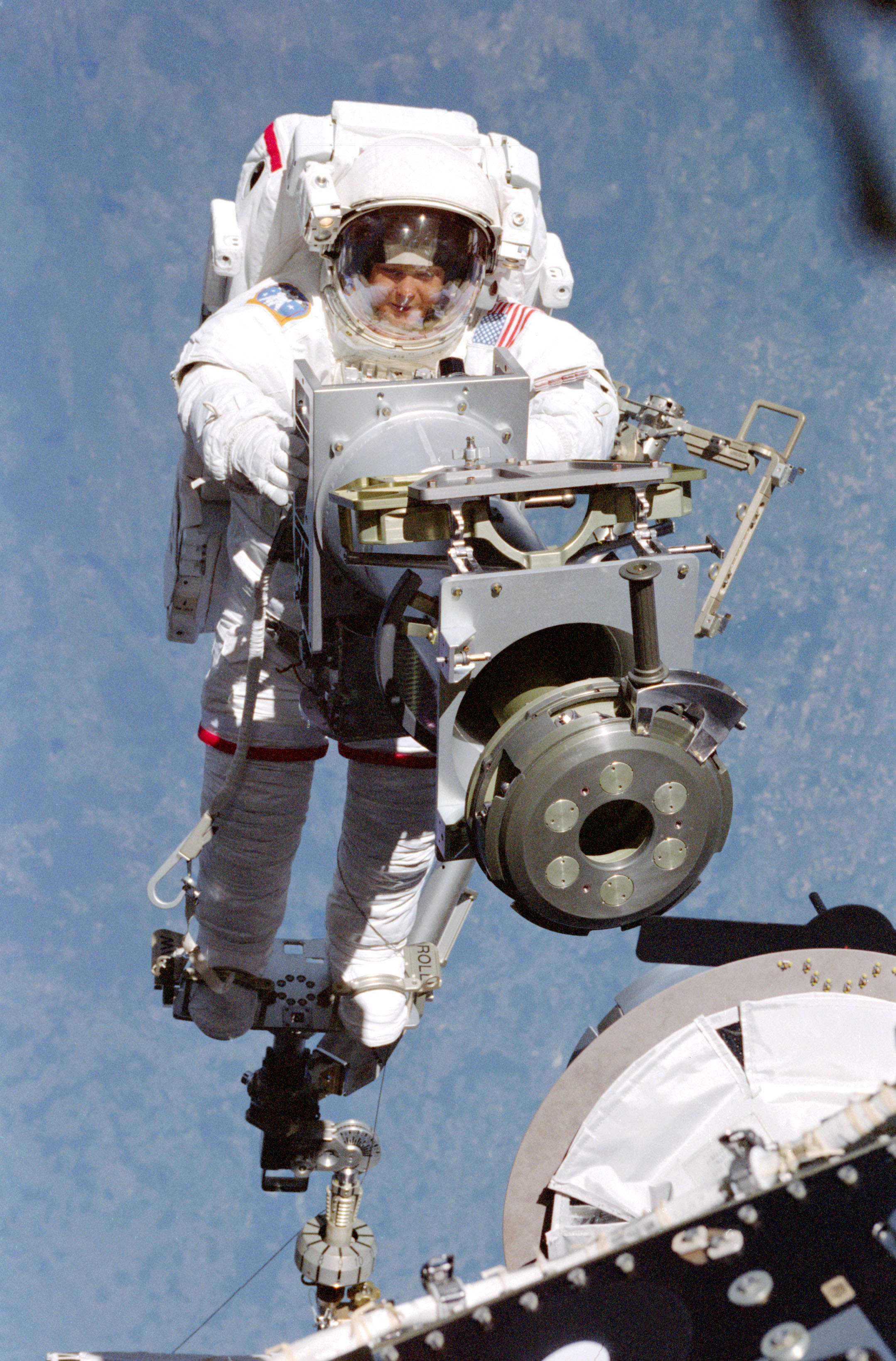
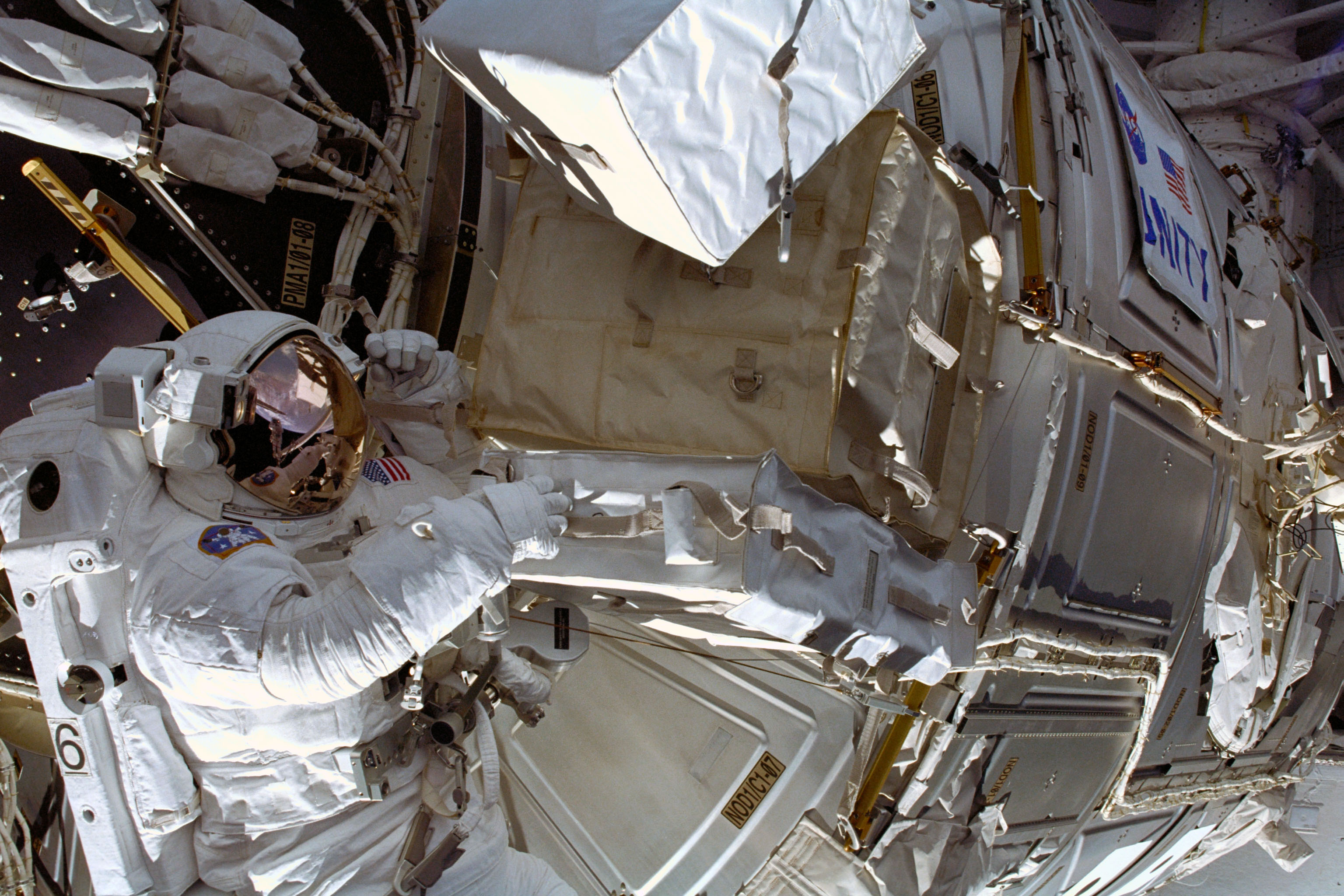
The Orbital Replacement Unit Transfer Device installed on the Pressurized Mating Adapter during the STS-96 spacewalk. Tamara E. Jernigan carries the Strela boom to the Zarya module. Daniel T. Barry mounts a stowage bag on Node 1.

Left: The Orbital Replacement Unit Transfer Device installed on the Pressurized Mating Adapter during the STS-96 spacewalk. Middle: Tamara E. Jernigan carries the Strela boom to the Zarya module. Right: Daniel T. Barry mounts a stowage bag on Node 1. 

The day after docking, Jernigan and Barry exited the Shuttle’s airlock to begin one of the flight’s major objectives. From inside the Shuttle, Payette coordinated the spacewalk activities and Ochoa operated the robotic arm to position Jernigan. Jernigan and Barry first installed the American crane, also known as the Orbital Replacement Unit (ORU) Transfer Device onto its socket on PMA-1, the tunnel joining Node 1 and Zarya. Then they moved the Russian Strela boom and installed it on PMA-2. Next, they installed a pair of foot restraints onto PMA-1 and then installed three large tool bags onto Node 1. Jernigan and Barry completed the spacewalk in 7 hours and 55 minutes.
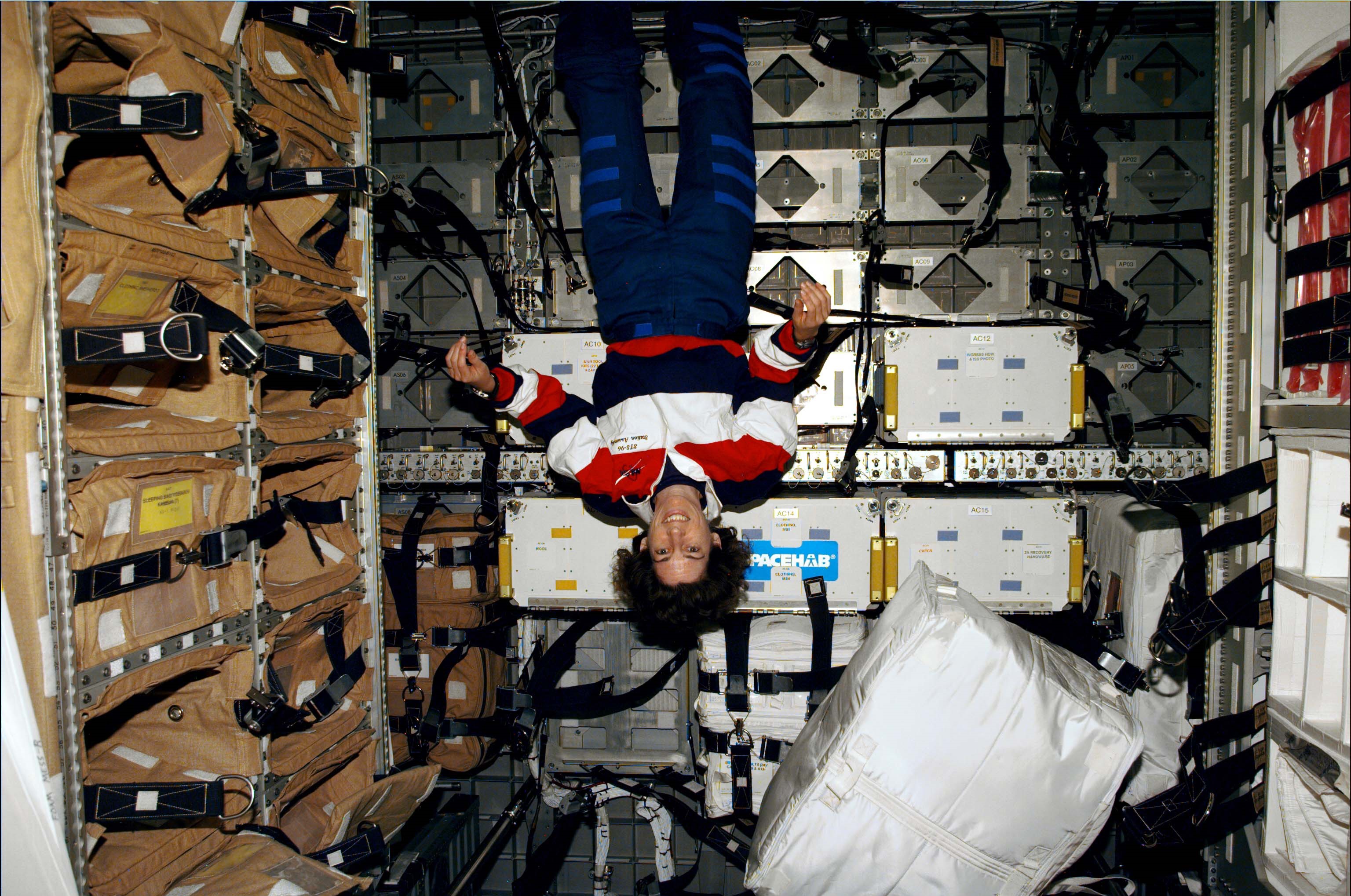
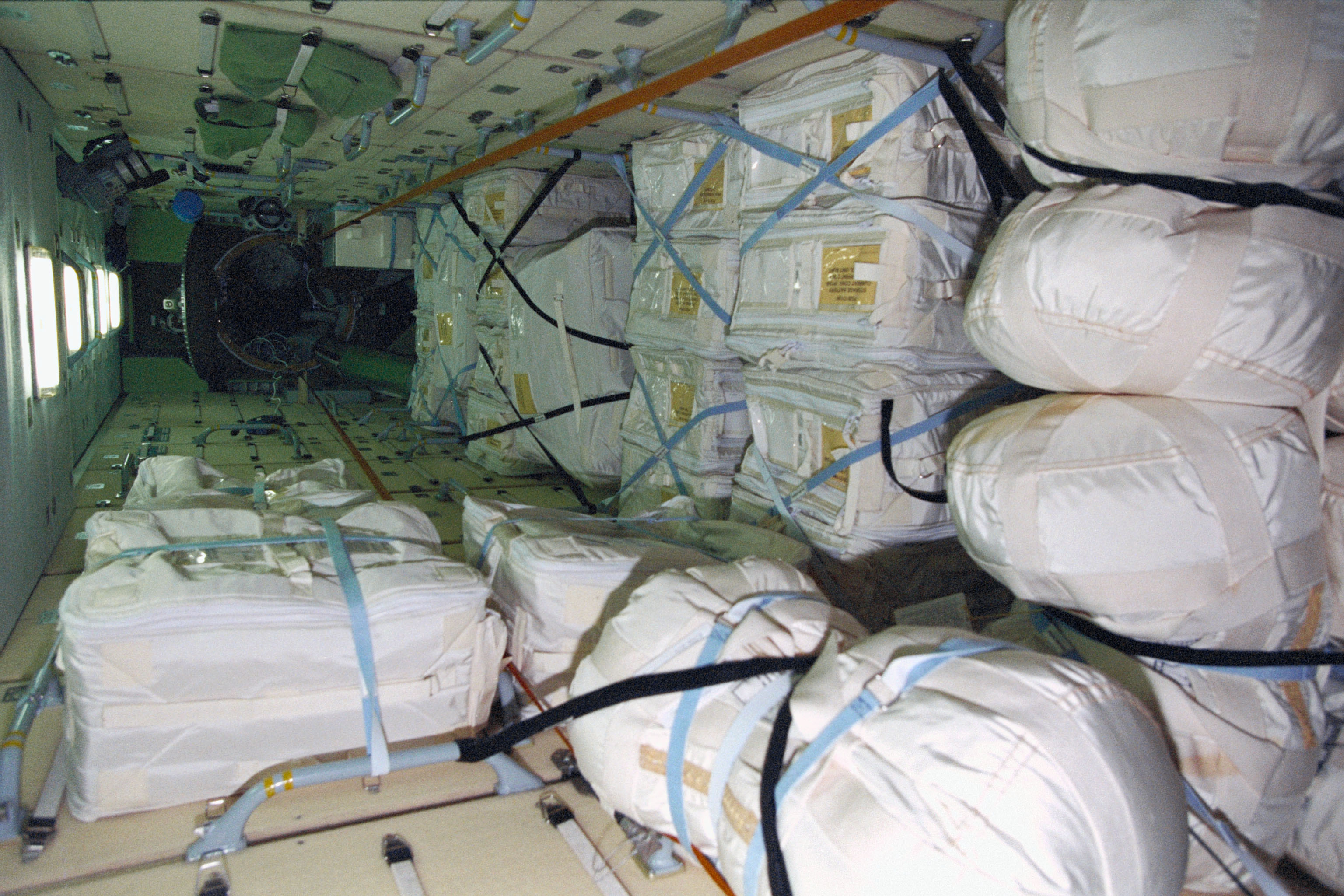
Ellen Ochoa inside the double Spacehab module. Stowage bags transferred into Zarya.

Left: Ellen Ochoa inside the double Spacehab module. Right: Stowage bags transferred into Zarya. 

The day after the spacewalk, having repressurized the shuttle cabin to 14.7 psi, the astronauts opened the hatches between the shuttle and the station, first into the PMA-2, then into Node 1, and finally into Zarya. Jernigan and Tokarev entered the station first, and the rest of the crew followed shortly after. Over the course of flight days 5 and 6, Payette and Tokarev replaced all 18 charge/discharge units of Zarya’s six batteries, located under the floor of the module, to improve the batteries’ performance. Husband and Barry repaired the Node 1 S-band radio, part of the station’s early communications system. The entire crew spent the next few days transferring 3,567 pounds of supplies, clothing, sleeping bags, spare parts, medical equipment, and other hardware from the Spacehab double module into the station. They also transferred 84 gallons of water produced by the shuttle’s fuel cells for later use by the station’s first resident crew, then planned for arrival in early 2000. They returned about 200 pounds of items from the station to Discovery. They spent nearly 80 hours inside the station before closing the hatches on June 2, the eighth flight day of the mission. Rominger and Husband pulsed Discovery’s Reaction Control System (RCS) thrusters 17 times to raise the station’s orbit by six miles to 246 by 241 miles.
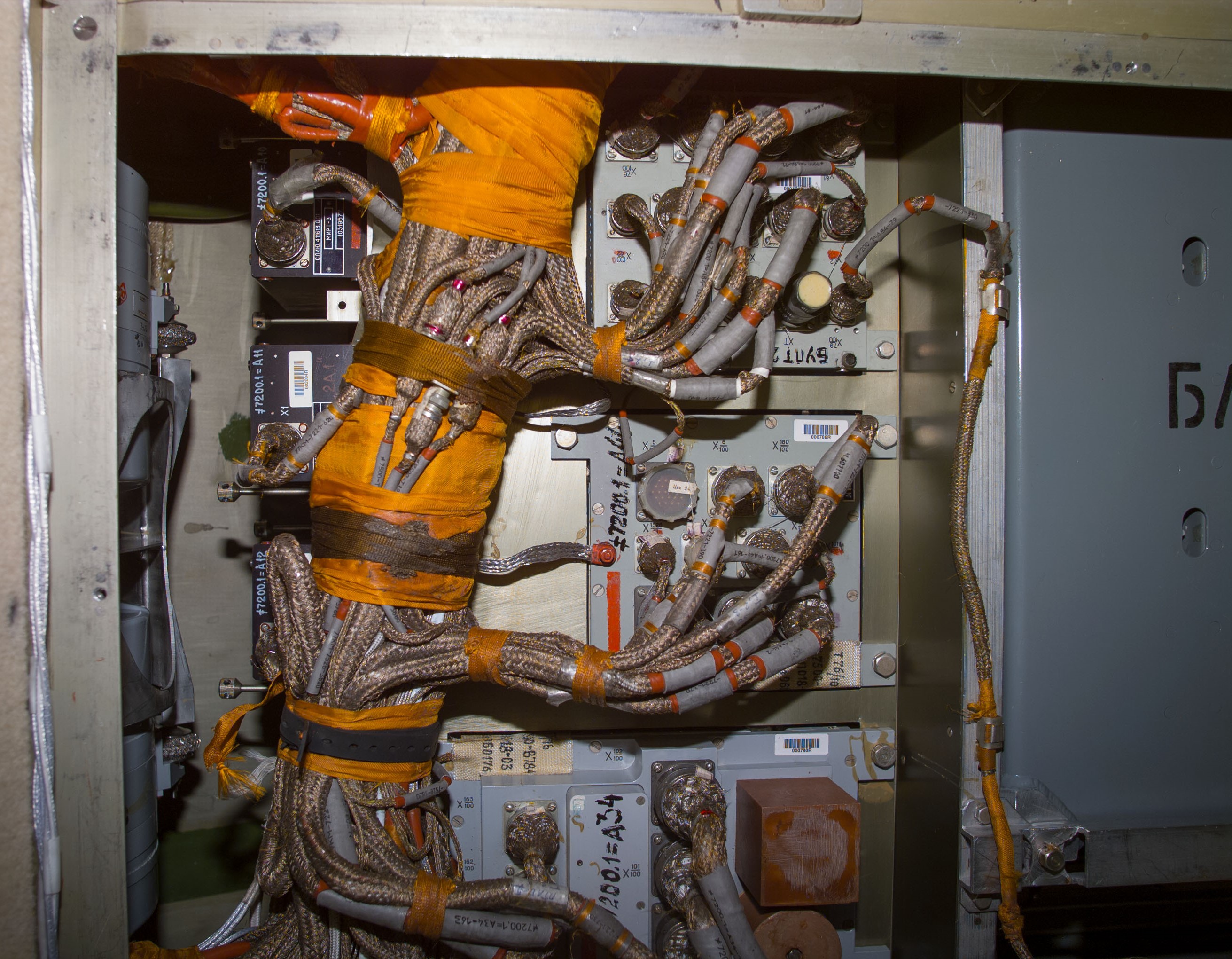
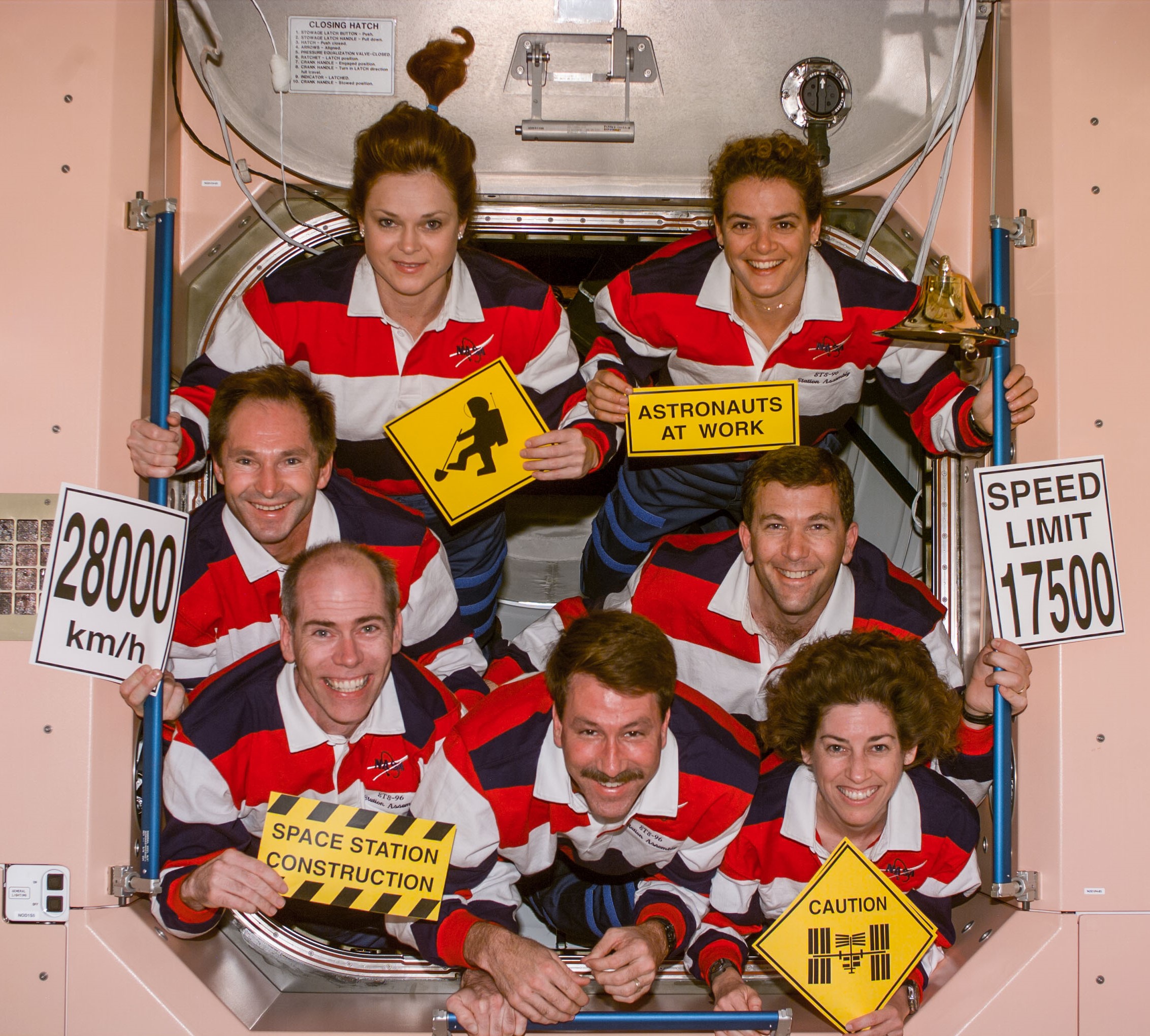
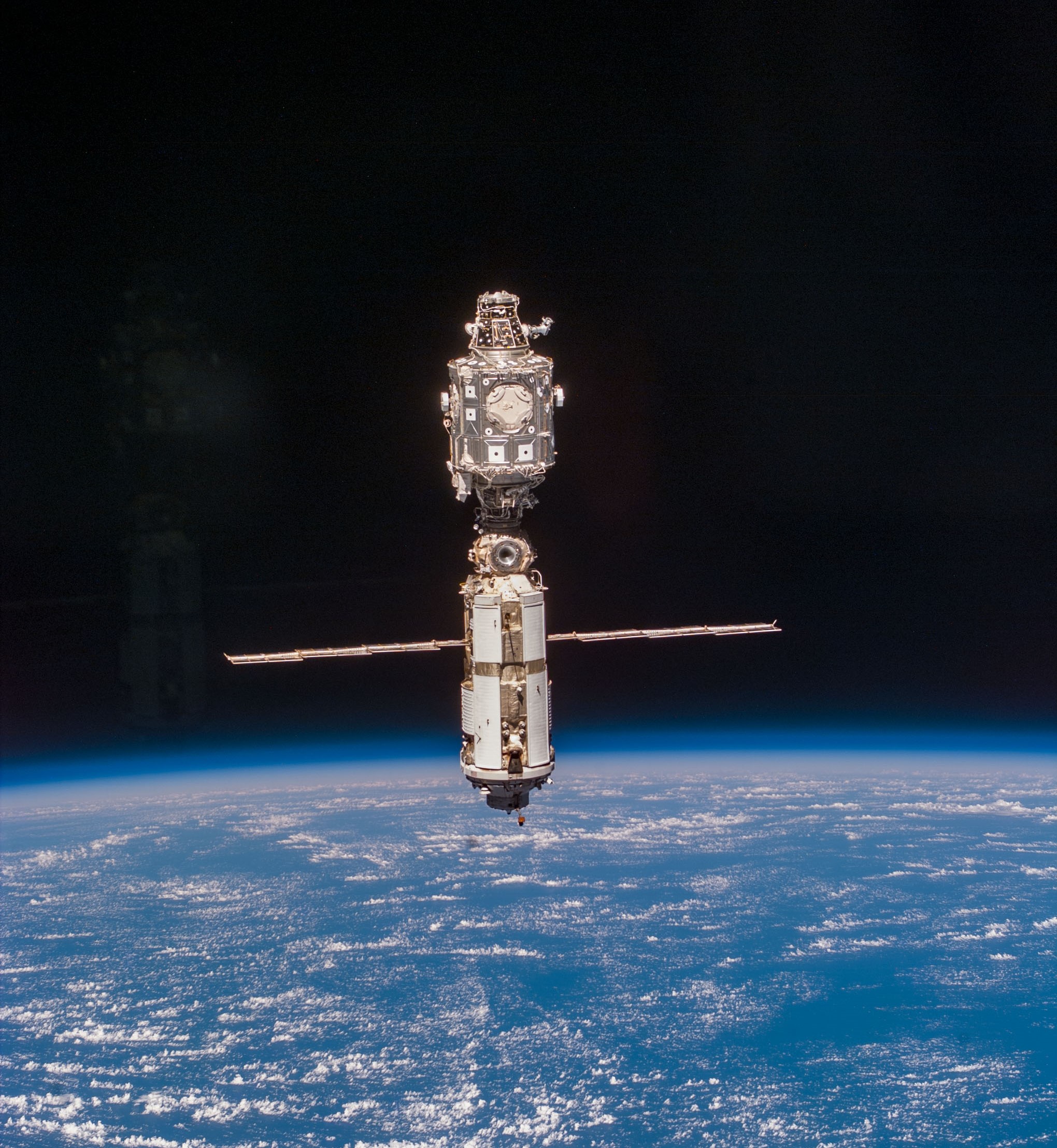
Battery charge-discharge units in Zarya after replacement. Inflight photo of the STS-96 crew in Node 1. A resupplied and refurbished space station as seen from Discovery during its departure.

Left: Battery charge-discharge units in Zarya after replacement. Middle: Inflight photo of the STS-96 crew in Node 1. Right: A resupplied and refurbished space station as seen from Discovery during its departure. 

On June 3, with Husband at the controls, Discovery undocked from the space station and completed a 2.5-revolution fly around of the refurbished facility, with the crew taking photographs to document its condition. After departing from the station, Rominger and Husband practiced shuttle landings using a laptop-based simulator in preparation for the actual landing two days later. In addition, the astronauts added to their trove of Earth observation photos.  

On flight day 10, the astronauts’ last full day in space, they deployed the Student-Tracked Atmospheric Research Satellite for Heuristic International Networking Equipment (STARSHINE) satellite from Discovery’s payload bay. STARSHINE consisted of an 87-pound hollow aluminum sphere 19 inches in diameter covered with 878 mirrors. Thousands of students in 18 countries polished the mirrors. The Naval Research Laboratory in Washington, D.C. built the sphere and attached the mirrors. The students monitored sightings of the satellite as it orbited the Earth, the Sun reflecting off its multiple mirrors. The astronauts tested Discovery’s RCS thrusters, Auxiliary Power Units, and Flight Control Surfaces in preparation for the next day’s re-entry and landing. 

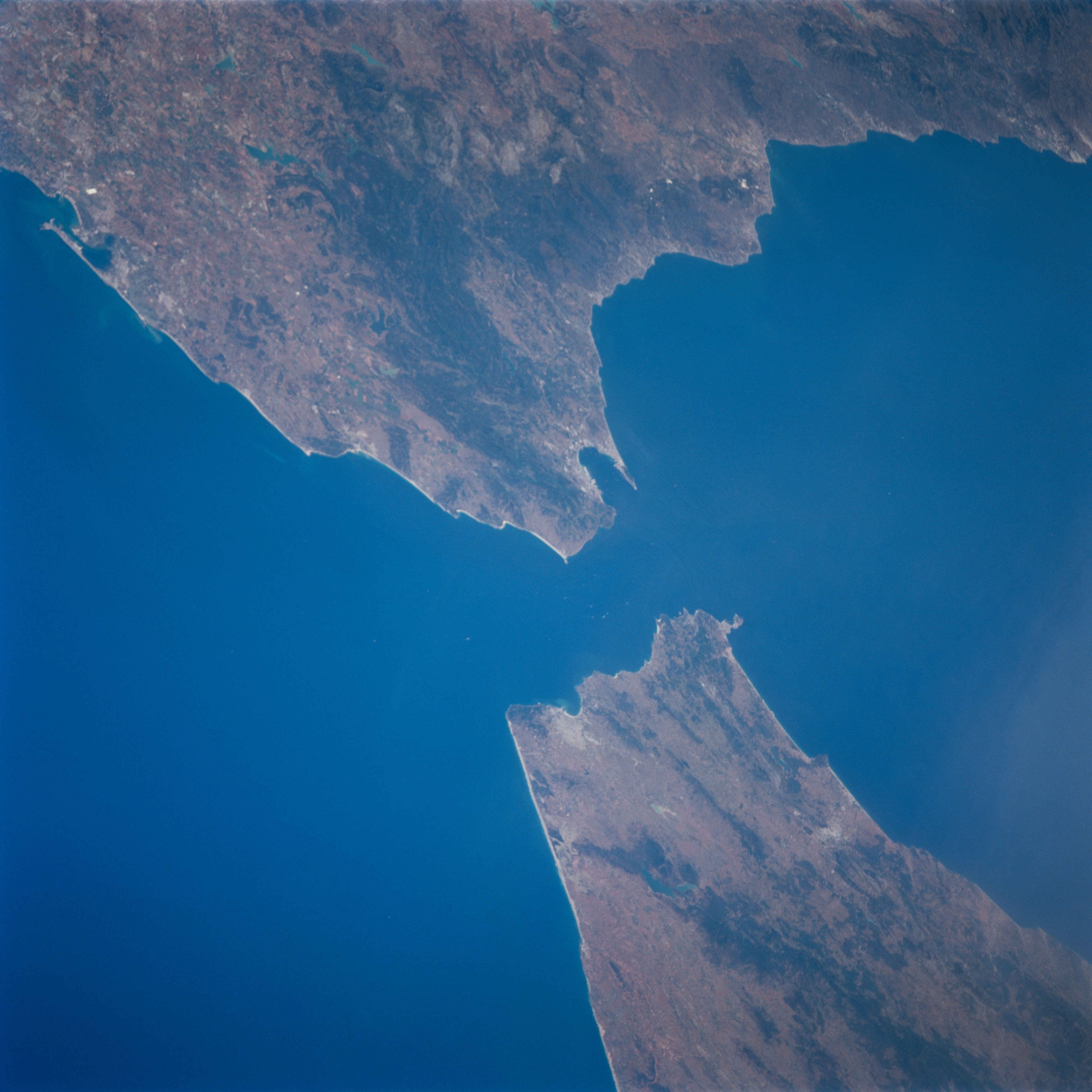
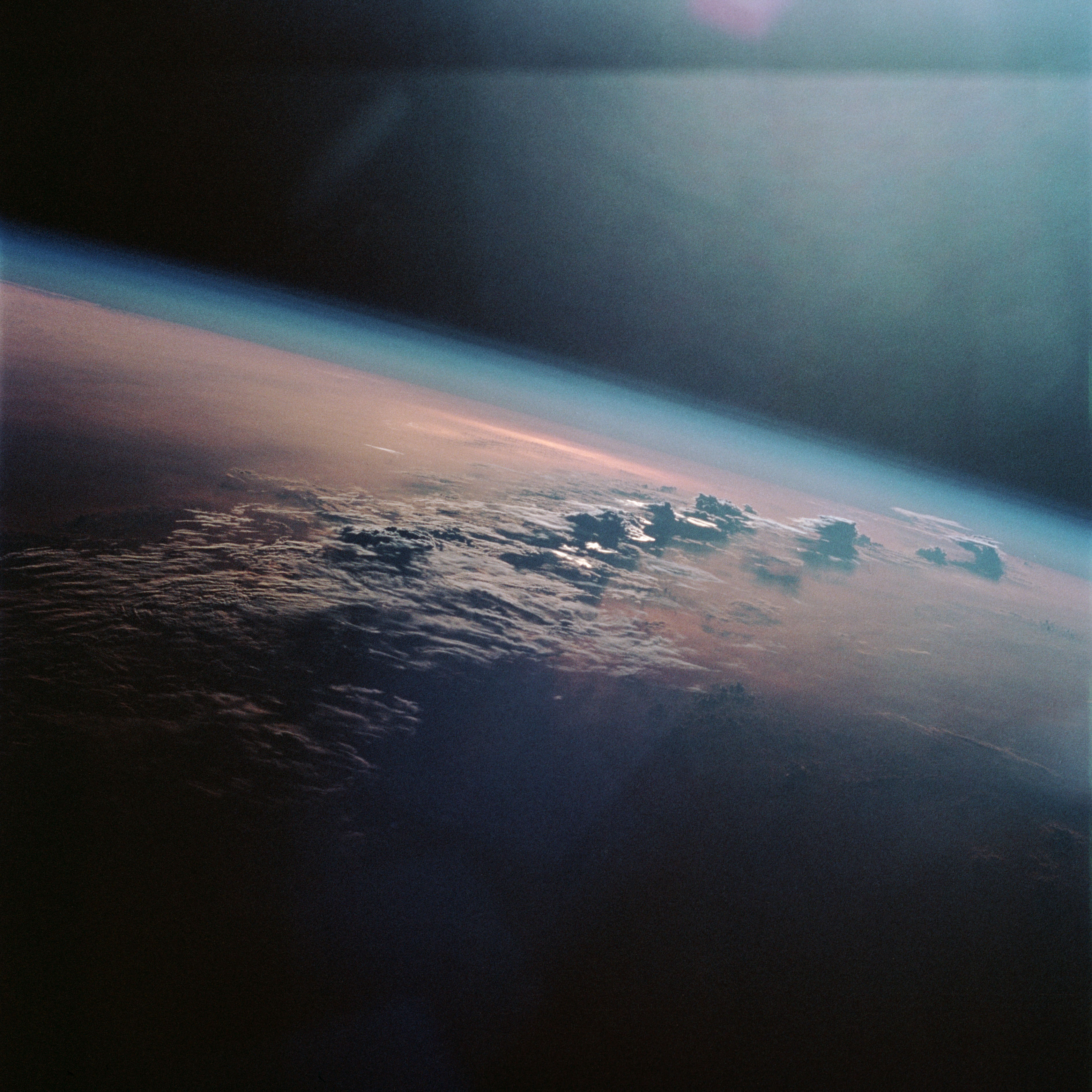
The Manicougan impact feature in Québec, Canada. The Straits of Gibraltar. Sunlit clouds over the Indian Ocean.

Earth observation photographs from STS-96. Left: The Manicougan impact feature in Québec, Canada. Middle: The Straits of Gibraltar. Right: Sunlit clouds over the Indian Ocean.
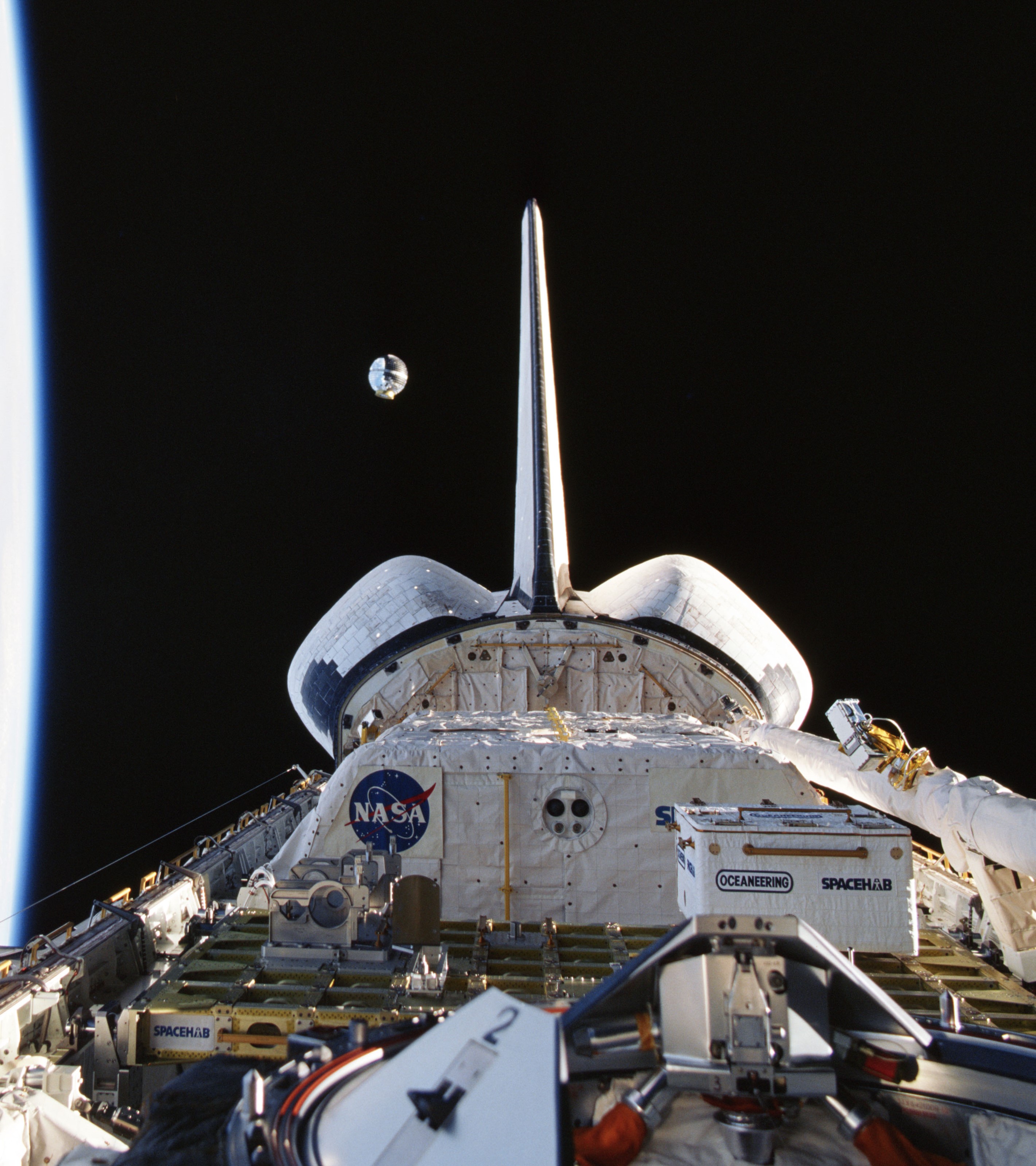
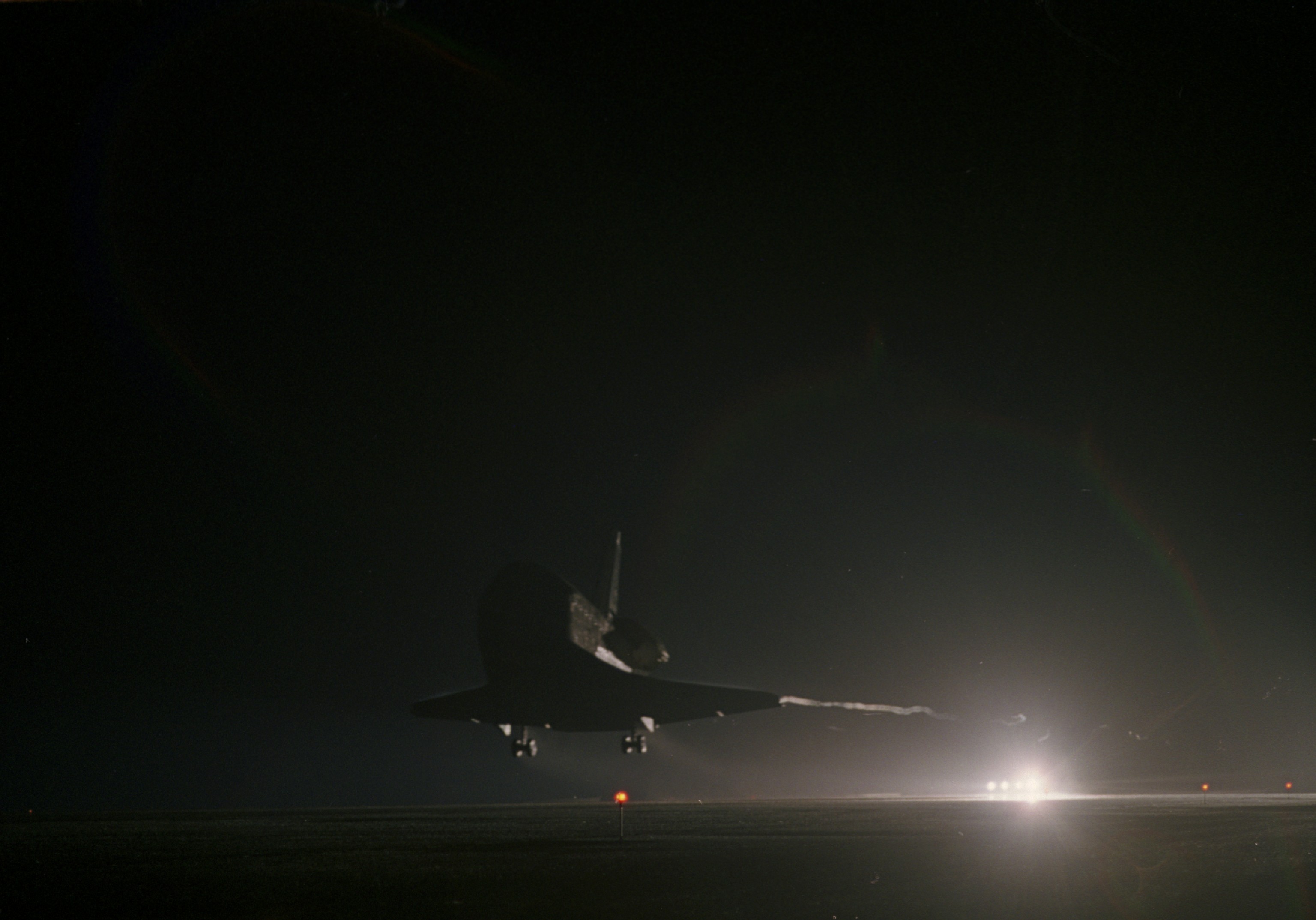
Deployment of the STARSHINE student satellite. Discovery makes a smooth night landing at NASA’s Kennedy Space Center in Florida.

Left: Deployment of the STARSHINE student satellite. Right: Discovery makes a smooth night landing at NASA’s Kennedy Space Center in Florida. 

On June 6, the astronauts closed Discovery’s payload bay doors, put on their launch and entry suits, strapped into their seats, and fired the Shuttle’s engines for the trip back to Earth. Rominger guided Discovery to a smooth night landing on the Shuttle Landing Facility at KSC, ending a highly successful mission to prepare the space station for future occupants. The flight lasted 9 days 19 hours 13 minutes. 

Enjoy the crew narrate a video about the STS-96 mission. 

Powered by WPeMatico

Get The Details…
Tessa Brazda
Ames Stars of the Month, June 2024

Ames Stars of the Month, June 2024

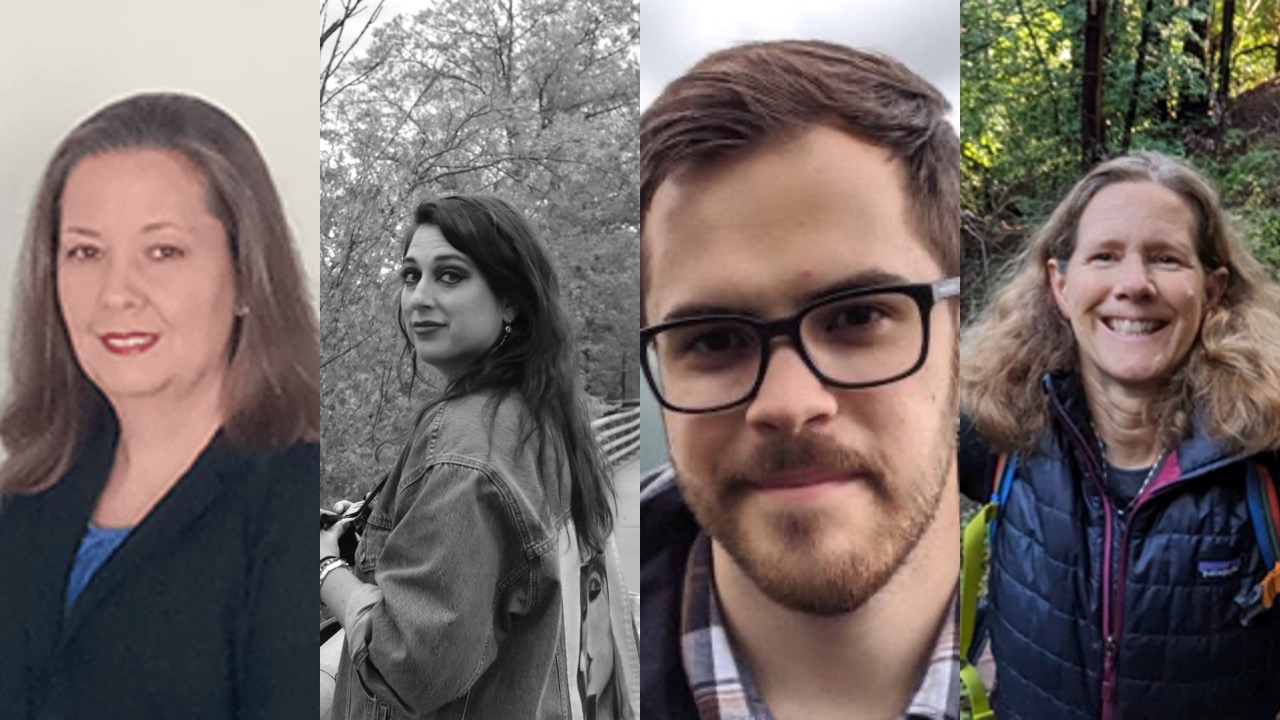
The NASA Ames Science Directorate recognizes the outstanding contributions of (pictured left to right) Amy Gresser, Mary Beth Wilhelm, Taylor Bell, and Liane Guild. Their commitment to the NASA mission represents the talent, camaraderie, and vision needed to explore this world and beyond.

Space Biosciences Star: Amy Gresser

Dr. Amy Gresser is the Space Biology Portfolio Manager for the Space Biosciences Division. Amy made a significant impact through her exemplary leadership in navigating the space biology portfolio, safeguarding workforce and science through budget planning and execution, and fostering a culture of excellence.

Dr. Mary Beth Wilhelm conducts research in the field.

Space Science Star: Mary Beth Wilhelm

Dr. Mary Beth Wilhelm is a planetary scientist and astrobiologist with the Space Science & Astrobiology Division. Mary Beth’s outstanding leadership in team projects, ingenuity reflected in her recent proposal selection, and collaborative disposition play a crucial role in the success of the division.

taylor bell

Space Science Star: Dr. Taylor Bell

Dr. Taylor Bell is a planetary scientist with the Space Science & Astrobiology Division. Taylor published a very exciting result on a popular hot Jupiter target using the James Webb Space Telescope observations in a high-impact journal Nature Astronomy.

Earth Science Star: Dr. Liane Guild

Dr. Liane Guild is an ecosystems scientist in the Earth Science Division. Liane represented NASA on the U.S. Coral Reef Task Force, presented on her CyanoSCape project at HQ Focus Area team meetings, attended a Surface Biology and Geology meeting, and led the Interagency Agreement with the Naval Postgraduate School (CIRPAS) to ‘fly Ames’ 4STAR-B airborne instrument for validating data from the PACE-PAX mission data.

Powered by WPeMatico

Get The Details…
Aaron McKinnon

Historic Marker Celebrates NASA Kennedy’s Old Center Headquarters 

Historic Marker Celebrates NASA Kennedy’s Old Center Headquarters 

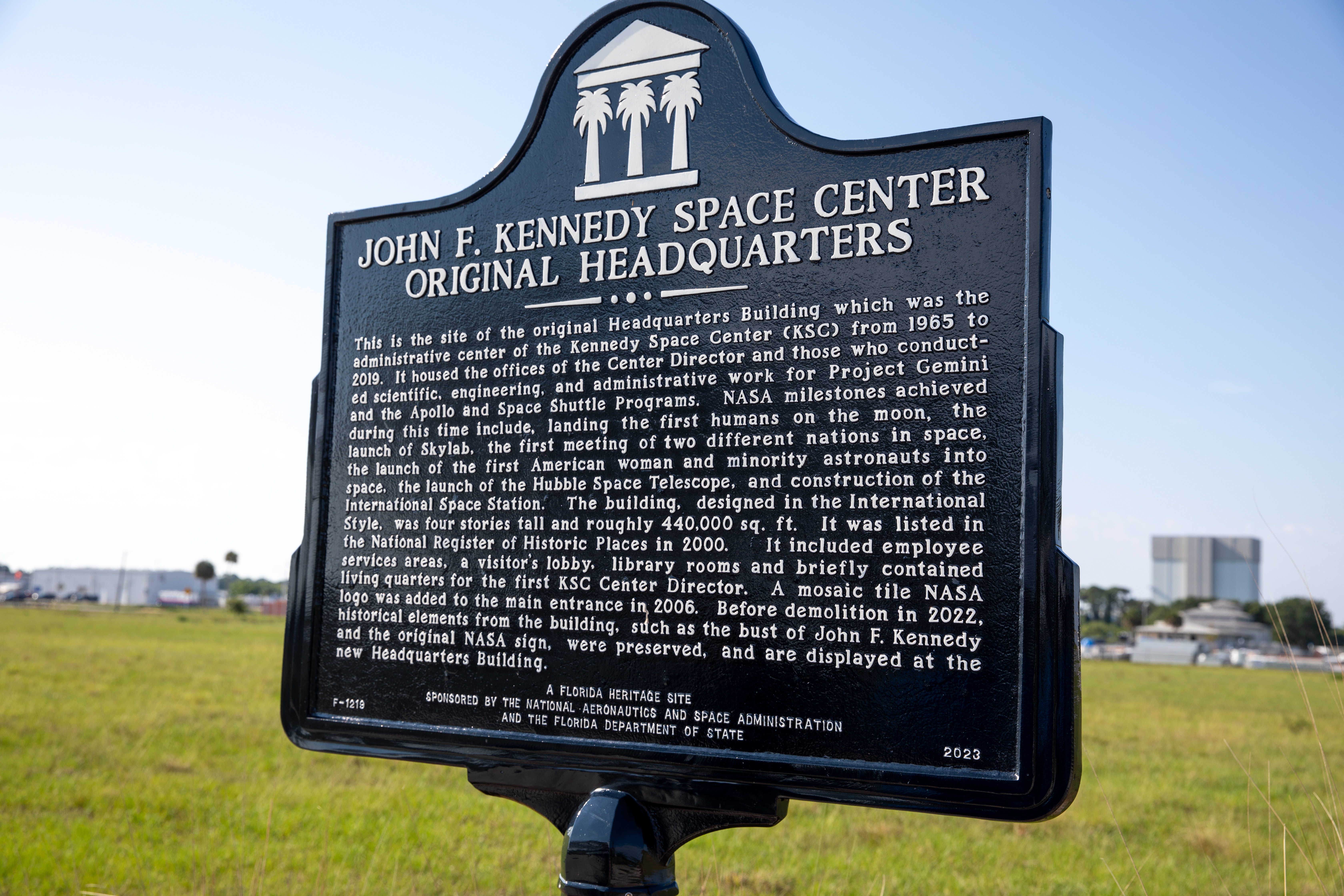
A bronze placard with white words is centered among a backdrop of clouds and grass.
A large bronze historical marker plaque is unveiled Tuesday, May 28, 2024, at the location of NASA Kennedy Space Center’s original headquarters building. Approved in April 2023 as part of the State of Florida’s Historical Markers program in celebration of National Historic Preservation Month, the marker commemorates the early days of space exploration and is displayed permanently just west of the seven-story, 200,000 square foot Central Campus Headquarters Building, which replaced the old building in 2019.
Photo credit: NASA/Mike Chambers

A grass field and tile display of NASA’s iconic “meatball” is all that remains of the structure that stood for over 50 years during America’s most monumental launches to space. Now, a large bronze plaque at the agency’s Kennedy Space Center in Florida marks the location of this original headquarters building, commemorating the early days of space exploration. 

Approved in April 2023 as part of the State of Florida’s Historical Markers program, the marker was unveiled Tuesday, May 28, 2024, by center leaders during a ceremony attended by former and current NASA employees as part of National Historic Preservation Month. 

“As we surge into the future, it’s appropriate to take a moment and remember the past,” said Kennedy Space Center Director Janet Petro. “We wouldn’t be at the forefront of space exploration without those whose footsteps we followed and it’s important that their service be properly honored. But we also focus on the future of the spaceport so that it will always maintain our path to space.” 

The new marker will be displayed permanently just west of the seven-story, 200,000 square foot Central Campus Headquarters Building on NASA Parkway, which replaced the old building in 2019. The more modern headquarters was built with the center’s master plan in mind, prioritizing efficiencies in cost, energy, and land usage to ensure NASA puts as much resources as possible toward its mission. 

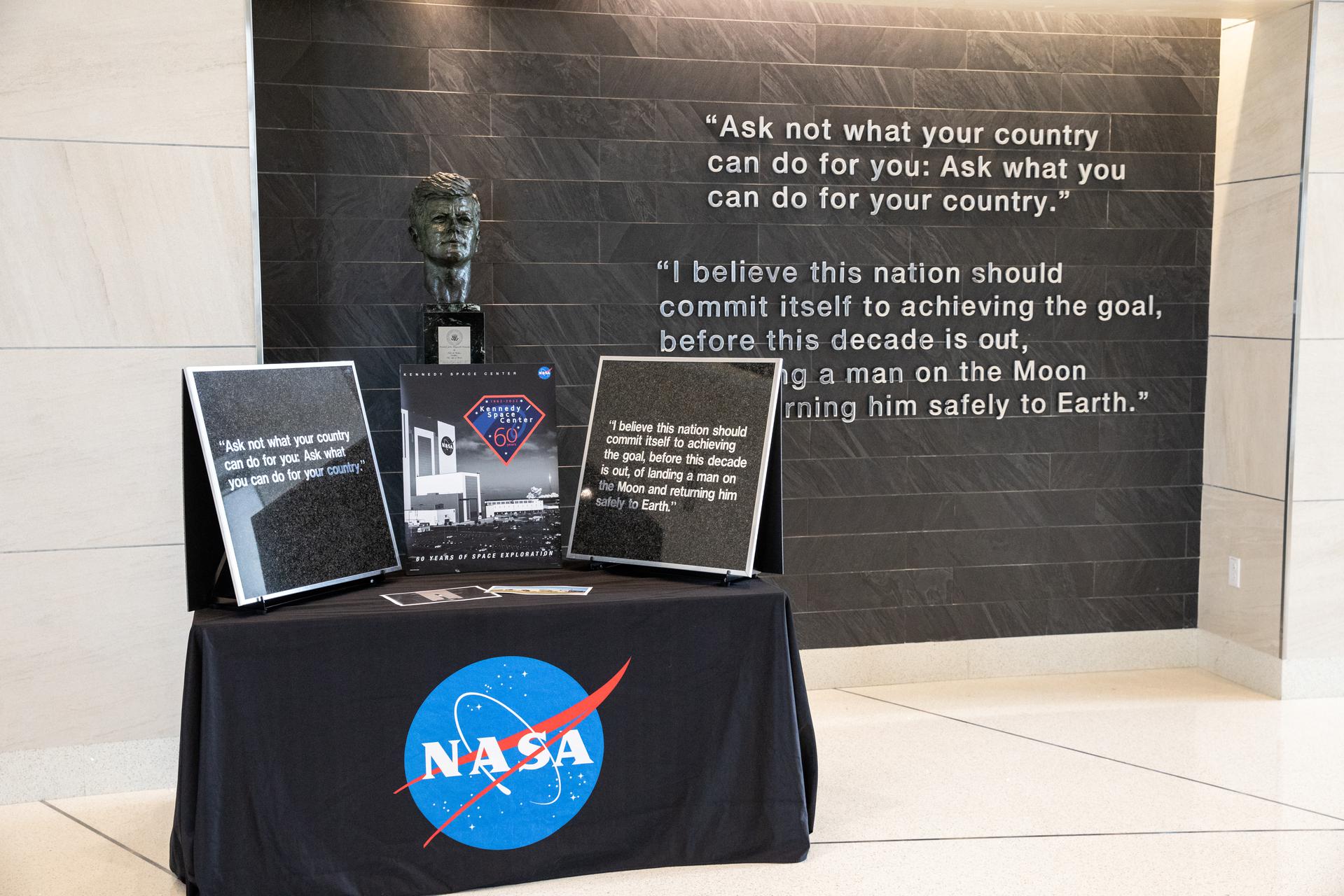
Various artifacts from the old building were removed before its demolition and are now displayed in the new headquarters, including its original sign and a bust of President John F. Kennedy, after whom the center is named. 

Wall tiles from Kennedy Space Center’s former headquarters building are presented to Kennedy Director Janet Petro inside the Florida spaceport’s Central Campus Headquarters Building on May 3, 2022. The two 15-pound sections from the building were preserved by Maverick Constructors LLC, the construction company that completed demolition of the structure. The company’s presentation of the tiles is in honor of the many civil servants and contractors who dedicated their lives to working for and supporting NASA in this building.
Photo credit: NASA/Frank Michaux

Constructed in 1965, Kennedy’s original four-story headquarters building became the scientific, engineering, and administrative hub for three of NASA’s most iconic space programs: Gemini, Apollo, and Space Shuttle. Designed in the International Style, the 440,000 square foot structure had an intimate view of some of NASA’s grandest moments, including the launch of the Apollo 11 mission that successfully landed the first humans on the moon in 1969, fulfilling the goal famously set by President Kennedy seven years earlier. 

Other major NASA milestones accomplished during the building’s lifetime include the 1973 launch of Skylab, the first-ever space meeting of American astronauts and Russian cosmonauts in 1975, the 1990 launch of the Hubble Space Telescope, and the construction of the International Space Station in 1998. 

Prior to its demolition, the old headquarters was listed in the National Register of Historic Places in 2000. It is the first original NASA center headquarters building to be demolished. 

The original headquarters ground becomes the seventh location within the Merritt Island National Wildlife Refuge and Canaveral National Seashore to have a marker approved by the Florida Historic Marker Council. It joins three others within Cape Canaveral Space Force Station and three more located on Kennedy Parkway. It is the only one of the seven inside Kennedy’s secure area.  

Powered by WPeMatico

Get The Details…
Messod C. Bendayan

Swarming for Success: Starling Completes Primary Mission

Swarming for Success: Starling Completes Primary Mission

5 min read

Preparations for Next Moonwalk Simulations Underway (and Underwater)

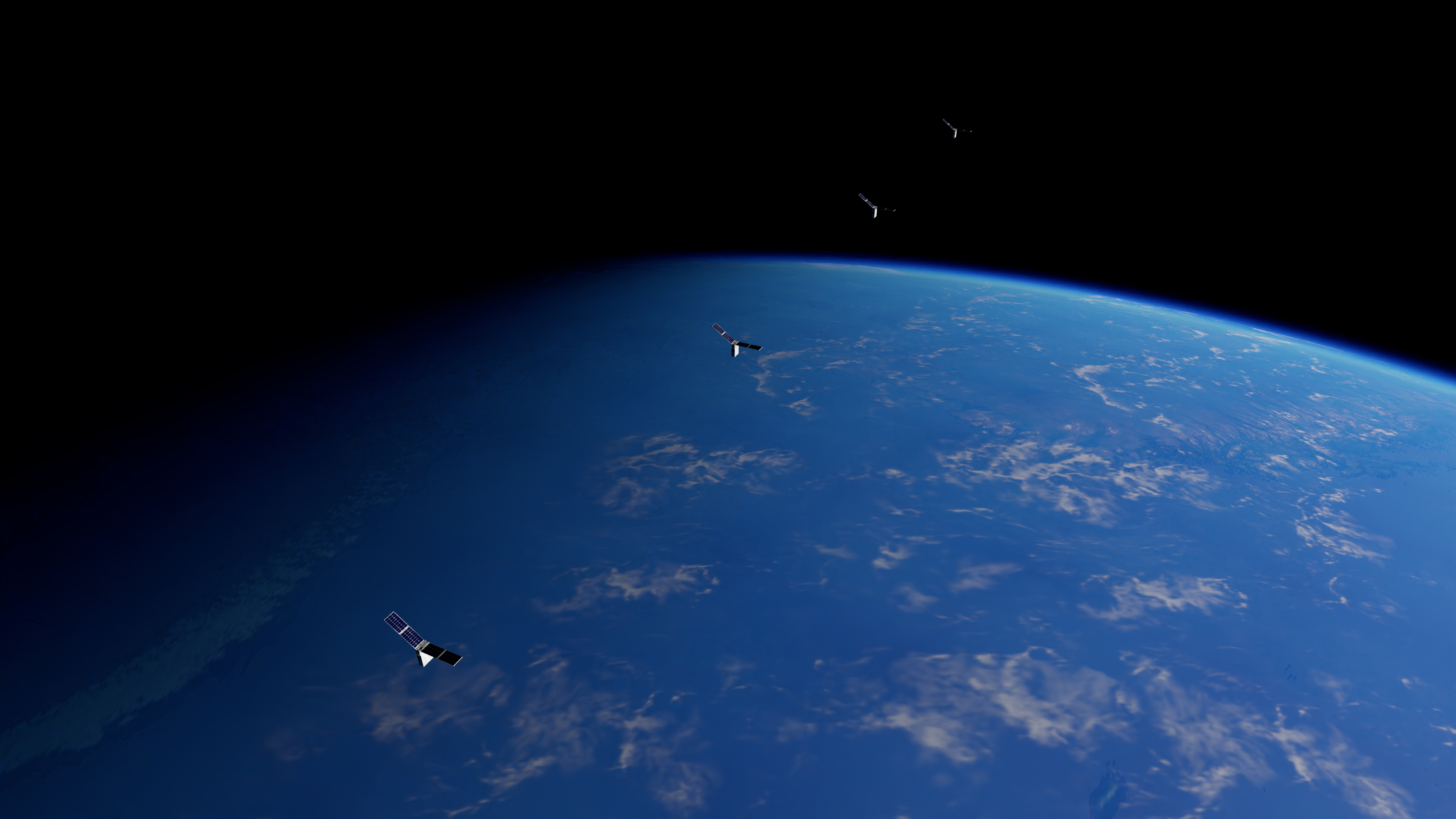
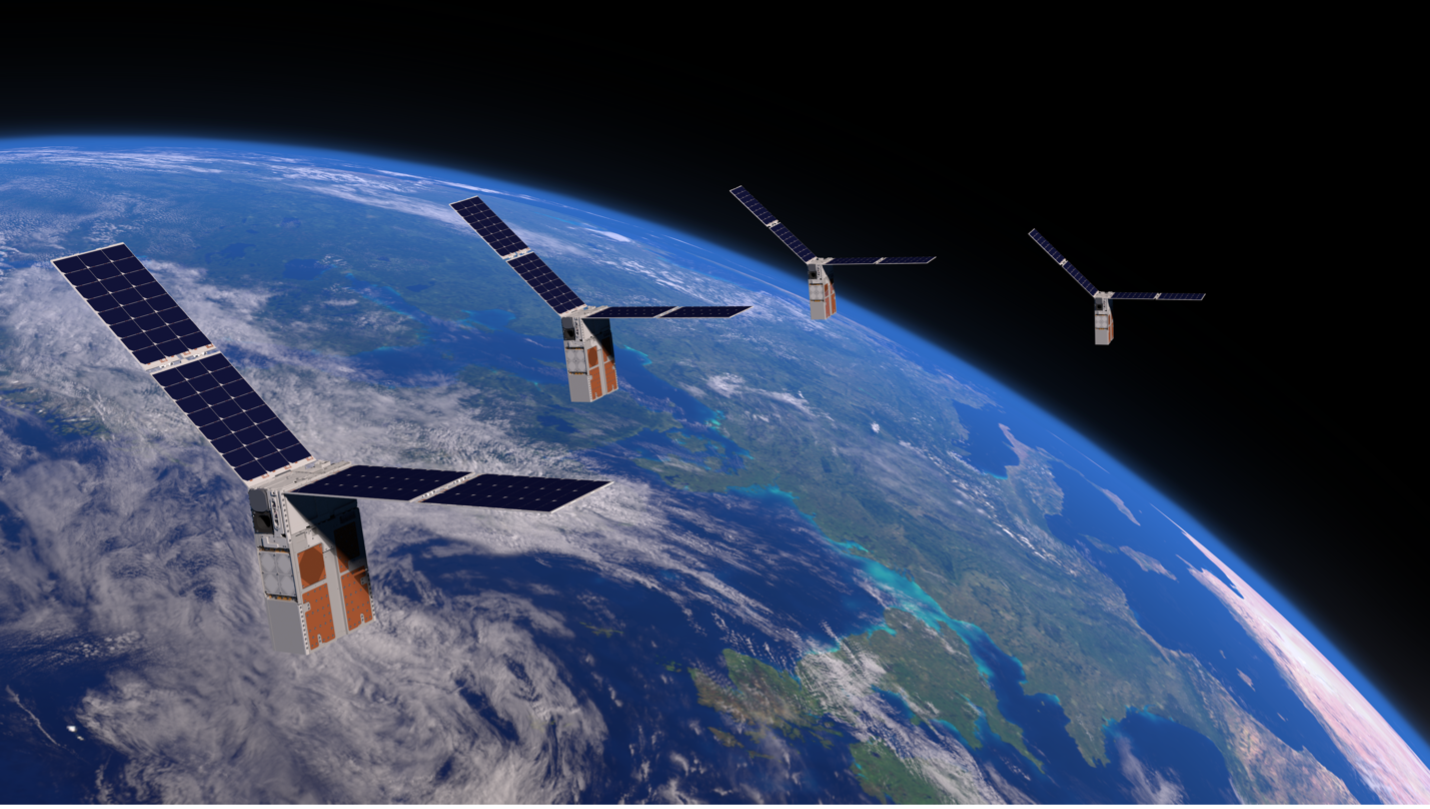
An artist's concept of the Starling swarm. Four small CubeSat spacecraft orbit in linear formation with Earth visible below.
The four CubeSate spacecraft that make up the Starling swarm have demonstrated success in autonomous operations, completing all key mission objectives.

After ten months in orbit, the Starling spacecraft swarm successfully demonstrated its primary mission’s key objectives, representing significant achievements in the capability of swarm configurations. 

Swarms of satellites may one day be used in deep space exploration. An autonomous network of spacecraft could self-navigate, manage scientific experiments, and execute maneuvers to respond to environmental changes without the burden of significant communications delays between the swarm and Earth. 

“The success of Starling’s initial mission represents a landmark achievement in the development of autonomous networks of small spacecraft,” said Roger Hunter, program manager for NASA’s Small Spacecraft Technology program at NASA’s Ames Research Center in California’s Silicon Valley. “The team has been very successful in achieving our objectives and adapting in the face of challenges.”  

Sharing the Work

The Distributed Spacecraft Autonomy (DSA) experiment, flown onboard Starling, demonstrated the spacecraft swarm’s ability to optimize data collection across the swarm. The CubeSats analyzed Earth’s ionosphere by identifying interesting phenomena and reaching a consensus between each satellite on an approach for analysis.  

By sharing observational work across a swarm, each spacecraft can “share the load” and observe different data or work together to provide deeper analysis, reducing human workload, and keeping the spacecraft working without the need for new commands sent from the ground. 

The experiment’s success means Starling is the first swarm to autonomously distribute information and operations data between spacecraft to generate plans to work more efficiently, and the first demonstration of a fully distributed onboard reasoning system capable of reacting quickly to changes in scientific observations. 

Communicating Across the Swarm

A swarm of spacecraft needs a network to communicate between each other. The Mobile Ad-hoc Network (MANET) experiment automatically established a network in space, allowing the swarm to relay commands and transfer data between one another and the ground, as well as share information about other experiments cooperatively.  

The team successfully completed all the MANET experiment objectives, including demonstrating routing commands and data to one of the spacecraft having trouble with space to ground communications, a valuable benefit of a cooperative spacecraft swarm. 

“The success of MANET demonstrates the robustness of a swarm,” said Howard Cannon, Starling project manager at NASA Ames. “For example, when the radio went down on one swarm spacecraft, we ‘side-loaded’ the spacecraft from another direction, sending commands, software updates, and other vital information to the spacecraft from another swarm member.” 

Autonomous Swarm Navigation 

Navigating and operating in relation to one another and the planet is an important part of forming a swarm of spacecraft. Starling Formation-Flying Optical Experiment, or StarFOX, uses star trackers to recognize a fellow swarm member, other satellite, or space debris from the background field of stars, then estimate each spacecraft’s position and velocity. 

The experiment is the first-ever published demonstration of this type of swarm navigation, including the ability to track multiple members of a swarm simultaneously and the ability to share observations between the spacecraft, improving accuracy when determining each swarm member’s orbit. 

Near the end of mission operations, the swarm was maneuvered into a passive safety ellipse, and in this formation, the StarFOX team was able to achieve a groundbreaking milestone, demonstrating the ability to autonomously estimate the swarm’s orbits using only inter-satellite measurements from the spacecraft star trackers. 

Managing Swarm Maneuvers 

The ability to plan and execute maneuvers with minimal human intervention is an important part of developing larger satellite swarms. Managing the trajectories and maneuvers of hundreds or thousands of spacecraft autonomously saves time and reduces complexity. 

The Reconfiguration and Orbit Maintenance Experiments Onboard (ROMEO) system tests onboard maneuver planning and execution by estimating the spacecraft’s orbit and planning a maneuver to a new desired orbit. 

The experiment team has successfully demonstrated the system’s ability to determine and plan a change in orbit and is working to refine the system to reduce propellant use and demonstrate executing the maneuvers. The team will continue to adapt and develop the system throughout Starling’s mission extension. 

Swarming Together

Now that Starling’s primary mission objectives are complete, the team will embark on a mission extension known as Starling 1.5, testing space traffic coordination in partnership with SpaceX’s Starlink constellation, which also has autonomous maneuvering capabilities. The project will explore how constellations operated by different users can share information through a ground hub to avoid potential collisions.  

“Starling’s partnership with SpaceX is the next step in operating large networks of spacecraft and understanding how two autonomously maneuvering systems can safely operate in proximity to each other. As the number of operational spacecraft increases each year, we must learn how to manage orbital traffic,” said Hunter. 

NASA’s Small Spacecraft Technology program, based at Ames and within NASA’s Space Technology Mission Directorate (STMD), funds and manages the Starling mission. Blue Canyon Technologies designed and manufactured the spacecraft buses and is providing mission operations support. Rocket Lab USA, Inc. provided launch and integration services. Partners supporting Starling’s payload experiments have included Stanford University’s Space Rendezvous Lab in Stanford, California, York Space Systems (formerly Emergent Space Technologies) of Denver, Colorado, CesiumAstro of Austin, Texas, L3Harris Technologies, Inc., of Melbourne, Florida. Funding support for the DSA experiment was provided by NASA’s Game Changing Development program within STMD. Partners supporting Starling’s mission extension include SpaceX of Hawthorne, California, NASA’s Conjunction Assessment Risk Analysis (CARA) program, and the Department of Commerce. SpaceX manages the Starlink satellite constellation and the Collision Avoidance ground system.

Powered by WPeMatico

Get The Details…
Tara Friesen

Travel Through Data From Space in New 3D Instagram Experiences

Travel Through Data From Space in New 3D Instagram Experiences

A new project provides special 3D “experiences” on Instagram using data from NASA’s Chandra X-ray Observatory and other telescopes through augmented reality (AR), allowing users to travel virtually through objects in space. These new experiences of astronomical objects – including the debris fields of exploded stars – are being released to help celebrate the 25th anniversary of operations from Chandra, NASA’s flagship X-ray telescope.  

In recent years, Instagram experiences (previously referred to as filters) of NASA mission control, the International Space Station, and the Perseverance Rover on Mars have allowed participants to virtually explore what NASA does. This new set of Chandra Instagram filters joins this space-themed collection.

These four images showcase the 2D captured views of the cosmic objects included in the new augmented reality 3D release. Presenting multiwavelength images of the Vela Pulsar, Tycho's Supernova Remnant, Helix Nebula, and Cat's Eye Nebula that include Chandra X-ray data as well as optical data in each, and for the Helix, additional infrared and ultraviolet data.
These four images showcase the 2D captured views of the cosmic objects included in the new augmented reality 3D release. Presenting multiwavelength images of the Vela Pulsar, Tycho’s Supernova Remnant, Helix Nebula, and Cat’s Eye Nebula that include Chandra X-ray data as well as optical data in each, and for the Helix, additional infrared and ultraviolet data.
Vela Pulsar: X-ray: NASA/CXC/SAO; Optical: NASA/ESA/STScI; Image processing: NASA/CXC/SAO/J. Schmidt, K. Arcand; Tycho’s Supernova Remnant: X-ray: NASA/CXC/SAO; Optical: DSS; Image Processing: NASA/CXC/SAO/N. Wolk; Helix Nebula: X-ray: NASA/CXC/SAO; UV: NASA/JPL-Caltech/SSC; Optical: NASA/ STScI/M. Meixner, ESA/NRAO/T.A. Rector; Infrared:NASA/JPL-Caltech/K. Su; Image Processing: NASA/CXC/SAO/N. Wolk and K. Arcand; Cat’s Eye Nebula: X-ray: NASA/CXC/SAO; Optical: NASA/ESA/STScI; Image Processing: NASA/CXC/SAO/J. Major, L. Frattare, K. Arcand

“We are excited to bring data from the universe down to earth in this way,” said Kimberly Arcand, visualization and emerging technology scientist at the Chandra X-ray Center. “By enabling people to access cosmic data on their phones and through AR, it brings Chandra’s amazing discoveries literally right to your fingertips.”

The new Instagram experiences are created from 3D models based on data collected by Chandra and other telescopes along with mathematical models. Traditionally, it has been very difficult to gather 3D data of objects in our galaxy due to their two-dimensional projection on the sky. New instruments and techniques, however, have helped allowed astronomers in recent years to construct more data-driven models of what these distant objects look like in three dimensions.

These advancements in astronomy have paralleled the explosion of opportunities in virtual, extended, and augmented reality. Such technologies provide virtual digital experiences, which now extend beyond Earth and into the cosmos. This new set of Chandra Instagram experiences was made possible by a collaboration including NASA, the Smithsonian Institution, and students and researchers at Brown University.

These Instagram experiences also include data sonifications of the celestial objects. Sonification is the process of translating data into sounds and notes so users can hear representations of the data, an accessibility project the Chandra team has led for the past four years.

“These Chandra Instagram experiences are another way to share these cosmic data with the public,” said Arcand. “We are hoping this helps reach new audiences, especially those who like to get their information through social media.”

The objects in the new Chandra Instagram experience collection include the Tycho supernova remnant, the Vela Pulsar, the Helix Nebula, the Cat’s Eye Nebula, and the Chandra spacecraft. The 3D models of the first three objects were done in conjunction with Sal Orlando, an astrophysicist at Italy’s National Institute for Astrophysics (INAF) in Palmero. The Cat’s Eye Nebula was created with data from Ryan Clairmont, physics researcher and undergraduate at Stanford University. Arcand worked with Brown’s Tom Sgouros and his team, research assistant Alexander Dupuis and undergraduate Healey Koch, on the Chandra Instagram filters.

The experiences include text that explains what users are looking at. The effects are free and available on Instagram on mobile devices for at least six months, and some will remain viewable in perpetuity on the Smithsonian’s Voyager 3D website.

“There is a lot of rich and beautiful data associated with these models that Healey and I looked to bring in, which we did by creating the textures on the models as well as programming visual effects for displaying them in AR,” said Dupuis.

NASA’s Marshall Space Flight Center manages the Chandra program. The Smithsonian Astrophysical Observatory’s Chandra X-ray Center controls science from Cambridge Massachusetts and flight operations from Burlington, Massachusetts. The Chandra X-ray Center is headquartered at the Smithsonian Astrophysical Observatory, which is part of the Center for Astrophysics | Harvard & Smithsonian.

Read more from NASA’s Chandra X-ray Observatory.

For more Chandra images, multimedia and related materials, visit:

https://www.nasa.gov/mission/chandra-x-ray-observatory/

News Media Contact

Megan Watzke
Chandra X-ray Center
Cambridge, Mass.
617-496-7998

Jonathan Deal
Marshall Space Flight Center
Huntsville, Ala.
256-544-0034

Powered by WPeMatico

Get The Details…
Lee Mohon