A Plume of Bright Blue in Melissa’s Wake

A Plume of Bright Blue in Melissa’s Wake


September 20, 2025
October 30, 2025

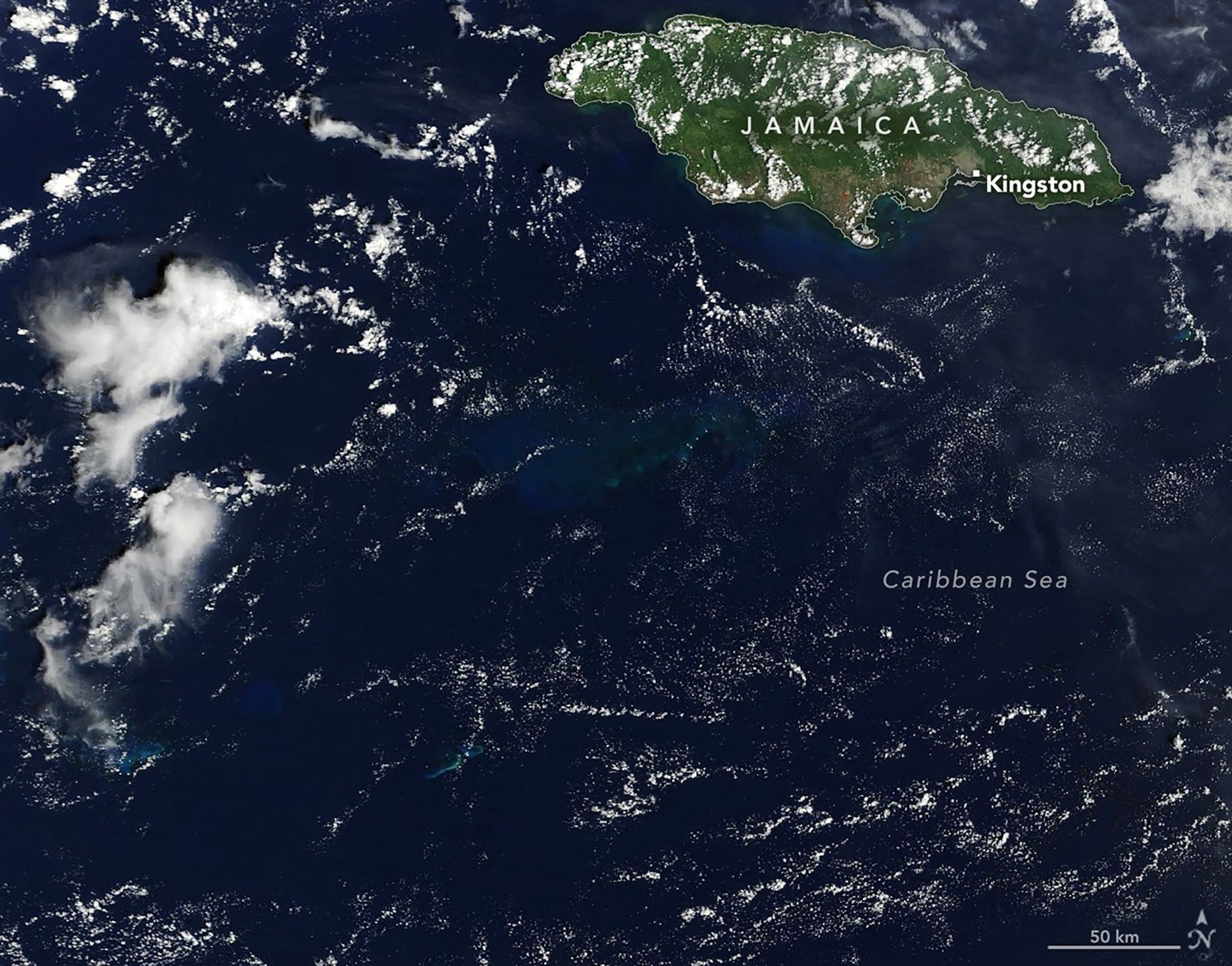
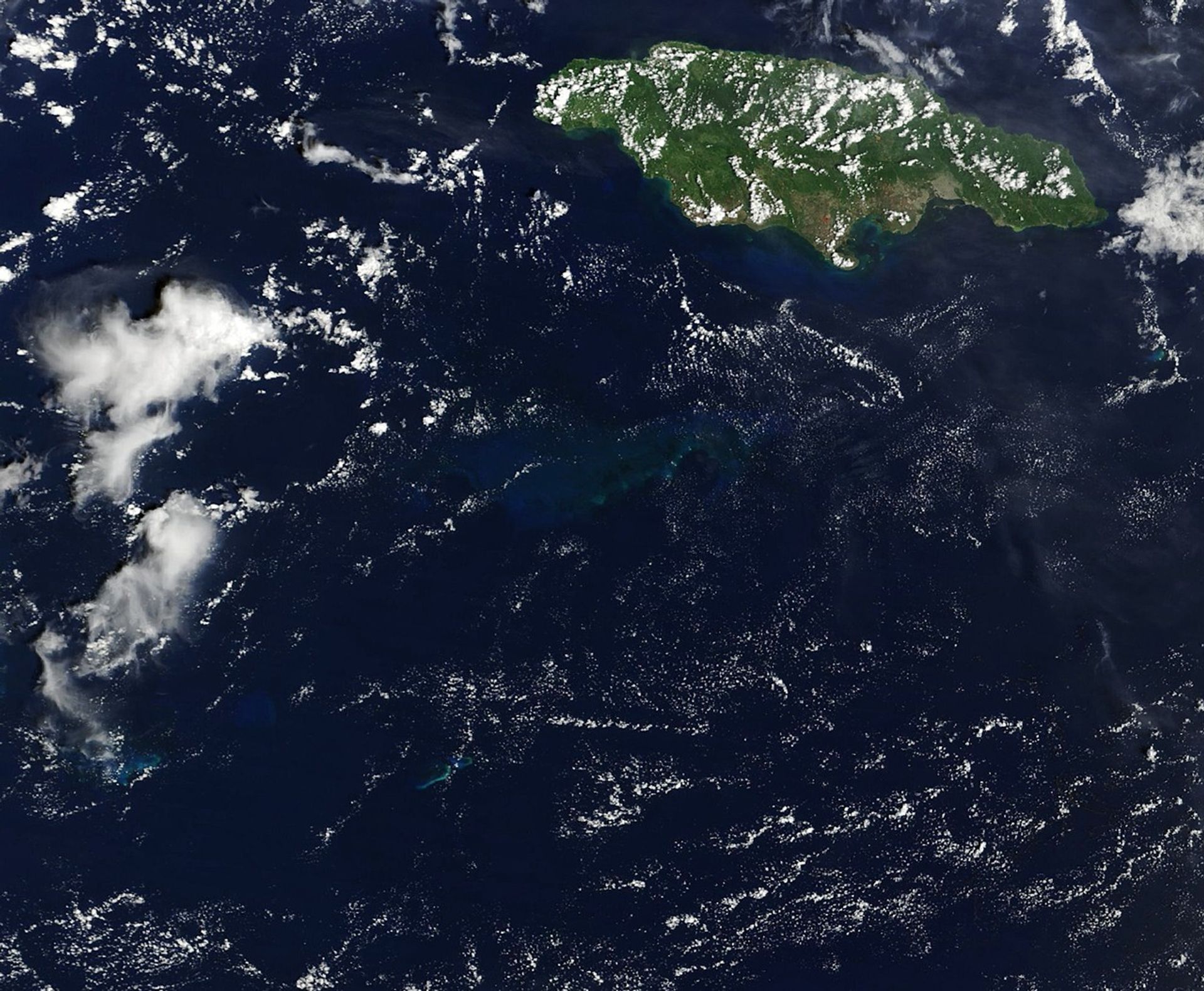
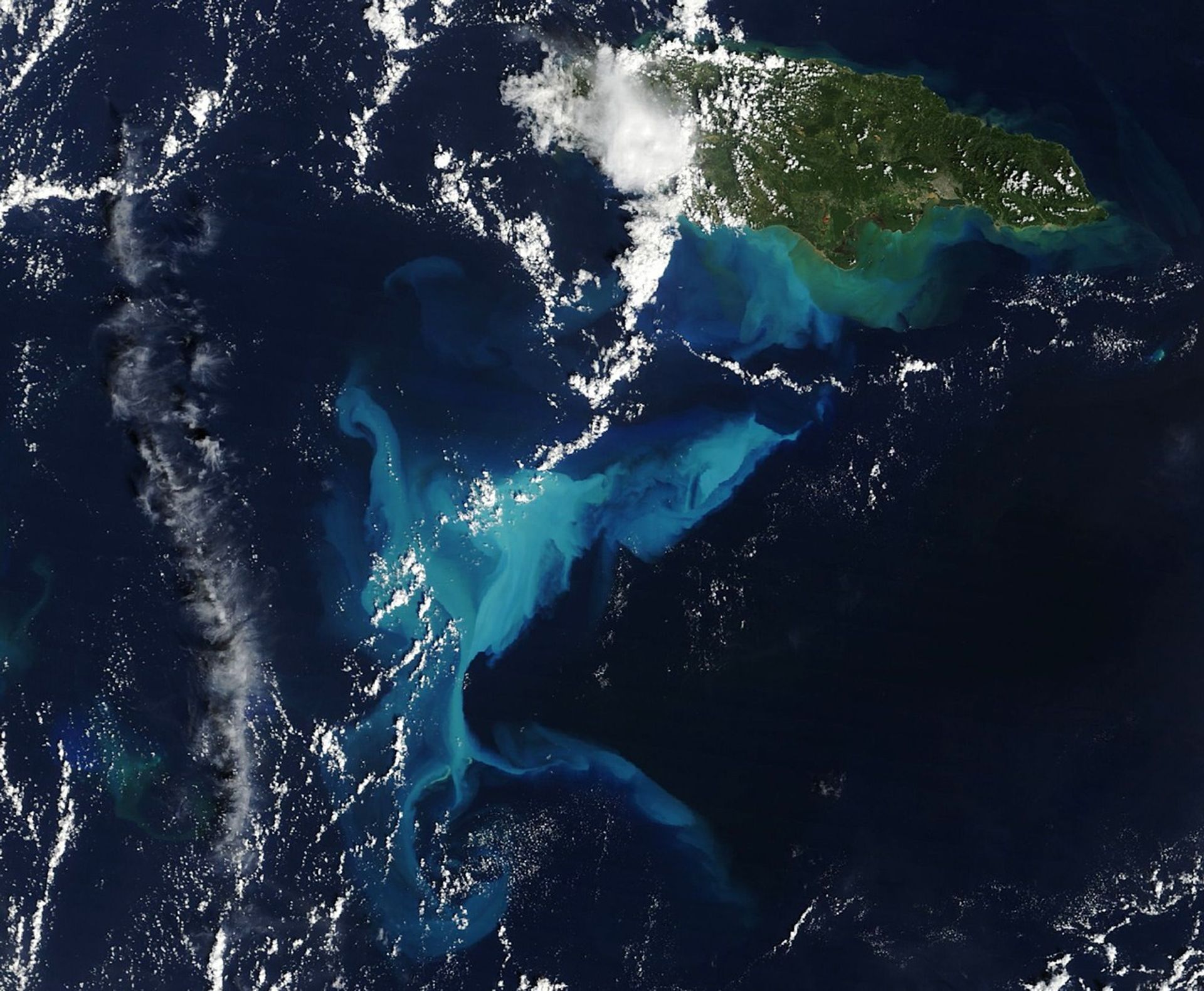
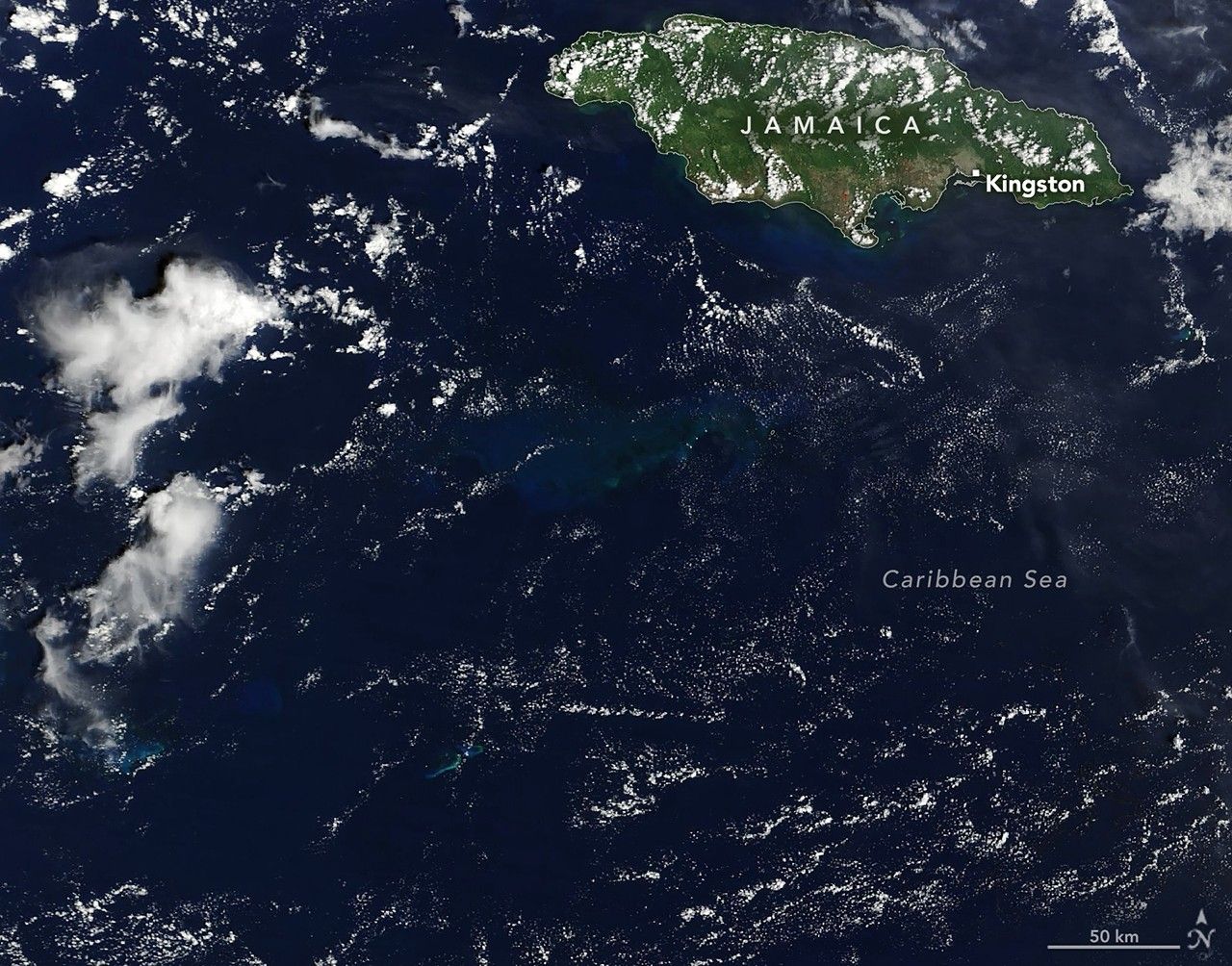
A satellite image shows a portion of the dark blue Caribbean Sea near Jamaica. A submerged carbonate platform appears as a slightly brighter blue area of water in the center. The mostly green island of Jamaica is in the upper right, and scattered clouds are present throughout.
NASA Earth Observatory

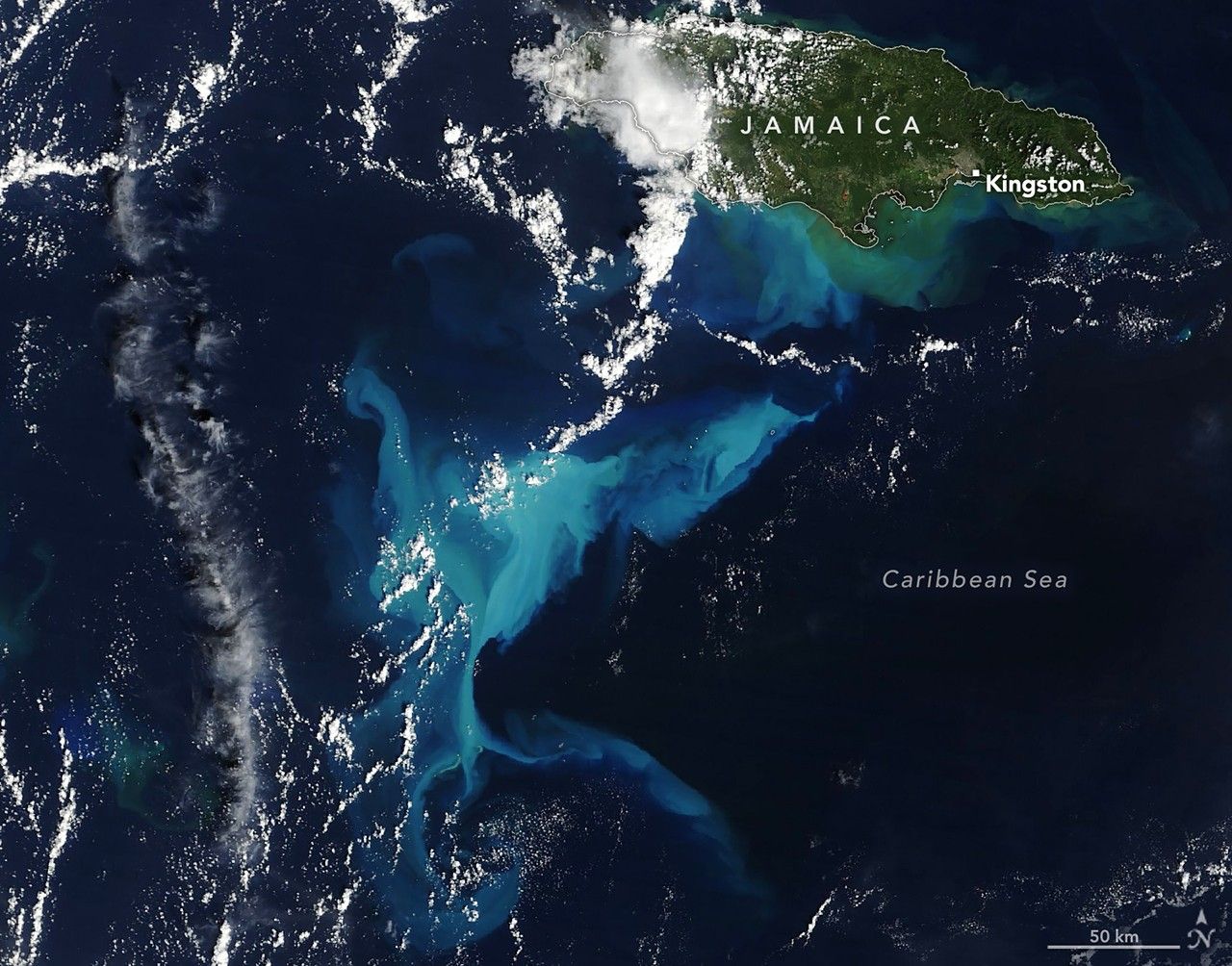
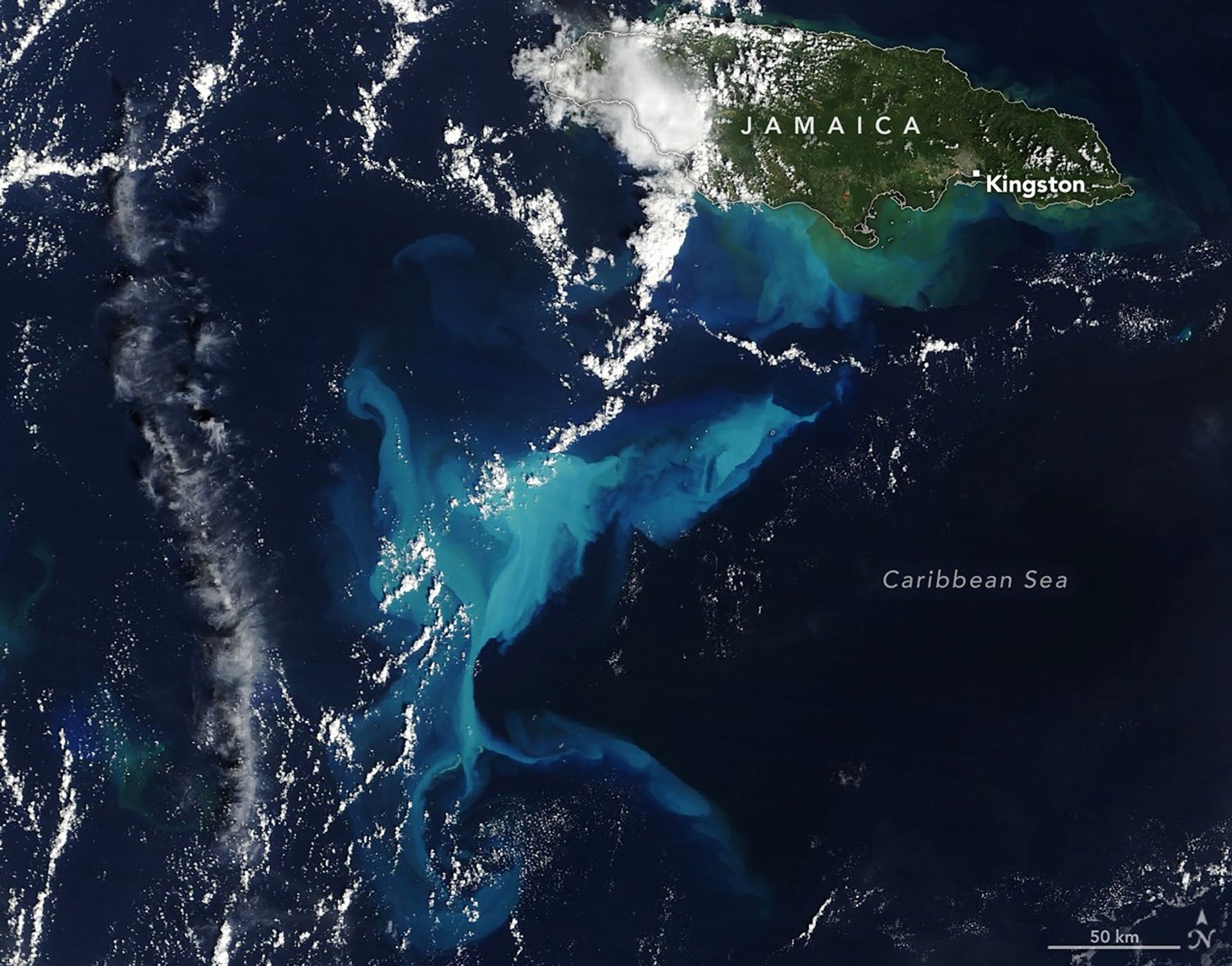
A satellite image shows a portion of the Caribbean Sea near Jamaica. Much of the water in the middle third of the image is bright blue due to suspended sediment. The mostly green island of Jamaica is in the upper right, and scattered clouds are present throughout.
NASA Earth Observatory

A satellite image shows a portion of the dark blue Caribbean Sea near Jamaica. A submerged carbonate platform appears as a slightly brighter blue area of water in the center. The mostly green island of Jamaica is in the upper right, and scattered clouds are present throughout.
NASA Earth Observatory
A satellite image shows a portion of the Caribbean Sea near Jamaica. Much of the water in the middle third of the image is bright blue due to suspended sediment. The mostly green island of Jamaica is in the upper right, and scattered clouds are present throughout.
NASA Earth Observatory

September 20, 2025

October 30, 2025

Before and After


Hurricane Melissa made landfall in Jamaica on October 28, 2025, as a category 5 storm, bringing sustained winds of 295 kilometers (185 miles) per hour and leaving a broad path of destruction on the island. The storm displaced tens of thousands of people, damaged or destroyed more than 100,000 structures, inflicted costly damage on farmland, and left the nation’s forests brown and battered.

Prior to landfall, in the waters south of the island, the hurricane created a large-scale natural oceanography experiment. Before encountering land and proceeding north, the monster storm crawled over the Caribbean Sea, churning up the water below. A couple of days later, a break in the clouds revealed what researchers believe could be a once-in-a-century event.

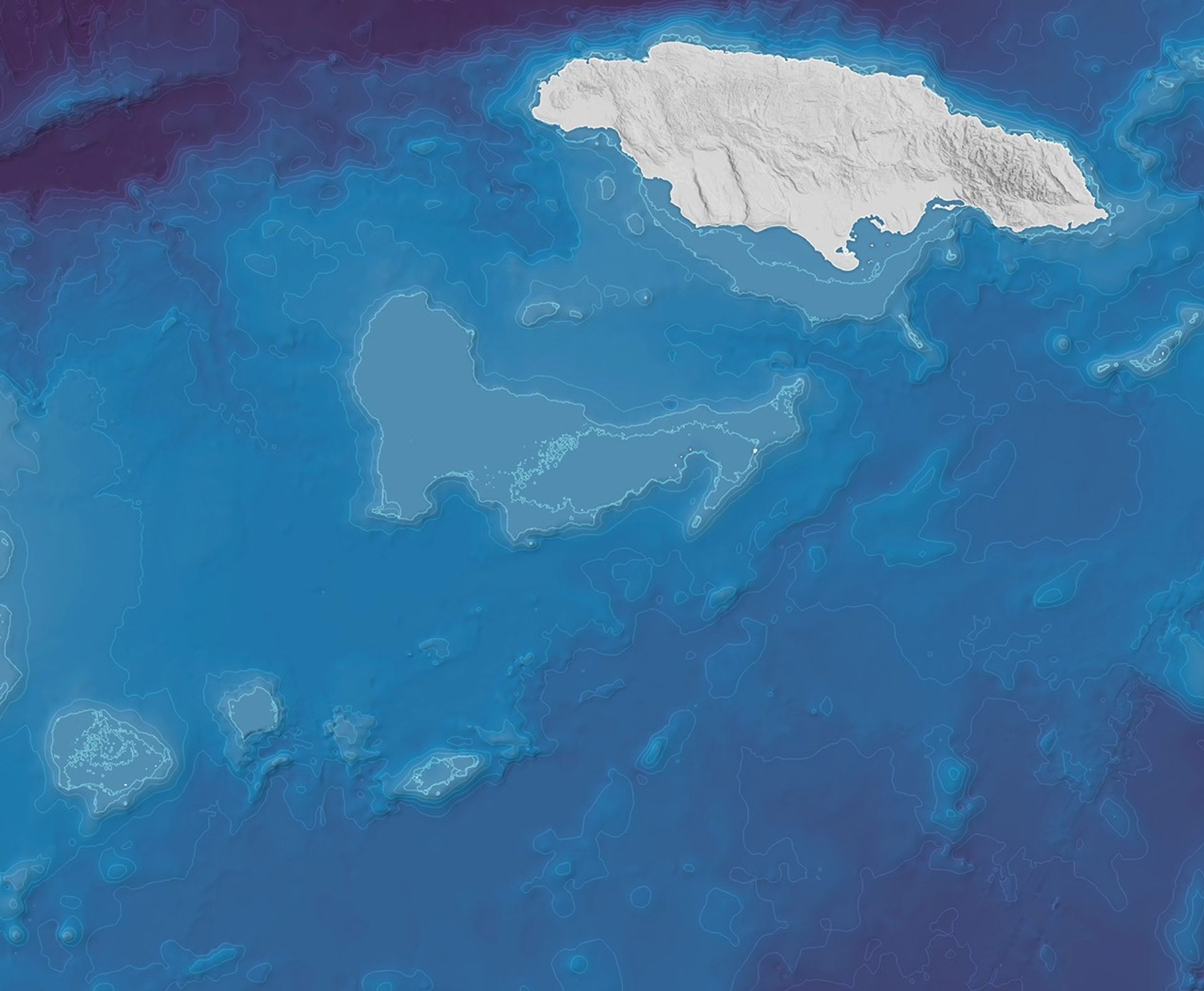
On October 30, 2025, the MODIS (Moderate Resolution Imaging Spectroradiometer) instrument on NASA’s Terra satellite acquired this image (right) of the waters south of Jamaica. Vast areas are colored bright blue by sediment stirred up from a carbonate platform called Pedro Bank. This plateau, submerged under about 25 meters (80 feet) of water, is slightly larger in area than the state of Delaware. For comparison, the left image was acquired by the same sensor on September 20, before the storm.

Pedro Bank is deep enough that it is only faintly visible in natural color satellite images most of the time. However, with enough disruption from hurricanes or strong cold fronts, its existence becomes more evident to satellites. Suspended calcium carbonate (CaCO3) mud, consisting primarily of remnants of marine organisms that live on the plateau, turns the water a Maya blue color. The appearance of this type of material contrasts with the greenish-brown color of sediment carried out to sea by swollen rivers on Jamaica’s southern coast.

As an intense storm that lingered in the vicinity of the bank, Hurricane Melissa generated “tremendous stirring power” in the water column, said James Acker, a data support scientist at the NASA Goddard Earth Sciences Data and Information Services Center with a particular interest in these events. Hurricane Beryl caused some brightening around Pedro Bank in July 2024, “but nothing like this,” he said. “While we always have to acknowledge the human cost of a disaster, this is an extraordinary geophysical image.”
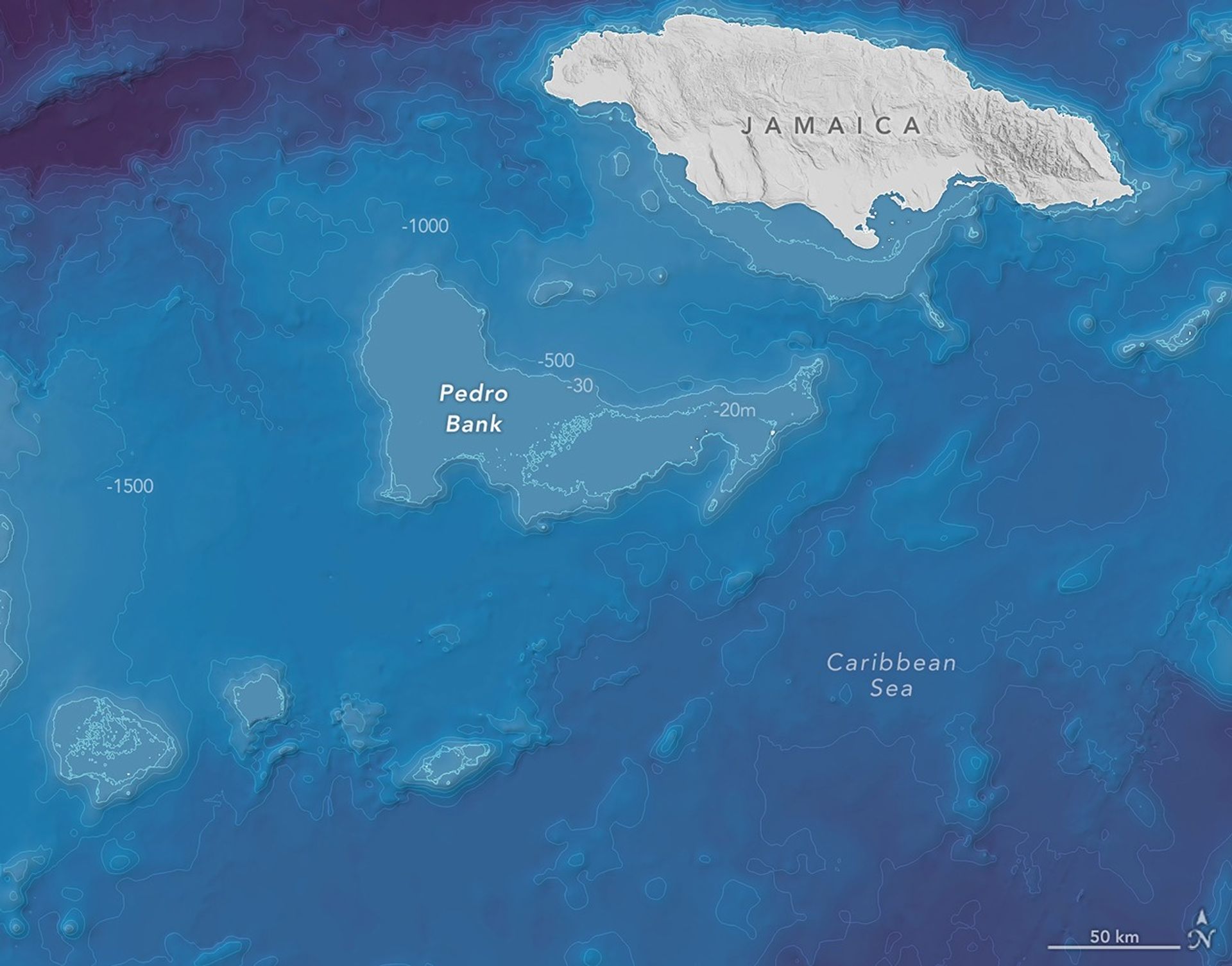
A bathymetric map of part of the Caribbean Sea shows Jamaica in the upper right and the large, flat-topped Pedro Bank at the center, which sits 20 to 30 meters below the surface and displays steep edges. Several smaller shallow shelves appear in the lower left.

Sediment suspension was visible on Pedro and other nearby shallow banks, indicating that Melissa affected a total area of about 37,500 square kilometers—more than three times the area of Jamaica—on October 30, said sedimentologist Jude Wilber, who tracked the plume’s progression using multiple satellite sensors. Having studied carbonate sediment transport for decades, he believes the Pedro Bank event was the largest observed in the satellite era. “It was extraordinary to see the sediment dispersed over such a large area,” he said.

The sediment acted as a tracer, illuminating currents and eddies near the surface. Some extended into the flow field of the Caribbean Current heading west and north, while other patterns suggested the influence of Ekman transport, Wilber said. The scientists also noted complexities in the south-flowing plume, which divided into three parts after encountering several small reefs. Sinking sediment in the easternmost arm exhibited a cascading stair-step pattern.

Like in other resuspension events, the temporary coloration of the water faded after about seven days as sediment settled. But changes to Pedro Bank itself may be more long-lasting. “I suspect this hurricane was so strong that it produced what I would call a ‘wipe’ of the benthic ecosystem,” Wilber said. Seagrasses, algae, and other organisms living on and around the bank were likely decimated, and it is unknown how repopulation of the area will unfold.
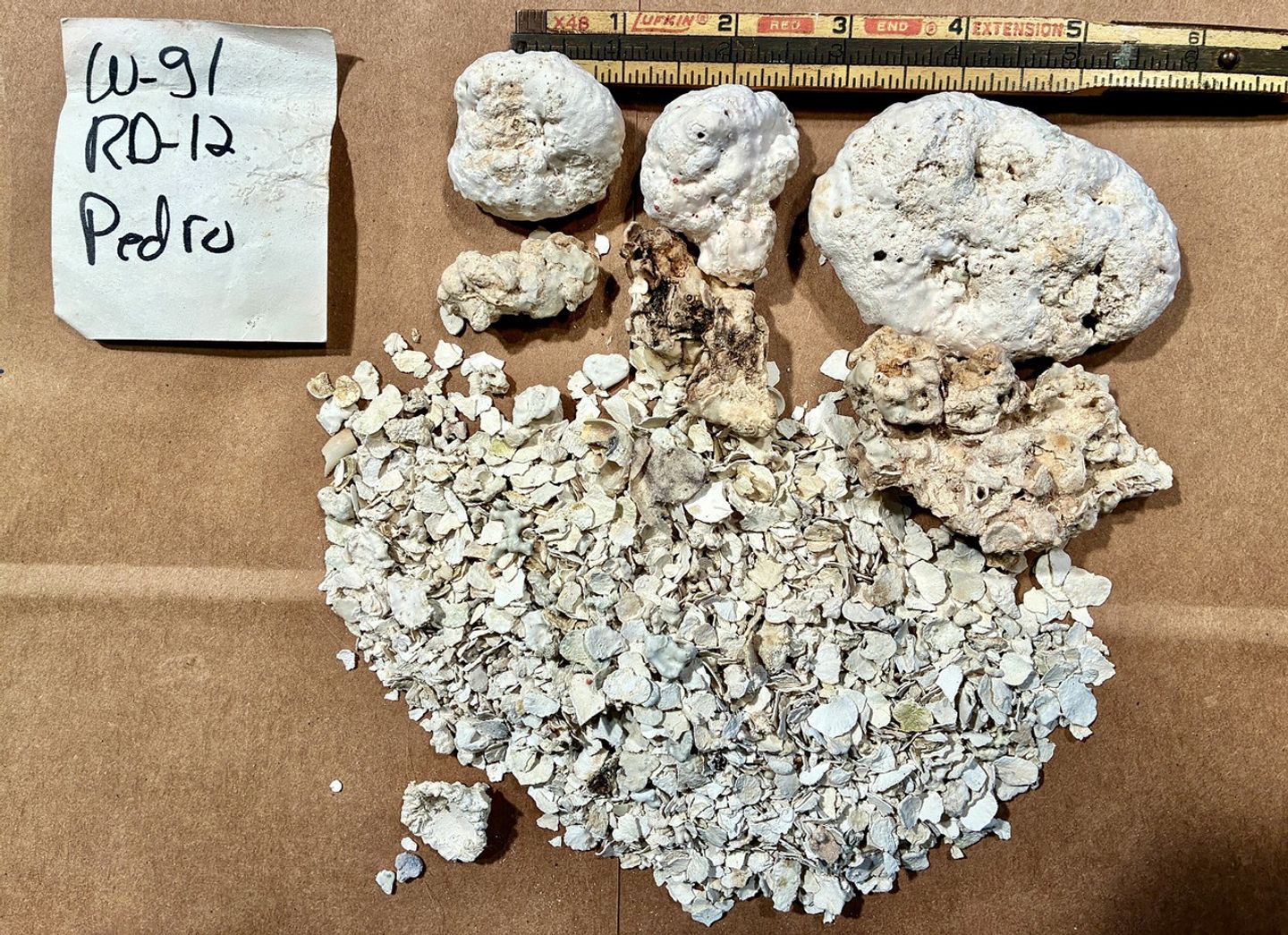
A sediment sample from Pedro Bank includes white globular pieces of calcified algae measuring several inches in diameter and smaller flaky white macroalgae remnants.
Sediments from the top of Pedro Bank contain masses of calcified red algae, flaky sands made of Halimeda macroalgae remnants, and carbonate mud. The wing-like shape of Halimeda sand allows it to be lifted and transported while waters are turbulent, and finer mud remains suspended longer. These samples were acquired during a research expedition in the winter of 1987-1988 and are archived at the Woods Hole Oceanographic Institution.
Photo by Jude Wilber, January 8, 2026.

Perhaps most consequentially for Earth’s oceans, however, is the effect of the sediment suspension event on the planet’s carbon cycle. Tropical cyclones are an important way for carbon in shallow-water marine sediments to reach deeper waters, where it can remain sequestered for the long term. At depth, carbonate sediments will also dissolve, another important process in the oceanic carbon system.

Near-continuous ocean observations by satellites have enabled greater understanding of these events and their carbon cycling. Acker and Wilber have worked on remote-sensing methods to quantify how much sediment reaches the deep ocean following the turbulence of tropical cyclones, including recently with Hurricane Ian over the West Florida Shelf. Now, hyperspectral observations from NASA’s PACE (Plankton, Aerosol, Cloud, ocean Ecosystem) mission, launched in February 2024, are poised to build on that progress, Acker said.

The phenomenon at Pedro Bank following Hurricane Melissa provided a singular opportunity to study this and other complex ocean processes—a large natural experiment that could not be accomplished any other way. Researchers will be further investigating a range of physical, geochemical, and biological aspects illuminated by this occurrence. As Wilber put it: “This event is a whole course in oceanography.”

NASA Earth Observatory images by Michala Garrison, using MODIS data from NASA EOSDIS LANCE and GIBS/Worldview, and ocean bathymetry data from the British Oceanographic Data Center’s General Bathymetric Chart of the Oceans (GEBCO). Photo by Jude Wilber. Story by Lindsey Doermann.

References & Resources

You may also be interested in:

Stay up-to-date with the latest content from NASA as we explore the universe and discover more about our home planet.

Hurricane Erin Roils in the Atlantic

3 min read

The major hurricane steered clear of land but delivered tropical storm conditions to coastal areas along its path.

Article

A Direct Hit on Jamaican Forests 

6 min read

Hurricane Melissa left the island nation’s forests brown and battered, but they won’t stay that way for long.

Article

Land of Many Waters and Much Sediment

4 min read

The Guiana Shield’s rugged terrain shapes Guyana’s waterways, but mining has altered their clarity.


Article

Powered by WPeMatico

Get The Details…

NASA, SpaceX Invite Media to Watch Crew-12 Launch to Space Station

NASA, SpaceX Invite Media to Watch Crew-12 Launch to Space Station

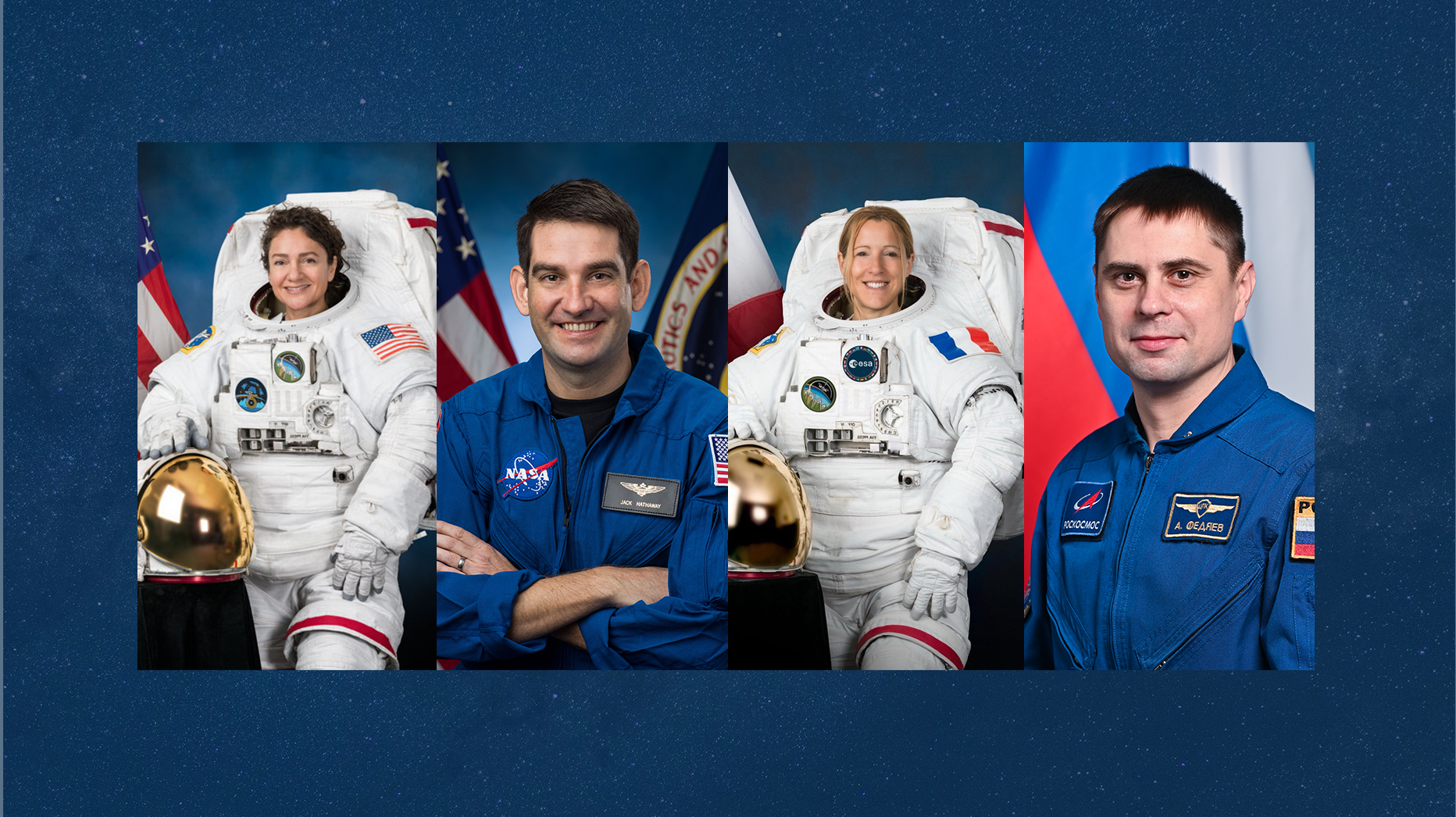
Image shows a blue background featuring pictures of four astronauts that comprise of NASA's SpaceX Crew-12 mission. From left to right, NASA astronauts Jessica Meir and Jack Hathaway, ESA (European Space Agency) astronaut Sophie Adenot, and Roscosmos cosmonaut Andrey Fedyaev.
From left to right, NASA astronauts Jessica Meir and Jack Hathaway, ESA (European Space Agency) astronaut Sophie Adenot, and Roscosmos cosmonaut Andrey Fedyaev.
NASA

Media accreditation is open for the launch of NASA’s 12th rotational mission of a SpaceX Falcon 9 rocket and Dragon spacecraft carrying astronauts to the International Space Station for a science expedition from Space Launch Complex 40 at Cape Canaveral Space Force Station in Florida.

NASA announced it is targeting no earlier than Thursday, Jan. 15, for a splashdown of its Crew-11 mission. The agency also is working with SpaceX and international partners to advance the launch of Crew-12, which is currently slated for Sunday, Feb. 15.

The crew includes NASA astronauts Jessica Meir, commander, Jack Hathaway, pilot; ESA (European Space Agency) astronaut Sophie Adenot, mission specialist; and Roscosmos cosmonaut Andrey Fedyaev, mission specialist. This will be the second spaceflight for Meir and Fedyaev, and the first for Hathaway and Adenot to the orbiting laboratory.

Media accreditation deadlines for the Crew-12 launch as part of NASA’s Commercial Crew Program are as follows:

  • International media without U.S. citizenship must apply by 11:59 p.m. EST on Thursday, Jan. 15.
  • U.S. media and U.S. citizens representing international media organizations must apply by 11:59 p.m. on Sunday, Jan. 18.

All accreditation requests must be submitted online at:

https://media.ksc.nasa.gov

NASA’s media accreditation policy is online. For questions about accreditation or special logistical requests, email: ksc-media-accreditat@mail.nasa.gov. Requests for space for satellite trucks, tents, or electrical connections are due by Friday, Jan. 23.

For other questions, please contact NASA Kennedy’s newsroom at: 321-867-2468.

Para obtener información sobre cobertura en español en el Centro Espacial Kennedy o si desea solicitar entrevistas en español, comuníquese con Antonia Jaramillo: 321-501-8425, o Messod Bendayan: 256-930-1371.

For launch coverage and more information about the mission, visit:

https://www.nasa.gov/commercialcrew

-end-

Joshua Finch / Jimi Russell
Headquarters, Washington
202-358-1100
joshua.a.finch@nasa.gov / james.j.russell@nasa.gov

Steve Siceloff
Kennedy Space Center, Fla. 
321-867-2468 
steven.p.siceloff@nasa.gov

Joseph Zakrzewski
Johnson Space Center, Houston
281-483-5111
Joseph.a.zakrzewski@nasa.gov

Share

Details

Last Updated

Jan 12, 2026

Editor
Jennifer M. Dooren

Powered by WPeMatico

Get The Details…
Jennifer M. Dooren

A Quarter Century in Orbit: Science Shaping Life on Earth and Beyond 

A Quarter Century in Orbit: Science Shaping Life on Earth and Beyond 

For more than 25 years, humans have lived and worked continuously aboard the International Space Station, conducting research that is transforming life on Earth and shaping the future of exploration. From growing food and sequencing DNA to studying disease and simulating Mars missions, every experiment aboard the orbiting laboratory expands our understanding of how humans can thrive beyond Earth while advancing science and technology that benefit people around the world.  

Unlocking new cancer therapies from space

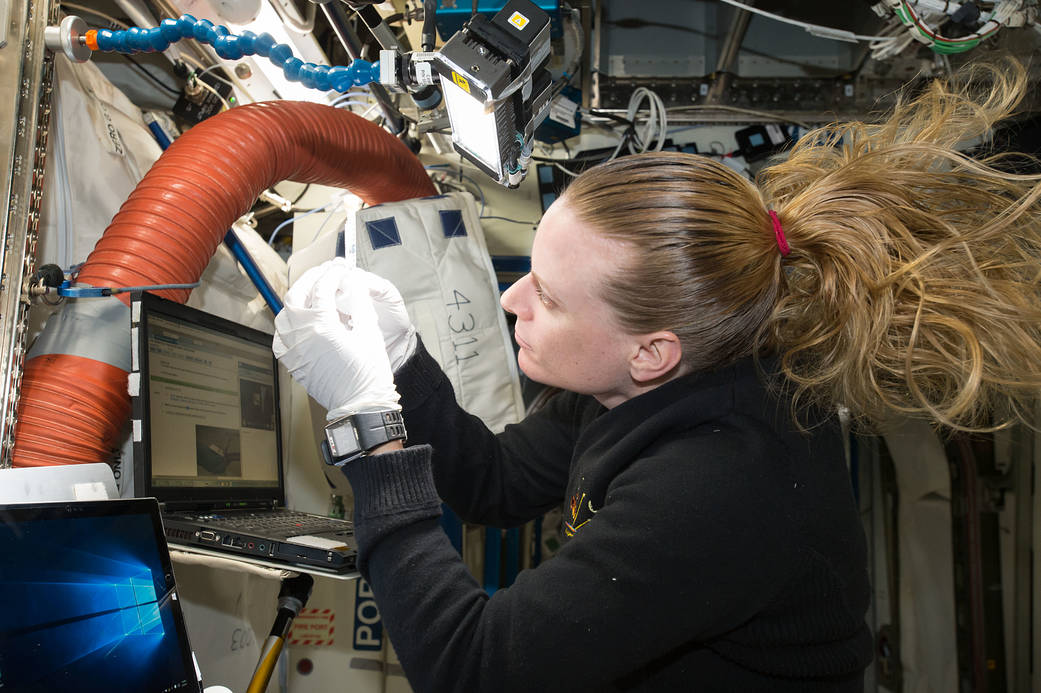
A woman conducts a research experiment aboard the International Space Station.
NASA astronaut Christina Koch works on MicroQuin’s protein crystallization research aboard the International Space Station.
NASA

The space station gives scientists a laboratory unlike any on Earth. In microgravity, cells grow in three dimensions, proteins form higher-quality crystals, and biological systems reveal details hidden by gravity. These conditions open new ways to study disease and develop treatments

Astronauts and researchers have used the orbiting laboratory to observe how cancer cells grow, test drug delivery methods, and examine protein structures linked to diseases such as Parkinson’s and Alzheimer’s. One example is the Angiex Cancer Therapy study, which tested a drug designed to target blood vessels that feed tumors. In microgravity, endothelial cells survive longer and behave more like they do in the human body, giving researchers a clearer view of how the therapy works and whether it is safe before human trials. 

Protein crystal growth (PCG) is another major area of cancer-related study. The NanoRacks-PCG Therapeutic Discovery and On-Orbit Crystals investigations have advanced research on leukemia, breast cancer, and skin cancers. Protein crystals grown in microgravity produce larger, better-organized structures that allow scientists to determine fine structural details that guide the design of targeted treatments. 

Studies in orbit have also provided insights about cardiovascular health, bone disorders, and how the immune system changes in space—knowledge that informs medicine on Earth and prepares astronauts for long missions in deep space. 

By turning space into a research lab, scientists are advancing therapies that benefit people on Earth and laying the foundation for ensuring crew health on future journeys to the Moon and Mars. 


Farming for the future 

NASA astronauts Jessica Watkins and Bob Hines work on the XROOTS space botany investigation, which used the station’s Veggie facility to test soilless hydroponic and aeroponic methods to grow plants. The space agricultural study could enable production of crops on a larger scale to sustain crews on future space explorations farther away from Earth.
NASA astronauts Jessica Watkins and Bob Hines work on the eXposed Root On-Orbit Test System (XROOTS) space botany investigation, which used the station’s Veggie facility to test soilless hydroponic and aeroponic methods to grow plants. The space agricultural study could enable production of crops on a larger scale to sustain crews on future space explorations farther away from Earth.
NASA

Feeding astronauts on long-duration missions requires more than packaged meals. It demands sustainable systems that can grow fresh food in space. The Vegetable Production System, known as Veggie, is a garden on the space station designed to test how plants grow in microgravity while adding fresh produce to the crew’s diet and improving well-being in orbit. 

To date, Veggie has produced three types of lettuce, Chinese cabbage, mizuna mustard, red Russian kale, and even zinnia flowers. Astronauts have eaten space-grown lettuce, mustard greens, radishes, and chili peppers using Veggie and the Advanced Plant Habitat, a larger, more controlled growth chamber that allows scientists to study crops in greater detail. 

These plant experiments pave the way for future lunar and Martian greenhouses by showing how microgravity affects plant development, water and nutrient delivery, and microbial interactions. They also provide immediate benefits for Earth, advancing controlled-environment agriculture and vertical farming techniques that help make food production more efficient and resilient in challenging environments. 

First year-long twin study 

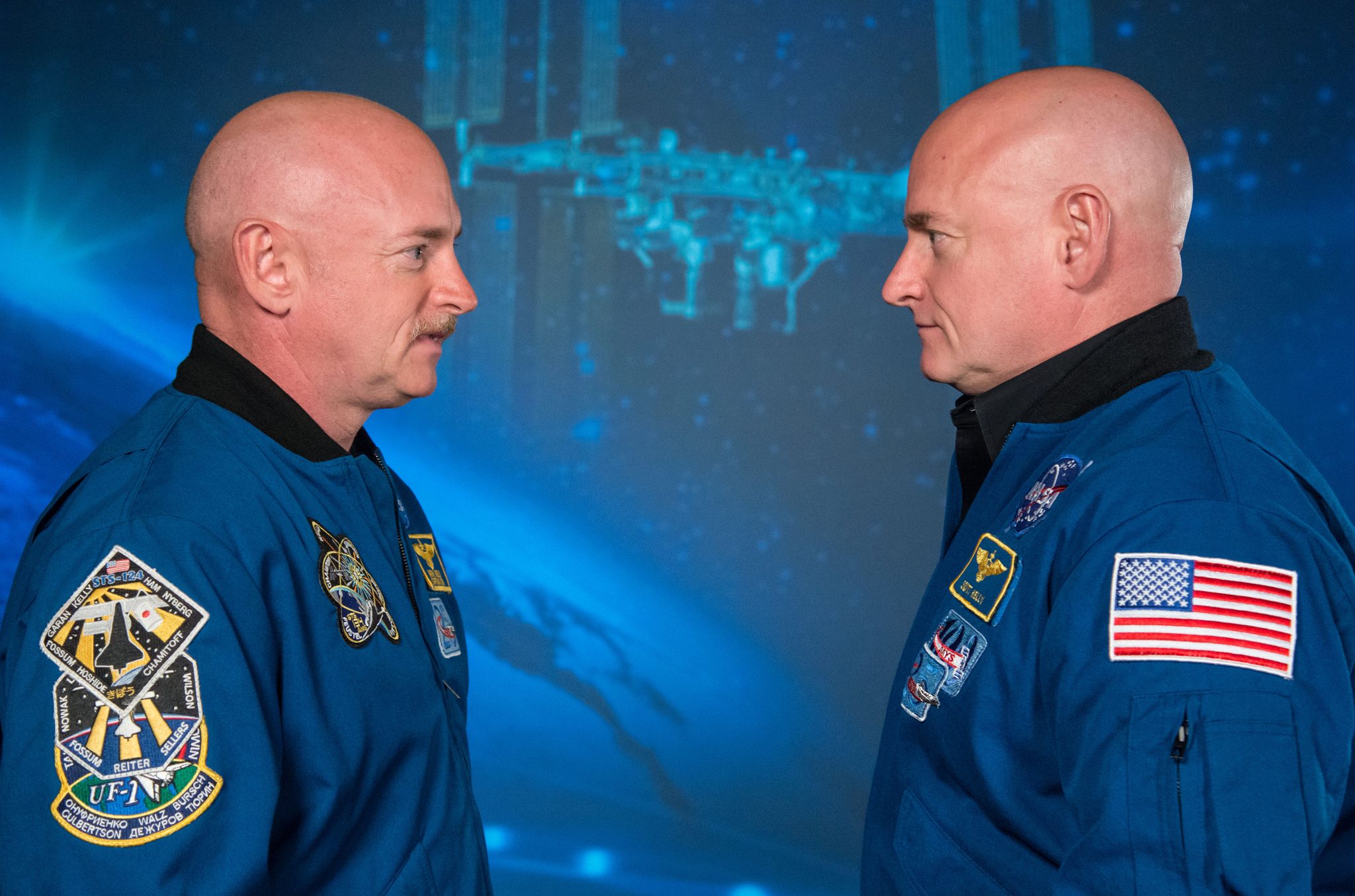
Identical twin astronauts Mark and Scott Kelly
Mark and Scott Kelly, both former NASA astronauts, are photographed as part of NASA’s Twins Study.
NASA

Understanding how the human body changes in space is critical for planning long-duration missions. NASA’s Twins Study offered an unprecedented opportunity to investigate nature vs. nurture in orbit and on Earth. NASA astronaut Scott Kelly spent nearly a year aboard the space station while his identical twin, retired astronaut Mark Kelly, remained on Earth. 

By comparing the twins before, during, and after the mission, researchers examined changes at the genomic, physiological, and behavioral levels in one integrated study. The results showed most changes in Scott’s body returned to baseline after his return, but some persisted—such as shifts in gene expression, telomere length, and immune system responses. 

The study provided the most comprehensive molecular view to date of how a human body adapts to spaceflight. Its findings may guide NASA’s Human Research Program for years to come, informing countermeasures for radiation, microgravity, and isolation. The research may have implications for health on Earth as well—from understanding aging and disease to exploring treatments for stress-related disorders and traumatic brain injury. 

The Twins Study demonstrated the resilience of the human body in space and continues to shape the medical playbook for the Artemis campaign to the Moon and future journeys to Mars. 

Simulating deep space 

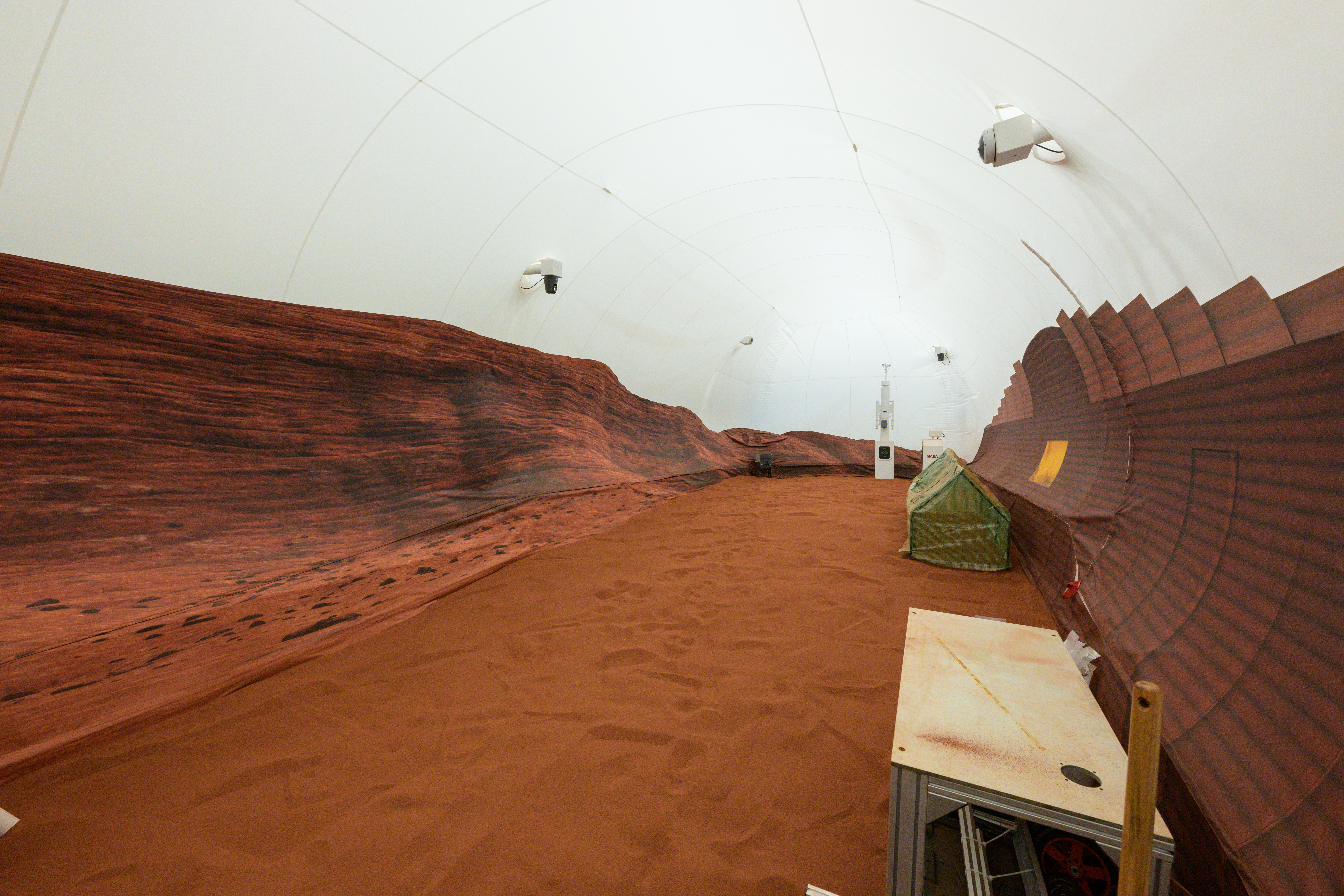
The 1,200 square foot sandbox located in the CHAPEA habitat at NASA's Johnson Space Center.
A view inside the sandbox portion of the Crew Health and Performance Analog, where research volunteers participate in simulated walks on the surface of Mars.
NASA/Bill Stafford

The space station, which is itself an analog for deep space, complements Earth-based analog research simulating the spaceflight environment. Space station observations, findings, and challenges, inform the research questions and countermeasures scientists explore on Earth.   

Such work is currently underway through CHAPEA (Crew Health and Performance Exploration Analog), a mission in which volunteers live and work inside a 1,700-square-foot, 3D-printed Mars habitat for about a year. The first CHAPEA crew completed 378 days in isolation in 2024, testing strategies for maintaining health, growing food, and sustaining morale under delayed communication. 

NASA recently launched CHAPEA 2, with a four-person crew who began their 378-day simulated Mars mission at Johnson on October 19, 2025. Building on lessons from the first mission and decades of space station research, they will test new technologies and behavioral countermeasures that will help future explorers thrive during long-duration missions, preparing Artemis astronauts for the journey to the Moon and laying the foundation for the first human expeditions to Mars. 

Keeping crews healthy in low Earth orbit 

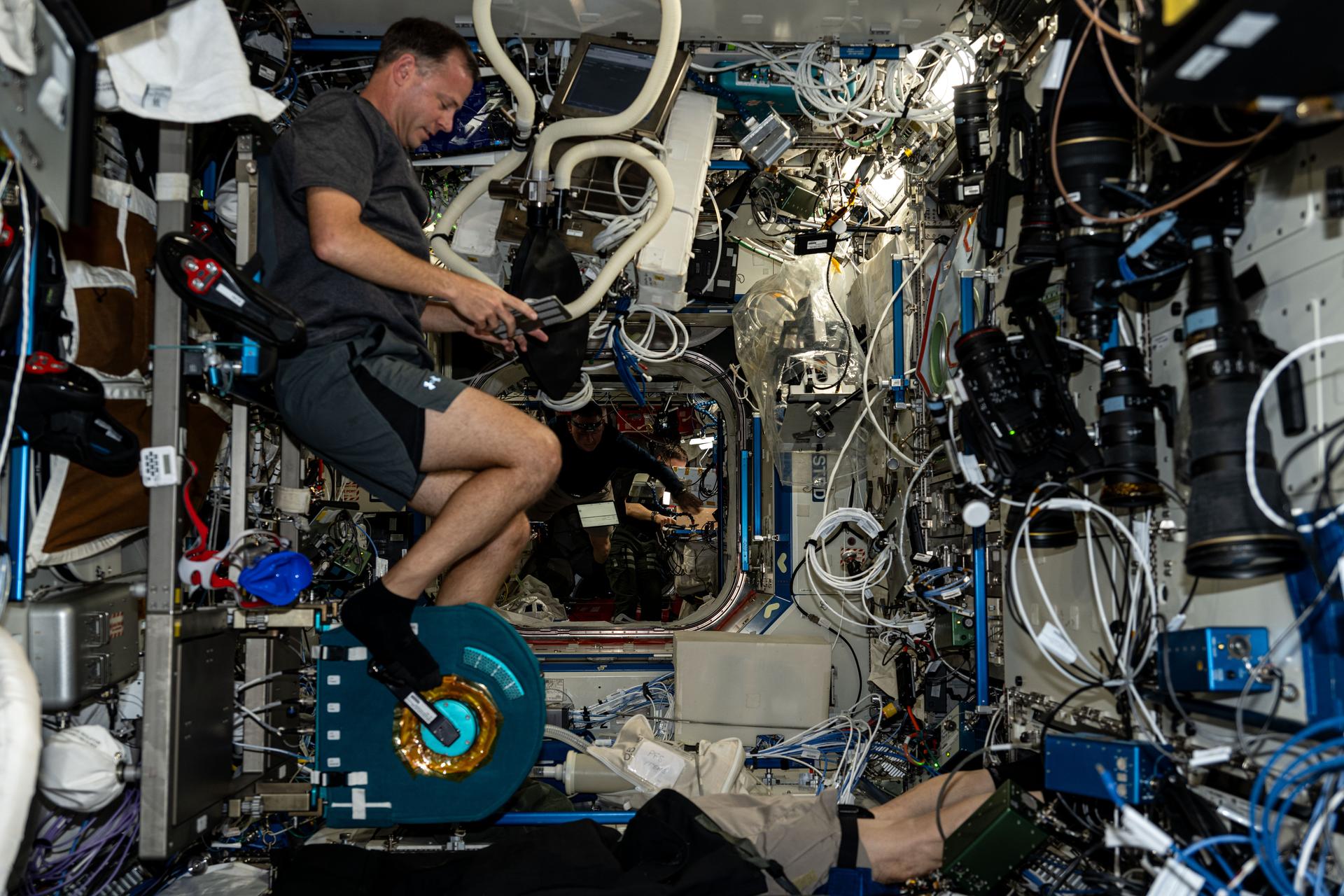
NASA astronaut and Expedition 72 Flight Engineer Nick Hague pedals on the Cycle Ergometer with Vibration Isolation and Stabilization (CEVIS), an exercise cycle located aboard the International Space Station's Destiny laboratory module. CEVIS provides aerobic and cardiovascular conditioning through recumbent (leaning back position) or upright cycling activities.
NASA astronaut Nick Hague pedals on the Cycle Ergometer with Vibration Isolation and Stabilization (CEVIS), an exercise cycle located aboard the space station’s Destiny laboratory module. CEVIS provides aerobic and cardiovascular conditioning through recumbent or upright cycling activities.
NASA

Staying healthy is a top priority for all NASA astronauts, but it is particularly important while living and working aboard the orbiting laboratory.  

Crews often spend extended periods of time aboard the orbiting laboratory, with the average mission lasting about six months or more. During these long-duration missions, without the continuous load of Earth’s gravity, there are many changes to the human body. Proper nutrition and exercise are some of the ways these effects may be mitigated. 

NASA has a team of medical physicians, psychologists, nutritionists, exercise scientists, and other specialized medical personnel who collaborate to ensure astronauts’ health and fitness on the station. These teams are led by a NASA flight surgeon, who regularly monitors each crew member’s health during a mission and individualizes diet and fitness routines to prioritize health and safety while in space. 

Crew members are also part of the ongoing health and performance research being conducted to advance understanding of long-term spaceflight’s effects on the human body. That knowledge is applied to any crewed mission and will help prepare humanity to travel farther than ever before, including the Moon and Mars. 

Sequencing the future 

NASA astronaut Kate Rubins looking at DNA sample inside space station laboratory
NASA astronaut Kate Rubins checks a sample for air bubbles prior to loading it in the biomolecule sequencer. When Rubins’ expedition began, zero base pairs of DNA had been sequenced in space. Within just a few weeks, she and the Biomolecule Sequencer team had sequenced their one billionth base of DNA aboard the orbiting laboratory.
JAXA (Japan Aerospace Exploration Agency)/Takuya Onishi

In 2016, NASA astronaut Kate Rubins made history aboard the orbital outpost as the first person to sequence DNA in space. Using a handheld device called the MinION, she analyzed DNA samples in microgravity, proving that genetic sequencing could be performed in low Earth orbit for the first time. 

Her work advanced in-flight molecular diagnostics, long-duration cell culture, and molecular biology techniques such as liquid handling in microgravity. 

The ability to sequence DNA aboard the orbiting laboratory allows astronauts and scientists to identify microbes in real time, monitor crew health, and study how living organisms adapt to spaceflight. The same technology now supports medical diagnostics and disease detection in remote or extreme environments on Earth. 

This research continues through the Genes in Space program, where students design DNA experiments that fly aboard NASA missions. Each investigation builds on Rubins’ milestone, paving the way for future explorers to diagnose illness, monitor environmental health, and search for signs of life beyond Earth. 

Explore the timeline of space-based DNA sequencing

Powered by WPeMatico

Get The Details…
Sumer Loggins

Fincke Hands Over Station Command, Crew Preps for Wednesday Departure

Fincke Hands Over Station Command, Crew Preps for Wednesday Departure

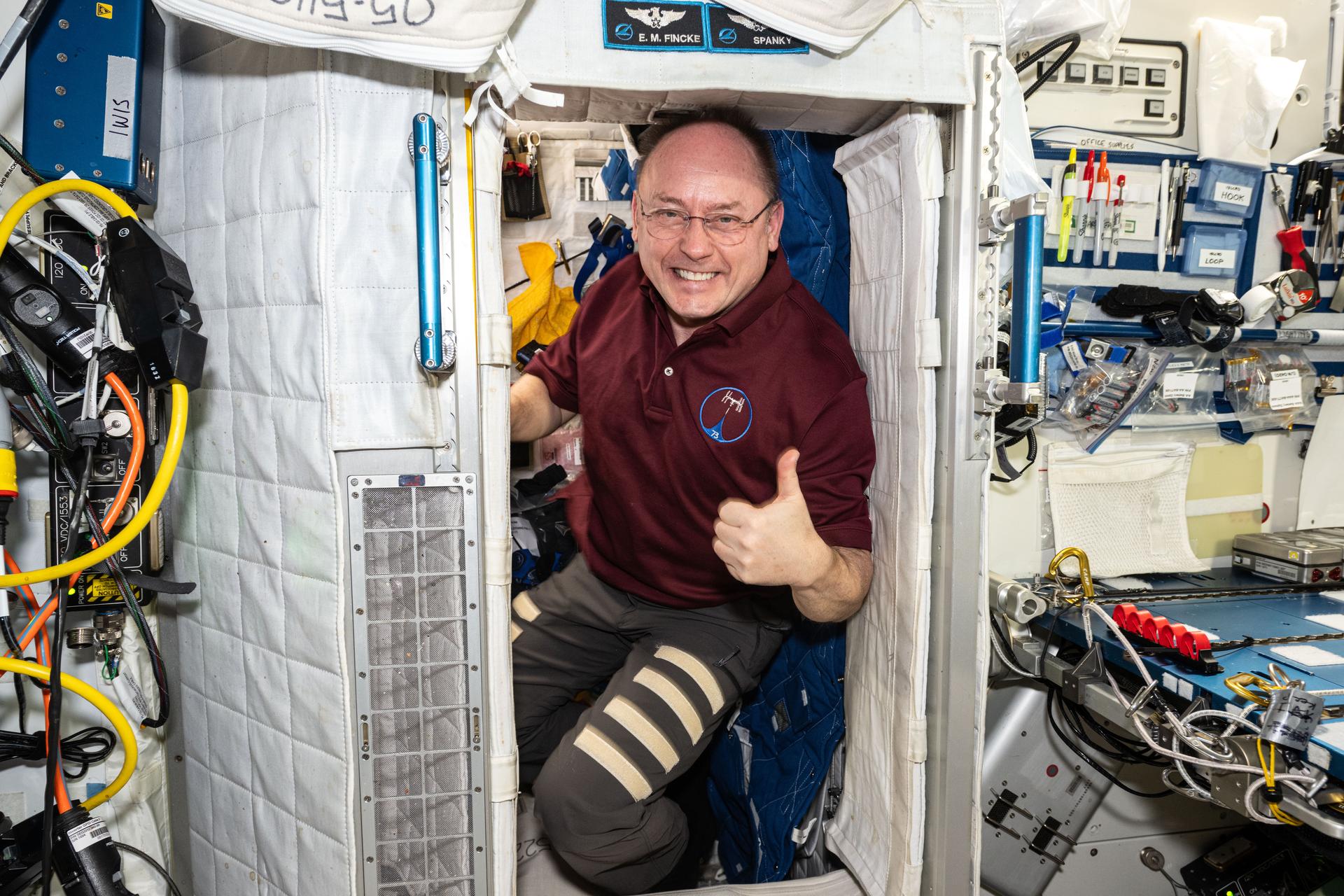
NASA astronaut and Expedition 73 Flight Engineer Mike Fincke poses for a portrait inside his crew quarters aboard the International Space Station's Harmony module.
NASA astronaut Mike Fincke poses for a portrait inside his crew quarters aboard the International Space Station’s Harmony module.
NASA

NASA astronaut Mike Fincke handed over command of the International Space Station to Roscosmos cosmonaut Sergey Kud-Sverchkov at 2:35 p.m. EST today. The traditional Change of Command Ceremony precedes the targeted departure of Fincke with Zena Cardman of NASA, Kimiya Yui of JAXA (Japan Aerospace Exploration Agency), and Oleg Platonov of Roscosmos aboard the SpaceX Dragon crew spacecraft.

NASA’s SpaceX Crew-11 mission is targeted undock from the Harmony module’s space-facing port at 5:05 p.m. EST on Wednesday, Jan. 14. Crew-11 will then complete a parachute-assisted lamnding inside Dragon to a splashdown off the coast of California less than 12 hours later at about 3:40 a.m. on Thursday, Jan. 15. NASA and SpaceX support personnel will retrieve Dragon and the crew from the Pacific Ocean and return them to California before the crewmates fly back to their home agencies.

Fincke, with assistance from his three homebound crewmates, packed gear and personal items inside Dragon throughout Monday. At the end of Monday’s shift, the foursome retrieved computer tablets from inside Dragon and reviewed the steps they will use while departing the station and reentering Earth’s atmosphere.

The three crew members remaining aboard the orbital outpost, Kud-Sverchkov with Chris Williams of NASA and Sergey Mikaev of Roscosmos will await the arrival of NASA’s SpaceX Crew-12 members Jessica Meir and Jack Hathaway, both from NASA, Sophie Adenot of ESA (European Space Agency), and Andrey Fedyaev of Roscosmos. Crew-12 is due to launch to the space station in February and join Expedition 74 for a nine-month-long space research mission.

There was still time for science on Monday as Cardman scanned Williams’ arteries with the Ultrasound 2 device and collected his blood pressure measurements. Next, Williams assisted Cardman as she peered into medical imaging gear to help doctors assess the condition of her retina, cornea, and lens in microgravity. Afterward, Williams worked with Yui and treated microbe samples in the Kibo laboratory module’s Life Science Glovebox, exploring the use of ultraviolet light to disinfect spacecraft surfaces.

Cosmonauts Kud-Sverchkov and Mikaev focused on maintenance Monday servicing electronic and ventilation systems then inventorying hardware throughout the station’s Roscosmos segment. Platonov assisted the duo amid his departure preparations.

Learn more about station activities by following the space station blog, @space_station on X, as well as the ISS Facebook and ISS Instagram accounts.

Get the latest from NASA delivered every week. Subscribe here.

Powered by WPeMatico

Get The Details…

Mark A. Garcia

NASA Invites Media to Cover Artemis Mission from Johnson Space Center

NASA Invites Media to Cover Artemis Mission from Johnson Space Center

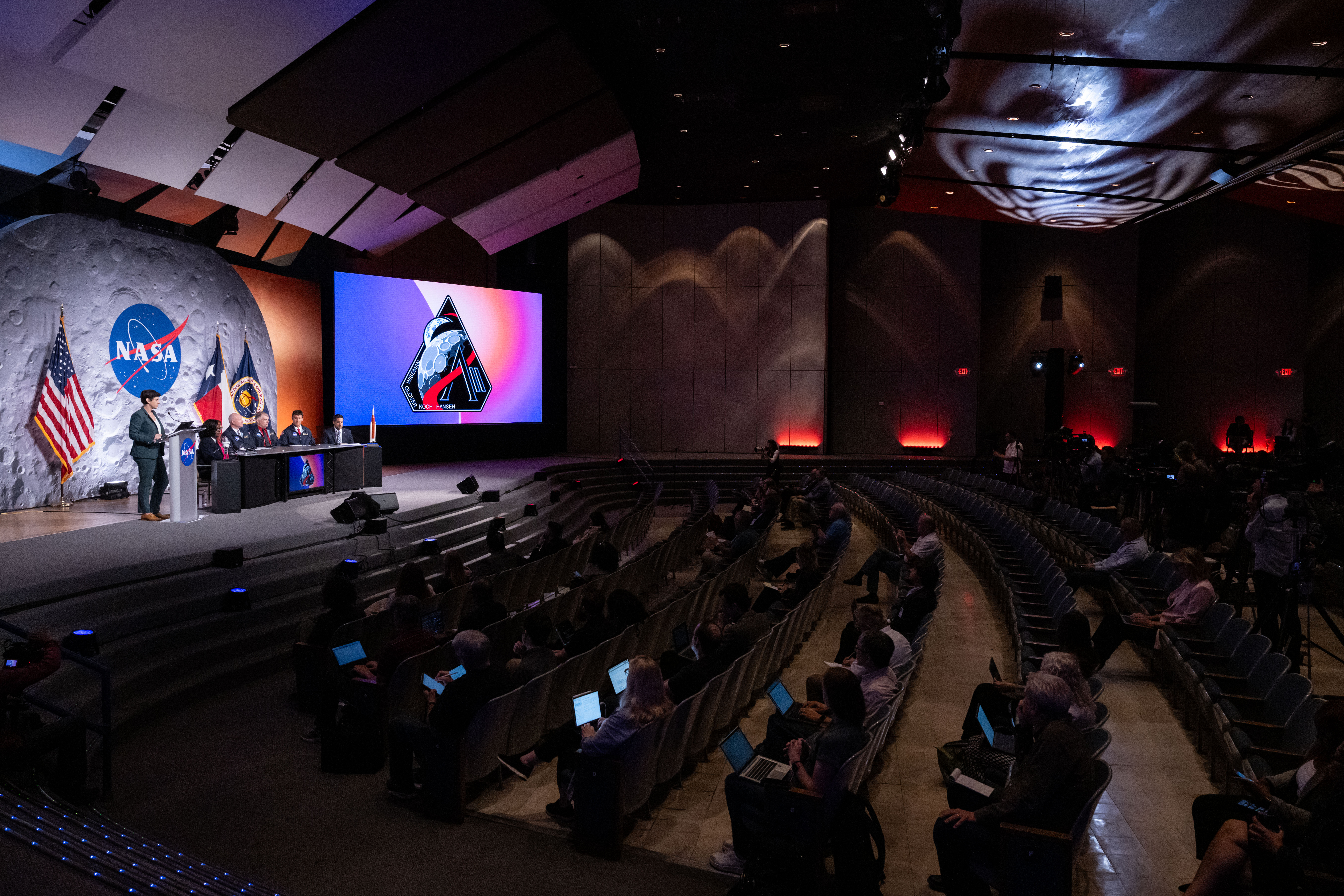
NASA hosted the Artemis II Mission Overview briefing in the Teague Auditorium at NASA’s Johnson Space Center in Houston, Sept. 23, 2025.
NASA/James Blair

Media accreditation is open to attend Artemis II mission activities at NASA’s Johnson Space Center in Houston. Johnson is where flight controllers in mission control will manage the test flight after liftoff of the first crewed Moon mission under the agency’s Artemis campaign.

Targeted to launch no earlier Friday, Feb. 6, the Artemis II mission will send NASA astronauts Reid Wiseman, Victor Glover, Christina Koch, and CSA (Canadian Space Agency) astronaut Jeremy Hansen on an approximately 10-day journey around the Moon and back to test the systems and hardware, which will return humanity to the lunar surface.

After launch day, NASA will host daily briefings at Johnson throughout the mission with agency managers and mission experts. The briefings will be streamed on NASA’s YouTube channel.

International media without U.S. citizenship must apply to cover the mission in person at Johnson by 5 p.m. CST Friday, Jan. 16. U.S. media must apply by Friday, Jan. 30. Media representatives must apply by contacting the NASA Johnson newsroom at jsccommu@mail.nasa.gov. NASA’s media accreditation policy is available online.

Due to high interest, in-person space is limited. Credentialed media will receive a confirmation email if approved. Those who are accredited to attend the Artemis II launch at NASA’s Kennedy Space Center in Florida are not automatically accredited to attend events at Johnson and must receive a separate confirmation for activities in-person at NASA Johnson.

As part of a Golden Age of innovation and exploration, Artemis will pave the way for new U.S.-crewed missions on the lunar surface in preparation to send the first astronauts to Mars.

To learn more about the Artemis II mission, visit:

https://www.nasa.gov/mission/artemis-ii

-end-

Rachel Kraft / Lauren Low
Headquarters, Washington
202-358-1600
rachel.h.kraft@nasa.gov / lauren.e.low@nasa.gov

Chelsey Ballarte
Johnson Space Center, Houston
281-483-5111
chelsey.n.ballarte@nasa.gov

Share

Details

Last Updated

Jan 12, 2026

Powered by WPeMatico

Get The Details…
Tiernan P. Doyle