From Service to Space Systems: A Pathways Journey to NASA

From Service to Space Systems: A Pathways Journey to NASA

For Corey Elmore, the path to NASA’s Kennedy Space Center did not begin in engineering. It began in service.

Today he serves as a NASA Pathways engineering intern in the Technical Processes and Tools Branch (KSC-NE-TA) at Kennedy Space Center. Through the Pathways program, he is gaining hands-on experience supporting the engineering environments, technical tools and processes that help NASA teams design, analyze, and operate complex mission systems.

NASA Pathways intern Corey Elmore stands near Launch Complex 39B at Kennedy Space Center, with the Space Launch System rocket and Artemis infrastructure in the background. Through the Pathways program, Elmore supports engineering tools and processes that help enable NASA missions.
NASA/Corey Elmore

Within the branch, his work explores how artificial intelligence, machine learning, and automation can enhance engineering workflows. As modern missions generate massive amounts of data across interconnected systems, these tools help engineers organize information, improve analysis, and make faster decisions.

By studying how intelligent systems can support engineers, he hopes to help teams focus more deeply on solving the technical challenges that enable exploration.

«What excites me most about being at NASA is the chance to work on problems that are bigger than any one person. In a place like this, even small improvements in how we think, build, or support engineers can ripple outward into missions that push exploration forward.»

Corey Elmore

Corey Elmore

NASA Pathways Intern

The Pathways program provides students the opportunity to work alongside experienced engineers while contributing to real projects across NASA centers. At Kennedy Space Center, the experience offers a front-row view of how large-scale technical systems come together, from engineering processes and technical documentation to the collaborative teams responsible for supporting mission operations.

A NASA intern stands inside a large industrial facility with rocket hardware and structural platforms in the backgrou
NASA Pathways intern Corey Elmore stands inside the Vehicle Assembly Building at Kennedy Space Center, where large-scale hardware and engineering systems are prepared for mission operations.

Mentorship and collaboration have been central to the experience. Working with engineers across multiple disciplines has reinforced the importance of systems thinking: understanding how people, processes, and technology interact within complex mission environments.

His path to NASA, however, did not begin in engineering. Before entering the STEM field, he served in the U.S. Navy as a hospital corpsman supporting Marine Corps and Navy units. During that time, he also served as an instructor working with Navy Seabees, helping train and mentor service members in mission-critical skills.

That role required breaking down complex information, leading under pressure, and ensuring others could perform effectively in demanding environments. These skills translate naturally into engineering problem solving.

U.S. Navy personnel conduct a field training exercise while assisting a simulated casualty in an outdoor environment.
Before joining NASA, Corey Elmore served in the U.S. Navy as a hospital corpsman, supporting Marine Corps and Navy units and training service members in mission-critical skills.
NASA/Corey Elmore

My transition from military service to NASA has shown me that purpose does not end when the uniform comes off. The setting changes, the tools change, but the deeper mission remains: Serving something larger than yourself.

Corey Elmore

Corey Elmore

NASA Pathways Intern

Following military service, the next chapter unfolded in the defense and shipbuilding industry, supporting naval maintenance and logistics systems connected to fleet readiness. Working in shipbuilding environments provided firsthand exposure to the scale and coordination required to sustain complex operational platforms.

Maintaining ships at sea and preparing spacecraft for launch share a common challenge. Both depend on integrating engineering disciplines, operational processes, and reliable technology into a cohesive system.

While building professional experience, he continued pursuing higher education. During his time in the Navy, he earned a bachelor’s degree in supply chain and operations management from Western Governors University. Today, he is continuing his studies while working at NASA, pursuing both bachelor’s and master’s degrees in computer science with a focus on artificial intelligence and machine learning.

Combining operational experience, systems thinking, and emerging technologies is helping shape a foundation aligned with the increasingly complex challenges of modern space exploration.

Equally meaningful has been the community at Kennedy Space Center. Through the Pathways program, interns work alongside experienced mentors and engineering teams across NASA, creating an environment where curiosity, learning, and collaboration drive growth.

For this Navy veteran, the opportunity represents more than a career milestone; it represents a continuation of service.

A group of approximately 18 young professionals, identified as NASA Pathways interns, posing for a group photo inside a large industrial assembly facility. They are standing on a concrete platform under a steel support structure. In the background, a massive orange rocket stage is visible within a complex gray gantry and scaffolding system. The interns are dressed in professional-casual attire and most are wearing NASA-branded lanyards.
Pathways interns at KSC get a front-row seat to the hardware that will power our next giant Artemis leap.

For those transitioning from military careers, the path into engineering and exploration may look different, but the mission often feels familiar. Programs like NASA Pathways provide veterans the chance to bring their discipline, leadership, and operational experience into fields that support the next generation of discovery.

As his journey at Kennedy Space Center continues, he remains focused on contributing to the systems and technologies that will help enable the future of human exploration.

For more information about the Pathways program, visit nasa.gov/careers/pathways.

Powered by WPeMatico

Get The Details…
Dan Levy

Wave of Dust Rolls Through Texas

Wave of Dust Rolls Through Texas

A line of tan suspended dust stretches roughly northwest-to-southeast for over 100 miles across West Texas.
March 15, 2026

The Ides of March brought perilous weather to West Texas and the state’s Panhandle. A strong cold front blasted south across the arid plains on March 15, 2026, bringing stiff winds that stirred up a curtain of dust. The cloud of suspended particles slashed visibility and made for treacherous travel as it swept across the region. The high winds, coupled with dry conditions, also raised the risk of wildland fires.

The MODIS (Moderate Resolution Imaging Spectroradiometer) on NASA’s Aqua satellite captured this image of blowing dust on its march across Texas at about 4:45 p.m. Central Time (21:45 Universal Time) on March 15. An image acquired by the Terra satellite about 5 hours earlier shows the wall of dust when it was approximately 150 miles (240 kilometers) to the northeast.

Footage captured by a storm chaser shows visibility plummeting to nearly zero as the dense plume passed; similar conditions contributed to a multivehicle crash in North Texas. The National Weather Service also issued a Red Flag Warning for March 15 due to the combination of high winds, low relative humidity, and dry fuels. Several wildland fires ignited in the Panhandle, prompting evacuations, according to news reports.

Weather conditions took a sharp turn with the cold front’s passage. A weather station in Pecos recorded a high of 88 degrees Fahrenheit (31 degrees Celsius) at 4:30 p.m. local time on March 15, around the time of this image. Temperatures then dropped abruptly, hitting a low of 39ºF (4ºC) around 6 a.m. the next morning. Pecos saw sustained winds of about 25 miles (40 kilometers) per hour with gusts up to 40 miles (64 kilometers) per hour on March 15. Several stations in the Panhandle clocked gusts over 60 miles (97 kilometers) per hour. 

Much of northern and western Texas has been experiencing moderate or severe drought, according to the U.S. Drought Monitor. Though dust storms are typical in the region this time of year, the lack of rain parches vegetation, dries the land, and increases the area’s susceptibility to these events.

NASA Earth Observatory image by Michala Garrison, using MODIS data from NASA EOSDIS LANCE and GIBS/Worldview. Story by Lindsey Doermann.

References & Resources

You may also be interested in:

Stay up-to-date with the latest content from NASA as we explore the universe and discover more about our home planet.

Dust Outbreak Reaches Europe

3 min read

Clouds of dust lofted from the Sahara Desert brought hazy skies and muddy rain to Western Europe.

Article

Winds Whip Up Fires and Dust on the Southern Plains

3 min read

Dry, gusty conditions spurred fast-growing fires in Oklahoma and Kansas, along with dangerous dust storms across the region.

Article

Winter Grips the Michigan Mitten

3 min read

A blanket of snow spanned Michigan and much of the Great Lakes region following a potent cold snap.

Article

Powered by WPeMatico

Get The Details…

Crew Wraps Final Spacewalk Preparations

Crew Wraps Final Spacewalk Preparations

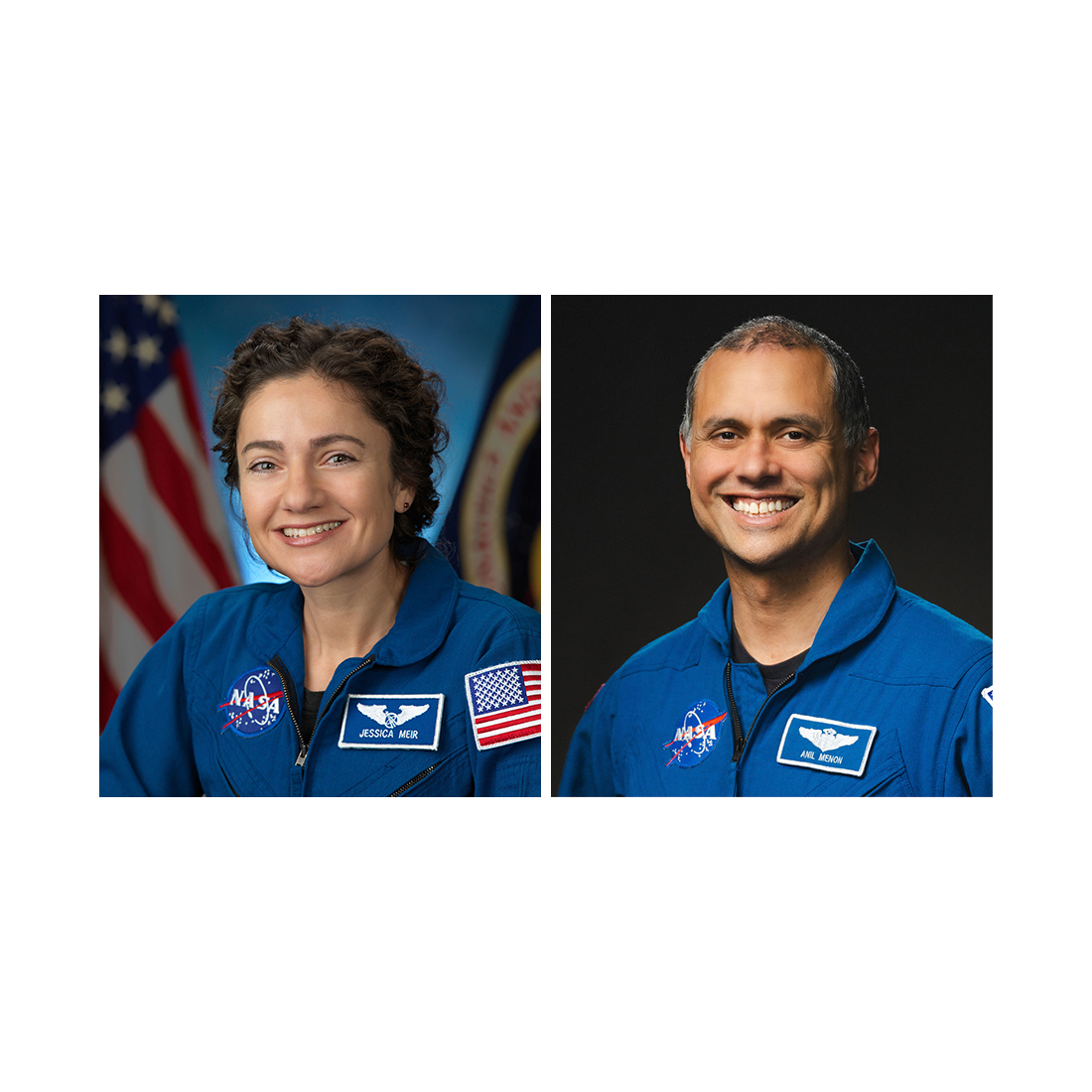
NASA astronaut and Expedition 74 flight engineer Jessica Meir’s reflection is captured in a spacesuit helmet visor. The visor assembly is coated with a microscopic layer of gold that reflects infrared radiation to protect an astronaut’s eyes while allowing visible light to pass through. Meir was working inside the International Space Station's Quest airlock, installing leg and arm components on the spacesuit and swapping components from one suit to another.
NASA astronaut and Expedition 74 flight engineer Jessica Meir’s reflection is captured in a spacesuit helmet visor. The visor assembly is coated with a microscopic layer of gold that reflects infrared radiation to protect an astronaut’s eyes while allowing visible light to pass through. Meir was working inside the International Space Station’s Quest airlock, installing leg and arm components on the spacesuit and swapping components from one suit to another.
NASA/Jack Hathaway

Tuesday brought the final preparations for tomorrow’s spacewalk where two NASA astronauts will exit the International Space Station and enter the vacuum of space for space station solar array upgrade work. The Expedition 74 crew members prepped spacesuits and reviewed procedures while working in some time for maintenance and science activities.

NASA astronauts Jessica Meir and Chris Williams will power on their spacesuits tomorrow morning for a planned six-and-a-half-hour spacewalk. The duo will exit the Quest airlock to install a modification kit and route cables on the port side of the station. It will be Meir’s fourth spacewalk and Williams’ first.

NASA’s live coverage will begin at 6:30 a.m. on  NASA+Amazon Prime, and the agency’s YouTube channel. U.S. spacewalk 94 will begin at approximately 8 a.m. 

To gear up for tomorrow’s spacewalk, Meir and Williams readied their spacesuits and equipment and also finalized the configuration of tools they’ll use while in the vacuum of space. Later on, the duo was joined by NASA astronaut Jack Hathaway and European Space Agency (ESA) astronaut Sophie Adenot to review procedural timelines and checklists.

Hathaway and Adenot teamed up throughout the day to complete a round of camera and lighting training. The duo also inspected and cleaned the orbital complex’s ventilation system.

In the cupola, Adenot scheduled in some time to photograph the Moon. As part of the Earthshine experiment, crew members will take photographs of the lunar surface during different phases to study changes in Earth’s reflectance of light. The photos are then analyzed by ground teams to help scientists improve climate models. 

In the morning, Commander Sergey Kud-Sverchkov worked with flight engineer Sergei Mikaev to load up and prepare flight simulation training software. Later on, the two cosmonauts worked in the Zvezda Service Module to gather equipment for future inspections. Kud-Sverchkov then took inventory of cargo to be loaded into the Progress 93 cargo spacecraft while Mikaev filmed his crewmates as they conducted science, maintenance, and exercise to document life aboard the space station. Flight engineer Andrey Fedyaev spent his day conducting maintenance before attaching sensors to his forehead, fingers and toes to capture blood flow data for health analysis.

Learn more about station activities by following the space station blog@space_station on X, as well as the ISS Facebook and ISS Instagram accounts.

Get the latest from NASA delivered every week. Subscribe here.

Powered by WPeMatico

Get The Details…

Abby Graf

NASA’s X-59 Prepares for Second Flight

NASA’s X-59 Prepares for Second Flight

4 min read

Preparations for Next Moonwalk Simulations Underway (and Underwater)

An aircraft resting on a section of runway as seen from the front, with its nose facing the camera. The early morning sky is orange in the background.
As its team prepared for second flight, NASA’s X-59 quiet supersonic aircraft underwent engine run testing on Thursday, March 12, at NASA’s Armstrong Flight Research Center in Edwards, California.
NASA/Jim Ross

NASA’s X-59 experimental aircraft is preparing for its second flight, a step that will set the pace for more flight testing in 2026. 

Over the coming months, NASA will take the quiet supersonic jet faster and higher, while validating safety and performance, a process known as envelope expansion. 

NASA test pilot Jim “Clue” Less will be at the X-59’s controls for second flight.  Less will take off and land at Edwards Air Force Base, near the X-59’s home at NASA’s Armstrong Flight Research Center in Edwards, California. 

“This will be the first time I’ve flown an X-plane,” Less said. “I think I’ll mostly be focused on getting the test cards done and getting them done correctly. It’ll probably sink in later that I was in the X-59.” 

Less will be accompanied by NASA test pilot Nils Larson, who will be flying nearby in a NASA F/A-18 aircraft to observe the X-59.  

The X-59 made its first flight Oct. 28, 2025, with Larson as pilot. Afterward, NASA and contractor Lockheed Martin completed an extensive round of post-flight maintenance and inspections. The work involved removing the engine, a section of the tail known as the lower empennage, the seat, and more than 70 panels to perform inspections. All have been reinstalled. 

“These guys know what they’re doing. We couldn’t do something like this without a really competent team of hardworking folks,” Less said. “Nils trusted them for the first flight. I trust them for the second flight and every flight after that.” 

NASA test pilot Jim “Clue” Less sits in the X-59's cockpit in a close-up photo. Less is wearing his flight suit, a flight helmet, and glasses, with a radio pressed close to his face. His name and call sign are written just under the canopy glass.
NASA test pilot Jim “Clue” Less took the X-59 through its engine run test on Thursday, March 12, at NASA’s Armstrong Flight Research Center in Edwards, California. Less will pilot the aircraft for its second flight.
NASA/Jim Ross

The team completed one of the last ground tests before the flight on March 12 – an engine run firing up the X-59’s modified F-18 Super Hornet F414-GE-100 engine.  

“It’s always exciting to see the X-59 come to life on the ground,” said Ray Castner, NASA’s X-59 lead propulsion engineer. “For our team, it’s a moment to pause and appreciate how far this aircraft has come – and how close we are to pushing into the next phase of flight.” 

The X-59’s second flight continues the push toward that next phase, with the team closely studying the aircraft’s performance. 

“Second flight will look a lot like the first flight,” said Cathy Bahm, NASA’s project manager for the Low Boom Flight Demonstrator project. “We’ll start the flight at a test condition from first flight to ensure X-59 performs as expected after the maintenance phase, then we’ll start the envelope expansion by testing a little higher and faster.” 

The flight marks the start of envelope expansion tests for the X-59. After the aircraft reaches a speed of approximately 230 mph at 12,000 feet and its team performs functional checks, it will advance to 260 mph at 20,000 feet. 

First flight was the X-59’s biggest leap so far – going from the ground to airborne. Now, envelope expansion will be a gradual process as the aircraft works toward its mission parameters of about 925 mph, or Mach 1.4, at 55,000 feet. 

“From here on out, once we’re airborne, we can increase speed and increase altitude in small, measured chunks, looking at things as we go and not getting ahead of ourselves,” Less said. “Eventually we get to supersonic flight – a few more steps – and we’re out to Mach 1.4 at about 55,000 feet,” said Less. 

The X-59 is the centerpiece of NASA’s Quesst mission, which aims to usher in a new age of quiet, commercial supersonic flight over land. The X-59 will demonstrate that an aircraft can fly faster than the speed of sound while reducing the typical loud sonic boom to a quieter thump. 

Envelope expansion is Phase 1 of Quesst. It will be followed by Phase 2 flight testing to validate the X-59’s acoustic performance. The team will study how the aircraft’s design disperses the shock waves that typically merge into a sonic boom.  

After acoustics validation, NASA plans to fly the X-59 over selected U.S. communities to gather data on how people on the ground perceive its quieter sound signature. NASA will share the results with U.S. and international regulators.

Powered by WPeMatico

Get The Details…
Dede Dinius

Dim Delights in Cancer

Dim Delights in Cancer

3 Min Read

Dim Delights in Cancer

Several bright stars and many background galaxies are visible against a black background.
Another Hubble view of the outskirts of Messier 44 shows a variety of bright stars and many background galaxies.
Credits:
NASA, ESA and C. Scarlata (University of Minnesota – Twin Cities); Processing: Gladys Kober (NASA/Catholic University of America)

Cancer the Crab is a dim constellation, yet it contains one of the most beautiful and easy-to-spot star clusters in our sky: the Beehive Cluster. Cancer also possesses one of the most studied exoplanets: the superhot super-Earth, 55 Cancri e.

Three constellations right to left - Gemini, Cancer, and Leo - with the star cluster known as the Beehive circled in the center of the Cancer constellation. The image also contains notable objects such as the planet Jupiter as seen in March 2026, and stars Castor and Pollux in Gemini, Regulus in Leo, and Procyon in Canis Minor.
Find the M44, the Beehive Cluster, at the center of the Cancer constellation, using nearby stars such as Regulus in Leo, Pollux in Gemini, and Procyon in Canis Minor.
Stellarium Web

Find Cancer’s dim stars by looking in between the brighter neighboring constellations of Gemini and Leo. Don’t get frustrated if you can’t find it at first, since Cancer isn’t easily visible from moderately light-polluted areas. Once you find Cancer, look for its most famous deep-sky object: the Beehive Cluster! It’s a large open cluster of young stars, three times larger than our Moon in the sky. The Beehive is visible to the unaided eye under good sky conditions as a faint, cloudy patch, but is stunning when viewed through binoculars or a wide-field telescope. It was one of the earliest deep-sky objects noticed by ancient astronomers, and so the Beehive has many other names, including Praesepe, Nubilum, M44, the Ghost, and Jishi qi. Take a look at it on a clear night through binoculars. Do these stars look like a hive of buzzing bees? Or do you see something else? There’s no wrong answer, since this large star cluster has intrigued imaginative observers for thousands of years.

The super-Earth exoplanet 55 Cancri e, depicted with its star in this artist's concept, likely has an atmosphere thicker than Earth's but with ingredients that could be similar to those of Earth's atmosphere.
The super-Earth exoplanet 55 Cancri e, depicted with its star in this artist’s concept, likely has an atmosphere thicker than Earth’s but with ingredients that could be similar to those of Earth’s atmosphere.
NASA/JPL-Caltech

55 Cancri is a nearby binary star system, about 41 light-years from us and faintly visible under excellent dark sky conditions. The larger star is orbited by at least five planets, including 55 Cancri e (a.k.a. Janssen, named after one of the first telescope makers). Janssen is a “super-earth,” a large rocky world 8 times the mass of Earth, and orbits its star every 18 hours, giving it one of the shortest years of any known planet! Janssen was the first exoplanet to have its atmosphere successfully analyzed. Both the Hubble and retired Spitzer space telescopes confirmed that the hot world is enveloped by an atmosphere of helium and hydrogen, with traces of hydrogen cyanide: not a likely place to find life, especially since the surface is probably scorching-hot rock. NASA’s Exoplanet Travel Bureau allows us to imagine what it would be like to visit 55 Cancri e and other worlds.

How do astronomers find planets around other star systems? The Night Sky Network’s “Wobbles and Transits: How Do We Find Planets Around Other Stars?” activity helps demonstrate both the transit and wobble methods of exoplanet detection. Notably, 55 Cancri e was discovered using the wobble method in 2004, and the transit method confirmed its orbital period in 2011!

Want to learn more about exoplanets? Get the latest NASA news about worlds beyond our solar system at NASA Exoplanets!

Originally posted by Dave Prosper: March 2020

Last Updated by Kat Troche: March 2026

Powered by WPeMatico

Get The Details…