NASA Awards Contracts for Acquisition of Liquid Nitrogen, Oxygen
NASA has awarded contracts to six companies to supply liquid nitrogen and liquid oxygen in support of operations at agency centers and facilities across the United States. The indefinite-delivery/fixed-price contract runs from Monday, July 1, 2024, through June 30, 2029.
The awards and approximate maximum contract values are:
Air Products and Chemicals Inc., Allentown, Pennsylvania, $36.9 million
Airgas USA LLC (South), Kennesaw, Georgia, $4.7 million
Airgas USA LLC (Central), Tulsa, Oklahoma, $5.1 million
Linde Inc., Danbury, Connecticut, $42.2 million
Matheson Tri-Gas Inc., Warren, New Jersey, $1.8 million
Messer LLC, Bridgewater, New Jersey, $62.3 million
The total maximum delivery of liquid nitrogen, which NASA uses for pneumatic actuation, purging and inerting, pressurization, and cooling, will be about 656.8 tons, 30.4 million gallons, and 740,000 liters. The total maximum delivery of liquid oxygen, which is used as an oxidizer in cryogenic rocket engines, will be about 2.1 million gallons and 243,000 tons.
The commodities will support current and future aerospace flight, simulation, research, development, testing, and other operations at the following NASA centers and facilities: Ames Research Center in California’s Silicon Valley; Glenn Research Center in Cleveland and Neil Armstrong Test Facility in Sandusky, Ohio; Goddard Space Flight Center in Greenbelt, Maryland; Jet Propulsion Laboratory in Southern California; Johnson Space Center in Houston and White Sands Test Facility in Las Cruces, New Mexico; Kennedy Space Center in Florida; Langley Research Center in Hampton, Virginia; Marshall Space Flight Center in Huntsville, Alabama; Michoud Assembly Facility in New Orleans; and Stennis Space Center in Bay St. Louis, Mississippi.
For more information about NASA programs and missions, visit:
Webb Finds Plethora of Carbon Molecules Around Young Star
5 Min Read
Webb Finds Plethora of Carbon Molecules Around Young Star
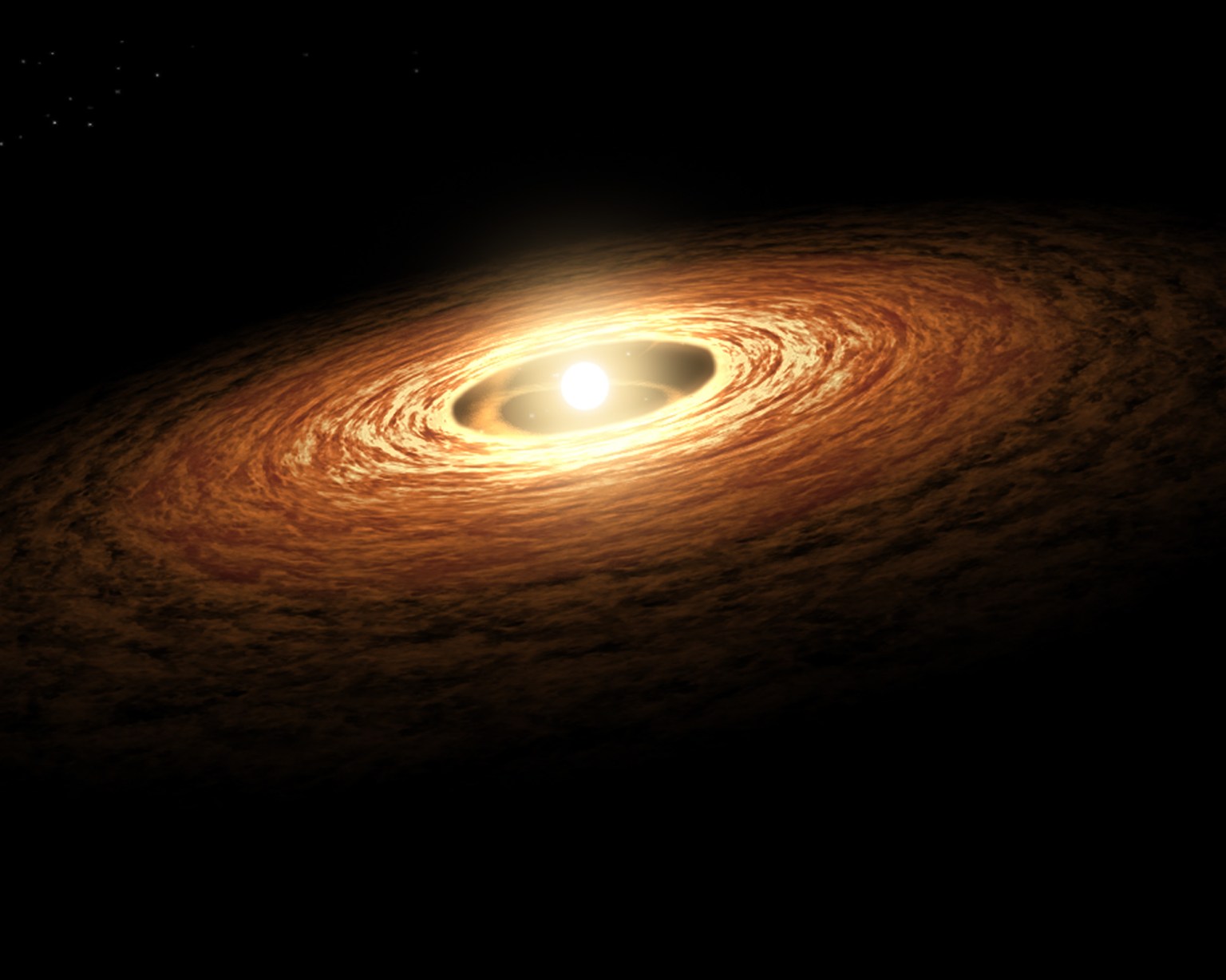
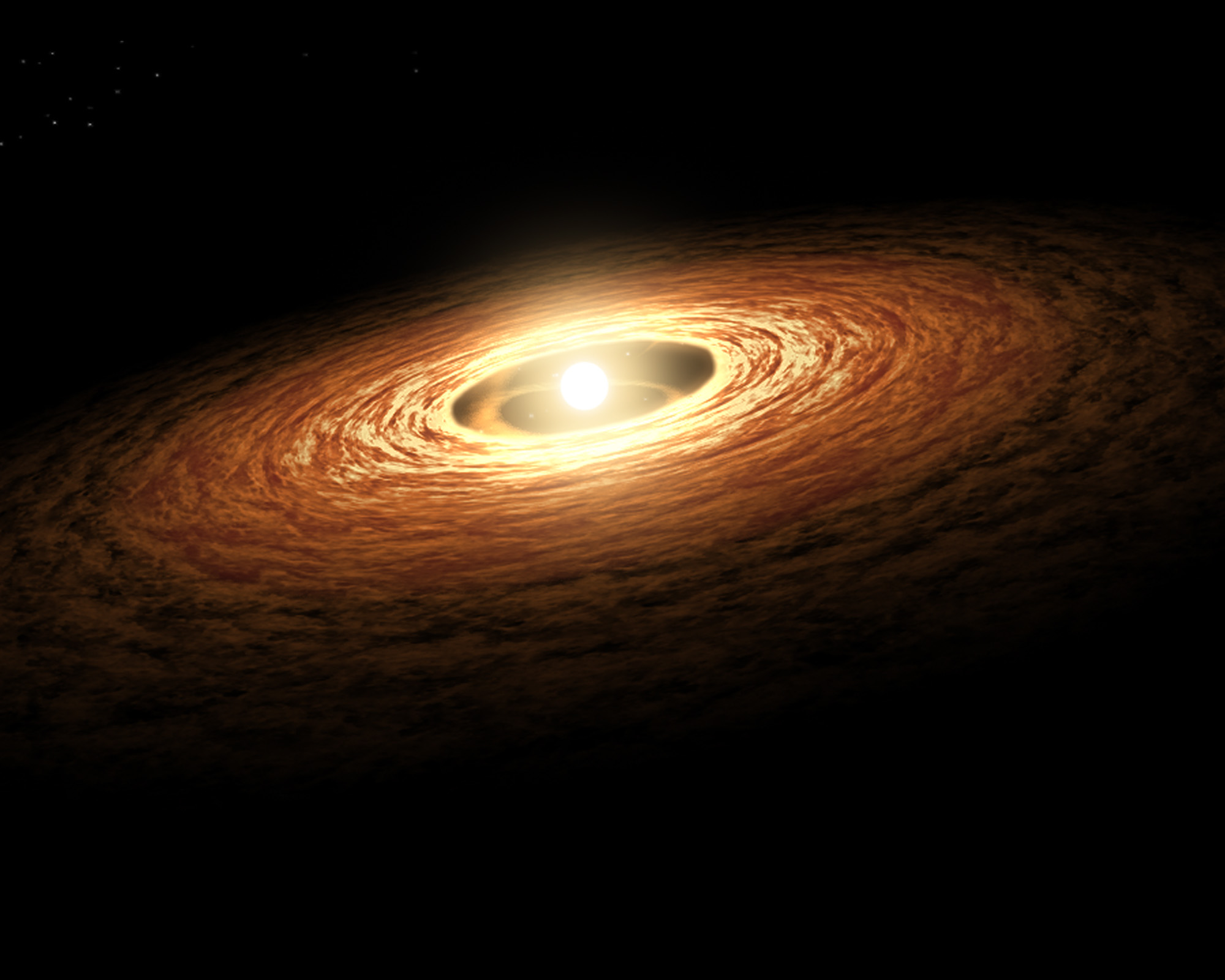
This is an artist’s impression of a young star surrounded by a disk of gas and dust.
An international team of astronomers has used NASA’s James Webb Space Telescope to study the disk of gas and dust around a young, very low-mass star. The results reveal the largest number of carbon-containing molecules seen to date in such a disk. These findings have implications for the potential composition of any planets that might form around this star.
Rocky planets are more likely than gas giants to form around low-mass stars, making them the most common planets around the most common stars in our galaxy. Little is known about the chemistry of such worlds, which may be similar to or very different from Earth. By studying the disks from which such planets form, astronomers hope to better understand the planet formation process and the compositions of the resulting planets.
Planet-forming disks around very low-mass stars are difficult to study because they are smaller and fainter than disks around high-mass stars. A program called the MIRI (Mid-Infrared Instrument) Mid-INfrared Disk Survey (MINDS) aims to use Webb’s unique capabilities to build a bridge between the chemical inventory of disks and the properties of exoplanets.
Image A: Artist’s Concept of Protoplanetary Disk
This is an artist’s impression of a young star surrounded by a disk of gas and dust. An international team of astronomers has used NASA’s James Webb Space Telescope to study the disk around a young and very low-mass star known as ISO-ChaI 147. The results reveal the richest hydrocarbon chemistry seen to date in a protoplanetary disk.
“Webb has better sensitivity and spectral resolution than previous infrared space telescopes,” explained lead author Aditya Arabhavi of the University of Groningen in the Netherlands. “These observations are not possible from Earth, because the emissions from the disk are blocked by our atmosphere.”
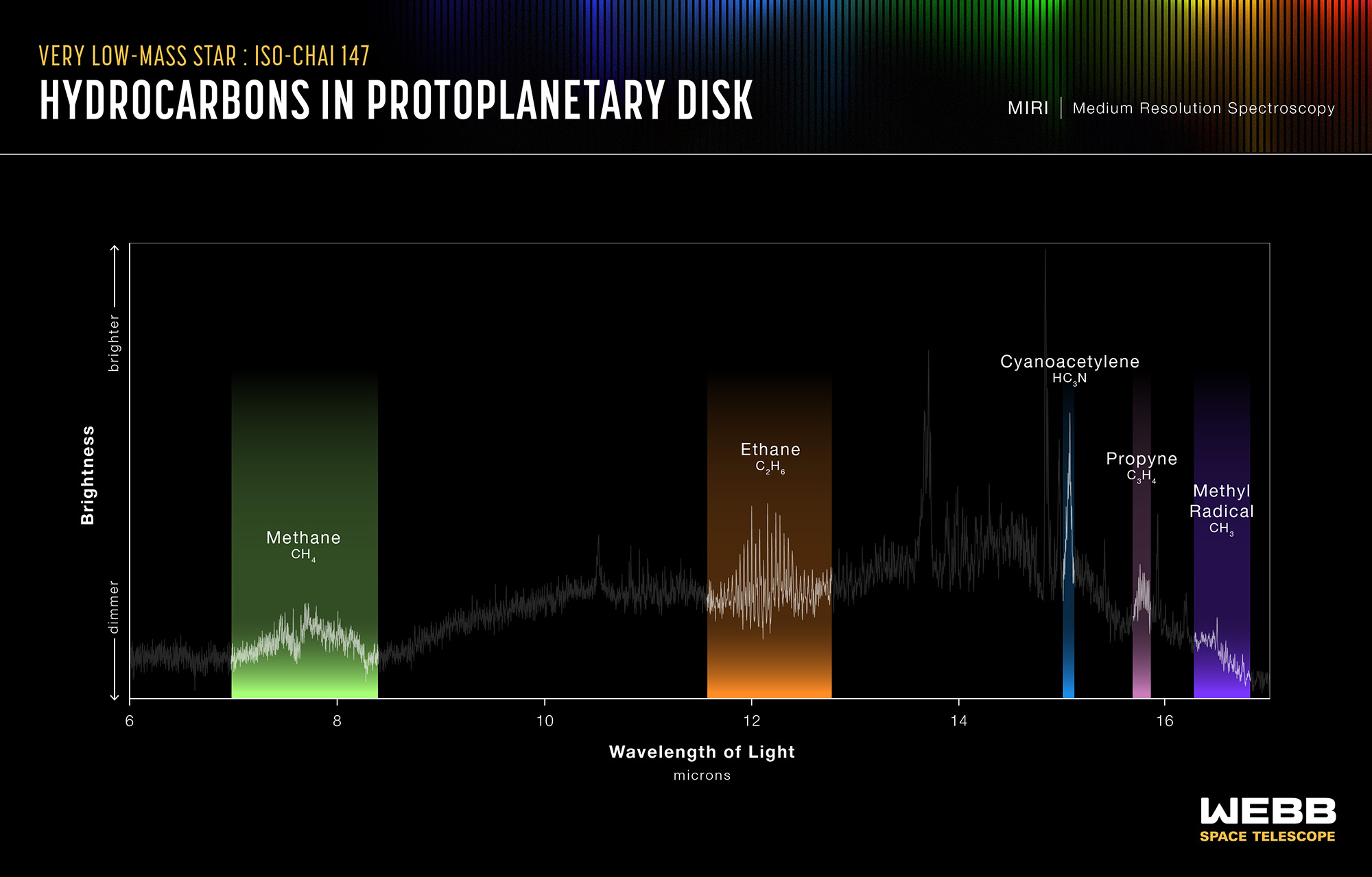
In a new study, this team explored the region around a very low-mass star known as ISO-ChaI 147, a 1 to 2 million-year-old star that weighs just 0.11 times as much as the Sun. The spectrum revealed by Webb’s MIRI shows the richest hydrocarbon chemistry seen to date in a protoplanetary disk – a total of 13 different carbon-bearing molecules. The team’s findings include the first detection of ethane (C2H6) outside of our solar system, as well as ethylene (C2H4), propyne (C3H4), and the methyl radical CH3.
“These molecules have already been detected in our solar system, like in comets such as 67P/Churyumov–Gerasimenko and C/2014 Q2 (Lovejoy),” added Arabhavi. “Webb allowed us to understand that these hydrocarbon molecules are not just diverse but also abundant. It is amazing that we can now see the dance of these molecules in the planetary cradles. It is a very different planet-forming environment than we usually think of.”
Image B: Protoplanetary disk of ISO-ChaI 147 (MIRI emission spectrum)
The team indicates that these results have large implications for the chemistry of the inner disk and the planets that might form there. Since Webb revealed the gas in the disk is so rich in carbon, there is likely little carbon left in the solid materials that planets would form from. As a result, the planets that might form there may ultimately be carbon-poor. (Earth itself is considered carbon-poor.)
“This is profoundly different from the composition we see in disks around solar-type stars, where oxygen bearing molecules like water and carbon dioxide dominate,” added team member Inga Kamp, also of the University of Groningen. “This object establishes that these are a unique class of objects.”
“It’s incredible that we can detect and quantify the amount of molecules that we know well on Earth, such as benzene, in an object that is more than 600 light-years away,” added team member Agnés Perrin of Centre National de la Recherche Scientifique in France.
Next, the science team intends to expand their study to a larger sample of such disks around very low-mass stars to develop their understanding of how common or exotic such carbon-rich terrestrial planet-forming regions are. “The expansion of our study will also allow us to better understand how these molecules can form,” explained team member and principal investigator of the MINDS program, Thomas Henning, of the Max-Planck-Institute for Astronomy in Germany. “Several features in the Webb data are also still unidentified, so more spectroscopy is required to fully interpret our observations.”
This work also highlights the crucial need for scientists to collaborate across disciplines. The team notes that these results and the accompanying data can contribute towards other fields including theoretical physics, chemistry, and astrochemistry, to interpret the spectra and to investigate new features in this wavelength range.
The James Webb Space Telescope is the world’s premier space science observatory. Webb is solving mysteries in our solar system, looking beyond to distant worlds around other stars, and probing the mysterious structures and origins of our universe and our place in it. Webb is an international program led by NASA with its partners, ESA (European Space Agency) and CSA (Canadian Space Agency).
Downloads
Right click any image to save it or open a larger version in a new tab/window via the browser’s popup menu.
Jonathan Lunine Appointed Chief Scientist of NASA’s Jet Propulsion Laboratory
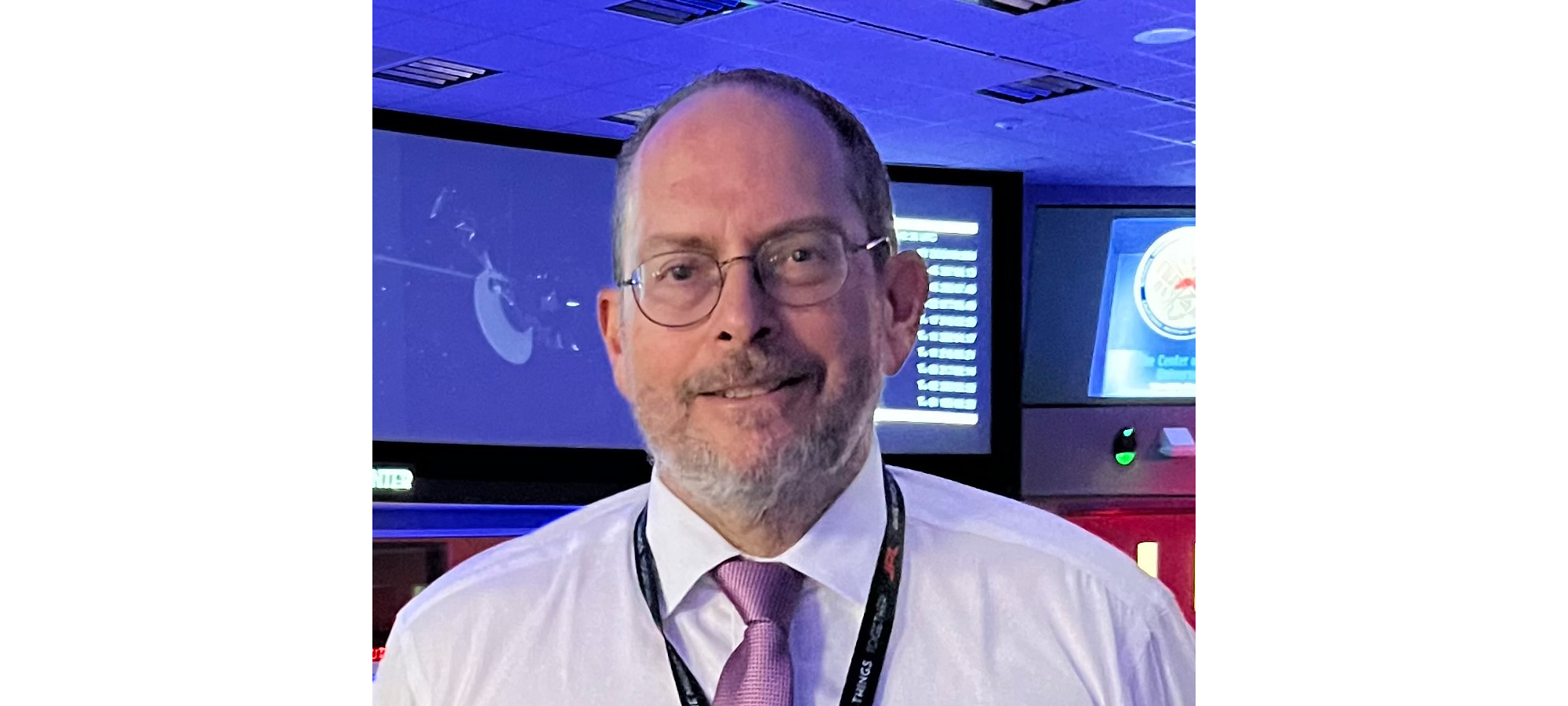
As part of his new role as JPL’s chief scientist, Jonathan Lunine has also been appointed professor of planetary science with the Division of Geological and Planetary Science at Caltech.
NASA/JPL-Caltech
In his new role, his leadership will be critical in fostering an environment of scientific innovation and excellence, ensuring that JPL remains at the forefront of discovery.
Distinguished planetary scientist and astrophysicist Jonathan I. Lunine has been appointed chief scientist of NASA’s Jet Propulsion Laboratory. He will officially assume his role Aug. 16.
As chief scientist, Lunine will guide the laboratory’s scientific research and development efforts, drive innovation across JPL’s missions and programs, and enhance collaborations with NASA Headquarters, NASA centers, Caltech, academia, the science community, government agencies, and industry partners. In addition, he will oversee the formulation of JPL’s scientific policies and priorities and guide the integrity of missions that JPL manages for NASA.
“I’m elated that Jonathan is joining JPL,” said Laurie Leshin, director of JPL. “As chief scientist, he will play a critical role in fostering innovation and excellence, ensuring that JPL remains at the forefront of scientific discovery and innovation as we dare mighty things together.”
Lunine currently serves as the David C. Duncan Professor in the Physical Sciences and chair of the Department of Astronomy at Cornell University in Ithaca, New York. A Caltech alumnus, he has performed pioneering research on the formation and evolution of planetary systems, the nature of planetary interiors and atmospheres, and where environments suited for life might exist in the solar system and beyond. His deep expertise will help JPL continue to seek answers to fundamental questions that crosscut the diverse science portfolio of the laboratory.
“My first experience working with scientists and engineers at JPL was over 40 years ago as a Caltech graduate student,” said Lunine. “From that time to the present, it has been clear to me that no other institution matches its combination of scientific breadth and engineering capability. JPL’s portfolio of missions and research projects across the gamut — from our home planet to the solar system, heliosphere, and universe beyond — is an extraordinary resource to the nation. I am thrilled to be able to play a leadership role on the science side of this remarkable institution.”
Lunine has collaborated with JPL on numerous missions. He was a guest investigator for the ultraviolet spectrometer on NASA’s Voyager 2 Neptune encounter and an interdisciplinary scientist on the Cassini/Huygens mission, and he is co-investigator on the agency’s Juno mission to Jupiter as well as for the MISE (Mapping Imaging Spectrometer for Europa) instrument on NASA’s Europa Clipper mission. Lunine is also a member of the gravity science team for Europa Clipper and the Gravity & Geophysics of Jupiter and Galilean Moons gravity experiment on the ESA (European Space Agency) JUICE (Jupiter Icy Moons Explorer) mission.
In addition, he served on the science working group as an interdisciplinary scientist for NASA’s James Webb Space Telescope and has contributed to concept studies for solar system and exoplanet characterization missions. A member of the National Academy of Sciences, he has chaired or co-chaired numerous advisory and strategic planning committees for the Academy, NASA, and the National Science Foundation.
As part of his new role, Lunine has also been appointed professor of planetary science with the Division of Geological and Planetary Sciences at Caltech.
“Jonathan will bring a tremendous amount of experience in planetary science to the Division of Geological and Planetary Sciences and the broader Caltech community,” said John Grotzinger, chair of the Division of Geological and Planetary Sciences at Caltech. “He has worked on a remarkably diverse set of science questions spanning the solar system and extending to exoplanets. We are thrilled to have him join our faculty.” A division of Caltech in Pasadena, California, JPL began in 1936 and ultimately built and helped launch America’s first satellite, Explorer 1, in 1958. By the end of that year, Congress established NASA and JPL became a part of the agency. Since then, JPL has managed such historic missions as Voyager, Galileo, Cassini, the Mars Exploration Rover program, the Perseverance Mars rover, and many more.
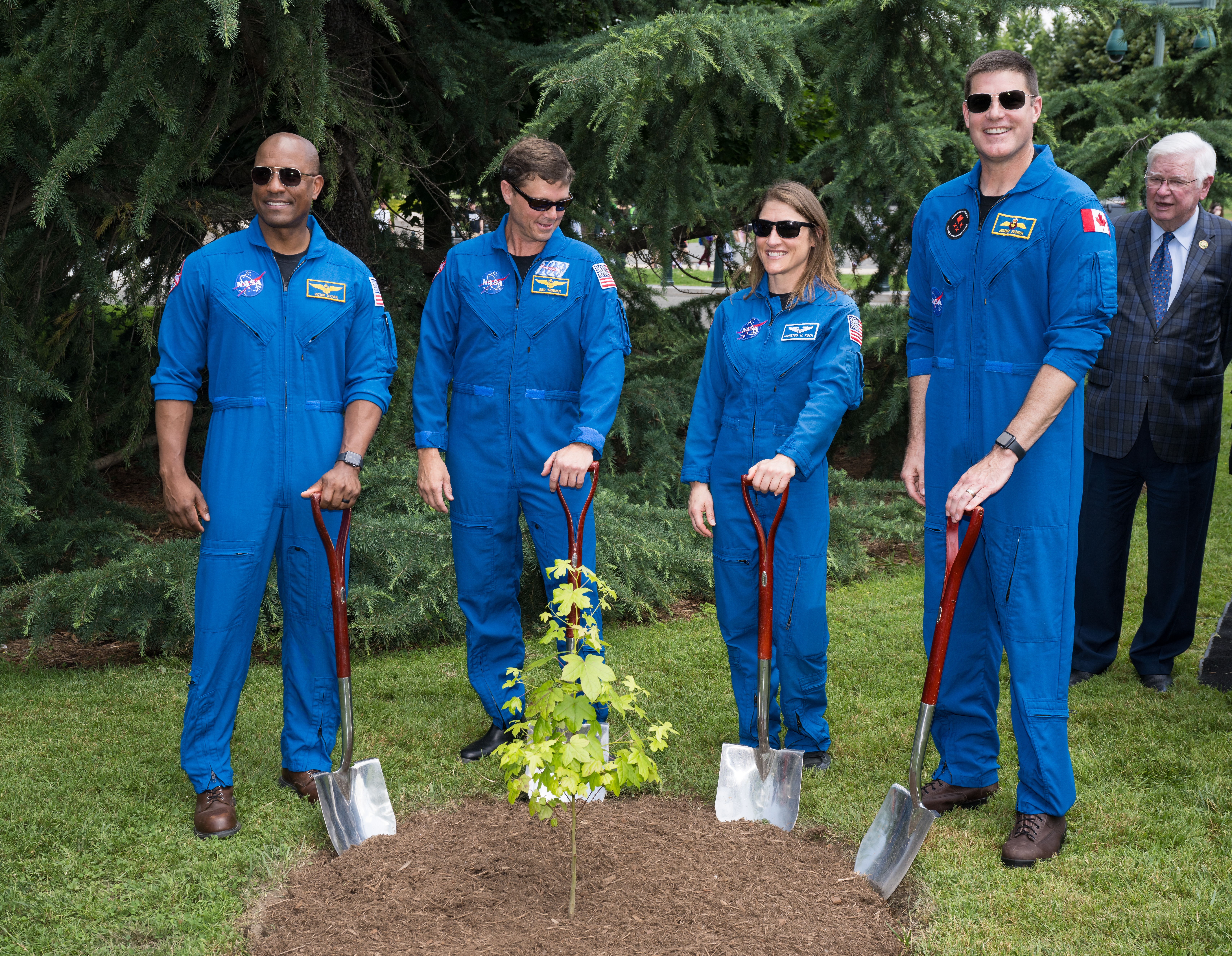
NASA astronauts Victor Glover (left), Reid Wiseman (middle left), and Christina Koch (middle right), and Canadian Space Agency (CSA) astronaut Jeremy Hansen (right), pose for a photo after a Moon Tree dedication ceremony, Tuesday, June 4, 2024, at the United States Capitol in Washington. The American Sweetgum tree pictured was grown from a seed that was flown around the Moon during the Artemis I mission.
Moon Trees originated with the Apollo 14 mission, when NASA astronaut Stuart Roosa carried tree seeds into lunar orbit. In a nod to the legacy of Apollo 14, and a celebration of the future of space exploration with NASA’s Artemis Program, a “new generation” of Moon Tree seeds traveled into lunar orbit aboard the Orion spacecraft. The seeds travelled thousands of miles beyond the Moon, spending about 4 weeks in space before returning to Earth. Organizations from across the United States will receive the seedlings and plant them in their communities.
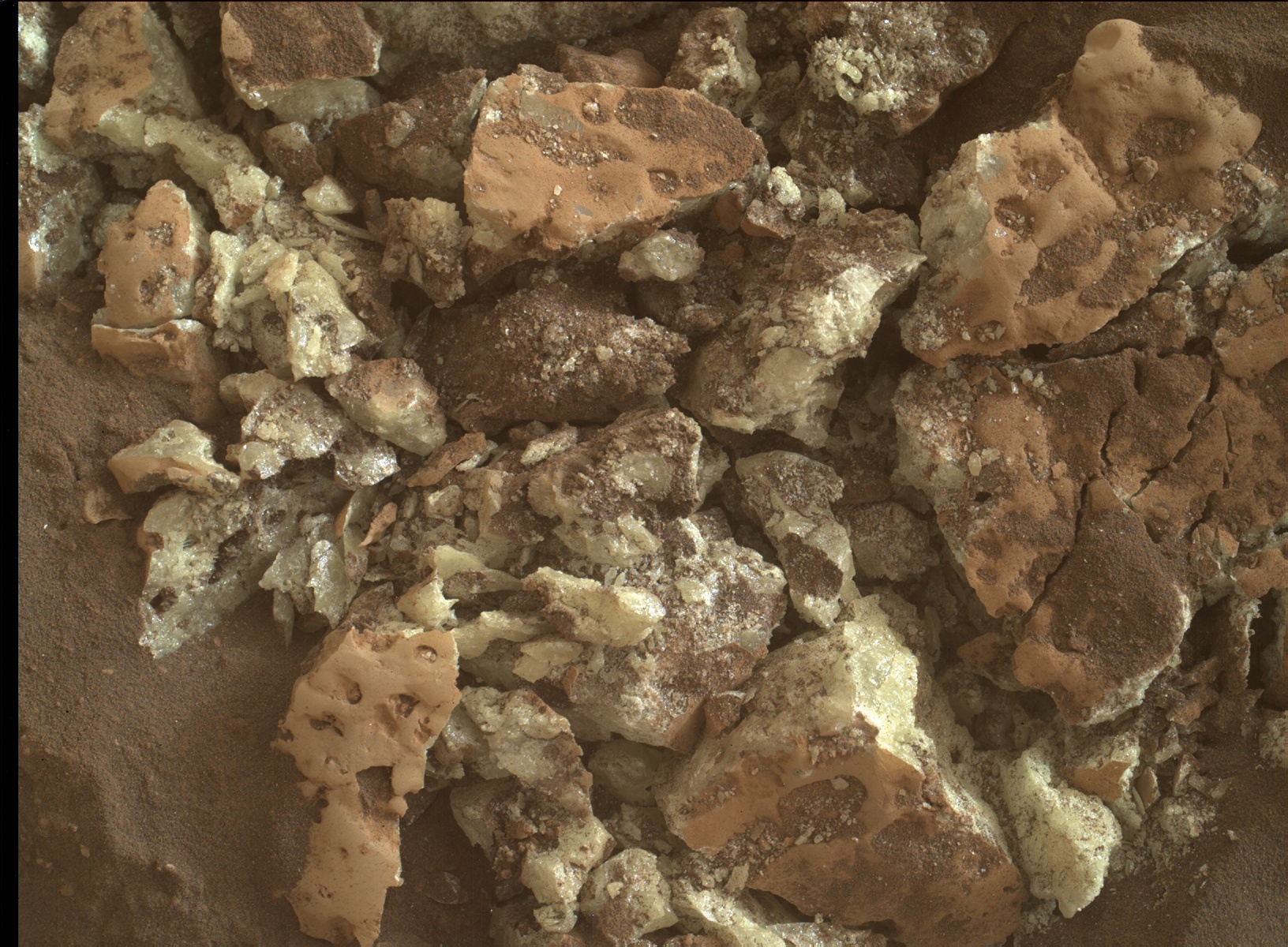
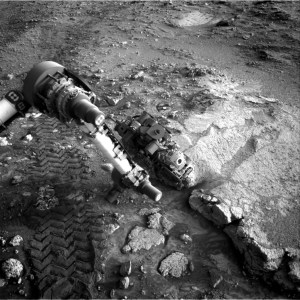
NASA’s Mars rover Curiosity acquired this image using its Mars Hand Lens Imager (MAHLI), located on the turret at the end of the rover’s robotic arm, on June 4, 2024, Sol 4205 of the Mars Science Laboratory Mission, at 22:09:26 UTC.
NASA/JPL-Caltech/MSSS
Earth planning date: Wednesday June 5, 2024
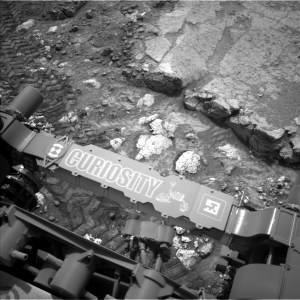
Curiosity was still at the ice cream shop for planning today, with the delicious feast of rock flavours still at arm’s reach and begging to be sampled. In the previous plan, one such flavour, captured in today’s blog image and perhaps most analogous to Rocky Road (not only given that Curiosity drove over this rock causing it to fracture, but also arguably the appearance as well), caught the eye of the operations team. There was desire to place APXS on this target, “Convict Lake,” in the previous plan but the team ultimately did not have the image data available that would permit Curiosity to safely do so at a suitably close distance for APXS. Not to be discouraged, Monday’s operations team pivoted and utilized part of the plan to acquire images of Convict Lake that would enable better APXS placement in today’s plan.
The required images for targeting Convict Lake (aka Rocky Road, just with a chocolate to marshmallow ratio that would leave chocolate lovers heartbroken) with APXS arrived just in time for planning today. These images made it possible to focus on the central task of today’s two-sol plan: place APXS close to Rocky Road and target two areas that are specifically more “marshmallow” and less on “chocolate” (sorry chocolate fans).
In addition to APXS on Convict Lake, ChemCam also targeted Convict Lake using its laser and imaging capabilities. MAHLI returned for seconds (and thirds!), only this time pairing yet more daytime images with others taken at night while utilizing its illumination capabilities. ChemCam and Mastcam also imaged “Petes Col” and “Buckeye Ridge,” with Mastcam additionally imaging “Camp Four,” as well as “Ten Lakes” and “Walker Lake” a number of times over the course of the two-sol plan.
I for one am very excited about the particular offerings at his specific shop and what we may ultimately learn from our sampling. I, like APXS, may just have two scoops of ice cream tonight myself, perhaps even following in MAHLI’s footsteps by doing so after the sun has set when nobody else is watching (we’ve all done it, let’s be honest). Unfortunately, I do not have Rocky Road, and I think I missed my chance to have watermelon (don’t knock it until you try it!).
Written by Scott VanBommel, Planetary Scientist at Washington University