NASA’s Roman Mission Gets Cosmic ‘Sneak Peek’ From Supercomputers

NASA’s Roman Mission Gets Cosmic ‘Sneak Peek’ From Supercomputers

Researchers are diving into a synthetic universe to help us better understand the real one. Using supercomputers at the U.S. DOE’s (Department of Energy’s) Argonne National Laboratory in Illinois, scientists have created nearly 4 million simulated images depicting the cosmos as NASA’s Nancy Grace Roman Space Telescope and the Vera C. Rubin Observatory, jointly funded by NSF (the National Science Foundation) and DOE, in Chile will see it.

Michael Troxel, an associate professor of physics at Duke University in Durham, North Carolina, led the simulation campaign as part of a broader project called OpenUniverse. The team is now releasing a 10-terabyte subset of this data, with the remaining 390 terabytes to follow this fall once they’ve been processed.

“Using Argonne’s now-retired Theta machine, we accomplished in about nine days what would have taken around 300 years on your laptop,” said Katrin Heitmann, a cosmologist and deputy director of Argonne’s High Energy Physics division who managed the project’s supercomputer time. “The results will shape Roman and Rubin’s future attempts to illuminate dark matter and dark energy while offering other scientists a preview of the types of things they’ll be able to explore using data from the telescopes.”

Simulated Roman image of galaxies
This graphic highlights part of a new simulation of what NASA’s Nancy Grace Roman Space Telescope could see when it launches by May 2027. The background spans about 0.11 square degrees (roughly equivalent to half of the area of sky covered by a full Moon), representing less than half the area Roman will see in a single snapshot. The inset zooms in to a region 300 times smaller, showcasing a swath of brilliant synthetic galaxies at Roman’s full resolution. Having such a realistic simulation helps scientists study the physics behind cosmic images –– both synthetic ones like these and future real ones. Researchers will use the observations for many types of science, including testing our understanding of the origin, evolution, and ultimate fate of the universe.
C. Hirata and K. Cao (OSU) and NASA’s Goddard Space Flight Center

A Cosmic Dress Rehearsal

For the first time, this simulation factored in the telescopes’ instrument performance, making it the most accurate preview yet of the cosmos as Roman and Rubin will see it once they start observing. Rubin will begin operations in 2025, and NASA’s Roman will launch by May 2027.

The simulation’s precision is important because scientists will comb through the observatories’ future data in search of tiny features that will help them unravel the biggest mysteries in cosmology.

Roman and Rubin will both explore dark energy –– the mysterious force thought to be accelerating the universe’s expansion. Since it plays a major role in governing the cosmos, scientists are eager to learn more about it. Simulations like OpenUniverse help them understand signatures that each instrument imprints on the images and iron out data processing methods now so they can decipher future data correctly. Then scientists will be able to make big discoveries even from weak signals.

“OpenUniverse lets us calibrate our expectations of what we can discover with these telescopes,” said Jim Chiang, a staff scientist at DOE’s SLAC National Accelerator Laboratory in Menlo Park, California, who helped create the simulations. “It gives us a chance to exercise our processing pipelines, better understand our analysis codes, and accurately interpret the results so we can prepare to use the real data right away once it starts coming in.”

Then they’ll continue using simulations to explore the physics and instrument effects that could reproduce what the observatories see in the universe.

Argonne's Theta supercomputer
This photo displays Argonne Leadership Computing Facility’s now-retired Theta supercomputer. Scientists use supercomputers to simulate experiments they can’t conduct in real life, such as creating new universes from scratch.
Argonne National Laboratory

Telescopic Teamwork

It took a large and talented team from several organizations to conduct such an immense simulation.

“Few people in the world are skilled enough to run these simulations,” said Alina Kiessling, a research scientist at NASA’s Jet Propulsion Laboratory (JPL) in Southern California and the principal investigator of OpenUniverse. “This massive undertaking was only possible thanks to the collaboration between the DOE, Argonne, SLAC, and NASA, which pulled all the right resources and experts together.”

And the project will ramp up further once Roman and Rubin begin observing the universe.

“We’ll use the observations to make our simulations even more accurate,” Kiessling said. “This will give us greater insight into the evolution of the universe over time and help us better understand the cosmology that ultimately shaped the universe.”

The Roman and Rubin simulations cover the same patch of the sky, totaling about 0.08 square degrees (roughly equivalent to a third of the area of sky covered by a full Moon). The full simulation to be released later this year will span 70 square degrees, about the sky area covered by 350 full Moons.

Overlapping them lets scientists learn how to use the best aspects of each telescope –– Rubin’s broader view and Roman’s sharper, deeper vision. The combination will yield better constraints than researchers could glean from either observatory alone.

“Connecting the simulations like we’ve done lets us make comparisons and see how Roman’s space-based survey will help improve data from Rubin’s ground-based one,” Heitmann said. “We can explore ways to tease out multiple objects that blend together in Rubin’s images and apply those corrections over its broader coverage.”

Roman and Rubin simulated images
This pair of images showcases the same region of sky as simulated by the Vera C. Rubin Observatory (left, processed by the Legacy Survey of Space and Time Dark Energy Science Collaboration) and NASA’s Nancy Grace Roman Space Telescope (right, processed by the Roman High-Latitude Imaging Survey Project Infrastructure Team). Roman will capture deeper and sharper images from space, while Rubin will observe a broader region of the sky from the ground. Because it has to peer through Earth’s atmosphere, Rubin’s images won’t always be sharp enough to distinguish multiple, close sources as separate objects. They’ll appear to blur together, which limits the science researchers can do using the images. But by comparing Rubin and Roman images of the same patch of sky, scientists can explore how to “deblend” objects and implement the adjustments across Rubin’s broader observations.
J. Chiang (SLAC), C. Hirata (OSU), and NASA’s Goddard Space Flight Center

Scientists can consider modifying each telescope’s observing plans or data processing pipelines to benefit the combined use of both.

“We made phenomenal strides in simplifying these pipelines and making them usable,” Kiessling said. A partnership with Caltech/IPAC’s IRSA (Infrared Science Archive) makes simulated data accessible now so when researchers access real data in the future, they’ll already be accustomed to the tools. “Now we want people to start working with the simulations to see what improvements we can make and prepare to use the future data as effectively as possible.”

OpenUniverse, along with other simulation tools being developed by Roman’s Science Operations and Science Support centers, will prepare scientists for the large datasets expected from Roman. The project brings together dozens of experts from NASA’s JPL, DOE’s Argonne, IPAC, and several U.S. universities to coordinate with the Roman Project Infrastructure Teams, SLAC, and the Rubin LSST DESC (Legacy Survey of Space and Time Dark Energy Science Collaboration). The Theta supercomputer was operated by the Argonne Leadership Computing Facility, a DOE Office of Science user facility.

The Nancy Grace Roman Space Telescope is managed at NASA’s Goddard Space Flight Center in Greenbelt, Maryland, with participation by NASA’s Jet Propulsion Laboratory and Caltech/IPAC in Southern California, the Space Telescope Science Institute in Baltimore, and a science team comprising scientists from various research institutions. The primary industrial partners are BAE Systems, Inc. in Boulder, Colorado; L3Harris Technologies in Rochester, New York; and Teledyne Scientific & Imaging in Thousand Oaks, California.

The Vera C. Rubin Observatory is a federal project jointly funded by the National Science Foundation and the DOE Office of Science, with early construction funding received from private donations through the LSST Discovery Alliance.

Download high-resolution video and images from NASA’s Scientific Visualization Studio

By Ashley Balzer
NASA’s Goddard Space Flight Center, Greenbelt, Md.

Media Contact:
Claire Andreoli
301-286-1940
claire.andreoli@nasa.gov
NASA’s Goddard Space Flight Center, Greenbelt, Md.

6 Min Read

NASA’s Roman Mission Gets Cosmic ‘Sneak Peek’ From Supercomputers
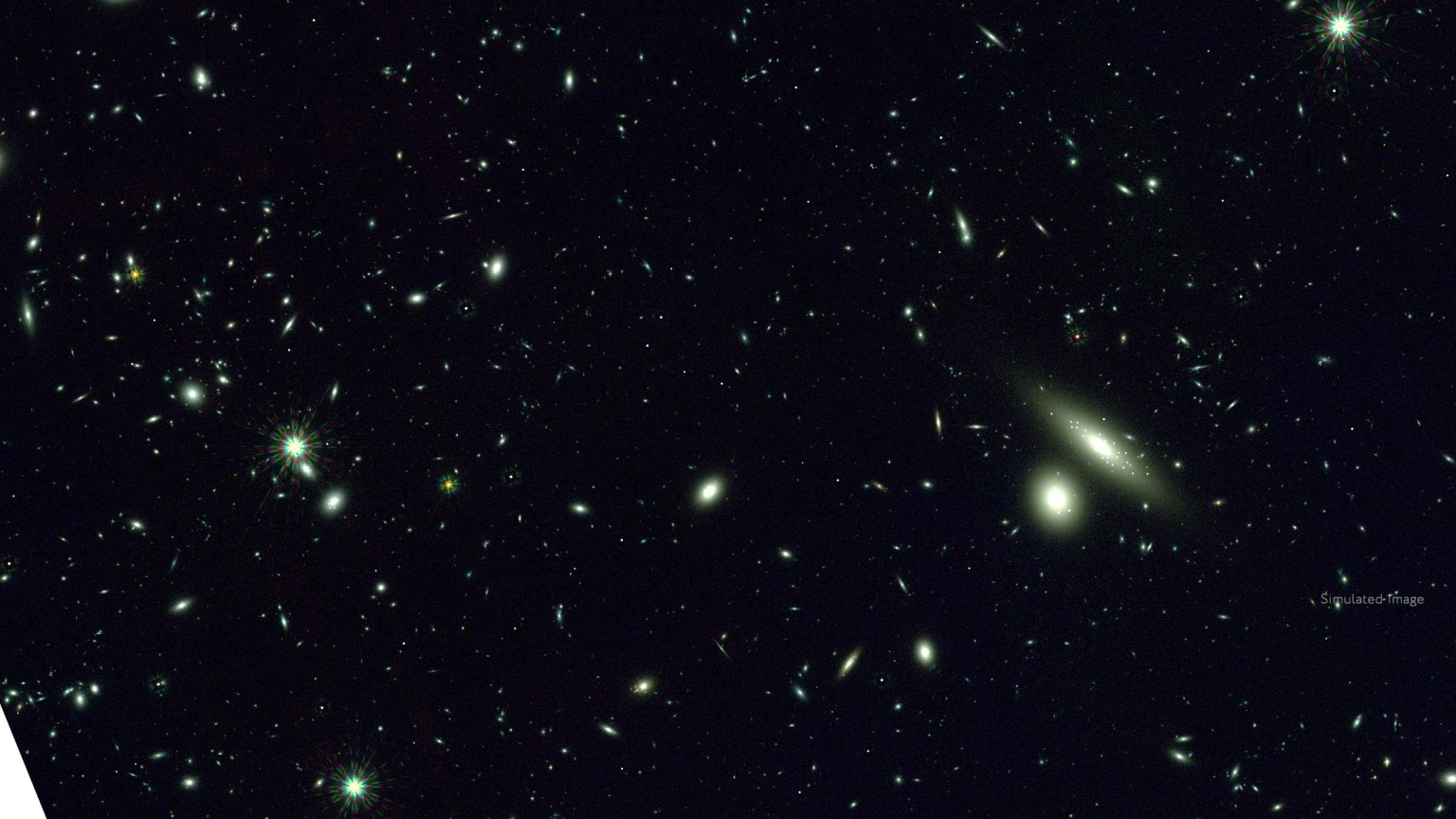
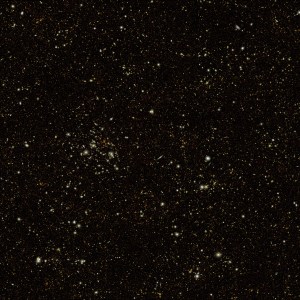
Simulated Roman image full of synthetic galaxies

This synthetic image is a slice of a much larger simulation depicting the cosmos as NASA’s Nancy Grace Roman Space Telescope will see it when it launches by May 2027. Every blob and speck of light represents a distant galaxy (except for the urchin-like spiky dots, which represent foreground stars in our Milky Way galaxy).

Credits:
C. Hirata and K. Cao (OSU) and NASA’s Goddard Space Flight Center

Powered by WPeMatico

Get The Details…
Ashley Balzer
NASA Supports California Students Aiming to Advance Technology

NASA Supports California Students Aiming to Advance Technology

2 min read

Preparations for Next Moonwalk Simulations Underway (and Underwater)

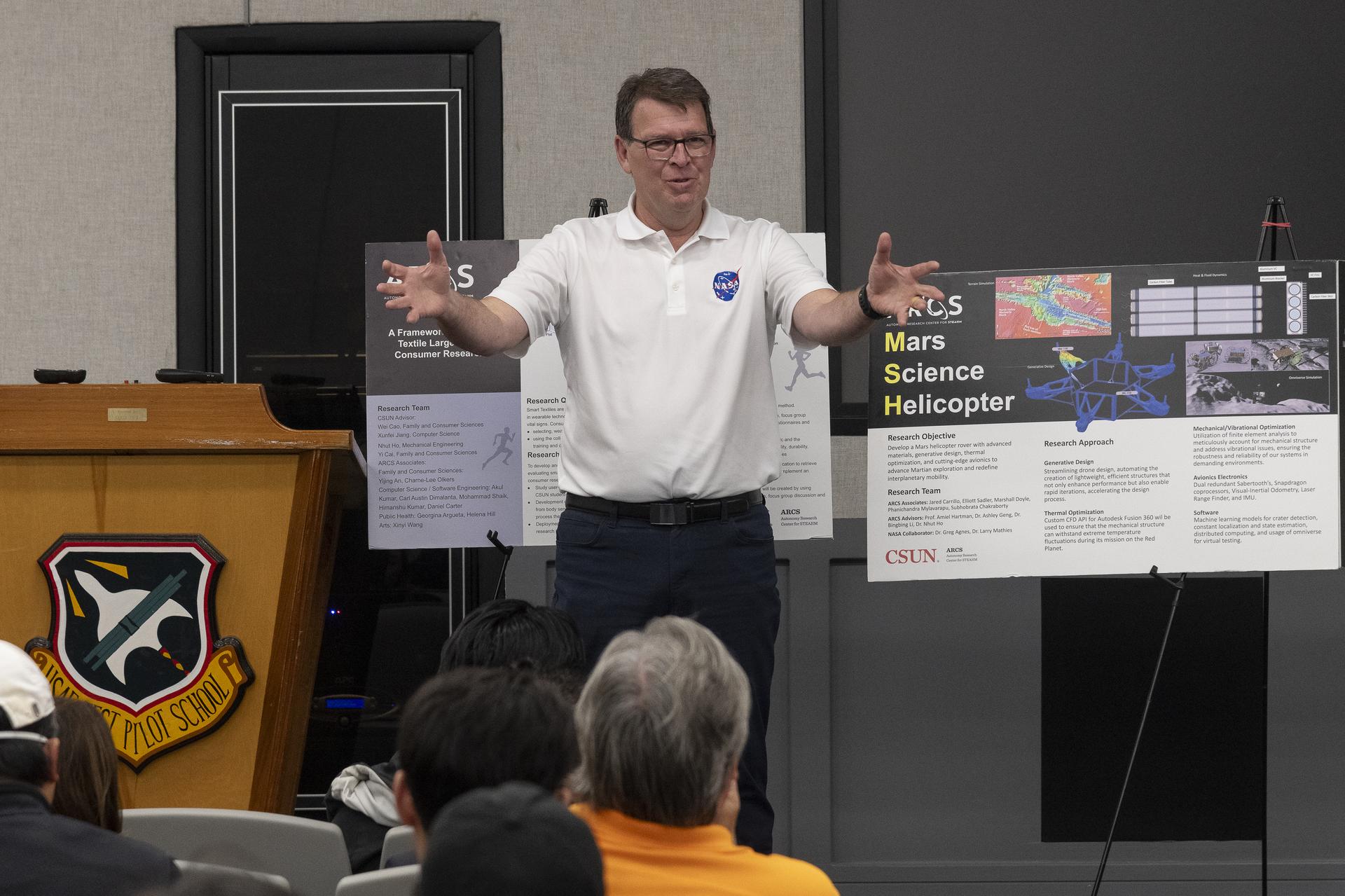
A man talks to a group of university students.
Brad Flick, center director at NASA’s Armstrong Flight Research Center in Edwards, California, talks to students from California State University, Northridge, California. As part of the university’s Autonomy Research Center for science, technology, engineering, entrepreneurship, arts, humanities, and mathematics, the students displayed posters and answered questions about their technologies May 23 at the Air Force Test Pilot School auditorium on Edwards Air Force Base, California.
NASA/Steve Freeman

Students from a minority-serving university in California are helping solve challenges of autonomous systems for future drone operations on Earth and other planets. These students are making the most of opportunities with NASA, the U.S. Department of Defense, and industry, focusing on autopilot development and advanced systems that adapt and evolve.

Students from California State University, Northridge, who are part of the university’s Autonomy Research Center, displayed and discussed their research with posters highlighting the technology they developed at a recent event at Edwards Air Force Base in Edwards, California. A Mars science helicopter, mini rovers for science exploration, and 3D printed sulfur concrete for Mars habitats are some of their projects, and they answered questions from experts in the field on May 23 at the Air Force Test Pilot School auditorium.

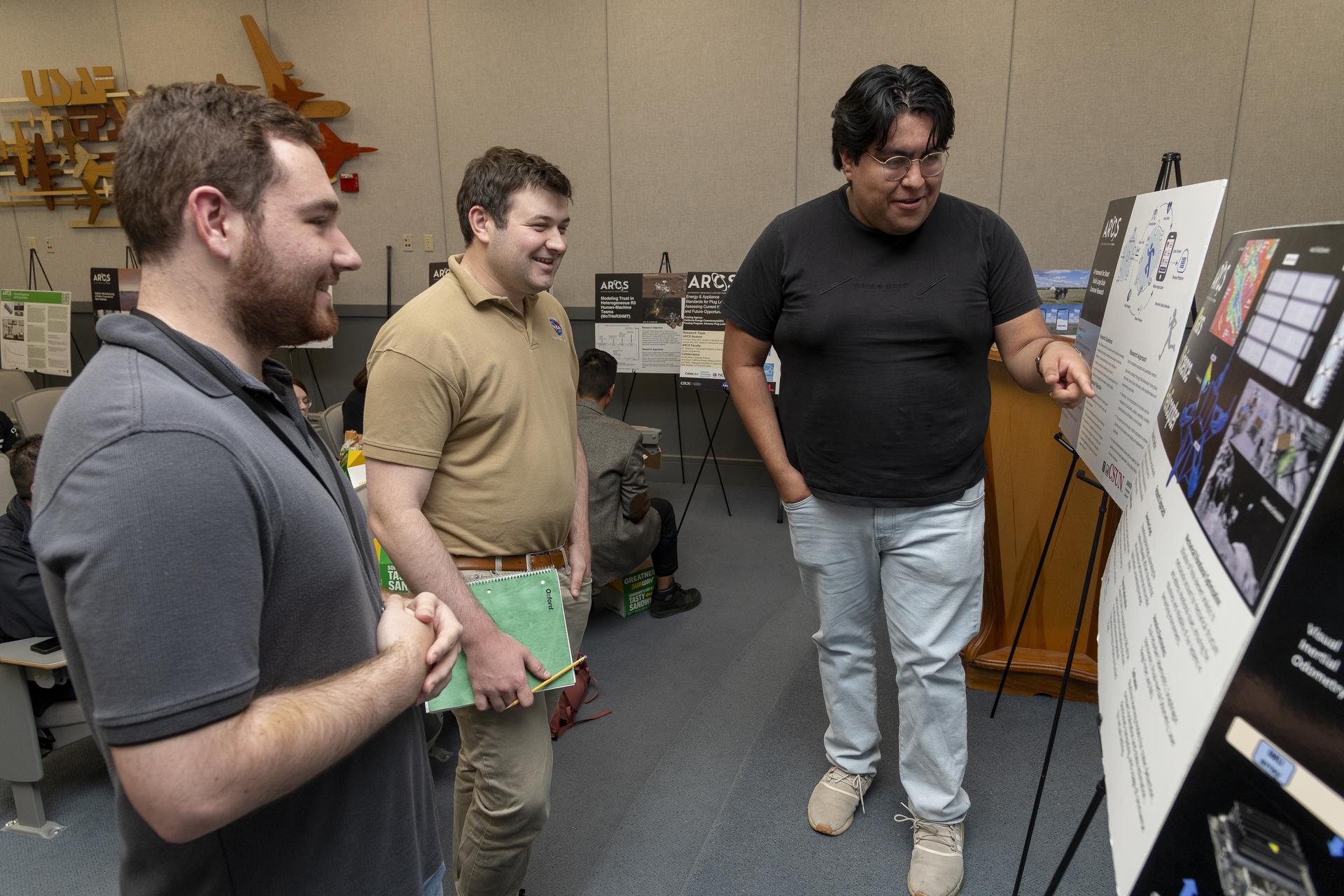
Two men ask a third man about his technology poster.
Two men from NASA’s Armstrong Flight Research Center in Edwards, California, ask Jared Carrillo, a student from the California State University, Northridge, Autonomy Research Center for science, technology, engineering, entrepreneurship, arts, humanities, and mathematics, about his work on the Mars Science Helicopter. Students displayed posters and answered questions about their technologies May 23 at the Air Force Test Pilot School auditorium on Edwards Air Force Base, California.
NASA/Steve Freeman

“The goal is to help minority-serving institutions develop relationships with NASA,” said Bruce Cogan, a NASA Armstrong Small Business Innovation Research program liaison for the agency’s Aeronautics Research and Mission Directorate. “We want students to make connections and learn how to use NASA processes to submit research proposals. Students could also supplement work in autonomy that NASA wants to pursue.”

Representatives from NASA’s Armstrong Flight Research Center in Edwards, California, attended the event, looking for potential collaborations with students where NASA Armstrong would provide the funding through sources such as the NASA Armstrong Center Innovation Fund and NASA’s Convergent Aeronautics Solutions project to advance technology.

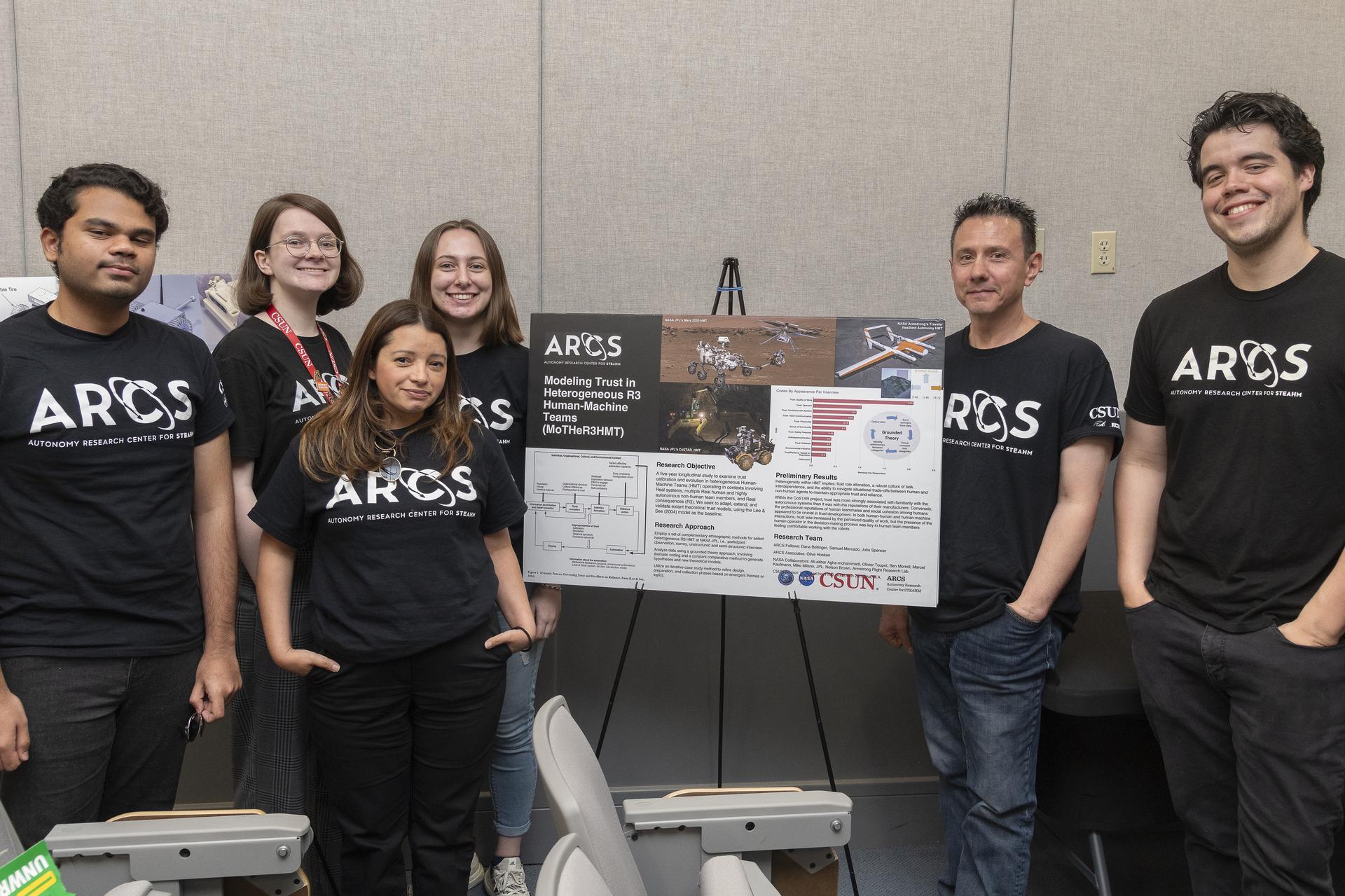
Six students were ready to explain a technology they detailed on a poster.
Six students from the California State University, Northridge, Autonomy Research Center for science, technology, engineering, entrepreneurship, arts, humanities, and mathematics spoke about their Trust in Autonomy technology. The students from left are Aniket Christi, Julia Spencer, Dana Bellinger, Zulma Lopez Rodriguez, front, Jordan Jannone, and Samuel Mercado. The group answered questions about their technology May 23 at the Air Force Test Pilot School auditorium on Edwards Air Force Base, California.
NASA/Steve Freeman

Use of uncrewed systems will require development of advanced controllers, and ideas like trust in autonomy, or how people can trust what the computers are doing, and human-machine teaming on Mars and Europa missions are examples of potential partnerships, Cogan said.

Brad Flick, NASA Armstrong center director, and Tim Cacanindin, U.S. Air Force Global Power Bombers Combined Test Force deputy director, spoke at the event. Following the event, more than 50 students and faculty toured NASA Armstrong facilities.

NASA’s Minority University Research and Education Project Institutional Research Opportunity funds a multi-year grant for the Autonomy Research Center. NASA Armstrong, and NASA’s Jet Propulsion Laboratory in Southern California, co-sponsored the NASA grant.

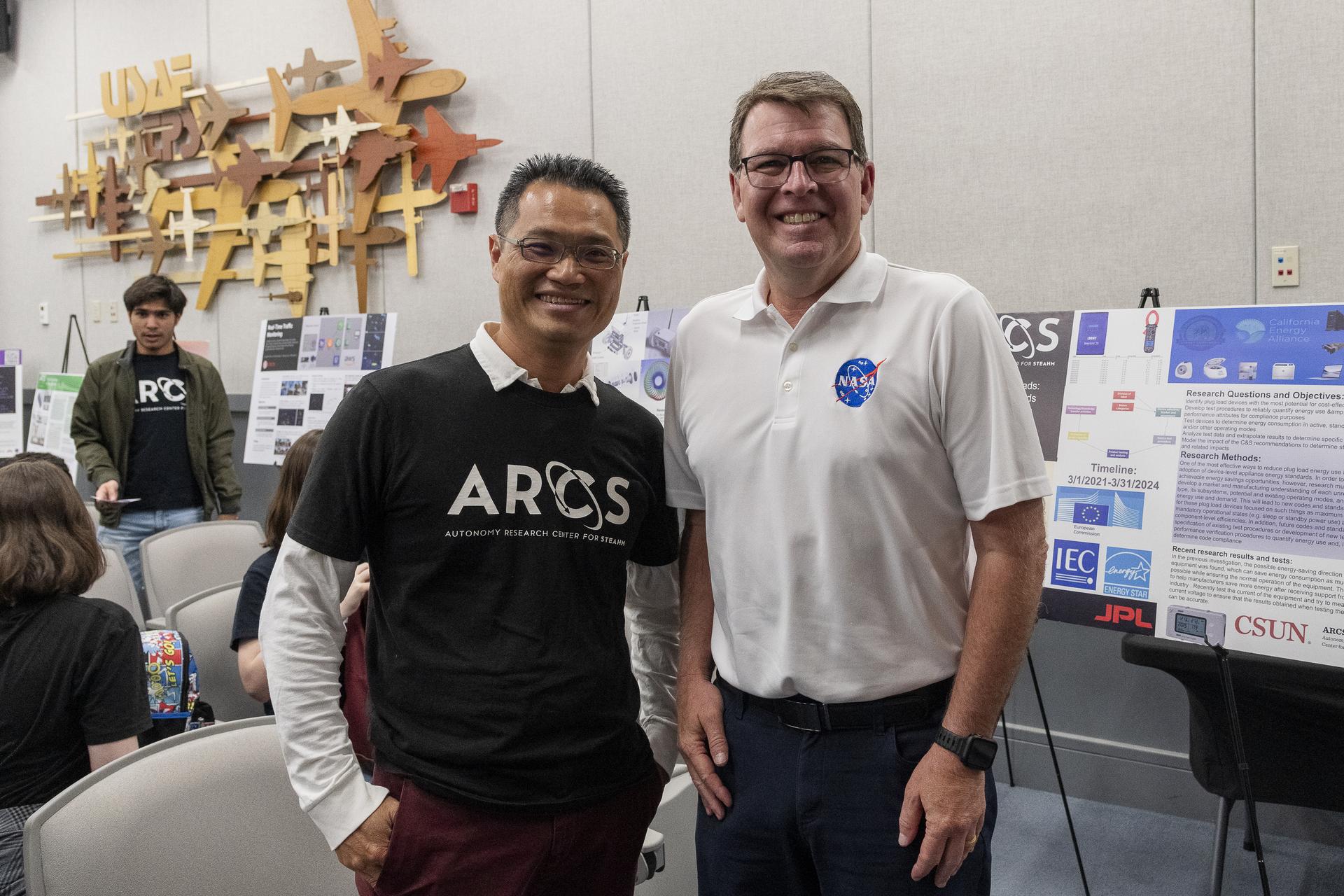
Two men pose for a photo.
Nhut Ho, director of the NASA-sponsored Autonomy Research Center for science, technology, engineering, entrepreneurship, arts, humanities, and mathematics at California State University, Northridge, left, spoke to Brad Flick, center director at NASA’s Armstrong Flight Research Center in Edwards, California. The men were attending a student poster event, where students showcased their technologies and answered questions May 23 at the Air Force Test Pilot School auditorium on Edwards Air Force Base, California.
NASA/Steve Freeman

Share

Details

Last Updated

Jun 10, 2024

Editor
Dede Dinius
Contact

Powered by WPeMatico

Get The Details…
Dede Dinius

NASA Ames Hosts National Wildfire Coordinating Group

NASA Ames Hosts National Wildfire Coordinating Group

4 min read

Preparations for Next Moonwalk Simulations Underway (and Underwater)

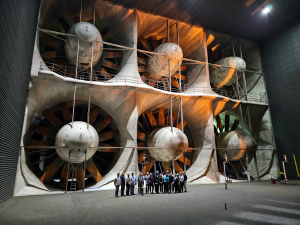
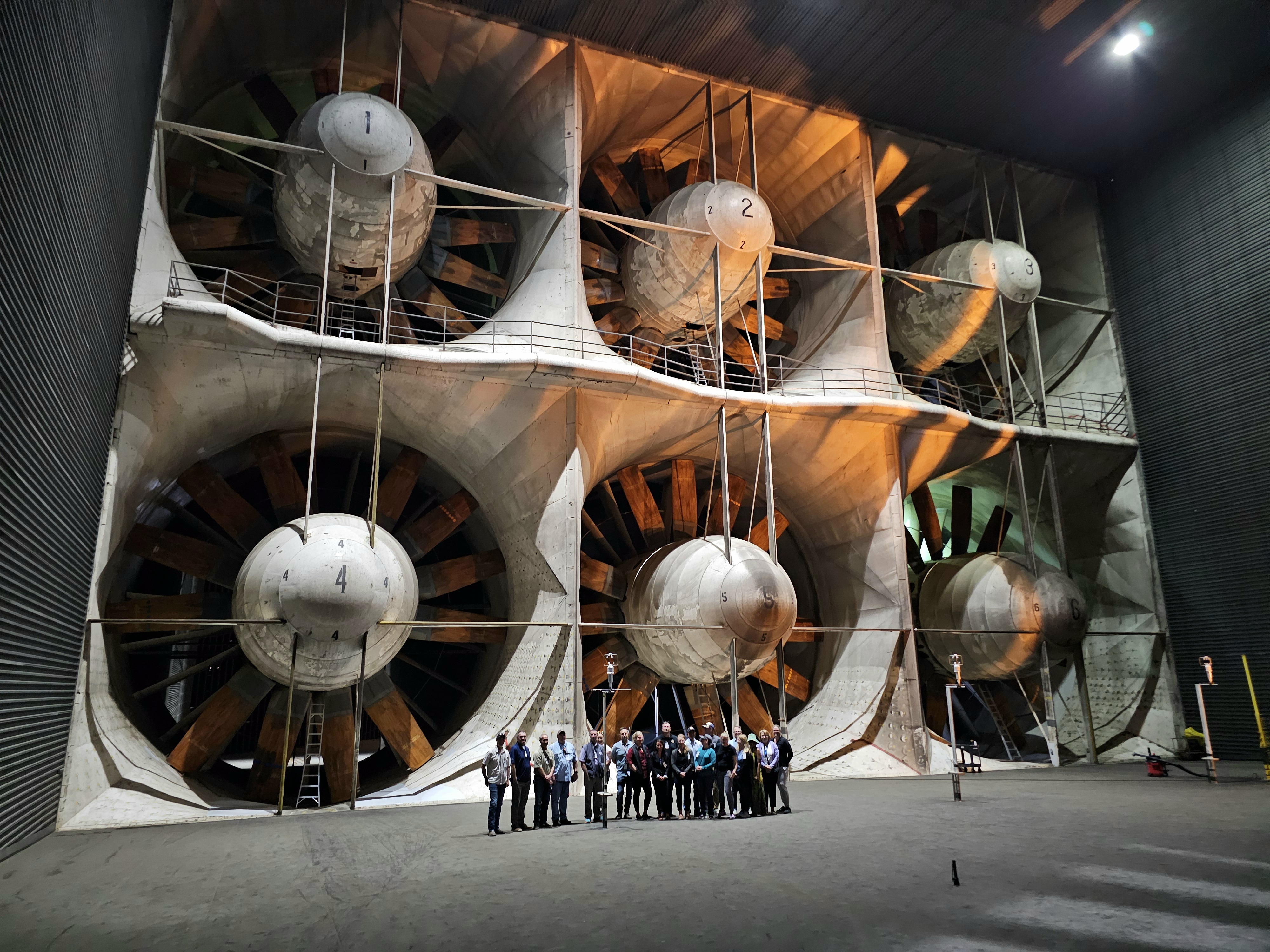
Executive board members from the NWCG stand in front of giant turbines in the National Full Scale Aerodynamic Complex during their visit to Ames Research Center on May 23, 2024.
NWCG Executive Board members stand in front of giant turbines in the National Full Scale Aerodynamic Complex during their visit to Ames Research Center on May 23, 2024.
USAF/Patrick Goulding

On May 21-23, 2024, the National Wildfire Coordinating Group (NWCG) visited NASA Ames Research Center, with participants representing 13 agencies and organizations. NWCG is a cooperative group focused on providing national leadership to enable interoperable wildland fire operations among federal, state, local, Tribal, and territorial partners. NASA became an associate member of NWCG in February 2024, with the goal of increasing collaboration across agencies and leveraging NASA data, technology, and innovation for nation-wide efforts in wildland fire management.    

NASA’s Approach to Wildland Fire Management

Across the agency, NASA’s approach to wildland fire management involves the application of research and technology before, during, and after a fire, in order to help ecosystems, animals, and human communities thrive. At Ames, two examples of these capabilities are the project office for FireSense and the Advanced Capabilities for Emergency Response Operations (ACERO) project. 

Wildland fire solutions are a major theme within NASA’s Earth Action strategy. FireSense is part of this NASA-wide approach to wildland fire management, working with operational agencies and partners to measure pre-fire fuels conditions, active fire behavior, post-fire impacts and threats, and provide air quality forecasting. ACERO develops cutting-edge technology to remotely identify, monitor, and suppress wildland fire through the use of uncrewed aircraft.  

Team members from both projects participated in the NWCG visit, and are represented in NWCG; NASA’s involvement is supported by Parimal Kopardekar (Director of the NASA Aeronautics Research Institute and the Advanced Air Mobility (AAM) Mission Integration Office) and Michael Falkowski (NASA Wildland Fires and FireSense Program Manager). Together, they represent NASA’s cross-mission directorate approach to managing wildland fire across the fire life cycle.  

NASA Ames’ Involvement in NWCG: Data and Human Performance Characteristics

By hosting NWCG’s annual offsite Executive Board meeting, Ames personnel were able to connect board members with NASA subject matter experts and project managers, provide tours of Ames facilities relevant to wildland fire management, and discuss NASA’s core capabilities and how they can augment the NWCG’s nation-wide fire management efforts. Specifically, NASA’s data capabilities and human performance characteristics studies were at the forefront of the day’s events.  

On the data front, conversation centered around how to collectively tackle data continuity, storage, and accessibility. Large-scale computing resources are increasingly essential to store, manage, and incorporate data relevant to wildland fire management. With more advanced sensors on crewed aircraft, uncrewed aircraft, and satellites, addressing data continuity, storage, and accessibility are an essential piece of supporting wildland fire managers. 

Ian Brosnan, Principal Investigator for NASA Earth eXchange (NEX), provided details about the NEX supercomputing and data analytics platform at Ames. The platform serves as a tool to increase availability of data from NASA missions and other sources, models, analysis tools, and research results, and the team uses this platform to investigate questions relevant to the increasing impact of wildland fire. For instance, their work uses machine learning and complex data integration to link air quality emissions and fire behavior, in order to detect wildfire ignition and spread. 

The other focus of the Ames tour was NASA simulations and studies surrounding human performance characteristics, which refers to the human component of wildland fire management – such as managing fatigue in the field. Supporting the workforce is a primary goal for improving overall response to wildland fire management, as highlighted in the Wildfire Mitigation and Management Commission Report.  

On this visit, NWCG members were able to meet with Jessica Nowinski, Division Chief of the Human Systems Integration Division, for a Human Factors overview, followed by a presentation by Immanuel Barshi on astronaut and pilot training, and a presentation by Cassie Hilditch on fatigue studies. NWCG Executive Board members were also able to tour the Airspace Operations Laboratory, with a particular focus on drones. The visit concluded with a tour of the National Full Scale Aerodynamic Complex, colloquially referred to as the Wind Tunnel.   

The NWCG tour concluded in the National Full Scale Aerodynamic Complex; the group provides a sense of scale for just how massive the turbines are that pull air into the 120-foot wind tunnel.
Patrick Goulding/USAF

The Future of NASA and NWCG

NWCG’s strength is fostering partnership, and many discussions over the three-day visit leveraged complementary strengths between the agencies. Bringing together research specialties, technology innovation, existing programs and campaigns, and subject expertise makes the national approach to wildland fire management more unified, efficient, and effective.  

Looking forward, NASA’s involvement with NWCG will continue to produce partnership opportunities and further the national wildland fire management goals. NASA personnel are connecting with NWCG committees – including Data Management, Geospatial, Aviation and Risk Management – and will continue to support NWCG objectives by connecting subject matter experts across the agency with NWCG subject matter experts in the field.  

About the Author

Milan Loiacono

Milan Loiacono

Science Communication Specialist

Milan Loiacono is a science communication specialist for the Earth Science Division at NASA Ames Research Center.

Share

Details

Last Updated

Jun 11, 2024

Related Terms

Powered by WPeMatico

Get The Details…
Milan Loiacono

Crew Works Genetics, Maintenance and is GO for Spacewalk

Crew Works Genetics, Maintenance and is GO for Spacewalk

The seven Expedition 71 crew members gather with the two Crew Flight Test members for a team portrait aboard the space station. In the front from left are, Suni Williams, Oleg Kononenko, and Butch Wilmore. Second row from left are, Alexander Grebenkin, Tracy C. Dyson, and Mike Barratt. In the back are, Nikolai Chub, Jeanette Epps, and Matthew Dominick.

Spacewalk preparations and genetic research were the prime responsibilities for the orbital residents aboard the International Space Station on Tuesday. The Expedition 71 crew also worked on futuristic piloting studies and more eye and ear checks.

NASA astronauts Tracy C. Dyson and Matthew Dominick have been given the “go” by mission managers to begin a six-and-a-half-hour spacewalk at 8 a.m. EDT on Thursday. The duo will work outside in the vacuum of space removing communications hardware, known as the radio frequency group, then sampling for microorganisms potentially living on the outside of the orbital outpost. This will be Dyson’s fourth spacewalk and Dominick’s first.

The duo joined each other after lunchtime reviewing spacewalk safety procedures and printing checklists they will wear on their spacesuit cuffs. Toward the end of the day, the spacewalkers gathered with NASA Flight Engineers Mike Barratt and Jeanette Epps and called down to mission controllers to discuss readiness for Thursday’s spacewalk.

Mission managers will discuss the upcoming spacewalk details during a news conference at 4 p.m. today. Live coverage will air on NASA+, NASA Television, the NASA appYouTube, and the agency’s website. Learn how to stream NASA TV through a variety of platforms including social media.

Barratt earlier scanned Dyson’s eyes with the Ultrasound 2 device imaging her cornea, lens, and optic nerve. Dominick recorded a video greeting for an audience in Colorado as Epps swapped water tanks inside the Tranquility module.

Starliner astronauts Butch Wilmore and Suni Williams spent their day on biomedical activities and gene sequence training. Wilmore took an inventory of the Human Research Facility checking items such as blood tube kits, saliva sample packs, gloves, and more. Williams studied procedures to collect microbe samples, extract their DNA, and sequence their genes to learn how to identify bacteria and fungi living in station water systems.

Cosmonauts Oleg Kononenko and Nikolai Chub took turns on Tuesday jogging on a treadmill while attached to electrodes recording their health data for a physical fitness test. The duo also worked on electronics gear swaps, life support maintenance, and station window inspections. Flight Engineer Alexander Grebenkin studied experimental spacecraft and robotic piloting techniques that may be used to train crew members on planetary missions. He also conducted a hearing test wearing headphones connected to a computer and responding to a series of tones.


Learn more about station activities by following the space station blog@space_station and @ISS_Research on X, as well as the ISS Facebook and ISS Instagram accounts.

Get weekly video highlights at: https://roundupreads.jsc.nasa.gov/videoupdate/

Get the latest from NASA delivered every week. Subscribe here: www.nasa.gov/subscribe

Powered by WPeMatico

Get The Details…

Mark Garcia

NASA Selects 2024 Small Business, Research Teams for Tech Development

NASA Selects 2024 Small Business, Research Teams for Tech Development

NASA logo
NASA logo. Credit: NASA

NASA will award funding to nearly 250 small business teams to develop new technologies to address agency priorities, such as carbon neutrality and energy storage for various applications in space and on Earth. The new awards from NASA’s Small Business Innovation Research (SBIR) and Small Business Technology Transfer (STTR) program invest in a diverse portfolio of American small businesses and research institutions to support NASA’s future missions.

About 34% of the companies selected are first-time NASA SBIR/STTR recipients. Each proposal team will receive $150,000 to establish the merit and feasibility of their innovations for a total agency investment of $44.85 million.

“NASA is proud to continue its commitment to the creation and elevation of technologies that blaze trails in space and on Earth,” said Jenn Gustetic, director of early-stage innovation and partnerships for NASA’s Space Technology Mission Directorate at the agency’s headquarters in Washington.

The Phase I SBIR contract awards small businesses and lasts for six months, while the Phase I STTR contract awards small businesses in partnership with a research institution and lasts for 13 months. In total, 209 small businesses received SBIR awards, and 39 small businesses and their research institution partners – including eight Minority Serving Institutions – received STTR awards. The complete list of this year’s SBIR and STTR awardees are available online.

One of the firms working to address carbon neutrality is Exquadrum Inc., a minority-owned small business in Victorville, California. Exquadrum’s proposed technology will contribute to NASA’s effort to make the U.S. carbon neutral by 2050. The proposed technology offers higher energy conversion efficiency with no emission of pollutants. The propulsion system is compact and lightweight compared to current systems. The fuel and its products are safe to handle, and the propulsion system is reliable under extreme weather conditions. The propulsion system has the potential to aid the exploration of planets that have atmospheres like that of Mars.

“Through our partnership with, and investment in, small businesses and research institutions, NASA continues to forge a crucial path in the development of technologies that have a concerted focus on long-term commercial uses,” said Jason L. Kessler, program executive for NASA’s SBIR/STTR program. “Our ongoing support of diverse innovators from throughout the country will continue to foster an ecosystem that will nurture the intrapreneurial spirit to drive innovation and exciting results.”

The new SBIR/STTR investments will impact 41 states, including a team with Energized Composite Technologies, in Orlando, Florida, partnering with the University of Central Florida. Together, they will explore using carbon fiber-reinforced thermoplastic composite structural batteries for repurposable space applications, offering a multifunctional solution that integrates structural integrity with energy storage capabilities. The proposed structural battery panels integrate energy storage functionality into the structural components of the spacecraft, minimizing the additional space required for electrical storage while maximizing the available volume for payload. The structural battery panels used for the space vehicle could be repurposed after landing because the thermoplastic-based structural panels can be reshaped for other uses.

NASA selected Phase I proposals to receive funding by judging their technical merit and responsiveness to known challenges. Based on their progress during Phase I, companies may submit proposals for up to $850,000 in Phase II funding to develop a prototype and subsequent SBIR/STTR Post Phase II opportunities.

To learn more about NASA’s SBIR/STTR program and apply to future opportunities, visit:

https://sbir.nasa.gov/

-end-

Jasmine Hopkins
Headquarters, Washington
202-358-1600
jasmine.s.hopkins@nasa.gov

Powered by WPeMatico

Get The Details…
Abbey A. Donaldson