NASA’s Hubble Restarts Science in New Pointing Mode

NASA’s Hubble Restarts Science in New Pointing Mode

3 min read

NASA’s Hubble Restarts Science in New Pointing Mode
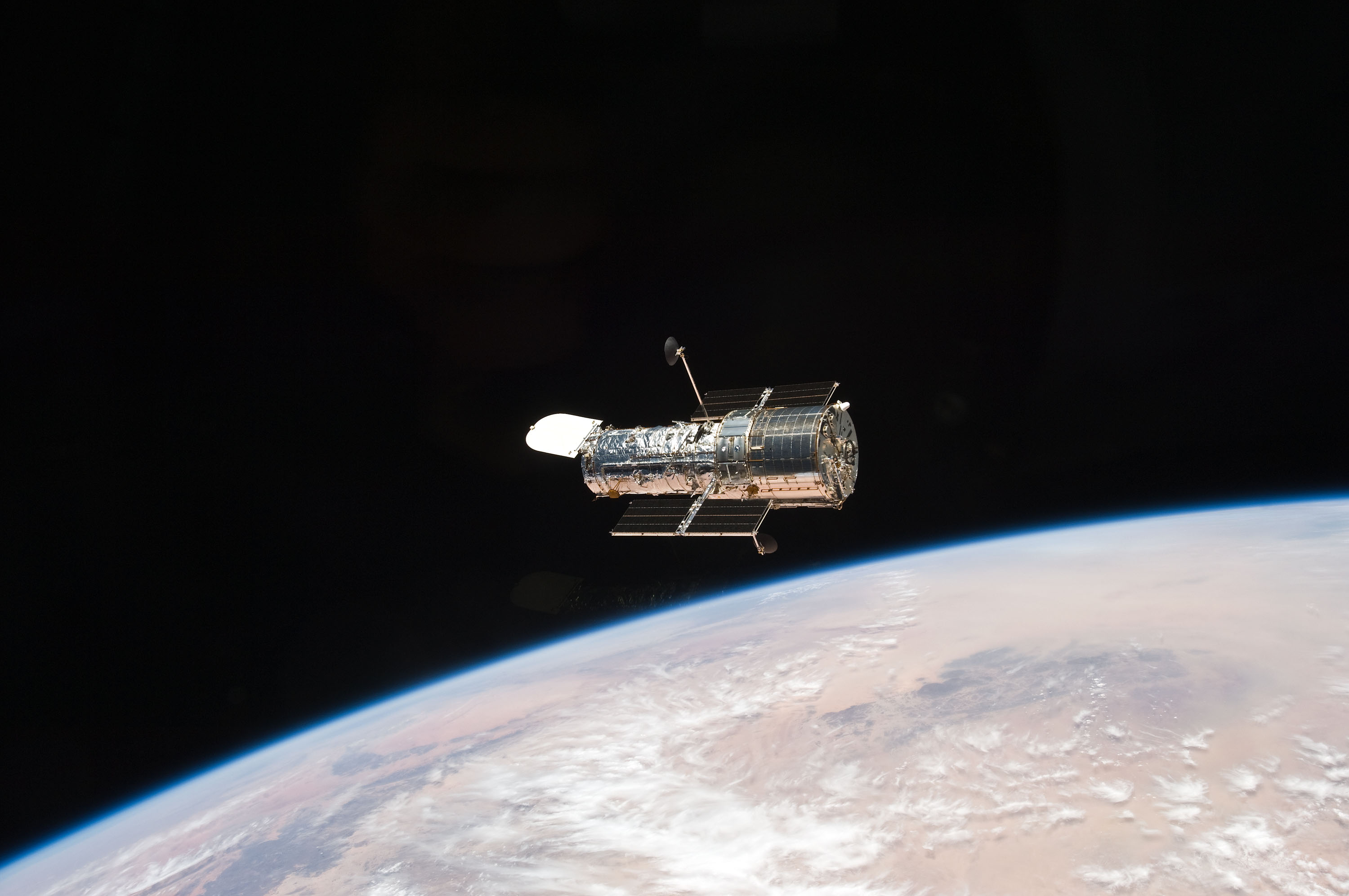
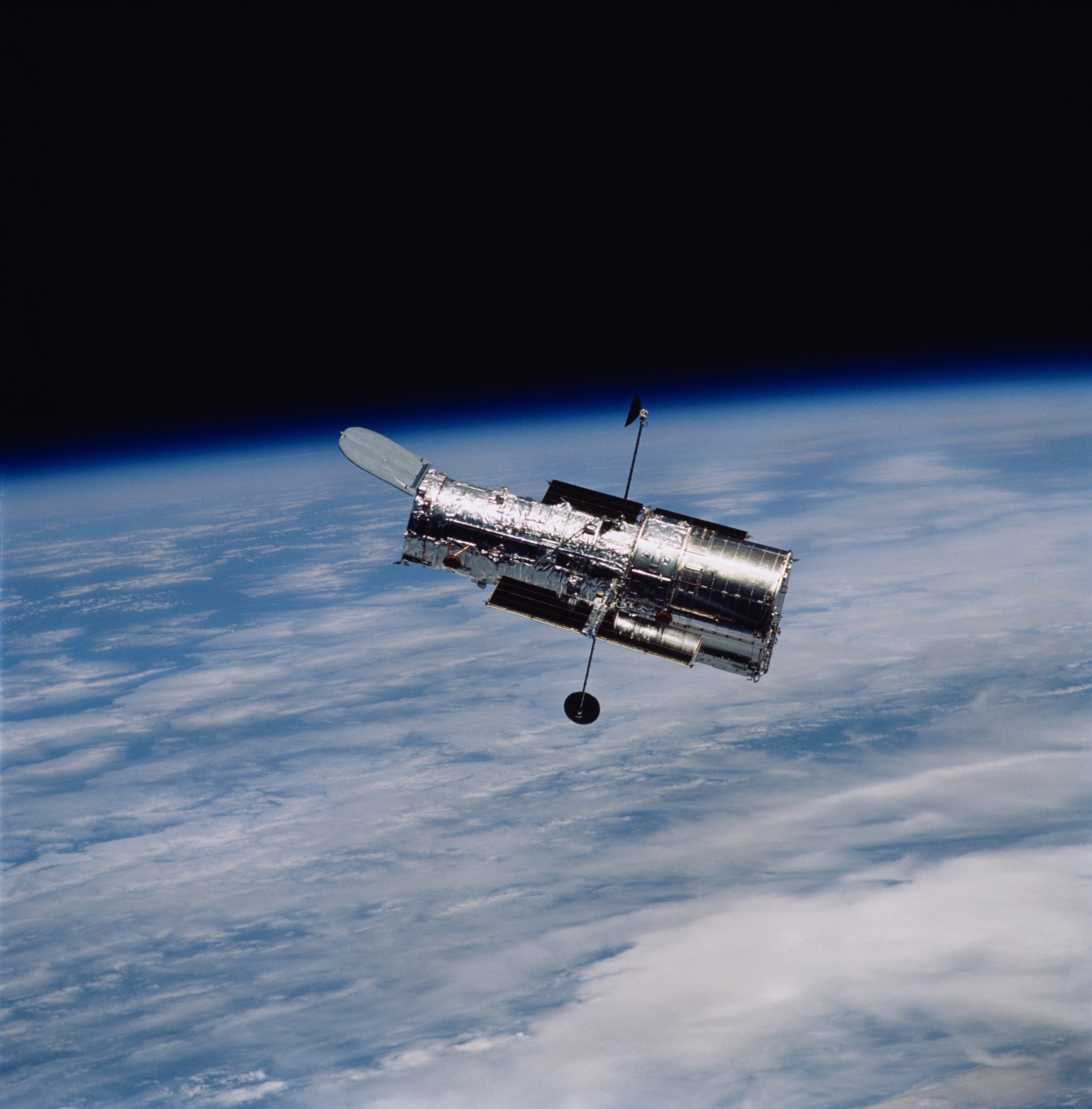
Hubble orbiting above Earth. Hubble is at the center of the image against a black background. Earth's limb covers the bottom, right third of the image.
This image of NASA’s Hubble Space Telescope was taken on May 19, 2009 after deployment during Servicing Mission 4.
NASA

NASA successfully transitioned operations for the agency’s Hubble Space Telescope to an alternate operating mode that uses one gyro, returning the spacecraft to daily science operations Friday. The telescope and its instruments are stable and functioning normally.

Hubble went into safe mode May 24 due to an ongoing issue with one of its gyroscopes (gyros), which measure the telescope’s slew rates and are part of the system that determines and controls the direction the telescope is pointed. The gyro had been increasingly returning faulty readings over the past six months, suspending science operations multiple times. This led the Hubble team to transition from a three-gyro operating mode to observing with only one gyro, enabling more consistent science observations and keeping another operational gyro available for future use. The agency discussed this transition in detail during a media teleconference June 4.

The team will continue monitoring the problematic gyro to see if it stabilizes and can be used again in the future. Although there are some minor limitations to observing in one-gyro mode, Hubble can continue doing most of its science observations. Further refinements to optimize operations are anticipated as the team gains more experience with the one-gyro mode.

Launched in 1990, Hubble has more than doubled its expected design lifetime, and has been observing the universe for more than three decades, recently celebrating its 34th anniversary. Read more about some of Hubble’s greatest scientific discoveries.

NASA’s Hubble Temporarily Pauses Science

Originally Published May 31, 2024

NASA’s Hubble Space Telescope entered safe mode May 24 due to an ongoing gyroscope (gyro) issue, suspending science operations. Hubble’s instruments are stable, and the telescope is in good health.

The telescope automatically entered safe mode when one of its three gyroscopes gave faulty telemetry readings. Hubble’s gyros measure the telescope’s slew rates and are part of the system that determines and controls precisely the direction the telescope is pointed. NASA will provide more information early the first week of June.

NASA anticipates Hubble will continue making discoveries throughout this decade and possibly into the next, working with other observatories, such as the agency’s James Webb Space Telescope for the benefit of humanity.

Launched in 1990, Hubble has been observing the universe for more than three decades and recently celebrated its 34th anniversary. Read more about some of Hubble’s greatest scientific discoveries.

Resources

Media Contact:

Claire Andreoli
NASA’s Goddard Space Flight CenterGreenbelt, MD
claire.andreoli@nasa.gov

Share

Details

Last Updated
Jun 14, 2024
Editor
Andrea Gianopoulos
Location
Goddard Space Flight Center

Powered by WPeMatico

Get The Details…

NASA’s LRO Spots China’s Chang’e 6 Spacecraft on Lunar Far Side

NASA’s LRO Spots China’s Chang’e 6 Spacecraft on Lunar Far Side

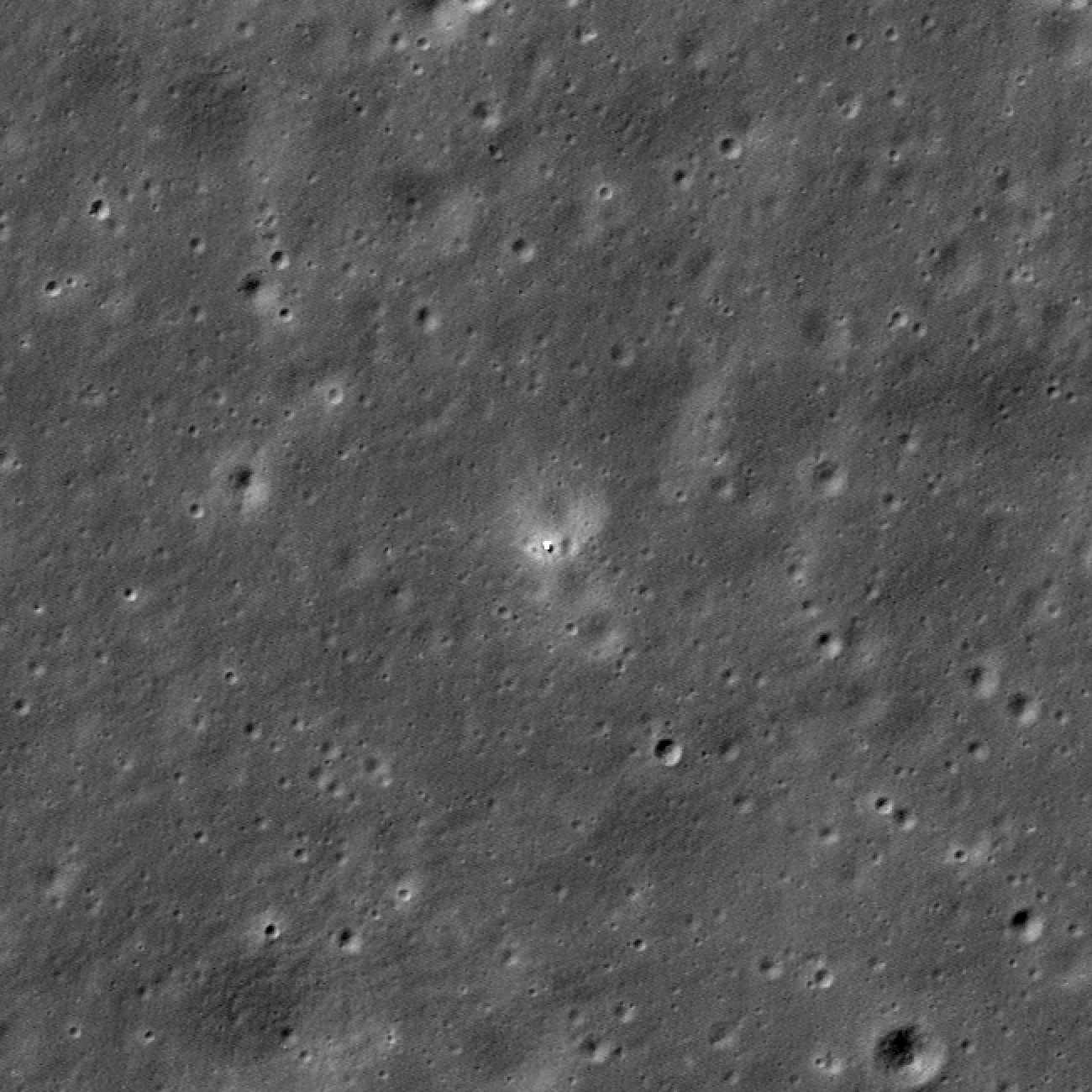
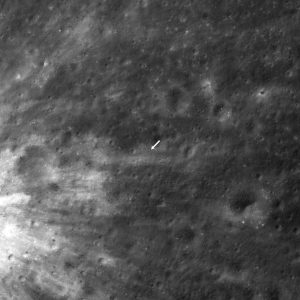
A black and white image of the surface of the Moon taken from NASA's LRO showing a white dot that is China's Chang'e 6 lander in the Apollo basin.
This image from NASA’s Lunar Reconnaissance Orbiter shows China’s Chang’e 6 lander in the Apollo basin on the far side of the Moon on June 7, 2024. The lander is the bright dot in the center of the image. The image is about 0.4 miles wide (650 meters); lunar north is up.
Credit: NASA/Goddard/Arizona State University

NASA’s LRO (Lunar Reconnaissance Orbiter) imaged China’s Chang’e 6 sample return spacecraft on the far side of the Moon on June 7. Chang’e 6 landed on June 1, and when LRO passed over the landing site almost a week later, it acquired an image showing the lander on the rim of an eroded, 55-yard-diameter (about 50 meters) crater. 

The LRO Camera team computed the landing site coordinates as about 42 degrees south latitude, 206 degrees east longitude, at an elevation of about minus 3.27 miles (minus 5,256 meters).

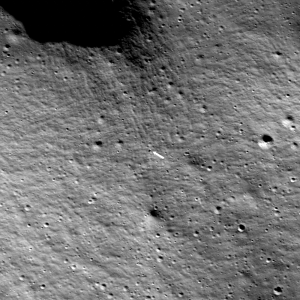
A black and white gif of two images of the Moon's surface before and after Chang'e 6 landed on the surface. A scale line for 100m is in the bottom right. The second image is slightly brighter around the landing site.
This before and after animation of LRO images shows the appearance of the Chang’e 6 lander. The increased brightness of the terrain surrounding the lander is due to disturbance from the lander’s engines and is similar to the blast zone seen around other lunar landers. The before image is from March 3, 2022, and the after image is from June 7, 2024.
Credit: NASA/Goddard/Arizona State University

The Chang’e 6 landing site is situated toward the southern edge of the Apollo basin (about 306 miles or 492 km in diameter, centered at 36.1 degrees south latitude, 208.3 degrees east longitude). Basaltic lava erupted south of Chaffee S crater about 3.1 billion years ago and flowed downhill to the west until it encountered a local topographic high, likely related to a fault. Several wrinkle ridges in this region have deformed and raised the mare surface. The landing site sits about halfway between two of these prominent ridges. This basaltic flow also overlaps a slightly older flow (about 3.3 billion years old), visible further west, but the younger flow is distinct because it has higher iron oxide and titanium dioxide abundances.

Map of the Moon's surface with a 20 km scale. Chaffee, Chaffee S, and Chaffee F craters are labeled in the upper left of the image and the Chang'e 6 Landing Site is a white dot in the center labeled with an arrow.
A regional context map of the Chang’e 6 landing site. Color differences have been enhanced for clarity. The dark area is a basaltic mare deposit; bluer areas of the mare are higher-titanium flows. Contour lines marking 100-meter (about 328 feet) elevation intervals are overlaid to provide a sense of the topography. Image is about 118 miles (190 km) across.
Credit: NASA/Goddard/Arizona State University

LRO is managed by NASA’s Goddard Space Flight Center in Greenbelt, Maryland, for the Science Mission Directorate at NASA Headquarters in Washington. Launched on June 18, 2009, LRO has collected a treasure trove of data with its seven powerful instruments, making an invaluable contribution to our knowledge about the Moon. NASA is returning to the Moon with commercial and international partners to expand human presence in space and bring back new knowledge and opportunities.

Media Contact:
Nancy N. Jones
NASA’s Goddard Space Flight Center, Greenbelt, Md.

Share

Details

Last Updated

Jun 14, 2024

Editor
Madison Olson
Contact
Nancy N. Jones
Location
Goddard Space Flight Center

Powered by WPeMatico

Get The Details…
Madison Olson

Johnson Celebrates LGBTQI+ Pride Month: Meet Michael Chandler

Johnson Celebrates LGBTQI+ Pride Month: Meet Michael Chandler

Michael Chandler has provided configuration and data management support at Houston’s Johnson Space Center for the last 13 years. After roughly seven years supporting the Exploration Systems Development Division, Chandler transitioned to the Moon to Mars Program Office in 2019. He and his team work to ensure that the baseline for Moon to Mars products, like agreements and documents, is appropriately controlled and that configuration and data management processes are integrated across the office’s six programs – Orion, Gateway, EHP, Space Launch System, Human Landing system, and Exploration Ground Systems.

“The most rewarding part of my job is not only the magnitude of what I have the privilege of working on every day, returning humans to the surface of the Moon, but also the experience I get in working with such a diverse group of members of the aerospace community,” said Chandler, a contractor with The Aerospace Corporation. “It’s also so rewarding to work as a team on a common goal and to look forward to the work I do every day!”

A thin white man with thick-rimmed glasses and wearing a light pink polo shirt stands in front of an office building with Johnson Space Center written over the door.
Portrait of Michael Chandler onsite at Johnson Space Center.
NASA/Noah Moran

Chandler has been an active member of the Out & Allied Employee Resource Group (OAERG) since 2018 and says his involvement with the group led to some groundbreaking life events. “I was very shy and reticent about revealing who I was until I got involved with Out & Allied,” he said. “I now believe that being ‘out’ is a way to support and encourage others to be themselves.”

Chandler learned about OAERG while attending a training about how to be an ally for the LGBTQ+ community. In his first year with the group, he helped organize a panel discussion on allyship and creating safe workplaces. He then became co-chair of OAERG’s Pride Committee, working with ERG colleagues and others to plan the group’s LGBTQ+ Pride Month events and participation in Houston’s annual Pride Parade. “I had a wonderful experience managing events and bringing everyone together for Pride,” he said – efforts that earned him a Trailblazer Award.

Chandler said he has grown personally and professionally through his involvement with OAERG. “I was very shy and kind of uptight at the first meeting that I went to, but everyone was so kind and accepting, and I slowly started taking on responsibilities and planning events,” he said. “These activities helped me grow as a communicator and a leader in my regular work and personal life.”

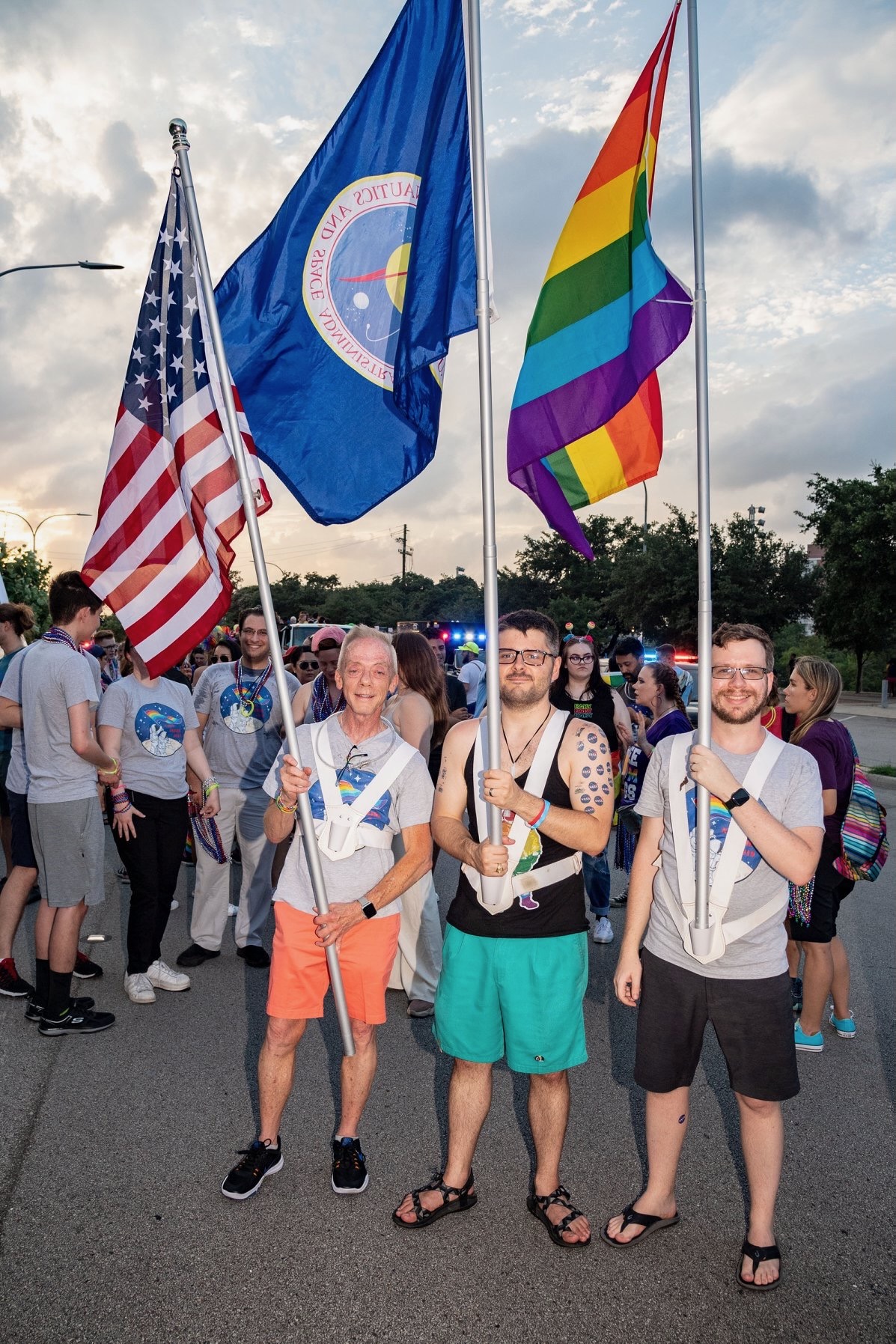
Three men hold a U.S., NASA, and Pride flag as they prepare to march in Houston's annual Pride Parade.
Michael Chandler (left) stands with fellow Out & Allied Employee Resource Group members, waiting for the Houston Pride Parade to begin.
Image courtesy of Michael Chandler

Chandler belongs to other employee resource groups (ERGs) at Johnson to support different communities and find opportunities to collaboratively promote diversity, equity, and inclusion (DEI) at the center, and he encourages others to do the same. “Even if you only participate when you have time, it can lead to knowledge and ways to support other communities that have the same challenges in this world,” he said.

Chandler has been impressed with agency and center leadership’s involvement in DEI efforts and support for ERGs to date. He suggested that increased communication around DEI initiatives may help to quell anxieties about the political landscape and developments outside of NASA by reassuring team members that their employer supports them for who they are. He believes that every person at Johnson can help create an inclusive environment by being respectful, listening with an open heart, and joining the fight to ensure that everyone can be themselves.

“The most important thing is that everyone needs to be their true self,” he said. “It’s so rewarding and makes life so much more fun!”

Powered by WPeMatico

Get The Details…
Linda E. Grimm

NASA, Boeing Target June 22 for Flight Crew Test Return

NASA, Boeing Target June 22 for Flight Crew Test Return

This view from a window on the cupola overlooks a portion of the International Space and shows the partially obscured Starliner spacecraft from Boeing docked to the Harmony module's forward port.
This view from a window on the cupola overlooks a portion of the International Space and shows the partially obscured Starliner spacecraft from Boeing docked to the Harmony module’s forward port. Photo credit: NASA

NASA and Boeing now are targeting no earlier than Saturday, June 22, to return the agency’s Boeing Crew Flight Test mission from the International Space Station. The extra time allows the team to finalize departure planning and operations while the spacecraft remains cleared for crew emergency return scenarios within the flight rules.

NASA and Boeing leadership will discuss the details of the new return target, flight status, and weather considerations for landing during a pre-departure media teleconference at 12 p.m. EDT Tuesday, June 18. NASA will provide additional media teleconference details soon.

“We are continuing to understand the capabilities of Starliner to prepare for the long-term goal of having it perform a six-month docked mission at the space station,” said Steve Stich, manager of NASA’s Commercial Crew Program. “The crew will perform additional hatch operations to better understand its handling, repeat some ‘safe haven’ testing and assess piloting using the forward window.”

NASA and Boeing teams also prepared plans for Starliner to fire seven of its eight aft-facing thrusters while docked to the station to evaluate thruster performance for the remainder of the mission. Known as a “hot fire test,” the process will see two bursts of the thrusters, totaling about a second, as part of a pathfinder process to evaluate how the spacecraft will perform during future operational missions after being docked to the space station for six months. The crew also will investigate cabin air temperature readings across the cabin to correlate to the life support system temperature measurements.

“We have an incredible opportunity to spend more time at station and perform more tests which provides invaluable data unique to our position,” said Mark Nappi, vice president and program manager, Commercial Crew Program, Boeing. “As the integrated NASA and Boeing teams have said each step of the way, we have plenty of margin and time on station to maximize the opportunity for all partners to learn – including our crew.”

NASA astronauts Butch Wilmore and Suni Williams, who are serving as Starliner’s crew for the mission, arrived at the International Space Station on June 6. They’ve completed numerous flight objectives required for NASA certification of Boeing’s transportation system for flights to the orbiting laboratory under the agency’s Commercial Crew Program.

Over the past three days, Wilmore and Williams have performed tasks as part of the space station team, including installing research equipment, maintaining the lab’s hardware, and helping station crewmembers Matt Dominick and Tracy Dyson prepare for a spacewalk. After NASA called off Thursday’s spacewalk, Williams worked to help the crew out of their spacesuits.

Engineering teams continue to increase their understanding of previous observations from Starliner propulsion systems on the spacecraft’s service module.

Pending spacecraft return readiness and acceptable weather conditions, Starliner will undock from the space station for a parachute and airbag-assisted landing in the southwestern United States. Get the latest mission updates by following the commercial crew blog, @commercial_crew on X, and commercial crew on Facebook.

Powered by WPeMatico

Get The Details…

Elyna Niles-Carnes

NASA Invites Media to See Artemis II Moon Rocket Elements at Kennedy

NASA Invites Media to See Artemis II Moon Rocket Elements at Kennedy

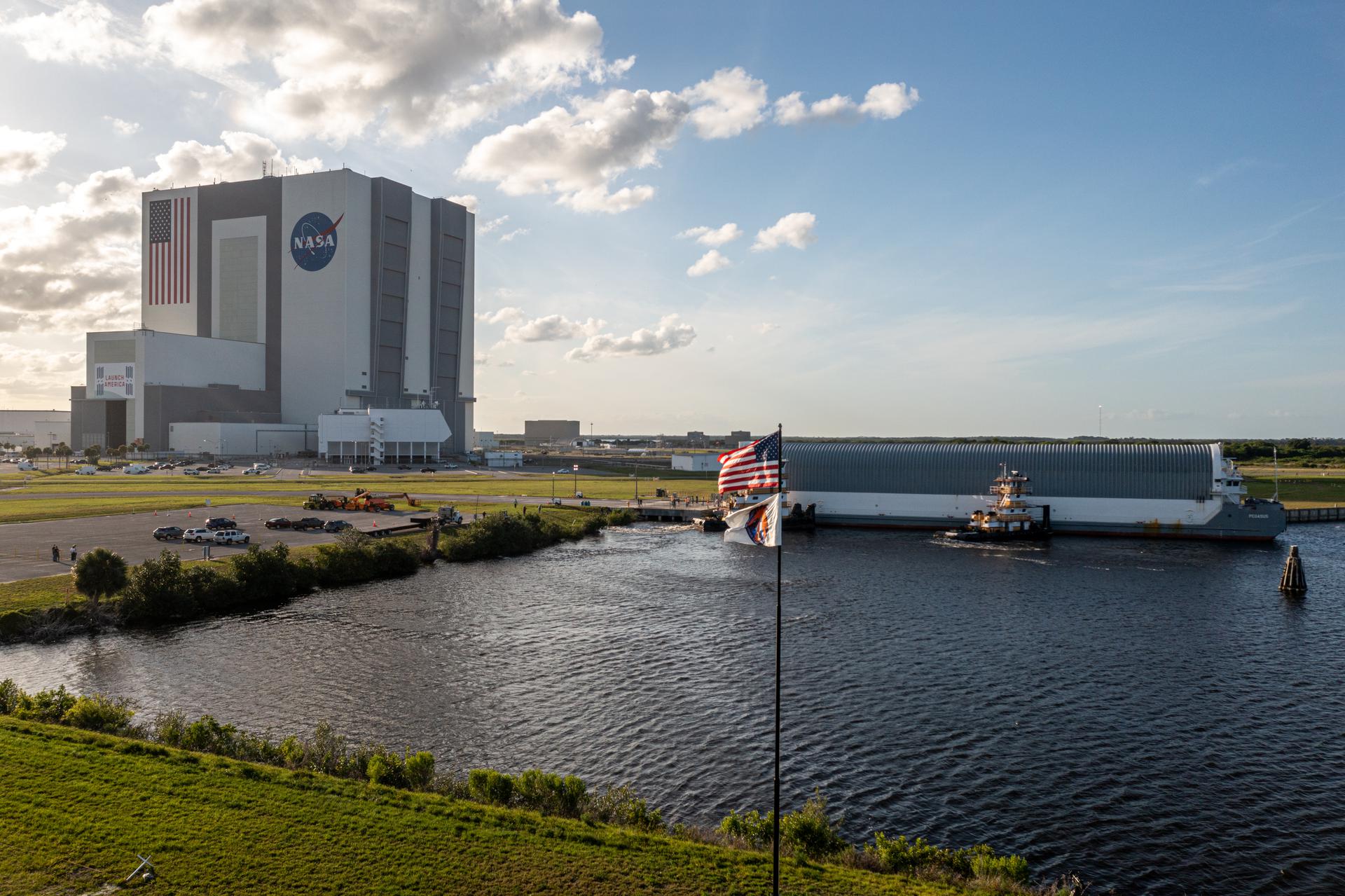
NASA’s Pegasus barge delivers the SLS (Space Launch System) rocket’s core stage for the 2022 Artemis I mission to the turn basin at Kennedy Space Center in Florida in April 2021.
Credits: NASA/Michael Downs

Media are invited in late July to NASA’s Kennedy Space Center in Florida to see progress on the agency’s SLS (Space Launch System) Moon rocket as preparations continue for the Artemis II test flight around the Moon.

Participants joining the multi-day events will see the arrival and unloading of the 212-foot-tall SLS core stage at the center’s turn basin before it is transported to the nearby Vehicle Assembly Building. The stage will arrive on NASA’s Pegasus barge from the agency’s Michoud Assembly Facility in New Orleans, where it was manufactured and assembled.

Media also will see the twin pair of solid rocket boosters inside the Rotation, Processing, and Surge Facility at the spaceport, where NASA’s Exploration Ground Systems Program is processing the motor segments in preparation for rocket assembly. NASA and industry subject matter experts will be available to answer questions. At launch, the SLS rocket’s two solid rocket boosters and four RS-25 engines, located at the base of its core stage, will produce 8.8 million pounds of thrust to send the first crewed mission of the Artemis campaign around the Moon.

Media interested in participating must apply for credentials at:

https://media.ksc.nasa.gov

To receive credentials, international media must apply by Friday, June 28, and U.S. citizens must apply by Thursday, July 5.

Credentialed media will receive a confirmation email upon approval, along with additional information about the specific date for the activities when they are finalized. NASA’s media accreditation policy is available online. For questions about accreditation, please email ksc-media-accreditat@mail.nasa.gov. For other questions, please contact Kennedy’s newsroom at: 321-867-2468.

Para obtener información sobre cobertura en español en el Centro Espacial Kennedy o si desea solicitar entrevistas en español, comuníquese con Antonia Jaramillo o Messod Bendayan a: antonia.jaramillobotero@nasa.gov o messod.c.bendayan@nasa.gov.

The approximately 10-day Artemis II flight will test NASA’s SLS rocket, Orion spacecraft, and ground systems for the first time with astronauts and will pave the way for lunar surface missions, including landing the first woman, first person of color, and first international partner astronaut on the Moon.

Learn more about Artemis at:

www.nasa.gov/artemis/

-end-

Rachel Kraft 
Headquarters, Washington 
281-358-1100  
rachel.h.kraft@nasa.gov  

Tiffany Fairley/Antonia Jaramillo
Kennedy Space Center, Florida
321-867-2468
tiffany.l.fairley@nasa.gov/antonia.jaramillobotero@nasa.gov

Share

Details

Last Updated

Jun 14, 2024

Powered by WPeMatico

Get The Details…
Tiernan P. Doyle