Globetrotting NASA Research Model Increases Accuracy

Globetrotting NASA Research Model Increases Accuracy

4 min read

Preparations for Next Moonwalk Simulations Underway (and Underwater)
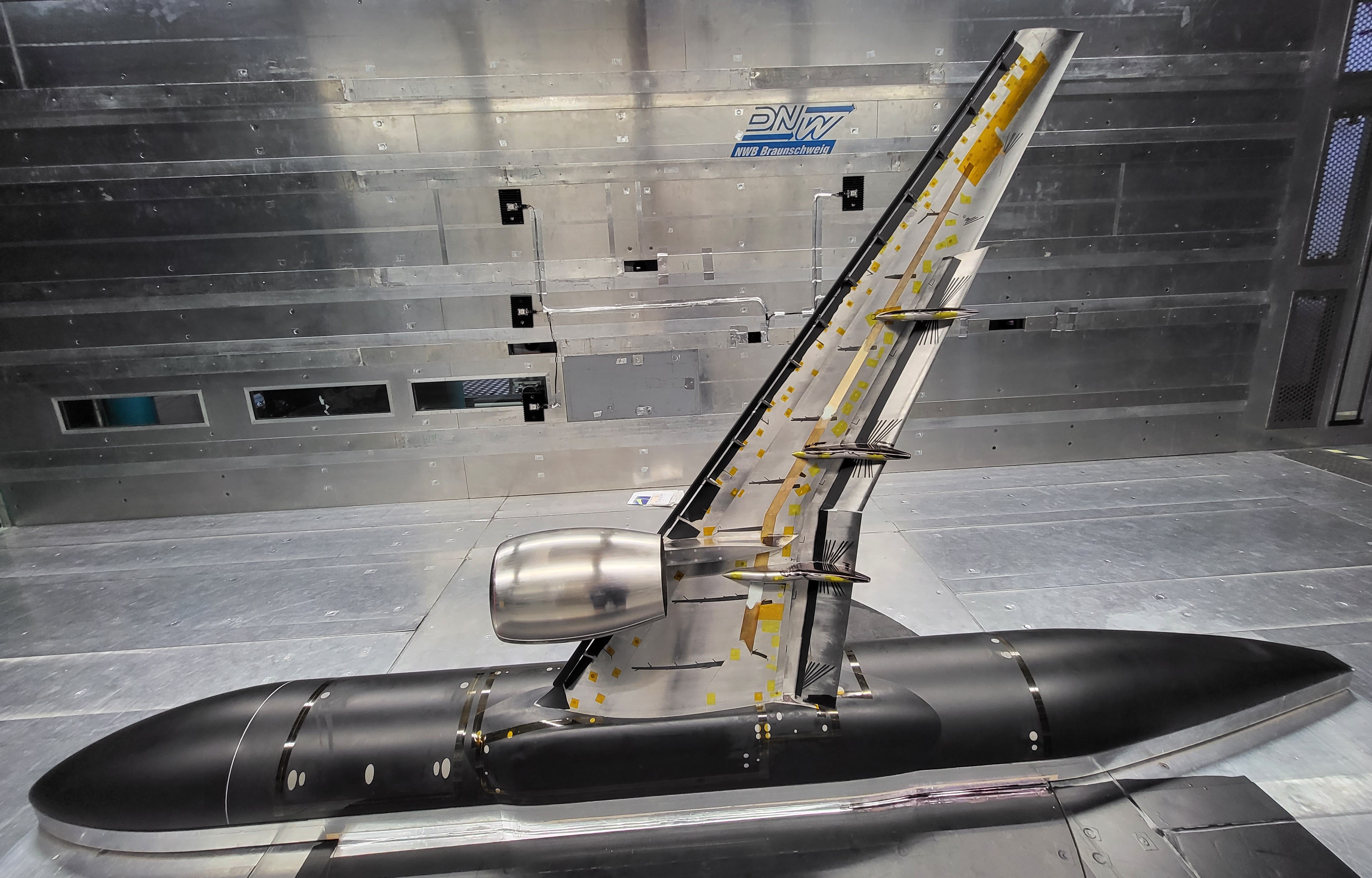
A silver-colored airplane research model sits in a wind tunnel facility. The model consists of a section of a scaled-down fuselage on the floor, with a single wing mounted vertically on it. The metallic wall of the wind tunnel is visible in the background.
The NASA 5.2% scale, semi-span version of the High Lift Common Research Model installed in the German-Dutch Wind Tunnels – Braunschweig Low-Speed Wind Tunnel in Braunschweig, Germany on May 4, 2023.
NASA

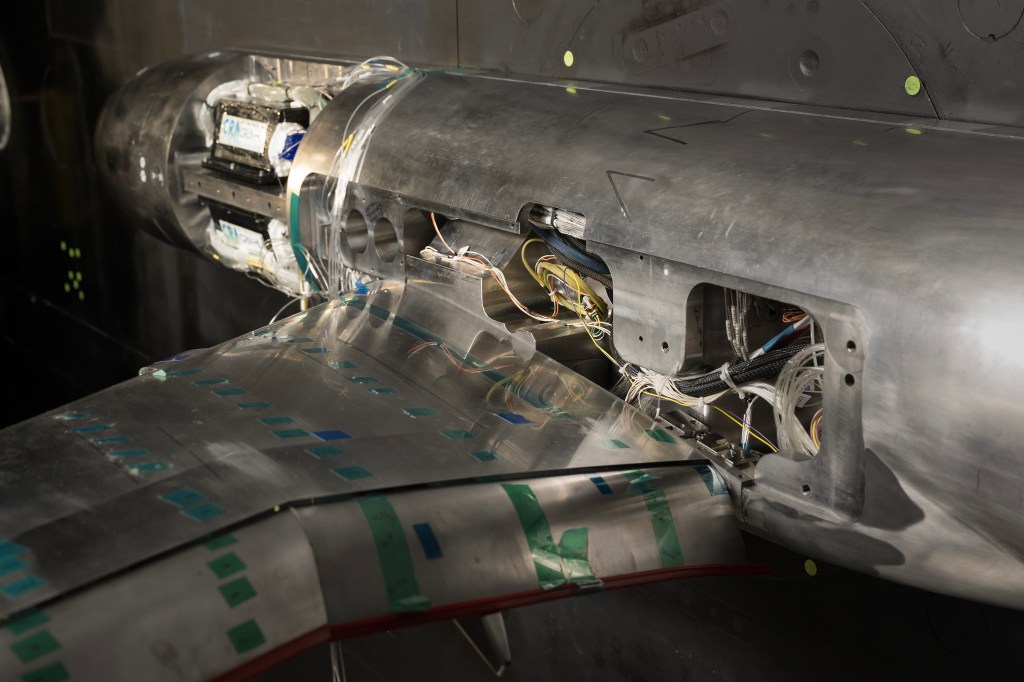
NASA and its international partners are using the same generically shaped wing design to create physical and digital research models to better understand how air moves around an aircraft during takeoff and landing.

Various organizations are doing computer modeling with computational tools and conducting wind tunnel tests using the same High Lift Common Research Model (CRM-HL), a NASA-led effort.

This ensures the aerospace community is getting accurate answers despite any differences in testing conditions or facilities.

What started as a voluntary partnership in 2019 has grown into the CRM-HL ecosystem with 10 partners across five countries. The team is building eight wind tunnel models, which will be tested at eight wind tunnels during the next three years.

What we are learning today would take us 10 years to do alone. The partners are using each other’s research for the mutual benefit of all.
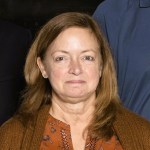
Melissa Rivers

Melissa Rivers

NASA Researcher

“What we are learning today would take us 10 years to do alone,” said Melissa Rivers, subproject manager in NASA’s Transformational Tools and Technologies project, which leads the CRM-HL research. “The partners are using each other’s research for the mutual benefit of all.”

The team will define and assess common wind tunnel conditions in more than 14 tests across the globe.

“Through this research, we are learning about differences that occur when we build and test several identical airplane models in multiple wind tunnels,” Rivers said.

Researchers can use data from these wind tunnel tests to then check if the research tools using computational fluid dynamics are accurately predicting the physics of an aircraft.

“The computer simulations and computational fluid dynamics tools are key contributions from this international partnership,” said NASA’s Mujeeb Malik, a lead researcher for the project. “The runs [tests] are critical to figuring out what we do not know and determining what we want to test.”

The partners are developing a standard way to communicate their data so that everyone can better compare the results from their models and wind tunnel tests.

NASA also is developing a cloud-based solution to give each partner access to the data and foster collaboration.

This silent, 20-second video shows a computer simulation of air flowing over a 5.2% scale of NASA’s High Lift Common Research Model wing design. The color key at lower right indicates the speed of the air.
NASA

Expanding Collaborations with Common Research Models

This high lift research effort builds on the success of a previous Common Research Model effort focused on transonic speeds.

Between 2008 and 2014, many organizations built their own versions of NASA’s model. They then tested the models in tunnels around the world.

The transonic model helped the community better understand the physics of aircraft at cruise. The current high lift model focuses on the takeoff and landing portions of flight when the aircraft is flying slower than at cruise.

Since there are more wind tunnels that can run low-speed tests, more partners can participate in the current collaboration.

The partners working on the CRM-HL span five countries – United States, United Kingdom, France, Germany, and Japan and include:

  • NASA
  • German Aerospace Center
  • National Office for Aerospace Studies and Research, the French Aerospace Lab
  • JAXA (Japan Aerospace Exploration Agency)
  • European Transonic Wind Tunnel
  • Aerospace Technology Institute
  • Boeing
  • Kawasaki Heavy Industries
  • QinetiQ
  • Airbus

Informing Community Initiatives

Data from the CRM-HL research effort also are driving NASA’s High Lift Prediction Workshop series. The series is sponsored by the Applied Aerodynamics Technical Committee of the American Institute of Aeronautics and Astronautics.

The workshops are intended to engage the broader aviation community in these efforts and inspire researchers around the world.

Another goal of this research is to help realize Certification by Analysis, which supports key objectives of the NASA Computational Fluid Dynamics Vision 2030 Study.

NASA, industry, and academia developed the study to lay out a long-term plan for developing future computational capabilities and meeting software and hardware needs for computational fluid dynamics.

The aerospace community will require these resources to efficiently makeaccurate predictions of how air moves around an aircraft. This work also informs the analysis and design of aircraft.

Certification by Analysis would significantly reduce the amount of flight tests required for an aircraft or engine to meet the requirements for airworthiness.

This could save aircraft development programs time and millions of dollars. It could also improve product safety and performance.

The Federal Aviation Administration (FAA) sets the requirements for airworthiness. Companies must provide test results to show new aircraft and engines meet the regulations.

“Before the FAA would allow this type of certification, the analysis must be as accurate as flight testing,” said Rivers.

Share

Details

Last Updated

Jun 15, 2024

Editor
Jim Banke
Contact
Diana Fitzgerald

Powered by WPeMatico

Get The Details…
Jim Banke
Spacewalks Rescheduled Before Station Boosts Orbit

Spacewalks Rescheduled Before Station Boosts Orbit

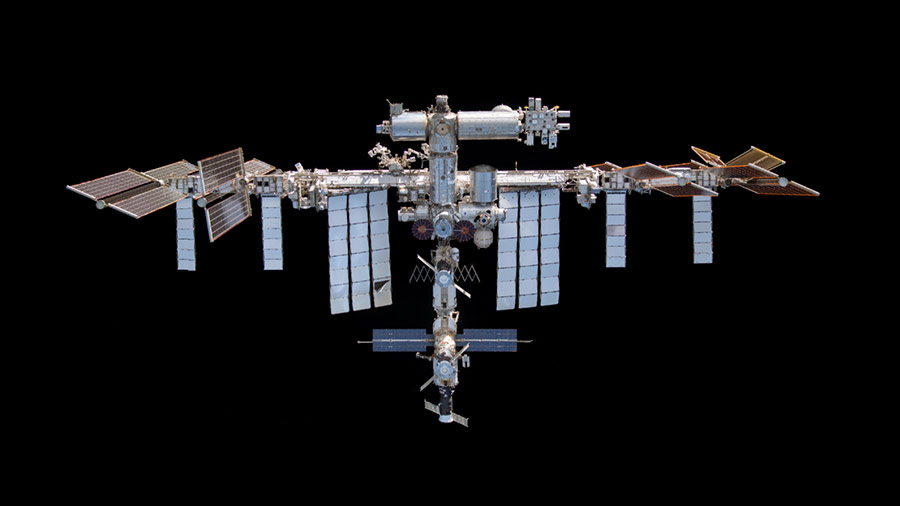
The space station is pictured from the SpaceX Dragon Endeavour during its departure and flyaround on Nov. 8, 2021.

The Expedition 71 crew members are relaxing today following the delay of Thursday’s spacewalk. Mission planners rescheduled the spacewalk for June 24 when two spacewalkers will remove faulty radio hardware and swab station surfaces for microorganisms. A second spacewalk to remove and replace a gyroscope assembly, relocate an antenna, and prepare for future Alpha Magnetic Spectrometer upgrades is planned for July 2. Meanwhile, the two Boeing Crew Flight Test astronauts from NASA continued vehicle testing.

NASA and Boeing will discuss Starliner’s mission and departure from the International Space Station as part of the agency’s Boeing Crew Flight Test in a pre-departure media teleconference at 12 p.m. EDT Tuesday, June 18. Butch Wilmore and Suni Williams, who have previously visited the orbital outpost, called down to Boeing mission controllers on Friday and discussed their upcoming departure. Afterward, the duo entered Starliner and reviewed the spacecraft’s flight operations and procedures.

Roscosmos’ Progress 87 resupply ship, docked to the Zvezda service module, will fire its engines late Friday night boosting the space station’s orbit. The reboost maneuvers occur regularly restoring the orbiting lab’s altitude as it degrades over time due to Earth’s gravity and atmospheric drag.

The three cosmonauts working aboard the space station stayed busy on Friday with their standard complement of space research and life support maintenance duties. Commander Oleg Kononenko and Flight Engineer Nikolai Chub wrapped their work shift with eye scans using a medical imaging device looking at the retina, optic nerve, and cornea. Flight Engineer Alexander worked throughout the day on computer maintenance, vent cleaning, and orbital plumbing.


Learn more about station activities by following the space station blog@space_station and @ISS_Research on X, as well as the ISS Facebook and ISS Instagram accounts.

Get weekly video highlights at: https://roundupreads.jsc.nasa.gov/videoupdate/

Get the latest from NASA delivered every week. Subscribe here: www.nasa.gov/subscribe

Powered by WPeMatico

Get The Details…

Mark Garcia

Hubble Captures a Cosmic Fossil

Hubble Captures a Cosmic Fossil

This NASA/ESA Hubble Space Telescope image features the globular cluster NGC 2005. It’s not an unusual globular cluster in and of itself, but it is a peculiarity when compared to its surroundings. NGC 2005 is located about 750 light-years from the heart of the Large Magellanic Cloud (LMC), which is the Milky Way’s largest satellite galaxy some 162,000 light-years from Earth.

Powered by WPeMatico

Get The Details…

NASA, Boeing to Discuss Starliner’s Mission

NASA, Boeing to Discuss Starliner’s Mission

Boeing’s Starliner spacecraft docked to the Harmony module of the International Space Station on the company’s Orbital Flight Test-2 mission (Credits: NASA)

NASA and Boeing will discuss Starliner’s mission and departure from the International Space Station as part of the agency’s Boeing Crew Flight Test in a pre-departure media teleconference at 12 p.m. EDT Tuesday, June 18.

NASA, Boeing, and station management teams will evaluate mission requirements and weather conditions at available landing locations in the southwestern U.S. before committing to the spacecraft’s departure from the orbiting laboratory.

Participants in the news conference include:

  • Steve Stich, manager, NASA’s Commercial Crew Program
  • Dana Weigel, manager, NASA’s International Space Station Program
  • Mike Lammers, flight director, NASA’s Johnson Space Center in Houston
  • Mark Nappi, vice president and program manager, Commercial Crew Program, Boeing

Media interested in participating must contact the NASA Johnson newsroom no later than 10 a.m., June 18, at 281-483-5111 or jsccommu@mail.nasa.gov. To ask questions, media must dial into the teleconference no later than 15 minutes before the start of the event.

Audio of the teleconference will stream live on NASA’s website at:

https://nasa.gov/nasatv

As part of NASA’s Commercial Crew Program, NASA astronauts Butch Wilmore and Suni Williams lifted off at 10:52 a.m., June 5, on a United Launch Alliance Atlas V rocket from Space Launch Complex-41 at Cape Canaveral Space Force Station in Florida on an end-to-end test of the Starliner system. The crew docked to the forward-facing port of the station’s Harmony module at 1:34 p.m., June 6.

For NASA’s blog and more information about the mission, visit:

https://www.nasa.gov/commercialcrew

-end-

Josh Finch / Jimi Russell / Claire O’Shea
Headquarters, Washington
202-358-1100
joshua.a.finch@nasa.gov / james.j.russell@nasa.gov / claire.a.o’shea@nasa.gov

Courtney Beasley / Leah Cheshier
Johnson Space Center, Houston
281-483-5111
courtney.m.beasley@nasa.gov / leah.d.cheshier@nasa.gov

Powered by WPeMatico

Get The Details…
Abbey A. Donaldson

NASA Announces Winners of 2024 Student Launch Competition

NASA Announces Winners of 2024 Student Launch Competition

4 min read

Preparations for Next Moonwalk Simulations Underway (and Underwater)

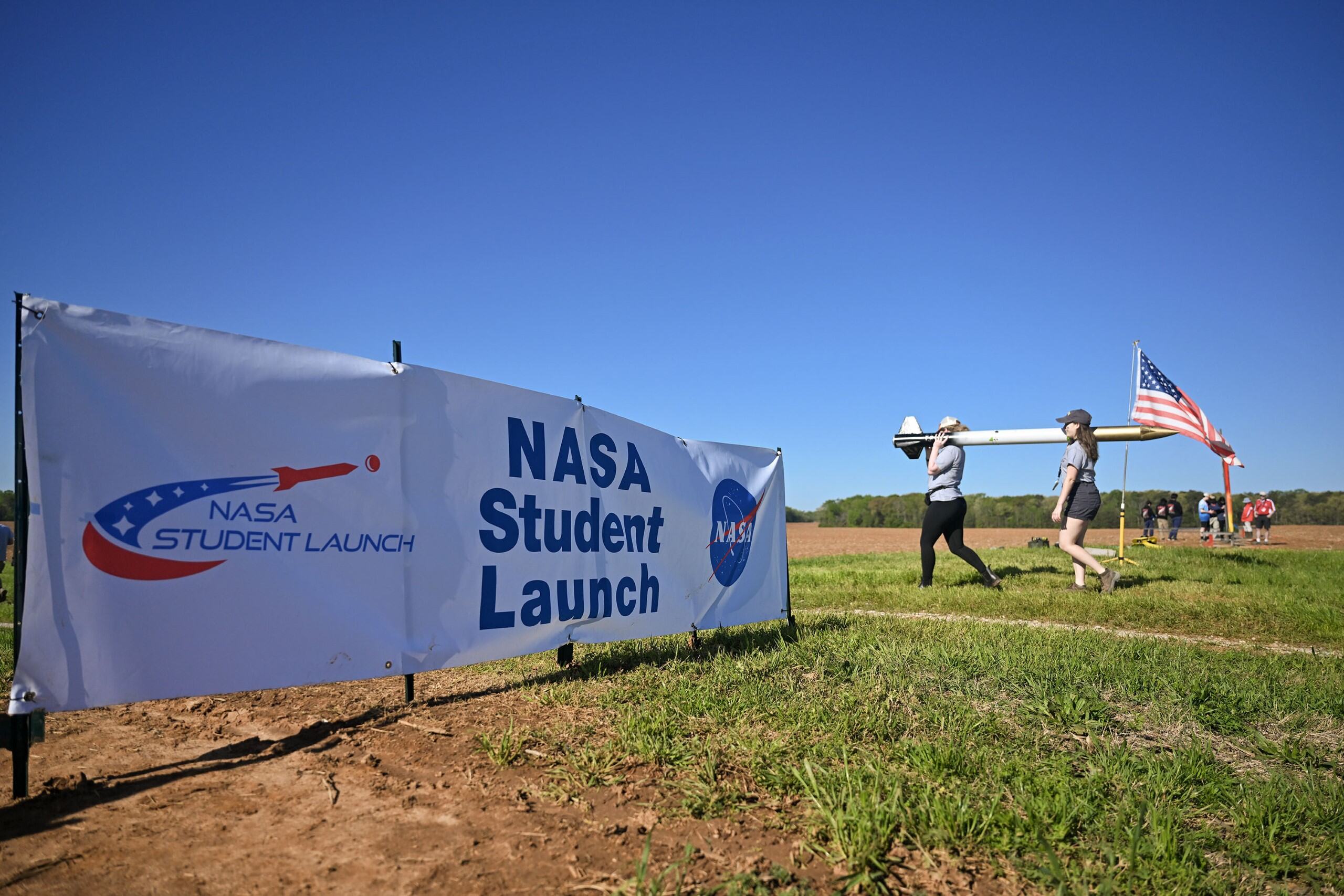
High school and collegiate student teams gathered just north of NASA’s Marshall Space Flight Center in Huntsville, Alabama, to participate in the agency’s annual Student Launch competition April 13.
Credits: NASA/Charles Beason

Over 1,000 students from across the U.S. and Puerto Rico launched high-powered, amateur rockets on April 13, just north of NASA’s Marshall Space Flight Center in Huntsville, Alabama, as part of the agency’s annual Student Launch competition.

Teams of middle school, high school, college, and university students were tasked to design, build, and launch a rocket and scientific payload to an altitude between 4,000 and 6,000 feet, while making a successful landing and executing a scientific or engineering payload mission.

“These bright students rise to a nine-month challenge that tests their skills in engineering, design, and teamwork,” said Kevin McGhaw, director of NASA’s Office of STEM Engagement Southeast Region. “They are the Artemis Generation, the future scientists, engineers, and innovators who will lead us into the future of space exploration.”

NASA announced the University of Notre Dame is the overall winner of the agency’s 2024 Student Launch challenge, followed by Iowa State University, and the University of North Carolina at Charlotte. A complete list challenge winners can be found on the agency’s student launch web page.

Each year NASA implements a new payload challenge to reflect relevant missions. This year’s payload challenge is inspired by the Artemis missions, which seek to land the first woman and first person of color on the Moon.

The complete list of award winners are as follows:

2024 Overall Winners

  • First place: University of Notre Dame, Indiana
  • Second place: Iowa State University, Ames
  • Third place: University of North Carolina at Charlotte

3D Printing Award:

College Level:

  • First place: University of Tennessee Chattanooga

Middle/High School Level:

  • First place: First Baptist Church of Manchester, Manchester, Connecticut

Altitude Award

College Level:

  • First place: Iowa State University, Ames

Middle/High School Level:

  • First place: Morris County 4-H, Califon, New Jersey

Best-Looking Rocket Award:

College Level:

  • First place: New York University, Brooklyn, New York

Middle/High School Level:

  • First place: Notre Dame Academy High School, Los Angeles

American Institute of Aeronautics and Astronautics Reusable Launch Vehicle Innovative Payload Award:

College Level:

  • First place: University of Colorado Boulder
  • Second place: Vanderbilt University, Nashville, Tennessee
  • Third place: Carnegie Mellon, Pittsburgh, Pennsylvania

Judge’s Choice Award:

Middle/High School Level:

  • First place: Cedar Falls High School, Cedar Falls, Iowa
  • Second place: Young Engineers in Action, LaPalma, California
  • Third place: First Baptist Church of Manchester, Manchester, Connecticut

Project Review Award:

College Level:

  • First place: University of Florida, Gainesville

AIAA Reusable Launch Vehicle Award:

College Level:

  • First place: University of Florida, Gainesville
  • Second place: University of North Carolina at Charlotte
  • Third place: University of Notre Dame, Indiana

AIAA Rookie Award:

College Level:

  • First place: University of Colorado Boulder

Safety Award:

College Level:

  • First place: University of Notre Dame, Indiana
  • Second place: University of Florida, Gainesville
  • Third place: University of North Carolina at Charlotte

Social Media Award:

College Level:

  • First place: University of Colorado Boulder

Middle/High School Level:

  • First place: Newark Memorial High School, Newark, California

STEM Engagement Award:

College Level:

  • First place: University of Notre Dame, Indiana
  • Second place: University of North Carolina at Charlotte
  • Third place: New York University, Brooklyn, New York

Middle/High School Level:

  • First place: Notre Dame Academy High School, Los Angeles, California
  • Second place: Cedar Falls High School, Cedar Falls, Iowa
  • Third place: Thomas Jefferson High School for Science and Technology, Alexandria, Virginia

Service Academy Award:

First place: United States Air Force Academy, USAF Academy, Colorado

Vehicle Design Award:

Middle/High School Level:

  • First place: First Baptist Church of Manchester, Manchester, Connecticut
  • Second place: Explorer Post 1010, Rockville, Maryland
  • Third place: Plantation High School, Plantation, Florida

Payload Design Award:

Middle/High School Level:

  • First place: Young Engineers in Action, LaPalma, California
  • Second place: Cedar Falls High School, Cedar Falls, Iowa
  • Third place: Spring Grove Area High School, Spring Grove, Pennsylvania

Student Launch is one of NASA’s nine Artemis Student Challenges, activities which connect student ingenuity with NASA’s work returning to the Moon under Artemis in preparation for human exploration of Mars.

The competition is managed by Marshall’s Office of STEM Engagement (OSTEM). Additional funding and support are provided by NASA’s OSTEM via the Next Gen STEM project, NASA’s Space Operations Mission Directorate, Northrup Grumman, National Space Club Huntsville, American Institute of Aeronautics and Astronautics, National Association of Rocketry, Relativity Space, and Bastion Technologies.

To watch the full virtual awards ceremony, please visit NASA Marshall’s YouTube channel.

For more information about Student Launch, visit:

https://www.nasa.gov/stem/studentlaunch/home/index.html

For more information about other NASA challenges, please visit:

https://stem.nasa.gov/artemis/

Taylor Goodwin
Marshall Space Flight Center, Huntsville, Ala.
256.544.0034 
taylor.goodwin@nasa.gov

Share

Details

Last Updated

Jun 14, 2024

Powered by WPeMatico

Get The Details…
Beth Ridgeway