NASA Invites Media to Northrop Grumman’s 21st Station Resupply Launch

NASA Invites Media to Northrop Grumman’s 21st Station Resupply Launch
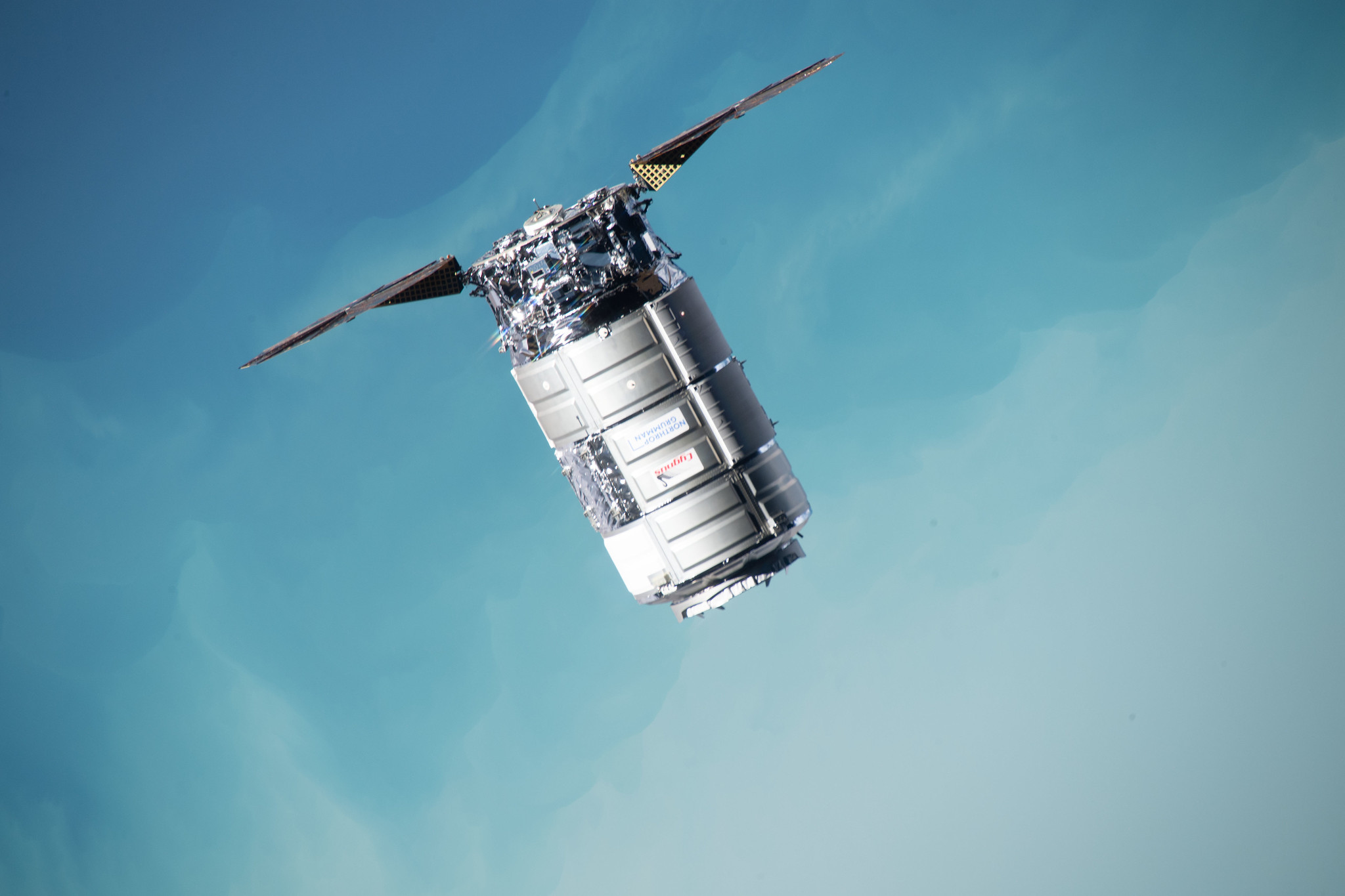
Northrop Grumman’s Cygnus spacecraft approaches the International Space Station. Cygnus will deliver science experiments, crew supplies, and station hardware (Credits: NASA).

Media accreditation is open for the next launch to deliver NASA science investigations, supplies, and equipment to the International Space Station. This launch is the 21st Northrop Grumman commercial resupply services mission to the orbital laboratory for the agency and will launch on a SpaceX Falcon 9 rocket.

NASA, Northrop Grumman, and SpaceX are targeting early August to launch the Cygnus spacecraft from Space Launch Complex 40 at Cape Canaveral Space Force Station in Florida.

Following launch, the space station’s Canadarm2 will grapple Cygnus and the spacecraft will attach to the Unity module’s Earth-facing port for cargo unloading.

Credentialing to cover prelaunch and launch activities is open to U.S. media. The application deadline for U.S. citizens is 11:59 p.m. EDT, Friday, July 19. All accreditation requests must be submitted online at:

https://media.ksc.nasa.gov

Credentialed media will receive a confirmation email upon approval. NASA’s media accreditation policy is available online. For questions about accreditation, or to request special logistical support, email: ksc-media-accreditat@mail.nasa.gov. For other questions, please contact NASA’s Kennedy Space Center newsroom at: 321-867-2468.

Para obtener información sobre cobertura en español en el Centro Espacial Kennedy o si desea solicitor entrevistas en español, comuníquese con Antonia Jaramillo o Messod Bendayan a: antonia.jaramillobotero@nasa.gov o messod.c.bendayan@nasa.gov.

Each resupply mission to the station delivers scientific investigations in the areas of biology and biotechnology, Earth and space science, physical sciences, and technology development and demonstrations. Cargo resupply from U.S. companies ensures a national capability to deliver scientific research to the space station, significantly increasing NASA’s ability to conduct new investigations aboard humanity’s laboratory in space.

In addition to food, supplies, and equipment for the crew, Cygnus will deliver research, including supplies for a new STEMonstration and several test articles to observe water flow in microgravity. Other investigations aboard include vascularized liver tissue and a bioreactor to demonstrate the production of blood and immune stem cells. Researchers will learn more about biomanufacturing in microgravity to create higher quality treatments for people on Earth.

NASA’s CubeSat Launch Initiative also is sending two CubeSats to deploy from the orbiting laboratory, CySat-1 from Iowa State Universityand DORA from Arizona State University, making up ELaNa 52 (Educational Launch of Nanosatellites).

Crews have occupied the space station continuously since November 2000. In that time, 280 people from 21 countries have visited the orbital outpost. The space station is a springboard to NASA’s next great leap in exploration, including future missions to the Moon under Artemis, and ultimately, human exploration of Mars.

Learn more about NASA’s commercial resupply missions at:

https://www.nasa.gov/station

-end-

Josh Finch / Claire O’Shea
Headquarters, Washington
202-358-1100
joshua.a.finch@nasa.gov / claire.a.o’shea@nasa.gov

Stephanie Plucinsky / Steven Siceloff / Danielle Sempsrott
Kennedy Space Center, Fla.
321-876-2468
stephanie.n.plucinsky@nasa.gov / steven.p.siceloff@nasa.gov / danielle.c.sempsrott@nasa.gov

Sandra Jones
Johnson Space Center, Houston
281-483-5111
sandra.p.jones@nasa.gov

Ellen Klicka
Northrop Grumman, Cygnus  
703-402-4404 
ellen.klicka@ngc.com 

Powered by WPeMatico

Get The Details…
Abbey A. Donaldson

Crews Wrap Week; Managers Provide Starliner, Spacewalk, and Cargo Updates

Crews Wrap Week; Managers Provide Starliner, Spacewalk, and Cargo Updates

The Starliner spacecraft on NASA's Boeing Crew Flight Test approaches the International Space Station while orbiting 263 miles above Quebec, Canada, on June 6.
The Starliner spacecraft on NASA’s Boeing Crew Flight Test approaches the International Space Station while orbiting 263 miles above Quebec, Canada, on June 6.

The Expedition 71 crew members packed a U.S. cargo craft, cleaned up the International Space Station, studied futuristic piloting techniques, and conducted eye exams on Friday. NASA’s Boeing Crew Flight Test astronauts spent the end of their workweek reconfiguring a space botany facility.

Robotics controllers are scheduled to detach the Cygnus space freighter from the Unity module on July 12 and release it into Earth orbit for disposal over the South Pacific Ocean ending a five-and-a-half-month mission at the orbital lab. NASA Flight Engineer Matthew Dominick spent most of Friday loading trash and discarded gear inside the Cygnus with assistance from fellow NASA astronauts Jeanette Epps and Tracy C. Dyson. Cygnus was captured by the Canadarm2 robotic arm on Feb. 1 with over 8,200 pounds of science experiments and crew supplies.

At the end of the day, Epps operated standard medical imaging gear found in an optometrist’s office on Earth and peered into Dyson’s eyes. She examined Dyson’s cornea, retina, and lens to help flight surgeons understand and counteract microgravity’s effect on crew vision.

Earlier, Dyson collected and stowed excess space station hardware for disposal. Epps spent her morning inside the Kibo laboratory module troubleshooting an airflow sensor then reorganizing the JAXA (Japan Aerospace Exploration Agency) module for upcoming cargo operations.

NASA Flight Engineer Mike Barratt started his day routing cables and reprogramming communications systems inside the Columbus laboratory module. In the afternoon, he stowed hardware and components used earlier in the week for advanced orbital plumbing in the Tranquility module’s bathroom. Afterward, Barratt refilled supply kits in Columbus’ two Human Research Facility racks with biomedical gear including sample tubes and needles.

Starliner’s Commander and Pilot, Butch Wilmore and Suni Williams, partnered together inside Kibo on Friday for space botany work. The duo removed the Plant Habitat growth chamber from Kibo’s EXPRESS rack, replaced its camera and carbon dioxide sensors, then reinstalled the research device. The Plant Habitat has enabled the growth of small crops of lettuce, tomatoes, and more in microgravity for both research and consumption.

NASA and Boeing continue to evaluate Starliner’s propulsion system performance before returning to Earth from the orbiting lab. NASA and Boeing leaders participated in a media teleconference today to discuss Starliner and station operations.

NASA is now targeting the end of July for the next spacewalk outside the space station. This change allows teams on the ground to continue to troubleshoot and understand the water leak in the service and cooling umbilical unit that forced an early end to a spacewalk on Monday, June 24.

Working in the Roscosmos segment, Flight Engineer Nikolai Chub started his day practicing planetary spacecraft and robotic piloting techniques future crew members may use. Afterward, he conducted two sessions of an investigation exploring ways to create new materials on the lunar surface. Flight Engineer Alexander Grebenkin worked throughout the day inventorying medical kits and cleaning fans inside the Rassvet module. Finally, Station Commander Oleg Kononenko replaced thermal components inside Roscosmos’ life support hardware.


Learn more about station activities by following the space station blog@space_station and @ISS_Research on X, as well as the ISS Facebook and ISS Instagram accounts.

Get weekly video highlights at: https://roundupreads.jsc.nasa.gov/videoupdate/

Get the latest from NASA delivered every week. Subscribe here: www.nasa.gov/subscribe

Powered by WPeMatico

Get The Details…

Mark Garcia

NASA Awards Contract for Infrared Telescope Facility Operations

NASA Awards Contract for Infrared Telescope Facility Operations

Credits: NASA

NASA has selected the University of Hawaii in Honolulu to maintain and operate the agency’s Infrared Telescope Facility (IRTF) on Mauna Kea in Hilo, Hawaii.

The Management and Operations of NASA’s IRTF is a hybrid firm-fixed-price contract with an indefinite-delivery/indefinite-quantity provision. The contract has a maximum potential value of approximately $85.5 million, with a base period of performance from Monday, July 1 to June 30, 2025. Nine optional periods, if exercised, would extend the contract through Dec. 31, 2033.

Under this contract, the University of Hawaii will provide maintenance and operation services for NASA at the telescope facility. The university will also develop and implement an operations strategy so that the facility can be used by the scientific community through peer-reviewed competition to assist NASA in achieving its goals in scientific discovery, mission support, and planetary defense.

For information about NASA and agency programs, visit:

https://www.nasa.gov

-end-

Tiernan Doyle
Headquarters, Washington
202-358-1600
tiernan.doyle@nasa.gov

Share

Details

Last Updated

Jun 28, 2024

Powered by WPeMatico

Get The Details…
Tiernan P. Doyle

NASA Announces Winners of Inaugural Human Lander Challenge

NASA Announces Winners of Inaugural Human Lander Challenge

4 Min Read

NASA Announces Winners of Inaugural Human Lander Challenge

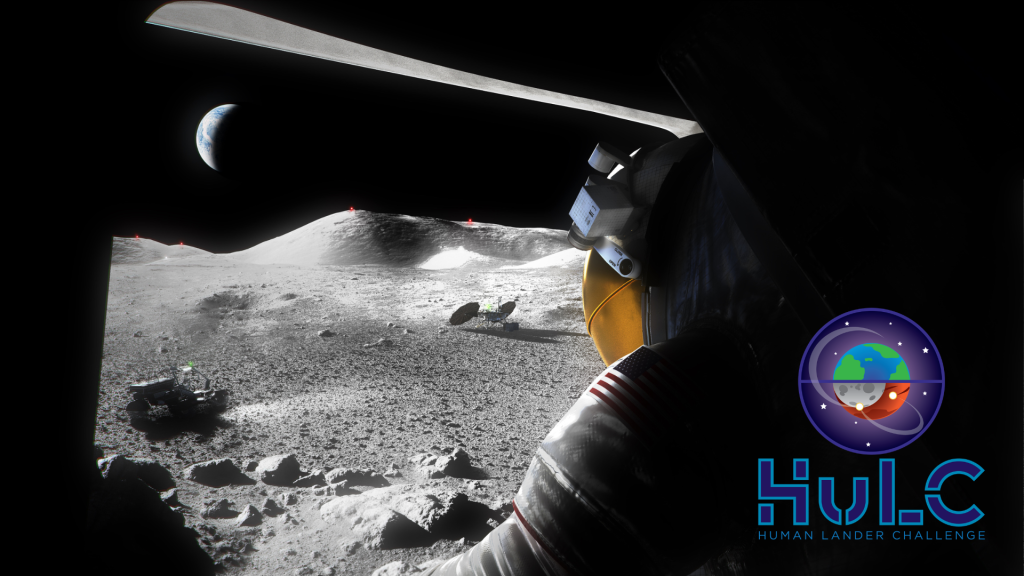
Human Lander Challenge banner

NASA’s 2024 Human Lander Challenge (HuLC) Forum brought 12 university teams from across the United States to Huntsville, Alabama, near the agency’s Marshall Space Flight Center, to showcase their innovative concepts for addressing the complex issue of managing lunar dust. The 12 finalists, selected in March 2024, presented their final presentations to a panel of NASA and industry experts from NASA’s Human Landing Systems Program at the HuLC Forum in Huntsville June 25-27.

NASA’s lunar exploration campaign Artemis is working to send the first woman, first person of color, and first international partner astronaut to the Moon and establish long-term lunar science and exploration capabilities. Dust mitigation during landing is one of the key challenges NASA and its Artemis partners will have to address in exploring the lunar South Pole region and establishing a long-term human presence on the Moon. Participants in the 2024 Human Lander Challenge developed proposed systems-level solutions that could be potentially implemented within the next 3-5 years to manage or prevent clouds of dust – called lunar plume surface interaction – that form as a spacecraft touches down on the Moon.

NASA announced the University of Michigan team, with their project titled, “ARC-LIGHT: Algorithm for Robust Characterization of Lunar Surface Imaging for Ground Hazards and Trajectory” as the selected overall winner and recipient of a $10,000 award June 27.

12 university teams gathered in Huntsville, Alabama, near NASA’s Marshall Space Flight Center, June 25-27 to participate in the final round of NASA’s 2024 Human Lander Challenge (HuLC) Forum.
NASA/Ken Hall

The University of Illinois, Urbana-Champaign took second place and a $5,000 award with their project, HINDER: Holistic Integration of Navigational Dynamics for Erosion Reduction,” followed by University of Colorado Boulder for their project, “Lunar Surface Assessment Tool (LSAT): A Simulation of Lunar Dust Dynamics for Risk Analysis,” and a $3,000 award.

“Managing and reducing the threat of lunar dust is a formidable challenge to NASA and we are committed to real solutions for our long long-term presence on the Moon’s surface,” said Don Krupp, associate program manager for the HLS Program at Marshall. “A key part of NASA’s mission is to build the next generation of explorers and expand our partnerships across commercial industry and the academic community to advance HLS technologies, concepts, and approaches. The Human Lander Challenge is a great example of our unique partnership with the academic community as they help provide innovative and real solutions to the unique risks and challenges of returning to the Moon.”

Two teams received the excellence in systems engineering award:

  • Texas A&M University, “Synthetic Orbital Landing Area for Crater Elimination (SOLACE)
  • Embry-Riddle Aeronautical University, Prescott, “Plume Additive for Reducing Surface Ejecta and Cratering (PARSEC)
NASA selected the University of Michigan as the overall winner of NASA’s 2024 Human Lander Challenge (HuLC) Forum June 27.
NASA/Ken Hall

“The caliber of solutions presented by the finalist teams to address the challenges of lunar-plume surface interaction is truly commendable,” said Esther Lee, HuLC judging panel chair and aerospace engineer at NASA’s Langley Research Center in Hampton, Virginia. “Witnessing the development of these concepts is an exciting glimpse into the promising future of aerospace leadership. It’s inspiring to see so many brilliant minds coming together to solve the challenges of lunar landings and exploration. We may all come from different educational backgrounds, but our shared passion for space unites us.”

Student and faculty advisor participants had the opportunity to network and interact with NASA and industry subject matter experts who are actively working on NASA’s Human Landing System capabilities giving participants a unique insight to careers and operations that further the Agency’s mission of human space exploration.

NASA’s Human Lander Challenge is sponsored by Human Landing System Program and managed by the National Institute of Aerospace

For more information about NASA Exploration Systems Development Mission Directorate, please visit:

https://www.nasa.gov/exploration-systems-development-mission-directorate/

News Media Contact

Corinne Beckinger 
Marshall Space Flight Center, Huntsville, Ala. 
256.544.0034  
corinne.m.beckinger@nasa.gov 

Powered by WPeMatico

Get The Details…
Lee Mohon

The Maze is Afoot

The Maze is Afoot

A black and white image of a circular labyrinth. A silhouette of Sherlock Holmes holding a magnifying glass is at the center of the labyrinth.
NASA/JPL-Caltech

This labyrinth – with a silhouette of the fictional detective Sherlock Holmes at its center – is used as a calibration target for the cameras and laser that are part of SHERLOC (Scanning Habitable Environments with Raman & Luminescence for Organics and Chemicals), one of the instruments aboard NASA’s Perseverance Mars rover. The image was captured by the Autofocus and Context Imager on SHERLOC on May 11, 2024, as the rover team sought to confirm it had successfully addressed an issue with a stuck lens cover.

The Perseverance rover searches for signs of ancient microbial life, to advance NASA’s quest to explore the past habitability of Mars. The rover is collecting core samples of Martian rock and soil (broken rock and soil), for potential pickup by a future mission that would bring them to Earth for detailed study.

Image Credit: NASA/JPL-Caltech

Powered by WPeMatico

Get The Details…
Monika Luabeya