Interview with Xinchuan Huang
Let’s start with your childhood, where you were born, where you’re from, your young years, your family at the time, what your parents did, and how early it was in your life that you decided you’d like to pursue a career like the one you’re pursuing now?
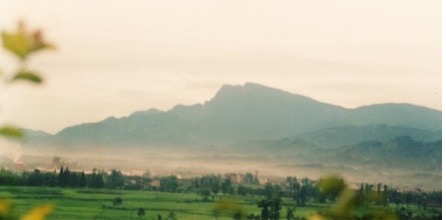
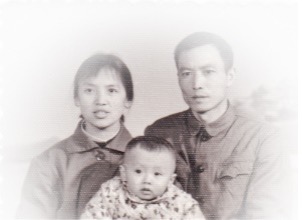
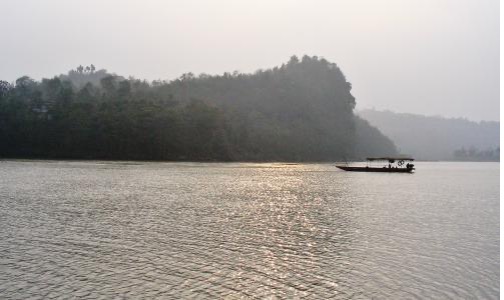
I was born in a small town in Sichuan, China. It is not far from the famous Emei Mountain, and the beautiful Qingyi river runs through it. At the beginning, I lived with my grandmother’s family in a small village on the riverbank, called “Pond in heaven”. After I left there at four years old, I lived with my parents in Sichuan and Xinjiang provinces, alternatively, as my parents had been working apart. Luckily their reunion came after three years, and finally there was a real “home” for us. My parents were both high school teachers, they worked in the school system opened by a research institute for the children of their employees. It has elementary schools, middle schools, and high schools. That’s where I grew up and received my pre-college education.
Since I was young, my mother has taught me enlightenment and urged my study. While my father was not quite involved in my academics, he valued the importance of reading and cultivated my interest in books. Every time we walked into a bookstore together, I was just purely happy because it simply meant one or two new books were coming home with me. He encouraged me to keep expanding my knowledge and horizons by also subscribing to many educational magazines and newspapers for kids, among which I remember two of my most favorite magazines. Before elementary school it was the “Children’s Science Pictorial”, and in elementary school it was the “Youth Science”. Those magazines started and nurtured my interest in science and the universe.
In middle school, there was an advertisement for a simple and cheap monocular telescope. I told my dad about it and he helped me order one, even though all it could show was the craters on the moon. But I was so excited, I could lay on the cold ground, watching the moon for hours, as if a new world was unfolding in front of me. Seeing how much I enjoyed it, my father later ordered for me the astronomy volume of the Chinese Encyclopedia. It cost 20 Yuan, which was not a small amount at that time. I was so thrilled to have the book. Holding that hardcover book, I felt that I was holding the universe in my arms.
I can imagine!
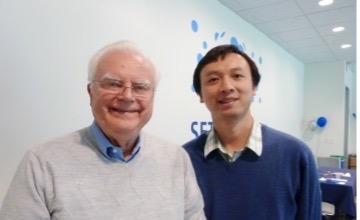
But most contents in that encyclopedia were still too advanced for me at the time, so I was more obsessed with the colorful photos in the book. Along with my interest in space and the universe, I was also interested in the topics of UFOs and extraterrestrial civilizations. For example, I read a book called “The Mystery of Flying Saucers”, which was a collection of reports and discussions translated from French. In that book, it mentioned the Drake equation for estimating the likelihood of civilizations in the universe. It deeply impressed me. In 2009, after my postdoc at Ames, I had an opportunity to meet with Dr. Drake. He’s the author of the equation and the founder of the SETI Institute. I must say that not everyone has the opportunity or the luck to meet an idol from their childhood and truly chat with him.
Good luck indeed!
However, when I told Dr. Drake that my first time reading about his equation was in a book of UFOs, he laughed and said “(it) was in a wrong story!” (laughs)
When I graduated from high school, I did consider a major in astronomy, but there were very few undergraduate astronomy majors in China universities. The only few available that year were either not recruiting in Sichuan or in a city I didn’t like. The famous Peking University did have astrophysics major, but each year they only recruited about 10 undergraduate students from the whole country, and few from Sichuan. Otherwise, I could have enrolled there thirty years ago.
Any idea why they didn’t place more emphasis on astronomy? China, as you know, has a strong reputation in space exploration.
There is tradition for astronomy in China, and people know of ancient records and scientists, but it likely wasn’t the focus at that time. The astronomy and astrophysics research of Peking university and other China institutions have expanded significantly in last 30 years.
That’s for sure.
Anyway, I was admitted to the Fudan University in Shanghai, to major in Applied Chemistry II. That’s an interesting name. Usually you see chemistry, applied chemistry, materials chemistry, etc. What does the “II” mean? Previously, it was the Radiochemistry major, but people adjusted its content to keep up with the growth of economy, and to make it easier for their students to find jobs. There was already a major of “Applied Chemistry” in the Chemistry department, so it became “Applied Chemistry II”. My undergraduate thesis was done in the Institute of Laser Chemistry at Fudan, on the UV dissociation of a small organic molecule under cryogenic matrix isolation conditions.
Well, you certainly were well served by both your parents, as they helped direct your focus and your education. I also looked it up because I had not remembered that you came to Ames as a postdoc when I was associated with the NPP program as the Ames representative.
Yes.
I don’t remember all of them of course as there were quite a few over that period of time, but I hope that was a good experience for you. You were working with Tim Lee as your advisor and I’d known him for a very long time.
I appreciated and enjoyed the opportunity of doing my postdoc at Ames. I had been thinking of other career choices right before Tim sent an email to Joel (my PhD advisor) asking if there was any student suited for a research project at Ames, about ammonia’s Infrared spectrum calculations. The target was to generate a complete IR line list which people can utilize to characterize the NH3 related celestial environments and eliminate all the NH3 features from the astronomical observations, such as those in Titan’s atmosphere. It was a very good match to my Ph.D. background on the potential energy surface and vibrational dynamics of water cluster ions.
You had another postdoc before you came to Ames? At Emory University?
Yes, that was more like a one-year extension after the thesis defense, to finish up my Ph.D. projects.
How did you get from China to the United States? Was it because of your educational pursuits?
During my undergraduate study, I had some interest in laser chemistry and spectroscopy. For example, photodissociation products were detected and characterized by their infrared spectrum, and we know the spectroscopic fingerprints of molecules are determined by their nature, or internal properties. After college, I became a graduate student at the Institute of Chemistry, Chinese Academy of Science, in Beijing. Supposedly I should learn how to use a femtosecond laser system to investigate some ultra-fast processes in chemical reactions, but my supervisor left the institute unexpectedly.
So, I applied to some graduate programs in United States, and later enrolled in the chemistry department of Emory University in Atlanta. The admission could be related to my background in laser chemistry labs, but I didn’t continue that path. Instead, I changed to theoretical chemistry and vibrational dynamics studies. But I always admired our colleague experimental spectroscopists working in the laboratories, perhaps because I have myself witnessed how difficult an experimental study could become. It may include sample preparation, optical path platform construction, vacuum pumps, laser tuning, circuit of detectors, hardware interface and software development, etc., so requiring a variety of knowledge and skills from chemistry, physics, to mechanics, electronics, and even materials and computer science. Compared to that, it is relatively simpler to do theoretical spectroscopic studies. But from our perspective, our work still belongs to the laboratory astrophysics. Our lab is set up inside computers, and our equipment and devices are computing programs and algorithms.
Did you come to Emory because of a connection or a contact with them? Or did they just have a good program in what you were studying?
I applied to several graduate programs in the US, and received admissions including Emory, but I had no connections with them before. I chose the physical chemistry graduate program at Emory, for their reputation in both experimental and theoretical research.
So, you applied to several programs and you chose and got admitted to Emory. And then what was your route to Ames? Was it your postdoc? You got a postdoc here and then you stayed?
Yes.
That’s very straightforward.
Straight and simple.
Did you know Tim at all beforehand? From a conference or something like that?
Not personally, except that he was an expert in Coupled Cluster theory. After Tim contacted my advisor in the summer of 2005, I met him later that year in the ACS meeting at D.C.
You were going to tell us something about the work that you are doing, which I found very complicated. It had to do with something called a “potential energy surface” and some other things which I don’t even know what they are, but let’s go ahead because one of the reasons we asked this question is because we want to know why it is important enough that taxpayers should fund research into it.
Our research focuses on the Infrared and microwave spectrum ranges, provides high quality spectroscopic constants, or highly accurate Infrared line list predictions for small molecules in outer space. Those molecules play important roles in the interstellar medium, atmospheres of solar system objects, like Venus and Titan, and atmospheres of brown dwarfs and exoplanets. The IR spectroscopic constants and line lists will facilitate the detection of those molecules, help characterize the physical conditions of related environments, determine column densities or atmospheric concentrations, and improve the chemistry evolution models. Since a large part of the astronomical research involves spectrum data analysis and modeling, naturally more reliable and more accurate reference data will be needed to better support NASA strategic goals, help maximize the scientific output of various NASA missions, and eventually help us better understand what’s going on in the universe.
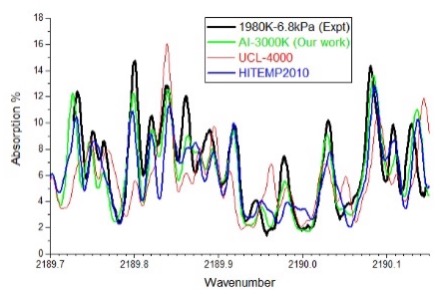
In the last two decades, the generation of more accurate reference data and predictions has required us to combine the advantages of experiments and theories. Our colleagues in Europe adopted similar strategies. For example, the latest Infrared line list we computed for hot carbon dioxide up to 3000 K has several components: high quality ab initio potential energy surface refined using reliable, high resolution experimental data or models, and the best dipole moment surfaces with accuracy already verified by recent highly accurate experiment IR intensities, and the most accurate line positions from the experiment based effective Hamiltonian models. In this way, the spectral line position and intensity accuracy from existing experiment data are integrated with the completeness, reliability and consistency from theoretical predictions. We hope the line list can improve the accuracy of CO2 analysis and modeling for brown dwarf and hot exoplanet atmospheres, which include, but not limited to the recent CO2 discoveries that JWST made on exoplanets.
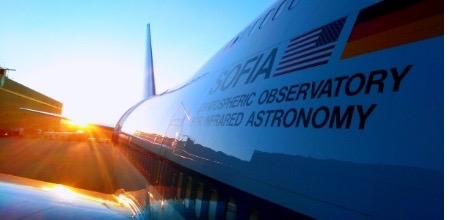
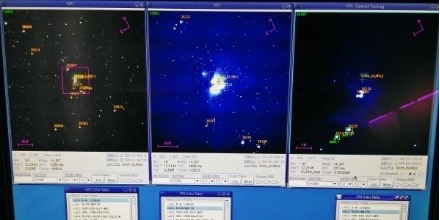
On the other hand, like I mentioned earlier, some molecules, like methyl cyanide, SO2, and ammonia, generate a plethora of spectral lines, appearing like wild grasses. That’s why some molecules were called “weeds”. They’re the “weeds” in the field of spectrum and may overshadow other important signals. Once I looked at a small segment of SOFIA EXES spectrum at 20 mm. Although I already knew it contained hundreds of sulfur dioxide bending mode transitions, I did not expect that so many very weak oscillations and tiny bumps in the observed spectrum could be excellently explained and reproduced until I ran the simulations by myself using SO2 line lists. Without a reliable and complete line list, many weak features may go unnoticed and treated as noises. But when you have a good line list, you can identify all the features of a specific molecule, then try to remove them, like removing weeds, so more interesting features or molecules can be found. We may call them the “flowers”. From this angle, we are like farmers in the spectroscopy field, or treasure hunters in the jungle of spectrum.
That’s a good way of putting it. And this leads to a greater understanding of what elements of the NASA mission? How does this fit in with what NASA is trying to accomplish, which could be just exploration, or the search for life, or some of the other great questions that NASA is trying to help answer?
There are several potential impacts from the basic scientific research we have been doing. One is to identify those molecules for their existence in the universe, where they are, and how many they are. Second is to figure out what their environment looks like, e.g., the pressure and temperature. An accurate reference line list can help to extract that information from observed spectrum data. The third impact is about some potential biosignature molecules for habitable exoplanets. Like the one we worked on recently, the nitrous oxide or laughing gas, N2O, it is one of those molecules contributing to the transit spectrum of Earth. Another impact is on chemical evolution models. Because our reliable predictions have very high consistency across isotopologues, higher than experiments, we can help to determine more accurate isotopic ratios and evolution history in outer space. In summary, and in the larger picture, we are contributing to the exploration of the universe and the search for habitable planets by providing basic reference data and tools for all NASA missions related to Infrared astronomy, from past Herschel, SOFIA, to JWST, and future ARIEL and other missions.
You mentioned biosignatures, which caught my attention because we’re hoping to find some evidence that we’re not alone in the universe, that there is other biology going on somewhere out there. Almost all of our research focuses on trying to address that, at some level. And it has a lot of popular support, taxpayer support, because they want the answer to that question perhaps most of all.
The IR spectra based astronomical research involves many models and datasets from different sources, like the spectra modeling on the JWST observations of exoplanet atmospheres. Every piece of work has its own uncertainties, which will add up model by model, database by database. A recent study published in Nature Astronomy revealed that the abundance errors resulting from the opacity inaccuracies can be about one order of magnitude larger than those brought on from JWST-quality observations. This is a bottleneck. From this perspective, our study can help to reduce, or to minimize those uncertainties and errors associated with the opacity data. Compared to experimental measurements under certain conditions, we are trying to provide a complete picture for molecules in the full range of IR and MW spectra. The computed line lists can be used to generate more reliable opacity data at different target temperatures. Having more accurate opacity data with uncertainty reduced or minimized, scientists can determine more accurate properties for exoplanets and other objects in the universe.
Have there been any surprising or breakthrough findings or discoveries or something not expected that has come from your work?
Not expected? Let me think. We should be careful about the claims on the strengths and limitations of our work. On one side we should have enough confidence, but every molecule is unique, we also need to properly estimate the limitation of our line list predictions. With the synergy between experimental data and high-quality theoretical calculations, many improvements actually can be expected. If we know clearly what we can do and what our limits are, they are not real surprises. Some predictions may look surprising, but they need verifications from future experiments. If verified, the agreement is still expected. If rejected, it means something we need to explain or fix, not real breakthrough or findings.
If we really want to talk about “surprises”, I can name two kinds of them. One is that we find surprisingly good agreement or high accuracy verification between predictions and experiments. For example, our room temperature CO2 line list. The IR intensity agreement with the best experiment measurement has reached the level of sub-half percent, for both accuracy and uncertainty, and towards 0.1 %, or permille level, 1‰. It was the best level ever achieved for CO2. That’s kind of a surprise because we were targeting a major upgrade, we knew we were doing better, but we didn’t know the improvements would be so good. That is a good surprise, but there could also be an opposite kind of surprise: a similar molecule or band, similar studies following the same track, so we had assumed it should come out as satisfactory as other molecules or bands, but it did not work out. Then we must figure out what’s going on, what we forgot or missed, or what’s the difference. For example, is that due to some unknown electronic state interference, sensitive resonances, potential defects in potential energy surface, or program bugs, etc.?
That is the science part of it.
Those are really the surprises.
You’re a very impressive and accomplished NASA research scientist, that’s obvious. And you’ve pursued that from youth, really, that line of work. Have you ever given any thought to, if you weren’t doing what you’re doing now, is there another dream job that you might like to have pursued if you had gone another way?
When people talk about a dream job, it usually means something that cannot be realized, except in our dreams. Maybe a contractor scientist without the need to worry about funding?
But still a scientist? OK, that’s good too. But what things would interest you if you couldn’t be a research scientist anymore? This is just to get into your personality and find out more about you.
Oh, if I forget the astronomer or scientist dream from childhood? My dream job has changed several times. Right now, I think it would be interesting to be a local tourist guide.
It would indeed. I like that.
It is also good for me, not only helps to get familiar with my neighborhood, community, the natural environment, but also gives me some good exercise! (laughs)
Right!
What advice might you give to a young aspiring student who would like to have a career like yours?
When I graduated from high school and went to Fudan University to study chemistry, I had never thought that one day I could still have the opportunity to work for NASA and become a scientist at SETI, Search for Extraterrestrial Intelligence Institute. I also met Dr. Drake and talked to him. In a way this was already infinitely close to my childhood dreams. In this life, I could not become a real astronomer, the most I can do is some basic and auxiliary research work in the field of astrochemistry and theoretical spectroscopy. But looking back from my childhood and my college, I can’t help thinking of a phrase that I read from Steve Jobs, the Apple founder. What he said was something like: “many seemingly unrelated and even useless points in your life may someday eventually connect together to form a path to your dreams. Every piece of past experience will have its meaning and function and role in your career. It Is only then that we can realize their meaning and their role”. This statement roughly applies to me, though of course my experience has been much simpler.
I like that quote because we don’t always realize as we’re living and moving forward, the significance of various things that happen. Something that’s just a coincidence can have quite an impact on one’s life or direction.
Yes. The universe is infinite, and all the Earth’s science and technology can be found useful in space explorations, sooner or later. If you are interested in the universe, in space sciences, but at the moment you cannot see how your specialty skills or major can be connected to space, don’t worry and don’t give up. Work hard on what you are doing now, whether it’s learning, research, or work, so that when the opportunity comes, you will be ready.
My second piece of advice was borrowed from Professor Yuan-Tseh Lee, a Nobel Prize winner in Chemistry. About 20 years ago I met him at a conference. At that time, people were talking about innovations everywhere, but I could not find out how to innovate at all, no matter where I looked, so I asked him for advice. Professor Lee said innovation is not like that; innovation comes from years of continuous accumulation and improvements. He said first you need to get very familiar with what you have at hand, get to the bottom, fully understand principles and techniques of what you are doing, and then try to make improvements. There is always room for improvements, and even a tiny improvement will count and will help. Keep improving, a little bit here, a little bit there. Over time, this will eventually lead to real innovation and breakthroughs. My understanding or take away from his replies, is just like the ancient Chinese saying: “No accumulation of steps, no distance to thousands of miles; no accumulation of small streams, there will be no rivers and seas.” That’s it.
Very good answer, thought provoking and true. Thank you for sharing that. Would you like to tell us anything about your family? Are you married? Do you have children?
Yeah, I’m married, and my wife was also from the Chemistry Department of Emory. But she works in the field of organic chemistry, which I could never figure out since my college years. (laughs) And we have two daughters, one in elementary school and the older one in high school. Our daily lives are kind of routine. Like driving the kids to school, back home doing my work, sometimes accompanying kids doing their homework, taking them to extra-curricular activities, cooking, etc.
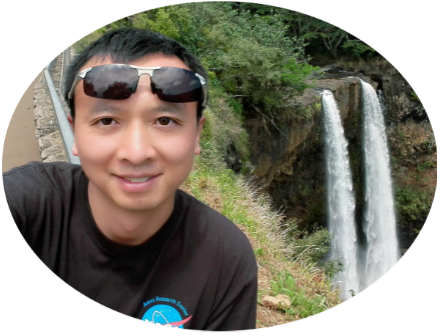
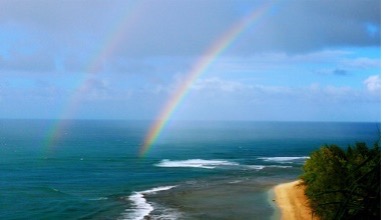
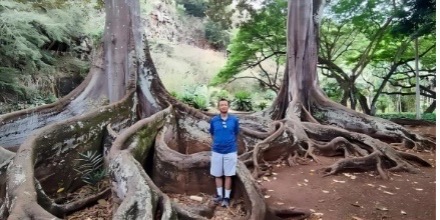
We have a favorite travel destination, the Kauai Island in Hawai’i. Our first visit to Kauai was in 2007, and we really, really like it. I went there more often than my family: I have been there seven times! (laughs) I enjoyed looking out to the west of Pacific Ocean at the end of the Waimea canyon and walking on the Ke’e beach at the east end of the Na Pali Trail. If there is a chance, I may think about living there after retirement.
You could do worse than that! In fact, that might be the answer to the next question, which is: with all your work and family responsibilities, and everything that you are involved in, what do you do for fun?
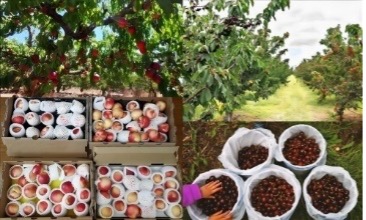
My interests include reading, like history, literature, and sci-fi books. I like sci-fi fictions and TV shows, such as “The Expanse” series, “The Peripheral” from last year, and the “Three-Body” TV series from China. For fun, I like Chinese Crosstalk, which is a comic dialogue between two people. Every year I also like to pick cherries and nectarines from farms in Brentwood.
Because I use my phone or camera like a recorder, I took too many photos here and there, far more than truly memorable moments. Those photos are a big headache when compiling a family yearbook. After our first child was born, it’s great fun to make annual photobooks for each year.
It’s wonderful that you do that. That will pay dividends in the future, for sure.
Before the pandemic, I also liked to have lunch together with a few colleagues every couple of weeks in some Chinese restaurants nearby, and most of the time we order spicy Chinese food.
You like that? I like that too, although not too spicy! What has been a prime inspiration for you in your life? Something that motivated you to accomplish all that you’ve accomplished so far. Is there a person that you particularly liked? Drake, for example, and his work, that helped to inspire you going forward?
A major motivation has been my curiosity about nature and stars. For inspirational figures, there were many – yes, Dr. Drake was one, because his work inspired people to think more seriously about the relation between life and the universe, and motivated me to make my own contributions. There was also inspiration from Professor Lee. After he won the chemistry Nobel Prize in 1986, there was a lot of laser chemistry related research going on in China. That’s what inspired me too, and why I asked him for advice.
This has been wonderful. I’ve learned a lot about you and that is the whole purpose of this series. Thank you very much. We’ve enjoyed chatting with you.
Thank you. It is great to have this opportunity to chat with you, I enjoyed it too.
Powered by WPeMatico
Get The Details…
Ciara C. Fitzpatrick