Volunteer Crew to Exit NASA’s Simulated Mars Habitat After 378 Days
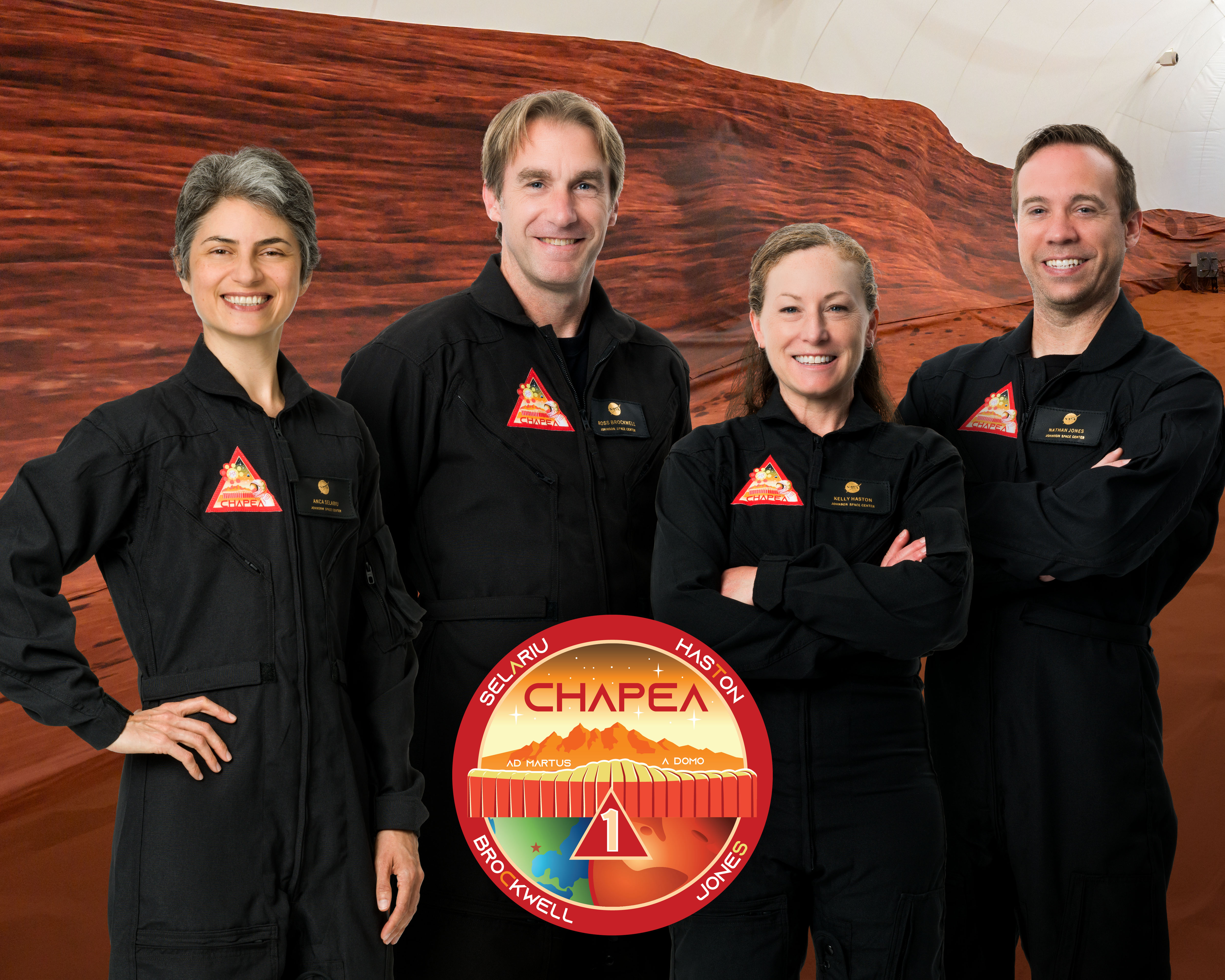
The first CHAPEA mission crew members who have been living and working inside NASA’s first simulated yearlong Mars habitat mission are set to exit their ground-based home on Saturday, July 6.
The four volunteers who have been living and working inside NASA’s first simulated yearlong Mars habitat mission are set to exit their ground-based home on Saturday, July 6. NASA will provide live coverage of the crew’s exit from the habitat at NASA’s Johnson Space Center in Houston at 5 p.m. EDT.
NASA will stream the activity, which will include a short welcome ceremony, on NASA+, NASA Television, the NASA app, the agency’s website, and NASA Johnson’s X and Facebook accounts. Learn how to stream NASA TV through a variety of platforms, including social media.
The first Crew Health and Performance Exploration Analog (CHAPEA) mission began in the 3D printed habitat on June 25, 2023, with crew members Kelly Haston, Anca Selariu, Ross Brockwell, and Nathan Jones. For more than a year, the crew simulated Mars mission operations, including “Marswalks,” grew and harvested several vegetables to supplement their shelf-stable food, maintained their equipment and habitat, and operated under additional stressors a Mars crew will experience, including communication delays with Earth, resource limitations, and isolation.
In addition to the CHAPEA crew, participants include:
Steve Koerner, deputy director, NASA Johnson
Kjell Lindgren, NASA astronaut and deputy director, Flight Operations
Grace Douglas, principal investigator, CHAPEA
Judy Hayes, chief science officer, Human Health and Performance Directorate
Julie Kramer White, director of engineering
Due to facility limitations and crew quarantine requirements, NASA is unable to accommodate requests to attend the event in person. Media interested in speaking with the mission’s crew members in the days following the conclusion of their mission must send a request by 4 p.m. July 6, to the Johnson newsroom at 281-483-5111 or jsccommu@nasa.gov.
NASA is leading a return to the Moon for long-term science and exploration through the Artemis campaign. Lessons learned on and around the Moon will prepare NASA for the next giant leap – sending the first astronauts to Mars.
NASA Awards Launch Services Contract for Space Telescope Mission
Credits: NASA
NASA has selected Space Exploration Technologies Corporation (SpaceX) of Hawthorne, California, to provide launch services for the COSI (Compton Spectrometer and Imager) mission.
The firm-fixed-price contract has a value of approximately $69 million, which includes launch services and other mission related costs. The COSI mission currently is targeted to launch August 2027 on a SpaceX Falcon 9 rocket from Cape Canaveral Space Force Station.
This wide-field gamma-ray telescope will study energetic phenomena in the Milky Way and beyond, including the creation and destruction of matter and antimatter and the final stages of the lives of stars. NASA’s COSI mission will probe the origins of the Milky Way’s galactic positrons, uncover the sites of nucleosynthesis in our galaxy, perform studies of gamma-ray polarization, and find counterparts to multi-messenger sources. The compact Compton telescope combines improved sensitivity, spectral resolution, angular resolution, and sky coverage to facilitate groundbreaking science.
The mission is a collaboration between the University of California, Berkeley’s Space Sciences Laboratory, the University of California, San Diego, the Naval Research Laboratory, NASA’s Goddard Space Flight Center, and Northrop Grumman.
The COSI principal investigator-led project management team is located at the University of California, Berkeley. NASA’s Astrophysics Explorers Program at Goddard Space Flight Center in Greenbelt, Maryland, supports development of the project for the Astrophysics Division within NASA’s Science Mission Directorate. NASA’s Launch Services Program at the Kennedy Space Center in Florida is responsible for program management of the launch services.
NASA’s ECOSTRESS Maps Burn Risk Across Phoenix Streets
3 min read
Preparations for Next Moonwalk Simulations Underway (and Underwater)
NASA’s ECOSTRESS instrument on June 19 recorded scorching roads and sidewalks across Phoenix where contact with skin could cause serious burns in minutes to seconds, as indicated in the legend above.
NASA/JPL-Caltech
Roads and sidewalks in some areas get so hot that skin contact could result in second-degree burns.
Researchers at NASA’s Jet Propulsion Laboratory in Southern California have mapped scorching pavement in Phoenix where contact with skin — from a fall, for example — can cause serious burns. The image shows land surface temperatures across a grid of roads and adjacent sidewalks, revealing how urban spaces can turn hazardous during hot weather.
Data for this visualization of the Phoenix area — the fifth most populous city in the United States — was collected at 1:02 p.m. local time on June 19, 2024, by a NASA instrument aboard the International Space Station. Called ECOSTRESS (short for the Ecosystem Spaceborne Thermal Radiometer Experiment on Space Station), the instrument measures thermal infrared emissions from Earth’s surface.
The image shows how miles of asphalt and concrete surfaces (colored here in yellow, red, and purple, based on temperature) trap heat. The surfaces registered at least 120 degrees Fahrenheit (49 degrees Celsius) to the touch — hot enough to cause contact burns in minutes to seconds.
The image also shows cooling effects of green spaces in communities like Encanto and Camelback East, in contrast to the hotter surface temperatures seen in Maryvale and Central City, where there are fewer parks and trees.
“We create these maps to be intuitive to users and help make data more accessible to the public and citizens scientists,” said Glynn Hulley, a JPL climate researcher. “We see them as a vital tool for planning effective heat interventions, such as tree planting, that can cool down the hottest roads and sidewalks.”
Homing in on Heat
At the lower right of the image is Phoenix’s Sky Harbor International Airport, where ECOSTRESS recorded some of the hottest land surface temperatures within the city —around 140 F (60 C). The air temperature on June 19 at the airport reached 106 F (43 C).
Air temperature, which is measured out of direct sunlight, can differ significantly from the temperature at the land surface. Streets are often the hottest surfaces of the built environment due to dark asphalt paving that absorbs more sunlight than lighter-colored surfaces; asphalt absorbs up to 95% of solar radiation. These types of surfaces can easily be 40 to 60 degrees F (22 to 33 degrees C) hotter than the air temperature on a very hot day.
Launched to the International Space Station in 2018, ECOSTRESS has as its primary mission the identification of plants’ thresholds for water use and water stress, giving insight into their ability to adapt to a warming climate. But the instrument is also useful for documenting other heat-related phenomena, like patterns of heat absorption and retention.
To produce the image of Phoenix, scientists used a machine learning algorithm that incorporates data from additional satellites: NASA/USGS Landsat and Sentinel-2. The combined measurements were used to “sharpen” the surface temperatures to a resolution of 100 feet (30 meters) by 100 feet (30 meters).
More About the Mission
JPL built and manages the ECOSTRESS mission for the Earth Science Division in the Science Mission Directorate at NASA Headquarters in Washington. ECOSTRESS is an Earth Venture Instrument mission; the program is managed by NASA’s Earth System Science Pathfinder program at NASA’s Langley Research Center in Hampton, Virginia.
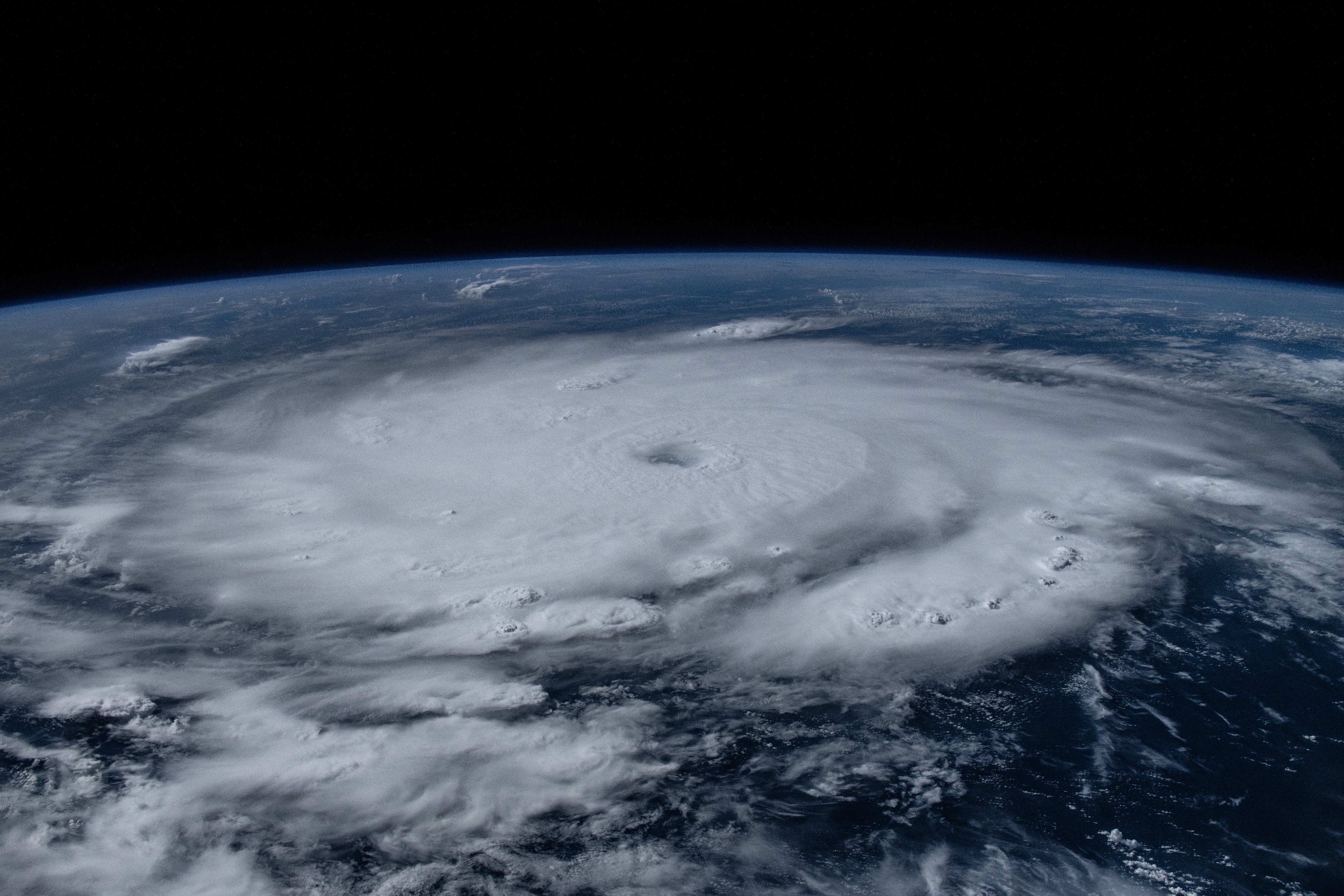
NASA astronaut Matthew Dominick captured this image of Hurricane Beryl in the Caribbean on July 1, 2024, while aboard the International Space Station, and posted it to X. The Category 4 hurricane had winds of about 130 mph (215 kph).
Hurricanes – tropical cyclones that form over the Atlantic Ocean or the eastern Pacific Ocean – use warm, moist air as fuel. The warm, moist air over the ocean rises upward from near the surface, causing an area of lower air pressure below. Air from surrounding areas with higher air pressure pushes into the low pressure area. Then that “new” air becomes warm and moist and rises, too. As the warm air continues to rise, the surrounding air swirls in to take its place. As the warmed, moist air rises and cools off, the water in the air forms clouds. The whole system of clouds and wind spins and grows, fed by the ocean’s heat and water evaporating from the surface.
Explore the July 2024 issue, featuring NASA Stennis Achieves Primary Success for Historic In-Space Mission, NASA at the Mississippi Comic Convention, NASA Stennis Take Our Children to Work Day, and more!
Explore Lagniappe for July 2024 featuring:
NASA Stennis Achieves Primary Success for Historic In-Space Mission
Mississippi Comic Convention Experiences NASA
NASA Stennis Hosts Take Our Children to Work Day
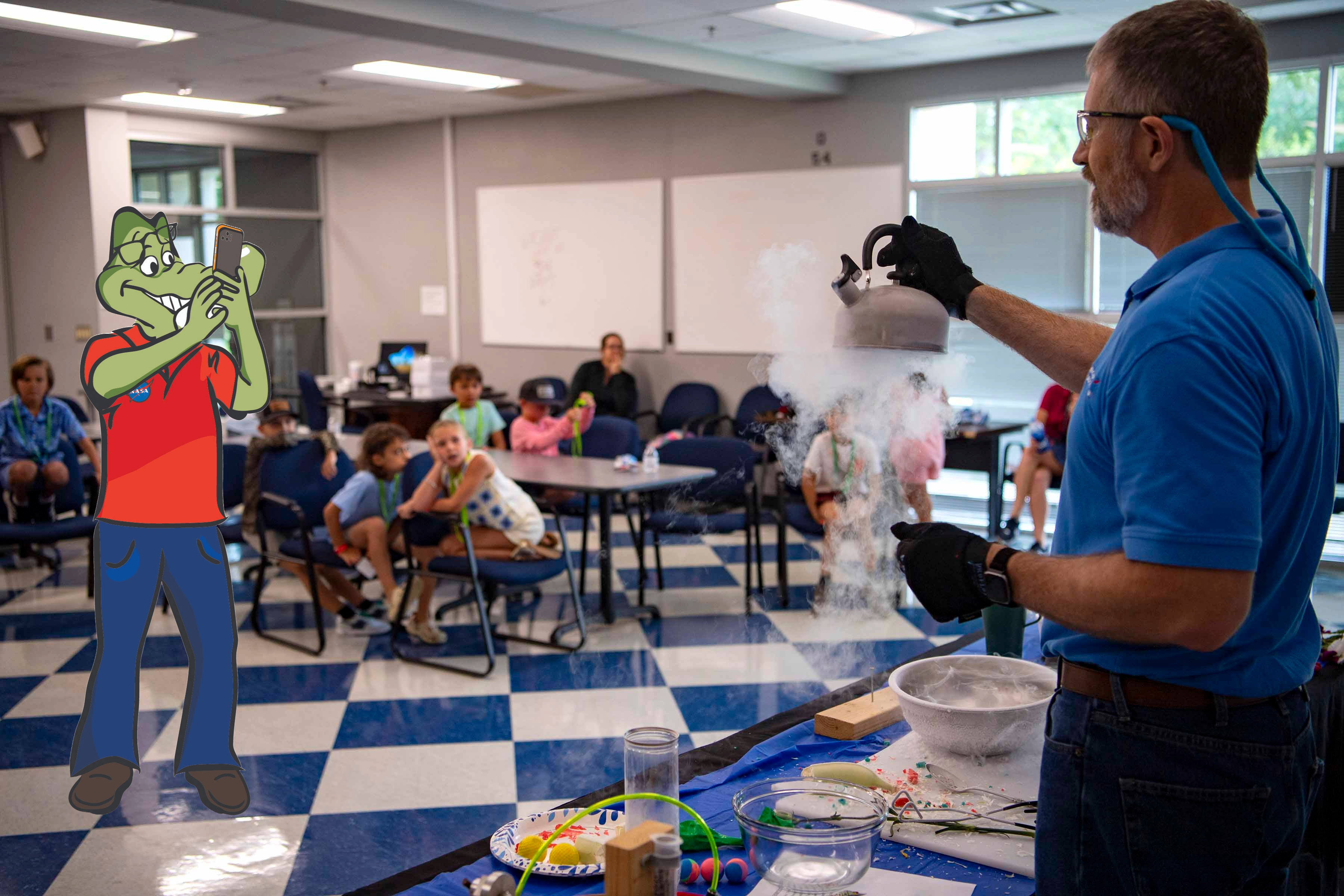
Gator Speaks
Conversations filled the room with anticipation for the day ahead.
NASA’s Stennis Space Center hosted Take Our Children to Work Day on June 27 with a day set aside for children of employees to see up close the work carried out at NASA Stennis by its diverse workforce.
A video featuring NASA Stennis Associate Director Rodney McKellip welcomed the enthusiastic crowd. He shared about the different hats worn by the more than 5,000 employees throughout the NASA Stennis federal city.
There are engineers who help make the south Mississippi NASA center the premier rocket engine test facility in the country. NASA Stennis, the place that tested rocket stages to put the first humans on the Moon, remains on the frontlines of preparing NASA and the United States for its return to the Moon through the Artemis campaign to explore more of the lunar surface than ever before.
Those attending Take Our Children to Work Day learned how NASA Stennis has many rocket scientists and test engineers carrying out this work, but that is not all.
Gator Speaks
NASA/Stennis
A team of folks, including accountants, lawyers, environmental specialists, educators, and public affairs specialists, wear the NASA hat to ensure mission success too.
There also are teams climbing on test stands, installing rocket engines into the stands, working with piping, electrical, welding, construction projects, safety inspections, and more.
In addition to being the premier propulsion test site supporting NASA’s mission, NASA Stennis is where commercial companies experience success and benefit from the expertise of NASA personnel. Companies like Relativity Space, Rocket Lab, and Evolution Space have established ongoing operations at NASA Stennis as the commercialization of space continues.
The NASA Stennis federal city also includes a range agencies, universities, and companies sharing costs and carrying out individual missions.
It is the command site for the largest collection of oceanographers in the world and where Navy Seals train.
Participants learned about such operations from a panel of employees from NASA, Aerojet Rocketdyne, an L3 Harris Technologies company, Lockheed Martin, and Relativity Space.
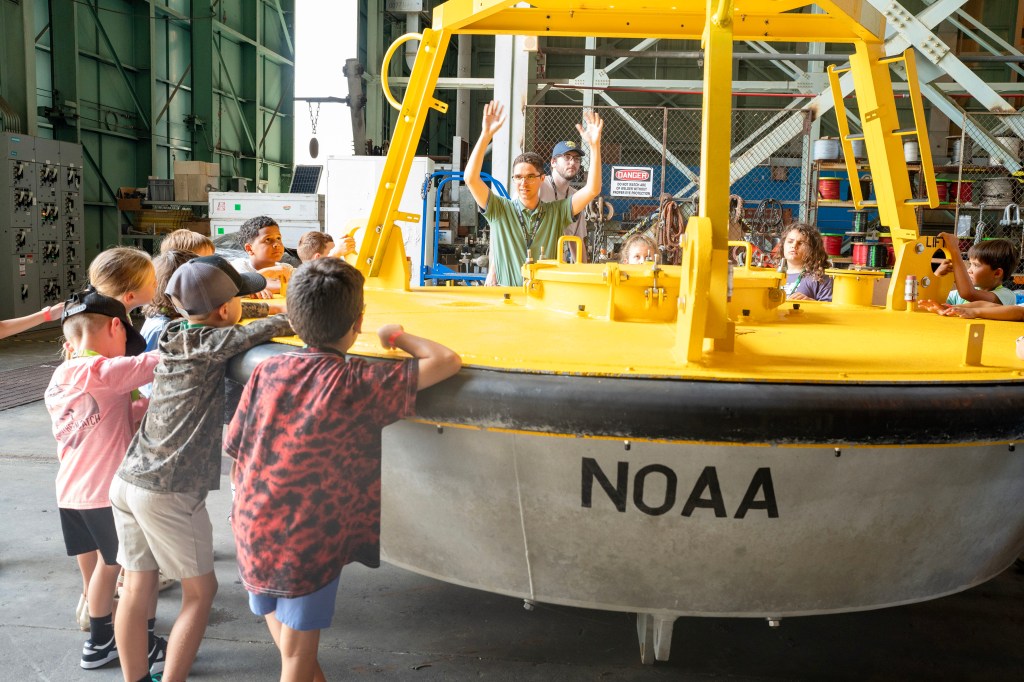
They toured NASA Stennis and participated in activities facilitated by NASA, Aerojet Rocketdyne, and the National Data Buoy Center.
The NASA Stennis associate director left them with a final thought before their day started: If you hear something loud during the day, just know that is the sound of progress at the nation’s premier rocket propulsion test facility and federal city known as NASA Stennis.
Sure enough, that afternoon, the unmistakable sound of engine testing could be heard across the site. For this ol‘ Gator, it sounds like music to the ears.
NASA Stennis Top News
NASA Stennis Achieves Primary Success for Historic In-Space Mission
NASA’s Stennis Space Center and partner Sidus Space Inc. announced primary mission success July 2 for the center’s historic in-space mission – an autonomous systems payload aboard an orbiting satellite.
Science fiction fans at the Mississippi Comic Convention were provided an out-of-this world experience, while learning about NASA, during the two-day event in Jackson, Mississippi, thanks to employees from NASA’s Stennis Space Center.
“I’ve never been to an outreach activity that you reached so many people and from such a wide spectrum of people, from grade schoolers to retired grandparents,” said Troy Frisbie, NASA Stennis legislative affairs officer and chief of staff. “We interacted with a wide audience and really shared how NASA and NASA Stennis benefit all. It was a really, really good experience.”
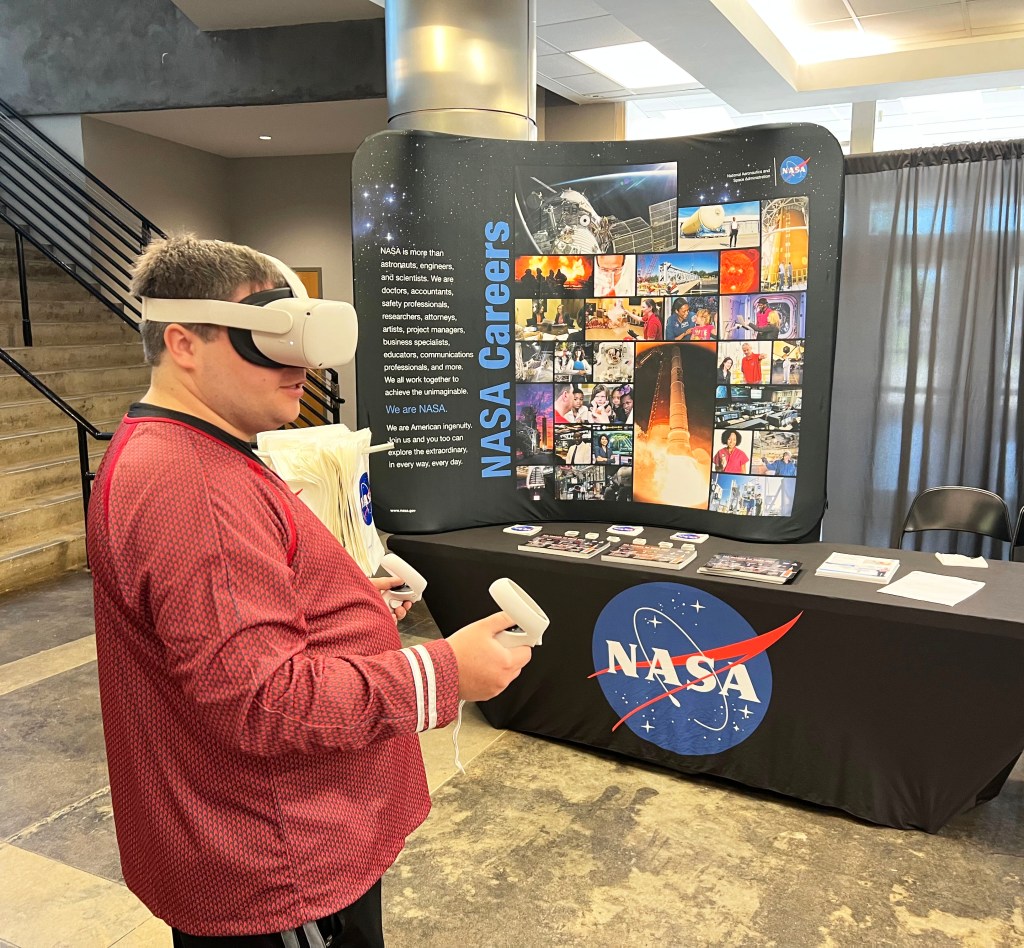
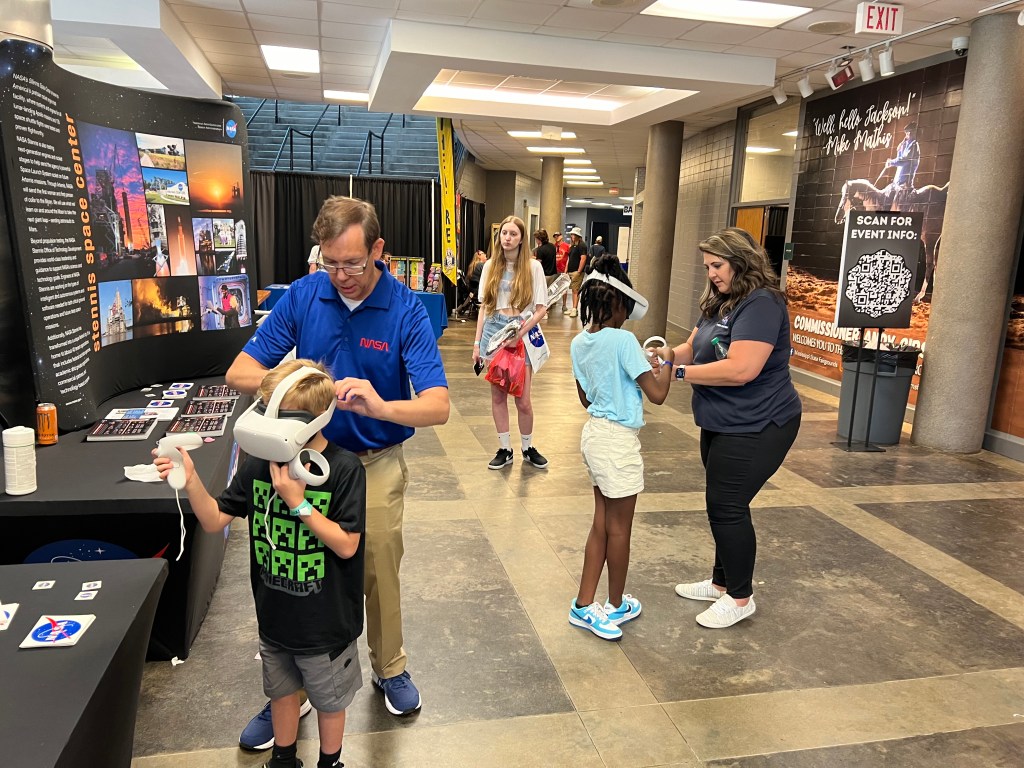
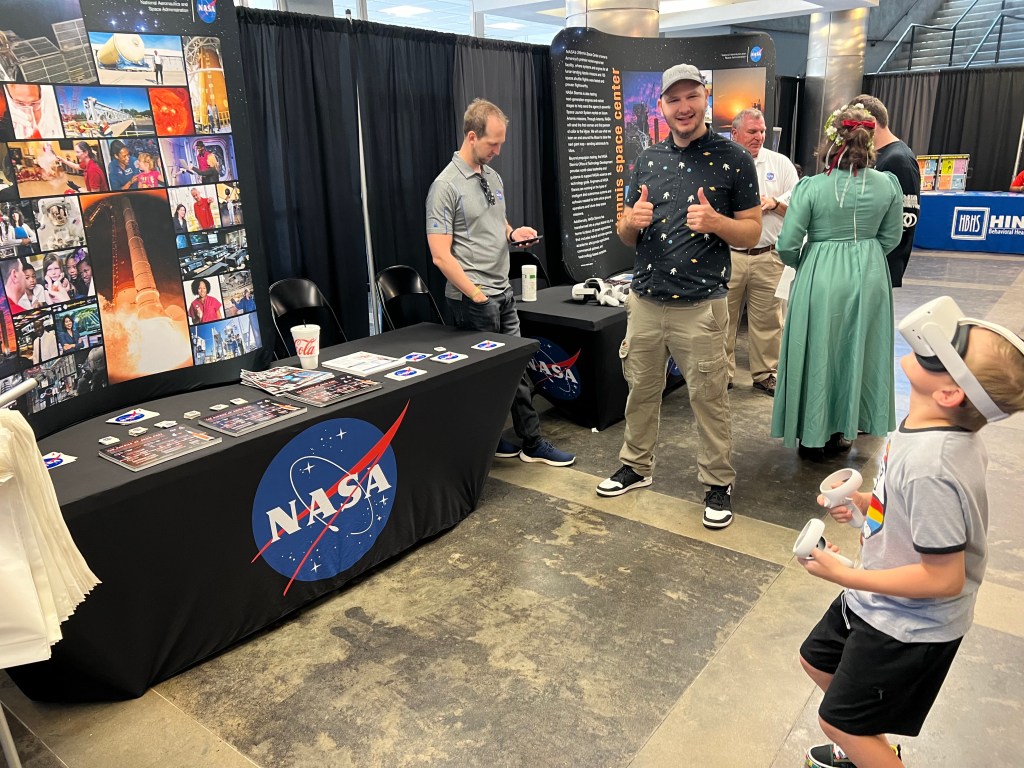
The NASA booth, at an event that attracted 18,000 people to the Mississippi Trade Mart and Coliseum on June 22-23, featured an immersive experience with virtual reality goggles. Participants were able to view an engine test conducted at NASA Stennis, take a virtual spacewalk while visiting the International Space Station, and experience a simulated rocket launch to Mars.
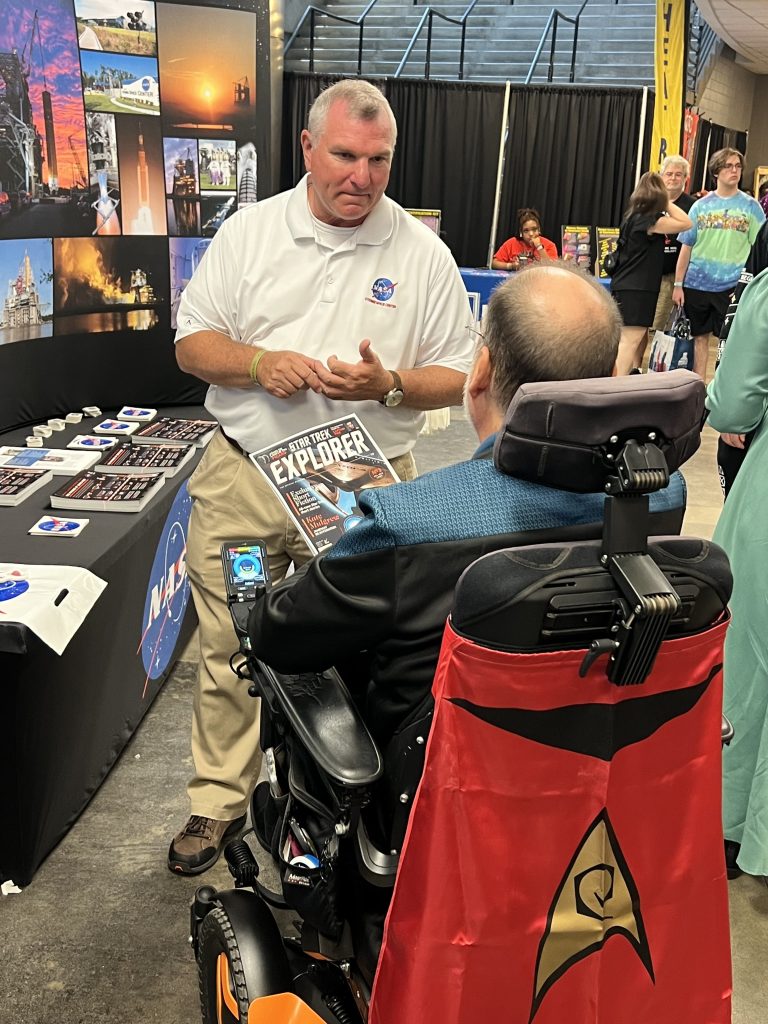
One group enjoying the interaction with NASA was the Star Trek fan club from Jackson, Mississippi.
“They were real big supporters of NASA,” Frisbie said. “They loved the virtual reality experience and encouraged others at the convention to come by and visit with us.”
NASA Stennis budget analyst Rebecca Mataya and engineers Paul Fuller, Steven Helmstetter, and Chris Barnett-Woods volunteered with Frisbie. The center employees talked to college students majoring in engineering, graphic design, architecture, education, and healthcare.
“The assumption is everybody has to be an engineer to work at NASA, and that is not the case,” Frisbie said. “There are all kinds of opportunities, and that was an eye opener for many.”
Conversations centered on job opportunities and careers with NASA, as well as work conducted at NASA Stennis. The volunteers also fielded general questions about NASA’s powerful SLS (Space Launch System) rocket and the agency’s Artemis campaign of returning astronauts to the Moon for scientific discovery, economic benefits, and inspiration for a new generation of explorers: the Artemis Generation.
“We enjoyed telling the NASA story and how NASA Stennis on the Gulf Coast of Mississippi serves as an economic engine that contributes to this nation’s space dreams,” Frisbie added.
Jackson, Mississippi, Star Trek fan club, USS Haise member, volunteers to be the first user of the virtual reality experience provided by NASA Stennis before the Mississippi Comic Convention begins.
NASA/Rebecca Mataya
NASA Stennis budget analyst Rebecca Mataya, right, and NASA Stennis engineer Paul Fuller assist young space fans with the NASA virtual reality experience at the Mississippi Comic Convention in Jackson, Mississippi, on June 22 at the Mississippi Trade Mart and Coliseum.
NASA/Troy Frisbie
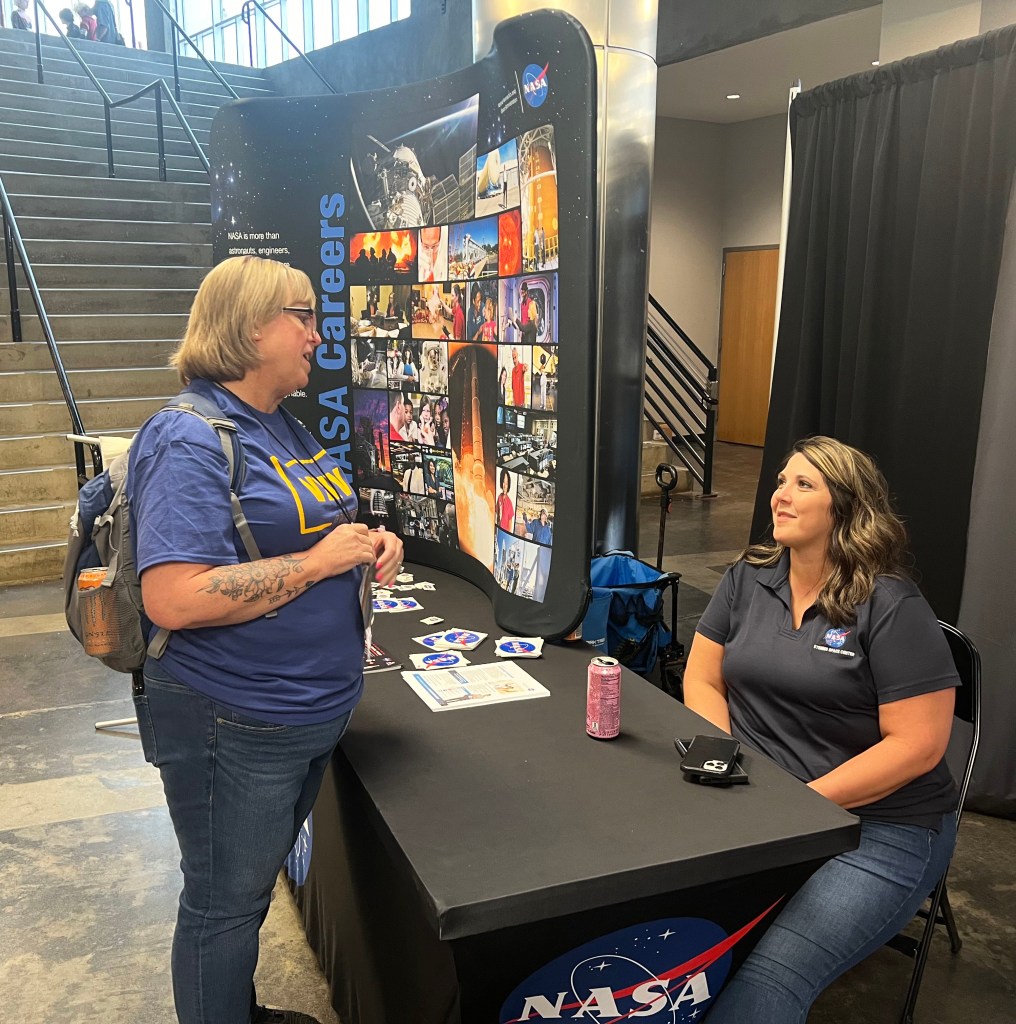
A Mississippi Comic Convention worker, an advocate for children with disabilities, speaks with NASA Stennis budget analyst Rebecca Mataya, right, during the event in Jackson, Mississippi, on June 22, about community outreach events and INFINITY Science Center’s ability to host children with special needs interested in learning more about NASA.
NASA/Troy Frisbie
NASA engineer Steve Helmstetter, center, gives a thumbs up on June 22 at the Mississippi Comic Convention in Jackson, Mississippi, as a young fan has a virtual reality experience in space.
NASA/Rebecca Mataya
NASA Stennis legislative affairs specialist and chief of staff Troy Frisbie discusses his appearance in Star Trek Explorer magazine with a member of the Jackson, Mississippi, Star Trek fan club, USS Haise.
NASA/Rebecca Mataya
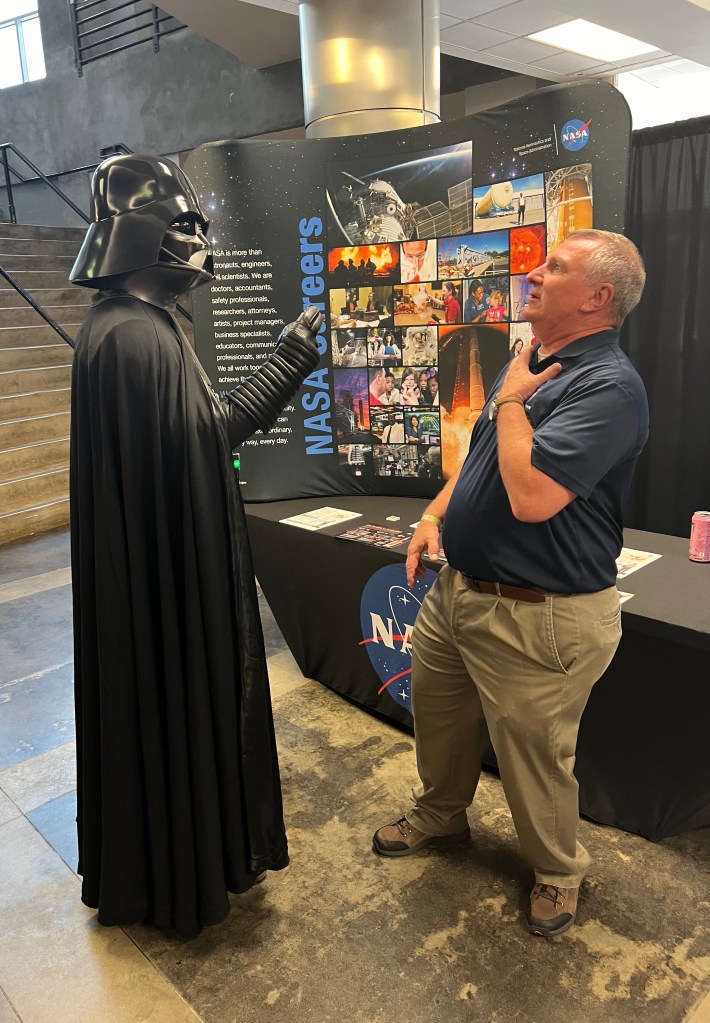
A Darth Vader character visits with NASA Stennis legislative affairs specialist and chief of staff Troy Frisbie at the NASA booth on June 23 at the Mississippi Comic Convention in Jackson, Mississippi.
NASA/Rebecca Mataya
Center Activities
NASA Stennis Breaks Ground with Rolls-Royce on New Testing Area
NASA’s Stennis Space Center continues to support commercial companies and benefit the aerospace industry. The latest example comes as officials from NASA Stennis and Rolls-Royce break ground for the E-1 Hydrogen Test Pad, located at the NASA Stennis E-Complex Test Facility, during a June 27 ceremony. The site will be where Rolls-Royce conducts hydrogen testing for the Pearl 15 engine. The Pearl 15 engine helps power the Bombardier Global 5500 & 6500 aircraft and enables top speeds of Mach 0.90. Groundbreaking participants include (left to right): Adam Newman, Rolls-Royce chief engineer of hydrogen technology; Deborah Robinson, Rolls-Royce director of test and experimental engineering; Troy Frisbie, NASA Stennis legislative affairs specialist and chief of staff; Dan Lyon, Rolls-Royce North America general manager; and Steven Blake, Rolls-Royce North America indirect purchasing, global commodity manager.
NASA/Danny Nowlin
NASA Stennis Hosts NASA Mission Support Directorate
Members of NASA’s Mission Support Directorate met with leaders from NASA’s Stennis Space Center and the NASA Shared Services Center during an onsite visit June 3. The group also participated in an in-depth tour of the NASA Stennis facilities. Pictured (left to right) are Ron Bald, chief counsel for the Office of the General Counsel at NASA Stennis and NASA Shared Services Center; Dinna Cottrell, chief information officer for the NASA Stennis and NASA Shared Services Center Office of the Chief Information Officer; Eli Ouder, procurement officer for NASA Stennis and NASA Shared Services Center; Stacy Houston, executive officer for NASA’s Mission Support Directorate; Michael Tubbs, acting director for the NASA Stennis Center Operations Directorate; Michael Hess, deputy associate administrator for NASA’s Mission Support Directorate; Rodney McKellip, associate director for NASA Stennis; Nichole Pinkney, program manager for NASA’s Mission Support Directorate; Duane Armstrong, manager for the NASA Stennis Strategic Development Office; Gary Benton, director for the NASA Stennis Safety and Mission Assurance Directorate; and Alison Butsch, associate chief financial officer for the External Business Operations Division within the NASA Stennis Office of the Chief Financial Officer.
NASA/Danny Nowlin
Space Force Students Visit NASA Stennis
United States Space Force training students and professors stand at the Thad Cochran Test Stand on June 4 during a tour of NASA’s Stennis Space Center. NASA Stennis is preparing the test stand to test the exploration upper stage, which will fly on future SLS (Space Launch System) missions as NASA continues its mission of exploring the secrets of the universe for the benefit of all. The upper stage is being built at NASA’s Michoud Assembly Facility in New Orleans as a more powerful second stage to send the Orion spacecraft to deep space. It is expected to fly on the Artemis IV mission. Before that, it will be installed on the Thad Cochran Test Stand (B-2) at NASA Stennis to undergo a series of Green Run tests of its integrated systems to demonstrate it is ready to fly. The Space Force, established in 2019, organizes, trains, and equips personnel to protect U.S. and allied interests in space and to provide space capabilities to the joint forces.
NASA/Danny Nowlin
Louisiana STEM Academy Visits NASA Stennis
Rising high school juniors and seniors from Ascension Parish, Louisiana, visit the Thad Cochran Test Stand on June 6 during a tour of NASA’s Stennis Space Center. The students are part of the week-long BASF Tech Academy, in coordination with River Parishes Community College, where participants learn about technical careers and education. NASA Stennis is preparing the test stand to test the exploration upper stage, which will fly on future SLS (Space Launch System) missions as NASA continues its mission of exploring the secrets of the universe for the benefit of all. The upper stage is being built at NASA’s Michoud Assembly Facility in New Orleans as a more powerful second stage to send the Orion spacecraft to deep space. It is expected to fly on the Artemis IV mission. Before that, it will be installed on the Thad Cochran Test Stand (B-2) at NASA Stennis to undergo a series of Green Run tests of its integrated systems to demonstrate it is ready to fly.
NASA/Danny Nowlin
Florida A&M STEM Group Visits NASA Stennis
Members of the Florida A&M University Program of Excellence in STEM attend a presentation June 21 during a visit to NASA’s Stennis Space Center. The NASA Office of STEM Engagement provided information on grants and student activities during the presentation about NASA Stennis and the work conducted at the unique federal city. The group also visited the Thad Cochran Test Stand and Relativity Space test complex during a site tour. The Program of Excellence in STEM summer academy aims to enhance student knowledge of opportunities in the fields of science, technology, engineering, and mathematics.
NASA/Danny Nowlin
Aerospace States Association Visits NASA Stennis
Members of the Aerospace States Association stand at the Thad Cochran Test Stand on June 25 during a visit to NASA’s Stennis Space Center. The group came to the south Mississippi NASA center during the Aerospace States Association conference in New Orleans June 24-27. NASA Stennis will use the Thad Cochran Test Stand (B-2) to test the exploration upper stage, a more powerful second stage to send the Orion spacecraft to deep space on NASA’s SLS (Space Launch System) rocket, ahead of its expected flight on the Artemis IV mission.
NASA/Danny Nowlin
Arkansas-Pine Bluff STEM Summer Institute Visits NASA Stennis
Participants in the University of Arkansas at Pine Bluff STEM (science, technology, engineering and mathematics) Summer Institute stand in front of the Roy Estess Building at NASA’s Stennis Space Center during a site tour on June 25. The students viewed multiple areas of the federal city, including a visit to the Thad Cochran Test Stand, where students learned about NASA Stennis’ role in the Artemis campaign. NASA is going back to the Moon for scientific discovery, economic benefits, and inspiration for a new generation of explorers: the Artemis Generation. The agency will use what is learned on and around the Moon to take the next giant leap – sending astronauts to Mars. The Arkansas at Pine Bluff STEM program started in 2003 and is designed to help increase the number and diversity of well-prepared STEM graduates.
NASA/Danny Nowlin
NASA Stennis Hosts Take Our Children to Work Day
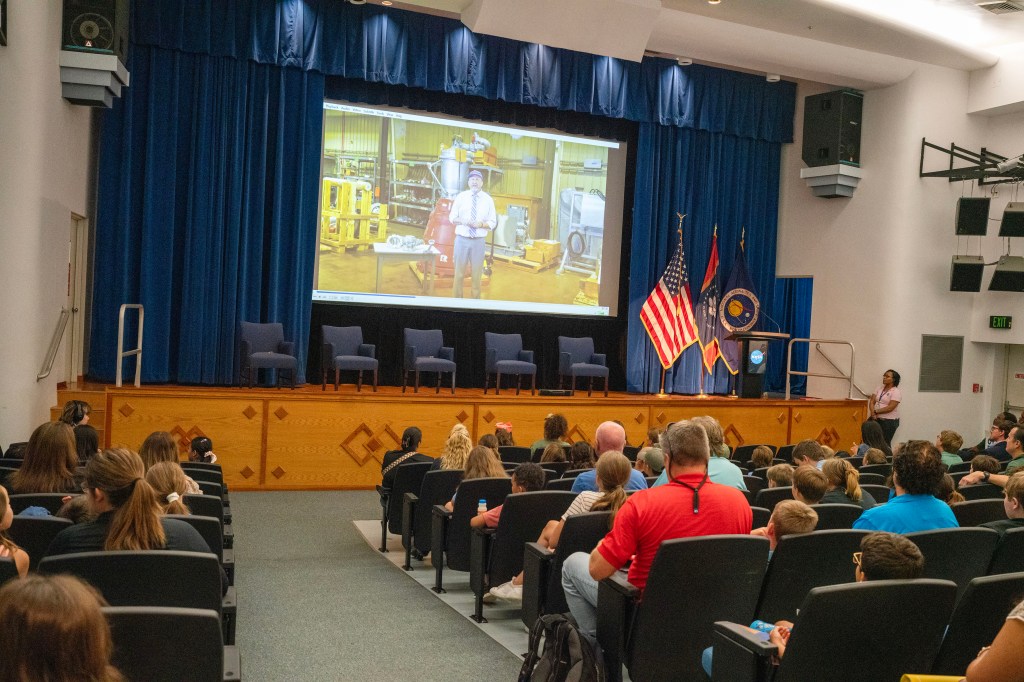
NASA’s Stennis Space Center inspired the Artemis Generation during the 2024 Take Our Children to Work Day on June 27. Participants are shown in the StenniSphere auditorium following a site tour and full day of hands-on activities to promote interest in STEM (science, technology, engineering, and mathematics) and the variety of work conducted at NASA Stennis. NASA is returning to the Moon through the Artemis campaign for scientific discovery, economic benefits, and inspiration for a new generation of explorers.
NASA/Danny Nowlin
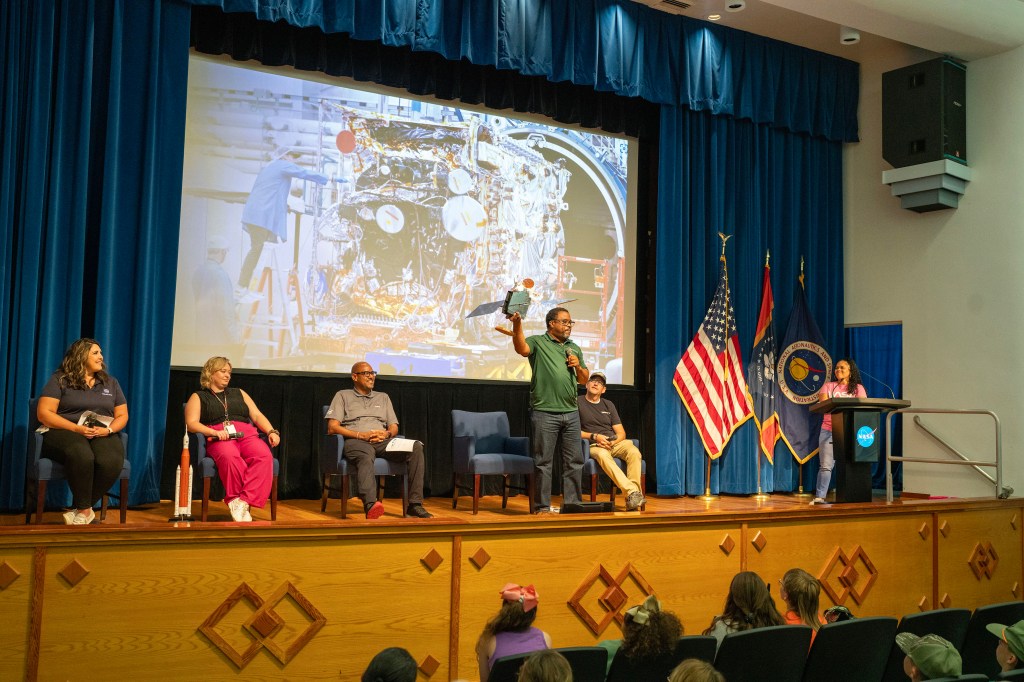
NASA Stennis Associate Director Rodney McKellip provides a video welcome to participants in the 2024 Take Our Children to Work Day event June 27 at NASA’s Stennis Space Center.
NASA/LaToya Dean
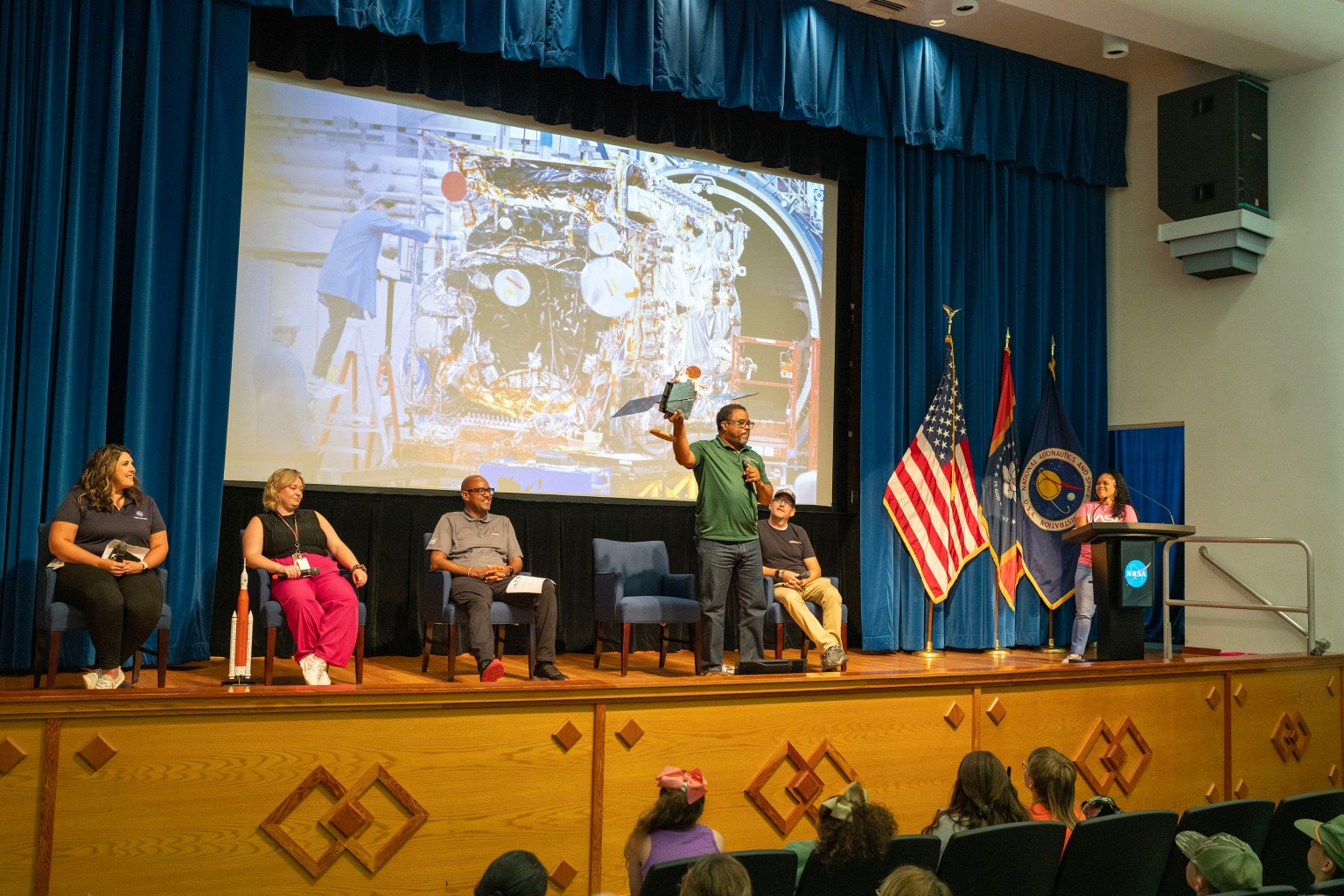
Take Our Children to Work Day participants join NASA Stennis federal city employees for a career panel discussion on June 27. The career panel discussion included (left to right): Rebecca Mataya, NASA Stennis budget analyst; Madison Rundell, Aerojet Rocketdyne information technology specialist; Troy Chivers, COLSA/All In Solutions representative; Clyde Conerly, Lockheed Martin quality engineer; Andy Guymon, Relativity Space test engineer; and moderator Apolonia Acker, NASA Stennis public affairs specialist.
NASA/LaToya Dean
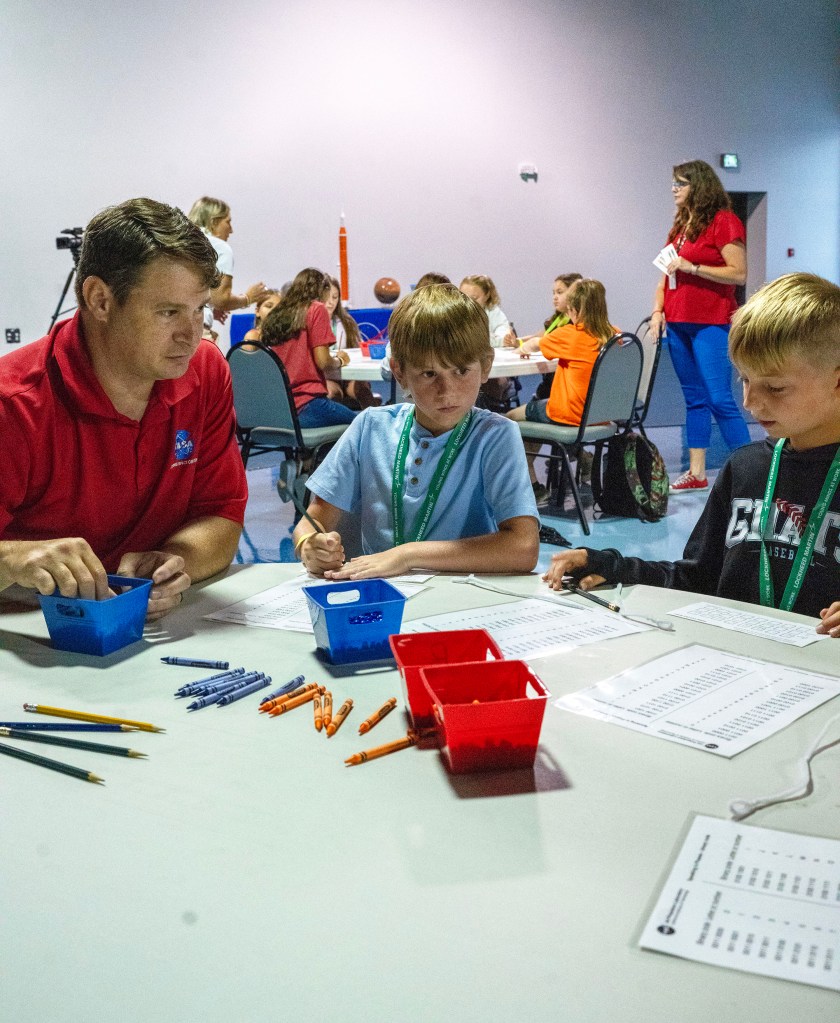
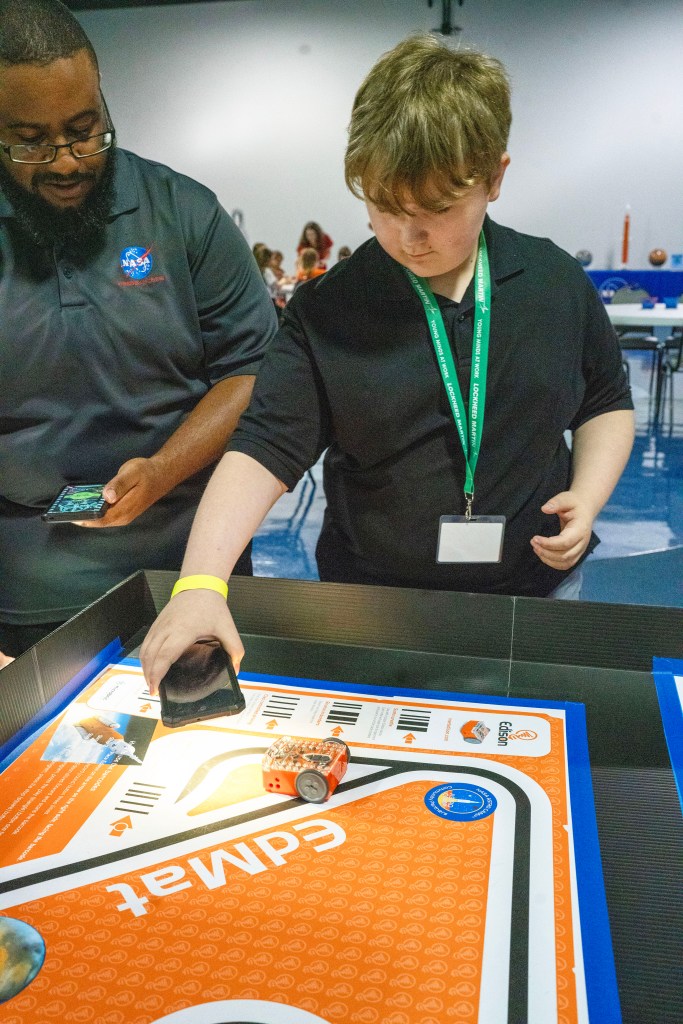
Christopher Sherman, NASA ASTRO CAMP Community Partners Program education specialist (left), conducts an activity with Take Our Children to Work Day participants on June 27 at NASA’s Stennis Space Center.
NASA/LaToya Dean
Morgan Necaise, NASA ASTRO CAMP Community Partners Program education specialist (left), conducts an activity with Take Our Children to Work Day participants on June 27 at NASA’s Stennis Space Center.
NASA/LaToya Dean
Danny Griffin, NASA ASTRO CAMP Community Partners Program logistics coordinator (left), conducts an activity with Take Our Children to Work Day participants on June 27 at NASA’s Stennis Space Center
NASA/LaToya Dean
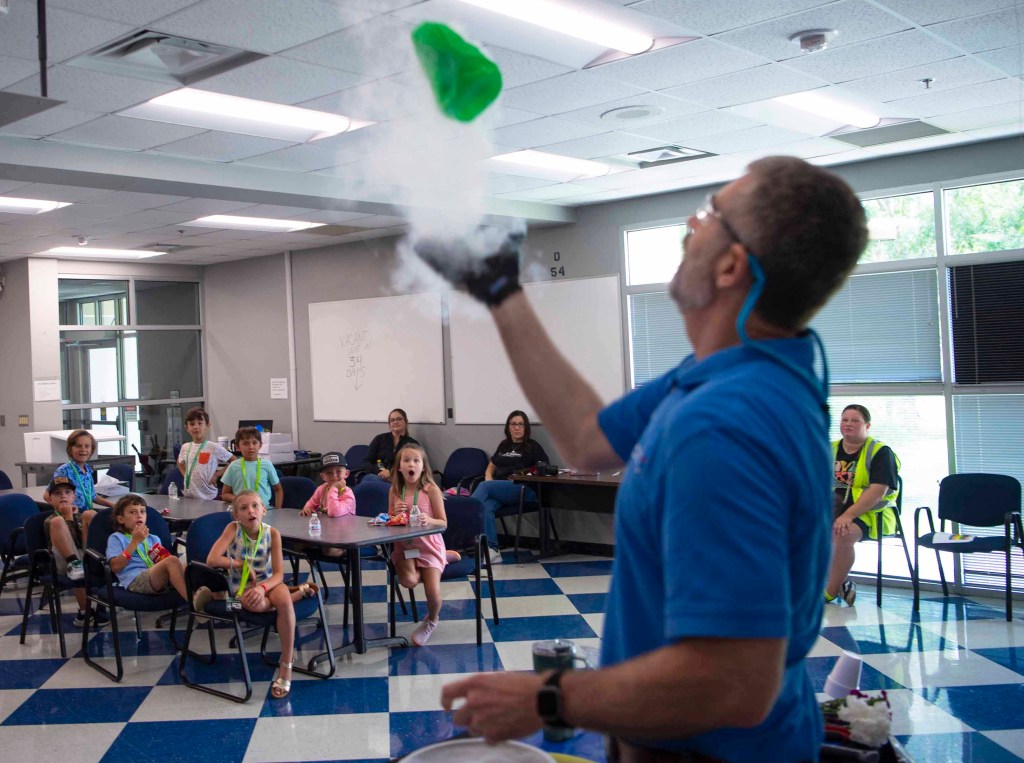
A group of Take Our Children Day participants watch a cryogenic demonstration led by Allen Forsman of Aerojet Rocketdyne, an L3Harris Technologies company, on June 27 at the Aerojet Rocketdyne Engine Assembly Facility at NASA Stennis.
NASA/Danny Nowlin
Take Our Children to Work Day participants learn about the ocean’s ecosystem on June 27 during an activity conducted by representatives with Mississippi State University, Northern Gulf Institute, and the Alliance for System Safety of UAS through Research Excellence.
NASA/LaToya Dean
Take Our Children to Work Day participants learn about buoys on June 27 during an activity conducted by Brandon Elsensohn, Amentum software engineer, for the National Data Buoy Center at NASA’s Stennis Space Center.
Chris Barnett-Woods is shown at the E-1 Test Stand at NASA’s Stennis Space Center near Bay St. Louis, Mississippi, where NASA Stennis accelerates the exploration and commercialization of space and innovates to benefit NASA and industry.
NASA/Danny Nowlin
Chris Barnett-Woods’ favorite movie growing up – Back to the Future – led him to dream of one day building a DeLorean automobile. Instead, the electrical engineer is doing something never imagined as he helps NASA support the commercialization of space for the benefit of all.
20 Years Ago This Month: NASA Stennis Moon Tree Honors Apollo 11
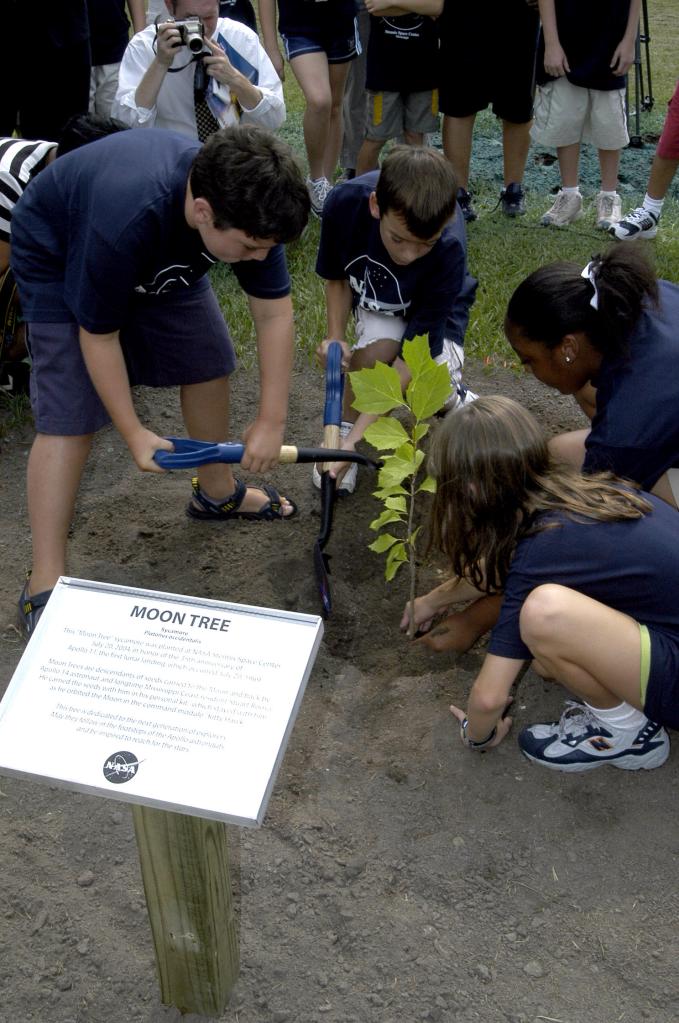
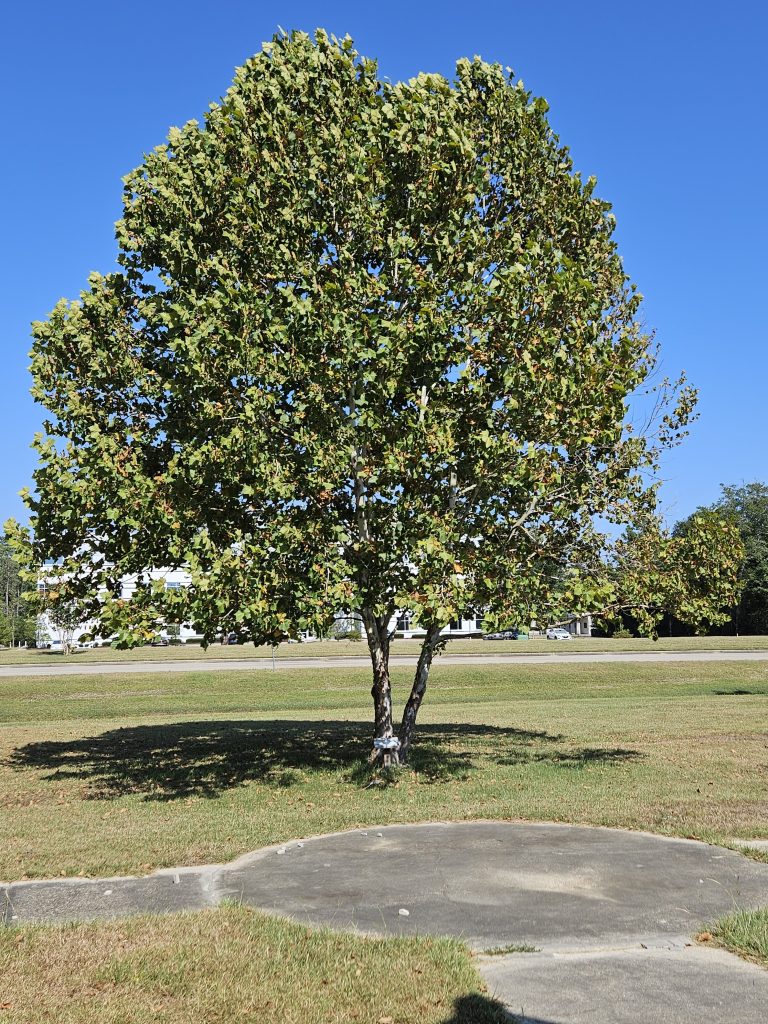
An image from July 20, 2004, shows Astro Camp participants planting a sycamore Moon tree at NASA’s Stennis Space Center near Bay St. Louis, Mississippi. The tree, planted 20 years ago this month, honors the 35th anniversary of Apollo 11 and the first lunar landing on July 20, 1969.
NASA/Stennis
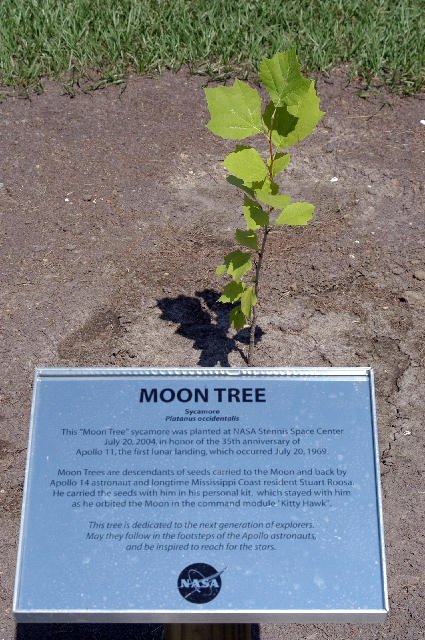
The Moon tree, planted on July 20, 2004, at NASA Stennis, is a descendant of seeds carried to the Moon and back by the late Apollo 14 astronaut and longtime Mississippi Coast resident, Stuart Roosa, as he orbited the Moon in the command module, nicknamed “Kitty Hawk.”
NASA/Stennis
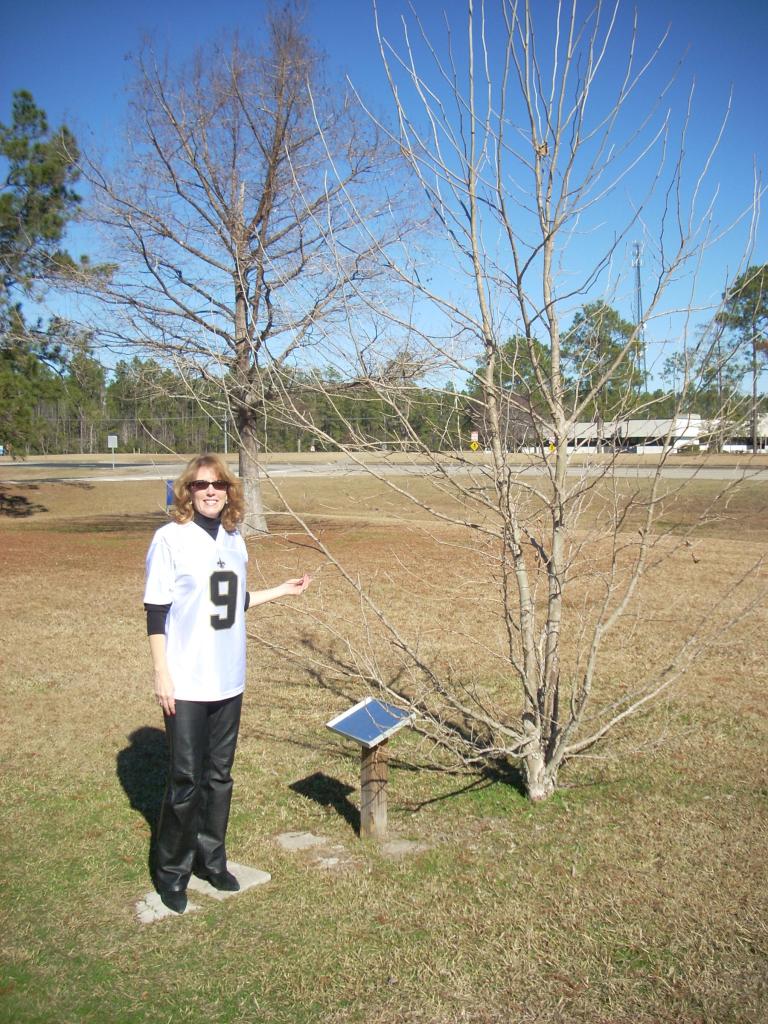
An image from Jan. 7, 2011, shows Rosemary Roosa, daughter of the late Apollo 14 astronaut Stuart Roosa, standing beside the Moon tree outside of StenniSphere, the previous museum and visitor center at NASA’s Stennis Space Center. The Moon tree is grown from seeds carried into space by astronaut Stuart Roosa on the Apollo 14 mission.
NASA/Stennis
A 2023 image shows the sycamore Moon tree at NASA’s Stennis Space Center. The tree, planted 20 years ago this month, honors the 35th anniversary of Apollo 11 and the first lunar landing on July 20, 1969.
Lagniappe is published monthly by the Office of Communications at NASA’s Stennis Space Center. The NASA Stennis office may be contacted by at 228-688-3333 (phone); ssc-office-of-communications@mail.nasa.gov (email); or NASA OFFICE OF COMMUNICATIONS, Attn: LAGNIAPPE, Mail code IA00, Building 1111 Room 173, Stennis Space Center, MS 39529 (mail).
The Lagniappe staff includes: Managing Editor Lacy Thompson, Editor Bo Black, and photographer Danny Nowlin.