NASA’s SpaceX Crew-11 to Discuss Space Station Science Mission

NASA’s SpaceX Crew-11 to Discuss Space Station Science Mission
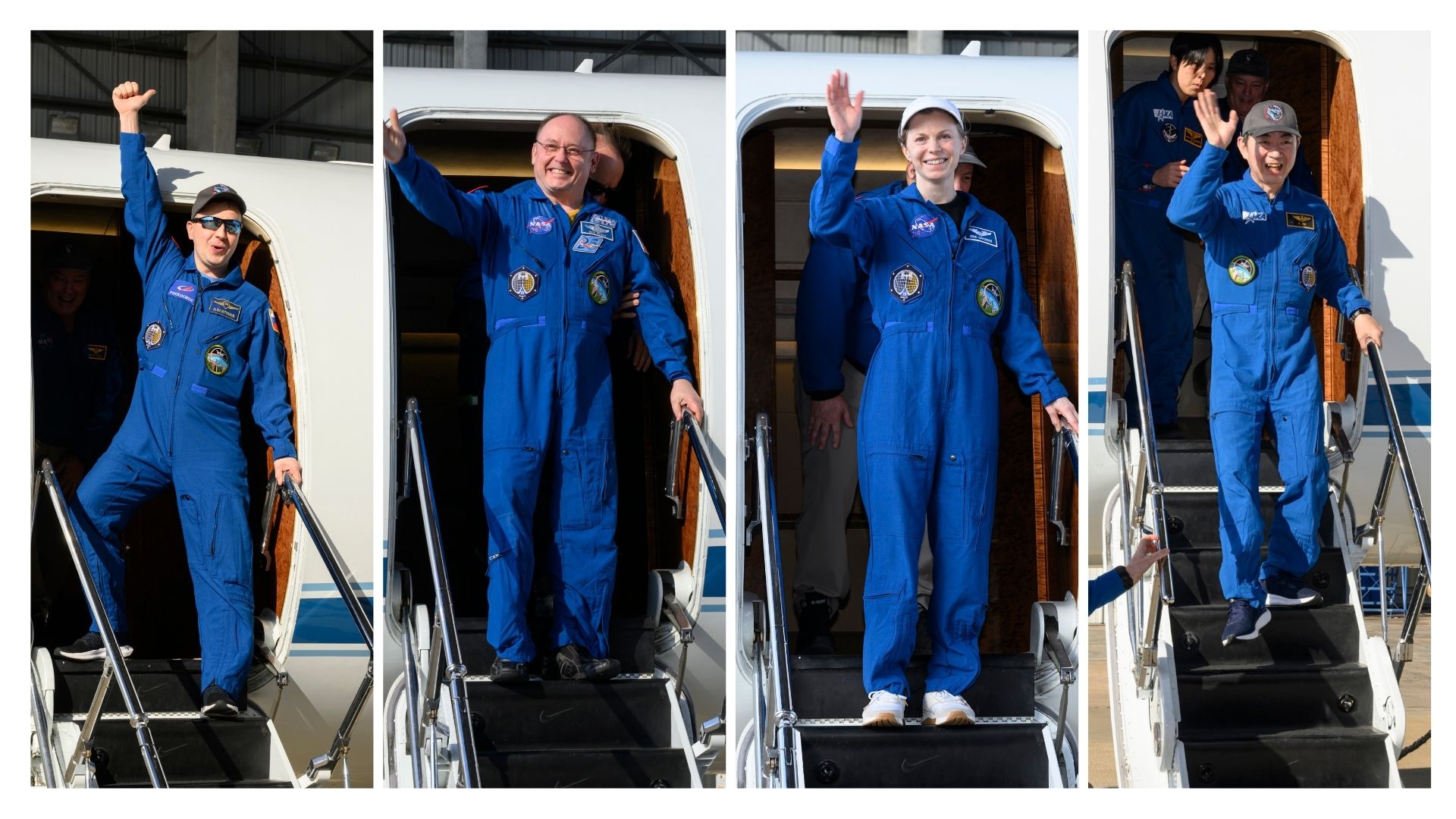
NASA’s SpaceX Crew-11 crew returns to Ellington Field’s Guppy Hangar in Houston on Jan. 16, 2026, from left to right is Roscosmos cosmonaut Oleg Platonov, NASA astronauts Mike Fincke, and Zena Cardman, and JAXA (Japan Aerospace Exploration Agency) astronaut Kimya Yui.
NASA

After 167 days in space, the crew members of NASA’s SpaceX Crew-11 mission will hold a news conference at 2:15 p.m. EST, Wednesday, Jan. 21, at the agency’s Johnson Space Center in Houston to discuss their science expedition aboard the International Space Station.

NASA astronauts Zena Cardman and Mike Fincke, JAXA (Japan Aerospace Exploration Agency) astronaut Kimiya Yui, and Roscosmos cosmonaut Oleg Platonov will answer questions about their mission. The crew members returned to Earth on Jan. 15, splashing down off the coast of San Diego, and arrived in Houston on Friday, where they will undergo standard postflight reconditioning and evaluations.

NASA will provide live coverage on the agency’s YouTube channel. Learn how to watch NASA content through a variety of additional online platforms, including social media.

Media are invited to attend in person or virtually. For in-person attendance, contact the NASA Johnson newsroom no later than 5 p.m. CST, Tuesday, Jan. 20, at jsccommu@mail.nasa.gov or 281-483-5111. Media participating by phone must dial into the news conference no later than 10 minutes prior to the start of the event to ask questions. Questions also may be submitted on social media using #AskNASA. A copy of NASA’s media accreditation policy is available on the agency’s website.

The crew spent more than five months in space, including 165 days aboard the orbiting laboratory, traveling nearly 71 million miles, and completing more than 2,670 orbits around Earth. While living and working aboard the station, the crew completed hundreds of science experiments and technology demonstrations.

Get the latest NASA space station news, images, and features on Instagram, Facebook, and X.

NASA’s Commercial Crew Program has delivered on its goal of safe, reliable, and cost-effective transportation to and from the International Space Station from the United States through a partnership with American private industry. This partnership is opening access to low Earth orbit and the space station to more people, more science, and more commercial opportunities. For more than 25 years, people have continuously lived and worked aboard the space station, advancing scientific knowledge and demonstrating new technologies that enable us to prepare for human exploration of the Moon as we prepare for Mars.

Learn more about NASA’s Commercial Crew Program at:

https://www.nasa.gov/commercialcrew

-end-

Joshua Finch / Jimi Russell
Headquarters, Washington
202-358-1100
joshua.a.finch@nasa.gov / james.j.russell@nasa.gov  

Anna Schneider / Shaneequa Vereen
Johnson Space Center, Houston
281-483-5111
anna.c.schneider@nasa.gov / shaneequa.y.vereen@nasa.gov

Powered by WPeMatico

Get The Details…
Gerelle Q. Dodson
NASA Receives 15th Consecutive ‘Clean’ Financial Audit Opinion

NASA Receives 15th Consecutive ‘Clean’ Financial Audit Opinion

Credit: NASA

For the 15th consecutive year, NASA received an unmodified, or “clean,” opinion from an external auditor on its fiscal year 2025 financial statements.

The rating is the best possible audit opinion, certifying that NASA’s financial statements conform with Generally Accepted Accounting Principles for federal agencies and accurately present the agency’s financial position.

“NASA has delivered a complete and reliable report of our fiscal operations, critical to our success for the Golden Age of exploration and innovation,” said NASA Administrator Jared Isaacman. “NASA’s mission drives innovation in space exploration, scientific discovery, and aeronautics, pushing the boundaries of what’s possible. Our fiscal year 2025 budget fuels economic growth, drives the growing space economy, and keeps America first amidst increasing global competition.”

The 2025 Agency Financial Report provides key financial and performance information and demonstrates the agency’s commitment to transparency in the use of American taxpayers’ dollars. In addition, the 2025 report presents progress during the past year, and spotlights the array of NASA missions, objectives, and workforce advanced with these financial resources.

“This achievement reflects our team’s diligent stewardship of NASA’s resources, including our commitment to responsibly managing taxpayers’ dollars entrusted to the agency,” said Sidney Schmidt, NASA’s acting chief financial officer. “Their unwavering dedication to sound financial management and robust internal controls ensures we uphold public trust. Congratulations and thank you to everyone involved for your commendable efforts and hard work.”

In fiscal year 2025, NASA marked significant progress toward the Artemis II test flight. Targeted to launch no earlier than Friday, Feb. 6, the Artemis II mission will send four astronauts around the Moon and back to test the systems and hardware which will return humanity to the lunar surface. NASA and its partners landed two robotic science missions on the Moon, welcomed seven new signatory countries to the Artemis Accords, and advanced medical and technological experiments for long-duration space missions like hand-held X-ray equipment and navigation capabilities.

NASA also led a variety of science discoveries, including launching a joint satellite mission with India to regularly monitor Earth’s land and ice-covered surfaces, as well as identifying and tracking the third interstellar object in our solar system; achieved 25 continuous years of human presence aboard the International Space Station; and, for the first time, flew a test flight of the agency’s X-59 supersonic plane that will help revolutionize air travel.

For more information on NASA’s budget, visit:

https://www.nasa.gov/budgets-plans-and-reports

-end-

Bethany Stevens / Elizabeth Shaw
Headquarters, Washington
202-358-1600
bethany.c.stevens@nasa.gov / elizabeth.a.shaw@nasa.gov

Share

Details

Last Updated

Jan 16, 2026

Editor
Jennifer M. Dooren

Powered by WPeMatico

Get The Details…
Jennifer M. Dooren

Expedition 74 Continues After Crew-11 Returns to Earth

Expedition 74 Continues After Crew-11 Returns to Earth

Expedition 74 crew members (from left) NASA astronaut Chris Williams and Roscosmos cosmonauts Sergey Kud-Sverchkov and Sergey Mikaev pose for a portrait at NASA's Johnson Space Center in Houston, Texas.
Expedition 74 crew members (from left) NASA astronaut Chris Williams and Roscosmos cosmonauts Sergey Kud-Sverchkov and Sergey Mikaev pose for a portrait at NASA’s Johnson Space Center in Houston, Texas.
NASA/James Blair

Three Expedition 74 crew members continue to reside aboard the International Space Station now following the return to Earth of NASA’s SpaceX Crew-11 mission on Thursday. The orbiting trio will conduct research and maintenance while awaiting the arrival of four new crewmates planned in February.

NASA astronauts Zena Cardman and Mike Fincke and JAXA (Japan Aerospace Exploration Agency) astronaut Kimiya Yui and Roscosmos cosmonaut Oleg Platonov are back on Earth completing 167 days in space. The Crew-11 quartet returned in a SpaceX Dragon back to Earth for a parachute-assisted splashdown off the coast of California just ten-and-a-half-hours after undocking from the station’s Harmony module.

Meanwhile, NASA Flight Engineer Chris Williams along with station Commander Sergey Kud-Sverchkov and Flight Engineer Sergei Mikaev are on the orbital outpost and will stay in space until summer. The trio arrived on Thanksgiving Day last year aboard the Soyuz MS-28 spacecraft beginning an eight-month space research mission.

Williams spent Friday inside the Quest airlock deconfiguring a pair of spacesuits set up for last week’s spacewalk before it was postponed. He cleaned and flushed the suits’ internal water-cooling loops that regulate a spacewalker’s body temperature. Next, he powered down and inspected the suits, then uninstalled suit hardware, components, and batteries.

Mikaev installed Earth observation hardware and programmed it to photograph African landmarks from Namibia’s Namib Desert to Kenya’s Nabiyotum Crater on the southern tip of Lake Turkana. Kud-Sverchkov serviced the Elektron oxygen generator inside the Zvezda service module then documented the location of hardware stowed throughout the station’s Roscosmos segment.

Back on Earth, NASA’s SpaceX Crew-12 members are looking ahead to next month when they are targeted to launch atop a SpaceX Falcon 9 rocket aboard a Dragon crew spacecraft and join Expedition 74. Crew-12 will be commanded by Jessica Meir and piloted by Jack Hathaway, both NASA astronauts, with Sophie Adenot of ESA (European Space Agency) and Andrey Fedyaev of Roscosmos serving as mission specialists. NASA, SpaceX, and international partners are working to advance the launch of Crew-12, which is currently slated for Sunday, Feb. 15, following the early departure of Crew-11.

Learn more about station activities by following the space station blog, @space_station on X, as well as the ISS Facebook and ISS Instagram accounts.

Get the latest from NASA delivered every week. Subscribe here.

Powered by WPeMatico

Get The Details…

Mark A. Garcia

What You Need to Know About NASA’s Artemis II Moon Mission

What You Need to Know About NASA’s Artemis II Moon Mission

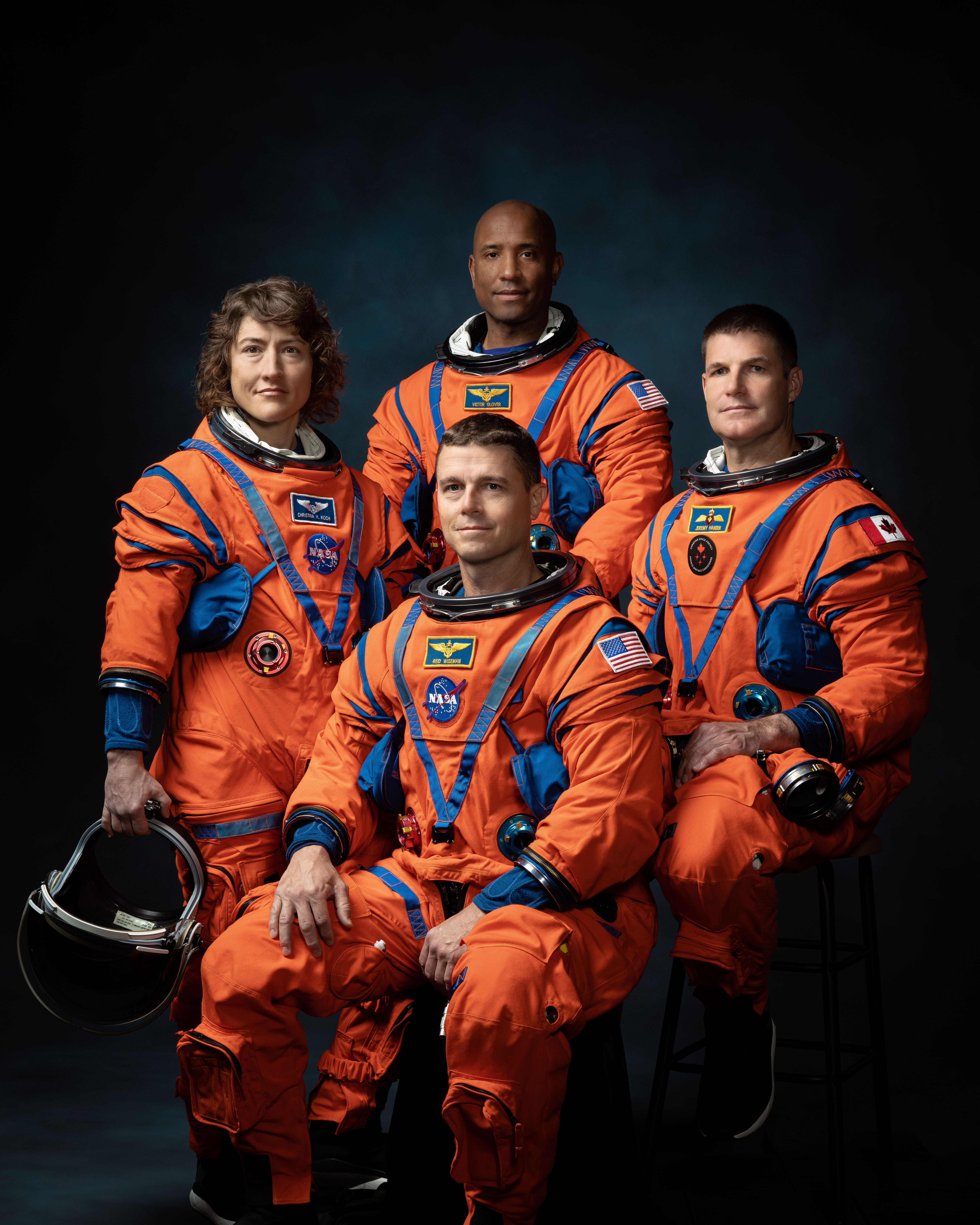
NASA astronauts Reid Wiseman, Victor Glover, and Christina Hammock Koch, and CSA astronaut Jeremy Hansen pose in their orange flight suits for a photo.
The crew of NASA’s Artemis II mission: NASA astronauts Christina Koch, Reid Wiseman, Victor Glover, and CSA (Canadian Space Agency) astronaut Jeremy Hansen.
Credit: NASA

NASA is weeks away from sending astronauts farther than any crew has traveled before, with the agency’s second mission in its Artemis campaign. The Artemis II Press Kit now is available with information on the mission, astronauts, and other resources for media.

“Artemis II will be a momentous step forward for human spaceflight. This historic mission will send humans farther from Earth than ever before and deliver the insights needed for us to return to the Moon — all with America at the helm,” said NASA Administrator Jared Isaacman. “Artemis II represents progress toward establishing a lasting lunar presence and sending Americans to Mars. I could not be more impressed by our NASA team and the Artemis II crew, and wish them well. Boldly forward.”

Under the Artemis campaign, NASA is returning humans to the Moon for economic benefits, scientific discovery, and to prepare for crewed missions to Mars.

To learn more about Artemis, visit:

https://www.nasa.gov/artemis

-end-

Lauren Low / Rachel Kraft
Headquarters, Washington
202-358-1600
lauren.e.low@nasa.gov / rachel.h.kraft@nasa.gov  

Share

Details

Last Updated

Jan 16, 2026

Editor
Jennifer M. Dooren

Related Terms

Powered by WPeMatico

Get The Details…
Jennifer M. Dooren

NASA Develops Blockchain Technology to Enhance Air Travel Safety and Security 

NASA Develops Blockchain Technology to Enhance Air Travel Safety and Security 

3 min read

Preparations for Next Moonwalk Simulations Underway (and Underwater)

By Supreet Kaur

In an era where data security is critical to aviation safety, NASA is exploring bold new solutions. 

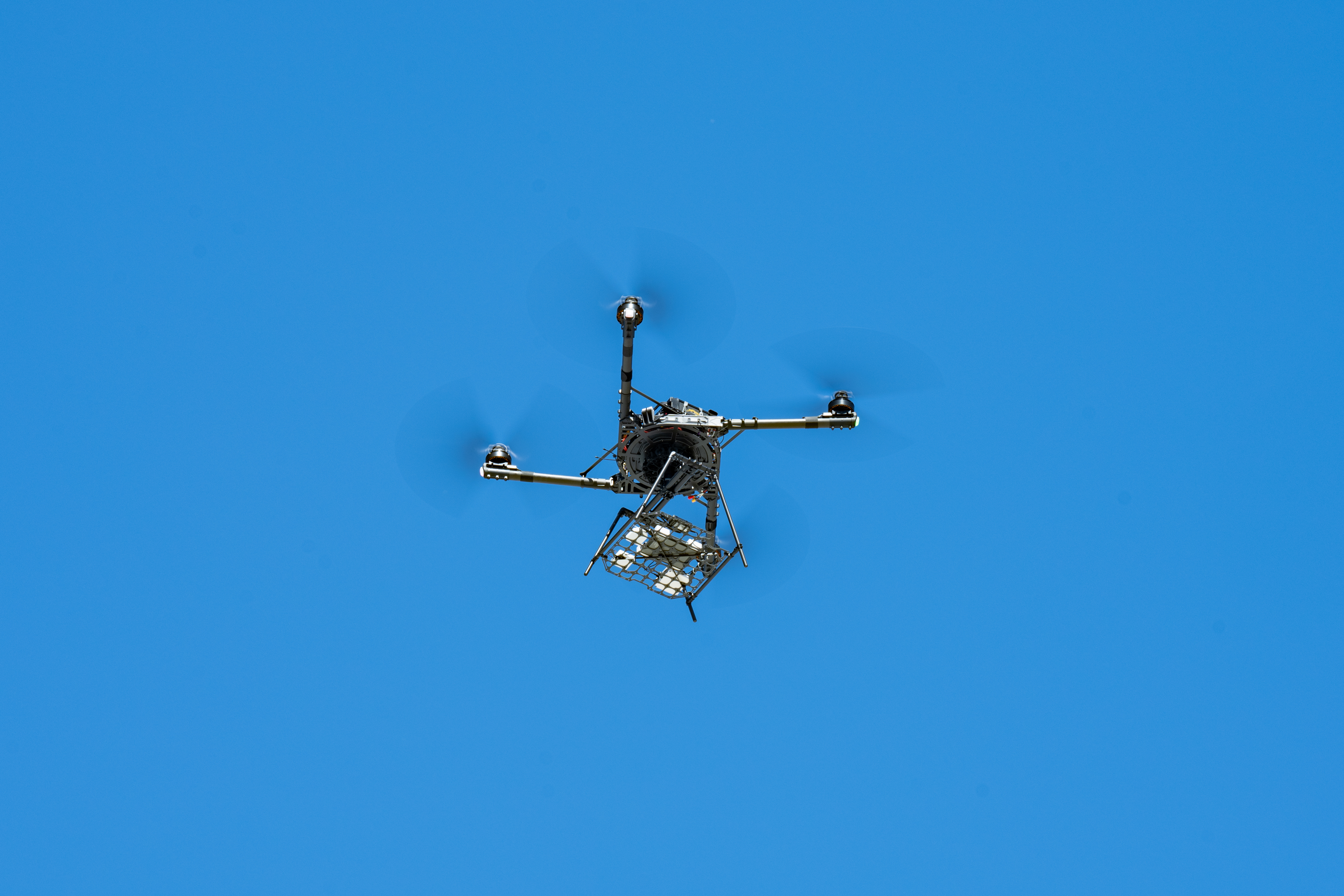
An Alta-X drone carries a custom built simulated Unmanned Aircraft Systems environment payload for the new blockchain system tests.   
Credit: NASA/Brandon Torres Navarette 

Through a drone flight test at NASA’s Ames Research Center in California’s Silicon Valley, researchers tested a blockchain-based system for protecting flight data. The system aims to keep air traffic management safe from disruption and protect data transferred between aircraft and ground stations from being intercepted or manipulated. 

For aviation and airspace operations to remain safe, users need to be able to trust that data is reliable and transparent. While current systems have been able to protect flight data systems, cyberthreats continue to evolve, requiring new approaches. NASA researchers found the blockchain-based system can safely transmit and store information in real time. 

Blockchain operates like a decentralized database — it does not rely on a single computer or centralized system. Instead, it shares information across a vast network, recording and verifying every change to a dataset. The system ensures the data stays safe, accurate, and trustworthy.  

Previous cybersecurity research focused on implementing a layered security architecture — using multiple physical and digital security measures to control system access. For this test, researchers took a different approach using blockchain to address potential threats.  

Using drones allowed the team to show that the blockchain framework could yield benefits across several priority areas in aviation development, including autonomous air traffic management, urban air mobility, and high-altitude aircraft.  

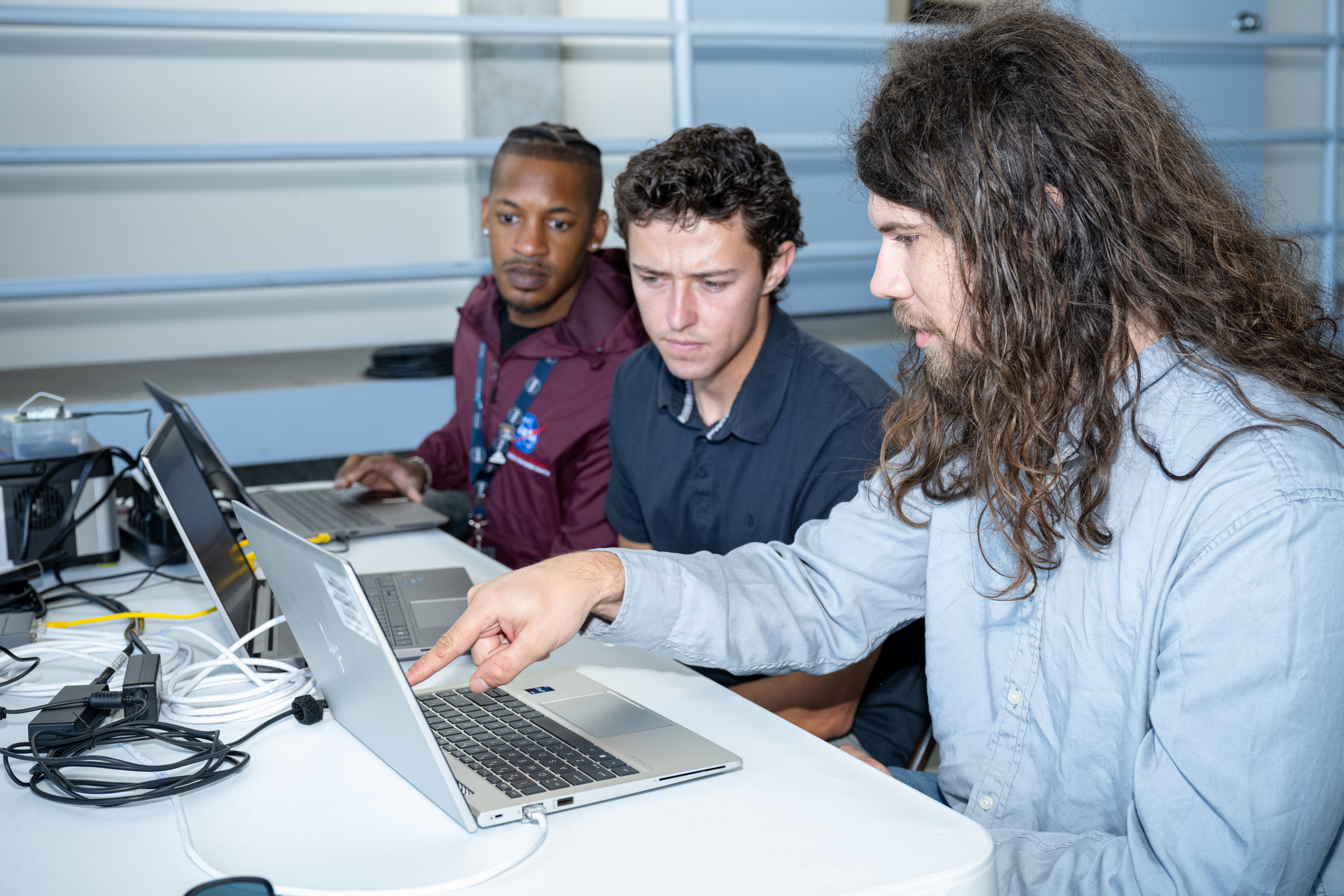
Three people sit at a table looking over laptop computers. The one nearest the camera is pointing at the laptop monitor.
Terrence D. Lewis (left), Kale Dunlap (center), and Aidan Jones monitor the flow of telemetry from both actual and simulated flights, ensuring the simulation and blockchain systems are processing and recording data accurately. 
Credit: NASA/Brandon Torres Navarette 

This NASA research explored how blockchain can secure digital transactions between multiple systems and operators. The team used an open-source blockchain framework that allows trusted users real-time sharing and storage of critical data like aircraft operator registration information, flight plans, and telemetry. This framework restricts access to this data to trusted parties and approved users only. 

To further examine system resilience, the team introduced a set of cybersecurity tests designed to assess, improve, and reinforce security during operations in airspace environments. During an August flight at Ames, the team demonstrated these capabilities using an Alta-X drone with a custom-built software and hardware package that included a computer, radio, GPS system, and battery.  

The test simulated an environment with a drone flying in real-world conditions, complete with a separate ground control station and the blockchain and security infrastructure. The underlying blockchain framework and cybersecurity protocols can be extended to support high-altitude operations at 60,000 feet and higher and Urban Air Mobility operations, paving the way for a more secure, scalable, and trusted ecosystem. 

NASA researchers will continue to look at the data gathered during the test and apply what they’ve learned to future work. The testing will ultimately benefit U.S. aviation stakeholders looking for new tools to improve operations. 

Through its Air Traffic Management and Safety project, NASA performed research to transform air traffic management systems to safely accommodate the growing demand of new air vehicles. The project falls under NASA’s Airspace Operations and Safety Program, a part the agency’s Aeronautics Research Mission Directorate that works to enable safe, efficient aviation transportation operations that benefit the flying public and industry.

Powered by WPeMatico

Get The Details…
Arezu Sarvestani