NASA Science, Cargo Launch on 21st Northrop Grumman Mission to Station

NASA Science, Cargo Launch on 21st Northrop Grumman Mission to Station

Northrop Grumman’s Cygnus spacecraft for the company’s 21st commercial resupply services mission for NASA launched on a SpaceX Falcon 9 rocket from Space Launch Complex 40 at Cape Canaveral Space Force Station in Florida.
Credit: NASA

Following a successful launch of NASA’s Northrop Grumman 21st commercial resupply mission, new scientific experiments and cargo for the agency are bound for the International Space Station.

Northrop Grumman’s Cygnus spacecraft, carrying more than 8,200 pounds of supplies to the orbiting laboratory, lifted off at 11:02 a.m. EDT Sunday on a SpaceX Falcon 9 rocket from Space Launch Complex 40 at Cape Canaveral Space Force Station in Florida.

Shortly after launch, the spacecraft missed its first burn due to a late entry to burn sequencing. Known as the targeted altitude burn, or TB1, it was rescheduled, but aborted shortly after the engine ignited due to a slightly low initial pressure state. There is no indication the engine itself has any problem at this time.

Cygnus is at a safe altitude and completed the deployment of its two solar arrays at 2:21 p.m. Northrop Grumman engineers are working a new burn and trajectory plan and aim to achieve the spacecraft’s original capture time on station.

If all remains on track, live coverage of the spacecraft’s arrival will begin at 1:30 a.m., Tuesday, Aug. 6, on NASA+, NASA Television, the NASA app, and the agency’s website. Learn how to stream NASA TV through a variety of platforms including social media.

NASA astronaut Matthew Dominick will capture Cygnus using the station’s robotic arm at approximately 3:10 a.m., and NASA astronaut Jeanette Epps is backup.

The resupply mission will support dozens of research experiments conducted during Expedition 71. Included among the investigations are:

  • Test articles to evaluate liquid and gas flow through porous media found in space station life support systems
  • A balloon, penny, and hexnut for a new STEMonstration on centripetal force
  • Microorganisms known as Rotifers to examine the effects of spaceflight on DNA repair mechanisms
  • A bioreactor to demonstrate the production of many high-quality blood and immune stem cells

These are just a sample of the hundreds of investigations conducted aboard the orbiting laboratory in the areas of biology and biotechnology, physical sciences, and Earth and space science. Such research benefits humanity and lays the groundwork for future human exploration through the agency’s Artemis campaign, which will send astronauts to the Moon to prepare for future expeditions to Mars.

NASA’s arrival and in-flight event coverage is as follows (all times Eastern and subject to change based on real-time operations):

Tuesday, Aug. 6

1:30 a.m. – Arrival coverage begins on NASA+, NASA Television, the NASA app, YouTube, and the agency’s website.

3:10 a.m. – Capture of Cygnus with the space station’s robotic arm.

4:30 a.m. – Cygnus installation coverage begins on NASA+, NASA Television, the NASA app, YouTube, and the agency’s website.

All times are estimates and could be adjusted based on operations after launch. Follow the space station blog for the most up-to-date operations information.

The company’s 21st mission to the space station for NASA is the 10th under its Commercial Resupply Services 2 contract.

Cygnus will remain at the orbiting laboratory until January before it departs and disposes of several thousand pounds of trash through its re-entry into Earth’s atmosphere where it will harmlessly burn up. The spacecraft is named the S.S. Francis R. “Dick” Scobee after the former NASA astronaut.

Learn more about NASA’s commercial resupply mission at:

https://www.nasa.gov/mission/nasas-northrop-grumman-crs-21/

-end-

Claire O’Shea / Josh Finch
Headquarters, Washington
202-358-1100
joshua.a.finch@nasa.gov / claire.a.o’shea@nasa.gov

Stephanie Plucinsky / Steven Siceloff
Kennedy Space Center, Fla.
321-876-2468
stephanie.n.plucinsky@nasa.gov / steven.p.siceloff@nasa.gov

Sandra Jones
Johnson Space Center, Houston
281-483-5111
sandra.p.jones@nasa.gov

Powered by WPeMatico

Get The Details…
Tiernan P. Doyle

NASA’s Northrop Grumman 21st Cargo Mission: Cygnus Launches at 11:02 a.m. EDT

NASA’s Northrop Grumman 21st Cargo Mission: Cygnus Launches at 11:02 a.m. EDT

A successful liftoff from Space Launch Complex 40 at Cape Canaveral Space Force Station in Florida as Northrop Grumman’s Cygnus spacecraft, atop a SpaceX Falcon 9 rocket, heads to the International Space Station for the 21st Northrop Grumman resupply mission on Sunday, Aug. 4, 2024. Photo credit: NASA

At 11:02 a.m. EDT, 8,200 pounds of scientific investigations and cargo launched to the International Space Station on Northrop Grumman’s Cygnus spacecraft for the company’s 21st commercial resupply services mission for NASA. The spacecraft lifted off on a SpaceX Falcon 9 rocket from Space Launch Complex 40 at Cape Canaveral Space Force Station in Florida. 
 
Cygnus will reach its preliminary orbit about 10 minutes after launch and is expected to deploy its solar arrays about three hours later. 
 
NASA will provide live coverage of the spacecraft’s arrival beginning at 1:30 a.m. Tuesday, Aug. 6 on NASA+, NASA Television, the NASA app, YouTube, X, Facebook, and the agency’s website. 
 
NASA astronaut Matthew Dominick will capture Cygnus using the station’s Canadarm2 robotic arm at approximately 3:10 a.m., and NASA astronaut Jeanette Epps is backup. 
 
Learn more about station activities by following @space_station and @ISS_Research on X as well as the ISS Facebook and ISS Instagram accounts. 

Powered by WPeMatico

Get The Details…

Stephanie Plucinsky

NASA’s Northrop Grumman 21st Cargo Mission: Launch Coverage Underway

NASA’s Northrop Grumman 21st Cargo Mission: Launch Coverage Underway

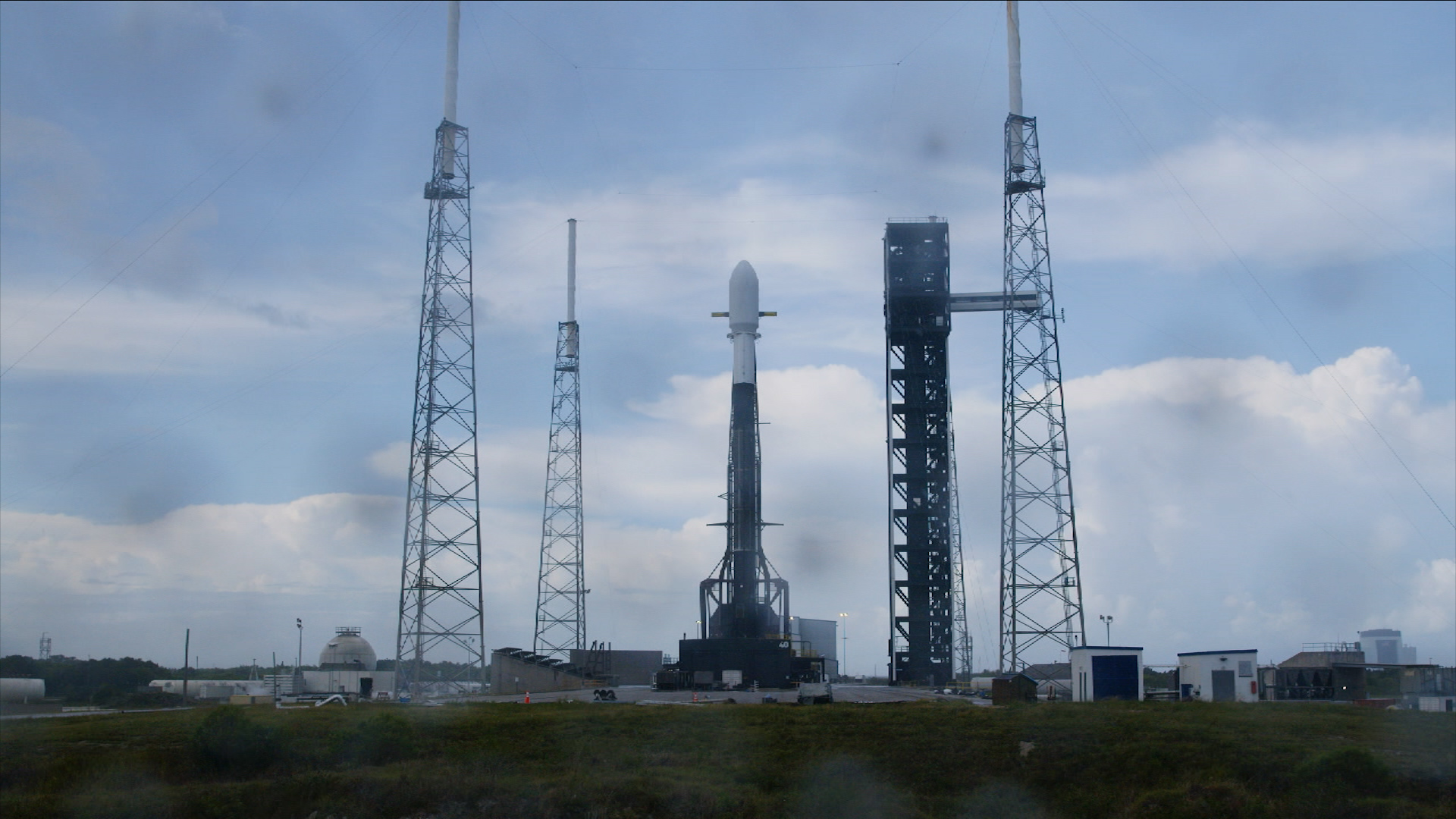
A Northrop Grumman Cygnus resupply spacecraft, atop a SpaceX Falcon 9 rocket, stands tall at Space Launch Complex 40 at Cape Canaveral Space Force Station in Florida on Sunday, Aug. 4, 2024, in preparation for a launch to the International Space Station. Photo credit: SpaceX

NASA’s coverage is underway on NASA+, NASA Television, the NASA app, YouTube, X, Facebook, and the agency’s website for the launch of Northrop Grumman’s 21st commercial resupply mission to the International Space Station. 
 
The company’s Cygnus spacecraft is scheduled for liftoff at 11:02 a.m. EDT on a SpaceX Falcon 9 rocket from Space Launch Complex 40 at Cape Canaveral Space Force Station in Florida. 
 
Filled with more than 8,200 pounds of scientific investigations, food, supplies, and equipment, Cygnus will arrive at the orbiting outpost on Tuesday, Aug. 6. NASA astronaut Matthew Dominick will capture Cygnus using the station’s Canadarm2 robotic arm, and NASA astronaut Jeanette Epps is backup. After capture, the spacecraft will be installed on the Unity module’s Earth-facing port.

Learn more about station activities by following @space_station and @ISS_Research on X as well as the ISS Facebook and ISS Instagram accounts.

Powered by WPeMatico

Get The Details…

Stephanie Plucinsky

NASA, Northrop Grumman Delay Cargo Resupply Launch Opportunity

NASA, Northrop Grumman Delay Cargo Resupply Launch Opportunity

A Northrop Grumman Cygnus resupply spacecraft, atop a SpaceX Falcon 9 rocket, stands tall at Space Launch Complex 40 at Cape Canaveral Space Force Station in Florida on Saturday, Aug. 3, 2024, in preparations for a launch to the International Space Station.

NASA, Northrop Grumman, and SpaceX are standing down from the launch opportunity Saturday for the agency’s Northrop Grumman 21st commercial resupply services mission to the International Space Station due to weather conditions.

Teams are targeting no earlier than 11:02 a.m. EDT on Sunday, Aug. 4 for the next launch opportunity.

For launch updates and more about information on station activities follow the space station blog, @space_station and @ISS_Research on X, as well as the ISS Facebook and ISS Instagram accounts.


Powered by WPeMatico

Get The Details…

Stephanie Plucinsky

Crew Awaits Cygnus’ Arrival and Works on Spacesuits and Eye Checks

Crew Awaits Cygnus’ Arrival and Works on Spacesuits and Eye Checks

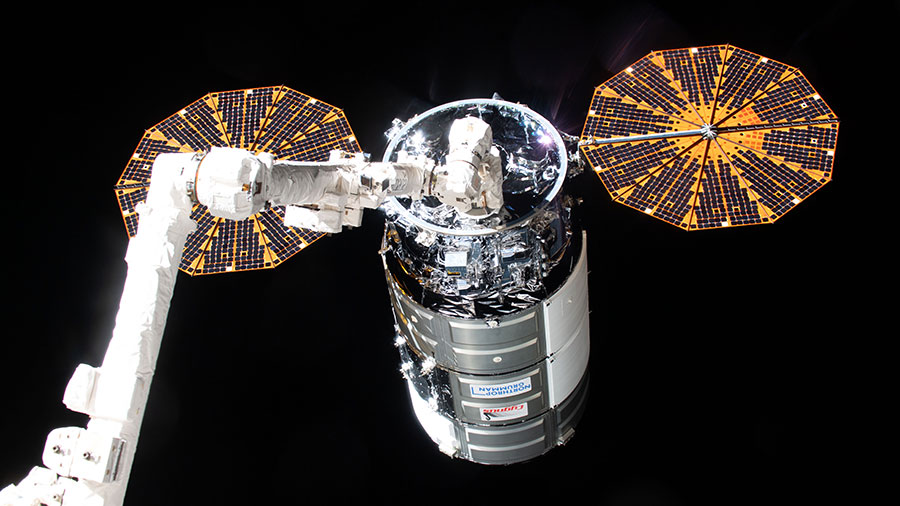
Northrop Grumman's Cygnus space freighter is pictured in the grips of the Canadarm2 robotic arm after its capture on Feb. 21, 2024.
Northrop Grumman’s Cygnus space freighter is pictured in the grips of the Canadarm2 robotic arm after its capture on Feb. 21, 2024.

Preparations are underway aboard the International Space Station to capture and install a U.S. cargo craft due to arrive next week. Spacesuit checks and health studies were also on the program at the end of the week for the two crews living and working aboard the orbital outpost.

Mission managers have given the go for the launch of Northrop Grumman’s Cygnus cargo craft set for 11:29 a.m. EDT on Saturday from Space Launch Complex 40 at Cape Canaveral Space Force Station in Florida. Cygnus will orbit Earth for a day-and-a-half before arriving at the orbital outpost early Monday.

Expedition 71 Engineers Matthew Dominick and Jeanette Epps will be on duty Monday monitoring Cygnus’ approach and rendezvous. Dominick will command the Canadarm2 robotic arm to reach out and grapple Cygnus at approximately 3:55 a.m. on Monday. Dominick will be inside the cupola with Epps backing him up Monday morning and keeping an eye on Cygnus as it advances toward the orbital outpost.

The duo spent Friday morning continuing to train on a computer and simulated the robotics activities necessary to capture Cygnus next week. At the end of the day, the NASA pair joined fellow astronauts Tracy C. Dyson, Mike Barratt, Butch Wilmore, and Suni Williams for a Cygnus cargo operations conference with mission controllers on the ground.

Earlier, Dyson, Wilmore, and Williams took turns throughout the day servicing a U.S. spacesuit in the Quest airlock. Dyson started the job first cleaning the spacesuit’s cooling loops. Afterward, Wilmore and Williams took over finishing up the loop cleaning job then finally deconfiguring and stowing the suit components inside Quest.

Dyson later examined the eyes of NASA Flight Engineer Mike Barratt using standard medical imaging hardware found in an optometrist’s office on Earth. Doctors on Earth guided Dyson as she peered in Barratt’s cornea, retina, and lens to understand microgravity’s effect on crew vision. Before the eye checks began, Barratt spent his day servicing a variety of research hardware including the Life Science Glovebox in the Kibo laboratory module and the CIMON mobile crew helper powered by artificial intelligence.

Wilmore and Williams, Boeing’s Crew Flight Test Commander and Pilot respectively, focused primarily on lab maintenance before they began their spacesuit work Friday afternoon. Wilmore spent some time inside the Tranquility module cleaning up cables and stowing electronics components. Williams worked during her morning inside the Columbus laboratory module installing networking gear including a video and data processing unit and a high-rate modem.

Working in the station’s Roscosmos segment, Commander Oleg Kononenko set up Earth observation hardware to study luminous clouds in Earth’s upper atmosphere. Flight Engineer Nikolai Chub started day servicing on oxygen generator, then studied the effects of magnetic and electrical fields on fluid physics, before uninstalling navigation hardware from the Progress 88 resupply ship. Flight Engineer Alexander Grebenkin spent his day working on orbital plumbing and cleaning ventilation systems while also fitting in an Earth photography session in the middle of the day.


Learn more about station activities by following the space station blog@space_station and @ISS_Research on X, as well as the ISS Facebook and ISS Instagram accounts.

Get weekly video highlights at: https://roundupreads.jsc.nasa.gov/videoupdate/

Get the latest from NASA delivered every week. Subscribe here: www.nasa.gov/subscribe

Powered by WPeMatico

Get The Details…

Mark Garcia