Godspeed, Artemis II!

Godspeed, Artemis II!

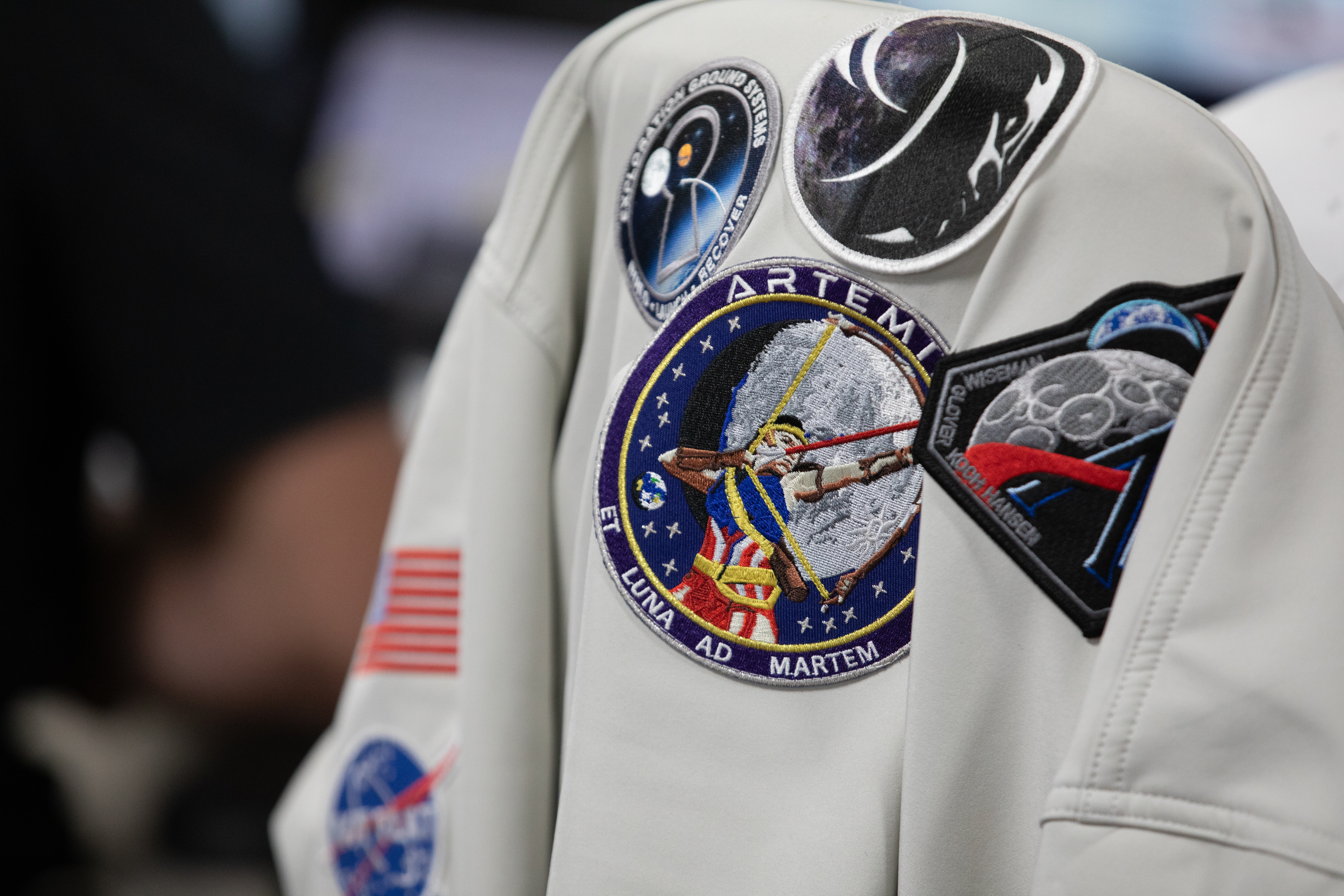
The Artemis program patch in the space station's cupola. The patch is framed by the center circular window in the space. Earth can be seen behind the patch. The Artemis patch has five sides. It has a white background with a black border. There's a black
NASA/Jessica Meir

NASA astronaut Jessica Meir took this photo of an Artemis program patch floating in the International Space Station’s cupola. She posted it on X on March 30, 2026, with the following caption: “Our work on the @Space_Station has provided the foundation to explore further, preparing us to return humans to the Moon this week. Stay tuned as we enter the @NASAArtemis era! Expedition 74 will certainly be keeping a close watch. Godspeed, Artemis II!”

Image credit: NASA/Jessica Meir

Powered by WPeMatico

Get The Details…
Monika Luabeya

Landsat Reveals Reservoir Changes and Bathymetry

Landsat Reveals Reservoir Changes and Bathymetry

Communities worldwide rely on reservoirs for drinking water, hydroelectric power, irrigation, and more. These critical freshwater resources are affected by seasonal and long-term changes; water levels in reservoirs can dip during hot summer months or due to prolonged drought, or can flood after a particularly strong storm. Despite their importance, there are key gaps in our knowledge of reservoir structure and dynamics. Two recent papers use Landsat data to help fill in those gaps. 

Researchers from the University of Southampton used Landsat data to identify where water advanced or retreated from 1984 to 2022, creating the first global dataset pinpointing the exact year of permanent surface water changes—such as when a reservoir formed or a stream dried up. The study can track changes in streams as narrow as 30m and lakes as small as 900m2. In a separate study, Texas A&M University researchers used Landsat data to build a global bathymetry dataset called ‘3D-LAKES’ that enables water managers to estimate reservoir storage capacity.

In this output from the 3D-LAKES dataset, green represents shallow waters while purple represents deeper waters. The data is overlaid on an image collected by the Thematic Mapper (TM) on Landsat 5 on July 31, 1985 and a Copernicus Digital Elevation Model (DEM) and bathymetric data from the 3D-LAKES dataset.
Ross Walter/NASA

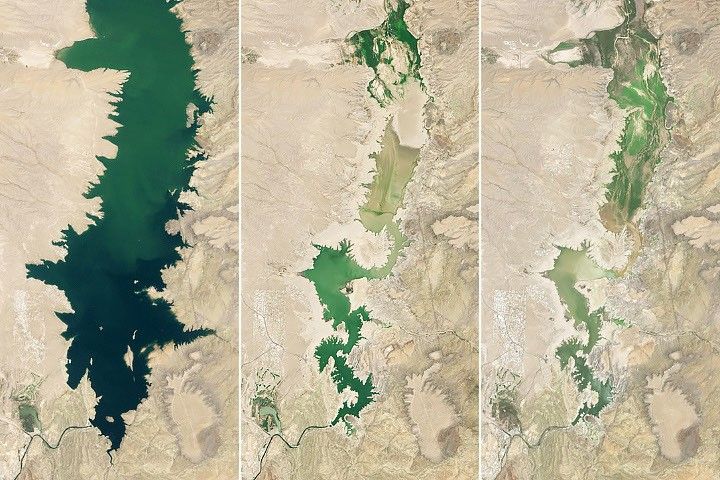
The above animation shows the Amistad Reservoir on the border of Texas and Mexico. It uses a natural-color Landsat image from 1985 overlaid onto a Copernicus Digital Elevation Model (DEM) and bathymetric data from the 3D-LAKES dataset. Vertical relief is exaggerated by a factor of four to emphasize topographic features and landforms. The reservoir is jointly managed by the U.S. and Mexico through the International Boundary and Water Commission (IBWC) for flood control, recreation, and hydroelectric power. Despite its importance to the two countries, the reservoir is slowly shrinking. The surface water transitions dataset shows the water levels retreating in recent decades, with significant recessions between 2012 and 2016. The 3D-LAKES dataset reveals the underwater shape of the reservoir. Together, these datasets complement the in situ water level and conditions data collected throughout the year. 

Tracking Surface Water Transitions

Human communities both shape and are shaped by water. We divert rivers, build reservoirs, and construct artificial islands, while natural forces—storms, meandering rivers, and rising seas—reshape our waterways and coastlines. With satellite data as an important tool to study ecosystem dynamics, researchers have begun to build a more comprehensive global understanding of where water is and how it shifts over time. In their water transitions study, the University of Southampton team focused specifically on permanent changes in lakes, rivers, coastlines, and other water bodies worldwide. 

Looking at long-term changes in surface water can help scientists understand drivers of change, said Gustavo Willy Nagel, lead researcher on the paper. Knowing when a lake began receding helps water managers investigate whether drought, irrigation, or other forces caused the decline. 

Running from July 31, 1985 to November 10, 2025, this animation shows the Amistad Reservoir levels fluctuate with the seasons but slowly decline. The time series is composed of images from Landsats 5, 7, 8, and 9.
Ross Walter/NASA

Scientists, policymakers, and water managers can explore the interactive dataset that Nagel and his team created to visualize changes close to home as well as stark global impacts such as the drying of the Aral Sea, the lakes created by melting glaciers in Tibet, and the building of the Palm Islands in Dubai.

Assessing long-term changes in surface water presents a key challenge, as surface water is extremely dynamic. Seasonal fluctuations and climatic forces mean that rivers, lakes, and coastlines are changing all the time. To identify permanent water changes while excluding seasonal fluctuations, the researchers ran two algorithms. The first detected whether the water body was advancing or retreating over the study period using the Modified Normalized Difference Water Index (mNDWI), which uses the shortwave-infrared (SWIR) instead of the near-infrared (NIR) band. The second algorithm used the Green_Red Normalized Difference Water Index (grNDWI)—an index proposed by the research team—to identify the precise year that the water body transitioned. A change was considered “permanent” if it did not revert to its previous condition during the study period of 1984 to 2022. 

“The dataset is showing, for every location on the planet, areas where water advanced or retracted and the year of that change,” said Nagel.

In this screenshot from the Water Change Time Detection tool on Google Earth Engine, red and orange represent areas where water receded, whereas blue represents areas where water advanced. Overall water levels have receded, including major recessions between 2012 and 2016.

Visualizing Lakes in 3D

Landsat can help us monitor surface water. But what about what’s under the surface? 

In a study published in Scientific Data in October 2025, researchers from Texas A&M University fused Landsat and ICESat-2 data to create bathymetry maps for half a million global lakes and reservoirs. The research team, led by Huilin Gao, used Landsat imagery to calculate the surface area of water bodies, delineate where water meets land, and track how water extent changes over time. Then, they combined  laser altimetry from the ICESat-2 satellite to infer the underwater bathymetry of water bodies. With these measurements, the scientists refined area-elevation relationships, a key metric for understanding how water storage changes with water level.

In this screenshot from the 3D-LAKES dataset, green represents shallow waters while purple represents deeper waters. Comparing this screenshot to the results from the water change detection tool, it appears that the areas where water receded align with the shallower portions of the reservoir.

The resultant dataset, dubbed 3D-LAKES, is static, as bathymetry does not tend to change significantly year to year. “This dataset can support many applications, from monitoring water storage to refining hydrological models,” said Chi-Hsiang Huang, the study’s lead author.

3D-LAKES can be used in combination with Landsat-based maps—like the surface transition research or the popular Global Surface Water dataset—to help water resource managers assess the volume of water held in a reservoir or lake. This allows them to evaluate flood risk, map habitat, or calculate how much water is available during a particularly dry season. Researchers can also track changing water volume over time, helping understand long-term trends in water storage. 

Measuring underwater topography has historically been expensive and impractical at global scales. The 3D-LAKES dataset now provides researchers and managers with crucial bathymetric data for lakes and reservoirs worldwide. “With this new dataset, we can achieve a more comprehensive understanding of the impacts of lakes and reservoirs on regional climatology, water security, and ecosystem services,” said Gao. Both studies provide water and land managers with unprecedented tools for resource management and planning—from the Amistad Reservoir to the Australian Outback to the Brazilian Amazon.

Explore More

Landsat Reveals Reservoir Changes and Bathymetry

5 min read

In two recent studies, researchers used Landsat data to fill key gaps in our knowledge of reservoir structure and dynamics.

Mar 31, 2026
Article

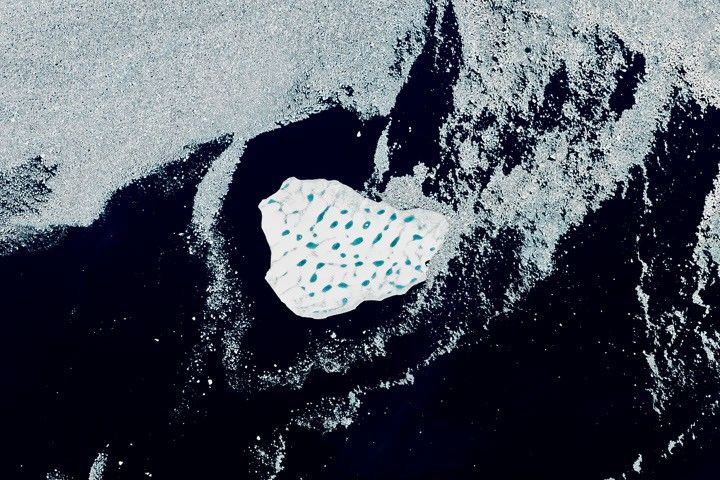
Seeing Blue During Schirmacher’s Summer Melt Season

5 min read

A network of meltwater lakes and drainage channels made an Antarctic ice shelf known for its blue ice areas even…

Mar 30, 2026
Article

Satellite Spots a Spawn

3 min read

The activity of herring around Vancouver Island in British Columbia brightened coastal waters enough to be detectable from space.

Mar 27, 2026
Article

Powered by WPeMatico

Get The Details…

Fires Tear Through Nebraska Grasslands

Fires Tear Through Nebraska Grasslands


February 28, 2026
March 29, 2026

Plains in western Nebraska, divided by the North Platte River, appear in light shades of green and brown in a false-color satellite image.
NASA Earth Observatory / Lauren Dauphin

A burned area on the plains of western Nebraska appears as a large tan area in a false-color satellite image.
NASA Earth Observatory / Lauren Dauphin

Plains in western Nebraska, divided by the North Platte River, appear in light shades of green and brown in a false-color satellite image.
NASA Earth Observatory / Lauren Dauphin
A burned area on the plains of western Nebraska appears as a large tan area in a false-color satellite image.
NASA Earth Observatory / Lauren Dauphin

February 28, 2026

March 29, 2026


Acquired with the VIIRS (Visible Infrared Imaging Radiometer Suite) on the NOAA-21 satellite on February 28 and March 29, 2026, these false-color images (bands M11-I2-I1) show grasslands in western Nebraska before and after several wildland fires spread through the area. NASA Earth Observatory/Lauren Dauphin.

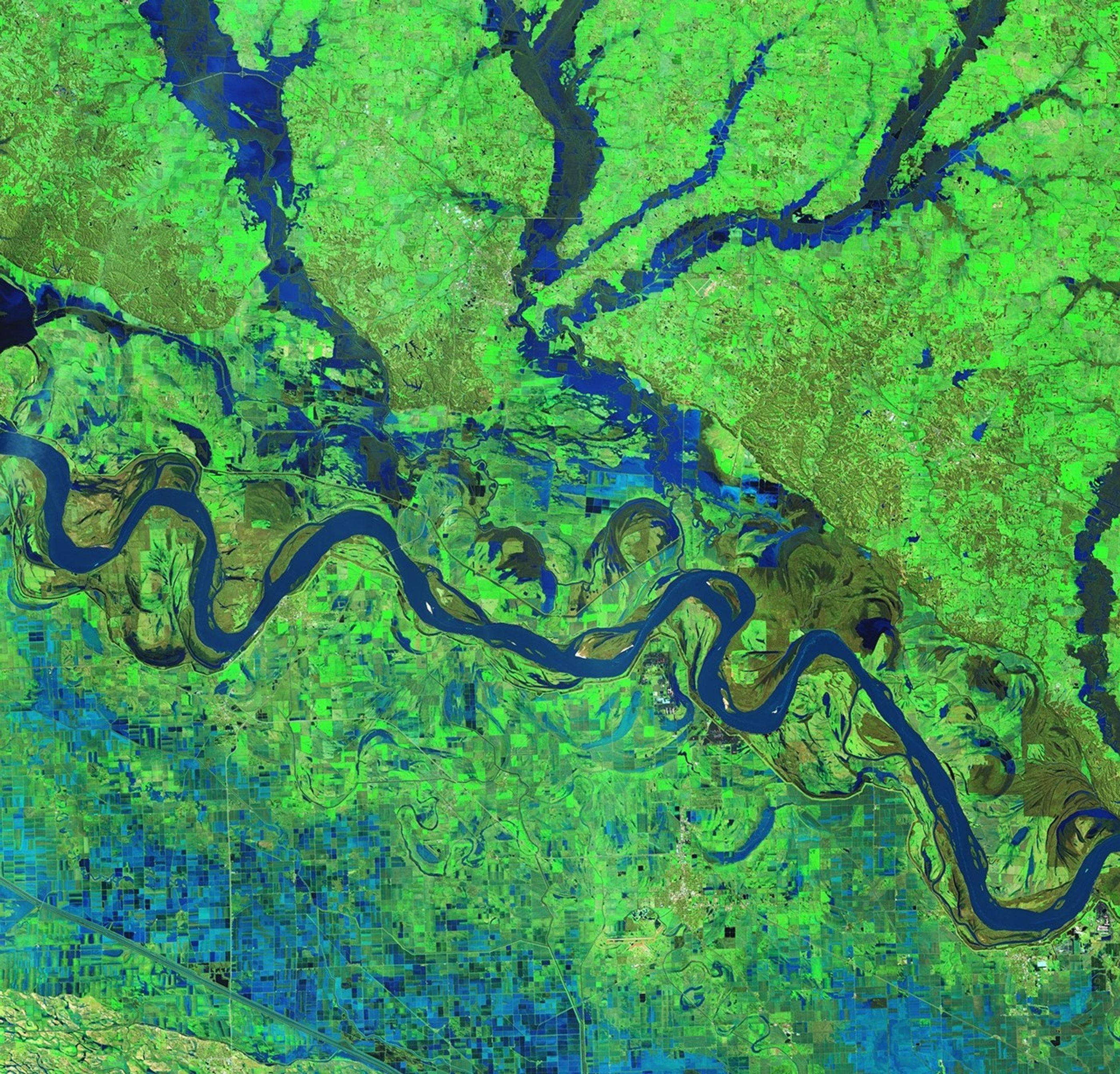
On the afternoon of March 12, 2026, a wildland fire ignited in Morrill County, Nebraska. Within 12 hours, high winds had propelled flames approximately 70 miles (110 kilometers) east-southeast across the prairie. The Morrill fire would burn over 640,000 acres (260,000 hectares) within a week, becoming the largest wildfire in the state’s history.

This image (right) shows the extent of recently burned areas near the North Platte River in western Nebraska on March 29. By this time, authorities reported the Morrill fire was 100 percent contained. However, crews were working to contain two smaller blazes immediately to the northeast, the Ashby and Minor fires, which ignited early on March 26. For comparison, the left image was acquired on February 28, before the fires. Both are false-color to better distinguish the burned areas.

The fires occurred amid an active start for wildfires in the U.S. in 2026. The National Interagency Fire Center (NIFC) reported that 15,436 fires had burned 1,510,973 acres nationwide as of March 27. That’s far higher than the 10-year average—9,195 fires burning 664,792 acres—for the same period.

The Great Plains have been particularly prone to fire in early 2026. Exceptionally dry fuels contributed to rapid fire growth and other unusual fire behavior for the time of year, according to the NIFC. Throughout the winter, much of the region saw warmer and windier-than-average conditions, as well as less than 50 percent of average precipitation over a 90-day period, leading to low soil moisture and grass fuels that were primed to burn.

The fires in western Nebraska affected large areas of ranch and pasture lands, destroyed homes, barns, and fences, and injured or killed livestock, according to news reports. The Morrill fire also burned much of the Crescent Lake National Wildlife Refuge in the Nebraska Sandhills, an area of grasslands, wetlands, and dunes used by migratory birds. Despite the fires, reports indicate that hundreds of thousands of sandhill cranes are still making their annual migration through the Platte River valley.

NASA Earth Observatory images by Lauren Dauphin, using VIIRS data from NASA EOSDIS LANCEGIBS/Worldview, and the Joint Polar Satellite System (JPSS). Story by Lindsey Doermann.

References & Resources

You may also be interested in:

Stay up-to-date with the latest content from NASA as we explore the universe and discover more about our home planet.

Smoke Rises Over Big Cypress National Preserve

2 min read

The National fire has burned tens of thousands of acres within the Florida preserve, fueled by vegetation dried by prolonged…

Article

Fires on the Rise in the Far North

3 min read

Satellite-based maps show northern wildland fires becoming more frequent and widespread as temperatures rise and lightning reaches higher latitudes.

Article

Winds Whip Up Fires and Dust on the Southern Plains

3 min read

Dry, gusty conditions spurred fast-growing fires in Oklahoma and Kansas, along with dangerous dust storms across the region.

Article

Powered by WPeMatico

Get The Details…
Crew Kicks Off Week with Cargo Mission Training and Spacewalk Cleanup

Crew Kicks Off Week with Cargo Mission Training and Spacewalk Cleanup

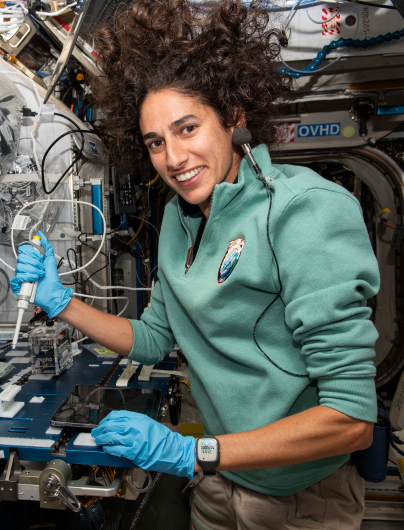
NASA astronaut Jessica Meir waves at the camera during a seven-hour, two-minute spacewalk outside the International Space Station on March 18, 2026.
NASA/Jack Hathaway

Expedition 74 started the week training for the arrival of the next U.S. cargo mission and continuing to clean up after last week’s spacewalk. The orbital residents also practiced medical emergency procedures, unloaded supplies from a new Roscosmos resupply ship, and ensured the International Space Station remains in tip-top shape.

Northrop Grumman’s Cygnus XL cargo spacecraft is the next mission targeted to launch to the orbital outpost no earlier than Wednesday, April 8 at 8:49 a.m. EDT. NASA flight engineers Chris Williams and Jack Hathaway joined each other on Monday and reviewed the upcoming Cygnus XL mission, trained for its rendezvous procedures, and familiarized themselves with the equipment they will use to monitor Cygnus’ arrival. Cygnus will be delivering advanced microgravity research gear to study quantum physics, test stem cell therapies, promote astronaut health, and more.

NASA flight engineer Jessica Meir spent Monday servicing a pair of spacesuits that she and Williams wore during a seven-hour and two-minute spacewalk on  March 18. She first cleaned and flushed the suit’s water-cooling loops that regulate an astronaut’s body temperature in the extreme environment of space. Next, she emptied and refilled the suit’s water system to remove gas bubbles and contaminants keeping its life‑support system healthy and reliable.

Flight engineer Sophie Adenot of ESA (European Space Agency) focused on a variety scientific experiments throughout Monday that explore different microgravity phenomena. Adenot first collected data and powered down hardware from an investigation that is studying ways to quickly download large amounts of data from space. Next, she swapped research samples inside a science freezer then inventoried and trashed used biomedical gear that examined the crew’s cardiovascular health. Adenot finally recorded a video message for students on Earth describing why conducting science in space is important.

All four astronauts also joined Roscosmos cosmonaut Andrey Fedyaev for a mid-afternoon emergency drill reviewing how to use and where to locate medical hardware. The five crewmates also practiced CPR, or cardiopulmonary resuscitation, and discussed individual roles and responsibilities in the event of a medical situation in low Earth orbit.

Fedyaev began his shift replacing smoke detectors and gas masks inside the Nauka science module. The two-time station visitor wrapped up his duties in the orbital outpost’s Roscosmos segment and checked the quality of drinking water.

Station commander Sergey Kud-Sverchkov serviced electrical components and checked the operation of the Elektron oxygen generator inside the Zvezda service module. Afterward, Kud-Sverchkov studied using artificial intelligence tools to improve crew operations and communications with mission controllers. Roscosmos flight engineer Sergei Mikaev spent his day offloading some of the three tons of food, fuel, and supplies packed inside the Progress 94 resupply ship that docked to the Poisk module on March 24.

Learn more about station activities by following the space station blog, @space_station on X, as well as the ISS Facebook and ISS Instagram accounts.

Get the latest from NASA delivered every week. Subscribe here.

Powered by WPeMatico

Get The Details…

Mark A. Garcia

Sendoff for Artemis II Crew

Sendoff for Artemis II Crew

From left to right, NASA astronauts Andre Douglas, Victor Glover, and Christina Koch, CSA (Canadian Space Agency) astronauts Jenni Gibbons, NASA astronaut Reid Wiseman, and CSA astronaut Jeremy Hansen pose in front of an airplane. They are all wearing blue jumpsuits with patches and gray harnesses.
NASA/Josh Valcarcel

From left to right, NASA astronauts Andre Douglas, Victor Glover, and Christina Koch, CSA (Canadian Space Agency) astronauts Jenni Gibbons, NASA astronaut Reid Wiseman, and CSA astronaut Jeremy Hansen pose for a photo before the Artemis II crew proceed to a media event on March 27, 2026. Douglas and Gibbons are the backup crew members for the mission; they would join the crew if a NASA or CSA astronaut, respectively, is unable to take part in the flight.

Artemis II is NASA’s first crewed mission under the Artemis program and will launch from the agency’s Kennedy Space Center in Florida. It will send Wiseman, Glover, Koch, and Hansen on an approximately 10-day journey around the Moon. Among other objectives, the agency will test the Orion spacecraft’s life support systems for the first time with people and lay the groundwork for future crewed Artemis missions.

Image credit: NASA/Josh Valcarcel

Powered by WPeMatico

Get The Details…

Monika Luabeya