NASA Ames Experts Available for Artemis II Flight Test Interviews

NASA Ames Experts Available for Artemis II Flight Test Interviews

Official logo for the National Aeronautics and Space Administration.

NASA’s Ames Research Center in Silicon Valley invites media to interview local subject matter experts on Friday, March 27 from 10 a.m. to 2 p.m. ahead of the agency sending astronauts around the Moon for the first time in more than 50 years with the Artemis II flight test. NASA teams are gearing up for the final stretch of prelaunch preparations ahead of launch as soon as Wednesday, April 1.

Artemis II will send four astronauts on an approximately 10-day mission around the Moon to test the systems that will return astronauts to the lunar surface and prepare for crewed missions to Mars.

NASA Ames has continued to build on its contributions to the Artemis program, helping to advance research, engineering, science, and technology for Artemis II.

Ways Ames is contributing to Artemis II: 

  • Engineers and researchers collaborated across the agency to validate technologies using Ames’ advanced testing facilities such as the Arc Jet Complex.
  • The center has multiple scientists who will participate on the Artemis II science team, working to guide the mission’s lunar observations.
  • Researchers helped the SLS (Space Launch System) team increase airflow around the rocket and reduce vibration, resulting in a smoother ascent into space.
  • The center also supports mission assurance through system testing, software verification, and fault management, and will participate in post-flight analysis of Artemis II performance.

Media requesting a virtual interview with one of the subject matter experts below should email the Ames Office of Communications at arc-dl-newsroom@mail.nasa.gov by 5 p.m. on March 26.

A media resource reel is available upon request.

NASA Ames experts available for interview: 

  • Eugene Tu, NASA Ames center director 
  • Anthony Colaprete, NASA Ames acting director of science  
  • Parul Agrawal, engineering project manager, Orion at NASA Ames 

Artemis II will be the first crewed mission under NASA’s Artemis program, which will send astronauts on increasingly difficult missions to explore more of the Moon for scientific discovery, economic benefits, and to lay the foundation to the Red Planet. 

To learn more about NASA’s Artemis campaign, visit: 

https://www.nasa.gov/artemis

-end- 

Tiffany Blake 
Ames Research Center, Silicon Valley 
650-604-4789 
tiffany.n.blake@nasa.gov  

To receive local NASA Ames news, email local-reporters-request@lists.arc.nasa.gov with “subscribe” in the subject line. To unsubscribe, email the same address with “unsubscribe” in the subject line.   

Powered by WPeMatico

Get The Details…
Arezu Sarvestani

NASA Sets Coverage for First Artemis Crewed Mission Around Moon

NASA Sets Coverage for First Artemis Crewed Mission Around Moon

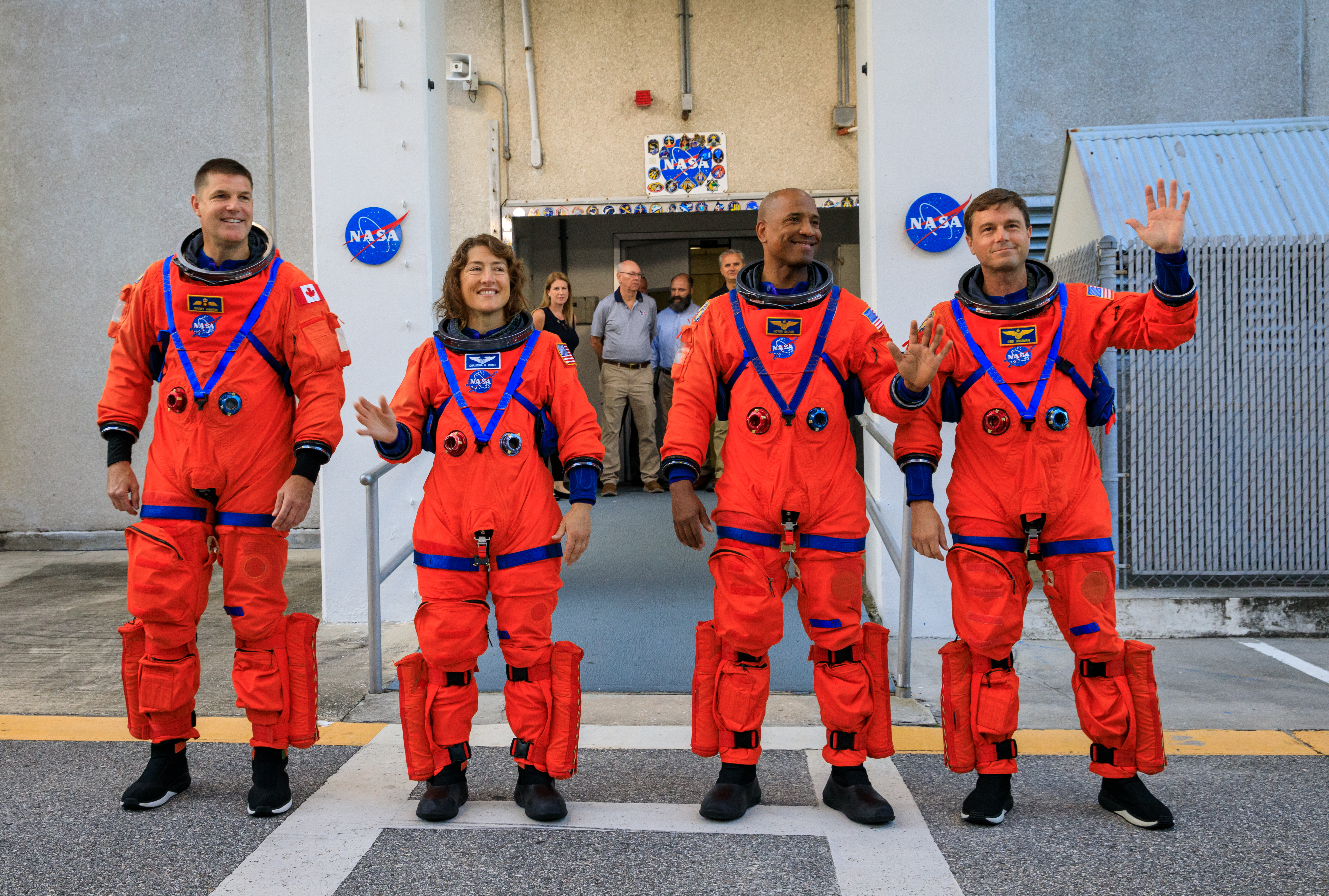
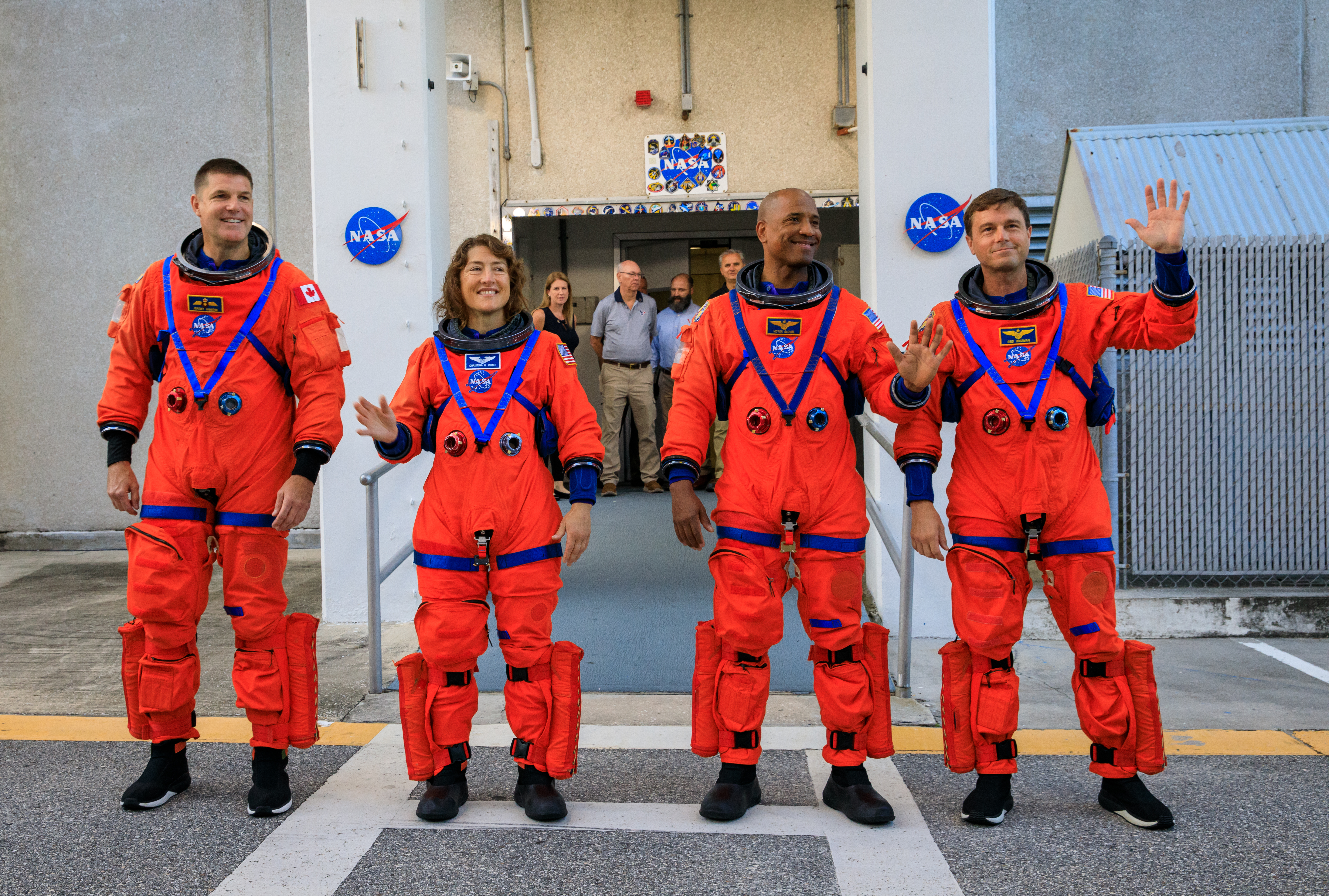
Artemis II crew members (from left) CSA (Canadian Space Agency) astronaut Jeremy Hansen, and NASA astronauts Christina Koch, Victor Glover, and Reid Wiseman walk out of Astronaut Crew Quarters inside the Neil Armstrong Operations and Checkout Building to the Artemis crew transportation vehicles prior to traveling to Launch Pad 39B as part of an integrated ground systems test at Kennedy Space Center in Florida on Sept. 20, 2023, to test the crew timeline for launch day.
NASA/Kim Shiflett

A variety of prelaunch, launch, and mission events for NASA’s Artemis II mission around the Moon will stream online. The agency is targeting no earlier than Wednesday, April 1, for the test flight during a two-hour window that opens at 6:24 p.m. EDT, with additional launch opportunities through Monday, April 6.

Artemis II is NASA’s first crewed mission under the Artemis program and will launch from the agency’s Kennedy Space Center in Florida. It will send NASA astronauts Reid Wiseman, Victor Glover, Christina Koch, and CSA (Canadian Space Agency) astronaut Jeremy Hansen on an approximately 10-day journey around the Moon. Among objectives, the agency will test the Orion spacecraft’s life support systems for the first time with people and lay the groundwork for future crewed Artemis missions.

Briefings, events, and 24/7 mission coverage will stream on the agency’s YouTube channel, and events will each have their own stream closer to their start time. Learn how to watch NASA content through a variety of online platforms, including social media.

The date and/or time of all events are subject to change. A full listing of coverage activities for Artemis II is available online:

https://go.nasa.gov/4c46fOu

The following highlighted prelaunch and launch events are all listed in Eastern time:

Friday, March 27

  • 2:30 p.m.: Agency leadership, including NASA Administrator Jared Isaacman, along with CSA (Canadian Space Agency) President Lisa Campbell, and other leaders, will greet the astronauts as they arrive at NASA Kennedy. The Artemis II crew members will answer questions from media in attendance.

Sunday, March 29

  • 9:30 a.m.: The Artemis II crew members will virtually answer reporters’ questions from their quarantine facility.
  • 2 p.m.: NASA will hold a news conference to provide a status update for launch.

Monday, March 30

  • 5 p.m.: Following a mission management meeting, NASA will host a news conference to provide an update on launch preparations.

Tuesday, March 31

  • 1 p.m.: NASA will hold a prelaunch news conference.

Wednesday, April 1

  • 7:45 a.m.: Coverage of tanking operations to load propellant into NASA’s (SLS) Space Launch System rocket begins, including views of the rocket and audio from a commentator.
  • 12:50 p.m.: NASA+ coverage of launch begins. Coverage will continue on YouTube after Orion’s solar array wings deploy in space.
  • Approximately two-and-a-half hours after launch, NASA will hold a postlaunch news conference after the SLS rocket’s upper stage performs a burn to send Orion and its crew to high Earth orbit.

Mission coverage

NASA’s real-time coverage will continue throughout the mission on YouTube. The agency also will provide a separate live stream of views from the Orion spacecraft as bandwidth allows.

The agency will provide daily mission status briefings from NASA’s Johnson Space Center in Houston beginning Thursday, April 2, except for April 6, due to lunar flyby activities.

The crew will participate in live conversations throughout the mission. NASA will provide the exact times of each of these downlink events in the Artemis blog and on the agency’s launch events page.

To participate virtually in briefings, media must RSVP no later than two hours before the start of each briefing to the NASA Johnson newsroom at: jsccommu@mail.nasa.gov.

NASA website launch, mission coverage

Updates during the launch countdown and throughout the mission will be posted on the Artemis blog.

All the latest imagery will be available at: Artemis II Multimedia

To track Orion in space, visit: nasa.gov/trackartemis

Attend launch virtually

Members of the public may register to attend the launch virtually. NASA’s virtual guest program for this mission includes curated launch resources, notifications about related opportunities or changes, and a stamp for the NASA virtual guest passport following launch.

Audio-only launch coverage

Media may listen to the audio-only coverage of the tanking and launch broadcast by dialing 256-715-9946, passcode 682 040 632. For those in Brevard County on the Space Coast, launch audio also will be available on Launch Information Service and Amateur Television System’s VHF radio frequency 146.940 MHz and KSC Amateur Radio Club’s UHF radio frequency 444.925 MHz, FM mode.

The deadline for media accreditation for in-person coverage of launch and mission events has passed. The agency’s media credentialing policy is available online. For questions about media accreditation at NASA Kennedy, please email: ksc-media-accreditat@mail.nasa.gov. For questions about media accreditation at NASA Johnson, please email: jsccommu@mail.nasa.gov.

For information on obtaining feeds, email the NASA+ programming team: nasa-dl-nasaplus-programming@mail.nasa.gov.

As part of Golden Age of innovation and exploration, NASA will send Artemis astronauts on increasingly difficult missions to explore more of the Moon for scientific discovery, economic benefits, and to build on our foundation for the first crewed missions to Mars.

Learn more about NASA’s Artemis program by visiting:

https://www.nasa.gov

-end-

Cheryl Warner / Lauren Low
Headquarters, Washington
202-358-1600
cheryl.m.warner@nasa.gov / lauren.e.low@nasa.gov

Tiffany Fairley
Kennedy Space Center, Florida
321-747-8306
tiffany.l.fairley@nasa.gov

Chelsey Ballarte
Johnson Space Center, Houston
281-483-5111
chelsey.n.ballarte@nasa.gov

Share

Details

Last Updated

Mar 25, 2026

Editor
Jessica Taveau

Powered by WPeMatico

Get The Details…
Jennifer M. Dooren

NASA Sets Coverage for Artemis II Moon Mission

NASA Sets Coverage for Artemis II Moon Mission

Artemis II crew members CSA (Canadian Space Agency) astronaut Jeremy Hansen, and NASA astronauts Christina Koch, Victor Glover, and Reid Wiseman walk out of the astronaut crew quarters inside the Neil Armstrong Operations and Checkout Building to the Artemis crew transportation vehicles prior to traveling to Launch Pad 39B as part of an integrated ground systems test at NASA’s Kennedy Space Center in Florida on Sept. 20, 2023, to test the crew timeline for launch day.
NASA/Kim Shiflett

Editor’s note: NASA will continuously update this Artemis II briefings and mission events page throughout prelaunch, launch, and mission activities.

NASA will provide live coverage of prelaunch, launch, and mission events for the agency’s upcoming Artemis II crewed test flight around the Moon. Launch is targeted for no earlier than 6:24 p.m. EDT Wednesday, April 1, with a two-hour launch window. Additional opportunities for launch run through Monday, April 6.

Artemis II is NASA’s first crewed mission under the Artemis program and will launch from the agency’s Kennedy Space Center in Florida. It will send NASA astronauts Reid Wiseman, Victor Glover, Christina Koch, and CSA (Canadian Space Agency) astronaut Jeremy Hansen on an approximately 10-day journey around the Moon. Launching on NASA’s SLS (Space Launch System) rocket, the agency will test the Orion spacecraft’s life support systems for the first time with humans aboard, helping lay the groundwork for future crewed Artemis missions.

Briefings, events, and 24/7 mission coverage will be on the agency’s YouTube channel, and events will each have their own stream closer to their start time.

Watch agency launch, lunar flyby, and splashdown coverage on NASA+ and Amazon Prime. Learn how to watch NASA content through a variety of online platforms, including social media.

For information on obtaining feeds, email the NASA+ programming at team at: nasa-dl-nasaplus-programming@mail.nasa.gov.

The deadline for media accreditation for in-person coverage of launch and mission events has passed. The agency’s media credentialing policy is available online. For questions about media accreditation at NASA Kennedy, please email: ksc-media-accreditat@mail.nasa.gov. For questions about media accreditation at the agency’s Johnson Space Center in Houston, please email: jsccommu@mail.nasa.gov.

A limited number of seats inside the Kennedy auditorium will be available during prelaunch briefings to previously credentialed journalists on a first-come, first-served basis. To participate by telephone, media must RSVP no later than two hours before the start of each briefing to: ksc-newsroom@mail.nasa.gov.

Beginning Thursday, April 2, briefings will occur from NASA Johnson. To participate by telephone in these briefings, media must RSVP no later than two hours before the start of each briefing to the Johnson newsroom at: jsccommu@mail.nasa.gov.

The time of events is subject to change. All events are listed in Eastern Time.

Friday, March 27

2:30 p.m.: The Artemis II crew will arrive at Kennedy and answer questions from credentialed media in attendance. Agency leadership, including NASA Administrator Jared Isaacman, also will attend, along with CSA (Canadian Space Agency) President Lisa Campbell.

Available for questions are:

  • Reid Wiseman, commander, NASA astronaut
  • Victor Glover, pilot, NASA astronaut,  
  • Christina Koch, mission specialist, NASA astronaut
  • Jeremy Hansen, mission specialist, CSA astronaut

Sunday, March 29

9:30 a.m.: The Artemis II crew members will virtually answer reporters’ questions from their quarantine facility.

2 p.m.: NASA will hold a status update on preparations for launch with the following participants:

  • Lori Glaze, acting associate administrator, Exploration Systems Development Mission Directorate
  • Shawn Quinn, program manager, Exploration Ground Systems
  • Howard Hu, manager, Orion Program
  • Chris Cianciola, deputy manager, SLS Program

Monday, March 30

5 p.m.: Following a key mission meeting, NASA will host a news conference to provide a status update on preparations for launch. NASA participants include:

  • Associate Administrator Amit Kshatriya
  • John Honeycutt, chair, Mission Management Team
  • Charlie Blackwell-Thompson, launch director
  • Emily Nelson, chief flight director

Tuesday, March 31

1 p.m.: NASA will hold a prelaunch news conference on countdown status with the following participants:

  • Launch team representative
  • Mark Burger, launch weather officer, 45th Weather Squadron Cape Canaveral Space Force Station   

Wednesday, April 1

7:45 a.m.: Coverage of tanking operations to load propellant into the SLS rocket begins, including views of the rocket and audio from a commentator.

12:50 p.m.: NASA+ coverage of launch begins. Coverage continues on YouTube after Orion’s solar array wings deploy in space.

Approximately two-and-a-half hours after launch, NASA will hold a post-launch news conference after the SLS rocket’s upper stage performs a burn to send Orion and its crew to high Earth orbit. The start time is subject to change, based on the exact liftoff time. This postlaunch news conference will include the following participants:

  • Administrator Jared Isaacman
  • Associate Administrator Amit Kshatriya
  • Lori Glaze, acting associate administrator, Exploration Systems Development Mission Directorate
  • John Honeycutt, chair, Mission Management Team
  • Norm Knight, director, Flight Operations Directorate

Mission Coverage

NASA’s real-time coverage will continue throughout the mission on YouTube. The agency also will provide a separate live stream of views from the Orion spacecraft, as bandwidth allows.

The agency will provide daily mission status briefings from NASA Johnson beginning April 2, except for April 6, due to lunar flyby activities. Times are subject to change based on the exact time of launch and mission operations.

The crew will participate in live conversations throughout the mission, known as downlinks. NASA will provide the exact times of each of these downlink events in the Artemis blog and on this page.

Times below are subject to change based on the exact time of launch and mission operations.

Thursday, April 2

8:30 p.m.: Mission status media briefing after the translunar injection burn to send the crew in Orion toward the Moon.

10:24 p.m.: Live downlink event

Friday, April 3

3:30 p.m.: Mission status briefing

8:44 p.m.: Live downlink event

Saturday, April 4

12:59 a.m.: Live CSA downlink event

4:34 p.m.: Live downlink event

5:15 p.m.: Mission status briefing

Sunday, April 5

12:14 a.m.: Live CSA downlink event

3:30 p.m.: Mission status briefing

Monday, April 6

12:45 p.m.: NASA+ coverage of lunar flyby begins.

1:45 p.m.: For a launch on April 1, the crew is expected to surpass the record for human’s farthest distance from Earth previously set by Apollo 13, at 248,655 miles from Earth.

Additionally, for a launch that day, video during the lunar flyby may be limited while the spacecraft flies through an eclipse. The crew also is expected to temporarily experience a loss of communications with Earth as the Orion flies behind the Moon’s far side.

10:39 p.m.: Live downlink event

Tuesday, April 7

2:29 p.m.: The Artemis II crew will speak with the astronauts aboard the International Space Station in an audio-only conversation.

4 p.m.: Mission status briefing

Wednesday, April 8

3:30 p.m.: Mission status briefing

7:09 p.m.: Live CSA downlink event

Thursday, April 9

3:30 p.m.: Mission status briefing

5:59 p.m.: Crew news conference

7:54 p.m.: Live downlink event

Friday, April 10

6:30 p.m.: NASA+ coverage of the crew’s return to Earth begins

8:06 p.m.: Splashdown in the Pacific Ocean. NASA and U.S. Department of War personnel are expected to assist the crew out of Orion and fly them to a waiting recovery ship.

10:35 p.m.: Post-splashdown news conference at NASA Johnson

Details on the astronauts’ return to Houston will be shared later.

NASA website launch, mission coverage

NASA will provide updates during the launch countdown and throughout mission on the Artemis blog.

Throughout the mission, the latest imagery will be available at: Artemis II Multimedia

To track Orion in space, visit: nasa.gov/trackartemis

Attend launch virtually

Members of the public may register to attend this launch virtually. NASA’s virtual guest program for this mission includes curated launch resources, notifications about related opportunities or changes, and a stamp for the NASA virtual guest passport following launch.

Audio-only launch coverage

Media may listen to the audio-only coverage of the tanking and launch broadcast by dialing 256-715-9946, passcode 682 040 632. For those in Brevard County on the Space Coast, launch audio also will be available on Launch Information Service and Amateur Television System’s VHF radio frequency 146.940 MHz and KSC Amateur Radio Club’s UHF radio frequency 444.925 MHz, FM mode.

As part of Golden Age of innovation and exploration, NASA will send Artemis astronauts on increasingly difficult missions to explore more of the Moon for scientific discovery, economic benefits, and to build on our foundation for the first crewed missions to Mars.

To learn more about the Artemis program, visit:

https://www.nasa.gov/artemis

-end-

Powered by WPeMatico

Get The Details…
Lauren E. Low

Artemis Moon Tree Dedicated in Honor of Mary W. Jackson

Artemis Moon Tree Dedicated in Honor of Mary W. Jackson

4 min read

Artemis Moon Tree Dedicated in Honor of Mary W. Jackson

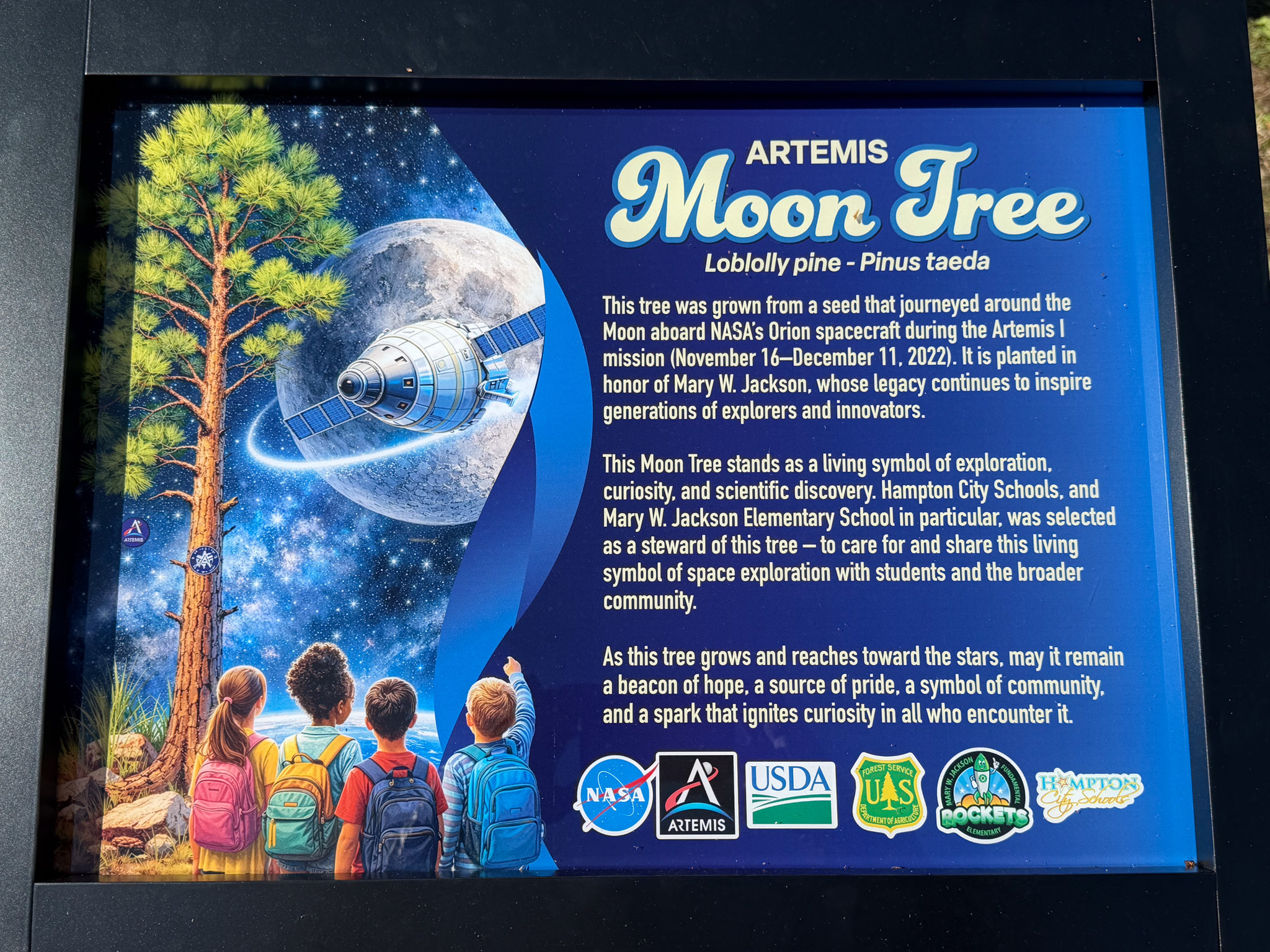
Sign for an Artemis Moon Tree planted nearby. The sign features an illustration of a loblolly pine tree beside the Moon and NASA's Orion spacecraft, with four children looking up at it. Text explains that the tree was grown from a seed that traveled around the Moon aboard Orion during the Artemis I mission (November–December 2022) and is planted in honor of Mary W. Jackson. It describes the tree as a symbol of exploration, curiosity, and discovery, and notes that Hampton City Schools and Mary W. Jackson Elementary School are stewards of the tree. NASA, Artemis, USDA Forest Service, and partner logos appear along the bottom.
Sign installed next to the planted Artemis Moon Tree.
Credit: NASA

On March 18, 2026, students, staff, and members of NASA’s Langley Research Center gathered at Mary W. Jackson Elementary School in Hampton to celebrate the dedication of a remarkable addition to the campus – an Artemis Moon Tree. Although formally dedicated on this day, the loblolly pine had already taken root months earlier, having been planted on November 21st, 2025, by students and staff.

NASA eClips educators from the National Institute of Aerospace’s Center for Integrative STEM Education (NIA-CISE) applied for and received the Artemis Moon Tree through NASA’s Office of STEM Engagement. NASA eClips, part of NASA’s Science Activation Program, strives to deepen science literacy by engaging learners and educators in experiences and standards-aligned resources grounded in NASA science.

The tree’s journey is as extraordinary as its setting. The seed orbited the Moon in 2022 as part of the Artemis I before returning to Earth, where it was nurtured into a sapling by the U.S. Department of Agriculture Forest Service. In late spring 2025, it arrived in Hampton and was cared for by NASA eClips educators at NIA-CISE until it could be planted by third- through fifth-grade students at Mary W. Jackson Elementary School. The planting site was chosen to honor the legacy of Mary W. Jackson, NASA’s first Black female engineer.

In addition to recognizing current and former members of NASA Langley Research Center in attendance, the ceremony highlighted the collaboration that brought the project to life. A short video showcased the teamwork behind the tree’s planting, reflecting the coordination essential to NASA missions. Students worked in groups – Earth Excavators, Compost Crew, Mulch Movers, and Water Brigade – to carefully plant the tree. Fifth-grader Caiden captured the experience best: “My job was putting soil around the tree, and at first, it seemed like a small task, but I realized it was actually one of the most important parts. The soil is what helps the tree stand strong and grow over time. It made me think about how, in life, the little things we do – like helping others, staying consistent, and doing our part – can make a big difference. Just like this tree came from a seed that traveled around the moon, we all have the potential to go far and do amazing things, but we need a strong foundation to grow…I’m proud that I helped give this tree its start, and I’ll always remember that even small actions can lead to something big.” The ceremony concluded at the planting site with an official ribbon cutting, marking the beginning of the tree’s life as a centerpiece of the school community.

Mary W. Jackson Elementary School’s Artemis Moon Tree also serves as a “bookend” to an Apollo Moon Tree, a sycamore tree that was planted on April 30, 1976, at Albert W. Patrick Elementary School (formerly Booker Elementary School). Together, these trees represent generations of exploration, linking past and present NASA missions in a living timeline of discovery. Their presence in Hampton is especially meaningful, as the city was home to NASA’s earliest research efforts and to the astronauts of Project Mercury, as well as pioneering mathematicians and engineers including Katherine Johnson, Dorothy Vaughan, and Christine Darden – trailblazers who, like Mary W. Jackson, helped shape the nation’s journey into space.

The Artemis Moon Tree stands as a living symbol of exploration, curiosity, and scientific discovery – hallmarks of NASA. Entrusted to the care of the students and staff at Mary W. Jackson Elementary, who represent the next generation of thinkers, innovators, and explorers, it will continue to serve as a source of learning and inspiration for years to come.

Share

Details

Last Updated
Mar 25, 2026
Editor
NASA Science Editorial Team
Location
NASA Langley Research Center

Powered by WPeMatico

Get The Details…

Science and Operational Prep Work Top Wednesday’s Schedule

Science and Operational Prep Work Top Wednesday’s Schedule

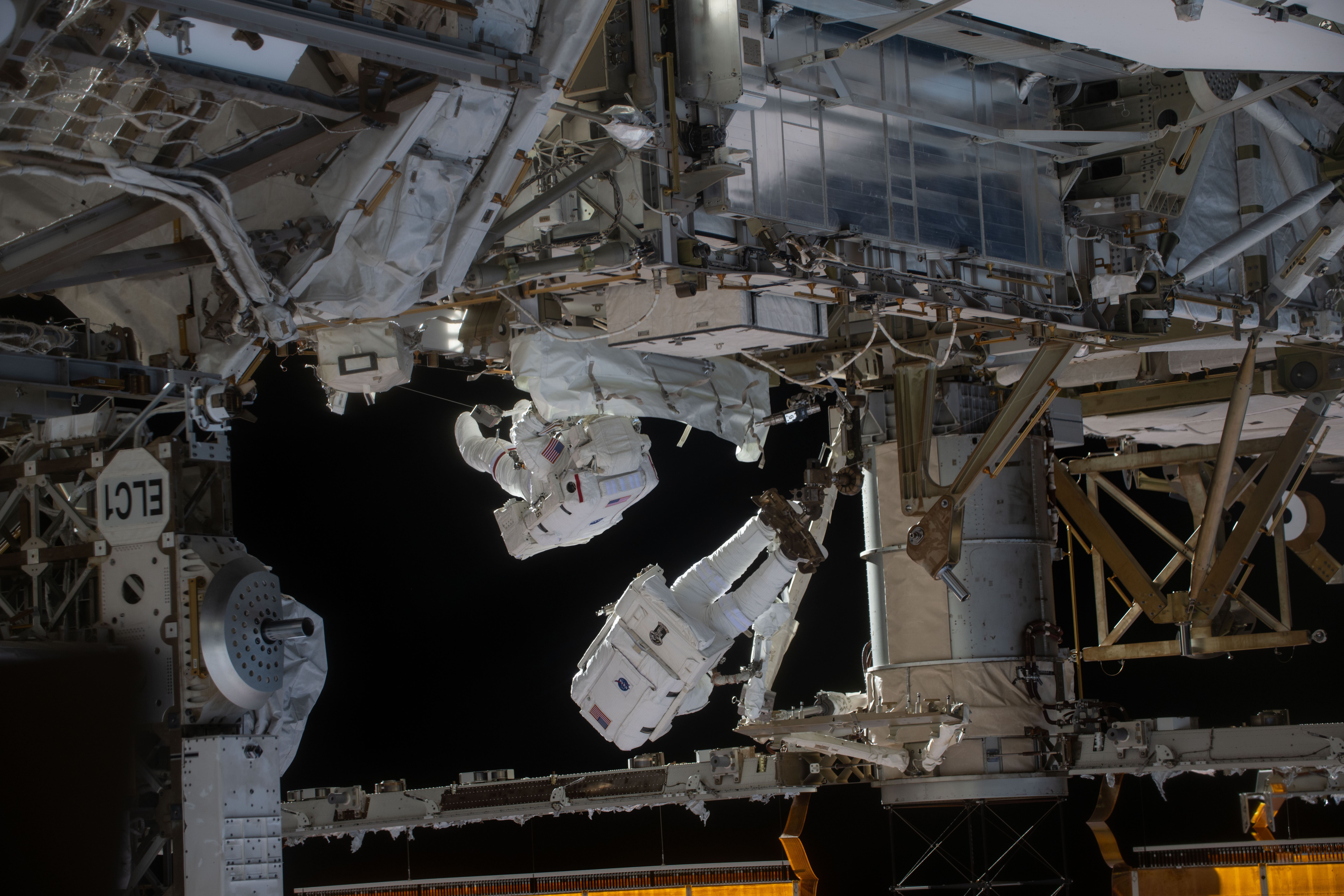
NASA astronauts Jessica Meir and Chris Williams are pictured outside the International Space Station during a seven-hour, two-minute spacewalk on March 18, 2026. Credit: NASA/Jack Hathaway
NASA astronauts Jessica Meir and Chris Williams are pictured outside the International Space Station during a seven-hour, two-minute spacewalk on March 18, 2026.
NASA/Jack Hathaway

Science preparation and procedure reviews topped the schedule aboard the International Space Station on Wednesday. The seven Expedition 74 crew members conducted a variety of tasks to ready for upcoming experiments and to conduct cargo operations.

NASA astronauts Jack Hathaway and Jessica Meir worked separately throughout the day to consolidate food and complete post-spacewalk work following the March 18 spacewalk to install a modification kit on the 2A power channel of the space station ahead of future solar array upgrades. This work included the inspection of the suit glove heaters, data recorders, cameras, and helmet lights.

To prepare for upcoming experiment operations, European Space Agency (ESA) astronaut Sophie Adenot spent the morning cleaning and inserting samples into the Soft Matter Dynamics experiment containers, which explore the dynamics of droplets and their size evolution in emulsions. After donning the RelaxPro actigraphy device earlier this week, Adenot transferred the data to ground teams for analysis. She then familiarized herself with spacesuit systems before loading software onto payload hard drives.

In the Kibo module, NASA astronaut Chris Williams spent a large portion of the day installing new data management system racks, which are used to house and manage data for various science experiments. Later in the day, he worked on food consolidation then inspected medical hardware.

Following yesterday’s arrival of the Progress 94 cargo spacecraft,  space station commander Sergey Kud-Sverchkov and flight engineer Sergei Mikaev reviewed cargo transfer and stowage plans as they gear up to unload the nearly three tons of food, fuel, and supplies delivered by the spacecraft.

Later on, Kud-Sverchkov and flight engineer Andrey Fedyaev photographed landmarks across Earth for documentation. Fedyaev also spent time throughout the day conducting some orbital plumbing and reconfiguring station cameras.

Learn more about station activities by following the space station blog@space_station on X, as well as the ISS Facebook and ISS Instagram accounts.

Get the latest from NASA delivered every week. Subscribe here.

Powered by WPeMatico

Get The Details…

Abby Graf