NASA’s SpaceX Crew-9 Mission on Track for Saturday Launch

NASA’s SpaceX Crew-9 Mission on Track for Saturday Launch
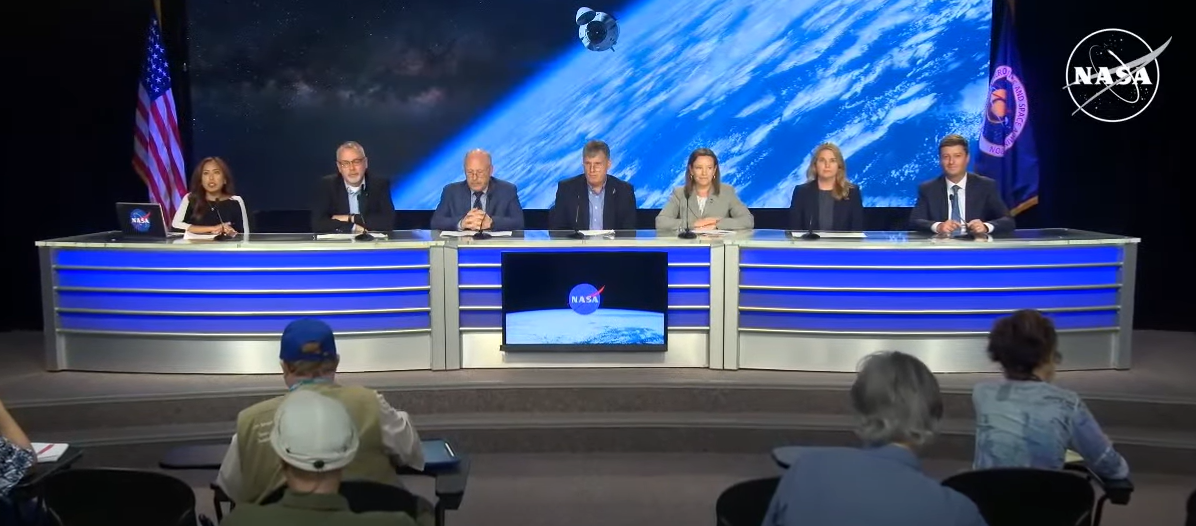
Image of NASA and mission partners held a prelaunch news conference for the NASA's SpaceX Crew-9 mission.
A prelaunch news briefing takes place inside the John Holliman Auditorium of the News Center at NASA’s Kennedy Space Center in Florida on Friday, Sept. 27, 2024, ahead of NASA’s SpaceX Crew-9 mission to the International Space Station. Photo credit: NASA

NASA’s SpaceX Crew-9 two-man crew is ready for their mission to the International Space Station.

NASA and mission partners held a prelaunch news conference on Sept. 27 and the 1:17 p.m. EDT Saturday, Sept. 28, liftoff remains on schedule from Space Launch Complex-40 at Cape Canaveral Space Force Station in Florida.

Launch weather officers with Cape Canaveral Space Force Station’s 45th Weather Squadron predict a 55% of favorable weather conditions for the launch. The cumulus cloud rule, flight through precipitation, and surface electric fields rule are the primary weather concerns.

SpaceX’s Dragon spacecraft and Falcon 9 rocket are back on the pad and cargo loading will soon begin. Both rolled back to the hangar on Wednesday to protect from Hurricane Helene.

Crew-9 will be the first human spaceflight mission to launch from the pad, carrying NASA astronaut Nick Hague, commander, and Roscosmos cosmonaut Aleksandr Gorbunov, mission specialist, to the orbiting laboratory for a five-month science mission.

“We moved to a different pad, Space Launch Complex-40, and it’s great to have that flexibility to be able to use Launch Pad 39A or Space Launch Complex-40 for launches,” said Ken Bowersox, associate administrator, NASA’s Space Operations Mission Directorate. “I’m so proud of the commercial crew team, the International Space Station team, and our partners at SpaceX and the work they’ve done to prepare for launch.”

Watch a replay of the prelaunch news conference.

NASA’s broadcast coverage of the Crew-9 launch begins at 9:10 a.m. on Saturday, Sept. 28. Watch live on NASA+ and the agency’s website. Learn how to stream NASA content through a variety of platforms, including social media.

Powered by WPeMatico

Get The Details…

Elyna Niles-Carnes

NASA, SpaceX to Discuss Crew-9 Mission

NASA, SpaceX to Discuss Crew-9 Mission

Image shows SpaceX's Dragon spacecraft atop a Falcon 9 rocket ahead of NASA's SpaceX Crew-9 mission from Space Launch Complex-40 at Cape Canaveral Space Force Station in Florida on Tuesday, Sept. 24, 2024.
A SpaceX Falcon 9 rocket with the company’s Dragon spacecraft on top is seen Tuesday, Sept. 24, 2024, on the launch pad at Space Launch Complex-40 as preparations continue for the Crew-9 mission at Cape Canaveral Space Force Station in Florida.  Photo credit: NASA/Keegan Barber

In less than 24 hours, Crew-9 crew members NASA astronaut Nick Hague, commander, and Roscosmos cosmonaut Aleksandr Gorbunov, mission specialist, will launch to the International Space Station.

Leading up to liftoff, NASA and SpaceX plan to host a prelaunch news conference from the agency’s Kennedy Space Center in Florida on Friday, Sept. 27, at 5 p.m. EDT with the following participants:

  • NASA Associate Administrator Jim Free
  • Ken Bowersox, associate administrator, NASA’s Space Operations Mission Directorate
  • Steve Stich, manager, NASA’s Commercial Crew Program
  • Dina Contella, deputy manager, NASA’s International Space Station Program
  • Jennifer Buchli, chief scientist, NASA’s International Space Station Program
  • William Gerstenmaier, vice president, Build & Flight Reliability, SpaceX
  • Brian Cizek, launch weather officer, 45th Weather Squadron, Cape Canaveral Space Force Station

Watch the event live on NASA+ and the agency’s website. Learn how to stream NASA content through a variety of platforms, including social media.

Launch of the Crew-9 mission is targeted for 1:17 p.m. EDT on Saturday, Sept. 28, aboard SpaceX’s Dragon spacecraft and Falcon 9 rocket from Space Launch Complex-40 at Cape Canaveral Space Force Station. This is the first time a human spaceflight mission will launch from the pad.

More details about the launch will be posted on the mission blog, @commercial_crew on X, or commercial crew on Facebook.

Powered by WPeMatico

Get The Details…

Elyna Niles-Carnes

The Science of the Perfect Cup for Coffee 

The Science of the Perfect Cup for Coffee 

2 min read

Preparations for Next Moonwalk Simulations Underway (and Underwater)

A selection of red and black Burnout coffee mugs.
Research into phase-change material (PCM) options for NASA helped one of the researchers find the ideal material to use in a mug that maintains the ideal temperature of a hot beverage for hours. ThermAvant International now offers mugs and tumblers.
Credit: ThermAvant International LLC

Dr. Hongbin Ma was tired of drinking coffee that had gone cold. Fortunately, Ma, the CEO of ThermAvant Technologies LLC in Columbia, Missouri, was working on a NASA-funded study of phase-change materials, which are used to hold a steady temperature. Materials absorb or release more heat as they transition from solid to liquid or vice versa than they do before or after this phase change.

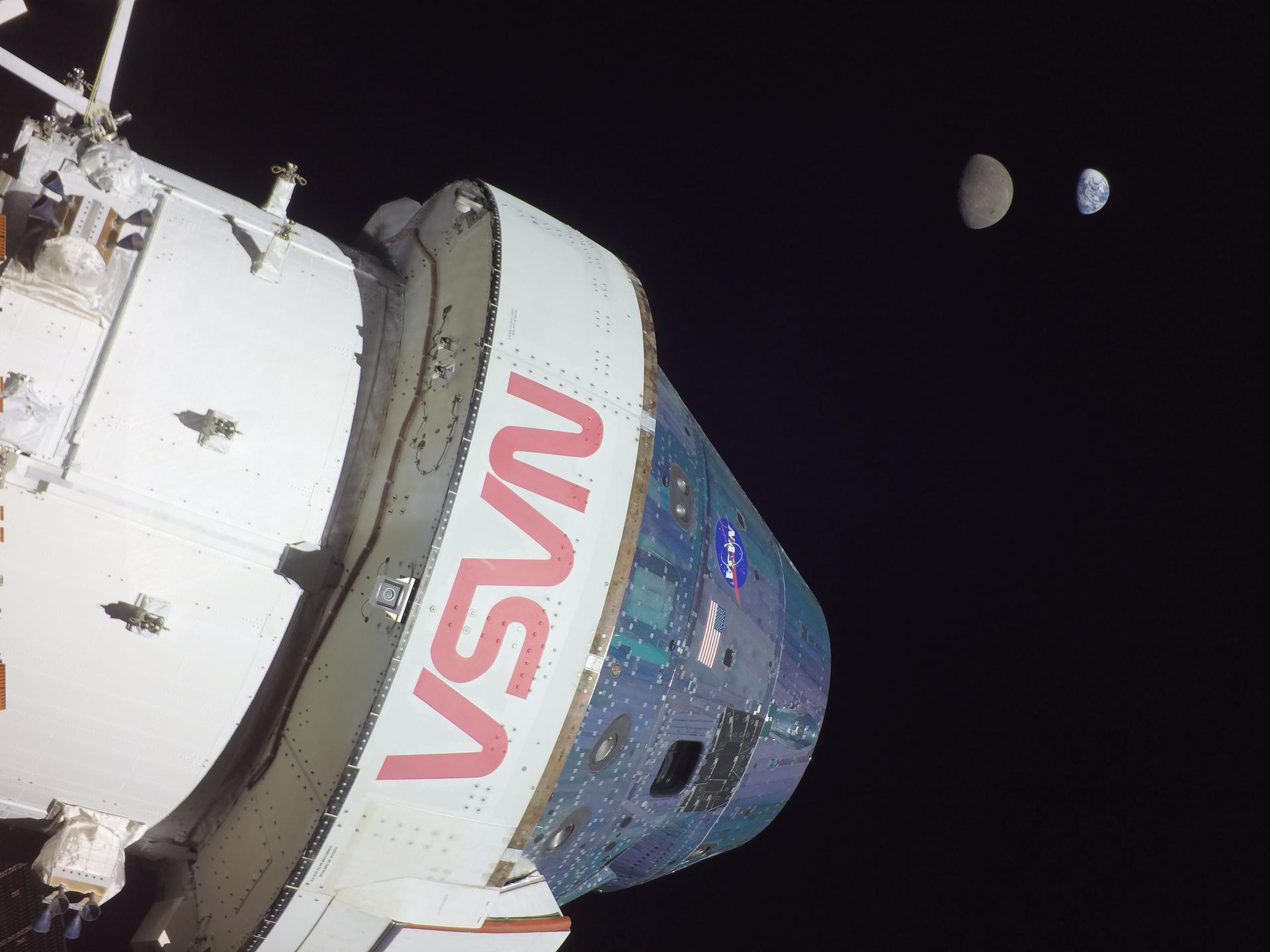
NASA has long used phase-changing materials to manage temperature extremes in space. The Apollo lunar rover, International Space Station, Orion capsule, and headlights on the newest spacesuit design all utilize phase-change material. As part of his NASA-funded research, Ma tested and recommended a phase-change material that could be used in a spacesuit-cooling system, a modified version of those used in spacecraft.  

A phase-change material needs to transition at the desired temperature, but it also needs to be safe. Paraffin wax and refrigerants are effective but are toxic to humans, which would make a leak hazardous. Ma’s team ultimately recommended a bio-based option for spacesuits.  

Bio-based waxes also proved to be the perfect solution for maintaining optimal temperature for coffee. In this case, it was a beeswax-like soy substance. Ma’s company, ThermAvant Technologies, took the opportunity to infuse the bio-based waxes into a product on Earth.   

An image of a phase change material heat exchanger, a piece of equipment used to help control temperatures on a spacecraft.
A phase-change heat exchanger like this one uses uses a PCM that will help maintain a comfortable temperature in the Orion spacecraft. NASA-funded research into spacesuit material alternatives helped ThermAvant International LLC develop the Burnout thermal mug for coffee.
Credit: NASA

Released in 2018, the Burnout Mug is vacuum insulated with the wax called HeatZorb, sealed between the inner and outer shells. The wax is formulated to maintain the ideal temperature for hot drinks over time. As soon as hot liquid goes in, the wax absorbs excess heat and melts, resulting in a drinkable temperature in just a few moments. As the coffee starts to cool, that stored heat is released back into it. 

The company is developing other uses for the same technology to meet unique needs in the medical field. Two in development are a small insulin container and a donor organ transportation box – both of which rely on specific, controlled temperatures. From hot beverages to life-saving medical equipment, NASA’s research continues to drive innovation across industries.  

Share

Details

Last Updated

Sep 27, 2024

Powered by WPeMatico

Get The Details…
Andrew Wagner

The Stanley Cup Comes to Kennedy

The Stanley Cup Comes to Kennedy

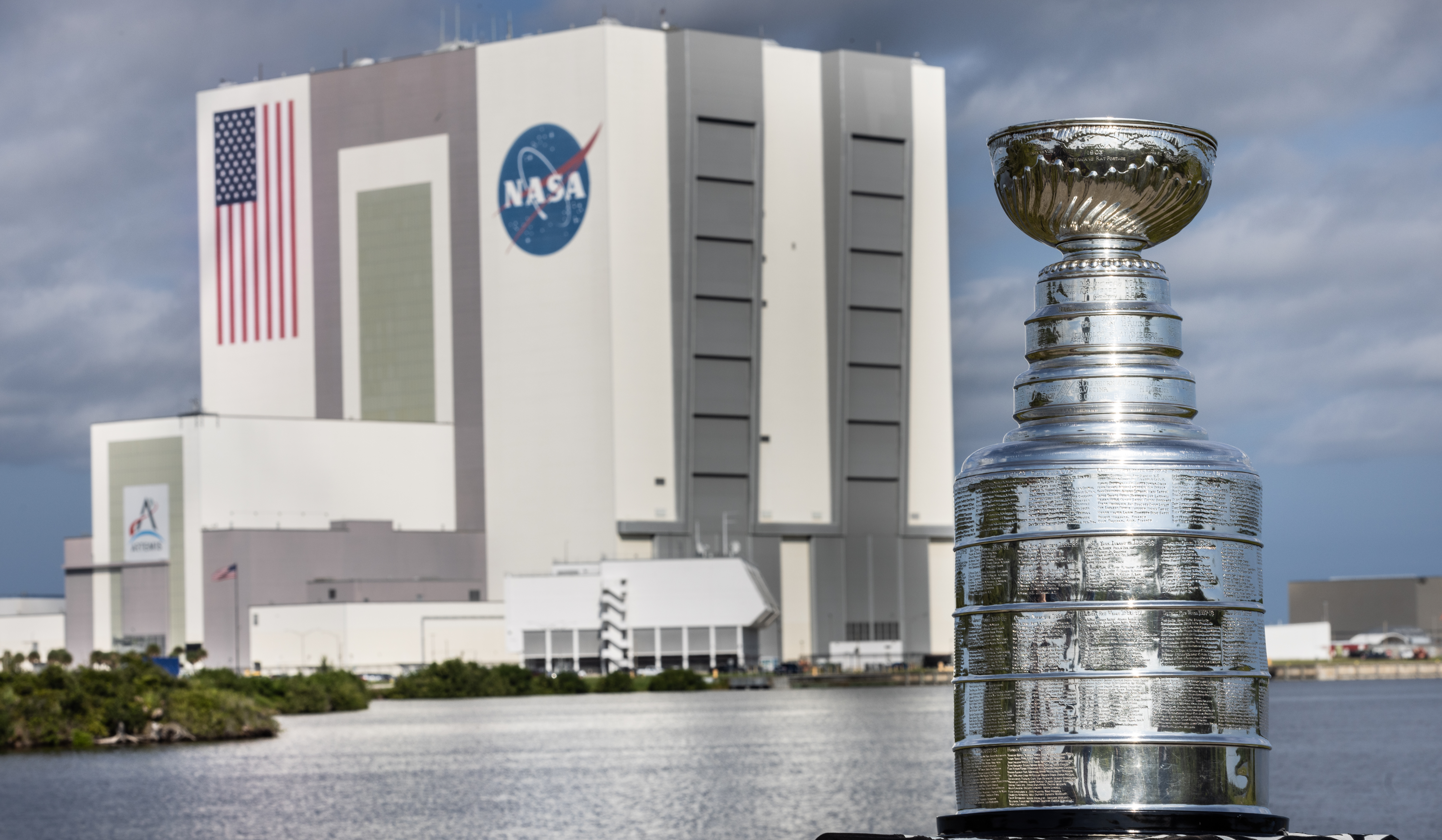
The silver Stanley Cup is in the foreground at right. The Stanley Cup looks like a large silver bowl set on top of a stacked column of thick silver layers. There are words engraved on the Cup. Behind it is a body of water and the Vehicle Assembly Building at NASA's Kennedy Space Center, a massive, boxy gray and white building.
NASA/Cory S Huston

The Stanley Cup, won in 2024 by the Florida Panthers, made a visit to the Vehicle Assembly Building (VAB) at NASA’s Kennedy Space Center on Sept. 17, 2024, as part of its championship tour.

The VAB currently houses components of the agency’s Artemis II mission, the first crewed mission on NASA’s path to establishing a long-term presence at the Moon for science and exploration through Artemis. Artemis II will send four astronauts around the Moon, testing NASA’s foundational human deep space exploration capabilities, the SLS rocket, and Orion spacecraft.

Image Credit: NASA/Cory S Huston

Powered by WPeMatico

Get The Details…
Monika Luabeya

NASA Hosts Crew-9 Space Station 101 Social Panel

NASA Hosts Crew-9 Space Station 101 Social Panel

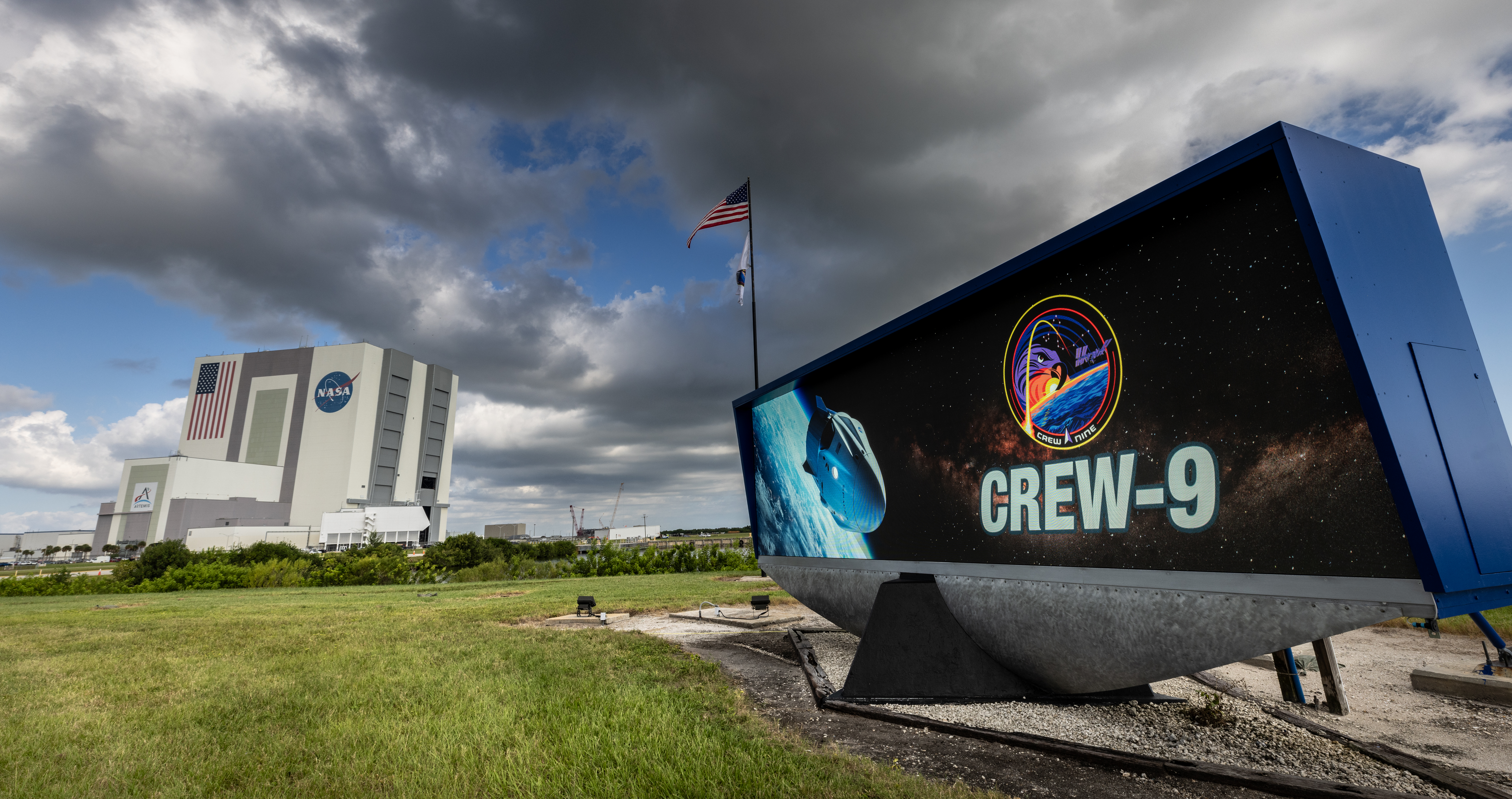
Image shows NASA's SpaceX Crew-9 logo with the iconic Vehicle Assembly Building in the background at NASA's Kennedy Space Center
A graphic for NASA’s SpaceX Crew-9 mission is displayed on the historic countdown clock at the NASA News Center at the agency’s Kennedy Space Center in Florida on Tuesday, Sept. 24, 2024. Photo credit: NASA/Cory S Huston

NASA will host an International Space Station 101 panel livestream at 1:15 p.m. Friday, Sept 27. Agency experts will provide an overview about the space station, operations, science, living and working in space, and take questions from reporters and social media.

Participants in the livestream panel include:

  • NASA Associate Administrator Jim Free
  • Robyn Gatens, director, NASA’s International Space Station Program, and acting director, NASA’s Commercial Spaceflight Division
  • Jennifer Buchli, chief scientist, NASA’s International Space Station Program
  • John Posey, Dragon engineer, NASA’s Commercial Crew Program

NASA will stream the briefing beginning at 1:15 p.m. on NASA+ and the agency’s website. Learn how to stream NASA content through a variety of platforms, including social media.

Following the panel discussion, leaders from NASA and SpaceX will host a prelaunch news conference at 5 p.m. to discuss final steps leading up to the 1:17 p.m. Saturday, Sept. 28 launch from Space Launch Complex-40 at Cape Canaveral Space Force Station.

NASA astronaut Nick Hague, commander, and Roscosmos cosmonaut Aleksandr Gorbunov, mission specialist, make up the two-man team who will launch aboard a SpaceX Dragon spacecraft and the company’s Falcon 9 rocket to the orbiting laboratory.

Launch weather officers with Cape Canaveral Space Force Station’s 45th Weather Squadron predict a 55% of favorable weather conditions for the launch. Cumulus cloud rule, flight through precipitation, surface electric fields rule are the primary weather concerns.

More details about the launch will be posted on the mission blog, @commercial_crew on X, or commercial crew on Facebook.

Powered by WPeMatico

Get The Details…

Elyna Niles-Carnes