NASA Hosts Two Workshops for Consultation on LEO Microgravity Strategy
Sandra Connelly, deputy associate administrator for NASA’s Science Mission Directorate, left, Lori Glaze, acting deputy associate administrator for NASA’s Exploration Systems Development Mission Directorate, Robyn Gatens, director of the International Space Station at NASA Headquarters, and Carrie Olsen, manager of the Next Gen STEM project for NASA’s Office of STEM Engagement, discuss key takeaways at the conclusion of NASA’s LEO Microgravity Strategy Industry and Academia Workshop, Friday, Sept. 13, 2024, at Convene in Washington. NASA’s LEO Microgravity Strategy effort aims to develop and document an objectives-based approach toward the next generation of human presence in low Earth orbit to advance microgravity science, technology, and exploration.
NASA/Joel Kowsky
As part of NASA’s effort to advance microgravity science, technology, and exploration in low Earth orbit (LEO), the agency conducted two stakeholder workshops in London and Washington to solicit feedback from the international community, including NASA’s international partners, American industry, and academia on Sept. 6 and Sept. 13, respectively.
The agency released a draft set of 42 objectives in late August, seeking input from U.S. industry, academia, international communities, NASA employees, and others to ensure its framework for the next generation of human presence in low Earth orbit, set to be finalized this winter, includes ideas and contributions from a range of stakeholders. The objectives span six categories: science, exploration-enabling research and technology development, commercial low Earth orbit infrastructure, operations, international cooperation, and workforce and engagement.
“As we chart the future of human exploration, it’s vital that we harness the insights and expertise of our diverse stakeholders,” said NASA Deputy Administrator Pam Melroy. “These workshops provide an invaluable platform for stakeholders to share their insights, helping us create a strategy that reflects our shared ambitions for the future of space exploration.”
Consultation is a fundamental aspect of NASA’s LEO Microgravity Strategy, emphasizing the importance of collaboration and the integration of diverse perspectives in advancing scientific research and technology development in low Earth orbit. By actively engaging with stakeholders –including scientists, industry partners, and educational institutions –NASA aims to gather valuable insights and align its objectives with the broader goals of the space community.
“Engaging with a wide array of voices allows us to tap into innovative ideas that will enhance our missions,” stated Robyn Gatens, director of the International Space Station and acting director of Commercial Spaceflight. “This collaborative approach not only strengthens our current initiatives but also lays the groundwork for future advancements in space exploration.”
Pioneer of Change: America Reyes Wang Makes NASA Space Biology More Open
4 min read
Pioneer of Change: America Reyes Wang Makes NASA Space Biology More Open
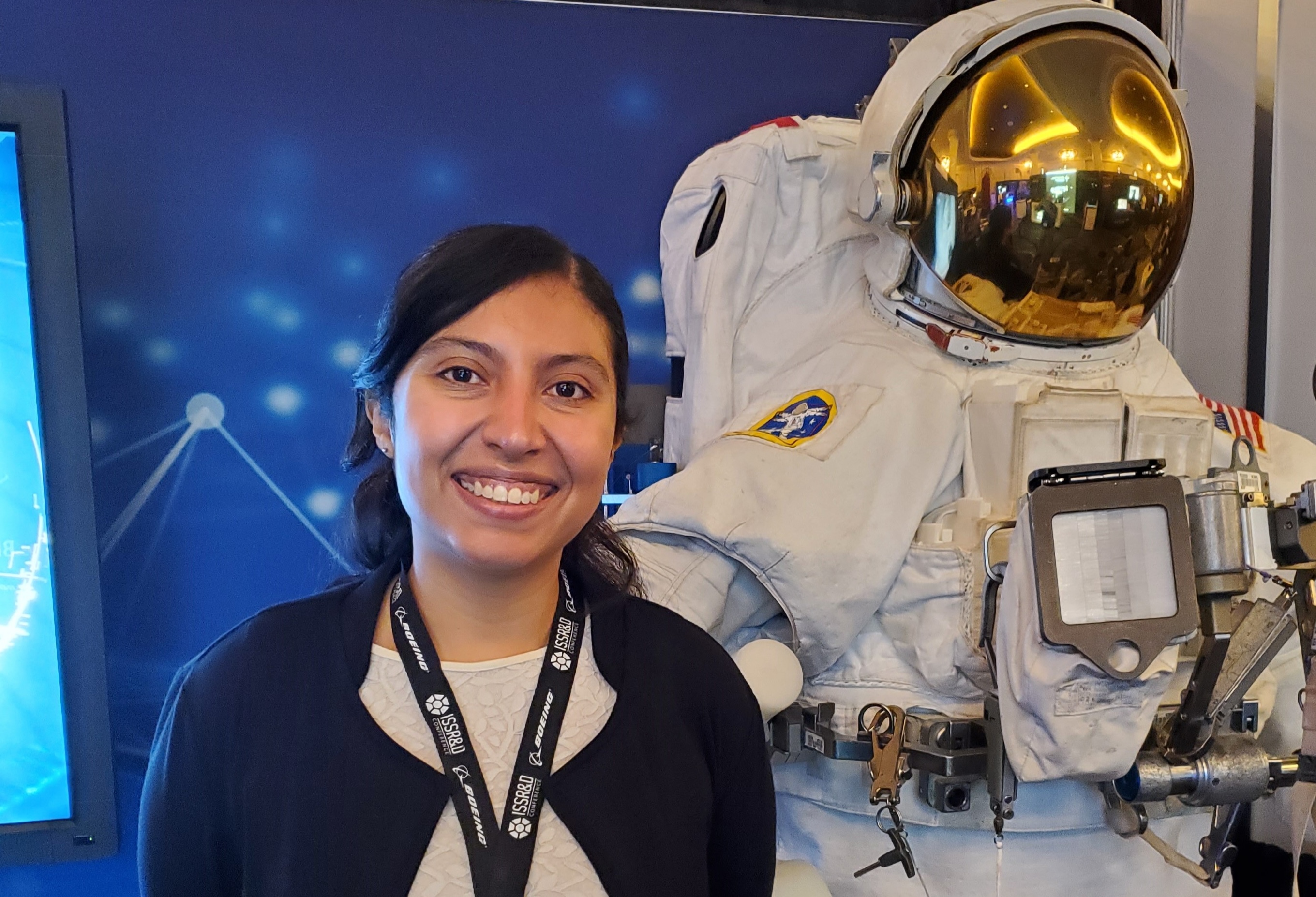
America Reyes Wang, the lead of the the Space Biology Biospecimen Sharing Program at NASA’s Ames Research Center in California’s Silicon Valley, stands beside a spacesuit display.
Photo courtesy of America Reyes Wang
As humans return to the Moon and push on toward Mars, scientists are ramping up research into the effects of space on the body to make sure astronauts stay healthy on longer missions. This research often involves spaceflight studies of rodents, insects, and other models in orbiting laboratories such as the International Space Station. However, space-related biological samples are difficult to get, meaning that researchers who want to study space biology are frequently out of luck.
America Reyes Wang, a KBR employee and the lead of the Space Biology Biospecimen Sharing Program at NASA’s Ames Research Center in California’s Silicon Valley, oversees the team that has changed that. Birthed from an initiative first pioneered in the 1960s, the Biospecimen Sharing Program collects samples and data from NASA non-human space biology studies and makes them available in the public, open NASA Open Science Data Repository (OSDR).
To derive the most benefit from the precious few biology studies taking place in space, Reyes Wang arranges collaborations on space biology dissections with NASA-funded researchers so that her team can collect and preserve unutilized biospecimens for others to use. Outside researchers can request the samples to study in person by writing and submitting proposals. Once analyzed, researchers share their data back with the NASA OSDR for other investigators to access and study.
The ethos of open science is central to Reyes Wang’s approach to her work. “The samples that we work with are so precious,” she said. “To me, it’s a no-brainer — why not share what we can share?”
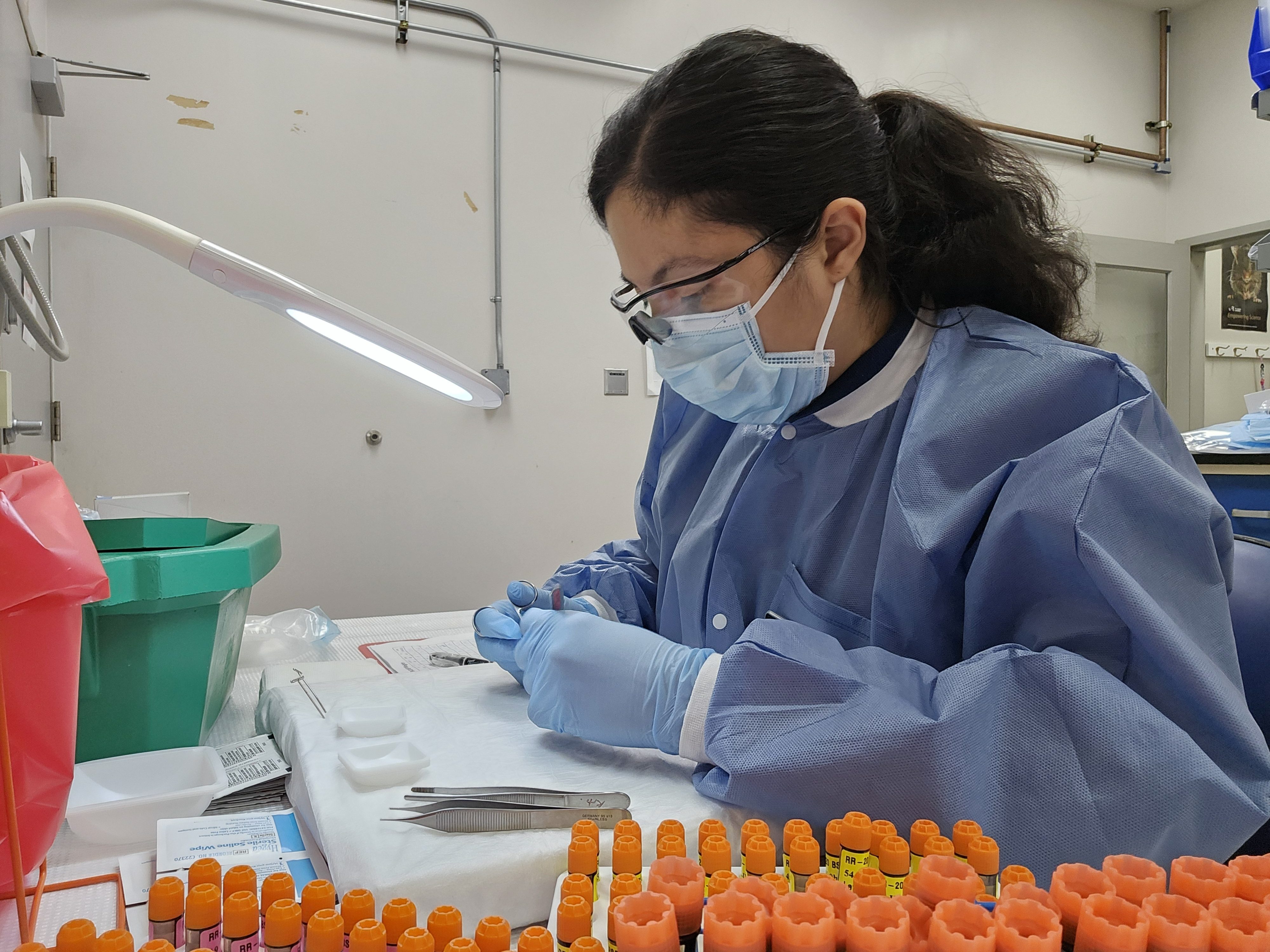
America Reyes Wang wears personal protective equipment (PPE) while working on an activity for NASA’s Biospecimen Sharing Program.
Photo courtesy of America Reyes Wang
Reyes Wang aspired to work in the scientific or medical field from a young age, driven by her desire to help people. Her father, who was born in El Salvador and dreamed of being an astronaut after watching the 1969 Moon landing, inspired Reyes Wang to fall in love with space. She also credited her Salvadoran and Mexican family with teaching her the value of understanding different experiences.
“To me, being Hispanic, especially as a Latina in STEM, means recognizing and building upon the hard work and sacrifices of those who came before me, as well as extending a helping hand to those around me for the betterment of us all,” Reyes Wang said. “It also means enjoying and sharing our vibrant cultures.”
As a student at Stanford University, Reyes Wang conducted neurobiology research with rodents, but assumed she would have to choose her love of biology over her love of space. The field of space biology allowed her to combine those interests. Having quietly dreamed of working for NASA for years, she was also thrilled to find that she could work on NASA missions as a space biologist.
If we want to keep up with the pace of humanity’s aspirations to travel further and for longer … open science is one of the best tools we have for achieving those dreams.
America Reyes Wang
Biospecimen Sharing Program Lead
Reyes Wang first found a role supporting NASA as an experiment support scientist for the agency’s Rodent Research Program. While she no longer facilitates research on the International Space Station in her current position, she uses her scientific expertise and collaborative outlook to guide the Biospecimen Sharing Program in a direction that will most help advance science.
Despite space biology’s status as a relatively niche field, Reyes Wang has noted its tremendous impact on the biological sciences, medicine, and technology as a whole. For example, spaceflown biological samples are often used to investigate diseases that affect people on Earth. Reyes Wang’s involvement in accelerating these studies captures her long-held desire to help people.
“Open science gives the world an opportunity to get these important answers much more quickly,” Reyes Wang said. “If we want to keep up with the pace of humanity’s aspirations to travel further and for longer, we need to pick up the pace when it comes to getting the answers, and I think open science is one of the best tools we have for achieving those dreams.”
By Lauren Leese Web Content Strategist for the Office of the Chief Science Data Officer
NASA Stennis Completes Key Test Complex Water System Upgrade
4 min read
Preparations for Next Moonwalk Simulations Underway (and Underwater)
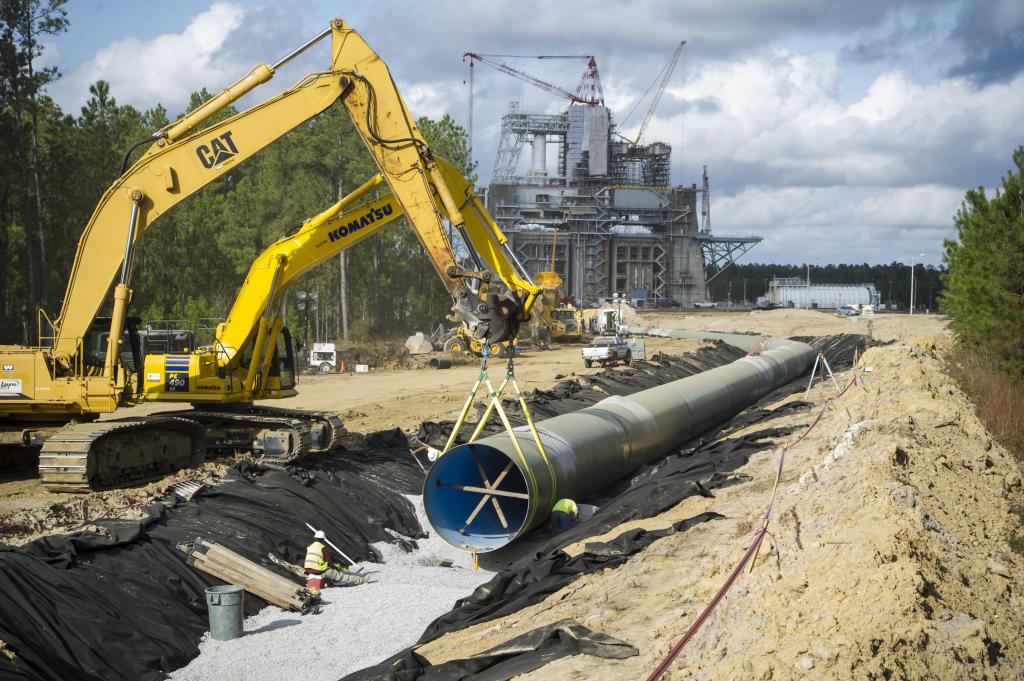
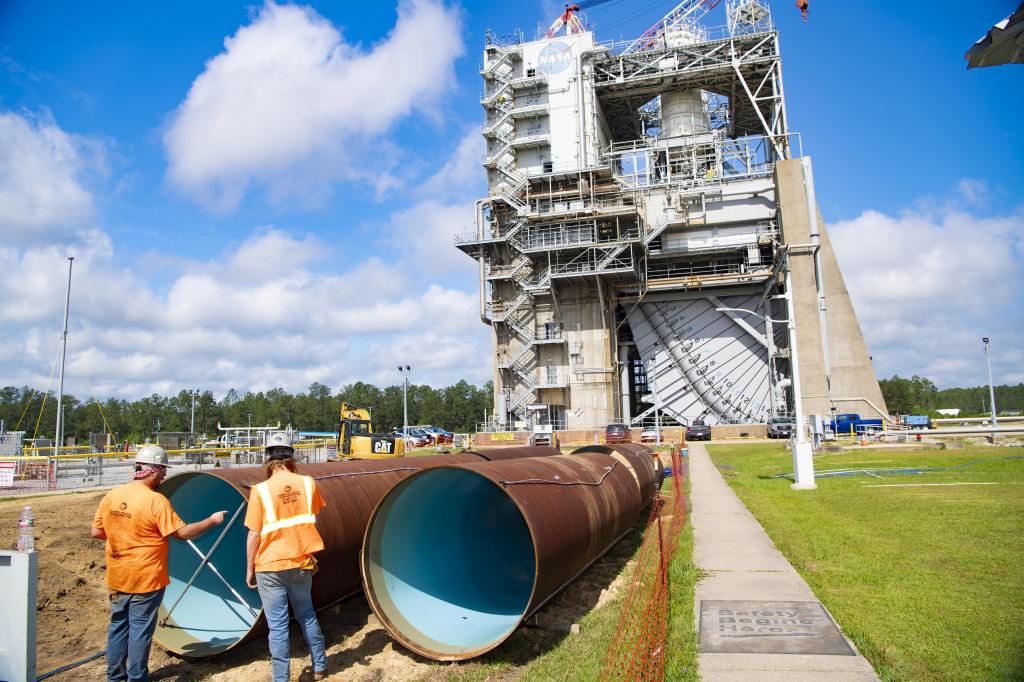
Water piping is installed near the Thad Cochran Test Stand (B-1/B-2) at NASA’s Stennis Space Center in December 2014. The project to replace and upgrade the center’s high pressure industrial water system was a key milestone in preparations to test the SLS (Space Launch System) core stage ahead of the successful Artemis I launch.
NASA/Danny Nowlin
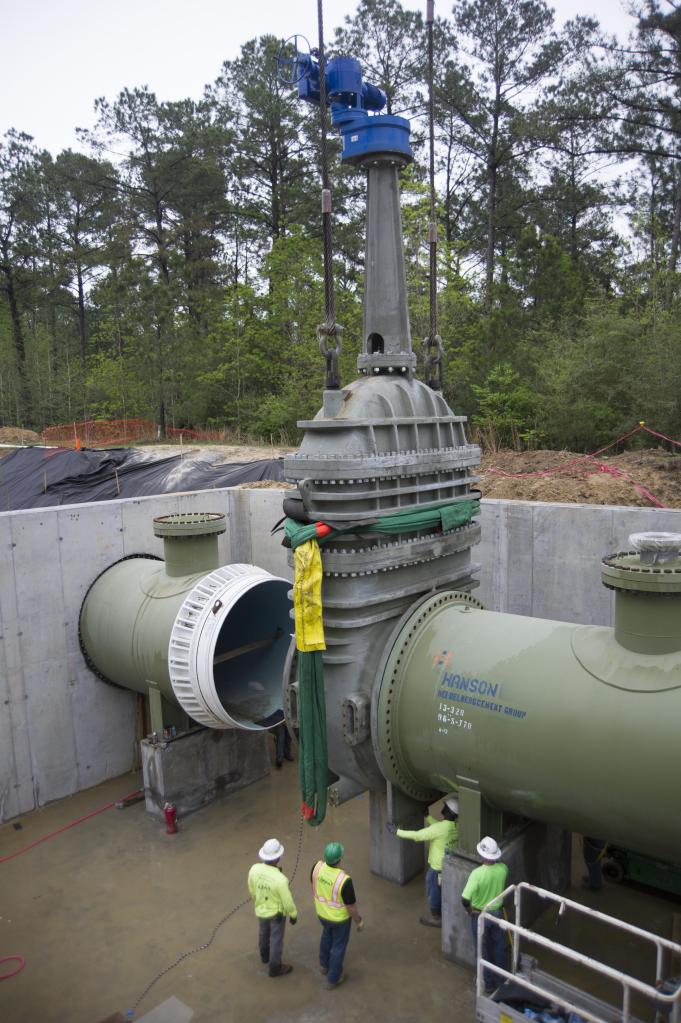
Employees install a 96-inch valve near the Thad Cochran Test Stand (B-1/B-2) at NASA’s Stennis Space Center as part of a high-pressure industrial water upgrade project in March 2015.
NASA/Danny Nowlin
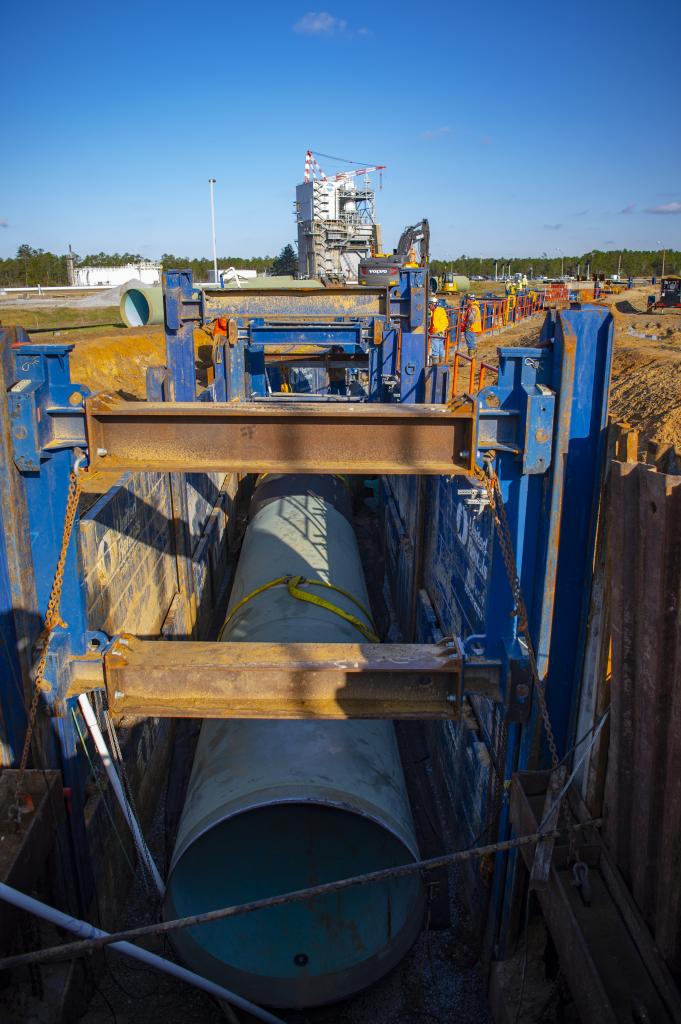
In this March 2022 photo, crews use a shoring system to hold back soil as they install new 75-inch piping leading from the NASA Stennis High Pressure Industrial Water Facility to the valve vault pit serving the Fred Haise Test Stand.
NASA/Danny Nowlin
Crews use a specially designed tool to place a new pipeline liner inside the existing carrier pipe near the Fred Haise Test Stand in 2024 in the last phase of updating the original test complex industrial water system at NASA’s Stennis Space Center.
NASA/Danny Nowlin
Crews prepare new pipeline liner sections for installation near the Fred Haise Test Stand in 2024 in the last phase of updating the original test complex industrial water system at NASA’s Stennis Space Center.
NASA/Danny Nowlin
For almost 60 years, NASA’s Stennis Space Center has tested rocket systems and engines to help power the nation’s human space exploration dreams. Completion of a critical water system infrastructure project helps ensure the site can continue that frontline work moving forward.
“The infrastructure at NASA Stennis is absolutely critical for rocket engine testing for the agency and commercial companies,” said NASA project manager Casey Wheeler. “Without our high pressure industrial water system, testing does not happen. Installing new underground piping renews the lifespan and gives the center a system that can be operated for the foreseeable future, so NASA Stennis can add to its nearly six decades of contributions to space exploration efforts.”
The high pressure industrial water system delivers hundreds of thousands of gallons of water per minute through underground pipes to cool rocket engine exhaust and provide fire suppression capabilities during testing. Without the water flow, the engine exhaust, reaching as hot as 6,000 degrees Fahrenheit, could melt the test stand’s steel flame deflector.
Each test stand also features a FIREX system that holds water in reserve for use in the event of a mishap or fire. During SLS (Space Launch System) core stage testing, water also was used to create a “curtain” around the test hardware, dampening the high levels of noise generated during hot fire and lessening the video-acoustic impact that can cause damage to infrastructure and the test hardware.
Prior to the system upgrade, the water flow was delivered by the site’s original piping infrastructure built in the 1960s. However, that infrastructure had well exceeded its expected 30-year lifespan.
Scope of the Project
The subsequent water system upgrade was planned across multiple phases over a 10-year span. Crews worked around ever-changing test schedules to complete three major projects representing more than $50 million in infrastructure investment.
“Many people working the construction jobs for these projects are from the Gulf Coast area, so it has created jobs and work for the people doing the construction,” Wheeler said. “Some of the specialty work has had people coming in from all over the country, as well as vendors and suppliers that are supplying the materials, so that has an economic impact here too.”
Crews started by replacing large sections of piping, including a 96-inch line, from the 66-million-gallon onsite reservoir to the Thad Cochran (B-1/B-2) Test Stand. This phase also included the installation of a new 25,000-gallon electric pump at the High Pressure Industrial Water Facility to increase water flow capacity. The upgrades were critical for NASA Stennis to conduct Green Run testing of the SLS core stage in 2020-21 ahead of the successful Artemis I launch.
Work in the A Test Complex followed with crews replacing sections of 75-inch piping from the water plant and installing several new 66-inch gate valves.
In the final phase, crews used an innovative approach to install new steel liners within existing pipes leading to the Fred Haise Test Stand (formerly A-1 Test Stand). The work followed NASA’s completion of a successful RS-25 engine test campaign last April for future Artemis missions to the Moon and beyond. The stand now is being prepared to begin testing of new RS-25 flight engines.
Overall, the piping project represents a significant upgrade in design and materials. The new piping is made from carbon steel, with protective linings to prevent corrosion and gate valves designed to be more durable.
Importance of Water It is hard to overstate the importance of the work to ensure ongoing water flow. For a typical 500-second RS-25 engine test on the Fred Haise Test Stand, around 5 million gallons of water is delivered from the NASA Stennis reservoir through a quarter-of-a-mile of pipe before entering the stand to supply the deflector and cool engine exhaust.
“Without water to cool the deflector and the critical parts of the test stand that will get hot from the hot fire itself, the test stand would need frequent corrective maintenance,” Wheeler said. “This system ensures the test stands remain in a condition where continuous testing can happen.”
NASA’s Hubble Finds that a Black Hole Beam Promotes Stellar Eruptions
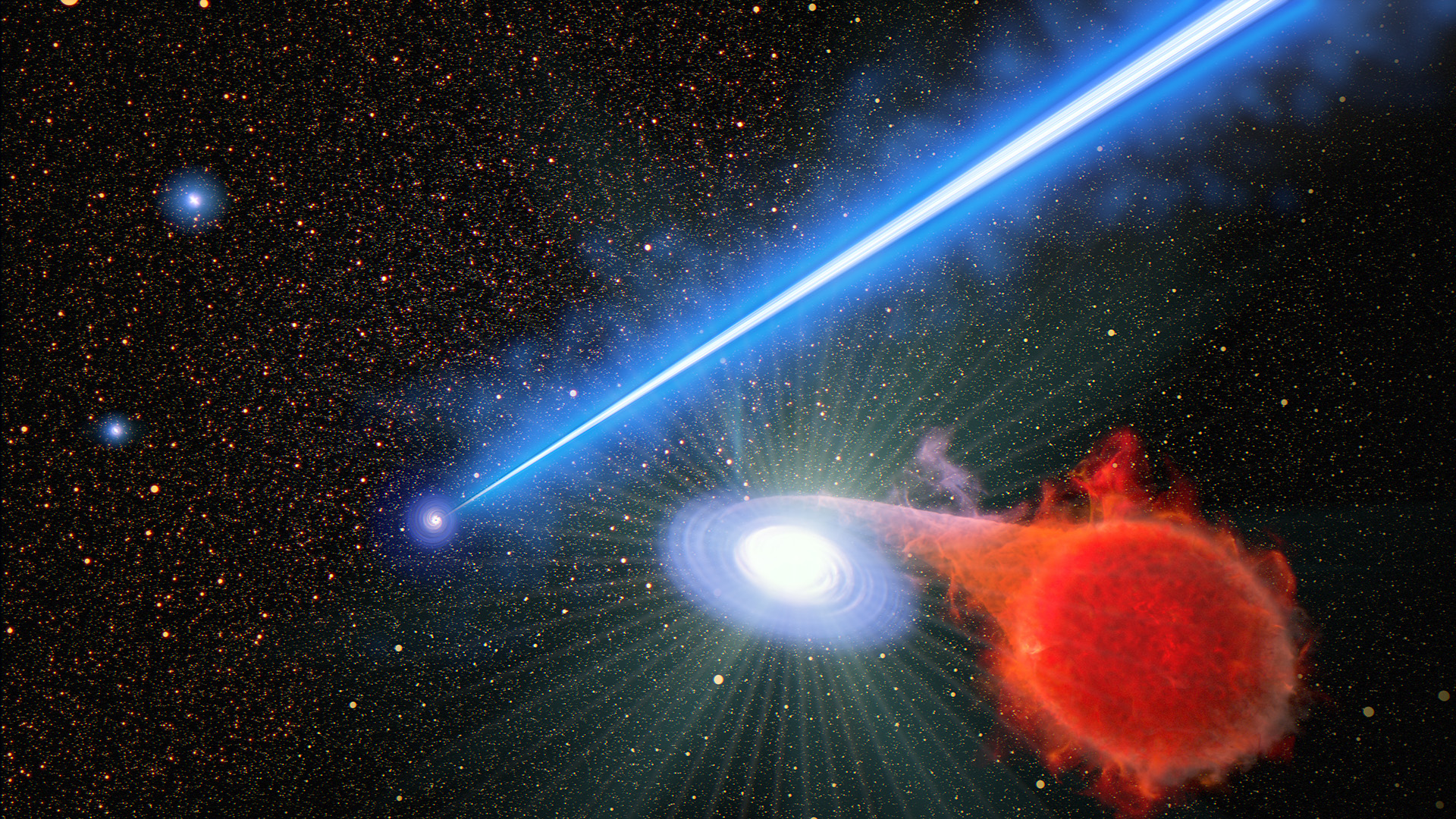
This is an artist’s concept looking down into the core of the giant elliptical galaxy M87. A supermassive black hole ejects a 3,000-light-year-long jet of plasma, traveling at nearly the speed of light. In the foreground, to the right is a binary star system. The system is far from the black hole, but in the vicinity of the jet. In the system an aging, swelled-up, normal star spills hydrogen onto a burned-out white dwarf companion star. As the hydrogen accumulates on the surface of the dwarf, it reaches a tipping point where it explodes like a hydrogen bomb. Novae frequently pop-off throughout the giant galaxy of 1 trillion stars, but those near the jet seem to explode more frequently. So far, it’s anybody’s guess why black hole jets enhance the rate of nova eruptions.
In a surprise finding, astronomers using NASA’s Hubble Space Telescope have discovered that the blowtorch-like jet from a supermassive black hole at the core of a huge galaxy seems to cause stars to erupt along its trajectory. The stars, called novae, are not caught inside the jet, but apparently in a dangerous neighborhood nearby.
The finding is confounding researchers searching for an explanation. “We don’t know what’s going on, but it’s just a very exciting finding,” said lead author Alec Lessing of Stanford University. “This means there’s something missing from our understanding of how black hole jets interact with their surroundings.”
A nova erupts in a double-star system where an aging, swelled-up, normal star spills hydrogen onto a burned-out white dwarf companion star. When the dwarf has tanked up a mile-deep surface layer of hydrogen that layer explodes like a giant nuclear bomb. The white dwarf isn’t destroyed by the nova eruption, which ejects its surface layer and then goes back to siphoning fuel from its companion, and the nova-outburst cycle starts over again.
Hubble found twice as many novae going off near the jet as elsewhere in the giant galaxy during the surveyed time period. The jet is launched by a 6.5-billion-solar-mass central black hole surrounded by a disk of swirling matter. The black hole, engorged with infalling matter, launches a 3,000-light-year-long jet of plasma blazing through space at nearly the speed of light. Anything caught in the energetic beam would be sizzled. But being near its blistering outflow is apparently also risky, according to the new Hubble findings.
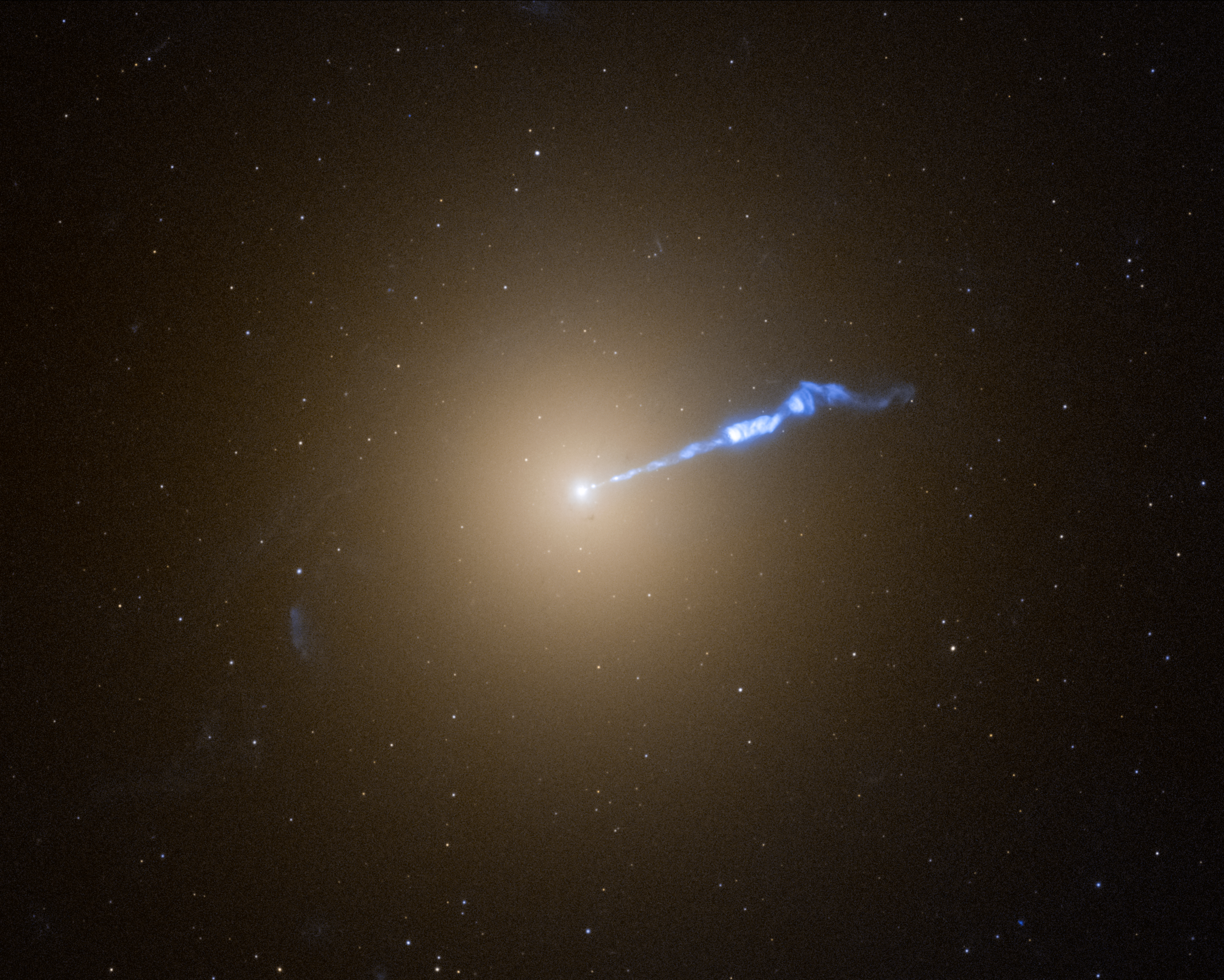
A Hubble Space Telescope image of the giant galaxy M87 shows a 3,000-light-year-long jet of plasma blasting from the galaxy’s 6.5-billion-solar-mass central black hole. The blowtorch-like jet seems to cause stars to erupt along its trajectory. These novae are not caught inside the jet, but are apparently in a dangerous neighborhood nearby. During a recent 9-month survey, astronomers using Hubble found twice as many of these novae going off near the jet as elsewhere in the galaxy. The galaxy is the home of several trillion stars and thousands of star-like globular star clusters.
NASA, ESA, STScI, Alec Lessing (Stanford University), Mike Shara (AMNH); Acknowledgment: Edward Baltz (Stanford University); Image Processing: Joseph DePasquale (STScI)
The finding of twice as many novae near the jet implies that there are twice as many nova-forming double-star systems near the jet or that these systems erupt twice as often as similar systems elsewhere in the galaxy.
“There’s something that the jet is doing to the star systems that wander into the surrounding neighborhood. Maybe the jet somehow snowplows hydrogen fuel onto the white dwarfs, causing them to erupt more frequently,” said Lessing. “But it’s not clear that it’s a physical pushing. It could be the effect of the pressure of the light emanating from the jet. When you deliver hydrogen faster, you get eruptions faster. Something might be doubling the mass transfer rate onto the white dwarfs near the jet.” Another idea the researchers considered is that the jet is heating the dwarf’s companion star, causing it to overflow further and dump more hydrogen onto the dwarf. However, the researchers calculated that this heating is not nearly large enough to have this effect.
“We’re not the first people who’ve said that it looks like there’s more activity going on around the M87 jet,” said co-investigator Michael Shara of the American Museum of Natural History in New York City. “But Hubble has shown this enhanced activity with far more examples and statistical significance than we ever had before.”
Shortly after Hubble’s launch in 1990, astronomers used its first-generation Faint Object Camera (FOC) to peer into the center of M87 where the monster black hole lurks. They noted that unusual things were happening around the black hole. Almost every time Hubble looked, astronomers saw bluish “transient events” that could be evidence for novae popping off like camera flashes from nearby paparazzi. But the FOC’s view was so narrow that Hubble astronomers couldn’t look away from the jet to compare with the near-jet region. For over two decades, the results remained mysteriously tantalizing.
Compelling evidence for the jet’s influence on the stars of the host galaxy was collected over a nine-month interval of Hubble observing with newer, wider-view cameras to count the erupting novae. This was a challenge for the telescope’s observing schedule because it required revisiting M87 precisely every five days for another snapshot. Adding up all of the M87 images led to the deepest images of M87 that have ever been taken.
In a surprise finding, astronomers, using NASA’s Hubble Space Telescope have discovered that the jet from a supermassive black hole at the core of M87, a huge galaxy 54 million light years away, seems to cause stars to erupt along its trajectory. NASA’s Goddard Space Flight Center; Lead Producer: Paul Morris
Hubble found 94 novae in the one-third of M87 that its camera can encompass. “The jet was not the only thing that we were looking at — we were looking at the entire inner galaxy. Once you plotted all known novae on top of M87 you didn’t need statistics to convince yourself that there is an excess of novae along the jet. This is not rocket science. We made the discovery simply by looking at the images. And while we were really surprised, our statistical analyses of the data confirmed what we clearly saw,” said Shara.
This accomplishment is entirely due to Hubble’s unique capabilities. Ground-based telescope images do not have the clarity to see novae deep inside M87. They cannot resolve stars or stellar eruptions close to the galaxy’s core because the black hole’s surroundings are far too bright. Only Hubble can detect novae against the bright M87 background.
Novae are remarkably common in the universe. One nova erupts somewhere in M87 every day. But since there are at least 100 billion galaxies throughout the visible universe, around 1 million novae erupt every second somewhere out there.
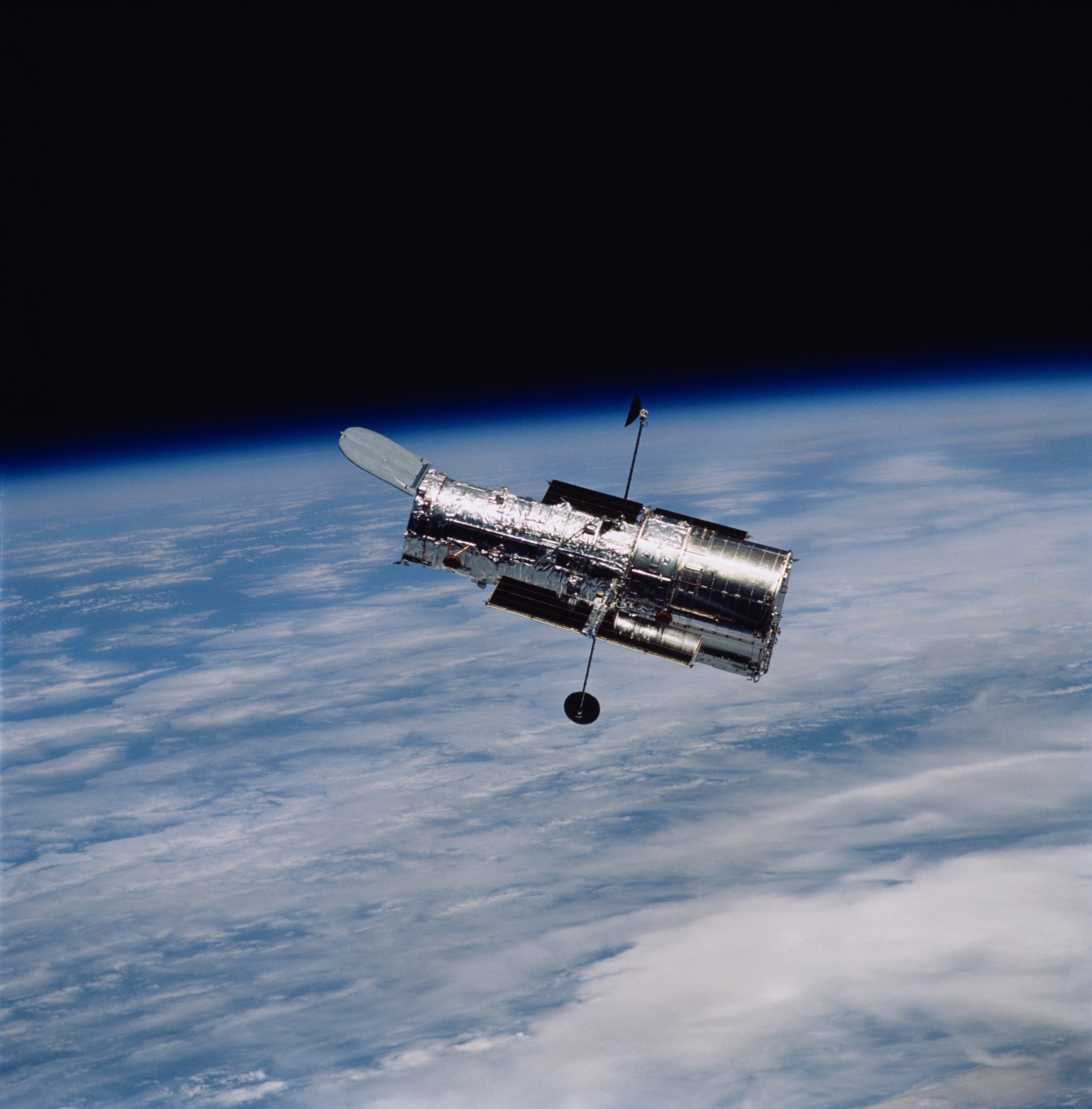
The Hubble Space Telescope has been operating for over three decades and continues to make ground-breaking discoveries that shape our fundamental understanding of the universe. Hubble is a project of international cooperation between NASA and ESA (European Space Agency). NASA’s Goddard Space Flight Center in Greenbelt, Maryland, manages the telescope and mission operations. Lockheed Martin Space, based in Denver, Colorado, also supports mission operations at Goddard. The Space Telescope Science Institute in Baltimore, Maryland, which is operated by the Association of Universities for Research in Astronomy, conducts Hubble science operations for NASA.
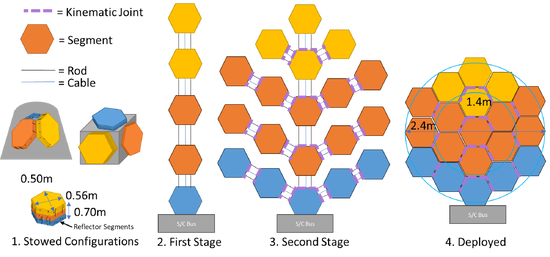
Schematic of a possible antenna deployment system consisting of a series of interconnected hexagons.
Image credit: GrabCAD
NASA is seeking innovative solutions for a synchronized antenna deployment system. The primary objective is to develop a mechanism that ensures sequential deployment of antenna panels, addressing a critical aspect of space-based communication technology. In this challenge, participants are tasked with designing a mechanism that will release hexagonal panels in a predetermined sequence. Specifically, the mechanism should trigger the release of the next hexagon in a stack only after the previous one has successfully latched into place. This sequential deployment is crucial for maintaining the antenna’s structural integrity and operational efficiency. The proposed design must be compatible with one of the winning latch designs from the previous “Let’s Connect” challenge. Additionally, it must integrate seamlessly with the provided backing structure model without compromising the parabolic surface of the antenna. Participants should focus on creating a solution that is both effective and adaptable to existing NASA technologies.