Preparations for Next Moonwalk Simulations Underway (and Underwater)
2025 Seminar Series
Throughout 2025, the NASA History Office is presenting a seminar series on the topic of Aerospace Latin America. This series will explore the origins, evolution, and historical context of aerospace in the region since the dawn of the Space Age, touching on a broad range of topics including aerospace infrastructure development, space policy and law, Earth science applications, and much more.
This seminar series is part of a collaborative effort to gather insights and research that will conclude in an anthology of essays to be published as a NASA History Special Publication. Individual presentations will be held virtually bi-weekly or monthly.
During a gravity assist in 1992, the Galileo spacecraft took images of Earth and the Moon. Separate images were combined to generate this composite which features a view of the Pacific Ocean and Central and South America.
NASA/JPL/USGS
Upcoming Presentations
“Governing the Moon: A History”
Stephen Buono (University of Chicago)
Thursday, February 6 at 1pm CST
In this talk, Stephen Buono will provide a nuanced history of the unratified Agreement Governing the Activities of States on the Moon and Other Celestial Bodies, more commonly known as the Moon Treaty. Buono will illuminate the treaty’s deep origins, the contributions of international space lawyers, the details of the negotiating process, the role played by the United States in shaping the final text, and the contributions of the treaty’s single most important author, Argentine lawyer, Aldo Armando Cocca.
“A God’s Eye View: Aviators and the Re-Conquest of Latin America”
Pete Soland(University of Houston—Downtown)
Thursday, February 20 at 1pm CST
This talk scrutinizes the aviator-conquistador metaphor. It examines airplane pilots as personifying high modernism and the technological sublime in Latin America from the turn of the century through the early Space Age, when spaceships and astronauts eclipsed airplanes and aviators. Repeated invocations of the conquistador as a metaphor for the aviator’s social role–and the conquest as an analogy for the goals of aviation programs–illustrate how elites promoted their modernization initiatives to national publics.
How to Attend
These presentations will be held via Microsoft Teams. For details on how to attend the meetings, join the NASA History mailing list to receive updates. Just send a blank email to history-join@lists.hq.nasa.gov to join. Alternatively, send us an email to receive a link for the next meeting.
NASA International Space Apps Challenge Announces 2024 Global Winners
6 Min Read
NASA International Space Apps Challenge Announces 2024 Global Winners
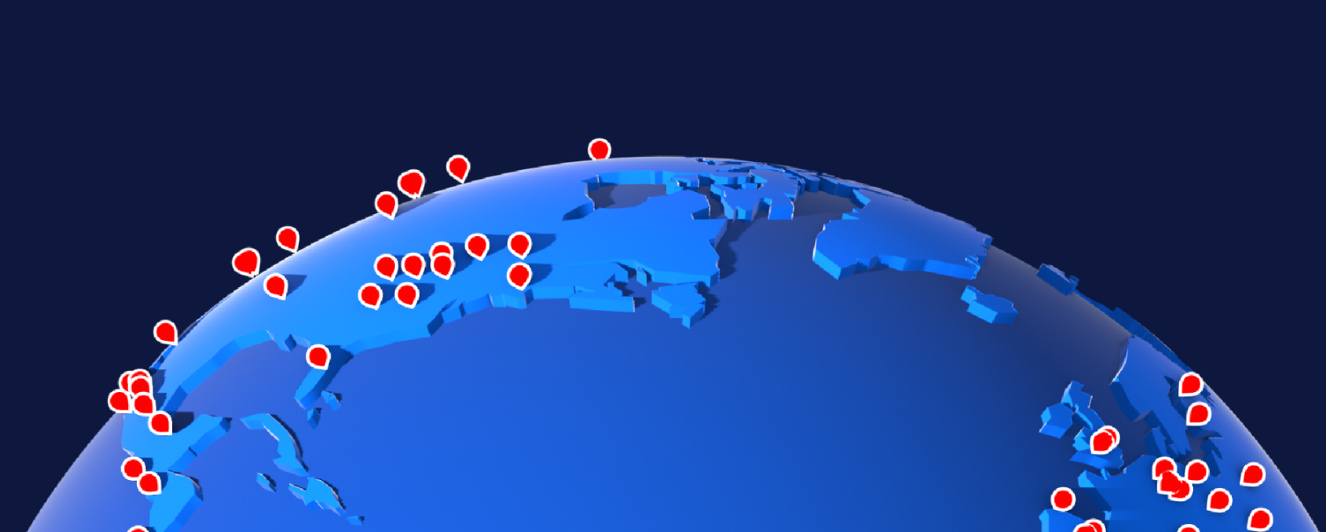
The 2024 NASA Space Apps Challenge was hosted at 485 events in 163 countries and territories.
Credits: NASA
NASA Space Apps has named 10 global winners, recognizing teams from around the world for their exceptional innovation and collaboration during the 2024 NASA Space Apps Challenge. As the largest annual global hackathon, this event invites participants to leverage open data from NASA and its space agency partners to tackle real-world challenges on Earth and in space.
Last year’s hackathon welcomed 93,520 registered participants, including space, science, technology, and storytelling enthusiasts of all ages. Participants gathered at local events in 163 countries and territories, forming teams to address the challenges authored by NASA subject matter experts. These challenges included subjects/themes/questions in ocean ecosystems, exoplanet exploration, Earth observation, planetary seismology, and more.
The 2024 Global Winners were determined out of 9,996 project submissions and judged by subject matter experts from NASA and space agency partners.
“These 10 exceptional teams created projects that reflect our commitment to understanding our planet and exploring beyond, with the potential to transform Earth and space science for the benefit of all,” said Dr. Keith Gaddis, NASA Space Apps Challenge program scientistat NASA Headquarters in Washington. “The NASA Space Apps Challenge showcases the potential of every idea and individual. I am excited to see how these innovators will shape and inspire the future of science and exploration.”
You can watch the Global Winners Announcement here to meet these winning teams and learn about the inspiration behind their projects.
2024 NASA Space Apps Challenge Global Winners
Best Use of Science Award: WMPGang
Team Members: Dakota C., Ian C., Maximilian V., Simon S.
Challenge: Create an Orrery Web App that Displays Near-Earth Objects
Country/Territory: Waterloo,Canada
Using their skills in programming, data analysis, and visualization, WMPGang created a web app that identifies satellite risk zones using real-time data on Near-Earth Objects and meteor streams.
Team Members: Aakash H., Arun G., Arthur A., Gabriel A., May K.
Challenge: Leveraging Earth Observation Data for Informed Agricultural Decision-Making
Country/Territory: Universal Event, United States
GaamaRamma’s team of tech enthusiasts aimed to create a sustainable way to help farmers efficiently manage water availability in the face of drought, pests, and disease.
Team Members: Alailton A., Ana B., Gabriel C., Gustavo M., Gustavo T., Larissa M.
Challenge: Seismic Detection Across the Solar System
Country/Territory: Maceió, Brazil
Team 42 QuakeHeroes employed a deep neural network model to identify the precise locations of seismic events within time-series data. They used advanced signal processing techniques to isolate and analyze unique components of non-stationary signals.
Team Members: Oksana M., Oleksandra M., Prokipchyn Y., Val K.
Challenge: Leveraging Earth Observation Data for Informed Agricultural Decision-Making
Country/Territory: Kyiv, Ukraine
The NVS-knot team assessed planting conditions using surface soil moisture and evapotranspiration data, then created an app that empowers farmers to manage planting risks.
Team Members: Coral M., Daniel C., Daniel V., Juan B., Samuel G., Vladimir C.
Challenge: Landsat Reflectance Data: On the Fly and at Your Fingertips
Country/Territory: Gijón, Spain
AsturExplorers created Landsat Connect, a web app that provides a simple, intuitive way to track Landast satellites and access Landsat surface reflectance data. The app also allows users to set a target location and receive notifications when Landsat satellites pass over their area.
Team Members: Rikzah K., Samira K., Shafeeqa J., Umamah A.
Challenge: SDGs in the Classroom
Country/Territory: Sharjah, United Arab Emirates
Innovisionaries developed Eco-Metropolis to inspire sustainability through gameplay. This city-building game engages players in making critical urban planning and resource management decisions based on real-world environmental data.
Team Members: Ahmed R., Fatma E., Habiba A., Judy A., Maya M.
Challenge: Tell Us a Climate Story!
Country/Territory: Cairo, Egypt
TerraTales shared stories of how Earth’s changing climate affects three unique regions: Egypt, Brazil, and Germany. The web app also features an artificial intelligence (AI) model for climate forecasting and an interactive game to encourage users to make eco-friendly choices.
Team Members: Kapeesh K., Khoi N., Sathyajit L., Satyam S.
Challenge: Navigator for the Habitable Worlds Observatory (HWO): Mapping the Characterizable Exoplanets in our Galaxy
Country/Territory: Saskatoon, Canada
Team Asteroid Destroyer honed in on exoplanets, utilizing data processing and machine learning techniques to map exoplanets based on size, temperature, and distance.
Team Members: Gabriel M., Luc R., Lucas R., Mattheus L., Pedro C., Riccardo S.
Challenge: Imagine our Connected Earth
Country/Territory: Campinas, Brazil
Team Connected Earth Museum created an immersive virtual museum experience to raise awareness of Earth’s changing climate. An AI host guides users through an interactive gallery featuring 3D and 2D visualizations, including a time series on Earth and ocean temperatures, population density, wildfires, and more.
Team Members: Frank R., Jan K., Raphael R., Ryan Z., Victoria M.
Challenge: Community Mapping
Country/Territory: Florianópolis, Brazil
Team I.O. bridges the gap between complex Geographic Information Systems data and user-friendly communication, making critical environmental information accessible to everyone, regardless of technical expertise.
Want to take part in the 2025 NASA Space Apps Challenge? Mark your calendars for October 4 and 5! Registration will open in July. At that time, participants will be able to register for a local event hosted by NASA Space Apps leads from around the world. You can stay connected with NASA Space Apps on Facebook, Instagram, and X.
NASA Scientists Find New Human-Caused Shifts in Global Water Cycle
3 Min Read
NASA Scientists Find New Human-Caused Shifts in Global Water Cycle
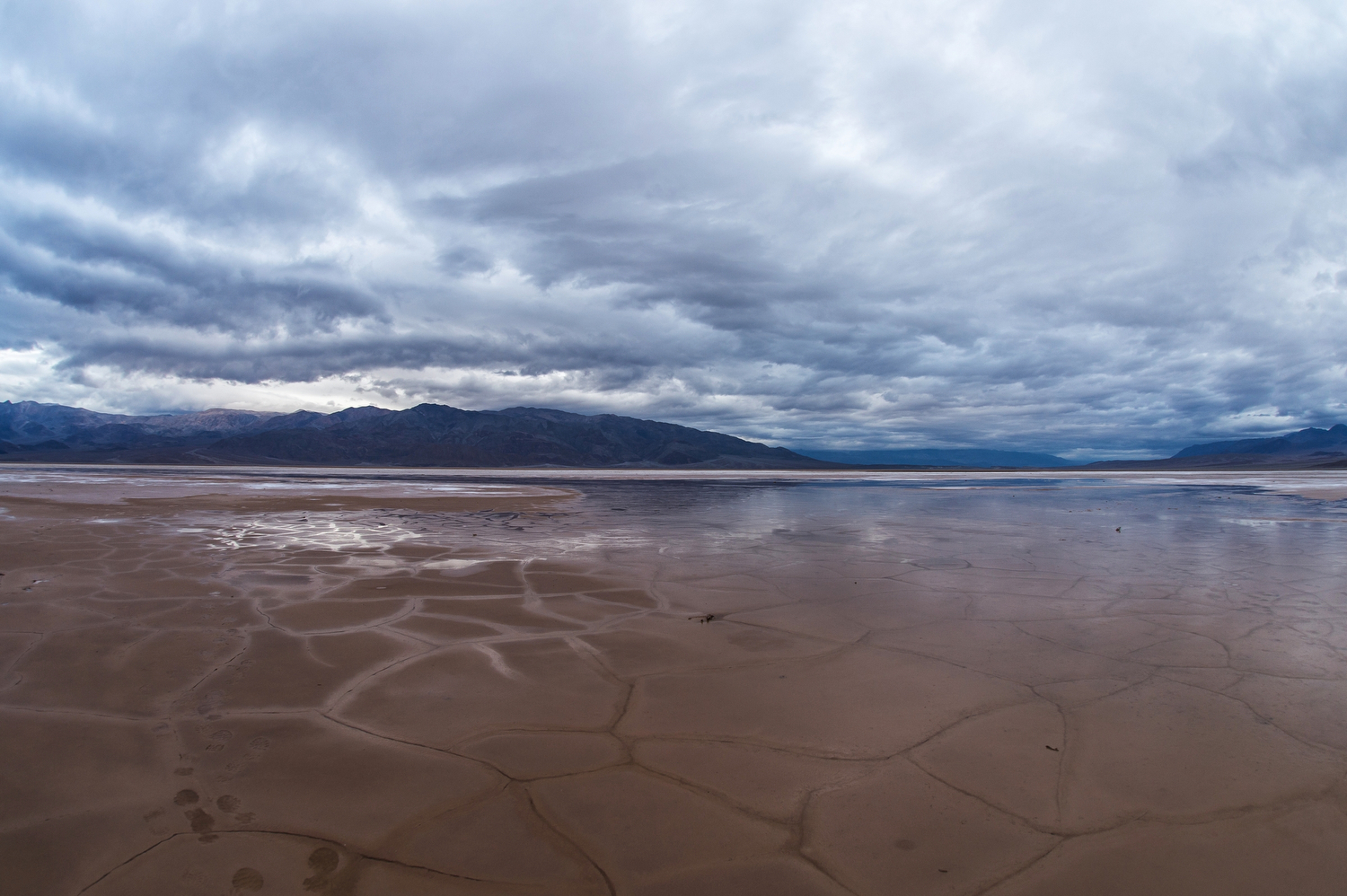
Cracked mud and salt on the valley floor in Death Valley National Park in California can become a reflective pool after rains. (File photo)
Credits: NPS/Kurt Moses
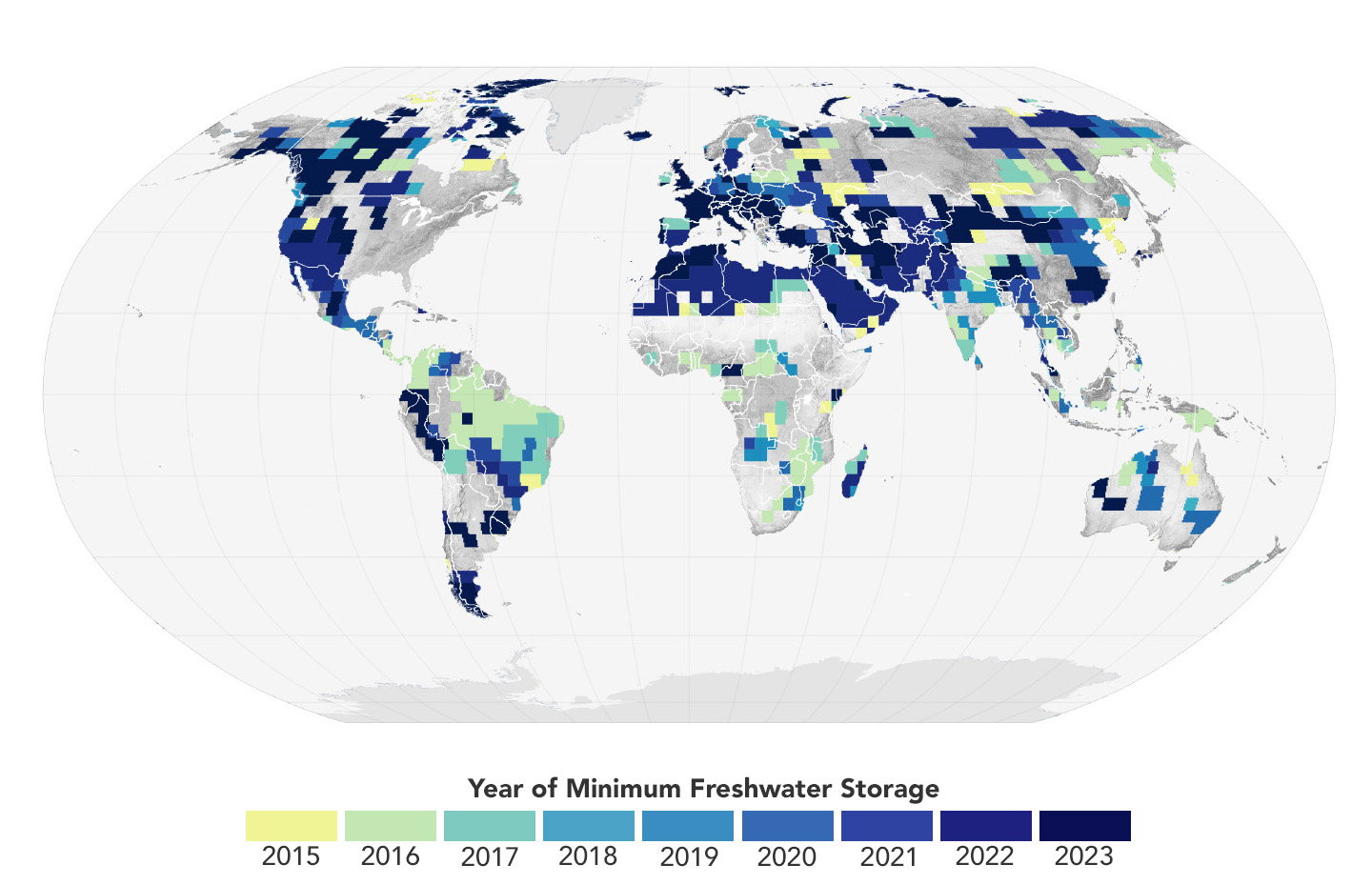
In a recently published paper, NASA scientists use nearly 20 years of observations to show that the global water cycle is shifting in unprecedented ways. The majority of those shifts are driven by activities such as agriculture and could have impacts on ecosystems and water management, especially in certain regions.
“We established with data assimilation that human intervention in the global water cycle is more significant than we thought,” said Sujay Kumar, a research scientist at NASA’s Goddard Space Flight Center in Greenbelt, Maryland, and a co-author of the paper published in the Proceedings of the National Academy of Sciences.
The shifts have implications for people all over the world. Water management practices, such as designing infrastructure for floods or developing drought indicators for early warning systems, are often based on assumptions that the water cycle fluctuates only within a certain range, said Wanshu Nie, a research scientist at NASA Goddard and lead author of the paper.
“This may no longer hold true for some regions,” Nie said. “We hope that this research will serve as a guide map for improving how we assess water resources variability and plan for sustainable resource management, especially in areas where these changes are most significant.”
One example of the human impacts on the water cycle is in North China, which is experiencing an ongoing drought. But vegetation in many areas continues to thrive, partially because producers continue to irrigate their land by pumping more water from groundwater storage, Kumar said. Such interrelated human interventions often lead to complex effects on other water cycle variables, such as evapotranspiration and runoff.
Nie and her colleagues focused on three different kinds of shifts or changes in the cycle: first, a trend, such as a decrease in water in a groundwater reservoir; second, a shift in seasonality, like the typical growing season starting earlier in the year, or an earlier snowmelt; and third a change in extreme events, like “100-year floods” happening more frequently.
The scientists gathered remote sensing data from 2003 to 2020 from several different NASA satellite sources: the Global Precipitation Measurement mission satellite for precipitation data, a soil moisture dataset from the European Space Agency’s Climate Change Initiative, and the Gravity Recovery and Climate Experiment satellites for terrestrial water storage data. They also used products from the Moderate Resolution Imaging Spectroradiometer satellite instrument to provide information on vegetation health.
“This paper combines several years of our team’s effort in developing capabilities on satellite data analysis, allowing us to precisely simulate continental water fluxes and storages across the planet,” said Augusto Getirana, a research scientist at NASA Goddard and a co-author of the paper.
The study results suggest that Earth system models used to simulate the future global water cycle should evolve to integrate the ongoing effects of human activities. With more data and improved models, producers and water resource managers could understand and effectively plan for what the “new normal” of their local water situation looks like, Nie said.
By Erica McNamee NASA’s Goddard Space Flight Center, Greenbelt, Maryland
Two Astronauts Start Spacewalk for Astrophysics Hardware Work
NASA astronauts Nick Hague and Suni Williams, both NASA astronauts, are pictured evaluating their spacesuits in a pressurized configuration in the Quest airlock.
NASA astronauts Nick Hague and Suni Williams began a spacewalk at 8:01 a.m. EST at the International Space Station.
The duo will remove and replace a rate gyro assembly that helps provide orientation control for the station, install patches to cover damaged areas of light filters for an X-ray telescope called NICER (Neutron star Interior Composition Explorer), and replace a reflector device used for navigational data on one of the international docking adapters. The pair also will check access areas and connector tools that will be used for future maintenance work on the Alpha Magnetic Spectrometer.
Hague is crew member 1 wearing a suit with red stripes. Williams is spacewalk crew member 2, wearing an unmarked suit.
NASA’s coverage continues on NASA+. Learn how to watch NASA content through a variety of platforms, including social media.
NASA+ Spacewalk Coverage Begins for X-Ray Telescope Repair
NASA astronaut Nick Hague takes an out-of-this-world “space-selfie” during a spacewalk on Aug. 21, 2019.
NASA’s coverage is underway on NASA+ as two astronauts will conduct a spacewalk outside the International Space Station. The spacewalk is scheduled to begin at approximately 8 a.m. EST and last about six and a half hours.
Learn how to watch NASA content through a variety of platforms, including social media.
NASA astronauts Suni Williams and Nick Hague will exit the station’s Quest airlock to remove and replace a rate gyro assembly that helps provide orientation control for the station, install patches to cover damaged areas of light filters for an X-ray telescope called NICER (Neutron star Interior Composition Explorer), and replace a reflector device used for navigational data on one of the international docking adapters.
Additionally, the pair will check access areas and connector tools astronauts will use for future maintenance work on the Alpha Magnetic Spectrometer.
Hague will serve as spacewalk crew member 1 and wear a suit with red stripes. Williams will serve as spacewalk crew member 2 and wear an unmarked suit. This will be the fourth for Hague and the eighth for Williams. It will be the 273rd spacewalk in support of space station assembly, maintenance, and upgrades.