Revealing the Hidden Universe with Full-shell X-ray Optics at NASA MSFC

Revealing the Hidden Universe with Full-shell X-ray Optics at NASA MSFC

The study of X-ray emission from astronomical objects reveals secrets about the Universe at the largest and smallest spatial scales. Celestial X-rays are produced by black holes consuming nearby stars, emitted by the million-degree gas that traces the structure between galaxies, and can be used to predict whether stars may be able to host planets hospitable to life. X-ray observations have shown that most of the visible matter in the universe exists as hot gas between galaxies and have conclusively demonstrated that the presence of “dark matter” is needed to explain galaxy cluster dynamics, that dark matter dominates the mass of galaxy clusters, and that it governs the expansion of the cosmos.

X-ray observations also enable us to probe mysteries of the Universe on the smallest scales. X-ray observations of compact objects such as white dwarfs, neutron stars, and black holes allow us to use the Universe as a physics laboratory to study conditions that are orders of magnitude more extreme in terms of density, pressure, temperature, and magnetic field strength than anything that can be produced on Earth. In this astrophysical laboratory, researchers expect to reveal new physics at the subatomic scale by conducting investigations such as probing the neutron star equation of state and testing quantum electrodynamics with observations of neutron star atmospheres. At NASA’s Marshall Space Flight Center, a team of scientists and engineers is building, testing, and flying innovative optics that bring the Universe’s X-ray mysteries into sharper focus.

Purple, blue and white swirls overlaid with a pattern of orange dashed lines in the center.
A composite X-ray/Optical/Infrared image of the Crab Pulsar. The X-ray image from the Chandra X-ray Observatory (blue and white), reveals exquisite details in the central ring structures and gas flowing out of the polar jets. Optical light from the Hubble Space Telescope (purple) shows foreground and background stars as pinpoints of light. Infrared light from the Spitzer Space Telescope (pink) traces cooler gas in the nebula. Finally, magnetic field direction derived from X-ray polarization observed by the Imaging X-ray Polarimetry Explorer is shown as orange lines.
Magnetic field lines: NASA/Bucciantini et al; X-ray: NASA/CXC/SAO; Optical: NASA/STScI; Infrared: NASA-JPL-Caltech

Unlike optical telescopes that create images by reflecting or refracting light at near-90-degree angles (normal incidence), focusing X-ray optics must be designed to reflect light at very small angles (grazing incidence). At normal incidence, X-rays are either absorbed by the surface of a mirror or penetrate it entirely. However, at grazing angles of incidence, X-rays reflect very efficiently due to an effect called total external reflection.  In grazing incidence, X-rays reflect off the surface of a mirror like rocks skipping on the surface of a pond.

A classic design for astronomical grazing incidence optics is the Wolter-I prescription, which consists of two reflecting surfaces, a parabola and hyperbola (see figure below). This optical prescription is revolved around the optical axis to produce a full-shell mirror (i.e., the mirror spans the full circumference) that resembles a gently tapered cone. To increase the light collecting area, multiple mirror shells with incrementally larger diameters and a common focus are fabricated and nested concentrically to comprise a mirror module assembly (MMA).

Focusing optics are critical to studying the X-ray universe because, in contrast to other optical systems like collimators or coded masks, they produce high signal-to-noise images with low background noise. Two key metrics that characterize the performance of X-ray optics are angular resolution, which is the ability of an optical system to discriminate between closely spaced objects, and effective area, which is the light collecting area of the telescope, typically quoted in units of cm2. Angular resolution is typically measured as the half-power diameter (HPD) of a focused spot in units of arcseconds.  The HPD encircles half of the incident photons in a focused spot and measures the sharpness of the final image; a smaller number is better. 

Cutaway image of a tube with black and green lines passing through it and converging on a gray square.
Schematic of a full-shell Wolter-I X-ray optic mirror module assembly with five concentrically nested mirror shells. Parallel rays of light enter from the left, reflect twice off the reflective inside surface of the shell (first off the parabolic segment and then off the hyperbolic segment), and converge at the focal plane.
NASA MSFC

NASA Marshall Space Flight Center (MSFC) has been building and flying lightweight, full-shell, focusing X-ray optics for over three decades, always meeting or exceeding angular resolution and effective area requirements. MSFC utilizes an electroformed nickel replication (ENR) technique to make these thin full-shell X-ray optics from nickel alloy.

X-ray optics development at MSFC began in the early 1990s with the fabrication of optics to support NASA’s Advanced X-ray Astrophysics Facility (AXAF-S) and then continued via the Constellation-X technology development programs. In 2001, MSFC launched a balloon payload that included two modules each with three mirrors, which produced the first focused hard X-ray (>10 keV) images of an astrophysical source by imaging Cygnus X-1, GRS 1915, and the Crab Nebula.  This initial effort resulted in several follow-up missions over the next 12 years, and became known as the High Energy Replicated Optics (HERO) balloon program.

In 2012, the first of four sounding rocket flights of the Focusing Optics X-ray Solar Imager (FOXSI) flew with MSFC optics onboard, producing the first focused images of the Sun at energies greater than 5 keV. In 2019 the Astronomical Roentgen Telescope X-ray Concentrator (ART-XC) instrument on the Spectr-Roentgen-Gamma Mission launched with seven MSFC-fabricated X-ray MMAs, each containing 28 mirror shells. ART-XC is currently mapping the sky in the 4-30 keV hard X-ray energy range, studying exotic objects like neutron stars in our own galaxy as well as active galactic nuclei, which are spread across the visible universe. In 2021, the Imaging X-ray Polarimetry Explorer (IXPE), flew and is now performing extraordinary science with an MSFC-led team using three, 24-shell MMAs that were fabricated and calibrated in-house.

Most recently, in 2024, the fourth FOXSI sounding rocket campaign launched with a high-resolution MSFC MMA. The optics achieved 9.5 arcsecond HPD angular resolution during pre-flight test with an expected 7 arcsecond HPD in gravity-free flight, making this the highest angular resolution flight observation made with a nickel-replicated X-ray optic. Currently MSFC is fabricating an MMA for the Rocket Experiment Demonstration of a Soft X-ray (REDSoX) polarimeter, a sounding rocket mission that will fly a novel soft X-ray polarimeter instrument to observe active galactic nuclei. The REDSoX MMA optic will be 444 mm in diameter, which will make it the largest MMA ever produced by MSFC and the second largest replicated nickel X-ray optic in the world.

Left: two team members in white protective gear standing in a large tube; the individual in front is standing behind a large cylinder embedded in a rectangular case. Right: A team member in blue protective gear working on a large tubular-shaped device in a lab.
Scientists Wayne Baumgartner (left, crouched) and Nick Thomas (left, standing) calibrate an IXPE MMA in the MSFC 100 m Beamline. Scientist Stephen Bongiorno (right) applies epoxy to an IXPE shell during MMA assembly.
NASA MSFC

The ultimate performance of an X-ray optic is determined by errors in the shape, position, and roughness of the optical surface. To push the performance of X-ray optics toward even higher angular resolution and achieve more ambitious science goals, MSFC is currently engaged in a fundamental research and development effort to improve all aspects of full-shell optics fabrication.

Given that these optics are made with the Electroformed Nickel Replication technique, the fabrication process begins with creation of a replication master, called the mandrel, which is a negative of the desired optical surface. First, the mandrel is figured and polished to specification, then a thin layer of nickel alloy is electroformed onto the mandrel surface. Next, the nickel alloy layer is removed to produce a replicated optical shell, and finally the thin shell is attached to a stiff holding structure for use.

Each step in this process imparts some degree of error into the final replicated shell. Research and development efforts at MSFC are currently concentrating on reducing distortion induced during the electroforming metal deposition and release steps. Electroforming-induced distortion is caused by material stress built into the electroformed material as it deposits onto the mandrel. Decreasing release-induced distortion is a matter of reducing adhesion strength between the shell and mandrel, increasing strength of the shell material to prevent yielding, and reducing point defects in the release layer.

Additionally, verifying the performance of these advanced optics requires world-class test facilities. The basic premise of testing an optic designed for X-ray astrophysics is to place a small, bright X-ray source far away from the optic. If the angular size of the source, as viewed from the optic, is smaller than the angular resolution of the optic, the source is effectively simulating X-ray starlight. Due to the absorption of X-rays by air, the entire test facility light path must be placed inside a vacuum chamber.

At MSFC, a group of scientists and engineers operate the Marshall 100-meter X-ray beamline, a world-class end-to-end test facility for flight and laboratory X-ray optics, instruments, and telescopes. As per the name, it consists of a 100-meter-long vacuum tube with an 8-meter-long, 3-meter-diameter instrument chamber and a variety of X-ray sources ranging from 0.25 – 114 keV. Across the street sits the X-Ray and Cryogenic Facility (XRCF), a 527-meter-long beamline with an 18-meter-long, 6-meter-diameter instrument chamber. These facilities are available for the scientific community to use and highlight the comprehensive optics development and test capability that Marshall is known for.

Within the X-ray astrophysics community there exist a variety of angular resolution and effective area needs for focusing optics. Given its storied history in X-ray optics, MSFC is uniquely poised to fulfill requirements for large or small, medium- or high-angular-resolution X-ray optics. To help guide technology development, the astrophysics community convenes once per decade to produce a decadal survey. The need for high-angular-resolution and high-throughput X-ray optics is strongly endorsed by the National Academies of Sciences, Engineering, and Medicine report, Pathways to Discovery in Astronomy and Astrophysics for the 2020s.In pursuit of this goal, MSFC is continuing to advance the state of the art in full-shell optics. This work will enable the extraordinary mysteries of the X-ray universe to be revealed.

Project Leads

Dr. Jessica Gaskin and Dr. Stephen Bongiorno, NASA Marshall Space Flight Center (MSFC)

Sponsoring Organizations

The NASA Astrophysics Division supports this work primarily through the Internal Scientist Funding Model Direct Work Package and competed solicitations. This work is also supported by the Heliophysics Division through competed solicitations, as well as by directed work from other government entities.

Powered by WPeMatico
Get The Details…

OpenET: Balancing Water Supply and Demand in the West

OpenET: Balancing Water Supply and Demand in the West

15 min read

Preparations for Next Moonwalk Simulations Underway (and Underwater)

At the end of 2022, 65 percent of the Western United States was in severe drought, the result of a two decades long mega drought in the Colorado River Basin that had captured headlines around the world. 

However, it was flooding, not drought, that was making headlines when we began our research for this story about OpenET, a revolutionary new online platform geared towards helping farmers and water managers monitor and reduce water use in watersheds where supplies were not keeping up with demand.  

The start of 2023 brought flooding to many counties in California, leaving 68 percent of the state with suddenly little to no drought. And caused Forrest Melton, the NASA Project Scientist for OpenET and Associate Program Manager for agriculture and water resources with the NASA Earth Action program, to pause our video interview after a tree fell down outside his Bay Area home on a rainy day in March, 2023. 

Coming online again after calling the fire department, Melton didn’t seem all too optimistic that the wet conditions would last. “California tends to swing between the two extremes of drought and flood,” Melton said. He referenced the 2016/17 winter which had particularly high precipitation but was followed by dry conditions during the following years, before the relief brought by the heavy rains, and flooding, in early 2023. 

According to NOAA’s National Integrated Drought Information System it will take more than one wet winter to replenish groundwater in many parts of the western United States. Groundwater levels across the California Central Valley and many parts of the Ogallala Aquifer continue to decline. The need for better water management remains essential, and yet the data necessary to support new approaches has not been broadly available. 

Enter the OpenET project, a multi-disciplinary, collaborative effort to make satellite-based evapotranspiration (ET) data available to the public. Melton describes the project as providing invaluable and scientifically robust data at all scales, “that can be used to support day to day decision making and long range planning to try to solve some really long standing and important water management challenges in the West.”

What is Evapotranspiration?

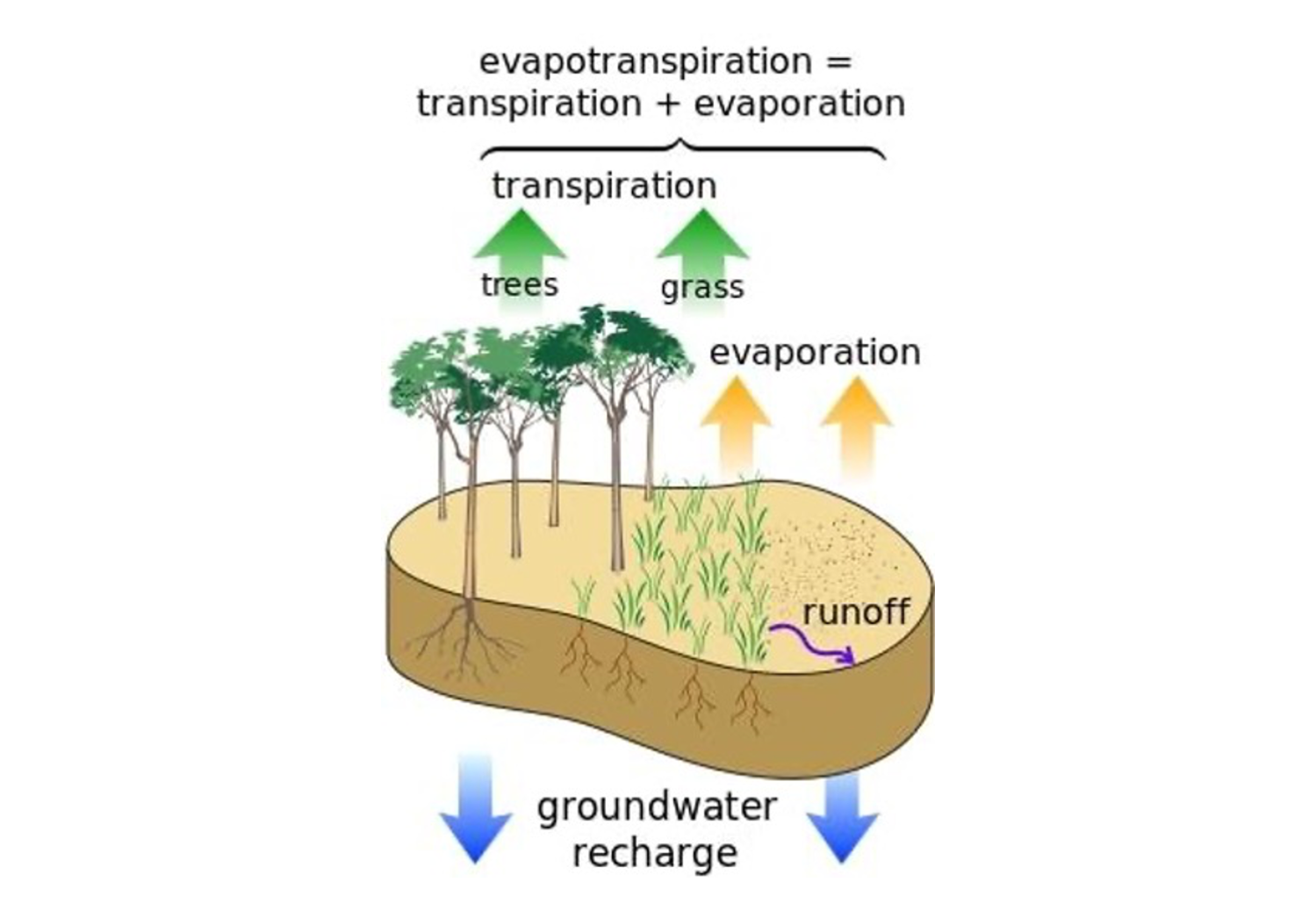
Evapotranspiration is the combined process of evaporation and transpiration, both of which transfer water from the land surface to the atmosphere as water vapor. Evaporation transforms water from the surface of the ground or bodies of water into water vapor, while transpiration is water vapor that is evaporated from plant tissues and escapes through the stomata, the tiny pores in plant leaves and stems. It is a process that is happening all around us almost all the time, but because water vapor is invisible to the human eye, it is very hard to measure on the ground.  

A diagram shows what looks like a cross-section of a potato, with trees coming out of the left side, grass in the middle, two orange arrows point up from the left, and two blue arrows point down from beneath. Text on the diagram labels each section.
A conceptual diagram of near-surface hydrology.
M. W. Toews

To understand the effect evapotranspiration has on a local water cycle, picture a large decorative fountain. Typically, these fountains recycle the same water over and over. As a fountain runs, water is pumped out of the fountain heads, falls back into the fountain’s basin, and then flows back through the pipe system before starting the process all over again. We can think of the water remaining within this fountain’s local water system as non-consumptive water use. Some water, however, will be lost from the fountain’s local water system by evaporating from the pool’s surface or mist from the fountain’s spray.

Imagine the fountain also has lily pads growing in its basin. The lily pads will use the fountain’s water to survive and grow, losing some of that water to transpiration. The total water lost is evapotranspiration, and is considered consumptive water use, because it cannot be reused by the fountain. Tracking evapotranspiration can tell you how much water is removed or “depleted” from a local water system, and how much water needs to be added back in to support plant growth and maintain a healthy balance between water supply and water use. If too much water leaves the fountain, it will stop running. If too much water is added, it will overflow.  

These concepts can be applied more broadly to the hydrologic cycle as a whole, and evapotranspiration data can play an important part in designing and implementing sustainable water management practices to combat larger issues like drought, as well as both short and long-term reductions in water availability. Historically, ET data have been obtained from ground-based instruments and methods, such as weighing lysimeters, which weigh soil and plants to track the water volume lost by evaporation or transpiration. Another common method is called eddy covariance, which calculates the amount of water vapor transported away from the land surface by wind eddies as they move across the land surface. But both are expensive and difficult to install and maintain, and measurements are only representative of a small portion of an individual agricultural field. It is cost prohibitive to collect these measurements over larger areas. 

What makes OpenET different?

The OpenET team saw the important niche left open by traditional evapotranspiration measurement methods and filled it. They built upon decades of research funded by NASA, USDA and USGS and developed a new platform that can take easily accessible and already available data from satellite programs, like Landsat, and combine it with weather data to calculate the ET for every quarter acre of land. Satellites can record information like the Earth’s surface temperature and how much of the incoming light from the sun is being reflected back out to space. OpenET is able to use physically-based mathematical models to combine the satellite and weather data and output accurate data on evapotranspiration rates and volumes. 

This information is then made easily accessible through OpenET’s Data Explorer, a free web-based tool that allows anyone with an internet connection to access the data OpenET provides. Users begin by selecting an area of interest from a map of the western United States that provides data at the satellite resolution of a quarter-acre, and also broken down into known areas of interest and individual agricultural fields, each color coded with a heat map of evapotranspiration. Cooler colors indicate higher rates of evapotranspiration while warmer colors indicate lower rates. Users can zoom into specific areas on the map, and with just a click, a chart pops up showing the evapotranspiration trends for a given area, for the current year and the past five years. 

The chart can show monthly ET trends, useful for understanding seasonal fluctuations, and also cumulative trends, useful for understanding year-to-year changes in evapotranspiration. “The OpenET team took a user-driven design approach from the beginning, and each element of the Data Explorer and the open data services is there because a water manager or farmer asked for it,” Melton explained. As we played around with the map, it became apparent how much work was put into developing this project. Scientists needed to improve models and assess the accuracy of data, programmers had to develop the user interface and data services, designers needed to make the interface intuitive enough to be impactful, agriculture and environmental groups needed to help validate the model’s accuracy, and users of all types needed to provide requirements and then test the product to make sure their needs were actually met. 

The OpenET consortium includes NASA, USGS, USDA Agricultural Research Service (ARS), Environmental Defense Fund (EDF), Google Earth Engine, California State University Monterey Bay (CSUMB), Desert Research Institute (DRI), Habitat Seven, Chapman University, Cornell University, University of Nebraska-Lincoln and close to a dozen other universities and experts across the U.S. NASA Ames Research Center and CSUMB have played key roles in the scientific and technical leadership of the effort from the outset, working closely with DRI, EDF and the recently formed non-profit OpenET, Inc. In addition, over 100 partners from the water management, agriculture and conservation community provided user requirements and assisted with the design and testing of the OpenET platform and tools.

“OpenET would not be possible without the contributions of each one of those partners,” Melton said. “Both on the implementation side and those who are translating the data from OpenET into solutions to long standing challenges.” 

A satellite image is colored over with squares, like colored pixels, that range from deep blue to green to bright yellow.
Map of farmlands showing ET data for 2024. The cooler colors represent higher levels of evapotranspiration (ET), while warmer colors indicate areas with less ET.
OpenET

Models like those built into OpenET can be extremely useful tools for understanding patterns in ET and water use, but are only helpful if their accuracy is known. The OpenET science team recently completed the largest accuracy assessment to date for field-scale satellite-based ET data, comparing the satellite data to ground-based measurements at more than 150 sites across the U.S. Led by John Volk of the Desert Research Institute, the study was published in Nature Water earlier this year. A key finding was that across all sites, an ensemble value computed from six different ET models performed the best overall, leveraging the strengths of each individual satellite-driven model. 

However, the study also found that some models performed best for particular crop types or regions, which is important information for water managers and farmers who need the most accurate data possible. Publishing the results as an open access study with all data and analysis made publicly available was also important to build trust in the data. While the study highlighted some limitations of the models and priorities for future research, the rigorous and reproducible accuracy assessment helps to build user confidence that they can use the data, while being aware of the expected accuracy for different applications of the data.  

Bridging the Gap Between Farmers and Resource Managers

OpenET has already contributed to one significant win for farmers that affects how water use will be monitored and reported in the Sacramento-San Joaquin Delta. 

This inland river delta covers 750,000 acres and is an important water resource in California, but one where accelerated demand combined with habitat loss and water quality issues has led to major concerns. In the Delta, large portions of the agricultural land are below sea level. Levees protect the fields and contain the river channels that supply water for irrigation. In 2023, the state began requiring farmers to maintain a water meter or measuring device on each diversion, where water is diverted from a river for irrigation. However, this measurement proved challenging and costly as there are thousands of diversions in the Delta, and the measuring equipment was inaccurate and difficult to maintain in this environment. In addition, water users also had to pay for meters at the locations where water that drained from the fields was pumped back over the levees and into the river channels.

A satellite image shows a flat brown area of land, with a river that goes from left to right and splits into many tributaries that make it look like branches coming off a tree. The river has been colored in a bright teal.
The Sacramento-San Joaquin River Delta is a major water resource in California.
Matthew Trump

“Mostly, what the state was interested in was the consumptive use: how much (water) was actually removed from the supply in that region,” Melton said. “So, it’s the perfect place for using OpenET because evapotranspiration really is the majority of the consumptive use in the Delta, if not all of it.”

After the launch of OpenET, farmers in the Delta worked with the Delta Watermaster, the California State Water Resources Control Board, the OpenET team and the Delta Measurement Consortium to develop an alternative compliance plan that used OpenET data to help streamline the water use required reporting for this complex region. Once the alternative compliance plan was approved, Forrest Melton and Will Carrara of NASA worked with the state Water Resources Control Board, the Delta Watermaster and water management agencies, and Jordan Harding of HabitatSeven to implement this solution. The Delta Alternative Compliance Plan, also known as the Delta ACP, allows farmers to use OpenET data to estimate their water usage; enabling farmers to complete their use reports in a matter of minutes. 

“It’s the first time that satellite-based evapotranspiration data has been automatically integrated with a state-managed water reporting system,” Melton said. 

Last year, more than 70% of farmers in the Bay-Delta region chose to use OpenET and to report their water use through the Delta ACP website, and they expect this percentage to continue to increase over time. 

“The best part is that it is saving farmers hundreds of hours on preparing and submitting reports, avoiding millions of dollars in costs for farmers to deploy and maintain meters, and giving the state consistent and reproducible data on water use that has been reviewed and approved by the water user,” Melton said. 

According to Delta Watermaster, Jay Ziegler, this approach has a clear benefit in the unique water flow setting of the Delta. “In reality, OpenET – and the use of publicly accessible data measuring ET is the only way to really discern consumptive use of water in the Delta on a reliable basis,” Ziegler said. “Candidly, we don’t really have a viable “plan B” in the absence of applying Open ET for water use reporting.”

In reality, OpenET – and the use of publicly accessible data measuring ET is the only way to really discern consumptive use of water in the Delta on a reliable basis.

Jay ziegler

Jay ziegler

Sacramento-San Joaquin Delta Watermaster

Water Beyond Borders

As water scarcity is increasingly becoming an urgent issue all around the world, it’s easy to imagine how many countries could benefit from OpenET data. 

OpenET’s first international partnership is led by Anderson Ruhoff, a professor in Hydrology and Remote Sensing at the Federal University of Rio Grande do Sul, Brazil, where his team developed an evapotranspiration model called geeSEBAL for Brazil’s Water Agency.

Ruhoff learned about OpenET while he was in the US on a visiting professorship in Nebraska. He was intrigued and reached out to Melton who encouraged him to attend an upcoming conference in Reno, Nevada, where OpenET would be featured. The conference was due to start in just a few days time.

“So I had to find a last minute ticket to Reno and I’m glad I bought it, because when I arrived there they invited me to join Open ET. It was quite a coincidence,” Ruhoff said, smiling as he remembered the spontaneous decision. “We adapted our model for the US and started to participate in their work.”

In March, 2024, Ruhoff and OpenET launched an extension of the tool, called OpenET Brazil, with financial support from the Agência Nacional de Águas e Saneamento Básico (ANA), the Brazilian national water agency. The tool, called OpenET Brazil, will have similar goals as OpenET in the U.S., and the data collected will help improve Open ET’s accuracy overall.

Melton feels this will be a “great test case” for both working with new environmental conditions (in Brazil there frequently is more cloud cover than in the US during key parts of the growing season) and also developing new collaborations.

“The partnership will help us figure out how we can work with international partners to make the ET data useful,” Melton said. “The key aspect of our approach to geographic expansion is that leading scientists in each country and region, like Dr. Ruhoff, will lead the implementation, accuracy assessment, and the development of applications and partnerships for their country.”

Brazil has one of the world’s largest sources of freshwater, the Amazon River, and yet it can still be affected by drought. This is partly due to the fact that deforestation in the Amazon Rainforest has an impact on the entire region’s water cycle. Trees draw water up from the soil and during photosynthesis they release vapor into the atmosphere. This water vapor will accumulate and form precipitation. Trees are “basically a huge water pump,” Ruhoff said, and the Amazon Rainforest is large enough that it helps to produce the rainy season. But when deforestation is allowed to happen over large areas, that mechanism is interrupted. As a result of this disruption, the dry season is predicted to intensify, becoming longer and dryer, which in turn can affect crop production in Brazil as well as the rainfall that is critical for sustaining water supplies in Brazil and other areas of South America.

“Water doesn’t see borders. It doesn’t follow our rules,” Ruhoff said. “Deforestation in one place can affect people thousands of kilometers away.”

Water doesn’t see borders. It doesn’t follow our rules. Deforestation in one place can affect people thousands of kilometers away.

Anderson Ruhoff

Anderson Ruhoff

Professor of Hydrology and Remote Sensing, Federal University of Rio Grande do Sul, Brazil

Studying evapotranspiration can reveal the impacts of deforestation with even more clarity. And importantly, it’s also public information. “So not only the farmers and water managers but every citizen can check how much water is being used in their area, especially during drought. It’s democratic information in that way,” Ruhoff said. “I think it’s important to have this information openly available and to try and reach as many people as possible.”

Melton feels there’s the potential to expand the project, if more people like Ruhoff are there to lead the way.

“There’s huge potential, but there do need to be stakeholders that come to the table and say that this is something that they’re interested in,” Melton said. “Water is so important and at times so contentious that it’s really important the data is seen as trusted. When there is a local leader, that substantially increases the likelihood that it will be trusted, and most importantly, used to bring people together to develop solutions.”

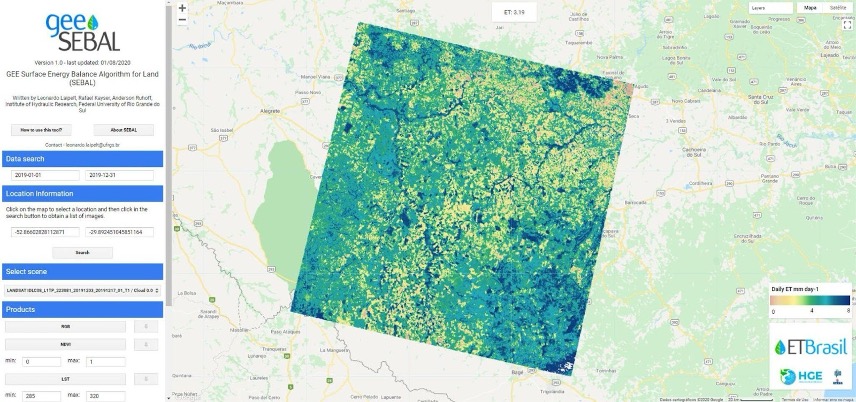
An application interface shows a top-down view of a section of Brazil in pale tans and greens, with one square (at and angle) in bright colors: dark blue, teals, greens, and yellows.
The geeSEBAL application that Anderson Ruhoff’s team developed, which now informs the OpenET platform.
Science Direct/Anderson Ruhoff

Even when you live in a water-scarce region like California it’s easy to take water for granted. What platforms like OpenET can do for us, however, is make water, even in its most diffuse form, more visible to everyone.

Written by Jane Berg and Rachel Sender, co-published with the Bay Area Environmental Research Institute

To learn more about OpenET, visit https://etdata.org/

Program Contact:
Forrest Melton
NASA Ames Research Center
forrest.s.melton@nasa.gov

Share

Details

Last Updated

Oct 14, 2024

Powered by WPeMatico

Get The Details…
Milan Loiacono

Liftoff! NASA’s Europa Clipper Sails Toward Ocean Moon of Jupiter

Liftoff! NASA’s Europa Clipper Sails Toward Ocean Moon of Jupiter

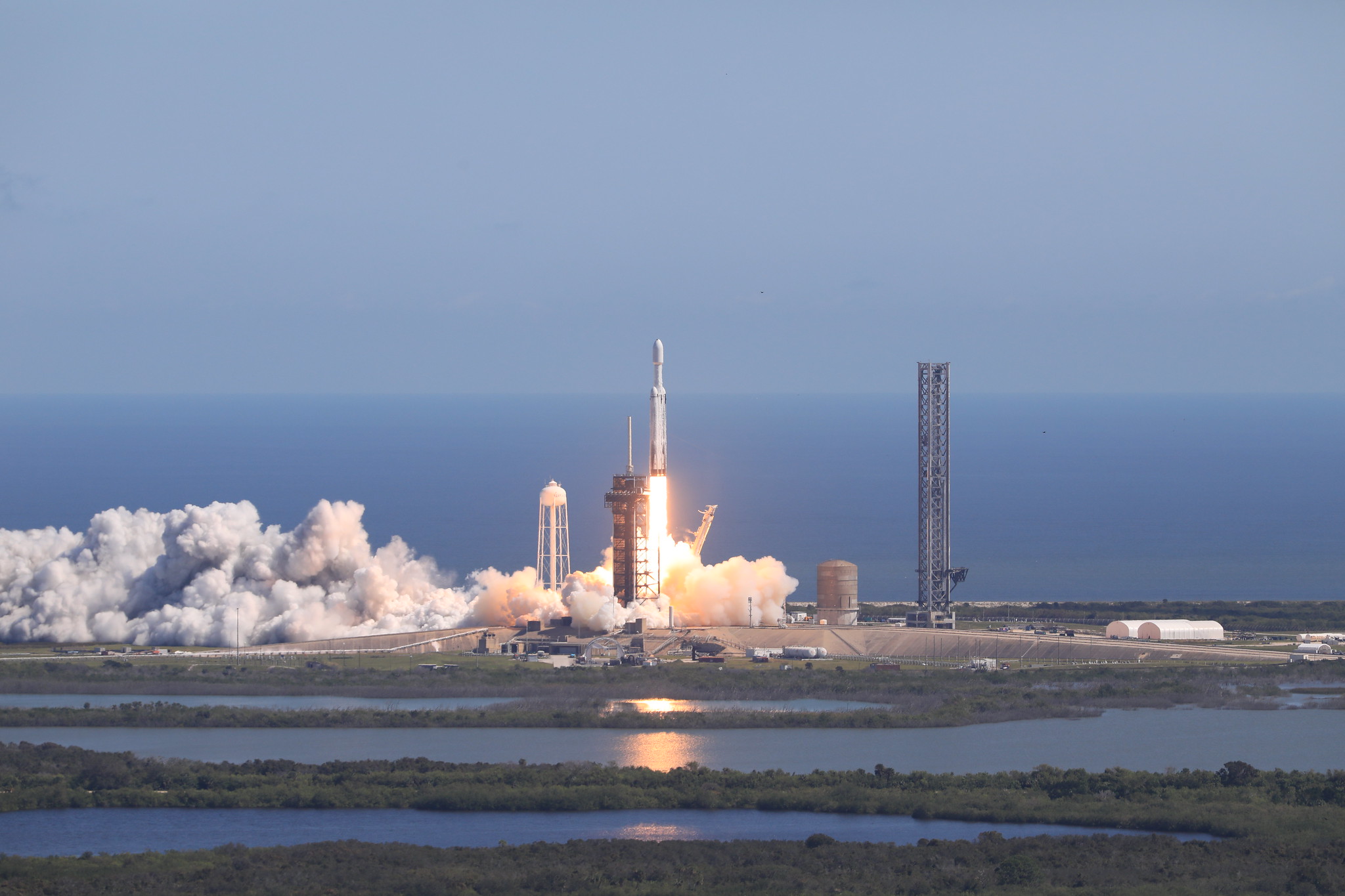
A SpaceX Falcon Heavy rocket carrying NASA’s Europa Clipper spacecraft launches off the coast of Florida, with blue skies and ocean in the background.
A SpaceX Falcon Heavy rocket carrying NASA’s Europa Clipper spacecraft lifts off from Launch Complex 39A at NASA’s Kennedy Space Center in Florida at 12:06 p.m. EDT on Monday, Oct. 14, 2024. After launch, the spacecraft plans to fly by Mars in February 2025, then back by Earth in December 2026, using the gravity of each planet to increase its momentum. With help of these “gravity assists,” Europa Clipper will achieve the velocity needed to reach Jupiter in April 2030.
Credit: NASA/Kim Shiflett

NASA’s Europa Clipper has embarked on its long voyage to Jupiter, where it will investigate Europa, a moon with an enormous subsurface ocean that may have conditions to support life. The spacecraft launched at 12:06 p.m. EDT Monday aboard a SpaceX Falcon Heavy rocket from Launch Pad 39A at NASA’s Kennedy Space Center in Florida.

The largest spacecraft NASA ever built for a mission headed to another planet, Europa Clipper also is the first NASA mission dedicated to studying an ocean world beyond Earth. The spacecraft will travel 1.8 billion miles (2.9 billion kilometers) on a trajectory that will leverage the power of gravity assists, first to Mars in four months and then back to Earth for another gravity assist flyby in 2026. After it begins orbiting Jupiter in April 2030, the spacecraft will fly past Europa 49 times.

“Congratulations to our Europa Clipper team for beginning the first journey to an ocean world beyond Earth,” said NASA Administrator Bill Nelson. “NASA leads the world in exploration and discovery, and the Europa Clipper mission is no different. By exploring the unknown, Europa Clipper will help us better understand whether there is the potential for life not just within our solar system, but among the billions of moons and planets beyond our Sun.”

Approximately five minutes after liftoff, the rocket’s second stage fired up and the payload fairing, or the rocket’s nose cone, opened to reveal Europa Clipper. About an hour after launch, the spacecraft separated from the rocket. Ground controllers received a signal soon after, and two-way communication was established at 1:13 p.m. with NASA’s Deep Space Network facility in Canberra, Australia. Mission teams celebrated as initial telemetry reports showed Europa Clipper is in good health and operating as expected.

“We could not be more excited for the incredible and unprecedented science NASA’s Europa Clipper mission will deliver in the generations to come,” said Nicky Fox, associate administrator, Science Mission Directorate at NASA Headquarters in Washington. “Everything in NASA science is interconnected, and Europa Clipper’s scientific discoveries will build upon the legacy that our other missions exploring Jupiter — including Juno, Galileo, and Voyager — created in our search for habitable worlds beyond our home planet.”

The main goal of the mission is to determine whether Europa has conditions that could support life. Europa is about the size of our own Moon, but its interior is different. Information from NASA’s Galileo mission in the 1990s showed strong evidence that under Europa’s ice lies an enormous, salty ocean with more water than all of Earth’s oceans combined. Scientists also have found evidence that Europa may host organic compounds and energy sources under its surface.

If the mission determines Europa is habitable, it may mean there are more habitable worlds in our solar system and beyond than imagined.

“We’re ecstatic to send Europa Clipper on its way to explore a potentially habitable ocean world, thanks to our colleagues and partners who’ve worked so hard to get us to this day,” said Laurie Leshin, director, NASA’s Jet Propulsion Laboratory in Southern California. “Europa Clipper will undoubtedly deliver mind-blowing science. While always bittersweet to send something we’ve labored over for years off on its long journey, we know this remarkable team and spacecraft will expand our knowledge of our solar system and inspire future exploration.”

In 2031, the spacecraft will begin conducting its science-dedicated flybys of Europa. Coming as close as 16 miles (25 kilometers) to the surface, Europa Clipper is equipped with nine science instruments and a gravity experiment, including an ice-penetrating radar, cameras, and a thermal instrument to look for areas of warmer ice and any recent eruptions of water. As the most sophisticated suite of science instruments NASA has ever sent to Jupiter, they will work in concert to learn more about the moon’s icy shell, thin atmosphere, and deep interior.

To power those instruments in the faint sunlight that reaches Jupiter, Europa Clipper also carries the largest solar arrays NASA has ever used for an interplanetary mission. With arrays extended, the spacecraft spans 100 feet (30.5 meters) from end to end. With propellant loaded, it weighs about 13,000 pounds (5,900 kilograms).

In all, more than 4,000 people have contributed to Europa Clipper mission since it was formally approved in 2015.

“As Europa Clipper embarks on its journey, I’ll be thinking about the countless hours of dedication, innovation, and teamwork that made this moment possible,” said Jordan Evans, project manager, NASA JPL. “This launch isn’t just the next chapter in our exploration of the solar system; it’s a leap toward uncovering the mysteries of another ocean world, driven by our shared curiosity and continued search to answer the question, ‘are we alone?’”

More About Europa Clipper

Europa Clipper’s three main science objectives are to determine the thickness of the moon’s icy shell and its interactions with the ocean below, to investigate its composition, and to characterize its geology. The mission’s detailed exploration of Europa will help scientists better understand the astrobiological potential for habitable worlds beyond our planet.

Managed by Caltech in Pasadena, California, NASA JPL leads the development of the Europa Clipper mission in partnership with the Johns Hopkins Applied Physics Laboratory (APL) in Laurel, Maryland, for NASA’s Science Mission Directorate in Washington. The main spacecraft body was designed by APL in collaboration with NASA JPL and NASA’s Goddard Space Flight Center in Greenbelt, Maryland, NASA’s Marshall Space Flight Center in Huntsville, Alabama, and NASA’s Langley Research Center in Hampton, Virginia. The Planetary Missions Program Office at Marshall executes program management of the Europa Clipper mission.

NASA’s Launch Services Program, based at NASA Kennedy, managed the launch service for the Europa Clipper spacecraft.

Find more information about NASA’s Europa Clipper mission here:

https://science.nasa.gov/mission/europa-clipper

-end-

Meira Bernstein / Karen Fox
Headquarters, Washington
202-358-1600
meira.b.bernstein@nasa.gov / karen.c.fox@nasa.gov

Gretchen McCartney
Jet Propulsion Laboratory, Pasadena, Calif.
818-287-4115
gretchen.p.mccartney@jpl.nasa.gov

Share

Details

Last Updated

Oct 14, 2024

Editor
Jessica Taveau

Powered by WPeMatico
Get The Details…
Jessica Taveau

NASA Spotlight: Felipe Valdez, an Inspiring Engineer

NASA Spotlight: Felipe Valdez, an Inspiring Engineer

3 min read

Preparations for Next Moonwalk Simulations Underway (and Underwater)

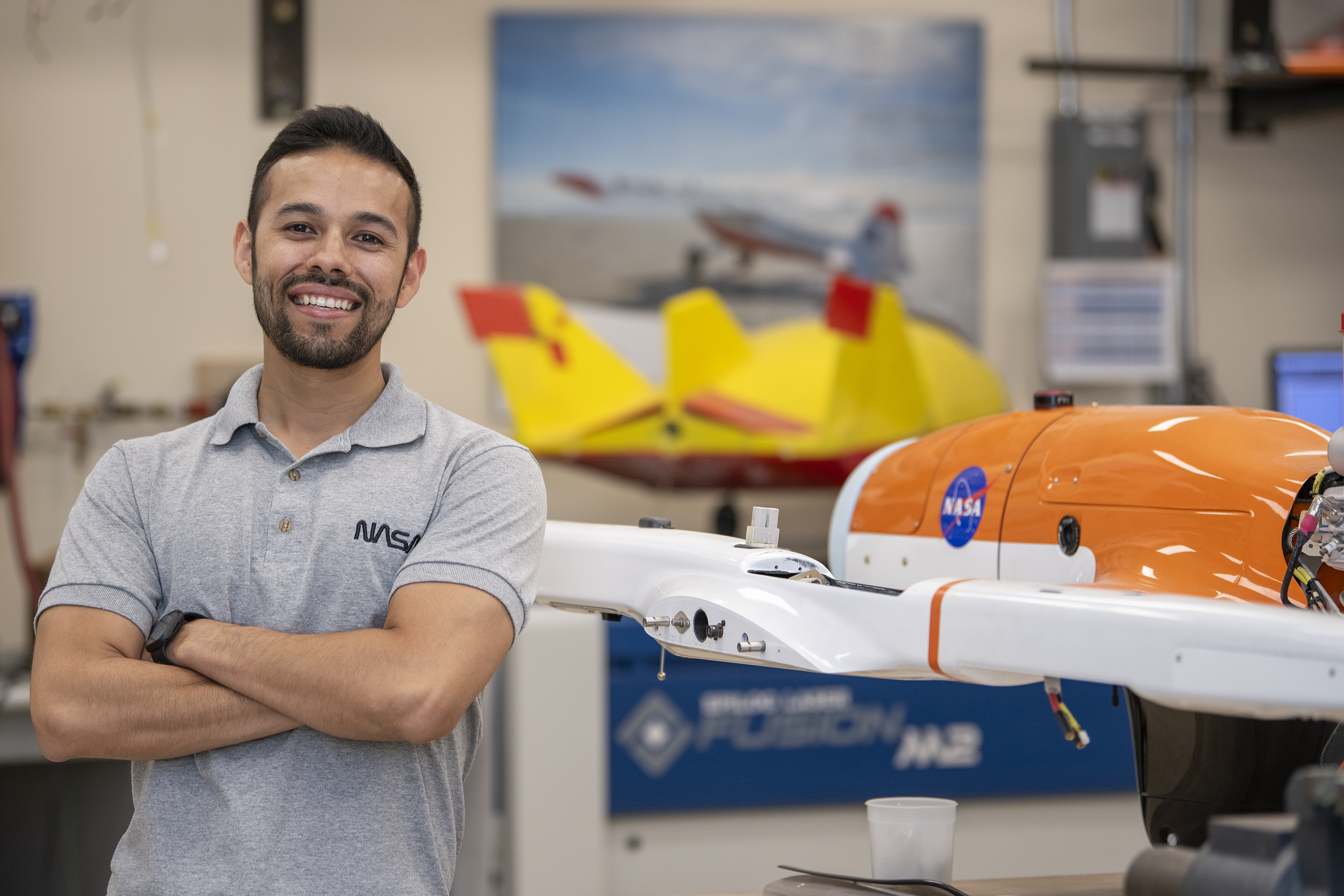
A man wearing a gray NASA shirt posing to the left of a subscale model or an aircraft that is orange and white with the NASA meatball on it. In the background, there are aviation posters located on the wall and another subscale model on display that is yellow and red.
Felipe Valdez, a NASA engineer at Armstrong Flight Research Center’s Dale Reed Subscale Flight Research Laboratory, stands next to a subscale model of the Hybrid Quadrotor (HQ-90) aircraft.
NASA / Charles Genaro Vavuris

Felipe Valdez is someone who took advantage of every possible opportunity at NASA, working his way from undergraduate intern to his current job as a flight controls engineer. 

Born in the United States but raised in Mexico, Valdez faced significant challenges growing up.  

“My mom worked long hours, my dad battled addiction, and eventually, school became unaffordable,” Valdez said. 

Determined to continue his education, Valdez made the difficult choice to leave his family and return to the U.S. But as a teenager, learning English and adapting to a new environment was a culture shock for him. Despite these changes, his curiosity for subjects such as math and science never wavered.  

“As a kid, I’d always been good with numbers and fascinated by how things worked. Engineering combined both,” Valdez said. “This sparked my interest.”  

While he pursued an undergraduate degree in mechanical engineering from California State University, Sacramento, guidance from his professor, Jose Granda, proved to be pivotal.  

“He encouraged me to apply for a NASA internship,” Valdez said. “He’d actually been a Spanish-language spokesperson for a [space] shuttle mission, so hearing about someone with my background succeed gave me the confidence I needed to take that step.”  

Valdez’s hard work paid off – he was selected as a NASA Office of STEM Engagement intern at the agency’s Johnson Space Center in Houston. There, he worked on software development for vehicle dynamics, actuators, and controller models for a space capsule in computer simulations. 

“I couldn’t believe it,” Valdez said. “Getting that opportunity changed everything.”  

This internship opened the door to a second with NASA this time at the agency’s Armstrong Flight Research Center in California. He had the chance to work on flight computer development for the Preliminary Research Aerodynamic Design to Lower Drag, an experimental flying wing design. 

After these experiences, he was later accepted as an intern for NASA’s Pathways Program, a work-study program that offers the possibly of full-time employment at NASA after graduation. 

“That was the start of my career at NASA, where my passion for aeronautics really took off,” he said.  

Valdez was the first in his family to pursue higher education, earning his bachelor’s degree from Sacramento State and his master’s in mechanical and aerospace engineering from the University of California, Davis. 

Today, he works as a NASA flight controls engineer under the Dynamics and Controls branch at Armstrong. Most of his experience has focused on flight simulation development and flight control design, particularly for distributed electric propulsion aircraft. 

“It’s rewarding to be part of a group that’s focused on making aviation faster, quieter, and more sustainable,” Valdez said. “As a controls engineer, working on advanced aircraft concepts like distributed electric propulsion allows me design algorithms to directly control multiple motors, enhancing safety, controllability, and stability, while enabling cleaner, and quieter operations that push the boundaries of sustainable aviation.”  

Throughout his career, Valdez has remained proud of his heritage.   “I feel a strong sense of pride knowing that inclusion is one of our core values, opportunities are within reach for anyone at NASA.”

Share

Details

Last Updated

Oct 13, 2024

Editor
Jim Banke
Contact
Jessica Arreola

Powered by WPeMatico

Get The Details…
Jim Banke

Sols 4331-4333: Today’s Rover ABC – Aurora, Backwards Driving, and Chemistry, with a Side of Images

Sols 4331-4333: Today’s Rover ABC – Aurora, Backwards Driving, and Chemistry, with a Side of Images

4 min read

Sols 4331-4333: Today’s Rover ABC – Aurora, Backwards Driving, and Chemistry, with a Side of Images

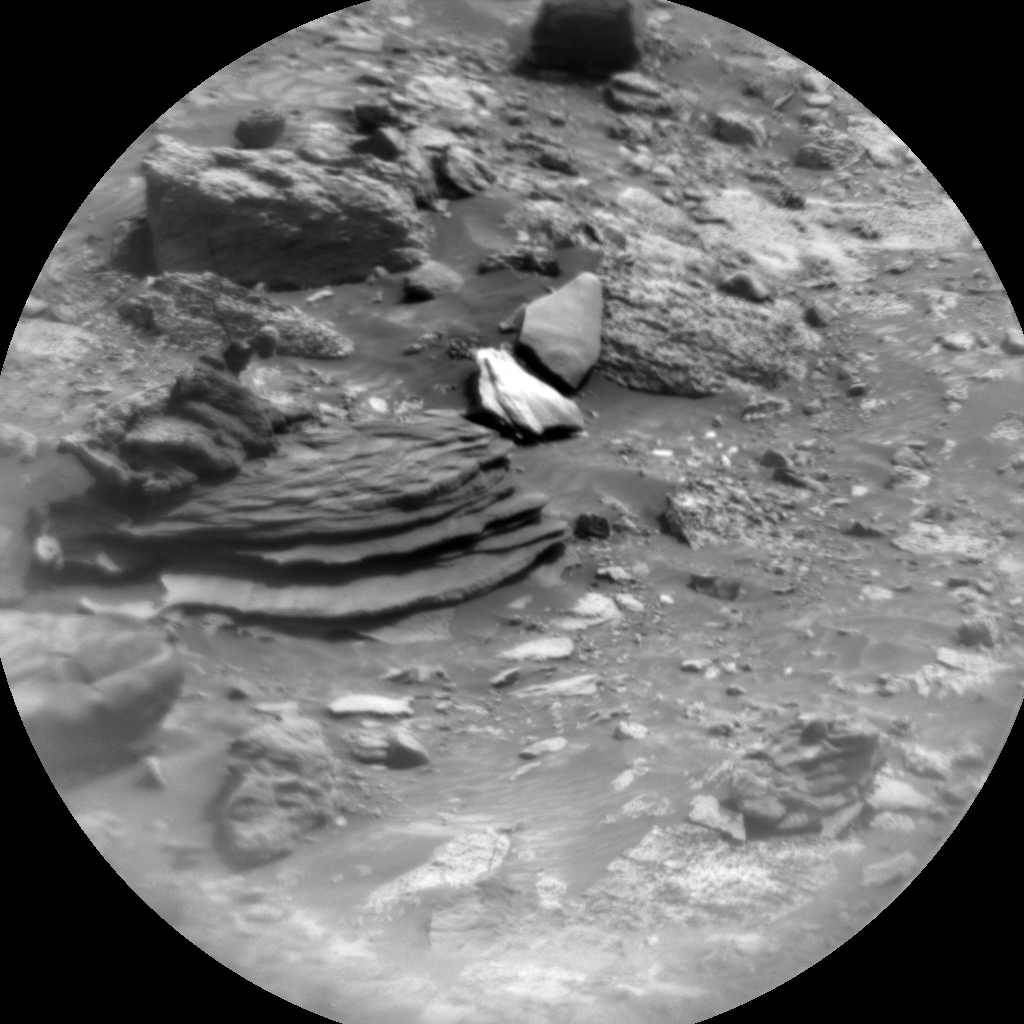
A circular, grayscale image from the Martian surface shows rocky terrain with rocks of many different shapes, sizes, and colors. The lower right part of the image is mostly small-to-medium rocks, buried and protruding slightly above the surface. At center left is a layered formation that looks like an offset stack of thick fabric or rug samples. At center is a small, roughly arrowhead-shaped rock nestled among others, but much lighter-toned than anything else in the image.
This image shows just how variable and interesting the terrain is in the area that NASA’s Mars rover Curiosity is currently investigating. Curiosity captured this long-distance Remote Micro Imager (RMI) image using the Chemistry & Camera (ChemCam) aboard the rover on sol 4329 — Martian day 4,329 of the Mars Science Laboratory mission — on Oct. 10, 2024 at 02:30:12 UTC.
NASA/JPL-Caltech/LANL

Earth planning date: Friday, Oct. 11, 2024

This blogger is in the United Kingdom, just north of London, where we yesterday had beautiful night skies with a red aurora that was even visible with the unaided eye, and looked stunning on photographs. That reminded me of the solar storm that made it all the way to Mars earlier this year. Here is my colleague Deborah’s blog about it: “Aurora Watch on Mars.” And, of course, that was a great opportunity to do atmospheric science and prepare for future crewed missions, to assess radiation that future astronauts might encounter. You can read about it in the article, “NASA Watches Mars Light Up During Epic Solar Storm.” But now, back from shiny red night skies north of London, and auroras on Mars six months ago, to today’s planning!

Power — always a negotiation! Today, I was the Science Operations Working Group chair, the one who has to watch for the more technical side of things, such as the question if all the activities will fit into the plan. Today there were many imaging ideas to capture the stunning landscape in detail with Mastcam and very close close-ups with the long-distance imaging capability of ChemCam (RMI). Overall, we have two long-distance RMIs in the plan to capture the details of the ridge we are investigating. You can see in the accompanying image an example from last sol of just how many stunning details we can see. I so want to go and pick up that smooth white-ish looking rock to find out if it is just the light that makes it so bright, or if the surface is different from the underside… but that’s just me, a mineralogist by training, used to wandering around a field site! Do you notice the different patterns — textures as we call them in geology — on the rocks to the left of that white-ish rock and the right of it? So much stunning detail, and we are getting two more RMI observations of 10 frames each in today’s plan! In addition there are more than 80 Mastcam frames planned. Lots of images to learn from!

Chemistry is also featuring in the plan. The rover is stable on its wheels, which means we can get the arm out and do an APXS measurement on the target “Midnight Lake,” which MAHLI also images. The LIBS investigations are seconding the APXS investigation on Midnight Lake, and add another target to the plan, “Pyramidal Pinnacle.” On the third sol there is an AEGIS, the LIBS measurement where the rover picks its own target before we here on Earth even see where it is! Power was especially tight today, because the CheMin team does some housekeeping, in particular looking at empty cells in preparation for the next drill. The atmosphere team adds many investigations to look out for dust devils and the dustiness of the atmosphere, and APXS measures the argon content of the atmosphere. This is a measure for the seasonal changes of the atmosphere, as argon is an inert gas that does not react with other components of the atmosphere. It is only controlled by the temperature in various places of the planet — mainly the poles. DAN continues to monitor water in the subsurface, and RAD — prominently featured during the solar storm I was talking about earlier — continues to collect data on the radiation environment.

Let’s close with a fun fact from planning today: During one of the meetings, the rover drivers were asked, “Are you driving backwards again?” … and the answer was yes! The reason: We need to make sure that in this rugged terrain, with its many interesting walls (interesting for the geologists!), the antenna can still see Earth when we want to send the plan. So the drive on sol 4332 is all backwards. I am glad we have hazard cameras on the front and the back of the vehicle!

Written by Susanne Schwenzer, Planetary Geologist at The Open University

Share

Details

Last Updated
Oct 13, 2024

Related Terms

Powered by WPeMatico
Get The Details…